

Crypto World
Proof Launches x401, an Open Protocol for Verified Identity in the Agentic Economy


TLDR
- Proof launched x401, an open protocol that verifies the human authority behind AI agent actions online.
- x401 pairs with x402 to cover the two core questions in agentic transactions: identity and payment.
- Proof Digital ID uses zero-knowledge proofs, letting users verify claims without exposing full identity.
- Proof will submit x401 to the FIDO Alliance’s agentic authentication standards workgroup for adoption.
Proof, an identity authorization company, has launched x401, an open protocol designed to verify the human authority behind AI agents.
As agents increasingly handle payments, contracts, and content publishing, the missing piece has been proof of who authorized them.
The x401 protocol addresses that gap directly, giving any website or API a standard way to request and verify identity credentials before permitting agent actions.
x401 Builds a Trust Layer for the Agentic Economy
The x401 protocol works by allowing services to request specific identity claims from an agent. These claims can include verified identity, age, organizational affiliation, or signing authority.
The agent then presents a compatible credential, and the service verifies the issuer, claim scope, and action before proceeding. This two-step process binds identity to authorization in a single verifiable proof.
Proof founder and CEO Pat Kinsel explained the broader shift driving the protocol’s creation. “AI is making actions and content effortless to generate,” Kinsel said.
“Trust will come from knowing who stands behind them.” He added that x401 gives every service a common way to ask for proof, while Proof Digital ID gives people and organizations a high-assurance way to answer.
The protocol is issuer-neutral by design. Any conforming issuer can deliver x401-compatible credentials, and every service decides independently which claims, issuers, and assurance levels it will accept. This approach avoids locking the internet into a single identity provider model.
Proof plans to submit x401 to the FIDO Alliance’s agentic authentication standards workgroup for broader industry adoption.
Proof’s Digital ID Delivers the First Live x401 Implementation
Proof is also releasing its own Digital ID product, the first live implementation capable of satisfying an x401 challenge.
It is built on Verifiable Credentials and supports the OID4VC Issuance and Presentation standard inline. Users can verify their identity to an IAL2 standard and re-authenticate with biometrics at any point.
Circle, one of the protocol’s co-endorsers, connected x401 to the existing x402 payment standard. Circle VP of Product Gagan Mac stated that “x402 answers how an agent pays, x401 answers who it is.”
Mac noted those are the first two questions any agentic transaction must clear, and both now have open standards.
The platform uses selective disclosure and zero-knowledge proofs. This means a person can prove nationality, age threshold, or organizational authority without exposing their full identity record. Developers request the identity claim, and Proof handles enrollment and verification behind the scenes.
Proof’s Digital ID also supports transaction signing. The API cryptographically binds a verified identity to payments, authorizations, or any signed payload.
These records serve as verifiable evidence of who authorized what, which many regulated industries now require. Full documentation is available at x401.id, with developer resources at dev.proof.com.


For the past two cycles, Bitcoin DeFi has lived more as a promise than a category.
Programmable Bitcoin has remained a vision held by a certain breed of Bitcoin maxi who believes that the world’s largest cryptocurrency can become productive without losing its security or sound money qualities.
Yet the closure of Bitcoin scaling platform Botanix earlier this month has called that vision into question.
If a well-funded, technically ambitious Bitcoin layer-2 with live apps, integrations and competitive yields can’t attract enough usage to survive, does that mean Bitcoiners simply don’t care about decentralized finance?
Bitcoin DeFi remains a niche proposition in 2026, despite years of being touted as the next big thing.
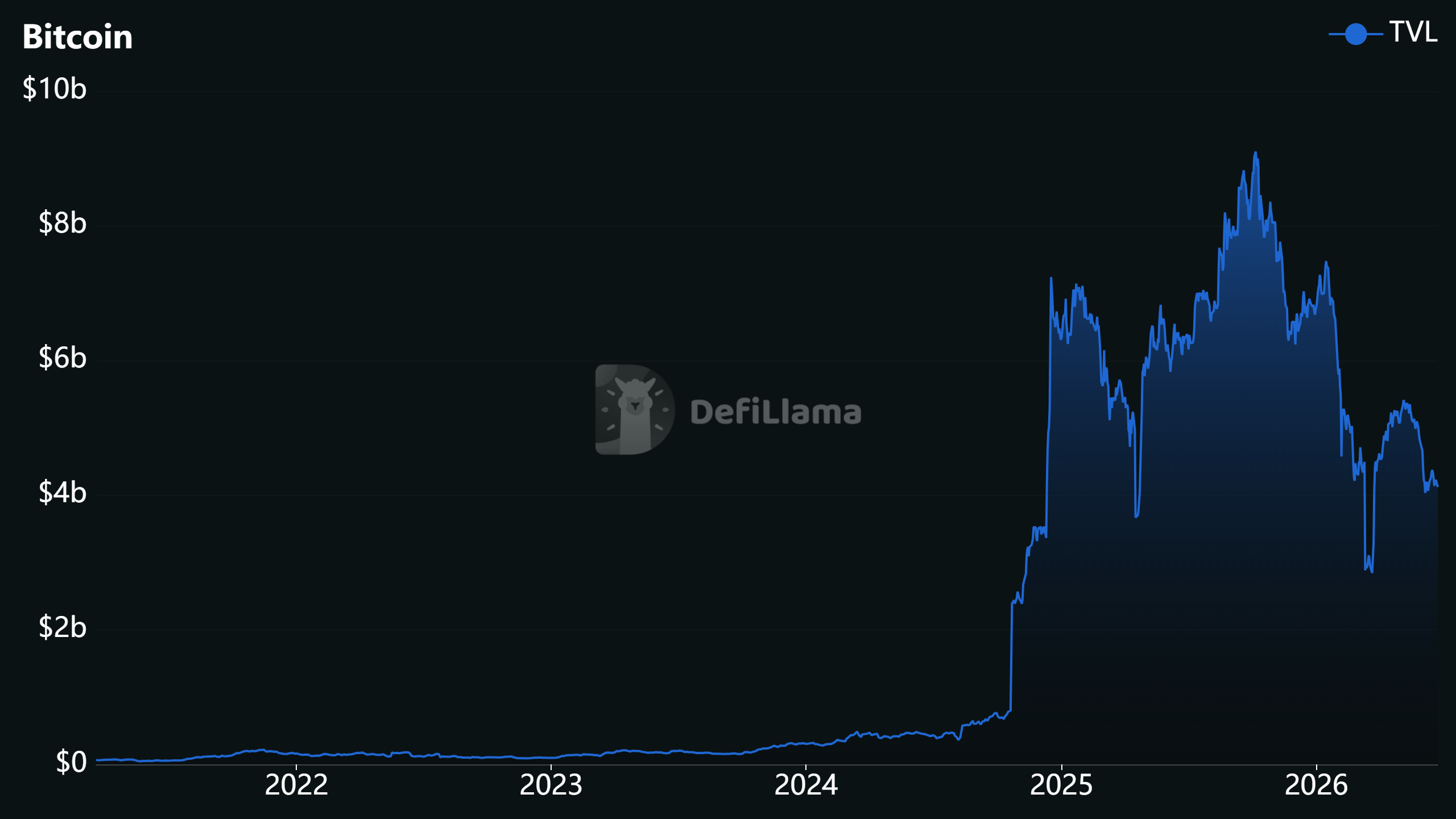
DefiLlama’s dashboard shows just $4.12 billion of total value locked (TVL) across all of the Bitcoin DeFi protocols. That’s a rounding error next to Bitcoin’s $1.2 trillion market cap, and the hundreds of billions held via spot exchange-traded funds, corporate treasuries and custodial accounts.
Andre Dragosch, head of research Europe at Bitwise, told Cointelegraph, “Bitcoin is winning decisively as a monetary asset and as pristine collateral, but the case for Bitcoin as a standalone DeFi execution layer was always structurally weaker than the narrative suggested.”
Botanix closes after four years
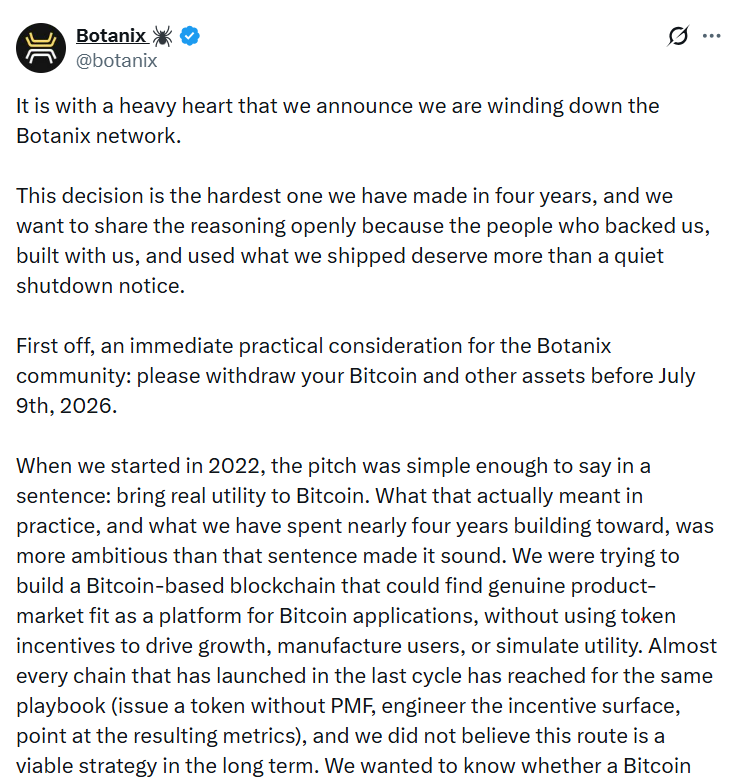
When Botanix announced it was winding down after nearly four years of work and a year of mainnet uptime, the team didn’t blame a hack or a regulatory shock; they blamed demand.
Botanix described a chain that “worked” in every technical sense: 25 million transactions, 200,000 wallets, and tens of millions of dollars in bridged funds, yet it never generated the fee volume needed to cover its infrastructure costs.
Users came for the yield, treated BTC as store-of-value collateral, and then largely stuck to passive, buy-and-hold strategies, rather than actively borrowing, trading, or moving funds often enough to generate meaningful fee volume.
Related: Fireblocks to integrate Stacks for institutional-grade Bitcoin DeFi
Like most BTCFi stacks today, Botanix still requires users to bridge their Bitcoin into a tokenized version on a separate Ethereum Virtual Machine (EVM)-based chain before they can access DeFi. That introduces additional bridge and smart contract assumptions that worry many Bitcoiners.
Botanix’s shutdown notice. Source: Botanix
Even so, Botanix co-founder Willem Schroé told Cointelegraph that he wouldn’t have changed the core design. Despite Botanix offering what he described as “the best rates in the industry” and a more Bitcoin-aligned security model than typical wrapped BTC bridges, wrapped BTC on Ethereum still out-competed Botanix.
He attributed that to Ethereum’s “huge infrastructure network and Lindy effect,” as well as a mix of liquidity depth, user experience and regulatory comfort.
What Botanix learned about Bitcoin DeFi
The team concluded that Bitcoin is still viewed as a reserve asset rather than something that has programmable utility.
For most existing use cases like lending, leveraged exposure, or yield, a wrapped BTC position on a large, mature EVM ecosystem such as Ethereum is “genuinely sufficient” for most users. Rather than bridge into a Bitcoin-aligned EVM chain like Botanix, users preferred to stick with wBTC on venues where the liquidity, apps and integrations already exist.
Related: Mercado Bitcoin expands LatAm RWA push with $20M in Rootstock private credit
Botanix also pointed to onchain activity consolidating around venues like Hyperliquid, and major centralized exchanges and retail-facing fintechs that “own the user relationship,” leaving independent infrastructure “rowing upstream” against convenience and branding.
Wilhelm said he hopes Botanix’s wind-down “will definitely be looked at by others,” and framed the process as a professionally managed experiment whose lessons other BTCFi builders should take seriously.
Bitcoiners, DeFi and wrapped BTC
While estimates vary, only a small fraction of Bitcoin’s supply is currently productive in DeFi, and most of that sits in wrapped BTC products on Ethereum and its L2s like Base and Arbitrum, as well as Polygon, Solana and BNB Smart Chain. A smaller percentage is on “Bitcoin L2” chains, with Bitcoin-aligned L2s and sidechains accounting for a modest share of that activity by value.
Tokenized BTC products themselves represent just a sliver of the asset: A May 2026 analysis estimated that roughly $20 billion worth of BTC — less than 2% of the total Bitcoin supply — is circulating on EVM chains in wrapped form.
Total Value Locked (TVL) in Bitcoin DeFi. Source: DeFiLlama
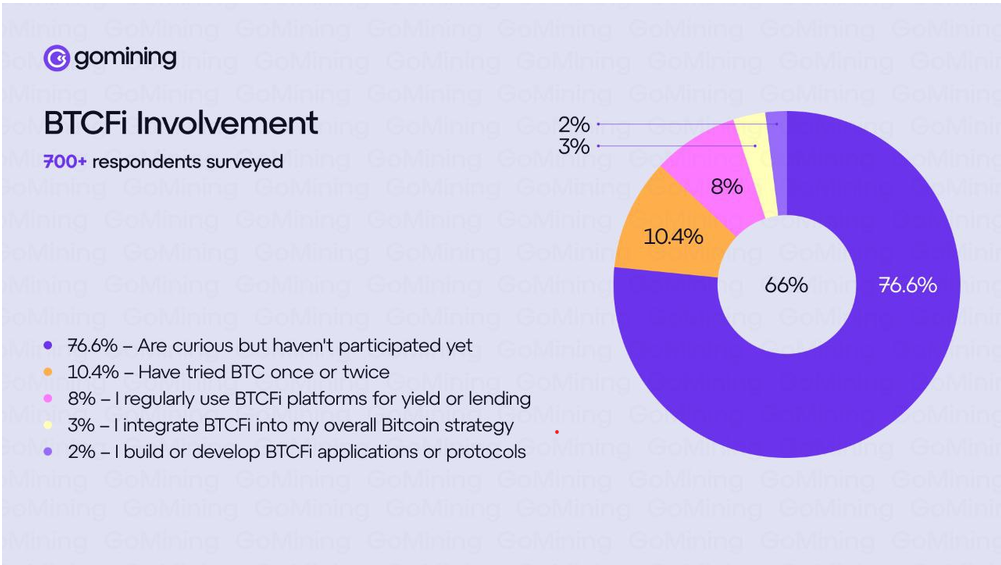
An October 2025 GoMining survey of 730 Bitcoin holders found that 77% of respondents had never used a BTCFi platform, and only 3% integrated BTCFi into their overall Bitcoin strategy.
Even allowing for sample bias (these respondents were plugged-in, survey-answering BTC holders), the numbers show that BTCFi platforms that keep users in Bitcoin-aligned stacks remain a niche activity rather than a mass behavior.
Justin d’Anethan, head of research at crypto private markets advisory firm Arctic Digital, told Cointelegraph, “There is more liquidity and better yields on EVM or SVM [Solana Virtual Machine] native solutions than on BTC solutions, period.”
When clients ask about “putting their Bitcoin to work,” the practical routes, he said, are still centralized desks, exchanges lending out BTC at 2% to 4%, basis trade structures “à la Ethena,” or institutional credit pools like Maple.
Related: Bitcoin recovery meets DeFi tensions as Aave rift deepens: Finance Redefined
He said the big obstacle for most Bitcoiners was the risk of bridging to a less secure Bitcoin L2. For “hardcore BTC maxis,” the default remains cold storage, HODLing and riding price appreciation, rather than trying to “eke out 2-3% with counterparty risk.”
Native BTCFi as a structural mismatch
Dragosch said Botanix’s failure suggested that demand for standalone Bitcoin DeFi execution layers was much weaker than their backers expected.
He argued that capital that “genuinely wants yield has migrated to wrapped BTC on mature, liquid venues rather than bridging into bespoke federations.”
In this view, the problem isn’t just that Bitcoiners haven’t “discovered” native DeFi yet; it’s that the architecture and user base are misaligned. Bitcoin’s base layer is slow, conservative and firmly anchored in the store-of-value narrative.
“Bitcoin as reserve collateral is the durable trade,” Dr. Dragosch said, “the next leg of adoption runs through institutions and balance sheets, not necessarily through onchain execution layers.”
77% of respondents have never used a BTCFi platform. Source: GoMining
Who is still building BTCFi, and for whom?
Diego Gutierrez Zaldivar, chief executive of RootstockLabs, a Bitcoin-secured, EVM-compatible sidechain, doesn’t buy the idea that there’s “no demand” for Bitcoin-backed lending, yield products or broader BTCFi services.
He said the main constraint is trust: putting in place the operational, legal and risk management frameworks that institutions need.
More than 40% of all Bitcoin DeFi activity now runs through Rootstock, he said, including real-world asset settlements and institutional vaults. Over the past year, he said, funds have started asking to deposit hundreds or even thousands of BTC at a time into Rootstock-based products; flows that were almost unheard of two or three years ago.
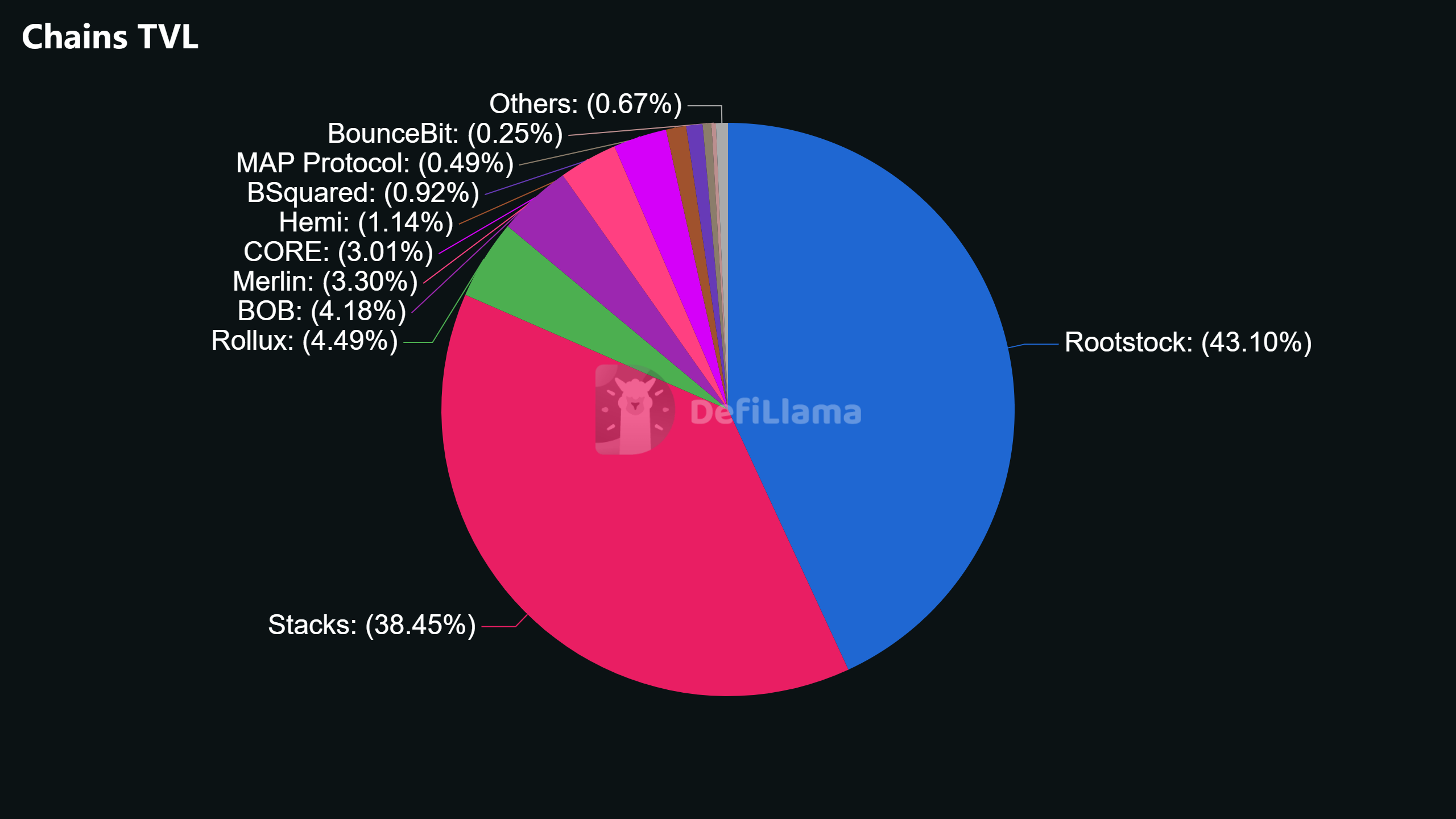
Chains TVL. Source: DeFiLlama
Orkun Mahir Kılıç is co-founder of Chainway Labs, behind Citrea, a Bitcoin-anchored rollup that keeps user assets inside Bitcoin’s security perimeter and proves its state with zero-knowledge proofs. He argued that cloning EVM DeFi primitives onto Bitcoin is a dead end, and said that Botanix’s experience is a verdict on that model, rather than BTCFi itself.
He told Cointelegraph that “more secure” doesn’t change most people’s behavior.
“People don’t price counterparty risk until something breaks,” he said. ”Where it matters” is for institutions and large holders that need trust-minimized transactions with no custodian to fail.
“For everyone else, the reason to be here isn’t the security guarantee in the abstract; it’s the applications that don’t exist elsewhere.”
Magazine: Bitcoin will not hit $1M by 2030, says veteran trader Peter Brandt
TLDR:
- Bitcoin’s apparent demand has stayed negative for 208 consecutive days, dropping to a record low of -273,000 BTC.
- Old Bitcoin supply is re-entering circulation faster than the spot market can absorb the incoming coins.
- BTC price was rejected at both $82,000 and $61,000 resistance levels, extending the pattern of lower highs.
- Analyst Kabuki projects Bitcoin could drop to $53,000 shortly and reach $42,000 by the end of July 2026.
Bitcoin’s apparent demand has remained in negative territory for 208 consecutive days, reaching a new low of -273,000 BTC.
The metric measures real spot market demand by comparing new Bitcoin supply from miner block rewards against existing inventory movement.
Old supply is now entering circulation faster than the market can absorb it. This mismatch between inflows and outflows is creating heavy overhead resistance across Bitcoin’s price structure.
Seven Months of Sustained Distribution Signal Structural Weakness
From November 9, 2025, to May 31, 2026, Bitcoin’s apparent demand hovered quietly between 0 and -150,000 BTC. That range pointed to mild but steady distribution rather than sharp selling.
The market absorbed the pressure without dramatic price moves during that stretch. However, the pattern set the stage for the sharper deterioration that followed.
On-chain analyst Ali Charts flagged the shift in a recent post, noting that apparent demand had dropped to a new low of -273,000 BTC.
The metric has since flatlined around that level, showing no signs of recovery. When apparent demand is persistently negative, it reflects a structural imbalance in supply and demand.
New capital entering the spot market is simply not enough to offset the volume of older coins moving back into circulation.
The metric is considered a reliable gauge of genuine demand because it strips out derivative activity. It focuses entirely on spot-side flows, making it harder to manipulate or misread.
A sustained negative reading over seven months carries more weight than a short-term dip. Traders and analysts watching this data now face a market where selling pressure appears to be the dominant force.
This kind of prolonged distribution cycle has historically preceded extended price corrections. Bitcoin trading at $59,855 at the time of the data release reflects the pressure building on price.
Without a clear reversal in apparent demand, recovery rallies may face sustained resistance. The current on-chain picture supports caution rather than confidence.
Price Rejections at Key Levels Fuel Bearish Projections
Bitcoin’s price action has reinforced the bearish on-chain signals with two clear rejections at technical resistance. Analyst Kabuki, writing on X, pointed out that resistance at $82,000 was rejected before the market dropped sharply. A subsequent attempt at $61,000 was also turned away, continuing the sequence of lower highs.
Kabuki, who claimed to have called the $126,000 top in October 2025 and the $15,000 bottom in November 2022, outlined a bearish price path.
The projection targets $53,000 in the near term, followed by a drop to $42,000 by July. That roadmap follows two prior rejections and aligns with a broader pattern of declining support levels.
Each failed attempt to hold above resistance adds to the case for continued downside. The combination of negative apparent demand and repeated price rejections at key levels creates a compounding bearish setup.
Buyers stepping in at current prices are absorbing supply without successfully defending any meaningful level. That dynamic tends to exhaust demand further rather than restore confidence.
Whether Bitcoin follows the projected path to $42,000 remains to be seen. However, the on-chain data and technical structure both point to a market where sellers are in control.
A meaningful shift would require apparent demand to turn positive and price to break cleanly above near-term resistance. Until that happens, the weight of evidence tilts toward continued pressure on Bitcoin’s price.
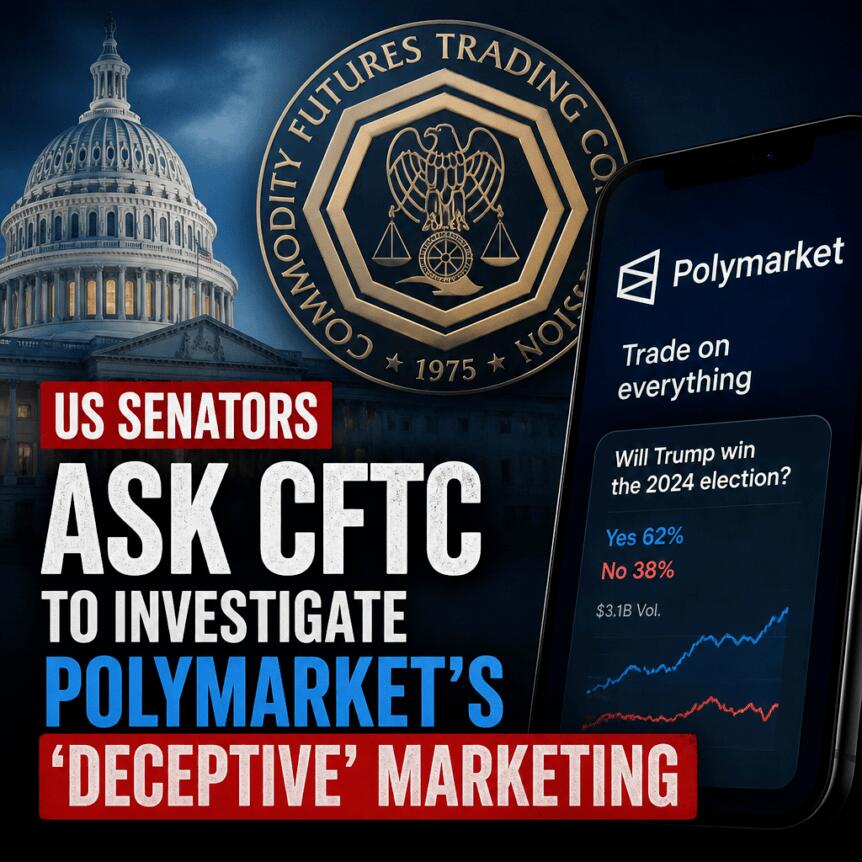
A bipartisan group of U.S. senators has urged the Commodity Futures Trading Commission (CFTC) to investigate Polymarket after a report alleged the prediction market platform paid social media influencers to promote fake bets without clear disclosure. The move raises fresh questions about how regulators should treat event-based prediction products as prediction markets continue to expand their footprint with mainstream audiences.
In a letter sent to CFTC Chair Mike Selig on Thursday, Republican Senator John Curtis and Democratic Senator Adam Schiff said they were concerned Polymarket “used deceptive marketing tactics to promote gambling-style products to US audiences,” according to their press release. The lawmakers called the allegations “deeply troubling” and asked for immediate scrutiny if the claims prove accurate.
Key takeaways
- Senators John Curtis and Adam Schiff have asked the CFTC to investigate Polymarket over allegations of deceptive influencer advertising tied to fake bets.
- The concerns follow a Wall Street Journal report that reviewed more than 1,100 promotional videos and found that 70% included fake bets totaling nearly $2 million.
- Reports also say the CFTC has an ongoing investigation into Polymarket, though the timeline has not been disclosed publicly.
- Polymarket said it is auditing promotional content to ensure compliance with regulatory and disclosure requirements.
- The lawmakers argue the CFTC’s approach may not adequately address the realities of how prediction markets are marketed as gambling-like products.
Senators press for CFTC scrutiny over alleged deceptive promotions
Curtis and Schiff’s letter centers on claims that Polymarket engaged social media creators to film “fake trades” on websites styled to resemble the platform, and that many creators did not disclose they were paid for the promotional work. According to the Wall Street Journal’s June 20 reporting, the publication reviewed more than 1,100 videos and found that 70% showcased fake bets amounting to nearly $2 million.
The senators framed the issue not just as a marketing dispute, but as a regulatory concern tied to consumer protection and the distinction between lawful event-contract trading and gambling-like activity. They said the CFTC has repeatedly asserted authority over prediction markets and event contracts, but argued that current enforcement and oversight appear insufficient given how content creators portray the space.
“If accurate, these allegations are deeply troubling and demand immediate scrutiny from the Commodity Futures Trading Commission,” Curtis and Schiff wrote, according to the letter described in their press release.
Wall Street Journal report and timing of CFTC inquiry claims
The senators’ intervention follows the Wall Street Journal’s report, which described extensive influencer marketing tied to content that allegedly did not reflect genuine bets on Polymarket itself. The Journal’s review suggested a large proportion of promotional videos were not merely illustrative but involved falsified trading scenarios.
Shortly after that reporting, additional coverage indicated the CFTC was already looking into Polymarket. Earlier this week, CNBC reported—citing a person familiar with the inquiry—that the CFTC is conducting an “ongoing and extensive” investigation. CNBC also said the timeline for when the inquiry began was not shared.
Polymarket did not comment on the senators’ letter or on the reported investigation. In a statement provided earlier this week to Cointelegraph, a Polymarket spokesperson said the company was “conducting a comprehensive audit of active promotional content” to ensure it meets its “standards,” as well as applicable regulatory and legal disclosure requirements.
Why the dispute matters: enforcement, disclosure, and the gambling analogy
In their letter, Curtis and Schiff argued that regulators may be missing the practical implications of how prediction markets are presented to U.S. users. They referenced the recurring framing by creators of prediction products as “free money,” and they questioned whether that marketing environment supports treating prediction markets as something fundamentally different from gambling.
The senators warned that if prediction markets are being marketed with consumer behavior in mind similar to gambling-style betting, then the legal and regulatory approach may need closer scrutiny—especially regarding advertising practices and disclosures.
The lawmakers also asserted that they remain concerned the CFTC is neither enforcing the law appropriately nor equipped to act as a federal gambling regulator. They did not claim that all prediction markets should be regulated as gambling, but their argument emphasized that the real-world presentation and consumer messaging could undermine the distinction regulators often rely on.
Questions to CFTC by July 10 and what investors should watch
Beyond asking for scrutiny, Curtis and Schiff requested written responses from CFTC Chair Mike Selig by July 10. Their list of questions included whether the agency is investigating Polymarket, whether the reported advertising practices were legal, and whether the CFTC has adequate resources to police prediction market promotions and related conduct.
The letter also reflects the broader regulatory tension around prediction markets. The CFTC has claimed authority under federal commodities law, in part because platforms register with the agency and operate through structures the commission views as falling under its jurisdiction for commodities-related event contracts.
At the same time, the CFTC’s enforcement actions against state-level challenges show how complex the governance question remains. According to earlier reporting, the regulator has sued nine U.S. states that filed legal action against prediction market operators—alleging the platforms were effectively offering unlicensed sports betting through event contracts.
For traders, users, and companies operating in the prediction market ecosystem, the immediate uncertainty is what the CFTC will determine about promotional practices and disclosure compliance. The next developments to watch are any formal regulatory findings, changes to influencer marketing requirements, and clarifications on how the agency evaluates whether promotional content crosses lines between lawful trading representations and gambling-style inducements.
With both a congressional escalation and reports of an active CFTC inquiry, the key question now is whether the regulator will treat the alleged influencer advertising as a disclosure and consumer-protection issue, a jurisdictional matter, or both—and what that means for how prediction markets market their products going forward.

Popular analyst Ali Martinez mapped out the next significant support levels for Ripple’s cross-border token after the asset marked a new multi-year low yesterday of just over $1.00.
Market observers remain convinced that XRP has reached its most critical level in this cycle, one that could determine the next major leg up (or down).
What’s Next, XRP?
It’s safe to say that the cryptocurrency market has seen better days, which weren’t all that long ago. Ripple’s native asset is no exception. The token challenged $1.60 in mid-May before it plummeted to $1.05 in early June. It then rebounded to $1.30, only to be rejected once again. The latest leg down drove it south to $1.01 (on most exchanges) yesterday.
Ali Martinez weighed in on the asset’s recent performance, which included a bounce to the current $1.04. He noted that the token is testing a “major volume block at $1.06,” a significant cluster in which over 830 million XRP changed hands. This has made it the most important level above $1.00 to watch, but it has given in as of press time.
According to the analyst, this puts the next major such clusters in focus, but they are positioned well below these levels. The first, with 923 million XRP transacted, is at $0.80, while the two larger ones, with 1.16 billion and 1.06 billion XRP transacted, are at $0.62 and $0.51.
This makes the current level (and moment) highly important for XRP, which coincides with CasiTrades’ opinion. As reported yesterday, she explained that the token has approached its final capitulation level with people calling for lower and lower prices. However, she believes the ongoing retracement is “doing exactly what it should,” making it the “perfect market structure.”
Whale Wrecked
The Thursday crash wiped out over 200,000 traders, as the total value of liquidations topped $1.5 billion. One of those was a major bitcoin and XRP whale, who got wrecked hard. Data from Lookonchain shows that almost $48 million in BTC and $28.5 million in XRP in longs were liquidated from a single wallet ending in 0xf79C.
The market crash just wiped out whale 0xf79C’s longs.
His 809.9 $BTC($47.68M) and 27.92M $XRP($28.45M) long positions were fully liquidated, resulting in a $8.42M loss.https://t.co/VDxArX3Y4q pic.twitter.com/VAd7ImvNNb
— Lookonchain (@lookonchain) June 25, 2026
The post What Are XRP’s Most Important Levels After Crash to $1.00? appeared first on CryptoPotato.
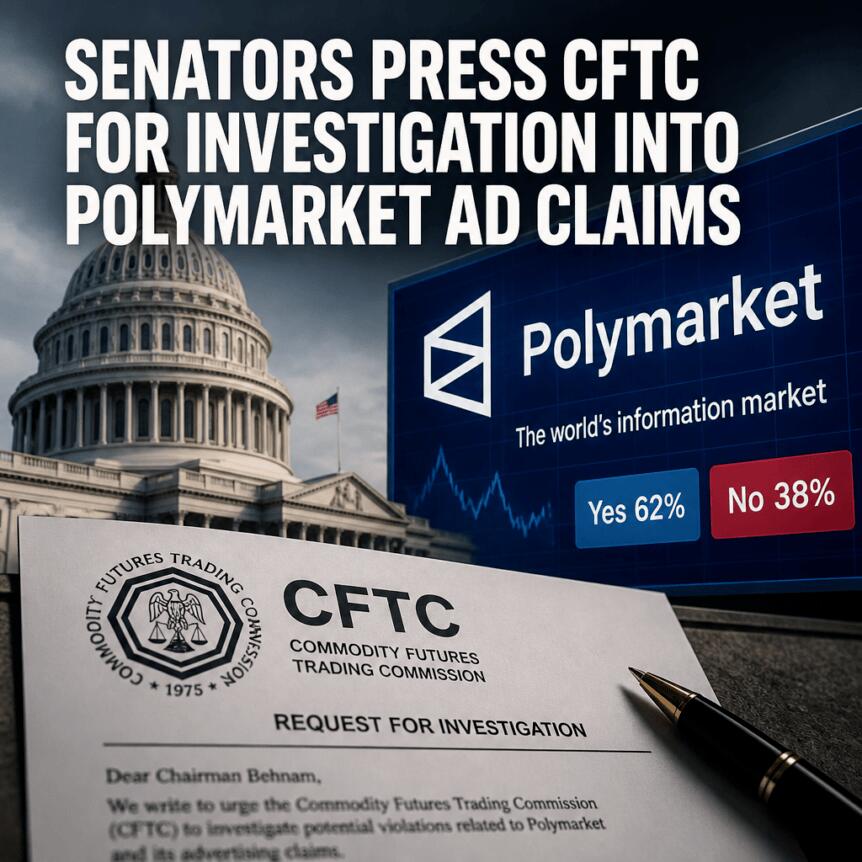
A bipartisan group of US lawmakers has asked the Commodity Futures Trading Commission (CFTC) to examine Polymarket after reports that the prediction market operator paid social media influencers to publish videos depicting fake bets. The request highlights intensifying scrutiny over how prediction platforms market products to US audiences—and whether existing CFTC oversight is sufficient to address deceptive advertising and gambling-style promotion.
In a letter to CFTC Chair Rostin Behnam, Senators John Curtis (Republican) and Adam Schiff (Democrat) said the allegations, if accurate, would point to “deceptive marketing tactics” used to promote gambling-like products. The correspondence follows investigative reporting by The Wall Street Journal and comes as the CFTC’s broader approach to prediction markets remains a subject of legal and policy dispute.
Key takeaways
- US Senators John Curtis and Adam Schiff have asked the CFTC to investigate Polymarket following allegations of deceptive influencer promotion.
- Reports cited by lawmakers describe videos showing fake trades on content styled like Polymarket, with limited or no disclosure that creators were paid.
- The lawmakers questioned whether the CFTC is enforcing existing rules effectively and whether it has the resources to regulate prediction market advertising and conduct.
- The request underscores ongoing tension between federal commodity regulation and state-level efforts to treat prediction markets as gambling or sports betting.
- Institutional compliance teams may face heightened scrutiny of marketing practices, influencer disclosures, and the product characterization used by prediction market platforms.
Senators request CFTC scrutiny over reported influencer promotions
The senators’ letter—sent to the CFTC—centers on concerns that Polymarket allegedly used influencer campaigns to promote its platform using content that did not reflect real trading activity. According to reporting by The Wall Street Journal, Polymarket paid influencers to record videos of “fake bets” on websites resembling the platform, and many creators reportedly did not disclose that they were being compensated by Polymarket.
The Journal said it reviewed more than 1,100 videos and found that roughly 70% depicted fake bets totaling nearly $2 million. The senators framed the conduct, if verified, as both a consumer protection and regulatory enforcement issue—arguing that marketing practices can distort how US audiences perceive the risks and nature of prediction market products.
In response to the earlier reporting, a Polymarket spokesperson told Cointelegraph that the company was “conducting a comprehensive audit” of active promotional content to ensure compliance with its standards and applicable regulatory and legal disclosure requirements.
Regulatory authority and the “gambling-style” framing debate
Beyond the specific allegations, Curtis and Schiff raised broader questions about how prediction markets should be regulated in the US. In their letter, they argued that the CFTC has repeatedly claimed authority over prediction markets and event contracts, yet they described a marketing environment in which content creators often depict prediction products as “free money.”
The senators contended that these representations provide little basis for treating prediction markets differently from gambling-style offerings. They also warned that the contracts are not in the public interest and should not be treated as derivative products with hedging characteristics.
While the senators’ argument is policy-oriented, it is also operational from a compliance perspective: product characterization affects which regulatory frameworks apply, how marketing claims are reviewed, and whether conduct could be evaluated under commodity laws, anti-fraud standards, or state gambling statutes.
The dispute is occurring against a backdrop of increased prediction market use and regulatory attention. US lawmakers have highlighted concerns about the CFTC’s ability to police content and advertising, including how promotional campaigns influence consumer perceptions—particularly when promotions resemble or mimic real trading.
What the CFTC investigation could examine
The letter asks the CFTC to provide written answers by July 10 to several questions, including whether it is investigating Polymarket, whether the reported advertising practices were legal, and whether the commission has sufficient resources to police prediction markets. The senators’ requests reflect an enforcement focus that goes beyond marketplace mechanics—targeting marketing disclosures, promotional content integrity, and the adequacy of regulatory capacity.
Multiple reports have indicated that the CFTC is considering enforcement steps. CNBC, citing a person familiar with the inquiry, reported that the CFTC has an ongoing and extensive investigation into Polymarket, though the timeline for when it began was not disclosed. Polymarket declined to comment on the senators’ letter and on the reported investigation.
In practice, an inquiry of this kind could also involve scrutiny of influencer marketing controls—such as disclosure requirements, the use of simulations or staged content, and whether promotional material could be viewed as misleading. For regulated firms and institutional counterparties, such issues matter because marketing representations can be linked to compliance risk, reputational risk, and potential legal exposure under consumer protection and anti-fraud principles.
Federal vs. state oversight: the broader legal context
The Curtis-Schiff letter arrives amid persistent federal-state regulatory friction over prediction market platforms. The CFTC has argued that it holds authority over prediction markets because platforms are registered with the agency and operate under federal commodities law.
At the same time, the CFTC has pursued litigation tied to state efforts to regulate prediction markets. The regulator has sued nine US states that filed legal action to accuse prediction market platforms of offering unlicensed sports betting through event contracts.
This federal posture remains politically and legally contested. For compliance teams, the key uncertainty is that even when platforms argue they fall within commodity regulation, marketing practices can become a flashpoint—particularly if promotional content is perceived by regulators or litigants as indistinguishable from gambling or sports betting activity.
MiCA is not directly implicated in these US disputes, but the situation offers a broader institutional lesson: cross-border crypto businesses must manage divergent regulatory interpretations across jurisdictions. In the US, characterization battles can flow from product design and contract structure into advertising and promotion, creating compliance obligations that extend well beyond technical listings or trading interfaces.
Closing perspective
As lawmakers press for answers from the CFTC, the immediate focus will likely be on whether promotional campaigns and influencer arrangements complied with disclosure expectations and anti-misleading standards, and what enforcement resources the agency can deploy across a fast-growing prediction market ecosystem. The outcome could shape how regulated platforms structure marketing approvals, manage influencer relationships, and document compliance—while leaving unresolved questions about the line between commodity-regulated contracts and gambling-style promotion.


🎧 Listen to Interview 💻 Watch Video MoneyGram does not need an introduction. The company moves money across roughly 200 countries and territories, some 20,000 corridors, and about 500,000 retail locations, and it has done so for more than 80 years. What has changed is where the plumbing runs…. Read the full story at The Defiant

On-chain analytics firm Glassnode said XRP holders continue to realize more losses than profits, as a key indicator dropped to its lowest level since August 2022. The decline points to intensifying selling pressure as more holders move coins at a loss.
According to the firm’s June 25 update, the 90-day simple moving average of XRP’s Realized Profit-to-Loss Ratio fell to 0.33 from 0.38 on June 9. The metric compares realized profits with realized losses from coins moved on-chain and helps measure the market’s overall profitability.
Realized Profit-to-Loss Ratio Signals Deepening Capitulation
A reading above 1 indicates that realized profits exceed realized losses, while a value below 1 shows that losses dominate. At the current level, the ratio implies that only 33 cents of profit is realized for every one dollar of realized losses.
Glassnode noted that the ratio reached about 50 during XRP’s 2025 market peak, reflecting a period when profit-taking significantly outweighed loss-making sales. The sharp decline since then points to a major shift in market conditions, with more holders exiting their positions at a loss.
Based on these readings, the analytics firm said the market is showing signs of intense capitulation among participants moving coins on-chain. It added that the continued weakness in the ratio suggests capitulation pressure has become more pronounced in recent weeks.
Transaction Fees Decline Alongside Holder Profitability
Separate data shared by the firm on June 9 also showed a steep reduction in activity on the XRP Ledger. The 90-day average of total transaction fees dropped from 5,900 XRP in February 2025 to about 500 XRP, representing a decline of roughly 91.5%.
Together, Glassnode’s charts suggest that weakening network activity has accompanied the deterioration in holder profitability. The realized profit-to-loss ratio climbed sharply during the 2025 rally before falling steadily through late 2025 and into 2026. Total transaction fees followed a similar downward path after the speculative peak.
The weak on-chain readings have prompted mixed interpretations among market participants. Some market participants on X said such low readings could indicate sellers are becoming exhausted. Others pointed to XRP remaining above the $1 level despite the weak profitability data.
The post XRP Selling Pressure Intensifies as Profit-to-Loss Ratio Reaches Multi-Year Low appeared first on CryptoPotato.
Key takeaways:
- SOL’s rebound to $72 shows bullish futures and airdrop hopes, but falling TVL and low DEX volumes point to fragile onchain demand.
- Tokenized stocks spark hype on Solana, yet Pump.fun dependence and Hyperliquid competition threaten sustained SOL momentum.
Solana native token SOL jumped to $72 on Friday, distancing itself from the $64 lows the prior day. Part of traders’ optimism stemmed from the stellar growth of tokenized stock trading, fueled by the AI sector. However, increasing competition in decentralized application networks could limit SOL’s short-term upside.
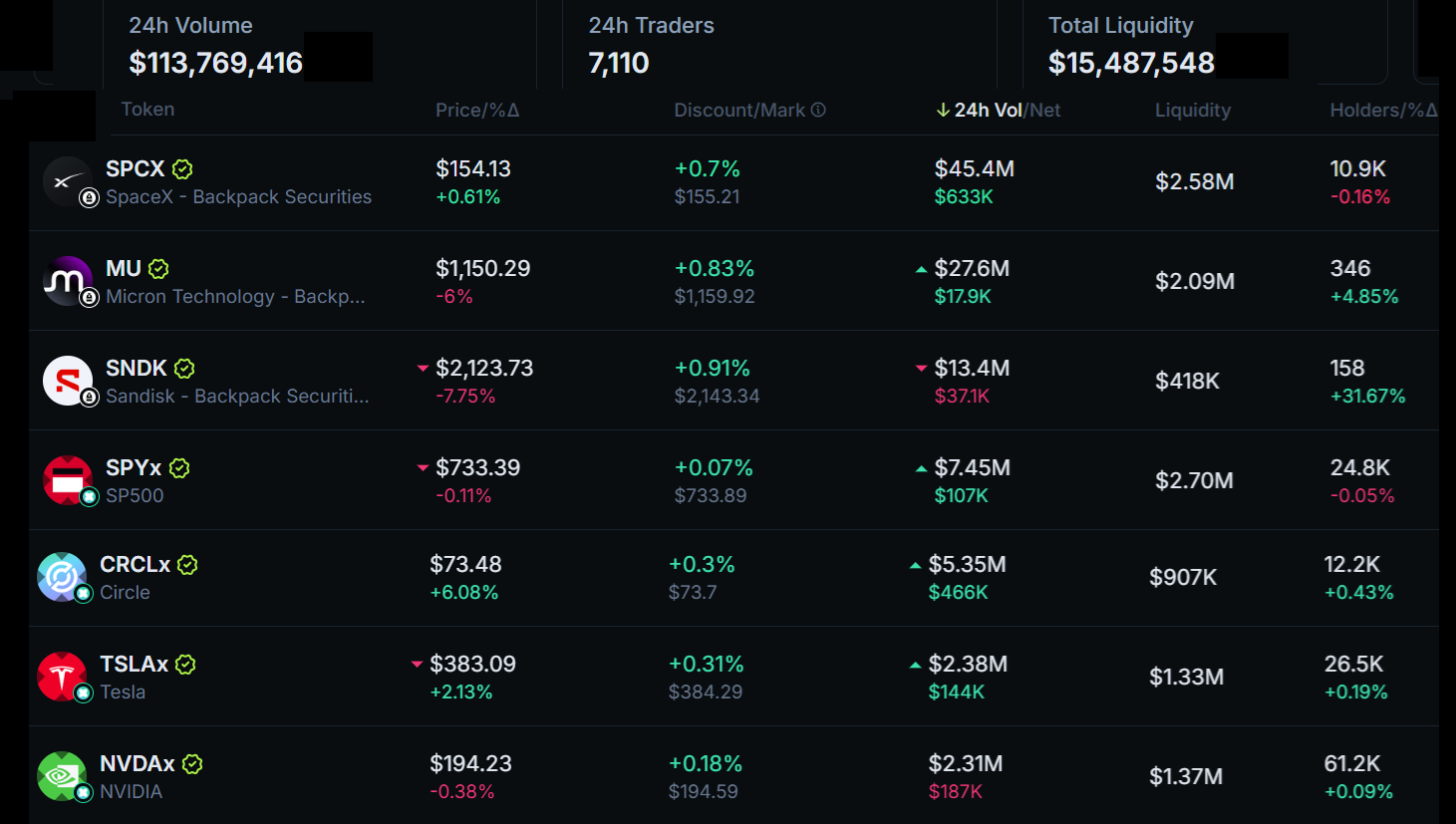
Solana tokenized stocks 24-hour volumes, USD. Source: Jupiter Aggregator
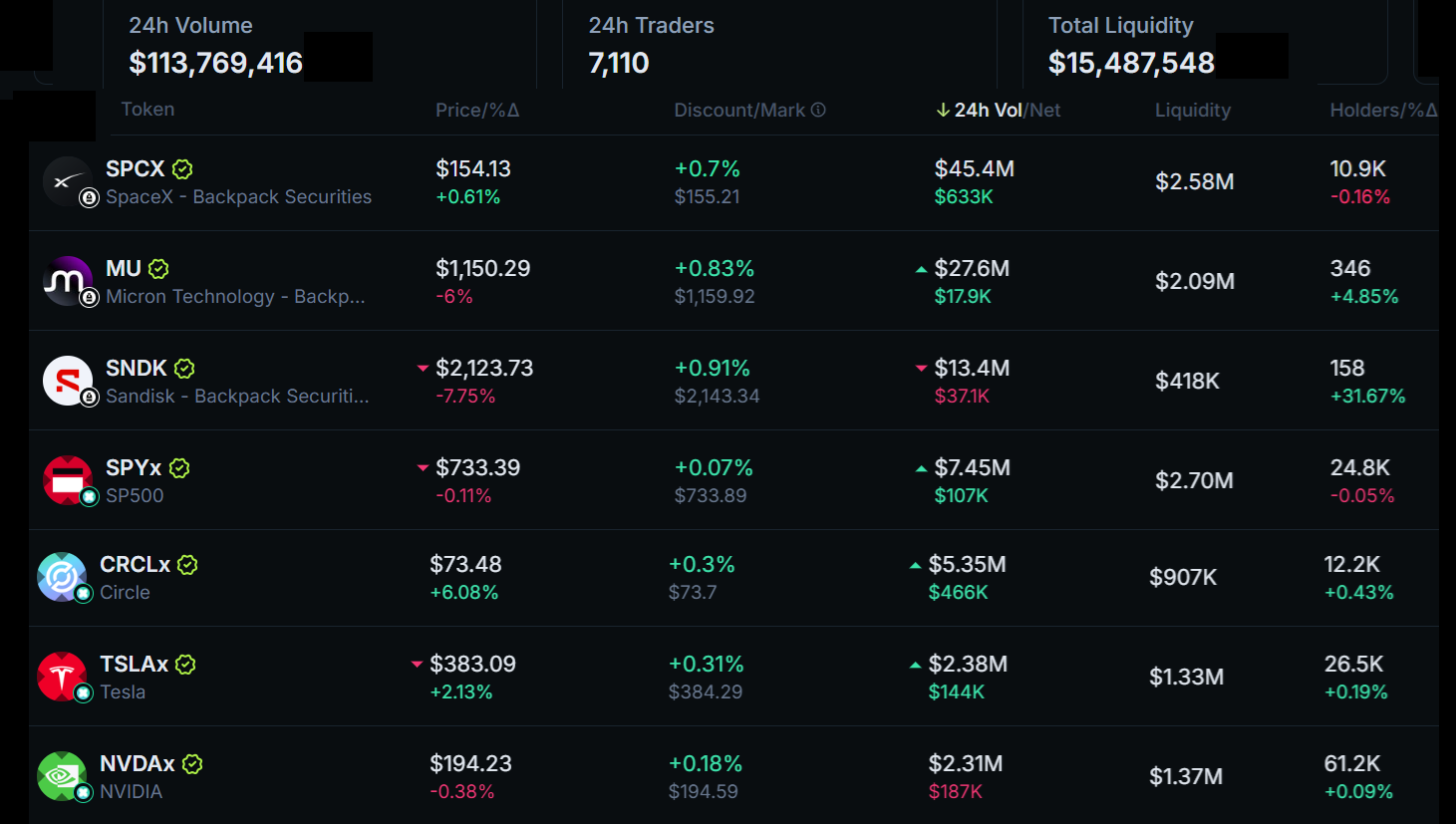
Tokenized stocks on Solana traded over $113 million in 24 hours, according to Jupiter Aggregator data. However, the relatively thin liquidity in the automated market-making pools raised concerns, especially as multiple issuers compete for similar products. Still, some of those tokens launched only recently, which might explain the low number of holders in most cases.
Blockchains ranked by DeFi Total Value Locked (TVL), USD. Source: DefiLlama
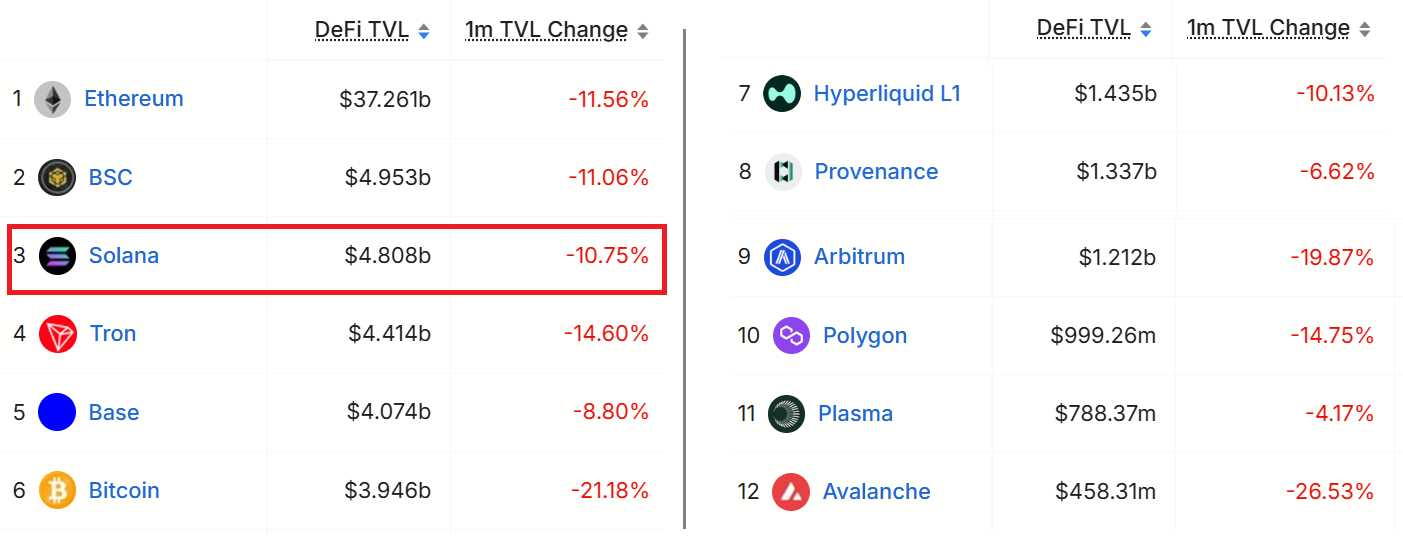
The Total Value Locked (TVL) on the Solana network dropped 11% over the past month, while the Ethereum layer-2 Base reduced the gap. Negative highlights on Solana TVL include a 19% decline in Kamino, a 20% trim by Binance Staked SOL, and a 17% decline in Raydium. The tokenization platform xStocks, on the other hand, posted 31% growth in TVL.
Solana weekly DEX volumes & DApps revenue, USD. Source: DefiLlama
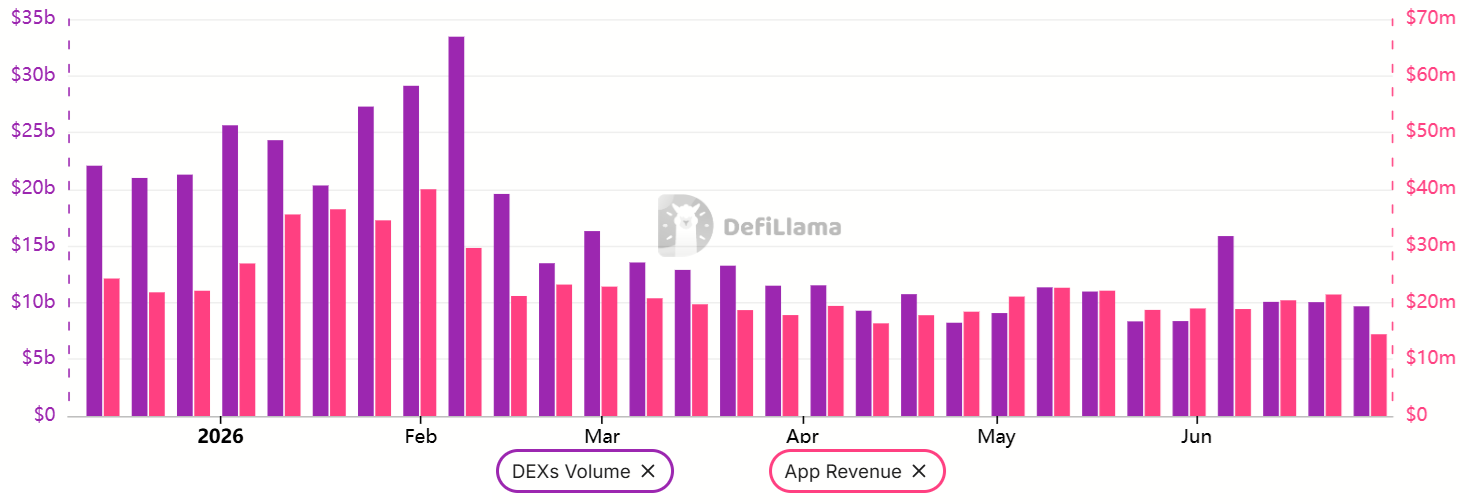
Decentralized exchange (DEX) volumes on Solana fell to $10 billion per week from $30 billion in early February, coinciding with a downtrend in decentralized application (DApp) revenues. Thus, regardless of the successful launch of tokenized tech stocks and equity indexes, demand for SOL on blockchain processing remains subdued.
Solana’s dependence on Pump.fun and increased competition in tokenized launches
More concerningly, 30% of DApp revenue on Solana came from the token launch platform Pump.fun, which depends heavily on memecoin activity. A CoinGecko report revealed that 80% of the 18.7 million tokens launched in less than 48 hours, while 55% of the addresses involved lost up to $1,000 according to Dune data.
SOL perpetual futures annualized funding rate. Source: Laevitas
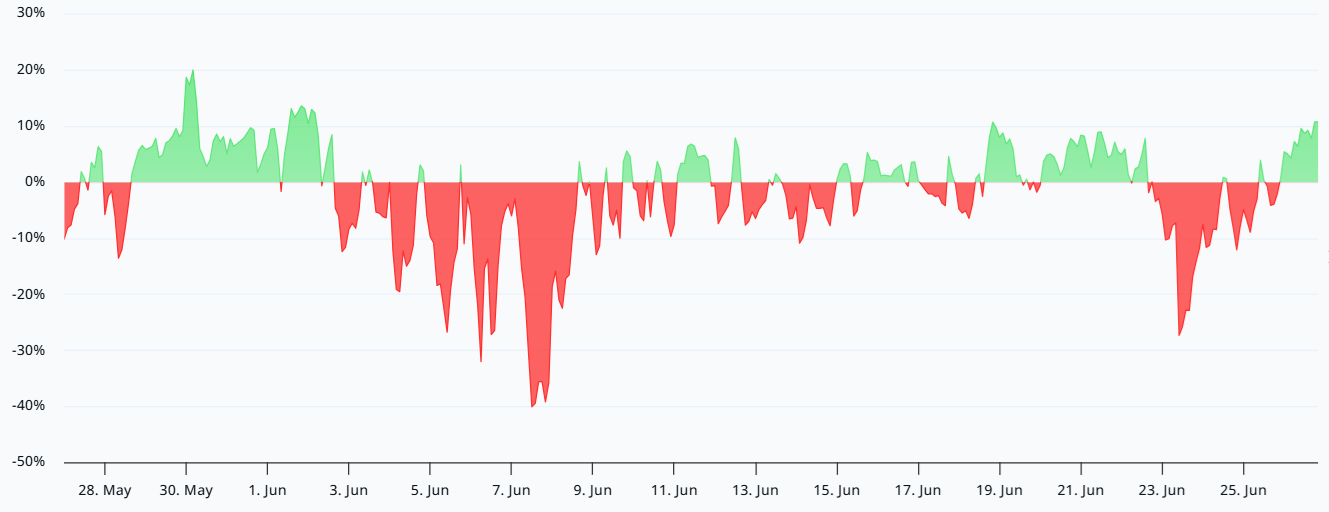
Demand for bullish leverage on SOL futures increased on Friday, pushing the funding rate to its highest level in June. The current 10% level is far from displaying excessive confidence, as the 6% to 12% range is typically deemed neutral. Still, the 14% gains since the $64 low on Thursday managed to reverse the bearishness marked by negative funding rates.
Related: Solana grabs 95% of tokenized equity as traders debate if SOL bottom is in
Part of SOL investors’ optimism stems from anticipation of airdrops on the network, although the timing of those tokens’ launch remains uncertain. Highlights include OnRe reinsurance with $200 million in TVL, Bulk perpetual DEX with an aggregate open interest of $325 million, and Loopscale lending platform at $79 million in TVL.
It might be premature to claim that SOL is bound to reclaim the $80 mark, last seen on June 1, given increased competition in tokenized stock trading from Hyperliquid and centralized exchanges on competing blockchains. OKX, for instance, formed a strategic partnership with the NYSE parent company using Ethereum-based systems.
This Friday, we examine Ethereum, Ripple, Cardano, Binance Coin, and Hyperliquid in greater detail.
Ethereum (ETH
This week, Ethereum crashed by 8% as most of the market turned red and key support levels were broken. For ETH, the price has settled at the $1,500 support, which appears to be holding at the time of this post. The current resistance is at $1,800.
The last time this cryptocurrency was at this price level was early 2025. Back then, ETH bounced there, triggering a sustained rally that set a new record price. However, it’s unlikely this will be repeated here.
Looking ahead, Ethereum shows a lot of weakness, and sellers may try to break below $1,500 and turn this level into a key resistance. If successful, then the next major support will be found around $1,000.

Ripple (XRP)
XRP fell by 9% this week and is inches away from losing the support at $1. This is a psychological level that will determine the price action of this cryptocurrency in the weeks and months to come.
If $1 turns into resistance, then the price will likely spend most of the year under this level, with the next key support found at 80 cents. Since sellers have the upper hand, it would take a miracle to stop them at $1.
Looking ahead, XRP is found at a critical junction. Considering the existing downtrend, a price under $1 is very likely as bears continue to dominate. Such a scenario would only prolong the bear market with lower lows.

Cardano (ADA)
This week, ADA closed 12% lower and lost its key support at $0.15. The price failed to hold there, and this level is now acting as a resistance. The last time the price was this low was late 2020.
The recent weakness displayed by Cardano is quite concerning since the downtrend has been accelerating and picking up speed, including in terms of sell volume. Nothing seems able to stop this.
Looking ahead, with buyers gone, the price will be forced to go lower until it finds them, most likely around 10 cents. Best to stay away from ADA until it finally forms a bottom. This appears quite a distance away right now.

Binance Coin (BNB)
Binance Coin remained bearish this week after it lost 2% of its valuation. While that is not significant, the bigger worry is the loss of support at $580, which is now acting as a resistance.
Buyers failed to reclaim that support level, and, being on the defensive, they have likely retreated to the next support at $500. Because of this, the BNB price may slowly grind lower towards that in the weeks to come.
Looking ahead, this cryptocurrency remains in a clear bearish trend with lower highs and lower lows, even if it moved sideways for almost six months in the first part of 2026. Best to be patient on BNB until it finds a bottom as well.

Hype (HYPE)
After a great performance for most of 2026, HYPE appears to struggle now, being unable to make higher highs. The price topped just under $76, and since then, a correction has started with key resistance levels at $76 and $66.
Because of this, the price closed the week 5% lower and also recently tested the support at $60. While that has held to date, it’s likely that the correction will push this cryptocurrency lower, or even to $52, which is the bottom of this ascending channel.
Looking ahead, as long as HYPE can stay above $52, buyers have the advantage. However, any price under $52 would turn the chart bearish and send this into a deeper and sharper correction.

The post Crypto Price Analysis Jun-26: ETH, XRP, ADA, BNB, and HYPE appeared first on CryptoPotato.
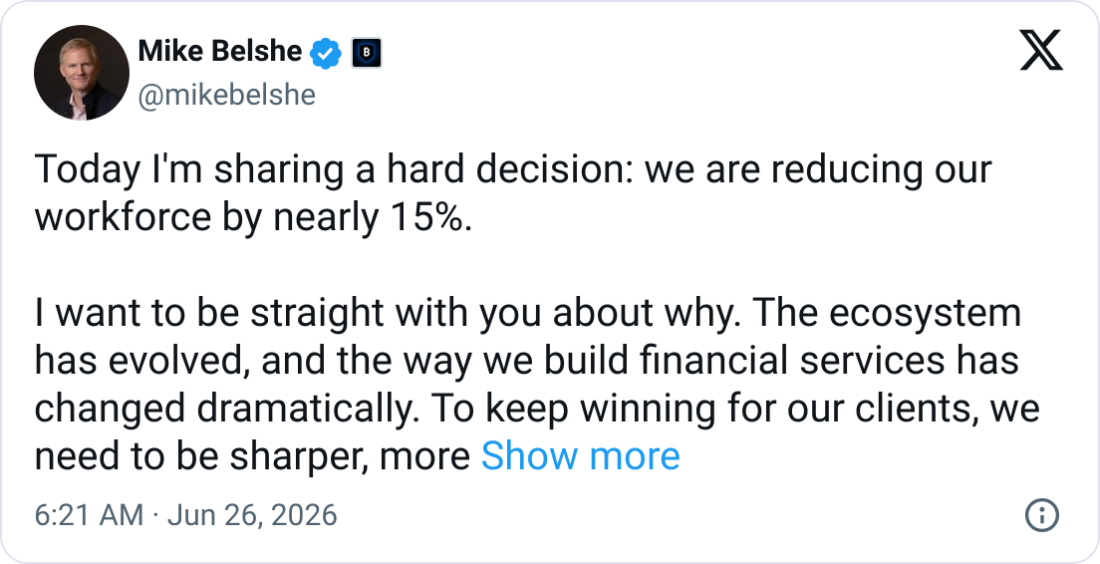
Crypto infrastructure company BitGo Holdings laid off about 15% of its staff on Thursday as its CEO pledged to focus the company on areas including trading, stablecoins and artificial intelligence.
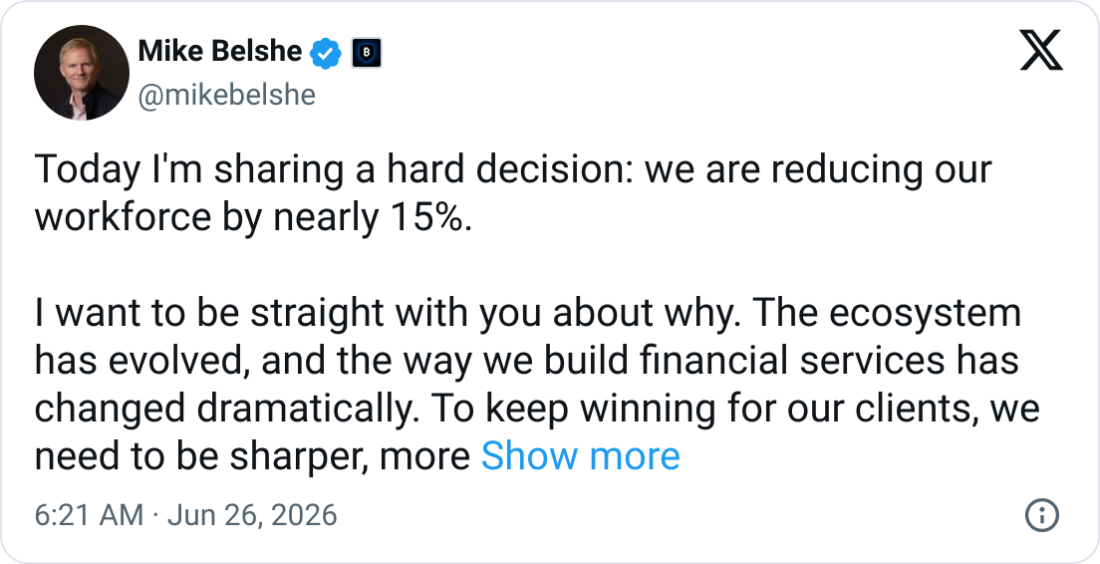
“Today I’m sharing a hard decision: we are reducing our workforce by nearly 15%,” BitGo co-founder and CEO Mike Belshe posted to X on Thursday. “The ecosystem has evolved, and the way we build financial services has changed dramatically.”
“We need to be sharper, more focused, and concentrate our people and energy on the areas that matter most: security, trading, stablecoins, settlement, and AI-powered infrastructure,” he added.
The layoffs add to the thousands of jobs lost in the crypto industry so far in 2026, with many companies citing efficiency gains from AI and a wide crypto market slump as the reason for the cuts.
Source: Mike Belshe
BitGo did not confirm the number of staff affected in the layoffs. Its 2025 annual report published in March disclosed it had 603 full-time employees as of Dec. 31, 2025, meaning the layoffs could have impacted about 90 staff.
Belshe said the layoffs were “a one-time action” and BitGo does not “anticipate further reductions.” The company is still hiring for 51 roles across various regions, according to its job board.
BitGo did not immediately respond to a request for comment.
Related: Blockworks acquires Messari in crypto data consolidation push
Shares in BitGo (BTGO) closed Thursday down 4.67% at $4.80, extending a nearly 73% slide from its public debut at $18 on Jan. 22.
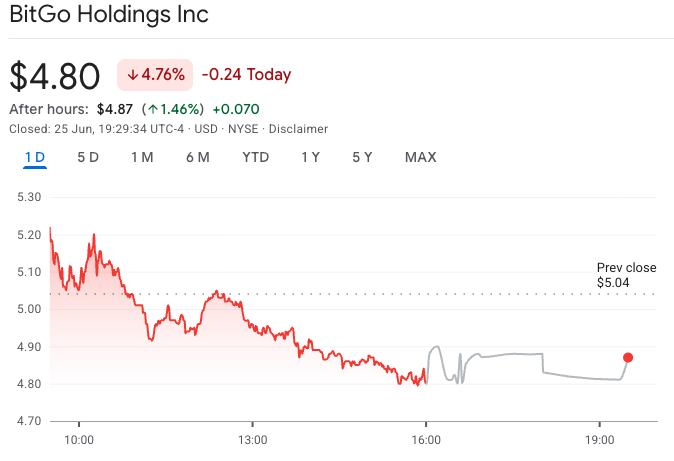
Shares in BitGo on Thursday slid more than 4.5% after the company announced it cut 15% of its staff. Source: Google Finance
Crypto companies have so far cut more than 5,000 jobs this year, with Block Inc. undertaking the biggest round of layoffs by cutting 4,000 staff or about half its workforce in February.
Robinhood cut 10% of its workforce on June 16, while in May, crypto exchange Kraken cut 150 staff, data company Dune cut 25% of its workforce and Coinbase cut 700 employees, or about 14% of its workforce.
Earlier this year, Gemini laid off 200 employees and Crypto.com also laid off about 180 staff, with both citing the rising use of AI.
So far this year, the wider US technology sector has seen over 121,500 layoffs from over 200 companies, according to Layoffs.fyi.
Magazine: Guide to the top and emerging global crypto hubs: Mid-2026

FTC gives Musk the OK to acquire SpaceX alumni startup Mesh

Common Money Wasters the Average American Falls For

As the temperature rises, so do the risks for people living with interstitial lung disease


-

 Entertainment6 days ago
Renter of Home in Anne Heche Crash Denies Settlement With Son
-
 Sports3 days ago
Two goals and an assist by sheer aura: Cristiano Ronaldo just entered the World Cup chat
-

 Tech5 days ago
Microsoft accidentally kills epic Outlook email threads
-

 Business6 days ago
Soccer-U.S. defends Iran World Cup travel restrictions, says discussions ongoing
-

 Fashion10 hours ago
Weekend Open Thread: Staud – Corporette.com
-

 Politics22 hours ago
The House | Manchesterism won’t survive the painful trade-offs unless it gets citizens on board
-

 Politics7 days ago
Andy Burnham and the meaning of Makerfield
-

 Politics1 day ago
Potential 2028er World Cup attendee leaderboard
-

 Tech1 day ago
A Look At A Gaggle Of Transputer Boards
-

 Business20 hours ago
Asia stock markets slide as tech shares slump
-
Crypto World3 days ago
Bitcoin (BTC) Dips Below $62K, Ethereum (ETH) Plunges 6% Daily: Market Watch
-

 Crypto World3 days ago
Securitize Wraps Roubini's SEC-Registered ETF as Dubai VARA Digital Security
-
 Crypto World1 day ago
Dell (DELL) Shares Tumble Over 5% Following Analyst Downgrade to Hold
-
Business3 days ago
Entergy settles forward sale agreements, raises $672 million in cash proceeds
-
 Crypto World7 days ago
Can Charles Hoskinson Really Rescue Cardano?
-

 Sports7 hours ago
FIH Pro League: India defeat Pakistan 7-1, register biggest win of campaign | Other Sports News
-

 Crypto World11 hours ago
RTX holders must register wallets before token distribution begins
-
Crypto World14 hours ago
Hyperliquid Named on Singapore MAS Investor Alert Register
-

 Crypto World7 days ago
Jake Chervinsky accuses CME of protecting derivatives monopoly
-

 Sports2 days ago
India vs Bangladesh LIVE Score, Women’s T20 World Cup: Bangladesh Opt To Bat; India Enter ‘Do-Or-Die’ Stage As Semi-Final Race Heats Up
You must be logged in to post a comment Login