
Crypto World
Ripple Backs FixCleanup3_3_0 Amendment As XRP Ledger 3.3.0 Nears

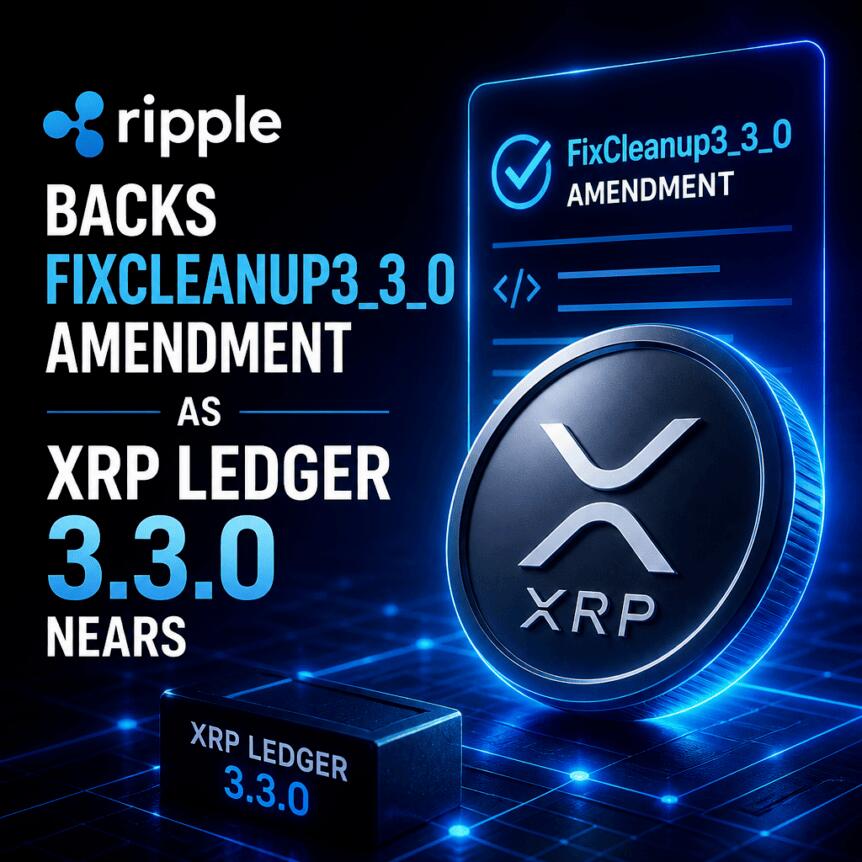
Ripple has backed the fixCleanup3_3_0 amendment, and the move pushes the XRP Ledger toward its 3.3.0 upgrade. The amendment bundles several bug fixes and protocol cleanups into one package. It targets Single Asset Vaults, the Lending Protocol, and other core ledger components.
FixCleanup3_3_0 Amendment Gains Early Support
Ripple cast its vote during the early voting stage, and the action signals strong company support. Eight of 35 UNL validators currently back the proposal, according to the latest voting data. The amendment still needs wider validator backing before it can activate.
Mainnet activation requires an 80% threshold, or 28 of 35 validator votes. Validators must also sustain that support for two consecutive weeks. Only then does the amendment take effect on the live network.
The fixCleanup3_3_0 package covers fixes for Automated Market Makers and the permissioned DEX. It also addresses Checks and pseudo-accounts within the ledger. Node operators must upgrade to XRP Ledger 3.3.0, or they risk amendment-blocked status once the upgrade activates.
XRP Ledger 3.3.0 Upgrade Moves Forward
Five other amendments remain in the voting stage alongside fixCleanup3_3_0. These include Confidential Transfer, BatchV1_1, and DynamicMPT. PermissionDelegationV1_1 and Sponsor round out the current list of proposals.
Developers have also outlined several non-feature improvements tied to the upgrade. The changes include a 10-15% reduction in memory usage. Online delete and node sync performance also see notable gains.
The upgrade further expands test coverage across the network’s codebase. These changes aim to boost stability and improve overall performance. Ripple positions the release as groundwork for institutional and tokenization use cases.
XRP Price Reacts Amid Mixed Derivatives Signals
XRP has risen almost 3% over the past 24 hours, and whale wallet activity has climbed alongside it. The token trades at $1.02 as network activity picks up. Trading volume has rebounded 16% within the same 24-hour window.
Derivatives data from CoinGlass tells a different story, though. Selling activity has increased in the futures market despite falling CPI inflation. Total XRP futures open interest dropped more than 0.65% within an hour.
That decline followed a recent bounce above $2.70 billion in open interest. CME futures open interest still holds a 1.31% gain over 24 hours. Open interest has slipped on Binance, OKX, Bybit, and other major exchanges.
The mixed derivatives picture contrasts with the network’s broader upgrade momentum. Ripple’s support for fixCleanup3_3_0 adds weight to the 3.3.0 rollout. Validators now hold the next steps toward full amendment activation in their hands.
Traders tracking this shift can compare features across major crypto derivative platforms. Funding rates and liquidity depth vary widely between exchanges. Such comparisons help traders position themselves as the upgrade unfolds.

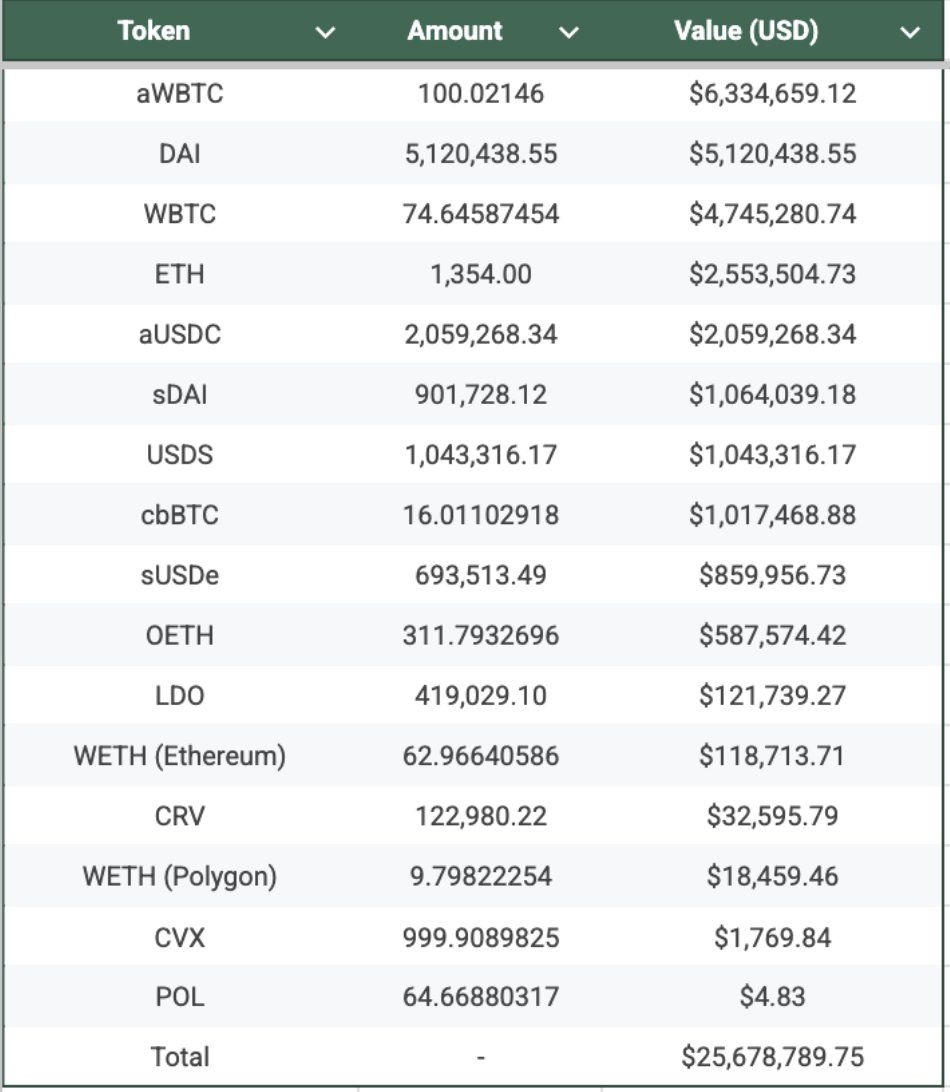
An unknown crypto whale lost $25.6 million after an attacker drained their wallet. The hacker swapped the stolen assets into Dai (DAI) and Ethereum (ETH), onchain analyst Specter reported.
The same wallet lost $24.2 million to a phishing attack in September 2023. Afterward, the attacker returned roughly 90% of the funds.
Follow us on X to get the latest news as it happens
Attacker Drains aWBTC, DAI, and WBTC From Whale Wallet
Blockchain security firm PeckShield detailed the largest holdings taken. This included $6.3 million in aWBTC. DAI losses totaled $5.1 million, while direct Wrapped Bitcoin (WBTC) holdings totaled $4.7 million.
Roughly $2.6 million in ETH also left the wallet. Smaller balances of cbBTC, USDS, Lido DAO (LDO), and Curve DAO (CRV) went the same way.
The attacker converted the proceeds into 20 million DAI and 3,000 ETH. The stolen funds now sit across four addresses.

Whale Fell Victim to a $24.24 Million Phishing Attack in 2023
The victim has a costly history. PeckShield reported in September 2023 that the same whale lost $24.2 million to phishing, including about 4,851 rETH and 9,579.2 stETH.
That phisher swapped the tokens for roughly 13,785 ETH and 1.64 million DAI. These two incidents have now cost the address almost $50 million combined.
The theft lands during a busy month for crypto security. DefiLlama has separately logged 13 hacks in August, with tracked losses above $12 million.
Payment processor Coinsbuy accounted for the bulk of that figure after losing $7.9 million on August 9. Whether this attacker follows the 2023 precedent and returns the funds will likely determine how much the victim recovers.
Subscribe to our YouTube channel to watch leaders and journalists provide expert insights
The post Crypto Whale Loses $25.6 Million 2 Years After $24 Million Phishing Attack appeared first on BeInCrypto.


An Australian Securities Exchange (ASX) shareholder plans to seek Federal Court permission to sue certain former ASX officers and directors over alleged breaches of duty connected to its failed blockchain-based clearing and settlement overhaul.
On Wednesday, ASX said Rosherville Pty Ltd had notified the exchange that it proposes to apply for leave to commence a statutory derivative action under sections 236 and 237 of Australia’s Corporations Act. If approved, Rosherville would bring the proceedings on ASX’s behalf.
The exchange said there were no allegations against ASX itself. It did not identify the former officials targeted, describe their alleged breaches in detail or disclose the remedies Rosherville intends to seek, while the court has not considered whether the proposed case can proceed.
The proposed lawsuit could test whether shareholders can hold former ASX leaders accountable for overseeing one of Australia’s costliest financial-technology failures.
Failed CHESS overhaul draws regulatory action
ASX began exploring a replacement for its Clearing House Electronic Subregister System, or CHESS, in 2016 and selected a distributed-ledger system developed with New York-based Digital Asset. In December 2017, ASX was expected to become the first securities exchange to use blockchain for its core services.
The intended launch was repeatedly postponed. In November 2022, ASX paused the project after an Accenture review found significant problems with its design and ability to meet the exchange’s requirements. In May 2023, ASX had formally abandoned blockchain for the replacement and would consider more conventional technology.
Related: Australia orders Cryptolink Bitcoin ATMs offline over ‘basic reporting’ failures
The Australian Securities and Investments Commission (ASIC) sued ASX in August 2024, alleging it lacked a reasonable basis for telling the market in February 2022 that the project was “progressing well” and on track for an April 2023 launch. At the time, ASIC called the episode a collective failure by ASX’s board and senior executives.
In June 2026, ASX admitted to misleading conduct linked to the blockchain replacement project. On July 3, the Federal Court ordered the company to pay a $14.4 million penalty and $2.1 million toward ASIC’s costs, closing the regulator’s case weeks before Rosherville notified the exchange of its proposed action against former officials.
Magazine: Inside the fake crypto startup that fooled North Korean IT workers


Solana came within roughly 4.5 percentage points of losing transaction finality early Wednesday, when 28.83% of staked SOL went delinquent, according to staking protocol Marinade Finance. Marinade said the episode affected 90 validators and cost them a combined 333 SOL in rewards. The reported… Read the full story at The Defiant
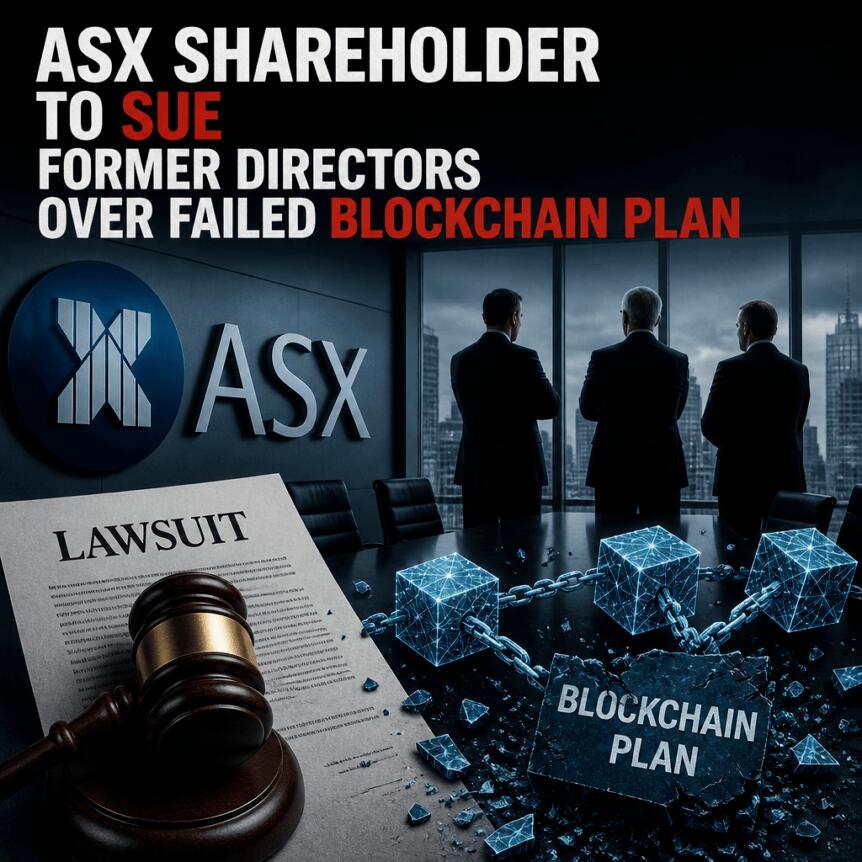
An Australian Securities Exchange (ASX) shareholder is seeking permission from the Federal Court to pursue a statutory derivative lawsuit targeting certain former ASX officers and directors over alleged breaches connected to the exchange’s ultimately abandoned blockchain-based clearing and settlement overhaul.
ASX said on Wednesday that Rosherville Pty Ltd has notified the exchange of its intention to apply for leave to bring the case under sections 236 and 237 of Australia’s Corporations Act. If the court grants leave, the proceedings would be brought on ASX’s behalf. ASX also emphasized that the proposed action does not include allegations against the exchange itself, and it provided limited detail about who would be named, what duties were allegedly breached, or what remedies Rosherville would seek.
Key takeaways
- Rosherville wants the Federal Court’s leave to file a statutory derivative action on ASX’s behalf under Australia’s Corporations Act.
- ASX says the proposed claims target former officers and directors, not the exchange, but the court has not yet considered whether the case can proceed.
- The litigation follows a broader regulatory reckoning over ASX’s CHESS replacement project, including findings by ASIC.
- ASIC’s case against ASX was resolved earlier in 2026 with a penalty and cost order, potentially setting the stage for shareholder-focused accountability efforts.
Why the proposed action could matter for corporate governance
Statutory derivative actions are designed to allow shareholders, with court approval, to pursue claims on behalf of a company when directors or officers may have breached duties owed to that company. Here, Rosherville’s proposed case would test how far that accountability can extend for board and senior leadership decisions related to one of Australia’s most expensive financial-technology failures.
While ASX did not specify which former officials Rosherville plans to name or what conduct it alleges, the core premise is straightforward: that responsibility for overseeing the CHESS replacement project may not have been adequately discharged. For investors, the practical significance is that litigation risk can reach beyond the corporate entity itself and toward the individuals who managed or governed the decisions leading to regulatory and operational consequences.
At the same time, the court has not yet examined whether the proposed suit meets the legal threshold to move forward, meaning there is still uncertainty about the scope and viability of the claims.
From CHESS replacement to abandoned blockchain plans
The dispute traces back to ASX’s long-running attempt to replace its Clearing House Electronic Subregister System (CHESS). According to earlier reporting cited in the record, ASX began exploring a replacement in 2016 and selected a distributed-ledger system developed with New York-based Digital Asset.
In December 2017, ASX was widely expected to use blockchain for core services, a prospect described at the time as a first for a securities exchange. But the project repeatedly slipped. In November 2022, ASX paused the initiative after an Accenture review identified significant problems with the design and with meeting ASX’s requirements.
Then, in May 2023, ASX formally abandoned blockchain for the replacement, saying it would consider more conventional technology instead. The progression—from early expectations of a groundbreaking launch to a pause, then abandonment—became the backdrop for subsequent regulatory scrutiny.
ASIC’s case against ASX and the question of board accountability
The shareholder effort comes after ASIC took action against ASX itself. In August 2024, the regulator sued the exchange, alleging it did not have a reasonable basis for telling the market in February 2022 that the project was “progressing well” and on track for an April 2023 launch. ASIC later characterized the episode as a collective failure by ASX’s board and senior executives.
Later developments in 2026 narrowed the regulator’s focus to misleading conduct tied to the CHESS replacement effort. In June 2026, ASX admitted to misleading conduct related to the project. On July 3, 2026, the Federal Court ordered ASX to pay a $14.4 million penalty and $2.1 million toward ASIC’s costs, effectively bringing ASIC’s case to an end weeks before Rosherville notified ASX of its intention to seek leave for a derivative action against former officials.
Although those steps were not the same as a case against individuals, the sequencing is notable. ASIC’s enforcement action concluded against the company, but the shareholder proposal suggests some investors believe the responsibility for the issues may also sit with former decision-makers at the governance and management level.
What investors should watch next
Rosherville’s application is not yet a filed lawsuit; it hinges on the Federal Court granting leave to commence the statutory derivative action. That process will be central for determining whether the allegations can proceed, who qualifies as a potential defendant, and what legal theories and remedies the shareholder is attempting to pursue on ASX’s behalf.
In the meantime, the case is likely to remain closely tied to how courts interpret directors’ and officers’ duties in complex technology transitions—especially where public statements to the market and later regulatory outcomes are in the background. The next concrete milestone for market participants will be whether the Federal Court approves the leave request and, if it does, how the claims are framed.

Bank of Montreal has placed XRP-linked fund positions inside its massive investment portfolio, according to a new regulatory filing. The Canadian lender submitted a new Form 13F-HR report to the U.S. Securities and Exchange Commission, confirming the token’s presence for the first time. BMO’s total reportable holdings exceeded $303 billion at the close of June 2026, making the bank one of the largest institutions to disclose crypto-linked assets this quarter.
BMO’s XRP Fund Positions
The filing lists 323 shares of the Rex Osprey XRP ETF, a spot fund tied directly to the token’s price. It also reports 20 shares of the ProShares Ultra XRP ETF, a leveraged product designed for short-term moves. Both positions sit within BMO’s much larger equity and fund portfolio, and neither represents a significant share of total assets.
BMO did not buy XRP tokens directly on any cryptocurrency exchange, and it avoided that route entirely. Instead, the bank used regulated U.S. exchange-traded fund infrastructure to gain exposure, which kept the transaction within familiar securities rules. Regulated ETFs also let large institutions report holdings through standard filing channels, so compliance teams face fewer complications.
This structure additionally removes the need for BMO to store or secure the underlying token itself. Fund managers behind the ETFs handle custody, settlement, and daily price tracking on the bank’s behalf. As a result, BMO gains market exposure while transferring operational and security risk to a third party.
National Bank of Canada Set an Earlier Precedent
National Bank of Canada disclosed similar XRP exposure earlier in the same reporting period, and its filing arrived before BMO’s. The bank reported 3,848 shares of the Bitwise XRP ETF, a spot product tracking the token’s market price directly. That stake carried an approximate value of $330,000 at the time of filing.
Together, the two Canadian banks now share a nearly identical approach to digital asset exposure. Each institution enters the market through transparent, SEC-regulated fund vehicles rather than direct token purchases. Neither bank holds XRP on its own balance sheet outside these fund wrappers, and both rely on third-party custody.
This shared pattern points to a wider shift among Canada’s largest financial institutions. Big banks increasingly treat XRP funds as a small but manageable portfolio addition rather than a speculative outlier. Further disclosures from other Canadian lenders could follow in upcoming quarterly filings, given this emerging pattern.
A New Group of XRP Holders Emerges
Goldman Sachs previously held XRP positions worth more than $150 million, and that stake formed around the turn of 2025 and 2026. The firm reduced or fully exited those holdings by the summer of 2026, according to filing data. This shift effectively locked in profits and marked the end of Goldman’s early XRP position.
A newer group of midsize asset managers and family offices has since filled that space. Arax Advisory Partners, Gerber, Vista Finance, and Gallacher Capital now appear among the reported XRP fund holders. Each firm builds its own combination of spot and leveraged token exposure across different funds.
These newer holders typically split capital between traditional spot products and short-term leveraged instruments. The Franklin XRP Trust and Bitwise XRP ETF represent the spot side of that split. The ProShares Ultra XRP ETF, meanwhile, adds leveraged and more volatile exposure to the same overall strategy.
Because 13F filings carry a 45-day reporting delay, they offer only a snapshot rather than a live position update. Positions can change significantly between the reporting date and public disclosure, so current holdings may already differ. Even so, BMO’s filing confirms that XRP now sits on another major bank’s balance sheet, alongside a growing list of regulated institutions.

What if you have a fresh surgical site?
Coming home from surgery might be when you most want your furry friend on your bed. It’s also when experts want you to put a little distance between your pet and whatever is healing.
Dr. Ashley Drews, an infectious disease specialist at Houston Methodist, has seen patients develop infections after a pet licked an incision or surgical drain. “That’s not a good idea,” she says. Keep the site covered and your pet away from it.
Do you need to worry about the litter box?
Yes. Cats can shed Toxoplasma gondii in their poop, and the parasite can travel from the box to your hands to your mouth.
Yet the litter box isn’t the only way to get toxoplasmosis. The parasite can also turn up in soil, unwashed produce, contaminated water, and undercooked meat—especially pork, lamb, and venison.
“I think people are aware of the cat litter thing,” says Jill Roberts, a molecular epidemiologist and professor at the University of South Florida College of Public Health. Meat gets less attention. Roberts is so wary of undercooked pork that she skips thick cuts, which she worries are harder to bring to a safe temperature. “All I can see is Toxoplasma,” she says. You don’t have to give up pork chops, but you should use a food thermometer: Whole cuts of pork should reach 145°F. Once they come off the heat, wait at least three minutes before cutting or eating them; the meat’s temperature holds steady or continues to rise during that time, helping destroy pathogens.
Crypto World
XRP ETF have locked up over 992 million tokens, with XRP investors earning up to $10,000 daily
Disclosure: This article does not represent investment advice. The content and materials featured on this page are for educational purposes only.
Slower XRP ETF inflows have investors exploring alternative digital asset strategies, with EX DeFi promoting cloud mining as a way to participate in crypto.
Summary
- XRP ETF inflows fail to lift prices as investors explore alternative returns amid renewed market volatility.
- XRP struggles despite ETF inflows, while EX DeFi draws interest with cloud mining and diversified digital asset returns.
- Slowing XRP ETF inflows and price weakness push investors toward alternatives, with EX DeFi promoting cloud mining income options.
Since August 2026, seven U.S. spot XRP ETF have collectively locked up approximately 992.5 million XRP and attracted over $1.5 billion in inflows. Despite continued institutional capital entry, the XRP price has largely fluctuated between $1.01 and $1.12; this performance has fallen short of market expectations, further fueling investor caution.
While nearly 1 billion XRP is a substantial figure, it represents only about 0.99% of the total 100 billion XRP supply. By comparison, Bitcoin ETF held a larger share of the circulating supply at their peak. Furthermore, if ETF issuers acquire XRP primarily through over-the-counter (OTC) markets or large holders rather than buying directly from spot exchanges, the impact of these inflows on immediate buying pressure in the open market may be limited.
As spot ETF continue to see inflows, the XRP price has failed to rise in tandem—even dipping below $1 at one point to hit a recent low—resulting in a contraction of market capitalization. This disconnect between price performance and ETF inflows has led some XRP holders to worry about potential further price declines and to re-evaluate their investment strategies.
Meanwhile, an increasing number of XRP investors, concerned about price pullbacks, are exploring alternative ways to generate returns. They seek to mitigate the impact of short-term volatility while keeping an eye on XRP long-term prospects and generating consistent additional income from their holdings.
Against this backdrop, the EX DeFi cloud mining platform is attracting growing investor interest. Through cloud mining and yield aggregation mechanisms, users can explore diversified sources of digital asset returns, enhancing the utility of their assets without relying solely on price appreciation.
Despite slowing ETF inflows, institutional demand for allocation remains a focus
Although XRP ETF inflows have recently slowed, institutional interest in long-term XRP allocation remains robust. XRP is currently trading in the $1.01–$1.12 range, a price zone and subsequent capital flow pattern that the market is monitoring closely.
Meanwhile, regulatory policy remains a key factor influencing institutional capital inflows into XRP. As regulatory developments — such as the CLARITY Act — progress, further clarification of the digital asset regulatory framework could improve the environment for institutional participation in XRP ETFs, potentially re-accelerating capital inflows.
JPMorgan and Standard Chartered have previously projected potential capital inflows for XRP ETF. Should the regulatory environment continue to improve and institutional participation rise, there remains significant potential for growth in XRP ETF inflows.
Increased XRP volatility makes EX DeFi cloud mining an attractive option for investors
Amidst recent heightened volatility in XRP prices, a growing number of XRP holders are turning to the EX DeFi cloud mining platform. They seek to explore diversified yield-generating models while maintaining their long-term digital asset holdings.
Unlike high-volatility leveraged trading or strategies that rely solely on asset price appreciation, EX DeFi cloud mining offers a more convenient way to engage with digital assets. Users do not need to deploy specialized mining hardware or bear maintenance costs; instead, they simply select a hashrate contract that suits their needs to participate in mining services.
This model allows users to explore alternative applications for their digital assets while keeping an eye on XRP’s long-term market performance, thereby reducing reliance on a single strategy based on price appreciation.
About EX DeFi
Founded in 2021 and headquartered in the UK, EX DeFi operates in compliance with European regulatory frameworks such as MiCA and MiFID II. The platform continuously enhances transparency, operational standards, and user protection mechanisms, striving to provide a seamless and convenient digital asset service experience.
The platform employs a multi-layered security architecture, featuring:
Annual financial and security compliance audits conducted by PwC;
Digital asset custody insurance provided by Lloyd’s of London;
Enterprise-grade cybersecurity protection from Cloudflare and McAfee®;
Multi-layer encryption architecture, AI-driven risk management, and two-factor authentication (2FA).
How to earn daily rewards with EX DeFi
1. Register an Account
Visit the official EX DeFi website and sign up for free using an email address. New users receive a $17 reward.
2. Deposit Cryptocurrency
Supports a wide range of mainstream digital assets, including XRP, BTC, ETH, USDT, LTC, USDC, BCH, DOGE, and SOL, offering users flexible deposit options.
3. Select a Mining Contract
Choose a mining plan that suits a particular budget. The minimum deposit is $100. Mining begins automatically once the plan is activated.
4. Receive Daily Rewards Automatically
The platform provides 24/7 intelligent hash rate services, with earnings settled automatically every 24 hours. Users can easily earn passive income without the need to manage mining hardware themselves.
Examples of popular mining contracts
BTC (Beginner Trial Contract): Investment $100, Duration: 2 days, Daily Return: $4, Total Profit: $100 + $8
DOGE (Golden Shell Mini-Doge Pro): Investment $500, Duration: 6 days, Daily Return: $6.5, Total Profit: $500 + $39
BTC (Canaan-Avalon-A1466): Investment $1,000, Duration: 10 days, Daily Return: $13.4, Total Profit: $1,000 + $134
LTC (Bitmain Antminer L7): Investment $5,000, Duration: 20 days, Daily Return: $73.5, Total Profit: $5,000 + $1,470
BTC (Bitmain S19K-Pro): Investment $10,000, Duration: 30 days, Daily Return: $161, Total Profit: $10,000 + $4,830
Click here to visit the official EX DeFi website for more details on mining contract plans.
Conclusion
Although capital inflows into XRP ETF have slowed recently, institutional allocation demand, progress in regulatory policies, and the development of the XRP ecosystem remain key factors driving market attention. Short-term price movements may still be influenced by capital flows, the macroeconomic environment, and market sentiment.
For long-term XRP holders, while paying attention to ETF fund flows and price changes, exploring more diversified ways to participate in digital assets has also become an important approach to managing market volatility. EX DeFi cloud mining service provides investors with a more convenient way to participate in the digital asset ecosystem and obtain stable passive income.
Disclosure: This content is provided by a third party. Neither crypto.news nor the author of this article endorses any product mentioned on this page. Users should conduct their own research before taking any action related to the company.
Securitize reported record average tokenized assets under management of $4.3 billion for the second quarter, up 16% from a year earlier, but revenue fell 5% to $14.4 million and its net loss widened to $21.7 million in its first results released after it began trading publicly. Tokenization revenue… Read the full story at The Defiant


Ripple has voted for the fixCleanup3_3_0 amendment as the proposal has secured support from 8 of 35 trusted XRP Ledger validators during its early voting stage.
Summary
- Ripple has backed fixCleanup3_3_0, a package of fixes included with xrpld version 3.3.0.
- The amendment currently has 8 of 35 validator votes, leaving it below the activation threshold.
- Proposed changes cover vaults, lending, AMMs, Checks, the permissioned DEX, and pseudo-accounts.
- XRP traded near $1.06 as derivatives data showed uneven positioning across major exchanges.
XRP Ledger fixCleanup vote remains below activation level
XRPL validator voting data cited by community tracker CryptoRednirav shows that Ripple has cast a “yes” vote for fixCleanup3_3_0, taking support for the amendment to 8 of the 35 validators on the default Unique Node List.
The vote gives the maintenance package an early endorsement from one of the XRP Ledger’s main contributors, but Ripple cannot approve the amendment alone. Validators make their own decisions, and the proposal must maintain support from more than 80% of trusted validators for two consecutive weeks before it can take effect on the mainnet.
With 35 validators in the default configuration, more than 80% support would require at least 29 affirmative votes. The current eight votes do not start the two-week activation period, and no mainnet activation date has been set.
Unlike a standalone feature proposal, fixCleanup3_3_0 groups several corrections under one amendment. The official XRPL release notes describe fixes involving Single Asset Vaults, the Lending Protocol, Automated Market Makers, the permissioned decentralized exchange, Checks, and pseudo-accounts.
Among the proposed changes, developers have unified freeze and deep-freeze checks for transfers involving pseudo-accounts. The affected transaction types include VaultDeposit, VaultWithdraw, AMMDeposit, AMMWithdraw, LoanBrokerCoverDeposit, and LoanBrokerCoverWithdraw.
Other corrections would change how CheckCash and CheckCancel handle an all-zero CheckID, prevent invalid actions involving pseudo-accounts, and fix hybrid offers that disappear from a permissioned order book when an account loses access to its permissioned domain.
AMM-related changes address precision loss during deposits, withdrawals, and clawbacks. The package also prevents an AMM from being deleted through an unauthorized transaction type and changes the response produced by a specific AMMWithdraw calculation that would otherwise divide by zero.
Version 3.3.0 places six amendments before validators
Released on Aug. 6, xrpld version 3.3.0 contains the code needed for fixCleanup3_3_0 and five feature amendments, though installing the software does not activate any of them.
As crypto.news reported on Aug. 7, the other proposals are ConfidentialTransfer, BatchV1_1, DynamicMPT, PermissionDelegationV1_1, and Sponsor. Each amendment has a separate function and must pass through the validator process before its rules become part of the mainnet.
ConfidentialTransfer would add private transfers for Multi-Purpose Tokens by hiding balances and transfer amounts from the public while keeping them verifiable on the ledger. Authorized parties, including issuers or auditors, could still access information required for compliance under the proposal’s design.
BatchV1_1 would let an account package as many as eight inner transactions together, supporting uses such as atomic swaps in which all transaction steps succeed or fail as a group. The revised amendment replaces an earlier Batch version that was disabled after developers found a security problem.
PermissionDelegationV1_1 also replaces an earlier proposal. Its rules would let an account give another account limited transaction authority without sharing control of the main private key.
DynamicMPT would allow issuers to designate selected Multi-Purpose Token properties as changeable when creating an asset. Sponsor, meanwhile, would let companies or other entities pay transaction fees and reserve requirements for users while leaving control of the users’ accounts and keys unchanged.
Alongside the amendment code, version 3.3.0 has retired Clawback, fixDisallowIncomingV1, fixInnerObjTemplate, fixNFTokenReserve, and fixUniversalNumber. Retirement removes the older amendment gates after the underlying rules have operated for an extended period; it does not remove the user-facing functions from the ledger.
The release also includes changes to node synchronization, online deletion, ledger-delta assembly, and subscription cleanup. Developers added more tests, adopted the C++23 standard, and changed the server’s system service settings to allow additional time for a controlled shutdown.
Node operators have been asked to install version 3.3.0 to maintain service continuity. A server that does not recognize an activated amendment can become amendment-blocked, meaning it can no longer determine the valid state of the ledger.
Vault and lending fixes accompany separate feature votes
Precision and rounding corrections for Single Asset Vaults and the Lending Protocol form one part of fixCleanup3_3_0, while the vault and lending systems themselves remain subject to separate amendments.
Ripple recently backed both proposals, voting in favor of XLS-65 for Single Asset Vaults and XLS-66 for the Lending Protocol. Voting data published on Aug. 10 placed support near 40% for XLS-65 and above 37% for XLS-66, leaving both below the required supermajority.
Single Asset Vaults would pool one type of token, which could include XRP, Ripple USD, or another XRPL-issued asset. Depositors would receive shares representing their claims on the assets held by a vault.
Liquidity from those vaults could then fund fixed-term loans through XLS-66. Rather than requiring every borrower to post assets worth more than the loan, the proposed framework would rely on off-chain credit checks, compliance reviews, and underwriting. XRPL would record and enforce the agreed loan terms, including interest, repayments, and defaults.
Security firm Halborn completed a lending protocol re-audit in June. The firm reported no critical or high-risk findings after reviewing transaction checks, accounting rules, access controls, parameter limits, and state consistency.
Halborn identified five findings: one medium-risk issue, two low-risk issues, and two informational items. Its report said Ripple had addressed, accepted, or acknowledged all five, including a vault asset-limit bypass involving loan interest and a missing freeze check in LoanBrokerSet.
For U.S. institutions, ledger-level lending would not replace obligations arising from securities, lending, sanctions, consumer-protection, or anti-money-laundering rules. Participating firms would still need to conduct the legal and compliance checks applicable to their activities before using the ledger for execution and record-keeping.
XRP rebounds as exchange positioning remains mixed
XRP (XRP) traded near $1.06 at publication after recovering from the $1 area, according to current market data. The token had gained almost 3% over the preceding 24-hour period, while trading volume increased by about 16%.
CoinGlass data showed a less uniform response in the derivatives market. Total XRP futures open interest fell by more than 0.65% within one hour after recently moving above $2.70 billion, indicating that some leveraged positions had been closed during the rebound.
Exchange-level figures also differed. CME XRP futures open interest remained 1.31% higher over 24 hours, while open interest declined on Binance, OKX, Bybit, and several other crypto exchanges.
The distinction is relevant to American investors who obtain XRP exposure through regulated products rather than holding the token directly. Recent XRP ETF figures covered by crypto.news showed that Canary’s U.S.-listed fund lost $81.6 million in net assets even as share activity added $82 million, with $159.7 million in unrealized XRP depreciation accounting for the difference.
Uniswap founder Hayden Adams said the team renounced all creator fees from “Uniswap employee testing” after tokens created during Pools testing were discovered, redirecting the fees to an automated buy-and-burn contract. TradePools said Wednesday that test tokens made while building Pools no longer… Read the full story at The Defiant

Alaska community split on plan to create a gold mine in the middle of a national park
Orora FY26 slides: cans surge offsets glass impairment of A$743m

Crypto Whale Loses $25.6 Million 2 Years After $24 Million Phishing Attack


-

 Fashion5 days ago
Weekend Open Thread: Mattifying Sunscreen
-

 Fashion6 days ago
Frugal Friday’s Workwear Report: Cap-Sleeve Pointelle Crewneck Sweater
-

 News Videos5 days ago
Can Astrology Help Find Gold and Silver Trends? A Financial Astrology Guide
-

 Sports7 days ago
Jordan Coyle & Cordiamo take Laya Arena Stakes at RDS
-

 Politics7 days ago
Reform UK And Greens Sink To Lowest Favourability Ratings To Date
-

 Tech5 days ago
Rinn Pharma & Biopharma to join NordicPharmaTrain network
-

 Business4 days ago
How to Start a Cleaning Business: A Step-by-Step Guide
-

 Business4 days ago
Datadog: Best Of Breed For Multiple Reasons
-

 Business4 days ago
BDC Weekly Review: Private BDC Q2 Numbers Are Strong
-
 NewsBeat1 day ago
Communication cards help banking customers access services or report scams
-

 Business6 days ago
Brightwater secures funding for WA-first dementia projects
-

 Tech6 days ago
Price Hikes May Be Coming for PC Motherboards Next
-
 Crypto World7 days ago
Galaxy Digital Stock Slides 14% as Crypto Prices Hit Earnings
-
 Business2 days ago
Oil Price Today (August 11): Crude oil rises to $88 after Trump’s compensation demand dents Hormuz opening. Here’s why
-

 Business7 days ago
SpaceX Shares Plunge 13.6% After First Public Earnings as AI Capex Surge and Lockup Spark Selloff
-

 Tech7 days ago
How to Use Your Phone as a Webcam on PC and Mac (2026)
-

 Tech7 days ago
Hackers just broke into America’s tap water. How scared should you be?
-

 Fashion5 days ago
Weekly News Update, 8.6.26 – Corporette.com
-

 Entertainment7 days ago
This $29 One-Piece Looks Just Like Ashley Graham’s Swimsuit
-

 Fashion7 days ago
Thursday’s Workwear Report: The Everyday Linen Shirt
You must be logged in to post a comment Login