

Crypto World
Ripple News: Ripple’s CTO David Schwartz Just Warned of AI-Cloned Executives Draining XRP Wallets, Are You at Risk?

Ripple co-founder and CTO David Schwartz has issued an urgent public warning about what he described as a ‘huge escalation lately in airdrop and giveaway scams targeting XRPL users,’ flagging a coordinated wave of XRP scam news campaigns that have grown sharply more sophisticated through AI-generated impersonation and wallet drainer technology.
The warning, posted to his 700,000-plus followers on X, arrives as XRP commands elevated institutional attention and retail volume, precisely the conditions that make its holder base a high-value phishing target. Bearish signal for ecosystem trust.
Discover: The best pre-launch token sales
Ripple News: How the Attacks Work, Fake Airdrops, Wallet Drainers, and AI-Cloned Executives
The mechanism here is worth understanding precisely. The dominant attack vector is the fake airdrop: users are directed to a fraudulent promotional site promising free XRP tokens, where connecting a non-custodial wallet triggers a malicious script, a wallet drainer, that executes a single authorized transaction to empty holdings before the user realizes what happened.
The authorization step is the trap; once signed, the transaction is irreversible on-chain.
Giveaway scams operate through a simpler but equally effective social engineering play. Fraudsters promise to return twice any amount of XRP sent to a scammer-controlled address, packaging the pitch around fabricated Ripple announcements or milestone celebrations.
The delivery infrastructure has matured significantly in 2026. Attackers are deploying AI-generated deepfake videos on TikTok and YouTube that clone Schwartz’s likeness and voice with enough fidelity to fool retail holders.
In a separate and notably sophisticated attack vector, Schwartz flagged a phishing campaign that injected fake emails into Robinhood’s infrastructure, exploiting Gmail’s dot-trick for account creation and embedding malicious HTML payloads in device names, with messages that passed SPF, DKIM, and DMARC authentication checks, making them appear as legitimate Robinhood correspondence.
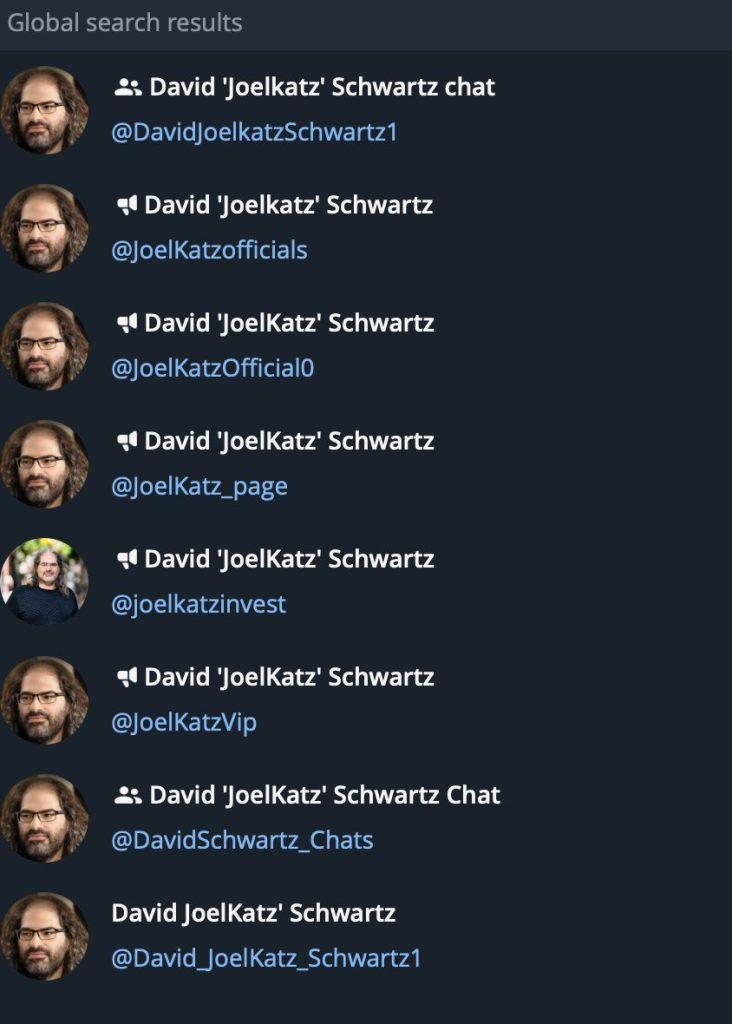
Fake accounts impersonating Schwartz and Ripple CEO Brad Garlinghouse have proliferated on Instagram and Telegram, with Ripple reporting over 50 such accounts on both platforms in Q1 2026 alone.
Schwartz warned explicitly: ‘Anyone claiming to be me on Instagram, Telegram, or almost anywhere else is likely a scammer.’
Discover: The best pre-launch token sales
The post Ripple News: Ripple’s CTO David Schwartz Just Warned of AI-Cloned Executives Draining XRP Wallets, Are You at Risk? appeared first on Cryptonews.


Bitcoin moved closer to the $64,000 level on Saturday after fresh geopolitical developments improved risk sentiment. The cryptocurrency recovered from earlier lows and maintained positive momentum throughout the trading session. Market participants responded after US President Donald Trump confirmed that a new agreement with Iran will be signed soon.
Bitcoin Gains Strength Following US-Iran Agreement Announcement
Bitcoin traded near $63,950 at the time of reporting and recorded modest gains during the day. The cryptocurrency advanced from around $63,500 earlier in the session and sustained its recovery. As a result, the market approached the important $64,000 psychological level once again.
The upward move followed statements from Donald Trump regarding ongoing negotiations between the United States and Iran. According to the announced timeline, both countries are expected to finalize a new agreement within the next day. Consequently, traders reassessed risk conditions across several financial markets.
The latest development also highlighted plans to reopen the Strait of Hormuz after the agreement takes effect. The waterway remains one of the world’s most important energy shipping routes. Therefore, expectations of normalized maritime activity supported broader market confidence.
Hormuz Reopening Prospects Reduce Geopolitical Concerns
The Strait of Hormuz carries a significant portion of global crude oil exports each day. Any disruption in the region often affects commodity prices and financial markets. However, expectations of reopening reduced concerns surrounding supply-chain interruptions.
At the same time, the proposed agreement focuses on long-term restrictions related to Iran’s nuclear programme. US officials continue efforts to secure commitments aimed at limiting future nuclear development activities. Consequently, the agreement represents a major diplomatic development in the region.
Geopolitical tensions have influenced digital asset markets several times during recent years. Bitcoin often reacts to changes in global risk perception and macroeconomic conditions. Therefore, easing regional uncertainty contributed to stronger sentiment across the cryptocurrency sector.
Bitcoin Extends Recovery Amid Broader Market Stability
Bitcoin’s latest advance occurred during a period of consolidation across the crypto market. The asset maintained stability despite several macroeconomic events influencing trading activity this week. As a result, buyers continued supporting prices near key technical levels.
The market also received additional support from comments made by Pakistan Prime Minister Shehbaz Sharif. Earlier on Saturday, Sharif indicated that a US-Iran agreement could be finalized within twenty-four hours. Consequently, expectations surrounding diplomatic progress strengthened throughout the day.
Bitcoin has remained sensitive to major international developments because of its growing role in global financial markets. Large geopolitical events frequently influence short-term trading behavior and market sentiment. Therefore, diplomatic breakthroughs often affect cryptocurrency valuations alongside traditional assets.
The current recovery follows several sessions of price fluctuations driven by macroeconomic and geopolitical headlines. Bitcoin previously faced pressure as traders assessed inflation data and central bank expectations. However, improving geopolitical conditions helped offset some of those concerns.
Meanwhile, the broader digital asset market showed signs of stabilisation during the latest trading session. Several major cryptocurrencies also posted modest gains as risk appetite improved. Consequently, overall market sentiment remained constructive heading into the weekend.
Bitcoin continues to trade below recent highs, yet it has preserved support above key price zones. Market participants now focus on developments surrounding the expected agreement and its implementation. Any progress regarding the reopening of the Strait of Hormuz could influence sentiment across global markets.
The latest rebound highlights how geopolitical developments can affect cryptocurrency performance within short periods. Improved diplomatic relations often reduce uncertainty and support broader market stability. As a result, Bitcoin approached the $64,000 mark while traders responded to expectations of reduced regional tensions.

AI agents have begun completing complicated tasks, including transacting on their own by paying for services or purchasing computing power, all of which is far superior to AI’s early methods of generating texts, images, or simple code.
Ripple wants to have a bigger role, and its latest update, published earlier this week, explains how its native tokens could be at the forefront.
XRP, RLUSD to Power AI
In an attempt to position itself at the center of this emerging machine-to-machine economy, the new update to the XRP Ledger ecosystem, called AI Starter Kit, serves as a suite of tools designed to help developers build autonomous payment apps powered by Ripple’s two tokens, XRP and RLUSD.
The announcement reads that the new product line will allow developers to build such AI agents capable of making and receiving payments through the XRPL. It includes support for X402-powered payments, allowing agents to pay for API access, AI model inference, cloud computing resources, and other digital services using either XRP or RLUSD.
Ripple tries to differentiate itself from other blockchain networks that rely mainly on variable transaction fees and smart contract execution. Instead, XRPL provides settlement finality within 3-5 seconds, predictable transaction costs, and built-in payment functionality.
Developers are aware of the transaction costs in advance, while the AI agents can complete transfers without dealing with gas fee auctions or uncertain settlement times.
The announcement added that XRPL’s native decentralized exchange could be particularly attractive to most devs. An AI agent can send RLUSD while the recipient receives XRP (or vice versa), with a single transaction. The conversion is handled directly by the protocol.
Safety First
Ripple believes its enhanced levels of security are another major selling point. The XRP Ledger has operated continuously for 14 years without transaction rollbacks, while its protocol-level payment system removes many of the smart contract risks that have led to billions of dollars worth of cryptocurrency exploits across many different projects.
The first phase of the new starter kit will include documentation access through AI assistants such as Claude, wallet and payment tools for agent-based apps, and support for the X402 protocol following a collaboration with t54.
The post XRP and RLUSD Power New AI Economy After XRPL’s Latest Big Update appeared first on CryptoPotato.

TLDR:
- TAO price surged over 24% on June 13, closing at $264 after opening near $212 in the session
- RSI bottomed in the low 30s, matching the same zone that marked the prior three swing lows on TAO
- Bittensor subnet activity had been accelerating quietly while the TAO price was trending lower
- The $280 to $320 zone is now the key resistance band TAO must reclaim to confirm the bullish trend
The TAO price recorded one of its largest single-day gains of 2025 on June 13, closing above $264 after opening near $212.
The move ended a seven-month downtrend that had pushed the asset from the $500 region into the low $200s. Multiple technical signals aligned ahead of the breakout.
Sentiment had turned deeply bearish in the weeks before the reversal candle printed.
Technical Signals Preceded the TAO Price Reversal
The TAO price had been compressing for months before Thursday’s session. Each rally attempt during the downtrend met fresh selling pressure near established resistance zones. Buyers were unable to hold any meaningful recovery, and many traders had written off the chart entirely.
However, momentum indicators were signaling a shift beneath the surface. The RSI had bottomed in the low 30s, the same region that marked the three prior swing lows on the chart.
Analyst account @2xnmore noted that oscillators were already curling higher before price confirmed the move.
The MACD histogram had also been compressing for several weeks heading into the reversal. That compression pointed to sellers losing steam rather than buyers gaining strength. It was a quiet warning sign that most traders overlooked during the grind lower.
Volume on the reversal candle removed any doubt about the session. It dwarfed anything seen across the prior two months of sideways action. That kind of participation on a single green candle separates genuine reversals from dead-cat bounces.
Bittensor Network Activity and the Road Ahead for TAO Price
While the TAO price was falling, Bittensor’s subnet activity was quietly accelerating. That divergence between price and network growth went largely unnoticed by retail participants. Institutional attention toward the network, however, had reportedly been building well before Thursday’s session.
The broader AI infrastructure narrative around Bittensor also remained intact throughout the drawdown. Discussions tied to co-founder Jacob Steeves and the network’s role in decentralized AI were still in early stages.
AI-related tokens have historically moved in cycles, with the first recovery candle rarely marking the full extent of a move.
The zone between $280 and $320 now becomes the critical area to monitor. That range previously acted as support before the breakdown and must be reclaimed on a closing basis. A sustained move through that band would add weight to the bullish case.
The 200-day moving average continues to serve as the long-term dividing line for TAO. Reclaiming major support after a multi-month downtrend is one of the stronger technical setups on any chart. Traders who were stopped out near the lows are now watching from the sidelines as price moves higher.

Crypto World
Uniswap Tokenized Securities Go Live, Bringing SpaceX, Apple, Tesla, and NVIDIA Onchain
TLDR:
- Uniswap tokenized securities are now live on the web app, wallet, and API for eligible users.
- Over $9.1 billion has been swapped in real-world asset pools across 2.6 million transactions.
- Uniswap v4 hooks allow issuers to set KYC gates, allowlists, and dynamic fees at pool level.
- Builders using the Uniswap API need no extra configuration to expose tokenized assets to users.
Uniswap tokenized securities are now accessible across the platform’s web app, wallet, and API. Users can trade tokenized versions of SpaceX, Apple, Tesla, and NVIDIA directly through Uniswap products.
Previously, these assets existed on the protocol but lacked integration into consumer-facing surfaces. That gap has now closed, opening regulated asset markets to a broader onchain audience.
Uniswap Opens Access to Real-World Asset Trading
The launch marks a notable expansion of Uniswap’s real-world asset coverage. To date, more than $9.1 billion has moved through real-world asset pools on the protocol.
Those transactions span over 2.6 million swaps across more than 140,000 wallets. As Uniswap noted on X, “The world’s value is moving onchain.”
Equity, fixed income, and yield-bearing instruments represent the bulk of global financial assets. These asset classes are gradually migrating to blockchain infrastructure as regulatory clarity improves.
Uniswap’s integration positions the protocol as an early access point for that transition. The timing aligns with growing institutional and retail interest in tokenized finance.
Eligible users can access tokenized securities through the Explore Page on the Uniswap Web App. The process mirrors any standard token swap on the platform.
Users connect a wallet, select the desired asset, and confirm the transaction. However, issuer-imposed KYC requirements, whitelists, and jurisdictional restrictions may apply.
Uniswap v4’s hook infrastructure also supports issuer-configured transfer restrictions and dynamic fee structures at the pool level. This gives issuers the ability to manage compliance without sacrificing liquidity access.
Geographic gates and allowlists can be embedded directly into pool logic. That level of configurability is central to supporting regulated asset markets onchain.
Protocol Infrastructure Powers Builders and Issuers
Builders can integrate tokenized stocks, bonds, and yield-bearing assets through the existing Uniswap API. No additional configuration is needed for developers to expose these assets to their users.
The same routing and liquidity infrastructure already in use for crypto assets now extends to securities. That continuity reduces friction for teams building on top of Uniswap.
Uniswap’s protocol has processed over $4.4 trillion in cumulative volume since launch. That liquidity depth makes it a practical backend for tokenized asset markets.
Onchain assets also trade outside traditional market hours, unlike their TradFi equivalents. That availability is a structural advantage as global adoption grows.
Assets settled onchain are composable across wallets, applications, and DeFi protocols. Any agent or interface with API access can tap into the same liquidity pools.
This composability supports the broader buildout of onchain financial infrastructure. It also reduces fragmentation across tokenized asset platforms.
UNI traded at $2.54 at the time of publication, up 0.43% in the prior 24 hours.
Source: Coingecko
Weekly gains stood at 4.84%, reflecting moderate market momentum around the announcement.


However, the two largest incidents were not simple smart-contract exploits of the type AI could engineer.
In one, a North Korea-linked group drained about $285 million from Drift Protocol after a six-month social-engineering campaign that won it admin access. For the other, the attacker exploited a single-verifier flaw that allowed roughly $292 million to be siphoned from Kelp DAO.
Another example hit on Tuesday, when Humanity Protocol, a decentralized human-identity service, lost over $30 million to a private-key compromise. CoinDesk found that a hacker gained access to three out of six private keys on one employee’s laptop,
Therein is the problem. While the most obvious smart-contract prompts may be exactly the ones Anthropic’s filters are designed to catch, the largest losses have not needed a contract bug.
The exploits, Ledger’s Guillemet noted, come from familiar weak points: social engineering, bad signing flows, exposed keys and human error.
A model like Fable does not need to hand over a finished exploit to change the economics of an attack. It can read public repositories, compare old versions of software, summarize audit reports and draft convincing messages that look for the small operational mistakes humans miss.
“These exploits remain rooted in social engineering and human error. “
A defender, in such an environment, has to secure every key path, every dependency, every signing flow and every privileged account. Because AI accelerates the scouting phase, the final signing step becomes more important. Private keys need to sit somewhere a compromised laptop cannot reach, and users need a trusted screen that shows what they are actually approving.

Strategy’s executive chairman Michael Saylor has defended the company’s first reported Bitcoin sale since 2022, arguing that the ability to sell BTC—at least when it’s required to back certain financial obligations—is a prerequisite for the firm to keep issuing “digital credit.”
The defense comes after Strategy disclosed the sale in a June 1 filing with the U.S. Securities and Exchange Commission: the company offloaded 32 BTC, a move that contrasted with Saylor’s widely repeated “never sell your Bitcoin” message. Speaking at BTC Prague, Saylor framed the decision as part of a broader credit thesis for Bitcoin-based financial products.
Key takeaways
- Strategy disclosed a June 1 SEC filing showing it sold 32 BTC for the first time since 2022.
- Saylor says Bitcoin must remain sellable so digital credit products can retain value and support dividend- and credit-linked obligations.
- He described Strategy’s STRC preferred stock as a “digital credit” instrument designed to route value from its Bitcoin balance sheet.
- Saylor claims digital credit could support yield-bearing crypto financial products and cited yields up to 8% for such structures.
- Apyx’s apxUSD stablecoin depegged amid BTC and STRC declines, illustrating how collateral volatility can test these systems.
Why Strategy chose to sell Bitcoin
In a June 1 SEC filing, Strategy disclosed its first reported Bitcoin sale since 2022, selling 32 BTC. The transaction stood in tension with Saylor’s long-running public stance that Bitcoin should not be sold.
In an interview with Cointelegraph at BTC Prague, Saylor argued that companies building Bitcoin-backed finance cannot treat BTC as untouchable capital. Instead, they need the flexibility to sell holdings when necessary to maintain the economic basis of credit instruments—particularly those tied to dividends and other payouts.
“If the company’s policy is that we won’t sell the Bitcoin, then the credit won’t have value and the equity won’t have value,”
he said, adding:
“The company is in the business of selling digital credit. The credit is backed by capital. Bitcoin is capital.”
“Digital credit” as a new use for the Bitcoin balance sheet
Saylor expanded on the concept by positioning Strategy’s financial products as components of a credit market built on Bitcoin holdings. In his explanation, instruments such as Strategy’s STRC preferred stock function as “digital credit,” leveraging the company’s Bitcoin treasury to meet credit obligations.
Crucially, Saylor also tied this framework to Strategy’s capital strategy. For the company, these securities have become a key path to raise funding that can then be used to acquire additional Bitcoin. In other words, the sale—however limited—should be viewed less as abandoning a core Bitcoin conviction and more as enabling a loop intended to sustain issuance of Bitcoin-backed credit products.
Yield claims and the collateral test from apxUSD
Saylor described digital credit markets as an emerging “trillion-dollar opportunity” in finance, arguing they could enable yield-bearing digital money products. He also suggested that these structures may offer yields of up to 8%, which he said is multiple times higher than traditional savings accounts.
Part of his argument is that digital credit could change how participants think about credit and yield while drawing capital into the Bitcoin ecosystem. He pointed to projects operating within this model, including Saturn and Apyx, and emphasized that yield-bearing products built on top of digital credit can face real-world stress—sometimes quickly.
On June 4, Apyx Finance’s dividend-backed synthetic stablecoin apxUSD reportedly depegged, trading as low as $0.90. At the time, Bitcoin was trading below $63,000 and STRC shares had fallen below their $100 par value.
According to Apyx, the decline in STRC—apxUSD’s primary collateral asset—reduced the protocol’s reserve value. The company also pointed to falling Bitcoin prices, thinning liquidity, and derivative-driven market dynamics as contributing factors, citing a post on X from Apyx.
At the time of Cointelegraph’s reporting, apxUSD was trading around $0.96, still below its $1 peg, as tracked by CoinGecko.
What this exchange between “never sell” and sellability means
The core tension in the story is not merely reputational; it goes to how investors and counterparties should interpret Bitcoin as collateral. Saylor’s argument suggests that Bitcoin treasury companies must preserve the option to sell in order to keep credit instruments credible—particularly when those instruments depend on the value of collateral and the ability to cover obligations.
Meanwhile, the apxUSD episode underscores how sensitive these systems can be when collateral benchmarks move in tandem. When STRC falls below par and Bitcoin weakens, collateral values and liquidity conditions can deteriorate at the same time, putting pressure on mechanisms designed to maintain stablecoin pegs.
For readers watching the evolution of Bitcoin-based credit, the takeaway is practical: the “digital credit” thesis depends on collateral behavior and on whether protocols can manage volatility in a way that sustains promised yield and payout structures without breaking pegs.
With Strategy’s disclosed sale and apxUSD’s depeg both tied to a period of BTC and collateral weakness, the next question for the market is whether future issuances, liquidity provisions, and collateral management techniques will reduce the frequency and severity of these stress events—or whether such drawdowns will continue to be part of the risk profile of yield-bearing Bitcoin credit products.

Despite last week’s controversial developments on the war front between Iran, the US, and several other nations involved in the conflict, Donald Trump promised on his social media platform minutes ago that a permanent deal is expected to be announced tomorrow.
Given bitcoin’s susceptibility to positive or negative news related to the war, the question now is whether it will benefit if Trump delivers on his promise.
In his lengthy post on Truth Social, the POTUS began by blaming the previous major deal signed with Iran during Barack Obama’s presidency. He called it a “smooth road to a Nuclear Weapon,” while his agreement with the Middle Eastern country is “the exact opposite.”
He emphasized that the new deal will serve as a “WALL TO NO NUCLEAR WEAPON.” Moreover, he claimed that Iran no longer wants to develop such a weapon, “nor will they have one, either through purchase, development, or any other form of procurement.”
Perhaps most importantly, Trump promised that the deal is “scheduled to get signed tomorrow, and immediately after it is signed, the Hormuz Strait is OPEN TO ALL.”
“We look forward to working with Iran, and the entire Middle East, long into the future. Hopefully, this process will all work out quickly, easily, and smoothly. If it doesn’t, we have the ultimate alternative, hopefully never to be used again,” he added.
Recall that bitcoin’s price was immediately impacted when the war started on February 28, with a painful decline by several grand. However, it skyrocketed once the first ceasefire deal was announced and when it was extended.
As such, the overall community sentiment has shifted after Trump’s post, with anticipation of a more profound recovery if, of course, the deal is actually signed tomorrow, because this is not the first similar promise made over the past few months.
The post Will BTC Rocket if Trump Delivers on His Iran Deal Promise This Sunday? appeared first on CryptoPotato.
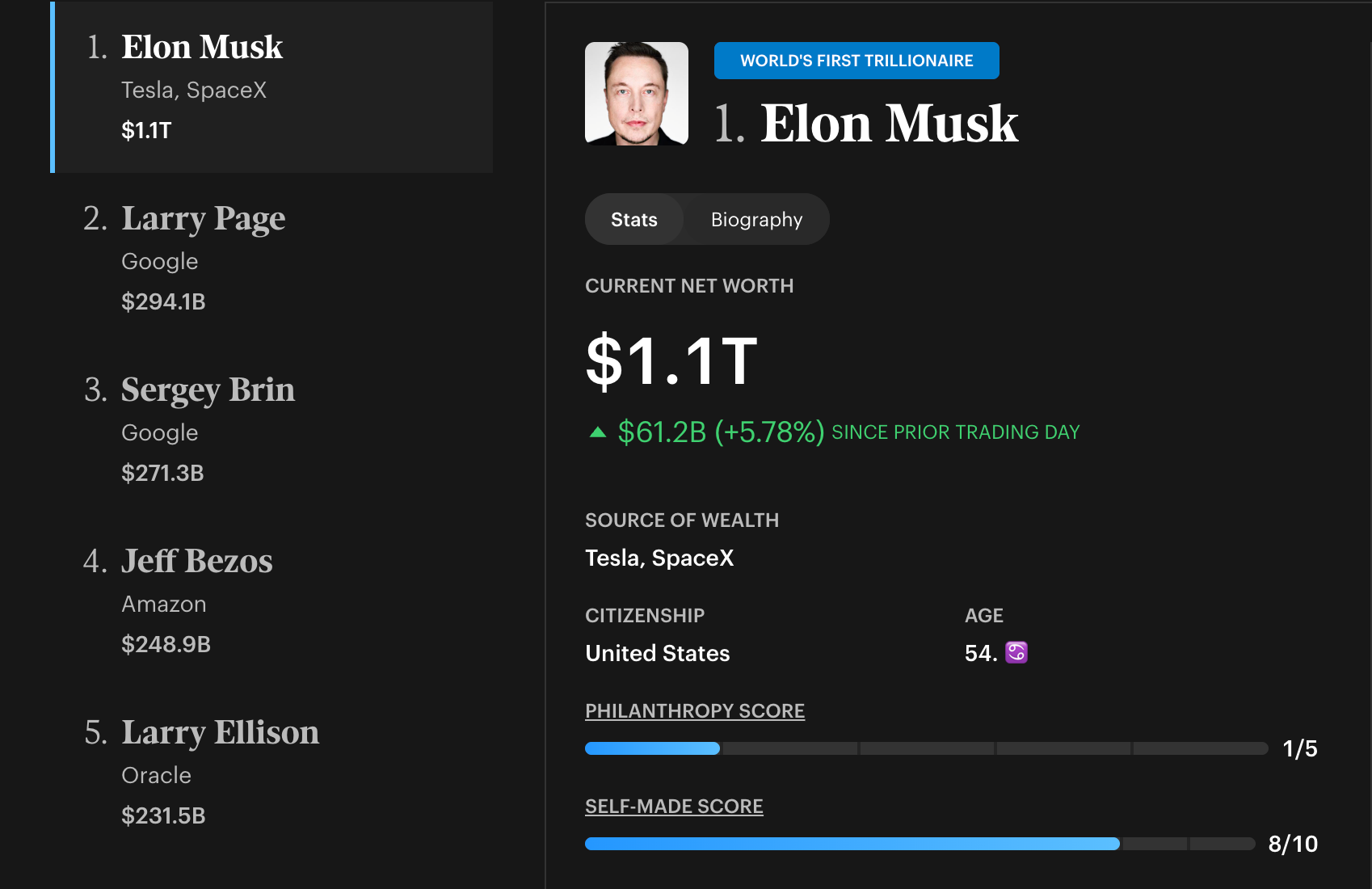
Elon Musk became the world’s first trillionaire on June 12. His net worth reached roughly $1.1 trillion after SpaceX raised $75 billion in a record initial public offering (IPO).
The jump has widened an already historic gulf between the ultra-rich and everyone else. Forbes data shows a 1,464,078% wealth gap between the average billionaire and the average American.
How Elon Musk’s Trillion Stacks Up
Musk now sits far ahead of his peers. His fortune tops the combined wealth of Larry Page, Sergey Brin, Jeff Bezos, and Larry Ellison, according to Forbes. The same data tracks the top 10 billionaires at $3.1 trillion.

The billionaires added $68.2 billion in a single day. Meanwhile, most households saw little change in their own wealth. The concentration extends worldwide.
The richest 10% own 75% of global wealth, while the bottom half holds just 2%, according to the World Inequality Report.
“Fewer than 60,000 multi-millionaires now control three times more wealth than half of humanity combined. Within most countries, the bottom 50% rarely possess more than 5% of national wealth,” the report revealed.

In January, Oxfam reported that the 12 richest billionaires hold more wealth than the poorest half of humanity (over 4 billion people).
“The world has reached a critical juncture. Extreme inequality has reached the point where the super-rich can rig elections and economies, and deepen their power through politics, the media and institutions of justice. Meanwhile, billions of people face avoidable hardship and the erosion of their civil and political rights, and dissent and protest are crushed by governments the world over,” Oxfam noted.
In the US, the top 1% holds 31% of wealth, compared with 2.6% for the bottom half, per WealthVieu. Musk’s wealth surge after SpaceX’s Nasdaq debut widened that imbalance.
Lawmakers Push to Tax the Rich
The record fortune landed during a squeeze on US households. Inflation hit 4.2% in May, a 3-year high amid the US-Iran war. Americans have spent $57.7 billion more on gasoline and diesel since the Iran war erupted on February 28.
That works out to roughly $440.6 per household. National gas prices now sit at $4.1 a gallon, according to a live tracker run by Brown University’s Watson School of International and Public Affairs. Meanwhile, US lawmakers have renewed their push for wealth taxes.
“Elon Musk just became the world’s first trillionaire. The typical American household would have to work more than 11 MILLION years to make Elon Musk’s level of wealth. We need a wealth tax,” Senator Elizabeth Warren posted.
Senator Bernie Sanders, Representative Pramila Jayapal, and more are backing the same approach.
Follow us on X to get the latest news as it happens
The coming months will test whether record fortunes shift the tax debate in Congress.
Subscribe to our YouTube channel to watch leaders and journalists provide expert insights
The post Elon Musk’s $1 Trillion Fortune Puts America’s Wealth Gap in Focus appeared first on BeInCrypto.
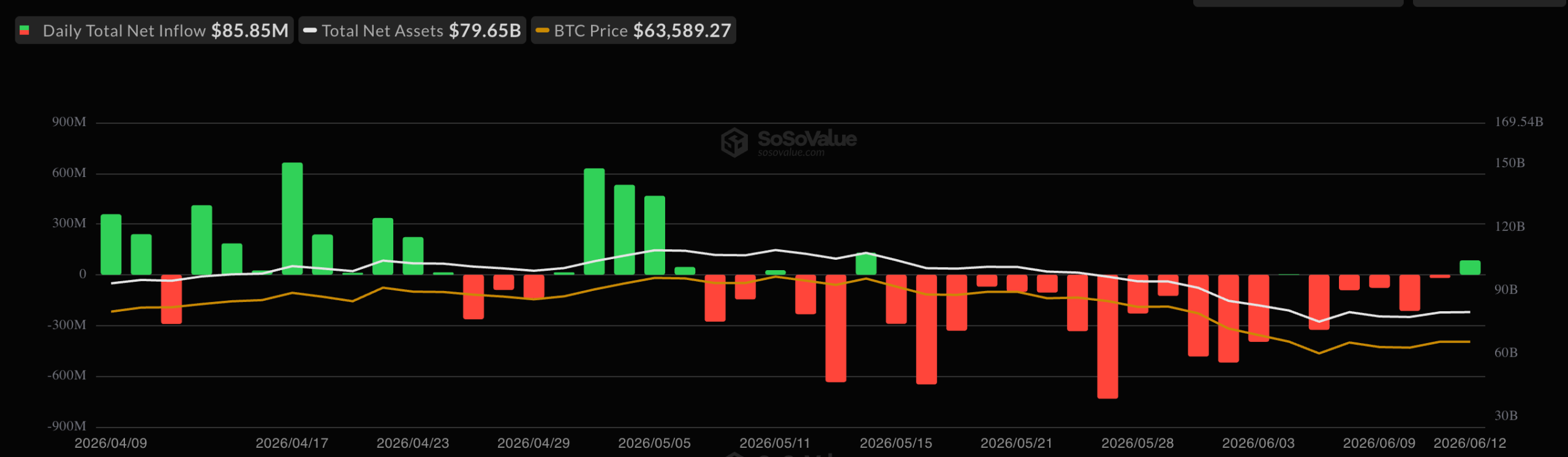
Bitcoin spot exchange-traded funds drew $85.85 million in net inflows on June 12, the largest single-day in about 4 weeks. The reversal arrived on the same day SpaceX made its record Nasdaq debut.
The inflow broke a five-session withdrawal streak that pulled roughly $727 million from the funds.
BTC ETF Inflows Return After a Bruising Stretch
The June 12 total marks the strongest single-day demand since May 14, when the funds absorbed $131.31 million. Cumulative net inflows now stand at $53.62 billion, with total net assets near $79.65 billion.

The previous days ran the other way. Outflows struck on June 5, 8, 9, 10, and 11, draining capital before the trend flipped. The funds had shed money for 13 straight sessions from May 15 to June 3. That run stands as their longest outflow streak since launching in early 2024.
Geopolitics drove much of that pressure. Tensions across the Middle East pushed Bitcoin toward $59,000. Bitcoin is still down about 20% over the past month.
Sentiment then shifted on June 11. President Donald Trump said he had canceled planned US strikes on Iran, citing progress toward a deal.
Bitcoin rebounded above reclaimed $63,000. The diplomatic push gained further pace today. Pakistani Prime Minister Shehbaz Sharif said that “finalisation likely expected in the next 24 hours.”
Follow us on X to get the latest news as it happens
The news has lifted the largest cryptocurrency higher. BeInCrypto Markets data showed that BTC was up 0.17623% over the past day. At press time, it traded at $63,868.

Bitcoin Holds Firm as SpaceX Storms Its Nasdaq Debut
The inflow coincided with another major market development. SpaceX shares began trading on the Nasdaq on June 12 under the ticker SPCX. The stock was priced at $135, opened at $150, and closed near $161.
The offering raised about $75 billion at a valuation of $1.7 trillion. That total ranks as the largest IPO on record.
A raise that size competes for investor capital. However, the flow data cuts the other way. Bitcoin ETFs pulled in capital, and BTC recovered, signs that crypto demand held up rather than rotated out.
Attention now turns to the Federal Reserve. Its June 16-17 meeting could decide whether the inflows hold or fade.
Subscribe to our YouTube channel to watch leaders and journalists provide expert insights
The post Bitcoin ETFs Post Biggest Inflow In 4 Weeks on SpaceX IPO Day appeared first on BeInCrypto.
TLDR:
- Bitcoin mining difficulty dropped 9.55%, marking the second-largest downward adjustment recorded in 2025.
- Network hashrate fell from near 1 ZH/s in May to roughly 861 EH/s around June 10 before partially recovering.
- The difficulty reset is expected to lift BTC output per active hashrate by over 9%, pushing hashprice above $30/PH/s.
- Power reallocation toward AI and HPC workloads is driving structural hashrate decline beyond short-term price pressure.
Bitcoin mining difficulty has dropped by approximately 9.55%, marking the second-largest decline recorded this year.
The adjustment follows a sustained slide in network hashrate after bitcoin’s price briefly plunged to around $60,000 in early June before recovering to near $64,000.
The reset lowers the computational work required to mine a block, offering direct relief to miners squeezed by thinning margins. Output per active hashrate is set to rise by more than 9% as a result.
Hashrate Collapse Triggers Steep Difficulty Adjustment
Bitcoin’s network hashrate had been holding near 1 zettahash per second (ZH/s) at the close of May. It then fell sharply to approximately 861 exahashes per second (EH/s) around June 10, before recovering moderately to about 894 EH/s in recent days.
That sustained decline over the two-week epoch triggered Bitcoin’s automatic recalibration mechanism. The resulting 9.55% drop is now confirmed as the second-largest downward difficulty adjustment of the year.
The adjustment directly reshapes mining economics across the network. A lower difficulty setting means each unit of active hashrate now produces more bitcoin per day than it did before.
That increase in output per hashrate is expected to push hashprice back above $30 per petahash per second. Hashprice had fallen below that level following the early June price crash, tightening margins across the industry.
The $30/PH/s threshold is a closely watched line for operators managing older or less efficient fleets. According to TheEnergyMag, the difficulty drop is expected to increase BTC output per active hashrate by over 9% and may also push mining hashprice back above $30 per PH/s.
Below that mark, sites running legacy hardware or carrying higher electricity costs move closer to gross breakeven before overhead and debt are factored in.
Texas-based miners likely played a role in the hashrate volatility as well. June marks the start of the state’s 4CP season under ERCOT, when large power consumers reduce load during four critical summer peak intervals to lower their transmission cost allocation for the following year.
That mechanism pushes bitcoin miners to curtail operations during potential peak windows, temporarily removing significant hashrate from the network regardless of real-time power prices.
AI and HPC Redeployment Pulls Capacity from Bitcoin Mining
Not all of the hashrate decline was tied to price pressure or seasonal curtailment. Several publicly listed miners have been actively unplugging rigs and redirecting power capacity toward high-performance computing and AI data center workloads.
That structural shift removes bitcoin hashrate even when the underlying power infrastructure remains fully operational and under contract.
The pivot toward HPC and AI reflects a deliberate strategy by major mining companies to diversify revenue. As TheEnergyMag reported, beyond the shutdown of older mining rigs due to profitability pressure, another key driver of the hashrate decline is the reallocation of power capacity toward high-performance computing and AI data centers.
Long-term computing contracts with enterprise clients offer more stable cash flow compared to bitcoin’s variable hashprice environment.
Power capacity that once drove network hashrate is now being allocated to contracted AI workloads under a different business model entirely.
Several public miners have been unplugging mining rigs or slowing mining growth as they retrofit sites for contracted AI and HPC use, a strategy that can remove bitcoin hashrate even when the underlying power capacity remains in use. That transition is reshaping how mining infrastructure is deployed across North America.
The partial hashrate recovery seen in recent days points to some of the June decline being temporary. Curtailments tied to Texas’s 4CP window and short-term economic responses likely account for a portion of the drop rather than permanent fleet shutdowns.
Even so, the continued migration of mining infrastructure toward AI use cases adds lasting downward pressure on network hashrate heading into the second half of the year.
The 9.55% difficulty drop offers a meaningful reset for operators who held through the June pressure, with improved margins now expected in the current epoch.

Creative Assembly is developing its own custom technology for Alien: Isolation 2 ‘to really fine tune the experience and create exactly the best Alien experience’

Wizz Air threatens to cut UK flights due to rising tax price

Deiondra Sanders’ Fans Show Love After Jacquees, Dreezy Tweets


-

 NewsBeat6 days ago
Alexander Zverev wins the French Open to finally earn a 1st Grand Slam title
-
 Entertainment7 days ago
The Best Mystery Series of All Time Is Surging on Streaming 30 Years After It Ended
-

 Crypto World6 days ago
Anatomy of the June crypto crash: Fed, Iran, Saylor
-

 Crypto World2 days ago
Oppenheimer backs SpaceX as $70 billion retail frenzy builds
-

 Crypto World2 days ago
Markets Rally as SpaceX IPO Looms Amid Iran Tensions and Inflation Surge
-
 NewsBeat6 days ago
Alexander Zverev conquers demons and outlasts Flavio Cobolli to win French Open for first major title
-

 Tech6 days ago
Microsoft unveils seven homegrown AI models in new bid for ‘long term self-sufficiency’
-

 Business6 days ago
High Stakes for Wembanyama as New York Pushes for 3-0 Lead
-

 Tech6 days ago
Notion restores access to Anthropic after service disruption
-
 Business7 days ago
The Pain Points Taking a Fragile Tech Rally Down a Notch
-
 Crypto World5 days ago
Eli Lilly (LLY) Stock Surges 4% Following Breakthrough Sleep Apnea Trial Results
-
 Business7 days ago
The investment to transform historic St Helen’s ground in Swansea
-

 Crypto World6 days ago
Trump’s AI Ownership Plan Could Benefit Anthropic at OpenAI’s Expense
-
 Sports4 days ago
Bangladesh beat Australia after 20 years in ODIs, register only their second win over six-time world champions | Cricket News
-

 Tech19 hours ago
NanoClaw integrates JFrog registries to secure AI agent downloads
-

 Crypto World14 hours ago
Bitget enters Argentina’s regulated crypto market through PSAV registration
-

 Sports5 days ago
FIFA WC 2026 Group C: Morocco, Scotland challenge Brazil’s hunt for glory | FIFA World Cup 2022
-

 Tech1 day ago
This Week In Security: Microsoft On Microsoft, Register Your Domains, Linux On ARM, And FreeBSD Joins The File Cache Club
-

 Politics2 days ago
Politics Home | Healey Resignation Is “Colossal Failure Of Government”, Says Former Labour Defence Secretary
-

 Sports2 days ago
First Time Since 1971: Australia Register Historic Low In ODI Cricket
You must be logged in to post a comment Login