
Crypto World
Robinhood Chain to Generate $160M in Annual Fees by 2028: Bernstein

Trading platform Robinhood’s blockchain network is expected to generate as much as $160 million in annual fees by 2028, Bernstein analysts forecast in a Tuesday report shared with Cointelegraph.
The analysts cited growing demand for tokenized stock trading on the network, which grew to account for about 27% of the chain’s total trading volume, while native memecoin pairs trading decreased to 36% of network activity, down from 100% at launch on July 1.
Bernstein said the growing demand for tokenized stocks on the Robinhood chain is driven by automated market-making pools on Uniswap that pair memecoins with stock tokens and create “reflexive demand” for both sides.
In a little more than two months since launch, the Robinhood chain has emerged as the leading blockchain network by daily fees, generating $2.13 million in the past 24 hours, according to DefiLlama.
On July 20, Bernstein raised its price target on Robinhood (HOOD) stock to $160 from $130 per share and maintained its Outperform rating, forecasting growth in the platform’s prediction market business and tokenized equities. The company’s Nasdaq-traded shares were little changed at last look in Tuesday’s premarket activity, according to Yahoo Finance data.
However, Robinhood’s blockchain-based equities recently drew criticism from Adam Aron, CEO of AMC Entertainment Holdings, who said the platform’s tokenized stocks providing economic exposure to AMC shares have no affiliation with the company. Aron called the offering “outrageous” and said that AMC will request an investigation from its outside securities counsel.


ICE’s stake in tZERO signals a shift toward tokenized securities as core market infrastructure, linking blockchain settlement with established financial markets.
ICE’s investment in tZERO points to tokenization becoming part of mainstream securities infrastructure rather than a separate crypto market.
Key Highlights
- ICE’s tZERO investment signals a major shift toward tokenized securities infrastructure.
- Tokenization is moving closer to established exchanges and regulated markets worldwide.
- ICE will use tZERO technology to support future on-chain securities settlement.
- The deal connects blockchain rails with traditional transfer and brokerage systems.
- Market infrastructure could become faster and more automated through tokenization.
Bitcoin traded at about $79,442 on September 8, while ICE advanced plans for tokenized securities infrastructure. The move strengthens the link between blockchain technology and established financial markets.
Intercontinental Exchange has agreed to invest in tZERO and support its latest financing round. The agreement also gives ICE access to tZERO’s blockchain patent portfolio.
The companies also signed a memorandum covering infrastructure for public tokenized securities markets. Under the plan, tZERO will help design digital transfer-agent and broker-dealer infrastructure.
The infrastructure will support on-chain settlement for transactions on ICE’s planned NYSE-affiliated digital trading platform. Therefore, the initiative connects blockchain settlement with systems used across traditional capital markets.
The move changes how tokenization fits into the financial system. Instead of operating separately, tokenized securities can connect directly with established market structures.
ICE’s involvement also gives the sector stronger institutional backing. The company operates major financial infrastructure and owns the New York Stock Exchange.
TZERO Provides The Technology Layer
tZERO already operates infrastructure covering issuance, trading, custody, settlement, and investor services. Its regulated platform supports secondary trading for digital securities in the United States.
The company also operates an SEC-registered transfer agent and broker-dealer. These capabilities give tZERO a direct role across several stages of the securities lifecycle.
Moreover, tZERO offers blockchain-based systems for equities, debt, funds, and other real-world assets. Its infrastructure can also support automated transfers, reporting, distributions, and settlement.
That existing structure helps explain ICE’s interest in the company. The partnership can combine established exchange infrastructure with blockchain-based securities technology.
The agreement also includes licensing for tZERO’s blockchain patents. The portfolio covers areas including compliant transfers, smart contracts, and corporate actions.
Tokenization Could Reshape Market Operations
The broader signal concerns how financial markets could process securities in coming years. Tokenization can place ownership records and transaction rules directly onto blockchain networks.
That structure could reduce manual processes across issuance, transfers, settlement, and corporate actions. It could also allow markets to operate with faster settlement while maintaining regulatory controls.
tZERO already promotes T+0 settlement through its proprietary technology. ICE’s involvement could therefore push faster settlement concepts toward larger financial markets.
Deepankar Kapoor, Chief Growth Officer for Global Markets at eXchange1, sees the deal as a significant infrastructure signal. His view places the emphasis on settlement efficiency, lower costs, and more efficient market operations.
The development also shows that traditional exchanges can treat tokenization as infrastructure rather than a separate crypto trend. That distinction could influence how other exchanges and financial institutions approach blockchain technology.
ICE’s strategy also comes as tokenized securities gain attention across financial markets. Several firms now explore blockchain-based versions of equities, funds, bonds, and other assets.
The industry still needs strong compliance, custody, trading, and settlement systems before tokenized markets can scale. ICE and tZERO are targeting those core functions rather than focusing only on digital assets.
As a result, the partnership could mark a broader change in financial market design. Blockchain technology may increasingly operate behind regulated markets without changing their basic investor protections.
The direction also creates pressure for other exchanges to develop compatible infrastructure. Firms that delay adoption could face higher costs when tokenized securities become more widely integrated.
For ICE, the tZERO investment therefore represents more than exposure to blockchain technology. It places the company closer to the infrastructure that could support future tokenized securities markets.
The next stage will depend on regulatory approvals, platform development, and market adoption. However, the agreement already shows that tokenization has entered a more established phase within financial infrastructure.

Polymarket’s monthly trading volume fell to $8.41 billion in August, down about 35% from July’s $12.89 billion, as the post-World Cup rush that drove prediction markets earlier this summer faded.
Rival Kalshi barely flinched, closing the month at $38.67 billion, a gap that shows how unevenly the slowdown hit the two biggest platforms in the space.
Polymarket’s Volume Cools While Kalshi Holds Steady
According to data compiled by The Block, Polymarket’s combined volume, its core platform plus the separate Polymarket US product, ran $13.95 billion in June, dipped modestly to $12.89 billion in July, then dropped to $8.41 billion in August.
The core Polymarket platform did most of the falling, sliding from $7.89 billion in July to $4.59 billion in August, while Polymarket US held up better, going from $5 billion to $3.82 billion.
Kalshi’s numbers moved in almost the opposite direction. It closed June at $33 billion, climbed to $40.1 billion in July, and only eased back to $38.67 billion in August, a drop of roughly 4%. The gap between the two platforms has widened: Kalshi now processes close to five times Polymarket’s monthly volume, based on the same figures.
DeFiLlama’s tracking shows the pullback has continued into September too, with weekly volume across the industry running around $4 billion, well below the pace platforms saw during the tournament.
A Trading Slowdown That Hasn’t Scared Off Investors
As CryptoPotato reported in July, the World Cup pushed prediction market volume from about $65 million at the beginning of that month to a peak of $5.6 billion by the 22nd, with football pulling in a wave of first-time users across multiple platforms.
That run is the high point the industry has been coming down from. But the volume drop hasn’t dented interest from investors, though, with Donald Trump Jr.’s venture capital firm, 1789 Capital, leading a $1 billion funding round that values Polymarket at $21 billion, a 40% jump from the roughly $15 billion valuation it carried earlier this year.
Data from Predictefy puts Polymarket’s 30-day volume at $3.8 billion against Kalshi’s $11.28 billion, though Polymarket still counts more than 3 million users on its platform.
Legal pressure hasn’t gone away either. Recall that Baltimore sued both Kalshi and Polymarket last month, arguing the companies are running unlicensed sports betting operations, one of several lawsuits the two platforms are juggling.
Kalshi is also fighting a lawsuit from New York Attorney General Letitia James, prompting the CFTC to invoke emergency powers to keep it running in the state, all as trading volume settles into a quieter rhythm.
The post Polymarket Trading Slumps 35% as Post-World Cup Lull Hits Prediction Markets appeared first on CryptoPotato.
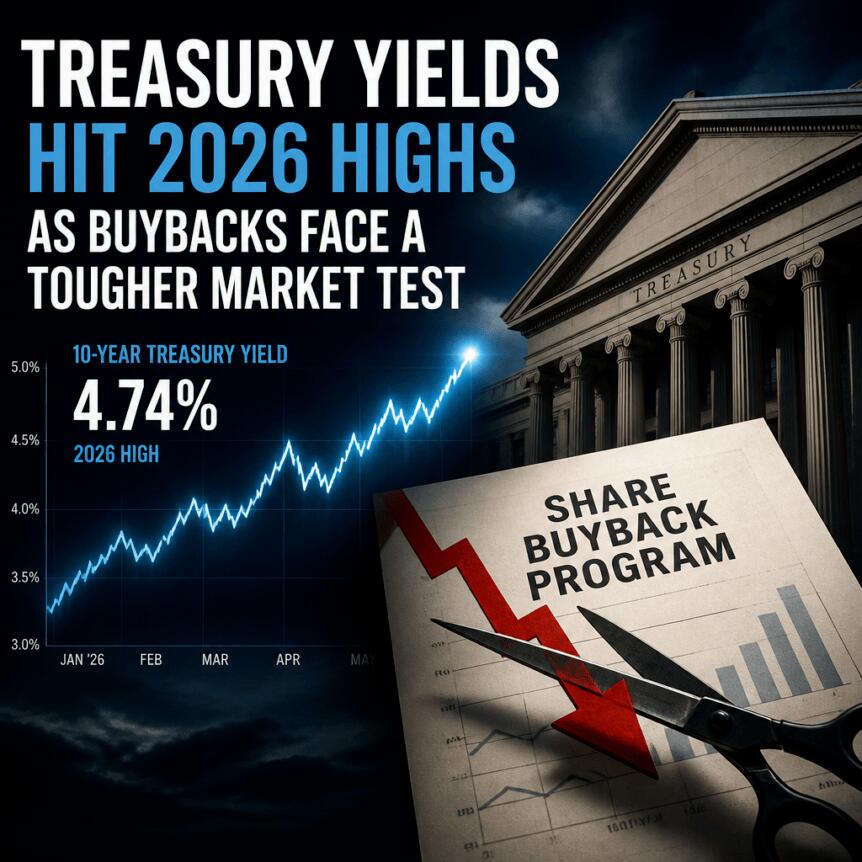
Treasury yields have reached fresh 2026 highs, while the 30-year yield approaches 5.26%. Meanwhile, the Treasury prepares to increase its buyback program from September 9.
The move now faces rising yields that could weaken the liquidity boost expected to support crypto prices.
The Treasury market has shifted since the rally that followed August 19. At that time, traders priced in the potential impact of larger Treasury buybacks. However, yields have since moved higher, creating a tougher test for that market view.
Rising Treasury Yields Challenge the Liquidity Narrative
The 30-year Treasury yield has moved toward 5.26%, marking another high for 2026. At the same time, longer-term borrowing costs have risen despite expectations for stronger Treasury demand.
Therefore, the move raises questions about whether buybacks can offset broader pressure across the bond market.
Treasury buybacks can support market liquidity by purchasing existing government debt. However, they do not automatically remove every force pushing yields higher. Instead, other factors can continue lifting yields even as the Treasury increases purchases.
The latest yield move therefore creates a direct test for the liquidity narrative supporting crypto markets. Higher yields can increase the appeal of government debt relative to riskier assets. Meanwhile, they can also raise financing costs across markets and reduce the impact of easier liquidity conditions.
September 9 Buybacks Face Their First Major Test
The Treasury is scheduled to enter the market with the larger buyback program on September 9. Until then, markets can only price the expected effects of the policy change. Consequently, the coming operations could provide a clearer signal about their influence on Treasury liquidity.
The rally after August 19 reflected expectations around larger Treasury purchases before actual buying began. Now, rising yields have placed those expectations under greater pressure. The market must determine whether real purchases can produce the support that earlier pricing anticipated.
However, the buyback program does not operate in isolation from broader Treasury market conditions. Demand, supply, inflation expectations, monetary policy, and term premiums can also influence longer-term yields. As a result, stronger Treasury purchases may support liquidity without immediately forcing long-term yields lower.
Bitcoin Faces a More Complicated Macro Backdrop
Bitcoin has benefited from broader liquidity expectations, but higher Treasury yields can challenge that setup. The cryptocurrency market often reacts to changes in financial conditions and expectations for future liquidity. Therefore, sustained increases in long-term yields could create additional pressure on risk assets.
The current setup does not automatically signal a deep Bitcoin correction. Instead, it shows that the liquidity argument now faces a stronger macro counterforce. Higher yields could limit the effect of Treasury operations if other market pressures remain strong.
The September 9 buyback activity should therefore provide important evidence for the broader liquidity thesis. If Treasury purchases improve market conditions, risk assets could receive additional support. Conversely, continued yield increases would suggest that other forces remain stronger than the buyback effect.
The bond market has already challenged the assumption that larger buybacks would quickly ease financial conditions. Now, actual Treasury operations will show whether those expectations match market reality. Until then, rising yields remain the clearest sign that liquidity alone does not control the direction of rates.
For crypto markets, the outcome could shape expectations around Bitcoin’s next major move. A stronger Treasury liquidity effect could reinforce the bullish macro case for digital assets. Yet, persistent yield pressure could make that case harder to sustain without additional supportive factors.

Robinhood is deepening its push into US event trading by taking equity stakes in Crypto.com and its newly created prediction markets spin-off, OG.com. The brokerage says the multi-year arrangement is designed to let it route retail event contracts through OG.com’s CFTC-regulated derivatives infrastructure.
According to a Tuesday announcement from Robinhood, the rollout starts for eligible customers in the United States, with Robinhood directing event contracts to OG.com’s CFTC-regulated derivatives exchange and clearinghouse. The companies did not disclose how large Robinhood’s equity positions are, but the stakes are priced using the valuations set in an earlier investment by Citadel Securities.
Key takeaways
- Robinhood will route eligible retail event contracts through OG.com’s CFTC-regulated exchange and clearinghouse.
- Robinhood will receive initial equity stakes in both Crypto.com and OG.com; deal values were not publicly disclosed.
- The agreement follows OG.com’s spin-off from Crypto.com at a reported $5 billion valuation.
- The move comes as prediction market products face intensifying state-level legal scrutiny over whether they should be treated like gambling.
- OG.com plans to expand beyond prediction markets into broader derivatives products, including futures and perpetual contracts.
How the OG.com infrastructure fits Robinhood’s event trading
The operational core of the deal is straightforward: Robinhood intends to use OG.com’s regulated setup for event contracts. In practical terms, this means customers participating through Robinhood’s platform will be connected to a derivatives exchange and clearinghouse operating under CFTC oversight, rather than relying solely on other third-party venues.
Robinhood’s choice is notable given how quickly the brokerage has positioned prediction markets as part of its retail-facing growth story. The announcement places OG.com alongside Robinhood’s other CFTC-regulated market infrastructure partner, Kalshi, which was used when Robinhood first launched its prediction markets hub in March 2025.
Equity stakes and valuations tied to Citadel Securities
Robinhood will obtain equity positions in both Crypto.com and OG.com as part of the agreement. The stakes are “priced at the valuations established” by Citadel Securities’ earlier investment in those platforms, per the announcement.
While the companies declined to reveal the number of shares or dollar value of Robinhood’s holdings, the structure matters for investors tracking whether Robinhood is treating event trading as a strategic line of business or a temporary test. Equity participation typically suggests longer-term commitment and alignment incentives beyond a pure technology or routing relationship.
Robinhood’s decision also arrives less than two months after reporting that it was in talks with Crypto.com to expand its prediction markets offering, according to earlier coverage from Cointelegraph: Robinhood crypto.com prediction markets.
OG.com’s spin-off timing and expansion plans
OG.com emerged as a separate entity from Crypto.com, with the spin-off reported at a $5 billion valuation. In Tuesday’s announcement, OG.com CEO Kris Marszalek framed the platform as operating independently from the crypto exchange business and described an ambition to broaden its product toolkit.
Specifically, Marszalek said OG.com intends to expand beyond prediction markets into futures and perpetual contracts. That matters because event contracts are only one segment of the broader derivatives landscape. If OG.com’s planned expansion proceeds, it could influence how retail demand migrates from strictly event-based payoffs toward other forms of derivatives exposure—though the timing and regulatory pathways for those products would still be subject to the relevant jurisdictional approvals.
Growth momentum meets a mounting legal battle
Robinhood’s new infrastructure partnership lands amid escalating uncertainty for prediction markets in the US. The sector’s growth has been strong, but legal challenges have increasingly targeted how these products are classified under state law.
Robinhood reported that event contracts generated $156 million in revenue in the second quarter of 2026, according to Robinhood’s quarterly results release: Robinhood reports second quarter 2026 results. That figure represents a more than tenfold increase compared with the prior year and also placed event contracts ahead of Robinhood’s equities transaction revenue and its reported crypto-related revenue for the quarter.
Analyst estimates also suggest significant upside if the model scales. Bernstein analysts projected in July that Robinhood’s revenue—including prediction markets—could reach $1.7 billion by 2028, as referenced in earlier Cointelegraph coverage: Bernstein estimates.
However, the legal pressure on prediction markets has intensified. According to Cointelegraph, operators have faced efforts by US states to apply gambling laws to sports event contracts. A key example is litigation involving Kalshi, where a Nevada judge extended a ban preventing the company from offering event contracts in the state without a gaming license. The ruling rejected the argument that the contracts were swaps subject exclusively to CFTC oversight, as discussed in Cointelegraph reporting: Nevada judge extends ban.
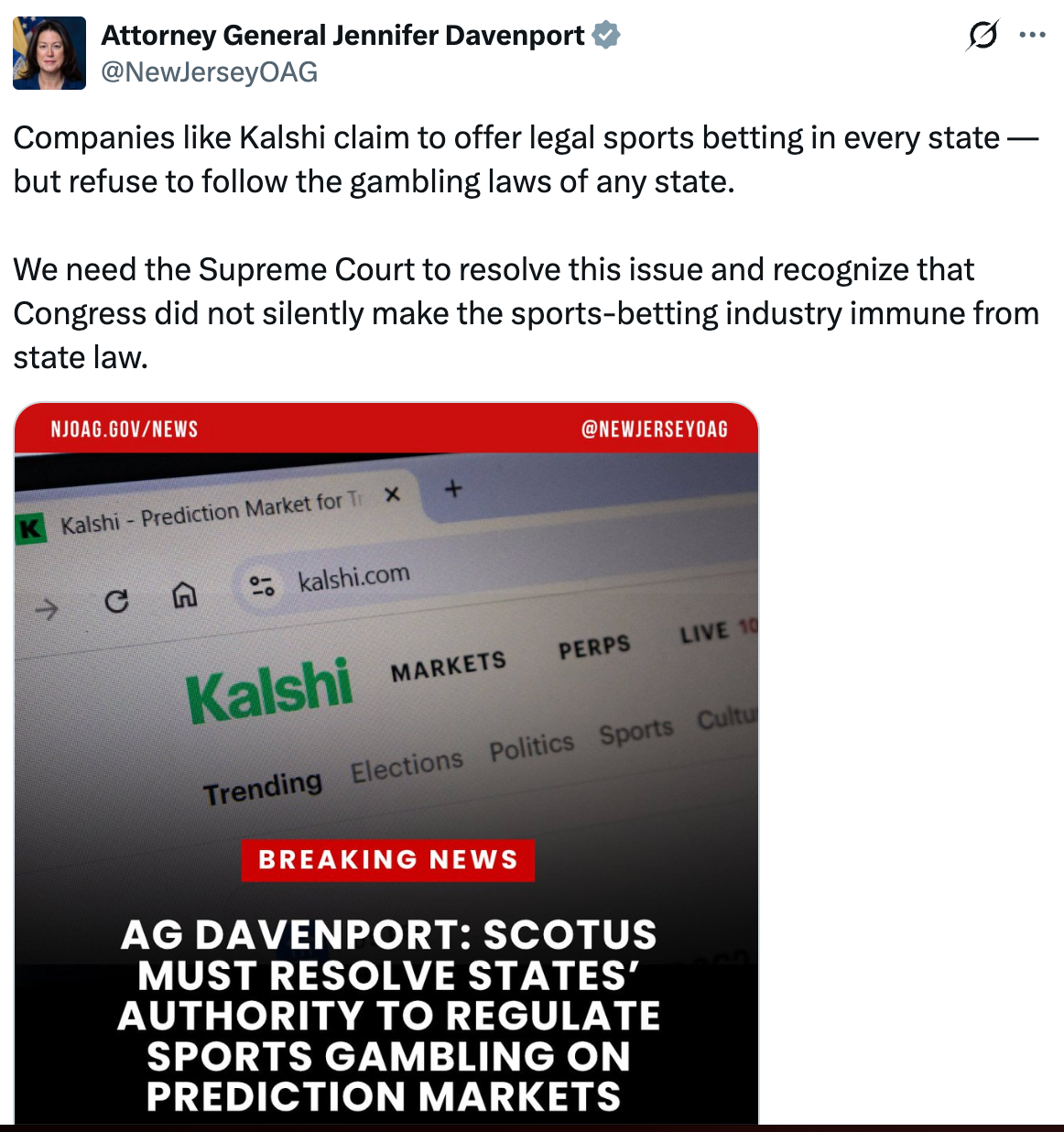
Last week, New Jersey petitioned the US Supreme Court on whether states can regulate sports contracts offered on CFTC-regulated prediction market platforms. Cointelegraph reported on the development in New Jersey Supreme Court filing, noting that New Jersey Attorney General Jennifer Davenport argued that companies claim to provide legal sports betting nationwide while refusing to comply with state gambling laws.
What to watch next for Robinhood and the sector
Robinhood’s use of OG.com’s CFTC-regulated exchange and clearinghouse may strengthen its compliance posture for event contracts, but it does not remove the broader risk stemming from the state-federal jurisdiction fight over classification. Traders and users should watch how the Supreme Court proceedings evolve—and whether OG.com’s planned expansion beyond prediction markets faces additional regulatory hurdles as these products scale.
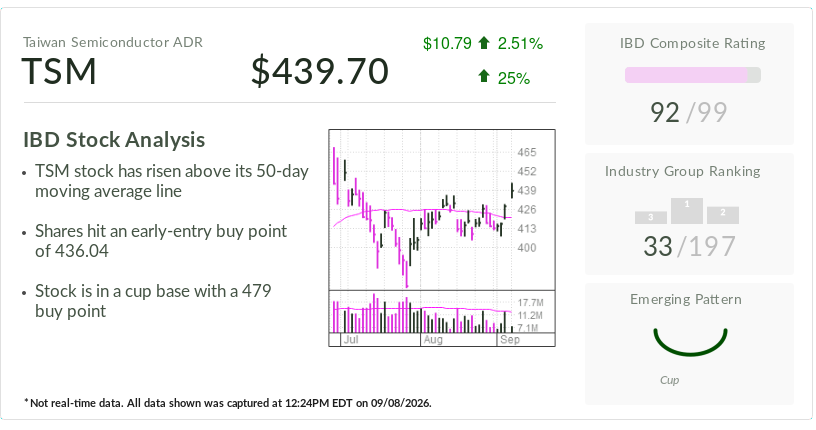
Taiwan Semiconductor ADR Taiwan Semiconductor ADR TSM $ 439.70 $10.79 2.51% 25% IBD Stock Analysis TSM stock has risen above its 50-day moving average line Shares hit an early-entry buy point of 436.04 Stock is in a cup base with a 479 buy point IBD Composite Rating 92/99 Industry Group Ranking 33/197 Emerging Pattern Cup Cup A cup-shaped pattern with…
Copyright ©2026 Investor’s Business Daily, LLC. All rights reserved. 87990cbe856818d5eddac44c7b1cdeb8


Ledger and Trezor said researchers have a responsibility to publish their findings if vendors fail to fix bugs within an agreed disclosure window.
Robinhood has taken equity stakes in Crypto.com and its newly spun-off prediction market platform OG.com as part of a multi-year deal to use OG.com’s regulated infrastructure for event contracts.
Under the agreement, Robinhood will route retail event contracts through OG.com’s Commodity Futures Trading Commission (CFTC)-regulated derivatives exchange and clearinghouse, with the rollout beginning Tuesday for eligible US customers.
According to Tuesday’s announcement, the online brokerage will receive initial equity stakes in both Crypto.com and OG.com, with the stakes priced at the valuations established by an earlier Citadel Securities investment in the platforms. The companies did not disclose the size or value of Robinhood’s holdings.
The deal follows OG.com’s spin-off from Crypto.com at a $5 billion valuation and comes less than two months after reports that Robinhood was in talks with Crypto.com to expand its prediction markets offering.
OG.com will operate independently from the crypto exchange, with CEO Kris Marszalek saying the platform plans to expand beyond prediction markets into futures and perpetual contracts.
Related: Arcus launches tokenized perp positions on Robinhood Chain
Latest move expands prediction market partnerships
Robinhood launched its prediction markets hub in March 2025 with CFTC-regulated exchange Kalshi and later expanded its prediction market infrastructure.
The business has grown rapidly. Event contracts generated $156 million in revenue for Robinhood in the second quarter, up more than tenfold from a year earlier and surpassing its $129 million in equities transaction revenue and $100 million from crypto.
Bernstein analysts estimated in July that Robinhood’s revenue, including prediction markets, could reach $1.7 billion by 2028.
To be sure, prediction market operators have also faced a growing number of legal challenges from US states seeking to apply their gambling laws to sports event contracts.
In April, a Nevada judge extended a ban preventing Kalshi from offering event contracts in the state without a gaming license, finding that the products were effectively indistinguishable from traditional betting. The ruling rejected Kalshi’s argument that the contracts are swaps subject exclusively to CFTC oversight.
The legal wrangling escalated last week with New Jersey petitioning the US Supreme Court to weigh in on whether states can regulate sports contracts offered on CFTC-regulated prediction markets.
In a post announcing the move, New Jersey Attorney General Jennifer Davenport said companies such as Kalshi claim to offer legal sports betting nationwide while refusing to comply with state gambling laws, calling on the Supreme Court to resolve the jurisdictional dispute.
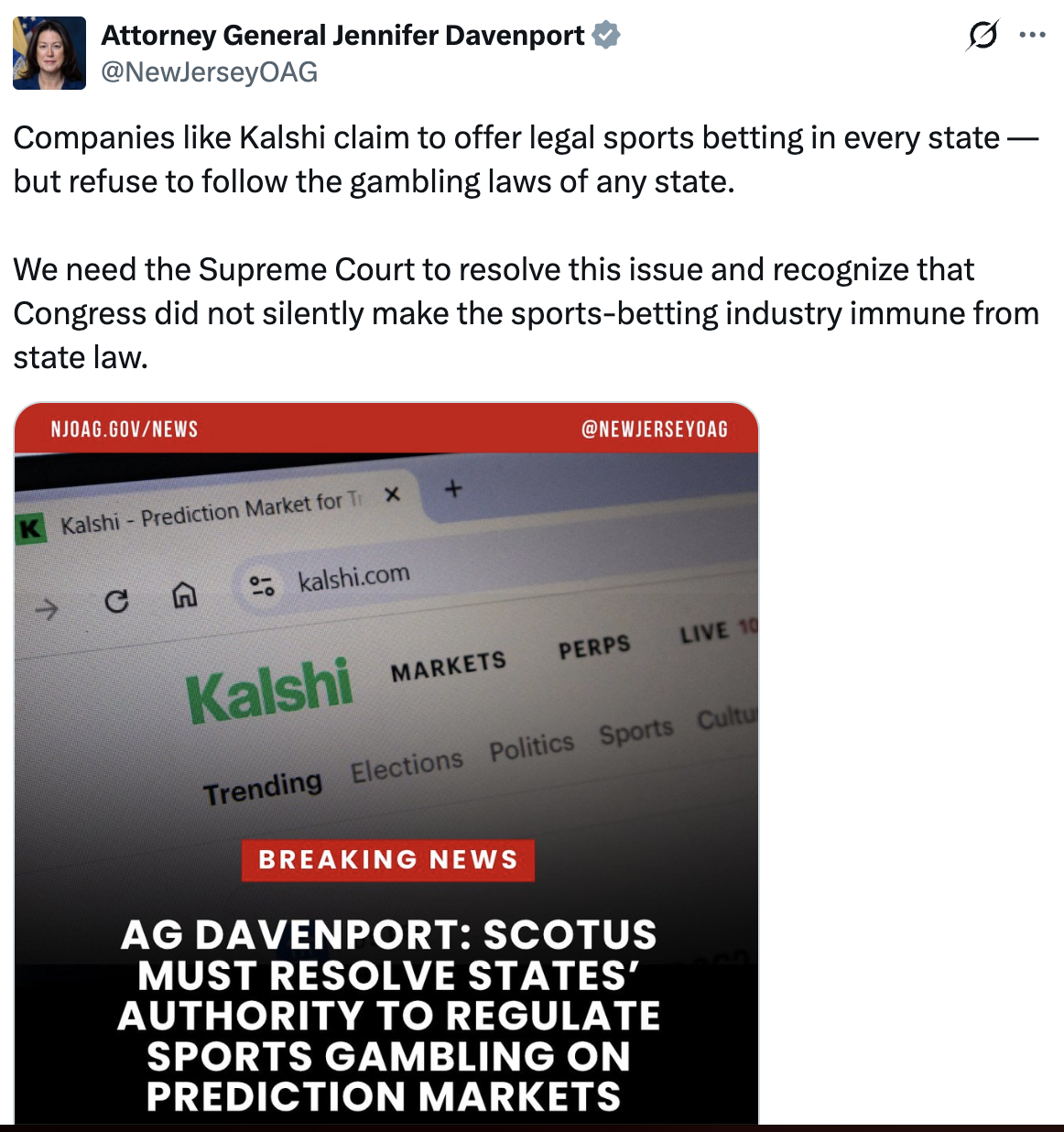
Source: Jennifer Davenport
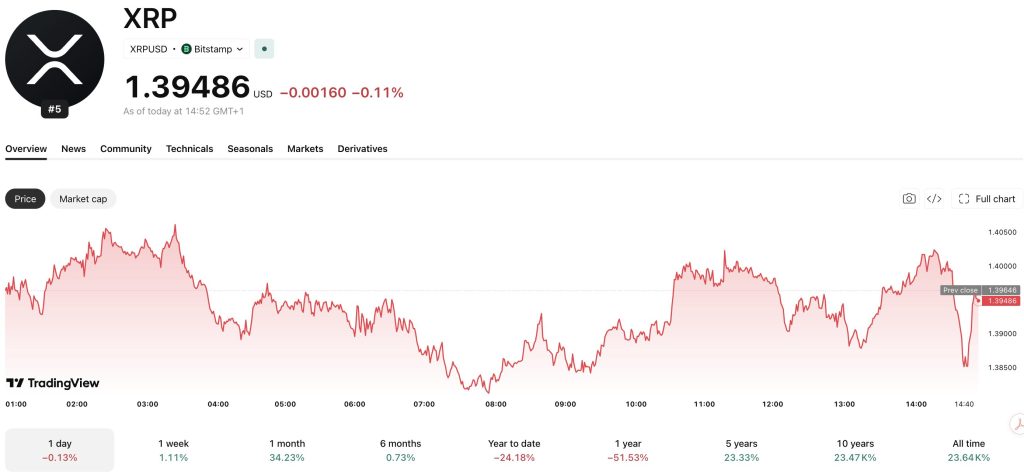
XRP trades at $1.39, down -1.5% over the past 24 hours, well below the psychological $1.40 pivot that’s dictated short-term sentiment for weeks. One analyst is making an XRP price prediction sure to blow even the most bullish Ripple maxi’s minds.
That’s the target one analyst just put on the table, and the math behind it is either wildly aggressive or a decade-long setup, depending on who’s charting it.
Analyst Ali Martinez pointed to a monthly ascending triangle he says has been forming on XRP’s chart for nearly ten years, with resistance capped at approximately $3.66.
“A monthly close above it would confirm the breakout and activate a technical target near $60,” Martinez wrote, framing the level as the singular gatekeeper for the entire bullish thesis. Touching $3.66 intraday won’t cut it, he’s explicit that only a confirmed monthly close counts.
Context matters here. XRP would need a 158% rally just to test that $3.66 resistance, and a move to $60 implies a market cap near $3.76 trillion, a figure that would put XRP ahead of most global companies by valuation.
XRP Price Prediction: Can Ripple Hit $1.50 This Week?

At $1.39, XRP sits inside a consolidation band that’s held between roughly $1.31 and $1.48 over the past week. Exchange liquidity data shows activity hitting a six-month high, which typically precedes a directional move rather than more sideways chop.
Immediate support sits at $1.35, with a break below risking a slide toward $1.30–$1.32. Resistance clusters at $1.43–$1.45, then again at $1.50–$1.55.
Bull case: XRP reclaims $1.45, builds momentum through the $1.50–$1.53 band, and targets $1.63–$1.68 into year-end, per recent volume analysis.
Base case: continued range-bound trading between $1.35 and $1.48 while the market waits for a catalyst.
Bear case: a failure to hold $1.35 sends the price back toward $1.30, invalidating the near-term bullish structure.
The $3.66 monthly close Martinez flagged remains a distant, higher-timeframe condition, resistance mapping suggests that’s a Q4-or-later conversation, not a this-week one.
Earn $50 and Enter $300K Prize Draw on EdgeX
LiquidChain Targets Early Mover Upside as XRP Tests Key Levels
A $60 target validates why holders are still here. But at a $3.76 trillion implied market cap, the math gets uncomfortable fast; that level of capital rotation into a single asset doesn’t happen on a normal cycle timeline, and reaching it from $1.39 requires patience most traders don’t have. This is where capital increasingly rotates toward earlier-stage infrastructure plays with more room to run percentage-wise.
LiquidChain ($LIQUID) is building a Layer 3 execution environment that fuses Bitcoin, Ethereum, and Solana liquidity into one unified layer; developers deploy once and get access across all three ecosystems, instead of fragmenting liquidity chain by chain. The presale is priced at $0.014953, with $962,199.98 raised so far.
Core features include Single-Step Execution and Verifiable Settlement, both aimed at solving the cross-chain friction that’s plagued DeFi since multi-chain became the norm.
Gain Special Access to Layer 3 Trading Here
The post XRP Price Prediction: Analyst Makes Crazy $60 Ripple Prediction appeared first on Cryptonews.

The benefits extend beyond bedtime. Planning tomorrow before you wrap up today creates a clear dividing line between work and the rest of your life, says Alexis Haselberger, a time-management and productivity coach in San Francisco. “It helps you disconnect, mentally, from work at the end of the day,” she says, rather than running through your responsibilities while you’re trying to talk to your kids, catch up with your partner, or watch TV.
There’s a morning payoff, too: “You have a list, so instead of spending 30 minutes getting into your day, you can just start.”
Start with a brain dump
If your current organizational system could most accurately be described as “chaos,” Chait suggests starting with one big brain dump: “Get it all out on paper, and then you can organize it from there,” she says. Once you’ve made that initial list, the daily exercise can be much smaller. At the end of each workday, choose three priorities for tomorrow.
Crypto World
BitMine Now Holds $15.7 Billion in Various Assets as Massive ETH Buying Spree Continues

BitMine Immersion Technologies (BMNR) reported an Ethereum (ETH) treasury of 5,929,198 tokens and combined crypto, cash, and moonshot holdings of $15.7 billion as of September 7, in an 8-K filed September 8 that also disclosed the end of the outside agreement running its staking operations.
BitMine marked its ETH at $2,495 per token, per Coinbase, leaving the total little changed from the $15.6 billion it reported a week earlier, when the stash crossed 5.9 million tokens on a 53,501 ETH purchase. The company added 28,086 ETH over the past week and has bought Ether every week since the strategy began on June 30, 2025.
Those holdings equal 4.9% of the 122.0 million ETH in supply, which BitMine puts at 97% of the way to its goal of owning 5% of all ETH, a target it calls the Alchemy of 5%.
Staking Fee Switches to Flat Rate
BMNR Subsidiary One and Ethereum Tower LLC signed a mutual termination agreement on September 4, ending a management services agreement from March 24 under which Ethereum Tower collected a revenue participation fee, a share of net staking revenue on company-owned ETH.
The original contract carried an initial ten-year term and let BitMine exit for convenience on 180 days’ notice, a period both sides waived. BitMine said it paid no material early termination penalties and that amounts accrued through September 3 remain payable.
A BitMine subsidiary then signed a new advisory agreement with American Validator LLC, an affiliate of Ethereum Tower, effective September 4, for a flat fee of 1.50% of staking rewards on staked ether.
BitMine stakes 5,067,309 ETH, worth $12.6 billion at its mark and about 85% of the treasury, through MAVAN, the in-house Made in America Validator Network it built this year. Chairman Tom Lee put projected annualized staking revenue at $330 million, rising to $386 million once the ether is fully staked, at a 2.61% seven-day yield.
Cash Rebuilds to $593 Million
Total cash and marketable securities reached $593 million on September 7, up from $541 million a week earlier and $78 million on August 16. Alongside the ether, BitMine held 211 Bitcoin (BTC), a $180 million stake in Beast Industries and a $91 million stake in Eightco Holdings (ORBS), which the release described as one of the only listed equities offering indirect exposure to OpenAI.
BitMine is among the most heavily traded US stocks, at $1.10 billion in average daily dollar volume in the five days to September 4, according to Fundstrat. Its holdings rank first among corporate ether treasuries and second among all crypto treasuries, behind Strategy (MSTR), which the release said owns 840,447 Bitcoin worth about $66 billion
The post BitMine Now Holds $15.7 Billion in Various Assets as Massive ETH Buying Spree Continues appeared first on CryptoPotato.

Ice Moves Tokenization Into Mainstream Infrastructure

Lili Reinhart Channels Kate Hudson In Iconic Dress Tribute

Coffee Break: JoJo Necklace – Corporette.com


-
 Tech6 hours ago
Memory prices are slowing because buyers ran out of money
-

 Business8 hours ago
Egyptian TV Presenter Sarah Khalifa, 11 Others Sentenced To Death In Major Drug Trafficking Case In Cairo
-

 NewsBeat4 hours ago
England up in reading, maths and science rankings as Scotland and Wales dip
-
 Tech8 hours ago
Strong Password Policy and Password Manager Guide
-
 NewsBeat4 hours ago
Tehran’s assertive rhetoric signals a new and dangerous phase in conflict
-

 Crypto World8 hours ago
Visa expands stablecoin card network to 160 programs
-

 Crypto World7 hours ago
Arm Stock: Arm Extends Reach To Physical AI
-

 Business6 hours ago
US-Canada tariffs: Canada braces for prolonged trade war as counter-tariffs on US take effect
-

 Crypto World9 hours ago
Stablecoins could save South Korean merchants up to $3.8 billion a year, budget office says
-

 Business9 hours ago
model backs CBD drinks brand
-
 Entertainment8 hours ago
The 10 Most Influential Books of the 20th Century, Ranked
-

 Crypto World8 hours ago
How Democrats Plan to Investigate Trump’s Ballroom
-

 Sports8 hours ago
Rob Baxter: Exeter boss says England should pick English-based players
-
Business8 hours ago
Goldman Sachs maintains neutral stance amid market shifts
-

 Tech3 hours ago
Google’s revived nuclear power plant gets $1.9B loan from US government
-
 Crypto World8 hours ago
Hyperliquid Season 3 Airdrop Wait Fuels a Meme Coin Machi Big Brother Promotes
-

 Business8 hours ago
Claim Your Share Of $50 Million Disney Streaming Price Settlement By Sept. 8 Tonight
-
 Sports7 hours ago
Phones confiscated, players sent home: Pakistan’s England tour turmoil revives memories of Mohammad Amir, Salman Butt and Mohammad Asif’s 2010 Lord’s spot-fixing scandal | Cricket News
-

 NewsBeat7 hours ago
Paul Scholes urges Michael Carrick to drop Man Utd star against Man City | Football
-

 Politics7 hours ago
Susan Sarandon Claims She Lost Film Work Due To Her Support For Palestine
You must be logged in to post a comment Login