
Crypto World
Saket Soni Wants to Protect the Workers Rebuilding Communities After Disaster


“Go to any fire- or hurricane- or flood-hit town in America, and you’ll see the labor shortage,” says Soni. “Even if the money comes, if the workers aren’t there to repair, then people won’t be coming home.” Soni hopes to continue developing this much-needed workforce over the next decade.
As well as providing legal advocacy for resilience workers, Resilience Force collaborates with third-party contractors to ensure laborers get better pay and safety standards. The nonprofit also offers a structured certification program that gives workers the technical and safety skills to perform roof repairs and other hands-on, AI-proof jobs. Then it puts people on the job directly, too, a blueprint with which they’ve seen success in states as politically and environmentally diverse as Louisiana and Colorado. While its in-house activities are paid for by philanthropy, Resilience Force provides free assistance to uninsured homeowners when it can.
As budget and staffing cuts at the Federal Emergency Management Agency further complicate recovery for communities affected by disasters, the Resilience Force model aims to directly confront three intersecting crises: climate change, the housing shortage, and a difficult job market. Inherently, Resilience Force also addresses a fourth crisis: anti-immigration sentiment.
Soni recalls a time he arranged help for a conservative Florida family whose home had been damaged by Hurricane Michael. “There was darkness all around,” he says. “They lost their electricity. Their roof was blown. They put up a sign that said, ‘Strangers will be shot.’” Nevertheless, Soni rolled up with a squad of Resilience Force workers, many of whom were immigrants, and rebuilt the house. In short order, the family took the sign down. “Everybody’s focused on how polarized the country is,” Soni says. “I see the opposite.”


When van Hal arrived at the “very ugly institutional building” practicing this model of care that preceded Hogeweyk, he helped launch a pilot program focused on giving the residents back some of their autonomy. “We immediately saw improvement in how people reacted and responded,” van Hal says. “They became more active, less stressed and less agitated.”
That became the seed for Hogeweyk. When the nursing home eventually needed to be upgraded, its owner agreed to rebuild with patient autonomy in mind. Instead of a high rise institutional facility, they built homes to accommodate six or seven people with similar backgrounds and interests, and created a neighborhood to better resemble the real world. The key was to think of the people living in Hogeweyk as residents, not patients. “With the word ‘patient,’ the focus is on the disease instead of the human being in front of you,” van Hal says. “If you look outside, it’s difficult to see the difference between a visitor, a resident, a volunteer or a staff member. You just see people meeting, smiling and walking around.”
Studies show the residents at Hogeweyk are on average happier and use less medication than those in traditional nursing homes, and care providers around the world have taken inspiration from van Hal’s approach. One such facility is Agrace in Wisconsin, which is building the first Hogeweyk-style facility for dementia residents in the US, scheduled to open in 2027. Lynne Sexten, Agrace’s president and CEO, says that during her visits to Hogeweyk, she was struck by how few residents were bed-bound, or needed oxygen, and how their days were less regimented and repetitive compared with those of memory care residents in the US. “It’s monumentally different from what we see in memory care in the US.” Van Hal is hoping more facilities like Agrace take Hogeweyk’s lead to reframe how society thinks about and treats people with dementia. He now advises people interested in mirroring Hogeweyk’s model through his own consulting company. “It’s about changing our perspective on people with dementia from thinking of them as patients with dementia to thinking of them as persons living with dementia,” he says. “That’s my mission now.”

Japanese corporate Bitcoin holder Remixpoint has exited its major altcoin positions, selling its Ether (ETH), Solana (SOL), XRP and Dogecoin (DOGE) and leaving Bitcoin as its sole cryptocurrency exposure. The move reduces portfolio diversification but is framed as a shift toward a simpler strategy centered on Bitcoin.
In a disclosure filed on Wednesday, the company said it sold the altcoins for a combined 878.8 million yen (about $5.5 million) and expects to recognize a net gain of 117.8 million yen (roughly $736,000). Remixpoint completed the transactions on Tuesday, with gains anticipated to be booked in the second quarter of its fiscal year ending March 2027.
Key takeaways
- Remixpoint sold all ETH, SOL, XRP and DOGE holdings for 878.8 million yen and expects a 117.8 million yen net gain.
- The company says the portfolio change follows an assessment of market conditions, risk-return traits, and its broader financial strategy.
- After the sale, Bitcoin remains the company’s only cryptocurrency holding at about 1,506 BTC (approximately $115 million).
- Remixpoint reported mixed outcomes by asset class, recording gains on ETH, SOL and XRP but selling DOGE at a small loss.
From altcoins to a Bitcoin-only posture
According to the company’s filing, Remixpoint is one of Japan’s largest corporate Bitcoin holders and is now effectively consolidating its crypto exposure. After the divestment, the firm estimates it holds around 1,506 BTC, valued at about $115 million based on the figures presented in the disclosure and related price references at the time of publication.
Before the sales, Remixpoint held roughly 901 ETH, 13,920 SOL, 1.19 million XRP and 2.8 million DOGE. The filing notes that the altcoin positions were worth a few million dollars in total when assessed using CoinGecko pricing at publication—providing a reference point for why the company’s portfolio shift changes its risk profile and operational focus.
What the company sold—and how the results broke down
Remixpoint’s disclosures specify the aggregate proceeds and the profitability of the transactions. The company sold ETH, SOL, XRP and DOGE for a combined 878.8 million yen (about $5.5 million), resulting in a reported gain of 117.8 million yen (approximately $736,000).
The outcome was not uniform across assets. The company recorded gains on ETH, SOL and XRP sales, while DOGE was sold at a loss of 3.26 million yen (about $20,000). Overall, however, the net result remains positive as gains from the other altcoins outweighed the DOGE drawdown.
The company said it completed the sales on Tuesday and expects to recognize the gains in its second quarter of the fiscal year ending March 2027, aligning the transaction with its financial reporting cadence rather than immediate recognition.
Why Remixpoint says it moved away from altcoins
Remixpoint attributed its decision to sell the altcoin portfolio to an evaluation of market conditions and the risk-return characteristics of those assets. The company also pointed to how the change fits its financial strategy.
In the disclosure, Remixpoint said that focusing the crypto portfolio on Bitcoin is intended to “clarify investment strategy” and “improve capital efficiency.” While these statements are broad, they signal an approach that prioritizes a single asset allocation rather than managing performance across multiple high-volatility tokens.
For investors and market observers, the practical implication is a reduction in altcoin market exposure from a large corporate holder. Even if the sale is primarily a company-specific balance-sheet decision, corporate reallocations can influence liquidity and perceived demand dynamics—particularly when they involve multiple liquid assets within a short window.
Bitcoin lending returns and the pivot’s broader context
Remixpoint said it has also generated returns from its Bitcoin holdings through lending. The disclosure states the company earned 14.92 BTC from lending between Feb. 24 and Aug. 31, which it valued at 164.2 million yen (about $1 million).
That detail matters because it reframes the company’s profit sources. After shifting away from altcoins, the company’s crypto economics appear increasingly dependent on Bitcoin exposure and yield generation activities, rather than holding and realizing gains across a wider basket of assets.
The filing also indicates Remixpoint is a standout player among Japan’s corporate Bitcoin holders, described in third-party tracking as the country’s third-largest corporate holder. That context helps explain why its portfolio decisions attract attention: corporate treasury moves can signal how major institutional-style holders interpret volatility, risk budgeting, and strategy clarity.
Earlier coverage highlighted Remixpoint’s corporate Bitcoin purchases, including reporting on a strategy shift that involved acquiring Bitcoin. In the latest development, the direction of travel has changed again—this time toward simplifying the portfolio after holding a multi-asset crypto mix.
What to watch next
With Remixpoint now holding about 1,506 BTC as its only cryptocurrency, the next signal to monitor is whether the company continues generating yield via Bitcoin lending and whether its reported “capital efficiency” goals translate into further strategic updates. Readers should also watch for how and when similar corporate holders decide between maintaining altcoin exposure versus consolidating around Bitcoin.

When he began using a prosthetic leg soon thereafter, its limitations were obvious. “The first one I got was a basic free-swing hinge,” Schultz recalls. “It would swing when I walked, but if I got it wrong, it would just collapse and I’d fall over.”
Schultz didn’t just want to walk. He wanted to compete again. But existing prosthetics didn’t support the squatting positions his favorite action sports demand. So, he decided to make his own prosthetic.
“I went full ‘mad scientist’ in my garage,” continues Schultz, who used his experiments to establish the company BioDapt in 2010. His first product—a prosthetic knee called the Moto Knee—uses a high-pressure mountain bike shock absorber to mimic quadricep muscles by stabilizing an athlete’s stance and absorbing heavy impacts. It provides the range of motion athletes need to stand up and sit down on a bike or snowmobile. His next product, a foot-ankle contraption called the Versa Foot, provides the same shock absorption for sports that demand toe pressure and ankle tension, like snowboarding.
Using his own creations, Schultz has won four Paralympic and seven World Championship medals, not to mention 10 X Games gold medals across three different sports. Meanwhile, over 90% of lower‑limb athletes competing in Para snowboarding competitions use BioDapt’s products, and more than two dozen used them to compete this year at the Paralympic Winter Games in Italy.
Schultz says his proudest moments are when athletes try his prosthetics for the first time. “Once they understand how to move in it and what it allows them to do, it opens a huge door for them and puts a big ole smile on their face, just like I had when I tested it for the first time.”
To date, BioDapt has sold nearly 2,000 units, according to Schultz, who retired from the U.S. Paralympic snowboard team this year to focus on his business. In partnership with technology company Autodesk, he’s currently working on new equipment to help athletes train for the 2028 Summer Paralympic Games in Los Angeles.
“Para athletes today are doing things nobody thought would be possible 10 years ago,” Schultz says. “It’s been awesome to be part of that.”

Full Sail, a decentralized finance (DeFi) protocol operating on the Sui blockchain, says it will shut down after a security incident tied to its oracle provider, Switchboard. The protocol’s decision follows confirmed losses linked to automated vault activity, prompting it to disable new deposits and liquidity provider reward claims.
In an announcement posted on X on Tuesday, Full Sail outlined a winding-down plan that starts with immediate restrictions and transitions regular pools into a withdrawal-only state after additional security checks. Full Sail positioned user compensation as its top priority and said it would publish withdrawal and claim instructions in the coming days.
Key takeaways
- Full Sail is shutting down on Sui after losses connected to oracle infrastructure provided by Switchboard.
- The protocol has already disabled new deposits and liquidity provider (LP) reward claims, moving affected pools toward withdrawal-only operations.
- Full Sail previously disclosed a suspected compromise investigation and later said an attacker removed roughly $91,000 from three vaults.
- Switchboard stated it halted its network on several chains, including Aptos, Sui, IOTA, and Movement, while investigating potential compromises.
- Full Sail said it will use remaining protocol liquidity to compensate users and cover any shortfall so depositors are repaid first.
Protocol winds down after vault losses
Full Sail’s shutdown plan comes after a security incident last week that impacted the protocol’s automated vaults. According to Full Sail’s X posts, the problem surfaced after a suspected compromise of Switchboard’s oracle infrastructure, which the DeFi protocol relies on to support its vault and lending operations.
On Tuesday, Full Sail said it is immediately disabling new deposits and liquidity provider reward claims. It also indicated that “regular pools” will shift into withdrawal-only mode after final security checks. The company framed the operational shift as a necessary step to protect remaining funds while it prepares a clear path for users to retrieve assets.
Full Sail also said it will publish instructions for withdrawals and claim-related processes within the coming days. For investors and liquidity providers, that timing will be important: users typically need precise guidance on when pools reopen for withdrawals and how to submit any compensation claims, especially when protocols are decommissioned.
Timeline of the incident: disclosure, investigation, then confirmed losses
Full Sail first disclosed the incident on Saturday, stating it had paused deposits and withdrawals while it investigated the cause and confirmed a loss of funds. The early steps—pausing user flows while attempting to understand what happened—are common in DeFi security responses, particularly when the issue may relate to price feeds or other components that vaults depend on for automated execution.
Switchboard, Full Sail’s oracle provider, said in its own X update on Saturday that it was investigating a potential compromise of its Move-based implementations. In the same update, Switchboard reported halting its network on multiple chains, including Aptos, Sui, IOTA, and Movement—an action that suggests it was attempting to limit further risk while examining whether its oracle services were being manipulated.
As the investigation progressed, Full Sail later stated that an attacker removed about $91,000 from three of its vaults. While the amount is smaller than the total value at risk in some historical DeFi oracle incidents, the episode highlights how rapidly losses can propagate through protocols that automate vault behavior based on external data.
Broader spillover: related stablecoin lending losses
The fallout from the suspected oracle compromise was not limited to Full Sail. Virtue, a stablecoin lending protocol built on IOTA (and known for its VUSD stablecoin), separately reported losses after the incident. According to Virtue’s X post on Saturday, it saw approximately $455,000 in losses and said the backing of its VUSD stablecoin had been impaired.
This matters because it indicates a wider blast radius: if oracle infrastructure is compromised on multiple chains, any protocol using that infrastructure may be exposed, even if those protocols operate under different architectures or business models. In other words, the incident appears to be an ecosystem-level risk factor rather than an isolated failure inside one application.
Investors watching DeFi’s infrastructure layer may treat these reports as a reminder that oracle reliability—along with incident response discipline—is crucial for stablecoin-oriented systems as well as lending vaults.
How Full Sail plans to compensate users
Full Sail says it will use remaining protocol-owned liquidity to compensate affected users. It also added that the team will cover any shortfall so community depositors are repaid first. That pledge is especially relevant in shutdown scenarios, where the priority is typically to preserve user access to remaining funds and reduce uncertainty about repayment.
Full Sail also indicated that after final security checks, pools will be set to withdrawal-only mode. For users, this raises practical questions—such as whether each vault or pool will have its own withdrawal window or whether claims will be coordinated across pools—but Full Sail’s promised instructions should clarify the steps once published.
From an editorial perspective, the core theme is risk containment: by disabling deposits and LP reward claims immediately and focusing on withdrawals and compensation, the protocol is attempting to stop new inflows that could complicate accounting or increase exposure while it finalizes remediation.
What to watch next
Full Sail’s next critical update will be the timing and content of its withdrawal and claim instructions. Users and liquidity providers should closely follow those details as they may determine how quickly funds can be retrieved and how compensation will be calculated if any shortfalls must be covered by the team.
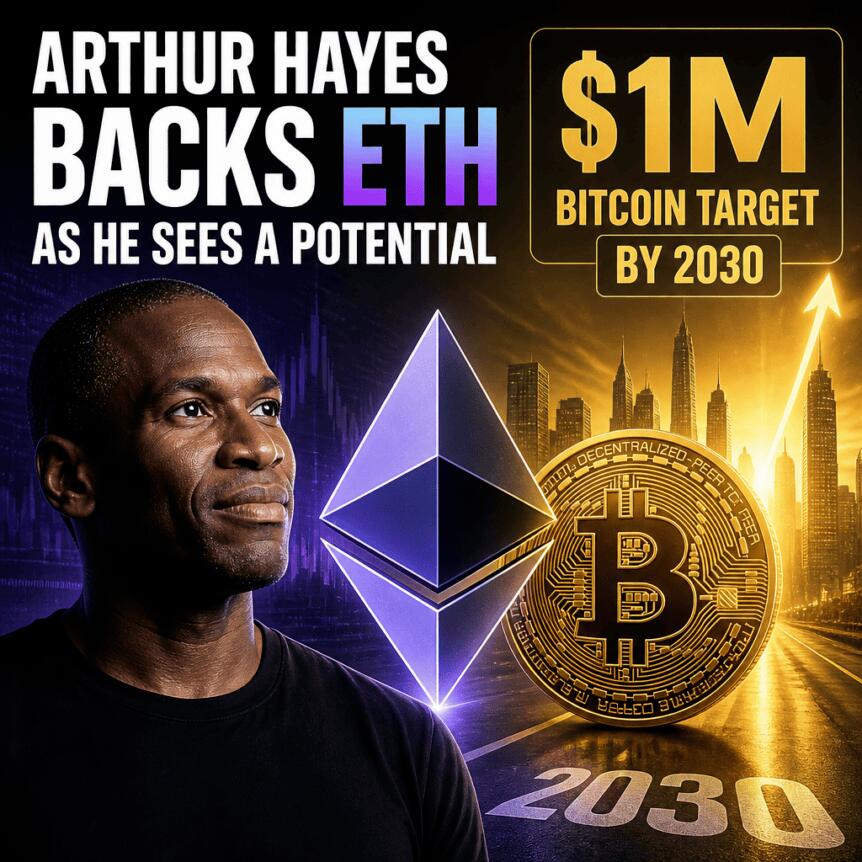
Bitcoin still has the ingredients for a major upside move in the coming years, BitMEX co-founder Arthur Hayes says, but he is not waiting to express that view through BTC alone. In a recent episode of Trade Secrets, Hayes argued that macro conditions could set the stage for a “seven-figure” outcome by 2030—while also saying he is currently positioning with Ethereum because he sees a faster, cleaner risk-reward profile.
Hayes’ comments arrive amid competing perspectives in the market. Earlier in the same show, Markus Thielen of 10x Research said that reaching $1 million for Bitcoin by 2030 is “mathematically impossible,” pointing to how prior inflow dynamics may not repeat at the scale required over the next four years. Hayes disagreed on the underlying premise, citing a different set of macro drivers.
Key takeaways
- Arthur Hayes maintains Bitcoin could revisit “seven figures” by 2030, framing the setup around liquidity and macro policy rather than only spot demand.
- Despite his bullish Bitcoin view, Hayes says he is buying ETH now, expecting ETH could “3x to 5x” relatively quickly.
- Hayes is less enthusiastic about Hyperliquid’s upside, arguing that high expectations reduce asymmetry for new capital.
- Regarding BitMEX, Hayes said the exchange’s shutdown feels positive because it is being ended “on our own terms,” not due to a hack.
Why Hayes thinks Bitcoin can reach $1 million by 2030
Hayes’ forecast centers on what he describes as a cluster of catalysts rather than a single metric. In his view, the collapse of the AI bubble, broad monetary expansion (“massive” money printing), and the possibility of US yield curve control are among the factors that could support a sustained risk-on cycle.
He also suggested the recent market low may already be in. Hayes claimed that $58,000 was “probably the bottom” for Bitcoin and that prices could then “grind higher,” describing the current environment as a “hate fuck rally.”
The key point for readers is that Hayes is not simply calling for a momentum trade. His argument is that macro liquidity conditions can reshape the demand curve for Bitcoin in ways that outperform the expectations embedded in more capital-demand-focused models.
That framing matters because Thielen’s counterargument—delivered only weeks earlier on the same show—took the opposite approach. Thielen argued the inflow magnitude needed to reach $1 million is so large that it cannot be supported by the scale of capital Bitcoin attracted over the prior 15 years. In other words, one side is modeling capacity for incremental inflows, while Hayes is betting on the potential for macro policy to accelerate the entire inflow regime.
Hayes shifts focus from Hyperliquid to Ethereum
While Hayes remains constructive on Bitcoin, he said he is less confident about the upside profile of Hyperliquid. He argued that the market already knows the project exists and has priced it with “massive expectations,” which reduces the kind of “asymmetry” that makes a trade compelling for large capital allocations.
Hayes added that his own allocation decision is also about opportunity cost—stating that there may be “better risk-reward” for Maelstrom Capital to deploy into the broader “shitcoin space” than to focus on Hyperliquid when expectations are already elevated.
The comments came shortly after US President Donald Trump said the United States is working to bring Hyperliquid into the country. Hayes, who was pardoned by Trump in 2024, dismissed the idea that presidential statements can directly drive crypto asset prices. He suggested that the real determinants are the Treasury, the Fed, and other monetary authorities, rather than political messaging.
“It’s irrelevant” to Hayes: politics versus monetary policy
Hayes argued that what a politician says may be “entertaining,” but it does not necessarily translate into price moves. He also questioned whether Trump would expend political capital to move crypto legislation—specifically mentioning the CLARITY Act—given competing priorities and what he characterized as low voter interest.
For market participants, the takeaway is not that politics never matters, but that Hayes’ lens prioritizes macro policy mechanisms over headline risk. In that framework, short-term announcements may move narratives, while longer-term monetary conditions decide whether the broader market can sustain new highs.
BitMEX shutdown: Hayes says the exchange “landed the plane”
Hayes also addressed BitMEX, the derivatives exchange he co-founded in 2014 with Ben Dolo and Samuel Reed. BitMEX recently announced it would shut down on Sept. 23 and urged users to close positions and withdraw funds ahead of the deadline. Hayes said he “feels excellent” about the shutdown precisely because it is happening under the company’s control.
He told Trade Secrets that the exchange is ending “on our own terms,” and emphasized that it was not shut down because of a hack. He described the situation as “landing the plane” in a controlled manner.
He also used the moment to argue that running a crypto exchange has become extremely difficult. In his assessment, competition is so intense and operating costs so high—especially around security and the infrastructure required for data centers—that the business case no longer works unless a firm has the scale of major players such as Binance or OKX. For entrepreneurs and operators, that is an important signal: even well-known platforms may conclude that the cost of survival exceeds the upside of growth.
Ethereum as the “number one pick” for now
Hayes’ sharpest actionable point was his current preference for Ethereum. He called ETH his “number one pick” at the moment, saying it offers a better risk-reward setup than Hyperliquid for a “spare unit” of fiat to deploy into crypto.
In his outlook, Ethereum has room to move quickly. Hayes said he expects ETH could do “3x to 5x pretty quickly,” adding that Hyperliquid may still rise, but he does not view it as positioned for a similar multiple.
Hayes also offered a structural rationale: Ethereum is the base layer for DeFi, and while it has been “hated” for various reasons, it is “long overdue” for a broader performance cycle. He pointed to a concrete linkage between ETH and Bitcoin’s momentum, noting ETH’s reaction when Bitcoin rallied—specifically saying he saw ETH “rip 20%” when Bitcoin did.
“Everybody hates it. It’s the one megacap crypto that has not eclipsed its 2021 all-time high.”
For investors, the practical implication is that Hayes is effectively rotating from a high-expectation high-profile trade (Hyperliquid) toward an asset he views as both structurally central and still trading below a key historical benchmark. Whether that rotation plays out will depend on how macro liquidity evolves and whether capital continues to flow into large-cap networks rather than fragmenting into newer venues.
Looking ahead, the market will likely keep watching two things in tandem: whether macro conditions that Hayes highlighted translate into sustained demand for major assets, and whether Ethereum can regain stronger relative momentum versus both Bitcoin and newer platforms. If the liquidity backdrop shifts, the debate between “inflow math” and Hayes’ macro-driven thesis may become less theoretical and more testable quickly.

Coinbase has rolled out crypto derivatives trading in Canada, expanding access to both perpetual and dated futures tied to major digital assets including Bitcoin (BTC) and Ether (ETH). The move places more crypto-native contract products in front of Canadian users as US-based trading firms continue to widen their Canadian offerings.
The contracts are made available through Coinbase Financial Markets, a futures commission merchant registered with the US Commodity Futures Trading Commission and operating in Canada under foreign dealer and futures commission merchant exemptions. Coinbase says the launch includes 23 crypto perpetual and dated futures, five commodity futures, and the Coinbase 50 Index.
Key takeaways
- Coinbase says it is the first “major crypto-native” platform to offer direct native crypto futures in Canada.
- The Canadian offering includes 23 crypto perpetual and dated futures plus the Coinbase 50 Index, accessible to eligible customers only.
- Leverage is capped at up to 10x and contracts use nano-sized positions, according to Coinbase.
- The product rollout follows a broader trend of US trading platforms expanding into Canada.
- Regulatory developments in Canada—such as proposed restrictions on crypto ATMs and crypto political donations—are tightening the environment around some crypto activity.
What Coinbase is launching in Canada
Coinbase’s Canadian derivatives lineup is centered on futures contracts tied to large-cap cryptocurrencies. The company’s announcement specifies that users can trade both perpetual contracts and dated futures connected to BTC, ETH, Solana (SOL) and other assets.
Eligibility is not open to all retail customers. Coinbase restricts access to Canadian users that meet certain financial criteria, including having at least $5 million in net financial assets or being served through registered investment advisers and dealers. Coinbase also indicates the contracts are structured with nano-sized positions and provide leverage of up to 10x.
From an investor’s perspective, the most notable element is the “direct native” futures framing. Many crypto trading services historically offered exposure through different instruments or indirect arrangements; Coinbase is positioning this as a more traditional futures trading interface for major crypto assets within Canadian jurisdiction.
Why the timing matters: US platforms moving north
Coinbase’s Canada launch comes as other US-facing trading platforms expand crypto access in the country. On Monday, Webull extended crypto trading to Canadian customers, according to coverage cited by Cointelegraph. Webull said the change uses Coinbase’s infrastructure for trading and custody, adding digital assets alongside its existing range that includes stocks, ETFs, and options.
In that announcement, Webull pointed to rising crypto adoption in Canada. Cointelegraph’s report attributes that claim to Ontario Securities Commission research, saying crypto ownership in Canada climbed to 25% this year from 10% in 2023.
Robinhood also entered the Canadian market after acquiring WonderFi in a deal reportedly worth $180 million. The transaction resulted in Robinhood gaining control of Canadian exchanges Bitbuy and Coinsquare, and brought an estimated 300,000 funded customers along with WonderFi’s Canadian licenses and regulatory approvals, under Robinhood’s umbrella.
Taken together, these expansions suggest that Canada is becoming a more active market for multiple types of trading access—spot, custody-linked brokerage, and now derivatives. For traders, that can mean more venues and product variety, but also more complexity in how products are structured and regulated.
Canadian oversight tightening in parallel
While derivatives access is expanding, Canada is also moving to tighten oversight in other parts of the crypto ecosystem. In April, Ottawa proposed banning crypto ATMs due to concerns about scams and money laundering, according to prior reporting referenced by Cointelegraph.
Lawmakers have also been advancing legislation aimed at prohibiting cryptocurrency donations to political parties and candidates. These proposals reflect a broader regulatory push that targets certain high-risk use cases rather than all crypto activity outright.
For market participants, the juxtaposition matters: as mainstream trading access grows, policymakers are simultaneously attempting to reduce perceived abuse channels. That could shape where growth is allowed to concentrate—potentially favoring regulated trading and investment structures over less controlled points of entry.
What to watch next for Canadian derivatives users
Coinbase’s derivatives rollout will likely be most relevant to eligible institutional or high-net-worth traders looking for futures-based exposure with defined leverage and contract specifications. The key open question is how quickly liquidity and participation build around these Canadian products, and whether additional platforms follow with comparable direct futures offerings.
Regulatory developments will also remain central. As Canada continues to refine its approach to crypto—from enforcement around specific activities like ATMs and political donations to the supervision of trading products—market access could continue to evolve in both directions.
Crypto World
DOGE, SHIB, PEPE, or Something Else: Which Meme Coin Can Make History in September? (3 AIs Weigh In)

The meme coin sector was at the forefront of gains during the last bull cycle, but over the past several months, interest in such tokens has fallen sharply.
We asked three of the most popular AI-powered chatbots to assess whether any of the leading ones (or perhaps some overlooked names) have a realistic chance of staging a revival and turning into sensations this month. Here’s what they said.
Mixed Answers
According to ChatGPT, Dogecoin remains “the safest bet” for September because of its size, liquidity, and recognition in the crypto community. OpenAI’s platform noted that it is still the biggest meme coin, reminding that lately whales have purchased a significant amount of DOGE, thus potentially setting the stage for a price uptrend.
It also claimed that the token would be among the first altcoins to benefit from a further crypto recovery. Despite the latest correction, the market has been on a major upward move over the past two weeks, and we have yet to see whether September will deliver further gains.
ChatGPT argued that Shiba Inu (SHIB) offers more upside than DOGE but paid attention to its tremendous circulating supply, which remains a major obstacle to a price rally.
“Routine burns remove only a tiny portion of that amount, meaning sustained buying pressure matters far more than eye-catching changes in the daily burn rate,” it added.
The chatbot also touched on PEPE, describing it as the most speculative of the leading meme coins. In addition, it classified Pudgy Penguins (PENGU) as “the strongest alternative candidate.”
Perplexity presented a different answer, claiming that DOGE’s potential upside may be more steady than parabolic in the next four weeks. It claimed that PEPE is unlikely to experience a decisive breakout within that period, while Shiba Inu has the best chances:
“SHIB looks like the coin where price is still quiet, but the tape is screaming accumulation, right into a time of year when it has historically moved the most. That combination is why it’s the most likely to deliver a “history-making” September move.”
The Surprising Bet
Google’s Gemini picked the cat-themed Cash Cat (CASHCAT) as its choice for a meme coin that could stun the market with a shocking increase this month. It noted that the token is closely linked to Robinhood Chain, which means further ecosystem developments could directly benefit it.
At the same time, the chatbot warned that the meme coin’s potential rally in September may abruptly end with a brutal crash in October. As a matter of fact, tokens of that type are notorious for their enhanced volatility, and such a reaction will not be something new.
The post DOGE, SHIB, PEPE, or Something Else: Which Meme Coin Can Make History in September? (3 AIs Weigh In) appeared first on CryptoPotato.

Tokyo-listed Remixpoint sold every altcoin it held on September 1, 2026. The firm exited Ethereum, Solana, XRP, and Dogecoin in one trading session. It now holds only Bitcoin, completing a full shift to a pure Bitcoin treasury.
Ethereum and Solana Provide the Bulk of the Profit
The company disclosed the sale on September 2, 2026, through a formal filing. It offloaded 901.44 ETH and 13,920 SOL alongside its other holdings. Total proceeds across all four assets reached roughly ¥878.8 million, or $5.5 million.
Against a combined book value of ¥761 million, Remixpoint booked a gain of ¥117.8 million. That figure converts to about $737,000 in profit. Ethereum and Solana generated most of that gain.
The sale landed during a rough day for crypto markets overall. Bitcoin dropped below $77,000 after fresh U.S. military strikes sparked a risk-off move. Remixpoint still closed its altcoin book in the green despite the volatility.
XRP and Dogecoin Close the Altcoin Chapter
XRP contributed a modest gain to the overall total, and Remixpoint sold 1.19 million tokens. Dogecoin was the lone loser in the batch, and the company sold 2.8 million coins. That position closed about ¥3.25 million below its original cost.
The exit arrives at a notable moment for XRP in Japan. Lawmakers are advancing a bill to treat Bitcoin, Ethereum, and XRP like stocks. That change could cut crypto tax rates toward 20% for holders.
Other Japanese players are moving the opposite direction on XRP right now. SBI Holdings continues expanding its XRP-based payment rails nationwide. Gaming firm Gumi is adding both Bitcoin and XRP to its balance sheet.
Remixpoint’s move reads as one company’s choice, not a market signal. Its XRP exit reflects a single mid-cap treasury de-risking its holdings. It does not suggest Japan is turning away from the asset broadly.
Bitcoin Now Carries the Whole Treasury
Remixpoint holds approximately 1,506 BTC after completing the altcoin sales. Proceeds will fund grid-scale battery storage projects instead of new crypto purchases. The firm is directing capital toward energy infrastructure and shareholder value.
Bitcoin has also generated yield for the company through lending activity. Between February and August 2026, that lending produced 14.92 BTC. August alone added 2.48 BTC, worth roughly ¥31.15 million.
Ethereum and Solana staking added further income before the coins were sold. Combined staking rewards over the same window reached ¥29.87 million. Management now treats Bitcoin as both the reserve asset and the yield engine.
Remixpoint sits inside a wider wave of Bitcoin-only treasuries forming across Japan. Metaplanet, the country’s largest such firm, recently added 2,823 BTC to its stack. It also launched a U.S. vehicle called Superplanet and began deploying Bitcoin as collateral.
Smaller firms are joining the same trend from different angles. ANAP has entered the Bitcoin treasury space as a newer participant. Strategy, the largest global holder, authorized Bitcoin sales for credit and dividend purposes, though founder Michael Saylor says the firm remains a net buyer.
Not every treasury firm is selling off altcoins right now. SharpLink resumed Ethereum accumulation after pausing earlier in the year. Solana-focused DFDV resumed purchases too, as SOL climbed back above $100.
Remixpoint’s ¥117.8 million profit will book as revenue in its second fiscal quarter. That quarter ends September 30, 2026, under the company’s fiscal calendar. The firm now moves forward with a single-asset crypto strategy built entirely around Bitcoin.


Cornell University has found that Bitcoin ownership is highest in El Salvador, Venezuela, and Nigeria after surveying 25,880 people across 25 countries.
Summary
- El Salvador recorded the highest share of respondents who had owned Bitcoin, followed by Venezuela and Nigeria.
- Economic instability and limited dollar access were common factors in countries with high ownership.
- 58% of respondents did not know that Bitcoin’s maximum supply is capped at 21 million coins.
- U.S. ownership reached 24%, although knowledge of Bitcoin’s supply limit remained low.
Cornell University’s Bitcoin Adoption Index found that people in countries with unstable currencies, limited banking access, or difficulty obtaining U.S. dollars were more likely to use Bitcoin as a financial tool rather than solely as a speculative investment.
Researchers examined ownership, knowledge, trust, and usage across 25 markets. Morning Consult conducted the 125-question survey between Dec. 16, 2024, and March 10, 2025, collecting responses from 25,880 participants.
The study was commissioned by Cornell and developed with the Jeb E. Brooks School of Public Policy’s Institute for Technology Policy, the Cornell Bitcoin Club, the Human Rights Foundation, and the Reynolds Foundation.
Bitcoin adoption follows economic pressure
El Salvador led the ownership ranking, with 72% of respondents saying they had owned Bitcoin at some point, according to the Cornell Bitcoin Club’s published findings. Venezuela and Nigeria also reported high exposure despite facing different monetary and regulatory conditions.
According to the study, Bitcoin often works as a “pragmatic workaround” in economies where residents struggle to protect their savings, obtain dollars, or use reliable banking services. The researchers linked high ownership to local financial needs, including inflation, currency controls and limited access to international payment systems.
One Venezuelan respondent described Bitcoin as “faster, cleaner, and less risky” than other methods of obtaining U.S. dollars. Venezuela has long operated with an informal dollar market as residents seek alternatives to the bolívar and restrictions within the country’s financial system.
Separate data from TRM Labs supports the report’s description of digital assets as practical financial tools in Venezuela. TRM ranked the country 17th for retail crypto activity in the first quarter of 2026, estimating $17.9 billion in attributed volume. Its data showed that USDT accounted for 90.2% of active Binance peer-to-peer listings involving the Venezuelan bolívar in April.
While Cornell’s research focuses on Bitcoin ownership, the TRM figures show that dollar-linked stablecoins hold a larger role in current Venezuelan trading. TRM attributed the pattern to bolívar depreciation, capital controls, restricted banking access and the country’s established informal exchange markets.
In Nigeria, one participant told Cornell researchers that Bitcoin had reduced the financial difficulties of traveling across Africa.
“I’ve visited six African countries and felt no worries because I knew I could spend Bitcoin,” the respondent said.
The index also found differences between ownership groups. Men were more likely than women to own Bitcoin in every surveyed country, while people aged 30 to 44 were the most consistent owners across the sample.
Income produced a less-than-expected result. In 23 of the 25 countries, lower-income respondents reported the highest ownership rates. People with more formal education led adoption in every market except Lebanon, according to the study.
El Salvador ownership differs from daily Bitcoin use
El Salvador’s position at the top of Cornell’s ranking follows more than five years of government support for Bitcoin. The country introduced the cryptocurrency as legal tender in September 2021 and launched the Chivo wallet with a $30 Bitcoin incentive for users.
An El Salvadoran participant told Cornell researchers that “no one controls Bitcoin, which means we all own it,” capturing the decentralization argument behind some support for the asset.
However, the Cornell ownership data measures whether respondents have ever held Bitcoin, not whether they continue to use it for payments. The distinction matters in El Salvador because recent local surveys have recorded low transaction use even after the government distributed Bitcoin through Chivo.
In August, crypto.news reported declining Bitcoin payments in El Zonte, the coastal community known as Bitcoin Beach. Bitcoin Core contributor Jon Atack said one restaurant received its first Bitcoin payment of the month when he paid for lunch, although he described the encounter as anecdotal rather than evidence of nationwide activity.
A Universidad Centroamericana survey cited in the report found that 8.1% of Salvadorans used Bitcoin to buy goods or make payments in 2024, down from 25.7% in 2021, 21% in 2022, and 12% in 2023. Another poll by Universidad Francisco Gavidia found that 7.5% used it for transactions during 2024.
Cornell’s figures can coexist with those results because a respondent who received the Chivo incentive or previously bought Bitcoin would count as an owner even if that person later stopped using it. The index found that former owners outnumbered current owners in 18 of the 25 surveyed countries.
El Salvador also changed its Bitcoin rules after reaching a 40-month, $1.4 billion financing agreement with the International Monetary Fund in February 2025. Under the revised framework, private businesses can choose whether to accept Bitcoin, taxes must be paid in U.S. dollars, and the government no longer guarantees conversions between the two assets.
Bitcoin knowledge remains low despite high awareness
Ownership did not always come with an understanding of Bitcoin’s core features. The report found that 58% of respondents were unaware that the protocol limits the total supply to 21 million coins.
Cornell’s country-level data showed a similar gap in the United States. About 85% of Americans said they had heard of Bitcoin, and 38% considered themselves knowledgeable about it, yet only 6% knew that its supply is capped at 21 million. The survey also found that 24% of U.S. respondents had owned Bitcoin at some point.
Across all 25 countries, respondents gave Bitcoin an average trust score of 4.67 out of 10. Traditional assets, including gold, real estate, and national currencies, generally received higher trust ratings, while 45% of participants viewed Bitcoin as carrying a level of risk comparable to stocks.
Financial pressure was associated with higher ownership and trust in several markets, according to the research. In 22 of the 25 countries, respondents who distrusted their government were more likely to own Bitcoin. Distrust of financial institutions was also linked to higher ownership in 16 countries.
Japan stood at the other end of the adoption table. Some 88% of Japanese respondents said they had never owned Bitcoin, while 7% reported current ownership. Cornell’s findings placed Japan among the stable, high-income economies where established payment systems and access to financial products reduced the need for Bitcoin as an alternative.
U.S. ownership outpaces understanding of Bitcoin supply
For U.S. readers, the survey separates market participation from technical knowledge. Nearly one-quarter of American respondents reported owning Bitcoin at some stage, but only a small share understood its fixed issuance limit.
The results also show that U.S. adoption follows a different pattern from El Salvador, Venezuela, and Nigeria. Cornell linked ownership in financially constrained markets to inflation, banking access and the need to move money, while U.S. participants have access to regulated exchanges, spot Bitcoin exchange-traded funds and established dollar-based payment services.
Institutional interest does not necessarily translate into official monetary adoption. A June 2025 survey covered in a Bitcoin reserve report found that only 3% of participating central banks expected to build a strategic Bitcoin reserve within the following decade. Around 10% planned to increase exposure to digital assets, with most interest directed toward tokenized securities rather than cryptocurrencies.
Cornell’s research project received $1 million to study how people living under authoritarian governments use Bitcoin and stablecoins to pursue financial security. Alongside the 25-country survey, researchers conducted about 250 interviews with users, including business owners, remittance senders, and political activists.

The August 19 monetary pivot from the US Treasury Department led to some major changes in the cryptocurrency markets, including how investors view and operate with the spot ETFs tracking BTC and the largest altcoins.
However, another investor shift came on Friday after the hawkish speech by Fed Chair Kevin Warsh. Some crypto ETFs have fallen out of grace, but others remain strong. Interestingly, the winner on Tuesday was neither of the two largest cryptocurrencies.
Who Won The Monday Battle?
Before we get to who stood out as the clear victor in terms of net inflows, let’s ensure that we know who didn’t. The first funds to go live on Wall Street, those tracking the performance of the market leader, were the only ones in the red on Monday. Investors pulled out $236.46 million, according to data from SoSoValue. As such, the Monday inflows of $216.70 million were dwarfed, and the week has turned red, even though there are three more business days left.
The ETFs tracking SOL, ETH, and XRP were all in the green. The Solana ETFs attracted $10.19 million, which was significantly higher than the Monday inflows of just $925,000.
The spot Ethereum funds fared slightly better, gaining $10.95 million on Tuesday. However, their Monday numbers were a lot more impressive, standing at $87.68 million. The ETH-tracking financial vehicles have been on a green-only streak for weeks, with no red days since August 11.
As the title of this article suggests, the winner on Tuesday was XRP. The exchange-traded funds tracking the cross-border token gained $14.38 million, which was nearly 3x higher than Monday’s $5.64 million. The funds have been on an even more impressive streak, as their last red day was August 5. Moreover, they have seen just two days with more outflows than inflows since July 2.
Naturally, the vast XRP Army was quick to celebrate the September 1 win.
US Spot ETF Flows Sep 1
XRP: +$14.38M
BTC funds saw net outflows while XRP, ETH and SOL ETFs all posted inflows a clear rotation signal despite the broader market being down 4% today. https://t.co/uK0Bs00Of0 pic.twitter.com/lUV9v4LHma
— 𝗕𝗮𝗻𝗸XRP (@BankXRP) September 2, 2026

XRP Fails to Capitalize
Although the spot XRP ETFs have become a fan favorite once again in recent weeks, the underlying asset has failed to continue its run. The token exploded in mid-August from $1.00 to $1.70 within 72 hours, but was rejected there and pushed south hard.
It lost a few key support levels, including $1.40 earlier this week. It now struggles below $1.35 after a 6% weekly decline. Nevertheless, analysts remain confident that its actual bull phase is around the corner, outlining some major targets of $7 and beyond.
The post The Crypto ETF Battle: How Ripple (XRP) Won September’s First Fight appeared first on CryptoPotato.

Jordan Chiles to resume competing, eyes 2028 Olympics

Opera loses DMA ‘gatekeeper’ legal challenge over Microsoft Edge

Dave & Buster’s Stock Needs More Time For Its Turnaround To Play Out (PLAY)





-

 Fashion5 days ago
Weekend Open Thread: Maeve – Corporette.com
-

 Crypto World6 days ago
Bitcoin’s 22% rally now needs real demand to outlast Treasury liquidity boost
-

 Business6 days ago
Apple Confirms September 9 Keynote and Reveals Its Full Pre-Order Schedule
-

 Business6 days ago
Salesforce Stock Soars 19% as Blowout Earnings and Agentforce AI Growth Silence Software Skeptics
-

 Business5 days ago
Onto Innovation Stock: AI’s Next Bottleneck Is Yield (NYSE:ONTO)
-

 Crypto World7 days ago
NVIDIA revenue hits $96.2B as AI demand doubles
-

 Crypto World5 days ago
Bitcoin price tests $82K resistance as Brandt stays long
-
 Tech4 days ago
Hugging Face built a $4.5 billion empire on free AI models. Now Nvidia is buying it for $12.9 billion
-

 Business5 days ago
iPhone 18 Pro Pre-Orders Could Shift to Saturday as Apple Reportedly Avoids September 11 Anniversary
-

 Tech7 days ago
Claude Cowork gets its own browser that doesn’t touch your tabs, bookmarks, or saved passwords
-

 Crypto World6 days ago
Truflation calls for Fed rate cut after PCE forecast
-

 News Videos4 days ago
Charlie Munger on Robinhood: No one should believe that Robinhood’s trades are free
-

 Crypto World7 days ago
GENIUS Act missed its deadline as OCC writes rules anyway
-

 Tech5 days ago
PaperCut releases second emergency patch for exploited flaws
-

 Tech6 days ago
The fix for the AI agent that hijacked a company’s DNS: it can propose the change, but it can’t approve it
-

 Tech4 days ago
Tamagotchi Ring Takes the 30-Year Digital Pet and Places it on Your Finger
-
 Entertainment6 days ago
‘Adults’ Creators Break Down Season 2’s Most Shocking Moments and Tease a Potential Season 3
-

 Tech4 days ago
As the influencer economy drives retail sales, Seattle startup raises $22M to play matchmaker
-
 Business7 days ago
AI Assistant Startup Instinct Rockets to $2.5 Billion Valuation in Weeks Amid Investor Feeding Frenzy
-
 NewsBeat4 days ago
Trump posts AI video of ‘Lake America’ being protected by an army of bequiffed ‘Donald Ducks’
You must be logged in to post a comment Login