
Crypto World
Sam Altman’s Home Hit in Second Attack



Two suspects were arrested in San Francisco after allegedly firing at OpenAI CEO Sam Altman’s home early Sunday morning, the second attack on the property in three days, as federal and local prosecutors escalate charges against a separate suspect from an earlier Molotov cocktail incident.
Summary
- Amanda Tom, 25, and Muhamad Tarik Hussein, 23, were arrested April 13 after a Honda sedan stopped outside Altman’s North Beach property and a round was allegedly fired from the passenger window.
- Days earlier, 20-year-old Daniel Moreno-Gama was charged with attempted murder after throwing a lit incendiary device at Altman’s home before moving on to threaten to burn down OpenAI’s headquarters.
- Moreno-Gama was carrying a three-part manifesto detailing anti-AI beliefs and listing names and addresses of AI executives, board members, and investors.
OpenAI CEO Sam Altman’s San Francisco home was targeted for a second time in three days on April 13, when a Honda sedan carrying two people stopped outside the property on Lombard Street and a shot was allegedly fired from the passenger window. The San Francisco Police Department arrested Amanda Tom, 25, and Muhamad Tarik Hussein, 23, who were booked on charges of negligent discharge of a firearm. Three firearms were seized from their home following a warrant.
No injuries were reported in either incident.
The first attack occurred in the early hours of April 10, when 20-year-old Daniel Moreno-Gama, a Texas resident, allegedly threw a lit Molotov cocktail at the driveway gate of Altman’s home, setting it on fire. He then walked to OpenAI’s Mission Bay headquarters and struck the glass doors with a chair while threatening to “burn it down and kill anyone inside.” He was arrested at the scene.
The FBI described the first attack as “planned, targeted and extremely serious.” Federal and local prosecutors charged Moreno-Gama with attempted murder of both Altman and his security guard, attempted arson, possession of an unregistered firearm, and attempted destruction of property by means of explosives. The US Attorney for the Northern District of California said domestic terrorism charges may also follow.
Who Was Behind the First Attack
Moreno-Gama was found carrying a document that detailed his opposition to artificial intelligence and explicitly named Altman as a target. The manifesto stated his belief that AI posed a risk of human extinction and listed the names and addresses of multiple AI executives, board members, and investors. He had reportedly published similar views on a personal Substack prior to the attack.
His public defender said he appeared to have experienced an “acute mental health crisis.” Altman posted a photo of his family on his blog shortly after the first attack, writing that he “underestimated the power of words and narratives” and calling for de-escalation of AI-related rhetoric.
The Broader Pattern of Anti-AI Violence
The two incidents at Altman’s home are part of a wider pattern of hostility toward AI infrastructure. A city councilman in Indianapolis was shot at 13 times after voicing support for a data center project. A town near St. Louis voted out its entire incumbent council after approving a data center. Experts have drawn parallels to the Luddite backlash of the Second Industrial Revolution.
The attacks come as OpenAI sits at the center of a high-stakes race in enterprise AI, where it has been losing ground to Anthropic across key corporate accounts, while simultaneously finalizing an AI cybersecurity product for limited partner release. The company is valued at over $850 billion and is targeting an IPO this year.
“There is no place in our democracy for violence against anyone, regardless of the AI lab they work at or side of the debate they belong to,” OpenAI said in a statement following the first attack.

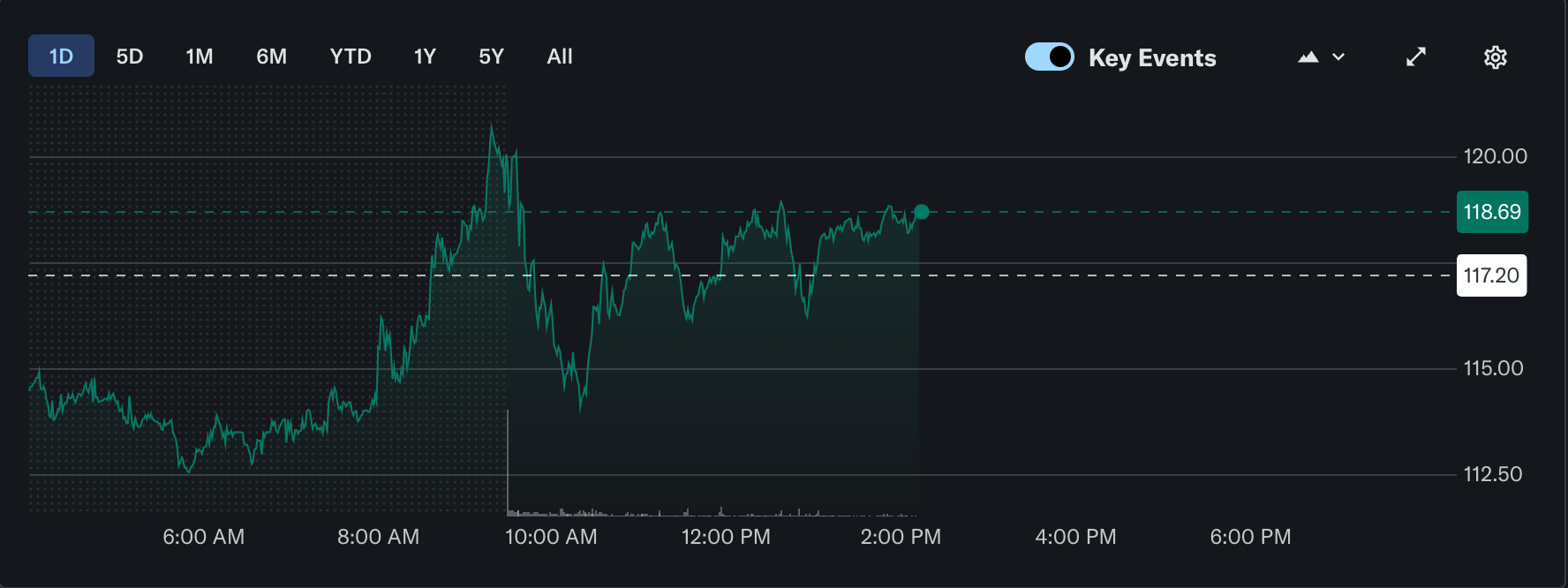
CoreWeave, a publicly traded AI cloud infrastructure company, announced on Wednesday a $6 billion deal with quantitative trading firm Jane Street, in which the firm will use CoreWeave’s AI cloud computing infrastructure to power its trading and research operations.
Under the agreement, CoreWeave will provide Jane Street with compute from multiple data center facilities, the company’s announcement said.
Jane Street also purchased $1 billion in CoreWeave Class A Common stock at $109 per share, according to CoreWeave.
Shares of CoreWeave (CRWV) rose by 1.5% on Wednesday, climbing to about $119.04 at the time of publication, according to data from Yahoo Finance.

The deal comes about one week after CoreWeave announced an agreement with Anthropic, in which the AI developer would use CoreWeave’s compute infrastructure to power its Claude AI large language models.
CoreWeave’s pivot to AI predates the crypto mining industry’s shift by years, and highlights how miners can repurpose their infrastructure to power high-performance computing and shore up declining revenues amid a challenging economic environment.
Related: CoreWeave’s $8.5B loan shows how AI is replacing crypto mining finance
CoreWeave dominates “neocloud” computing sector
CoreWeave was founded as a crypto mining company called Atlantic Crypto, in 2017, before beginning a pivot to AI cloud computing infrastructure in 2019.
The company’s shift to AI infrastructure years ahead of the crypto mining industry’s rush into the sector helped establish CoreWeave as a leading “neocloud” company, according to analysts from asset management and investment research company Bernstein.

“Neocloud” service providers are cloud computing companies built around graphics processing units (GPUs), which power artificial intelligence workloads.
Traditional cloud service providers power their operations with basic computer processing units (CPUs) suitable for running websites, Web2 platforms, video games, media streaming and applications.
The analysts compared CoreWeave with IREN and Nebius, and concluded that “relative to its neocloud peers, CRWV has by far the strongest commercial machine.”
CoreWeave benefits from a mix of contractual agreements and on-demand revenue-generating activities, while also commanding a diverse customer base, Bernstein said.
“Nine of the leading 10 AI model providers now leverage CoreWeave’s platform,” spokespeople for CoreWeave said following the Anthropic deal in April.
Magazine: Would Bitcoin really be at $200K if not for Jane Street? Trade Secrets


CEO Tarek Mansour said in an interview that Kalshi would prevent kids from using a parent’s ID to skirt its age restrictions by launching a parent portal and AI verification.
Kalshi co-founder and CEO Tarek Mansour reportedly announced a new strategy for the prediction markets platform to crack down on minors illegally using its services.
According to a Wednesday Semafor report, Mansour said that Kalshi was launching a “portal for parents” to submit their identification to check whether their children were using the platforms under their names. There have been incidents in which minors have been able to bypass Kalshi’s age requirements — a US-based user must be 18 years old — by using one of their parent’s IDs for verification.
“We are also adding selfies to accounts, where you can basically look at the face of a person, and it can tell you obviously if this person is not the actual parent that’s 50 years old,” said Mansour, according to Semafor.
The CEO’s comments came as prediction market platforms come under scrutiny in the US, both by state-level gaming authorities for the companies’ event contracts related to sports and at the federal level for controversial bets on military actions.
Crypto exchanges have also been challenging Kalshi’s dominance in the market, with Binance integrating prediction market features in its wallet app last week, followed by Crypto.com partnering with High Roller Technologies in a similar move.
Related: Polymarket bets removed from Google News after brief appearance: Report
Central to Kalshi’s arguments in court is the claim that the company is under the exclusive jurisdiction of the federal commodities regulator, the US Commodity Futures Trading Commission (CFTC). Michael Selig, who chairs the CFTC, has backed this position in an amicus brief in support of Crypto.com in its dispute with the Nevada Gaming Control Board.
Court battles continue over sports and election event contracts
As of Wednesday, many of the cases against Kalshi were ongoing at the state level.
A federal judge in Arizona blocked state officials from enforcing the state’s gambling laws as applied to Kalshi’s event contracts last week. The decision followed a similar outcome in New Jersey, where a federal appellate court sided with the company’s argument claiming that the Commodity Exchange Act — under the CFTC — preempted the state’s law on sports gambling.
Magazine: Should users be allowed to bet on war and death in prediction markets?


Day one at Paris Blockchain Week turns into an institutional scouting mission for privacy, composability and gold‑backed tokenization plays in the heart of Paris.
Summary
- Early conversations at Paris Blockchain Week 2026 are converging on institutional needs for privacy and composability, according to builders on the ground.
- Canton Network and iExec are drawing attention as examples of how to square confidential data with interoperable on‑chain workflows for banks and asset managers.
- A gold tokenization project reportedly backed by JPMorgan is adding real‑world asset “weight” to a program already framed as “where institutions and digital assets finally meet.”
Day one of Paris Blockchain Week 2026 is underscoring a simple message from the buy‑side: if blockchains want serious institutional flows, they must solve privacy and composability at the same time. In a recap post after the first day, investor and commentator Tokenoya wrote that “institutions are converging on one thing: privacy + composability is the real bottleneck,” name‑checking custody platform dfnsHQ and permissioned ledger project Canton Network as emblematic of that shift.
Institutional Paris turns to privacy and composability
Held at the Carrousel du Louvre on April 15‑16 under the banner “Where Institutions and Digital Assets Finally Meet,” Paris Blockchain Week’s 7th edition has drawn more than 10,000 decision‑makers from banks, asset managers, regulators and Web3 infrastructure teams. Organizers and partners describe the focus as squarely post‑speculation, with sessions on tokenized treasuries, regulated stablecoins and cross‑border settlement rails framed as extensions of existing market structure rather than parallel casinos.
Social media threads highlight how that institutional tone is filtering into side events. At a dfnsHQ gathering, they reported that large institutions now view privacy‑preserving composability as “the real bottleneck,” a view echoed by Canton Network’s own framing of public‑chain design as a trade‑off between radical transparency and usable confidentiality. Canton describes itself as a “network of networks” that lets financial institutions run applications with “institutional‑grade privacy” while still enabling atomic swaps between, for example, a tokenized private equity fund and a digital currency, without exposing either party’s full books.
The recap also nods to a coffee meeting with iExec’s Fotshudi in Paris, with Tokenoya telling followers that “if you’re into privacy, give him a follow,” underscoring how off‑program conversations are gravitating toward confidential computing and data markets. iExec has long pitched itself as a way for enterprises to tap trusted execution environments and privacy‑preserving compute, a theme that fits neatly with European regulators’ insistence on data protection even as banks experiment with on‑chain settlement and DeFi‑style liquidity pools.
Perhaps the most eye‑catching detail in the post is a “meeting with a gold tokenization project backed by JP Morgan,” a reminder that real‑world asset pilots are no longer confined to crypto‑native players. Paris Blockchain Week’s own marketing leans heavily on tokenization “at scale,” pointing to experiments in digitizing U.S. Treasuries, sovereign bonds and private credit, and several speakers have suggested that tokenized commodities and collateral will be the next wave once legal and custody issues are ironed out.
Coverage from French outlets such as Journal du Coin has framed the 2026 edition as the moment “la finance traditionnelle bascule,” with tokenization and digital euros forcing incumbents to rethink plumbing, capital efficiency and risk controls rather than just issuing press releases. Global Digital Finance, a policy group whose members include major banks and crypto firms, similarly describes this year’s conference as one where “the focus is no longer speculative,” but on how blockchain “is beginning to play inside large financial institutions” under MiCA and other regulatory regimes.
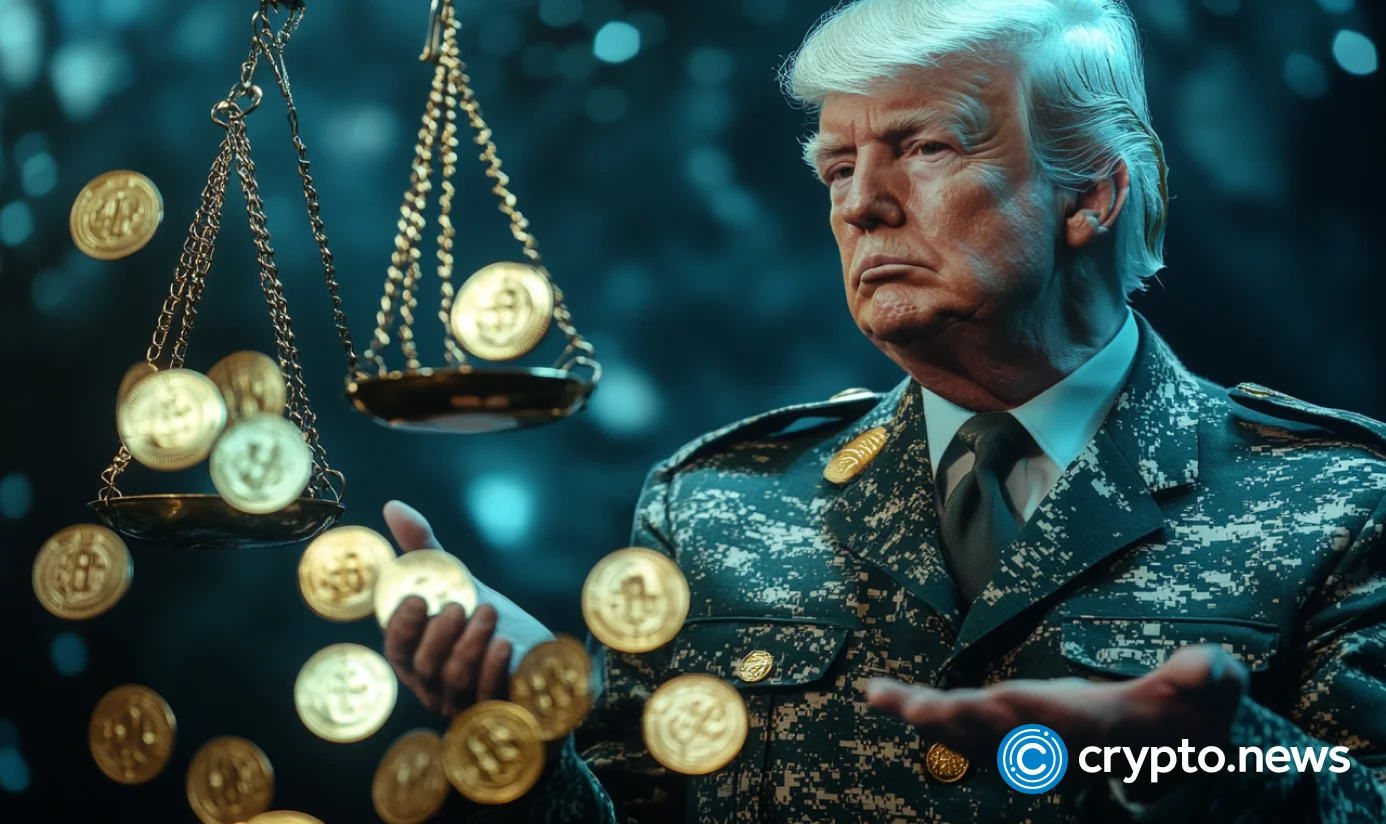
President Trump disclosed Wednesday that he and Chinese President Xi Jinping exchanged letters over China’s alleged weapons transfers to Iran, with Xi denying the claim in writing and Trump calling it a positive step ahead of their May summit.
Summary
- Trump revealed on Fox Business that he wrote Xi asking him not to supply Iran with weapons, and Xi responded saying China was not doing that.
- Trump posted on Truth Social that China had “agreed not to send weapons to Iran” and predicted Xi would give him a “big, fat, hug” at their planned meeting in Beijing next month.
- Any genuine easing of US-China tensions alongside Iran diplomacy could reduce the oil-driven pressure that has weighed on Bitcoin since February.
President Trump told Fox Business Wednesday morning that Chinese President Xi Jinping sent him a letter denying that China is supplying weapons to Iran. Trump said he initiated the exchange after US intelligence reports surfaced suggesting Beijing may have sent a shipment of missiles to Tehran. “I wrote him a letter asking him not to do that, and he wrote me a letter saying, essentially, he’s not doing that,” Trump said.
In a follow-up Truth Social post, Trump wrote that China had “agreed not to send weapons to Iran” and said he and Xi were “working together smartly, and very well.” The post also stated that China was “very happy” the US was moving to reopen the Strait of Hormuz, through which China sources a significant portion of its energy imports.
The exchange carries diplomatic weight even without formal verification. Trump last week threatened a 50% tariff on any country supplying Iran with weapons, a warning aimed squarely at China. Xi’s written denial, whether or not it reflects Beijing’s actual behavior, gives Trump a face-saving path to de-escalate one front of the conflict without confrontation.
US intelligence has not confirmed definitive evidence that Chinese missiles have been used against American or Israeli forces. Chinese companies have, however, provided dual-use components tied to Iran’s missile and drone programs, a distinction analysts say matters significantly for what Xi’s letter does and does not commit to.
Trump and Xi are scheduled to meet in Beijing on May 14 and 15, and Trump said the Iran situation would not affect that meeting.
How China Fits Into the Iran Standoff
China is the primary buyer of Iranian crude oil and has the most to lose economically from a prolonged Strait of Hormuz closure. As the largest non-Western power with influence over Tehran, Beijing’s posture toward the conflict has been closely watched by both markets and diplomatic circles. Xi’s first public comments on the war came Tuesday, when he told Spain’s prime minister that “the international order is crumbling into disarray.”
The letter exchange suggests a backchannel is open between Washington and Beijing at a moment when the two countries are also navigating trade tensions, with tariff negotiations expected to feature prominently at next month’s summit.
What It Means for Bitcoin and Crypto Markets
Bitcoin has been acutely sensitive to every diplomatic signal in the Iran conflict. BTC rallied 5% to $74,400 on Trump comments suggesting Iran wanted to return to talks, and dropped to a session low of $70,617 when the naval blockade was announced and oil spiked to $105. Each diplomatic signal has produced an immediate repricing, amplified by the heavy short positioning that has built up over 46 consecutive days of extreme fear.
A credible path toward US-China cooperation on Iran, even without a formal ceasefire, would ease the oil-driven inflation pressure that has kept the Federal Reserve hawkish and risk assets on the back foot since February. Market analyst Sam Daodu has outlined a $75,000 to $80,000 range for BTC if new talks produce even a temporary agreement, and a path toward $100,000 by year-end if a full deal materialises.

China equities are navigating a global oil shock, according to eToro’s latest market commentary. The note ties March trade data to how higher oil prices can reverberate through the economy, noting slower export growth alongside a sharp rise in imports driven by energy and commodity purchases. While such shocks can push up input costs and pressure margins in the near term, the material emphasizes that the market impact is often reflected in valuations as investors adjust expectations. The write-up also points to likely beneficiaries, sector rotations, and the ongoing role of policy support in shaping the near-term outlook.
Key points
- Export growth slowed to 2.5% in March while imports jumped nearly 28%, driven by energy and commodities.
- Frontloading of energy imports amid supply uncertainty suggests near-term input-cost pressure and potential margin effects.
- Energy-sensitive sectors such as oil, shipping, and logistics may see stronger pricing power; AI and energy-security themes remain supported by policy tailwinds and high-tech exports.
Why it matters
For readers and investors, the report outlines how a commodity-price shock can influence market dynamics in China—from trade patterns to sector rotation—and why policy context matters for near-term sentiment and positioning.
What to watch
- Oil-price trajectories and energy-import trends that could signal further frontloading or shifts in demand.
- Near-term sector rotation, particularly toward energy, shipping, and logistics, and away from more exposed areas.
- Policy signals and ongoing momentum in high-tech exports that could sustain AI-related and energy-security themes.
Disclosure: The content below is a press release provided by the company or its PR representative. It is published for informational purposes.
China equities navigate oil shock as trade data signals shifting dynamics
Abu Dhabi, United Arab Emirates – April 15, 2026: China’s equity markets are adjusting to the impact of rising oil prices, as the latest March trade data offers an early indication of how the shock is feeding through the economy, according to eToro’s latest market commentary.
China’s export growth slowed to 2.5% in March, while imports surged nearly 28% – the fastest pace since 2021 – driven by a sharp increase in purchases of oil and other commodities. This pattern suggests a degree of frontloading in energy and commodity imports amid ongoing supply uncertainty, a trend observed during previous periods of market disruption.
Historically, such shocks tend to raise input costs and weigh on corporate margins in the near term. However, the impact is often reflected more significantly in market valuations rather than immediate earnings deterioration, as companies and investors adjust expectations.
Lale Akoner, Global Market Analyst at eToro, commented: “China equities are navigating the oil shock in real time, with trade data highlighting how quickly the effects are being priced in. The surge in imports, particularly in energy and commodities, points to frontloading behaviour as businesses respond to supply uncertainty.”
She added: “From an investment perspective, energy-sensitive sectors such as oil, shipping, and logistics are likely to benefit from stronger pricing power in this environment. At the same time, structural themes like AI and energy security remain supported by policy tailwinds and global demand, as reflected in continued strength in high-tech exports.”
Despite near-term volatility, broader market fundamentals remain underpinned by policy support, with the Chinese state continuing to play a stabilising role. The current environment is also driving sector rotation, particularly towards industries that can better absorb or pass on rising input costs.
Akoner concluded: “With oil acting as a catalyst for sector rotation, the focus for investors remains clear: stay selective, lean into defensive positioning, and treat volatility as an opportunity rather than a signal of deterioration.”
Media Contact
PR@etoro.com
About eToro:
eToro is the trading and investing platform that empowers you to invest, share and learn. We were founded in 2007 with the vision of a world where everyone can trade and invest in a simple and transparent way. Today we have 40 million registered users from 75 countries. We believe there is power in shared knowledge and that we can become more successful by investing together. So we’ve created a collaborative investment community designed to provide you with the tools you need to grow your knowledge and wealth. On eToro, you can hold a range of traditional and innovative assets and choose how you invest: trade directly, invest in a portfolio, or copy other investors. You can visit our media centre here for our latest news.
Disclaimers:
Not investment advice. eToro is a multi-asset investment platform. The value of your investments may go up or down. Your capital is at risk.
Regulation and License Numbers:
Middle East
eToro (ME) Limited, is licensed and regulated by the Abu Dhabi Global Market (“ADGM”)’s Financial Services Regulatory Authority (“FSRA“) as an Authorised Person to conduct the Regulated Activities of (a) Dealing in Investments as Principal (Matched), (b) Arranging Deals in Investments, (c) Providing Custody, (d) Arranging Custody and (e) Managing Assets (under Financial Services Permission Number 220073) under the Financial Services and Market Regulations 2015 (“FSMR”). Registered Office and its principal place of business: Office 26 and 27, 25th floor, Al Sila Tower, ADGM Square, Al Maryah Island, Abu Dhabi, United Arab Emirates.
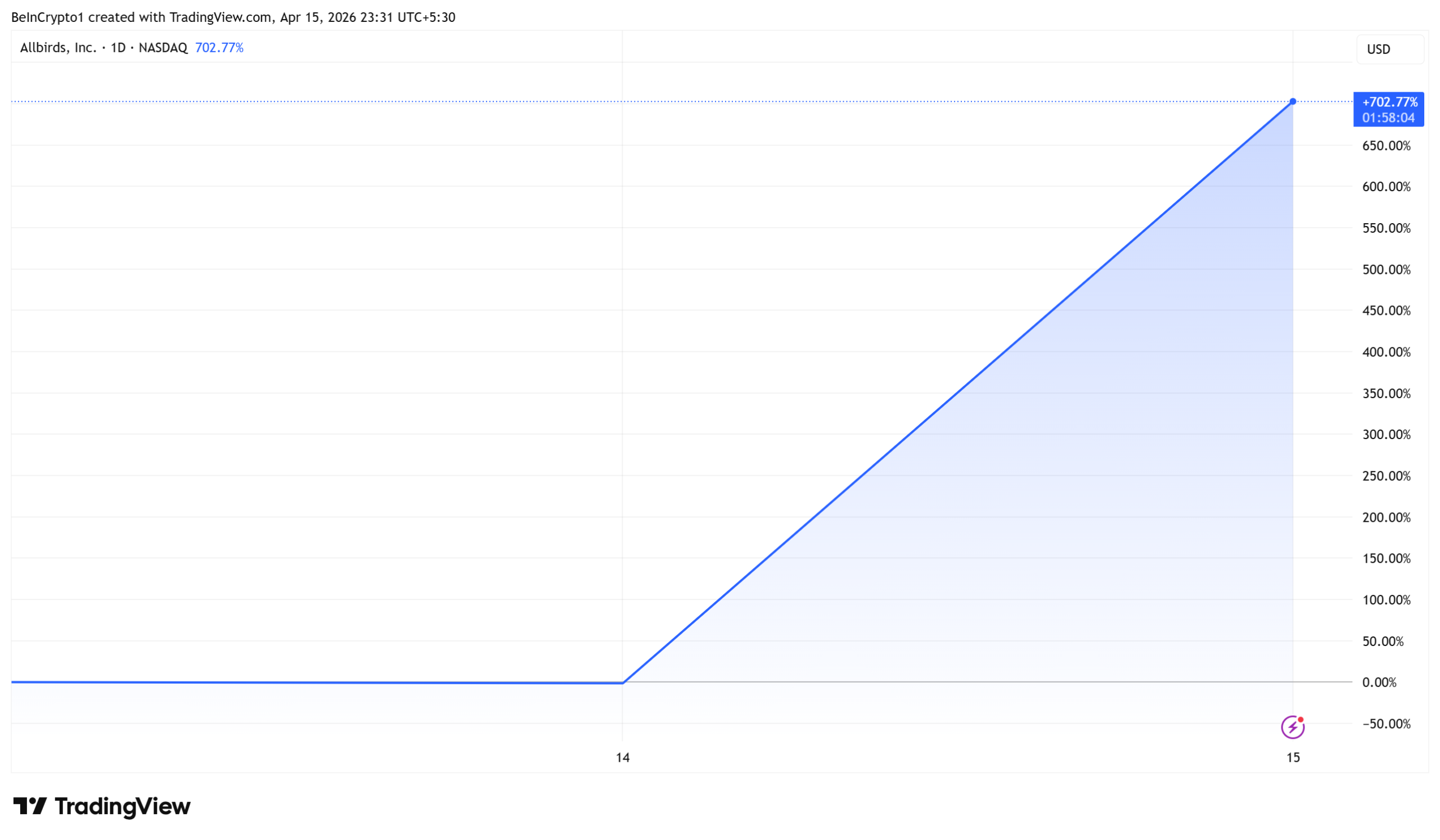
Allbirds (BIRD) stock gained over 700% on April 15 after the company announced it would ditch footwear entirely and pivot to AI compute infrastructure. The playbook may look familiar.
Less than a year ago, a wave of struggling pharma companies pulled the same move with crypto. Most of those stocks have since collapsed.
From Dead Shoe Brand to 700% Market Frenzy in a Single Day
Allbirds, once valued at $4 billion after its 2021 IPO, sold its shoe brand to American Exchange Group for just $39 million in March.
The remaining shell secured a $50 million convertible financing facility and plans to rebrand as NewBird AI, leasing GPUs to developers facing compute shortages.
“NewBird AI expects to use initial capital from the Facility to acquire high-performance GPU assets, which will be deployed to serve customers requiring dedicated access to AI compute capacity,” read an excerpt in the press release.
Following the news, Allbirds’ stock, BIRD, rallied by over 700%, with prospects for more gains as rising demand continues to clear each local top.
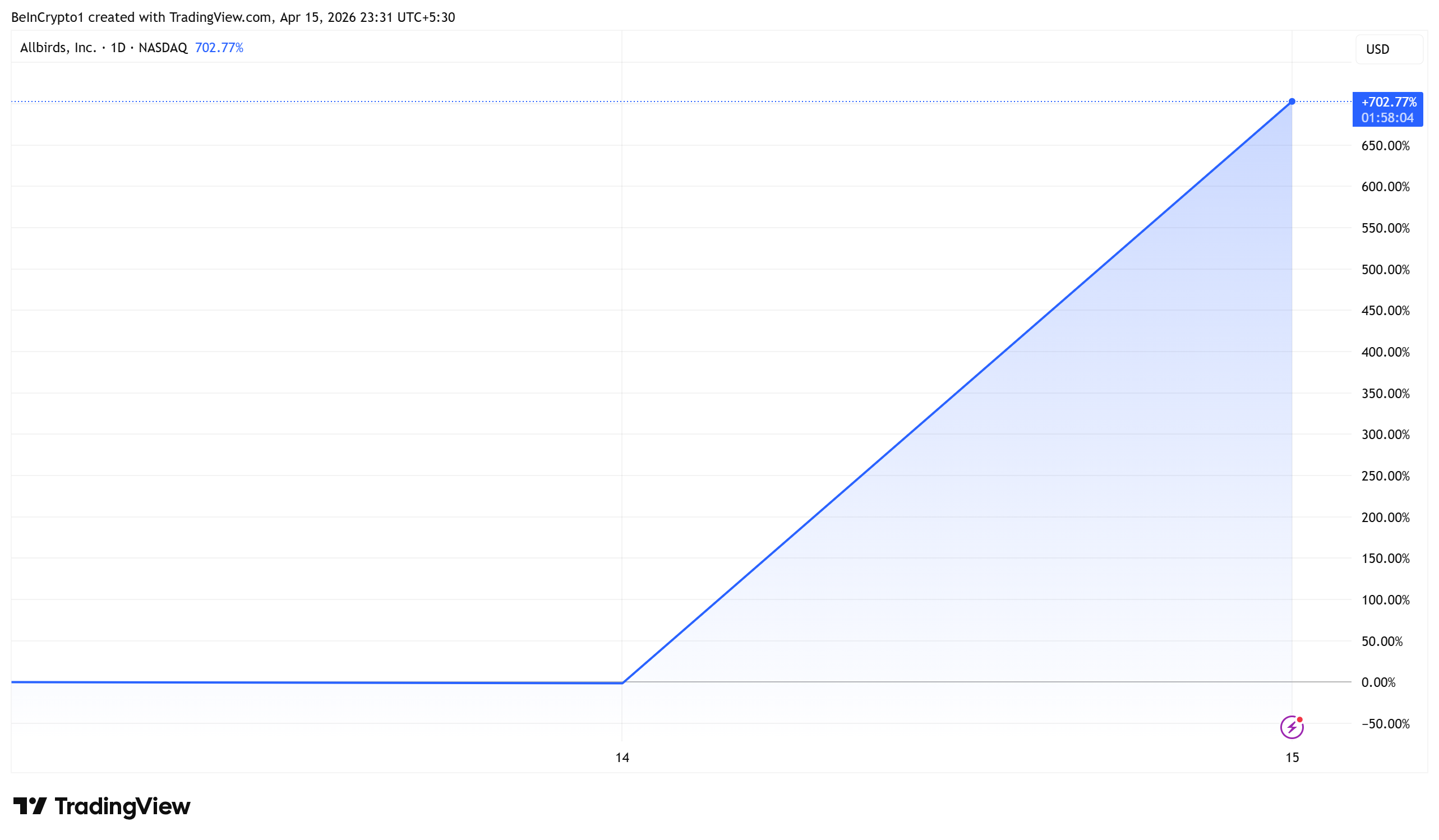
It is imperative to note, however, that the company has no track record in hardware, data centers, or cloud services. Both deals still require stockholder approval at a May 18 special meeting.
Against this backdrop, analysts noted the disconnect between the stock move and the underlying business.
“Feels like the market is rewarding what you could be not what you are … Nothing changed operationally overnight. Just the story. Shoes → dead. AI → alive,” analyst Kyle Doops remarked.
Crypto Tried This First
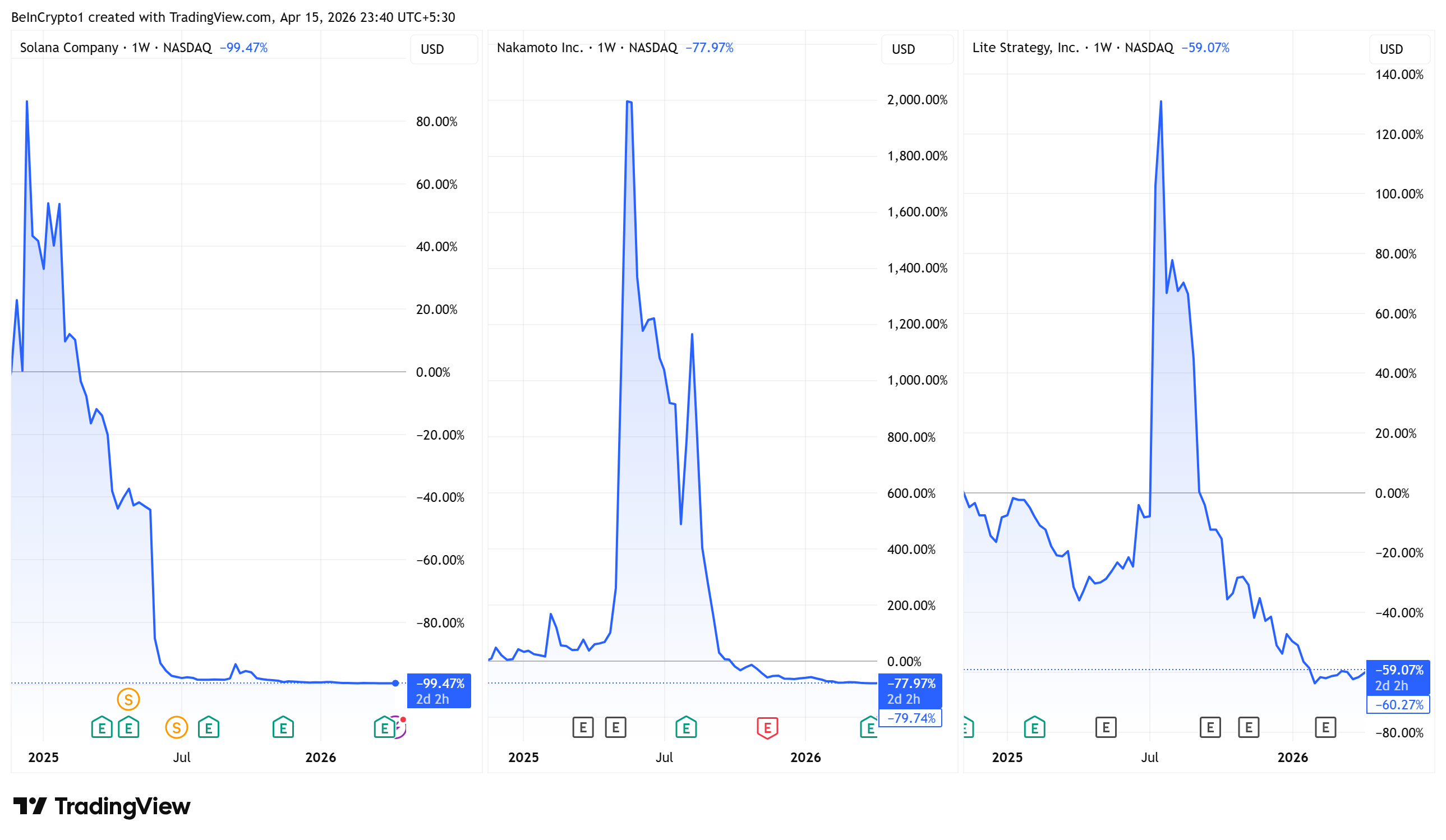
In 2025, at least four medical firms abandoned their core businesses to become crypto treasury companies.
- Helius Medical rebranded as Solana Company and raised $500 million for a SOL treasury.
- Kindly MD merged with Nakamoto Holdings to hold Bitcoin (BTC).
- MEI Pharma became Lite Strategy, adopting Litecoin (LTC) as its reserve asset.
Each stock spiked on the announcement. The aftermath tells a different story. Helius Medical traded near $25 at its peak and now sits around $2.31.
Nakamoto has fallen to $0.22 and is pursuing a reverse stock split to avoid Nasdaq delisting. Lite Strategy trades at $1.10 with a market cap of roughly $40 million.
Same Hype, Different Label
Master Ventures founder Kyle Chassé called it the “AI effect,” suggesting this may only be the beginning.
“This is the AI effect. Allbirds announced their switch from shoes to AI and then shot up 700% in a single day. It wouldn’t be surprising if other companies started pulling the same moves,” Chassé suggested.
The pattern is consistent. A company with a failing core business sells its operations, attaches itself to the hottest narrative, and watches its stock pop.
With crypto treasuries, the pop faded once markets demanded actual execution.
AI compute demand is real, but so was demand for Bitcoin, Ethereum, and Solana (SOL).
Whether NewBird AI breaks the pattern or follows it may depend on whether $50 million is enough to compete in a market dominated by hyperscalers spending billions.
“I wish the Allbirds people luck in their attempt to pivot to GPUs. Maybe they can do it. But i regard this as the first definitive sign that things have gone too far. What a bunch of jokers and mountebanks they are,” wrote Jim Cramer.
The post Allbirds Stock Rallies 700% On AI Pivot, But Mirrors Failed Crypto Treasury Plans appeared first on BeInCrypto.
The committee, led by Tether’s head of government affairs, reported spending $3 million on advertising through a company co-founded by Tether US CEO Bo Hines.
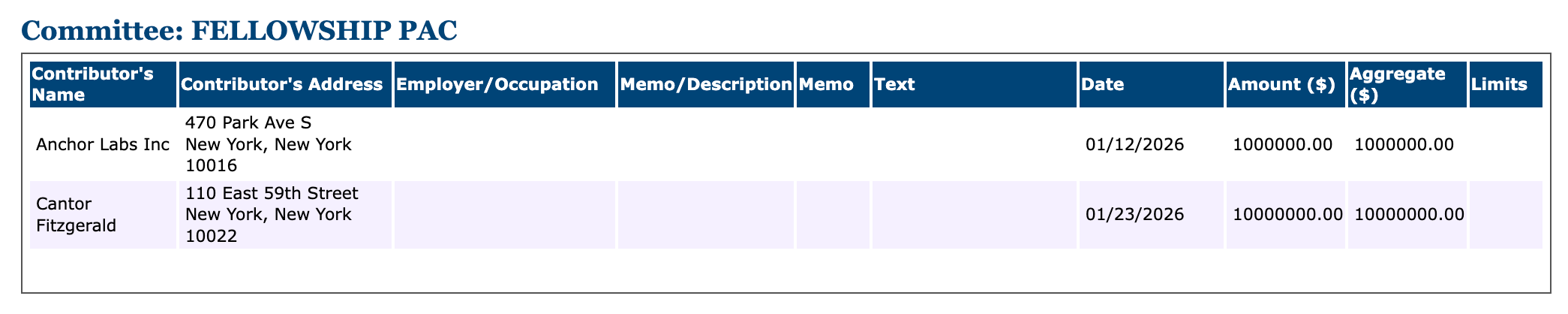
The latest filing by the crypto-aligned political action committee (PAC) headed by stablecoin issuer Tether’s head of government affairs shows $11 million in contributions from financial institutions.
In a Wednesday filing with the US Federal Election Commission (FEC), the Fellowship PAC revealed it had received $10 million from financial services firm Cantor Fitzgerald and $1 million from Anchor Labs, the company behind the crypto bank Anchorage Digital. The January 2026 contributions came amid $3 million in spending by the PAC for “issue advocacy advertising” with the Nxum Group, a marketing company co-founded by former White House crypto adviser and Tether US CEO Bo Hines.

Despite the significant contributions from Cantor Fitzgerald and Anchorage, Fellowship initially claimed to have “over $100 million” from undisclosed backers aligned with the crypto industry at its launch in September. FEC filings showed no receipts over $200 between Aug. 7, 2025 and Dec. 31, 2025, but did not necessarily include any contributions after March 31.
The 2024 US election season saw crypto-backed PACs spend hundreds of millions of dollars on media to support candidates they considered “pro-crypto” and to oppose those marked as “anti-crypto” by many in the industry. With party control of the US Congress hanging in the balance this year, PAC spending like Fellowship’s signals that the crypto industry could try to repeat their successes of 2024.
Related: US midterm election mirrors 2024 as crypto PACs move into Ohio races
In addition to its $3 million in advertising costs, the PAC reported in April that it had spent $1.5 million in media buys supporting Republican candidates in Georgia’s 14th Congressional District and candidates in US Senate races in Nebraska and Kentucky. Those three US states are scheduled to hold party primaries in May.
PAC’s ties to the crypto industry
Mitchell Nobel, listed as the PAC’s treasurer, has also been Cantor Fitzgerald’s director of digital asset strategy and policy since August 2025, roughly the same time Fellowship filed its statement of organization with the FEC.
Anchorage announced in March that it would be joining Chainlink to support the launch of the Blockchain Leadership Fund, a hybrid PAC that allows contributions directly to candidates as well as independent expenditures. An Anchorage spokesperson told Cointelegraph at the time that the company would make a “meaningful contribution” to be disclosed with the FEC, but no filing was public as of Wednesday.
Magazine: Bitcoin will not hit $1M by 2030, says veteran trader Peter Brandt
Wall Street closed with S&P 500 and Nasdaq at fresh records as Tesla and Apple led a powerful tech rally while the Dow slipped.
Summary
- S&P 500 and Nasdaq close at all-time highs as megacap tech leads.
- Tesla jumps more than 7%, while Apple gains nearly 3% on heavy volume.
- Dow Jones slips as investors rotate into growth and AI-linked names.
U.S. stocks closed higher on Wednesday, with the S&P 500 and Nasdaq finishing at record levels as a renewed surge in technology shares overshadowed weakness in the Dow Jones Industrial Average.
Wall Street scales new peak on tech strength
According to market data compiled by Gate, the Dow slipped 0.15%, while the S&P 500 rose 0.8% and the Nasdaq added 1.59%, pushing both benchmarks to fresh all-time closing highs in New York.
Tesla shares rallied 7.6% to around $390 after recent losses, extending a rebound that has left the electric-vehicle maker up sharply from its intraday low near $362 earlier in the session.
Apple also advanced, climbing nearly 3% as investors rotated back into the largest U.S. technology and AI-linked names, helping to propel the tech-heavy Nasdaq to its latest record.
SanDisk, by contrast, fell 5.5%, highlighting ongoing dispersion within the broader technology complex even as headline indices notch new peaks.
The latest leg higher leaves the S&P 500 trading just below 7,000 points, extending a powerful run that has seen the index gain more than 16% over the past year alongside expectations for roughly 15% annual earnings growth, according to recent U.S. market research.finance.yahoo+1
Chinese companies listed in New York also participated in the move, with the Nasdaq Golden Dragon China Index up 0.7% and NetEase adding about 2%, underscoring renewed risk appetite for growth and internet names.
The advance comes against a backdrop of investors betting that resilient U.S. economic data, strong big-tech balance sheets and ongoing enthusiasm around artificial intelligence will continue to support equities, even as geopolitical tensions and higher-for-longer rates remain in focus.
In this environment, Wall Street strategists have pointed to April’s historical tendency to deliver strong equity performance, with the S&P 500 averaging gains of roughly 1.4% in the month over recent decades, reinforcing seasonal tailwinds behind the latest breakout.
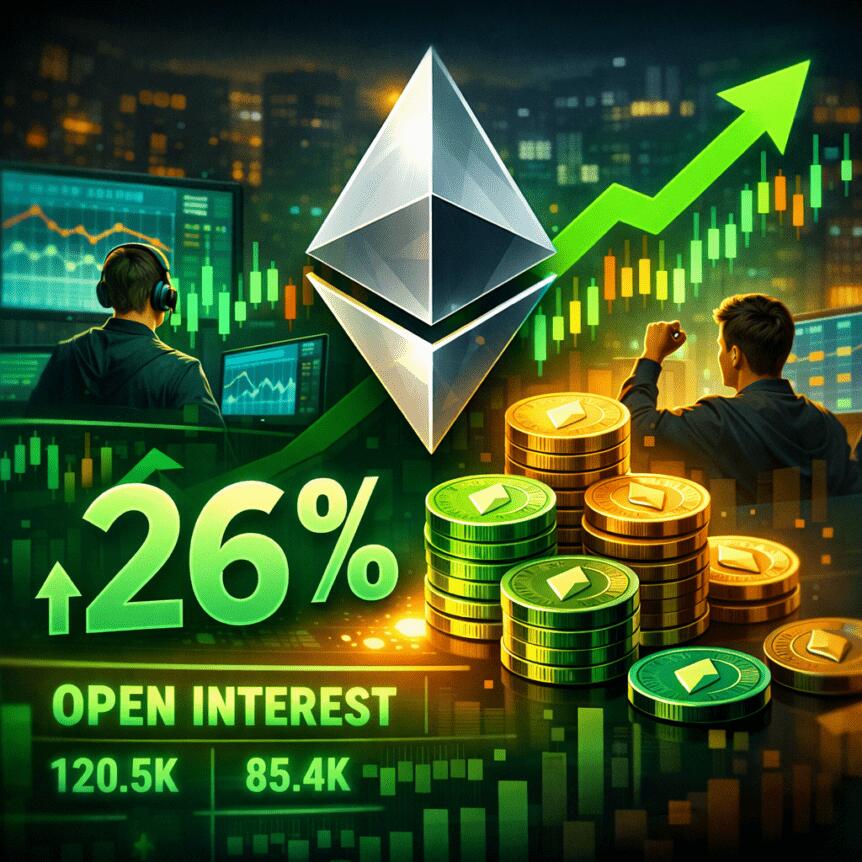
Ethereum has managed to keep the price above the $2,300 level, pulling away from the mid-March dip near $1,940. The latest price action arrives amid a broader sense of resilience, underpinned by spot demand and a resurgence in futures activity that traders are watching closely for signs of a lasting momentum shift after a long run of attempts to reclaim the $2,400 mark.
According to CoinGlass, ETH futures open interest has climbed to about $25.4 billion, suggesting growing appetite for leveraged exposure even as spot demand plays a key role in supporting prices. The move comes as the market consolidates a more constructive tone after weeks of struggle to reestablish the $2,400 threshold, with price action stabilizing near the current range as macro headlines ebb and flow.
Key takeaways
- Spot demand and institutional inflows anchor the rally: US-listed Ether spot ETFs saw about $248 million in net inflows over the past 10 days, reinforcing a narrative of solid cash-based buying. Bitmine Immersion’s ETH holdings have grown to 4.87 million ETH, equating to roughly $11.46 billion at current prices.
- Abstract risk remains despite price momentum: The perpetual ETH funding rate has struggled to stay above 5% since Friday and has dipped into negative territory at times, signaling cautious sentiment among bulls even as futures exposure expands.
- DApp activity wanes even as demand indicators hold: Ethereum weekly DApps revenue has slipped to about $11 million, down from roughly $24 million in early February, raising questions about near-term on-chain demand and ETH’s ability to sustain a broader network activity rebound.
- Market backdrop and ETF flows temper the upside: Ether ETFs report about $13.7 billion in assets under management, down from $20.5 billion three months earlier, while the S&P 500 hit new all-time highs—creating a mixed macro environment for crypto risk assets.
Spot demand versus on-chain activity
From a price perspective, ETH’s current zone of support around $2,300 has coincided with a pickup in spot-market interest. The net inflows into U.S.-listed Ether spot ETFs over the last 10 days provide a tangible signal that some market participants prefer owning ETH outright rather than relying solely on derivatives to express exposure. Those inflows come at a time when spot demand appears to be the primary driver behind recent price stability, even as derivatives metrics present a more nuanced story.
Bitmine Immersion—a digital asset treasury company—announced a fresh tranche of ETH purchases totaling about $312 million, boosting its holdings to 4.87 million ETH. That stockpile is valued today at roughly $11.46 billion. However, data from CoinGecko shows those holdings are trading approximately 13% below their acquisition cost, underscoring that the profitability of such stockpiling is sensitive to price swings and timing. The broader ETF ecosystem reflects a similar narrative: Ether’s US-listed ETF assets under management sit around $13.7 billion, down from $20.5 billion three months prior, highlighting a shifting appetite for passive exposure alongside ongoing volatility in crypto markets.
Complicating the picture is a macro backdrop where traditional equities have shown strength, with the S&P 500 reaching new highs on the same trading day as ETH’s rally. In this environment, investors appear to be weighing the potential for a systemic crypto rebound against competing macro drivers and sector-specific headwinds.
Derivatives sentiment and price action
Despite rising futures exposure, the market’s sentiment signals remain cautious. The ETH perpetual futures funding rate has not convincingly held above the 5% annualized threshold since last Friday, with several readings dipping below zero. In theory, a healthy long-speculation premium would be expected when bulls are confident, but the data suggests that the market continues to price in considerable risk and a need to justify the rally with more concrete on-chain activity or macro catalysts. Still, some analysts argue that the current price action is more reflective of spot demand supporting prices than of a wholesale shift in derivatives positioning.
Data from Laevitas tracking perpetual funding rates paints a nuanced picture: periods of neutrality—roughly in the 5% to 10% range under typical conditions—have given way to readings that imply a tilt toward neutral-to-cautious positioning. In other words, while more capital appears to be entering ETH futures, the cost of carry signals a measured approach rather than an unreserved bullish bet.
All told, the divergence between rising open interest and middling funding signals suggests a market in which investors are content to accumulate exposure through a mix of spot and regulated derivatives, yet remain wary about extending momentum without clearer catalysts. In this context, the rally to the mid-$2,300s—around the $2,350 mark at times—could prove to be a test of whether spot demand alone can sustain a more durable upside, or if a fresh burst of on-chain activity and ecosystem development is needed to push ETH back into the $2,400 realm and beyond.
DApps activity and competitive dynamics
One of the more telling questions for ETH’s medium-term trajectory is whether on-chain activity can rebound alongside price. Data tracked by DefiLlama shows Ethereum’s weekly DApps revenue sliding to about $11 million, down from roughly $24 million in February. While the burn mechanism built into Ethereum’s consensus layer continues to be cited by supporters as a structural incentive for long-term holders, near-term on-chain throughput and usage have not yet picked up in a way that would meaningfully lift network activity across the board.
Investors are also contending with an increasingly competitive landscape. While Ethereum remains the dominant smart contract platform, other blockchains focused on specialized use cases—such as high-throughput cross-chain solutions and niche dApp ecosystems—are drawing developers and users with tailored incentives and efficiency gains. This competition complicates the narrative that ETH is simply a one-way bet on rising on-chain demand. The divergence between rising price and stagnating or contracting on-chain activity underscores a nuanced risk-reward balance for traders and long-term holders alike.
What to watch next
As ETH hovers in a $2,300–$2,350 corridor, investors will be watching for a few key signals. A sustained increase in spot ETF inflows would reinforce the case for a renewed, spot-driven uptrend, especially if institutional buyers continue to accumulate ETH rather than diversify into alternatives. Conversely, a meaningful rebound in DApps activity or a shift in the funding-rate dynamic that points to stronger bullish conviction could catalyze a more decisive move toward the $2,400 level and beyond.
Macro drivers remain pivotal: any acceleration in risk appetite among traditional markets, or a rollback of tethered risk within the broader crypto ecosystem, could alter ETH’s trajectory. For now, the market presents a mixed picture—spot demand and institutional buying provide a floor, while on-chain activity and competitive pressures keep the upside under scrutiny.
This article reflects data from CoinGlass, SoSoValue, CoinGecko, Laevitas, and DefiLlama, among others, and is intended to illuminate how recent developments might shape ETH’s near-term path. As always, readers should monitor evolving liquidity, funding signals, and real-world usage to gauge whether the current rally can translate into a sustained recovery or remains a tactical pause before the next leg.


The Take It Down Act has secured its first federal conviction, with an Ohio man pleading guilty to using more than 100 AI models to create and distribute nonconsensual deepfakes of women and children, putting the first real enforcement stamp on a landmark AI-specific law.
Summary
- James Strahler II, 37, of Columbus, Ohio, pleaded guilty on April 7 to cyberstalking, producing child sexual abuse material, and publishing digital forgeries under the Take It Down Act.
- The law, signed by President Trump in May 2025, makes it a federal crime to publish nonconsensual AI-generated intimate imagery and requires platforms to remove it within 48 hours of a valid report.
- Online platforms have until May 19, 2026 to establish formal takedown procedures or face Federal Trade Commission enforcement action.
The Take It Down Act has its first conviction. James Strahler II, a 37-year-old Columbus, Ohio man, pleaded guilty on April 7 to three federal counts: cyberstalking, producing obscene visual representations of child sexual abuse material, and publishing digital forgeries, the law’s term for nonconsensual deepfakes. The Department of Justice confirmed he is the first person convicted under the law.
Between December 2024 and June 2025, Strahler used over 100 AI models to create sexually explicit images and videos of six adult victims and distribute them to their coworkers and families. He also generated deepfake content involving children and uploaded hundreds of images to a child sexual abuse website before his arrest in June 2025.
The Take It Down Act, introduced by Senators Ted Cruz and Amy Klobuchar and signed into law on May 19, 2025, criminalizes the knowing publication of nonconsensual intimate imagery, including AI-generated content depicting real people. It passed the Senate unanimously and the House by 409 to 2.
Penalties under the law include up to two years in prison per offense involving adult victims and up to three years when minors are involved. Strahler has not yet been sentenced.
U.S. Attorney Dominick Gerace said the prosecution sends a direct message: “We will not tolerate the abhorrent practice of posting and publicizing AI-generated intimate images of real individuals without consent.”
What the Law Requires of Platforms
Beyond criminal prosecution, the Take It Down Act creates mandatory obligations for online platforms. Covered platforms, including public websites and mobile applications that host user-generated content, must remove reported nonconsensual imagery within 48 hours of a valid victim request and make reasonable efforts to find and delete identical copies.
The compliance deadline is May 19, 2026, just over a month away. Platforms that fail to establish a formal removal process face enforcement by the Federal Trade Commission. The law does not preempt state-level protections, and at least 45 states have their own AI deepfake laws in place.
Why It Matters for AI Regulation
The Take It Down Act is widely described as the first major federal law in the United States that directly restricts harmful uses of AI. Its passage reflects growing bipartisan urgency around AI-generated abuse at a moment when deepfake tools have become widely accessible. The National Center for Missing and Exploited Children received more than 1.5 million AI-related exploitation tips in 2025 alone.
The same technology that enables nonconsensual intimate imagery is also fueling deepfake scams across the crypto sector, where AI-generated impersonations of prominent figures have been used to defraud investors. The deepfake crisis across financial platforms saw AI-powered vishing attacks surge 28% year over year in Q3 2025, underscoring why federal-level intervention carries broad implications beyond intimate imagery alone.
First Lady Melania Trump, who championed the legislation as part of her Be Best initiative, said she was proud of the first conviction.
Form 8K TRADEWINDS UNIVERSAL For: 15 April

CoreWeave Announces $6B Deal With Trading Firm Jane Street

Apple TV Confirms Major Casting Move for New Film From ‘Ozark’ Creator


-

 Politics5 days ago
US brings back mandatory military draft registration
-
 Sports5 days ago
Man United discover Nico Schlotterbeck transfer fee as defender reaches Dortmund agreement
-

 Fashion5 days ago
Weekend Open Thread: Veronica Beard
-

 Politics6 days ago
Malcolm In The Middle OG Turned Down ‘Buckets Of Money’ To Appear In Reboot
-

 Politics3 days ago
World Cup exit makes Italy enter crisis mode
-

 Crypto World7 days ago
Canary Capital Files SEC Registration for PEPE ETF
-

 Business5 days ago
Tesla Model Y Tops China Auto Sales in March 2026 With 39,827 Registrations, Beating Cheaper EVs and Gas Cars
-

 Crypto World2 days ago
The SEC Conditionalises DeFi Platforms to Be Avoided for Broker Registration
-

 Crypto World2 days ago
SEC Signals Exemption for Crypto Interfaces From Broker Registration
-

 News Videos17 hours ago
Secure crypto trading starts with an FIU-registered
-
 NewsBeat3 days ago
Pep Guardiola and Gary Neville agree over Arsenal title problem that benefits Man City
-

 Business6 days ago
OpenAI Halts Stargate UK Data Centre Project Over Energy Costs and Copyright Row
-

 Business4 days ago
Ireland Fuel Protests Enter Day 5 as Blockades Spark Shortages and Government Prepares Support Package
-

 Politics6 days ago
LBC Presenter Mocks Trump Over Iran War Failures
-

 Crypto World5 days ago
Federal judge blocks Arizona from bringing criminal charges against Kalshi
-
 NewsBeat4 days ago
JD Vance announces ‘no agreement’ with Iran over nuclear weapons fear
-

 Crypto World2 days ago
SEC Proposes Certain Crypto Interfaces Don’t Need to Register as Brokers
-

 NewsBeat2 days ago
Trump and Pope Leo: Behind their disagreement over Iran war
-

 Tech6 days ago
A version of Windows 10 released a decade ago is now eligible for additional security patches
-

 Business5 days ago
IMF retains floor for precautionary balances at SDR 20 billion
You must be logged in to post a comment Login