

Crypto World
Senator Warren Questions OCC Head on Approval of ‘Ineligible’ Crypto Trust Charters

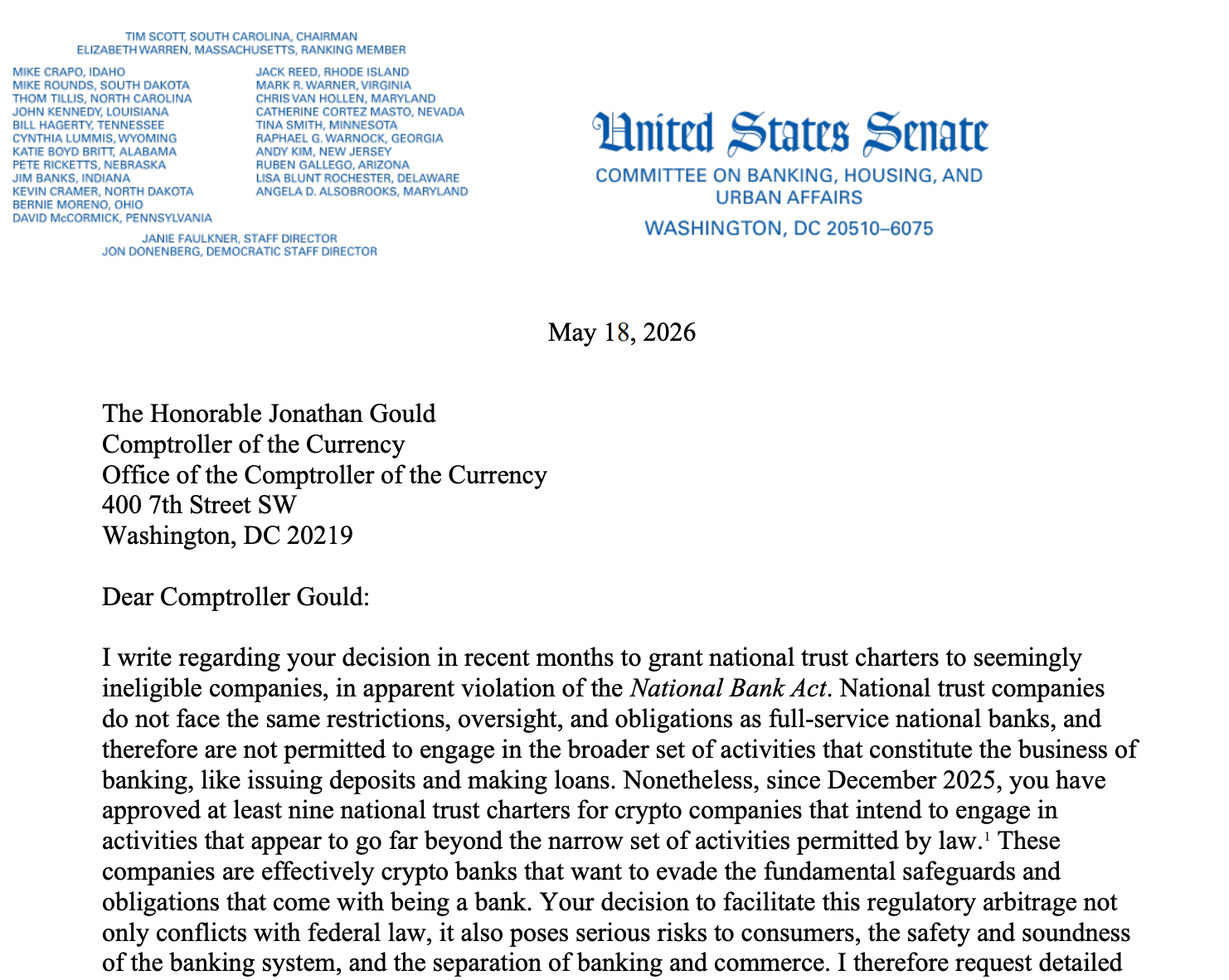
Massachusetts Senator Elizabeth Warren accused Office of the Comptroller of the Currency’s (OCC’s) Jonathan Gould of violating banking laws by approving national trust charters for cryptocurrency companies.
In a Monday letter to Gould, Warren said the OCC head had “approved at least nine national trust charters for crypto companies that intend to engage in activities that appear to go far beyond the narrow set of activities permitted by law,” an apparent violation of the National Bank Act.
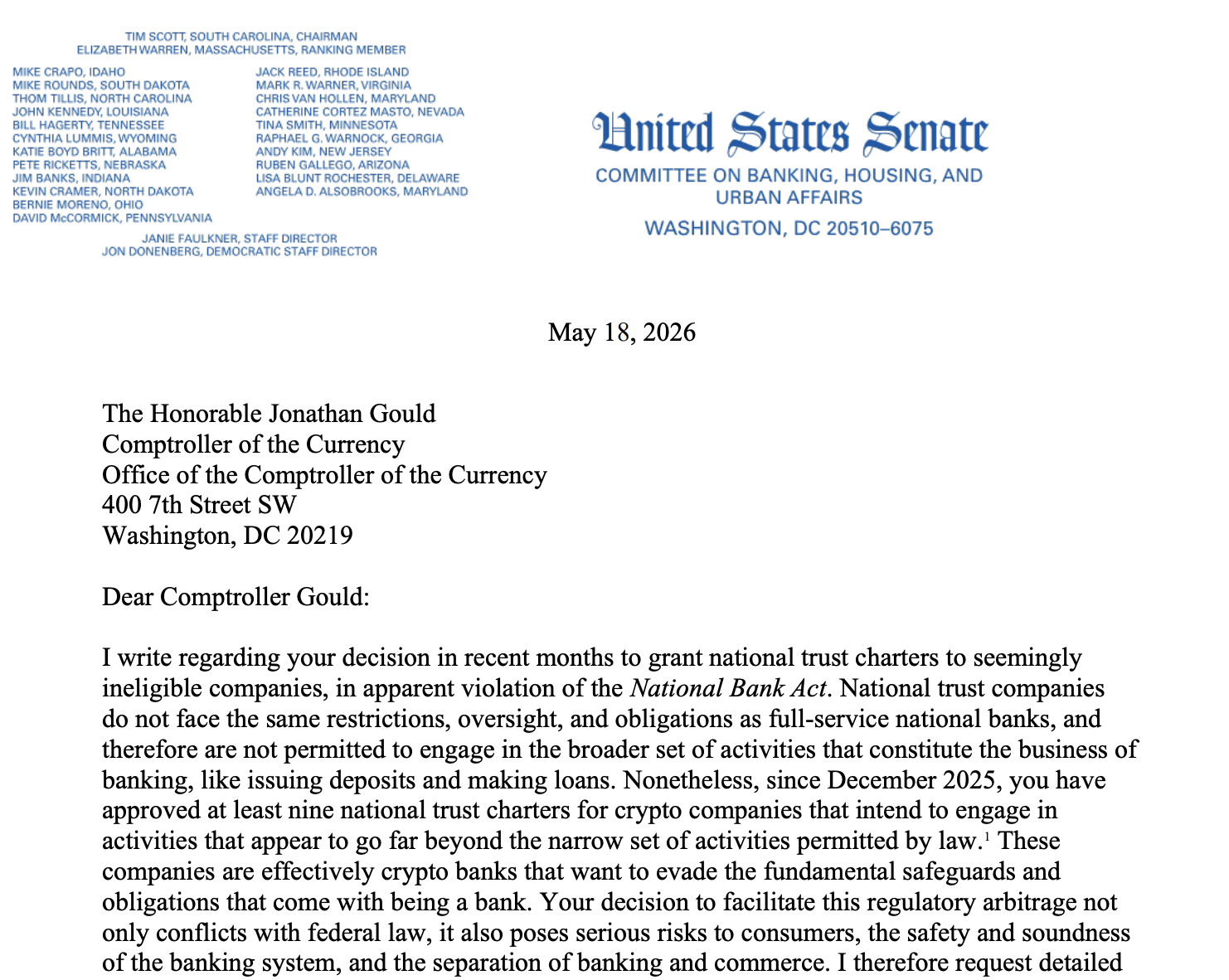
Source: US Senate Banking Committee
She called on Gould to provide the full applications of crypto companies the OCC had approved or conditionally approved since December 2025, including Coinbase, Crypto.com’s parent company, Ripple, Stripe, BitGo, Circle, Fidelity Digital Assets, Protego Holdings and Paxos, as well as communications between the office and US President Donald Trump, members of his family and White House officials.
“These companies are effectively crypto banks that want to evade the fundamental safeguards and obligations that come with being a bank,” said Warren. “Your decision to facilitate this regulatory arbitrage not only conflicts with federal law, it also poses serious risks to consumers, the safety and soundness of the banking system, and the separation of banking and commerce.”
Related: Warren urges Fed, Treasury not to ‘bail out’ crypto amid Trump-linked firm concerns
Warren, ranking member of the US Senate Banking Committee, has repeatedly criticized lawmakers and regulators for supporting policies with potential conflicts of interest related to Trump’s ties to the crypto industry. She pushed for provisions in the crypto market structure bill, the CLARITY Act, in a committee markup last week and called on Gould to delay consideration of the Trump family-backed crypto business World Liberty Financial, which filed for a charter in January.
Cointelegraph requested comment from the OCC but did not receive an immediate response.
Kraken parent’s application under review
On May 8, Payward, the parent company of cryptocurrency exchange Kraken, filed an application with the OCC for a national trust charter. The company said, if approved, the charter would allow it to “provide fiduciary custody and other services primarily for digital assets” under the Payward National Trust Company.
A national trust bank charter mainly allows holders to provide fiduciary and custodial services without engaging in deposit-taking or commercial lending, which means they are not subject to the same regulatory requirements as traditional banks.
Magazine: Crypto scammers face death, Aussie CGT makes Asian hubs attractive: Asia Express

Crypto World
This bitcoin bear market is different with 'uniquely pessimistic' traders limiting downside, K33 says


The research firm said bitcoin traders remain unusually defensive, reducing the risk of the kind of leverage-driven collapse seen in prior downturns.
Crypto World
Bitcoin News: Iran Integrates Bitcoin for Shipping Insurance: Sovereign Settlement Rail

Bitcoin News: Iran has launched a Bitcoin-settled shipping insurance program called Hormuz Safe, developed under the Ministry of Economy and Financial Affairs, allowing vessel operators to pay premiums and receive claims entirely in BTC through a system that activates coverage immediately upon blockchain confirmation.
The program targets the Strait of Hormuz, the chokepoint handling roughly 20% of global seaborne crude, and represents the most structurally significant sovereign Bitcoin integration in the sanctions-evasion context to date.
The strategic implication is not incremental. Iran is not simply accepting Bitcoin for a single transaction, it is constructing a self-contained trade settlement loop that replaces SWIFT, USD-denominated premiums, and bank-backed claims processing in one move.
The unanswered question is whether any international shipping company will publicly use it, and whether that moment triggers OFAC secondary sanctions enforcement.
JUST IN:
Iran launches Bitcoin-backed insurance service for shipping companies wanting to transit the Strait of Hormuz. pic.twitter.com/kFHz14ZJfB
— Watcher.Guru (@WatcherGuru) May 18, 2026
Discover: The best pre-launch token sales
Bitcoin News: How Hormuz Safe Actually Works, and Why the Insurance Mechanism Is the Real Story
The mechanism here is worth understanding precisely. Traditional maritime shipping insurance runs through Lloyd’s of London-style syndicates and P&I clubs, all of which operate on USD or major fiat rails with counterparty exposure to Western correspondent banks.
For any vessel owner operating near Iran, that structure creates dual exposure: the physical risk of the transit and the financial risk of triggering bank-level secondary sanctions just by purchasing coverage.
Hormuz Safe eliminates the second exposure by settling entirely on-chain. When a shipping company pays the premium in Bitcoin, the system issues a signed digital receipt to the vessel owner, and coverage activates immediately after blockchain confirmation, no intermediary bank, no SWIFT message, no USD clearing.
The sanction resistance built into this model is not incidental; it is the product.

Reports circulating across research desks indicate the Ministry of Economy had been developing the framework since late April 2026, and that initial coverage is focused on Iranian shipping companies and cargo owners before any broader rollout.
That narrower scope matters, it means the first phase is less about onboarding international partners and more about proving the claims infrastructure works at a sovereign level before marketing sanction-resistant coverage to third-party operators.
The Kobeissi Letter has described the move as a deliberate effort to deepen crypto’s role in energy trade, while also flagging the obvious compliance risk for any non-Iranian entity that participates.
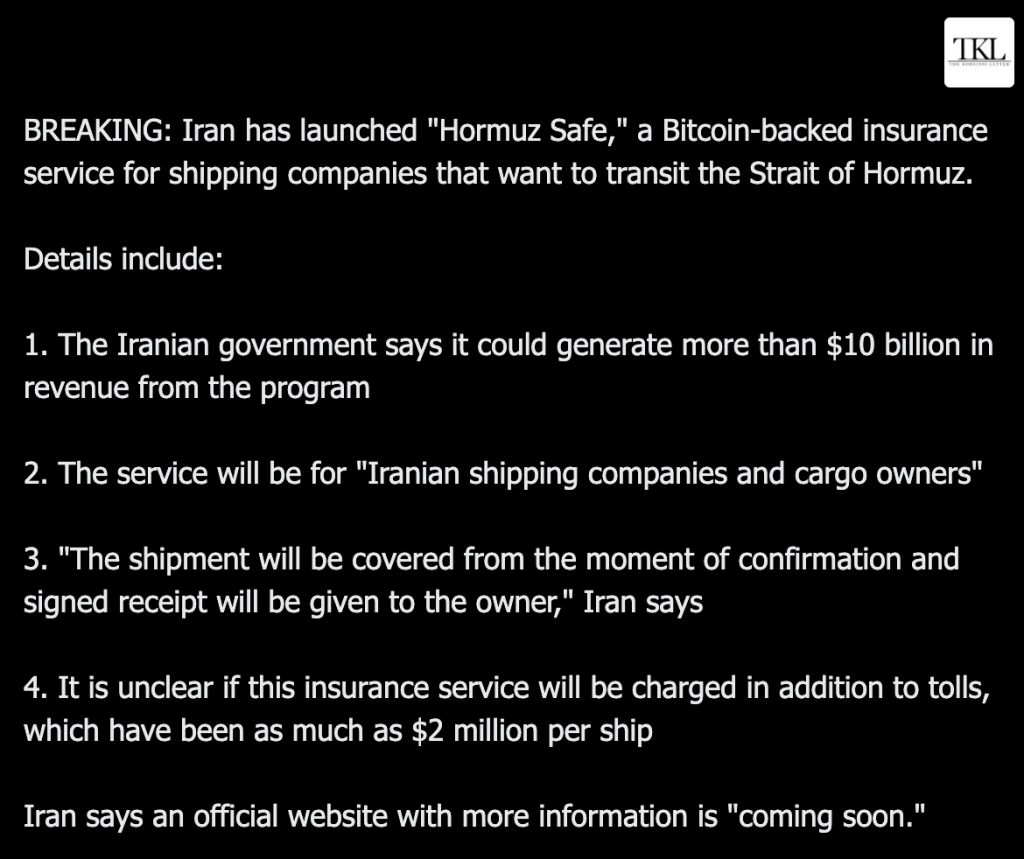
Those are not the same thing: using Bitcoin for domestic Iranian logistics and offering Bitcoin-settled insurance to international tankers transiting Hormuz carry categorically different OFAC exposure profiles.
The program’s initial domestic focus suggests Iran understands this distinction and is sequencing accordingly.
Iran’s government has framed Hormuz Safe as a potential $10 billion revenue source, though no official timeline has been attached to that figure.
For Bitcoin’s market structure, this is a non-speculative demand source. Each premium payment is a real-economy BTC transaction tied to trade settlement, not a leveraged long or an ETF inflow.
As Bitcoin trades near two-week lows following a drop from $82,000 to $76,900, a 6% decline driven by ETF outflows and derivatives selling pressure, sovereign adoption events like this represent the floor-building utility thesis that long-term holders reference against short-term price weakness.
Discover: The best crypto to diversify your portfolio with
The post Bitcoin News: Iran Integrates Bitcoin for Shipping Insurance: Sovereign Settlement Rail appeared first on Cryptonews.
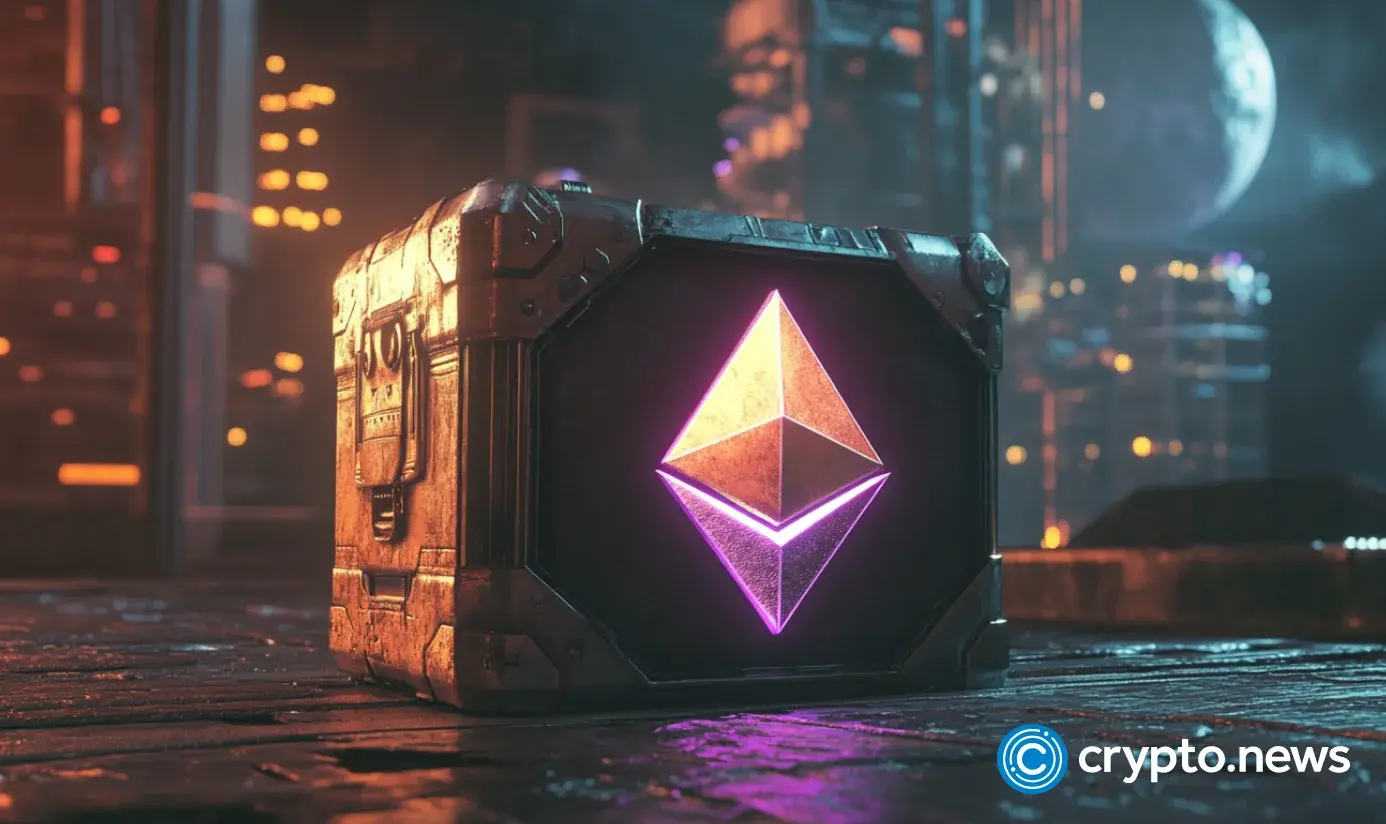
Ethereum dropped another 10.2% this week, with the ETH/BTC ratio sinking toward 0.0275, and market maker Wintermute is now flatly calling ETH “not the right asset for this macro” as yields and inflation grind higher.
Summary
- Wintermute says ETH is “not the right asset for this macro” as real yields rise and inflation re-accelerates.
- ETH has slid 10.2% this week, with the ETH/BTC pair pressing 0.0275 amid underperformance in both spot and derivatives.
- The firm also warns that being outright long BTC here is a bet that institutions will ignore rising Treasury yields and come back in size.
According to a note shared via industry channels and summarized by WuBlockchain on X, Wintermute says Ethereum’s (ETH) latest 10.2% weekly slide continues a pattern of underperformance “across both spot and derivatives markets,” with the ETH/BTC ratio pressing 0.0275 as traders rotate away from smart-contract beta into safer corners of the crypto complex. The firm’s verdict is blunt: “ETH is not the right asset for this macro,” citing an environment of rising Treasury yields, renewed inflation concerns and a market that is rewarding hard-asset narratives and cashflow clarity over long-duration tech bets.
Wintermute’s macro read is that crypto is now trading more like a high-beta extension of equity and credit risk, and that the current regime—re-accelerating inflation prints, stickier real yields and crowded trades in AI and growth stocks—is hostile to assets whose payoff is far out on the horizon. Ethereum, whose core bull case rests on future fee growth from DeFi, real-world assets, and L2 activity, fits that “long duration” profile, and the lack of a decisive on-chain usage surge leaves it particularly vulnerable when discount rates move higher. Recent technical work has been pointing to a choppy, range-bound ETH with only “measured optimism” toward levels like $2,300, warning that bearish MACD and fragile support around the low-$2,000s could make the path higher messy at best.
On Bitcoin, Wintermute is hardly pounding the table either. The firm cautions that being outright long BTC at current levels is effectively a macro bet that institutional investors will step back into spot and ETF markets despite higher yields and a still-uncertain inflation trajectory—something it thinks may be “difficult” until markets fully digest the shifting backdrop and the AI trade shows signs of cooling. In earlier reports, Wintermute argued that AI-linked equities and tokens have been “continuously absorbing available market funds,” leaving crypto in “high-volatility, low-spot-demand price discovery” as U.S. selling and ETF outflows bite.
That view dovetails with the firm’s broader 2026 outlook, where it has already declared the classic four-year crypto cycle “over” and replaced by a regime dominated by institutional capital flows and product rails such as ETFs and digital asset trusts. In that framework, neither halving narratives nor incremental protocol upgrades are enough; what matters is whether ETF mandates broaden, whether big allocators decide to treat BTC as macro collateral again, and whether secondary-market and token-launch activity (“DAT activity”) actually picks up.
For now, Wintermute’s message is that crypto is stuck in an awkward macro cross-current: liquidity exists, but it’s choosing AI and equities; yields are rising, making long-duration crypto bets less attractive; and structural inflows into both BTC and ETH are muted. In that mix, ETH’s combination of duration, still-unproven fee growth and fading narrative momentum makes it, in their words, “not the right asset for this macro,” while even BTC longs are, in effect, fading the bond market and betting that institutional risk appetite turns back toward digital assets before something in traditional markets snaps.
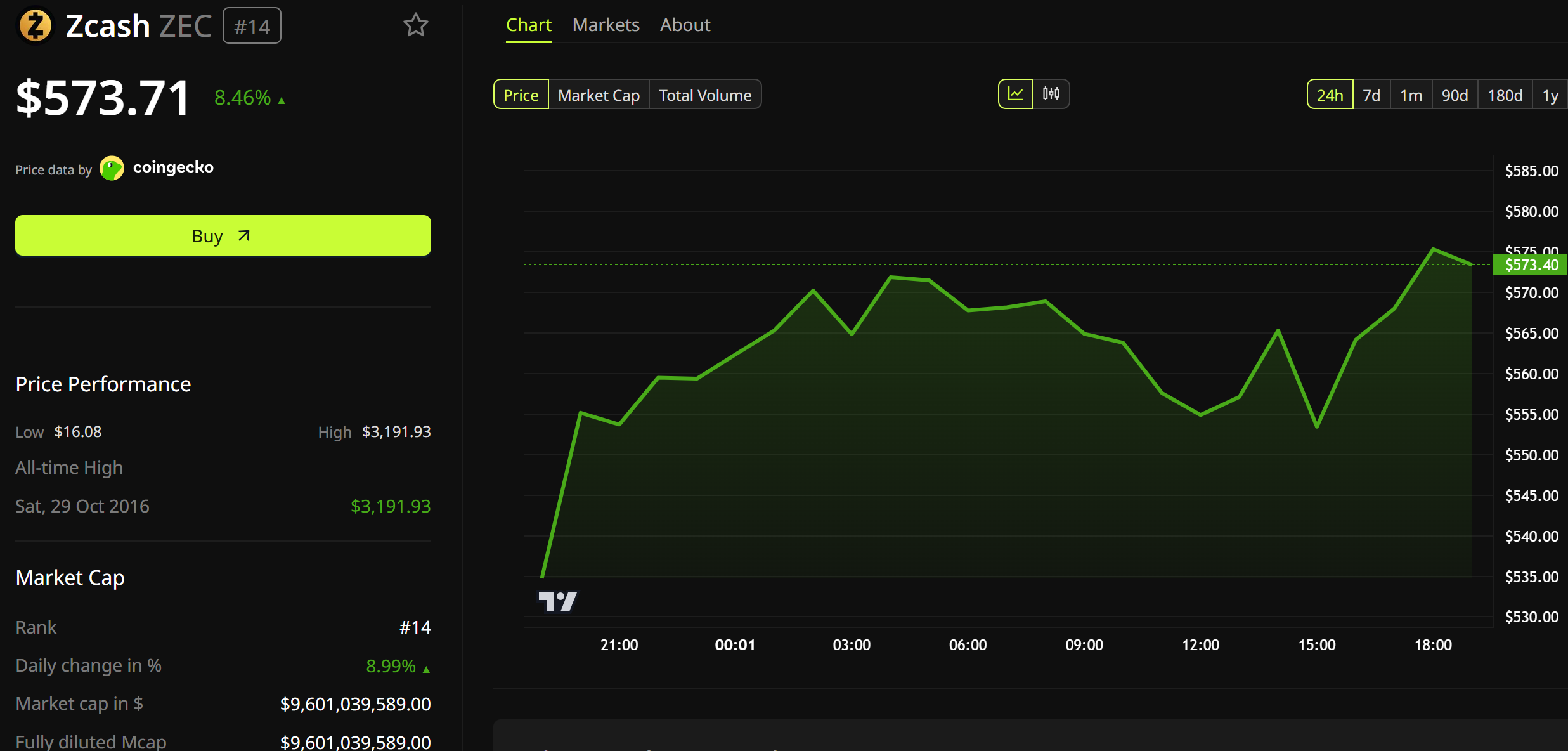
Zcash (ZEC) jumped near $580 on Tuesday after the US Securities and Exchange Commission (SEC) closed its Zcash Foundation investigation. A Q1 report also revealed a $36.7 million Foundation treasury.
The token gained nearly 10% over 24 hours. ZEC drew privacy traders back into a name battered by Electric Coin Company staff exits earlier in 2026.

The bounce extended a rally that has unfolded since institutional flows returned to the privacy sector earlier in 2026.
Follow us on X to get the latest news as it happens
Zcash SEC Investigation Closes Without Penalties
The Foundation said in its Q1 2026 report that the SEC concluded its review of the nonprofit. The agency informed leadership that it does not plan to recommend enforcement action.
The probe began on August 31, 2023, when staff served the Foundation with a subpoena. The case was filed as “In the Matter of Certain Crypto Asset Offerings,” designated SF-04569.
“We are pleased to announce that the SEC has concluded its review and informed us that it does not intend to recommend any enforcement action or other changes against Zcash Foundation regarding this matter,” Zcash Foundation noted.
The closure was formally communicated in January. It removes a regulatory overhang that had followed Zcash for over two years.
Foundation officials said the nonprofit cooperated fully throughout the process. No penalties, fines, or required changes were attached to the outcome.
The decision aligns with a broader pullback in SEC crypto cases seen since 2025. Several other projects, including Aave, OpenSea, Robinhood, Gemini, and Ondo, have seen probes closed without charges in recent quarters.
Foundation Discloses $36.7 Million Treasury
The same quarterly disclosure showed about $36.7 million in liquid holdings at the end of March. ZEC accounted for roughly 58.6% of the balance.
The Foundation also held Bitcoin, U.S. dollar reserves, and a small ether position. Average monthly operating expenses ran near $272,500.

That position gives the nonprofit a multi-year runway to keep funding engineering work. The cash buffer matters because most Electric Coin Company contributors left during a governance dispute.
The Q1 report stressed that blocks continued to settle, transactions cleared normally, and user privacy stayed intact through the transition.
Engineering output remained active in the period. The Foundation shipped several Zebra node releases and advanced the Z3 stack. FROST multi-party signing also progressed, while work continued on NU7, the next planned network upgrade.
Grayscale recently flagged Zcash as one of its preferred private-asset names. The endorsement drew fresh attention from larger allocators.
Traders watching the next leg will track NU7 timing and Foundation spending discipline. They will also weigh whether the SEC’s retreat from crypto cases holds through the next rule cycle.
Subscribe to our YouTube channel to watch leaders and journalists provide expert insights
The post Zcash Price Surges 10% Amid 2 Major Developments appeared first on BeInCrypto.
The United States and the broader global economy are facing an increasingly fragile macroeconomic backdrop. U.S. inflation has risen to 3.8% year-over-year, per April consumer price index (CPI) data, and real wages have turned negative with long-term Treasury yields climbing to multi-year highs.
Amid a hostile macro environment, bitcoin (BTC) has pulled back and erased the gains from its early-month rally. This correction is further driven by weakening institutional demand and outflows from spot exchange-traded funds (ETFs).
Weakening Institutional Demand
According to this week’s Bitfinex Alpha report, the U.S. macro backdrop has shifted toward a “higher-for-longer inflation environment.” Market expectations for Federal Reserve rate cuts have been removed, with rate hikes becoming a more likely scenario as the year progresses.
With the possibility of renewed tightening rising, bitcoin is losing momentum and becoming more vulnerable to exogenous shocks and to a high-for-longer interest rate regime. Unfortunately, this development comes at a time of deteriorating liquidity conditions – the worst since February.
Analysts said the two primary engines of marginal demand, which are spot ETFs and yield-bearing products like Strategy’s STRC, are currently under duress. ETFs ended their six-week inflow streak last week, recording almost $1 billion in net outflows. On-chain capital flows currently sit at $2.8 billion, far below the $10 billion historically associated with durable bull phases.
“As market sentiment transitions from acute fear toward persistent uncertainty, analysts say the validity of the current recovery now hinges almost entirely on whether fresh net capital continues entering the market,” analysts explained.
Market Vulnerable to Further Downside
As Bitfinex warned two weeks ago, the Bitcoin market is not positioned for sustained upside. Despite the rally toward $82,000, institutional conviction has remained insufficient to absorb macro shocks and rate volatility, leaving the market vulnerable to further correction. Bitcoin is already trading at a two-week low, reflecting a significant structural problem that could worsen due to hostile macro conditions.
At the time of writing, BTC was trading around $76,700, roughly 6.5% below its weekly opening of $82,160. While the asset is testing levels near the monthly open, analysts expect the price to fluctuate between $72,000 and $80,000. Net capital flows, as measured by the Realized Cap 30-Day Net Position Change, will determine whether the broader recovery structure remains intact in the coming weeks.
The post Bitcoin Faces Correction as Institutional Demand Weakens Amid Macro Pressure: Bitfinex appeared first on CryptoPotato.

Iran’s army warned it would “open new fronts” against Trump and the United States if military operations resume, rattling crypto across the board.
Iran’s army spokesperson Mohammad Akraminia warned that Tehran would deploy “new equipment and new methods” if the US restarts strikes, according to Iran’s ISNA news agency. The threat lands as Trump is reportedly meeting national security advisers to weigh options for resuming military action despite having called off a planned attack Tuesday to allow peace talks to continue.
Iran’s influence over Hormuz shipping routes makes any escalation a direct macro risk for global markets. Crypto, already fragile, has no cushion here.
The data points to a market already stressed before this headline hit. Bitcoin ETF outflows approached $1 billion as of May 19, while hawkish Bank of Japan commentary added a second pressure vector. Risk appetite is thin.
Discover: The best pre-launch token sales
Trump, Iran, Bitcoin, and Crypto
Bitcoin is pinned in the mid-$76,000s despite Trump ceasefire decision. Prediction markets are quoting BTC at $76,750 for the May 19 5pm EDT outcome. A stark reversal from $82,300 on May 6, or a 6.7% drawdown in under two weeks.
First resistance sits at $77,000–$78,000. Reclaiming that band on volume would be the minimum requirement to shift short-term sentiment from defensive to neutral. Failure there keeps the door open to a retest of the low-$76,000 zone and potentially deeper support levels.
Total crypto market cap still managed to hold $2.5 trillion, suggesting altcoin strength is partially absorbing Bitcoin’s weakness. This makes the rotation trade interesting.
Discover: The best crypto to diversify your portfolio with
Bitcoin Hyper Targets Early-Mover Upside as BTC Tests Key Levels
When Bitcoin consolidates under pressure and institutional capital rotates toward Ethereum and altcoins, early-stage infrastructure plays start attracting attention from traders who’ve already caught the spot-BTC trade. The question becomes: where’s the asymmetric upside now?
Bitcoin Hyper ($HYPER) is positioned at the intersection of Bitcoin’s security and Solana-level execution speed. Hyper is the first Bitcoin Layer 2 with SVM integration that delivers faster performance than Solana itself.
The project also targets Bitcoin’s three core limitations: slow transactions, high fees, and the absence of programmable smart contracts.
The current price is $0.0136, with $32.7 million raised to date, plus the 35% APY staking rewards available during the presale period. Features include a Decentralized Canonical Bridge for BTC transfers and extremely low-latency Layer 2 processing.
The post Crypto Suffers as Iran Threatens Escalation Despite Trump Pause appeared first on Cryptonews.
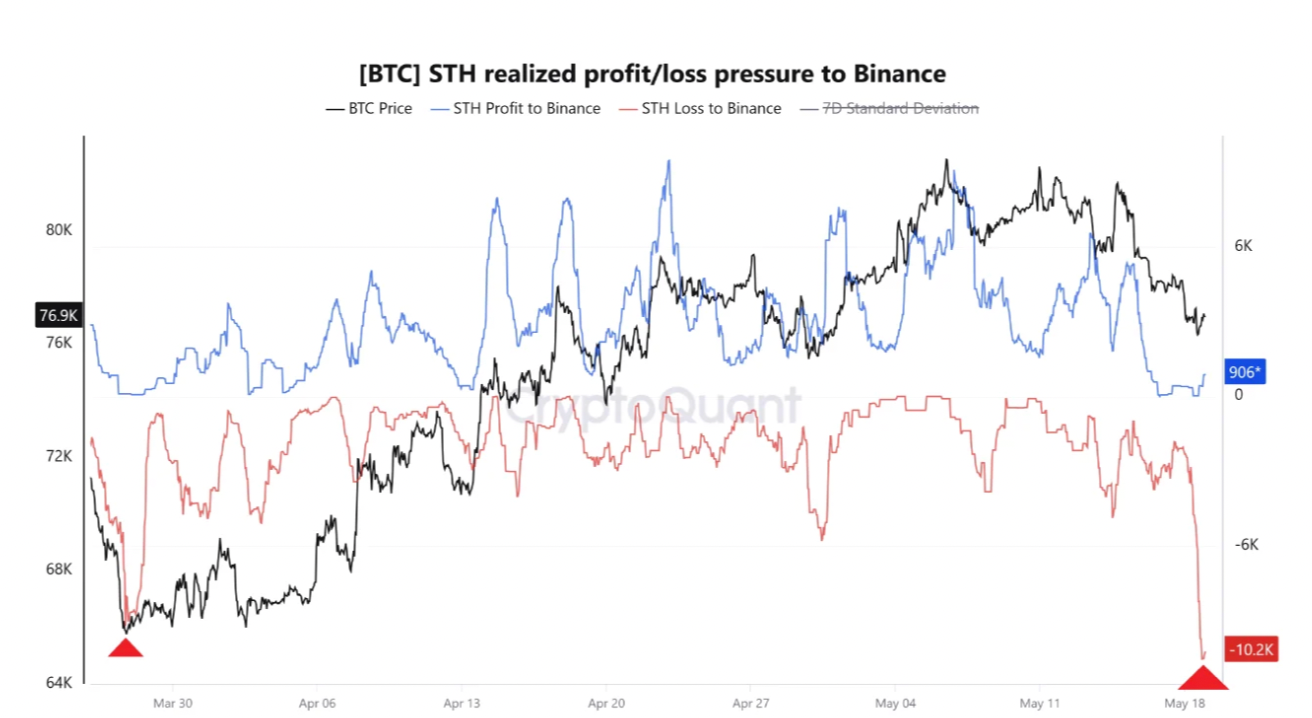
Bitcoin (BTC) price dropped to $76,500 on Monday, erasing nearly all of this month’s gains as fresh US-Iran war tensions soured the crypto market sentiment. This has led investors and traders to reevaluate their risks and stay cautious, with many recent buyers selling their BTC at a loss.
Key takeaways:
- Bitcoin short-term holders sold over 10,000 BTC worth approximately $770 million at a loss on Monday.
- Analysts agree that pushing Bitcoin’s price below $76,000 could trigger a fresh downtrend toward $65,000-$70,000.
Bitcoin’s “weak hands” realizing losses
Bitcoin has retraced 7% from its local high of $82,800 set on May 6. The rejection from the 200-day moving averages at $82,000, the daily close below the true market mean, and the short-term holder cost basis around $78,000 have cemented a more risk-off stance among Bitcoin investors.
Related: Bitcoin’s trend-defining battle starts at $74K support: Analyst
Onchain data from CryptoQuant showed that more than 10,000 BTC were transferred by short-term holders — investors who have held the asset for less than 155 days — to Binance at a loss on Monday.
These moves occurred with Bitcoin at roughly $76,900, about 2% below their average purchase price of $78,440, suggesting that recent buyers sent approximately $769 million in BTC to Binance at a loss.
This “reflects short-term holder stress, forced selling, or capitulation from weaker hands during a correction,” CryptoQuant analyst Amr Tah said in a QuickTake post on Tuesday.
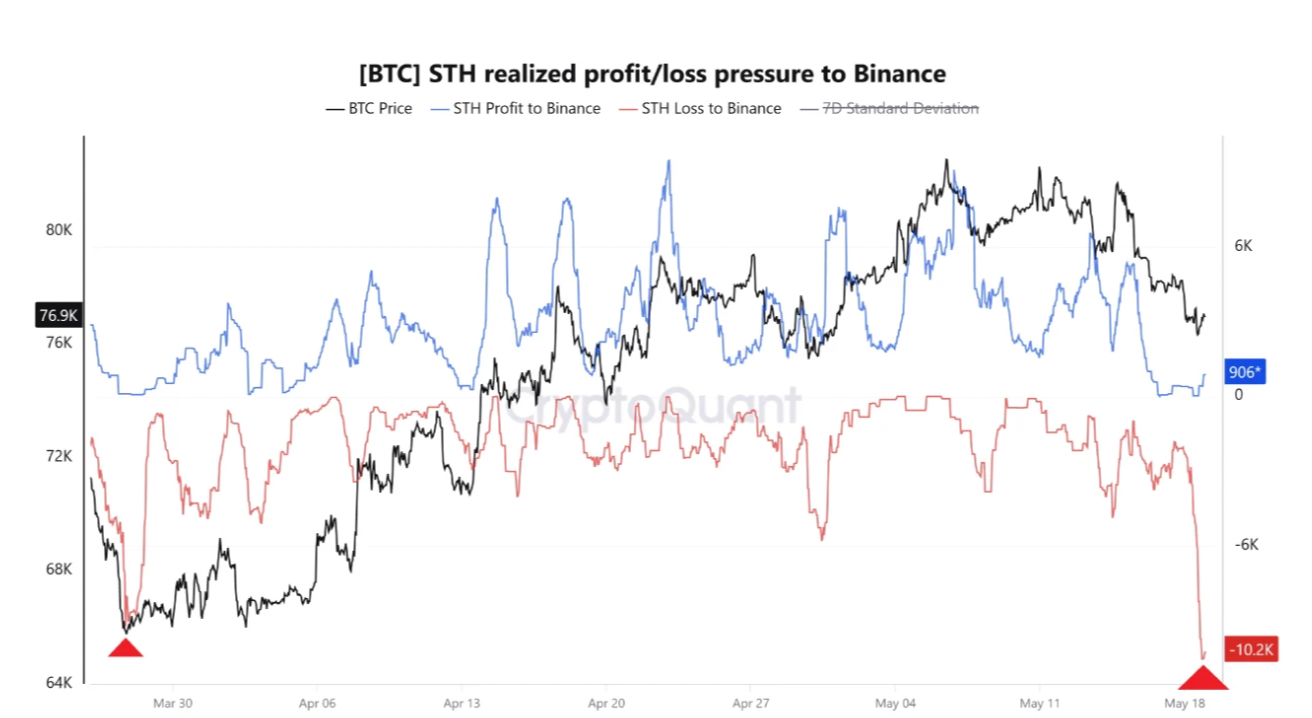
Bitcoin: Transfer volume by STH in loss to Binance. Source: CryptoQuant
This activity underscores a familiar pattern of short-term speculators panic-selling during market dips, frequently realizing losses.
A similar occurrence in mid-November 2025 preceded a 15% BTC price decline to $78,400 from $96,000 in less than five days.
Additional data from Glassnode shows that more than “7.8M BTC are currently held at a loss,” a supply overhang that the market would need to “absorb before any sustained move higher becomes structurally credible.”
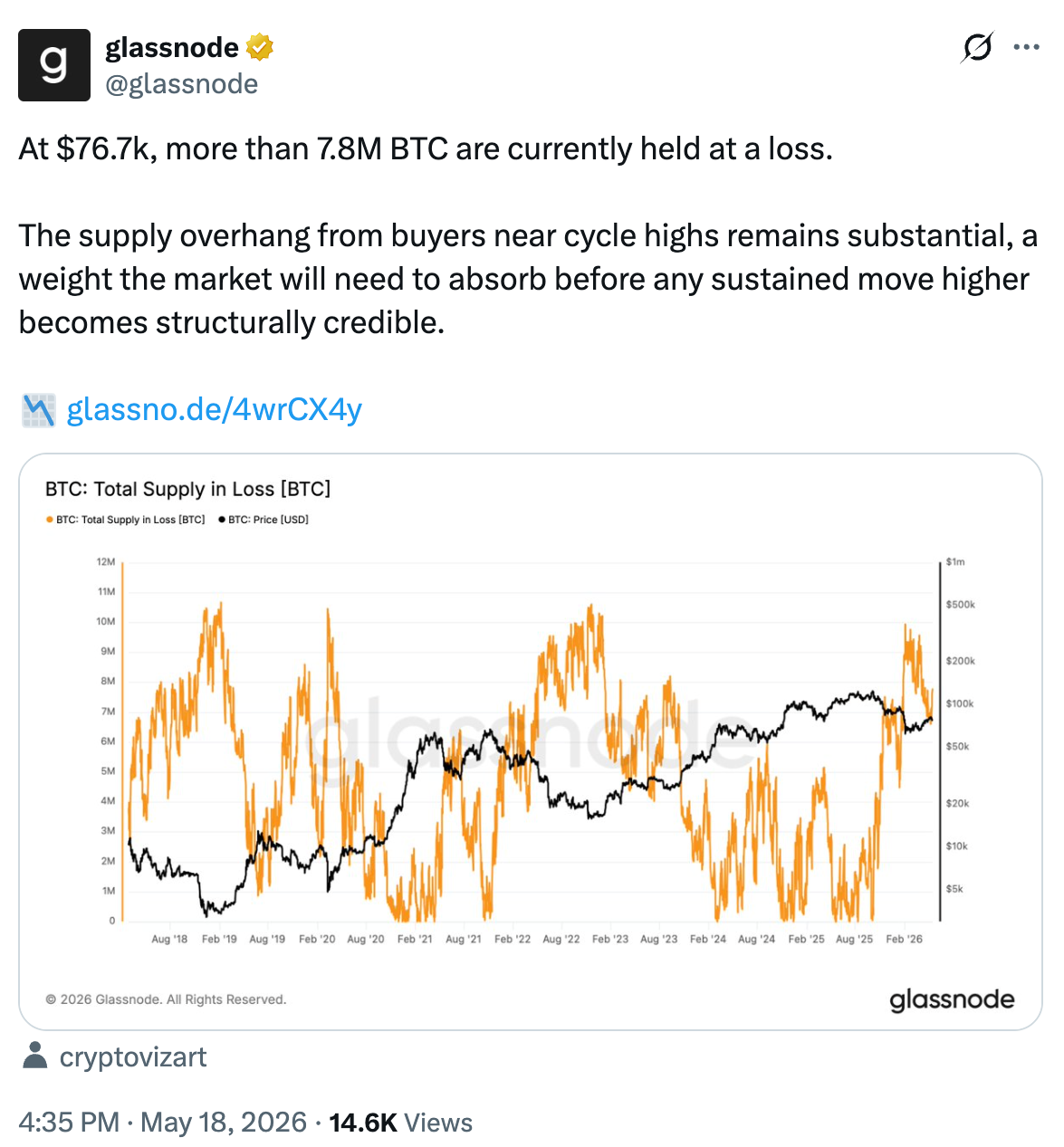
BTC total supply in loss. Source: Glassnode
Also accompanying Bitcoin’s slump are heavy outflows from US-based spot Bitcoin exchange-traded funds (ETFs), which have recorded negative flows for six out of the last eight days.
These investment products saw $648.6 million in net outflows on Monday, the largest withdrawal since Jan. 29.
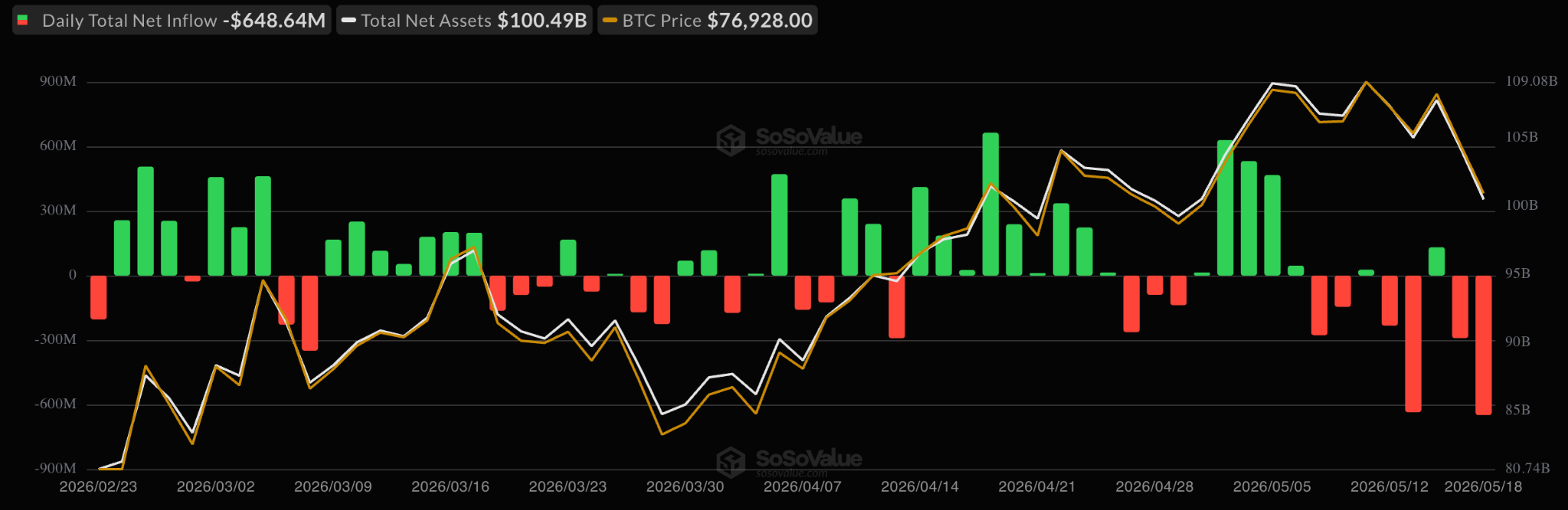
Spot Bitcoin ETF flows table. Source: Farside Investors
Global Bitcoin investment products also recorded $981.5 million in net outflows during the week ending May 15, suggesting declining institutional appetite for BTC.
“Markets are getting absolutely hammered,” analyst Alek_Carter said in an X post on Tuesday, referring to the large outflows from Bitcoin investment products, adding:
“Money is rotating out fast, panic is creeping in, and traders are clearly hitting the risk-off button hard.”
As Cointelegraph reported, record-low retail investor activity, aggressive selling in the futures markets and weakening spot demand are pulling down Bitcoin’s price to new May lows.
How low can Bitcoin price go?
The Bitcoin HODL Waves indicator, which tracks the age distribution of BTC holdings, suggests Bitcoin could bottom at $65,500-$70,500 if current market weakness continues.
Historically, spikes in long-term holder activity and declining short-term speculation have coincided with major market bottoms before recoveries.
The chart below shows a stronger long-term holder base (the blue/purple bands are noticeably thicker), “reflecting growing institutional adoption,” CryptoQuant analyst Sunny Mom said in a Quicktake analysis on Tuesday.
This suggests that the supply structure is structurally stronger in the current cycle than before, “which changes how BTC forms its bottom,” the analyst said, adding:
“Our predicted price range for this cycle’s bottom is $65.9K–$70.5K. If $70.5K holds, we’ll slowly grind out a bottom in the upper range.”
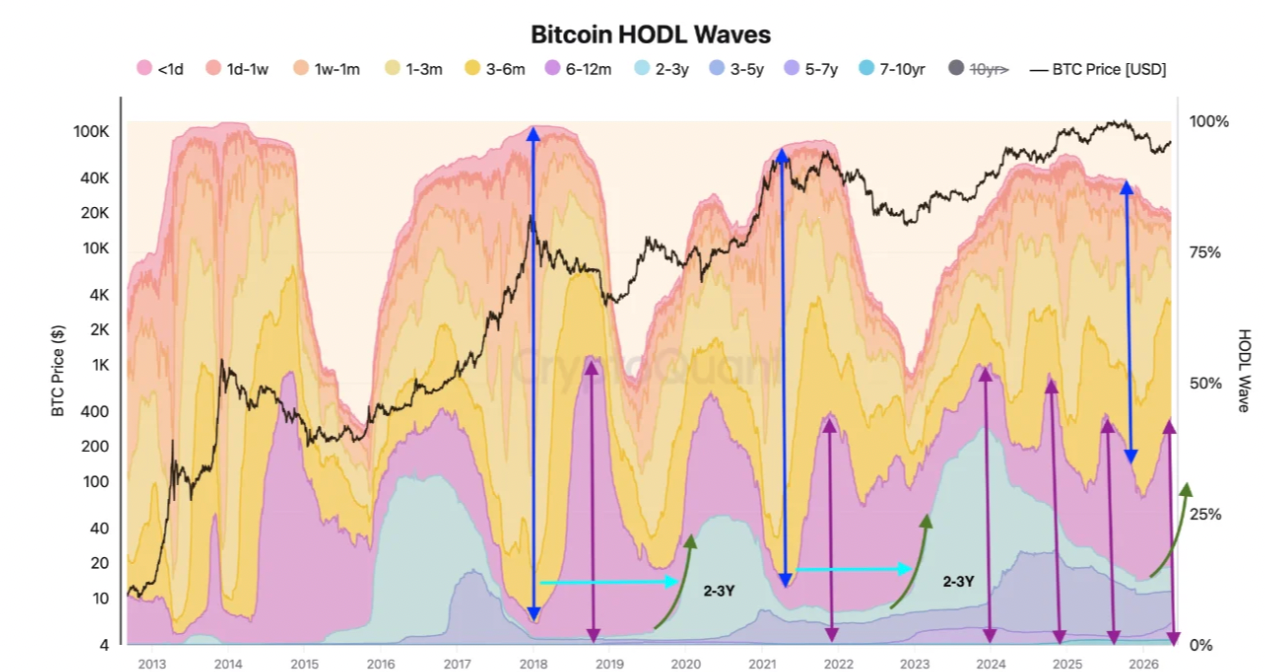
Bitcoin HODL wave indicator. Source: CryptoQuant
From a technical perspective, Bitcoin is printing the fifth consecutive daily red candle, suggesting that the “momentum is starting to shift back to the bears,” analyst Alex Marzell said on Monday in a post on X, adding:
“Bitcoin may come back to retest the breakout zone around $70K support.”
Echoing this sentiment, MN Capital founder Michael van de Poppe said this “doesn’t look great” for Bitcoin, adding that the price needs to hold support at $74,500-$76,000 “in order to get back some momentum in the markets.”
“If this area doesn’t hold, then we’re most likely cascading through the lows of the recent rally and test <$65,000 for support.”
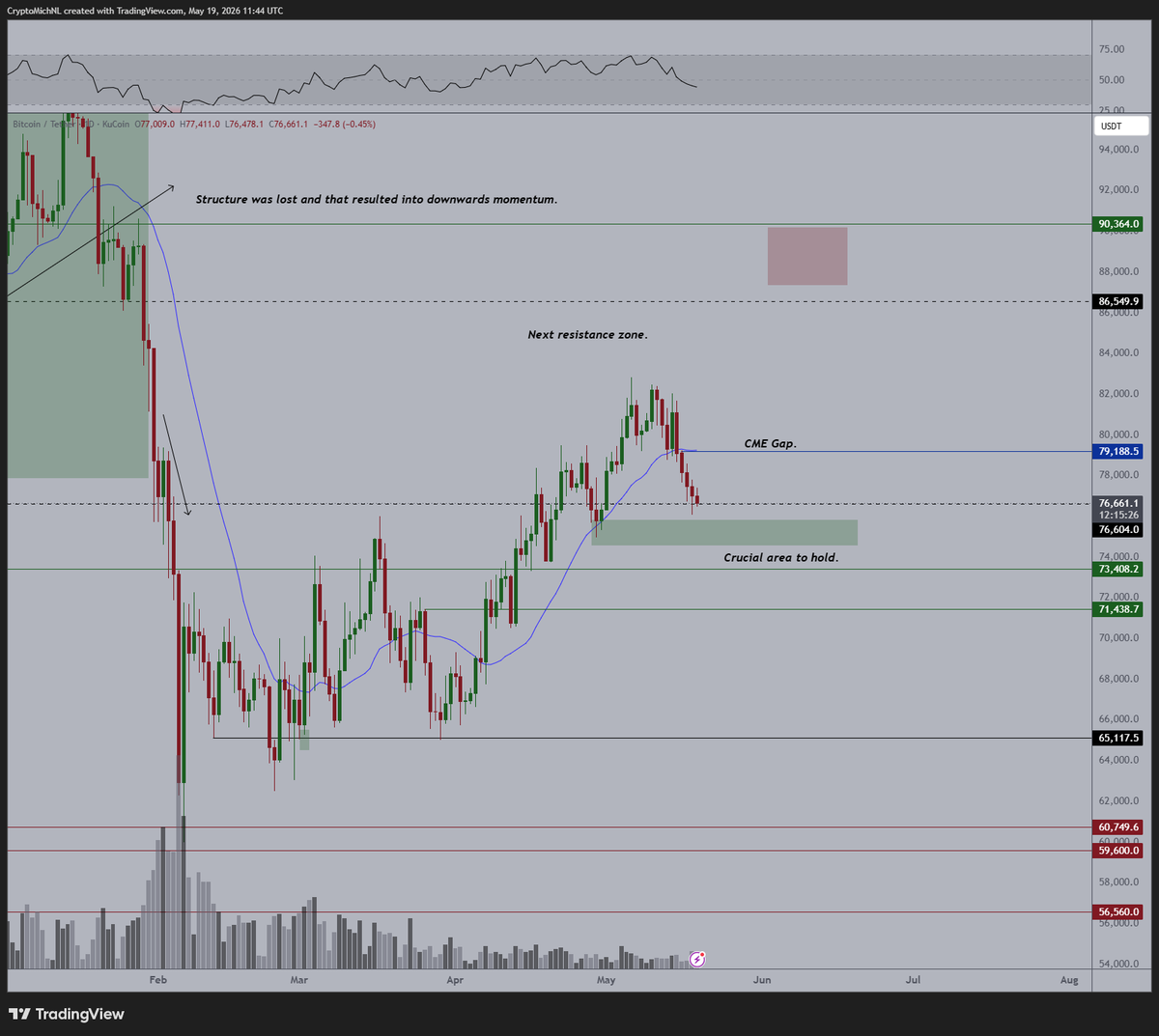
BTC/USD daily chart. Source: X/Michael van de Poppe
As Cointelegraph reported, a break below the 50-day SMA at $76,000 would increase the risk of the BTC/USDT pair dropping to $65,000. in the short term.
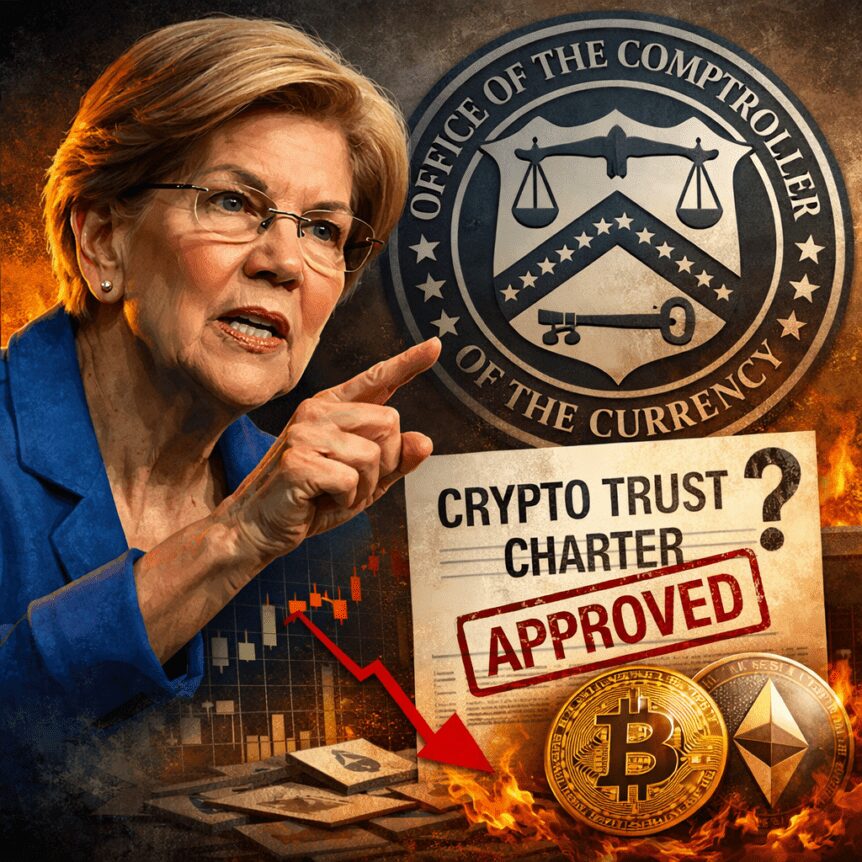
Massachusetts Senator Elizabeth Warren has intensified scrutiny of the Office of the Comptroller of the Currency’s push to charter crypto firms as national trust banks, arguing that such moves may violate banking law and blur the lines between banking and crypto activities.
In a letter addressed to OCC Acting Comptroller Jonathan Gould, Warren contends that the agency has approved at least nine national trust charters for crypto companies whose activities “appear to go far beyond the narrow set of activities permitted by law,” potentially breaching the National Bank Act. She has requested a full accounting: all national trust charter applications approved since December 2025, any conditional approvals, and all communications between the OCC and figures connected to the Trump administration, including President Trump, his family, and White House officials. Source: US Senate Banking Committee.
Warren—ranking member of the Senate Banking Committee—described the charter push as a bid by certain crypto companies to act as banks while avoiding the safeguards that come with banking status. “These companies are effectively crypto banks that want to evade the fundamental safeguards and obligations that come with being a bank,” she wrote, warning that the regulator’s approach risks consumers and the integrity of the banking system. The OCC did not provide an immediate comment when reached by Cointelegraph.
Key takeaways
- Senator Elizabeth Warren alleges the OCC has approved nine national trust charters for crypto firms that may exceed the National Bank Act, calling for full disclosures of approvals since December 2025.
- Kraken’s parent Payward filed on May 8 for a national trust charter, aiming to offer fiduciary custody and related services for digital assets under the Payward National Trust Company.
- A national trust charter permits custodial and fiduciary services without traditional deposit-taking or lending, potentially reducing regulatory burdens for crypto custodians.
- The debate sits within broader political and regulatory tensions, including Warren’s criticisms of perceived conflicts of interest and ongoing discussions around the CLARITY Act and related crypto legislation.
- Investors should monitor how, if at all, these charters affect custodial infrastructure, consumer protections, and the boundary between banking regulation and crypto activity.
Kraken bid on the OCC’s table, signaling a broader push for crypto custody
On May 8, Payward—the parent company of the cryptocurrency exchange Kraken—submitted an application to the OCC for a national trust charter. If approved, the charter would allow Payward to provide fiduciary custody and other services primarily for digital assets under the proposed Payward National Trust Company. This aligns with a broader pattern of crypto firms seeking formal, bank-like status to access regulated custodial services and potentially traditional financial rails without engaging in deposit-taking or lending, a hallmark of a national trust charter.
A national trust charter is distinct from a conventional bank charter. It would permit these providers to offer custodial and fiduciary services for clients’ assets while avoiding the full spectrum of deposit-taking and commercial lending requirements typical of traditional banks. The resulting regulatory regime could offer more clarity and oversight for digital-asset custody but may also raise questions about the adequacy of consumer protections and the precise scope of activities allowed under such charters.
Regulatory tensions and the politics of crypto banking
The push for national trust charters sits at the intersection of a broader regulatory debate over how the U.S. should oversee crypto-related financial services. Warren has been a vocal critic of perceived policy conflicts that connect political figures to the crypto industry. In recent weeks, she has pressed for clarifications in crypto market structure legislation—the CLARITY Act—and has urged regulators to slow or reconsider approvals around charter applications tied to political figures and their families, including references to World Liberty Financial, a Trump family–backed initiative that filed for a charter earlier in the year. Cointelegraph coverage.
From the regulator’s perspective, the central question is whether national trust charters strike an appropriate balance between enabling legitimate custody and ensuring robust consumer protections and financial stability. Critics warn that creating a parallel, crypto-specific banking lane could sow regulatory fragmentation if not harmonized with federal banking standards. Supporters argue that formal chartering could bring necessary discipline, tailor oversight for digital assets, and improve confidence for institutional participants seeking regulated custody services.
As the regulatory dialogue continues, lawmakers and industry participants will watch for concrete OCC actions: new charters granted, denials, or policy statements clarifying the framework for crypto custodians. In the meantime, the OCC’s current approach remains under close political scrutiny, with potential implications for market participants seeking regulated custody and for investors assessing the risk and governance of crypto infrastructure.
Cointelegraph requested comment from the OCC but did not receive an immediate response.
Earlier context around Warren’s crypto governance stance and related regulatory efforts is available in ongoing coverage from Cointelegraph, including notes on her push to curb perceived conflicts of interest and to shape crypto policy more firmly in Congress. For reference, see Warren’s remarks on financial policy and related reporting: Warren’s concerns about crypto bailouts.


The SEC is developing a new regulatory framework that would allow digital versions of publicly traded securities to trade on blockchain networks in the US.
Crypto World
A viral hedgehog, Vitalik Buterin, and a bow: the GraphDex launch that crypto won’t forget

5,800 users in two hours. One QR code. One bow that went viral.
Some platforms launch with a whitepaper. Some with a token. GraphDex launched with a hedgehog, a condom, and the co-founder of Ethereum bowing in respect.
A short video from Token2049 Singapore, recorded in September 2024, resurfaced across X this week at precisely the moment GraphDex went live. In this video, the project’s hedgehog mascot moves through the conference floor, greets attendees, and hands a branded condom to Vitalik Buterin. The condom carries GraphDex branding and a QR code that opens the app directly. Buterin takes it and then bows to the hedgehog.

Vitalik Buterin receives a branded condom from the GraphDex hedgehog mascot at Token2049 Singapore, September 2024. Video shows Buterin bowing to the hedgehog immediately after.
The clip sat dormant for over a year. Then the product launched – and everything changed.
The bow heard around crypto
In a space where Vitalik Buterin is treated as something between a philosopher-king and a meme, a moment of him bowing to a hedgehog mascot is not a small thing. It is the kind of image that crypto Twitter cannot ignore, doesn’t want to ignore, and will share without being asked.
The bow was brief, yet the reaction to it lasted longer.
Within two hours of GraphDex going live, the platform registered 5,800 users across its web app and Telegram mini-app. The clip had no destination in 2024; in 2026, it pointed to a live product, and that shift transformed a conference moment into a distribution mechanism that no marketing budget could replicate.
“We always believed the hedgehog would have a second moment. The product was ready. The clip found its timing.” – GraphDex representative
What Vitalik bowed toward
GraphDex is a unified crypto terminal built around a problem every active Solana trader knows intimately: too many tools, not enough time.
The platform consolidates Solana DEX trading, real-time token discovery, wallet and social tracking, Polymarket-powered prediction markets, copytrading for prediction markets – a feature that does not exist on Polymarket itself – and AI-powered signal analysis into a single non-custodial interface.
The non-custodial architecture, built on Privy infrastructure, means user funds stay in user-controlled wallets at all times. After FTX and Celsius, this is less of a feature and more of a baseline expectation. GraphDex built it in from day one.
The copytrading layer for prediction markets is the product’s most structurally novel element. Users can filter top forecasters by PnL and win rate and mirror their positions automatically — bringing the logic of copy trading to outcome-based markets for the first time at this scale.
The hedgehog is still out there
The clip continues to move through X, attaching itself to trading accounts, KOL feeds, and communities with no prior connection to GraphDex. Each share extends the loop: new viewers see the bow, scan the QR code, open the platform, and encounter the same dynamics that made the clip spread – narrative momentum, real-time signals, and fast-moving markets – now visible and actionable in one place.
About GraphDex
GraphDex is a unified crypto terminal combining Solana DEX trading, Polymarket prediction markets with copytrading, AI signal analysis, Bubble Maps, and non-custodial Privy wallet infrastructure.

Asda to lower prices on 400 food products in major shake up

Why a full HS2 line could still be built

This bitcoin bear market is different with 'uniquely pessimistic' traders limiting downside, K33 says

Manchester United reach agreement with Casemiro over contract clause amid transfer speculation

US brings back mandatory military draft registration

Steven Gerrard disagrees with Gary Neville over ‘shock’ Chelsea and Arsenal claim | Football

who has financial propble please try this mantra and type one time in comment ” Om Hanumante namah “

YS Jagan Exposes AP’s Financial Status Under Chandrababu Naidu’s Ruling! || AP PRIDE

Just Saving Money, Won’t Make You Rich! #money #motivation #finance #success #mantra #investing
-

 Crypto World4 days ago
BloFin War of Whales 2026 Grand Prix opens registration for $5M trading championship
-

 Fashion4 days ago
Weekend Open Thread: Theory – Corporette.com
-

 Crypto World4 days ago
E-Estate Announces 1 Year Live: Washington DC Summit as Real Estate Tokenization Enters Its Next Phase
-
Crypto World7 days ago
Bitcoin Suisse expands with Digital Asset License and Investment Business Act Registration Approval in Bermuda
-

 Tech5 days ago
Tech Moves: Microsoft AI leader jumps to OpenAI; former AI2 exec joins Meta; and more
-

 Politics7 days ago
Pakistan to enter Chinese capital market as war inflation bites
-

 Crypto World7 days ago
Bitcoin Suisse expands with Digital Asset License and Investment Business Act Registration Approval in Bermuda
-

 Crypto World5 days ago
Google’s Gemini AI Predicts Incredible Solana Price by the End of 2026
-

 Tech4 days ago
Google reimburses Register sources who were victims of API fraud
-

 Business4 days ago
H&R Real Estate Investment Trust (HR.UN:CA) Q1 2026 Earnings Call Transcript
-

 Sports4 days ago
Napoleonic enters 2026 Doomben 10,000 field via Abounding withdrawal
-
 Entertainment5 days ago
Zara Larsson Has Blunt Response To Chris Brown Diss
-

 Politics7 days ago
Palestine’s flag becoming a regular sight at European football stadiums
-
 Crypto World6 days ago
Two AI Tokens Lead May Rally, But Risks Are Rising
-

 Fashion7 days ago
The Best-Kept Makeup Secret for a More Defined Face
-
 Crypto World4 days ago
BeInCrypto 100 Institutional Awards Nomination: KAST for Best Digital Assets Neobank and Best Digital Assets Fintech
-

 Fashion3 days ago
On the Scene at Gucci’s Cruise Show in New York City: Mariah Carey, Kim Kardashian, Lindsay Lohan, Iman, and More!
-
 Tech7 days ago
Why AI is making typography a boardroom conversation
-

 Politics7 days ago
The 81 MPs (so far) who have demanded tick-like Starmer out
-

 Crypto World7 days ago
Senate Approves Kevin Warsh to Federal Reserve Board Seat
You must be logged in to post a comment Login