
Crypto World
Shiba Inu Enters Rakuten Wallet Payment Network in Japan


TLDR
- Rakuten Wallet confirmed it will list Shiba Inu and support trading against the Japanese yen.
- The platform will allow users to buy Shiba Inu using Rakuten Points and Rakuten Cash.
- Shiba Inu will connect to more than five million merchant locations through Rakuten Pay.
- Rakuten Pay currently serves about 44 million users across Japan.
- Rakuten Wallet postponed the April 15 launch date and will announce a new schedule soon.
Shiba Inu (SHIB) is entering Japan’s retail payment space through Rakuten Wallet’s upcoming platform expansion. The company confirmed it will list the token and connect it to its payment network. However, the rollout has faced a delay, and Rakuten will confirm a new date.
Shiba Inu Listing Expands Access Across Rakuten Ecosystem
Rakuten Wallet announced it will list Shiba Inu alongside XRP and XLM. The exchange will enable SHIB trading against the Japanese yen. It will also integrate SHIB into Rakuten’s payment infrastructure.
The company stated that users can purchase SHIB with Rakuten Points and Rakuten Cash. This feature links the token to more than five million merchant locations nationwide. As a result, SHIB will function within Rakuten Pay’s retail system.
Rakuten Pay currently serves about 44 million registered users across Japan. Therefore, the listing will expose Shiba Inu to a broad consumer base. Shibizens, a Shiba Inu-focused X account, said the move marks “a direct entry into daily payments.”
Reports indicate that over $23 billion worth of Rakuten Points circulate within the loyalty network. Users will now earn and spend SHIB through this points ecosystem. Consequently, Rakuten connects digital assets with its established rewards infrastructure.
Market Reaction and XRP, XLM Pairings Confirmed
Rakuten Wallet confirmed that it will list XRP and XLM with SHIB. The platform plans to support trading pairs denominated in Japanese yen. However, the company postponed the initial April 15 launch date.
A community member known as Kuro shared the update on social media. Kuro stated that Rakuten Wallet will publish the revised schedule on its official website. Therefore, users must wait for confirmation before trading begins.
Ahead of the planned listing, Shiba Inu reached $0.000006 on April 14. At press time, SHIB traded at $0.0000005834, down 0.02% in 24 hours. The token also recorded a 2.42% weekly decline.
Despite the short-term dip, SHIB price trades above its 50-day moving average of $0.00000584. Analysts identified the $0.000006 to $0.0000062 range as immediate resistance. Price action near this zone reflects limited upward momentum.
Rakuten Wallet stated that it will announce the new listing date soon. Until then, SHIB remains available on other exchanges but awaits activation on Rakuten’s platform. The company will publish further updates through its official channels.


Crypto World
Tom Lee Lists 3 Reasons the Stock Market Is in a “Better Position” Than at Its Early 2026 Peak
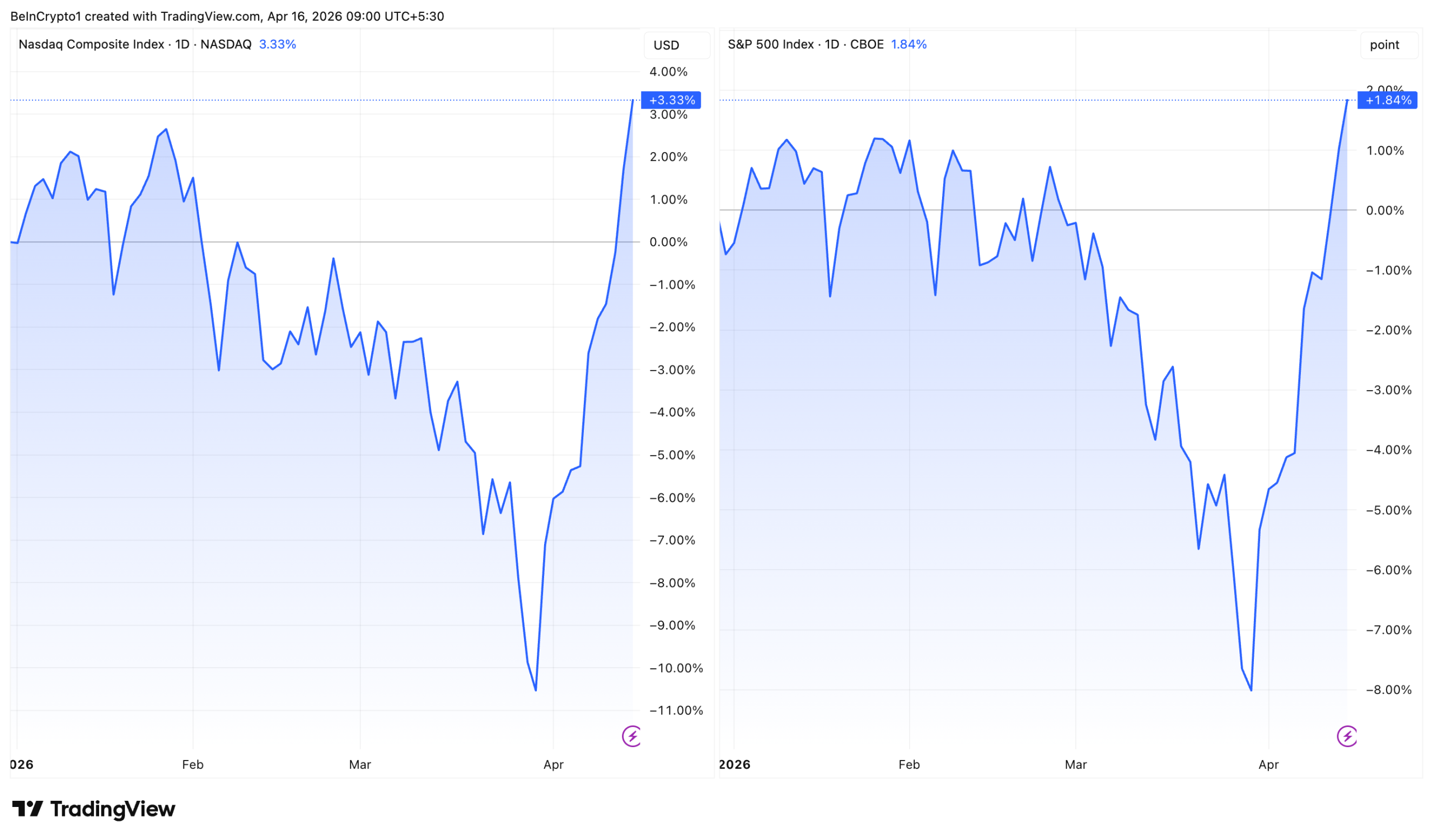
The stock market has staged a major rebound in April. The S&P 500 and Nasdaq hit fresh all-time highs this week, erasing all losses from the US-Iran conflict.
BitMine Chairman Tom Lee believes the US stock market is now in a better position than when it hit its previous all-time high earlier this year. He outlined three reasons for his stance during an appearance on CNBC’s Closing Bell.
US Stock Markets Absorb Oil Shock
According to market data, the S&P 500 closed at 7,022.95 on April 15, surpassing its previous record from January 28. The Nasdaq finished at 24,016, marking a new record high.
This recovery came after the S&P had fallen as much as 9% from its January peak amid the war’s rattling of global markets. Now, both indices have turned positive for the year after notable losses in March.
Lee pointed to the resilience as evidence that US equities can absorb oil price surges that are crippling other economies. Oil spiked above $100 per barrel after the Strait of Hormuz was blockaded.
However, prices have since retreated as markets have grown cautiously optimistic about a de-escalation in tensions between the United States and Iran.
“I know this is going to sound counter to what other the viewers might think but I think the stock market is in a better position today than earlier this year when it made its all-time high because one, we’re now seeing that the US stock market can handle a surge in oil while it hurts other countries,” Lee stated.
Follow us on X to get the latest news as it happens
His second point focused on corporate earnings. Lee said earnings have risen since the conflict began, which gives the market confidence that the war is actually stimulating the US economy rather than dragging it down.
“Stocks are holding up because the economy’s actually doing better in the face of this war. And I know it sounds counterintuitive, but part of it is the defense spending, you know, at $30 billion a month. And it may end up being, you know, $60 billion a month. That’s actually quite stimulative to the economy. This $20 rise in oil is only adding about 12 billion a month to the household burden. So on a net basis, the war is actually helping earnings right now,” Lee said during another appearance at CNBC.
Lee’s third argument centers around the consensus that surging oil prices will trigger a severe inflation shock.
“Looking back at the history of oil spikes, the impact on core is less than we thought. So I think there may be less of an inflation shock coming,” the executive argued.
He maintains a base-case S&P 500 target of 7,300 for the year, suggesting additional upside of roughly 4% from current levels.
Subscribe to our YouTube channel to watch leaders and journalists provide expert insights
The post Tom Lee Lists 3 Reasons the Stock Market Is in a “Better Position” Than at Its Early 2026 Peak appeared first on BeInCrypto.


Ripple said this week it had partnered with Kyobo Life Insurance, one of Korea’s largest life insurers, to tokenize government bond settlement using the firm’s Ripple Custody platform, per a release shared with CoinDesk.
The arrangement is Ripple’s first with a Korean insurance institution and is positioned as a step toward compressing Korea’s standard T+2 bond settlement cycle into near real-time execution.
The announcement does not specify transaction sizes, a go-live date, or which Korean government bond series will be settled on-chain. Both parties describe the arrangement as a strategic partnership that will also “assess the technical and regulatory feasibility” of broader tokenized treasury settlement, language that typically indicates a pilot framework rather than production infrastructure.
Kyobo Life will also explore stablecoin-based payment rails through Ripple, the release said, without specifying the stablecoin or timelines.
The deal adds to a growing set of institutional tokenization efforts across Asia, where regulators in Korea, Japan, Hong Kong, and Singapore have moved faster than U.S. counterparts in building frameworks for regulated digital asset activity.
Korea has licensed payment providers for remittance since 2017 and has emerged as one of the region’s more active markets for regulated crypto adoption, with local exchanges among the highest-volume in the world and recent regulatory movement toward won-denominated stablecoins.
For Ripple, the Kyobo partnership extends a push into Asian institutional infrastructure that has accelerated since the SEC dropped its lawsuit against the company in 2024.
The firm has announced custody and payment partnerships across Japan, Singapore, and the UAE over the past 18 months, positioning Ripple Custody as a settlement layer for regulated financial institutions rather than a retail-facing product.
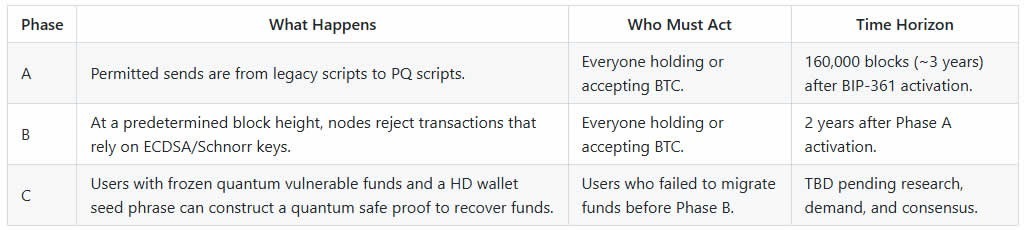
BitMEX Research has proposed an alternative to freezing quantum-vulnerable dormant Bitcoins, advocating a wait-and-see approach and a “canary fund” with a quantum bounty instead.
BitMEX Research proposed a soft fork on Thursday that would only activate a full freeze of vulnerable coins if it is “proven that a quantum computer capable of stealing Bitcoins actually exists.”
The system uses a “canary approach,” creating a special Bitcoin (BTC) address using a “Nothing-Up-My-Sleeve Number” (NUMS). This is a cryptographic proof in which the private key is unknown, but it is a valid address that could theoretically be spent by a powerful enough quantum computer.
Users can donate BTC to this address as a bounty, incentivizing any quantum-capable actor to “ring the alarm” by spending from it. Only if someone spends from this canary address does the freeze automatically activate, as it proves the quantum threat is real.
The solution provides an alternative mechanism to the BIP-361 proposal on Tuesday that suggested freezing dormant, quantum-vulnerable Bitcoin to prevent it from being stolen by bad actors in the future.
BIP-361 drew significant community pushback, with some comments calling it “authoritarian” and “confiscatory.”
Canary watch state prevents automatic freeze
BitMEX’s proposed “canary watch state” would still allow old coins to be spent, provided malicious actors using quantum computers do not attempt to steal from the “canary fund.”
Investors participating in the canary fund can use multisignatures and withdraw their BTC at any time, it explained.
There is also a safety window where quantum-vulnerable transactions could still be allowed after the five-year mark proposed in BIP-361, but with outputs locked for a period.
Related: Bitcoiners propose freezing quantum-vulnerable coins in BIP-361
“While this approach adds complexity and risk, given how controversial any coin freeze is, mitigating the impact of the freeze using this type of system may be worth consideration.”
BIP-361 is a rough idea for a contingency plan
Meanwhile, BIP-361 co-author Jameson Lopp has said his Bitcoin improvement proposal was more of a “rough idea for a contingency plan” than something ready to be proposed for activation.
“I know folks don’t like it. I don’t like it myself. I wrote it because I like the alternative even less,” he wrote on X on Wednesday.
He told Cointelegraph that it was a “rough sketch” to approach the issue of a “looming circulating supply shock” if quantum computing advances to the point that a post-quantum signature scheme achieves consensus for being added to Bitcoin.

Magazine: Nobody knows if quantum-secure cryptography will even work


Circle CEO Jeremy Allaire ruled out issuing a Korean won stablecoin for now, but called a privately led KRW token “essential” and said Circle will expand in South Korea once clear rules are in place.
Summary
- Circle CEO Jeremy Allaire says the firm has “no plans” to issue a Korean won stablecoin.
- Allaire still calls a won‑pegged stablecoin “essential” and wants to support local issuers with Circle’s tech stack.
- Circle could apply for a license and set up a Korean unit if lawmakers finalize a stablecoin framework that admits foreign players.
Circle CEO Jeremy Allaire has ruled out issuing a Korean won‑pegged stablecoin for now, even as he pushes to deepen Circle’s presence in South Korea and backs the idea of a locally led KRW token as “essential” for the country’s competitiveness. Speaking at a press conference in Seoul and in comments reported by DL News and local outlets, Allaire said he does not “believe Circle would issue a Korean won stablecoin,” but stressed that the company is closely watching pending legislation and is ready to expand “within the local compliance framework” if the rules open the door to global firms.
Allaire’s stance reflects a strategic split between issuance and infrastructure. He has argued that a won‑denominated stablecoin is needed and should be linked with Circle’s dollar‑backed USDC, but insists that the actual KRW token will likely come from a consortium of Korean banks, fintechs and digital‑asset companies rather than Circle itself. “We may find ways to partner with Korean won issuers, and to be supportive of these emerging consortiums as they look to build Korean digital currencies,” he said, positioning Circle as a technology provider rather than a direct competitor to domestic issuers.
Circle is already the issuer of USDC, one of the world’s largest dollar stablecoins, and has been stepping up its Korean outreach as the country finalizes a stablecoin framework under the broader Digital Asset Basic Act. As reported by KuCoin, both Circle and Tether have expanded local operations ahead of rules that could require overseas issuers of won‑pegged stablecoins to establish a local branch and maintain 100% reserve backing, with larger issuers designated as “significant digital payment tokens.”
Instead of a KRW coin, Allaire is offering Circle’s infrastructure as the backbone for future Korean stablecoins. He has highlighted the firm’s Arc blockchain, a network “specifically designed for stablecoin transactions,” and the Circle Payments Network, which he says can connect traditional rails to on‑chain payments and support local institutions that choose to issue their own tokens. During his Seoul visit, Allaire also signed new USDC distribution partnerships with Korean firms and told local media that “currencies without a stablecoin will be left behind in future competition,” underscoring why he sees a privately led won stablecoin as inevitable even if Circle is not the one minting it.
For Circle, the bet is that USDC and its underlying technology can become the default settlement layer linking any future KRW stablecoin to global liquidity, much as dollar tokens already serve as the main bridge for South Korean exchanges and remittance platforms. In previous crypto.news coverage of stablecoin regulation and Asia’s digital money race, that kind of infrastructure‑first strategy has been framed as a way for global issuers to stay relevant in tightly regulated markets without clashing head‑on with local monetary politics, a balance Circle is now trying to strike in Seoul in this story, this story and this story.


The CFTC is investigating trades that took place before the US delayed strikes on Iranian energy infrastructure on March 23 and agreed to a ceasefire with Iran on April 7.
The US Commodity Futures Trading Commission is reportedly investigating suspicious oil trades that were placed ahead of certain announcements made by the Trump administration relating to the Iran war.
According to a Bloomberg report on Wednesday, the CFTC’s probe focuses on trading activity on CME Group’s NYMEX and the Intercontinental Exchange’s futures platforms.
The regulator is also requesting “Tag 50” identity data from exchanges to assist with the investigation. Tag 50 data is widely used for auditing and regulatory compliance checks.
The investigation into the futures trading platforms comes in parallel with the rising scrutiny of insider trading in prediction markets.
Bloomberg said the CFTC is reviewing at least two instances over a two-week period in which oil trading volumes surged shortly before the Trump administration made announcements related to the Iran war.
The first of those occurred on March 23, when billions of dollars in futures traded about 15 minutes before US President Donald Trump postponed plans to strike Iranian energy infrastructure.
The second instance occurred around two weeks later, on April 7, when Trump announced a two-week ceasefire on Iran, Bloomberg said.
The trading spikes contributed to falling oil prices and rising equity prices.
“There’s enormous appetite to pursue cases like this,” said Brian Young, a partner at law firm Jones Day who previously served as director of the CFTC’s enforcement division.
“After all, prices at the pump closely correlate to oil futures contracts, so we’re talking about American pocketbooks at stake here.”
Action to stop insiders in prediction markets
On March 31, the CFTC’s current enforcement director, David Miller, warned that they are keeping a close eye on prediction market insider traders and that they will face action when caught.
“There’s a myth in mainstream media and social media that insider trading doesn’t apply in the prediction markets … That is wrong.”
Related: Kalshi to create ‘portal for parents‘ on prediction markets: Report
Mounting pressure from Democratic lawmakers on prediction markets has also seen both Kalshi and Polymarket introducing new rules to stamp out insider trading.
The Public Integrity in Financial Prediction Markets Act of 2026 was also introduced in late March to curb insider trading by government officials.
Magazine: Should users be allowed to bet on war and death in prediction markets?
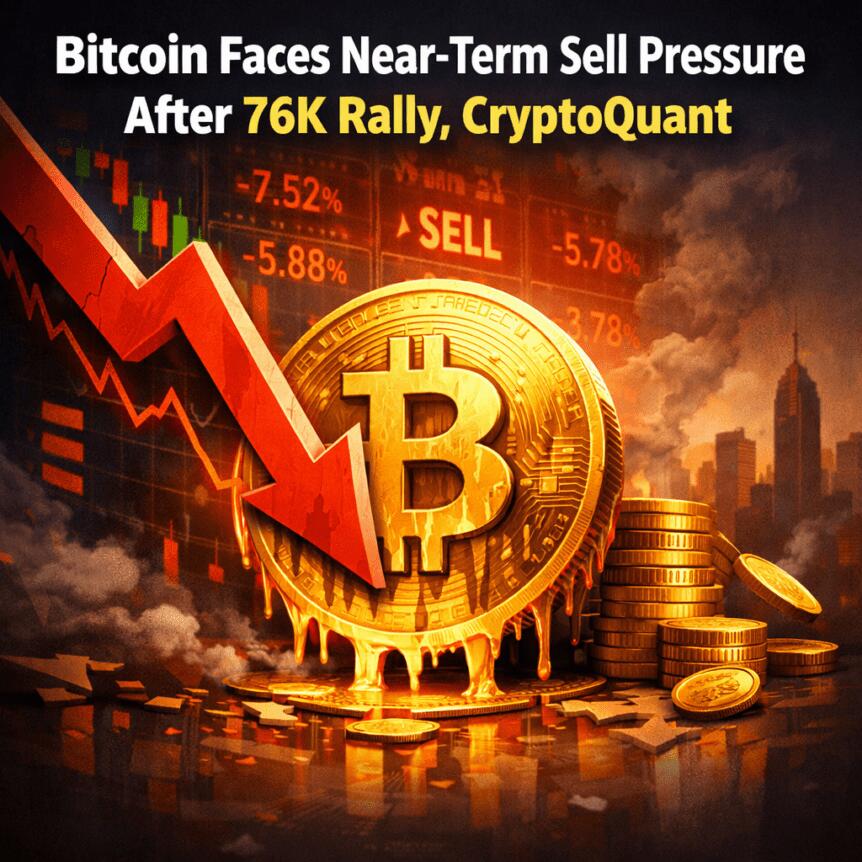
Bitcoin moved above $76,000 on Tuesday as on-chain data pointed to a spike in exchange deposits, a setup that historically signals near-term selling pressure. CryptoQuant reported a surge in BTC inflows to exchanges, with hourly volumes climbing to 11,000 BTC—the strongest pace since December—as traders prepared for potential distribution at resistance zones.
CryptoQuant described the combination of rising inflows and a rising average deposit size as a warning signal: holders are moving coins to exchanges in anticipation of selling. The study notes the average deposit size rose to 2.25 BTC, the highest since July 2024, echoing a pattern seen earlier this year when deposits peaked and BTC retraced from a nearby peak. The price level also aligned with a notable milestone, as Bitcoin traded around $76,000, a level that has historically drawn scrutiny from market participants.
Bitcoin briefly touched $76,052 on Coinbase on Tuesday, marking its highest level since early February and underscoring the ongoing tension between risk appetite and potential distribution as the rally unfolds.
CryptoQuant highlighted that as Bitcoin approaches its $76,800 realized price, this metric could act as a ceiling for relief rallies. Traders nearing breakeven on their holdings may be incentivized to sell, potentially capping further upside. The analysis notes a similar dynamic in January, when Bitcoin hit its realized price and the price subsequently reversed.
The data also points to profit-taking dynamics as a potential constraint on momentum. CryptoQuant indicated that daily realized profits remain in a range that, while robust, has not yet breached the $1 billion mark—the level historically associated with tops or near-tops in price. If Bitcoin rallies beyond the $76,000 level or toward the $76,800 realized price, daily realized profits could push above $1 billion, a threshold that has historically coincided with increased selling pressure and the risk of a stall or reversal.
For context, market participants have been watching the macro backdrop for catalysts. Some investors had pinned hopes on a renewed rally as geopolitical tensions in the Middle East appeared to ease. Still, the on-chain signal of rising exchange deposits suggests a non-trivial possibility of profit-taking pressure even amid constructive price action.
Key takeaways
- Exchange BTC inflows surged to about 11,000 BTC per hour, the strongest pace since December, as Bitcoin traded above $76,000.
- The average deposit size rose to 2.25 BTC, the highest since July 2024, signaling more coins moving toward exchanges.
- Bitcoin nears a realized price around $76,800, which CryptoQuant cautions could act as a selling ceiling for rallies.
- Profit-taking remains potentially constructive but not yet at the historically critical $1 billion daily realized profit level; crossing that threshold could imply higher selling pressure.
- Despite a broader risk-on backdrop, on-chain dynamics suggest the rally may face selling pressure near key resistance, warranting close watch on inflows and realized-profit metrics.
Rising deposits and the tug of realized price
The heart of the current signal lies in exchange flow patterns. When investors move BTC to exchanges in larger-than-usual volumes, the market often anticipates distribution ahead of resistance zones. CryptoQuant’s analysis points to the combination of higher hourly inflows and an increasing average deposit size as a historically reliable warning signal for near-term selling pressure. In practical terms, those who bought in the earlier part of the rally may seek liquidity once they reach break-even or slightly green territory, which can cap further upside momentum in the short term.
The price action around $76,000 to $76,800 appears particularly consequential. The realized price—the average cost basis of coins currently held—but often serves as a dynamic upper limit during rallies. As buyers approach breakeven zones tied to that metric, the incentive to cash out grows, potentially leading to a pause or a pullback even in a broader bullish context. This pattern mirrors earlier episodes where the realized price functioned as a resistance barrier, culminating in a price reversal when selling pressure intensified.
While the near-term setup suggests a cautious stance, the broader implication for investors is nuanced. On the one hand, the sustained price above $76,000 signals ongoing demand and a willingness to buy in a rising market. On the other, the on-chain indicators imply a non-trivial risk of a short-lived pullback if profit-taking accelerates around the realized-price threshold. In a market where liquidity and sentiment can shift rapidly, traders may position accordingly, balancing upside targets with the risk of a renewed consolidation phase.
Looking ahead, traders and builders should monitor two imputed signals: the persistence of exchange inflows, and whether daily realized profits cross the $1 billion mark. A sustained rise in either metric could tilt the balance toward a more pronounced pullback, while a cooling of inflows or a pause near the realized price could embolden further upside attempts. As always, macro headlines and regional risk factors can tip the scales quickly, so an integrated view remains essential for navigating BTC’s next moves.
Readers watching for next steps should track whether the flow of coins to venues continues to intensify or ease, and how long the price can sustain levels near the realized price without triggering additional selling pressure. The coming days will reveal whether this cycle yields another brief rally or a more durable consolidation, shaped by on-chain dynamics and market sentiment alike.


Crypto’s derivatives desks still want downside protection, QCP says, and long-end yields and gold aren’t confirming the risk-on move.


AI agent ‘Valerie’ now runs a San Francisco vending machine on OpenClaw, testing how far people will trust code with pricing, marketing and real‑world cash.
Summary
- AI agent “Valerie” runs a physical vending machine in San Francisco using the OpenClaw framework, setting prices, naming products, and managing cash flow.
- Built by developer Chris van der Henst at Frontier Tower, the machine tracks sales on a live dashboard and even raises prices when demand is strong.
- The experiment showcases both the commercial potential and security risks of autonomous AI agents that can access bank accounts and execute real‑world transactions.
An AI agent called Valerie is now operating a real vending machine in San Francisco, autonomously deciding what to sell, how much to charge, and how to market products using the open‑source OpenClaw framework.
The machine, installed at the AI‑heavy Frontier Tower building, has been described as “an AI agent… running an actual physical vending machine,” with “no human in the loop,” according to posts amplifying the installation on X.
Developer Chris van der Henst, known as @cvander on X, built the system so that OpenClaw acts as the vending operator “decides what to sell, names the products, sets the prices, creates the ads, and tracks every sale.”
Valerie’s behavior has already highlighted how autonomous agents respond to market signals, with one widely shared post noting that “it even put the prices way up, and justified it because people kept buying,” while also “runs her own Instagram and controls her own bank account.”
OpenClaw itself has quickly become one of the most prominent agent frameworks in crypto‑adjacent circles since its public release in November 2025, amassing more than 250,000 GitHub stars and an estimated 300,000 to 400,000 users as it spreads from developers to Web3 firms.
Nvidia CEO Jensen Huang has called OpenClaw “probably the single most important release of software… probably ever,” arguing that “every company needs a strategy” for agentic systems as they evolve into a new layer of business infrastructure.
Yet security researchers warn that the same tools enabling Valerie to monitor sales and move money can also expose users to “unauthorized actions, data exposure, system compromises and drained crypto wallets,” with audit data showing over 130,000 internet‑exposed OpenClaw instances and more than 280 security advisories and 100 CVEs since launch.
According to cybersecurity firm CertiK, the rise of agents like Valerie is forcing developers and regulators to confront what happens when code that can “autonomously take actions on users’ computers” is wired directly into payments, banking apps and crypto wallets, making experiments like the Frontier Tower vending machine an early test case for how far people are willing to let AI run the till.
Crypto World
Bitcoin devs float ‘quantum tripwire’ that triggers coin freeze only if attack is proven


Bitcoin developers are debating a radical change to how the network would respond to a future quantum computing threat: don’t freeze vulnerable coins unless someone proves the threat is real. But there’s a catch: The proposal assumes the attacker will reveal capability for a bounty instead of maximizing profit through theft.
A proposal published this week by BitMEX Research outlines a “canary” system that would trigger a network-wide restriction on older bitcoin wallets only if a quantum-capable attacker demonstrates it on-chain, replacing earlier plans to impose a pre-scheduled freeze years in advance. At its core, the proposal is a “wait and react” strategy.
It works by placing small number of bitcoin into a special address that only a quantum-capable attacker could unlock, with any spend from that address serving as public proof that the threat has arrived and automatically triggering a network-wide freeze of older wallets.
Bitcoin wallets rely on digital signature schemes that are secure against classical computers but could be broken by advances in quantum computing, and a recent Google research paper lowered estimates for the resources required, with some observers now pointing to the end of the decade as a potential risk window.
The approach is designed as an alternative to BIP-361, a controversial proposal that would impose the same restrictions on a fixed five-year timeline regardless of whether quantum computers are actually capable of attacking Bitcoin’s blockchain. BIP-361 would phase out vulnerable addresses over several years before invalidating the old signature schemes entirely, leaving any unmigrated coins permanently frozen.
Critics have called that outcome “authoritarian and confiscatory,” arguing it undermines Bitcoin’s core principle that control rests solely with private key holders.
Layered atop the of BitMEX’s detection mechanism is a financial incentive. Users could contribute bitcoin to the address, creating a bounty that rewards the first entity to demonstrate a quantum attack publicly rather than quietly drain vulnerable wallets. Contributors would not need to give up their funds permanently, as the structure allows withdrawals at any time.
The proposal also introduces a “safety window” designed to make stealth attacks harder. Vulnerable coins could still move, but the recipient would be unable to spend them for an extended period, potentially around a year. If the canary is triggered during that window, those coins would be frozen retroactively, increasing the risk to any attacker attempting to quietly extract funds.
There’s a catch
The canary reduces the risk of disrupting users prematurely, but it rests on an uncomfortable bet that the first entity capable of breaking Bitcoin would claim a bounty rather than execute what could be the largest theft in the network’s history and walkaway with millions of bitcoin.
That bet cuts against the kind of worst-case scenario Bitcoin’s design has always tried to prevent, and the network has historically shown little appetite for undoing such events after the fact. Ethereum’s response to the 2016 DAO hack, a hard fork that reversed the theft and split the network into Ethereum and Ethereum Classic, is the kind of protocol-level intervention Bitcoin’s culture has long resisted.
If the bet fails, Bitcoin risks the worst of both worlds — the catastrophe it was trying to prevent, and the realization that a fixed-timeline defense would have stopped it.
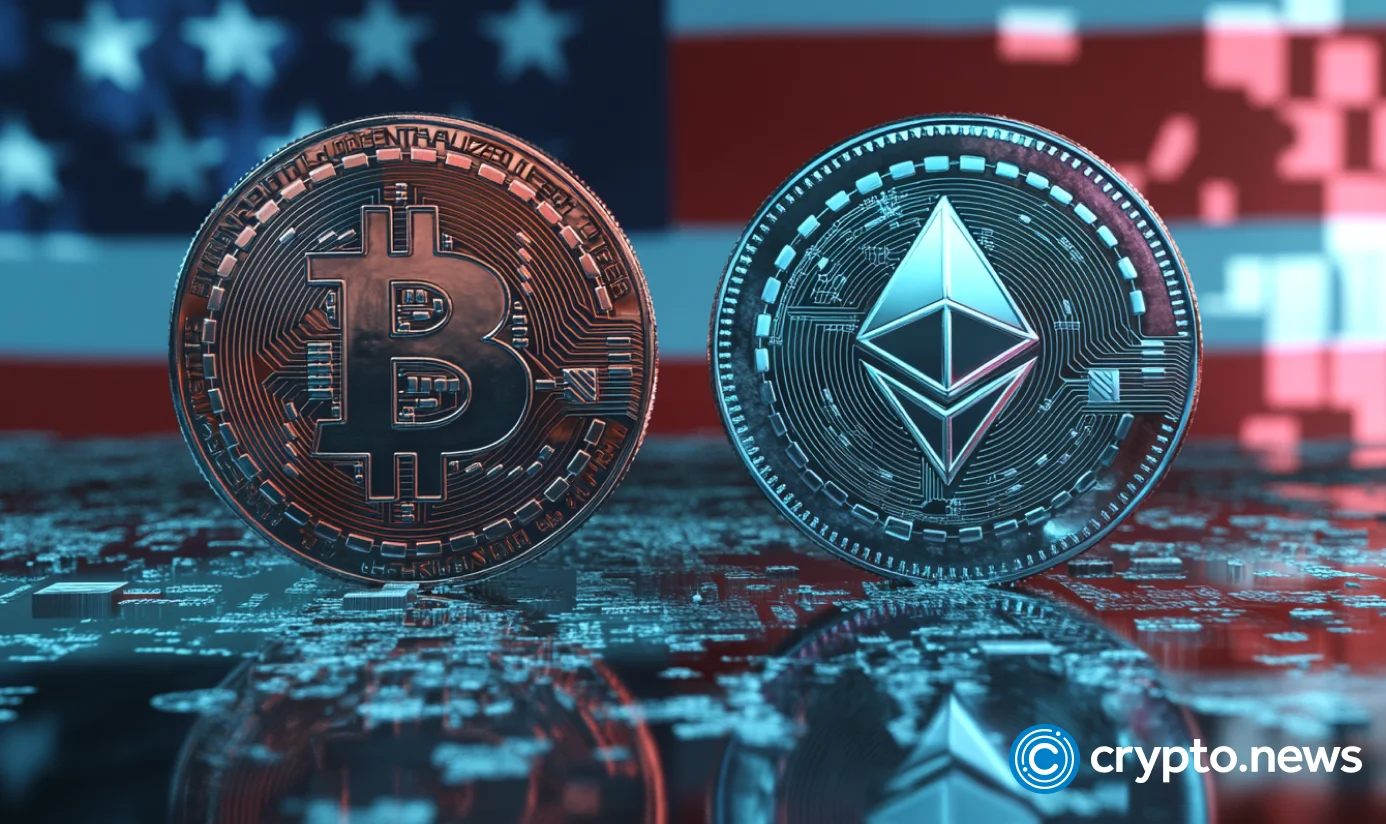
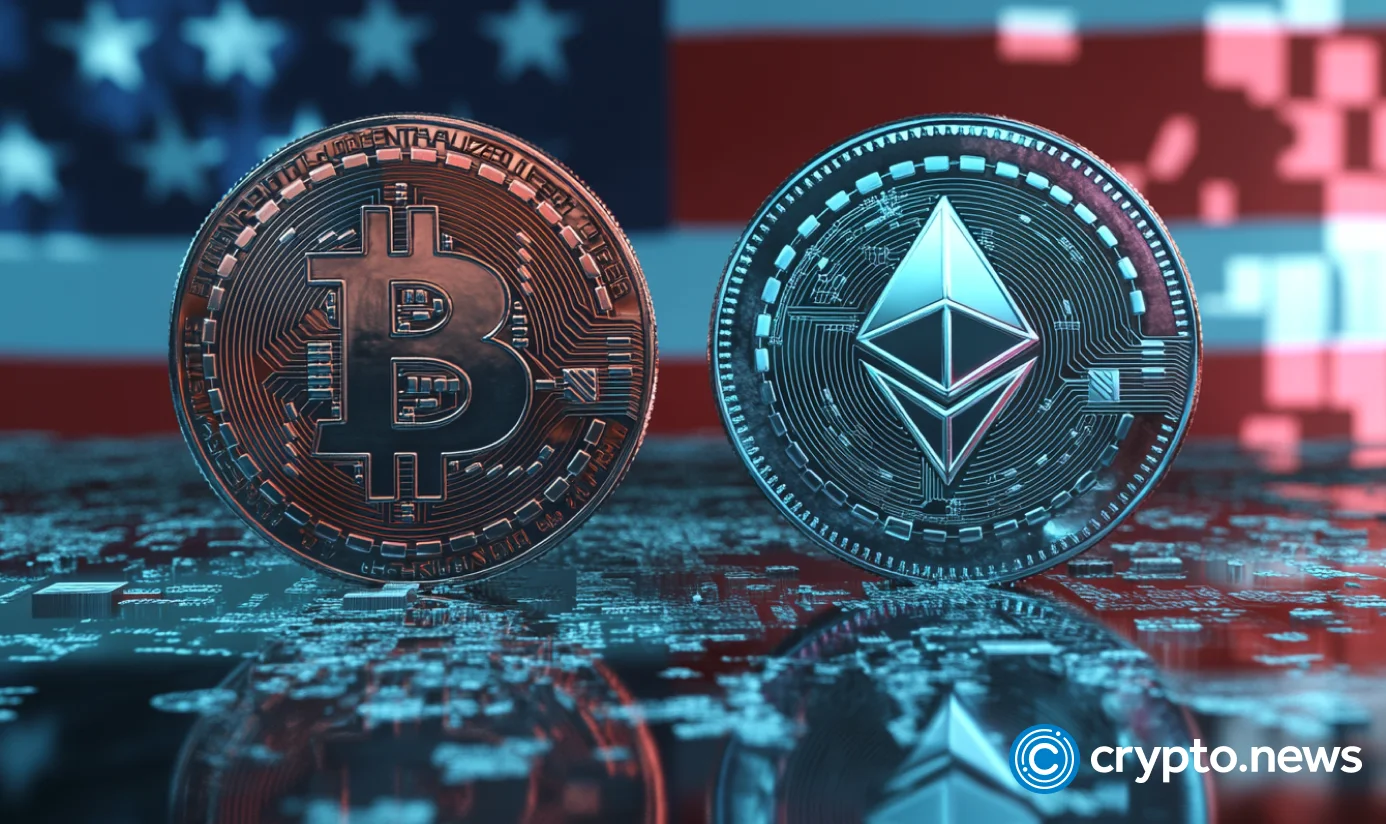
The ETH/BTC ratio climbed to 0.0313 on Wednesday, its strongest reading since January, as record Ethereum network activity and a $180 billion stablecoin milestone signal a potential shift in market momentum.
Summary
- The ETH/BTC ratio reached 0.0313, recovering from a 2026 floor of 0.028 in February, though it remains well below the January 18 peak of 0.038.
- Ethereum added 284,000 new users in Q1 2026, an 82% quarterly jump, while stablecoin supply on the network hit a record $180 billion.
- Analysts say a weekly close above 0.035 is required to confirm durable rotation into ETH rather than a short-term bounce.
The ETH/BTC ratio is making its clearest recovery move of the year. Ethereum gained 4% over the past seven days, narrowly outpacing bitcoin’s 3.9% gain over the same period, with the ratio recovering from prior lows and pushing to its best level in three months.
The move is backed by concrete on-chain data. Ethereum added 284,000 new users in Q1 2026, an 82% quarterly jump, while stablecoin supply on the network reached an all-time high of $180 billion, a 150% increase over three years.
Ethereum now holds roughly 60% of the global stablecoin market, reinforcing its position as the primary settlement layer for tokenized dollars. That concentration of real economic activity gives ETH a structural demand base that extends beyond price speculation.
The ETH/BTC ratio spent much of 2026 at depressed levels as bitcoin ETF-driven demand kept capital anchored in BTC. The current bounce suggests that rotation may be beginning, though analysts urge caution before calling it a confirmed trend. CoinMarketCap analyst CryptoAnu noted the ratio must reclaim 0.035 on a weekly closing basis to signal genuine altcoin rotation rather than a short-lived squeeze, adding that the Pectra upgrade is “finally being felt in 2026 with over 30% of supply now staked and locked away.”
The Level That Has to Break
The ETH/BTC pair peaked above 0.08 in late 2021, then entered a prolonged slide through 2024 and 2025 driven by weakened Ethereum base-layer fee revenue, the Dencun upgrade’s impact on mainnet activity, and sustained bitcoin ETF dominance. The 2026 floor of 0.028, set in February, is now being left behind.
Analyst Ledgix described the current outperformance as “a signal to observe” rather than chase, noting that when flows begin rotating in the crypto market, ETH is typically the first major recipient given its ecosystem depth, staking yield, and growing institutional footprint.
Where ETH Stands Despite the Bounce
ETH is still more than 50% below its 52-week high of $4,831. Near-term resistance sits at $2,400, with $2,500 as the next significant test above that. In ratio terms, 0.035 is the weekly close that would shift the technical picture from bounce to breakout. Until that level is reclaimed, the recovery remains fragile.

Tom Lee Lists 3 Reasons the Stock Market Is in a “Better Position” Than at Its Early 2026 Peak

Down under stunnah targets 2026 ipswich win from morrison’s new yard

Predator jailed for sexually abusing children dies behind bars


-

 Politics5 days ago
US brings back mandatory military draft registration
-
 Sports5 days ago
Man United discover Nico Schlotterbeck transfer fee as defender reaches Dortmund agreement
-

 Fashion5 days ago
Weekend Open Thread: Veronica Beard
-

 Politics6 days ago
Malcolm In The Middle OG Turned Down ‘Buckets Of Money’ To Appear In Reboot
-

 Politics4 days ago
World Cup exit makes Italy enter crisis mode
-

 Crypto World7 days ago
Canary Capital Files SEC Registration for PEPE ETF
-

 Business5 days ago
Tesla Model Y Tops China Auto Sales in March 2026 With 39,827 Registrations, Beating Cheaper EVs and Gas Cars
-

 Crypto World2 days ago
The SEC Conditionalises DeFi Platforms to Be Avoided for Broker Registration
-

 Crypto World2 days ago
SEC Signals Exemption for Crypto Interfaces From Broker Registration
-

 News Videos21 hours ago
Secure crypto trading starts with an FIU-registered
-
 NewsBeat3 days ago
Pep Guardiola and Gary Neville agree over Arsenal title problem that benefits Man City
-

 Business6 days ago
OpenAI Halts Stargate UK Data Centre Project Over Energy Costs and Copyright Row
-

 Business5 days ago
Ireland Fuel Protests Enter Day 5 as Blockades Spark Shortages and Government Prepares Support Package
-

 Crypto World5 days ago
Federal judge blocks Arizona from bringing criminal charges against Kalshi
-

 Politics6 days ago
LBC Presenter Mocks Trump Over Iran War Failures
-
 NewsBeat4 days ago
JD Vance announces ‘no agreement’ with Iran over nuclear weapons fear
-

 Crypto World2 days ago
SEC Proposes Certain Crypto Interfaces Don’t Need to Register as Brokers
-

 NewsBeat2 days ago
Trump and Pope Leo: Behind their disagreement over Iran war
-

 Tech6 days ago
A version of Windows 10 released a decade ago is now eligible for additional security patches
-

 Business5 days ago
IMF retains floor for precautionary balances at SDR 20 billion
You must be logged in to post a comment Login