
Crypto World
Slovenia joins EU’s MiCA stablecoin register with first issuer

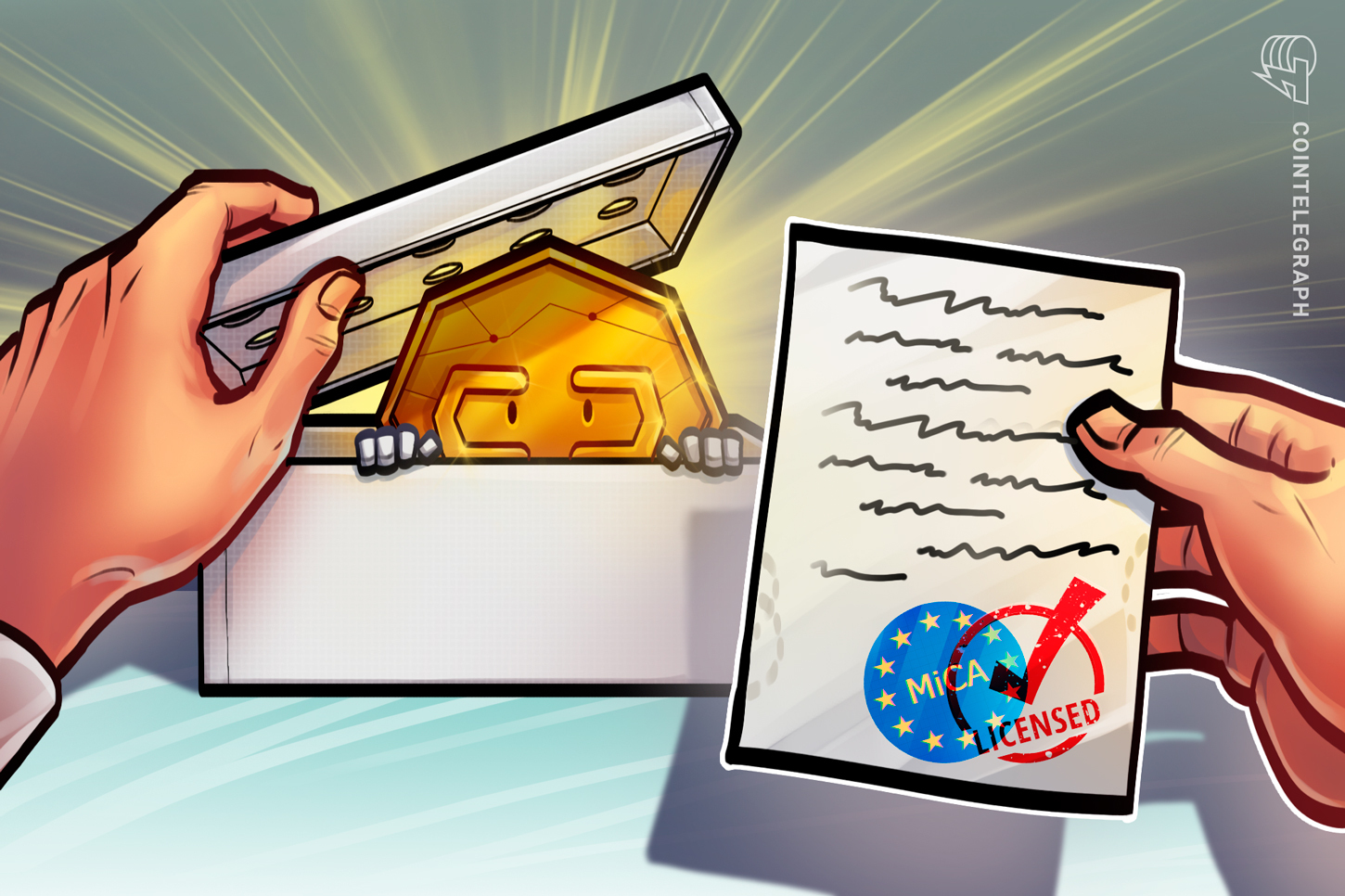
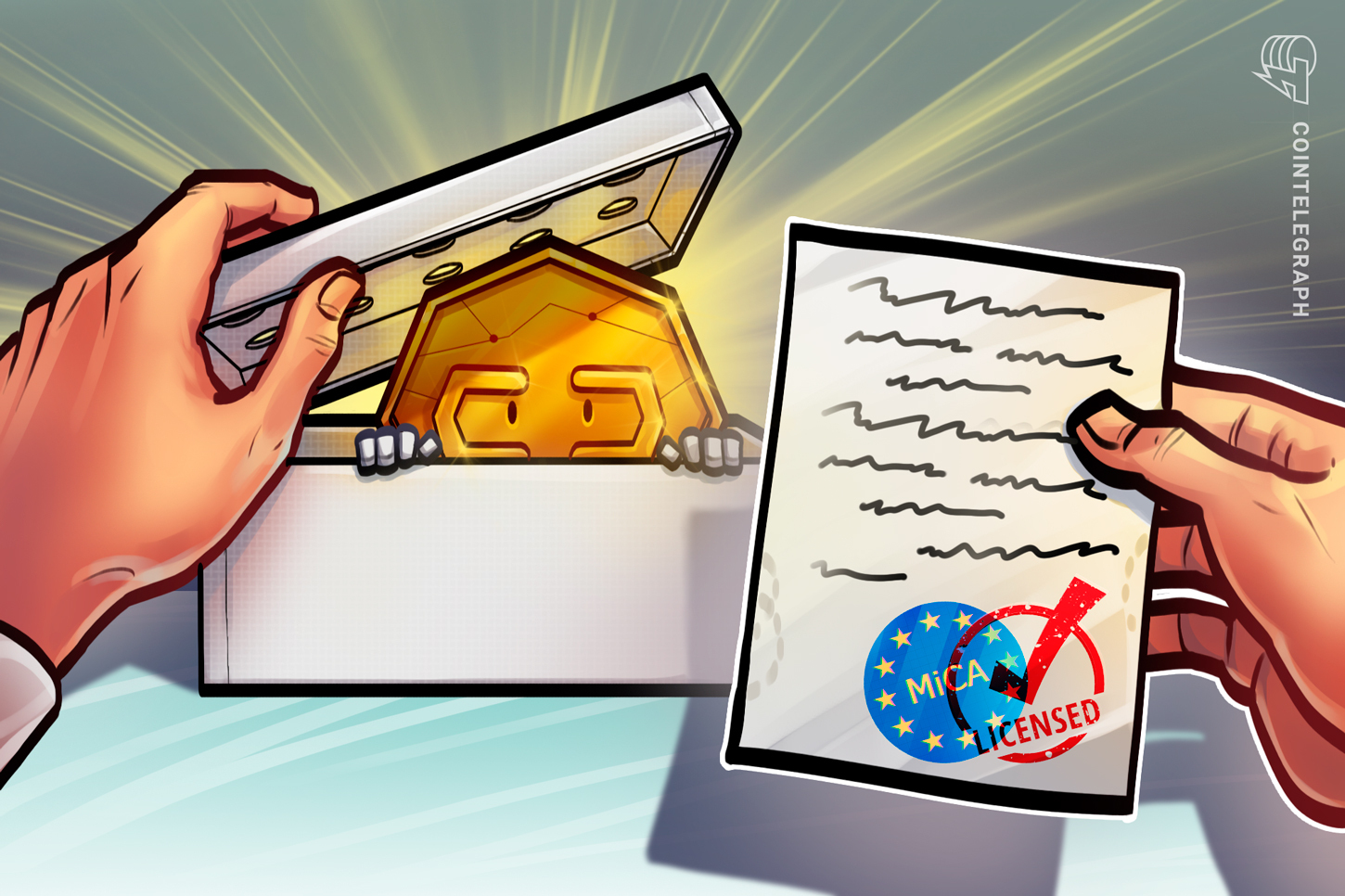
Slovenia entered the EU’s MiCA stablecoin register through electronic money institution Dinaro, as the update also added two new CASPs.



Five years after El Salvador made Bitcoin legal tender, the experiment has fallen short of its original promises for locals, but it’s been great for Bitcoin’s global profile.


Tokyo-listed bitcoin holder Metaplanet isn’t dumping its bitcoin bags.
Company CEO Simon Gerovich moved quickly to dismiss reports of a massive sale, clarifying that Wednesday’s large BTC transfer, flagged by blockchain trackers, was merely a “routine custody transfer” and not a liquidation.
“We transferred 5,014 BTC between Metaplanet custodial addresses over the past 24 hours. This was a routine custody operation. No bitcoin was sold, and our holdings remain 43,000 BTC,” Gerovich said.
On Wednesday, data tracking firms flagged the movement of 5,014 BTC, worth $320 million at the going spot price, from wallets linked to the firm. That sparked a speculation that the firm was preparing to sell those coins.
These so-called digital asset treasury firms, led by industry giant Strategy, has come under the microscope recently as investors watch for any sign of these major corporate holders trimming their positions to lock in gains or manage balance sheet risk.
Strategy has been selling portions of its BTC holdings to fund dividends on its preferred stock, repurchase STRC preferred shares and replenish its U.S. dollar reserve.

ASX shareholder Rosherville Pty Ltd has notified the Australian Securities Exchange that it plans to seek Federal Court permission to pursue certain former officers and directors over the failed CHESS replacement project.
Summary
- Rosherville plans to seek Federal Court approval to sue ASX officers and directors over CHESS.
- ASX says the proposed derivative action contains no allegations against the exchange itself at present.
- Federal Court ordered ASX to pay A$20.5 million over its earlier misleading CHESS project statement.
- ASX scrapped the original distributed ledger system after writing off A$245 million to A$255 million.
- ASX replacement Release 1 launched in April while Release 2 is currently planned for 2029.
ASX disclosed the proposed statutory derivative action on Aug. 12, less than six weeks after the exchange was ordered to pay an A$20.5 million penalty in a separate regulatory case over the same project.
The exchange said Rosherville alleges breaches of directors’ duties connected with the previous project. ASX stressed that the proposed action contains no allegations against the company itself. Its announcement does not identify the former officials, detail their alleged breaches or state what remedies Rosherville intends to pursue.
ASX shareholder must clear five court conditions
Rosherville proposes to proceed under sections 236 and 237 of Australia’s Corporations Act. A statutory derivative action allows an eligible shareholder or officer to bring proceedings on a company’s behalf, but only after receiving court permission.
Under the law, the court must be satisfied that the applicant is acting in good faith, that granting leave is in the company’s best interests and that there is a serious question to be tried. The court must also be satisfied ASX probably will not pursue the proceedings itself. Written notice generally must be provided at least 14 days before an application, although the court can excuse that requirement in appropriate circumstances.
The disclosure therefore represents an intended court action rather than an approved lawsuit. ASX has not announced a hearing date, and the Federal Court has not yet determined whether Rosherville can proceed against the unidentified former officials.
A$20.5 million penalty already settled ASX’s own case
The shareholder move adds a potential individual accountability question to a project that has already resulted in corporate penalties. On July 3, Justice Markovic ordered ASX to pay A$20.5 million and another A$3 million toward ASIC’s costs after the exchange admitted misleading conduct.
The case centered on ASX’s February 2022 statement that the replacement project was “progressing well.” Court records show the project was internally rated red, was no longer on its critical path toward an April 2023 launch and had opened testing environments with reduced scope or performance. The court found the representation was misleading.
ASX later paused the distributed ledger project and derecognised approximately A$245 million to A$255 million in pretax project costs. ASIC’s June release also confirmed the exchange had admitted breaches of Australia’s ASIC Act.
The governance questions extend beyond the court case. An ASIC inquiry published in April found weaknesses across ASX governance, risk management and technology oversight. Regulators are now supervising a broader reform program, including changes to clearing and settlement governance and a A$150 million capital charge scheduled by June 2027.
Failed blockchain project had a U.S. technology link
The failed system also had a direct U.S. connection. ASX selected Digital Asset Holdings to develop the distributed ledger technology, and Digital Asset currently maintains an office in New York. The Federal Court judgment records that ASX confirmed in 2017 that Digital Asset would develop the replacement system.
As crypto.news reported during the project’s earlier stages, the exchange partnered with Digital Asset and VMware as it worked toward a distributed ledger based clearing and settlement platform. Earlier reporting also documented a six month delay to the blockchain rollout as industry participants raised concerns about the implementation timetable.
Digital Asset remains active in U.S. institutional blockchain infrastructure and announced a $355 million funding round in June 2026. The current shareholder dispute, however, concerns alleged duties of former ASX officials. ASX’s Aug. 12 notice makes no allegation against Digital Asset.
What happens next for ASX and Rosherville
ASX has already abandoned the original blockchain architecture and moved to Tata Consultancy Services’ BaNCS platform. Release 1, covering clearing services, went live on April 20. The exchange says that service continues to operate normally.
Release 2 will handle settlement and subregister services and is currently planned for 2029, with ASX targeting completion of its primary technology build by the end of 2027. The latest project update says further Release 2 testing and development remained underway in July and August.
For Rosherville, the immediate step is obtaining Federal Court leave. Until that happens, the claims against former officers and directors remain allegations and have not been tested by a judge. ASX said it will provide further market updates under its continuous disclosure obligations.

A new federal lawsuit challenges Truth Social’s paid service for early access to presidential announcements. The service charges trading firms as much as $100,000 monthly. Meanwhile, plaintiffs argue that the system gives paying users faster access to public government information.
Lawsuit Targets Truth Social’s Paid Feed
The Intercept and Freedom of the Press Foundation filed the lawsuit Wednesday in Manhattan federal court. The complaint names President Donald Trump and seeks restrictions on his participation in Truth API. It also targets White House employees who may use the service to distribute official announcements.
Truth API gives subscribers faster access to selected posts from Trump and other Truth Social accounts. However, the plaintiffs argue that presidential messages should reach the public without paid delays. They say the service creates a separate information channel for customers who can afford its fees.
Trump Media launched Truth API on August 1 after announcing the service in July. The company designed the product for financial institutions and trading firms seeking faster information. Therefore, the service could give trading companies an advantage when presidential posts affect financial markets.
Constitutional Claims Raise Public Access Issues
The lawsuit argues that Truth API violates First Amendment protections by favoring paying subscribers. According to the complaint, news organizations and members of the public should receive equal access. The plaintiffs also challenge the government’s role in providing special access through a private platform.
The complaint further raises a Fifth Amendment claim over the financial condition attached to access. The plaintiffs argue that the government cannot require large payments for access to a public benefit. However, the court has not ruled on either constitutional claim.
Trump frequently uses Truth Social to announce decisions involving trade, foreign policy, and federal appointments. Some announcements can move markets because they reveal major policy changes or government actions. As a result, faster access can hold significant value for companies that trade financial assets.
Trump Media Ownership Adds Financial Dimension
The plaintiffs also point to Trump’s financial interest in Trump Media as part of their case. The Donald J. Trump Revocable Trust owns about 41.43% of Trump Media shares. Trump remains the trust’s sole beneficiary, and that holding has carried a value above $1 billion.
Trump Media launched Truth Social in 2022 after Trump founded the company in 2021. Since then, the platform has become a major channel for Trump’s direct public communication. The company has therefore gained importance as presidential announcements increasingly appear on the platform.
The lawsuit asks the court to stop Trump and White House employees from providing preferential access. It specifically targets the delivery of official announcements through Truth API’s paid system. The plaintiffs are represented by several legal groups, including the Yale Law School Media Freedom and Information Access Clinic.
The case now places Truth Social’s premium information model under federal scrutiny. Its outcome could influence how public officials distribute time-sensitive information through private platforms. Meanwhile, the dispute raises broader questions about equal access when presidential statements can affect markets.
Trump Media and the White House now face legal arguments over the service’s structure and public role. The court will determine whether the plaintiffs can establish the constitutional violations alleged in the complaint. Until then, Truth API remains a paid service that offers faster access to selected Truth Social posts.


Crypto valuations could at least double as protocols increasingly use revenue to fund token buybacks and burns, according to Bitwise Chief Investment Officer Matt Hougan.
On Wednesday, Hougan said crypto outside of Bitcoin is becoming a revenue-driven market in which network activity feeds into native-token value. He said investors have not priced in that change, leaving some crypto assets undervalued.
Hougan pointed to Hyperliquid, Uniswap, Aave, Pump.fun and Lighter, protocols that use fees to repurchase or remove tokens from circulation. He said he expects decentralized finance (DeFi) applications and layer-1 networks to adopt similar revenue-capture mechanisms over the next 12 to 24 months.
Stronger links between protocol revenue and token value could give investors conventional valuation metrics, Hougan said, adding that token holders lack shareholders’ legal claims to cash flow and that community-set tokenomics can change.
DeFi protocols turn fees into token demand
Hyperliquid, the decentralized exchange that generated over $800 million in revenue last year, uses about 99% of this to buy and burn HYPE. On Aug. 6, Hyperliquid reported $169 million in second-quarter revenue and directed $141 million toward HYPE buybacks.
Uniswap also linked revenue to its token after its “UNIfication” overhaul approved the activation of protocol fees to fund UNI burns on Dec.22, 2025. Under the mechanism, collected fees can be claimed by burning UNI, linking protocol activity to reductions in the token’s supply.
Related: Uniswap founder rejects claims v4 fees reduce LP earnings
Meanwhile, Aave DAO’s buyback program purchased more than 205,000 AAVE during its first 10 months. On June 25, Aave founder Stani Kulechov said the team was designing an automated, non-discretionary buyback mechanism.
“100% of Aave Protocol and GHO revenue goes to the $AAVE token. This was established in the Aave Will Win proposal,” Kulechov wrote.
Hougan attributed the shift to a more permissive regulatory environment in the US after years in which projects avoided revenue-sharing features over securities-law concerns. On Aug. 5, he said that regulatory guidance could allow crypto to keep expanding even without the CLARITY Act.
Magazine: Inside the fake crypto startup that fooled North Korean IT workers


More than three dozen bitcoin and crypto companies have asked the largest AI labs to give open-source security researchers early access to their most capable models, arguing that the people defending a trillion dollars of infrastructure are working with weaker tools than the people attacking it.
The letter, organised by the Bitcoin Policy Institute and published earlier this week is signed by Coinbase, Block, BitGo, Blockstream, Anchorage Digital, ARK Invest, Bitwise, Foundry, Casa, Exodus and others, alongside nonprofit developer funds including Brink, Chaincode and Btrust.
Its central complaint is specific that Bitcoin Core developers, the small group maintaining the software that runs the network, cannot get into the programs labs run for trusted security partners.
When they turn to publicly available models instead, the safety filters designed to stop people writing malware also block the work of finding flaws before criminals do.
That leaves them on open-weight models, which are freely downloadable and generally less capable.
Attackers face none of those constraints. The letter said the labs and a handful of partners can see new offensive capabilities months before anyone else, while those capabilities spread anyway through public models, stolen access to corporate systems and purpose-built hacking tools.
Forward Industries (FWDI) booked a $69 million net loss for its fiscal third quarter, or $0.80 per share, after writedowns on its Solana (SOL) treasury.
The Nasdaq-listed company still grew the asset behind the loss. Its Solana stack grew to more than 7.55 million SOL by June 30, and SOL per share climbed 9% from the prior quarter to 0.0730.
Writedowns Drive Forward Industries Q3 Loss
Two line items account for most of the damage. Forward recorded a $49.8 million loss on digital assets and a further $15.2 million impairment, against an operating loss of $70.3 million.
The losses stem from US GAAP rules that force treasury firms to mark digital assets to fair value. They do not reflect realized sales or cash outflows, according to the company’s release.
The quarter closed with SOL marked at $73.53. This left the deficit well below the prior quarter’s steeper loss, which reached $283.1 million as the token slid.
Revenue moved the other way. It climbed more than 4x to $10.8 million from $2.5 million a year earlier. The gain came mainly from SOL staking and other treasury income.
Follow us on X to get the latest news as it happens
SOL per Share Rises as FWDI Slips After Hours
Forward, already the largest corporate Solana holder, added more than 500,000 SOL during the quarter through purchases and staking.
The company also repurchased 2.5 million shares and entered the Russell 2000 and Russell 3000 indexes on June 29. Chairman Kyle Samani framed the period as strong execution despite market swings.
“Despite continued volatility across digital asset markets, we believe Forward’s permanent capital base, industry-leading access to capital and position as the world’s largest Solana treasury company provide us with a significant opportunity to grow SOL per share…” Samani said.
Buying continued after the quarter closed. Forward reported 7.8 million SOL as of August 3 and SOL per share of 0.0754, while Solana trades near $77 in current markets.

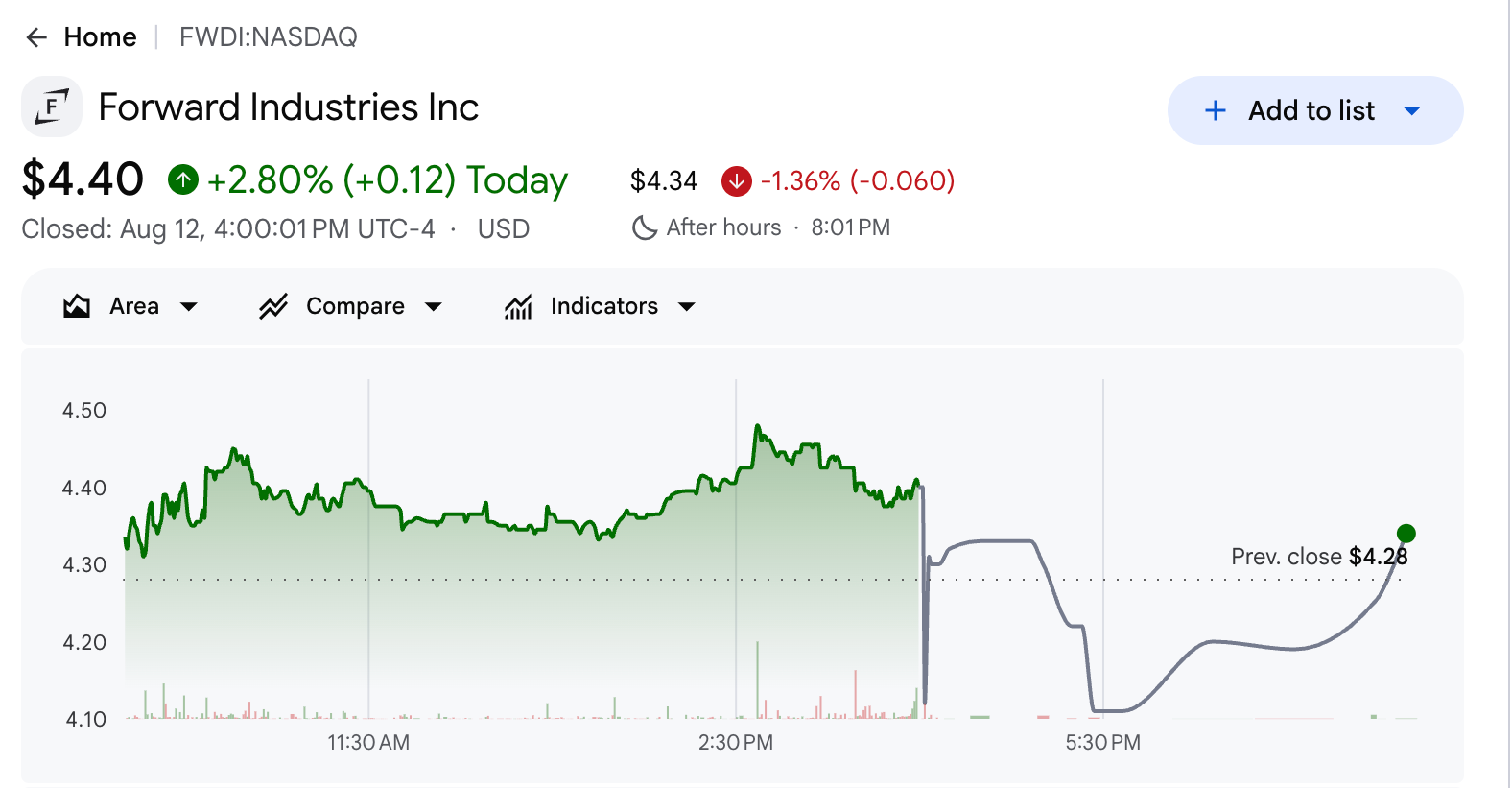
Investors reacted mildly to the earnings results. FWDI closed the August 12 session at $4.40, up 2.80% from a $4.28 prior close, then eased 1.36% to $4.34 after the results landed just past the closing bell.
The muted move may suggest that shareholders are tracking SOL per share more closely than the headline loss.
Subscribe to our YouTube channel to watch leaders and journalists provide expert insights
The post Solana Writedowns Push Forward Industries to $69 Million Q3 Loss appeared first on BeInCrypto.
On August 9, a bridge connecting the XRP Ledger and Coreum (now rebranded as tx) lost close to 200,000 XRP after an attacker tricked its deposit-checking system into treating a wallet-to-wallet transfer as a real deposit.
The bridge has since halted, and both the operator and outside researchers have traced the failure to Coreum-side software rather than anything on the XRP Ledger itself.
What Happened, and How the Alarm Went Out
The first public warning came from a trader posting as playa, who flagged that the bridge’s XRPL account rxXXXeMX8Gy5YvibvGLnQJ1XKKD7UswM1, was bleeding funds and pointed to the account’s DefaultRipple setting as the cause.
Playa said the balance had gone from 93,700 XRP to 77,200 XRP within minutes, a reading taken from an eleven-minute slice of what turned out to be a ninety-seven-minute drain.
Another user, Vet, pushed back in the same thread, writing that “the reason is the coreum bridge was being actively exploited.” Playa later agreed, posting, “I was rushing when I posted and didn’t dig in properly.”
The tx team confirmed the exploit in a statement, saying its software “incorrectly registered transactions that never actually delivered any XRP to the bridge.”
A technical breakdown from Reza Bashash filled in the mechanism: the attacker sent the bridge’s own wrapped token between two of their own wallets, attached a bridge-deposit memo, and because the token is issued by the bridge, the transfer showed up in its history and was read as a genuine deposit.
Relayers approved it, unbacked assets were minted on the Coreum side, and the attacker withdrew real XRP against them. Bashash put the total at 198,715.88 XRP, converted to ETH, routed through THORChain, and ultimately sent to Tornado Cash.
The tx says the vulnerability has been identified, the bridge remains halted, and it has filed a report with the FBI’s Internet Crime Complaint Center. No other bridged assets were affected, and the operator says a plan for compensating users is still being worked out.
A Deeper Look, and a Market Already Under Pressure
A later on-chain review found the same root cause from a different angle: 21 separate Coreum relayers each attested to the same phantom deposit, letting the attacker mint bridge assets with nothing backing them, then repeated the trick with escalating amounts before cashing out.
Every payout that followed on the XRPL Ledger carried a valid multisignature from the bridge’s own relayer quorum, which is why the DefaultRipple explanation didn’t hold up once the transaction data was checked. Native XRP has no trust line to ripple along in the first place, and the flag governs only the bridge’s issued tokens.
The exploit landed while XRP was already sliding. The token sits near $1.02, close to a 21-month low, down roughly 4.4% this week as Bitcoin fell to about $64,000 and the broader crypto market shed some $40 billion in a day.
The post Attacker Drains 200K XRP From Bridge Using Fake Deposit appeared first on CryptoPotato.
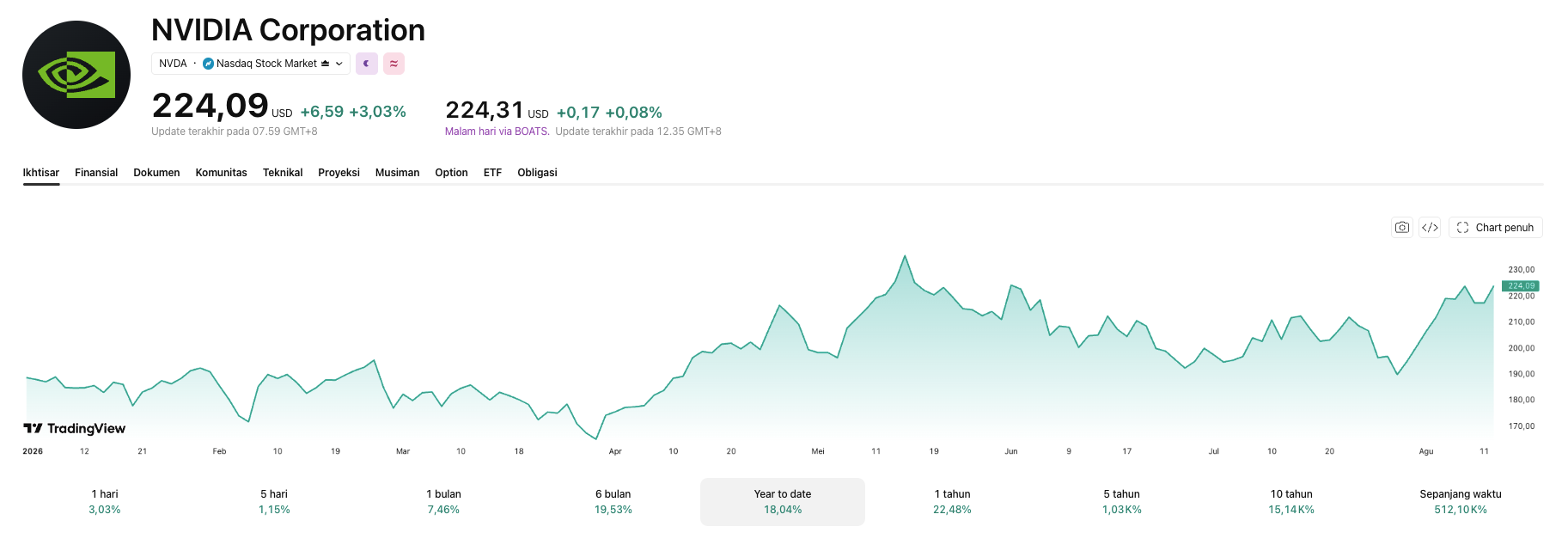
Michael Burry is warning that Wall Street’s longest calm streak in three decades is a red flag. The calm has held even as a small group of AI-linked mega-caps drives most of the market’s gains.
Burry predicted the 2008 housing collapse and is a known skeptic who often sees his calls come true. He says this streak echoes warnings he has made since November 2025.
A Record Streak Without a Selloff
BTIG technical strategist Jonathan Krinsky tracks a specific signal. He measures days when at least 80% of New York Stock Exchange (NYSE) volume comes from falling stocks.
Wednesday marked the 182nd straight session without one of those days. Historically, this is the longest streak in at least three decades, and nearly 50 sessions longer than the previous record.
Krinsky notes that every year in the past three decades has recorded at least five of these sessions. A full 2026 without one would mark a first.
“That sort of technical factor on its own is easy to ignore. However, I have been writing about fundamental reasons for something like this to happen since November of 2025.”
Why the Calm Might Be an Illusion
In contrast to broad-based rallies, a handful of AI stocks now drive most index gains. Burry has flagged concerns about Nvidia (NVDA), Micron Technology (MU), Caterpillar (CAT), Palantir Technologies (PLTR), and Tesla (TSLA).

He holds bearish positions against several of these companies, including Nvidia and Micron. Passive index funds also carry heavy weightings in these same AI names, amplifying the swings.
Burry has made similar warnings before. He compares today’s setup to his earlier 1987 crash warning and the dot-com peak. In both cases, narrow leadership eventually gave way to broader selling.
The Leverage Warning from Burry
However, Burry’s core message is not about timing the turn. It is about surviving it.
“The trick is to avoid stepping into someone else’s folly along the way. Avoid the leverage, and one is more likely to avoid the folly.” Burry said.
Large market cycles can take months or years to unwind, Burry says. Therefore, leverage becomes the real danger for investors waiting it out.
Situational Awareness, an AI-focused hedge fund run by Leopold Aschenbrenner, sold its public stock portfolio to Citadel last month. Meanwhile, steep losses on chip and data center stocks, including SK Hynix, forced the move.
Whether the calm breaks before the mega-caps do is the question Burry is betting on.
The post Michael Burry’s Latest Warning Comes as AI Mega-Caps Quietly Run the Market appeared first on BeInCrypto.
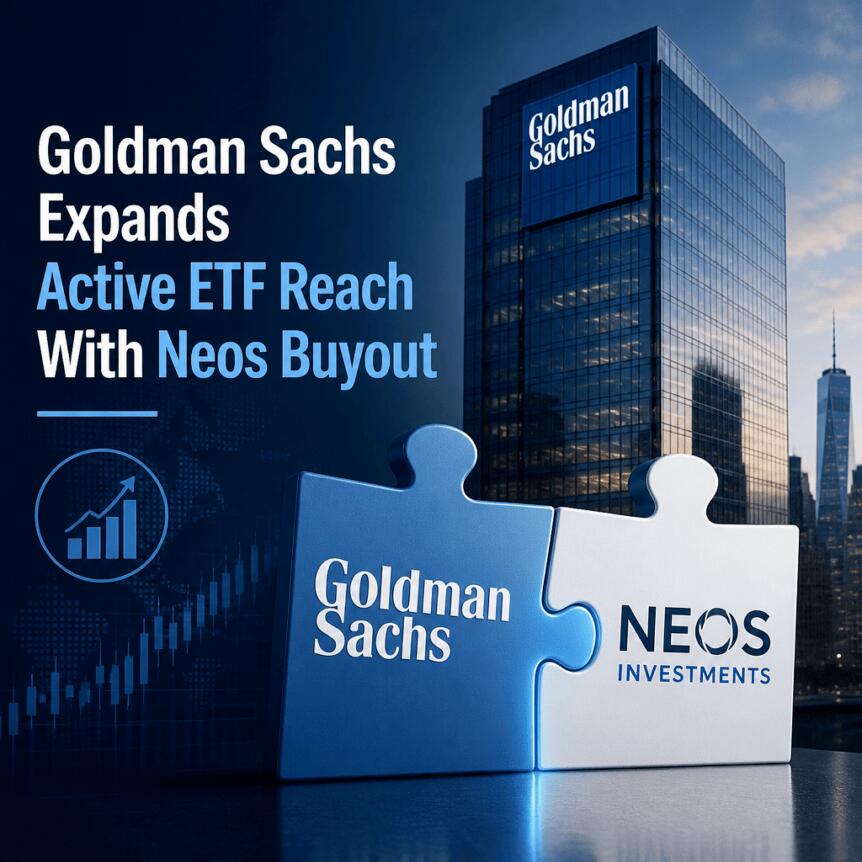
Goldman Sachs has agreed to acquire NEOS Investments in a deal worth up to $2.25 billion. The transaction combines cash and equity, and final terms depend on performance benchmarks. This move strengthens Goldman’s position in the fast-growing active ETF market.
Deal Structure And Expected Timeline
Goldman Sachs will pay through a mix of cash and equity for NEOS Investments. The final payout remains tied to service and performance commitments over time. Regulators must still approve the transaction before it becomes final.
The companies expect the deal to close during the first quarter of 2027. This timeline allows both firms to complete regulatory reviews and integration planning. Goldman will fold NEOS into its existing asset management structure once approved.
NEOS currently manages nineteen systematic options-based income ETFs for its clients. The firm held roughly $30 billion in assets under management as of June. Some reports suggest that figure has since grown closer to $32 billion.
Neos Brings Scale To Goldman’s Options-Based Fund Lineup
NEOS launched in 2022 and quickly built a reputation in options-income investing. Its strategies focus on generating steady income while managing market exposure. This approach appealed to both individual and institutional investors seeking balance.
This acquisition follows Goldman’s earlier purchase of Innovator Capital Management, another options-focused firm. Innovator specializes in defined-outcome and buffer ETFs for risk-conscious investors. Together, these deals show Goldman’s clear strategy of expanding options-based offerings.
Co-founders Troy Cates and Garrett Paolella will join Goldman Sachs Asset Management as partners. The broader NEOS team is also expected to transition into Goldman’s structure. Goldman’s leadership described the acquisition as complementary to its buffer, income, and outcome-based strategies.
Combined ETF Platform Surpasses $130 Billion In Assets
After the deal closes, Goldman’s total ETF platform will exceed $130 billion in assets. Active ETFs alone will account for roughly $80 billion of that total. This scale places Goldman among the largest active ETF providers in the industry.
Morningstar data ranks Goldman as the eighth-largest active ETF provider as of June. That ranking reflects steady growth across the firm’s broader asset management division. The NEOS acquisition should push Goldman further up that competitive ranking.
Options-based income ETFs have expanded rapidly across the wider market in recent years. The category now holds about $180 billion in total assets industry-wide. Annualized growth has topped seventy percent since 2021, according to Morningstar figures.
Broader Market Context And Industry Trends
Demand for options-income strategies has grown steadily among everyday and institutional investors alike. These products aim to generate income while limiting downside exposure to market swings. That balance has made them increasingly popular within traditional ETF structures.
Goldman’s acquisitions of NEOS and Innovator reflect a broader shift toward specialized ETF products. Large asset managers continue consolidating smaller, innovative firms to diversify their offerings. This pattern suggests further consolidation may follow across the active ETF sector.
Once the deal closes, Goldman plans to operate NEOS alongside its current ETF lineup. The firm aims to expand its overall product range and total assets under management. Goldman’s latest move signals continued ambition within the actively managed ETF space.

McCarthy to depart as Falcons CEO

El Salvador’s Bitcoin experiment turns 5: ‘It was for us, not them’

McLaughlin: This the Year the Trojans Get Back on Track?


![When Does This End? [Bitcoin Hacks Just Keep Coming].](https://wordupnews.com/wp-content/uploads/2026/08/1786598044_maxresdefault-80x80.jpg)
-

 Fashion5 days ago
Weekend Open Thread: Mattifying Sunscreen
-

 Fashion6 days ago
Frugal Friday’s Workwear Report: Cap-Sleeve Pointelle Crewneck Sweater
-

 News Videos5 days ago
Can Astrology Help Find Gold and Silver Trends? A Financial Astrology Guide
-

 Politics7 days ago
Reform UK And Greens Sink To Lowest Favourability Ratings To Date
-

 Tech5 days ago
Rinn Pharma & Biopharma to join NordicPharmaTrain network
-

 Business4 days ago
How to Start a Cleaning Business: A Step-by-Step Guide
-

 Business4 days ago
Datadog: Best Of Breed For Multiple Reasons
-

 Business4 days ago
BDC Weekly Review: Private BDC Q2 Numbers Are Strong
-
 NewsBeat1 day ago
Communication cards help banking customers access services or report scams
-

 Business6 days ago
Brightwater secures funding for WA-first dementia projects
-

 Tech6 days ago
Price Hikes May Be Coming for PC Motherboards Next
-
 Crypto World7 days ago
Galaxy Digital Stock Slides 14% as Crypto Prices Hit Earnings
-

 Business7 days ago
SpaceX Shares Plunge 13.6% After First Public Earnings as AI Capex Surge and Lockup Spark Selloff
-
 Business2 days ago
Oil Price Today (August 11): Crude oil rises to $88 after Trump’s compensation demand dents Hormuz opening. Here’s why
-
 Tech7 days ago
How to Use Your Phone as a Webcam on PC and Mac (2026)
-

 Entertainment7 days ago
This $29 One-Piece Looks Just Like Ashley Graham’s Swimsuit
-

 Tech7 days ago
Hackers just broke into America’s tap water. How scared should you be?
-

 Business6 days ago
Aussie shares lose steam to close record-breaking week
-

 Fashion6 days ago
Weekly News Update, 8.6.26 – Corporette.com
-

 Fashion7 days ago
Thursday’s Workwear Report: The Everyday Linen Shirt
You must be logged in to post a comment Login