
Crypto World
Stock Market Rises On Nvidia, CrowdStrike, Salesforce, Fed Chief Warsh: Weekly Review


The stock market saw solid gains for the major indexes, rebounding off their 21-day moving averages, though small caps fell slightly toward their 50-day line. Federal Reserve Chairman Kevin Warsh leaned hawkish in his Jackson Hole speech, and markets generally seemed to like it. Nvidia (NVDA) surged on booming earnings and blowout guidance, but many chip and AI hardware plays…
Copyright ©2026 Investor’s Business Daily, LLC. All rights reserved. 87990cbe856818d5eddac44c7b1cdeb8


What’s shining brighter than gold? This gold stock. Among gold miners, Newmont stock is flirting with a breakout amid bullion’s massive rally. Gold and copper producer Newmont’s own strategic transformation has burnished the allure of its shares as well. Newmont (NEM) streamlined operations after two major buyouts, becoming the world’s No. 1 gold miner. The Denver-based company used record free…
Copyright ©2026 Investor’s Business Daily, LLC. All rights reserved. 87990cbe856818d5eddac44c7b1cdeb8
Marvell Technology (MRVL) stock fell below a key support level on Friday after the chipmaker’s fiscal second-quarter earnings report. The Santa Clara, Calif.-based company late Thursday edged above estimates for its fiscal Q2 ended Aug. 1 and guided higher than views for fiscal Q3. But analysts groused about profit margins under pressure and lack of a bigger upside from its…
Copyright ©2026 Investor’s Business Daily, LLC. All rights reserved. 87990cbe856818d5eddac44c7b1cdeb8
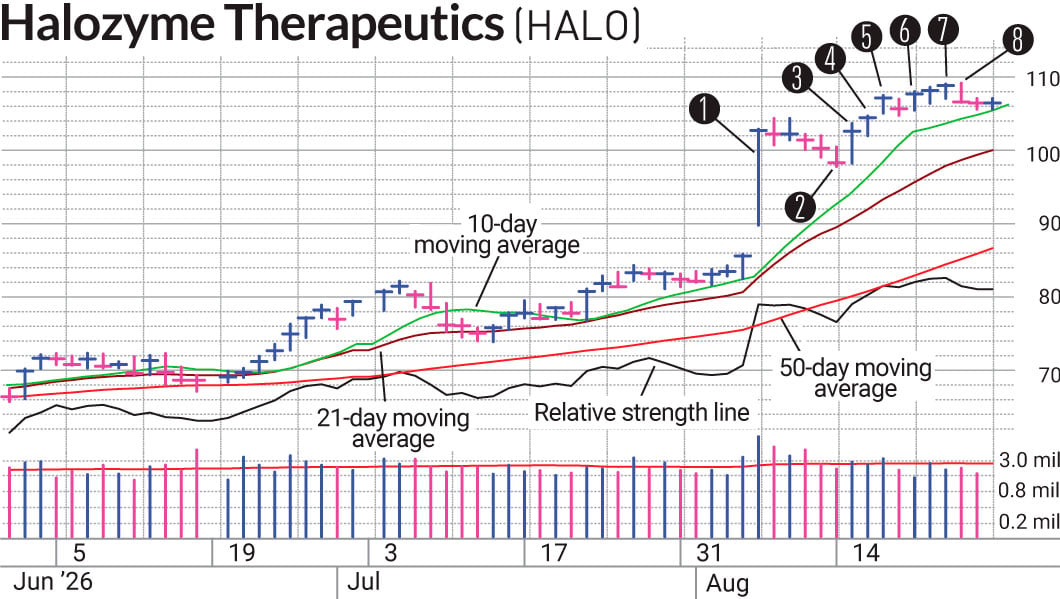
Sector rotation over the last couple of months has been brutal. Many breakouts have failed to create lasting trends. Just as some areas seem ready to go, the market shifts to other sectors. With our HALO stock trade, we sold into strength and risked the stock going up much higher without us. But it was better to capture a quick…
Copyright ©2026 Investor’s Business Daily, LLC. All rights reserved. 87990cbe856818d5eddac44c7b1cdeb8

Urban Outfitters (URBN), along with MarketSurge Growth 250 names DHT Holdings (DHT) and insurance company Oscar Health (OSCR), recently hit new highs. Steel stock ArcelorMittal (MT) also hit a high and is in a buy zone. Stocks To Buy And Watch: Top IPOs, Big And Small Caps, Growth Stocks Urban Outfitters Taps Buy Point The apparel retail stock is back above…
Copyright ©2026 Investor’s Business Daily, LLC. All rights reserved. 87990cbe856818d5eddac44c7b1cdeb8


President Donald Trump announced Friday that the United States has entered a “historic” deal with Venezuela, saying that it gives the U.S. majority control over more than 65 billion barrels of oil reserves. Calling it the “BIGGEST OIL DEAL IN WORLD HISTORY” in a post on Truth Social, he said that the agreement would “substantially lower Gas Prices for all Americans.”
The Trump Administration has long expressed an interest in Venezuela, which boasts the world’s largest proven crude-oil reserves as of 2023—approximately 303 billion barrels, according to the U.S. Energy Information Administration (EIA).
But the President did not outline how soon, exactly, Americans can expect to feel relief at the pumps. TIME has reached out to the White House for comment on the expected timeline.
Read More: What’s Happening With the U.S. and Venezuela, Explained
The answer is especially relevant amid the ongoing war with Iran. One of the linchpins of the conflict is a Tehran-imposed blockade on the Strait of Hormuz, through which one-fifth of the world’s oil had previously passed. The move has been consequential for the global economy. In the United States, the national average cost for a gallon of gas is $4.08 as of Saturday, according to the AAA, as compared to $3.20 one year ago.
Secretary of State Marco Rubio called the deal a “huge win” for America in a social media post on Friday, saying that it means “lowering gas prices here at home.”
Any eventual decline in gas prices could provide relief at a time when Americans are already contending with persistent inflation, which was the focus of remarks made by Federal Reserve Chair Kevin Warsh at the Jackson Hole Economic Policy Symposium in Wyoming on Friday.
However, it could be a while before the impact of the new deal with Venezuela is directly felt.
What we know about Trump’s Venezuela oil deal
Much of what is known about the deal comes from a statement released on Telegram by acting Venezuelan President Delcy Rodríguez late Friday.
“It provides for the development of 17 strategic fields, with a proven potential of 65 billion barrels of oil, more than $100 billion in investment and more than $209 billion in tax revenue for the state,” the statement said. “These investments will contribute not only to the recovery and modernization of our industry, but also to our country’s economic growth, the energy security of our hemisphere and greater stability in international markets.”
Despite its vast oil reserves, the country only produced about 1.1 million barrels per day in July, according to a secondary-source estimate from the Organization of the Petroleum Exporting Countries.
The EIA has attributed Venezuela’s long-term production decline largely to “government mismanagement, international sanctions, and the country’s economic crisis,” which contributed to “a lack of investment and maintenance in the energy sector and a deteriorating infrastructure.” The agency found that Venezuela’s total energy production declined by an average of 8.2% annually between 2011 and 2021.
“The U.S. deal with Venezuela is very important strategically,” says Claudio Galimberti, the chief economist at Rystad Energy. “The new wave of investments that is about to come to Venezuela as a result of this deal will be crucial to turn around the country’s aging oil infrastructure. Venezuela will be able to increase its production at a faster rate and unlock barrels that would otherwise have stayed underground.”
The agreement envisions private operators playing a central role in that effort. Rodríguez’s post explained that the agreement allows Venezuela to increase its oil production “through the participation of private operators,” without further elaboration.
A State Department official tells TIME that Rodríguez has granted a private company, which is “a joint project of the U.S. government and an experienced private operator in Venezuela,” 100-year rights to develop the fields, adding: “This new entity will be the second largest corporate holder of proven reserves after Saudi Aramco.”
The deal would give the U.S. 55% of the new company’s effective output, “split between equity ownership and guaranteed at-cost off-take,” the official says.
Although they declined to comment on the expected timeline for these steps, the official adds: “As the company scales production, the resulting stable supply of at-cost oil in our Hemisphere will go toward filling the U.S. strategic petroleum reserve and fulfilling the supply needs of our Great U.S. Military.”
Other key factors also remain unknown—including how the deal will be financed and whether it includes any target dates for achieving various outcomes.
Why gas prices won’t lower immediately
One of the main reasons that Americans are unlikely to see immediate relief from high gas prices is that the deal is linked to 17 oil fields in Venezuela, not access to 65 billion barrels of already-produced crude oil.
While those fields contain proven reserves, Venezuela does not have the infrastructure in place currently to produce the oil at a rate that would significantly and rapidly affect the wallets of everyday Americans.
Such concerns arose after former Venezuelan President Nicolás Maduro was ousted by the United States in January, when oil executives and analysts assessed the viability of developing the country’s reserves.
Speaking at the White House on Jan. 9, ExxonMobil Chairman and CEO Darren Woods called it “uninvestable,” given his assessment of the “legal and commercial constructs—frameworks—in place today in Venezuela.”
“There’s an opportunity in Venezuela with all the resources there,” he said. “We don’t have that challenge of finding; we have the challenge of developing those resources.”
Patrick De Haan, the head of petroleum analysis for GasBuddy/PDI, provides a similar assessment. He tells TIME, “While the hope of lower gas prices sounds promising, it still will take billions of investment to get that oil.”
In her statement, Rodríguez said the initiative is expected to “facilitate a significant flow of investment aimed at the recovery and reconstruction of strategic infrastructure for the development of our hydrocarbons industry.”
But it remains unclear where that investment will come from, including whether the private operator will provide the financing and how the project will proceed “at no cost to the American Taxpayer,” as Trump said.
De Haan also questioned whether the agreement’s unusual structure could discourage investment. “How can the U.S. lay claim to a sovereign country’s natural resources?” he says, adding that even with approval from Venezuela’s acting president, a 100-year contract could face legal challenges or prove difficult to enforce.
“That may slow down oil companies from wanting to invest in Venezuela,” he explains.
And financing is only one hurdle; the physical work required also shapes the timeline.
“Drilling and pumping that oil will take a very long time. Changes to fuel prices won’t happen overnight or even in months,” De Haan says, adding that global refining capacity is currently constrained, further limiting the speed at which additional crude supply could affect the market.
Galimberti says that consumers should expect a long road between the initial investment and the ultimate production and distribution of oil.
“You will need to factor in several quarters and, in quite a few cases, years,” he says. “Therefore, it is a deal whose benefits will be seen mostly in the medium-long term.”
“To lower gasoline and diesel prices in the short term, the most effective way by far is by increasing the flows from the Middle East,” Galimberti says. He points to recent successes in bypassing the Strait of Hormuz, including pipelines and ports being developed across the Gulf.
Even without potential legal hurdles from within Venezuela, executing on the promise of the reserves could take years, which means that Americans may be in for a wait before they see the impact at gas stations across the U.S.
The exploit caused the neobank’s AVICI token to drop 49% from a 24-hour high, hitting a record low before paring some of the losses.

Polygon Labs has published details of multiple security vulnerabilities that could have threatened the reliability of its Proof-of-Stake (PoS) network—after fixing the issues via two recent hard forks and then disclosing the underlying risks.
According to a Thursday disclosure posted by Polygon Labs’ Validators Support Team, the flaws impacted the network’s Bor and Heimdall clients and ranged from denial-of-service (DoS) vectors to bugs that could interfere with validator and checkpoint-related processing.
Key takeaways
- Polygon disclosed security issues affecting both Bor and Heimdall clients, including DoS risks and validator resource exhaustion.
- The fixes were delivered through two hard forks—Austin for Bor and Kyoto for Heimdall—and were tested before activation on mainnet.
- Polygon said it has seen no evidence of the vulnerabilities being exploited on mainnet.
- After the hard fork activation heights, nodes running older client versions will fall out of consensus and must upgrade to rejoin the canonical chain.
- Upgrades are already live on mainnet: Bor v2.10.0 for PoS nodes and Heimdall v0.11.0 for validators and full nodes.
What Polygon disclosed: Bor and Heimdall risks
In its security release, Polygon described vulnerabilities that could have disrupted network operation by increasing the amount of work validators and other components had to perform, potentially leading to slowdowns or instability.
The disclosure states that Heimdall carried the most severe issue. Polygon said that a specially crafted transaction could compel validators to carry out excessive processing work, creating a realistic possibility of network disruption.
For Bor, Polygon’s disclosure highlights two separate denial-of-service risks addressed by the Austin hard fork. While the release does not expand on every implementation detail in the summary provided, it characterizes the potential impact as slowing block processing or causing nodes to crash—outcomes that can degrade throughput and availability in a validator-driven system.
Alongside these issues, Polygon also pointed to flaws tied to checkpoint and milestone processing. These components are important in PoS systems that must consistently advance state and maintain coordination across epochs and consensus-critical milestones. Errors in those flows can create cascading failures if left unpatched.
How Polygon rolled out the fixes
Polygon said the vulnerabilities were addressed through two hard forks: Austin for the Bor client and Kyoto for Heimdall. The company added that the updates were deployed privately first, with testing before activation on mainnet, and that the details were made public only after the network upgrades were already in place.
Crucially for operators, Polygon indicated that none of the disclosed vulnerabilities had been observed being exploited on mainnet. The report frames the disclosure as a proactive measure—Polygon says it pushed the fixes before publishing the full technical details.
Upgrade requirements: staying in consensus after activation
Polygon also made the practical implications explicit: nodes that continue running older versions of either client past the hard fork activation heights will no longer be in consensus with the canonical network.
To avoid being cut off from the main chain, Polygon said that:
- Bor v2.10.0 is required for all Polygon PoS nodes.
- Heimdall v0.11.0 is required for validators and full nodes.
Polygon further stated that both upgrades are already active on mainnet, meaning operators who haven’t updated need to act promptly to ensure their infrastructure remains compatible with the post-fork network rules.
Why this matters for PoS operators and users
Hard forks can feel disruptive even when they’re planned, but this disclosure underscores a different dimension of PoS security: availability and resource pressure are not theoretical. Heimdall’s described transaction-based forcing of excessive validator work highlights how adversaries can sometimes target compute limits rather than attempting to directly rewrite or steal consensus control.
Similarly, Bor DoS risks—ranging from block processing slowdowns to potential node crashes—suggest that operational stability depends on more than just validator correctness. A network can degrade even if the core consensus mechanism remains intact, simply by overwhelming nodes with workload or triggering instability.
For end users, these incidents mostly affect the system indirectly through reliability: delays, degraded performance, or node downtime can reduce how smoothly transactions propagate and are confirmed. For validators and infrastructure providers, the key takeaway is more immediate: compatibility after hard fork activation is mandatory, and the disclosed issues increase the importance of keeping client software current.
Token performance remains separate from the engineering update
At the time of writing, Polygon’s native token, POL—formerly known as MATIC—was trading around $0.10, down about 4% over the past week but up 44% over the past month and 2.3% year to date, based on CoinGecko data.
Readers should watch next for validator/operator confirmations that post-fork upgrades are stable across the network—especially because Polygon’s disclosure emphasizes resource exhaustion and processing-path bugs that, even if not exploited, are the kinds of issues that can surface as infrastructure strain under load.

Kalshi and the Commodity Futures Trading Commission (CFTC) both punished a White House teleprompter operator on Friday. Gabriel Perez had bet on Trump’s speech text before the president read it out loud.
Perez gave up $107,539.02 in profit. He paid a $65,000 fine on top. He cannot trade for three years.
Why the White House Staffer’s Fine Came In So Low
The CFTC discounted the fine and said so in the order. It credited what it called exemplary cooperation.
“Under the order, Perez must disgorge the profits he made from his unlawful trading totaling $107,539.02 and pay a civil monetary penalty of $65,000, representing a substantial discount…because of Perez’s exemplary cooperation with the CFTC,” read an excerpt in the order.
The last Kalshi case shows what that is worth. In July, the agency fined former congressman George Santos $17,500 and clawed back $17,569.98.
Santos paid roughly $1 in fines for every $1 he made. Perez paid about 60 cents.
Both men drew the same three-year ban. Their orders landed 28 days apart. On the Santos yardstick, Perez would have owed close to $107,000. He paid $65,000.
However, Perez never turned himself in. Kalshi flagged his account and sent the file to Washington. He talked only after investigators reached him.
That detail also matters, following a CFTC policy issued in May that reserves the deepest discounts for people who report themselves first. Perez did not. The order never says which tier he landed in.
Kalshi’s Warning to Everyone Else
Robert DeNault, head of enforcement at Kalshi, posted the result and issued a wider warning for users.
“It doesn’t matter who you are: violate our rules or federal law and you will face the consequences,” DeNault articulated.
Follow us on X to get the latest news as it happens
Meanwhile, these developments come only eight days after CME Group chief Terry Duffy raised this case in a clash over prediction markets. He argued that US-listed event contracts can be gamed. CFTC Chairman Michael Selig called the examples offshore.
Friday’s order answers that. Perez traded on a US exchange regulated by the CFTC. That same exchange caught him.
BeInCrypto reported the speech bets in July, when Perez still held the job.
Meanwhile, Kalshi keeps listing contracts on whatever the president says next. The warning in Friday’s order is not that the exchange catches people. It is what cooperation is worth once it does.
The post Kalshi Warns Users After CFTC Punishes a White House Staff appeared first on BeInCrypto.

Zcash has been one of the best-performing assets this year. It has managed to attract significant institutional capital. This week, asset manager Grayscale Investments launched the first exchange-traded fund that tracks the spot price of ZEC.
But interest in the privacy-focused token peaked shortly before its price reached a recent high.
Zcash Crowd Showed Up Early
Data shared by Santiment revealed that social chatter faded by the time the ZEC spot ETF launched. Grayscale converted its 2017 Zcash trust into a spot ETF, which began trading on NYSE Arca on August 25.
Ahead of the launch, the asset climbed from around $509 on August 18 to about $878 on August 23, posting a gain of roughly 72%. Social mentions reached 232 on August 22, which is around six times the usual August baseline. However, that surge in attention did not last.
Mentions had returned to their baseline level by the ETF’s launch day. According to Santiment, social activity peaked one day before ZEC’s price high, which suggested that much of the crowd interest arrived ahead of the market’s high.
Since reaching about $878, the token has pulled back to roughly $789, a decline of around 10% from the recent peak.
Zcash Challenging Bitcoin?
Grayscale Research believes ZEC could emerge as a serious challenger to Bitcoin’s network effects as demand for financial privacy grows. In a report by Head of Research Zach Pandl, the firm said Bitcoin remains dominant among digital currencies. While alternatives such as Litecoin have emerged, none has seriously challenged BTC’s position.
Grayscale, however, stated that Zcash could be different because it combines Bitcoin-like characteristics with privacy features that may become more important as AI-powered surveillance expands. The report also points to the ecosystem’s active development, which aims to address cybersecurity risks, including potential threats to traditional cryptography from quantum computing.
Another advantage is its cross-chain reach through “intents” technology built into modern blockchain wallets, which allows Zcash to function as a private asset hub without requiring broad merchant adoption. ZEC has already gained around 19 times over the past year but remains worth less than 1% of Bitcoin’s market capitalization. Grayscale said Zcash’s financial privacy and other features may be undervalued, thereby leaving room for further upside.
The post Zcash (ZEC) Social Buzz Vanished Before Its ETF Even Launched: Data appeared first on CryptoPotato.
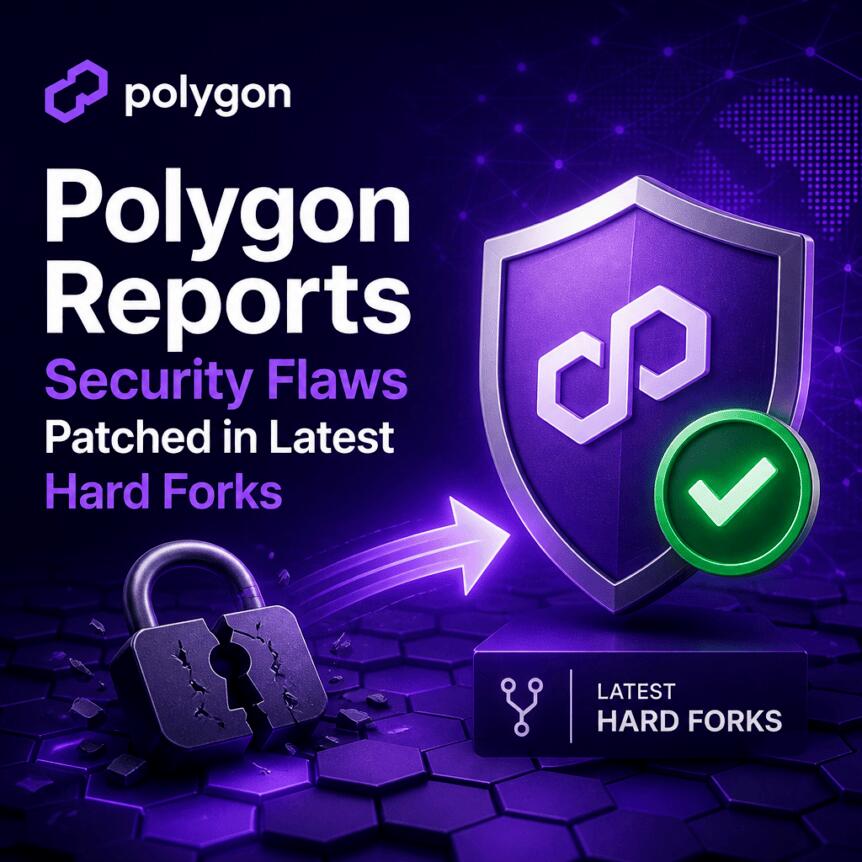
Polygon has published details of multiple previously undisclosed security vulnerabilities that could have affected its proof-of-stake (PoS) infrastructure, including issues spanning node-to-node denial-of-service risk and validator processing bottlenecks. Polygon said the problems were addressed ahead of public disclosure through two recent hard forks and corresponding client upgrades.
In a Thursday post on the Polygon forum, Polygon Labs’ Validators Support Team outlined how flaws in the Bor and Heimdall clients were fixed via the Austin and Kyoto hard forks. The disclosure also notes that none of the vulnerabilities have been observed exploited on Polygon mainnet.
Key takeaways
- Polygon disclosed vulnerabilities affecting both Bor and Heimdall clients, with potential denial-of-service and validator processing disruption.
- The issues were reportedly resolved through Austin (Bor) and Kyoto (Heimdall) hard forks, which were tested before activation.
- Polygon stated that no exploitation was observed on mainnet, and upgrades were deployed proactively before details became public.
- Running outdated client versions after hard fork activation heights means nodes will fall out of consensus and must upgrade to rejoin.
- Polygon requires Bor v2.10.0 for PoS nodes and Heimdall v0.11.0 for validators and full nodes.
What Polygon disclosed about the Bor client
According to Polygon’s disclosure, the Austin hard fork addressed two denial-of-service related risks tied to the Bor client. Denial-of-service flaws in blockchain clients are particularly concerning because they can degrade performance by increasing resource consumption during block handling, and in severe cases could contribute to node instability.
Polygon said these Bor issues could have impacted block processing or caused nodes to crash, depending on how an attacker might have triggered the problematic behavior. Polygon did not state that the vulnerabilities were exploited in the wild, but emphasized that the fixes were deployed in advance of the public release of technical details.
The Heimdall vulnerability that could overload validator processing
The disclosure highlighted a more severe problem affecting the Heimdall client. Polygon said a specially crafted transaction could force validators to perform excessive processing work. In a PoS environment, anything that causes disproportionate workload on validators can become a network reliability issue, since validators must process consensus-related data within practical performance limits.
Polygon framed the Heimdall flaw as one that could potentially disrupt network operation by pushing validators into an inefficient or overly burdensome processing path. The issue was addressed through the Kyoto hard fork, with corresponding updates rolled out before the information was disclosed publicly.
Hard fork mechanics and why upgrades matter
Polygon’s disclosure is explicit about the operational consequences for participants who do not update. Nodes running older versions of either Bor or Heimdall past the relevant hard fork activation heights are described as falling out of consensus and needing to upgrade to return to the canonical network.
Polygon stated that Bor v2.10.0 is required for all Polygon PoS nodes, and Heimdall v0.11.0 is required for validators and full nodes. Both upgrades are reported as already active on mainnet.
For infrastructure operators, this means security preparedness is also a liveness requirement: even if a node is not directly affected by an attack scenario, outdated software can still become unable to participate in consensus after protocol changes. In practice, the operational takeaway is to confirm client versions are aligned with the post-fork requirements and monitoring is in place to catch missed upgrades.
No evidence of mainnet exploitation, but a reminder on proactive patching
Polygon said none of the vulnerabilities described in the disclosure were observed being exploited on mainnet. The company also characterized the fixes as proactive—implemented through hard forks and client upgrades before the detailed vulnerability information was released.
This approach matters because it reduces the window in which real-world attackers could attempt to take advantage of known weaknesses. However, it also raises the bar for ongoing maintenance: even when the attack surface is addressed through upgrades, participants must still keep pace with protocol and client version changes to maintain connectivity and consensus participation.
At the time of writing, Polygon’s native token (POL)—formerly known as MATIC—was trading around $0.10. CoinGecko data shows it was down about 4% over the previous week, up 44% over the past month, and up 2.3% year to date, according to CoinGecko’s price statistics.
Readers should watch for operational confirmations from validators and node operators that their Heimdall and Bor upgrades remain stable post-fork. The next practical question is whether Polygon will publish additional details or guidance on mitigation practices beyond the required version upgrades—especially given that denial-of-service and validator workload vulnerabilities can be sensitive to implementation changes and monitoring thresholds.

Casal precisa ter metas financeiras separadas?

Ford Transit stolen from driveway in Selby overnight

Wasatch International Select Fund Q2 2026 Commentary (WAISX)





-

 Crypto World4 days ago
SpaceX stock could rise 75% to $240, JPMorgan says
-

 Fashion1 day ago
Weekend Open Thread: Maeve – Corporette.com
-

 Crypto World2 days ago
Bitcoin’s 22% rally now needs real demand to outlast Treasury liquidity boost
-

 Crypto World4 days ago
Warsh Jackson Hole keynote puts financial innovation first
-

 Crypto World5 days ago
A $30 Billion AI Fund Implodes, Now the SEC Is Investigating Wall Street’s Role
-

 Business2 days ago
Salesforce Stock Soars 19% as Blowout Earnings and Agentforce AI Growth Silence Software Skeptics
-

 Crypto World4 days ago
Did Trump Just Move SpaceX Stock With One Truth Social Post?
-

 Business7 days ago
Mystery AI Model ‘Ox Alpha’ Draws Developers With Free Access as Chinese Lab Origins Remain Debated
-

 Business4 days ago
Walmart takes aim at younger shoppers with new fashion brand
-
 NewsBeat3 days ago
Lindsay Clancy jury braces for closing arguments as judge tells court: ‘You’ve heard all the evidence’ – Live updates
-

 Crypto World3 days ago
Elon Musk Grok Bot Promise: We Will Make You Whole if AI Loses Your Money
-

 Crypto World1 day ago
Bitcoin price tests $82K resistance as Brandt stays long
-

 Business5 days ago
Moderna CEO warns China is pouring state money into mRNA technology
-
 Crypto World3 days ago
NVIDIA revenue hits $96.2B as AI demand doubles
-

 Business5 days ago
NVIDIA Stock Drops Nearly 2 Percent to $210 on Seventh Losing Day Ahead of Critical AI Earnings
-

 Business4 days ago
Thailand’s Eastern Economic Corridor Capital City (EECiti): Key Developments and Investment Opportunities
-

 Business1 day ago
iPhone 18 Pro Pre-Orders Could Shift to Saturday as Apple Reportedly Avoids September 11 Anniversary
-
 Crypto World6 days ago
$92 Billion Nvidia Earnings Could Make or Break the AI Trade
-

 Business7 days ago
Where Will Kevin Durant Play in 2027? Rockets Hold Player Option Key to His Future With Houston via Deal
-

 Business2 days ago
Apple Confirms September 9 Keynote and Reveals Its Full Pre-Order Schedule
You must be logged in to post a comment Login