
Crypto World
Strive director buys 15,900 ASST shares as SATA nears par

Strive director Pierre Rochard has purchased 15,900 ASST shares worth $199,386 as the Bitcoin treasury company’s preferred stock has returned close to its $100 par value.
Summary
- Rochard bought 15,900 ASST shares at an average price of $12.54 on Aug. 14.
- The open-market purchase was his first reported direct holding of Strive common stock.
- ASST rose in Wednesday trading after closing 3.03% lower at $12.80 on Tuesday.
- Strive recently bought 79 BTC for $5 million, lifting its holdings to 20,246 BTC.
Rochard has made his first reported ASST purchase
The SEC Form 4 filing, submitted on Aug. 18, showed that Rochard acquired the Class A common shares through an open-market transaction on Aug. 14. At $12.54 per share, the purchase carried a total value of $199,386.
Following the trade, Rochard directly owned 15,900 ASST shares. The filing listed no derivative securities or additional indirect holdings associated with the director.
Rochard did not execute the purchase under a Rule 10b5-1 trading plan, according to the disclosure. Such plans allow corporate insiders to arrange future transactions under preset instructions, which can help separate trades from information they may later receive through their roles.
Because the purchase took place outside such a plan, Rochard made a direct open-market acquisition at the reported price. The filing did not provide his reasons for buying the stock or state whether he intends to add more shares.
Rochard serves on Strive’s board and is chief executive of The Bitcoin Bond Company. A long-time Bitcoin advocate, he has recently argued that the cryptocurrency’s monetary rules and governance remain strong despite bearish market sentiment.
In a separate public comment, Rochard criticized Bitcoin Improvement Proposal 110, or BIP-110, which has been described as the Reduced Data Temporary Softfork. The proposal has faced opposition from several Bitcoin supporters, including Strategy executive chairman Michael Saylor.
“BIP-110 was a demonic demoralization psyop, praying for all those affected to make a full recovery,” Rochard said.
ASST stock has climbed after Tuesday’s decline
ASST entered Wednesday’s session above its Tuesday close after falling 3.03% to $12.80 in the previous trading day. The shares opened at $12.94 and traded as high as $13.75 during the session, according to market data from Investing.com.
The move extended a recovery from Strive’s lower levels but left the common stock exposed to changes in both Bitcoin’s price and the company’s financing activity. ASST investors hold an equity interest in a U.S.-listed company whose balance sheet includes 20,246 BTC, cash reserves, and preferred securities issued by Strategy.
Rochard’s purchase represents a financial commitment from a company director, though the SEC filing contains no statement describing the trade as a signal about Strive’s expected performance. Insider purchases can attract attention from investors, but they do not guarantee that a company’s share price or operating results will improve.
Institutional investors have also built positions in ASST. In May, crypto.news reported that State Street had raised its Strive exposure by 770% after purchasing nearly 1 million shares, valued at about $17.7 million at the time.
The U.S. securities filing gives American investors direct information about Rochard’s transaction under Section 16(a) of the Securities Exchange Act. Directors, senior officers, and shareholders with more than 10% ownership generally must disclose changes in their holdings through Form 4 filings.
ASST trades on Nasdaq, allowing investors to gain exposure to Strive’s business and Bitcoin treasury without holding BTC directly. Common shareholders, however, rank below preferred shareholders in Strive’s capital structure and remain exposed to possible dilution when the company issues more stock to finance its strategy.
SATA nearing par could reopen Bitcoin funding
Strive’s SATA preferred stock traded close to $100 this week after spending much of the previous two months below par. The security reached $99.79 on Tuesday, its highest level in about two months, before remaining near the $100 reference price during Wednesday trading.
SATA is Strive’s Variable Rate Series A Perpetual Preferred Stock. Unlike ASST common shares, the instrument gives holders priority for its declared dividends but does not have a fixed maturity date.
Strive began paying SATA dividends every business day on June 16. As previously covered in May, the company set an annualized dividend rate of 13%, with daily compounding producing an effective annual yield of about 13.88% at the time.
Pricing near par matters because Strive can sell preferred shares more efficiently when the market value is close to or above the security’s $100 reference amount. Issuing SATA well below par would require the company to sell more shares to raise the same amount of capital, increasing its dividend obligations for each dollar received.
Strive previously laid out plans to increase its at-the-market programs for ASST and SATA by $2.1 billion each. The proposed fundraising expansion would provide up to $4.2 billion in added capacity, subject to market demand and the company’s ability to issue securities on acceptable terms.
Strive’s structure uses preferred equity alongside common-stock sales to fund Bitcoin purchases. SATA holders receive priority dividends, while ASST shareholders retain the remaining exposure to changes in the value of Strive’s assets after its senior claims are considered.
Strive now holds 20,246 Bitcoin
Strive disclosed in an Aug. 17 Form 8-K filing that it purchased 79 BTC between Aug. 10 and Aug. 14 for about $5 million. The company paid an average of $63,231 per coin, including fees and expenses.
The transaction lifted its Bitcoin holdings from 20,167 BTC to 20,246 BTC. Strive also reported $154.8 million in cash and cash equivalents as of Aug. 14, down $100,000 from one week earlier.
Alongside its direct Bitcoin position, Strive owned 505,000 shares of Strategy’s STRC preferred stock, valued at about $47.86 million. The number of STRC shares remained unchanged during the reporting period, while their fair value declined by $116,000.
Strive’s latest 79 BTC purchase was smaller than its earlier acquisitions. A June SEC disclosure showed that the company had added 2,500 BTC for $185.2 million, increasing its treasury to 19,000 BTC at the time.
Chief executive Matt Cole said Bitcoin appeared inexpensive at its current range and indicated that Strive was prepared to accept more risk to expand its position.
“Bitcoin is historically cheap in this price range, and we feel constructive about taking on risk to buy more BTC here,” Cole said.
Bitcoin traded around $64,400 on Wednesday after moving between approximately $64,000 and $65,000 over the preceding 24 hours. Yahoo Finance data showed BTC closed Aug. 18 at $64,680.71 after reaching an intraday high of $64,987.71.
Strive’s Aug. 17 filing also listed 76.75 million Class A shares and 9.79 million Class B shares outstanding as of Aug. 14. The company reported 7.83 million SATA shares outstanding, unchanged from the previous week.

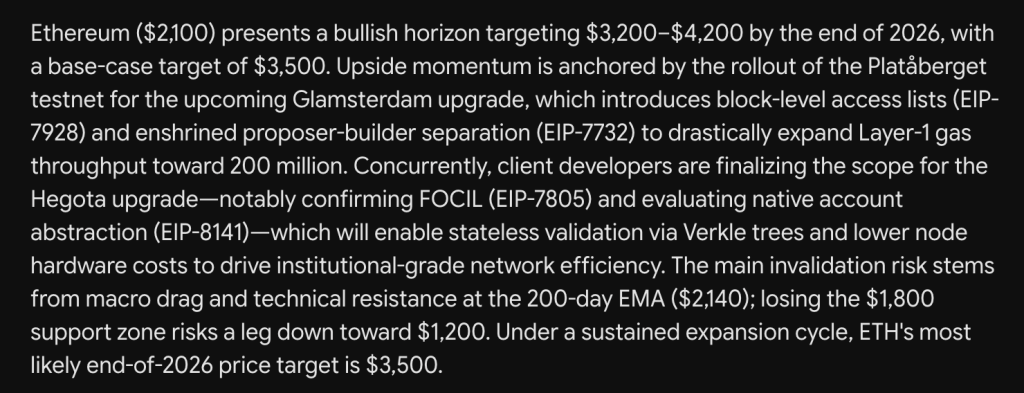
Two upgrades in the testnet and one number that keeps coming up: 200 million gas. Google Gemini AI predicts that the throughput jump reframes what Ethereum can carry, and the price prediction targets $3,200 to $4,200 by the end of 2026, with $3,500 as the base case from $2,100.
The Platåberget testnet for Glamsterdam anchors the case. It introduces block-level access lists through EIP-7928.
Enshrined proposer-builder separation arrives alongside it via EIP-7732. Together, those drastically expand Layer-1 gas throughput toward that 200 million figure.

Client developers are already finalizing the next scope. The Hegota upgrade has confirmed FOCIL through EIP-7805. Native account abstraction is under evaluation as EIP-8141. Both feed stateless validation via Verkle trees.
The practical result is cheaper node hardware. Gemini frames that as the path to institutional-grade network efficiency. The main invalidation risk is macro drag. Technical resistance at the 200-day EMA near $2,140 is the near-term obstacle.
Losing the $1,800 support zone is the larger threat. That risks a leg down toward $1,200.

Discover: Everyone’s Got a Take. Get Free $25 from Kalshi to Actually Trade Yours
Ethereum Price Prediction: Gemini AI Predicts Two Hundred Million Gas Changes The Math
The daily chart has just delivered its strongest session in months. ETH peaked near $4,950 last September before a long unwind began. November and December cut price toward $2,600. February brought the sharpest break, dropping ETH near $1,780.
Spring recovered to $2,450 by May. June reversed that entirely, marking the low around $1,480. July and August rebuilt slowly. The latest session then broke sharply higher, clearing $2,100 in a single move.
The close reads $2,124.2, up 10.83%, and $207.6. The daily range covered $1,904.9 to $2,132.2. Support sits at $2,000, then $1,800 and $1,480. Resistance appears at $2,140 at the EMA Gemini names, then $2,450 and $2,800.
RSI reads 77.11 with its signal line far below at 54.97. That gap of more than 22 points is extreme and confirms a violent momentum shift. The oscillator is now clearly overbought. Momentum is strongly bullish, though readings this stretched typically cool before continuing.
Gemini’s base case needs a 65% move from here. Closing above that 200-day EMA is the first hurdle standing in front of it.
Discover: Your Market Calls Are Worth Something. Start with a free $25 on Kalshi
Ethereum Is Chasing 200M Gas. Bitcoin Hyper Is Taking the SVM Route to Scale BTC.
Ethereum’s next valuation case depends on dramatically expanding what the base layer can process. Bitcoin Hyper is tackling the same bottleneck from a different direction: giving Bitcoin a faster execution environment without asking the Bitcoin network itself to become something it was never designed to be.
Bitcoin Hyper runs on the Solana Virtual Machine, bringing high-speed transactions, low fees, and smart contract functionality into a Bitcoin Layer 2 ecosystem.
Its Canonical Bridge is designed to move BTC into that environment, while HYPER powers gas, staking, and governance across the network.
That makes the thesis less about changing Bitcoin and more about extending what Bitcoin capital can actually do.
The presale has already raised more than $33 million, while buyers can currently stake HYPER for yields of up to 35% APY ahead of the project’s planned 2026 launch.
Explore the Bitcoin Hyper Presale
The post Google Gemini AI Predicts an Unexpected Prediction on Ethereum By The End of 2026 appeared first on Cryptonews.

XRP price trades at $1.18 as of this writing, up 18% on the day in a follow-through move that’s keeping the “biggest rally prediction since 2020” narrative alive. But there’s a catch most headlines are skipping over, and it involves where the smart money actually went.
The token jumped 10% on August 19, beating Bitcoin’s 7% gain and finishing third among the eight largest coins during a record-wide short squeeze. Based on XRP’s 180-day correlation with Bitcoin, the move should have produced 6.57% upside, but it delivered 3.83 points more than that. It is a real outperformance, not just a beta ride.
Ripple is about to flip the switch! —
HODL $XRP!!  pic.twitter.com/Y4rY8qfBov
 BULL RUN WONKA XRP (@WillyWonkaXRP) August 19, 2026
However, spot ETF flows tell a different story: Bitcoin funds pulled in $517 million that day, nearly triple the prior pace, while XRP’s institutional pipes stayed comparatively quiet.
This gap in retail momentum without matching institutional confirmation sets up the next question. Can the chart hold what the squeeze built?
Discover: The Best Token Presales
XRP Price Prediction: Hit $1.30 This Week?
At $1.18 and rising nearly 20% in 24 hours, XRP sits just above the $1.10–$1.12 resistance band that’s capped multiple rallies since early August, per recent technical coverage. Volume above $3–4 billion daily suggests the move has real participation behind it, not thin-book noise.
The 200-day moving average near $1.28 is the next real test, and clearing it decisively would open room toward the $1.29–$1.45 zone analysts have flagged as the next demand shelf.

In a good scenario, a confirmed break above $1.20 extends the squeeze toward $1.30–$1.45. A consolidation between $1.00 and $1.20 continues while ETF flows catch up.
However, a rejection at resistance sends price back toward the $1.00 floor that’s held all year, and a break below that invalidates the entire rally thesis. This is worth watching before chasing this candle.
Trade XRP Market on Kalshi and Get a $25 Signing-up Bonus
Bitcoin Hyper Targets Early Mover Upside as XRP Tests Key Levels
XRP bulls have earned some validation here; an 18% daily pop and a rare win against Bitcoin is nothing to dismiss. But at a $68 billion-plus market cap, XRP’s percentage upside from here is mathematically constrained even in a strong breakout scenario.
That’s the trade-off of buying an asset this size: the squeeze gets headlines, the multiples don’t move like they used to. Capital chasing outsized returns is increasingly rotating toward earlier-stage infrastructure plays instead, and Bitcoin Hyper ($HYPER) is drawing that attention as the first Bitcoin Layer 2 with native SVM integration.
The presale has raised $33 million at a current token price of $0.0136849, with staking rewards available at launch with a huge 35% APY reward. The pitch: Solana-speed execution secured by Bitcoin’s base layer, via a decentralized canonical bridge, is solving the slow, expensive, non-programmable problems that have limited BTC’s utility for years.
Research Bitcoin Hyper before deciding whether that risk fits the portfolio.
Discover: The Best Crypto to Diversify Your Portfolio
The post XRP Price Prediction: Can Ripple Extend Its Biggest Rally Since 2020? appeared first on Cryptonews.

The 1.66 mile, 7-turn track begins on 3rd Street near the Capitol building at the east end of the National Mall in Washington, D.C., before jutting down Pennsylvania Avenue, the course’s longest straight at 0.4 miles. It then makes turns on 9th Street, 7th Street, and Independence Avenue, passing sites including the Lincoln Reflecting Pool and the Smithsonian Museum before circling back onto 3rd street to finish off.
Who’s paying?
Penske Corp., the owner of IndyCar, is picking up most of the tab for the race, according to Bud Denker, Penske Corp. president and chair of the Freedom 250 Grand Prix.
An exact price tag for the event is unknown, but Denker said in July that the race is “much more” than IndyCar’s Detroit street race, which has a budget of $20 million.
A $90 million budget allocated by Congress for special events in Washington will cover security costs, according to Deputy Mayor for Public Safety and Justice Lindsey Appiah, who spoke at a public briefing in July.
US spot Bitcoin exchange-traded funds (ETFs) recorded $517.2 million in net inflows on Wednesday, their largest single-day investment since May 4, pushing August net inflows to $1.47 billion.
The funds have taken in about $1 billion since Monday, already their strongest weekly net inflow since the week ended Jan. 16, when they attracted about $1.42 billion.
The inflows came as crypto prices rallied on Wednesday, alongside a US Treasury decision to expand buybacks of longer-dated government debt and renewed attention on crypto regulation after President Donald Trump urged Congress to advance the CLARITY Act at a White House event.
“The Treasury signalling it’ll step in at the long end pushed yields and the dollar lower, and gold and silver outperformed equities on the day, so the market priced this as a currency event rather than a growth one,” Jonatan Randin, senior market analyst at PrimeXBT, told Cointelegraph.
“Bitcoin moved with gold and silver rather than with risk appetite, which is what the debasement trade looks like when it’s working,” he said.
Bitcoin traded near $72,000 at the time of writing on Thursday, up 11% in the last 24 hours, according to CoinGecko. Ether rose 19% to $2,286.
Spot Ether ETFs logged $189.2 million in net inflows on Wednesday, bringing this week’s inflows to about $291.5 million.
Related: Standard Chartered analyst eyes $100K BTC as US Treasury doubles long-end buybacks


Blockchain interoperability project LayerZero has lost a dozen partners this year as its ZRO token shed a third of its value.
The latest departure, Ethereum node service provider Nethermind, ran one of the verifiers that LayerZero advertised to enterprise users. It migrated to one of LayerZero’s competitors and terminated its role as verifier on Wednesday.
It joins a long list.
- Kelp DAO exited LayerZero in May after it lost $292 million through a bridge that a single LayerZero verifier secured.
- Solv Protocol deprecated its LayerZero bridges two days later, with Re.xyz making the same move.
- The following week, Kraken shifted its kBTC BTC-linked token off LayerZero, while Lombard pulled over $1 billion of BTC-backed assets one day later.
- Virtuals Protocol left LayerZero in June. Yuzu Money completed its exit in early July, and Mantle swapped out its Super Portal days later.
- BitGo took $7.7 billion of wrapped BTC out of LayerZero’s ecosystem in August.
- Huma Finance declined to use LayerZero for its product launched earlier this year.
Even the Wyoming Stable Token Commission, the lone state government in the pack of LayerZero partners, dropped its token bridge on Tuesday.
LayerZero targeted by Lazarus Group
More than $7 billion in assets had migrated off LayerZero by early July. BitGo’s exit lifted the tally toward $15 billion.
The panic began after LayerZero admitted that hackers at Lazarus Group poisoned its internal RPCs in April.
“We made a mistake by allowing our DVN to act as a 1/1 DVN for high-value transactions,” it said.
Protos documented the immediate fallout from that incident, with Aave pausing ETH-pegged token markets from LayerZero as depositors rushed for the exits.
Read more: Aave TVL still down 43% since KelpDAO hack
Hard to recover from an 88% drawdown
LayerZero co-founder and CEO Bryan Pellegrino dismissed much of the early criticism as untrue.
Another defender argued that the departures amount to “about 3% of actual usage in volume and less than 1% of messages.”
Still, LayerZero has been retreating. ZRO, has lost 31% of its value this year, 56% over the past 12 months, and 88% from its December 2024 all-time high.
In July, it announced it was “winding down support for a number of chains with minimal activity across our offchain services and Stargate products.”
The same notice told Stargate users on those chains, “Failure to act before chain support is fully deprecated will result in losing access to your funds.”
LayerZero warned teams still using v1 libraries would face an August 3 shutoff.
Got a tip? Send us an email securely via Protos Leaks. For more informed news and investigations, follow us on X, Bluesky, and Google News, or subscribe to our YouTube channel.

It isn’t clear if an increase in cannabis use, for example, is driving some of the decline. “We don’t know if it’s a substitution, but that’s a question we need to answer,” Toomey says.
Saad, of Gallup, says there could be political factors at play too. According to the new Gallup poll, alcohol use has declined significantly among Republicans and Independents, while Democrats’ alcohol consumption has remained virtually unchanged since 2023.
“It could be worth looking into what kind of political messaging is going on, and if it’s more effective among Republicans and Independents than Democrats,” Saad says.
She notes, however, that “we haven’t seen strong anti-alcohol messages out of the [Trump] Administration.” In January, the administration released updated dietary guidelines that no longer specified a daily limit for alcohol consumption.
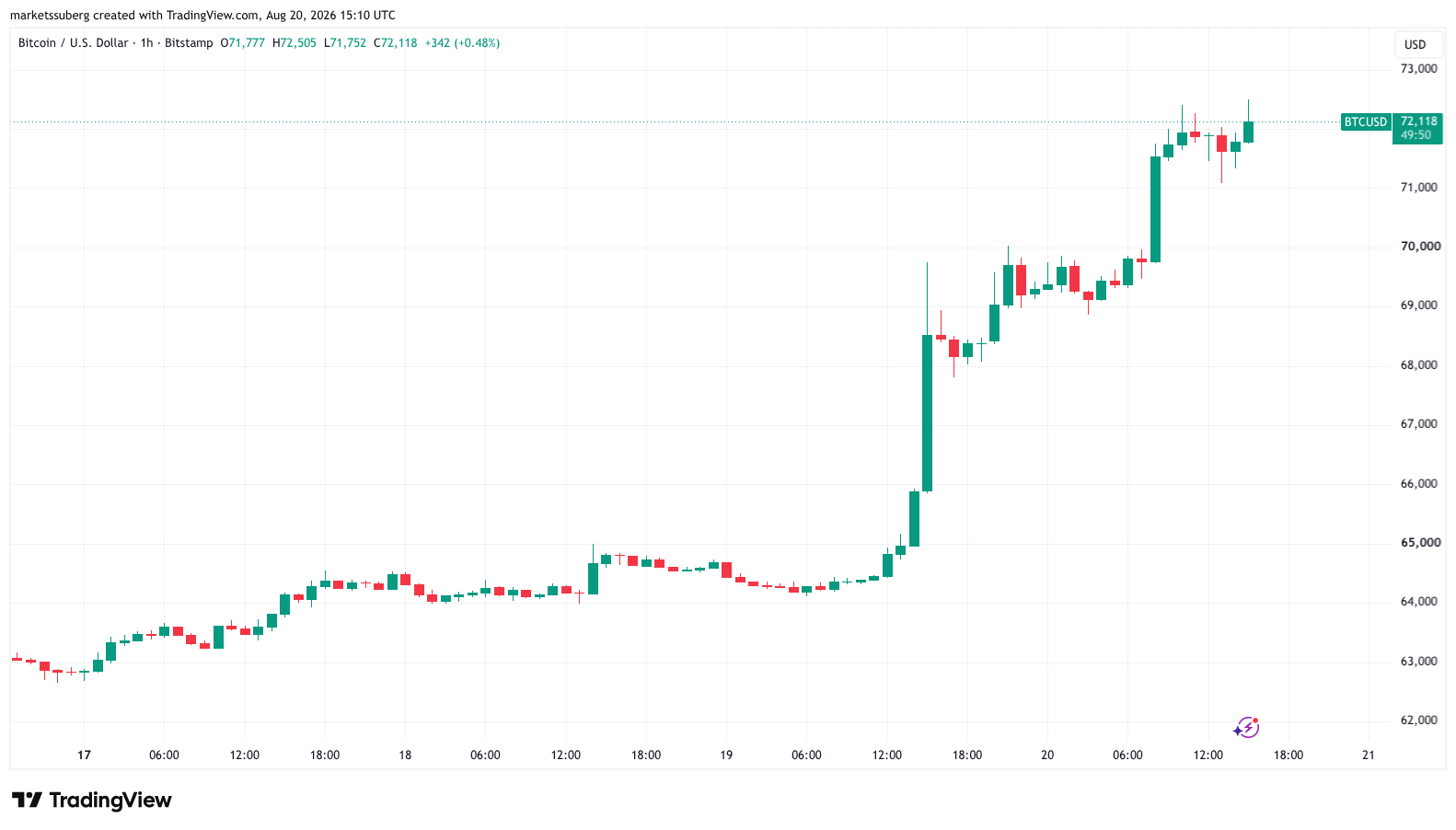
Bitcoin (BTC) saw multimonth highs after Thursday’s Wall Street open while stocks dipped and bond yields rebounded on US-Iran war nerves.
Key points:
- Bitcoin builds on its highest levels in 11 weeks to hit $72,500 on Bitstamp.
- US bond yields see volatility after president Donald Trump threatens “economic warfare” with Iran.
- Bitcoin market participants question whether the rally has staying power.
US bond yields reverse higher after Trump pledges “economic warfare” with Iran
Data from TradingView showed BTC/USD retesting $71,000 before hitting new 11-week high of $72,505 on Bitstamp, up by more than 4% on the day.
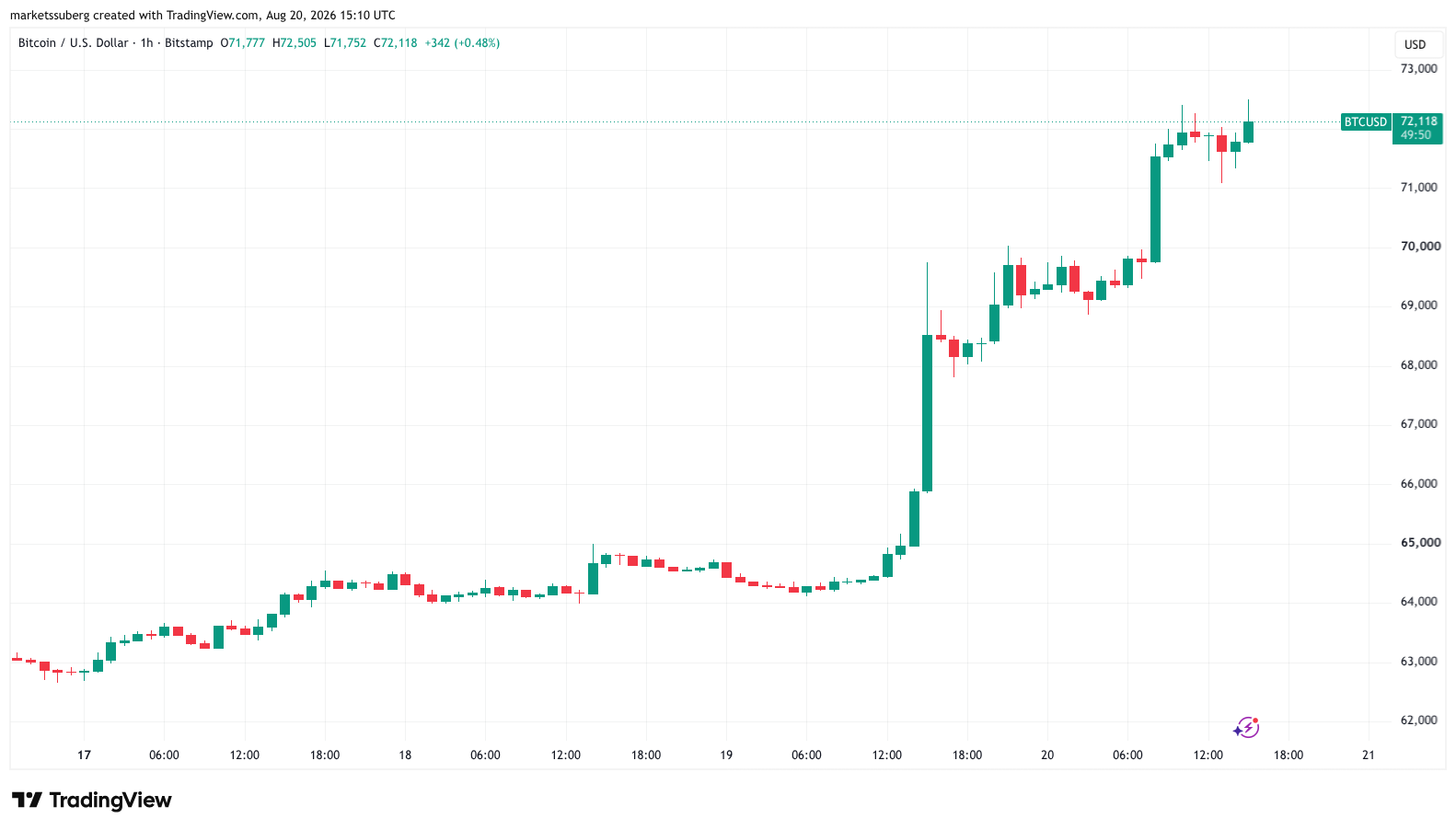
BTC/USD one-day chart. Source: Cointelegraph/TradingView
US equities opened lower after US president Donald Trump threatened Iran with the “most crushing economic operation ever taken against any country,” calling it “Economic D-Day.”
“This will be economic warfare and isolation on an unprecedented scale,” he wrote in a post on Truth Social amid frustration over the lack of a deal with the US on the Strait of Hormuz oil route.
WTI crude oil reached $87.69 per barrel on the day, its highest since July 24.
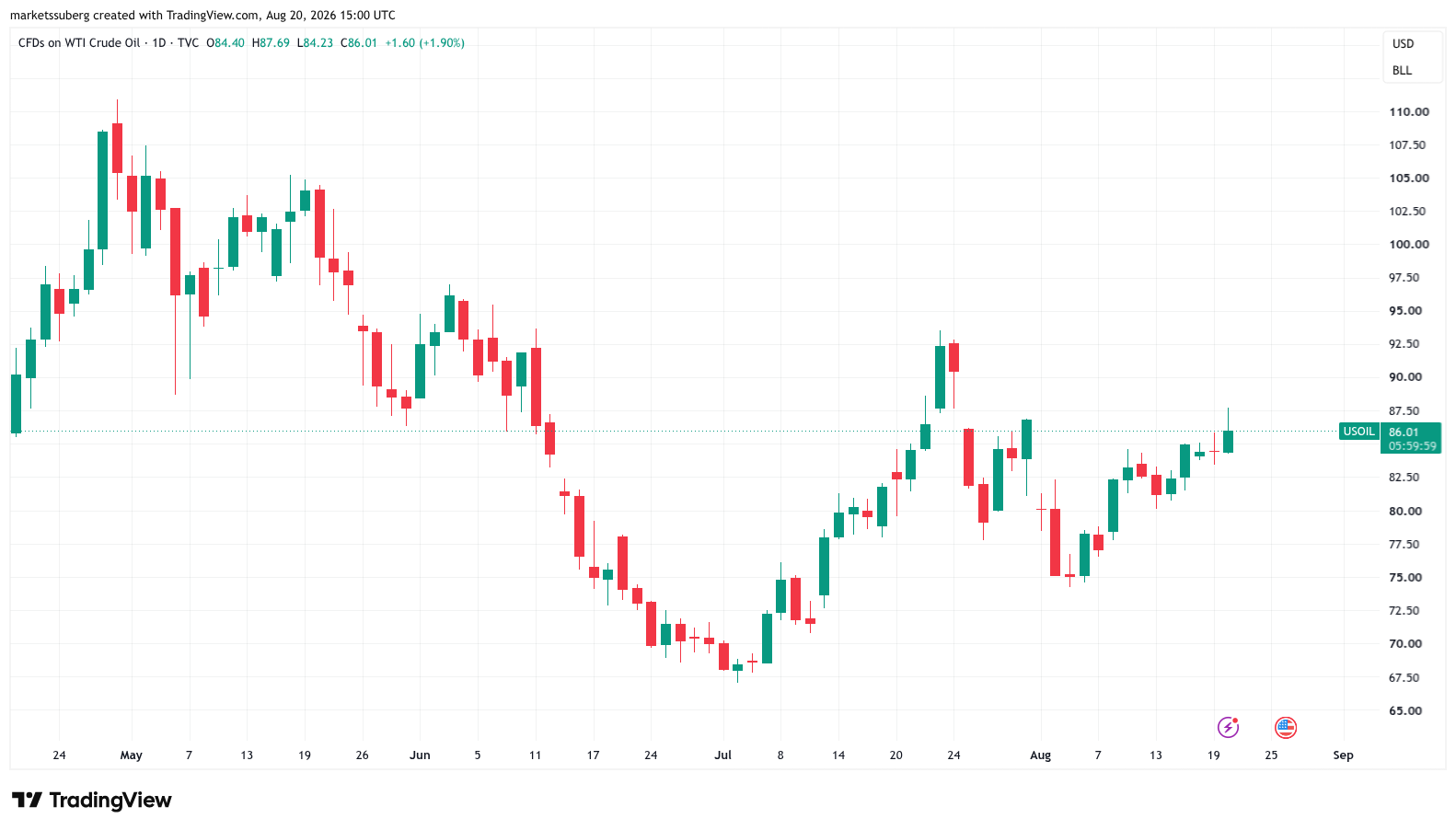
CFDs on WTI crude oil one-day chart. Source: Cointelegraph/TradingView
The comments further appeared to cause a rebound in US government bond yields, which had fallen sharply the day prior after the US Treasury announced that it would at least double the size of its bond-market liquidity interventions from September.
The 30-year yield traded as low as 5.179% on the day before rebounding to 5.266% — an increase of 9 bps, which nearly erased the previous downside. The 10-year bond yield also reversed the previous day’s drop.
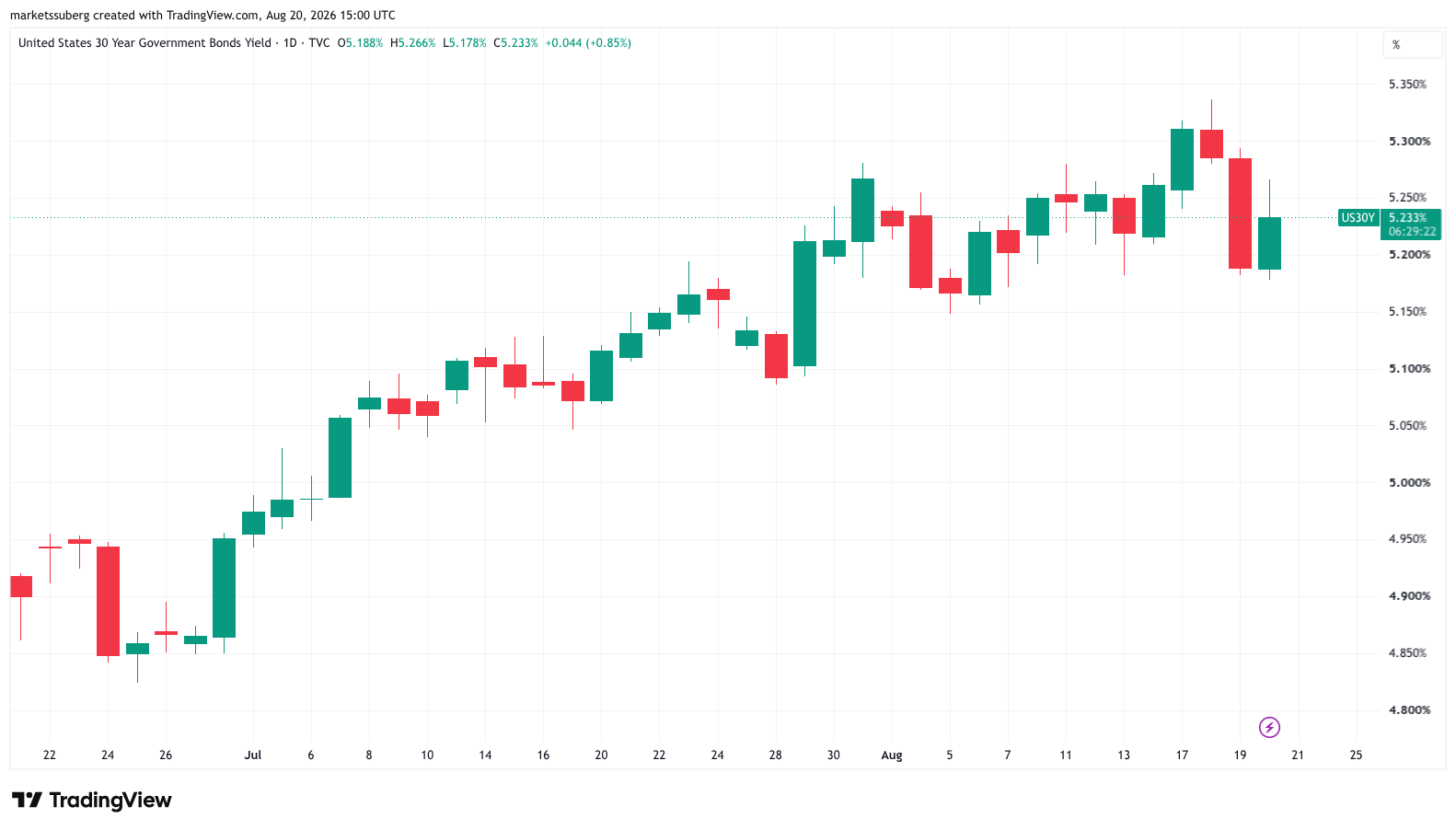
US 30-year bond yields one-day chart. Source: Cointelegraph/TradingView
The Kobeissi Letter cast doubt on whether the intervention would be sufficient to calm markets.
“It’s going to take a lot more intervention to tame this beast,” it wrote in a post on X. The Treasury confirmed in its announcement that it would revisit the size of debt buyback operations on Nov. 4.
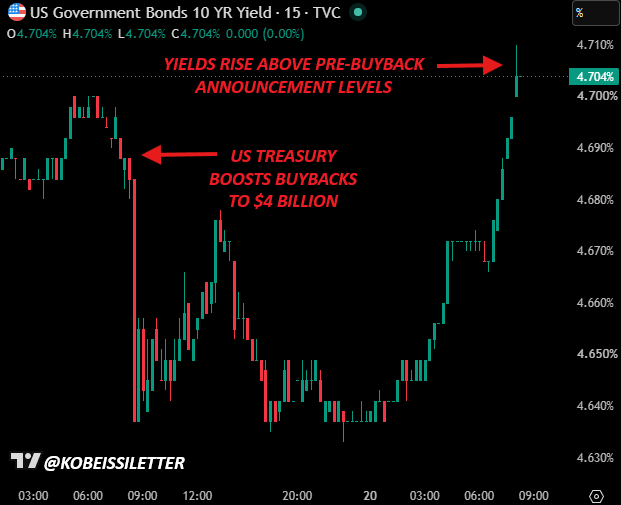
US 10-year bond yields chart. Source: The Kobeissi Letter on X.com
Analysis: Too early to call Bitcoin bull-market comeback
After gaining nearly $10,000 over four days, Bitcoin left market participants skeptical about the durability of its newfound strength.
Related: Bitcoin has ‘largely purged’ froth that preceded 50% drop from $126K: BlackRock
In ongoing X coverage, trader and analyst Rekt Capital argued that BTC/USD would need to sustain its gains to challenge the grip of the bear market.
“Bitcoin will need to rally a lot more than what it has produced thus far if price is to invalidate the ‘weakening support’ idea. At the moment, technicals are pointing to $60k as a weakening macro support,” he wrote on Thursday.
A further post noted that four-year BTC price cycle patterns would allow for a new macro BTC price low until the end of 2026.
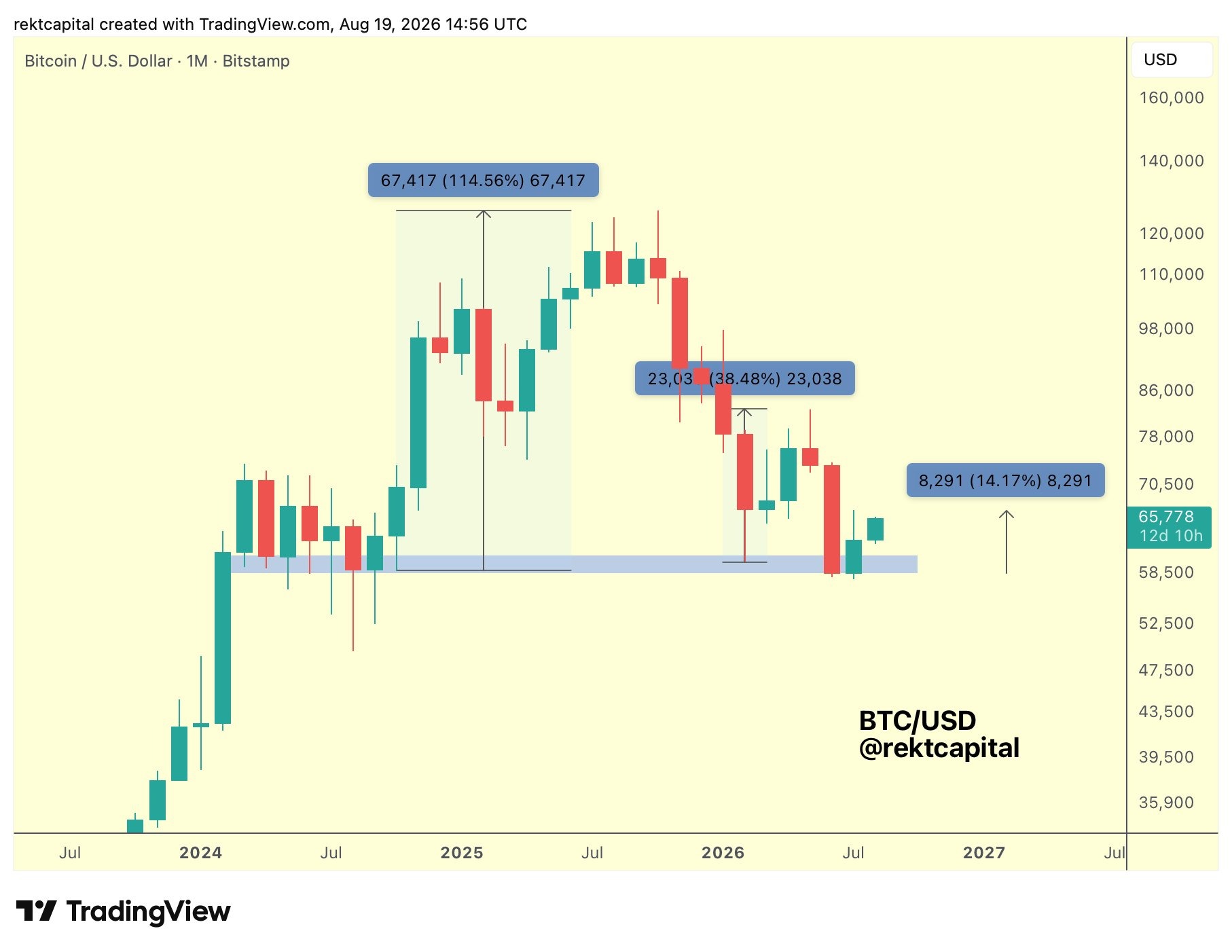
BTC/USD one-month chart. Source: Rekt Capital on X.com
Continuing, Ki Young Ju, CEO of onchain analytics platform CryptoQuant, flagged the return of positive demand for Bitcoin on both spot and derivatives markets — a phenomenon not seen since October 2025, when BTC/USD saw its most recent all-time high of $126,200.
“The scale remains modest, but if this holds for another month, it would be reasonable to conclude that the bear market is over and a new bull cycle has begun,” he told X followers.
Previously, Cointelegraph reported on the lack of spot demand as a key missing catalyst for a sustainable crypto market reversal.
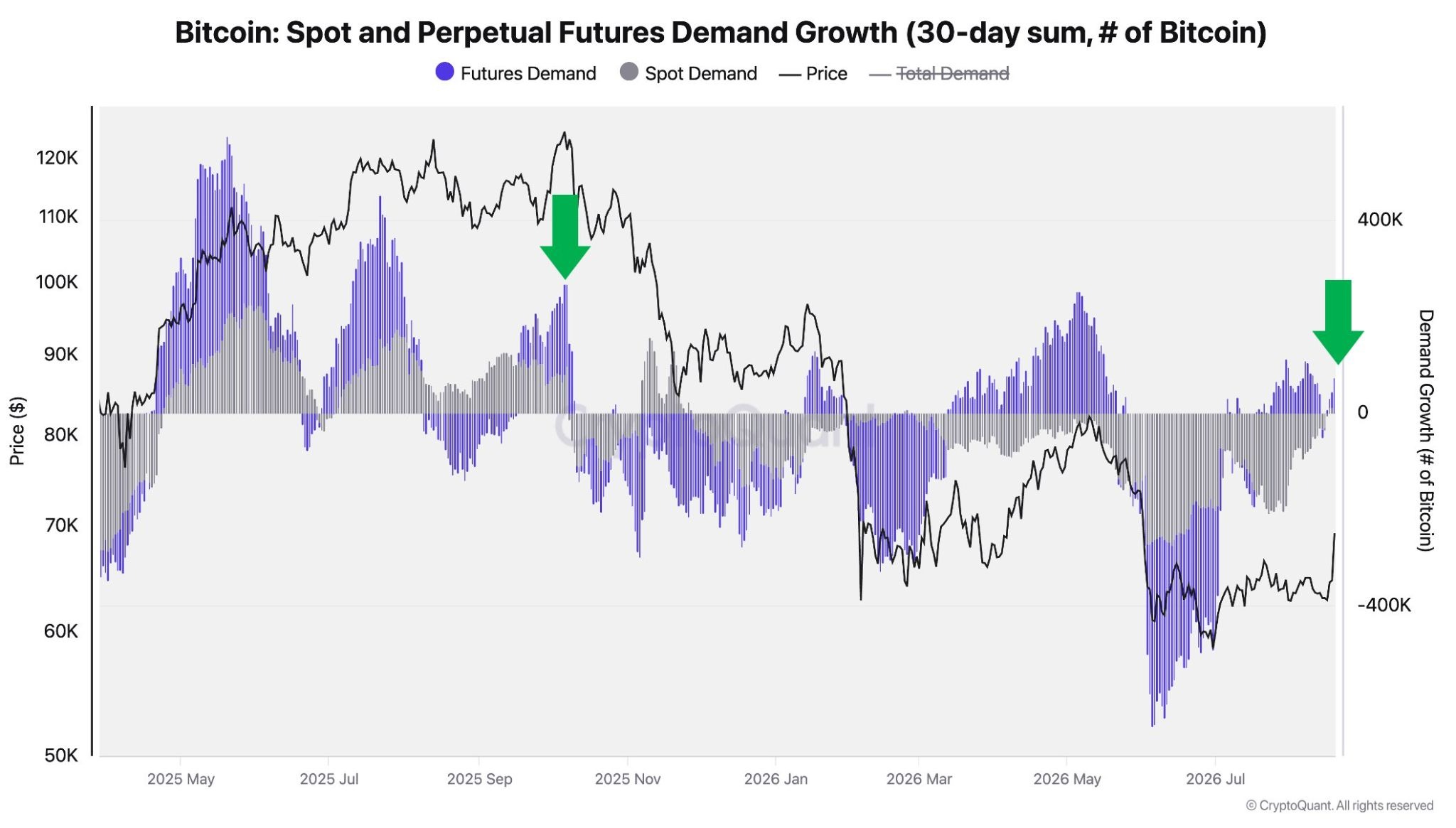
Bitcoin demand growth data. Source: Ki Young Ju on X.com
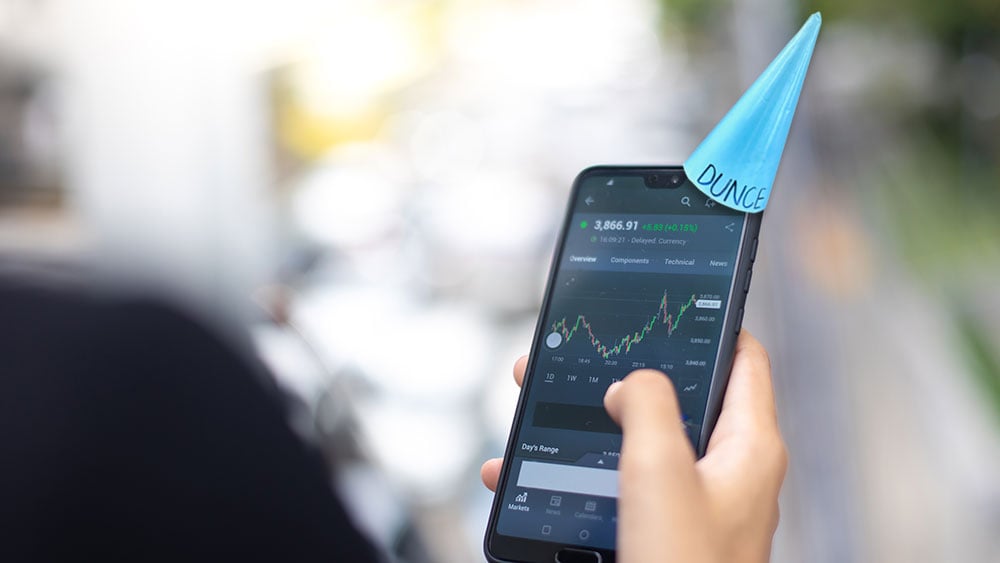
U.S. financial literacy scores are falling and researchers think they’ve pinpointed an overlooked factor in the plunge — the “smartphone penalty.” Research suggests smartphones lead to less engaged survey participants, and are therefore partly to blame for declining financial literacy scores on surveys conducted over the past 15 years. “We found that using a smartphone to answer survey questions leads…
Copyright ©2026 Investor’s Business Daily, LLC. All rights reserved. 87990cbe856818d5eddac44c7b1cdeb8


Commodity Futures Trading Commission Chairman Mike Selig told the inaugural gathering of the Innovation Advisory Committee that his agency won’t sit idle.


Coldcard has released firmware versions 5.6.1 and 1.5.1Q after a three-week security review, while warning that users with affected seed phrases must create new wallets and move their Bitcoin.
Summary
- Firmware 5.6.1 covers Coldcard Mk4 and Mk5, while version 1.5.1Q applies to Q devices.
- New seed creation now requires key presses, dice rolls, or coin flips supplied by the user.
- Installing the firmware does not repair seed phrases created under affected versions.
- Coldcard advised users to verify the signed update before generating a replacement wallet.
Coldcard firmware adds mandatory user entropy
Coldcard said in an Aug. 20 post that the latest release followed three weeks of review after its July 31 emergency fix, which addressed a flaw in how some versions of its firmware generated wallet seed phrases.
The Bitcoin hardware wallet maker released version 5.6.1 for its Mk4 and Mk5 devices and version 1.5.1Q for Coldcard Q. According to the company, the review covered the earlier seed-generation failure and several areas involved in transaction signing, device connections, firmware installation, and random-number checks.
Under the updated process, every new seed phrase must receive at least one source of randomness directly from the device owner. Users can provide it through at least 65 key presses with unpredictable timing, 50 private rolls of a physical six-sided die, or 128 physical coin flips.
Coldcard said the device combines that user input with fresh data from the STM32 true random-number generator and its two secure elements, known as SE1 and SE2. Requiring input from separate sources reduces reliance on any single component during seed creation, according to the company.
“Every newly generated seed now requires one source of user entropy,” Coldcard said.
Users must keep their key presses, dice results, or coin tosses private because anyone who records the inputs may gain information that could help reconstruct the resulting wallet. The company’s instructions treat its standard seed process separately from its advanced dice-only method, which has its own minimum requirements.
Existing Coldcard seeds cannot be repaired by updating
Installing the latest release only changes how Coldcard creates seeds after the update. The company warned that firmware cannot add missing randomness to a seed phrase that was generated previously.
Affected users must update their device first, create and verify an entirely new seed, and transfer their Bitcoin to addresses controlled by the replacement wallet. Importing the old words into updated Coldcard firmware, a different hardware wallet, or a software wallet preserves the same weakness because the underlying seed remains unchanged.
Coldcard advised users to record the replacement seed offline, confirm the wallet’s receiving address on the device screen, and complete a small test transfer before moving the full balance. Owners should keep the old backup until they have checked that the migration succeeded, but they should not continue using it to receive funds.
As reported on Aug. 2 by crypto.news, the official warning applies to seeds created on specific firmware versions rather than every seed ever produced by a Coinkite device. Mk2 and Mk3 seeds generated on versions 4.0.1 through 4.1.9 fall within the affected range.
For Mk4 and Mk5 devices, the advisory covers seeds generated before standard firmware 5.6.0 or Edge firmware 6.6.0X. Coldcard Q users are covered when their seeds were created before standard version 1.5.0Q or Edge version 6.6.0QX.
Mk1 devices are outside the firmware regression identified by researchers, while Coinkite products, including TAPSIGNER, OPENDIME, and SATSCARD, use different software and are not covered by the same disclosure.
Coldcard previously identified an exception for wallets whose owners added at least 50 fair, independent, and private dice rolls before their final seed words were produced. According to the company, the rolls supplied at least 128 bits of independent randomness. Users who cannot remember how many rolls they entered, used fewer than 50, or exposed the sequence were advised to migrate.
A BIP-39 passphrase can create another barrier between an attacker and a wallet, but Coldcard said a passphrase does not repair the seed itself. Owners of affected seeds were therefore told to replace the underlying recovery phrase even if they had added a strong passphrase.
Firmware 5.6.1 tightens signing and device boundaries
Beyond seed creation, the release adds staged verification of partially signed Bitcoin transactions immediately before signing. A partially signed Bitcoin transaction, commonly called a PSBT, lets a wallet review and approve transaction data without exposing its private keys to an online computer.
Coldcard said the new check divides PSBT verification into stages before the device produces a signature. The company also changed its default SIGHASH handling, which determines which parts of a Bitcoin transaction a signature covers.
Additional changes strengthen the boundaries around USB connections and firmware updates. The release also improves Delta Mode isolation, fixes backups involving the active wallet, and adds checks around random-number generator initialization and possible faults.
Users downloading the update were told to verify its digital signature before installation. Firmware signatures allow an owner to check whether a file came from Coldcard and whether it was altered after publication.
The release follows a seed-generation flaw introduced during a firmware change in March 2021. Block’s Bitcoin engineering and security team said affected software called a deterministic MicroPython fallback when creating wallet seeds instead of using the intended STM32 hardware random-number generator.
According to Block’s review, older Mk2 and Mk3 devices could produce seeds with about 40 bits of effective randomness, while vulnerable Mk4, Mk5, and Q devices received some input from a secure element but reached only about 72 bits. Both figures were below the intended 128-bit level, making some seeds practical to search offline.
An attacker who generated possible seeds could derive their Bitcoin addresses and compare them with public blockchain records. Finding a match would provide the private keys needed to transfer the funds without obtaining the physical device, learning its PIN, or attacking the Bitcoin network.
A subsequent analysis of the flaw detailed four suspected attack waves that removed an estimated 1,816 BTC from more than 5,200 addresses. Loss estimates have varied as researchers separated confirmed victim reports from addresses identified through transaction patterns.
Coldcard attack changed custody choices for US holders
The incident also affected how some Bitcoin owners approached custody. An Aug. 4 report on exchange inflows cited OKX Chief Compliance Officer Jonathan Brockmeier as saying the exchange recorded unusually high deposits after the Coldcard attacks.
“We’re seeing record levels of inflows now to centralized exchanges post-Coldcard,” Brockmeier said.
Moving Bitcoin to an exchange removes the owner’s direct responsibility for seed generation and storage, but it places control of the assets with a third-party custodian. US investors who only want exposure to Bitcoin’s price can also use spot Bitcoin exchange-traded funds, whose shares trade through regulated brokerage accounts while institutional custodians hold the underlying Bitcoin.
Galaxy Research said it shared suspected attacker addresses with exchanges, blockchain investigators, and US federal law enforcement agencies. The research firm also reported in early August that about 90% of the Bitcoin taken during the confirmed attack waves had not moved from the identified destination wallets.

Exercise Done At Work May Increase Dementia Risk

Treasury Department blocks ESG funds from Trump Accounts investments

Google Gemini AI Predicts an Unexpected Prediction on Ethereum By The End of 2026





![You’ll Make Much More Money If You Just Trade This! [Easy Switch]](https://wordupnews.com/wp-content/uploads/2026/08/1787253393_maxresdefault-80x80.jpg)
-

 Fashion6 days ago
Weekend Open Thread: Ann Taylor
-
 Sports7 days ago
This U.S. Amateur is a glimpse into golf’s future in more ways than you think
-
 Tech6 days ago
11 Ways to Rank Your Videos
-
 NewsBeat6 days ago
Myanmar says over 300,000 Rohingya refugees verified for repatriation as exodus enters ninth year
-

 Sports6 days ago
Birmingham 2026: Day 6 Timetable for Irish Athletes
-

 Politics5 days ago
SEQ Code: The Three Letter Boarding Pass Code That Could Give You The Worst Seat
-

 Tech3 days ago
Qwen3.8-27B runs frontier-class coding agents and reasoning locally, no cloud API required
-

 Business2 days ago
SMA Solar Technology AG (SMTGY) Q2 2026 Earnings Call Transcript
-

 Crypto World6 days ago
Pi Network Protocol 27 endgame: last upgrade before what?
-

 Crypto World3 days ago
OCC Greenlights Trump Family Crypto Firm for Trust Charter
-
 Tech5 days ago
Every fusion startup that has raised over $100M
-

 Business7 days ago
15 Ways to Make Money From Your Phone (2026 Guide)
-
 Entertainment6 days ago
10 Netflix Shows That Quietly Became Modern Classics
-

 Fashion6 days ago
Weekly News Update, 8.14.26 – Corporette.com
-
 Entertainment6 days ago
Marvel Studios Reveals New X-Men Cast Including Adam Driver and Sadie Sink
-

 Crypto World7 days ago
Robinhood Chain Approaches $1B TVL as Uniswap Integration Boosts Liquidity
-

 News Videos16 hours ago
Don’t Leave Your Financial Future To Chance | August 19, 2026
-

 Fashion6 days ago
Silver bangles for women – Newbridge Silverware
-

 Business6 days ago
Facebook Down Now? Users Report Login And Loading Problems As Outage Trackers Monitor Ongoing Issues
-
 Business5 days ago
Monarch Mutual Fund set to enter MF space with maiden overnight fund; files draft with Sebi
You must be logged in to post a comment Login