
Crypto World
The AI Agent Economy Has an Identity Bottleneck: Blockchain Rails Could Solve It



Artificial intelligence agents are becoming economic actors at a pace that outstrips the infrastructure around them, according to a16z crypto. In a recent post, the firm argued that the real bottleneck in the agent economy is no longer intelligence, but identity.
Today’s agents can execute tasks and move money, yet they still lack standardized ways to prove their identity, demonstrate what they’re authorized to do, and more. That missing layer, the firm suggests, is where blockchains can come in.
From KYC to KYA: a16z Makes the Case for Onchain Identity for AI Agents
In a recent blog post, a16z noted that non-human agents already outnumber human employees by roughly 100 to 1 in financial services. Yet the agents remain “effectively unbanked.”
“They can interact with financial systems, but not in ways that are portable, verifiable, or trusted by default. They lack standardized ways to prove their permissions, operate independently across platforms, or bear liability for the actions they take,” the authors wrote.
Subscribe to our YouTube channel to watch leaders and journalists provide expert insights
The missing piece, according to the post, is a shared identity layer for agents. This could essentially be an SSL equivalent that would standardize how they coordinate across platforms.
Today’s approaches, it noted, remain fragmented. According to a16z crypto,
“While there are prominent attempts to solve this today, those approaches are fragmented: vertically integrated, fiat-first stacks on one side; crypto-native, open standards (like x402 and emerging agent identity proposals) on the other; and extensions of developer frameworks like MCP (model context protocol) that attempt to bridge application-layer identity. There is still no broadly adopted, interoperable way for one agent to prove to another who it represents, what it’s allowed to do, and how it gets paid.”
The post outlined a key fix called “Know Your Agent” (KYA). The concept borrows from Know Your Customer (KYC). It calls for cryptographically signed credentials that link each agent to its principal, permissions, constraints, and reputation.
The firm added that blockchains can serve as a neutral coordination layer for agents. They offer portable identities, programmable wallets, and verifiable attestations that resolve across chat apps, APIs, and marketplaces. Without a common standard, a16z warns, merchants will keep blocking agents at the firewall.
Follow us on X to get the latest news as it happens
a16z also identified four additional gaps beyond identity: centralized control over AI governance, payment rails ill-suited to agent-to-agent commerce, the rising cost of verifying machine decisions at scale, and diminished user oversight as agents take on more autonomous workflows.
It argued that blockchain-based tools, onchain governance, programmable stablecoin payments, cryptographic audit trails, and smart-contract-enforced permissions, can close these gaps and support a more trustworthy agent economy.
The post The AI Agent Economy Has an Identity Bottleneck: Blockchain Rails Could Solve It appeared first on BeInCrypto.



Securitize has appointed Sunil Sabharwal to its board of directors as the tokenization firm moves ahead with expansion plans.
Summary
- Securitize appointed Sunil Sabharwal, a former IMF representative, to its board of directors this week.
- The company manages over $4 billion in on-chain assets for major financial institutions globally.
- Securitize continues pursuing a public listing through its planned merger with Cantor Equity Partners II.
The company said the appointment adds experience in global finance, payments, and public policy at a time when tokenized asset platforms are drawing more institutional attention.
Sabharwal is a business executive and investor with a background in payments and financial services. He also served as a Senate-confirmed U.S. representative to the International Monetary Fund from 2016 to 2018.
Securitize chief executive Carlos Domingo said Sabharwal brings experience from both the private and public sectors. Domingo said “Sunil’s career is defined by building and scaling financial infrastructure at a global level.”
He added that Sabharwal’s background in payments and international finance would support the company’s next phase of growth. Domingo said tokenization is moving from concept to market infrastructure, and that Sabharwal’s perspective would be useful as the firm expands.
Sabharwal currently serves on the boards of Thunes and TookiTaki. He also previously chaired payment companies Earthport and Ogone, which were later acquired by Visa and Ingenico.
His background includes work across payments, cross-border finance, and strategic growth. That track record gives Securitize a board member with experience in both financial infrastructure and regulated markets.
Sabharwal also received the U.S. Treasury’s Distinguished Service Award during his public service. He was nominated by former President Barack Obama in 2016 and served mainly during President Donald Trump’s first term until 2018.
Since 2021, he has worked as an advisor and operating partner for the Blackstone Growth Equity Fund, according to LinkedIn. He also previously advised SpiceVC, an early backer of Securitize.
Securitize expands tokenized asset business
Securitize manages more than $4 billion in on-chain assets. Its platform supports tokenized products tied to firms including BlackRock, Apollo, BNY, Hamilton Lane, KKR, and VanEck.
Among its best-known products is BlackRock’s BUIDL fund. The company has positioned itself as one of the larger players in the tokenized real-world asset market as institutions explore blockchain-based fund structures.
The board appointment comes as the company continues to build out that business. It also comes as market participants pay closer attention to firms that offer tokenized versions of traditional financial products.
Public listing plan remains in focus
Securitize is also pursuing a public market listing through a merger with Cantor Equity Partners II, a Cantor Fitzgerald-sponsored firm. The companies entered into a definitive acquisition agreement in October.
The deal would value Securitize at $1 billion. The combined company is expected to trade on Nasdaq under the ticker CEPT.
The transaction would also give Securitize access to the $240 million raised by CEPT in its initial public offering. That planned listing remains a key part of the company’s growth strategy as it expands its presence in tokenized finance.


- Arbitrum froze 30,766 ETH before it could be bridged out.
- Attacker moved 75,701 ETH and began routing funds to Bitcoin.
- Over $176 million is being laundered through multiple parallel flows.
Arbitrum has frozen a significant portion of funds linked to the KelpDAO exploit, even as the attacker moves to push the remaining assets beyond reach.
The Arbitrum Security Council confirmed it froze 30,766 ETH, valued at over $70 million at the time of action.
The funds were tied to an address associated with the KelpDAO attacker and were secured before they could be bridged out of the network.
The intervention came after coordination with law enforcement, suggesting authorities may already have leads on the exploiter’s identity.
The Arbitrum Security Council has taken emergency action to freeze the 30,766 ETH being held in the address on Arbitrum One that is connected to the KelpDAO exploit. The Security Council acted with input from law enforcement as to the exploiter’s identity, and, at all times,…
— Arbitrum (@arbitrum) April 21, 2026
A race against time
Blockchain investigators, including PeckShield, had flagged that the attacker was already attempting to move the funds off Arbitrum using a native bridge.
Had that transfer been completed, the ETH would likely have joined a much larger pool of stolen assets already in circulation across other chains.
By intervening when it did, Arbitrum prevented roughly 29% of the stolen funds from entering the laundering pipeline. However, the remaining assets were not as fortunate.
The KelpDAO exploit itself is estimated at around $290 million, making it one of the largest decentralized finance breaches of 2026.
The attacker moved quickly after the initial exploit, splitting funds across multiple wallets and chains in an effort to reduce traceability.
Laundering shifts to Bitcoin
Following the freeze, the attacker accelerated efforts to move the remaining funds.
Data shows that approximately 75,701 ETH, worth about $175 million, was transferred to Ethereum mainnet.
From there, the funds began moving into Bitcoin through decentralized protocols like THORChain, Chainflip, and Umbra Cash, which allow direct cross-chain swaps without relying on centralized exchanges.
#PeckShieldAlert The @KelpDAO exploiter has begun laundering stolen funds (~$176M).
They have started bridging small batches of funds from #Ethereum to $BTC via @THORChain, @UmbraCash, @chainflip, and @BitTorrent. pic.twitter.com/4cm8dOjTWL
— PeckShieldAlert (@PeckShieldAlert) April 21, 2026
PeckShield analysts observed that the attacker left only about 0.7 ETH in some wallets, just enough to cover transaction fees, while draining the rest into new routes.
This pattern reflects a high level of operational discipline and planning.
Another $176 million portion of the stolen funds has also been actively moved in parallel transactions.
Rather than laundering everything in a single flow, the attacker appears to be running multiple streams at once.
This staggered approach reduces the risk of a single point of failure and makes recovery efforts more difficult.
Is the infamous North Korea’s Lazarus Group linked to the KelpDAO exploit?
The scale and coordination of the operation have led investigators to link the exploit to North Korea’s Lazarus Group, specifically a subgroup known as TraderTraitor.
This attribution is based on transaction patterns and laundering techniques that match previous operations tied to the group.
Lazarus has a long history of targeting crypto platforms and using complex cross-chain strategies to obscure stolen funds.
The use of decentralized bridges and rapid asset conversion seen in the KelpDAO case fits that pattern closely.
Crypto World
Coinbase Expands x402 With AI Agent App Store, Pushing Crypto Payments Into AI Infrastructure
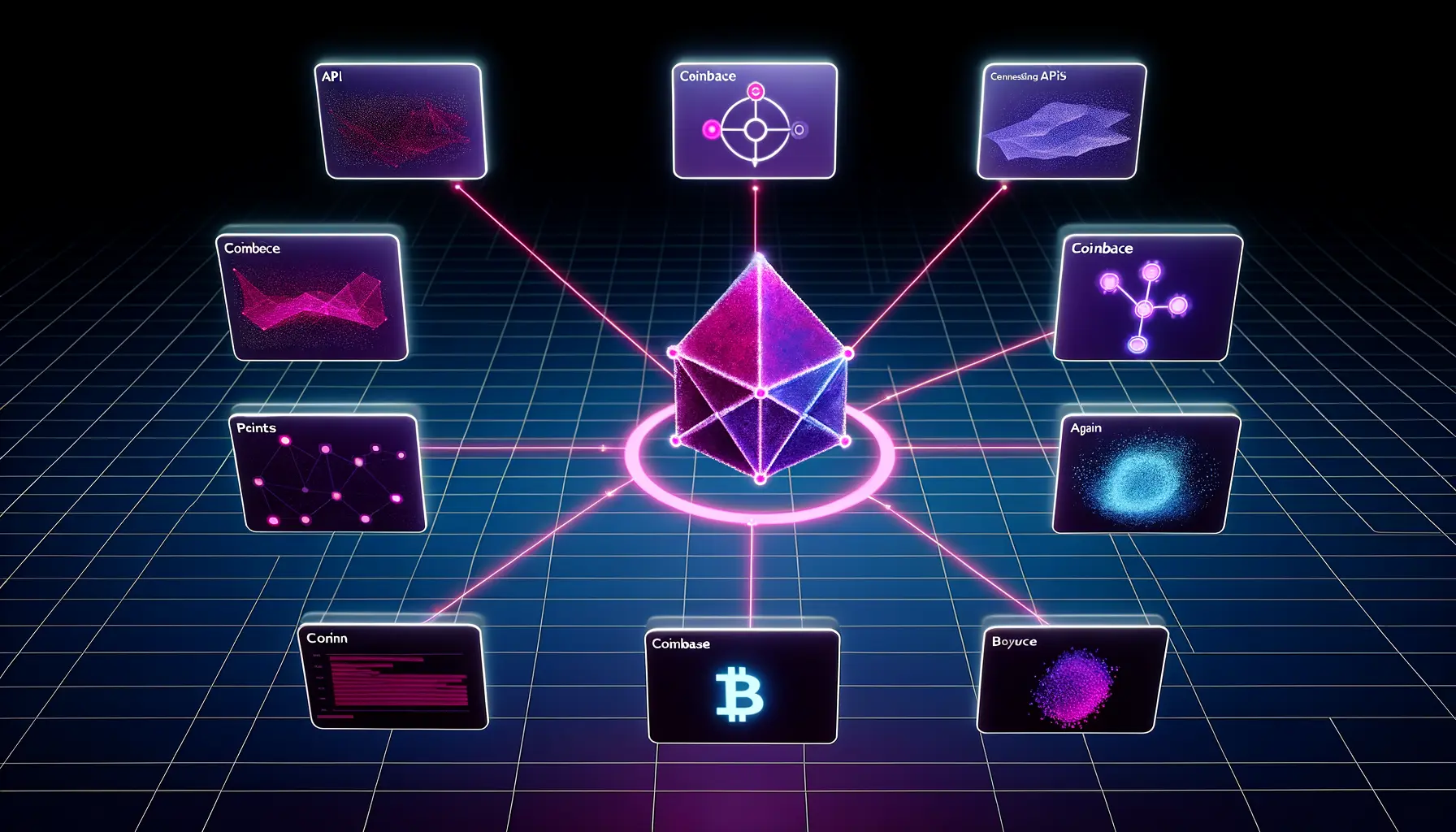
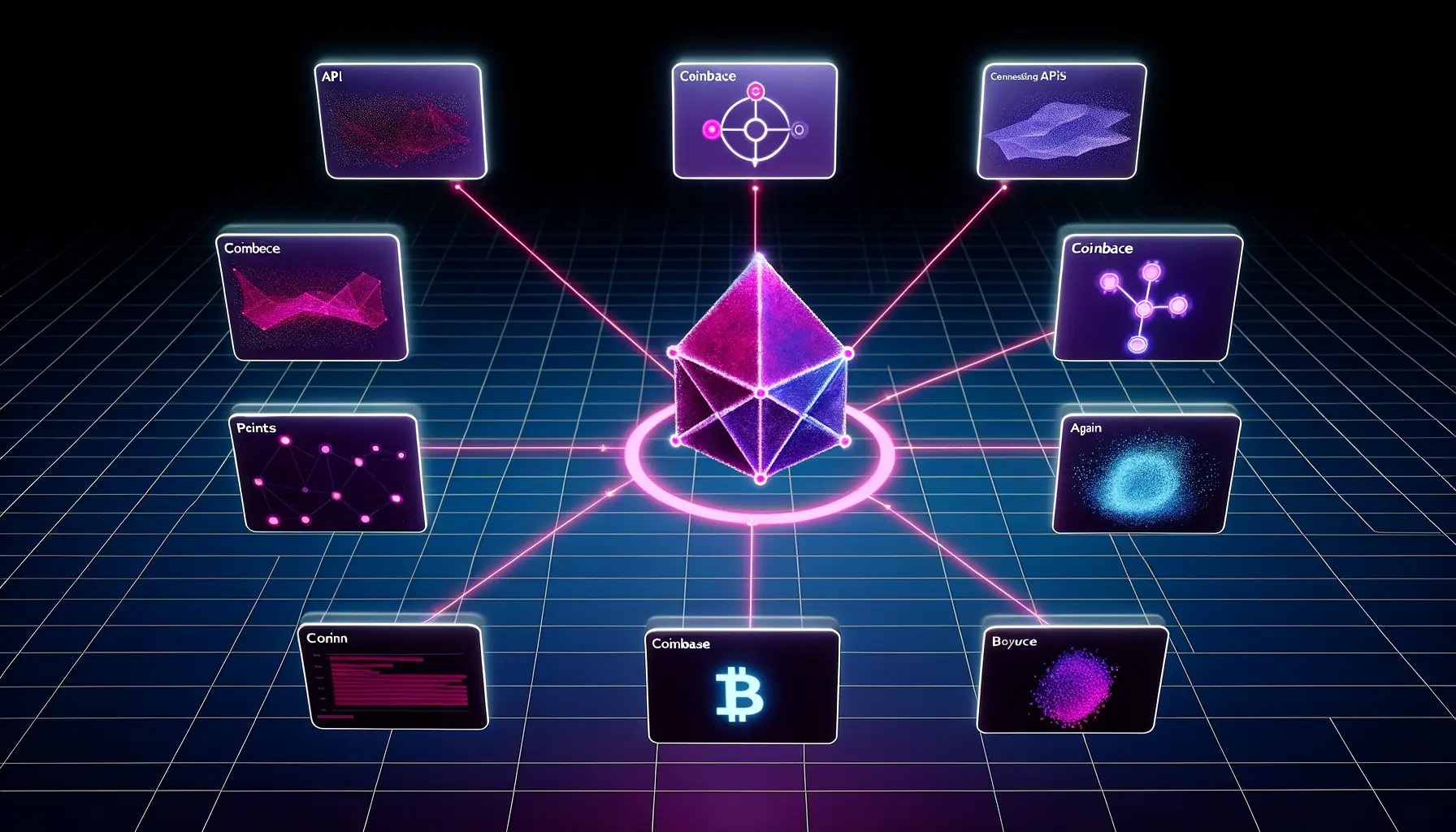
Coinbase has launched Agent.market, an AI agent app store built on its x402 payment protocol, embedding permissionless stablecoin rails directly into AI infrastructure across seven service categories. As of April 21, 2026, approximately 69,000 active AI agents on x402 have already processed over 165 million transactions totaling $50 million in volume, figures that frame this as an infrastructure play, not a speculative product launch.
The core question now: whether Agent.market can become the default discovery and payment layer for autonomous AI agents, or whether fragmented developer ecosystems blunt adoption before the rails gain critical mass.
Key Takeaways:
- What x402 is: An open payment protocol named after the unused HTTP 402 status code, enabling instant stablecoin micropayments over HTTP for APIs, apps, and AI agents – no accounts or subscriptions required.
- What Agent.market adds: A permissionless app store spanning seven categories – reasoning, data, media, search, social, infrastructure, and trading – with providers including OpenAI, Bloomberg, CoinGecko, AWS Lambda, and Coinbase RAT.
- What AI agents can now do: Autonomously discover, pay for, and chain together services using Agentic Wallets, without developer-preset API keys or manual billing setup.
- Payment rail: USDC stablecoins on Base, with Coinbase’s Payments MCP enabling LLMs including Anthropic’s Claude and Google’s models to access blockchain wallets via x402.
- Backing: The x402 Foundation, incubated under the Linux Foundation, counts over 20 institutional backers including Cloudflare, Stripe, AWS, Google, Visa, Circle, and the Solana Foundation.
- Watch item: Google’s agentic payments protocol integration with x402 for single-tap USDC retail transactions – a signal that could accelerate volume materially.
Discover: The best crypto to diversify your portfolio with
How Coinbase x402 Agent.market Actually Works – and Why the Architecture Matters
x402 was designed around a structural gap in the existing web: the HTTP 402 status code has existed since the early internet as a placeholder for payment-gated content, but was never implemented at scale.
Coinbase built x402 to fill that gap. When an AI agent hits a payment-required endpoint, x402 handles the USDC micropayment over HTTP instantly, without redirecting to a billing portal or requiring a pre-negotiated API key relationship.
Agent.market operationalizes that mechanic into a browsable catalog. Service providers can list without permission, which directly reduces the setup friction that has historically limited API commerce: x402 creator Erik Reppel stated the protocol “is reshaping customer acquisition activation costs for businesses, as robots can now access services at a very low setup cost without needing API keys.”
That framing matters; it redefines cost-of-acquisition for AI-facing businesses from human onboarding flows to machine-readable price discovery.
The seven-category structure – reasoning, data, media, search, social, infrastructure, and trading – maps directly onto what autonomous agents need to chain multi-step tasks. An agent could pull financial data from CoinGecko, process it through an OpenAI reasoning endpoint, execute a trade via Bankr, and log the transaction through QuickNode infrastructure, with every handoff settled in USDC on Base without human authorization at each step.
If adoption follows the arc of prior API marketplaces, the trading and data verticals will see volume concentration first – they carry the highest per-call value and the most time-sensitive payloads.
The failure mode to watch is latency and settlement finality at scale. x402’s prior 165 million transactions represent an average call value under $0.31 – the architecture is calibrated for micropayments, not bulk settlements. Whether it holds throughput as agent complexity and chain length increase is the open engineering question.
Discover: The best pre-launch token sales
The post Coinbase Expands x402 With AI Agent App Store, Pushing Crypto Payments Into AI Infrastructure appeared first on Cryptonews.
Decentralized Finance (DeFi) is often marketed as a parallel financial system built on transparency, efficiency, and permissionless access. Yet beneath these narratives lies a more fundamental driver—volatility. While traditional finance seeks to minimize instability, DeFi, in contrast, is structurally dependent on it. Volatility is not a byproduct of the system; it is, in many ways, the system’s core product.
Volatility as the Engine of Opportunity
At the heart of DeFi protocols such as Uniswap, Aave, and Compound lies a simple premise: market inefficiencies create profit opportunities. These inefficiencies are amplified by price fluctuations.
Without volatility, several foundational DeFi mechanisms would lose their purpose:
- Arbitrage depends on price discrepancies across markets. Stable prices eliminate these gaps, leaving no room for profit extraction.
- Yield farming relies on shifting capital toward higher returns, often driven by rapidly changing incentives and token valuations.
- Liquidation cycles in lending protocols require price movements to trigger collateral thresholds.
In essence, volatility fuels the activity that sustains user engagement and capital flow within the ecosystem.
Liquidity Provision and the Cost of Stability
Liquidity providers (LPs) are often presented as passive participants earning fees. However, their returns are closely tied to market turbulence. In automated market makers (AMMs), price swings generate trading volume, which in turn produces fees.
Yet this comes with a trade-off: impermanent loss. In low-volatility environments, LPs may see reduced trading activity and lower fee generation, while still being exposed to potential downside risks. Ironically, the more stable the market becomes, the less attractive liquidity provision can be.
This dynamic reveals a critical tension: DeFi protocols require stability to build trust, but depend on volatility to remain profitable.
The Feedback Loop of Instability
DeFi does not merely react to volatility—it amplifies it. Mechanisms embedded within protocols often create feedback loops:
- Price drops trigger liquidations, which further push prices downward.
- Yield incentives attract capital rapidly, only for it to exit just as quickly when returns diminish.
- Leveraged positions magnify both gains and losses, increasing systemic sensitivity to price changes.
These cycles are not anomalies; they are intrinsic to how DeFi systems are designed. Platforms like MakerDAO and Curve Finance attempt to introduce stability through collateralization and specialized liquidity pools, yet even they cannot fully escape the gravitational pull of broader market volatility.
Stability as a Narrative, Not a Foundation
Stablecoins and low-volatility pools are often positioned as solutions to DeFi’s chaotic nature. However, even these instruments rely indirectly on volatility elsewhere in the system. For example, maintaining a stable peg frequently depends on arbitrage incentives—again requiring price discrepancies to function effectively.
Thus, stability in DeFi is less a foundational property and more a constructed layer, supported by mechanisms that ultimately trace back to volatility.
Conclusion
The promise of DeFi is frequently framed around democratizing finance and reducing reliance on centralized institutions. While these goals are significant, they can obscure a more pragmatic reality: DeFi thrives on movement, not equilibrium.
Volatility is the fuel that powers arbitrage, sustains yield, and drives liquidations. Without it, the mechanisms that define DeFi would stall. Rather than viewing volatility as a problem to be solved, it may be more accurate to recognize it as the primary product being generated and consumed within the ecosystem.
Understanding this dynamic is essential for participants. Success in DeFi is not about avoiding chaos—it is about navigating it effectively.
REQUEST AN ARTICLE
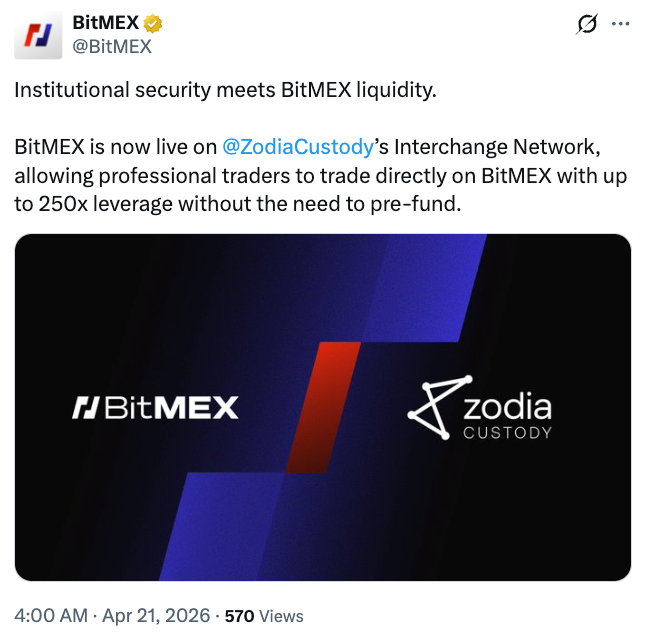
BitMEX, a derivatives-focused cryptocurrency exchange, said it has secured a custody partner to enable asset segregation and trading with off-exchange assets.
The company announced Tuesday a partnership with Zodia Custody to allow traders to access derivatives while keeping collateral in segregated custody. The integration is immediately accessible via Interchange, Zodia Custody’s off-venue settlement solution.
BitMEX CEO Stephan Lutz told Cointelegraph the move reflects lessons from past market failures, including the FTX collapse and the $1.4 billion Bybit hack, which exposed risks tied to unsegregated or compromised exchange-held funds.
“Cases like the FTX collapse and the Bybit hack are examples of how custody failures or security threats can put client funds at risk,” Lutz said.
Trading without prefunding the exchange
Under the integration, institutional and professional BitMEX clients can trade derivatives without transferring assets directly onto the exchange. Instead, collateral remains in Zodia’s segregated vault and is mirrored for trading execution.
This structure allows traders to maintain control of assets while accessing BitMEX’s derivatives, including perpetual swaps and futures. It also supports cross-collateral usage of Bitcoin (BTC), Ether (ETH), Tether USDt (USDT) and USDC (USDC).

This setup is designed to improve capital efficiency for traders by removing the need to move assets between custody and exchange accounts. It also reduces operational risk tied to pre-funding workflows, which are common in traditional crypto trading models.
Custody is a core part of traditional finance markets
Zodia Custody, which launched in 2021 and is backed by Standard Chartered, is an institutional digital asset custody provider operating globally. The platform secured a Markets in Crypto-Assets Regulation (MiCA) authorization in Luxembourg in late 2025, enabling regulated services across the European Union.
BitMEX CEO noted that custody has long been a core element of traditional finance, becoming even more critical following collapses like FTX and security incidents like the Bybit hack.
Related: Zonda exchange says 4.5K BTC wallet inaccessible amid withdrawal crisis
“Custody is a core part of traditional finance markets, and recent cases like FTX and Bybit are clear examples of why it’s even more important in crypto,” Lutz said.
“As the industry matures, institutions are trading digital assets like any other asset — and should have access to the same services as they do in traditional markets,” he added.
Additional reporting by Felix Ng.
Magazine: Adam Back says current demand is ‘almost’ enough to send Bitcoin to $1M

Key Highlights
- Q1 earnings per share reached $6.14, surpassing Wall Street’s $6.05 projection by $0.09
- Quarterly revenue totaled $9.88 billion, marking a 4% year-over-year increase and exceeding the $9.76 billion forecast
- The Aeronautics Systems division reported a 17% sales increase, fueled by B-21 bomber and Sentinel program growth
- Operating profit jumped 73% to $989 million while segment margins expanded to 10.8%
- Shares declined approximately 1.6% during premarket hours despite beating estimates, with unchanged annual projections
Northrop Grumman delivered impressive first-quarter 2026 results that exceeded analyst expectations across key metrics, yet the defense contractor’s shares retreated during Tuesday’s early market session.
The company reported earnings per share of $6.14, comfortably above the Street’s $6.05 consensus target. Quarterly sales reached $9.88 billion, reflecting a 4% increase compared to the $9.47 billion recorded in the same period last year, and beating the anticipated $9.76 billion mark.
The Aeronautics Systems division emerged as the standout performer, with revenue soaring 17%. This substantial growth stemmed from a recently secured agreement with the U.S. Air Force that accelerates B-21 bomber manufacturing capacity alongside expedited deployment of the Sentinel intercontinental ballistic missile program’s initial operational capability.
Northrop Grumman Corporation, NOC
Operating profit experienced a remarkable 73% surge to $989 million during the quarter. The company’s operating margin expanded significantly to 10.0% from the prior year’s 6.1%. This dramatic improvement was primarily attributed to the elimination of a $477 million charge related to the B-21 program that had negatively impacted first-quarter 2025 financial performance.
Segment operating profit climbed 89% to $1.07 billion, while segment operating margins improved substantially from 6.0% to 10.8%.
The defense contractor secured $9.8 billion in net new contract awards throughout the quarter. The company’s total backlog now stands at an impressive $95.6 billion — representing more than double its annual revenue.
Organic revenue growth registered at 5% on a year-over-year basis.
Full-Year Projections Remain Unchanged
Northrop maintained its previously issued 2026 full-year guidance without modification. Management continues to anticipate total sales between $43.5 billion and $44.0 billion, with MTM-adjusted earnings per share projected in the $27.40 to $27.90 range.
Current analyst consensus sits at approximately $28 for EPS — positioned above the company’s upper guidance threshold. Notably, when the defense contractor initially provided guidance in January, Wall Street expectations were hovering around $29.
The company reaffirmed its free cash flow target of $3.1 billion to $3.5 billion for the year. Segment operating income guidance remains between $4.85 billion and $5.0 billion.
Chief Executive Kathy Warden characterized the quarterly performance as evidence of the organization’s capability to execute amid “today’s unprecedented global demand environment.”
Market Response
Notwithstanding the earnings beat, NOC shares declined roughly 1.6% during premarket activity to $646.67. Meanwhile, both S&P 500 and Dow Jones Industrial Average futures were trading higher during the same timeframe.
The stock had already appreciated 15% year-to-date prior to Tuesday’s announcement, and approximately 24% over the trailing twelve-month period. Shares currently command a forward price-to-earnings multiple of about 23 times, elevated from roughly 19 times one year earlier.
This premium valuation level may help explain why a solid quarterly earnings performance failed to generate positive momentum for the stock, particularly given the company’s decision to maintain rather than raise its full-year outlook.

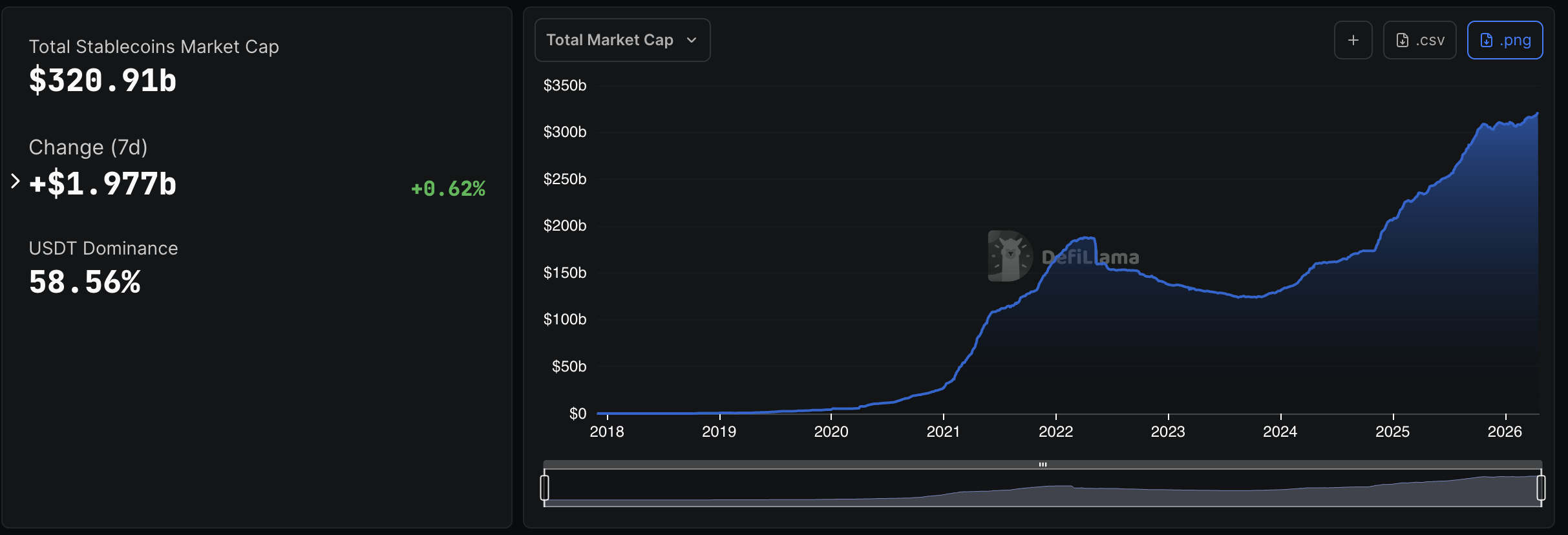
Tether just dropped a 1 billion USDT on Ethereum just as the memecoin scene in the chain is heating up. Arkham Intelligence flagged the event just shortly after Bitcoin pushed past $76,000. Following this, the Total USDT supply now stands at $193 billion, dominating the $320 Billion stablecoins size by 58%.
Institutional capital is moving, and Tether mints of this scale historically precede accelerated exchange inflows. The market is watching where this billion lands.
Discover: The best crypto to diversify your portfolio with
Is Tether 1 Billion USDT Mint a Reliable Liquidity Signal for On-Chain Trading?
Glassnode’s USDT Holder Accumulation Ratio sits at 57.63%, above the 50% threshold that indicates net accumulation by holders. Onchain Lens noted this mint as a precursor to heightened on-chain activity, with tokens expected to flow rapidly toward exchanges and DeFi platforms once deployed.
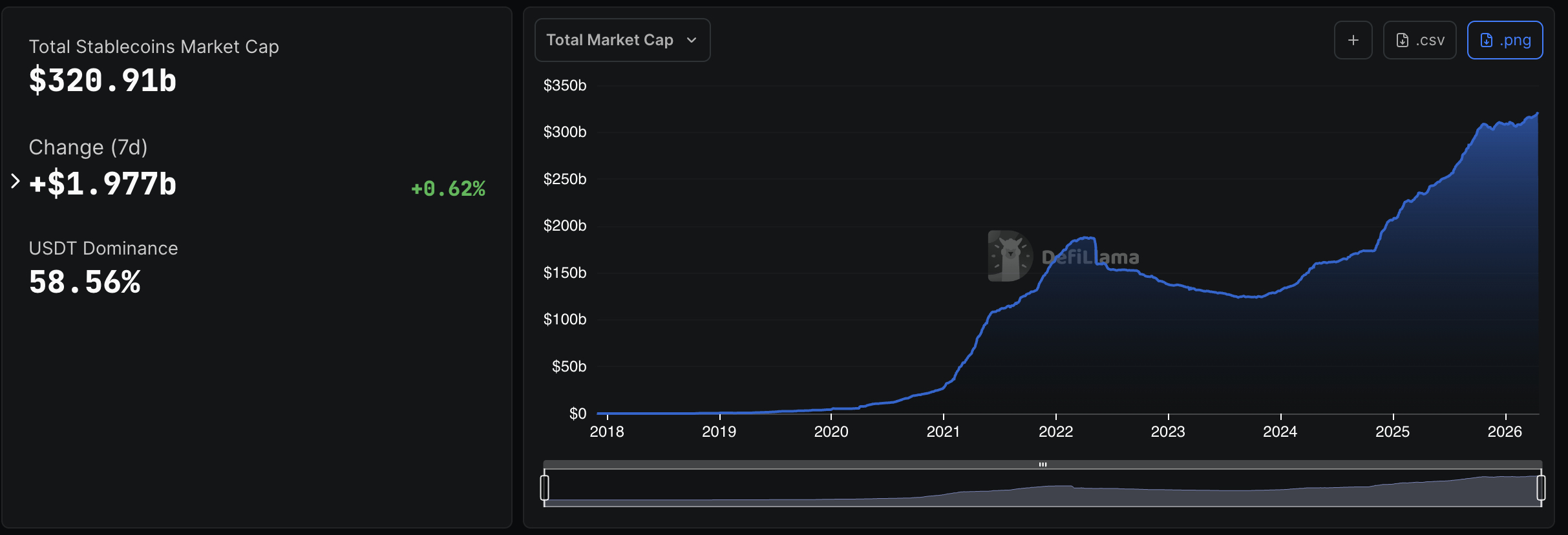
Transaction volume data reinforces the dominance picture. USDT’s volume of $484.17 billion already surpasses USDC’s $319.2 billion, a $164.97 billion gap that reflects USDT’s stranglehold on crypto payments infrastructure. Tron’s low-fee environment (driving 50%+ USDT network dominance) makes rapid deployment operationally straightforward once Ardoino’s team activates the inventory.
Institutional momentum is building, but the question is whether deployment timing aligns with the current sentiment window.
Discover: The best pre-launch token sales
Maxi Doge Eyes Big Upside as USDT Liquidity Hunts Yield
When $1 billion in fresh stablecoin liquidity enters the ecosystem, it doesn’t sit idle. History shows it finds its way into high-beta plays, and meme tokens with active communities tend to capture disproportionate inflows during liquidity expansion windows.
Maxi Doge ($MAXI) is positioned squarely in that window. Built on Ethereum as an ERC-20 token, the project combines meme-first marketing with structural utility: holder-only trading competitions with leaderboard rewards, a Maxi Fund treasury for liquidity and partnerships, and dynamic staking APY.
The presale has raised $4.7 million at a current price of $0.0002814. Memecoin activity on Ethereum is picking up alongside rising USDT liquidity. It’s the timing that $MAXI’s community is watching closely.
Research Maxi Doge before the next price tier moves.
The post Tether Minted 1 Billion USDT: On-chain Trading Grinding Back appeared first on Cryptonews.
Singapore banking giant OCBC just put institutional-grade gold on-chain (Solana), and the RWA market didn’t flinch. But what does it mean for Solana price in April 2026, and could a new Bitcoin layer-2 be next for a RWA boom?
OCBC, one of Southeast Asia’s largest financial institutions, launched its GOLDX token on both Ethereum and Solana in partnership with Lion Global Investors and digital asset exchange DigiFT. The underlying fund, the LionGlobal Singapore Physical Gold Fund, held approximately $525 million in AUM as of April 16.
Institutional investors and hedge funds can subscribe using stablecoins or fiat, with tokens delivered directly to on-chain wallets.
Kenneth Lai, head of global markets at OCBC, called it “a milestone in the corporation’s blockchain-focused approach.”
Meanwhile, Solana’s tokenized gold volume had already surged 290%, processing 25.5 million tokens amid CLARITY Act optimism, a context that makes OCBC’s chain selection look less like a coincidence and more like a calculated bet.
Total tokenized real-world assets on public blockchains now exceed $29 billion, up over 10% in the last 30 days. That growth rate is attracting serious infrastructure attention, and not just on Ethereum and Solana.
Discover: The best pre-launch token sales
Can Solana Price Break Out as RWA Momentum Builds?
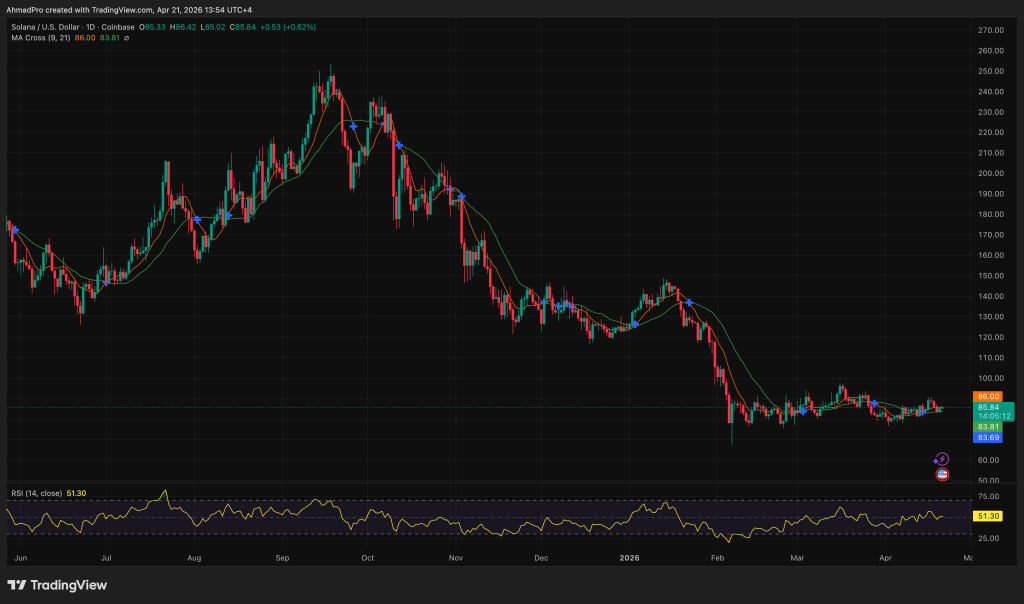
SOL looks active on the surface, but the price action tells a different story; this is not a breakout, it is compression with real participation, which usually means supply has not fully cleared yet.
That $78 to $80 zone is doing all the work right now, because as long as it holds, the structure stays intact and buyers are still defending, but it is not strong enough yet to push higher.
The problem is overhead, with $92 to $95 acting like a ceiling every time the price gets close, so until that breaks, this is still a range, not a trend.
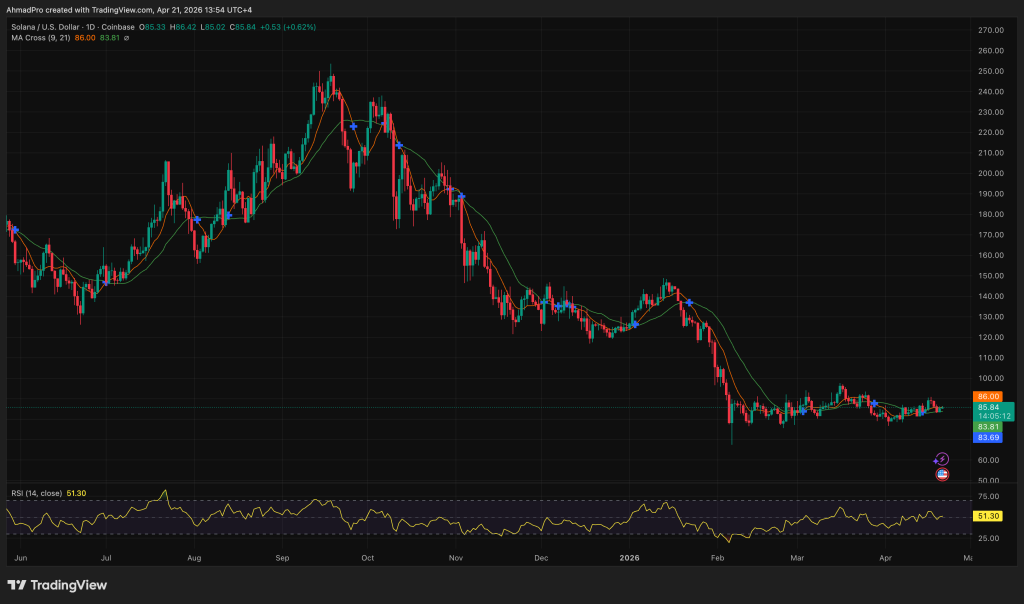
If SOL can finally clear that zone with momentum, that is where things open up toward $110 and the next leg starts forming, especially if institutional narratives keep building.
But realistically, this still looks like a grind between $80 and $92 while the market builds a base and waits for a broader alt move.
The risk is if $78 breaks on volume, because that is where the structure weakens, and the price can slip back toward the low $70s, which does not kill the long-term story but definitely delays it.
And the bigger point people miss is that at this size, moves are slower and more measured, you are not getting easy 10x runs here, you are looking at more controlled upside, which is why smaller plays start attracting attention when SOL stalls like this.
Discover: The best crypto to diversify your portfolio with
Bitcoin Hyper Eyes the RWA Infrastructure Gap Bitcoin Itself Can’t Fill
Here’s the structural irony: Bitcoin holds the deepest liquidity, the strongest institutional trust, and the most recognizable security model on the planet, yet it cannot run the smart contracts that make tokenized gold, tokenized equities, or any programmable RWA function.
Solana can. Ethereum can. Bitcoin, natively, cannot. That gap is precisely what Bitcoin Hyper (HYPER) is engineering around.

Bitcoin Hyper positions itself as the first Bitcoin Layer 2 with Solana Virtual Machine (SVM) integration, bringing sub-second smart contract execution to the Bitcoin ecosystem without sacrificing Bitcoin’s base-layer security.
Think Solana-speed programmability, anchored to Bitcoin’s settlement guarantees (a combination that hasn’t existed before).
The project features an extremely low-latency Layer 2 processing architecture, a Decentralized Canonical Bridge for native BTC transfers, and high-speed, low-cost transaction execution, which the team claims outperforms Solana on throughput metrics.
The presale has now raised $32,466,226.06 at a current price of $0.0136789 per $HYPER, with staking available at a high APY for early participants.
The raise trajectory has been consistent, reflecting sustained demand from participants who want BTC-native infrastructure exposure ahead of any RWA catalyst. Presales carry real risk, tokens are pre-launch, and liquidity is unproven.
That caveat stands. But for traders who watched Solana capture the institutional tokenization narrative, the question of which Bitcoin Layer 2 captures the next leg deserves serious research.
Explore Bitcoin Hyper’s presale details here.
The post Tokenized Gold Lands on Solana: Is Bitcoin Layer 2 Next For RWA Boost? appeared first on Cryptonews.
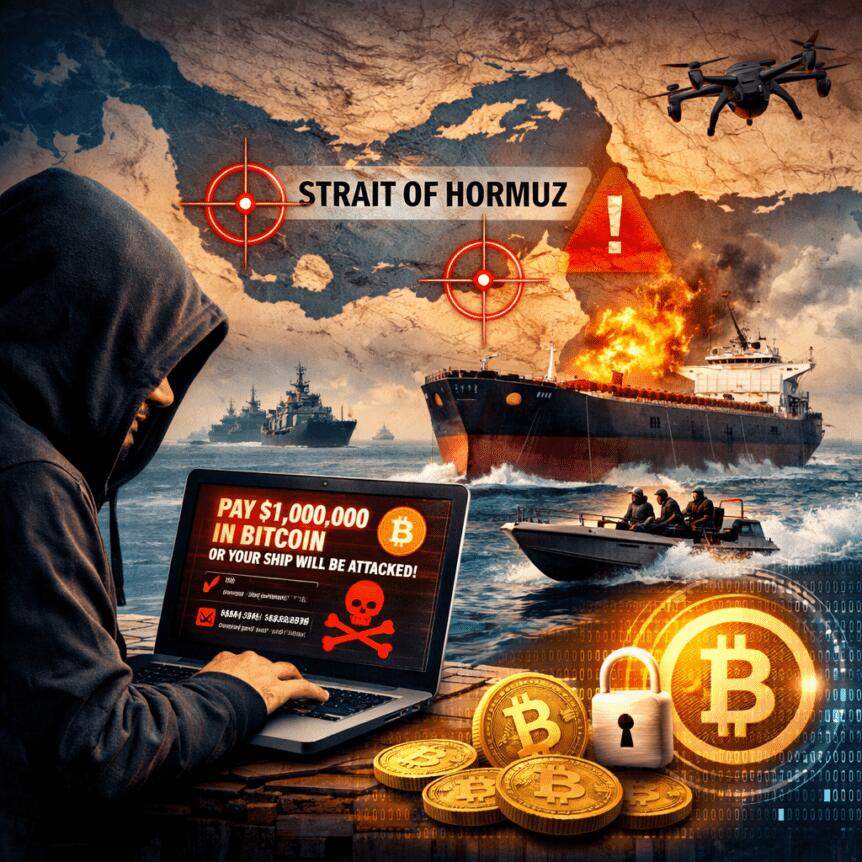
Fraudsters posing as Iranian authorities have targeted shipping firms with crypto-based demands to secure passage through the Strait of Hormuz, according to maritime risk outfit Marisks.
Marisks said unknown groups contacted shipowners claiming to represent Iran’s security services and demanded payment in Bitcoin or USD Tether in exchange for transit clearance, after requesting verification documents first. Reuters reported on the scam messages, noting they did not originate from Iranian authorities; Tehran has not publicly commented.
The warnings come as the Strait of Hormuz remains largely closed amid regional hostilities. The strait, a critical conduit for global energy shipments, previously handled roughly one-fifth of the world’s oil and LNG before the latest flareups. Earlier this month, Cointelegraph reported that Iran was considering tolls payable in BTC for ships passing through Hormuz, with empty tankers allowed free passage while others could be charged about $1 per barrel of oil.
Key takeaways
- Marisks warns that scams impersonating Iranian security services are soliciting crypto payments (BTC or USDT) for Hormuz transit, accompanied by requests for verification documents.
- The messages are not sourced from official Iranian authorities, according to Marisks and Reuters; Tehran has not publicly commented on the claims.
- The Strait of Hormuz remains largely closed amid Middle East hostilities, underscoring the vulnerability of global energy flows at this chokepoint.
- Sanctions risk looms large: payments tied to Iranian waterways could be treated as material support, with potential violations of US and international sanctions.
- This episode highlights the broader debate about crypto’s role in sanctioned regimes and the regulatory risks for shipping and crypto actors alike.
Crypto tolls, scams and the geopolitics of Hormuz
The messages described by Marisks present a classic manipulation: a supposed security clearance tied to a crypto payment, followed by a claim that transit will be allowed at a pre-arranged time once verification steps are completed. In at least one cited instance, the channel suggested Iranian security services would assess eligibility before determining the crypto payment in BTC or USDt. Marisks noted that a vessel recently targeted by gunfire while attempting to exit the strait may have received such instructions, though this has not been independently verified. Cointelegraph reached out to Marisks for comment but did not receive an immediate reply.
The episode arrives against a backdrop of wider geopolitical tension around Hormuz. Al Jazeera reported the Strait’s continued closures amid the conflict, a development that raises the stakes for insurers, operators and lenders who rely on predictable access to global energy markets. The strategic chokepoint remains a focal point for policy and risk assessment as regional dynamics evolve.
In earlier reporting, Iran was described as weighing crypto-based tolls to monetize navigation through Hormuz—an approach that would tilt the balance between open sea lanes and sanctioned finance. Cointelegraph’s coverage noted debates over BTC and USDt as potential toll instruments, reflecting a broader conversation about crypto’s utility in sanctioned economies and the practical risks for those who accept crypto payments under duress or misrepresentation. See the prior analysis on Iran’s crypto toll discussions for additional context.
Sanctions risk and what it means for operators
Beyond operational risk, industry analysts warn of serious compliance implications. Chainalysis senior intelligence analyst Kaitlin Martin told Cointelegraph that any payments tied to Iranian-controlled waterways could constitute “material support,” potentially violating US and international sanctions targeting entities linked to the Islamic Revolutionary Guard Corps. The warning underscores that crypto payments conditioned on access to strategic corridors can create exposure well beyond the immediate toll itself.
These developments sit at the intersection of geopolitical maneuvering and evolving crypto policy. Iran’s interest in leveraging digital currencies for energy transit has been debated in crypto policy circles, with discussions weighing potential benefits against the entrenched sanctions regime. For readers seeking deeper background, coverage exploring Iran’s BTC and USDt toll dynamics remains a pertinent companion piece.
As authorities surveil illicit use of crypto in restricted corridors, shipowners, operators and their counterparties will be watching for official guidance on sanctions enforcement and any regulatory clarifications related to crypto-enabled tolls. The risk environment around Hormuz—already shaped by conflict, insurance considerations and the reliability of communications—adds another layer of complexity for the global maritime and crypto communities.
Watch for formal statements from regulatory bodies and industry associations as this situation unfolds. The next steps will likely hinge on how sanctions enforcement perspectives evolve and whether crypto-based toll proposals advance or recede amid ongoing geopolitical tensions.


Ripple has introduced a four-phase roadmap to make the XRP Ledger quantum-resistant by 2028.
Summary
- Ripple plans a four-phase XRP Ledger upgrade to reach quantum-resistant security standards by 2028.
- The roadmap includes 2026 testing, validator benchmarks, custody prototypes, and a final native amendment.
- Ripple linked the plan to rising concern over future quantum attacks on blockchain cryptography.
The plan responds to growing concern that advances in quantum computing could weaken the cryptography used across blockchain networks.
Ayo Akinyele, senior engineering director at RippleX, detailed the roadmap in a company blog post. The plan starts with a “Quantum-Day” contingency that would block classical signatures and direct users to quantum-safe accounts if current cryptography fails unexpectedly.
Ripple said the next two phases will take place during 2026. Those stages will focus on testing quantum-resistant algorithms recommended by the National Institute of Standards and Technology.
The final phase would add a native amendment to the XRP Ledger by 2028. That step is intended to bring quantum-resistant protections directly into the network’s core design.
Ripple said phases two and three will include technical testing and infrastructure work. The company is working with research firm Project Eleven on validator benchmarks and an early custody wallet prototype.
The testing phase aims to measure how quantum-safe algorithms perform under real network conditions. It also gives Ripple time to review how those tools can fit into validator operations and custody systems before a broader rollout.
Ripple’s timeline places much of the development work ahead of the final implementation target. The company said its approach is designed to prepare the ledger before quantum computing becomes a direct threat to blockchain security.
The roadmap also arrives one year before Google’s 2029 post-quantum cryptography target mentioned in the report. That comparison puts Ripple’s deadline earlier than one benchmark often cited in the wider technology sector.
Focus turns to long-term cryptography risk
Ripple linked the plan to the “harvest now, decrypt later” threat. That risk refers to attackers collecting public-key data today and waiting until quantum machines become strong enough to break it later.
The company said this issue matters for long-term holders whose public-key information may remain exposed over time. Recent Google Quantum AI research, cited in the report, found that about 500,000 physical qubits could derive a private key from an exposed public key in nine minutes.
That estimate marked a sharp reduction from earlier assumptions about the resources needed for such an attack. As a result, blockchain developers are giving more attention to how current networks can prepare for future cryptography risks.
XRP Ledger feature may support the transition
Ripple said the XRP Ledger has one built-in feature that could help during the transition. Unlike Ethereum, XRPL supports native key rotation, which allows users to replace vulnerable keys without moving their funds.
That design may make it easier for holders to respond if existing signature methods become unsafe. It also gives the network a direct way to manage account security without forcing full asset transfers during a migration.
The report added that more than 6.9 million Bitcoin sit in wallets with exposed public keys. XRP traded near $1.43 on Monday, up about 7% over the week as the broader crypto market moved higher.

What Is Crypto Currency and Bitcoin?All about crypto currency by Khan Sir #cryptocurrency #khansir

Woman ‘terrified’ as man forced her into car and drove her to petrol station

The Boys Stars Jack Quaid and Claudia Doumit Secretly Marry in Small Australian Town

Manchester United reach agreement with Casemiro over contract clause amid transfer speculation

Steven Gerrard disagrees with Gary Neville over ‘shock’ Chelsea and Arsenal claim | Football

US brings back mandatory military draft registration
What Is Crypto Currency and Bitcoin?All about crypto currency by Khan Sir #cryptocurrency #khansir

Aye Finance IPO Opens For Subscription : Worth Applying for? Complete Analysis #stockmarket

Cris MJ – Que Viva El Money (Video Oficial)
-

 News Videos6 days ago
Secure crypto trading starts with an FIU-registered
-

 Fashion4 days ago
Weekend Open Thread: Theodora Dress
-

 Sports4 days ago
NWFL Suspends Two Players Over Post-Match Clash in Ado-Ekiti
-

 Politics4 days ago
Palestine barred from entering Canada for FIFA Congress
-

 Business2 days ago
Powerball Result April 18, 2026: No Jackpot Winner in Powerball Draw: $75 Million Rolls Over
-

 Crypto World4 days ago
Russia Pushes Bill to Criminalize Unregistered Crypto Services
-

 Politics16 hours ago
Gary Stevenson delivers timely reminder to register to vote as deadline TODAY
-

 Tech2 days ago
Auto Enthusiast Scores Running Tesla Model 3 for Two Grand and Turns It Into Bare-Bones Go-Kart
-
 Business5 days ago
Creo Medical agree sale of its manufacturing operation
-

 Politics2 days ago
Zack Polanski demands ‘council homes not luxury flats for foreign investors’
-

 Tech6 days ago
‘Avatar: Aang, The Last Airbender’ Leaked Online. Some Fans Say Paramount Deserves the Fallout
-

 Crypto World4 days ago
Russia Introduces Bill To Criminalize Unregistered Crypto Services
-

 Tech6 days ago
Microsoft adds Windows protections for malicious Remote Desktop files
-
 Entertainment6 days ago
Dave Portnoy Slams Dianna Russini: ‘Makes Zero Sense’
-

 Crypto World6 days ago
X Launches New Cashtag Feature for Stocks and Crypto: X
-

 Sports5 days ago
British climbers complete new route in Swiss Alps
-

 Sports7 days ago
Younger Than Sachin Tendulkar: Vaibhav Sooryavanshi Set To Make Historic India Debut
-

 Entertainment7 days ago
Prince Carter Brings Fans Front Row and Backstage at Boys 4 Life Tour
-
 Crypto World7 days ago
Bitcoin surpasses halfway mark in current halving cycle
-
Entertainment2 days ago
NBA Analyst Charles Barkley Chimes in on Ice Spice McDonald’s Fiasco
You must be logged in to post a comment Login