
Crypto World
The best BTC yield opportunities



Disclosure: This content is provided by a third party. Neither crypto.news nor the author of this article endorses any product mentioned on this page. Users should conduct their own research before taking any action related to the company.
Bitcoin yield has moved beyond lending BTC to a centralized platform and collecting interest. In 2026, holders can choose from self-custodial staking models, lending protocols, managed DeFi vaults, exchange-embedded strategies and wrapped-Bitcoin staking systems.
Summary
- Bitcoin holders can earn yield through staking, lending and managed DeFi vaults, with custody and risk varying significantly between strategies.
- Stacks BTC Staking targets about 3% annualized yield in native BTC while keeping Bitcoin under the holder’s keys on Bitcoin L1, although the product has yet to reach mainnet.
- Zest offers around 1% in sBTC, while Kraken and Lombard currently offer roughly 1.4% and 2% through lending and managed DeFi strategies.
- Starknet and Babylon pay rewards in their native tokens, while Babylon keeps BTC on Bitcoin L1 but introduces slashing risk.
Investors need to know where yield comes from, whether Bitcoin remains under their control, and whether returns depend on real economic activity or token emissions.
This ranking compares seven leading Bitcoin yield opportunities using the same framework: protocol track record, yield source, custody model, smart-contract exposure, liquidity, sustainability and onchain verifiability. Much of the comparative risk framework and current rate data comes from BitcoinYield. Rates can change quickly, so the figures below should be treated as snapshots rather than fixed returns.
1. Stacks BTC staking
Stacks BTC Staking is designed for Bitcoin holders who want native BTC yield without giving up custody of their coins. The product has not yet reached mainnet, but its proposed structure places it at the low-custody end of the market.
Under the current design, participants lock BTC directly on Bitcoin Layer 1 using a standard timelock mechanism and pair the position with STX worth approximately 5% of the BTC value. The Bitcoin remains under the holder’s keys rather than moving through a bridge, wrapper or centralized custodian.
The target yield is approximately 3% annualized in native BTC. That return comes from Proof of Transfer, or PoX, the Stacks consensus system. Stacks miners commit BTC to compete for the right to produce blocks, and that BTC funds rewards for participants. Stacks says PoX has distributed more than 4,200 BTC since January 2021.
The model does not depend on new reward-token emissions, recycled deposits or unsecured lending. Instead, returns come from miner expenditure tied to network operation.
BTC is designed to enter an approximately six-month bonding cycle. Holders can exit early and recover principal, but they forfeit remaining rewards for that cycle. The structure does not include slashing risk.
For investors prioritizing capital preservation, the planned model stands out because custody remains user-enforced on Bitcoin L1. The key risk is execution: Bitcoin Staking was still in private-testnet testing in July 2026, so its mainnet performance remains unproven.
2. Zest Protocol
Zest Protocol offers Bitcoin-linked yield through a live lending market and targets users comfortable with DeFi infrastructure.
The protocol has built one of the strongest operating records in Bitcoin DeFi. Zest reports around 800 BTC deposited, more than 1,500 liquidations with zero bad debt and a historical peak above $100 million in total value locked.
Current yield is around 1% in sBTC, a Bitcoin-backed asset on Stacks. The return comes mainly from Dual Stacking, a mechanism connected to PoX rewards, with a smaller contribution from lending interest. At launch, participating Stacks entities redirect part of their own PoX rewards to users of the Dual Stacking system.
That gives the yield a real economic source, but it also creates more dependencies than the Stacks BTC Staking design. Users rely on sBTC infrastructure, the signer set controlling access to underlying BTC, lending contracts and the continued operation of Dual Stacking.
Zest’s next major product, Bitcoin Collateral Vaults, aims to let holders lock BTC directly on Bitcoin L1 and borrow stablecoins on EVM networks. The structure could reduce one of the largest barriers facing institutions that want to use Bitcoin as productive collateral without transferring custody.
Zest best suits investors who understand lending risk and want a live protocol with a measurable track record.
3. Kraken Bitcoin vault
Kraken Bitcoin Vault packages an onchain Bitcoin yield strategy inside a familiar centralized exchange interface. Users deposit BTC through Kraken, while the underlying strategy is handled by specialized infrastructure operating behind the scenes.
The vault currently offers a variable yield of roughly 1.4%. Deposited BTC is converted into kBTC, Kraken’s wrapped Bitcoin asset, before being deployed through a collateralized DeFi strategy. Veda provides the vault infrastructure, while external credit markets, including Morpho, form part of the underlying yield process.
The return comes from real lending and credit-market activity rather than token emissions. That gives the strategy a more defensible economic basis than products whose rewards rely entirely on newly issued tokens.
Convenience is the main advantage. Users do not need to interact directly with multiple DeFi protocols or manage each underlying position themselves.
The trade-off is a broader trust and execution surface. Depositors rely on Kraken as the user-facing platform, the kBTC wrapping mechanism, Veda’s vault contracts and the external markets where capital is deployed. Users hold a claim on the vault rather than maintaining direct control of the underlying Bitcoin throughout the strategy.
Kraken Bitcoin Vault therefore fits investors who prioritize simplicity and are comfortable accepting exchange, wrapper and smart-contract dependencies in return for managed access to Bitcoin yield.
4. Lombard Bitcoin earn
Lombard Bitcoin Earn takes a different approach by spreading capital across multiple DeFi strategies rather than relying on a single lending market.
Users deposit supported Bitcoin assets and receive BTCe, a receipt token representing their position in the vault. Capital is then allocated across whitelisted strategies through Veda’s vault infrastructure.
Current yield is roughly 2%, although returns vary with market conditions and portfolio allocation. The strategy has included money-market positions and liquidity provisioning, with part of the capital sometimes remaining unallocated while managers assess available opportunities.
The yield comes from real DeFi activity rather than protocol token emissions. However, returns depend heavily on how effectively the vault allocates capital and how the underlying markets perform.
That creates a different risk profile from Kraken’s exchange-embedded product. Lombard users face exposure to the vault contracts, the LBTC infrastructure beneath the product and every DeFi strategy receiving an allocation. Diversification can reduce dependence on one market, but it also creates more points where technical or economic problems can occur.
Users also hold BTCe rather than directly controlling the underlying Bitcoin. The yield path is visible through onchain strategies, but assessing the full position requires monitoring the vault manager’s allocation decisions.
Lombard Bitcoin Earn is therefore better suited to investors who want diversified Bitcoin yield exposure without manually managing multiple DeFi positions and who accept the additional complexity that comes with an actively allocated vault.
5. Hermetica hBTC
Hermetica’s hBTC vault targets users willing to accept strategy risk in exchange for actively managed BTC-denominated returns.
The vault takes deposited BTC exposure and deploys it through DeFi strategies. A typical structure uses Bitcoin-linked collateral to borrow stablecoins, places those stablecoins into yield-generating positions and converts the resulting profits back into BTC.
Current yield is around 1.4%, although Hermetica has marketed potential returns of up to 8% under favorable strategy conditions. Rates vary because returns depend on lending costs, market spreads and underlying strategy performance.
Withdrawals back to native Bitcoin are permissionless, positions and transactions are visible onchain, and strategy limits are set in advance rather than left to discretionary manual trading.
The risk profile is broader than direct staking. hBTC depends on sBTC and its signer set, smart contracts, off-chain keepers, and several connected DeFi positions. Hermetica has completed multiple audits and uses predefined leverage, delta and interest-spread controls, but those safeguards reduce rather than eliminate execution risk.
This option suits experienced DeFi users who want BTC-denominated yield while remaining comfortable with managed onchain strategies.
6. Starknet BTC staking
Starknet BTC Staking allows holders of wrapped Bitcoin assets such as WBTC, LBTC, SolvBTC and tBTC to participate in network security.
Current yield is roughly 2.4%, but rewards are paid in STRK rather than BTC. The nominal APY therefore depends on both the staking rate and the market value of STRK when rewards are sold.
The yield comes from token emissions, not external economic activity. If STRK prices fall or staking incentives decline, the real value of returns can shrink.
Custody also depends on the chosen Bitcoin wrapper. Each asset introduces its own custodian, federation or signer-set assumptions before funds reach Starknet. Smart-contract exposure then extends across the wrapper, bridge and staking system.
This option may appeal to users already active in the Starknet ecosystem, but it is less suitable for investors seeking native BTC yield or minimal infrastructure risk.
7. Babylon
Babylon offers one of the largest native Bitcoin staking systems by total value committed. Users lock BTC on Bitcoin L1 and use it to help secure external Proof-of-Stake networks.
The custody design is strong. Bitcoin stays inside a Script-governed UTXO under the holder’s keys rather than moving to a wrapped asset.
The trade-off is slashing. BTC supports Finality Providers that help secure connected networks, and misbehavior can put the staked Bitcoin at risk.
Current BTC-only yield is around 0.04%, paid in BABY rather than Bitcoin. Co-staking BABY can increase the rate, but returns still rely on native-token emissions rather than miner fees, lending activity or another external revenue source.
Babylon therefore offers robust self-custody but a weaker yield source for investors primarily seeking BTC-denominated income.
Conclusion
For holders focused on self-custody and principal protection, Stacks BTC Staking presents the cleanest planned structure because BTC remains on Bitcoin L1, rewards come from miner expenditure and there is no slashing. The main limitation is that the product has not yet launched on mainnet.
For DeFi-native investors, Zest and Hermetica provide live alternatives with transparent onchain activity and BTC-linked returns. They carry more smart-contract and custody dependencies, but they also offer greater composability.
Kraken and Lombard prioritize simplicity by packaging complex strategies behind managed interfaces. Starknet offers a higher headline rate but pays rewards in STRK, while Babylon preserves native BTC custody at the cost of slashing risk and a very low emissions-based return.
The best Bitcoin yield strategy is not necessarily the highest APY. The key questions are whether the yield source is durable, the custody model is acceptable and the failure modes are clear enough for the holder to evaluate.
Find your Bitcoin yield strategy by comparing the return source, custody structure and risk profile before deploying capital.
FAQ
What is the best way to earn yield on Bitcoin?
The answer depends on risk tolerance. Self-custodial staking may suit holders focused on capital preservation, while DeFi lending and managed vaults can offer different return profiles for users comfortable with smart-contract and execution risk.
How can holders earn yield on Bitcoin?
The three main routes are staking, lending and yield vaults. Staking rewards users for supporting a network or protocol mechanism. Lending generates interest from borrowers. Yield vaults deploy BTC-linked assets across DeFi strategies.
What is the safest way to earn Bitcoin yield?
Structures that keep BTC on Bitcoin L1 under the holder’s keys reduce custody risk. Stacks’ proposed BTC Staking model follows that approach and avoids slashing, although mainnet performance still needs to be proven.
How does Bitcoin staking yield compare with DeFi yield?
Bitcoin staking can offer a simpler custody structure and fewer moving parts, while DeFi strategies may provide more flexible or higher returns. The trade-off is additional exposure to smart contracts, wrappers, lending markets, managers and other infrastructure layers.
Disclosure: This content is provided by a third party. Neither crypto.news nor the author of this article endorses any product mentioned on this page. Users should conduct their own research before taking any action related to the company.


XRP is down 1.80% on the day, but a New York Stock Exchange-listed fund has some big news, revealing that Ripple makes up the largest share of its holdings. The crypto is surpassing even assets tied to companies better known for their role in the crypto exchange industry.
C1 Fund Inc. (NYSE: CFND) disclosed its Q2 2026 holdings, revealing Ripple Labs as its largest position at 17.5% of net assets, edging out Kraken parent Payward at 16.9%. The fund’s net asset value landed at $6.49 per share, and its Ripple stake alone generated 150% in four months, a return the fund partly credits to Ripple’s own share repurchase program.
— Xaif Crypto (@Xaif_Crypto) August 31, 2026
 C1 Fund ($CFND) Q2results: NAV $6.49/share, now holding 11 crypto companies up from 7.
Ripple Labs is their #1 holding at 17.5% of net assets, Kraken close behind at 16.9%. Added Polymarket this quarter too. Real institutional money betting on crypto infra. https://t.co/RgS0AMPlqc pic.twitter.com/AS4Wyej7IM
C1 also deployed $33.07 million across 11 private digital companies, adding Polymarket to the mix during the quarter. It is a signal that institutional appetite for crypto-adjacent private equity isn’t slowing down.
This TradFi validation lands against a choppier technical backdrop, and the two don’t always move in sync. Institutions buy conviction on a quarterly basis; traders react to candles by the hour.
Discover: The Best Crypto to Diversify Your Portfolio
Can XRP Price Hit $1.50 This Week Amid The Bullish Ripple News?
XRP sits at $1.36, off 1% intraday, with the broader 7-day trend still negative after a volatile stretch that saw the token swing between $1.33 and $1.39. ETF-linked inflows have kept a bid under price even as the token trades below key resistance.

Momentum readings are mixed-to-constructive. RSI near 61 and a MACD buy signal on daily charts, though shorter-term oscillators flash overbought. Traders are watching $1.34–$1.35 as the line in the sand. Hold that zone, and a push toward $1.42–$1.43 resistance opens the door to the $2 targets some analysts have floated for September. Lose it, and the setup risks a slide toward $1.25.
A scheduled Ripple escrow release adds a supply-side variable worth tracking this week, separate from the fund-flow narrative entirely.
Trade XRP on Bybit and Get a Chance to Win Our $1,000 USDT Airdrop
Bitcoin Hyper Targets Early Mover Upside as XRP Tests Key Levels
XRP holders riding the C1 Fund headline have reason to feel validated. Institutional money doesn’t chase a dead asset. But a token already carrying a market cap in the tens of billions doesn’t offer the same asymmetric upside as something still in price discovery. This is where rotation logic kicks in for traders looking beyond the next resistance test.
Bitcoin Hyper ($HYPER) is building the first Bitcoin Layer 2 with native SVM integration with smart contract execution running faster than Solana itself, bridged to Bitcoin’s base-layer security through a decentralized canonical bridge.
The presale has raised $33 million so far, with tokens priced at $0.0136855 and a huge 35% staking rewards live for early participants. The pitch: Bitcoin’s trust layer, without the slow throughput and missing programmability that’s kept it sidelined from DeFi.
Research Bitcoin Hyper before the next raise milestone.
Discover: The Best Token Presales
The post Ripple News: XRP is Top Asset in New York-Traded C1 Fund appeared first on Cryptonews.
After dipping below $77,000 on Monday morning following the new strikes in the Middle East, BTC jumped by two grand, but it was stopped again and now sits in the middle of this range.
Most larger-cap alts have failed to recover the recent losses, with ETH still struggling at $2,450, XRP well below $1.40, and BNB beneath $690.
BTC Settles at $78K
After its best week of the year marked in the middle of August, bitcoin tried to take full advantage of this resurgence at the end of the month, surging past $81,000 on a couple of occasions. However, the bears stepped up and didn’t allow another leg up.
Just the opposite; BTC started to lose value rapidly on Friday after the hawkish speech by new Fed Chair Kevin Warsh at Jackson Hole, and dipped below $77,000. It managed to quickly erase some of the losses and spent Saturday trading above that level.
The bulls returned on Sunday with a minor increase to $79,000. However, the resumed strikes between the US and Iran resulted in another nosedive. Bitcoin slipped to $77,000 once again on Monday before it rebounded to $79,000 and now sits between the two boundaries.
Its market capitalization remains stagnant at $1.560 trillion on CG, while its dominance over the alts is at just under 58%.

UNI Keeps Pumping
Uniswap’s native token is the top performer today once again, surging by another 10% daily (over 32% weekly) to a multi-month peak of almost $6.00 earlier today before it retraced to the current $5.65. RAIN and NEAR have posted gains of around 4%, while HYPE is up by over 2%.
In contrast, TRX is down by nearly 2% to $0.33, SOL has slipped toward $100 after another 1% dip, and ETH remains below $2,450. BNB can’t get past $690, while XRP struggles below $1.40. Even more painful declines come from MNT and SKY.
On the other hand, CRV and ARB have returned to the top 100 alts by market cap. The former has rocketed by 15%, while the latter is up by 24% daily.
The total crypto market cap remains just over $2.7 trillion on CG.

The post Uniswap (UNI) Skyrockets 32% Weekly, Bitcoin (BTC) Calms at $78K: Market Watch appeared first on CryptoPotato.
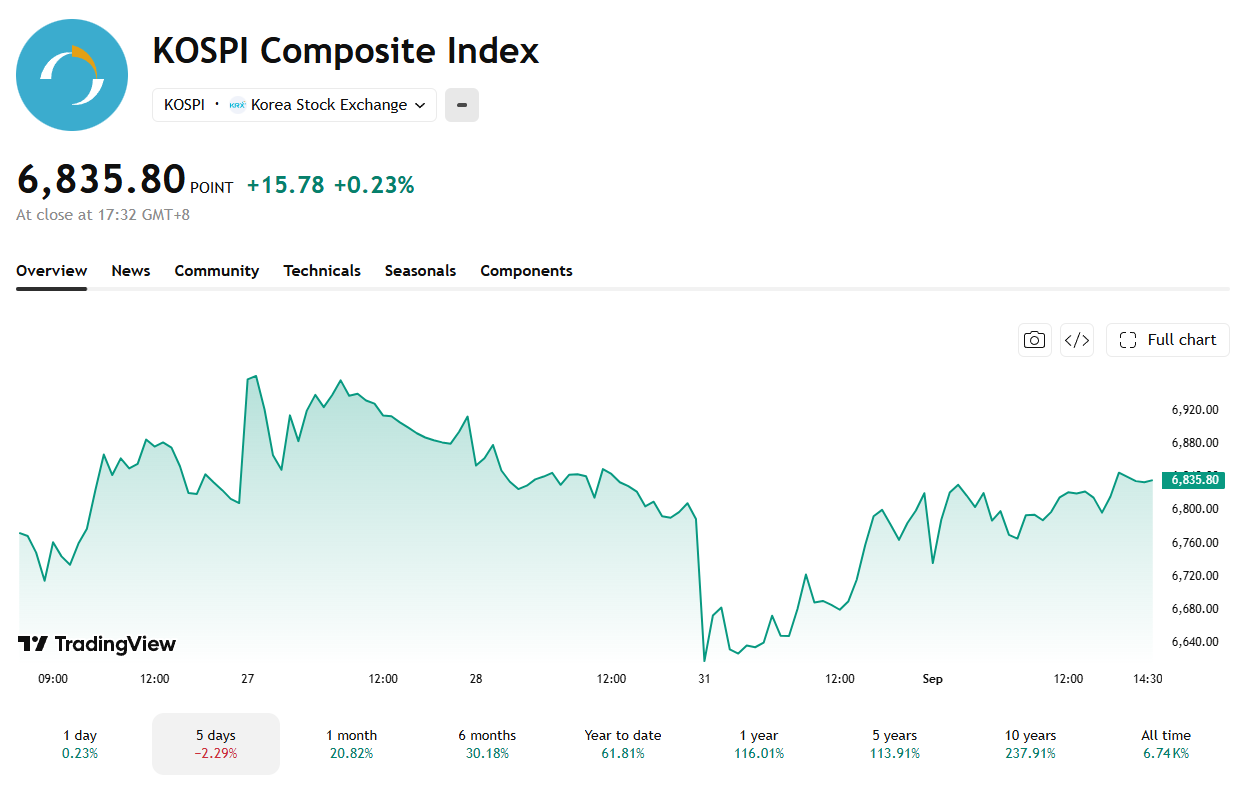
South Korea’s Kospi closed at 6,835.8 points on Tuesday, up 0.23%, as buyback-driven gains in Samsung Electronics and SK Hynix offset net selling from foreign, institutional, and retail investors alike.
The index marked its second straight gain, having opened 0.52% lower after fresh U.S.-Iran airstrikes and a hawkish Fed speech from Chair Kevin Warsh unsettled global markets. The Kospi has since recovered from a session low near 6,617 on Monday.
Chip Stocks Reverse an Early Slide
Wall Street had fallen overnight, with the Dow Jones Industrial Average down 0.7% and the S&P 500 off 0.33%, after Warsh’s Jackson Hole speech fanned concerns over a possible rate hike at the Fed’s meeting later this month.

However, the Kospi erased those losses in the afternoon as government data showed Korea’s August exports stayed solid on strong chip demand, extending the Kospi’s chip-driven rally. Samsung rose 0.38% and SK Hynix advanced 1.14%, both aided by recently announced buyback programs.
“External uncertainty dampened investor sentiment, but strong buying from big companies backed up the index,” said Lee Kyung-min, an analyst at Daishin Securities.
Sellers Outnumbered Buyers Despite the Gain
Trade volume was light at 263.7 million shares worth 17.5 trillion won ($12.8 billion), with advancers narrowly beating decliners 444 to 421. Foreign investors sold a net 491.9 billion won, institutions sold 634 billion won, and retail investors sold 539.8 billion won.
Oil refiners gained on rising crude prices, with SK Innovation up 7.81% and S-Oil up 1.07%. Meanwhile, Hanwha Aerospace fell 3.99% and Celltrion slipped 0.48%.
The won weakened 1.8 won to trade at 1,370.4 per dollar as of 3:30 p.m., reflecting broader risk-off pressure from the Middle East escalation.
The post Kospi Gains as Chip Buybacks Offset Broad Investor Selling appeared first on BeInCrypto.
DeFi Development Corp. plans to raise up to $20 million through a preferred stock offering. It carries an initial annual dividend rate of 13%.
The Solana (SOL) treasury company intends to use part of the proceeds to buy more SOL. It resumed accumulation last week as market conditions turned more favorable.
What the Preferred Stock Offers
DFDV announced that it plans to conduct an IPO of its Variable Rate Series C Perpetual Preferred Stock, known as CHAD Stock.
Dividends will accrue on a stated amount of $10 per share. Payments will be made each business day of each calendar month, beginning October 1, 2026.
The initial annual dividend rate is 13%, subject to adjustment under the stock’s terms. DFDV also intends to deposit $1.30 per share into a separate account at closing.
The reserve would cover 12 months of dividend payments at the initial 13% rate. The company can fund it with existing cash, financial instruments, and/or digital assets. R.F. Lafferty & Co. is acting as the sole book-running manager.
“The Company intends to use the net proceeds from the offering for general corporate purposes, including for working capital, the acquisition of SOL and other digital asset-related investments, strategic transactions and growth initiatives,” the firm said.
Follow us on X to get the latest news as it happens
Buying Restarted Days Before the Offering
The firm is already one of the largest public holders of SOL. Last week, it added 19,000 SOL at an average price of $98.14.
That purchase lifted its treasury to about 2.33 million SOL and SOL equivalents. The company partly funded the acquisition by divesting its ZeroStack position, citing improving market conditions.
Chief Executive Joseph Onorati described DFDV as a leveraged way for investors to gain exposure to SOL.
“When SOL performs well, we believe DFDV has the potential to amplify that performance. Month-to-date, DFDV’s return has been more than twice that of SOL,” he said.
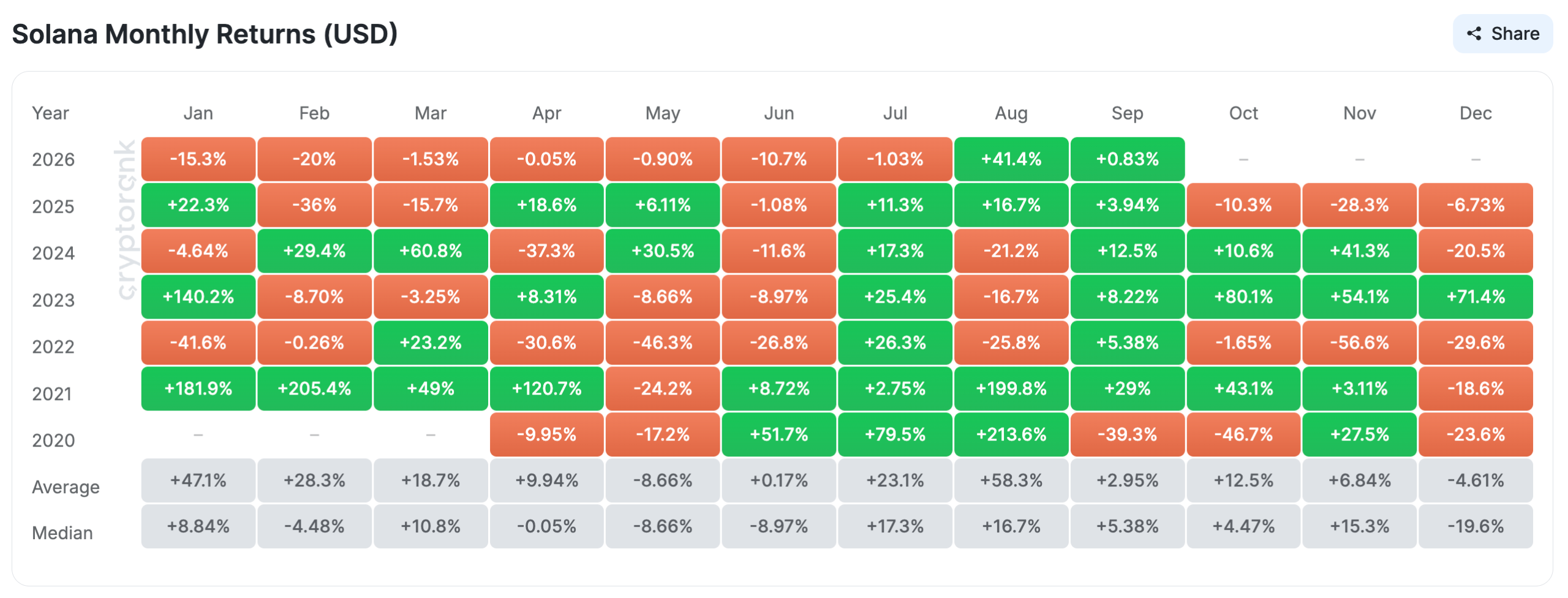
The move comes as the broader crypto market strengthens. SOL gained 41.4% in August, making it the token’s first positive month of 2026 after losses in every month since January.

Strategy also resumed Bitcoin (BTC) accumulation after a 10-week pause, while Strive and BitMine continued adding to their digital asset holdings.
For now, the raise shows treasury firms testing investor appetite again after a difficult stretch. Whether that window stays open will shape how much more SOL DFDV can add.
Subscribe to our YouTube channel to watch leaders and journalists provide expert insights
The post Solana Treasury Firm Dangles 13% Dividends to Bankroll Its Next SOL Buys appeared first on BeInCrypto.

Shakur’s murder in September 1996 at the age of 25 had left so many questions unanswered and has been the subject of conspiracies for years.
But the investigation into his death was revived after Davis published his memoir, Compton Street Legend, in 2019. In the memoir and during promotions, he outlined the role of the Crips in Shakur’s death. The Crips were feuding with the Mob Piru, which had ties to Shakur and his record label, Death Row Records.
Nevada law allows Davis to be charged with murder even if he did not pull the trigger.
Davis, who was arrested in 2023, could face life in prison. Clark County District Court Judge Carli Kierny ordered that Davis be held without bail and scheduled his sentencing on Oct. 13.
The former gang leader, however, said in court that he would appeal the conviction.
How the verdict was reached
The trial against Davis began on Aug. 17. More than two dozen witnesses testified before a panel of 16 jurors, four of whom are alternates. Jurors also watched footage about the fight that broke out a few hours before Shakur and Death Row Records co-founder Marion “Suge” Knight, who was riding with him, were shot by a man in a white Cadillac on Sept. 7, 1996, while Shakur’s car stopped at a red light.
Perhaps the most notable piece of news within the crypto industry on Monday came from Strategy, as the company started buying more BTC again after completing a few sales and rebuilding its USD reserve to over $6.7 billion.
Although that might sound celebratory at first, it’s worth taking a closer look at when the firm sold and when it bought more bitcoin, as it turns out it realized substantial losses amid the asset’s price recovery.
Back to Buying
As reported yesterday, the largest corporate holder of the leading cryptocurrency spent $370 million to acquire 4,603 BTC at an average price of $80,310 per unit. This means that the acquisition took place during the previous week when bitcoin jumped past $80,000 for the first time since last May. However, its actual time spent above that coveted level was quite brief.
Nevertheless, this purchase came after four consecutive sales completed between June 30 and August 10, as Santiment explained. Within this timeframe, the company offloaded 6,916 BTC, worth roughly $430 million at the time, at an average price of approximately $62,100.
Consequently, the reacquired 4,603 BTC managed to offset approximately two-thirds of everything the firm sold during the summer. What’s quite intriguing is that Strategy’s purchase came at a price almost $18,000 per BTC higher than the average during the sales.
Analysts such as Michaël van de Poppe brought up the timing, saying that they are “genuinely impressed” by the fact that the purchasing power has returned around BTC’s recent peak.
On the plus side, bitcoin’s spectacular resurgence from the recent low-$60,000s to almost $80,000 as of press time means that Strategy’s massive position has turned green again. The firm, which stood at an unrealized loss of well over $10 billion until a few weeks ago, is now above water by around $2.3 billion.
STRC Recovers
Strategy used the past couple of months, in which it sold some BTC and didn’t buy any to raise additional funds by selling MSTR to increase its USD reserve. The total is now over $6.7 billion.
In addition, it repurchased a significant portion of its STRC shares, whose price had tumbled far below the par level of $100 to as low as $75. However, rebuilding the USD reserve and buying back shares helped STRC recover to just over $97 as of Monday’s closing price.
The post Saylor’s Bitcoin U-Turn: Strategy Sells at $62K, Buys Back at $80K appeared first on CryptoPotato.

Ripple’s native token turned the tables in August, although the month saw a few dips to a multi-year low of just under $1.00.
Now, though, the XRP Army has refocused on September, which is expected to be highly volatile. Some even called it XRP’s “most loaded month” in history.
The August Gains
Following a very modest gain of 2.11% in July, XRP went into August with little hope for a turnaround. After all, all four previous editions were in the red, with the asset dumping by as much as 26.6% in August 2023.
The month indeed began on the wrong foot, as by the middle of it, XRP had slipped below the key psychological support of $1.00 on a few occasions. While some bears speculated about another potential leg down toward $0.80 or even lower, the trend changed in an instant.
On August 19, the entire crypto market came to life, led by bitcoin’s massive surge from under $65,000 to $80,000 within less than 48 hours. XRP was a little late to the party, but once it joined, it couldn’t be contained. For 72 hours, that is. Perhaps due to returning ETF inflows or whales going on a big accumulation spree, XRP skyrocketed by 70% from Wednesday to Saturday and touched a multi-month high of $1.70.
However, it was quickly halted there and retraced in the following weeks. Ultimately, it ended the month at just under $1.40, which is still a 30% surge in its worst-performing month in history.
What’s Next, September?
Unlike all August editions between 2022 and 2025, all Septembers within the same period were in the green, some in a modest manner (0.42% increase in 2023), and some in a highly impressive fashion (46.2% in 2022).
This one is expected to be volatile, to say the least. RippleXity called it “the most loaded month in XRP’s history.” Aside from the highly anticipated FOMC meeting scheduled in two weeks, which is likely to impact all financial markets, the US Senate will return on September 14 and vote on the CLARITY Act the following day.
The legislation is expected to influence most altcoins, and the voting in two weeks is likely to set the course for what might occur by the end of the year.
The month will also end with another major XRP-related event. Evernorth’s shareholders will vote on whether the XRP treasury company will become public on Nasdaq as XRPN. It currently holds nearly 475 million tokens.
In terms of price action, many analysts are convinced that the cross-border token has exited its bear phase and is now well-positioned for major gains.
The post XRP Enters Its ‘Most Loaded Month’ in History After 30% August Surge appeared first on CryptoPotato.

Polymarket is reportedly preparing a major new funding push that would significantly deepen its backing from politically connected capital. According to the Wall Street Journal, 1789 Capital—where Donald Trump Jr. is a partner—is set to invest around $300 million in the blockchain-based prediction market as part of a broader $1 billion fundraising round.
The same report says the round could value Polymarket at $21 billion. If it closes as described, 1789 Capital’s participation would be large enough to move the firm into one of Polymarket’s most prominent investors.
Key takeaways
- 1789 Capital is reportedly planning an approximately $300 million investment in Polymarket within a $1 billion round.
- The reported round would value Polymarket at about $21 billion, potentially reshaping the company’s investor cap table.
- ICE is still Polymarket’s largest disclosed investor, with $1.6 billion invested in preferred shares reported in an ICE 10-Q filing.
- Polymarket’s fundraising momentum is unfolding amid growing US and international regulatory pressure on prediction markets.
What 1789 Capital’s reported entry could mean
Money matters in prediction markets because it funds liquidity, infrastructure, and the ability to scale participation across event categories. A $300 million commitment—if confirmed—would represent a substantial injection of risk capital at a time when the sector is trying to expand while regulators scrutinize how these markets function.
The Wall Street Journal report also indicates that 1789 Capital is already invested in Polymarket, bringing its total exposure to about $500 million. That would position the firm among Polymarket’s largest backers once the additional investment is completed, potentially increasing its influence in governance discussions that often accompany major rounds.
Cointelegraph says it reached out to both 1789 Capital and Polymarket for comment, according to the article text provided.
Valuation questions and how the funding fits prior fundraising efforts
Polymarket’s reported funding strategy appears to be evolving alongside competition in US prediction-market offerings. Earlier coverage cited in the source notes that Polymarket reportedly began talks in April to raise $400 million at a potential $15 billion valuation—lower than the valuation of Kalshi, Polymarket’s main competitor at the time, which was referenced at $22 billion.
By contrast, the new reported valuation in the Wall Street Journal—$21 billion—would reflect a different pricing environment than the earlier fundraising attempt. Whether that shift signals improved traction, investor sentiment, or simply negotiation dynamics remains unclear from the provided information, but the reported numbers suggest Polymarket is aiming for a materially higher valuation than what it sought months earlier.
Investors watching similar rounds often focus on whether valuation increases coincide with clearer compliance pathways or deeper liquidity partnerships—especially in a sector where regulatory outcomes can change quickly.
ICE’s disclosed stake highlights how concentrated backing is
Even with new entrants, Polymarket’s ownership remains dominated by large institutional investors. In a July 30 10-Q filing, ICE reported that it invested a combined $1.6 billion in Polymarket preferred shares.
ICE’s filing further states that the holdings had a carrying value of approximately $2 billion as of June 30. It also says the preferred shares represented about 22% of outstanding shares, or 14% on a fully diluted basis.
These figures illustrate a key structural point for readers: while new capital can increase the total funding available to Polymarket, the largest disclosed backer—ICE—already holds a significant portion of equity-linked exposure. Any incoming round will likely be interpreted against that backdrop, particularly when assessing how much ownership and control different investors retain after issuance.
Regulatory pressure remains the central risk as capital seeks a path forward
The funding headlines arrive during a period of intensified scrutiny of prediction markets. The provided source recounts that on Aug. 14, JPMorgan Chase reportedly ended a banking relationship with Polymarket over regulatory concerns, though it said it remains interested in potentially providing underwriting support if Polymarket seeks to go public.
On the legal front, the source says that more than a dozen US states have filed actions against Polymarket, Kalshi, or both over sports event contracts. It also notes that authorities in several countries have blocked or restricted access to Polymarket, citing gambling-related concerns—an escalation that reinforces why banks, platforms, and corporate partners may be cautious.
This regulatory pressure is relevant to fundraising for a straightforward reason: capital providers tend to price regulatory uncertainty, because outcomes can affect revenue models, user access, and the feasibility of future listings or partnerships. In that sense, Polymarket’s reported push for a high-value round is not occurring in a vacuum—it is happening while multiple jurisdictions test legal boundaries for prediction and event-contract products.
Where things stand next
If 1789 Capital’s reported $300 million commitment and the overall $1 billion round come to pass, Polymarket’s investor base would grow further at a time when the firm’s operating environment is still contested. Market participants should watch for confirmation of the deal terms, any changes to the regulatory strategy being pursued, and whether banking and compliance hurdles ease enough to support sustained growth.
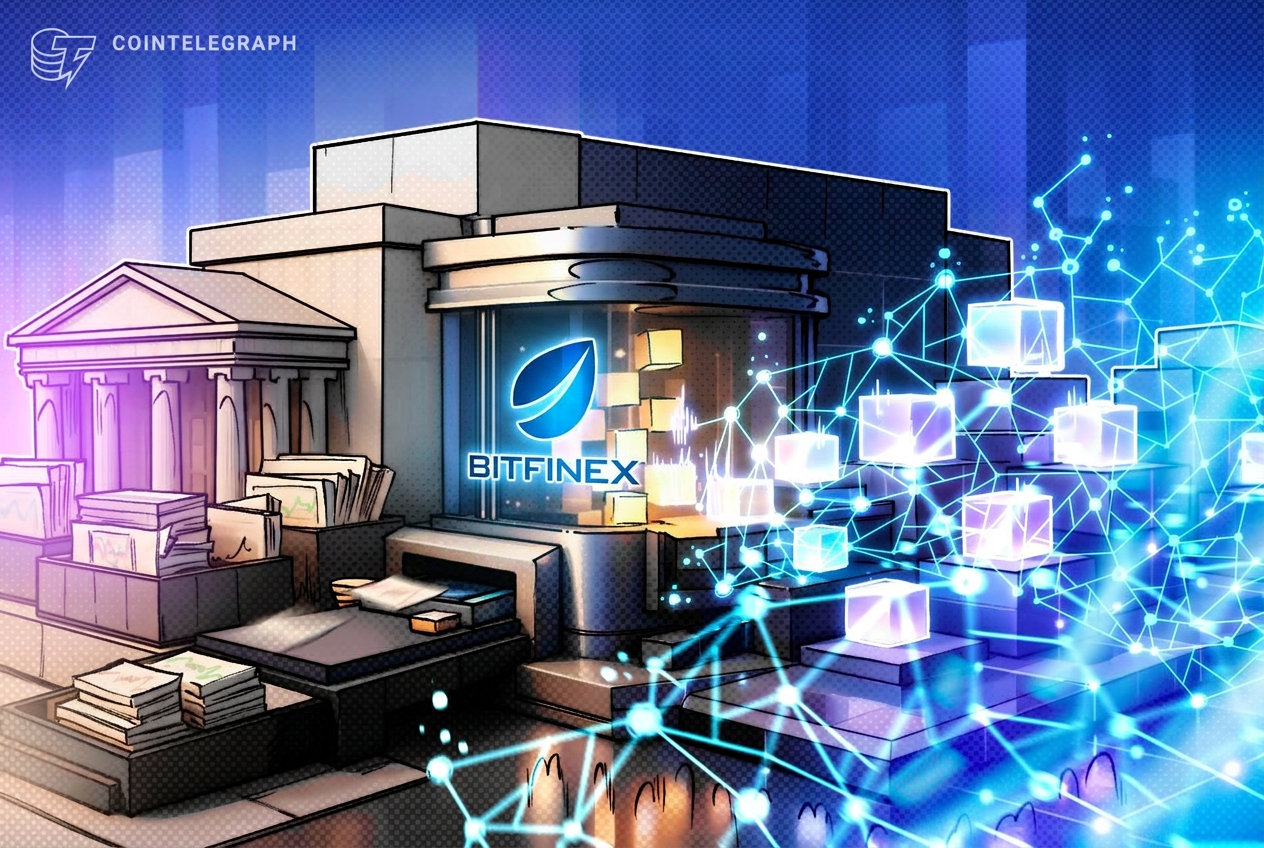
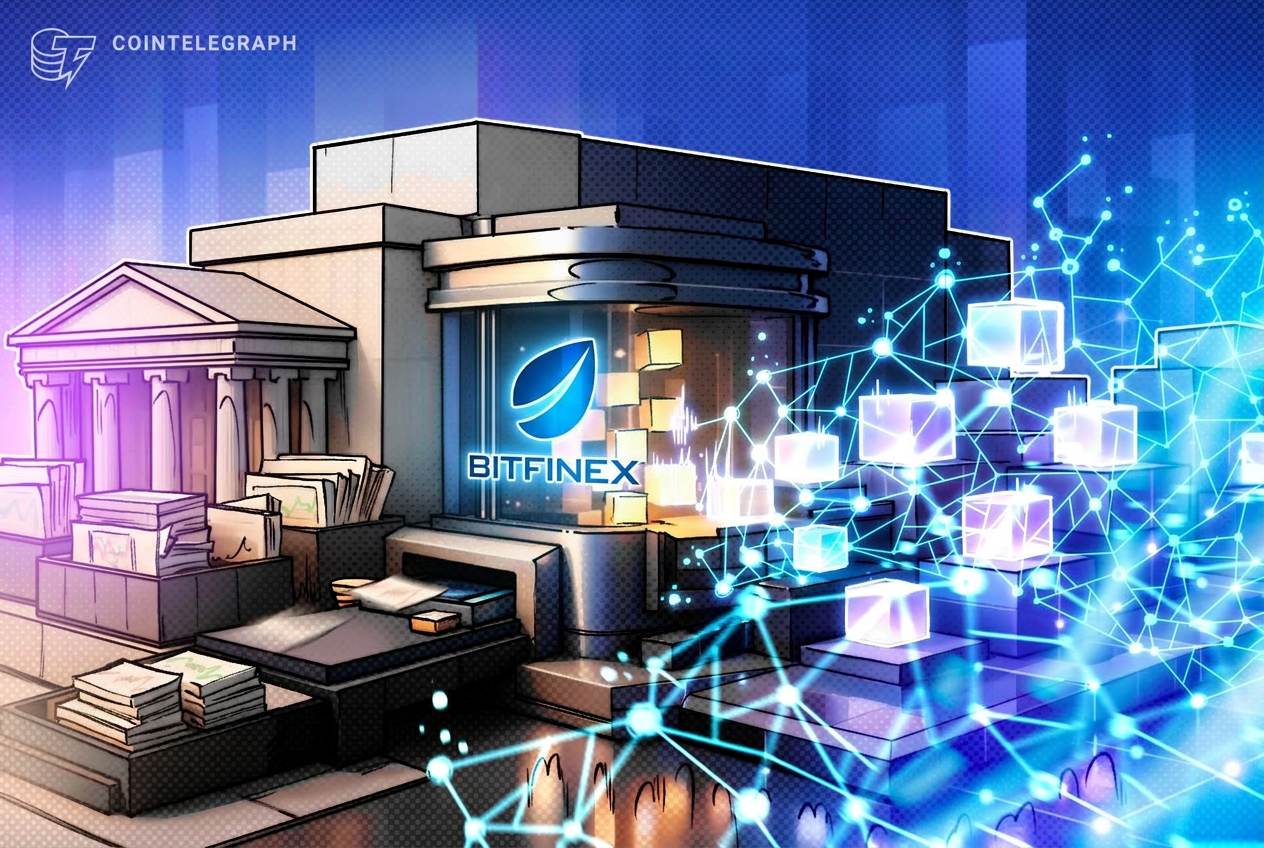
Five equity-backed notes issued through Luxembourg’s ORO II fund will trade against dollars, USDT and Bitcoin for eligible non-US investors.


Binance launched stock options on Sept. 1, giving eligible users access to physically settled contracts linked to selected U.S.-listed stocks and exchange-traded funds.
Summary
- Binance launched physically-settled options on selected U.S.-listed stocks and exchange-traded funds for eligible users globally.
- Buyers can purchase calls or puts but cannot write contracts or open short options positions.
- Exercised contracts settle through underlying shares held by Alpaca Securities for Binance users in custody.
- Phase one supports limit orders only, with maximum buyer losses capped at premiums paid upfront.
- Most contracts trade during regular U.S. market hours from 9:30 a.m. until 4:00 p.m. Eastern.
The product allows users to buy calls, which provide the right to purchase shares at a specified strike price, and puts, which provide the right to sell shares. Each contract has a fixed expiration date, according to the announcement.
The exchange is offering the service through Nest Trading Limited as the introducing broker. U.S.-regulated Alpaca Securities acts as the clearing broker and holds shares delivered through exercised contracts on behalf of Binance users.
Binance stock options use physical settlement
Physically settled options deliver the underlying shares when qualifying contracts are exercised. This differs from cash-settled derivatives, which close by paying the difference between a contract’s strike price and the asset’s settlement value.
For a call option, exercise gives the buyer the right to acquire the underlying shares at the strike price. A put gives the buyer the right to sell shares at that price, subject to the platform’s exercise, funding and position requirements.
Shares resulting from settlement are held in custody by Alpaca Securities. Binance users can monitor the resulting positions through the platform’s stock trading interface and Funding Account.
The exchange did not publish a complete list of supported stocks and ETFs in its general announcement. Users must open a stock’s price page and check whether an Options tab appears. Available expiration dates and strike prices are displayed through the relevant options chain.
The contracts represent conventional securities options rather than tokenized stocks or crypto perpetual futures. They follow U.S. market schedules and settle into underlying shares instead of blockchain tokens.
Long-only trading limits losses to premiums
The initial product is long-only. Users can buy calls and puts but cannot write options or create uncovered short positions. This removes the open-ended risk associated with selling certain options without holding the underlying asset.
For buyers, the maximum direct loss is limited to the premium paid for the contract. A contract can expire without value if the market price does not move sufficiently beyond its strike price before expiration.
Defined losses do not make options low-risk products. Contract values can fall quickly because they depend on the underlying share price, remaining time before expiration, expected volatility and interest rates.
Users must complete an options suitability questionnaire and sign a disclaimer before trading. Customers who have not activated Binance’s stock service can open the stock and options products through the same onboarding process.
Only limit orders are supported during phase one. Traders must specify the maximum price they are prepared to pay rather than submitting market orders that execute at the best available price.
The exchange has not disclosed when it might add other order types, options writing or multi-leg strategies. The phase-one label indicates that the product could change, but no additional rollout schedule was announced.
Nest and Alpaca divide the brokerage roles
Nest Trading acts as the introducing broker, providing the interface through which eligible Binance users submit orders. Alpaca Securities handles the U.S. brokerage functions behind execution, clearing and custody.
Alpaca describes itself as a regulated, self-clearing broker-dealer. It previously partnered with Binance when the exchange launched direct access to U.S. stocks and ETFs in June.
Nest Trading is authorized by the Financial Services Regulatory Authority of Abu Dhabi Global Market. Its permissions cover activities including arranging investment transactions, dealing as an agent and arranging custody.
The structure keeps securities execution and custody within regulated brokerage entities while allowing customers to access the service from a Binance account. The exchange itself is not described as the U.S. clearing broker.
In related coverage, crypto.news reported that ETFs reached 25% of Gen Z equity trading volume on Binance during early August. Binance noted that its direct-equities data covered a short period and did not establish a lasting investment trend.
Trading follows regular U.S. options hours
Most supported stock options trade between 9:30 a.m. and 4 p.m. Eastern, matching regular U.S. market hours. Certain ETF and exchange-traded note options can remain open until 4:15 p.m.
The product generally does not support pre-market or after-hours trading. Binance stops accepting new orders when the relevant options market is closed, although users can cancel existing orders.
Unfilled orders remain on the order book during closures but cannot match until trading resumes. U.S. holidays, early closes, exchange halts and other market events can also change availability.
Users can fund the service through their Funding Account, Spot Account or Flexible Earn holdings. Supported assets include USDC, USDT, USD1, U and BNB, although the final securities transactions are processed through the brokerage arrangement.
The announcement does not provide a complete list of eligible countries. Binance warned that the product may be unavailable in some regions, meaning account access and local restrictions must be checked before trading.
The next developments to watch are the addition of more underlying securities, broader order support and any expansion beyond long-only contracts. Binance has not set deadlines for those changes.

McLaughlin: Week Zero Reactions, Reflections & Analysis

iPhone 18 Pro Max vs iPhone 18 Pro: All Key Differences So Far

XRP HOLDERS PRICE FLIP INCOMING???! THIS SEALS IT?! ($50 TRILLION)





-

 Crypto World6 days ago
SpaceX stock could rise 75% to $240, JPMorgan says
-

 Fashion4 days ago
Weekend Open Thread: Maeve – Corporette.com
-

 Crypto World4 days ago
Bitcoin’s 22% rally now needs real demand to outlast Treasury liquidity boost
-

 Crypto World6 days ago
Warsh Jackson Hole keynote puts financial innovation first
-

 Business4 days ago
Salesforce Stock Soars 19% as Blowout Earnings and Agentforce AI Growth Silence Software Skeptics
-

 Crypto World5 days ago
Elon Musk Grok Bot Promise: We Will Make You Whole if AI Loses Your Money
-

 Business4 days ago
Apple Confirms September 9 Keynote and Reveals Its Full Pre-Order Schedule
-

 Crypto World6 days ago
Did Trump Just Move SpaceX Stock With One Truth Social Post?
-

 Business3 days ago
Onto Innovation Stock: AI’s Next Bottleneck Is Yield (NYSE:ONTO)
-

 Business6 days ago
Walmart takes aim at younger shoppers with new fashion brand
-
 NewsBeat6 days ago
Lindsay Clancy jury braces for closing arguments as judge tells court: ‘You’ve heard all the evidence’ – Live updates
-

 Crypto World3 days ago
Bitcoin price tests $82K resistance as Brandt stays long
-

 Crypto World5 days ago
NVIDIA revenue hits $96.2B as AI demand doubles
-

 Business6 days ago
Thailand’s Eastern Economic Corridor Capital City (EECiti): Key Developments and Investment Opportunities
-

 Business4 days ago
iPhone 18 Pro Pre-Orders Could Shift to Saturday as Apple Reportedly Avoids September 11 Anniversary
-
 Crypto World6 days ago
Nvidia Q2 Earnings Reveal $96.2 Billion Beat, So Why Is NVDA Falling?
-

 NewsBeat6 days ago
Trump’s trade truce with China faces test with Iran effort
-
 Tech5 days ago
Claude Cowork gets its own browser that doesn’t touch your tabs, bookmarks, or saved passwords
-
 Tech3 days ago
Hugging Face built a $4.5 billion empire on free AI models. Now Nvidia is buying it for $12.9 billion
-

 Crypto World4 days ago
Truflation calls for Fed rate cut after PCE forecast
You must be logged in to post a comment Login