
Crypto World
The cryptocurrency bull market is back, UE Crypto performs strongly; BTC holders invest in UE Crypto cloud mining to earn $2,700 a day


Disclosure: This content is provided by a third party. Neither crypto.news nor the author of this article endorses any product mentioned on this page. Users should conduct their own research before taking any action related to the company.
As Bitcoin prices continue to fluctuate, investors are increasingly concerned about short-term market risks, and more and more BTC holders are beginning to explore cloud mining and other digital asset methods to generate daily income of up to $2,700.
Summary
- UE Crypto offers cloud mining contracts for BTC, LTC, and other major cryptocurrencies.
- The platform advertises daily returns of up to $2,700 without users operating mining hardware.
- UE Crypto claims to use renewable energy, encrypted infrastructure, insurance, and annual security audits.
- Bitcoin’s rebound above $80,000 provides the market backdrop for the company’s cloud mining services.
Unlike highly volatile futures trading and approaches that rely solely on asset price appreciation, the UE Crypto cloud mining platform provides a more convenient and intuitive way to participate in digital assets. Users do not need to purchase expensive mining hardware or handle complex equipment deployment, technical maintenance, or daily operations themselves. They only need to participate in digital asset mining according to their selected mining contract and receive corresponding potential returns in accordance with the terms of the contract.
As of Sep. 7, 2026, Bitcoin has recently staged a strong rebound, moving back above the $80,000 level and briefly breaking through $81,000. The rise was mainly driven by continued inflows into spot Bitcoin ETFs, recovering institutional demand, and improving market sentiment.
The funding picture has also remained strong. U.S. spot Bitcoin ETFs recorded approximately $987 million in net inflows for the week ending Sep. 4, maintaining net inflows for three consecutive weeks and indicating that institutional investors’ demand for Bitcoin allocation is continuing to recover.
Entering September, market attention will continue to focus on ETF fund flows, Federal Reserve policy expectations, macroeconomic data, and overall market liquidity. If continued ETF inflows push BTC through key resistance levels, Bitcoin’s upside potential could expand further, although short-term performance may still be affected by the macroeconomic environment and market volatility.
As the BTC bull market approaches, UE Crypto has entered an unprecedented opportunity
The recent recovery in the cryptocurrency market has attracted widespread attention, with many investors interpreting this phenomenon as a response to the current economic uncertainty. However, for professionals in the blockchain industry, this round of market volatility has created unique opportunities.
Mr. Ian Raymond HUGHES, Chairman and CEO of UE Crypto, stated: “After U.S. President Trump proposed the visionary concept of a strategic cryptocurrency reserve, our company decisively made the strategic decision to hold all cryptocurrencies. This reflects our firm belief in cryptocurrencies as core assets in the digital economy era.”
“We firmly believe that cryptocurrencies such as Bitcoin will become key assets in the strategic reserve systems of countries around the world. With the rapid development of the digital economy, cryptocurrencies not only represent the future direction of the financial system, but will also become an important engine driving global economic transformation.”
To learn more about our strategic positioning, please visit UE Crypto.

As a leading cloud mining service provider in the industry, UE Crypto has observed that periodic market corrections often create strategic positioning opportunities for long-term investors. The company recommends that investors consider adopting a “buy-the-dip” strategy, using professional mining services to continuously accumulate digital assets during relatively weak market conditions, thereby positioning themselves in advance for a potential rebound in value. This long-term value investment strategy has been proven in previous market cycles to effectively enhance the potential for investment returns.
Advantages of UE Crypto
✅ No investment in mining machines required | Simply sign a contract
✅ Supports deposits and withdrawals in multiple major cryptocurrencies, including XRP, BTC, ETH, USDT, BNB, ADA, USDC, DOGE, LTC, and SOL
✅ No hidden fees | 100% transparent income
✅ Advanced eco-friendly cloud mining technology
UE Crypto: built on security; in terms of security and compliance, the platform states that it has implemented the following protective measures:
- Annual financial and security audits conducted by PwC;
- Digital asset custody insurance provided by Lloyd’s;
- Enterprise-level security solutions from Cloudflare and McAfee®;
- Bank-grade data encryption and professional security infrastructure provide multiple layers of protection for users’ assets and accounts.
In the field of digital currency mining, security and trust are the issues users care about most. UE Crypto has always placed the security of user assets and data first. Through multi-layer encryption technology, a real-name risk control system, and compliant operations, the platform aims to build a transparent and reliable investment environment. We understand that only by providing every user with peace of mind can long-term mutual benefits and win-win outcomes be achieved.
At the same time, UE Crypto actively promotes the concept of green mining. All partner mining farms are powered by renewable energy sources such as wind and photovoltaic power, reducing carbon emissions at the source. We firmly believe that the growth of computing power should not come at the expense of the environment. Through a clean-energy infrastructure, we can not only ensure mining efficiency but also contribute to global carbon neutrality goals, making every unit of income generated for investors more sustainable in value.
Popular UE crypto contracts:
BTC (Supercomputing System Contract): Investment amount: $1,000; investment period: 10 days; daily income: $13.10; principal returned at maturity: $1,000 + $131 in income
LTC (Algorithm-Driven System Contract): Investment amount: $5,000; investment period: 25 days; daily income: $72; principal returned at maturity: $5,000 + $1,800 in income
BTC (Quantitative Intelligent System Contract): Investment amount: $10,000; investment period: 34 days; daily income: $158; principal returned at maturity: $10,000 + $5,372 in income
To view more stable-income contracts, please visit the official website: https://uecrypto.com/
About UE Crypto
UE Crypto is a professional cloud mining service provider committed to making cryptocurrency mining more convenient and efficient through innovative remote mining solutions. We have established a deep partnership with Bitmain, a leading Bitcoin mining hardware manufacturer, and combine advanced cloud computing technology with powerful mining infrastructure to provide users with stable and reliable mining services.
Whether you are interested in Bitcoin, Dogecoin, XRP, or other popular cryptocurrencies, our platform provides a variety of cloud mining solutions to meet the investment needs of different users. With UE Crypto, you can easily participate in cryptocurrency mining without worrying about hardware maintenance or high electricity costs.
For more information, please visit the official website and download the application.
Disclosure: This content is provided by a third party. Neither crypto.news nor the author of this article endorses any product mentioned on this page. Users should conduct their own research before taking any action related to the company.

The exploiter linked to the third wave of attacks on Coldcard wallets has now moved 45% of the coins stolen, according to Galaxy Research.
The firm said the funds have been transferred either to Ethereum through THORChain or into Coinjoin, in an effort to launder the stolen assets. During Wave 3, the exploiter created 293 2-of-2 multisig vaults for victims’ coins.
Wave 3 Haul
The first movements on September 2 sent funds through THORChain to Ethereum, while the latest activity has moved into Coinjoin rounds. Galaxy Research said the operator has been systematically spending the largest share of the thefts according to their size ranking. Ranks 1 through 11 have already been moved.
The next 10 unmoved vaults contain 30.81 BTC, while ranks 61 through 293 hold a combined 33.77 units. The latest transactions led Galaxy to identify a previously unknown vault linked to 58 addresses that are likely associated with Coldcard victims.
Most of the funds stolen in the Coldcard exploit have yet to move. In fact, approximately 82%, across all waves, are still held in the attacker-controlled addresses where the coins were initially stored. The remaining 18% has already been moved, and the transfers are apparently linked to efforts to launder the exploit’s haul.
Aftermath
The attack began on July 30, 2026, and targeted Coldcard wallets with a firmware flaw that had existed for years. The issue came from a March 2021 update and a build error. It made wallets use a weak software random generator instead of their hardware-based source. This weakened seed security from the expected 128 bits to as low as 40 bits on older devices. Attackers could then brute-force the keys without physically accessing the wallets.
Bitcoin activity jumped sharply after the exploit as affected users moved and consolidated their holdings to limit exposure, pushing active addresses to an eight-month high. But the incident had negligible impact on the price of the crypto asset. Instead, BTC posted an impressive rally, nearing $82,000 last month.
The asset has since pulled back but is trading near $79,500 at the time of writing.
The post Coldcard Exploiter Moves 45% of Wave 3 Loot as Stolen Bitcoin Enters CoinJoins appeared first on CryptoPotato.


Blockchain security firm Blockaid flagged a Cozy Finance exploit on Optimism early Monday. The attacker drained roughly $170,000 and bridged the funds out within 13 minutes.
Cozy Finance runs protection markets that let users buy cover against DeFi failures. An earlier Optimism attack cost the protocol about $427,000 in August 2025.
Attacker Bridged the Money Out in 13 Minutes
The exploit transaction landed at 05:43 UTC on Monday, according to OP Mainnet explorer data. It moved about 163,326 USDC.e out of the protocol across 63 token transfers.
Meanwhile, the same transaction burned roughly 1.6 million Cozy PToken (CPT). The attacker then approved a token and pushed the funds through a bridge at 05:56 UTC.
That exit came before Blockaid published its alert. Explorer records show no further movement from the wallet since.
The attacker also prepared well ahead. Records show the attack contract went live on September 2, five days before the drain. The wallet drew its first funds from a Relay solver.
Blockaid also named Cozy Set (CSET) as the abused token contract. That contract remains unverified and still holds about $4,168 in USDC.e.
Cozy Finance Exploit Repeats a 2025 Failure
This is not the protocol’s first loss on Optimism. An attacker took about $427,000 in August 2025, security firm Verichains found.
The flaw sat in the withdrawal code, which never checked who completed a redemption. Cozy Finance now ranks fifth among insurance protocols on DefiLlama, holding about $1.3 million.
DefiLlama listed roughly $172,000 on the Optimism side. Therefore, the attacker appears to have swept close to the entire deployment there.
Similar raids keep landing across DeFi. Notional Finance lost $1.73 million last week to an integer overflow bug. Days earlier, Full Sail wound down operations after an attacker took roughly $91,000.
Monday brought a far larger case as well. Roughly $320 million in Bitcoin left the Liquid Network, and the actors claimed white hat intentions on-chain.
However, early loss figures often move. Blockaid first sized an August Flow exploit at $9.3 million before the network put the damage near $410,000.
Blockaid promised more detail as it traces the money. The sum is small, yet a second breach on the same chain raises harder questions.
The post Cozy Finance Exploit Drains $170,000 From DeFi Insurer for a 2nd Time appeared first on BeInCrypto.
Ethereum co-founder Vitalik Buterin has rejected a warning that artificial intelligence (AI) will trigger a Bitcoin crash. He took the opposite side of a claim that BTC could lose more than half its value within two years.
The exchange played out on X on Monday. AI risk commentator Liron Shapira set the terms, and Buterin answered that his portfolio already sits on the other side.
Where the AI Bitcoin Crash Claim Came From
Shapira, who hosts the Doom Debates podcast on AI risk, published his prediction on Monday. He assigned 50% confidence to a fall of more than 50% in BTC prices over two years.
His case for an AI Bitcoin crash rests on security rather than demand. AI, in his view, will erode the guarantees that holders believed protected the network. Buterin answered in the same thread within hours.
Bitcoin’s security rests on mining power and cryptographic hashing. Shapira did not specify which part of Bitcoin security AI would weaken. Similar warnings about AI cyberattacks have spread across the technology sector this year.
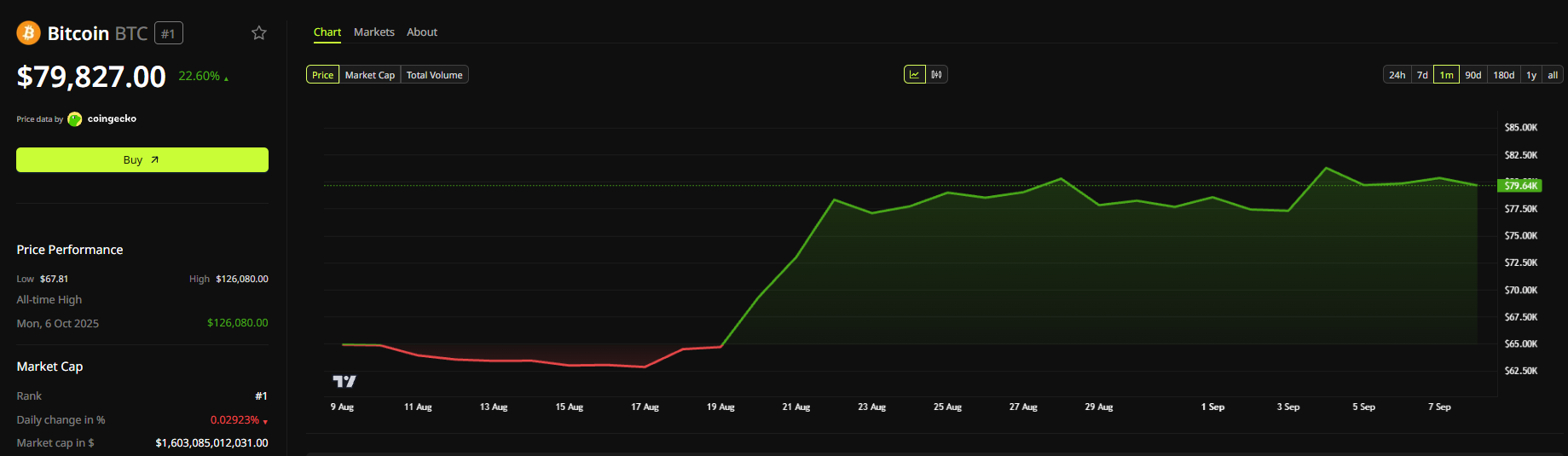
Meanwhile, Bitcoin trades near $79,827, so a 50% decline would drag it toward $40,000.

Why Buterin Trusts the Network to Adapt
Buterin said he remains optimistic about cybersecurity over the long term. Instead, he treats the transition itself as the harder problem.
He expects Bitcoin to absorb any issue that does not require social consensus. Upgrading clients and mining pools against network-layer attacks falls into that group. He puts the odds of an actual break in hashes or proof of work at close to zero.
Buterin also assumed Shapira would say the same about Ethereum (ETH), since both men hold crypto that would fall together.
Ethereum has spent 2026 preparing for the threat from quantum computing. Researchers have started pricing the cost of post-quantum migration.
Rather than stake money on the disagreement, Buterin pointed at his own balance sheet.
“I would offer a bet, but given what my holdings are I’m basically taking this bet … with ~90% of my net worth already,” Buterin, said via X post
Therefore, the AI Bitcoin crash argument now hangs on timing. Shapira has two years to prove his case, while Buterin already holds the other position.
The post Will AI Crash Bitcoin 50%? Vitalik Buterin Weighs In appeared first on BeInCrypto.


Harmony has proposed closing its seven-year-old Layer 1 blockchain, issuing ONE on Ethereum and directing future token emissions to a new AI video project.
Summary
- ONE balances would be recorded at Harmony’s final block and recreated as ERC-20 tokens on Ethereum.
- Users must leave smart contracts by Sept. 10 because applications and liquidity pools cannot migrate automatically.
- Harmony has reserved $1.372 million to compensate eligible validators and delegators over four quarters.
- The proposal follows an August exploit that created trillions of unauthorized ONE tokens and prompted a rollback plan.
Harmony said in a Sept. 6 post that the mainnet’s exposure to “state actors” and “AI agents” has made continued operation too risky, leading the team to propose retiring the network it launched in 2019.
The plan remains nonbinding, and Harmony has not announced when it will produce the blockchain’s final block. The team also has not explained whether validators will decide the proposal through the network’s existing governance process.
Under Harmony’s published governance rules, a proposal must receive votes representing at least 51% of total stake weight. Approval requires support from 66.7% of the participating voting power after a seven-day introduction period and a 14-day vote.
Harmony would recreate ONE balances on Ethereum
Rather than asking holders to exchange their tokens manually, Harmony plans to take a snapshot at the final block and distribute replacement ONE tokens on Ethereum. The ERC-20 version would go to the same addresses recorded in the snapshot, removing the need for individual claims.
The snapshot would cover ONE held in personal wallets, staking delegations, unclaimed validator rewards, smart contracts, and centralized exchange accounts. Harmony plans to coordinate with exchanges so that their existing ONE listings can move to the Ethereum-based token.
Delegated tokens and unpaid validator rewards would be handled separately through individual governor vaults. According to the proposal, the total ONE supply and its scheduled issuance rate would remain unchanged during the transition.
To allow outside review of the process, Harmony said it would publish the Ethereum token contract, snapshot calculations, and airdrop scripts. The project has not yet released the contract address or the final snapshot method.
While ordinary wallet balances would be included automatically, several types of holdings cannot be copied to Ethereum in their current form. Harmony said multisignature vaults, liquidity pools, and applications running on the mainnet would not migrate with the token balances.
Users have therefore been asked to withdraw from smart contracts before Sept. 10. Anyone who leaves assets inside a decentralized exchange pool, lending market, or another on-chain application could face complications because the protocol state and its related contracts will not be recreated on Ethereum.
For centralized exchange customers, the process will depend partly on each platform’s support for the migration. Harmony has proposed moving exchange-held balances and listings to the ERC-20 token, although it has not published a list of participating exchanges or their individual timetables.
Validators face separate shutdown conditions
Beginning Sept. 10, validators would be allowed to turn off their nodes as the network prepares for its final block. Harmony has set aside $1.372 million for eligible validators and their delegators, with payments scheduled across four quarterly installments.
Eligibility carries several conditions. Validators must stop their nodes within the required period, retain their stakes, sign an agreement, and continue serving as governors after the mainnet closes. The pool would also cover the difference between the rewards earned at a validator’s last block and the rewards it would have received through the final network block.
Harmony has not disclosed how the $1.372 million will be divided among validators and delegators. Final payments may depend on stake levels and compliance with the proposed agreements, according to the terms described by the team.
Operators could later remain in governance or join Harmony’s planned “remix economy” as operators or affiliates. Future ONE emissions would fund the new AI video initiative, although Harmony said governors could still provide feedback on the arrangement.
Under the proposed model, video creators would publish prompts and related assets that fans could copy and alter. AI agents would turn the resulting branches into additional clips, while operators would manage video generation, distribution and content moderation.
Harmony said staking levels and service uptime would affect operator rewards. The project also plans to subsidize graphics processing hardware during the first year and has projected up to $1 million in combined operator revenue, subject to the service and staking requirements.
The business model includes a proposed $10 monthly subscription. Affiliates would receive a recurring 30% commission from users they refer, while Harmony estimated that advertising could produce tens of millions of dollars if the platform reached 1 million users. Both revenue figures remain projections from the project rather than confirmed income.
August exploit pushed Harmony toward a shutdown
The retirement proposal follows an August security breach that produced unauthorized ONE tokens and forced the team to consider reversing several days of blockchain activity.
On Aug. 12, crypto.news reported an unauthorized mint after on-chain researcher Juiceberg estimated that almost 4 billion ONE had been created through empty blocks. The researcher claimed that about 2.8 billion tokens reached centralized exchanges, but Harmony had not confirmed either figure when it first disclosed the incident.
Harmony’s later investigation found that more than 3 trillion ONE had been generated through six transactions. The team linked the exploit to a weakness in cross-shard receipt verification that allowed valid receipts to be processed repeatedly without matching deductions elsewhere on the network.
One wallet connected to the activity attempted 534 transfers of 5 billion ONE within 106 seconds, according to Harmony’s reconstruction. Of the attempted transfers, 477 succeeded and moved a combined 2.385 trillion ONE.
Investigators traced the created tokens to standalone wallets, exchange accounts, decentralized exchange routers, liquidity pools, bridge contracts, wrapped ONE and staking wallets. Harmony said it contacted exchanges, bridges, and law-enforcement agencies while tracking the assets.
By Aug. 17, the team had proposed returning both network shards to checkpoints recorded at 11:25:37 p.m. UTC on Aug. 11. Shard 0 would keep block 92,730,034 and restart from the next block, while shard 1 would return to block 94,978,278 despite not being the origin of the unauthorized mint.
The rollback would remove 141,628 consecutive blocks from shard 0, including 109,126 regular transactions and 315 staking transactions. Harmony classified 104,545 of the regular transactions, or 95.8%, as automated activity, with almost 100,000 tied to decentralized exchange automation.
At the time, the team considered migration but said it would cause more disruption than a rollback. Less than a month later, moving ONE to Ethereum became part of the proposed mainnet closure.
U.S. holders may need detailed migration records
For U.S. token holders, the migration may create tax-record concerns even if Harmony distributes ERC-20 ONE automatically. The IRS treats digital assets as property and requires taxpayers to report sales, exchanges, and other taxable disposals.
IRS guidance says exchanging one digital asset for another that differs materially in kind or extent can produce a capital gain or loss. Harmony describes the replacement as the same ONE token with unchanged supply and emissions, but the agency has not issued guidance addressing this specific mainnet-to-Ethereum migration.
U.S. holders may therefore need to preserve their original purchase records, wallet history, the final Harmony snapshot, and the value of the Ethereum token when received. Exchange customers should also retain any migration notices and Form 1099-DA information supplied by their platforms, since the IRS says taxpayers remain responsible for reporting taxable activity even when a broker does not provide a form.
Harmony had faced security problems before the August incident. In December 2023, the project disclosed that faulty staking logic had created 146.28 million ONE across 74 delegator addresses, prompting an emergency hard fork at block 51,118,080.
Its largest earlier loss came in June 2022, when attackers stole nearly $100 million from the Horizon cross-chain bridge after gaining control of keys used by its multisignature wallet. Harmony responded by raising its hacker bounty to $10 million and working with exchanges, analytics firms, and law enforcement.
A month after the bridge attack, developers proposed minting 4.97 billion ONE to reimburse affected users over three years. Community members opposed the resulting dilution, and Harmony later withdrew the plan in favor of a recovery program that would not add tokens through a hard fork.
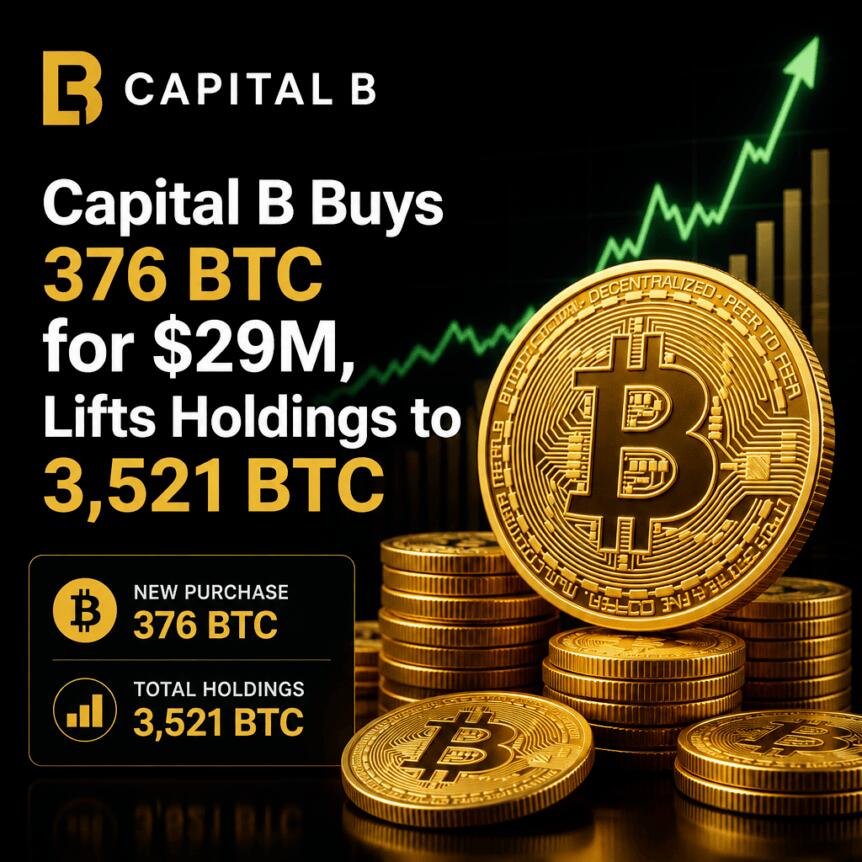
French corporate Bitcoin treasury firm Capital B has expanded its holdings with a new purchase of 376 BTC, acquiring the coins for €25.3 million (about $29.5 million). After the deal, Capital B’s total Bitcoin treasury rises to 3,521 BTC, according to a company announcement published Monday.
The acquisition follows Capital B’s capital raises of roughly €30.1 million (about $35 million), which included a private placement backed by investors Adam Back and TOBAM. The company says Swissquote Bank Europe executed the purchase, while Taurus provided custody for the assets.
Key takeaways
- Capital B bought 376 BTC for €25.3 million, bringing total holdings to 3,521 BTC.
- The purchase was funded after €30.1 million in capital raises, including a private placement backed by Adam Back and TOBAM.
- Capital B paid an average of €67,182 per BTC for the latest tranche; its overall average cost across the treasury now sits at €87,878.
- The latest buy is Capital B’s largest since September 2025, when it acquired 551 BTC for €54.7 million.
- Capital B now ranks 25th among publicly traded companies by Bitcoin holdings, based on BitcoinTreasuries.net.
Details of Capital B’s latest Bitcoin purchase
Capital B’s latest acquisition consists of 376 Bitcoin purchased at an average price of €67,182 per BTC. In the announcement, the company links the buy to its financing activity completed ahead of the trade.
Execution and custody were handled by third parties: Swissquote Bank Europe carried out the purchase, while Taurus is designated as the custodian. Capital B also distinguishes operational holdings from its treasury reserve, stating that it holds an additional 61 BTC for operational purposes that are kept separate from the company’s Bitcoin treasury and excluded from its Bitcoin-related performance metrics.
Across its Bitcoin treasury program, Capital B reports spending a total of €309.4 million at an average cost basis of €87,878 per BTC. Based on that accumulated position, the firm moved to 25th place among publicly traded companies tracked by BitcoinTreasuries.net.
Why the financing and custody structure matters
Corporate Bitcoin treasury strategies often live or die on execution quality, custody arrangements, and the consistency of funding. In this case, Capital B’s announcement ties the purchase directly to capital raised—roughly €30.1 million—rather than leaving investors to infer the financing source after the fact.
For market participants, the specific counterparties named for execution (Swissquote Bank Europe) and custody (Taurus) are also notable because treasury programs depend on minimizing operational risk. Even when the market impact is not the main driver, reliable custody and clear segregation between operational BTC and treasury BTC can matter for how companies report performance and how investors evaluate treasury discipline.
Capital B’s position in the wider corporate Bitcoin race
Capital B’s purchase adds to a broader pattern seen among corporate Bitcoin holders: while some companies have moved to unwind holdings, others continue adding. The announcement places Capital B among the persistent accumulators—particularly relevant as Bitcoin treasury rankings can shift quickly with even mid-sized acquisitions.
Japan-based Metaplanet, for example, reportedly acquired 2,823 BTC during the second quarter for about $222 million, bringing its total to 43,000 BTC. BitcoinTreasuries.net data cited in the article places Metaplanet third among publicly traded corporate Bitcoin holders, behind Strategy and Twenty One Capital.
Meanwhile, Sweden-based H100 Group reportedly expanded its treasury in August after an all-share deal involving Norwegian companies holding 2,455 BTC. That transaction reportedly lifted H100’s holdings to 3,506 BTC, positioning it as Europe’s second-largest publicly traded corporate holder at the time. Capital B’s latest buy leaves it 15 BTC ahead of H100, while both remain behind Germany’s Bitcoin Group SE, which holds 3,605 BTC, according to the cited ranking data.
At the top end of the corporate list, Strategy—described as the world’s largest corporate Bitcoin holder—resumed buying in August after a pause of two months. The article states Strategy purchased 4,603 BTC for $370 million, bringing total holdings to 845,050 BTC at an aggregated purchase value of $63.3 billion, again referencing BitcoinTreasuries.net for rank context.
What to watch after the September 2025 high-water mark
Capital B’s newest tranche is its largest acquisition since September 2025, when it bought 551 BTC for €54.7 million. That matters because it suggests the firm has not been buying at a comparable scale for most of the interim period, even if smaller additions or operational balance changes may have occurred.
Going forward, investors will likely focus on whether Capital B maintains a steady cadence of treasury purchases—especially given that the latest deal appears tied to fresh capital raising. The key uncertainty is how quickly (and at what average prices) future acquisitions will follow, and whether treasury growth continues to translate into meaningful movement within the publicly traded rankings tracked by BitcoinTreasuries.net.
For now, Capital B’s updated holdings and cost basis provide a clear snapshot of where the company stands in the competitive landscape of corporate Bitcoin accumulation—and its next reported treasury purchase will determine whether it can keep closing the gap to Europe’s largest peers.

Bitcoin has spent the past several days struggling to decisively break past $80,000, and options traders don’t appear too concerned about an imminent volatility explosion despite the major economic events in the next ten days.
QCP Capital’s latest market analysis suggests that BTC’s 18-day at-the-money implied volatility currently sits at just 37%-38%, despite the upcoming US inflation report and the subsequent FOMC meeting.
Waiting for Clarity
The analysts believe the volatility compression reflects a market waiting for additional information rather than traders expressing strong directional conviction. This narrative received some confirmation last week after the release of the August jobs report, which significantly exceeded expectations, with the US economy adding 162,000 jobs compared to forecasts of around 55,000. Unemployment remained at 4.1% while average hourly earnings increased 0.3% MoM.
The reading strengthened the argument that the US remains resilient and shifted attention back toward inflation and the Fed’s next move. Markets now assign a 58% probability of a 25-basis-point rate hike at the September 15-16 meeting.
Major institutions have also turned hawkish, especially after Kevin Warsh’s speech at the end of August. UBS expects the central bank to raise rates in September and also in December after previously forecasting no changes this year.
Aside from a brief retracement by a few grand, Bitcoin has remained resilient, surging past $82,000 last week before it calmed at just under $80,000.
CPI Can Tilt the Market
The next big test comes with the August inflation data, to be announced during the current big economic week. Producer inflation will provide the first signal on Thursday, followed by the considerably more important Consumer Price Index on Friday.
The latter could materially alter expectations surrounding the upcoming Fed decision. As usual, a hotter-than-expected reading would provide the central bank more leeway for a rate hike, potentially pushing Treasury yields higher and creating additional pressure on risk assets like bitcoin.
The inflation threat has become particularly relevant as oil prices continue climbing amid renewed US-Iran strikes. Brent crude neared $100 per barrel on Monday, while markets are already assigning increasing probabilities to rate hikes from several major central banks.
A softer reading could reduce the pressure on policymakers to act and potentially provide BTC with the catalyst to finally break through $82,000. Nevertheless, QCP’s analysts do not expect a dramatic breakout in either direction.
The post Bitcoin Traders Are Surprisingly Calm Ahead of CPI and the Fed: Is a Big Move Coming? appeared first on CryptoPotato.
Crypto fund flows are becoming increasingly sensitive to changes in the US interest-rate outlook, with CoinShares arguing that Federal Reserve policy remains a key barrier to Bitcoin (BTC) breaking above $80,000 despite continued investor demand for crypto.
In his latest market update, CoinShares head of research James Butterfil argued that “Bitcoin is trading like gold again, but the Fed still sets the ceiling” at around $80,000.
That sensitivity was evident after Fed Chair Kevin Warsh’s speech at Jackson Hole. Warsh said progress on inflation had been modest and that price pressures were not easing quickly enough to give the central bank’s policy makers the confidence inflation was returning to its 2% target. Roughly $100 million exited digital asset investment products immediately after the speech, as markets sharply increased the probability of a September rate hike.
Flows reversed over the following week, reaching $1 billion by Sept. 4. The turnaround coincided with comments from Fed Governor Christopher Waller, who pointed to recent signs of “disinflation” and said he was inclined to keep rates steady in September if upcoming inflation data showed further progress.
“Investors are not exiting the asset class,” Butterfill wrote. “They are trading the rate path.”
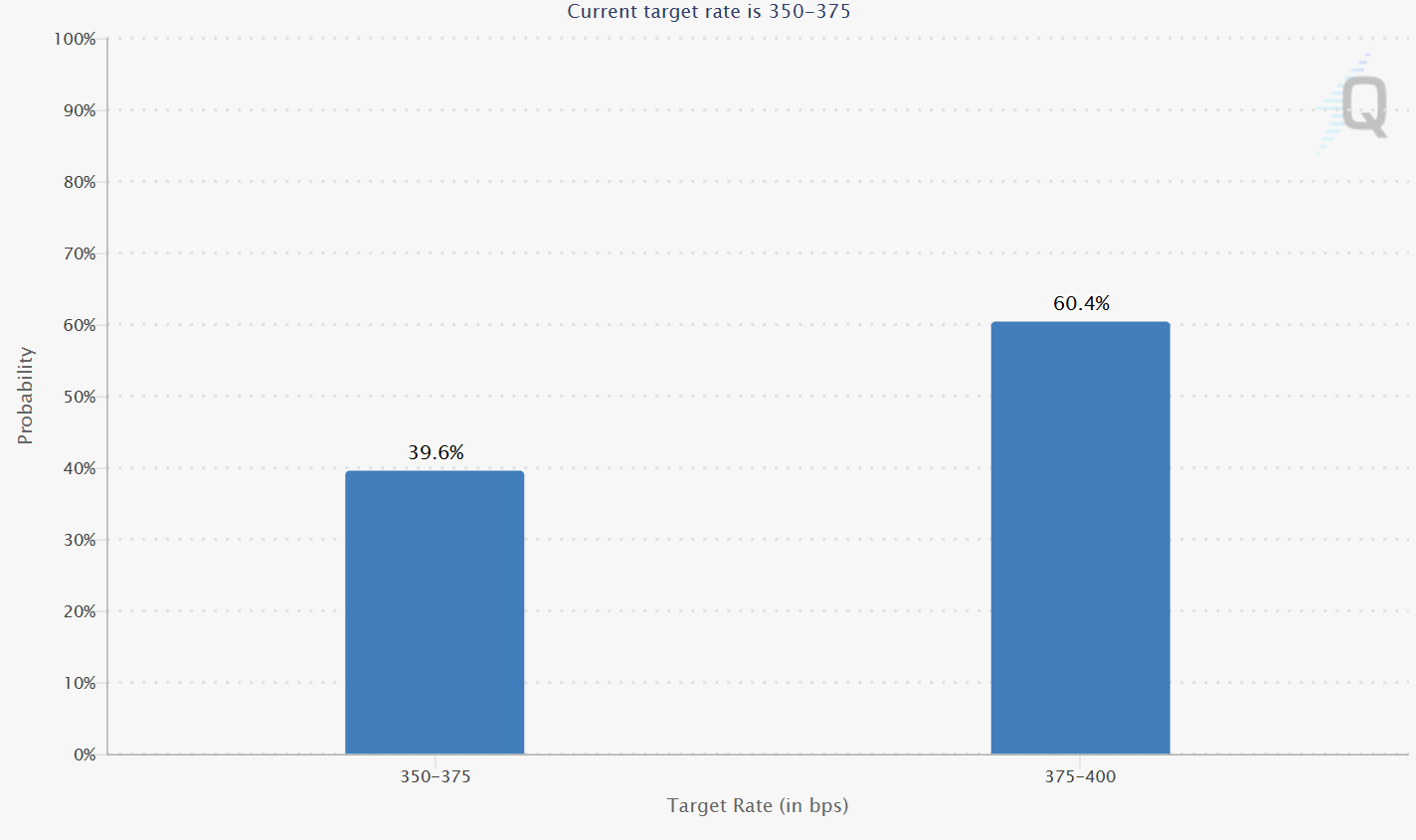
As of Monday, Fed Funds futures prices implied a roughly 60% chance of a rate hike following next week’s Federal Open Market Committee (FOMC) meeting, according to CME Group.
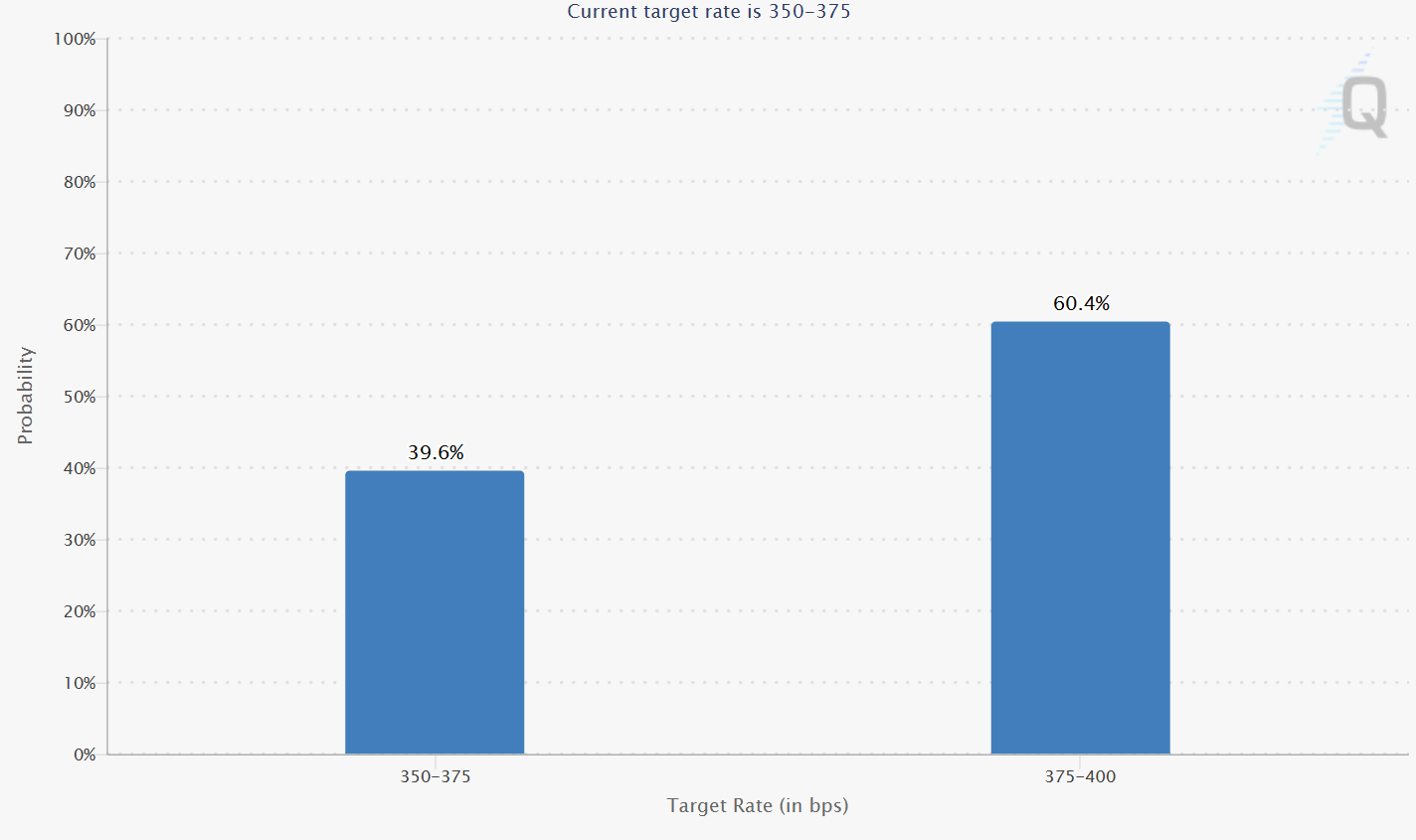
Markets are now pricing in a 25 basis-point rate hike on Sept. 16. Source: CME Group
The movements suggest that Bitcoin and broader digital asset markets remain highly sensitive to shifts in liquidity and monetary policy. Easier financial conditions have historically supported crypto and other risk assets.
Related: Crypto Biz: AI took a back seat when Bitcoin started climbing
Treasury buybacks add to liquidity backdrop
CoinShares’ assessment comes against the backdrop of a strong rebound in Bitcoin and the broader digital asset market last month, when the US Treasury announced plans to double certain long-dated bond buybacks from $2 billion to $4 billion per operation. Bitcoin climbed from the low $60,000s to above $80,000 during the month.
The expanded buyback program is expected to run from Sept. 9 through Nov. 4.
“Around the Treasury announcement we also saw equity sell-offs and shifts across the yield curve, layered on top of the ongoing noise from the Iran war — oil and equities swinging depending on whether or not people are feeling optimistic about diplomacy on any given day,” wrote 21shares co-founder Ophelia Snyder in her Substack newsletter last week.
“Taken together, these factors suggest to me that the current Bitcoin rally may have less to do with crypto-specific catalysts and more to do with growing interest in de-risking exposure to the US specifically,” she added.
The move reinforced the market’s focus on liquidity conditions and prompted Standard Chartered to forecast that Bitcoin could reach $100,000 before the end of the year.
Related: Strategy’s $66B Bitcoin machine hinges on capital markets, not BTC price: Report


Bittensor Commons has confirmed the full details of Exploit Summit 2026, the Bittensor ecosystem’s native conference, taking place at New City Gas in Montreal on September 28 and 29.
The two-day programme covers talks, debates, workshops, and live subnet demonstrations, organised around what the network is built on: game-theoretic competitive design, in which independent miners compete against validator scoring mechanisms and are rewarded by results.
Speakers confirmed to date include include Jacob Steeves (Affine), Marcus Graichen (Taostats), Rob Myers (Manifold Labs, Subnet 4 Targon), Jon Durbin (Chutes, Subnet 64), Micaela Bazo (Metanova Labs, NOVA, Subnet 68), Will Squires and Steffen Cruz (Macrocosmos), Max Sebti (Score), Ken Jon Miyachi (BitMind), Ben James (404Gen), Bob Wold (Quantum Rings), Yoav Cohen (Tao.com), Miguel Enrile (Swarm), Wouter Haringhuizen (Zeus), Mamad Anghari (Minos), John Yu (Bitsec), Jose Caldera (Yanez), Gavin Zaentz (Leadpoet), Tom Lynch (Actual Computer) and Jean-Thomas Ledore (PwC France).
Further speakers will be announced. The full speaker roster is available on the event website.
Platinum sponsors are Affine, Chutes, the Opentensor Foundation, Proof of Talk, Taostats, and Manifold. Gold tier: Lium, Score, and KubeTEE. Titanium: Dendrite.
Silver-tier sponsors are 404gen, Bitcast, BitMind, Gradients, Openroboto, Leadpoet, Mentat Minds, and Yanez AI. Additional support comes from Bitstarter, McGill AI Lab, Subnets for Good, BTLabs, and Vidaio.
Organisers cite Montreal’s role in the development of deep learning, the concentration of Canadian contributors in the Bittensor community, and the city’s accessibility from Europe and across North America as the reasons for the location. The venue, New City Gas, is a restored 19th-century industrial complex in Griffintown.
“Exploit is not a showcase. It is the ecosystem in one room, arguing. Subnets demo, people push back, and the network gets better for it. That is how Bittensor works, so that is how the conference works.” – Etienne Leroy, Director, Opentensor Foundation
Sponsorship opportunities remain available, and speaker proposals are open, both via hello@exploitsummit.com. Tickets are on sale via the event’s registration page and are non-refundable but transferable, with name changes handled by the organisers.
ABOUT EXPLOIT SUMMIT
Exploit Summit is Bittensor’s native conference, held at New City Gas in Montreal on September 28-29, 2026. Across two days of talks, debates, workshops, and live demonstrations, the event gathers builders, researchers, and operators working at the intersection of machine learning, incentive design, and distributed networks. More at exploitsummit.com
About Bittensor
Bittensor is a decentralised incentive network designed to coordinate global contributors to build machine intelligence collaboratively rather than behind closed doors. More than 100 subnet teams currently operate on the network. https://bittensor.com
About Bittensor Commons
Bittensor Commons is a non-profit initiative dedicated to the visibility, understanding, and adoption of Bittensor, run by and for the community. It produces Exploit Summit.
Media Contact
Etienne Leroy
Director, Opentensor Foundation
etienne@opentensor.dev
The post Bittensor Commons Confirms Exploit Summit 2026 for Montreal, September 28-29 appeared first on BeInCrypto.
A meme coin called BIPOLAR goes on sale on Tuesday at 5 PM UTC. It does not exist yet, so nobody can buy or check it. However, TikTok videos are already going viral, and a trading account has posted the exact minute.
How a Coin Like This Gets Made
BIPOLAR will be made on Pump.fun, a Solana-based launchpad where anyone can create a coin in a minute. No company, no product, no paperwork.
Each coin gets a long code, the only proof of which is real. Fakes copy the name within seconds, so nothing can be checked until Tuesday.
Announcing the exact minute sounds fair, but it is not. The coin is made by one computer instruction, and programs buy it in that same instant, while people cannot.
One free tool says so plainly.
“An open-source bundler for Pump.fun. Allows you to create a token and bundle it with 25 buys,” the team wrote on GitHub.
So the coin’s maker can buy a pile of it in the same breath. The tool promises “maximum protection against front-running, MEV and snipers.” This means protection for the maker, not the buyer.
Stock markets have rules for this. FINRA, the US brokerage watchdog, bans brokers from buying ahead of their customers. Pump.fun has none.
The price comes from a formula, not traders, and each purchase makes the next one more attractive. The first buyer pays the least. The TikTok audience arrives later and pays more.
Most of These Coins Are Dead Within a Day
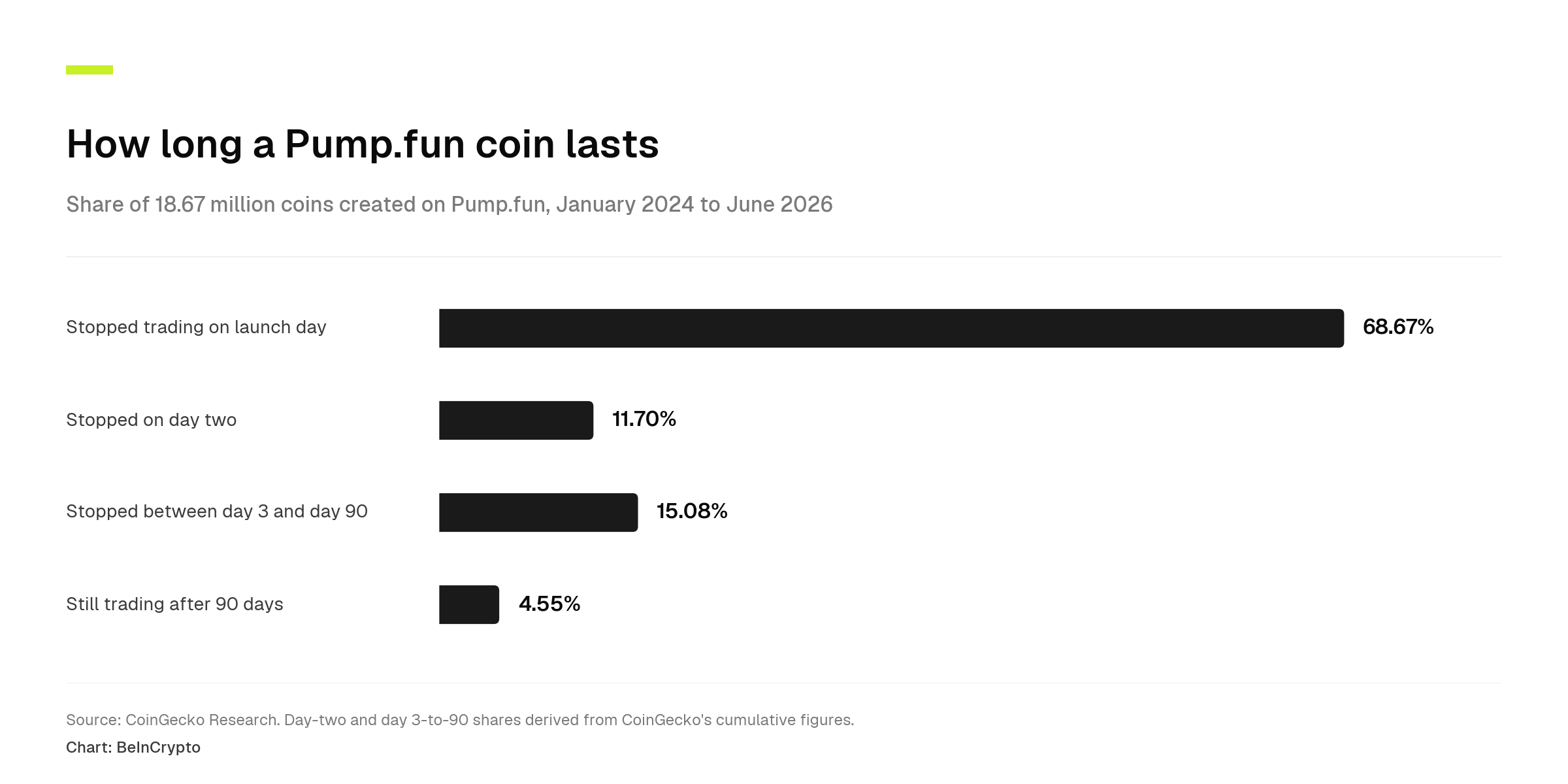
In June, CoinGecko studied 18.67 million Pump.fun coins. Nearly 70% of all Pump.fun tokens were traded only on their first day. Never again.

The website is paid either way. Pump.fun and the maker together take just over a cent of every dollar traded. The investment firm Galaxy Research says these markets pay the machinery’s owners, not the people placing bets.
On Tuesday, some traders could ignore the price and instead focus on counting how much of the coin the first few wallets hold. If a handful own most, everyone else is buying their exit.
The post Viral TikTok Meme Coin BIPOLAR Launches Tomorrow. But There’s a Trap appeared first on BeInCrypto.
The Philippines’ central bank has proposed freezing new payment-system operator registrations for 12 months while imposing tighter controls on payment arrangements involving virtual asset service providers (VASPs).
Under a draft circular, the Bangko Sentral ng Pilipinas (BSP) said it would suspend acceptance and processing of applications for operators of payment systems (OPS) to conduct a “holistic review” of its taxonomy and licensing framework.
Applications submitted before the suspension could continue to be evaluated, but the BSP would not approve or deny any until the pause ends. Entities would be barred from starting activities that require OPS registration unless the regulator authorizes them otherwise.
The proposal would require BSP-supervised institutions offering merchant acquisition services to handle regulated VASPs through direct merchant arrangements. Those relationships would be subject to enhanced due diligence and monitoring, transaction and settlement limits and other risk-based controls.
The requirement covers virtual asset firms that must be licensed, registered or authorized by the BSP, the Philippine Securities and Exchange Commission, or another authority. VASPs are listed alongside gambling businesses, gaming providers, adult-oriented businesses and money service businesses.
The draft would take effect 15 days after publication if finalized, and the BSP is currently accepting feedback.
Cointelegraph reached out to the BSP for more information but did not receive a response before publication.
Related: Philippines SEC flags dYdX, six crypto platforms as unauthorized

Irish League football fans warned by PSNI ‘face the consequences’ over pre-arranged fights
Tech companies look to Argentina’s windswept Patagonia to build massive data centers
Coldcard Exploiter Moves 45% of Wave 3 Loot as Stolen Bitcoin Enters CoinJoins





-

 Fashion3 days ago
Weekend Open Thread: Beyond Yoga
-
 Crypto World3 days ago
Bitcoin price stalls near $82K as key resistance holds
-

 Politics3 days ago
Best Gaming Laptops, CPUs, TVs, And Keyboards To Upgrade Your Set Up For GTA VI
-

 Tech3 days ago
The Birds Outside, Drawn For You Automatically
-

 Crypto World3 days ago
IMF Says El Salvador’s Post-Review Bitcoin Purchases Used No Public Funds
-
 Crypto World3 days ago
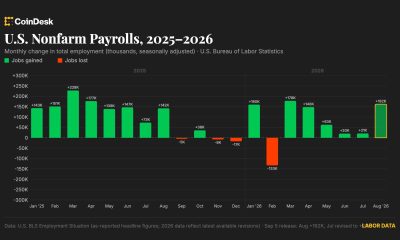
U.S. added stronger than expected 162,000 jobs in August as labor market bounced back
-

 Sports3 days ago
Alexandre Pato consortium’s Northampton Town investment approved
-

 Sports3 days ago
Commanders’ Chig Okonkwo is a top breakout fantasy football candidate
-

 Sports3 days ago
Golden Eaglets Drawn in Group B for 2026 WAFU B U17 Championship
-
 Crypto World3 days ago
XRP price breaks falling channel as bulls target $1.53
-

 Politics3 days ago
A new European chapter for Gibraltar
-

 Politics3 days ago
How To Avoid Winter Colds: 4 Everyday Habits That Spread Germs, Says Pharmacist
-

 Politics3 days ago
The House | Bin the lectures, bring gossip and be ready to banter: how the new PM should prepare for his Trump encounter
-

 Crypto World3 days ago
From warning to listing: UK’s largest retail investment platform opens access to crypto ETNs
-

 Crypto World3 days ago
FinCEN flags $12.7B tied to Southeast Asia crypto investment scams
-

 Tech3 days ago
A Worthy Android Ereader, With Some Tradeoffs
-

 Tech3 days ago
How To Edit Claude’s Memory
-

 Crypto World3 days ago
Trezor Data Breach Impacts 67,000 More US Customers
-

 Politics3 days ago
33 Cosy Autumn Home Decor Ideas: Blankets, Pumpkin Decorations, And Candles
-

 Tech3 days ago
beyerdynamic AVENTHO Y Debuts at IFA 2026 and Makes Wireless Headphones Less Disposable
You must be logged in to post a comment Login