

Crypto World
US Intensifies Operation Economic Fury Targeting Iran’s $7.7 Billion Crypto Network

The Trump administration’s push to choke off Iran’s crypto use is intensifying. The US Treasury has frozen nearly $500 million in regime-linked digital assets under Operation Economic Fury.
Treasury Secretary Scott Bessent disclosed the figure last week, including a $344 million seizure in the prior month. Estimates place Iran’s total digital asset holdings near $7.7 billion as Middle East tensions climb.
Inside Operation Economic Fury
Treasury officials say the campaign targets Iran’s military and the Islamic Revolutionary Guard Corps (IRGC). It also goes after regional proxies and shadow banking networks that move oil revenue.
Bessent has framed the strategy as pushing the regime into a financial crisis.
The largest single action so far was the $344 million USDT freeze on the Tron network, coordinated with Tether.
That move followed earlier US measures against Iran-linked UK exchanges accused of routing IRGC funds.
Tehran is now estimated to hold roughly $7.7 billion in digital assets, a figure cited by Fox Business reporter Darren Botelho, drawing on threat-detection data.
That total ranks Iran among the largest sovereign crypto holders tracked by blockchain analytics firms.
Bitcoin as the New Banking Workaround
The regime is leaning harder on Bitcoin (BTC) to move money outside the traditional banking system. Tehran recently rolled out a state-backed maritime insurance platform called Hormuz Safe.
The platform settles cargo ship policies entirely in BTC for vessels transiting the Strait of Hormuz.
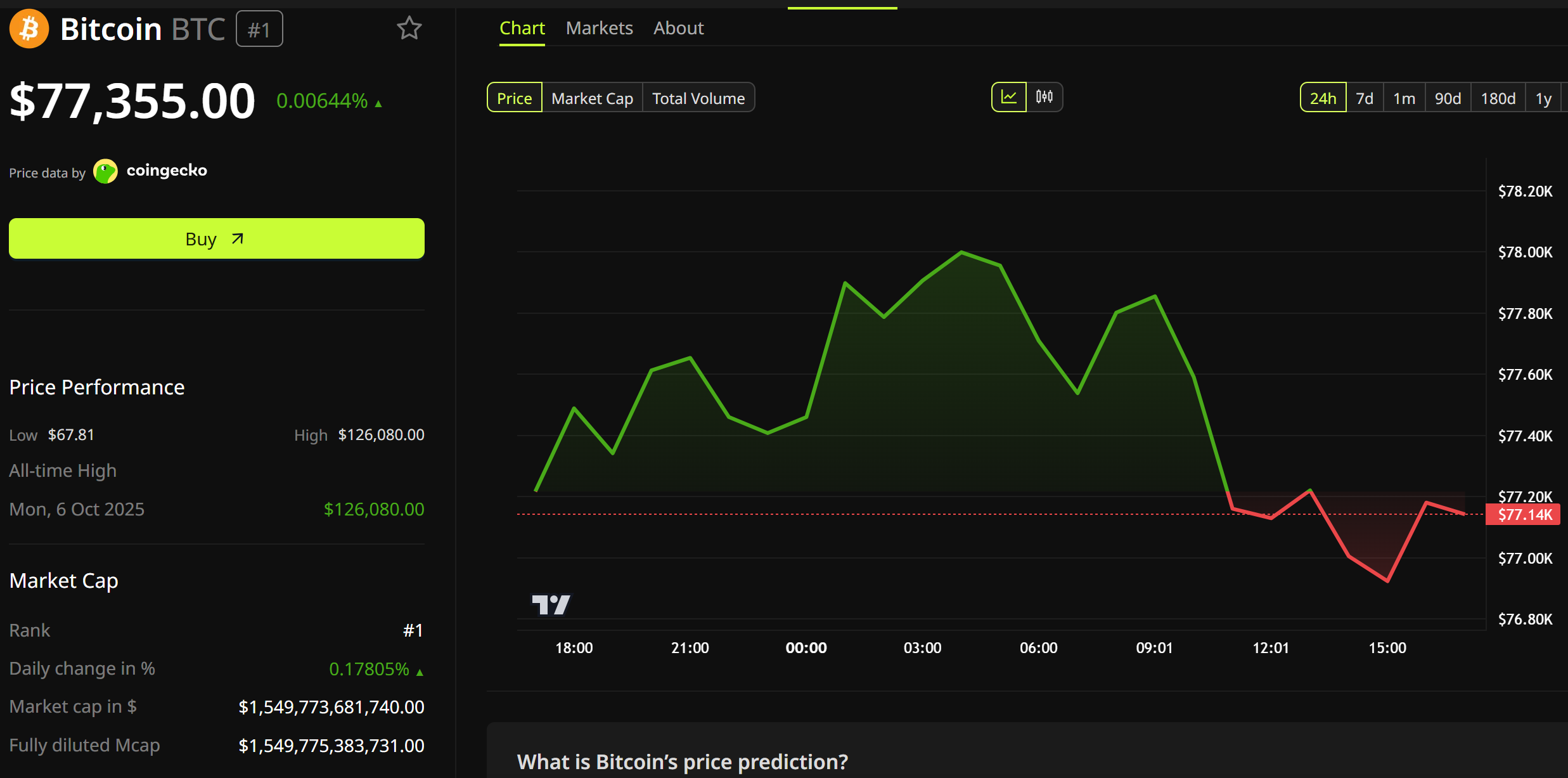
BTC traded near $77,355 at press time, up by a modest 0.006% over 24 hours, with the pioneer crypto’s role in Iran’s wartime economy adding geopolitical weight to its short-term action.

Why the Trail Favors Investigators
Despite crypto’s reputation as a sanctions workaround, US officials argue the opposite holds in practice. On-chain transactions leave permanent records that let forensics firms map wallets connected to the IRGC and Iran’s Central Bank.
“We found over and over again that they’re actually a much better asset for U.S. law enforcement and other agencies to track because you leave a lot of breadcrumbs,” Fox Business reported, citing Chris Perkins, CEO of 250 Digital Asset Management.
Traceability now favors enforcement. Industry insiders also told the network that Washington may threaten to cut crypto exchanges off from US banking.
Such a step would target firms still processing Iran-linked flows. The coming weeks should show whether the Treasury escalates to exchange operators.
How Tehran adjusts its Bitcoin-based workarounds will also come into focus.
The post US Intensifies Operation Economic Fury Targeting Iran’s $7.7 Billion Crypto Network appeared first on BeInCrypto.


TLDR
- A U.S. lawmaker introduced a bill to establish a strategic Bitcoin Reserve under federal law.
- The proposal aims to formalize a March 2025 executive order on Bitcoin reserves.
- The bill has gained bipartisan support with more than a dozen co-sponsors in Congress.
- The Treasury Department would manage the reserve and oversee its operations.
- The legislation allows the government to acquire up to 1 million BTC over five years.
Rep. Nick Begich introduced legislation to establish a strategic Bitcoin Reserve under U.S. law. The proposal aims to formalize an earlier executive order issued in March 2025. Lawmakers from both parties have joined as co-sponsors, signaling growing support.
Lawmakers Move to Formalize Strategic Bitcoin Reserve
Begich unveiled the American Reserve Modernization Act on Thursday. The bill seeks to give the strategic Bitcoin Reserve a permanent legal framework.
The legislation builds on a prior proposal known as the BITCOIN Act. Begich introduced that measure earlier with Sen. Cynthia Lummis.
The new bill directs the Treasury Department to oversee the reserve. It also creates a separate stockpile for other federally held crypto assets.
https://x.com/BitcoinMagazine/status/2057482381427163465?s=20
Begich compared Bitcoin to gold during a Fox Business interview. He said markets have identified both as dominant stores of value.
“When you look at bitcoin, it represents about 60% of all market cap,” Begich said. He added that markets have chosen it as a primary asset.
The proposal allows Treasury to acquire up to 200,000 BTC annually. This plan would run for five years and target 1 million BTC.
The holdings would remain locked for at least 20 years. That structure aims to preserve long-term value within the reserve.
U.S. Bitcoin Holdings and Broader Crypto Policy Push
The U.S. government currently holds about 328,372 BTC. Authorities obtained these assets through law enforcement seizures.
These include funds from the Silk Road case and the 2022 Bitfinex recovery. Officials have not outlined a unified management strategy.
Rep. Pat Harrigan addressed this issue in a statement. He said the government holds billions in seized bitcoin without a clear plan.
“The United States government already holds billions in seized bitcoin,” Harrigan said. He added that the situation requires change.
The bill arrives during increased legislative activity around crypto regulation. The Senate Banking Committee recently advanced a major digital asset framework.
Lawmakers approved the Digital Asset Market Clarity Act in a 15-9 vote. Two Democratic senators supported the measure alongside Republicans.
Sen. Lummis said the bill could reach the Senate floor soon. She noted that a mid-June timeline remains possible.
Meanwhile, the Treasury has increased enforcement actions tied to crypto finance. Operation Economic Fury led to nearly $500 million in Iranian asset seizures.
A White House official said an announcement on reserve operations is near. The official confirmed that a key legal hurdle has been resolved.

Amundi Solana UCITS fund SAFO launches as Europe’s largest asset manager brings €2.4 trillion AUM to the chain.
Summary
- Amundi, Europe’s largest asset manager, and Spiko Finance launched SAFO, a UCITS-compliant fund on Solana, making it the eighth chain in their strategy.
- SAFO is a tokenized sub-fund under the SPIKO SICAV structure, backed by total return swaps with BNP Paribas as a Tier 1 banking counterparty.
- The launch coincides with US Solana spot ETFs crossing $1 billion in assets under management and Goldman Sachs reducing its SOL exposure.
Amundi, managing €2.4 trillion in assets, and Spiko Finance announced the launch of SAFO on Solana, bringing their UCITS-compliant tokenized fund to its eighth blockchain. Spiko Finance acts as transfer agent, tokenization platform and broker, while CACEIS, Amundi’s custody affiliate, handles depositary and fund administration.
SAFO is formally constituted as a tokenized sub-fund under the legal entity of SPIKO SICAV and subject to French regulatory oversight by the AMF. The fund implements total return swap contracts with full backing from Tier 1 banking entities including BNP Paribas. Subscriptions and redemptions are denominated in EUR, USD, GBP, and CHF, with a minimum investment of one unit per currency class.
Why Amundi’s Solana entry signals a structural shift
The launch arrives as US Solana spot ETFs have crossed $1 billion in assets under management, compressing the institutional adoption narrative from US-only to transatlantic. Crypto.news has tracked about 30 institutions holding roughly $540 million in Solana ETF exposure as of March 2026, a figure that the Amundi move now supplements from the European side.
The timing creates a notable divergence. Goldman Sachs recently reduced its SOL exposure while Amundi is going long, creating the kind of two-sided institutional narrative that tends to build structural demand over time. Crypto.news has also noted institutional endowments adding Solana ETF positions as regulated wrappers lower the barrier for conservative allocators.
What SAFO adds to the existing UCITS product landscape
The UCITS framework allows SAFO to be distributed across all EU member states under a single regulatory structure, removing the cross-border compliance friction that has historically kept European institutional allocators from on-chain products. At the March 2026 expansion, the fund had roughly $100 million in committed AUM across its existing seven blockchain deployments.
Solana was chosen for its transaction throughput and growing institutional infrastructure base. Crypto.news has reported on Morgan Stanley refiling its own staked Solana ETF application, with the Amundi UCITS entry now representing simultaneous pressure from both the US and European institutional channels.
Crypto World
From Swaps to Super Apps: How ChangeNOW Is Building Crypto’s One-Stop Financial Platform


Cryptocurrencies have changed heavily since the introduction of Bitcoin as a peer-to-peer payment system. For some, Bitcoin is better used as an investment rather than as a currency to spend.
New cryptocurrencies are adapting to payment needs. And crypto users have thousands of options to choose from. That’s where crypto wallets can come into play, allowing someone to buy, sell, or save across a variety of cryptocurrencies.
At Consensus 2026 in Miami Beach, BeInCrypto recently met up with Tim Stanyakin, Head of Growth at ChangeNOW, about the company’s latest wallet offerings – including an expansion into areas such as sports betting.
ChangeNOW’s Infrastructure Base
While many users may simply think of a crypto in terms of its end use, there’s often significant code to make a crypto work. And combining multiple cryptocurrencies via a wallet can be a substantial challenge.
ChangeNOW has been able to build up a substantial infrastructure to provide a one-stop shop for cryptocurrencies across radically different use cases.
“We have an ecosystem. We have a branch called NOWPayments. We provide cryptocurrency, even gateway for different companies, starting from retail to gambling to iGaming. Moreover, we have our own non-custodial wallet, NOW Wallet. We have an infrastructure provider called NOWNodes. It’s like the basement for almost every company on the market.”
NOWNodes provides a scalable crypto node platform. That includes blockchain APIs and full-node infrastructure, with flexibility for developers, enterprise solutions, and even Web3 projects.
The International Regulatory Environment
Regulatory concerns remain at the forefront of the crypto market right now.
The Clarity Act, which could lead to massive growth in stablecoin adoption in the U.S., appears to be moving towards a vote in the U.S. Senate.
But that’s just one country’s legislation. ChangeNOW’s global footprint requires a nuanced approach for each country and region.
“We work worldwide in the U.S., Canada, Europe. Now we’re trying to conquer the APAC region. That’s a lot of different regulatory frameworks. You choose the approach [in each region] not because of the mindset of the people, but mostly because of the different requests from the government and from taxes and forms.”
Combining Crypto With Prediction Markets and Sports Betting
Amid the crypto winter, soaring speculative interest has shifted towards areas such as prediction markets and sports betting.
These can offer some prospective quick wins. Crypto assets can provide funding, as ChangeNOW is fully integrating sports betting into their wallet – and is moving this market on-chain.
“We did a deep research and we understood that the whole market right now, the previous main highlight, I mean the 2024, 2025 was AI. Now it’s perps, prediction, prediction, perps. And as we would like to satisfy all of our customers, we decided to do that on-chain. We integrated Asper, we integrated PolyMarket, HyperLiquid, and it’s natively right now inside the app.”
The addition of prediction markets on top of other features creates a killer app – a one-stop financial platform for not just buying and holding crypto, but for staking and other financial activities such as gaming.
“When you use a non-decentralized platform for doing perps, prediction, any yield products and using your own keys and private keys from your non-custodial wallet, it makes sense for almost the whole audience.”
Meeting TradFi In Other Asset Markets
ChangeNOW is one of a growing number of platforms providing more than just one site for crypto investing.
It’s also integrating a substantial number of traditional assets that might normally require a traditional brokerage account – or may be difficult to access for many individuals in some countries.
“We’ve integrated, I think, around 50 assets from traditional finance, including gold, silver, Nvidia stocks, Exodus stocks, Crossforce, everything. We have everything in the top 10. And we increase that almost every month. That’s similar to how brokerages are introducing crypto.”
To some extent, many of the tradfi companies attending Consensus were looking to integrate cryptocurrencies to their platforms. Both tradfi and defi are now adding features that will substantially overlap.
Looking Ahead
Like many companies at Consensus, it’s a time to showcase the work that’s going on, rather than celebrate the path traveled so far. ChangeNOW is no exception. Its integration of traditional assets, alternative areas such as prediction markets and sports betting, all combine to make a killer app.
The real question is, what does the future hold? Here’s where ChangeNOW expects to be able to include for its users by the end of Q4 2026:
“NOW Wallet will be in a path of transformation to a kind of super app, where there will be everything available, starting from regular payments in the physical world. There will be AI engines… there will be new yield products, so you will be able to gain income from staking. There will be some more complicated products.”
The post From Swaps to Super Apps: How ChangeNOW Is Building Crypto’s One-Stop Financial Platform appeared first on BeInCrypto.
- Harvard sold its entire Ethereum ETF position after holding it for only one quarter.
- The Q1 2026 SEC filing confirmed the sale of $87 million in ETH-linked ETF shares.
- Harvard reduced its Bitcoin exposure by selling about 2.3 million ETF shares.
- The endowment still holds over 3 million shares of a Bitcoin ETF valued at about $117 million.
- Ethereum has dropped more than 50% from its August 2025 peak of nearly $5000.
Harvard has exited its entire Ethereum exposure after holding it for just one quarter. The move appeared in its Q1 2026 SEC filing, which showed the sale of all ETH-related ETF shares. Harvard also reduced its Bitcoin holdings during the same period while retaining a large BTC position.
Harvard exits Ethereum ETF holdings in Q1 filing
Harvard Management Company disclosed the sale in its latest United States Securities and Exchange Commission filing. The endowment no longer holds its $87 million stake in an Ethereum exchange-traded fund.
The fund previously owned shares in BlackRock’s iShares Ethereum Trust ETF during Q4 2025. However, the Q1 2026 filing showed a complete exit from that position. Harvard sold the ETH-linked shares after holding them for only one quarter. The filing did not provide a specific reason for the decision.
The endowment also reduced its Bitcoin exposure during the same reporting period. It sold about 2.3 million shares of a Bitcoin ETF. Despite the reduction, Harvard still holds more than 3 million shares of BlackRock’s iShares Bitcoin Trust ETF. Those holdings are valued at nearly $117 million.
Ethereum price decline and foundation changes
Ethereum has faced a challenging year, with its price falling over 50% from its August 2025 peak. The asset had reached nearly $5,000 before declining. The price drop occurred alongside internal changes at the Ethereum Foundation. Several researchers and staff members have left the organization in 2026. Julian Ma and Carl Beek recently announced their departures from the foundation. Their exits brought the total number of departures this year to eight.
Josh Stark, a longtime researcher and former project manager, also left in April. These changes followed leadership adjustments that began in January 2025. In March, the Ethereum Foundation released a new mandate outlining its priorities. The document emphasized decentralization, privacy, open-source code, and censorship resistance.
The mandate received mixed responses from members of the crypto community. Some observers supported the focus on core principles. Journalist Laura Shin commented on the foundation’s direction in public remarks. She said the core pillars were “great” and “worth fighting for.”
However, she added that the foundation should also focus on token economics and price performance. “The Ethereum Foundation seems to want to sit back on its laurels,” Shin said. Harvard’s Q1 2026 filing reflects these broader developments in the Ethereum ecosystem. The endowment continues to maintain a reduced but still large Bitcoin ETF position.

Syndicate Labs, an on-chain development startup backed by Andreessen Horowitz, announced that it is winding down operations after five years of building infrastructure for on-chain developers.
It cited major shifts in the rollup market as the primary reason behind the decision.
EVM Rollups No Longer the Standard
In a statement on X, Syndicate Labs said its main focus had been giving developers better tools to build and scale on-chain apps. But according to the company, the rollup market has changed sharply in recent years. It noted that fewer new rollups are entering the space, while several older projects have slowly disappeared.
The company said the market had moved away from the type of technology it was building, and added that EVM rollups are no longer viewed as the industry standard. Instead, it said developers are increasingly choosing to build custom chains from scratch through consulting teams, which has resulted in less reusable infrastructure and reduced network effects across the ecosystem.
Syndicate Labs said it had spent years trying to support the growth of on-chain applications and wished the outcome had been different. Despite the shutdown of the development company, the group stressed that the broader Syndicate ecosystem will continue to exist separately through the Syndicate Network Collective, a Wyoming-based DUNA that holds governance authority over SYND tokens.
The company also clarified that the collective operates independently from Syndicate Labs, which essentially means that governance over the SYND token is not immediately impacted. It explained that a successor organization could continue maintaining the DUNA structure, though it also outlined plans for an orderly wind-down if no successor emerges.
The Syndicate Commons Bridge on Base was compromised in late April after attackers gained access through a leaked private key, which eventually drained 18.5 million SYND tokens worth nearly $330,000. However, Syndicate Labs stated that the shutdown decision was unrelated to the incident.
The affected customer and all SYND holders on Commons Chain have already been reimbursed using treasury reserves specifically set aside for such events. The company further stated that team members and investors remain subject to token lockups and that no affiliated individual has been able to access allocations for short-term benefit. Syndicate Labs said its vesting structure was designed around long-term incentives.
Two DeFi Projects Falter
Syndicate Labs is not the only crypto project to struggle after security incidents and changing market conditions this year. This year, two DeFi projects moved toward shutdowns after struggling with the fallout from major security and financial problems. In February, Solana-based DeFi aggregator Step Finance, along with SolanaFloor and Remora Markets, ceased operations after a wallet compromise led to roughly $30 million in losses. The teams said fundraising and acquisition talks failed to produce a recovery plan.
A month later, Balancer Labs proposed restructuring the Balancer protocol after months of financial strain, declining TVL, and a November exploit that accelerated liquidity outflows across the platform.
The post a16z-Backed Syndicate Labs Blames Shrinking Rollup Ecosystem for Shutdown Decision appeared first on CryptoPotato.


Mark Cuban says he has sold roughly 80% of his Bitcoin holdings after losing confidence in its hedge narrative.
Summary
- Mark Cuban told Front Office Sports he sold most of his Bitcoin after gold surged to $5,000 during the US-Iran conflict while Bitcoin fell.
- Cuban called Bitcoin “not the hedge I expected” and said it “has lost the plot,” while maintaining he still holds Ethereum for its utility.
- Bitcoin defenders note the asset has risen more than 16% since the first signs of the US-Iran conflict, countering Cuban’s narrative on the timeframe.
Billionaire Mark Cuban told Front Office Sports he sold roughly 80% of his Bitcoin after concluding it failed as a hedge against dollar weakness and geopolitical instability.
“I always thought it was a better version of gold than gold. But gold just blew up and went to $5,000. Bitcoin dropped,” he said.
Why Cuban says Bitcoin failed the geopolitical hedge test
Cuban’s portfolio heading into 2026 was roughly 60% Bitcoin, 30% Ethereum and 10% other assets. He once said he had “never sold” his Bitcoin and described scarcity as making it superior to gold. That conviction has now reversed.
“Every time the dollar dropped, Bitcoin should’ve gone up. It’s not the hedge I expected it to be,” Cuban said in the interview. He still holds Ethereum, citing smart contracts and DeFi applications as having clearer utility, and dismissed most other crypto as “garbage.”
Crypto.news has tracked Cuban’s January 2025 statement that he would “rather own Bitcoin than gold if something bad happens to the economy,” a position he has now abandoned.
What Cuban’s Bitcoin exit means for the digital gold narrative
Bitcoin defenders have pushed back on Cuban’s framing. Since the first signs of the US-Iran conflict emerged in late February, Bitcoin has risen more than 16% while gold has fallen over 15%. The hedge performance depends heavily on which timeframe is selected.
Gold currently trades at approximately $4,500 per ounce, having pulled back from its $5,000 peak, while Bitcoin trades near $77,500, down roughly 38% from its October 2025 all-time high of $126,080.
Crypto.news has reported the full arc of Cuban’s crypto journey, from dismissing the asset entirely to building a portfolio heavily weighted toward digital assets. Cuban’s exit does not reflect broad institutional behaviour, with spot Bitcoin ETFs collectively holding more than $100 billion in assets. The Bitcoin (BTC)price page tracks how markets are absorbing both Cuban’s comments and the macro backdrop in real time.
Crypto World
Bitcoin for Corporations to Host the First Dedicated Institutional Bitcoin Symposium in New York City

Nashville, TN, May 21, 2026 – Bitcoin for Corporations (“BFC”), the premier executive network for corporate Bitcoin strategy, today announced that it will be hosting BFC in NYC, the first dedicated institutional Bitcoin symposium, in New York City. Taking place June 26, 2026, at The Glasshouse in Manhattan, the event is presented by Metaplanet and hosted by BFC.
“New York is the capital of global finance, and there is no more fitting place for this conversation,” said George Mekhail, Managing Director of Bitcoin for Corporations at BTC Inc. “Corporate Bitcoin is no longer an emerging thesis; it’s an operating reality for hundreds of public companies worldwide. BFC in NYC brings together the executives leading these strategies, in a room purpose-built for the relationships and decisions that move this industry forward.”
The symposium arrives at a defining moment for institutional Bitcoin. Corporate treasuries, digital assets, and digital asset credit are converging on the balance sheet, and BFC in NYC is the forum where executives navigating this intersection can meet, learn, and transact.
Friday, June 26, is the core symposium day and will feature 250 attendees, mainstage keynotes and panels, and dedicated networking sessions throughout the day. Speakers will be announced in the coming weeks. The second day features an invite-only VIP Match Day experience, including private hospitality hosted by BitGo at the FIFA World Cup in the New York metro area, with chartered transport from Manhattan.
BFC in NYC is presented by Metaplanet, the largest publicly listed Bitcoin treasury company in Asia. Sponsorship opportunities are available for organizations seeking visibility with this audience.
Attendance is by invitation and approved application. Priority access is extended to current BFC members, the Metaplanet network, and qualified capital allocators and institutional Bitcoin operators. A limited number of seats are available for qualified industry professionals by application. Press credentialing is available for qualified media.
For more information, visit https://nyc.bitcoinforcorporations.com/
About Bitcoin For Corporations
Bitcoin For Corporations (BFC), a BTC Inc and Nakamoto Inc. (NASDAQ: NAKA) company, is the executive network for corporate Bitcoin strategy, serving public and pre-IPO companies seeking to adopt Bitcoin as a strategic balance-sheet asset. BFC helps leadership teams move from conviction to execution by providing institutional-grade education, proven frameworks, investor-facing positioning, and access to a global network of experienced operators, service providers, and capital allocators. By aligning treasury strategy, governance, communications, and capital markets insight, BFC equips companies to integrate Bitcoin with clarity, confidence, and long-term capital discipline. Visit BitcoinForCorporations.com for more information.
About BTC Inc.
BTC Inc. is the world’s leading Bitcoin media enterprise, operating Bitcoin Magazine, The Bitcoin Conference, and Bitcoin for Corporations. Through its media, events, and educational platforms, BTC Inc. delivers trusted news, research, and experiences that advance Bitcoin adoption among individuals, institutions, and enterprises worldwide.
BTC Inc. is a subsidiary of Nakamoto Inc. (NASDAQ: NAKA), a publicly held Bitcoin company that owns and operates a global portfolio of Bitcoin-native enterprises.
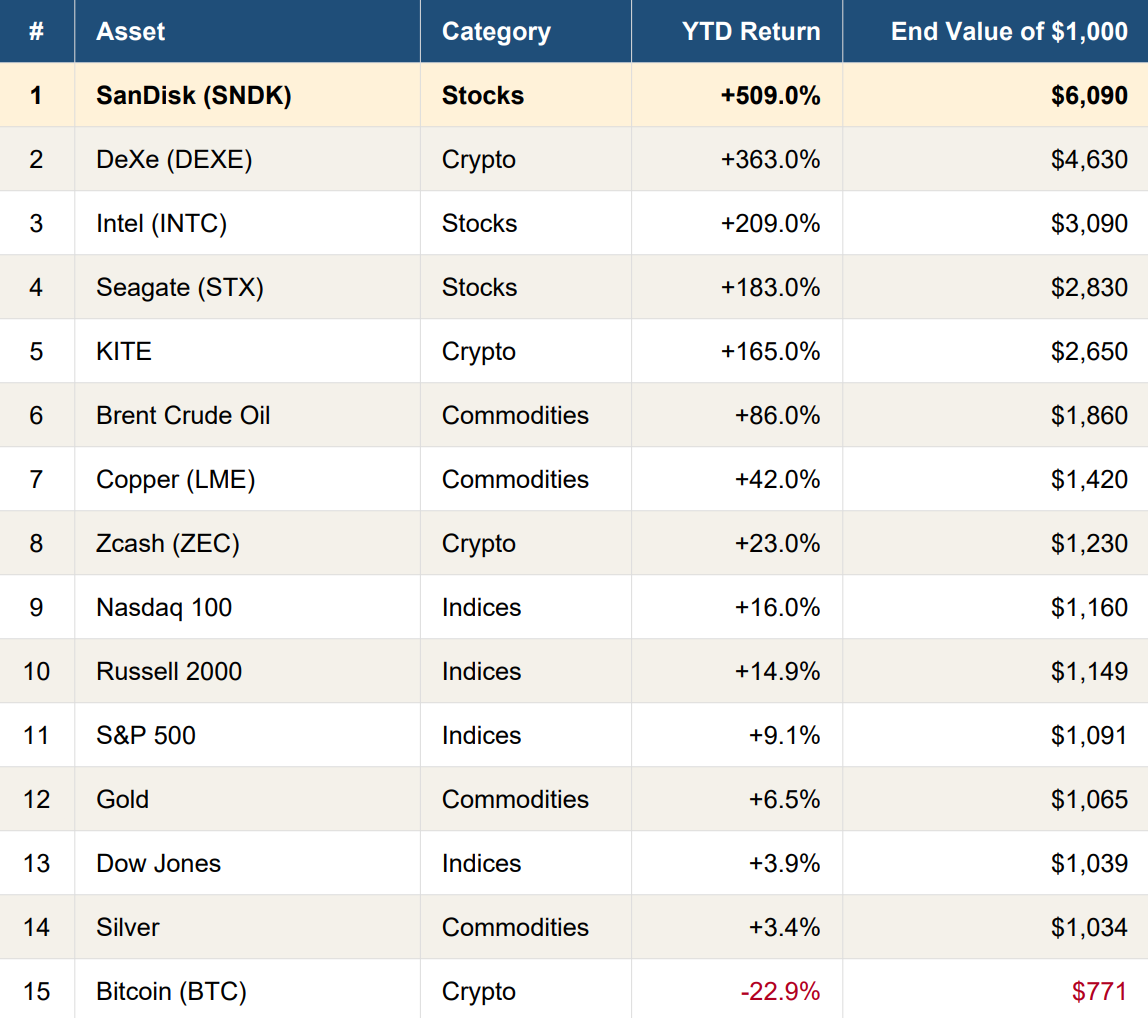
SanDisk stock is the best-performing asset of 2026 so far. The shares have gained 509% between January 1 and May 20. A $1,000 investment on day one is worth about $6,090 today.
That makes SanDisk the clear winner across stocks, crypto, commodities and indices. The runner-up is a crypto token called DeXe, up 363%. Intel comes third at 209%, followed by Seagate at 183%.

Why Did SanDisk Stock Surge 500% This Year?
The driver behind SanDisk’s surge is the AI boom. The company makes memory chips that power data centres training large AI models. On April 30, it reported revenue of $5.95 billion, up 251% from a year earlier.
In the same earnings release, SanDisk disclosed a $42 billion order backlog from cloud customers. The stock then jumped to an all-time high of $1,562 on May 8. It now trades near $1,383.
By contrast, Bitcoin disappointed investors this year. The token opened in 2026 at $87,600 and has since fallen to about $76,800. That is a 22.9% loss, turning a $1,000 stake into $771.
Gold also failed to live up to its early promise. The metal briefly hit an all-time high of $5,589 on January 28. It has since dropped back to around $4,500, leaving holders with only a 6.5% gain for the year.
Oil tells a more dramatic story. Brent crude started the year at $60.59 a barrel and now trades near $113. That is an 86% jump, driven mainly by tensions around the Strait of Hormuz in April.

Value of $1,000 Investment in Each Asset Today
Copper Leads in Precious Metals
Industrial metals also had a strong run. Copper has climbed 42% on the London Metal Exchange, supported by demand from AI data centres and electric vehicles. Silver, however, rose only 3.4% after a sharp January spike faded.
Broader stock indices delivered steady but unspectacular returns. The Nasdaq 100 is up 16%. The S&P 500 is up 9.1%, and the Dow Jones has gained 3.9%.
Importantly, the household-name AI stocks did not lead the rally. Nvidia underperformed its own sector, and Microsoft is actually down for the year.
Instead, investors rotated into less obvious AI suppliers like SanDisk, Intel and Seagate.

Risk also matters in any honest comparison. SanDisk’s gains came with sharp swings, and the stock has already pulled back more than 11% from its May peak. Even so, it has outpaced the Nasdaq 100 by more than 30 times this year.
In short, 2026 has rewarded a narrow group of AI-linked names and punished the assets most retail investors expected to lead.
The post What is The Most Profitable Asset of 2026? It’s Not Bitcoin or Gold appeared first on BeInCrypto.
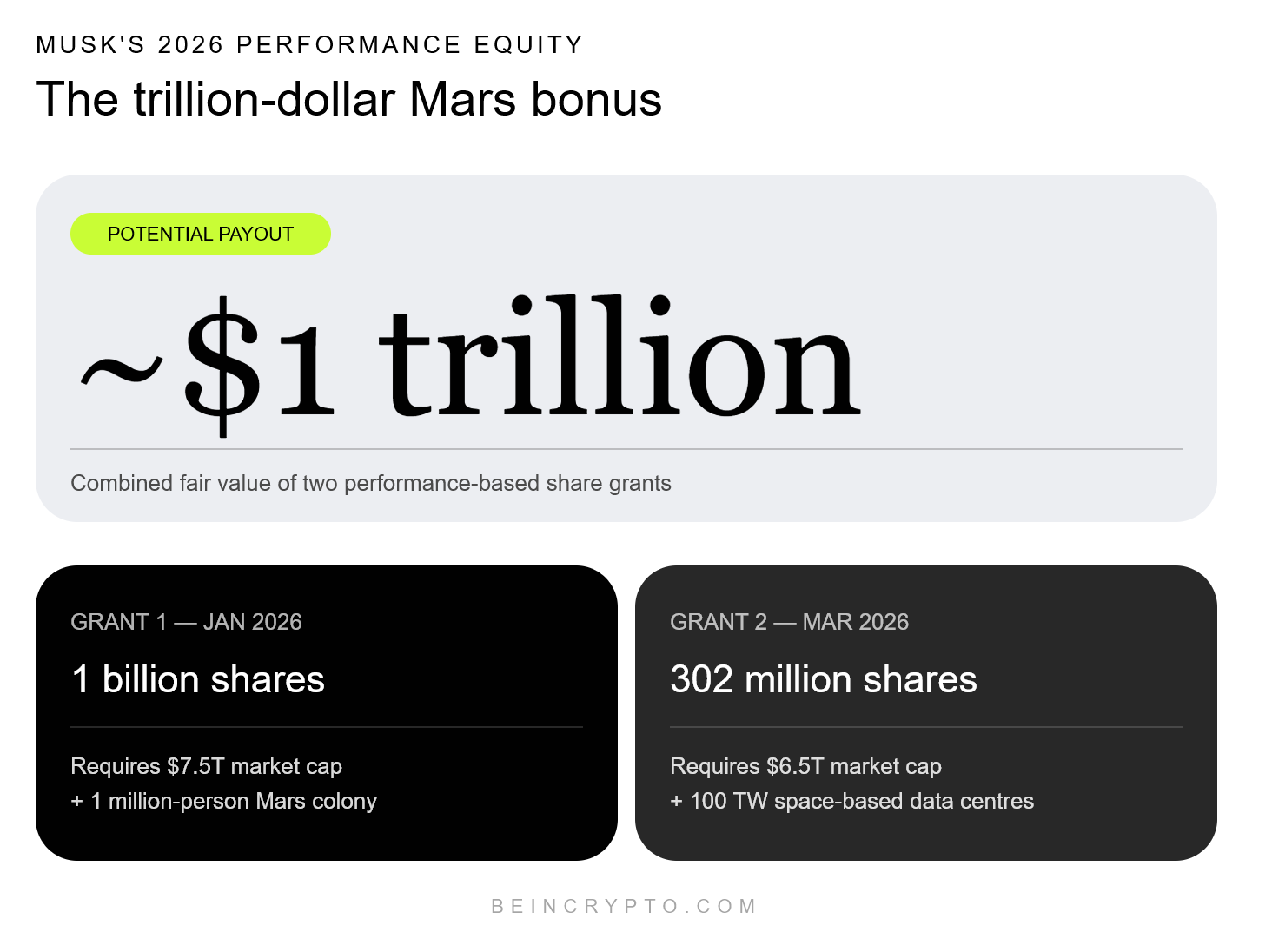
Elon Musk’s SpaceX filed for an initial public offering on Wednesday. The filing shows a $1 trillion pay package tied to founding a Mars colony, a surprise $45 billion compute deal with rival Anthropic, and the bundled inclusion of X and xAI in the listed entity.
Here are 10 surprising facts that you might have missed from the SpaceX IPO filing.
SPCX Lands on Two Stock Exchanges at Once
The company will trade as “SPCX” on Nasdaq and Nasdaq Texas.
SpaceX reported $18.67 billion in 2025 revenue against a $2.59 billion operating loss. Total debt stands at $29.1 billion.
This isn’t a SpaceX IPO, It’s a SpaceX + X (Twitter) + xAI + Grok IPO
Crucially, investors buying SPCX will not own a pure rocket company. SpaceX absorbed xAI in February 2026, and xAI had already swallowed X (formerly Twitter) in March 2025.
The merged business now spans rockets, Starlink satellites, the Grok chatbot, and the X social platform.
A Trillion-Dollar Bet on Martian Colonists
Musk’s compensation has drawn immediate attention.
The board granted him 1 billion restricted shares in January, vesting only if SpaceX hits a $7.5 trillion market cap and establishes “a permanent human colony on Mars with at least one million inhabitants.”
A second 302-million-share tranche vests on building space-based data centres delivering 100 terawatts of compute. The company’s own auditors currently rate both milestones “improbable.”

Minimum Wage for the World’s Richest CEO
According to the filing, Musk’s base salary is just $54,080. This is California’s minimum legal pay for exempt employees. It has not changed since 2019.
Grok’s Biggest Rival Is Footing the Bill
Anthropic, a direct competitor to Grok, agreed in May to pay SpaceX $1.25 billion per month through 2029 for access to the COLOSSUS supercomputer in Memphis.
The deal totals roughly $45 billion.
No Insurance on the Satellites, or the CEO
The filing also discloses several risks. SpaceX does not insure its 9,600 orbiting satellites and holds no life insurance policy on Musk.
Foreign governments have publicly discussed using anti-satellite weapons against the Starlink network, the document notes.
Three in Four Satellites in Orbit Belong to Elon Musk
Starlink now accounts for around 75% of all active manoeuvrable satellites in orbit, serving 10.3 million subscribers across 164 countries.
The constellation performed more than 1,000 collision-avoidance manoeuvres per day in 2025.

Asteroid Mines, Moon Railguns, and a Star-Sized Goal
Looking further ahead, SpaceX plans to deploy data centres in orbit from 2028, mine asteroids, and build an electromagnetic “lunar mass driver” on the Moon.
The filing states the long-term aim is reaching “Kardashev Type II” status — a civilisation harnessing the full energy of its star.
Musk Still Holds the Keys
After the offering, Musk will retain 85.1% of the voting power. Musk’s official SEC-disclosed title at Tesla is listed as “Technoking.”
What about Clean Energy?
SpaceX’s data centers run on natural gas and gas turbines, an awkward disclosure for the brand built on clean energy.
The post 10 Surprising Facts About Elon Musk’s $1 Trillion SpaceX IPO appeared first on BeInCrypto.
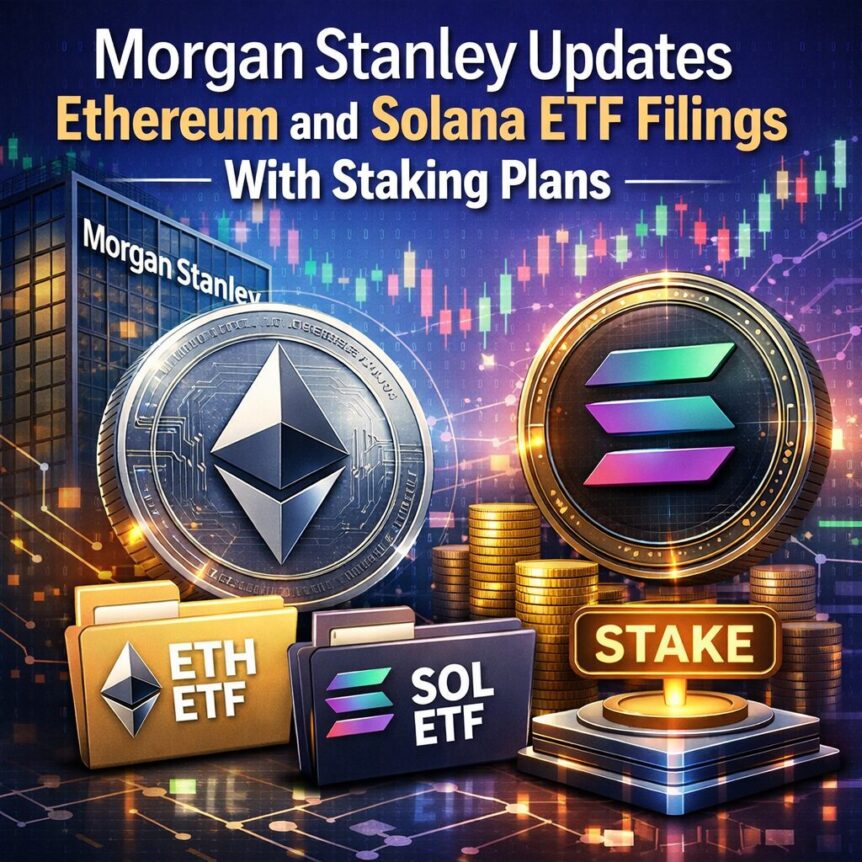
Morgan Stanley expanded its cryptocurrency exchange-traded fund plans after submitting revised S-1 filings to United States regulators. The bank updated registration documents for proposed Ethereum and Solana investment products on May 20. The amended filings outlined trust structures, staking plans, and operational procedures for both proposed exchange-traded funds.
Ethereum Trust Filing Adds Staking Structure
Morgan Stanley identified MSSE as the proposed ticker symbol for its planned Ethereum Trust product. The filing stated that the trust would track Ethereum spot prices through direct holdings of ETH tokens. The document also described plans to stake part of the trust’s Ethereum holdings through approved staking arrangements.
The filing stated that the trust would operate as a passive investment vehicle without active portfolio management activities. However, the trust would seek additional returns through staking rewards linked to Ethereum network participation. Morgan Stanley also outlined creation and redemption procedures involving authorized participants and cash settlement mechanisms for shares.
The revised filing arrived as competition increased across the United States cryptocurrency exchange-traded fund market. Several financial firms have recently updated filings for alternative digital asset products beyond Bitcoin funds. Morgan Stanley already offers spot Bitcoin and Ethereum trading services through institutional platforms.
Solana Trust Filing Highlights Network Risks
Morgan Stanley also revised registration documents for its proposed Solana Trust under the ticker symbol MSOL. The filing stated that the trust would track spot Solana prices through direct ownership of SOL tokens. Additionally, the document confirmed plans to stake part of the trust’s Solana holdings for network reward generation.
The filing described Solana’s Proof of History system and referenced operational risks connected to the blockchain’s architecture. Morgan Stanley included disclosures covering network reliability, validator participation, and transaction processing issues affecting Solana operations. The trust would also rely on authorized participants for cash creations and redemption activities involving issued shares.
The revised filing reflected broader institutional interest in cryptocurrency investment products tied to alternative blockchain networks. Several asset managers have pursued approvals for funds connected to Ethereum, Solana, and other digital assets recently. Regulatory discussions surrounding staking structures have also shaped updated filing language across pending cryptocurrency fund applications.
Crypto ETF Competition Continues to Expand
Morgan Stanley did not disclose management fees or operating expense ratios for either proposed cryptocurrency exchange-traded fund. The revised filings also omitted launch timelines for both investment products despite growing market competition. However, the documents confirmed that delegated sponsors would oversee several operational responsibilities linked to the proposed trusts.
The filings appeared alongside rising activity among firms seeking approval for alternative cryptocurrency investment products in the United States. Grayscale Investments recently submitted revised registration documents connected to a proposed exchange-traded fund tracking Binance Coin holdings. Asset managers continue adjusting applications during recent regulatory policy discussions as authorities review cryptocurrency fund structures.
Morgan Stanley’s latest amendments marked another development within the expanding United States market for digital asset investment products. Large financial institutions continue introducing cryptocurrency services alongside broader exchange-traded fund expansion strategies across regulated markets.
Regulatory approval decisions for pending cryptocurrency funds could influence future institutional participation within digital asset investment products. Those decisions could also affect several major financial markets globally.

Question Time debate halted as Fiona Bruce makes two huge announcements

Mortgage rates rise to 6.51%: Freddie Mac
New Bill Aims to Establish Strategic Bitcoin Reserve in U.S. Law


-

 Crypto World6 days ago
BloFin War of Whales 2026 Grand Prix opens registration for $5M trading championship
-

 Fashion6 days ago
Weekend Open Thread: Theory – Corporette.com
-

 Crypto World6 days ago
E-Estate Announces 1 Year Live: Washington DC Summit as Real Estate Tokenization Enters Its Next Phase
-

 Tech7 days ago
Tech Moves: Microsoft AI leader jumps to OpenAI; former AI2 exec joins Meta; and more
-

 Tech6 days ago
Google reimburses Register sources who were victims of API fraud
-

 Business6 days ago
H&R Real Estate Investment Trust (HR.UN:CA) Q1 2026 Earnings Call Transcript
-

 Sports6 days ago
Napoleonic enters 2026 Doomben 10,000 field via Abounding withdrawal
-
 Crypto World6 days ago
BeInCrypto 100 Institutional Awards Nomination: KAST for Best Digital Assets Neobank and Best Digital Assets Fintech
-
 Crypto World6 days ago
Bitcoin Battles US Bond Nerves With BTC Price Dip Toward New May Lows
-

 Crypto World6 days ago
ICE and CME urge US regulators to curb Hyperliquid energy trading
-
 Crypto World6 days ago
Wall Street’s Boldest Gold Prediction Has Russians Rushing to Buy
-

 Fashion5 days ago
On the Scene at Gucci’s Cruise Show in New York City: Mariah Carey, Kim Kardashian, Lindsay Lohan, Iman, and More!
-

 Entertainment6 days ago
David Letterman Returns to Late Show, Blasts Cancellation
-

 Crypto World6 days ago
IREN closes $3 billion convertible notes deal amid AI infrastructure expansion
-

 Politics7 days ago
DWP PIP Timms review continues to be an absolute farce
-

 Fashion5 days ago
Trending Western Style Vests Perfect for Summer
-

 Politics5 days ago
Watch: far-right flag-fanatics run over victim, attack locals – Setup By the Left wing for your entertainment
-
Crypto World7 days ago
Lido Finance Selects Chainlink CCIP as the Official Cross-Chain Infrastructure for wstETH Security
-

 Fashion6 days ago
Creative Ideas for Custom T-Shirts
-

 Fashion5 days ago
Amazon Sundays: Memorial Day Hosting
You must be logged in to post a comment Login