

Crypto World
Wall Street Tumbles as Robust Employment Data Sparks Fed Rate Hike Speculation

TLDR
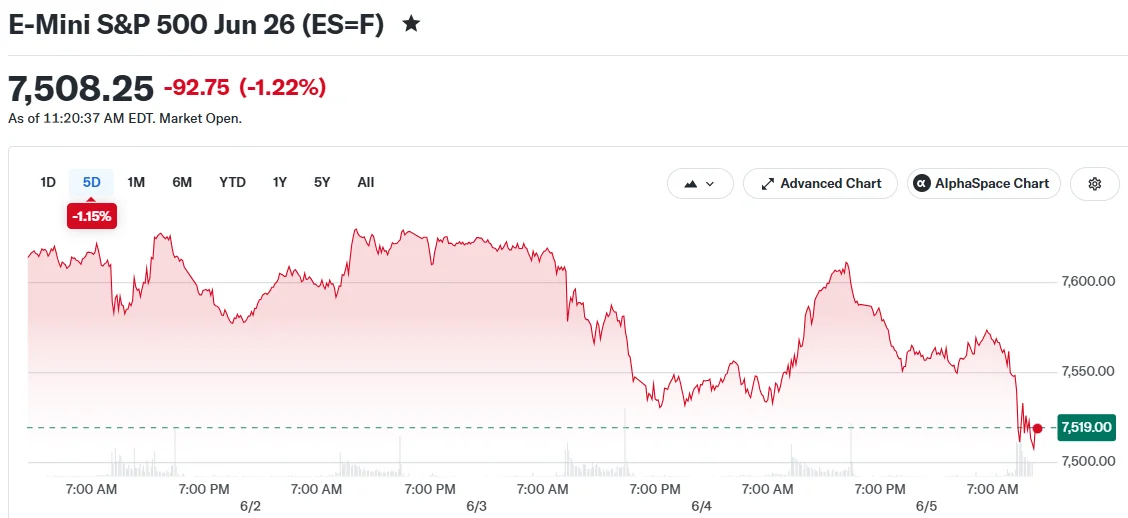
- Major indices tumbled Friday with Nasdaq sinking 2.1%, S&P 500 declining 1.1%, and Dow losing 140 points
- Employment data revealed 172,000 new positions in May, significantly exceeding the 88,000 anticipated
- Robust labor market pushed Federal Reserve rate hike probability to 68.3%, eliminating prospects for immediate cuts
- Semiconductor stocks declined following Broadcom’s disappointing earnings performance
- The S&P 500 faces potential end to its 9-week rally, which would be the longest advance since 1985
Equity markets experienced significant declines Friday following employment data that exceeded analyst projections, simultaneously driving up interest rate hike expectations while technology stocks faced renewed pressure over artificial intelligence investment concerns.
The Nasdaq Composite plummeted 2.1%. The S&P 500 declined 1.1%. The Dow Jones Industrial Average retreated approximately 140 points, representing a 0.3% decline.
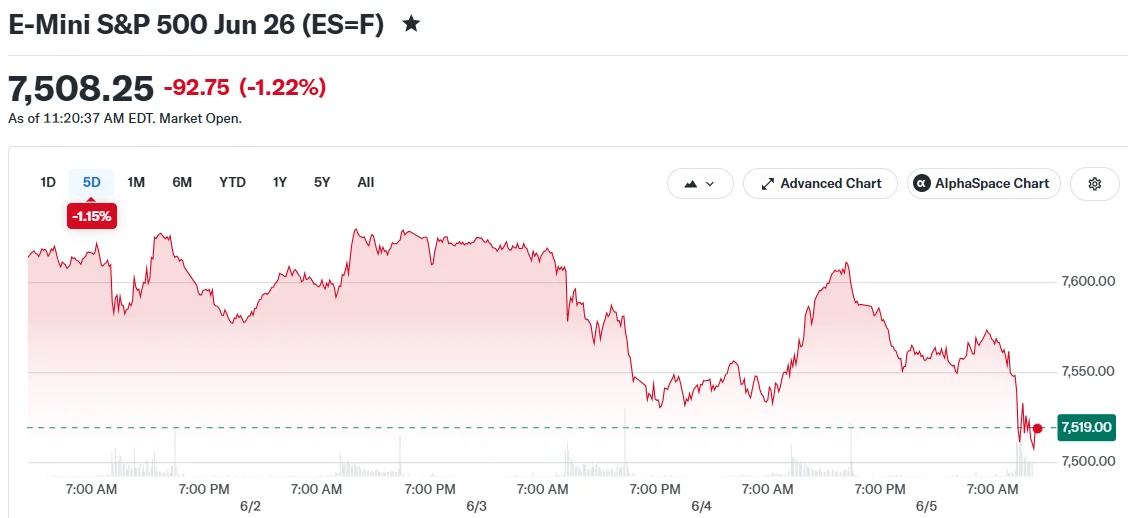
The market downturn resulted from two distinct pressures converging simultaneously.
Employment Data Surprises Markets
The May nonfarm payrolls release revealed American businesses added 172,000 positions during the month. Analysts had projected approximately 88,000 additions. The jobless rate remained unchanged at 4.3%.
The unexpectedly strong employment figures altered market expectations regarding Federal Reserve monetary policy. Market participants rapidly adjusted positioning to account for at least one interest rate increase before year-end.
Probability of a rate hike surged to 68.3%, climbing from 50.4% just one day earlier. This development essentially eliminates any possibility of rate reductions in the near term.
Eric Winograd, chief US economist at AllianceBernstein, said the data shows the economy is still holding up. “That’s enough to keep the Fed on hold,” he wrote.
This development occurs while President Trump maintains public pressure for rate reductions. Kevin Warsh, Trump’s appointee, has recently assumed the role of Fed chair.
Semiconductor and AI Stocks Extend Declines
Broadcom shares had already experienced substantial losses Thursday after releasing quarterly results. Friday brought additional selling pressure.
The wider semiconductor industry mirrored these losses. Market participants have adopted a more cautious stance regarding artificial intelligence capital expenditures, with Broadcom’s financial results amplifying these apprehensions.
Technology equities had experienced robust gains throughout recent weeks, providing substantial support to benchmark indices. This positive momentum has now dissipated.
The Nasdaq had emerged as a primary beneficiary of AI-related enthusiasm. It now faces the steepest losses as market sentiment reverses.
Historic Rally Faces Termination
The S&P 500 began Friday positioned to achieve a tenth consecutive week of advances. Such an achievement would have represented the longest winning sequence since 1985.
That remarkable streak now confronts potential termination.
The benchmark index has retreated as multiple adverse factors materialized simultaneously — escalating rate anxieties, technology sector vulnerability, and geopolitical instability.
News regarding stalled US-Iran ceasefire discussions contributed to the cautious atmosphere permeating Wall Street. President Trump characterized negotiations as entering their “final” phase, though considerable uncertainty persists.
Equity futures had already signaled weakness before the employment report’s release, with Nasdaq 100 futures spearheading morning session declines.
The convergence of an overheated labor market, hawkish monetary policy expectations, and a stumbling artificial intelligence rally left limited havens within equity markets Friday.



Singapore-based crypto travel platform Travala has rolled out what it calls the world’s first agentic AI travel protocol. The system enables AI agents to search, reserve, and pay for hotels using USDC on Base, a Coinbase-backed layer-2 network. The move extends agentic AI stablecoin payments into travel bookings and positions Travala at the forefront of AI-enabled checkout infrastructure for travel commerce.
The Travala Travel Multi-Chain Protocol (MCP) is live through Claude Desktop, with external developers invited to integrate the capability into their own travel-agent experiences, the company said in a statement shared with Cointelegraph. The protocol bridges Travala’s hotel catalog with AI agents via the Model Context Protocol, an open standard designed to connect AI applications with external tools. Payments are conducted over Coinbase’s x402 protocol on Base, enabling gasless USDC transactions, near-instant settlement, and typical booking costs around $0.01.
Key takeaways
- Travala launches an agentic AI travel protocol on Base, enabling AI agents to book hotels using USDC with near-zero fees and fast settlement.
- The system links Travala’s inventory to AI agents via the Model Context Protocol, with payments executed through x402 on Base and ERC-7715 session keys allowing in-wallet signing control.
- Final payment authorization remains with the traveler, meaning the protocol is autonomous in its operations but not fully hands-off for end users.
- Travala’s network covers more than 2.2 million hotels, including listings from Marriott, Hilton, and IHG, with plans to expand to flights and other travel products.
- A 10% Coinbase Wrapped BTC (cbBTC) rebate is offered on completed stays booked through the AI agents, adding a financial incentive for developers and travelers.
Autonomy in practice: what changes for travelers and builders
Travala frames the MCP as a meaningful step toward an autonomous travel economy, while still preserving user control. CEO Juan Otero described the launch as “the death of the checkout button,” framing it as a move from a static checkout experience to an ongoing, agent-led shopping process. Even as AI agents search and propose options, the traveler retains final signing authority within their wallet, meaning the AI merely initiates payment requests that require human approval before funds move.
The protocol uses ERC-7715 session keys to manage interactions. This design allows an AI agent to request payment while the traveler’s wallet holds the ultimate signing power. In practice, this supports a continuous conversational thread—an AI agent can carry context across searches, bookings, and cancellations in a single chat, reducing repetitive prompts and friction in the booking flow.
Connecting inventory with agent-enabled commerce
Travala says its MCP taps into a catalog of over 2.2 million hotels, with listings sourced through prominent aggregator partners and major brands, including Marriott, Hilton, and IHG. The company highlighted that the integration could eventually extend beyond hotel stays to other travel products, such as flights. The broader vision includes leveraging Travala’s AVA loyalty token to support future MCP use cases, potentially tying loyalty rewards to AI-driven booking workflows.
External developers can adopt Travala’s MCP via Claude Desktop, enabling other travel agents to embed the same AI-enabled checkout flow. While automation advances, the model preserves a human-in-the-loop approach to payments, providing a security and control layer that may appeal to users wary of fully autonomous transactions.
Context within the evolving AI-payments landscape
Travala’s announcement arrives amid a growing wave of AI-driven payments infrastructure within the crypto ecosystem. Industry coverage has noted a surge in agentic payments on Base, with x402-linked wallets reportedly surpassing 100 million transactions. The broader ecosystem includes solutions from Fireblocks, MoonPay, Exodus, and Oobit, all aiming to enable AI agents to spend stablecoins and other digital assets without manual intervention at every step.
Chainalysis has documented the rising use of agentic payments on Base, a trend that has supported broader experimentation with programmable payments in AI workflows. The combination of a stablecoin (USDC), a scalable L2 network (Base), and an open toolset (Model Context Protocol and ERC-7715 session keys) creates a cohesive environment for automated travel payments that still respects user consent and control.
Strategic implications for the travel-tech and crypto sectors
Travala’s MCP signals a shift from purely crypto-enabled checkout to AI-assisted, programmatic booking workflows. For investors and developers, it highlights a frictionless, low-cost payment layer that could accelerate adoption of AI agents in live commerce. The integration with major hotel brands underscores the potential for large-scale inventory to be accessible through AI channels, potentially expanding the use cases for stablecoins in consumer travel.
From a strategic perspective, the combination of gasless payments, near-instant settlement, and predictable fees could incentivize larger, more complex bookings to move through AI agents. Yet the model’s reliance on traveler approval means risk controls remain in place, reducing the likelihood of unauthorized charges and aligning with user-centric security expectations. This hybrid approach—automated negotiation and human oversight—may become a template for other sectors exploring agentic commerce.
Broader adoption and next steps
Travala has signaled that the MCP will evolve beyond hotels, with flights and other travel products on the roadmap. The venture also points to potential expansions of the AVA loyalty program, potentially integrating reward mechanics with AI-driven booking journeys. As more developers adopt the framework, the breadth and depth of AI-empowered travel options could grow, drawing in users who value speed, transparency, and control in their online travel experiences.
Observers will want to monitor how adoption scales among developers and whether the autonomous capabilities can mature to reduce the amount of human intervention required for routine bookings. The interplay between user trust, safety measures, and AI efficiency will shape how quickly and widely agentic travel becomes mainstream.
Additional reporting on related developments in AI-driven payments and agent-based commerce continues to emerge, with industry outlets highlighting parallel efforts to streamline settlement and reduce operational frictions across platforms.
As the ecosystem evolves, Travala’s MCP could become a test case for how autonomous financial workflows interact with real-world consumer purchases, potentially setting a benchmark for the next wave of AI-enabled travel experiences.
Travala was founded in 2017 and currently accepts more than 100 cryptocurrencies alongside fiat currencies, positioning itself as a bridge between traditional travel booking and crypto-enabled commerce.
Readers should watch for updates on the MCP’s expansion into flights and other travel categories, as well as any regulatory or security considerations that emerge as AI agents gain more autonomy in payment workflows.
Crypto World
South Korean Authorities Launch First Reported Illegal Gambling Probe Into Polymarket Users
South Korean police have reportedly launched the country’s first illegal gambling probe into local Polymarket users, widening regulatory scrutiny of the decentralized prediction market.
The investigation is led by Gangwon Provincial Police and was requested by the National Police Agency, according to ChosunBiz.
Users may face fines of up to 10 million won ($6,500) under Article 246 of the Criminal Act covering gambling and habitual gambling. Under current law, Sports Toto is the state-authorized sports betting platform, while unauthorized online betting can be prosecuted under South Korean gambling laws.
The reported probe adds to a broader global crackdown on prediction markets, with several jurisdictions blocking or restricting access to Polymarket. Some countries have completely blocked or prohibited Polymarket, including Singapore, Poland, Portugal, Hungary, Ukraine, Brazil and Indonesia. Polymarket remains accessible in South Korea.
The news comes after President Lee Jae-myung’s ruling Democratic Party swept most major local elections held on Wednesday, while conservative Oh Se-hoon won another term as mayor of Seoul, Reuters reported.
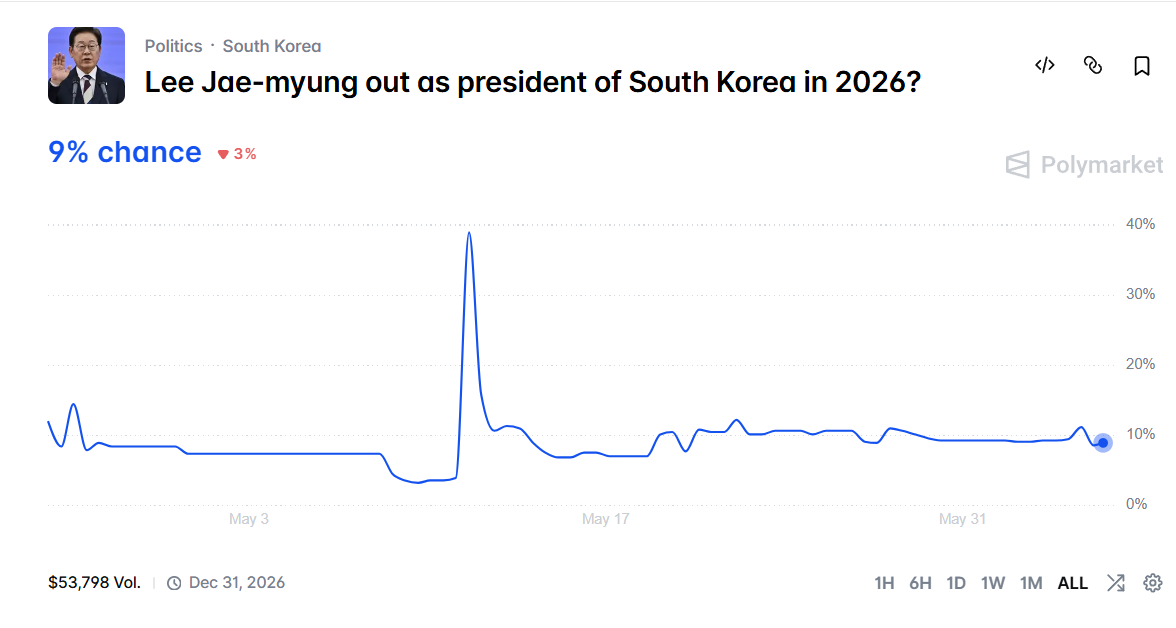
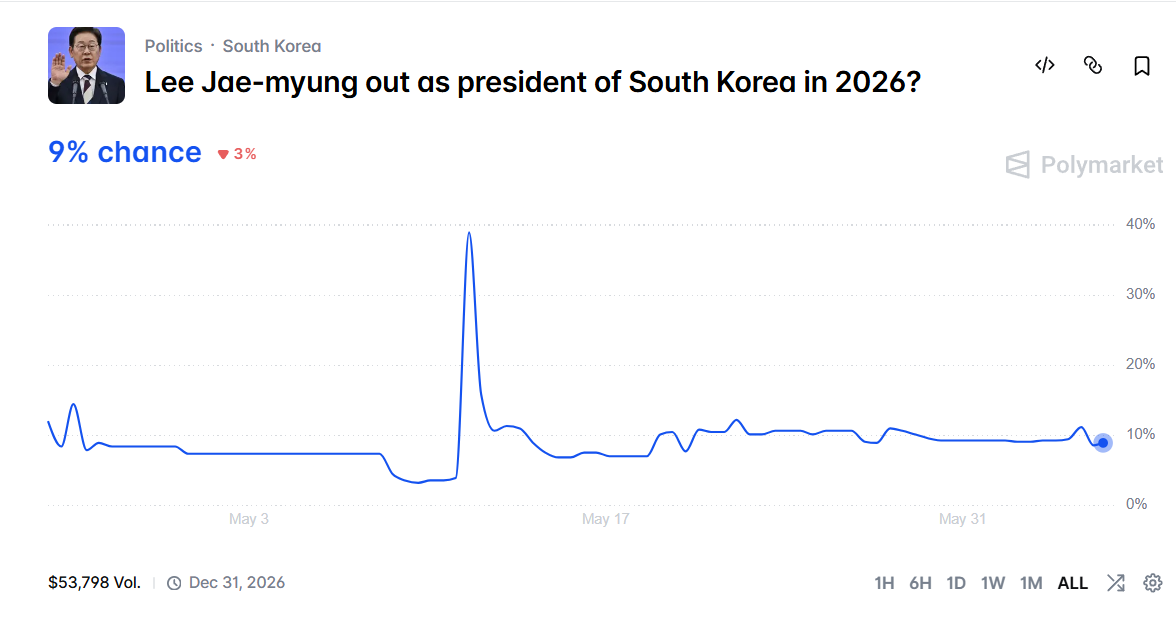
Prediction market on whether Lee Jae-myung would be out as president of South Korea in 2026. Source: Polymarket.com
One Polymarket contract on whether Lee Jae-myung would be out as president saw nearly $54,000 in total trading volume, data shows.
Related: Polymarket users cry foul after Strategy sale market resolves to ‘no’
Political betting faces growing scrutiny
The latest probe adds to the growing regulatory scrutiny of political betting on Polymarket.
In January, US lawmakers proposed legislation aimed at restricting political prediction market trading by government officials after a Polymarket user netted over $400,000 on a contract related to the removal of then-Venezuelan President Nicolás Maduro, fueling insider trading concerns.
In May, the chair of the US House of Representatives’ Oversight and Government Reform Committee sent letters to the CEOs of Kalshi and Polymarket, questioning their response to the insider trading allegations on the platforms.
In response to the growing scrutiny, Polymarket said it was weighing the implementation of a mandatory identity verification system more in line with global Know Your Customer (KYC) verification standards, Cointelegraph reported on May 27.
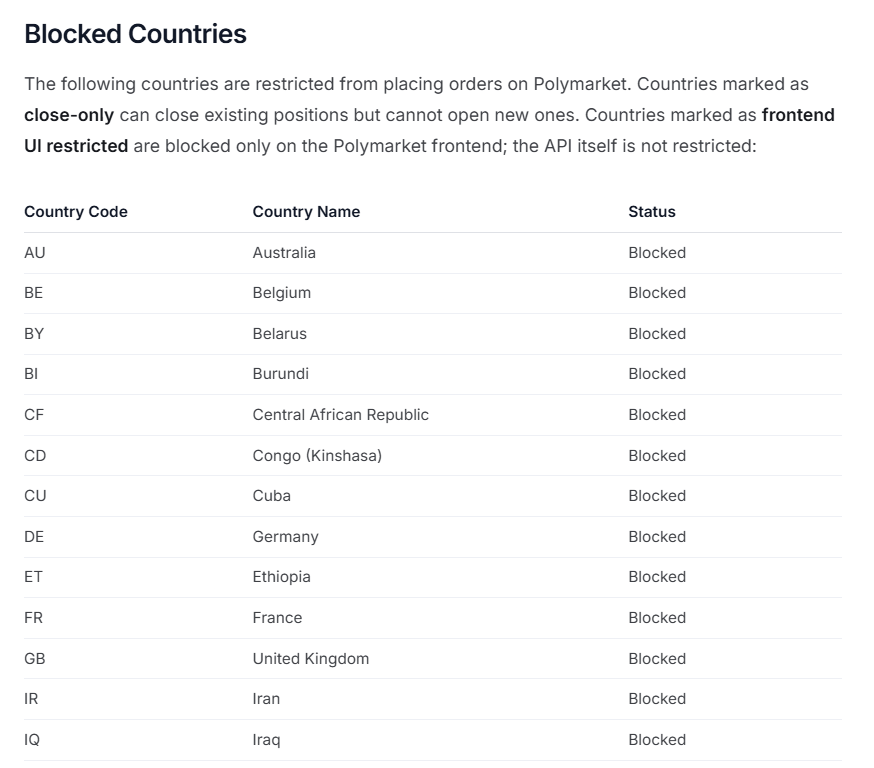
Polymarket list of geoblocked countries and regions. Source: Polymarket.com
Polymarket said it was entirely geoblocked in 35 regions at the time of writing.
Magazine: Polymarket seeks Japan entry, Harvard dumps entire ETH position: Hodler’s Digest, May 17 – 23
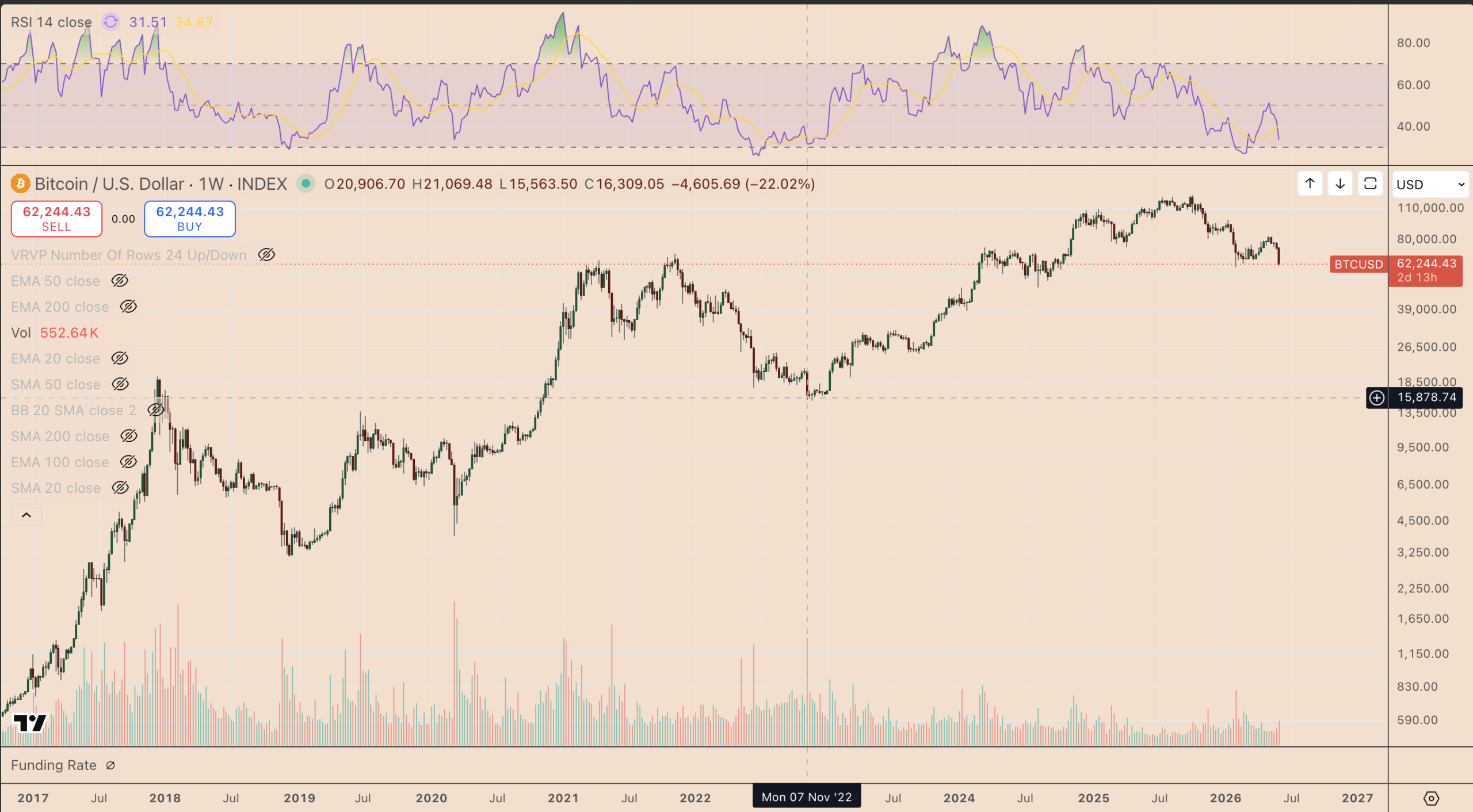
Bitcoin (BTC) is heading for its worst weekly performance since November 2022, down around 15% week-to-date as of Friday.
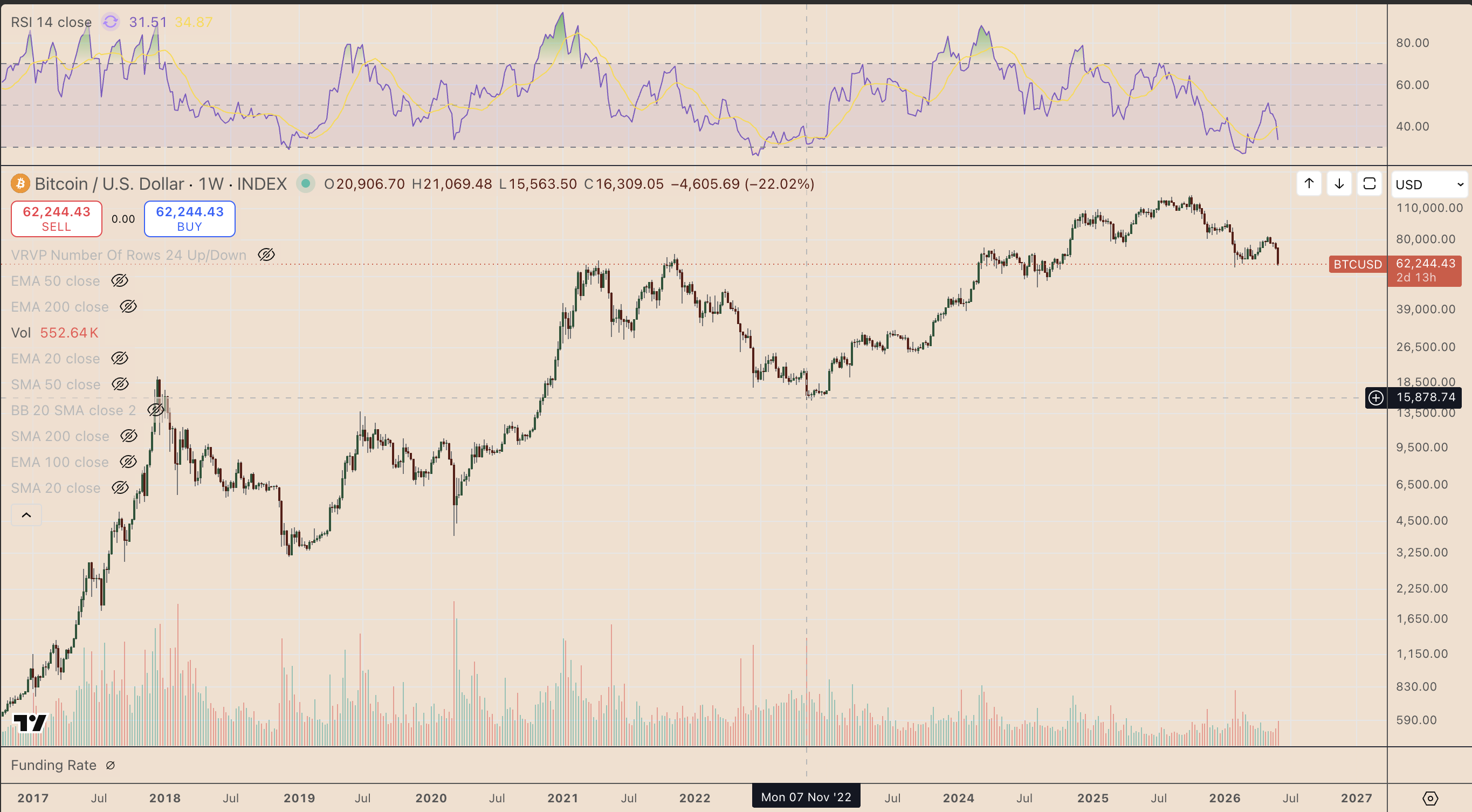
BTC/USD weekly chart Source: TradingView
BTC was trading near $62,500 after briefly dropping toward $61,000 earlier in the session. The roughly $1,500 rebound showed bulls are still trying to defend the psychologically important $60,000 support level.
How low can Bitcoin go if it breaks below $60,000?
Key takeaways:
- Bitcoin is testing its 200-week SMA near $61,800, a level that has historically acted as major cycle support.
- Analyst says $55,000 may be Bitcoin’s worst-case downside if the 200-week SMA continues to hold.
Bitcoin to $55,000 is the worst-case scenario: Analyst
Bitcoin may print a brief wick below $60,000 before finding stronger demand, according to analyst Radz.
In a Friday post, he said $55,000 could mark the “worst” downside scenario for Bitcoin, citing the 200-week simple moving average (200-day SMA, pink) as the core reason behind his bullish outlook.
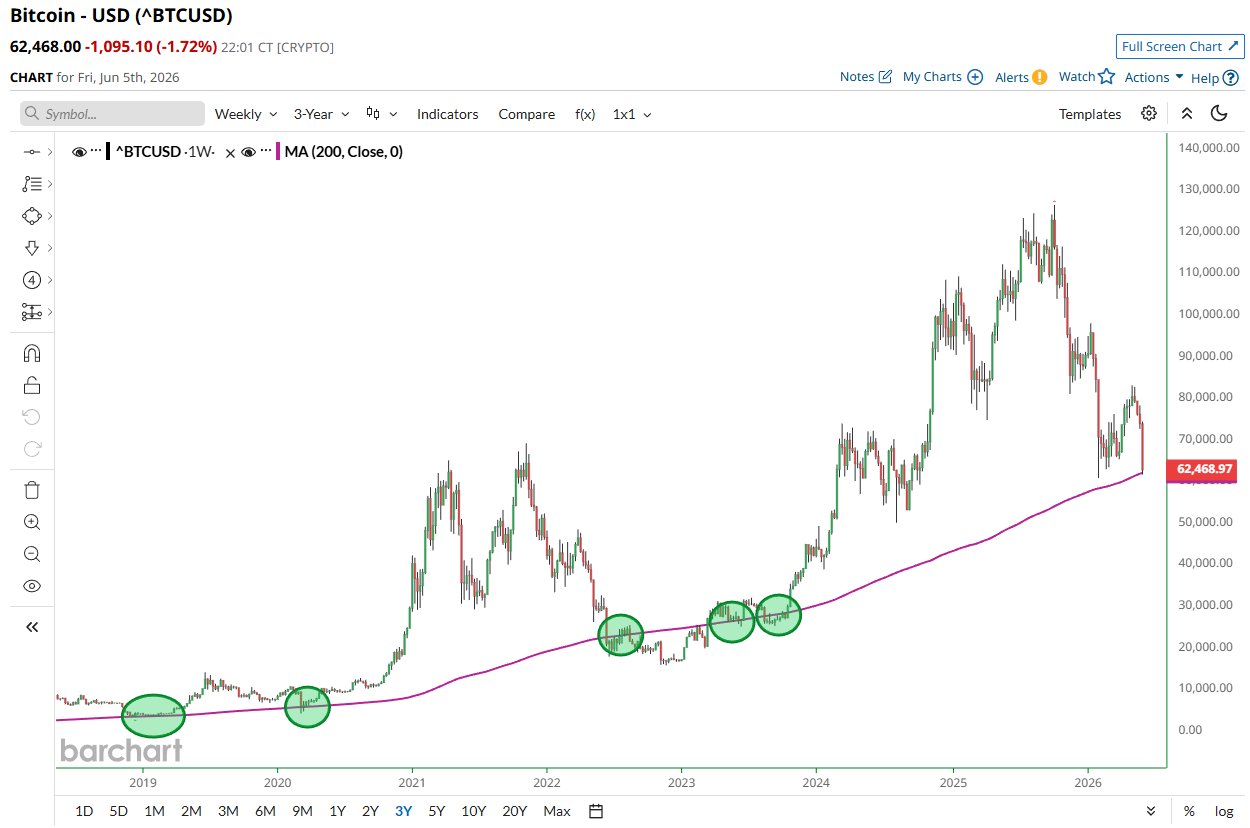
BTC/USD weekly chart. Source: BarChart/TradingView
That level has historically acted as one of Bitcoin’s strongest long-term support zones. Previous retests of the 200-week moving average in 2019, 2020, 2022 and 2023 either marked major cycle lows that preceded strong recovery phases.
In February 2026, Bitcoin rose by over 37% after testing the 200-week SMA as support too. This week is BTC’s second attempt this year to hold above the pink line, as it treads around $62,000.
Bitcoin bear flag warns of deeper correction toward $50,000
A maturing bear flag on Bitcoin’s chart suggests the correction may extend well below the $55,000 area.
As of Friday, BTC had broken below the flag’s lower trend line, with rising trading volume showing stronger conviction behind the move. In technical analysis, a bear flag forms when the price consolidates higher inside a narrow channel after a sharp decline, before resuming the prior downtrend.
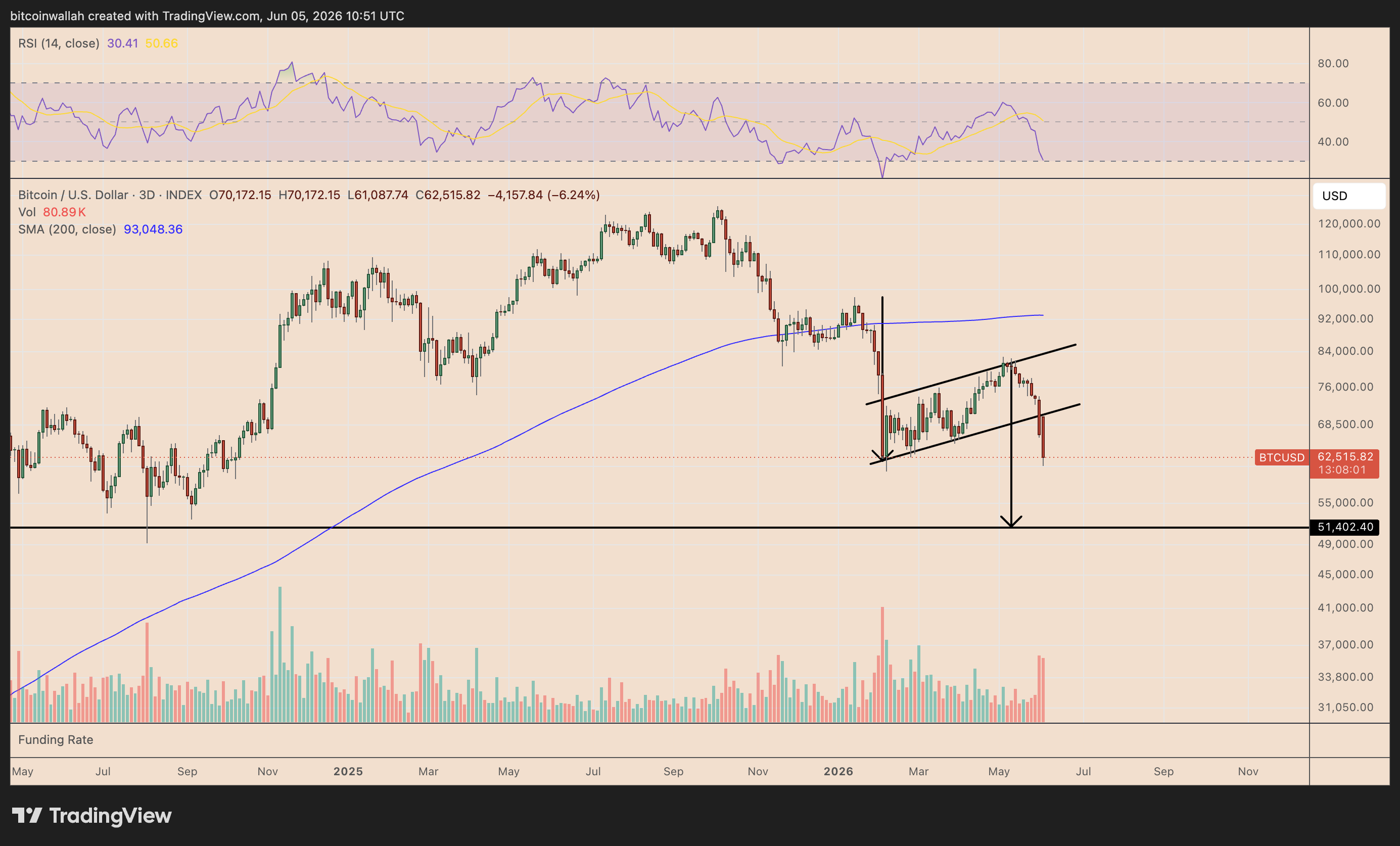
The measured target is calculated by subtracting the height of the preceding decline from the breakdown point. In Bitcoin’s case, that projects a downside target near the $50,000–$51,000 support zone.
That area also aligns with previous horizontal support, making it the next major level to watch if BTC fails to reclaim the flag’s lower trend line over the next few days.
Bitcoin onchain data points to $50,000–$54,000 target
Bitcoin’s onchain data points to a similar target as the bear flag setup.
Glassnode’s MVRV pricing bands show BTC’s realized price (purple) near $53,740. In simple terms, realized price is the average price at which the Bitcoin supply last moved onchain. In the past, this level acted like a major support level during correction cycles.
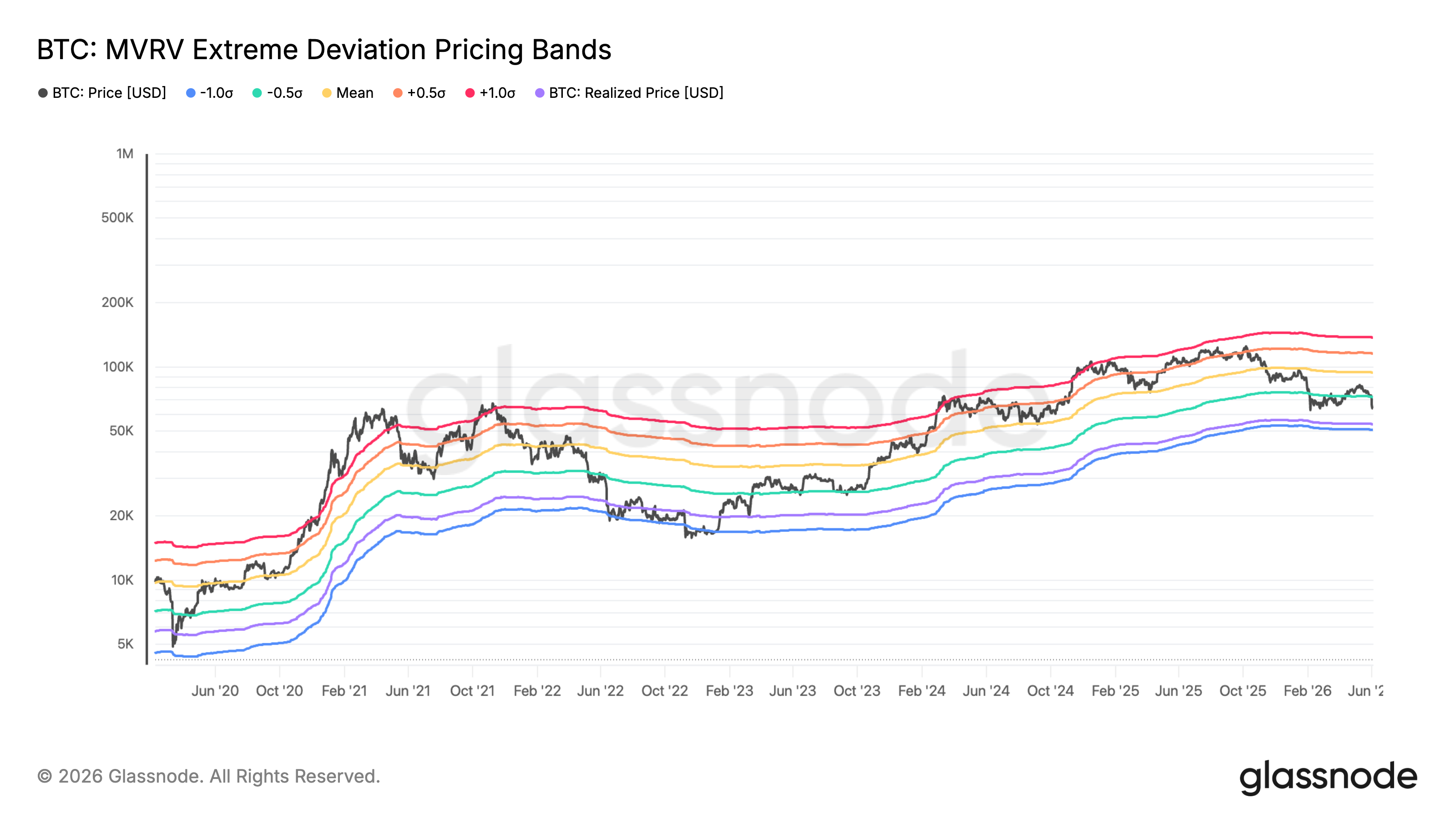
BTC MVRV extreme deviation pricing bands. Source: Glassnode
The same chart also shows another key support level (blue) near $50,560, where Bitcoin would look much cheaper based on onchain valuation.
Related: Bitcoin fell 21% after Strategy’s debt buyback news: Is Terra Luna-style doom loop next?
Together, these levels create a support zone between roughly $50,000 and $54,000. That lines up closely with the bear flag target near $50,000 to $51,000.
Bitcoin cup-and-handle breakdown risks drop toward $33,000
Bitcoin’s weekly chart is showing another bearish setup: a possible cup-and-handle breakdown.
The pattern shows BTC forming a rounded top, followed by a smaller rebound attempt inside the handle. Bitcoin price is now weakening near the lower end of that handle, close to the 200-week SMA and the $60,000 support level.
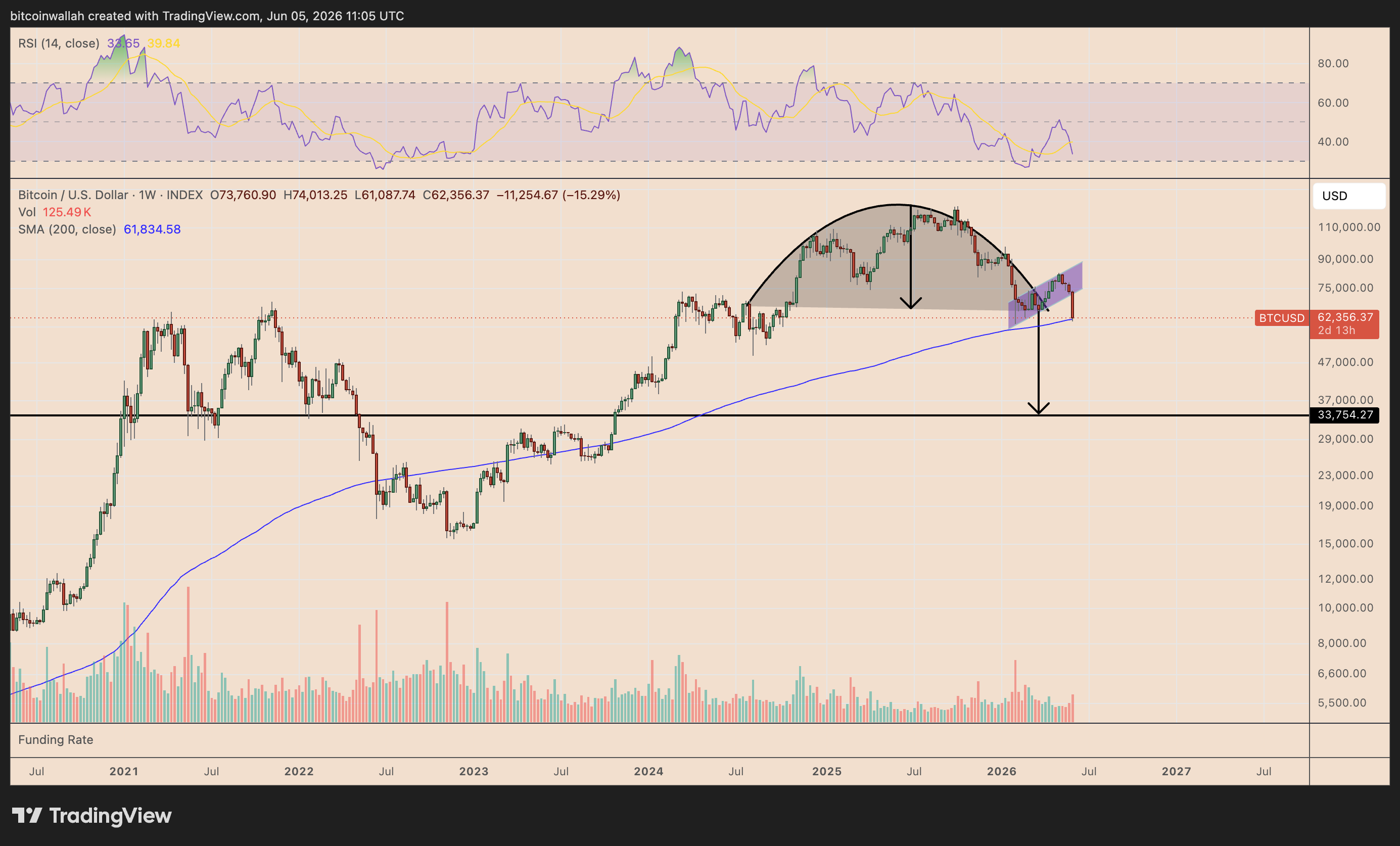
BTC/USD weekly chart. Source: TradingView
If Bitcoin breaks below this area decisively, the downside target from the pattern sits near $33,000.

Some of the largest US banks are reportedly planning to launch a tokenized deposit network in the first half of 2027 in response to growing competition from blockchain companies expanding into traditional finance.
The network will be operated by The Clearing House, the bank-owned payments operator, and will connect traditional payment rails with digital asset infrastructure for 24/7 settlement, CEO David Watson told The Wall Street Journal.
The Clearing House is co-owned by some of the largest US banks, including JPMorgan Chase, Bank of America, Citibank, Barclays, BNY and Wells Fargo, among others, according to its website.
The plan shows how banks are trying to keep deposits inside regulated banking channels while offering some of the speed and programmability that have made stablecoins attractive for settlement and treasury use.
Cointelegraph reached out to The Clearing House for comment but had not received a response by publication.
US banks have pushed back against US crypto market legislation, which could allow stablecoin issuers to pay users yield on their holdings, similar to interest on traditional bank deposits.
The report comes after JPMorgan CEO Jamie Dimon said that the banking industry would continue to “fight” against the current version of the Digital Asset Market Clarity Act (CLARITY) and said that crypto companies that want to offer yield-bearing products should apply for banking charters, Cointelegraph reported in late May.
The comments followed a May committee vote to advance the CLARITY Act in the Senate Banking Committee, but the bill still needs to pass through both chambers of Congress before going to US President Donald Trump.

The Clearing House, owner banks. Source: TheClearingHouse.org
The plan shows that banking giants are “reacting to where value is already moving,” Carl Grimstad, CEO of digital asset infrastructure provider Lydian, said, adding:
“This announcement shows that 24/7 programmable settlement is becoming increasingly important.”
While banks have experimented with tokenization in controlled environments, public blockchain networks have settled value at a global scale, said Grimstad, adding that the real question is how value will move across an “increasingly fragmented mix of bank ledgers, public chains and digital assets.”
Related: US financial markets ‘poised to move on-chain’ amid DTCC tokenization greenlight
Wall Street participants accelerate tokenization initiatives
Other Wall Street banks are also accelerating tokenization initiatives.
On March 24, the New York Stock Exchange (NYSE) partnered with tokenization platform Securitize to develop blockchain-based trading infrastructure for Wall Street by enabling the minting of tokenized shares of stocks and exchange-traded funds (ETFs).
Days earlier, on March 18, the US Securities and Exchange Commission (SEC) gave the regulatory green light to Nasdaq’s pilot proposal to support the trading of tokenized versions of high-volume stocks and securities.
Earlier in January, the NYSE’s parent company, the Intercontinental Exchange (ICE), shared plans for a tokenized securities venue designed for 24/7 trading, instant settlement, stablecoin-based funding and onchain settlement.
Over in Asia, South Korea’s Ministry of Economy and Finance announced a pilot project that will use tokenized deposits to execute government operational spending, with a full rollout set for the fourth quarter of 2026, Cointelegraph reported on April 16.
Magazine: Can Robinhood or Kraken’s tokenized stocks ever be truly decentralized?


Kraken has opened access to the upcoming SpaceX IPO through tokenized shares across more than 110 markets, bringing a traditionally exclusive Wall Street process to retail investors.
Summary
- Kraken has launched tokenized access to the upcoming SpaceX IPO through its xStocks platform.
- Eligible users in more than 110 markets can apply for IPO allocations and receive tokenized shares backed 1:1 by stock.
- SpaceX is reportedly targeting a $75 billion raise at a valuation of at least $1.8 trillion, which could make it the largest IPO on record.
According to an announcement from Kraken, SpaceX will become the first company offered through its new xStocks IPO Access program, a service that lets eligible retail investors apply for IPO allocations using tokenized equity instruments rather than traditional brokerage channels.
Users must hold a verified Kraken account through the exchange’s mobile application and submit an IPO access request before shares become available.
Kraken said the service is currently accessible across the European Economic Area and more than 110 international markets, while users in the United States, Canada, Australia, and the United Kingdom remain excluded because of regulatory restrictions.
Investors who receive allocations will be issued SPCXx, a tokenized representation of SpaceX equity backed one-for-one by underlying shares. According to Kraken, those tokens will be tradable around the clock on Kraken and other platforms participating in the xStocks network.
The launch places Kraken in direct competition with a long-standing Wall Street practice in which IPO allocations are typically reserved for institutional investors and wealthy clients.
Earlier this week, Kraken-affiliated Payward Services said customers of Kraken and selected xStocks Alliance members would be able to register interest in upcoming U.S.-listed IPOs before companies begin trading publicly.
According to Payward Services, successful applicants will receive tokenized shares at the IPO offering price on listing day, with the underlying stock held by a regulated custodian. The company said the structure is intended to provide retail investors with access that has historically been difficult to obtain through conventional public offering processes.
SpaceX listing attracts strong demand
Bloomberg reported that SpaceX is expected to begin trading publicly on June 12 and is seeking to raise approximately $75 billion at a valuation exceeding $1.8 trillion. According to Bloomberg, investor demand has already surpassed the number of shares available.
If completed at that scale, Bloomberg said the transaction would become the largest IPO on record, surpassing the $29.4 billion listing completed by Saudi Aramco in 2019.
Much of the company’s valuation has been linked to the growth of Starlink, its satellite internet business. At the same time, SpaceX continues to invest heavily in launch services, spacecraft development, and other capital-intensive operations that could influence how public market investors assess the company after trading begins.
AI infrastructure contracts add another growth driver
Beyond its aerospace operations, SpaceX has expanded into AI infrastructure services through large compute agreements with technology companies.
According to a recent regulatory filing, Google has agreed to pay SpaceX $920 million per month from October 2026 through June 2029 for access to roughly 110,000 NVIDIA GPUs, CPUs, memory, and related equipment.
Google said the arrangement will help meet stronger-than-expected demand for its Gemini Enterprise products while additional internal capacity is developed.
Shortly before that agreement, SpaceX disclosed a separate deal with Anthropic. Under that contract, Anthropic agreed to pay $1.25 billion per month through 2029 for compute capacity from the Colossus 1 data center near Memphis, Tennessee.
The SpaceX offering also arrives as Kraken continues expanding beyond cryptocurrency trading. In late 2025, the exchange acquired xStocks operator Backed Finance and later announced plans to introduce regulated Bitcoin perpetual futures in the United States using infrastructure obtained through its acquisition of Bitnomial.
CME Group CEO Terry Duffy publicly warned that newly approved US-regulated perpetual futures contracts are "a disaster waiting to happen," comparing the current environment to the buildup ahead of the 2008 financial crisis and saying excessive leverage could wipe out retail traders who do not… Read the full story at The Defiant


Amir Haleem has stepped down as chief executive of Nova Labs, the company behind the Helium decentralized wireless network, handing the role to Mario Di Dio. Haleem moves to chairman. The transition, announced Thursday in a Helium Blog post written by Di Dio, comes as HNT — Helium's native token —… Read the full story at The Defiant
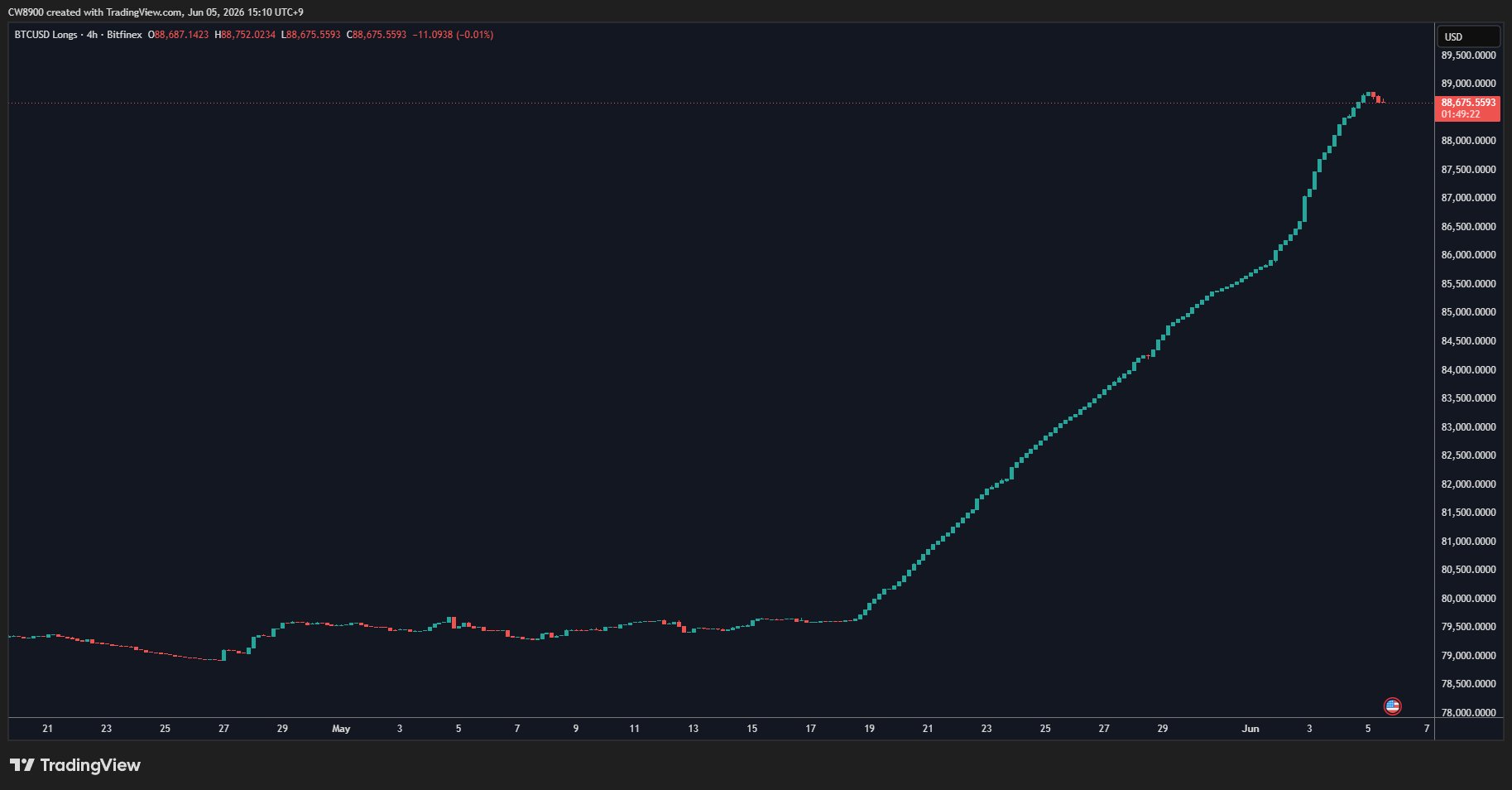
Bitcoin (BTC) has fulfilled two of three key conditions to spark the next BTC price “rally,” new analysis says.
Key points:
- Bitcoin whales on Hyperliquid and Bitfinex are already pointing to the beginning of a BTC price uptrend, according to the latest findings.
- Bitcoin markets now need demand to return in the form of the Coinbase and Kimchi Premium.
- Other preconditions for a bear market bottom are also in the process of forming.
Bitcoin price comeback hinges on US, Korea demand
Bitcoin whale traders are laying the foundations for BTC price relief, even as BTC/USD plumbs four-month lows.
In an X post on Friday, trader CW confirmed that Bitcoin whales on both Hyperliquid and Bitfinex are signaling a market rebound.
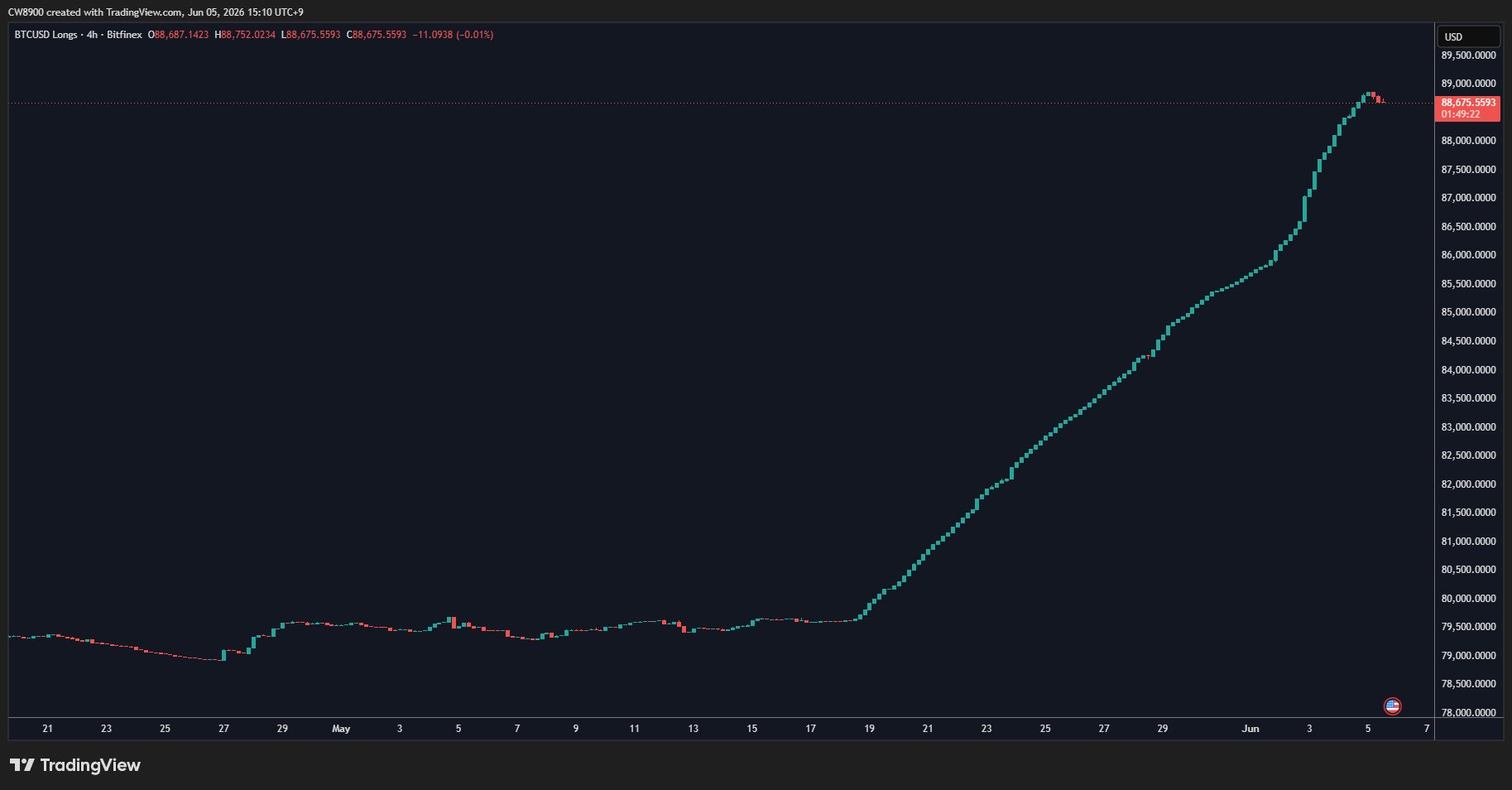
BTC/USD long positions on Bitfinex. Source: CW/X
CW notes that Hyperliquid whales have adopted a “bullish stance” on the market, while on Bitfinex, long positions have tailed off. The latter is a classic sign that an uptrend is due next.
“What remains is for the Kimchi Premium and Coinbase Premium to turn positive,” he commented.
The Coinbase Premium is the difference in price between Coinbase’s and Binance’s BTC/USDT pairs and has been mostly negative in 2026.
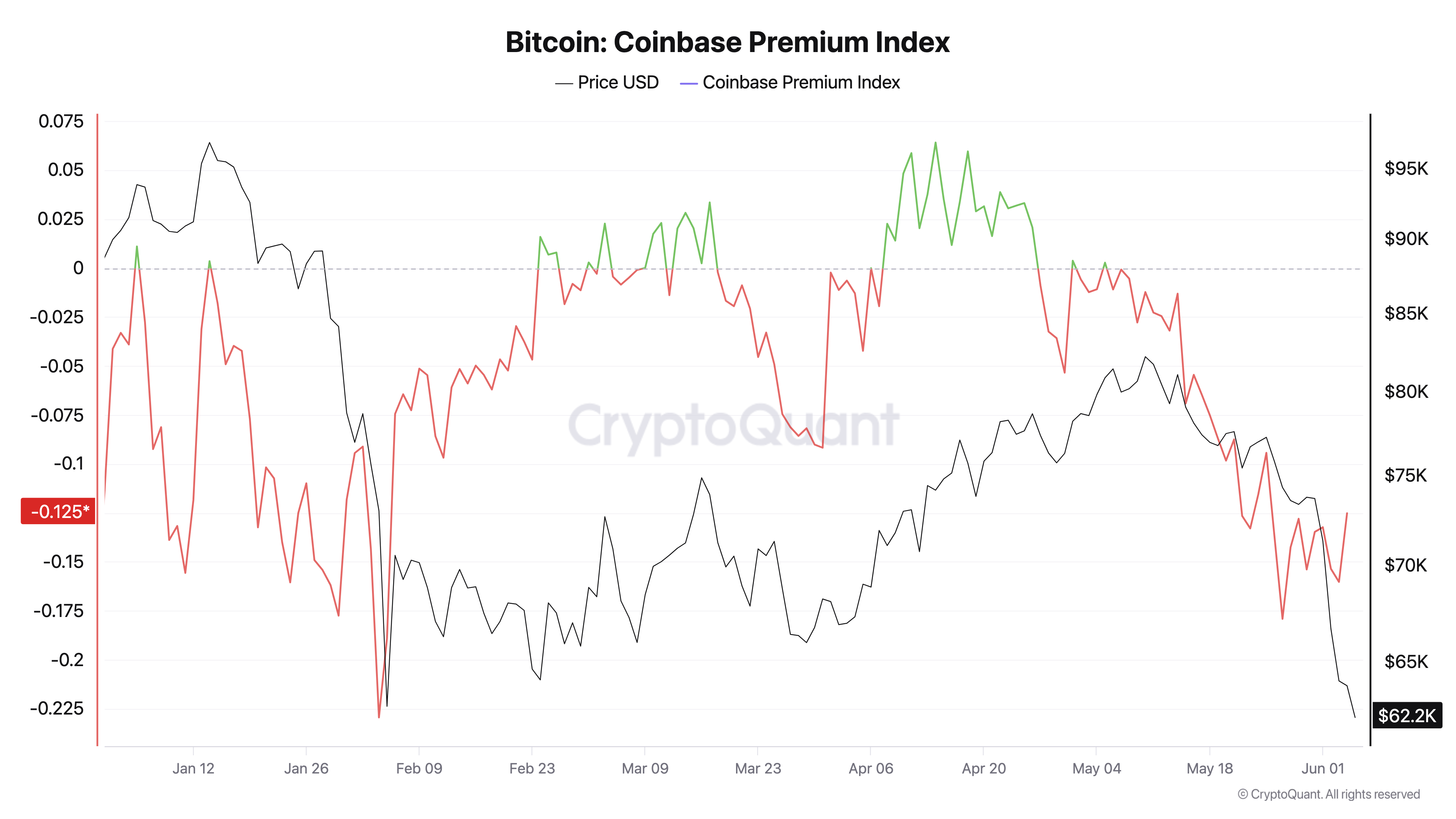
Bitcoin Coinbase Premium Index. Source: CryptoQuant
A negative premium reflects weak US demand, while the Kimchi Premium monitors the South Korean exchange sector.
Once demand returns across the board, Bitcoin has a better chance of reentering a sustainable uptrend.
CW acknowledged that the Kimchi Premium has already “decreased significantly” versus earlier in the week.
Bitcoin starts its latest “bottoming out” phase
As Cointelegraph reported, consensus overall favors a macro bottoming phase playing out for BTC/USD next.
Related: Trump says Iran will ‘work out well’: Five things to know in Bitcoin this week
The week has seen the pair touch a key bear-market trend line in the form of its 200-week simple moving average (SMA) — another essential ingredient in a bottom formation.
“Bitcoin has only just started deviating below the 200-week SMA,” trader and analyst Rekt Capital emphasized to X followers on Friday.
“The significance of this is that historical Bear Market Bottoming out formations have started to develop via such deviations.”
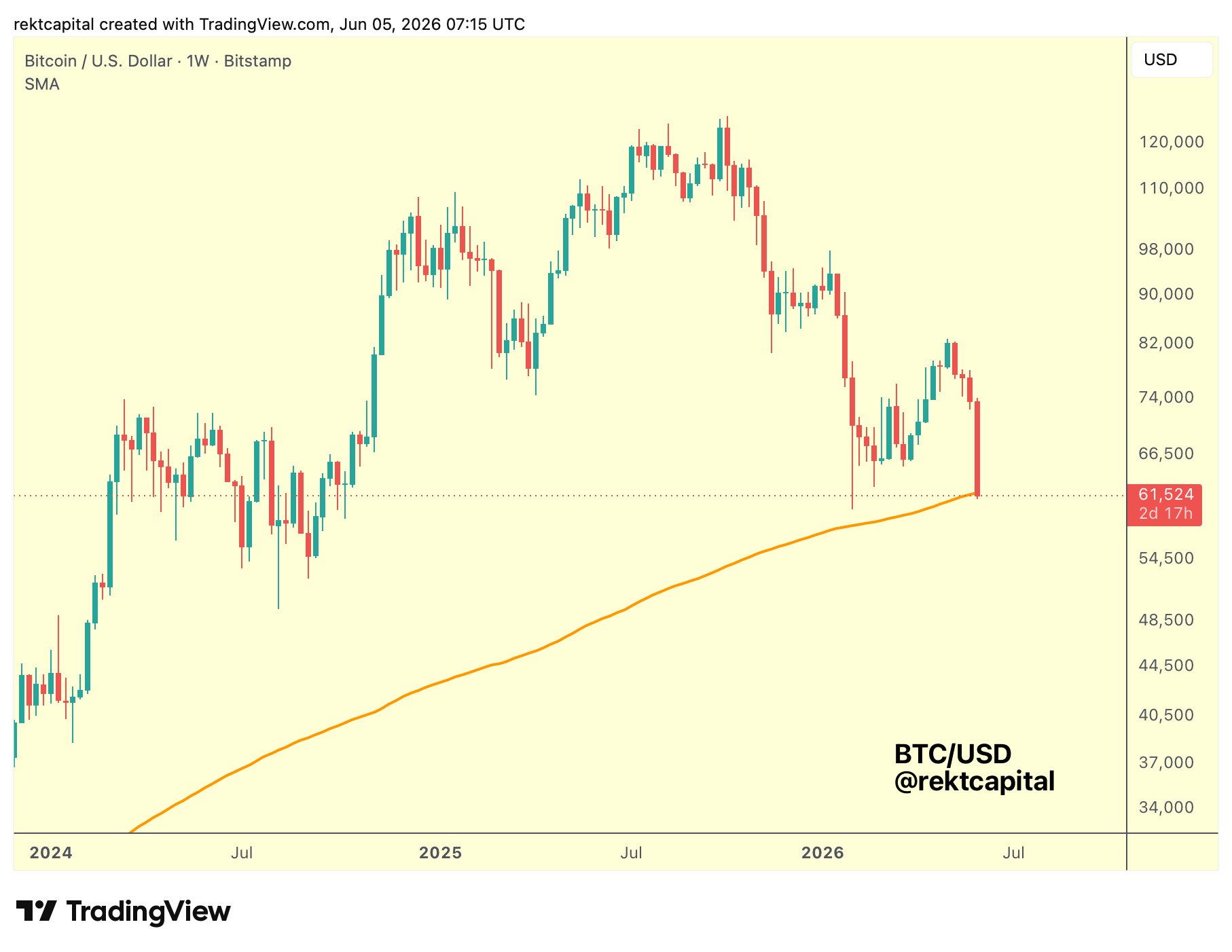
BTC/USD one-week chart with 200SMA. Source: Rekt Capital/X
Earlier, trader Leviathan described BTC price action as copying the 2022 bear market “almost perfectly.”

Ether (ETH) slid to a 13-month low near $1,540 on Friday as risk-off sentiment seeped through crypto markets. The move came amid a cascade of derivative-driven liquidity drains and fresh security worries that have kept bulls on the back foot even as ETH trades well below its late-2025 highs. In parallel, a critical vulnerability in Zcash’s shielded pool—exposed by AI-driven tooling—fed fears of broader contagion across blockchains and DeFi protocols.
On the macro side, derivatives data painted a decidedly bearish picture. Futures markets showed negative funding rates, signaling higher demand for short exposure, while a wave of leveraged longs was liquidated, eroding any quick relief rally. The market backdrop was underscored by a sharp pullback in ETH’s real-use case metrics, with Ethereum’s Total Value Locked (TVL) signaling a pullback in DeFi activity and wallet flows remaining strained.
Key takeaways
- Ether derivatives tilt bearishly as cascading liquidations erase attempts at relief, with leveraged longs cut by over $1.28 billion across a five‑day window.
- Negative annualized funding rates for ETH perpetual futures indicate continued appetite for short bets, reinforcing a risk-off posture among traders.
- Demand for downside protection spikes in options, with Deribit ETH put-to-call premium reaching multi‑week highs, signaling growing hedging interest amid uncertain momentum.
- Ethereum’s on-chain activity frays as TVL sinks to the weakest level since February 2024, with notable DApps posting multi‑tens of percent contractions in user and capital inflows.
- A AI‑driven discovery of a Zcash vulnerability stokes fears of systemic risk, as investors question whether other networks could harbor similar blind spots.
Derivatives signal a risk-off regime for ETH
Market data show a clear tilt toward selling pressure in ether derivatives. The perpetual futures market turned negative on Friday, reflecting a thinning of upside conviction and a shift toward hedges or outright shorts. This dynamic is particularly concerning for bulls, given that ETH had already traded about 67% below its all‑time high from August 2025.
In the backdrop, roughly $1.28 billion in highly leveraged long positions were liquidated over five days, dimming prospects for a swift bounce. While price action remains volatile, the combination of losses and negative funding metrics underscores a fragile balance for those seeking risk-on momentum in ETH.
The derivatives picture is complemented by a rising demand for downside hedges in the options market. Data show the ETH put-to-call premium on Deribit climbing to roughly 3.7x on Friday, with the metric lingering at elevated levels since early in the week. This pattern points to a crowded hedging psyche among market participants and suggests that casual bidders may remain reluctant to chase rallies in the near term.
ETHTVL and DeFi activity: a pullback across the ecosystem
The retreat in on-chain activity is visible in Ethereum’s ecosystem metrics. DefiLlama data indicate Ethereum’s network TVL has slid to its lowest level since February 2024, a development that cynically reduces the available on-chain liquidity for users and dampens the revenue prospects for DApps built on the network.
Top ETH-based decentralized applications have also borne the brunt of this shift. Spark, Ether.fi, EigenCloud, and KernelDAO each reported double-digit declines in TVL, reflecting a broader correction in DeFi liquidity as funds migrate away from riskier protocols amid higher macro uncertainty.
The timing of this TVL erosion intersects with a broader narrative about security and risk in DeFi: a bug in Zcash’s shielded pool was discovered to enable unlimited minting, a finding attributed to AI-powered review tooling. While the vulnerability relates to Zcash specifically, it has intensified concerns about whether other chains harbor hidden flaws that could catalyze outflows and force risk repricing across ecosystems. The exposure was reported on a May 29 discovery using Anthropic’s Opus 4.8 AI model, amplifying market nerves about cross-chain contagion.
Beyond the immediate concern about security, April’s hack-and-exploit wave continued to color risk assessments. Across 25 protocols, hacks by KelpDAO and Drift Protocol accounted for a large share of losses—together around $573 million—illustrating how breaches have stressed a broad set of networks and liquidity pools, and implying that risk management remains a central topic for users and builders alike.
Supply dynamics and what they imply for ETH risk and recovery
On-chain supply metrics add another layer to the bear case. Glassnode data show that only about 30% of ETH supply remains profitable relative to the last time those coins moved. This kind of supply dynamic has historically preceded meaningful price action, contrasting with episodes where a larger portion of supply was profitable and markets traded in a more constructive fashion. In the current context, a limited pool of “on‑the‑move” ETH suggests fewer buyers stepping in to relieve selling pressure unless a catalyst appears.
Further complicating the outlook is the scale of unrealized losses in top ETH treasury holders. Bitmine (BMNR US), the largest ETH treasury holder, reportedly sits on an unrealized loss of about $10.5 billion, representing roughly 4.5% of the entire ETH supply. If the market continues to tighten and lenders and lenders’ risk appetites stay constrained, such concentrated exposure can amplify downside volatility during forced liquidations or correlated de-risking waves.
Taken together, these data points suggest a fragile recovery path for ETH at present. Prices could press lower toward key levels, with the psychological threshold near $1,550 providing a potential point of relief if buyers emerge. However, the confluence of weak on-chain activity, persistent derivatives headwinds, and the specter of cross-chain vulnerabilities keeps the risk skewed to the downside in the near term.
For readers tracking risk and opportunity, the next few weeks will be telling. Watch for fresh data on DeFi liquidity, any new security alerts across major networks, and whether cross-chain risk dynamics begin to stabilize as market participants reassess hedging needs and capital allocation.
Source-style data points cited include Laevitas on ETH futures funding (see https://app.laevitas.ch/assets/perpswaps/ETH/funding), DefiLlama for on-chain TVL shifts, and Glassnode’s profitability metrics (https://studio.glassnode.com/charts/supply.ProfitRelative?a=ETH&mScl=lin&resolution=24h). The Zcash vulnerability and related AI-review context were reported in coverage noting an AI-assisted discovery of a vulnerability that enabled unlimited minting, with a related Cointelegraph reference to the broader security implications of such flaws (see https://cointelegraph.com/news/zec-tanks-30-after-ai-security-review-discovers-critical-zcash-vulnerability).


According to a fiscal year 2027 budget bill passed by the Illinois General Assembly, the state is moving forward with a new tax on cryptocurrency transactions that would apply to digital asset brokers operating in Illinois.
Summary
- Illinois lawmakers approved a budget bill containing a 0.2% tax on crypto transactions and new registration rules for digital asset brokers.
- Unregistered brokers could face Class 3 felony charges, carrying penalties of up to five years in prison and $25,000 in fines.
- Industry groups including the Digital Chamber and Illinois Blockchain Association have urged Governor JB Pritzker to reject the measure.
Included within the state’s $56 billion budget package, the proposal introduces a 0.2% tax on crypto transactions under a provision known as the Digital Asset Privilege Tax Act. Lawmakers approved the measure along party lines on Monday, leaving only Governor JB Pritzker’s signature before it can become law.
State budget documents estimate the tax could generate approximately $60 million in revenue. Under the proposal, any entity classified as a digital asset broker would be required to register with the state before facilitating covered crypto transactions.
Failure to comply could carry criminal consequences. The legislation states that brokers operating without meeting registration requirements after Jan. 1 may face Class 3 felony charges, which in Illinois can result in prison sentences ranging from two to five years and fines of up to $25,000.
Industry groups have opposed the proposal
Opposition emerged shortly after the bill cleared the legislature. In a joint letter released on Wednesday, the Digital Chamber and the Illinois Blockchain Association urged state officials to reject the Digital Asset Privilege Tax Act, arguing that the proposal would harm the local digital asset industry.
The organizations said the measure was introduced without meaningful consultation with industry participants and noted that no other U.S. state currently imposes a comparable tax on crypto transactions.
Separately, the Digital Chamber stated in a post on X that the proposal raised concerns because stakeholders received little advance notice before lawmakers incorporated it into the budget package. The group described the tax as economically damaging and called for its removal before final approval.
Attention has also focused on the way the measure advanced through the legislature. Critics have argued that the crypto tax was embedded within a 1,624-page budget bill rather than being debated as standalone legislation.
States and Congress are increasing scrutiny of digital assets
The Illinois proposal arrives as policymakers across the United States examine new approaches to digital asset oversight and taxation.
Earlier this year, Governor Pritzker signed Executive Order 2026-04 prohibiting Illinois state employees from using nonpublic information obtained through their official duties to trade prediction market contracts or assist others in doing so. According to the governor’s office, the order was intended to strengthen ethics safeguards as prediction markets continue to expand.
A similar measure was adopted in New York one day later when Governor Kathy Hochul signed Executive Order 60, which bars state officials from using confidential government information for personal gain in prediction markets and authorizes disciplinary action for violations.
Meanwhile, federal lawmakers are considering separate crypto tax proposals. On June 5, the U.S. House Ways and Means Committee released seven discussion drafts covering subjects including stablecoin payments, staking rewards, mining income, DeFi lending, wash-sale rules, charitable donations, and voluntary disclosure programs for crypto taxpayers.
According to the committee, the proposals will be discussed during a June 9 congressional hearing and draw from ideas previously included in the PARITY Act and legislation introduced by Senator Cynthia Lummis.
Governor Pritzker has publicly indicated that he intends to sign Illinois’ budget package, though the measure had not yet received final approval as of Friday morning.

“XRP IS DEAD!” WTF!

Former Channel 4 newsreader Jon Snow reveals Alzheimer’s diagnosis
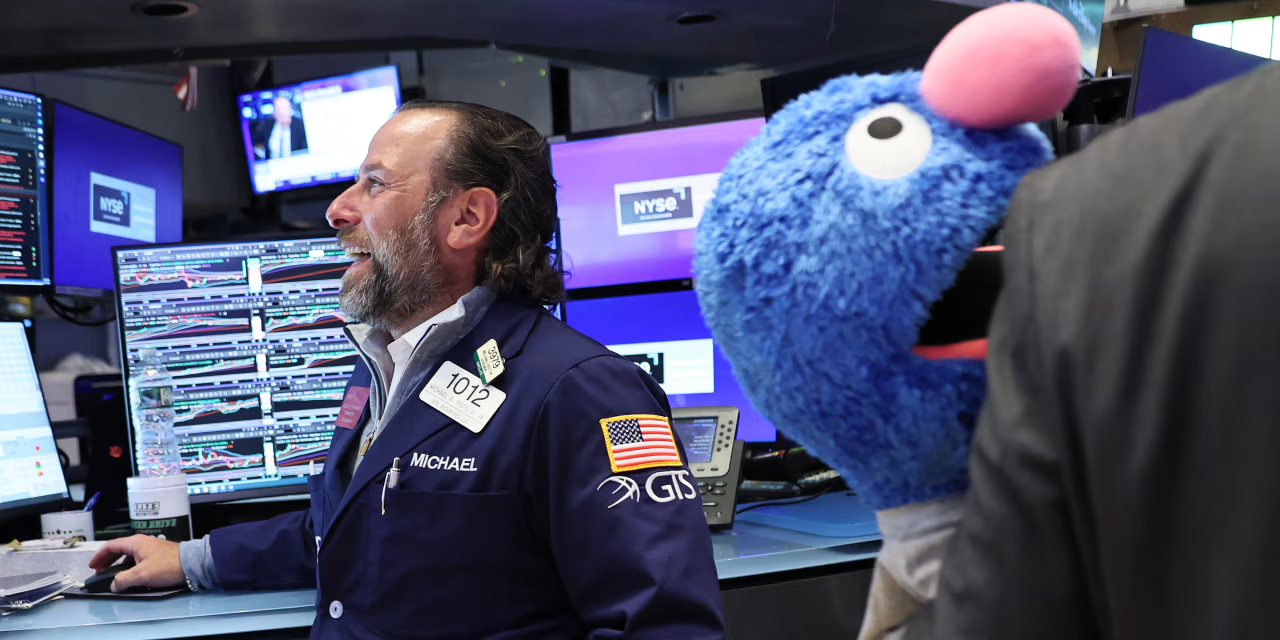
Dow Surges While Broadcom Drags Tech Stocks Lower



-

 Business4 days ago
Jade Biosciences, Inc. (JBIO) Discusses Positive Interim Results From JADE101 Phase I Healthy Volunteer Study and Development Plans Transcript
-
 Tech7 days ago
SpaceX just won a second Golden Dome contract. This one is $4.16 billion.
-

 Sports3 days ago
French Open 2026 results: Alexander Zverev beats Rafael Jodar and will play Jakub Mensik in semi-finals
-

 Business7 days ago
Is the Spurs Phenom Already Better Than Prime Diesel?
-

 Tech4 days ago
CryZENx Releases Fresh Playable Content Deep Inside Jabu-Jabu for His Ocarina of Time Remake
-

 Politics7 days ago
The House | Inside Andy Burnham’s Makerfield Campaign: “Nobody Thinks This Is In The Bag”
-
Crypto World16 hours ago
LBank Surpasses 25 Million Users Worldwide as AFA Partnership Continues to Drive Global Growth
-

 Business3 days ago
Trump Taps Housing Chief Bill Pulte as Acting Intelligence Director After Gabbard Exit
-
 Entertainment7 days ago
One of the Greatest Sitcoms of All Time Shoots Up Apple TV’s Charts 11 Years Later
-

 Fashion8 hours ago
Weekend Open Thread: Evereve – Corporette.com
-

 Business7 days ago
Demand Conditions Improve In Chemicals Sector In April 2026
-
 NewsBeat7 days ago
Everything you need to know as Cambridge’s Strawberry Fair returns after cancelled year
-
 Crypto World3 days ago
Seagate (STX) Stock Surges to Record High on AI Boom and Legal Settlement
-
 NewsBeat3 days ago
Republicans balk at Trump’s attempt to appoint a MAGA enforcer to lead National Intelligence
-
 Entertainment7 days ago
Britney Spears Shares Troubling Update After Hard Year
-
 Crypto World3 days ago
EU AI Data Center Project Faces Delays as Funding Gaps Grow
-

 Business3 days ago
Aehr Test Systems Stock Soars 17% Amid Surging AI Demand and Conference Spotlight
-
 Business7 days ago
US-led AI investments risk capital destruction: Chris Wood
-

 Tech7 days ago
Intel and 3DGS back a $3.3bn glass-substrate plant in India’s Odisha
-

 Tech7 days ago
Acer’s Swift Air 14 is a peppy MacBook Neo rival with some cool upgrades and a $699 ask
You must be logged in to post a comment Login