

Crypto World
What are cross-chain bridges? Why they keep getting hacked



Blockchains cannot talk to each other on their own. Bridges are the software that moves value between them, and they have leaked more money to hackers than any other kind of crypto infrastructure, billions across a handful of catastrophic breaches. Here is how bridges actually work, the different trust models behind them, and why the connective tissue of crypto is also its most dangerous single point of failure.
Summary
- Cross chain bridges move assets and data between separate blockchains by locking, burning, or swapping tokens through different trust models.
- The security of a bridge depends largely on how it verifies transactions, with cryptographic models offering stronger protection than signer based systems.
- Bridges remain one of crypto’s biggest security risks because they hold large pools of assets and rely on complex infrastructure that has repeatedly been targeted by hackers.
There are hundreds of blockchains, and by design none of them can see the others. Ethereum has no native way to know what happened on Solana; a Bitcoin holder cannot directly spend that Bitcoin inside an Ethereum application. Each chain is an island with its own ledger, its own validators, and no built-in bridge to the mainland.
Yet users constantly need to move value between these islands, to chase yield, access an application, or reach cheaper fees, and that need created an entire category of infrastructure: the cross-chain bridge.
A bridge is software that lets assets and information move between blockchains that otherwise cannot communicate. It is essential plumbing; without bridges, liquidity would be trapped on whichever chain it started on, and the multi-chain world that defines crypto today could not function. Bridges now move billions of dollars a week, and their total value locked runs into the tens of billions.
They are also the single most dangerous piece of infrastructure in crypto. Bridge exploits have produced some of the largest thefts the industry has ever recorded, with individual breaches running into the hundreds of millions and the category’s cumulative losses in the billions. The same design that makes a bridge useful, holding or controlling large pools of assets across chains, makes it a concentrated target, and a small flaw in a bridge can drain a fortune in minutes.
This guide explains how bridges work, the main architectures they use, the trust models that determine how safe each one is, why they keep getting hacked, and how to think about bridge risk before moving your own funds.
Why bridges are necessary
The root problem is isolation. A blockchain is a self-contained ledger whose validators agree only on the state of their own chain. Nothing in Ethereum’s protocol can natively verify that a transaction happened on another chain, because doing so would require Ethereum’s validators to also run and trust every other chain, which they do not. Each network is sovereign and blind to the others.
Before bridges, the only way to move value between chains was through a centralized exchange: send your asset to the exchange on one chain, trade it, and withdraw a different asset on another chain. This works but reintroduces exactly the centralized intermediary that crypto was meant to reduce, along with accounts, custody, and withdrawal limits. Bridges emerged to do the same job more directly, letting value move between chains without handing it to an exchange in the middle.
The demand is enormous because the ecosystem is fragmented by design. Different chains optimize for different things, and users want to combine them: hold an asset native to one chain but use it in an application on another, move to a network with cheaper fees, or supply liquidity where the returns are highest. The connective role bridges play is why the industry sometimes calls them the tissue linking the chains, and it is why bridge volume tracks the overall growth of multi-chain activity. As newer designs push more of that activity toward stablecoin settlement and payments, the demand to move dollar-denominated value across chains has only intensified, echoing the broader rise of payment-focused chains built around moving stable value efficiently.
The catch is that connecting sovereign, mutually blind systems is genuinely hard, and every method of doing it introduces a trust assumption somewhere. That assumption is where the money leaks.
How a bridge moves an asset
Most bridges rely on a simple-sounding trick: they do not actually send an asset from one chain to another, because that is impossible. Instead, they lock or destroy the asset on the source chain and create a corresponding asset on the destination chain.
Three main architectures implement this idea.
The lock-and-mint model is the most common. When you bridge an asset, the bridge locks your original tokens in a smart contract on the source chain, like putting them in a vault, and mints an equivalent wrapped token on the destination chain. That wrapped token is a claim on the locked original, redeemable by reversing the process: burn the wrapped token on the destination chain, and the bridge unlocks the original on the source chain. The locked assets sit in the bridge’s custody the entire time, which is precisely why lock-and-mint bridges have been the most exploited: the vault holding everyone’s locked assets is a single, enormous target.
The burn-and-mint model is used mainly for assets whose issuer controls supply across chains, such as certain stablecoins. Instead of locking the asset, the bridge permanently burns it on the source chain, removing it from that chain’s supply, and mints a fresh, native version on the destination chain. Because the destination asset is truly native, not a wrapped claim, this avoids the pool-of-locked-assets problem, but it only works when a single issuer has authority to burn and mint the asset on every chain, which is why it is common for stablecoins and rare for everything else.
The liquidity-pool model takes a different approach. The bridge maintains pools of assets on every supported chain, and when you bridge, you deposit into the pool on the source chain and withdraw the equivalent from the pool on the destination chain, often with a solver or market maker fronting the destination asset instantly and settling later. Nothing is wrapped; you simply swap into inventory that already exists on the other side. This can be faster and avoids wrapped-token risk, but it requires the bridge to keep large inventories on every chain, which is both capital-intensive and, again, a target.
Beyond moving assets, modern bridges also pass messages: arbitrary data and instructions that let a smart contract on one chain trigger an action on another. A token transfer is just the simplest message, saying an amount was locked here, so mint it there. More elaborate messages let an application on one chain react to events on another, which powers cross-chain lending, governance, and complex applications. This general message passing is powerful and expands what bridges can do far beyond simple transfers, but every added capability is added surface area for something to go wrong.
The trust models that decide safety
The crucial question for any bridge is who verifies that the source-chain event actually happened before the destination chain acts on it. The answer is the bridge’s trust model, and it is the single biggest determinant of how safe the bridge is. There is a well-known framework classifying these models, and it maps cleanly onto a spectrum from convenient-but-risky to trustless-but-costly.
The trusted model relies on a fixed set of external validators, often secured by a multisignature or multiparty scheme, who watch the source chain and sign off on events for the destination chain. This is fast, cheap, and simple, but the validator set is the trust assumption: if enough of their signing keys are compromised, the attacker controls the bridge. Many of the largest bridge hacks in history were failures of exactly this model, where an attacker gained control of enough validator keys to authorize fraudulent withdrawals. When a bridge’s security rests on a handful of keys, those keys are the whole game.
The light-client or validity-proof model is the trustless end of the spectrum. Here the destination chain actually runs a light client of the source chain and cryptographically verifies its block headers, or accepts a validity proof, instead of trusting a set of signers. This is far more secure because it removes the human validator set and replaces it with mathematics, but it is expensive in computation and complex to build, and it does not work efficiently for every pair of chains. Advances in zero-knowledge proofs, the same cryptography moving to the center of Ethereum’s long-term rebuild, are extending this model to more chains, but it remains harder to deploy than trusting a signer set.
Between the extremes sit optimistic and hybrid models, which assume transactions are valid but allow a challenge window during which watchers can submit proof of fraud, similar to how some scaling systems secure their withdrawals. These trade some speed, through the challenge delay, for stronger security than a pure trusted model, without the full cost of a light client. Where a bridge sits on this spectrum tells you almost everything about its risk: the more it relies on a small trusted group and the less it relies on cryptographic verification, the more it depends on those few parties never being compromised.
Why bridges keep getting hacked
Bridges have lost more to hackers than any other category of crypto infrastructure, and the reasons are structural, not accidental. Understanding them explains why the problem persists despite years of painful lessons.
The first reason is concentration of value. A bridge, especially a lock-and-mint one, accumulates a large pool of locked assets backing all the wrapped tokens it has issued. That pool is a single honeypot, and unlike a diffuse set of user wallets, draining it once takes everything. Attackers are economically rational, and they gravitate to wherever the most value sits behind the fewest defenses, which describes a large bridge almost perfectly.
The second reason is weak trust models. Many bridges chose the fast, cheap, trusted model, securing hundreds of millions of dollars behind a small set of signing keys. The largest bridge thefts on record were, at their core, key compromises: an attacker obtained control of enough of the bridge’s validator keys, through phishing, malware, or infrastructure breaches, and then simply authorized withdrawals that the bridge treated as legitimate. No clever exploit of the blockchain was needed, only control of the keys the bridge trusted. A bridge secured by nine keys where five are enough to move funds is, in security terms, a five-key vault.
The third reason is complexity. Bridges are among the most complex smart-contract systems in crypto, spanning multiple chains, custom message formats, and intricate verification logic, and complexity is the enemy of security. Every added feature, every new supported chain, every message type is more code that can contain a subtle flaw, and bridge exploits have repeatedly come from bugs in verification logic that let an attacker forge a proof of a deposit that never happened, causing the bridge to release funds against nothing. The fraud-proof and verification systems that are supposed to guard a bridge are themselves complex code, and a flaw there is catastrophic because it undermines the entire security model at once. The category’s history rhymes with the broader lesson that concentrated infrastructure fails hard, the same dynamic seen when any single point of control becomes the weakest link in an otherwise sound system.
These three forces combine into a grim equation: bridges hold enormous value, often behind trust models thinner than the value warrants, inside code complex enough to hide fatal bugs. That is why, even as the industry has learned hard lessons and newer designs have improved, bridges remain the place where the largest single thefts tend to happen.
The anatomy of a bridge hack
To make the risk concrete, it helps to walk through how a typical bridge exploit actually unfolds, because the pattern repeats across nearly every major incident and reveals why the losses are so total.
Most catastrophic bridge hacks fall into one of two shapes. The first is a key compromise. A trusted-model bridge secures its locked assets behind a set of signing keys, and an attacker obtains control of enough of those keys, through phishing an employee, compromising a server, or exploiting weak key management, to reach the signing threshold. Once the attacker can produce valid signatures, the bridge has no way to distinguish their fraudulent withdrawal from a legitimate one, because a validly signed instruction is exactly what the bridge is built to obey. The attacker signs a withdrawal that drains the locked pool, and the assets are gone before anyone notices, because from the bridge’s perspective nothing broke; the correct keys authorized the transfer. Several of the largest bridge thefts in history were precisely this: not a clever exploit of the blockchain, but a theft of the keys the bridge trusted, turning the bridge’s own security model into the attacker’s tool.
The second shape is a verification bug. A bridge must verify that a deposit really happened on the source chain before releasing funds on the destination chain, and this verification logic is complex code. If it contains a flaw, an attacker can craft a fake proof of a deposit that never occurred, submit it to the bridge, and the bridge, believing the fake, releases real assets against nothing. The attacker deposited nothing and withdrew a fortune, because the code that was supposed to check the deposit accepted a forgery. These bugs are catastrophic precisely because they attack the bridge’s core trust mechanism: once an attacker can forge the proof the bridge relies on, they can mint or withdraw arbitrary value until someone halts the bridge, which in a fast-moving exploit can be far too late.
Both shapes share a defining feature that explains why recovery is so rare: the theft looks legitimate to the bridge at the moment it happens. A key-compromise withdrawal carries valid signatures; a verification-bug withdrawal carries an accepted proof. Neither trips an alarm inside the system, because both exploit the system doing exactly what it was designed to do, only on fraudulent inputs. By the time the discrepancy surfaces, usually when the locked assets no longer back the wrapped tokens in circulation, the funds have moved through mixers and across other chains. The wrapped tokens left behind become claims on an empty vault, and their holders, who did nothing wrong, absorb the loss. This is the mechanism by which a single flaw in one bridge translates into hundreds of millions gone, and why the security of a bridge deserves more scrutiny than almost any other decision in a multi-chain transaction.
How to think about bridge risk
Bridges are necessary and, used carefully, reasonable to rely on, but their risk profile deserves respect. A few principles help you evaluate any bridge before trusting it with funds.
Prefer stronger trust models. A bridge secured by cryptographic verification, a light client or validity proofs, or by a canonical connection to a base chain, is structurally safer than one secured by a small external signer set. Where a bridge documents its trust model, read it; the difference between trusting mathematics and trusting a handful of keys is the difference between the safest and riskiest bridges in existence. Independent frameworks that score bridges on their trust assumptions exist precisely because this distinction is hard for users to assess alone.
Favor track record and audits. A bridge with a long operational history free of exploits, multiple independent security audits, an active bug bounty, and transparent, time-locked upgrade processes has earned more trust than a new, unaudited one, however attractive its yields. Bridges are not where to chase the newest, highest-return option, because the downside of a bridge failure is total loss of the funds in transit.
Minimize time and size at risk. Bridging is riskiest while your value sits in the bridge’s custody or in transit. Moving smaller amounts, avoiding leaving large balances in wrapped tokens longer than necessary, and using aggregators that route through the safest available path all reduce exposure, while minding the slippage a large cross-chain swap can incur along the way. For very large transfers, splitting them or accepting the slower safety of a canonical bridge can be worth the inconvenience.
Understand what you are holding after you bridge. A wrapped token is a claim on assets locked in a bridge, and it is only as sound as that bridge. If the bridge is exploited and its locked assets drained, the wrapped tokens it issued can become worthless claims on an empty vault, even though your original assets are gone. Native assets obtained through burn-and-mint or liquidity-pool models avoid this specific risk, which is one reason those models are often preferred where available, particularly for the stablecoins that dominate cross-chain settlement.
The honest summary is that bridges are indispensable and imperfect. They solve a real and unavoidable problem, connecting sovereign chains that cannot see each other, and there is no way to do that without introducing a trust assumption somewhere. The safest bridges push that assumption toward cryptography and away from small groups of keys; the most dangerous do the reverse and guard enormous value with thin trust. Knowing which kind you are using, and treating the crossing as the riskiest moment in any multi-chain transaction, is what separates informed use from the kind of blind trust that has, again and again, funded the largest heists in the industry.
It is worth ending on where the technology is heading, because the picture is not static. The industry has absorbed the lessons of its worst bridge failures, and newer designs increasingly favor stronger trust models: burn-and-mint transfers for assets whose issuers can support them, cryptographic light clients and validity proofs where the chain pairs allow, and intent-based systems where independent parties front liquidity and take on the risk rather than pooling everyone’s assets in a single honeypot. Independent risk frameworks now score bridges on exactly the trust assumptions that used to be invisible to ordinary users, making it easier to tell a well-secured bridge from a dangerous one before committing funds. None of this eliminates the fundamental tension that connecting blind, sovereign systems requires trusting something, but it does shift the trust toward mathematics and away from the small key-holding groups that account for the largest historical losses. The bridges of the next few years will be safer than those that leaked billions, not because the problem got easier, but because the industry paid for the lesson in full and is finally building as though it remembers.
Frequently asked questions
What is a cross-chain bridge?
A cross-chain bridge is software that lets assets and data move between different blockchains, which otherwise cannot communicate with each other. It typically works by locking or burning an asset on the source chain and creating an equivalent asset on the destination chain, allowing value to move across networks without going through a centralized exchange.
How does a bridge move an asset between chains?
It does not literally send the asset across; instead it uses one of three models. Lock-and-mint locks the original in a contract and mints a wrapped version on the other chain. Burn-and-mint destroys the asset on one chain and creates a native version on the other. Liquidity-pool bridges keep inventories on both chains and let you swap into the destination pool. Each avoids the impossible task of directly transferring an asset between separate ledgers.
Why are bridges hacked so often?
Three structural reasons: they concentrate large pools of value that make single, lucrative targets; many use weak trust models secured by a small set of signing keys that, if compromised, hand an attacker control; and they are highly complex code where subtle verification bugs can let attackers forge deposits. Together these make bridges the category responsible for some of the largest thefts in crypto history.
What is the safest kind of bridge?
Bridges that verify source-chain events cryptographically, through a light client or validity proofs, or that use a canonical connection to a base chain, are structurally safest because they rely on mathematics rather than a trusted group. Bridges secured only by a small external set of signing keys are the riskiest, since compromising those keys compromises the entire bridge.
What is a wrapped token?
A wrapped token is a token minted on a destination chain to represent an asset locked in a bridge on the source chain. It is a claim on the locked original, redeemable by burning the wrapped token to unlock the original. Its value depends entirely on the bridge holding the locked assets; if that bridge is drained, the wrapped token can become a worthless claim on an empty vault.
Are bridge hacks the biggest in crypto?
Some of the largest single thefts in crypto history have been bridge exploits, with individual breaches reaching hundreds of millions of dollars and the category’s cumulative losses running into the billions. Many of these were key compromises of trusted-model bridges rather than exploits of the underlying blockchains, meaning the attacker gained control of the keys the bridge trusted.
Can I lose money using a bridge?
Yes. The main risk is that the bridge is exploited while your value is locked in it or held as a wrapped token, in which case those funds can be lost entirely. Additional risks include smart-contract bugs and, for liquidity-pool bridges, issues with the pools. Using well-audited bridges with strong trust models and long track records, and minimizing the amount and time at risk, reduces but does not eliminate this.
What is general message passing in bridges?
General message passing is the ability of a bridge to move arbitrary data and instructions between chains, not just token transfers. It lets a smart contract on one chain trigger an action on another, powering cross-chain lending, governance, and complex applications. A token transfer is the simplest message, but the added capability also expands the code surface where vulnerabilities can appear.
Disclaimer: This article is for informational purposes only and does not constitute investment advice. Digital asset markets are volatile and you can lose your entire investment. Always do your own research. Information current as of July 7, 2026.


Crypto traders have “flipped their expectations several times” in just one month, reported analytics provider Santiment on Wednesday.
The crowd was heavily bearish for most of June, calling for lower prices as Bitcoin slipped to $58,000. However, they’ve flipped bullish now as BTC rebounded towards $64,000, said Santiment before adding:
“These fast mood swings show how reactive retail sentiment can be when price starts moving.”
Markets Move Opposite to Crowds
Crypto typically moves opposite to what the crowd is most loudly expecting, “because markets tend to punish crowded trades.” This can be seen in action today as markets have retreated 1.5% with Bitcoin falling below $63,000 on Wednesday morning in Asia.
“Optimism doesn’t mean the rally is over, but when traders quickly shift back to calling for higher prices, it’s a sign bulls may need a cool-off before the next cleaner leg up,” said Santiment.
TL;DR: Crowd turns bullish as Bitcoin & altcoins rebound
Metrics Used: Social Trends Query
Link to chart: https://t.co/3mqlUdE4ym
— Santiment Intelligence (@SantimentData) July 7, 2026
The market dip followed renewed strikes on Iran by the US following the attack on commercial ships in the Strait of Hormuz.
“US Central Command forces have begun launching a series of powerful strikes against Iran to impose heavy costs for targeting and attacking commercial shipping crewed by innocent civilians in an international waterway,” stated Centcom.
CryptoQuant analyst ‘Darkfost’ said on Tuesday that the apparent demand for Bitcoin has stayed negative for almost the entire year.
“The dynamic remains unchanged and perfectly illustrates the current weakness in Bitcoin demand,” despite the recent rally, he said.
Currently, Bitcoin remains in a “risk-off regime,” said analyst Axel Adler Jr.
“Inter-exchange flow through Coinbase Advanced is still weak, and momentum is not yet showing a sustained reversal higher,” he added.
Bitcoin Price Outlook
The renewed attacks in the Middle East have doused the flames of the recent rally, with markets losing $50 billion over the past 12 hours.
Bitcoin fell to an intraday low of $62,600 during Wednesday morning trading in Asia, down 2.3% from its intraday high of just over $64,000 late on Tuesday.
Ether has followed suit, falling from $1,800 to $1,750 at the time of writing, while most of the altcoins are back in the red again.
The post Rapid Retail Mood Swings Signal Caution as BTC Retreats Amid Iran Strikes appeared first on CryptoPotato.


The Trump administration has approved a broad rollout of OpenAI’s advanced GPT-5.6 model. OpenAI has announced that the wider release will happen on Thursday, July 8, after additional testing and government meetings.
AI models have been under increased scrutiny of late, with Anthropic’s Fable 5 released and then recalled at the direction of the Trump administration.
A Staggered Rollout Reaches Its Next Stage
OpenAI agreed to a staggered GPT-5.6 release last month at the government’s request, limiting initial access to a small group of vetted partners. The company later confirmed that most users still lacked access even after its official unveiling in June.
The reported Commerce Department clearance would lift those restrictions and open the model to a wider audience by Thursday. The scope of the additional testing and the officials involved in the review have not been disclosed.
Approval Follows Warming Ties With Washington
The clearance arrives as OpenAI pursues closer ties with the administration. Chief executive Sam Altman has floated a 5% equity stake proposal for the US government.
Altman has shared the idea with senior administration officials since the start of Trump’s second term. Those officials reportedly include Treasury Secretary Scott Bessent and Commerce Secretary Howard Lutnick, per the Financial Times.
Trump has signaled openness to such arrangements.
“There are concepts where pieces could be given to the American public, where the American public essentially becomes a partner,” the President said.
The administration made a similar reversal last month. It lifted export controls on Anthropic models, under the Mythos umbrella, reflecting a broader pattern of shifting federal decisions on frontier AI access.
The post Trump Administration Approves Rollout of OpenAI’s GPT-5.6 appeared first on BeInCrypto.


The CFTC has sued a North Carolina man and his company over an alleged commodity pool fraud tied to crypto and futures trading.
Summary
- CFTC says Argent Capital solicited $14.8 million while hiding losses from at least 60 investors.
- The complaint links Bitcoin, Ether, futures, options, false statements, registration failures, and alleged misused funds.
- The case lands as CFTC faces wider questions over crypto oversight, resources, and derivatives rules.
In a July 7 press release, the Commodity Futures Trading Commission said it filed a civil enforcement action against Trevor Vernon and Argent Capital Management LLC. The agency said the pool traded equity index futures, options on equity index futures, Bitcoin, Ether, and other crypto assets.
The complaint says Vernon and Argent Capital solicited more than $14 million from at least 60 participants from March 2022 to February 2026. The CFTC said Vernon told investors he was a successful trader and claimed the pool had strong gains.
Agency says losses were hidden
The agency said those claims did not match the trading record. In its complaint, the agency said Vernon’s trading produced “consistent and catastrophic losses” for pool participants.
The regulator said Vernon and Argent Capital sent monthly emails and quarterly updates that showed rising account balances from gains that did not exist. The agency said the pool lost more than $8.6 million through trading, while investors received false reports about performance.
The agency also alleged that Vernon misused pool money. It said about $3 million went to payments to existing participants in a way “akin to a Ponzi scheme.” The complaint also says Vernon used about $136,000 for private air travel.
CFTC seeks bans and penalties
The lawsuit includes seven counts tied to fraud, registration failures, and false statements to the regulator. The agency said Argent Capital Management failed to register as required under federal commodities law.
The agency also said Vernon made false statements during sworn testimony in January while the agency investigated the matter. The regulator asked the court for restitution, disgorgement, civil penalties, and permanent trading and registration bans.
The CFTC’s complaint treats Bitcoin and Ether as commodities. That position fits the agency’s long-running effort to assert authority over parts of the crypto market, especially where crypto appears in derivatives, pooled trading, or fraud cases.
The court has not ruled on the claims. The CFTC’s filing starts a civil case, and Vernon and Argent Capital will have a chance to answer the complaint in federal court.
Case lands during wider CFTC debate
The action comes as the agency faces broader attention over crypto oversight. CME Group moved to sue the CFTC over the agency’s approval of U.S. crypto perpetual futures, arguing the products should be treated as swaps.
The agency is also under pressure from lawmakers over prediction markets. As crypto.news reported, Senators Adam Schiff and John Curtis asked the CFTC to review Polymarket advertising claims and questioned whether the regulator has enough authority and resources for consumer protection.
The Argent Capital case is different from those market-structure disputes. It centers on alleged investor fraud, false reporting, registration failures, and misuse of money. Still, it adds another crypto-linked matter to the CFTC’s docket at a time when the agency may receive broader power over digital commodities under proposed U.S. market rules.
As previously reported, crypto.news also covered the CFTC’s decision to scrap its no-deny settlement rule. That change gave defendants more room to dispute agency claims after settling enforcement cases.


Ctrl Wallet will permanently shut down on August 3, 2026, disabling transfers, swaps, and in-app activity.
The company announced the closure on July 7 and pulled the app from major stores the same day. Anyone who has already installed it can keep every feature until August 2.
What the Ctrl Wallet Shutdown Means for Users
Ctrl says the wallet stays fully operational until August 2. Until that date, holders can continue normal use, including sending, receiving, and swapping tokens, as well as exporting their recovery phrase.
From August 3, the only remaining function is exporting a recovery phrase.
“We strongly recommend exporting your recovery phrase as soon as possible, as we cannot guarantee how long the app will remain accessible on your device,” the team said.
Ctrl recommends two paths before the deadline. Users can export their 12-word or 24-word recovery phrase, or move funds to another wallet or exchange.
The platform did not explain why it is shutting down. However, the decision comes after a June security issue that, according to the team, affected a small number of Cardano (ADA) wallets on the platform.
Follow us on X to get the latest news as it happens
Ctrl’s exit is not an isolated case. RootData counts 79 crypto projects that closed, entered bankruptcy, or went dark through 2026.
The tally spans wallets, DeFi protocols, NFT platforms, and more, pointing to pressure that spans the sector rather than a single corner of it.
What remains unclear is how long the app will stay usable after August 3. Ctrl said it cannot guarantee continued access.
Subscribe to our YouTube channel to watch leaders and journalists provide expert insights
The post Ctrl Wallet Winds Down as Crypto Project Shutdowns Mount in 2026 appeared first on BeInCrypto.


Polymarket has enabled instant self-custodial Bitcoin deposits through the Lightning Network, using payment infrastructure from Spark.
Summary
- Spark gives Polymarket faster Bitcoin funding while keeping deposits tied to users’ own wallet keys.
- Lightning deposits reduce confirmation delays that can matter when traders enter fast-moving live prediction markets.
- The upgrade arrives as Polymarket handles larger volumes while facing closer checks from global regulators.
The update gives users a faster way to move BTC into the prediction market platform.
Spark said users can now deposit Bitcoin into Polymarket with more speed and more privacy than the older on-chain method. The company said deposits that once required on-chain confirmation wait times can now settle in seconds.
The feature follows Polymarket’s earlier move to support standard on-chain Bitcoin deposits in October 2025. Under that model, users often had to wait for several Bitcoin confirmations before funds appeared in their account.
Spark handles Lightning deposits
Spark is a Bitcoin payments protocol built for fast transfers and stablecoin payments. In Polymarket’s new setup, Spark checks the Bitcoin transaction when it is broadcast instead of waiting for normal confirmation times.
Spark checks for double-spend risk, fee adequacy, and replace-by-fee signals before crediting a deposit. The protocol then credits the deposit in under a second and carries the confirmation risk.
Spark calls this model “zero-conf.” The system allows Polymarket to support Bitcoin deposits without running its own Lightning nodes or setting separate confirmation rules for users.
The deposit flow also remains self-custodial. This means each wallet links to the user’s own keys, while Spark manages the payment route in the background.
Faster deposits arrive as activity grows
The update comes as prediction markets continue to draw heavy activity. As previously reported by crypto.news, World Cup trading pushed Polymarket-linked contracts past about $5 billion, while broader prediction market volume reached $44.8 billion in June.
Faster deposits may help users who want to enter live markets without waiting for Bitcoin confirmations. On-chain delays can matter when prices change quickly during sports, politics, crypto, and macro events.
Spark said the feature can work with several apps and exchanges that support Lightning withdrawals. These include Cash App, Coinbase, Kraken, Binance, OKX, Wallet of Satoshi, Tether Wallet, and Cake Wallet.
That gives Bitcoin holders more ways to move funds into Polymarket without relying only on a slower on-chain route. It also adds another payment option for a platform that already uses crypto rails for market access.
Polymarket remains under review
The new deposit feature arrives while Polymarket faces closer regulatory checks in several markets. As previously reported, the CFTC opened a broad investigation into Polymarket’s business activity and social media operations.
Polymarket has also drawn attention outside the U.S. As crypto.news reported yesterday, South Korea delayed any enforcement decision while giving the platform a chance to respond to concerns over possible gambling-law violations.
The company is also facing legal pressure in New York. In a separate case, two users sued Polymarket after alleging the platform wrongly denied payouts on a Strategy Bitcoin market.


Bitcoin and the broader cryptocurrency market came under pressure Tuesday after the US and Iran exchanged aerial strikes, sending the dollar higher.
BTC, the leading cryptocurrency by market capitalization, slipped to $62,657 in Asian trading hours, down nearly 1% since midnight UTC, according to CoinDesk data. Ether (ETH), XRP (XRP), and solana (SOL) fell between 1% and 2.3%. WTI crude futures jumped more than 2% to $72.27, while the Dollar Index held steady above 101.00, maintaining Tuesday’s gains.
The U.S. said it launched “powerful strikes” against Iran following attacks on three ships in the Strait of Hormuz, including Qatari and Saudi tankers. In response, Iran said it targeted “85 US military installations” in retaliation for strikes on its Hormozgan and Mahshahr provinces.
The scale of the escalation appears to have pushed the two nations’ ceasefire to the brink of collapse.
The Iran war erupted in late February, pushing oil prices well above $100 per barrel and generating a massive inflationary shock worldwide. While prices have since crashed back below $60, inflation expectations among consumers have continued to rise, fueling fears of interest rate hikes across the world, including in the US.
Higher rates make it more difficult for traders to abandon yields from supposedly safe bonds in favor of higher-risk assets such as cryptocurrencies.
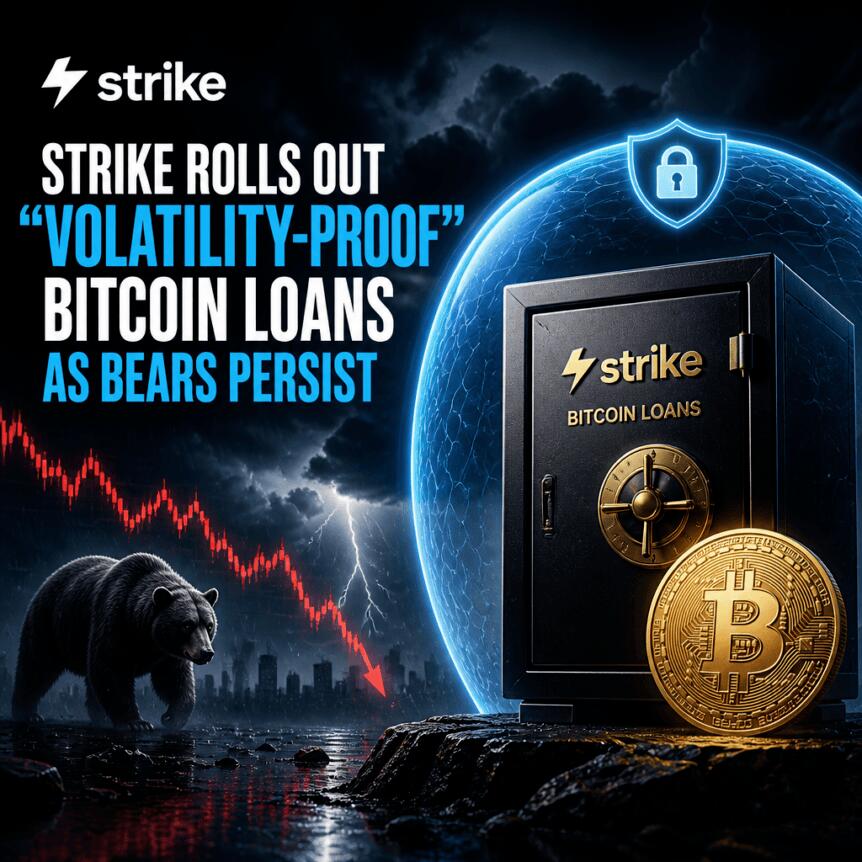
Strike, the Bitcoin financial services firm led by Jack Mallers, has introduced a new “volatility-proof” Bitcoin-backed loan designed to reduce the risk of margin calls and forced liquidations during sharp market drops. The trade-off is cost and scheduling discipline: the program carries a higher interest rate, a shorter loan term, and an expectation that borrowers make payments on time.
In a Tuesday announcement, Mallers said the product was built in response to customer feedback on Strike’s earlier Bitcoin loan offering launched in May 2025—an initial rollout that coincided with a severe drawdown. During that period, Bitcoin fell 54% from peak to trough, and many borrowers were liquidated.
Key takeaways
- Strike’s new loans aim to remove margin calls and price-triggered liquidations, limiting forced selling during downturns.
- The mechanism requires borrowers to stay current; missed payments can still lead Strike to sell collateral.
- Terms are shorter than Strike’s standard product and the interest rate is higher—up to an APR range around 10.7% to 14.2% based on Strike’s disclosed structure.
- The maximum initial loan-to-value ratio is 45%, which lowers borrowing capacity relative to the collateral posted.
A product aimed at breaking the “volatility-to-liquidation” link
In his remarks, Mallers summarized the core design goal: “No margin calls. No price liquidations. No matter how far bitcoin falls, your bitcoin doesn’t move.” He emphasized that the protection comes with conditions—namely paying on time and accepting a higher cost and shorter term than Strike’s standard loans.
Strike’s pitch matters because the industry has spent years trying to broaden Bitcoin’s utility beyond holding and transfers. Yet adoption of crypto-backed lending has lagged, largely due to uncertainty around how quickly collateral can be liquidated when markets move. A June report from crypto lending platform Ledn—referenced in the announcement—found that 88% of surveyed crypto investors would consider crypto-backed loans, but only 14% actually use them, citing a “crypto collateral gap” driven by volatility and confidence issues.
Volatility has been a persistent challenge for Bitcoin loans. Mallers pointed out that Bitcoin has fallen by 30% or more in 10 of the past 12 years, and that drawdowns of 50% or more have occurred four times since 2014. The new loan structure attempts to address a key behavioral and structural concern: that borrowers can be forced to sell when prices drop, even if they would be able to manage debt payments under a different risk framework.
How Strike’s “volatility-proof” structure changes borrowing terms
According to Strike’s details, the volatility-proof loans have a maximum initial loan-to-value ratio of 45%. That means a borrower posting $100,000 in Bitcoin could borrow up to $45,000 under this framework. Strike also disclosed that the APR is meaningfully higher than for its standard Bitcoin loan product, with an additional charge intended to support extra hedging designed to protect the system.
Strike’s standard Bitcoin loans carry an annual percentage rate between 7.75% and 11.25%. The new product is described as 2.95 percentage points higher than the standard offering, putting the volatility-proof APR roughly in the 10.7% to 14.2% range. Mallers characterized the approach as an exchange: “If you’re OK with a slightly shorter term and a little bit higher of a fee, there is no price move that can liquidate you.”
The company also pointed to Bitcoin’s recent market backdrop to frame why the change was necessary. Over the past year, Bitcoin has dropped 54% from its all-time high of $126,080 in October to $58,190 on June 25, according to the figures cited in the announcement.
Other market participants highlighted the product’s potential benefit while still acknowledging the cost. Investor Fred Krueger, responding on X, said the loan model could address “one of Bitcoin’s biggest structural problems: forced selling during market crashes,” arguing that defaults would be tied more to borrowers’ ability to service debt rather than temporary price swings. Vibes Capital Management executive chairman Rob Topping also welcomed the liquidity angle for users who want near-term cash without liquidation risk, while calling the 14% APR expensive.
Payments still matter: the rules shift from price risk to default risk
Strike’s volatility-proof label is not absolute. The company’s approach redirects risk away from price-based liquidations and toward payment behavior. Mallers said that if a borrower misses a payment, they have 10 days to catch up or contact Strike to explain their financial situation.
If Strike does not hear from the borrower after that 10-day period, the company may begin liquidating the borrower’s Bitcoin collateral to cover the overdue amount. Mallers underscored this distinction by stating that the product is designed to be “volatility-proof,” not “liquidation-proof,” adding that if clients appear to be “doing a hit-and-run,” Strike may have to sell some collateral.
The loans are available in most U.S. states and can be taken out under both personal and business names. Strike’s disclosed minimums vary by state and by loan type, with personal loans offered from $10,000 and certain business loans available as low as $5,000. The company said the proceeds can be used for new borrowing, refinancing, or consolidating existing obligations.
Where this fits in a wider lending market
Strike is not alone in offering Bitcoin-backed loans; other participants mentioned alongside Strike include Binance, Coinbase, Nexo, and Xapo Bank. However, the central question for borrowers remains the same across providers: how to access liquidity without being forced to sell during sharp market declines.
By setting a lower maximum loan-to-value ratio (45%) and charging a higher APR to fund additional hedging, Strike is attempting to engineer a path where collateral value volatility does not automatically translate into liquidation. For investors and traders, this shift could be meaningful in managing cash-flow stress—especially during periods where paying down debt remains feasible, but the collateral drawdown would otherwise trigger margin calls.
Borrowers considering the new program should watch two things going forward: how consistently Strike enforces the payment schedule across cases, and whether the company’s higher APR and tighter loan framework materially improve outcomes relative to its first loan product during prolonged volatility. The effectiveness of a volatility-proof model ultimately depends on how well it balances hedging costs with real-world borrower repayment behavior.
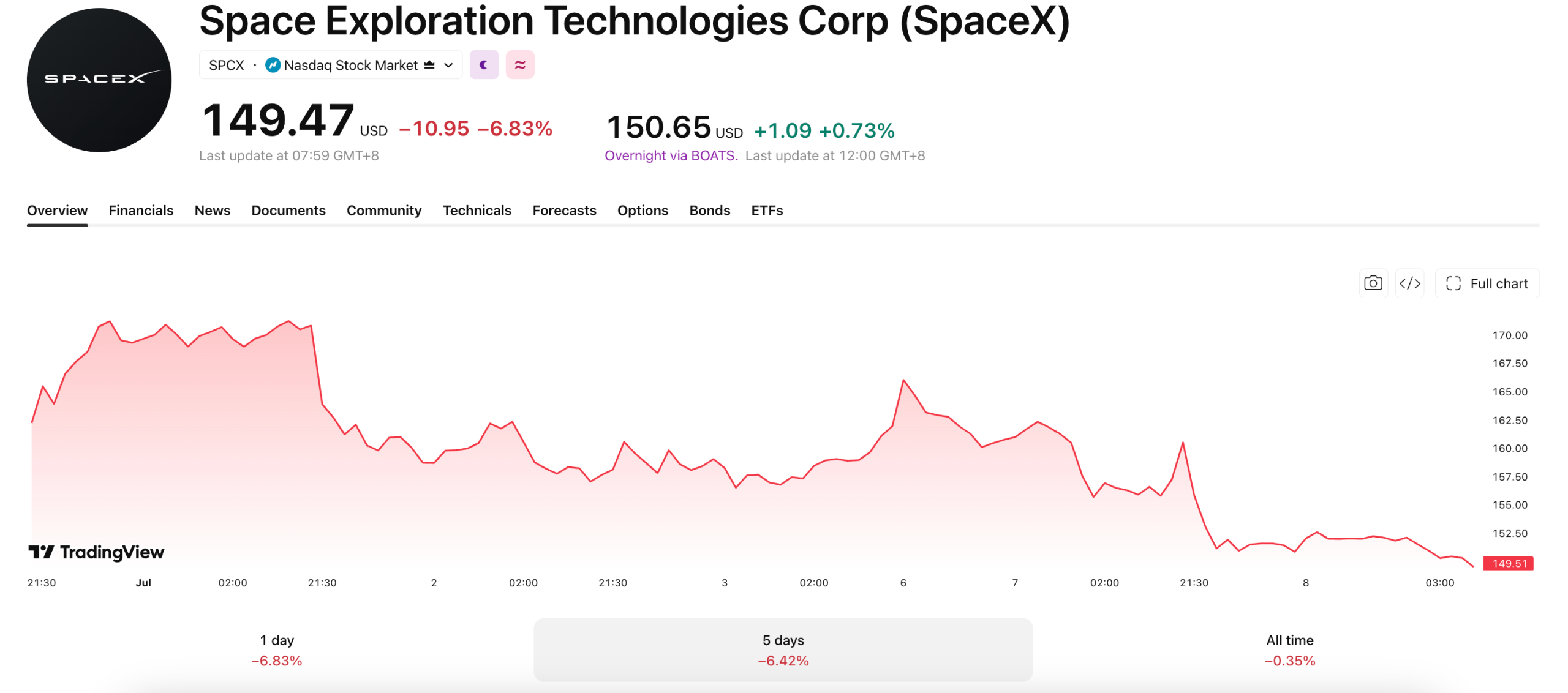
SpaceX’s price targets now span a massive range. Wall Street analysts set targets from $131 to $800 as the IPO quiet period ended.
Nineteen analysts published new ratings once the quiet period lifted for 23 underwriting banks behind SpaceX’s IPO. The moves coincided with SpaceX’s inclusion in the Nasdaq-100 index on Tuesday, July 7. The median target sits at around $250, a 56% jump from Monday’s closing price.
The High End of the Range
Raymond James analyst Brian Gesuale set the Street-high target at $800. He compared SpaceX to railroads and the internet as foundational infrastructure.
Citi’s John Godyn rated the stock a buy at $200. He called it a step toward a longer-term $900 target tied to Starship.
Deutsche Bank’s Edison Yu and J.P. Morgan’s Doug Anmuth issued buy-equivalent ratings at $255 and $225. Morgan Stanley’s Adam Jonas set a $300 base case. His range spans a $600 bull case and a $75 bear case.

Fourteen of the 19 targets clustered between $200 and $250. That optimism follows heavy institutional demand. BlackRock placed a $5 billion order ahead of the company’s $2 trillion debut last month.
The Low End of the Range
MoffettNathanson’s Julie Zhu set the Street-low target at $131, the sole holdout with a neutral rating that implies 18% downside. The firm called SpaceX’s $30 trillion addressable market estimate “absurd.” It also questioned Musk’s plan to deploy 100 gigawatts of orbital compute by 2029.
“There is simply no credible financial model that can support what is at the time of this writing a roughly $2 trillion valuation. Our own certainly does not.”
Zhu’s team stopped short of a sell rating. The analysts argue investors are pricing SpaceX as an option on businesses that don’t exist yet. It flagged regulatory scrutiny of SpaceX’s launch dominance as the bigger long-term risk. That risk remains years away, the firm said.
The nearly $700 gap between the highest and lowest targets leaves SpaceX’s volatile stock at a crossroads. Starship’s next test this month could sway which camp proves right.
The post SpaceX Price Predicted to Range Between $131 and $800. Where Will SPCX Land? appeared first on BeInCrypto.
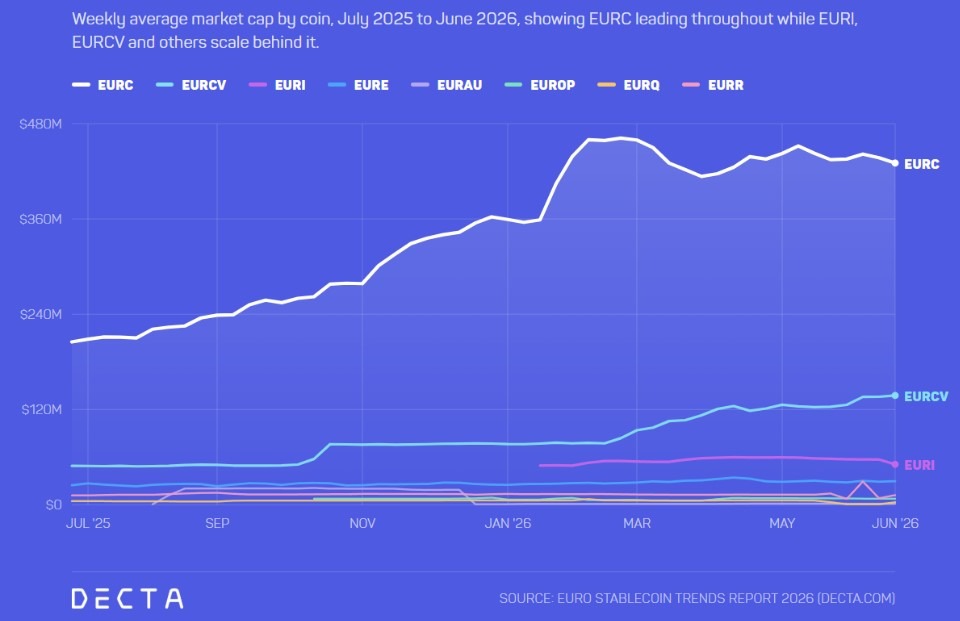
The market capitalization of compliant euro stablecoins grew 128% in the year leading up to the end of the Markets in Crypto-Assets Regulation (MiCA) transition period, according to payments infrastructure firm Decta.
Decta said in a Sunday report that the combined market cap of eight MiCA-compliant euro stablecoins rose to $673.9 million on June 28, 2026, from $295.6 million on June 30, 2025. Trading volume rose 43.1% to $67.3 million from $47 million. The number of MiCA-compliant euro stablecoins tracked in the report also rose to eight from five over the period.
Decta tracked eight euro stablecoins that were actively issuing tokens and had market capitalization and trading volume during the study period. By contrast, the European Securities and Markets Authority interim MiCA register lists a broader set, including tokens that may not meet Decta’s activity criteria.
The report found that euro-denominated stablecoins are growing under MiCA but from a small base in a market still dominated by dollar-backed tokens. CoinGecko data shows US dollar-pegged stablecoins at about $300 billion in market capitalization. The combined market capitalization of Decta’s eight actively traded, MiCA-compliant euro stablecoins was 0.22% of the dollar stablecoin market.
From July 1, firms offering crypto-asset services in the European Union generally needed MiCA authorization. Decta’s data sample ends days before the close of MiCA’s crypto-asset service provider (CASP) transition period.
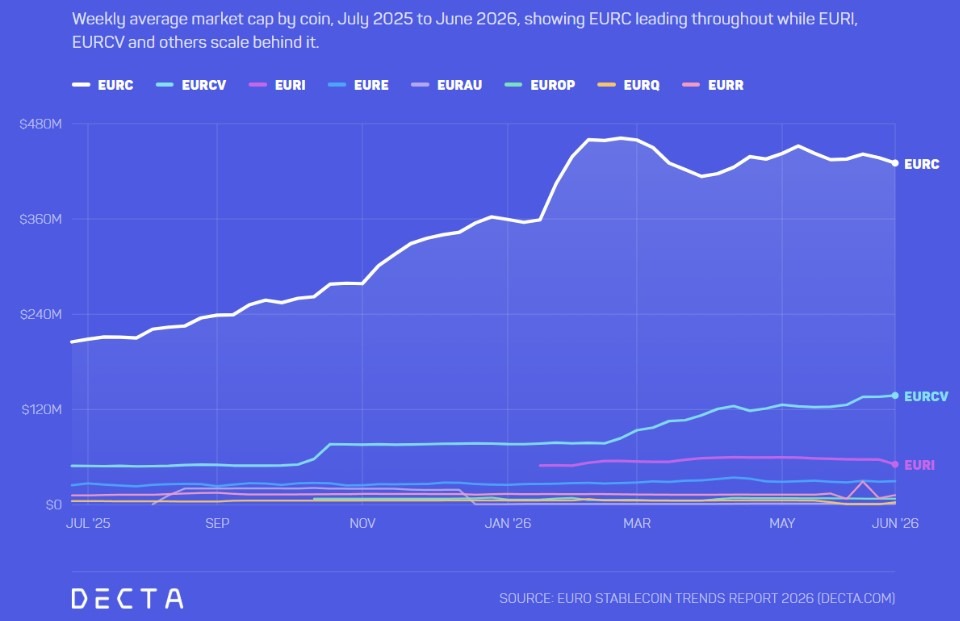
Market capitalization of the top eight euro-pegged stablecoins. Source: Decta
Euro stablecoin growth amid MiCA competitiveness debate
The report adds to a debate among policymakers and industry groups over whether MiCA’s stricter stablecoin rules are helping the euro ecosystem grow or limiting its competitiveness against dollar-backed tokens.
On April 27, a Blockchain for Europe report argued that MiCA had made euro stablecoins safer but commercially weaker. The report said MiCA’s reserve requirements and ban on interest payments left euro tokens at a disadvantage.
Related: EU crypto rulebook faces enforcement challenge as MiCA transition ends
The debate intensified in May after a policy paper from Brussels-based think tank Bruegel called for easing liquidity requirements for stablecoin issuers and potentially granting them access to European Central Bank funding. The paper argued that looser rules could help the euro stablecoin market compete with dollar-backed tokens.
However, the European Central Bank (ECB) pushed back. On May 23, the ECB warned EU finance ministers that expanding issuance of euro stablecoins could weaken bank lending and complicate monetary policy. The ECB also dismissed concerns that stricter EU rules would accelerate digital dollarization.
Magazine: Bitcoin slides to $58K, XRP hits $1 but onchain data promising: Market Moves
Bitcoin (BTC) has further to fall for one of its “cleanest cycle clocks” to signal a bear-market bottom, new analysis says.
Key points:
- One of Bitcoin’s “cleanest cycle clocks” suggests that new macro lows are needed this bear market.
- The NUPL metric is still in positive territory, setting it apart from previous bear markets.
- Analysis expects history to repeat with a higher low on a long-term NUPL moving average.
CryptoQuant: Bitcoin NUPL contains “level to watch”
In research published on Monday, onchain analytics platform CryptoQuant flagged an incoming profitability floor for the BTC supply.
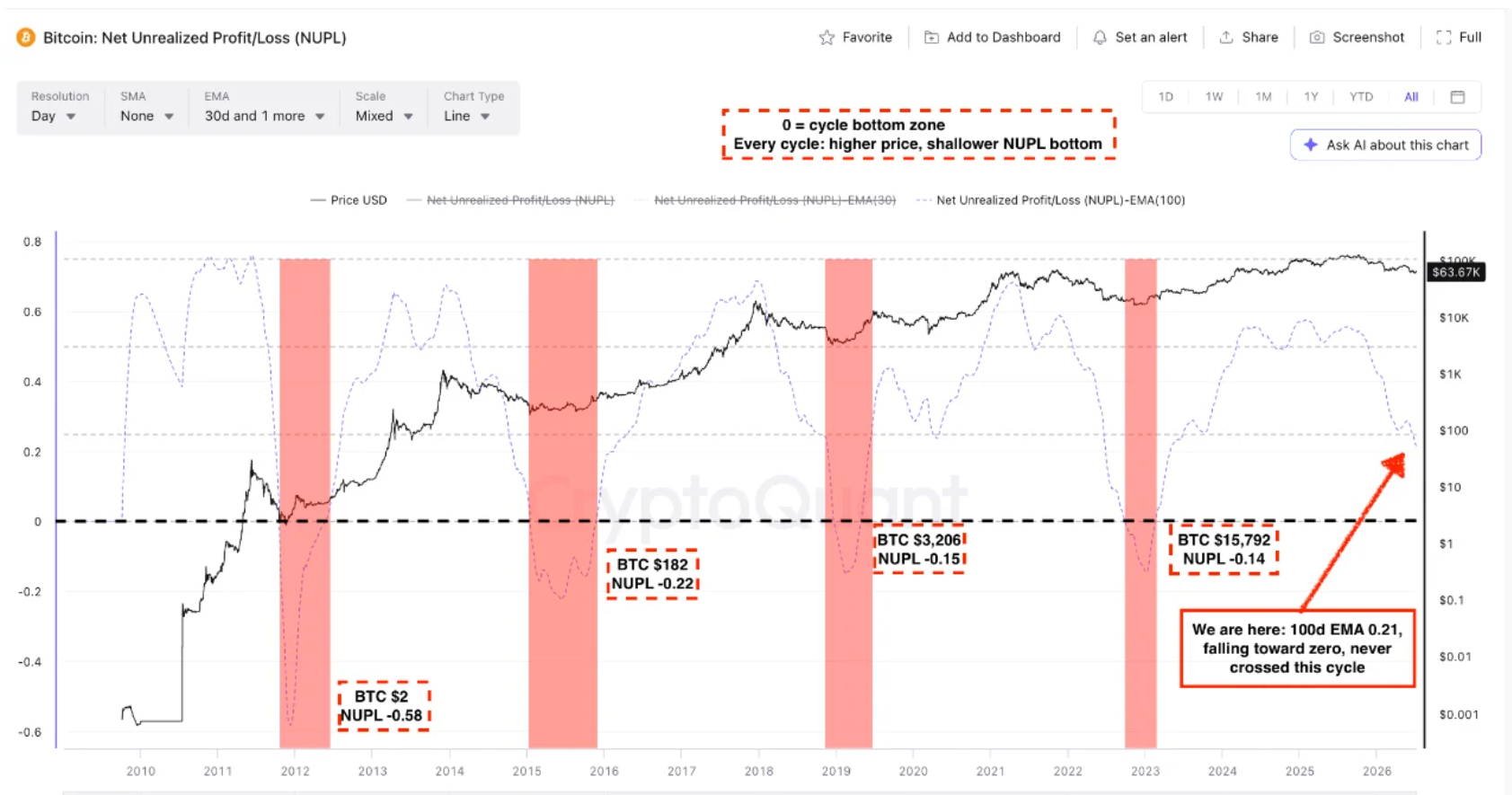
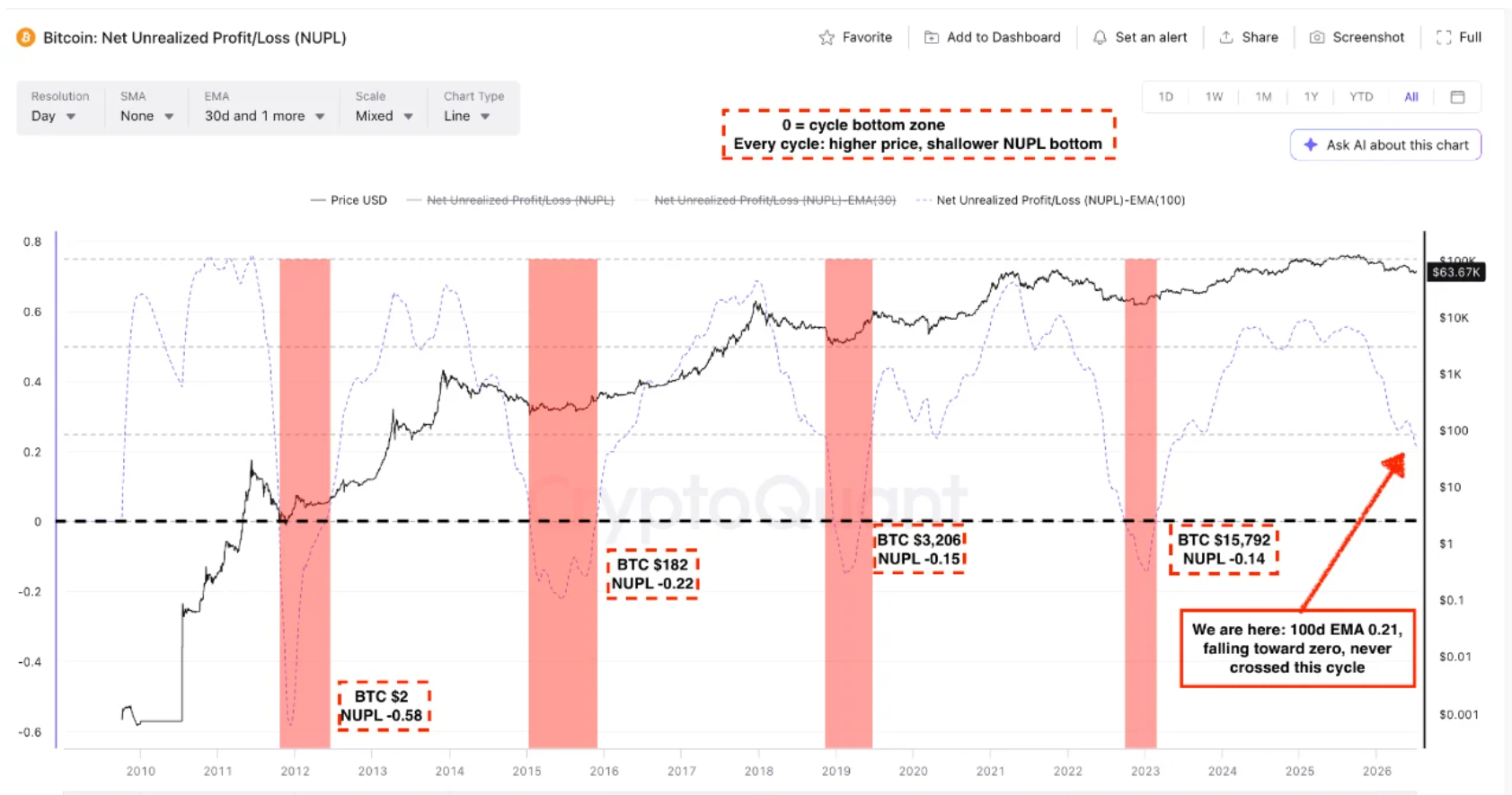
The onchain metric involved was Net Unrealized Profit/Loss (NUPL), which measures the portion of the supply being held at a higher or lower price versus that at which it last moved. Its score is currently 0.158, a level last seen in early 2023.
“Smoothed into its 30 and 100-day exponential moving averages (EMAs), it becomes one of the cleanest cycle clocks on-chain,” contributor TheChessOnChain commented.
An accompanying chart shows the 100-day EMA of NUPL slowly trending toward cycle bottom levels below zero.
“Every time the 100-day EMA of NUPL fell below zero, Bitcoin was carving its cycle bottom: late 2011 (low near $2), January 2015 ($182), the 2018 bear ($3,206 in December 2018), and the 2022 FTX bottom ($15,792 in November 2022),” TheChessOnChain noted.
Bitcoin NUPL data (screenshot). Source: CryptoQuant
At just above $60,000, BTC/USD corresponds to an NUPL 100-day EMA of 0.215, signalling plenty of room left to drop in order to match previous bear-market lows.
CryptoQuant acknowledged that NUPL has put in higher lows throughout Bitcoin’s history, meaning that even a trip below the zero line may not be essential.
“That leaves two paths,” it continued, describing the four extant zero-line crosses as a “pattern, not a law.”
“Either the 100-day EMA crosses zero as it did at every prior bottom, or this becomes the first cycle to bottom without it, which would fit the shallower-each-time trend.”
No time frame was given for when the next bottom could occur, with CryptoQuant specifying the zero line as the “level to watch in the coming weeks.”
Bear market reversal signals copy history
As Cointelegraph reported, multiple bear-market reversal signals have come from onchain sources in recent weeks, echoing 2022.
Related: $60.4K Becomes ‘most important area’: Five things to know in Bitcoin this week
Despite these now locking in, market participants broadly expect new macro lows to enter before bulls regain the upper hand.
Last week, fellow CryptoQuant contributor Axel Adler Jr. highlighted other supply data presenting mixed signals over short and mid-term BTC price action. Supply in loss, Adler calculated, could still be two months off levels that traditionally correspond to the end of Bitcoin bear markets.
“Until then, it is more accurate to treat capitulation as a process rather than a completed fact,” he wrote.

Horoscope today: Your daily guide for Wednesday, July 8, 2026
Rapid Retail Mood Swings Signal Caution as BTC Retreats Amid Iran Strikes

Could Labour be about to ban X?


-

 Fashion4 days ago
Weekend Open Thread: High Hopes
-
 NewsBeat3 days ago
Taylor Swift and Travis Kelce wedding staffer hilariously struggles to keep her cool while checking in megastars
-

 Fashion2 days ago
Open Thread: What Great Books Have You Read Recently?
-
 Crypto World7 days ago
Airdrop Registration Becomes Key Focus For Remittix As RTX Launch Updates Approach
-

 Politics5 days ago
The House | “Reframing the debate from a binary discussion of winners and losers”: Yuan Yang reviews ‘We Are Not Machines’
-

 Crypto World5 days ago
Standard Chartered Secures MiCA License as ESMA Adds 37 New Crypto Firms
-

 Business1 day ago
AXT Shares Jump Nearly 14% as Semiconductor Materials Maker Rebounds on AI-Linked Indium Phosphide Demand
-

 Sports7 days ago
Broncos roster: OL Ben Powers (No. 74) entering final year of contract
-

 Crypto World6 days ago
Binance stock trading tops $1B in first month after launch
-
Crypto World1 day ago
SK hynix (000660.KS) Stock Dips as $28B Nasdaq ADR Offering Drives AI Memory Expansion
-

 Crypto World6 days ago
Alibaba-affiliate Ant Group enters the humanoid robot market with 12 deals
-

 Crypto World3 days ago
South Africa proposes crypto tax guidance under existing rules
-

 News Videos2 days ago
Best Time to Enter Small Caps Right Now? Another Bull Run? | Financially Free
-

 News Videos1 day ago
Whats Hidden Inside This Cash Register? #treasure #reselling #money
-

 Tech3 days ago
Lenovo laptops are now shipping with YMTC SSDs, a sign of Chinese NAND entering the mainstream
-

 Business6 days ago
Meta Platforms Stock Jumps 7% Today as Bloomberg Reports Company Plans to Enter the Cloud Business
-
 NewsBeat6 days ago
New exhibition reflects five decades of movement between island of Ireland and GB
-

 Business5 days ago
What a 10 Percent Drop Means for Buyers, Sellers and Renters
-

 Crypto World5 days ago
Binance Re-Enters Philippines As EU MiCA Rules Restrict Access
-

 News Videos2 days ago
Avoid entering in FOMO #bitcoin #cryptocurrency #trading #scalping
You must be logged in to post a comment Login