
Crypto World
Where the money’s flowing in bitcoin and ether markets



The demand for this bullish exposure suggests some investors expect the ongoing choppy price action in BTC to end with a decisive move toward $70,000. Perhaps, they expect the CPI to come in softer-than-expected, lifting risk assets higher.
Economists currently expect the July report to show headline CPI rising 0.1% month-over-month and 3.4% year-over-year. Core CPI, which strips out food and energy, is forecast to rise 0.2% month-over-month and 2.5% year-over-year, according to consensus estimates from Reuters, Dow Jones, and Bloomberg surveys.
Other traders are less focused on direction and more interested in a jump in volatility.
“We reiterate our recommendation to accumulate December optionality, leveraging depressed implied volatility across the curve ahead of several key catalysts, notably updates on bipartisan Clarity Act negotiations, shifts in Middle East geopolitical risks, and potential monetary policy pivots,” TDX Strategies said.
“Structurally, we favour December strangles on BTC and SOL,” the firm added.
A strangle involves buying both a call and a put with the same expiration. The position profits if the price makes a large move in either direction. The maximum loss is limited to the combined premium paid and occurs only if the market stays relatively flat.
Volatility could expand quickly once bitcoin breaks out of its recent range, according to Jeff Anderson, managing partner at market-making firm STS Digital.

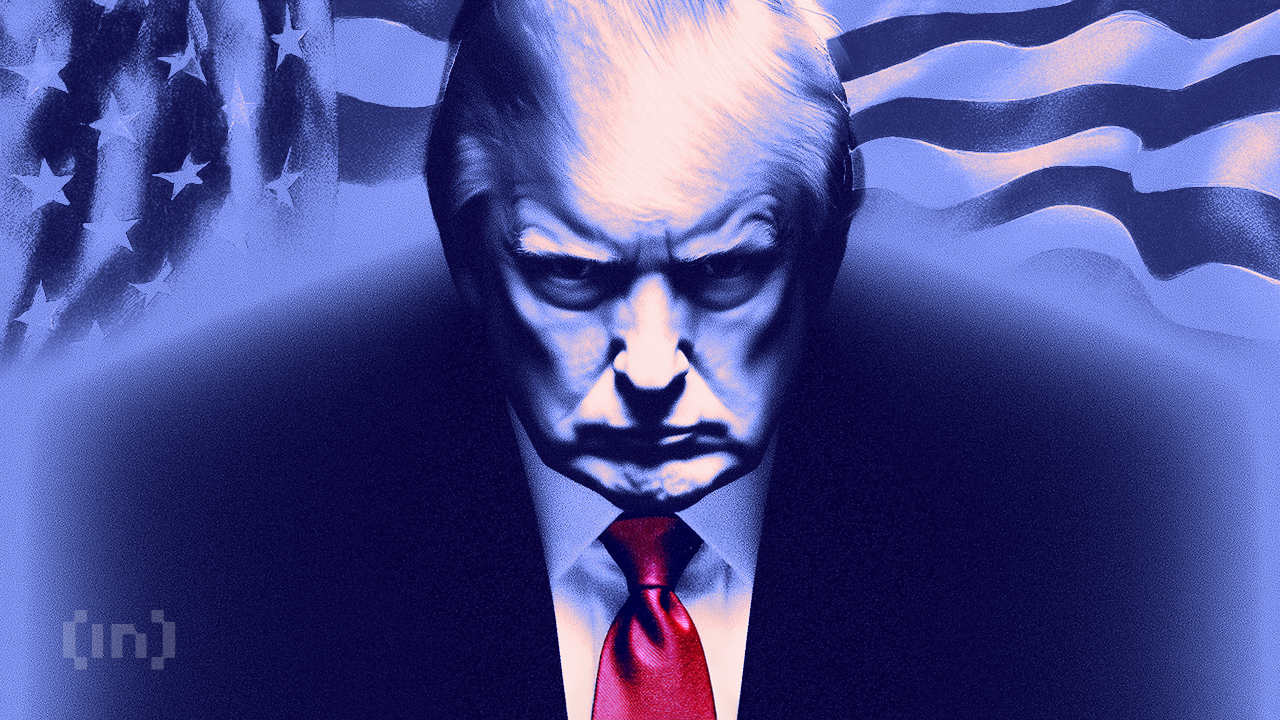

Trump Media could have already made more than $1 million from trading firms paying for early access to President Trump’s Truth Social posts, the company confirmed Monday.
More than 10 high-frequency trading firms subscribed to the service, called Truth API. They pay between $60,000 and $100,000 a month for faster access to market-moving posts.
How Truth API Works
Truth API launched in early August. It gives subscribers machine-readable access to posts from Truth Social’s most-followed accounts, including Trump’s own.
At $60,000 to $100,000 a month, more than 10 subscribers already generate potentially over $1 million in monthly fees. Interim Chief Executive Officer Kevin McGurn disclosed the fee range during Trump Media’s first-ever earnings call. He called the early rollout “the early innings.”
McGurn said the company is also in active talks with artificial intelligence firms. He added that a retail-trader tier is coming eventually.
Lawmakers Push Back
Lawmakers have criticized the arrangement. They argue it lets a company majority-owned by Trump’s family profit from his own market-moving statements.
Representative Jamie Raskin sent a letter to McGurn in late July. He demanded a full list of subscribers as scrutiny grew over Truth Social subscription fees.
Democratic lawmakers separately pushed for a formal SEC investigation demand into the service. They argue it effectively sells access to market-moving information tied to the presidency.
A Loss-Making Business for Trump
Meanwhile, Trump Media’s underlying business still loses money despite the new revenue stream. The company’s second-quarter net loss reached $238 million, more than 10 times the loss reported a year earlier.
Revenue totaled just $1.7 million, up 89% year over year. However, unrealized markdowns on Bitcoin and equity holdings drove most of the shortfall.
Analyst Markus Thielen of 10x Research offered a blunt assessment. He told the BBC that Trump Media operates more like a crypto fund than a media company.
What Comes Next
Trump Media recently walked away from a planned prediction-market venture with Crypto.com. The move fits a broader crypto ambitions pullback under McGurn.
The company also still aims to close a merger with fusion firm TAE Technologies. McGurn originally expected that deal to close months ago.
Shares are down 9% in the past 5 days after a recent rally. Investors now watch whether Truth API becomes the durable revenue source McGurn promises.
The post Trump Has Already Made Over $1 Million Selling Access to His Truth Posts appeared first on BeInCrypto.
Crypto World
Crypto.com rolls out tokenized stock derivatives as crypto exchanges push into equities
Crypto.com is world’s 11th largest exchange, according to data source Coingecko.
Stock tokenization push
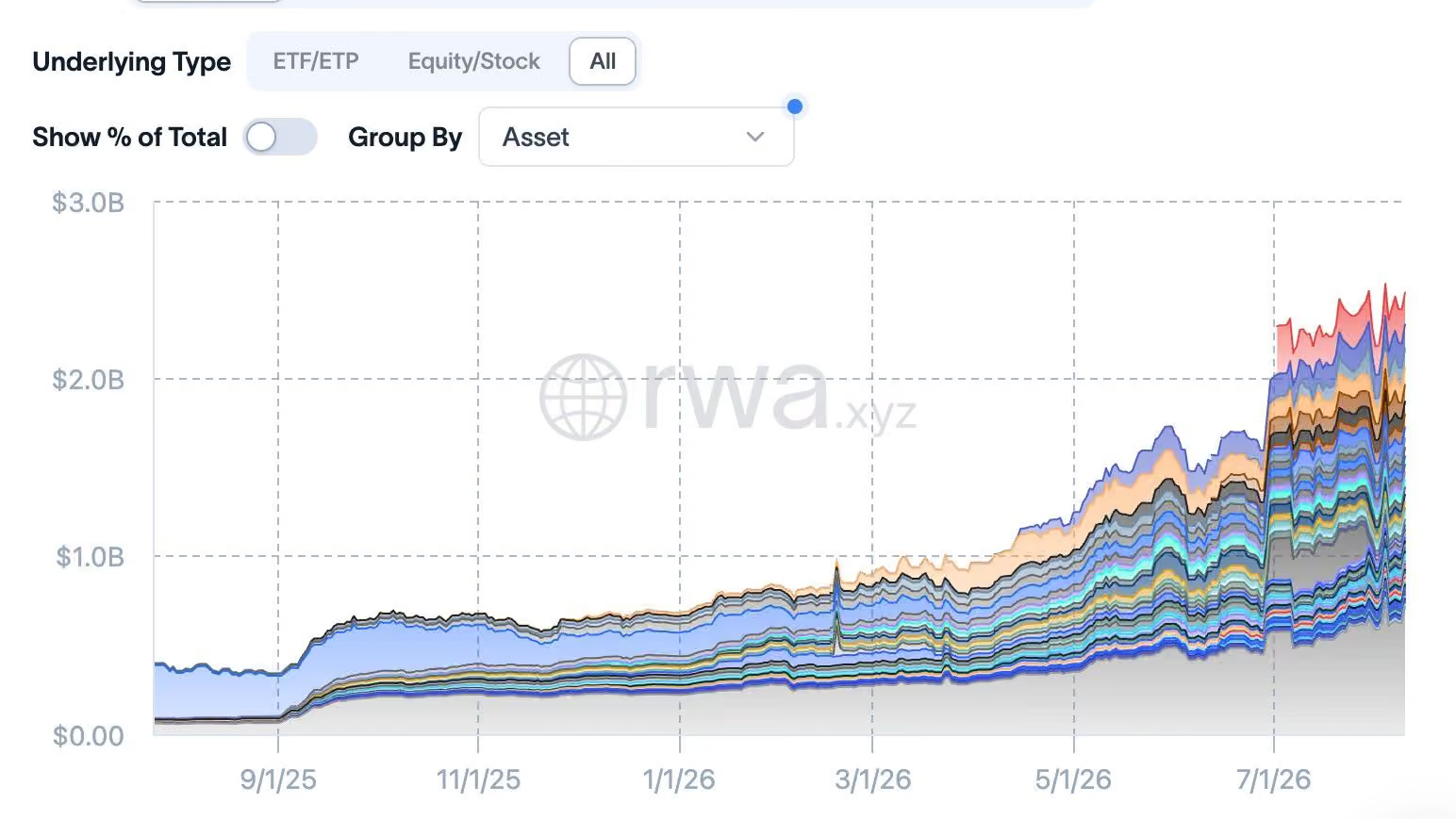
The launch lands in a fast-growing corner at the intersection of the crypto market and traditional assets. Tokenized stocks have reached about $2.49 billion in value, up roughly 600% over the past year, according to RWA.xyz data, as exchanges and blockchain firms race to bring equities onchain. Citi estimated that tokenized securities could grow into a $5.5 trillion market by 2030, including $2.6 trillion in tokenized equities.

Kraken, Bybit, Bitget and Robinhood are among the trading platforms that have rolled out tokenized equity products for investors outside the U.S. Meanwhile, the Depository Trust & Clearing Corporation (DTCC), the backbone of the U.S. securities markets, has begun testing tokenized securities infrastructure. At the same time, Nasdaq and the New York Stock Exchange also unveiled tokenization initiatives.
BBut not all of those products work the same way. Synthetic or derivative products track a stock’s performance without making the buyer a shareholder. Issuer-sponsored models, by contrast, can put actual common shares onchain while preserving ownership and shareholder rights.
The debate is drawing increasing attention from regulators and market infrastructure providers as tokenized securities move closer to the financial mainstream.


Brad Lightcap, a longtime OpenAI executive and former chief operating officer, has announced that he is leaving the company after 8 years to start a new venture.
The announcement adds to a wave of senior exits at the artificial intelligence (AI) firm.
Brad Lightcap Exits OpenAI to Launch New Venture After 8 Years
Lightcap shared the message he sent to his team on X. He joined OpenAI in 2018 and helped build its finance, legal, and business teams. He became the firm’s chief operating officer in 2024.
Lightcap then moved to a special projects role in April. At the time, the firm named Denise Dresser, chief revenue officer, to take over some of his responsibilities.
Chief Executive Sam Altman publicly thanked Lightcap and said he looked forward to working “together on what’s next.” Lightcap said he would remain around for a few weeks.
“I feel incredibly fortunate to have spent most of the last decade pursuing our mission and building this company. Sitting here today, mission success feels within sight. It has been the honor of my life to help bring us to this point, and to do it alongside all of you,” he said.
Follow us on X to get the latest news as it happens
OpenAI’s Leadership Keeps Thinning
His exit follows several senior departures this year. Fidji Simo, who oversaw product and business operations, stepped down last month, citing her health. She later cofounded an artificial intelligence health startup. The company’s only dedicated ethicist, Chloé Bakalar, also departed in July, less than a year after joining.
In April, Bill Peebles, Kevin Weil, and Srinivas Narayanan also announced exits. The moves followed the shutdown of Sora, OpenAI’s video generation app.
Earlier departures included communications chief Hannah Wong and marketing head Kate Rouch. Caitlin Kalinowski, who previously led OpenAI’s robotics effort, also left and has joined rival Anthropic.
The departures come as OpenAI works toward a potential stock market debut. It has not named a date for now. The firm did submit a confidential S-1 registration statement to the SEC in June.
Subscribe to our YouTube channel to watch leaders and journalists provide expert insights
The post Brad Lightcap Becomes Latest OpenAI Executive to Head for Exit appeared first on BeInCrypto.


Harmony said on Aug. 12 that it was working with cryptocurrency exchanges to stop and freeze funds after a suspected security incident on its Layer 1 network.
Summary
- Harmony is working with exchanges to freeze funds while developing patch and evaluating rollback options.
- Analyst Juiceberg reported roughly four billion ONE were minted without authorization through empty network blocks.
- About 2.8 billion ONE reportedly reached exchanges, while Harmony has not confirmed the amount publicly.
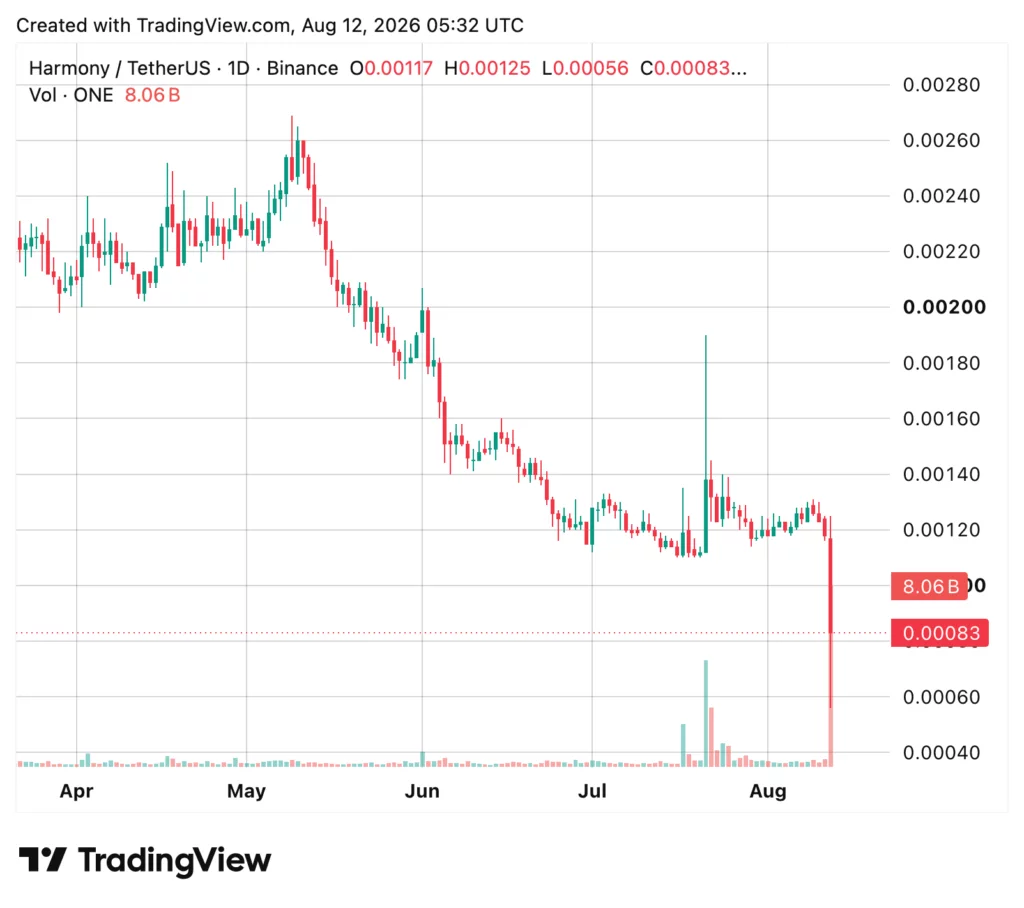
- ONE fell about 26% over 24 hours as trading volume surged above $36 million Wednesday.
- Harmony previously suffered a staking bug that unintentionally minted 146.3 million ONE during 2023 operations.
In a post, the team also said it was developing a patch and evaluating rollback options. It did not identify the root cause, confirm how many tokens were created or name exchanges that had frozen assets.
On-chain analyst Juiceberg reported an “unauthorized 4B ONE mint” through empty blocks. In separate analysis, the researcher said about 2.8 billion ONE were quickly routed to exchanges and later estimated that roughly 115 million remained available to sell onchain. Harmony has not independently confirmed those figures, so the amounts remain analyst estimates rather than an official assessment.
Harmony investigates reported 4 billion ONE mint
The reported mint would be unusually large relative to ONE’s existing supply. crypto.news data listed about 15 billion ONE in circulation on Wednesday. Four billion tokens would equal roughly 27% of that previously reported circulating amount, although the comparison does not establish Harmony’s supply after the suspected incident.
Juiceberg also claimed Harmony’s total supply endpoint “hides the inflation.” The project has not confirmed that assertion. Harmony’s statement was narrower, saying its team was coordinating with exchanges, preparing a patch and considering rollback options. It provided no public timetable for either step.
ONE price plunges as trading volume jumps
ONE sold off sharply as reports of the mint circulated. crypto.news showed the token near $0.00083, down about 32% over 24 hours, with trading volume around $36.9 million. Its market capitalization stood near $13.7 million when the data was checked.
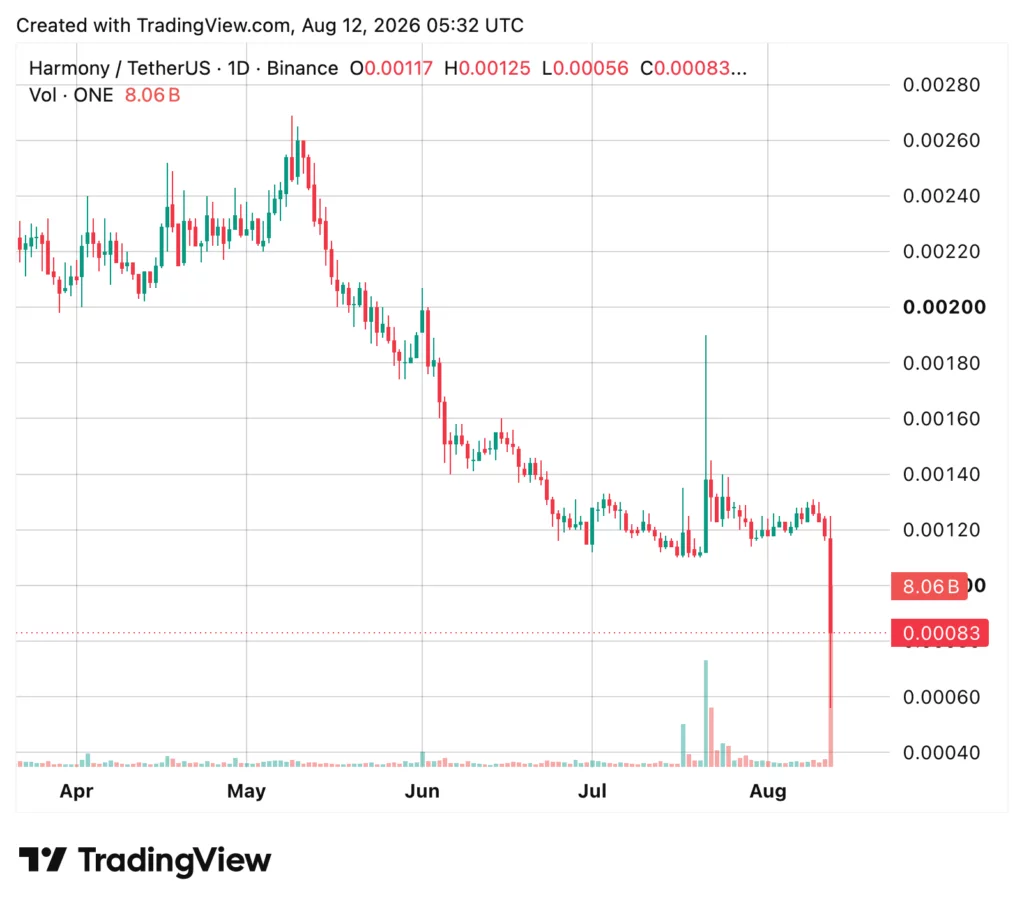
The market move coincided with the reported incident, but available data does not establish how much selling came from addresses linked to the suspected attacker. Juiceberg’s claim that 2.8 billion ONE reached centralized exchanges would make exchange cooperation central to recovery efforts if those transfers are confirmed.
Harmony has faced unauthorized token creation before
This is not Harmony’s first incident involving unintended token creation. In December 2023, the project published a technical report saying a staking logic flaw caused 146.28 million ONE to be minted across 74 delegator addresses. Harmony responded with an emergency hard fork.
The report traced the flaw to undelegation logic after a validator commission change. Some matured undelegations were not cleared correctly from network state and were repeatedly paid across epochs, creating tokens outside intended issuance. Harmony activated its fix at block 51,118,080.
Harmony also has a history of larger security losses. As previously reported, attackers drained roughly $100 million from the Horizon Bridge in June 2022. The FBI later attributed the theft to North Korea’s Lazarus Group in an official notice.
The stolen assets later began moving through Tornado Cash as investigators attempted to trace them. Harmony subsequently proposed minting billions of new tokens for victim reimbursement, but withdrew that proposal after community resistance. That planned recovery mechanism was separate from the unauthorized mint now reported by Juiceberg.
The latest incident also comes after the network’s DeFi activity contracted sharply. In related coverage, user deposits had fallen 99% from their 2022 peak by February 2025 following years of ecosystem outflows.
What happens next for Harmony
The immediate questions are whether exchanges can identify and freeze the reported deposits, what flaw enabled any unauthorized mint and whether Harmony ultimately chooses a rollback. A rollback would require clarity around the affected block range and how legitimate transactions made during that period would be treated.
As of publication, Harmony’s public statement had not supplied those technical details or confirmed the 4 billion ONE figure. The next verified update will need to establish the root cause, amount actually created, quantity frozen by exchanges and whether the network will deploy a patch or pursue a rollback.
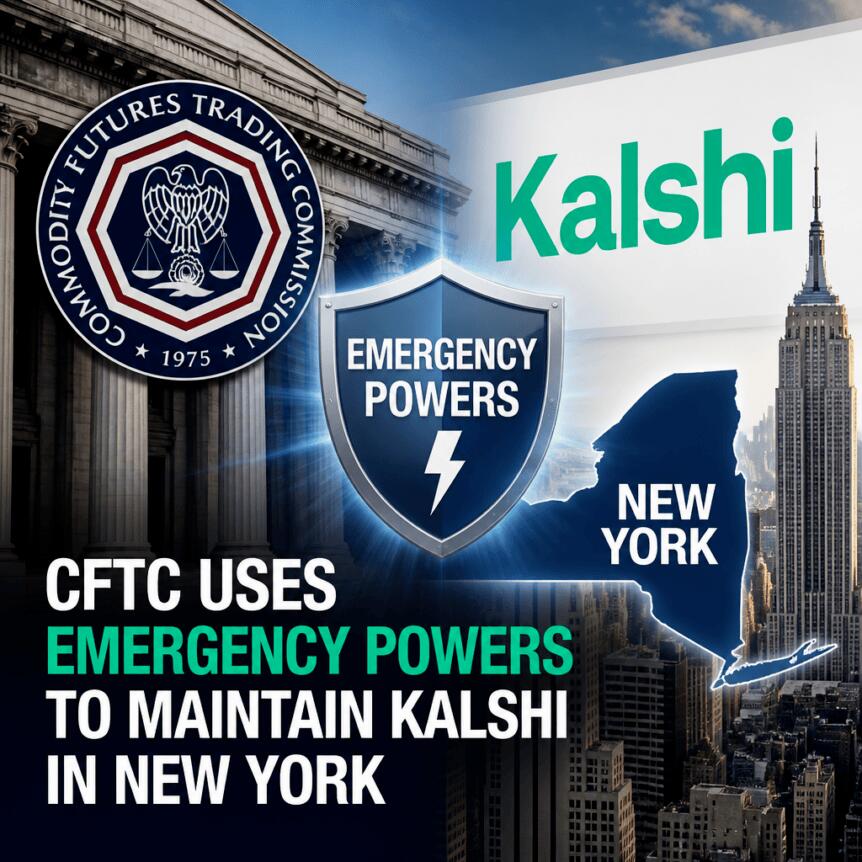
The U.S. Commodity Futures Trading Commission (CFTC) has stepped in to keep prediction market operator Kalshi running, citing an “emergency” created by New York’s enforcement action and its request for a temporary restraining order. In an order issued Tuesday, the regulator directed Kalshi to continue operating under its normal practices and in line with the Commodity Exchange Act’s Core Principles.
The CFTC warned that an abrupt disruption to event-contract trading could undermine the goal of maintaining a uniform, national derivatives market—something it says is critical for orderly trading and price discovery. The dispute is also framed as part of a wider federal-versus-state battle over whether federal commodities law preempts state gambling rules when event contracts are traded on federally regulated exchanges.
Key takeaways
- The CFTC invoked emergency authority to require Kalshi to keep operating while New York pursues a temporary restraining order.
- New York’s proposed order could restrict Kalshi’s event-contract offerings tied to sports, elections, culture, and other events occurring in or connected to New York residents.
- The CFTC argues the Commodity Exchange Act requires a consistent national derivatives market and cautions against a “patchwork” of state gaming laws.
- The latest CFTC order does not resolve whether federal law preempts state enforcement; it mainly addresses operational continuity.
- The CFTC says it has taken similar actions against multiple states beyond New York to defend its jurisdiction.
Emergency order keeps Kalshi trading as the legal fight escalates
In its statement, the CFTC said New York’s move—both the state’s enforcement action and its request for a temporary restraining order—amounts to a market emergency. The agency referenced the risk that the temporary restraining order could effectively prevent Kalshi from offering event contracts nationwide, given the company’s New York ties.
According to the CFTC, New York is seeking at least $36 billion in compensatory damages while also pursuing a damages accounting. The state’s requested relief is designed to bar Kalshi from offering a broad set of contracts—spanning sports, cultural events, elections, and other event categories—when those contracts are offered in, from, or to people located in New York.
CFTC Chair Michael Selig said Congress did not intend derivatives exchanges to operate under a fractured set of state gaming rules. The commission’s position is that major disruptions to regulated derivatives markets can harm orderly trading and impede the price discovery function the framework is meant to support.
How New York describes the case—and what Kalshi disputes
New York’s lawsuit, filed on July 31, alleges Kalshi runs an illegal, unlicensed gambling operation by offering contracts tied to sports, elections, culture, and other events. The state says it is seeking restitution, disgorgement, damages, and penalties—describing potential penalties that include a figure equal to three times Kalshi’s alleged gains, plus $100,000 for each unauthorized sports-wagering offer or attempt in New York.
Kalshi’s core argument is that states cannot effectively shut down a federally licensed exchange. The conflict centers on legal jurisdiction: New York frames its position as state regulation of gambling and wagering, while the CFTC argues that the Commodity Exchange Act provides it with exclusive jurisdiction over transactions involving swaps traded on designated contract markets, including event contracts Kalshi lists as swaps.
That difference matters because it determines which regulator—state authorities or the CFTC—has the power to restrict or condition Kalshi’s product offerings. It also shapes whether event-contract trading will be governed uniformly across state lines or subject to multiple state-by-state enforcement theories.
Preliminary rulings have not ended the jurisdiction dispute
There have already been setbacks for Kalshi in some respects, but also legal findings that keep the dispute alive. In a separate New York case, a federal judge denied Kalshi’s request for a preliminary injunction on July 7. At that stage, the court found that New York’s gambling laws were not preempted by the Commodity Exchange Act as applied to Kalshi’s sports-event contracts.
Meanwhile, the CFTC has also attempted to prevent New York from applying its gambling laws to CFTC-registered contract markets. In April, the CFTC sued New York in federal court for that purpose, seeking to stop the state’s enforcement. Judge Jed Rakoff denied—without prejudice—the CFTC’s emergency request for a temporary restraining order. The denial was tied to the court’s view that the agency had not shown, at that early stage, a high likelihood of success on the merits or a likelihood of irreparable harm.
According to the CFTC, Tuesday’s order is intended to keep trading functioning while the underlying jurisdictional conflict continues. The agency emphasized that its action is not a final judicial determination of whether federal law preempts state gambling enforcement.
Federal-state clash over event contracts spans more than one state
This confrontation is not confined to New York. The CFTC said it has sued eight other states, along with New York, to defend the jurisdiction it says Congress granted it. The underlying legal theory is that event contracts falling under the federal derivatives framework should not be subjected to state gambling restrictions in ways that fragment the market.
For market participants, the practical implication is straightforward: even when a product is traded on a federally regulated exchange, the business model can still face state-level disruption. The CFTC’s emergency order suggests the regulator views that risk as severe enough to justify immediate intervention to avoid shutdown-by-injunction dynamics.
What remains uncertain is whether courts will ultimately treat the relevant Commodity Exchange Act provisions as preempting state gambling enforcement in the context of event contracts described as swaps. Tuesday’s order does not settle that question, and the dispute is likely to continue through further motions and rulings.
Investors, traders, and builders using prediction markets should watch how courts assess the preemption question in the ongoing cases and whether additional states face similar CFTC action. The timing and scope of any eventual injunction—or the lack of one—could determine how consistently event-contract trading can operate across the U.S. while the federal jurisdictional argument plays out.


Two US financial regulators sued Goliath Ventures and its CEO, Christopher Delgado, this week, two months after he pleaded guilty to charges in the same crypto Ponzi scheme.
The Securities and Exchange Commission (SEC) noted that the multi-year operation raised at least $425 million from more than 1,300 investors.
Inside the Alleged Goliath Ventures Scheme
Goliath pitched investors on partnering to fund crypto asset liquidity pools, which it claimed to manage. The company promised monthly profit distributions of 3% to 10%, according to the SEC.
The regulator alleges that the accused invested none of the money and instead paid earlier investors with funds from newer ones.
The SEC said that Delgado misappropriated at least $51 million for personal spending. This included purchasing residential properties, luxury vehicles, and a yacht, as well as travel.
According to the complaint, the firm also hired sales agents on commission and issued fake account statements and investment performance metrics. The move was meant to show investors that they were earning profits.
Finally, by November 2025, Goliath could no longer recruit fast enough to cover payouts, and the scheme collapsed.
Follow us on X to get the latest news as it happens
Two Regulators Move in Parallel
The SEC says the operation raised at least $425 million from more than 1,300 investors. The CFTC complaint cites roughly 1,600 customers and at least $397 million.
The SEC charged both defendants under the Securities Act and the Exchange Act. Delgado agreed to a bifurcated settlement. The CFTC seeks restitution, disgorgement, civil penalties, and permanent trading and registration bans. Chairman Michael Selig framed the action as part of a broader enforcement push.
“We will continue to aggressively police fraud, abuse, and manipulation in the crypto asset markets to ensure that bad actors are punished, while developing clear rules of the road so that good actors have the opportunity to build on American soil,” he said.
Delgado had already pleaded guilty to charges of conspiracy to commit wire fraud, wire fraud, and money laundering. His sentencing is scheduled for October 8.
Subscribe to our YouTube channel to watch leaders and journalists provide expert insights
The post SEC and CFTC Hit Goliath Ventures With Parallel Crypto Fraud Complaints appeared first on BeInCrypto.
Crypto World
ForumPay Expands Payment Infrastructure with New Card and Bank Transfer Acceptance Solution
[PRESS RELEASE – Milton, Georgia, August 11th, 2026]
Businesses are increasingly looking for ways to offer more payment options without adding operational complexity. ForumPay, a crypto payment infrastructure company, enables merchants to accept crypto payments across online, in-store, and in-app channels, with instant conversion and next-day settlement.
ForumPay has recently announced a new payment flow that it says could meaningfully alter how payments are processed. Customers can now initiate purchases using any Visa or Mastercard and bank transfers in selected markets, with funds routed automatically through ForumPay’s infrastructure. Merchants can now offer card and bank payments without registering as a card acceptance businesses, sidestepping chargeback liability and PCI-DSS compliance costs while still receiving precisely the amount invoiced.
This latest ForumPay release represents one of the more ambitious developments yet to bridge the gap between traditional payment rails and crypto infrastructure.
Built for Modern Payment Acceptance
Businesses increasingly want to offer customers greater flexibility at checkout, but additional payment methods tend to bring additional operational and cost burdens. Card acceptance, in particular, can introduce chargeback exposure, compliance requirements, fraud management responsibilities, and more complex settlement processes, challenges that only grow more acute for organizations operating across multiple markets.
ForumPay’s innovative new payment flow is designed to solve these issues. Customers can initiate payments using any Visa, Mastercard, or bank transfer in selected markets, with those funds automatically used to purchase crypto and processed through ForumPay’s existing crypto payment infrastructure, with all of the inherent features and benefits, and converted and settled as per the preferences a merchant has already established on their account. Merchants will receive exactly the amount invoiced. For example, if a customer is billed $100, then $100 is what arrives in the merchant’s preferred bank account.
Critically, ForumPay will pass the additional card and bank transfer costs directly to the payer, meaning merchants pay only their usual crypto acceptance fees that would apply to any transaction processed through the platform. The approach allows businesses to expand the choice of available payment methods at checkout without taking on the compliance architecture, risks and costs that card acceptance would ordinarily require.
More Payment Options, the Same Operational Footprint
Businesses increasingly want to offer customers greater flexibility at checkout, but incorporating additional payment methods tend to bring with it additional operational burdens. Card acceptance, in particular, can introduce chargeback exposure, compliance requirements, fraud management responsibilities, and more complex settlement processes, challenges that only grow more acute for organizations operating across multiple markets.
ForumPay’s new payment flow is being designed to address this friction. Customers will be able to initiate payments using any Visa, Mastercard, or bank transfer in selected markets. Those funds are then automatically used to purchase digital assets and processed through ForumPay’s existing infrastructure, allowing merchants to continue receiving funds according to their established settlement preferences without having to overhaul their operations to accommodate the new options in the process. The approach, ForumPay says, allows businesses to expand what they can offer at checkout without taking on the compliance architecture that card acceptance would ordinarily require.
About ForumPay
ForumPay is a complete cryptocurrency-to-fiat payment technology firm; its core processing technology helps businesses attract new customers, optimize customers’ ability to spend, and increase revenue. ForumPay’s wallet-agnostic solution enables crypto consumers to spend their preferred cryptocurrency, from any wallet for everyday goods and services to luxury goods, automobiles, real estate, and private jets. ForumPay eliminates merchant exposure or risk by processing transactions with instant crypto-to-cash conversion. ForumPay merchants receive payments in the currency of their choice directly into their bank account. The transactional experience is similar to accepting other popular payment methods, including cash, credit cards, and bank transfers, but simpler, faster, and more secure.
The post ForumPay Expands Payment Infrastructure with New Card and Bank Transfer Acceptance Solution appeared first on CryptoPotato.


Binance added Moonbeam (GLMR), ICON (ICX), Moonriver (MOVR), SuperRare (RARE) and Sophon (SOPH) to its Monitoring Tag list on Aug. 11 after its latest project reviews.
Summary
- Binance added five tokens to its Monitoring Tag list after completing its latest periodic reviews.
- GLMR, ICX, MOVR, RARE and SOPH now face closer scrutiny and potential future delisting risks.
- Moonriver fell roughly 21% in 24 hours while Moonbeam dropped about 13% following Binance’s announcement.
- Binance said related services remain unaffected and gave no specific reasons for adding individual tokens.
- Moonbeam and Moonriver announced Base migrations in July, while ICON plans its December 31 shutdown.
The designation places all five tokens under closer scrutiny and signals possible future delisting if they stop meeting the exchange’s listing standards, according to its announcement.
The exchange said the move does not remove any of the tokens from trading and will not affect other related services. Binance did not provide a specific reason for adding each project. The notice was also updated later on Aug. 11 to revise information concerning the Monitoring Tag quiz.
Binance Monitoring Tags do not mean immediate delisting
The exchange uses the Monitoring Tag for assets it considers more volatile or risky than other listed tokens. Its reviews examine team commitment, development activity, trading volume, liquidity, network security, smart contract stability, public communication, due diligence responses, token supply changes and evidence of misconduct.
The exchange said tagged tokens are “at risk of no longer meeting our listing criteria and being delisted.” However, the tag itself is not a delisting decision, and Binance gave no date for its next review. As previously reported, the exchange placed ACX, LSK and STX under closer review on July 24.
The tag appears on corresponding Spot and Margin trading pages and the Markets Overview page, alongside a risk warning banner. The exchange has not published a numerical threshold for individual review factors, so the announcement does not establish which criterion prompted each addition or how close any token may be to removal.
GLMR and MOVR lead losses after the announcement
Market data showed a mostly negative reaction on Aug. 12. Moonriver traded near $0.90, down about 20.7% over 24 hours, while Moonbeam fell about 12.9%. SuperRare declined around 8.3% and ICON lost roughly 5.1%. Sophon was up about 0.8% over the same rolling period.
Trading activity also increased for several assets. CoinGecko showed Moonriver’s 24 hour volume rising more than 600% from one day earlier, while ICON volume increased more than 300%. The figures show higher trading activity but do not establish that the exchange’s decision alone caused the moves.
Recent project changes add context to Binance review
Two of the tagged assets recently underwent major network changes. Moonbeam’s update announced a 1:1 migration of GLMR from its Polkadot parachain to Base with a July 31 deadline. Moonriver separately announced a 1:1 MOVR migration from its Kusama based network to Base with the same deadline. Binance did not say either change prompted its decision.
ICON is also winding down its legacy blockchain. The ICON Foundation’s notice says the network will permanently halt on Dec. 31, 2026, which is also the final deadline to migrate ICX to SODA.
Other projects have their own histories. In related coverage, SuperRare lost about $730,000 in a staking contract exploit in July 2025. Sophon, meanwhile, entered spot trading in May 2025 alongside its token generation event. Binance did not connect either development to the new designation.
What happens next for the five tokens
GLMR, ICX, MOVR, RARE and SOPH remain available under the services covered by Binance’s announcement. The exchange will continue periodic reviews and may remove the tag if conditions change or delist an asset if it decides the token no longer meets its standards.
The latest additions follow several recent listing reviews. As previously reported, four of six assets scheduled for Aug. 17 removal had earlier risk warnings, including ACX, which received its tag on July 24. That history shows a Monitoring Tag can precede removal, although it does not guarantee that outcome.
For holders of the five newly tagged assets, the next concrete development would be another Binance review or a separate notice changing their listing status. The exchange has not announced a timetable for another assessment or a delisting decision.


The US Commodity Futures Trading Commission (CFTC) invoked its emergency authority on Tuesday, ordering prediction market Kalshi to continue operating.
The CFTC said that New York’s enforcement action and request for a temporary restraining order themselves constituted a market emergency and directed Kalshi to continue operating in accordance with its normal practices and the Commodity Exchange Act’s Core Principles.
New York’s requested temporary restraining order would bar Kalshi from operating a business offering contracts tied to sports, culture, elections and other events in or from New York or to people in the state. The CFTC said the order could prevent Kalshi from offering all event contracts nationwide because it is based in New York. According to the CFTC, New York is seeking at least $36 billion in compensatory damages pending an accounting.
The CFTC said the Commodity Exchange Act requires the commission to provide a uniform national derivatives market and that major disruptions threaten orderly trading and price discovery. CFTC Chair Michael Selig said Congress did not intend derivatives exchanges to face a “patchwork of state gaming laws.”
The confrontation is part of a broader national fight over whether the Commodity Exchange Act preempts state gambling laws as applied to event contracts traded on federally regulated exchanges.
CFTC challenges state oversight of prediction markets
In the lawsuit filed on July 31, New York alleges Kalshi runs an illegal, unlicensed gambling business by offering contracts tied to sports, elections, culture and other events. The state is seeking restitution, disgorgement, damages and penalties, including a penalty equal to three times Kalshi’s alleged gains and $100,000 for each unauthorized sports wagering offer or attempt in New York.
Kalshi says states cannot shut down a federally licensed exchange, while the CFTC argues that the Commodity Exchange Act gives it exclusive jurisdiction over transactions involving swaps traded on designated contract markets, including event contracts Kalshi lists as swaps.
A federal judge in a separate New York case denied Kalshi’s request for a preliminary injunction on July 7, finding at that stage that New York gambling laws were not preempted by the Commodity Exchange Act as applied to Kalshi’s sports-event contracts.
Related: Judge stays CFTC’s case against US soldier over prediction market bets
In a separate federal case, the CFTC sued New York in federal court in April to block the state from applying its gambling laws to CFTC-registered contract markets. Judge Jed Rakoff denied without prejudice the agency’s emergency request for a temporary restraining order, finding that the CFTC had not established a high likelihood of success on the merits or a likelihood of irreparable harm.
The latest CFTC order directs Kalshi to continue operating but does not end New York’s lawsuit or resolve the underlying jurisdictional dispute. It is not a judicial ruling on whether federal law preempts state gambling enforcement.
The dispute extends beyond New York. The CFTC said it has sued eight other states, along with New York, to defend its congressionally granted jurisdiction.
Magazine: The 100x obsession: Fundamentals grow in importance as crypto matures

Trump Intervened in Max Miller Ohio Race Amid DV Allegations

Ripple XRP BRICS NATIONS CONFIRMED NEW FINANCIAL SYSTEM WE WERE RIGHT!!!

‘Careless’ Peterborough crash left man with ‘nightmares’ and ‘excruciating pain’


-

 Fashion5 days ago
Weekend Open Thread: Mattifying Sunscreen
-

 Fashion5 days ago
Frugal Friday’s Workwear Report: Cap-Sleeve Pointelle Crewneck Sweater
-

 Sports6 days ago
Jordan Coyle & Cordiamo take Laya Arena Stakes at RDS
-

 News Videos4 days ago
Can Astrology Help Find Gold and Silver Trends? A Financial Astrology Guide
-
 Business6 days ago
US stocks: Dow closes at record on Mideast optimism; SpaceX, AMD drag Nasdaq
-

 Politics6 days ago
Reform UK And Greens Sink To Lowest Favourability Ratings To Date
-

 Business6 days ago
Supply chain issues impact Ingredion
-

 Tech4 days ago
Rinn Pharma & Biopharma to join NordicPharmaTrain network
-

 Business3 days ago
How to Start a Cleaning Business: A Step-by-Step Guide
-

 Business3 days ago
Datadog: Best Of Breed For Multiple Reasons
-

 Business3 days ago
BDC Weekly Review: Private BDC Q2 Numbers Are Strong
-
 NewsBeat7 hours ago
Communication cards help banking customers access services or report scams
-

 Fashion7 days ago
Suit of the Week: Me + Em
-
Sports6 days ago
Spider-Man: Brand New Day ending explained: Is Peter Parker alive?
-

 Crypto World7 days ago
Robinhood files $200M second venture fund focused on YC startups
-

 Tech5 days ago
Price Hikes May Be Coming for PC Motherboards Next
-
 Fashion7 days ago
Birthstone pendant necklaces for women by ottomanhands – 18ct gold plated
-
 Crypto World6 days ago
Galaxy Digital Stock Slides 14% as Crypto Prices Hit Earnings
-

 Business5 days ago
Brightwater secures funding for WA-first dementia projects
-

 Politics6 days ago
Comedian Jimmy Cricket Has Died, Aged 80
You must be logged in to post a comment Login