

Crypto World
Who answers the 3am call when DeFi breaks?

Welcome to our institutional newsletter, Crypto Long & Short. This week:
- To win over big investors, DeFi builders must act like accountable money managers, not just software developers, writes Ben Nadareski.
- Bitcoin holders can survive crashes and protect their assets by earning income through reinsurance, says Stephen Stonberg.
- Top headlines institutions should pay attention to by Helene Braun.
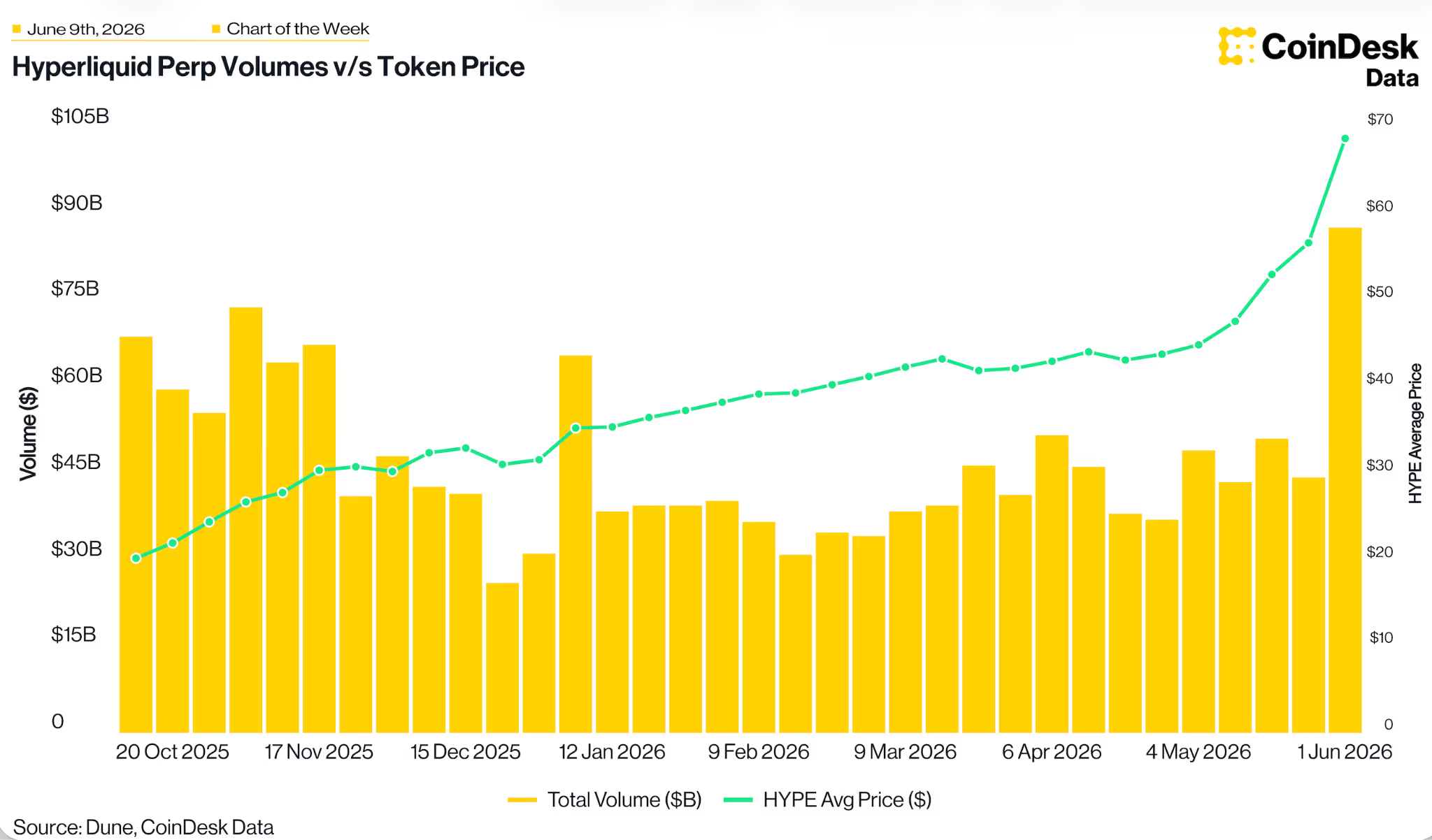
- “Hyperliquid’s 70% Rally: What Drove HYPE from $40 to $75 in Six Weeks” in Chart of the Week.
Expert Insights
Who answers the 3am call when DeFi breaks?
By Ben Nadareski, co-founder and CEO of Solstice
Last week, I shared something with CoinDesk that I want to sit with a little longer. A few minutes in an interview didn’t do it justice. My suggestion is that anyone building in DeFi should think of themselves as a financial asset manager who happens to write code, rather than as a software team that handles money.
A few people pushed back, so let me take one step further: the thing institutions really want from us has almost nothing to do with the code. They want to answer an age-old question: “When something goes wrong, who picks up the phone?”
So far, the answer has been nobody. The code is law: no company, no jurisdiction and no name on the door. For a while, we pushed that as the unique selling proposition (USP), and I understand the appeal. “Trust the contract, not the human” can feel like the safer bet, but if you spend time with a risk committee, you’ll see how strange it sounds to them.
They don’t underwrite code; they assess people and processes. They want to know who signed off, who can move funds, what happens at 3am when a key is compromised and whose responsibility it is to have considered those risks. If you hand them a brilliant protocol written by an anonymous team, with a multi-signature wallet (multisig) controlled by a group of people who have never met each other, the committee will not view it as an innovation. Instead, they will see it as an operational risk they can’t yet price.
And here’s where I’ve landed: the accountability they’re asking for is what lets decentralisation grow up. You get to keep the openness, the composability and the permissionless rails — all of it — while still answering the basic questions any serious financial steward should be able to address.
What does that look like in practice? It means having reserves you can verify in real time, allowing anyone to check solvency rather than relying on assertions in a blog post or press release. It includes controls to ensure that no single person can move significant amounts of money alone, because that’s standard practice in well-run institutions (and it should embarrass us that most protocols don’t adhere to this). None of this is a big ask; it’s the bare minimum.
I get the skepticism. People might say this is how you compromise on the speed that makes crypto alluring. I see it differently, though. Moving fast on what you build is a gift, whereas moving fast with other people’s money (with no one willing to be accountable for it) isn’t speed, it’s just risk waiting for a deadline. April showed us some of those deadlines, and there will be more.
The audience for getting this right has already changed. The institutions everyone keeps waiting for aren’t on their way. They’re already here, managing real money on these rails right now while half the industry debates whether they belong. The platforms that win in the next few years will be the ones that can include a Galaxy or Susquehanna alongside someone opening their first wallet in Lagos. Both should have the same access and the same protections, and both should know who is accountable when it counts.
That’s the bar I want us to be measured against, and I want it set higher than the banks — not on the same level. Not because regulators are coming, although they are. The harder question is whether we’ll build it ourselves or wait for someone else to force our hand.
Principled Perspectives
The centuries-old structure solving bitcoin’s yield problem
By Stephen Stonberg, CEO and co-founder, Tabit Insurance
Bitcoin holders face a dilemma: how do you preserve ownership through market stress without being forced into actions that destroy long-term value? The answer is not another “crypto yield wrapper”. As bitcoin adoption matures, a centuries-old financial structure is emerging as a compelling alternative: reinsurance.
BTC is currently trading well below its 2025 highs, and the drawdown is testing conviction across the investor spectrum. The investors who build lasting wealth are not those who predict bottoms or avoid drawdowns; they are the ones who can hold through corrections without being forced to sell. That requires a way to generate income from a long-term bitcoin position without relying on bitcoin’s price direction.
Why the traditional bitcoin yield playbook fails when you need it most
Most yield offerings fall into two buckets: options strategies that monetize volatility, and lending platforms that rehypothecate assets. Both tend to break precisely when stress arrives. Options strategies expose holders to path dependency, volatility regime shifts and counterparty risk, with yield that vanishes when margin calls hit. Lending platforms can be worse: bitcoin disappears into opaque collateral chains, and when liquidity dries up, so does the capital behind it.
Reinsurance is a different source of yield entirely
Reinsurance is insurance for insurance companies, allowing primary insurers to transfer portions of their risk portfolio to limit exposure to large-scale events. These contracts operate independently of financial markets, creating a structurally different return profile that combines underwriting profits with conservative leverage, a time-tested approach that predates cryptocurrency by centuries.
The key insight is that reinsurance returns are driven by real-world risk selection and pricing rather than bitcoin’s price direction. Hurricane risk in Florida does not care if bitcoin is trading at $40,000 or $100,000. This creates historically low correlation to both crypto markets and public equity beta with genuine diversification, rather than repackaging the same underlying exposures.
The mechanics
The structure is simple: post bitcoin as capital in a regulated (re)insurance vehicle, write USD-denominated policies and collect premiums in dollars. Reserves are held in cash and cash equivalents, using standard trust and custody mechanics, keeping the bitcoin ring-fenced as capital, not rehypothecated. Reinsurance is structurally advantaged here. BTC remains in institutional-grade custody within a corporate structure with legal segregation intended to isolate different investors’ assets, with investors able to have 24/7 on-chain proof of their bitcoin capital. This preserves the core objective: maintaining BTC exposure for long-term appreciation, while generating dollar cash flows from uncorrelated reinsurance premiums.
Why institutions should consider reinsurance
Recent 13F filings suggest that long-duration institutional investors are not all running for the exit. Select endowments, public pension plans and sovereign wealth-backed investors have added or maintained bitcoin ETF exposure through the drawdown, underscoring that sophisticated allocators are increasingly treating regulated bitcoin exposure as a long-term portfolio position rather than a purely tactical trade.
But staying the course is easier to justify when a bitcoin position can produce cash flow without depending on price appreciation alone. Reinsurance operates within established regulatory perimeters, supported by actuarial discipline, underwriting controls and capital adequacy standards. For institutions thinking in decades, that distinction matters. The objective is not to chase incremental yield by taking on more crypto-native risk. It is to keep bitcoin exposure intact, earn dollar-denominated income from an independent risk pool and reduce the likelihood that market stress forces a sale at precisely the wrong time.
Headlines of the week
By Helene Braun
A dormant Satoshi-era bitcoin wallet moved after 14 years as the owner became the target of a $285 billion lawsuit, with notice served through Bitcoin’s blockchain; institutional investors continued pulling money from bitcoin ETFs even as BTC revisited the $60,000 level that attracted buyers earlier this year; and DFG CEO James Wo, who built a billion-dollar crypto investment firm from a $20 million family-backed start, said he remains bullish on bitcoin while questioning some of the market’s most aggressive ether price forecasts.
Chart of the Week
Hyperliquid’s 70% rally: what drove HYPE from $40 to $75 in six weeks
HYPE ran from ~$44 to an ATH of $75.52 in six weeks (early May to June 3), as spot ETF launches from Bitwise and 21Shares drove over $130 million; the ATH broke on June 2–3 as TD Securities published the first major bank report documenting Hyperliquid beating CME to oil price discovery, with Grayscale’s HYPG ETF launching the same day.

Listen. Read. Watch. Engage.
- Listen: $3 billion leaves Bitcoin ETFs. Why Wall Street isn’t panicking. Jennifer Sanasie is joined by David LaValle to unpack a $2.97 billion outflow streak from Bitcoin ETFs, Bloomberg’s Eric Balchunas explains why the recent outflows may be more noise than signal and Stellar Development Foundation CEO Denelle Dixon discusses DTCC’s decision to select Stellar.
- Read: In “Crypto for Advisors”, Beth Haddock reviews the three due diligence questions advisors should be asking in 2026. Then, Aaron Brogan reviews the GENIUS Act implementation timeline and how things will change once it’s here.
- Watch: “I will not vote for CLARITY until we address ethics.” Senator Angela Alsobrooks joins CoinDesk Policy Protocol hosts Rebecca Rettig and Renato Mariotti to discuss the three outstanding issues she needs resolved before voting the CLARITY Act off the Senate floor.
- Engage: The CoinDesk: Policy & Regulation event is heading back to Washington, D.C. on September 24. This one-day event connects law makers with chief legal officers, compliance officers and policy experts to discuss the future of digital asset industry standards.
Looking for more? Receive the latest crypto news from coindesk.com and market updates from coindesk.com/institutions.
Note: The views expressed in this column are those of the author and do not necessarily reflect those of CoinDesk, Inc., CoinDesk Indices or its owners and affiliates.

Crypto World
Financial Advisors Managing $175 Trillion Are Eyeing These Crypto Sectors Instead of Bitcoin

Despite the current market downturn, Matt Hougan, chief investment officer at Bitwise, said recent conversations with more than 40 financial advisors showed that interest in crypto remains strong.
But their focus has shifted beyond Bitcoin.
In a recent blog post, Hougan said he spoke with advisory teams, who collectively manage more than $175 trillion, and the discussions reflected a broader change in how traditional finance views digital assets and could shape the next phase of crypto market growth.
Beyond Bitcoin
According to the Bitwise CIO, previous crypto recoveries were driven by a combination of new technologies and new investor groups entering the market. He pointed to Ethereum and early retail participation following the 2014 bear market, decentralized finance and stimulus-driven investors after the 2018 downturn, and the rise of spot Bitcoin ETFs and hedge fund participation after the collapse of FTX in 2022.
Hougan said the next recovery may similarly depend on both expanding blockchain use cases and greater participation from financial advisors and institutional investors. He identified stablecoins, tokenization, perpetual futures, and other real-world blockchain applications as some of the most important areas gaining traction. Hougan explained that many institutional investors and advisory firms still face barriers to accessing crypto markets, which makes continued interest from those groups significant for the sector’s long-term outlook.
While Bitcoin has historically led crypto market recoveries because of its size and maturity, this might not be the case anymore. He said stablecoins and tokenization have become central topics across the financial industry as major firms and regulators increasingly discuss their potential. Comments from SEC Chair Paul Atkins, Goldman Sachs CEO David Solomon, and BlackRock CEO Larry Fink have all publicly discussed stablecoins and tokenization in recent months.
According to Hougan, that growing institutional attention is influencing how advisors evaluate crypto-related investment opportunities. He said potential capital flows in the next market cycle may move toward blockchain networks and crypto firms connected to tokenization and stablecoin infrastructure instead of focusing solely on Bitcoin.
Projects Drawing Advisor Interest
Assets including Ethereum, Solana, Chainlink, Avalanche, and Canton, alongside trading-focused projects such as Hyperliquid, have also gained attention. The exec even pointed to crypto-related companies including Figure, Circle, and Coinbase as examples of businesses tied to the expanding tokenization and stablecoin sector.
Hougan said the conversations demonstrated that financial advisors now have a broader and more detailed understanding of the crypto industry than they did several years ago.
“It might also be the thing that leads us into the next bull market.”
The post Financial Advisors Managing $175 Trillion Are Eyeing These Crypto Sectors Instead of Bitcoin appeared first on CryptoPotato.

TLDR:
- Strategy Inc. holds 845,256 BTC worth $54.36B, averaging $75,682 per coin and sitting 15% underwater.
- Saylor’s “still adding dots” post signals another Bitcoin buy following the June 8 purchase of 1,550 BTC.
- CEO Phong Le confirmed the 32 BTC sale was a process test, not a move to fund dividends or cut exposure.
- Public companies now hold 5.5% of Bitcoin’s supply, with Strategy remaining the largest corporate holder.
Strategy Inc. is signaling another Bitcoin purchase as founder Michael Saylor posted a cryptic hint on social media.
The company, formerly known as MicroStrategy, currently holds 845,256 BTC valued at approximately $54.36 billion.
With an average acquisition price of $75,682 per coin, the position sits roughly 15% underwater at current market prices near $64,000. Saylor’s latest post has reignited debate around the company’s aggressive treasury strategy.
Saylor’s X Post Sparks Fresh Bitcoin Speculation
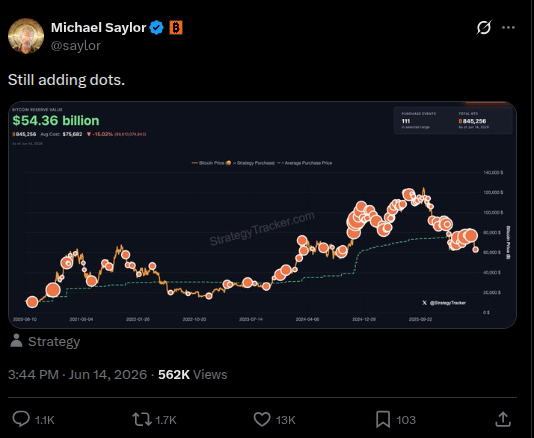
Michael Saylor took to X with a brief but loaded message directed at Bitcoin watchers. Referencing Strategy’s current holdings of 845,256 BTC at a $54.36 billion value, he closed the post with the phrase “still adding dots.” The crypto community widely interprets that phrase as a signal that another purchase is imminent.
The timing of the post comes just days after Strategy’s most recent acquisition. The company purchased 1,550 BTC on June 8, continuing a buying pattern that stretches back several years. Each purchase reinforces Saylor’s long-standing belief in Bitcoin as a superior treasury reserve asset.
Strategy’s year-to-date Bitcoin yield stands at 12.8%. That figure measures the growth in Bitcoin per share, a metric the company uses to track the effectiveness of its strategy. Despite the current unrealized loss, the yield number remains a key talking point for Strategy bulls.
Critics, however, continue to raise concerns about the company’s financial exposure. Strategy carries over $10 billion in debt and share obligations tied to its Bitcoin strategy. Any sustained drop in Bitcoin’s price could put pressure on the company’s ability to service that debt.
Strategy CEO Addresses Bitcoin Sale and Company Financing Plans
Strategy CEO Phong Le appeared on CNBC on June 11 to address questions about a recent, small Bitcoin sale. Le confirmed the company sold 32 BTC, explaining that the move was done mainly “to inoculate the market and test its internal selling process.” The transaction was also structured to generate tax losses that can offset related tax liabilities.
On the question of dividends, Le was direct. “The sale was not meant to pay dividends,” he said, noting that Strategy still has access to several other financing channels for that purpose.
The transaction represented a procedural test rather than any shift in the company’s Bitcoin-first treasury philosophy.
However, Le left the door open for future Bitcoin sales under the right conditions. He stated that “if selling Bitcoin is beneficial to common shareholders, the company may choose to do so.” That position marks a nuanced but notable clarification of Strategy’s publicly stated approach.
Meanwhile, public companies collectively hold about 5.5% of Bitcoin’s total supply. Strategy remains by far the largest corporate holder, and its continued accumulation keeps it at the center of institutional Bitcoin conversations.

TLDR:
- Bitcoin mining difficulty dropped 10.09% at block 953,568, ranking as the 11th-largest decline in network history.
- A 15% June price slide pushed hashprice below $30 per petahash, forcing older miners offline across the network.
- Public miners are unplugging rigs and redirecting power capacity toward AI and high-performance computing workloads.
- Texas miners curtailed operations due to the 4CP season, though rising hashrate suggests shutdowns were temporary
Bitcoin mining difficulty recorded its second-largest decline of 2026, dropping 10.09% at block 953,568. The adjustment pulled difficulty from 138.9 trillion to 124.9 trillion.
According to Galaxy Research, the move ranks as the 11th-biggest downward adjustment in network history. A sharp June price slide squeezed miner margins and forced hashrate offline, triggering the recalibration. The drop follows two earlier significant adjustments of 11.16% and 7.76% in February and March.
Price Pressure Forces Miners Offline
Bitcoin’s price fell roughly 15% in early June, pushing the asset below $60,000 before recovering above $64,000. The recovery came on hopes surrounding a potential US-Iran deal. The selloff, however, left a mark on mining economics before prices stabilized.
Galaxy Research explained the mechanics behind the adjustment: “A ~15% June price slide squeezed miner margins.
The epoch ran 15.6 days vs the 14-day target as hashrate came offline.” The extended epoch reflected how quickly operators powered down machines in response to tightening margins.
Hashprice, a key measure of daily mining revenue per petahash per second, dropped below $30 during the downturn.
TheEnergyMag noted that this threshold “pushes more sites closer to, or below, gross breakeven before corporate overhead, debt service, and expansion spending.” That figure does not yet account for capital spending or debt obligations.
Older-generation machines and high-cost operators faced the most pressure during this period. TheEnergyMag added that “older-generation machines and operators with higher electricity costs are more likely to be switched off when revenue falls,” while efficient fleets maintained positive margins.
Less competitive hardware became uneconomical and was powered down, contributing directly to the hashrate decline.
AI Redeployment and Texas Curtailment Add Pressure
Beyond price, a structural shift accelerated the hashrate decline. Several public mining companies have been redirecting power capacity toward AI and high-performance computing workloads.
TheEnergyMag reported that miners are “unplugging mining rigs or slowing mining growth as they retrofit sites for contracted AI/HPC use.” That shift removes Bitcoin hashrate even when the underlying power infrastructure remains active.
Texas-based miners added another layer of seasonal pressure. June marked the start of the four-coincident-peak, or 4CP, season under ERCOT rules.
Large power users in Texas face financial incentives to curtail load during peak summer intervals that set the following year’s transmission costs.
Bitcoin miners in Texas, one of the largest mining markets in North America, had strong reasons to reduce operations during potential peak windows.
TheEnergyMag noted that “the recent rebound in network hashrate suggests some of the early June reduction may have been a temporary curtailment rather than a permanent shutdown.”
The lower difficulty now benefits miners who remained online throughout the adjustment. For the current two-week epoch, each block requires less computational work to solve. Active operators will earn more bitcoin per unit of hashrate deployed as a result.

Charlie Javice leaves Manhattan federal court after being sentenced to 85 months in prison for defrauding JPMorgan Chase & Co., in New York City, U.S., Sept. 29, 2025.
Jeenah Moon | Reuters
Charlie Javice, who was convicted of defrauding JPMorgan Chase after selling her company, is seeking a pardon from the Trump administration, The Wall Street Journal reported Sunday.
Javice founded a startup called Frank that JPMorgan acquired in 2021 for $175 million.
Last year, she was sentenced to more than seven years in prison for defrauding the bank by overstating the number of customers Frank had. She is appealing the verdict.
Frank, which helped users apply for college financial aid, said it had more than 4 million customers, but it actually had fewer than 300,000, according to JPMorgan.
The Trump administration has been considering a wave of 250 pardons to mark the United States’ 250th birthday, the Journal had previously reported.
A Javice spokesman declined to comment to CNBC, and JPMorgan did not immediately respond to a request for comment on the report.
Read the full Wall Street Journal report here.
Michael Saylor rolled out a new set of Bitcoin (BTC) treasury metrics for MicroStrategy (MSTR), as critics question whether the company can keep adding leverage without hurting common shareholders.
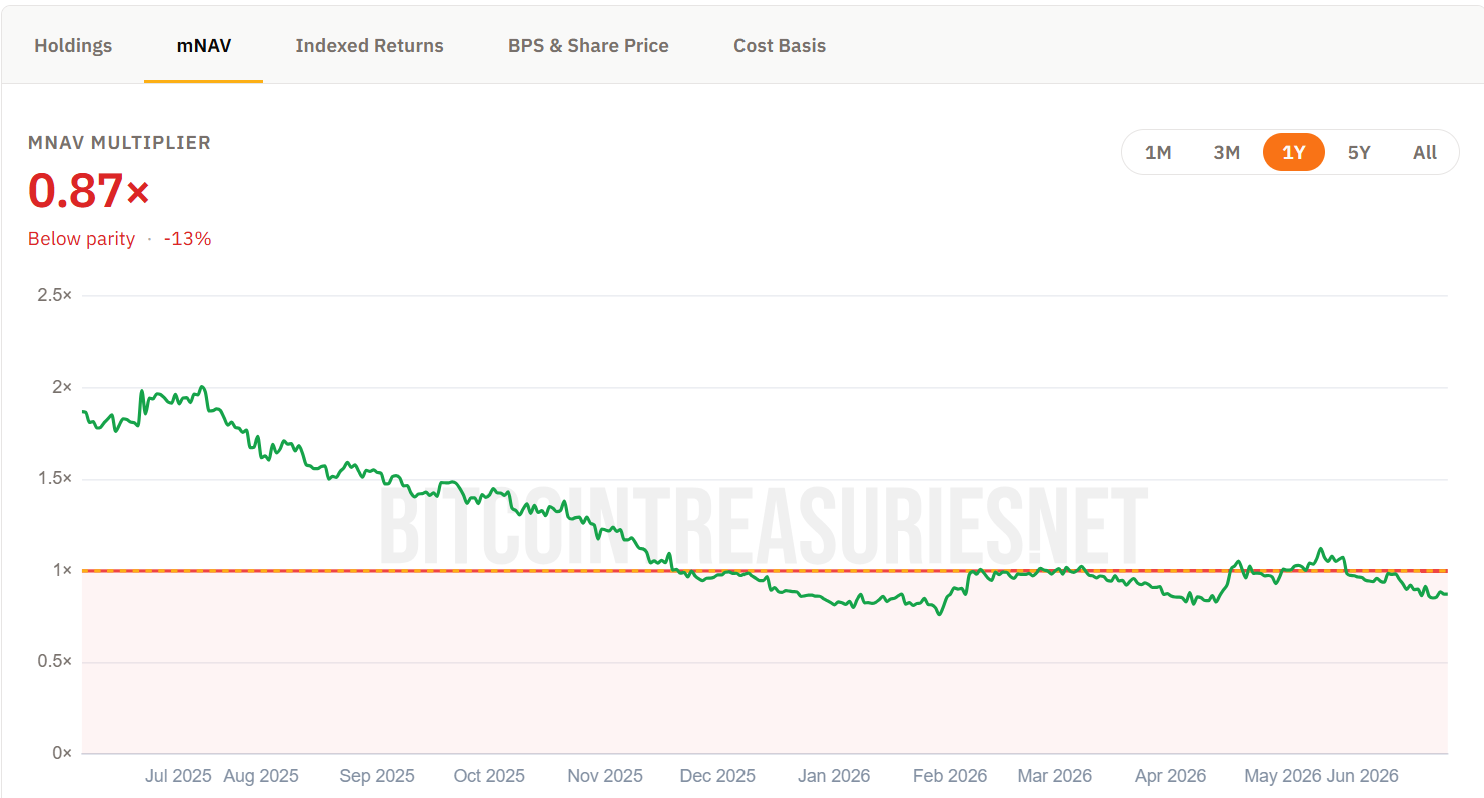
The metrics arrived during a steep pullback in MSTR. The stock now trades below the value of its Bitcoin once debt and preferred obligations are subtracted. Saylor frames the tools as innovation, while skeptics see something more familiar.

What Saylor’s New Metrics Measure
MicroStrategy already reports four KPIs to regulators. They are:
- Bitcoin Per Share
- BTC Yield
- BTC Gain, and
- BTC dollar Gain.
Effective January 2026, the company also changed how it calculates those figures for interim periods.
Michael Saylor’s latest posts go further. He added CEBE BPS, which counts Bitcoin per share after senior claims, and a concept he calls Amplification, the gap that leverage opens between the two readings.
“Not all liabilities are equal. Short-duration, high-cost liabilities can turn amplification into risk and underperformance. Long-duration, low-cost liabilities can turn amplification into common equity upside. If BTC ARR exceeds the cost of capital, a well-capitalized Bitcoin Treasury Company should outperform BTC,” the MicroStrategy chair explained.
Neither term appears in the official filings.
Strategy holds 845,256 BTC after a buying program that began in August 2020, building record Bitcoin holdings now worth about $54 billion.
Company filings put the average entry near $75,700 and the cost basis above $61 billion, leaving the stack underwater while Bitcoin’s spot price hovers near $64,000.
A first-quarter unrealized loss of $14.5 billion drove a $12.5 billion net loss, but Michael Saylor remains keen on buying.
Critics See Goalpost Moving, Supporters See Innovation
Analyst Nic Pucrin warned that Strategy trades around 84% of its gross Bitcoin value and that every option makes things worse.
Issuing stock dilutes Bitcoin per share, more preferreds add to obligations now above $13.5 billion, and selling Bitcoin risks a panic. He saw no clean exit.
“I’m genuinely concerned about Strategy’s position right now,” the Coin Bureau executive stated.
Quinn Thompson echoed the concern. He noted MSTR common trades near 0.8 times net asset value behind $8.2 billion in debt and preferred shares paying as much as 11.5%.
He said the company sells stock worth 80 cents to buy dollar bills. Former banker Pius Sprenger went after the metrics themselves.
Investor Adrian argued the KPIs track capital efficiency, not value. Strategy’s own filings agree, stating the metrics are not valuation measures and that owning a share grants no claim on its Bitcoin.
That admission frames the risks for MSTR shareholders, sharpened by Strategy’s first Bitcoin sale since 2022.
The verdict may rest on Bitcoin itself. A strong rally would validate Saylor’s leveraged Bitcoin bet.
A flat market leaves the senior claims in place. Which outcome arrives first remains the open question.
The post New MicroStrategy Bitcoin Metrics: Innovation or Goalpost Moving by Michael Saylor? appeared first on BeInCrypto.
Standard Chartered analyst Geoff Kendrick on Friday told clients that he believes crypto asset prices have seen the low in the current cycle and he is looking for confirmation in three indicators: Strategy’s reporting that it bought more Bitcoin last week; crypto exchange-traded funds (ETF) saw positive inflows on Friday; and, oil prices continue to break lower.
“We have now seen the low in crypto asset prices for the cycle. That would be USD59k for BTC (53% down from USD126k high),” Kendrick said in a brief note to clients on Friday. The biggest crypto was last trading on Sunday at about $63,704, according to CoinMarketCap data.
Depending on how investors read Strategy chief Michael Saylor’s near-weekly tweet issued earlier on Sunday, The first sign that Kendrick is watching for may have come.
“Still adding dots,” was Saylor’s message that accompanied the now-familiar dot, or bubble, chart that the Strategy executive frequently includes in his social media posts teasing forthcoming BTC purchases.
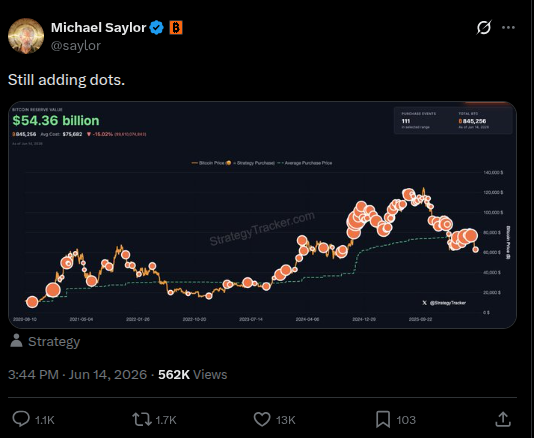
Michael Saylor’s tweet on Sunday had more than a half a million views by mid-afternoon, ET. Source: Michael Saylor on X.com
As for the other indicators of a BTC bottom that StanChart’s global head of digital assets research cited, Bitcoin ETFs on Friday posted one-day net inflow of $85.84 million, with investors moving money into five of the funds while eight of the US-traded BTC ETFs had no net change, according to data tracked by SoSoValue.com. Crude oil futures fell on Friday for the second straight day, according to Yahoo Finance data.
Kendrick closed his note with: “Winter is over. Welcome back to crypto Spring.“
Related: Bitcoin sales are necessary for Strategy’s digital credit business, Saylor says
Surprise Bitcoin sale defended as “necessary“ defense of digital credit
Strategy disclosed its first reported Bitcoin sale since 2022 in a June 1 filing with the US Securities and Exchange Commission, offloading 32 BTC in a move that appeared at odds with Saylor’s long-running “never sell your Bitcoin“ mantra. He defended that sale, saying the ability to sell the asset is necessary to continue issuing “digital credit.“
“If the company’s policy is that we won’t sell the Bitcoin, then the credit won’t have value and the equity won’t have value,” he told Cointelegraph at the BTC Prague conference.

Cointelegraph’s Ciaran Lyons (left) and Strategy founder Michael Saylor (right) at BTC Prague. Source: Cointelegraph
Saylor said that Bitcoin treasury companies must retain the ability to sell holdings when necessary to support dividend-paying securities and other BTC-backed credit products.
Magazine: Bitcoin, the ‘canary in the coal mine,’ XRP transaction demand falls 91.5%: Market Moves
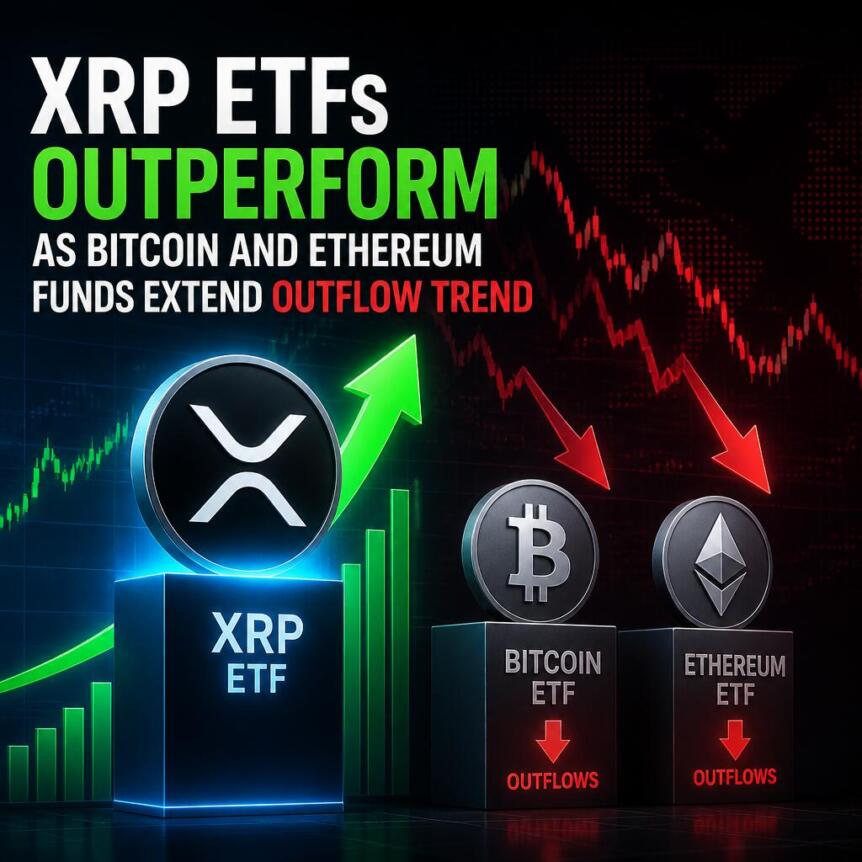
XRP ETFs added over $10 million weekly despite broad crypto fund weakness. BTC and ETH ETFs posted fresh outflows as market sentiment remained pressured. XRP held above $1.00 support even as analysts projected further downside risks.
XRP ETFs Record Fresh Weekly Inflows
Spot XRP exchange-traded funds attracted steady capital throughout the previous trading week. The products recorded inflows of $7.44 million on Tuesday and $1.19 million on Wednesday. They also added another $2.04 million on Friday. Monday and Thursday reported no notable fund activity, but the overall weekly result remained positive. As a result, weekly net inflows exceeded $10 million.
The positive trend pushed cumulative net inflows above $1.44 billion. While the figure remains below levels recorded after launch, it marked a new high. Moreover, XRP funds avoided any daily outflow during the reviewed period.
The latest figures highlighted continued demand for XRP-related investment products. In contrast, competing cryptocurrency funds struggled to maintain positive momentum. As a result, XRP emerged as one of the strongest-performing ETF segments.
Bitcoin And Ethereum Funds Face Continued Withdrawals
Bitcoin remained under pressure as ETF products extended a negative trend. Spot Bitcoin funds recorded another week of net withdrawals, losing approximately $315 million during the period.
Ethereum funds followed a similar pattern despite a stronger start to the week. Net outflows reached nearly $15 million by week’s end. As a result, both leading digital assets continued facing reduced institutional demand.
Solana-based funds also posted another week of negative flows. The withdrawals reflected broader caution across the digital asset sector, leaving fund managers in a challenging market environment.
Geopolitical developments added further pressure to cryptocurrency prices. Renewed military activity in Lebanon raised concerns about regional stability. In addition, uncertainty surrounding a proposed agreement involving Iran affected market sentiment.
Bitcoin briefly approached $64,800 before retreating below $64,000. Ethereum declined more than 1% during the session. XRP also pulled back from resistance near $1.15.
XRP Holds Key Support Despite Mixed Market Signals
XRP experienced significant volatility earlier this month during a broader crypto market decline. The token dropped to approximately $1.05 during the sharp sell-off, but it remained above the important psychological support level of $1.00.
Following the recovery, XRP climbed back toward $1.15. The rebound helped the asset recover a portion of recent losses, but it continued trading below key resistance levels.
Market analysts remain divided on XRP’s next direction. Some forecasts suggest the asset could revisit lower support zones between $0.70 and $0.90. These projections depend on broader market conditions and risk sentiment.
Other analysts maintain a more optimistic long-term outlook. They argue that sustained ETF demand could support stronger price performance over time. Furthermore, several projections point to substantially higher targets if market conditions improve.
XRP’s ETF strength has become a notable development during a difficult period for crypto funds. While Bitcoin and Ethereum products experienced persistent withdrawals, XRP funds attracted fresh capital. That contrast has placed Ripple’s token in focus as the digital asset market navigates economic and geopolitical uncertainty.

Bitcoin has a unique pattern, and it has held across every major bullish cycle since the cryptocurrency began trading near zero 16 years ago. This pattern suggests that prices could crash to at least $48,000.
The pattern works like this. Draw Fibonacci retracements from near zero – BTC began trading at $0.003 in February 2010 – to bull market peaks reached in June 2011, November 2013, December 2017, and November 2021.
The bear markets that followed these peaks saw prices crash well below the 61.8% retracement of the entire move from near zero to the bull peaks. This has happened every time, as seen in the charts below.

Four peaks, four subsequent bear markets and four breaks below the 61.8% level. No exceptions.
Now comes the current cycle. Bitcoin peaked above $126,000 earlier this year. The 61.8% retracement from near zero in early 2010 to that peak sits at $48,215. Bitcoin is trading around $64,000 today, still well above that level.
The pattern hasn’t triggered. But if it does, a crash to at least $48,215 is where the charts point.
TLDR:
- ETH is testing the $1,650-$1,700 resistance zone as traders closely monitor volume strength.
- U.S. spot Ethereum ETFs recorded weekly outflows, adding pressure to near-term market sentiment.
- Ethereum staking demand remains strong, with nearly 3 million ETH waiting to enter validation.
- The upcoming Glamsterdam upgrade aims to improve scalability while advancing network efficiency.
ETH is trading near a major resistance area while market participants monitor volume, institutional activity, and upcoming network developments.
The asset is holding around $1,674, remaining within a closely watched price range as traders assess the next directional move.
ETH continues to trade above the recent support zone between $1,500 and $1,600. At the same time, market attention has shifted toward a resistance band that could determine short-term price action.
Recent ETF outflows have weighed on sentiment, yet institutional interest in Ethereum remains active.
ETH Faces Major Resistance as Traders Monitor Volume
According to market commentary shared by crypto analyst Gerla on X, ETH is testing what was described as an ultimate resistance level. According to the post, the broader trend depends on the $1,650 to $1,700 supply zone.
The analyst noted that a breakout without strong trading volume could become a bull trap. The post also stated that Ethereum could gain momentum if it breaks out of its current triangle pattern and reclaims the 200 EMA.
According to the analysis, a move above $1,750 would leave little overhead supply, placing the $1,800 level in focus.
Meanwhile, ETH is trading near $1,674 and continues to show limited daily movement. Traders remain focused on whether buying activity can support a sustained move above resistance. As a result, volume remains one of the most closely watched indicators in the market.
Ethereum also reflects mixed market conditions. U.S. spot Ethereum ETFs recorded cumulative net outflows of $14.8 million during the week. In addition, a single-day outflow of $4.95 million was led by BlackRock’s ETHA fund.
Even so, institutional participation remains visible. Bitmine Immersion Technologies expanded its Ethereum holdings, bringing its total position to 5.54 million ETH. This activity suggests that some firms continue accumulating the asset despite recent price pressure.
Staking Demand Grows While Ethereum Prepares New Upgrades
Ethereum includes strong staking activity across the network. The validator exit queue has fallen close to zero, indicating limited withdrawal pressure from existing participants.
At the same time, the staking entry queue has grown to nearly 3 million ETH. New validators are reportedly facing waiting periods of up to 50 days before joining the network. This trend points to continued demand for Ethereum staking.
Ethereum briefly lost its position as the second-largest cryptocurrency by market value. During the week, Tether temporarily moved ahead following aggressive USDT issuance and weaker ETH prices. However, Ethereum later reclaimed its position.
Ethereum news today also focuses on future network development. The planned Glamsterdam hard fork is expected during the first half of 2026.
The upgrade aims to improve network scalability by enshrining Proposer-Builder Separation under EIP-7732 and introducing block-level access lists.
Developers are also exploring additional changes. EIP-8182 is being reviewed as a potential framework for native privacy transfers.
Meanwhile, researchers have started testing SPHINCS-, a quantum-resistant wallet standard designed to strengthen long-term security.
As ETH trades near a critical technical zone, market participants continue monitoring resistance levels, volume trends, staking demand, and network upgrades.
Ethereum news today shows that both market structure and ecosystem development remain key areas of focus for investors and traders.
Crypto World
Aerodrome to Launch Predictive Allocation, Bringing Prediction Market Dynamics to Liquidity Allocation
TLDR:
- Aerodrome will replace its weekly voting system with Predictive Allocation when it launches in July 2026.
- Participants who correctly forecast future liquidity demand will earn a larger share of protocol revenue.
- Dromos Labs founder Alex Cutler describes the mechanism as answering where capital needs to go next.
- The model targets AI-powered agents and trading firms capable of analyzing real-time market conditions.
Aerodrome, the largest DEX on Coinbase’s Base network, will launch Predictive Allocation in July. The upgrade replaces its weekly voting system with a real-time incentive model. Participants will direct liquidity toward pools they expect to generate future demand.
Those who correctly anticipate market needs earn a larger share of protocol revenue. The mechanism borrows from prediction market logic, rewarding foresight over historical performance.
Aerodrome Shifts From Historical to Anticipatory Liquidity Incentives
Aerodrome has operated since 2023 using a model that rewards token holders for directing liquidity incentives. That system helped solve a persistent DeFi problem: bootstrapping liquidity for new assets.
However, it carries an inherent limitation. Decisions rely heavily on past pool performance rather than where demand is heading.
Predictive Allocation addresses that gap directly. Instead of rewarding participants for past results, the system incentivizes forward-looking decisions.
Those who correctly forecast where liquidity will be needed earn more revenue. The protocol shifts from a reactive model to one that moves capital ahead of demand.
Alex Cutler, founder of Dromos Labs, drew a parallel to the original AMM breakthrough. “The big innovation of Automated Market Makers was answering the question: what should the price of an asset be at any particular moment?” he told CoinDesk.
“Predictive allocation is answering the question of where does capital need to go.” The distinction captures how the team views this as a new market primitive, not just a product update.
Cutler also described how capital behavior changes under this model. “The liquidity is now moving in an anticipatory way ahead of where the market is,” he said.
The system is designed to attract AI-powered agents and sophisticated trading firms. Their ability to continuously analyze conditions makes them natural participants in a real-time allocation environment.
Prediction Market Logic Meets Spot Market Infrastructure
Traditional prediction markets let traders speculate on outcomes they cannot influence. Predictive Allocation works differently.
Directing incentives toward a pool actively creates the liquidity that makes that market viable. The prediction and the capital allocation become a single, unified action.
Cutler explained what sets this apart from conventional prediction market design. “It takes that asymmetric upside and truth discovery and brings it into market creation and spot markets for the first time,” he said.
Dromos Labs calls the broader concept a “production market.” It allocates capital toward uncertain opportunities and rewards participants based on decision accuracy.
Cutler has pointed to Hyperliquid’s dominance in perpetual futures as a benchmark for what Aerodrome wants to achieve. “We want to do that for spot markets,” he said.
The DEX is positioning itself as a structural layer rather than just a liquidity venue. Predictive Allocation is central to that ambition.
Looking further ahead, Cutler sees potential well beyond exchange functionality. “The primitive is something that we think could be applied to any scenario where there is a decision that needs to be made under uncertainty,” he said.
For now, the July rollout focuses entirely on exchange operations. How the market responds will shape whether this mechanism becomes a wider DeFi standard.

City centre road closures coming soon to combat ‘Peterborough Pong’

Man United handed Marcus Rashford transfer update as Michael Carrick ‘stance’ emerges
Financial Advisors Managing $175 Trillion Are Eyeing These Crypto Sectors Instead of Bitcoin

BloFin War of Whales 2026 Grand Prix opens registration for $5M trading championship

Blockchain.com files with SEC for U.S. IPO

Israel says it has killed new Hamas military leader in Gaza City airstrikes

Bank Retirees : Inhuman Treatment and Financial Condition | Letter to Finance Minister 11 Demands

Prop Money Unboxing! #propmoneyinc #propmoney #moviemoney #movieprops #unboxing #unboxingvideos

THINGS TO DO | BLOOD MONEY | ft. Harvey Harvington & Toby Harvington
-

 NewsBeat7 days ago
Alexander Zverev wins the French Open to finally earn a 1st Grand Slam title
-

 Crypto World7 days ago
Anatomy of the June crypto crash: Fed, Iran, Saylor
-

 Crypto World3 days ago
Oppenheimer backs SpaceX as $70 billion retail frenzy builds
-

 Crypto World3 days ago
Markets Rally as SpaceX IPO Looms Amid Iran Tensions and Inflation Surge
-

 Sports6 days ago
FIFA WC 2026 Group C: Morocco, Scotland challenge Brazil’s hunt for glory | FIFA World Cup 2022
-

 Business7 days ago
High Stakes for Wembanyama as New York Pushes for 3-0 Lead
-

 Tech7 days ago
Notion restores access to Anthropic after service disruption
-
 Crypto World6 days ago
Eli Lilly (LLY) Stock Surges 4% Following Breakthrough Sleep Apnea Trial Results
-

 Fashion2 days ago
Weekend Open Thread: Tuckernuck – Corporette.com
-

 Business6 hours ago
No Jackpot Winner as $257 Million Prize Rolls Over to $269 Million Monday Draw
-
 Sports5 days ago
Bangladesh beat Australia after 20 years in ODIs, register only their second win over six-time world champions | Cricket News
-

 Tech2 days ago
NanoClaw integrates JFrog registries to secure AI agent downloads
-

 Crypto World2 days ago
Bitget enters Argentina’s regulated crypto market through PSAV registration
-

 Tech2 days ago
This Week In Security: Microsoft On Microsoft, Register Your Domains, Linux On ARM, And FreeBSD Joins The File Cache Club
-

 Politics3 days ago
Politics Home | Healey Resignation Is “Colossal Failure Of Government”, Says Former Labour Defence Secretary
-

 Sports3 days ago
First Time Since 1971: Australia Register Historic Low In ODI Cricket
-
 Entertainment3 days ago
Donnie Wahlberg & More Heat Up Las Vegas at Circa’s Barry’s Downtown Prime
-

 Entertainment5 days ago
The Ryan Gosling True Crime Thriller On Netflix That Gets Even Stranger, Stream It Now
-
 Tech3 days ago
Opendoor Ends India Operations, Fueling a Bigger Conversation About AI and Outsourcing
-

 Sports7 days ago
Ginebra moves within two more wins of first PBA title in three years
You must be logged in to post a comment Login