

Crypto World
Why Some Players Are Exploring ZunaBet


Caesars and DraftKings are two of the most recognised names in regulated US online gambling. Between them they cover sports betting, online casino, and loyalty programs that tap into decades of brand equity. For millions of American players they represent the default choice. But in 2026 a growing segment of players — particularly those operating in crypto — is looking beyond both of them. ZunaBet is the platform showing up in those conversations, and understanding why requires an honest look at what the established names offer and where they fall short.
Caesars: The Land-Based Giant That Went Digital
Caesars brings more history to online gambling than almost any other operator. The Caesars Palace name carries weight built over decades of land-based casino dominance, and that brand equity transferred meaningfully into the online space when the platform launched. Players who know Caesars from Las Vegas or Atlantic City arrive with a level of trust that most purely digital operators spend years trying to establish.
The sportsbook covers all major US sports with competitive odds and a clean interface. The casino product is substantial — slots, table games, and live dealer content delivered through a polished platform that reflects the premium positioning the Caesars name demands.
Where Caesars genuinely differentiates is through Caesars Rewards. The ability to earn online gambling activity that contributes to real-world benefits — hotel stays, dining, entertainment at Caesars properties — is a meaningful loyalty feature for players who engage with those properties. For a specific type of high-value player, the crossover between online and physical creates genuine value that purely digital operators cannot replicate.
The limitations are the same ones that define every licensed US operator. Fiat-only payments. Banking-dependent withdrawals. Geographic restrictions based on state licensing. Crypto is not part of the Caesars online product in any meaningful sense, and the broader loyalty program, while strong for resort guests, operates on the same opaque points model as most traditional operators for everyone else.
DraftKings: The Daily Fantasy Pioneer That Built a Full Platform
DraftKings took a route to online gambling similar to FanDuel — daily fantasy sports as the entry point, sportsbook and casino as the expansion. It executed that expansion well. The sportsbook is competitive with strong market coverage, useful same-game parlay functionality, and a mobile app that performs reliably for US sports bettors.
The casino product has grown steadily alongside it. Slots, live dealer tables, and RNG games are available in licensed states through an interface that maintains the sporty, high-energy aesthetic DraftKings has cultivated throughout its products.

DraftKings Rewards operates on a tiered points system — Silver, Gold, Platinum, Diamond, and Diamond+ — with benefits that include site credit, free bets, and access to higher-tier perks as activity increases. It’s a reasonably structured program that rewards regular players, but like most traditional loyalty schemes, the actual return percentage on play is not made explicit. Players accumulate without a clear picture of what they’re genuinely receiving back.
Payments run through standard US-regulated channels. Cards, bank transfers, PayPal, and similar methods cover deposits and withdrawals. Crypto is not a meaningful part of the DraftKings payment infrastructure. For players who want to move funds on-chain, the platform simply isn’t designed for that.
What Both Platforms Share — and Where the Gap Opens
Caesars and DraftKings are both well-built, well-regulated products operating in the licensed US market. Their shared limitations aren’t failures — they’re structural features of the regulatory environment they operate in. State-by-state licensing, fiat payment requirements, and KYC processes tied to traditional financial systems are the price of admission for regulated US gambling operators.
That framework serves the majority of their existing user base well. It does not serve the growing number of players who hold crypto, expect near-instant withdrawals, and want a loyalty program that gives them a clear, honest return on their activity. For that player, the Caesars and DraftKings conversation is happening on the wrong platform entirely.
The question for that player in 2026 isn’t which of these two to choose. It’s why ZunaBet has become the more relevant conversation.
ZunaBet: The 2026 Platform Built for the Next Generation of Players
ZunaBet launched in 2026, operated by Strathvale Group Ltd under an Anjouan gaming license, with a team carrying over 20 years of combined industry experience. The platform didn’t arrive as an experiment. It launched as a complete, fully built crypto-first gambling destination designed around a player that the traditional US operators were never going to serve.
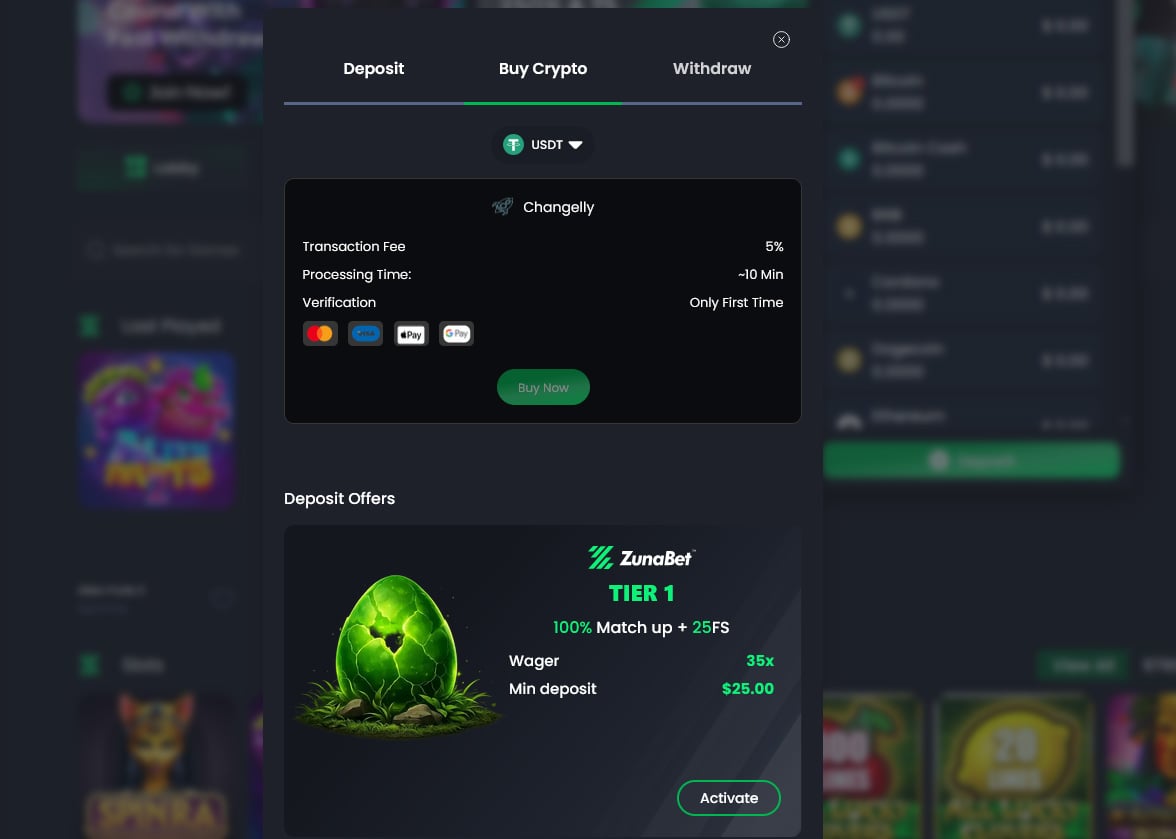
Crypto is the foundation, not the feature. Over 20 digital assets are supported — BTC, ETH, SOL, USDT across multiple chains, XRP, ADA, DOGE, and more. No platform processing fees. Withdrawals at network speed. The payment layer is built around digital assets as the primary method of transaction, not accommodated reluctantly for a niche audience. For players whose financial default is on-chain, ZunaBet connects to how they actually operate in a way that neither Caesars nor DraftKings ever will.
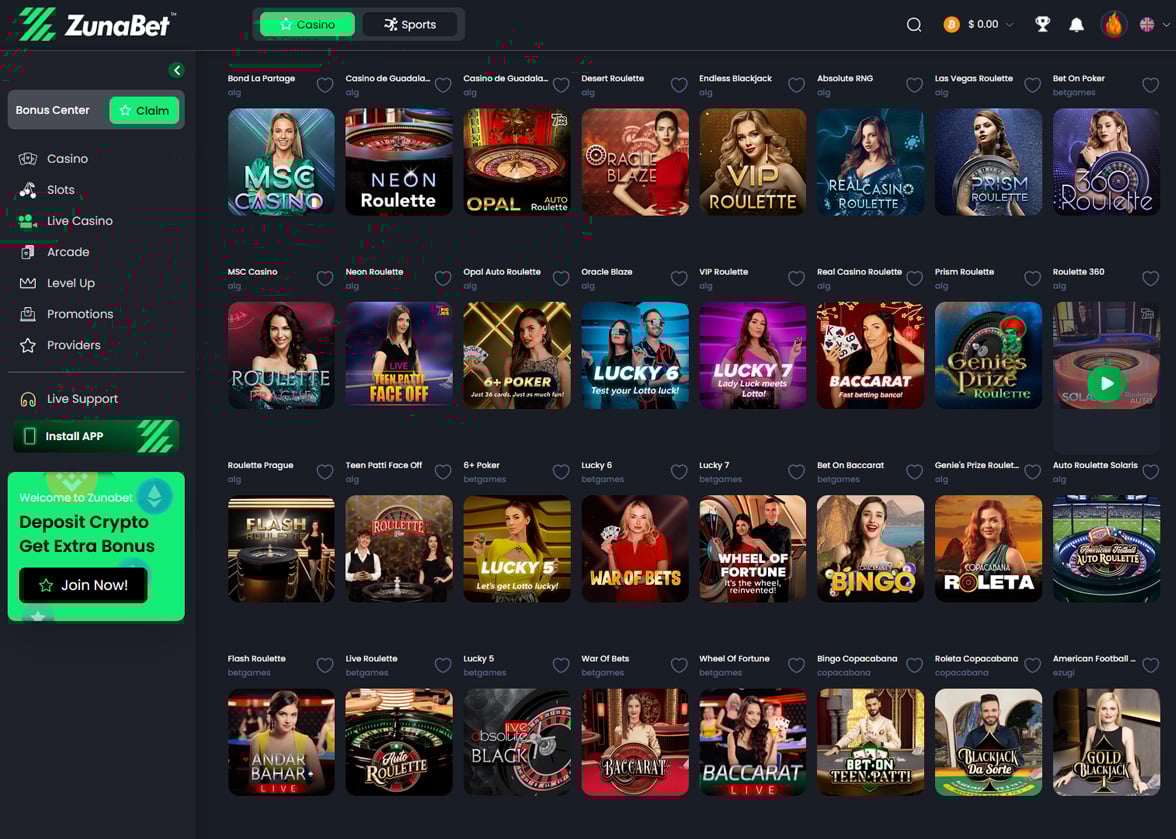
The game library is one of the most substantial in the crypto casino space — over 11,000 titles from more than 60 providers. Pragmatic Play, Evolution, Hacksaw Gaming, Yggdrasil, and BGaming are among the suppliers in a catalogue covering slots, live dealer content, and RNG table games at a scale that places ZunaBet among the larger libraries in the broader market, not just within the crypto category. For players who want genuine variety, this is a library built to deliver it.
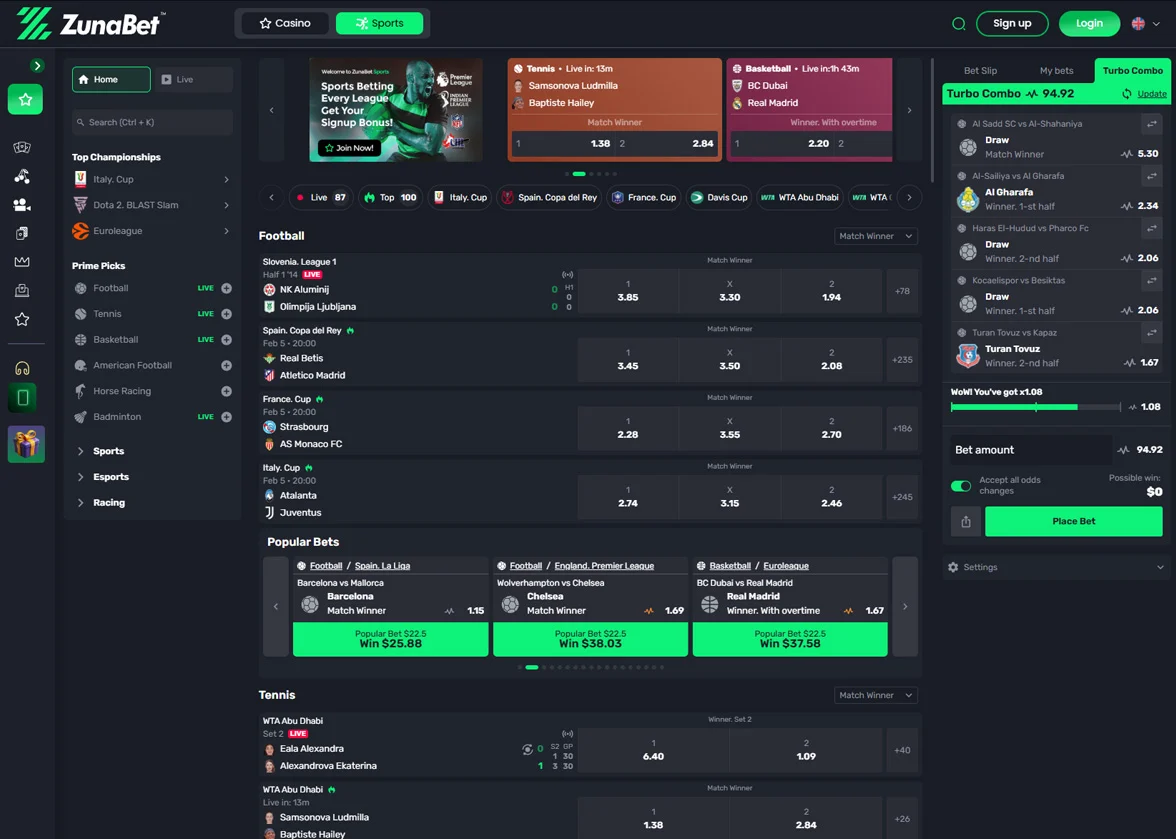
The sportsbook is fully integrated and properly built. Major global sports, US leagues, and a complete esports section covering CS2, Dota 2, League of Legends, and Valorant sit alongside virtual sports and combat sports markets. ZunaBet is a genuine hybrid platform — casino, sportsbook, and esports under one roof with crypto payments running throughout. That combination in a single crypto-native product is what makes it a credible alternative rather than just another option.
Welcome Bonus: $5,000 and 75 Free Spins Across Three Deposits
ZunaBet’s welcome package totals up to $5,000 plus 75 free spins across the first three deposits. The first deposit gets a 100% match up to $2,000 with 25 spins. The second gets 50% up to $1,500 with 25 spins. The third gets 100% up to $1,500 with the final 25 spins.
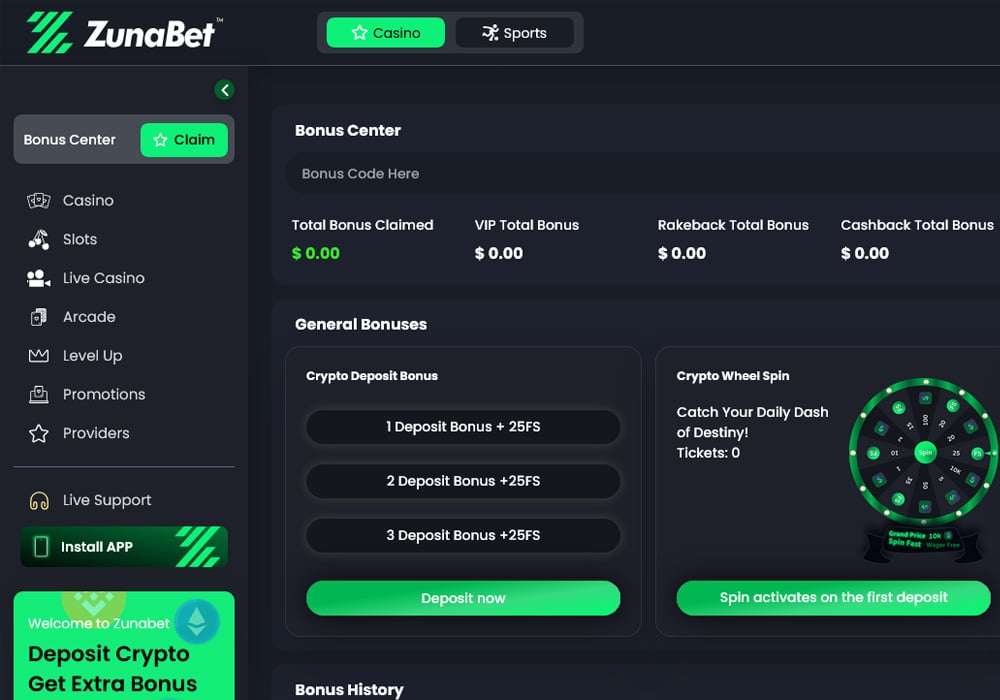
Spreading the offer across three deposits rather than front-loading a single large match is a considered structure. It extends genuine value over an onboarding period, suits players depositing incrementally in crypto, and rewards sustained engagement rather than a single large deposit made to capture a bonus before moving on. For regular players, it integrates naturally into how a platform gets used over time.
Loyalty: Rakeback vs Points — The Transparency Gap
Caesars Rewards has genuine value for resort customers. DraftKings Rewards operates a tiered points system with reasonable structure. Both follow the same fundamental model — points accumulate, the platform controls the conversion rate, and the actual return percentage is never clearly stated. Players earn without a precise picture of what they’re getting back.
ZunaBet’s Zuno loyalty program operates on rakeback with published rates at every tier. Six levels — Squire at 1%, Warden at 2%, Champion at 4%, Divine at 5%, Knight at 10%, and Ultimate at 20% — each carry a fixed, stated percentage return. No conversion table to decode. No ambiguity about what a player earns back as they move through the tiers. The number is there from the start.
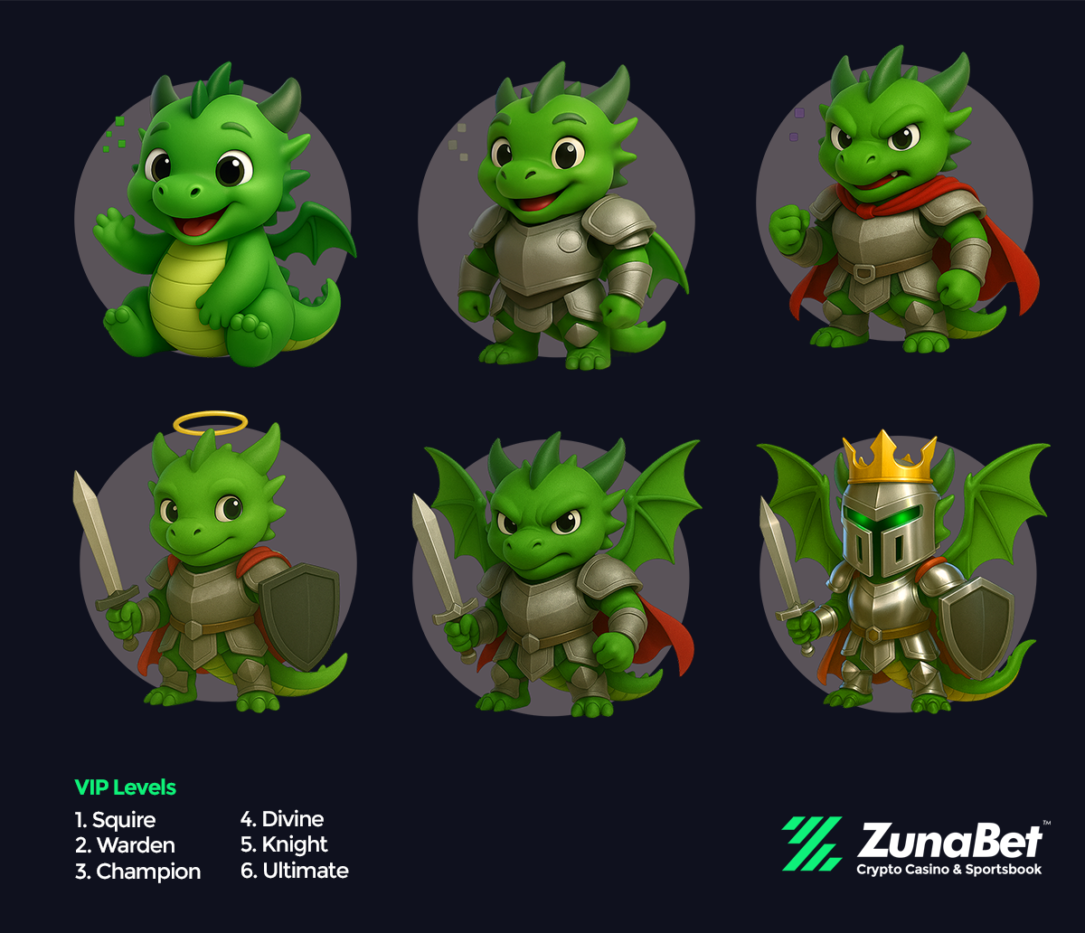
Beyond rakeback, tier progression unlocks up to 1,000 free spins, VIP club access, double wheel spins, and a gamified dragon evolution experience built around the platform mascot Zuno. The combination of complete transparency and genuine engagement mechanics produces a loyalty structure that rewards players financially and experientially in ways the traditional programs simply don’t attempt.
The Player Profile That’s Moving
The player leaving the Caesars and DraftKings conversation isn’t dissatisfied with those products necessarily. The products work for what they are. The shift is happening because a growing number of players no longer fit the profile those products were designed for.
They hold crypto as a default. They want withdrawal speeds that match network performance, not banking hours. They want to bet on esports alongside traditional sports. They want a loyalty program that states its return rate upfront. And they want a game library measured in thousands rather than hundreds. ZunaBet delivers all of that from a single platform. For that player, it represents what online gambling looks like when it’s built around their actual needs rather than the requirements of a legacy financial system.
The Bottom Line
Caesars is the right choice for players who value the land-based brand crossover and the resort loyalty benefits that come with it. DraftKings is the right choice for US players who want a competitive sportsbook with a clean casino product attached. Both are legitimate, well-regulated platforms for the audience they were built for.
ZunaBet launched in 2026 for a different audience entirely. Over 20 cryptocurrencies, 11,000+ games, a complete sportsbook with full esports coverage, a $5,000 multi-deposit welcome bonus, and a rakeback loyalty program reaching 20% at the top tier. For the new generation of players who live in crypto and expect more from a platform than the traditional names were ever designed to offer — ZunaBet is the platform that was built for them.
Disclaimer: This is a Press Release provided by a third party who is responsible for the content. Please conduct your own research before taking any action based on the content.



It’s safe to say that the world’s largest altcoin has underperformed in recent weeks as each attempt for a breakout was stopped at $2,400, and the subsequent rejection has pushed it further south. What’s particularly worrying is that ETH dipped below the crucial $2,200 support after today’s drop, and its behavior against bitcoin is even more painful.
In fact, the ETH/BTC pair just dropped to a 10-month low at under 0.028. Recall that ETH traded at over 0.042 BTC in September last year, shortly after its all-time high against the greenback, but it has been mostly downhill since then. Popular analyst Ted Pillows said this decline occurred even as Tom Lee’s BitMine continues to spend millions of dollars each week to accumulate more tokens.
ETH/BTC has hit a new yearly low.
This is despite Tom Lee buying $200M+ in $ETH every week. pic.twitter.com/PpNyUcgACp
— Ted (@TedPillows) May 16, 2026
ETH to Exchanges
Ali Martinez cited data from CryptoQuant, which could result in even more price declines for the altcoin. He noted that over 500,000 ETH had been sent to trading venues in the past week alone. In terms of USD value, this substantial stash is worth over $1.1 billion. Such large transfers could intensify the immediate selling pressure as traders usually send tokens to exchanges if they want to cash out.
Martinez warned recently that the TD Sequential, a popular indicator used to showcase whether an asset has exhausted its move in either direction, had flashed a sell signal for ETH. He believes the altcoin could be on the verge of a more painful decline, and outlined a worst-case scenario of a dump below $1,100.
On The Plus Side…
On the opposite side stands Satoshi Flipper, another popular analyst, who recently said ETH could bounce from the lower boundary of the ascending triangle, diagonal support it’s currently testing on the 8-hour chart.
At the same time, Lookonchain outlined an Ethereum OG who has returned to the scene. The unknown investor had received over 11,000 tokens at prices of under $3.50 (yes) 10 years ago, sold some for more than $30 million last year, and has now started buying again.
The on-chain analytics company said they spent $4.3 million in USDC to buy 1,951 ETH at today’s prices of around $2,180.
The post ETH Hits Yearly Low Against BTC as Investors Flood Exchanges appeared first on CryptoPotato.
Crypto World
Jump Crypto’s ‘Firedancer’ is taking a slow and steady approach to its long-awaited Solana infrastructure rollout


In an interview with CoinDesk, the lead engineer at Firedancer gives an update on how the new client, also known as a software, is fairing in the Solana ecosystem.


The crypto market lost nearly $90.3 billion in value in a single hour on May 16, pushing Bitcoin to $77,678 and triggering mass liquidations across the board.
Summary
- PPI inflation data came in 6% above forecast, killing rate-cut expectations and sending risk assets into a sharp sell-off.
- BlackRock’s IBIT shed $136 million as U.S. spot Bitcoin ETFs posted $290 million in outflows, ending a six-week inflow streak.
- Nearly 154,000 traders were liquidated in 24 hours, wiping out roughly $696 million from the derivatives market.
The crypto market shed $90.3 billion in market cap in under an hour on May 16, with total valuation dropping 3.37% to around $2.59 trillion. Bitcoin (BTC) fell to $77,678 while Ethereum (ETH), XRP (XRP), Solana (SOL), and Dogecoin (DOGE) each posted losses between 3.5% and 6%.
The sell-off was not crypto-specific. It was driven by a macro repricing event that spilled across global risk assets.
New U.S. PPI data released this week came in roughly 6% above analyst forecasts, the highest reading since December 2022, according to official data. April CPI had already printed at 3.8%. Together, the back-to-back inflation prints effectively ended near-term hopes for Federal Reserve rate cuts, with CME FedWatch showing more than 44% probability of a rate hike by December. Traders sold risky assets fast.
Bitcoin has recently tracked the iShares Russell 2000 ETF (IWM), which follows small-cap U.S. stocks that are highly sensitive to rate expectations. As small-caps fell sharply on the inflation data, Bitcoin followed without delay.
Institutional selling compounded the macro hit
U.S. spot Bitcoin ETFs recorded $290 million in outflows on the day, ending a six-week inflow streak. BlackRock’s IBIT led withdrawals with roughly $136 million in redemptions. Total Bitcoin ETF outflows over the past week reached approximately $1.15 billion, according to SoSoValue data.
Analyst Ali Martinez posted on X that Bitcoin miners sold close to 800 BTC worth roughly $64 million over the four days prior, adding further supply pressure at exactly the wrong moment. “This increase in selling pressure could soon impact price action,” Martinez warned.
The combination of macro-driven selling and institutional redemptions removed two major demand layers simultaneously, leaving the market exposed to leveraged long positions built during the recent inflow streak.
Liquidation cascade accelerated the decline
Once spot prices began falling, the derivatives market amplified the move. According to CoinGlass data, nearly 154,000 traders were liquidated over 24 hours, wiping out roughly $696 million from the derivatives market. Bitcoin liquidations alone surged 125% to over $235 million. Total crypto derivatives open interest fell more than 25% as traders rapidly exited leveraged positions.
Crypto trader Ted Pillows warned on X that Bitcoin has broken below a major multi-month ascending channel on the daily timeframe, with two consecutive red candles confirming the breakdown. “If BTC loses the $78,000 level here, it could drop quickly to $74,000–75,000,” he said.
Analysts say the technical break, if sustained, opens the door to a deeper correction, with the $70,000–$68,000 region cited as the next meaningful downside target.
Altcoins took heavier losses than Bitcoin. XRP, Solana, BNB, Hyperliquid, Zcash, Dogecoin, Chainlink, and Cardano all posted steep declines as market sentiment shifted decisively risk-off, consistent with the broader pattern seen each time macro data has turned hawkish this year.
Crypto World
Stablecoin Infrastructure Has Gone Regional: The $400B Map Reshaping Cross-Border Payments

TLDR:
- Stablecoin payment volume reached $400B in 2025, with 60% of transactions driven by B2B activity.
- Bridge covers 35 countries but holds zero local rail presence in APAC, exposing critical coverage gaps.
- Conduit operates at roughly 10 bps on FX, compared to Bridge’s fee of up to 1% per transaction.
- Fasset hit $32B annualized across 50-plus corridors after securing a $51M Series B funding round.
Stablecoin payment volume reached $400 billion in 2025, with 60% driven by B2B transactions. Yet many fintechs still rely on a single US-based provider to cover global corridors.
The reality is that stablecoin infrastructure has splintered into regional specialists, each with deep local rail integrations, mobile money networks, and central bank relationships.
For cross-border operators, knowing who controls each corridor is now more critical than ever.
Regional Players Are Outpacing US-Centric APIs
The stablecoin orchestration landscape has shifted dramatically over the past three years. What once existed as a few US-based APIs has grown into a dense network of regional operators.
Each corridor now has its own pure-play infrastructure, built by teams with firsthand knowledge of local payment realities.
In Europe, MiCA-native providers like BVNK are processing $30 billion annualized. That figure reflects how quickly regulated regional operators have gained ground.
Meanwhile, in Latin America, providers like Bitso and dLocal have built around local systems such as PIX and SPEI.
As industry observer Gaspard Lezin noted on X, “every major payment corridor has its own pure-play, built by people who actually understand local rails, mobile money, central bank relationships, and FX realities on the ground.”
Africa presents a strong case for mobile money-stablecoin integration. Providers like Yellow Card, Conduit, and Kotani Pay are operating where traditional banking infrastructure remains thin. Conduit alone covers 23 African countries, offering substantially lower fees than global competitors.
Cost and Coverage Gaps Are Driving the Shift
Fee structures are one of the clearest reasons businesses are moving away from single-provider models. Bridge charges up to 1% on FX transactions, while Conduit operates at approximately 10 basis points. That difference compounds significantly at scale for B2B treasury teams.
Coverage gaps are equally telling. Bridge, which covers 35 countries, has no local rail presence in APAC. By contrast, StraitsX has processed roughly $30 billion in cumulative volume across Asia.
Fasset recently hit $32 billion annualized across 50-plus corridors in Asia, Africa, and the Middle East following its $51 million Series B.
In the Asia-Pacific region, Reap was acquired by Kraken for $600 million, further validating the region’s growth trajectory. FOMO Pay, Triple-A, and PhotonPay are also operating with deepening local integrations across the region.
For businesses managing multi-corridor supplier payments, the practical answer is a regional stack. A B2B treasury team paying suppliers across Lagos, São Paulo, Jakarta, and Dubai requires different infrastructure in each market.
Aggregation layers like Borderless.xyz are emerging to stitch these regional providers into a single API, reducing operational complexity without sacrificing local depth.

Spot Bitcoin spot exchange-traded funds (ETFs) finished the week with $1.0 billion in net outflows, ending a six-week streak of inflows that had drawn roughly $3.4 billion in total. The week began with faint optimism as funds posted modest inflows, but selling pressure intensified through midweek, culminating in the heaviest outflow on Wednesday. Ether spot ETFs drove a parallel pattern, registering five straight days of red ink and erasing about $254 million from the sector’s assets.
According to SoSoValue, Monday saw a modest inflow of $27.29 million into spot Bitcoin ETFs. On Tuesday, investors pulled $233.25 million, and Wednesday delivered the largest single-day hit with outflows of $635.23 million. A temporary reprieve came on Thursday with inflows of $131.31 million, yet Friday reversed that progress, with another $290.42 million exiting the products. The week closed with net outflows totaling exactly $1 billion. The slide marks a pronounced reversal from the prior six weeks, during which spot BTC ETFs attracted steady inflows, the strongest being the week of April 17 at $996.38 million. By week’s end, total net assets across spot Bitcoin ETFs stood around $104.29 billion, with cumulative net inflows across all products at $58.34 billion.
On the Ether ETF front, the five-day pattern was uniformly negative. Outflows hit every trading day, led by Tuesday’s $130.62 million, followed by $65.65 million on Friday, $36.30 million on Wednesday, $16.89 million on Monday, and $5.65 million on Thursday. The cumulative effect left Ether ETF assets at approximately $12.93 billion by week’s end, with a five-day net decrease of about $254.46 million.
The latest flow data arrives amid broader market shifts that analysts say are shaping risk appetite for crypto products. In a note, the research firm Bitunix described a pronounced capital rotation toward the AI growth narrative and the institutionalization of crypto assets. The backdrop includes a rally in major tech beneficiaries such as NVIDIA, Google, and Apple, with AI-related players like Cerebras spiking intraday on its IPO debut. The dynamic underscores how macro themes are increasingly filtering into crypto allocation decisions, even as spot crypto prices remain volatile.
Key takeaways
- Spot Bitcoin ETFs posted $1.0 billion in weekly net outflows, ending six consecutive weeks of inflows that had accumulated about $3.4 billion.
- Daily flow pattern for BTC ETFs showed modest Monday inflows, heavy midweek outflows peaking Wednesday, a Thursday rebound, and continued Friday selling.
- Total spot BTC ETF assets stood at roughly $104.29 billion, with cumulative inflows across all related products at about $58.34 billion.
- Ether spot ETFs faced a five-day stretch of outflows totaling about $254 million, reducing assets to around $12.93 billion.
- Macro themes—AI-driven capital rotation and evolving crypto regulation—are shaping near-term risk appetite, with regulatory developments and price action providing directional signals.
Markets in the crosswinds of AI and regulation
Beyond the ETF flows, investors have been weighing the interplay between technology-driven narratives and policy shifts. Bitunix’s note highlights a sentiment shift toward AI-related growth and the institutionalization of crypto markets, a combination that could sustain capital inflows or trigger selective reallocation depending on macro data and tech sector momentum. In the broader stock space, several AI-heavy names pushed toward fresh highs, while select AI-chipmakers demonstrated notable intraday strength on debut, illustrating the sector’s capacity to influence crypto risk sentiment through cross-asset dynamics.
On the regulatory front, developments such as the CLARITY Act have been closely watched. The bill is widely viewed as one of the most significant pieces of crypto market structure legislation in the United States. Following the Senate Banking Committee’s movement on the measure, Coinbase shares rallied as investors priced in potential regulatory clarity, and Bitcoin hovered near the $82,000 level. Analysts caution that Bitcoin’s price action remains sensitive to macro liquidity and the ongoing tug-of-war between AI-driven demand themes and regulatory framing. Traders also noted a cluster of short liquidity in the $82,400–$82,600 range with the $80,000 level identified as a critical support anchor to monitor in the near term.
These developments sit alongside ongoing policy debates and market structure reforms that could influence ETF flows and crypto trading volumes in the coming weeks. For instance, coverage of regulatory milestones continues to shape investor expectations and the perceived safety of crypto exposure within diversified portfolios. Related reporting has highlighted how public filings and regulatory chatter can translate into quickly shifting trading dynamics, including moves in large-cap crypto equities alongside the sector’s ETF products.
As traders digest these crosscurrents, the market will be watching for whether inflows resume or outflows intensify, and for more concrete signals about how policymakers intend to balance investor protection with sector growth. The coming weeks could reveal whether current price levels are a temporary pause in a broader uptrend or a prelude to renewed volatility driven by macro data, regulatory decisions, or shifts in the AI narrative that continue to reverberate through risk markets.
Further context on regulatory developments and market reactions can be found in related coverage, which notes ongoing attention to the CLARITY Act and its potential implications for crypto market structure and investor access.
Looking ahead, investors should watch how liquidity dynamics evolve around key support levels for spot BTC and how the evolving regulatory environment affects appetite for crypto exposure within traditional portfolios. The balance of AI-driven demand, geopolitical considerations, and policy clarity will likely continue to shape ETF flows and price action in the weeks ahead.
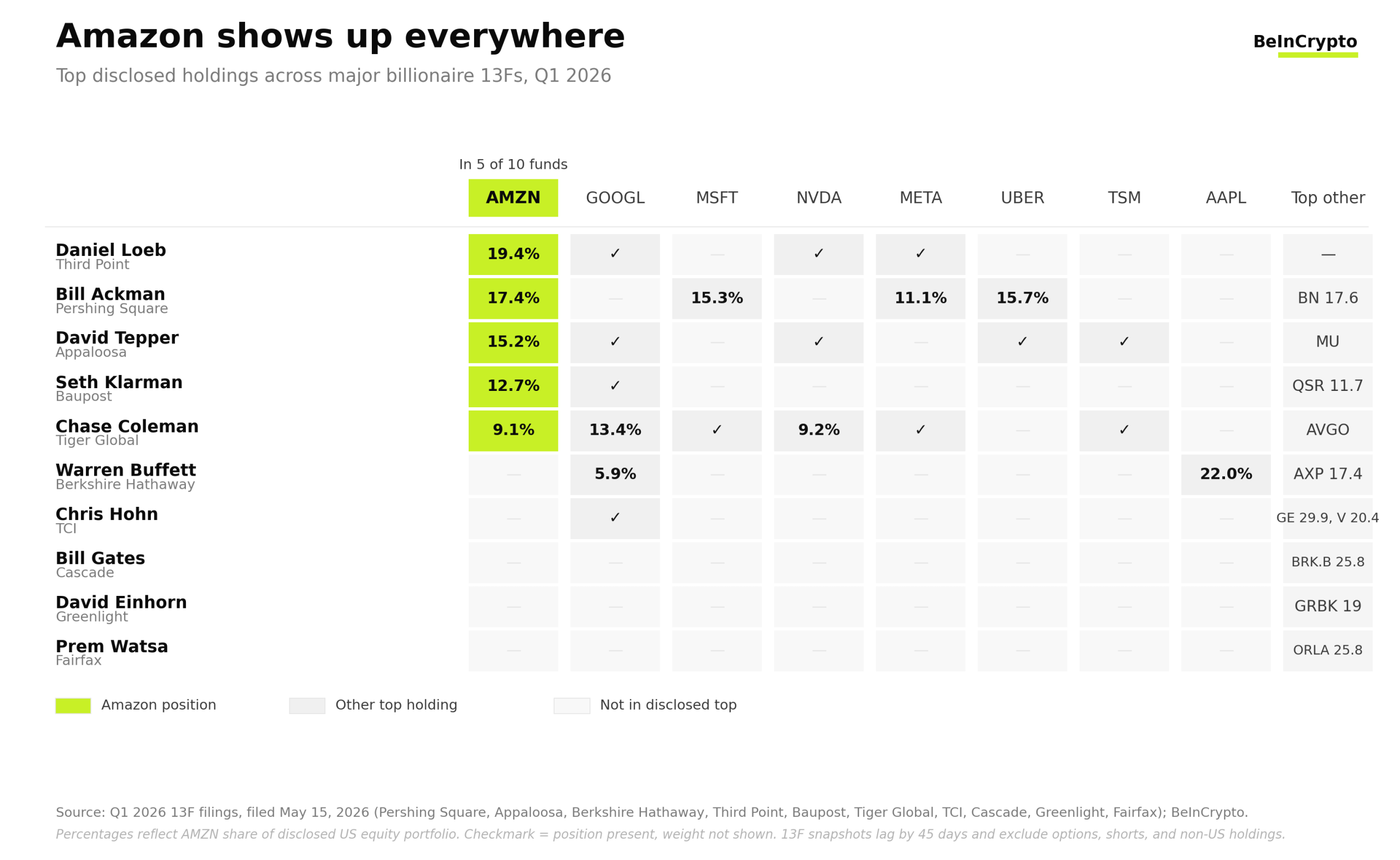
Several of Wall Street’s most-watched billionaires converged on a single conviction trade in their Q1 2026 13F filings. Bill Ackman, David Tepper, and other managers each boosted their stakes in Amazon (AMZN).
The disclosures show the e-commerce and cloud platform topping multiple hedge fund books. Amazon emerged as the most repeated overweight name across major filings.
Ackman and Tepper Lead the Amazon Add
Pershing Square added 1.84 million Amazon shares in the first quarter. The buy lifted Ackman’s position by roughly 19%, according to the fund’s filing.
Amazon now sits among its largest disclosed holdings alongside Brookfield, Uber, and a newly initiated Microsoft stake.
David Tepper’s Appaloosa Management nearly doubled its Amazon position during the quarter. The 98% increase made the stock the firm’s largest disclosed equity holding, valued at roughly $900 million.
The fund also boosted Uber by 242% and added to Taiwan Semiconductor while trimming Nvidia, Alphabet, and Alibaba.
Hedge funds run by Daniel Loeb, Seth Klarman, and Chase Coleman also list Amazon among their top US holdings.

The overlap reinforces a shared positioning theme. Amazon’s appeal rests on resilient e-commerce cash flow, AWS cloud demand tied to AI buildouts, and accelerating digital ad revenue.
AI and Quality Names Anchor the Rest
Beyond Amazon, the filings show a broader tilt toward AI-adjacent platforms and durable compounders. Tepper, Coleman, and Loeb hold Alphabet, Nvidia, Meta Platforms, and Taiwan Semiconductor.
Warren Buffett’s Berkshire Hathaway made an outsized purchase of Alphabet and trimmed its Bank of America stake. Bill Gates and Chris Hohn cluster in industrials, railways, and quality payments names like Visa.
The 13F snapshots lag by 45 days. They also exclude options, short positions, and non-US holdings, so consensus reads should be paired with live price action.
Notwithstanding, the Amazon trade persisting into Q2 hinges on cloud capex guidance and advertising trends. The broader rotation between AI growth and value names also matters.
The post Wall Street Billionaires Make Amazon Their Top AI Trade appeared first on BeInCrypto.
Crypto World
Yaroslav Ivanov at Consensus 2026: Crypto’s Institutional Era Became Impossible to Ignore
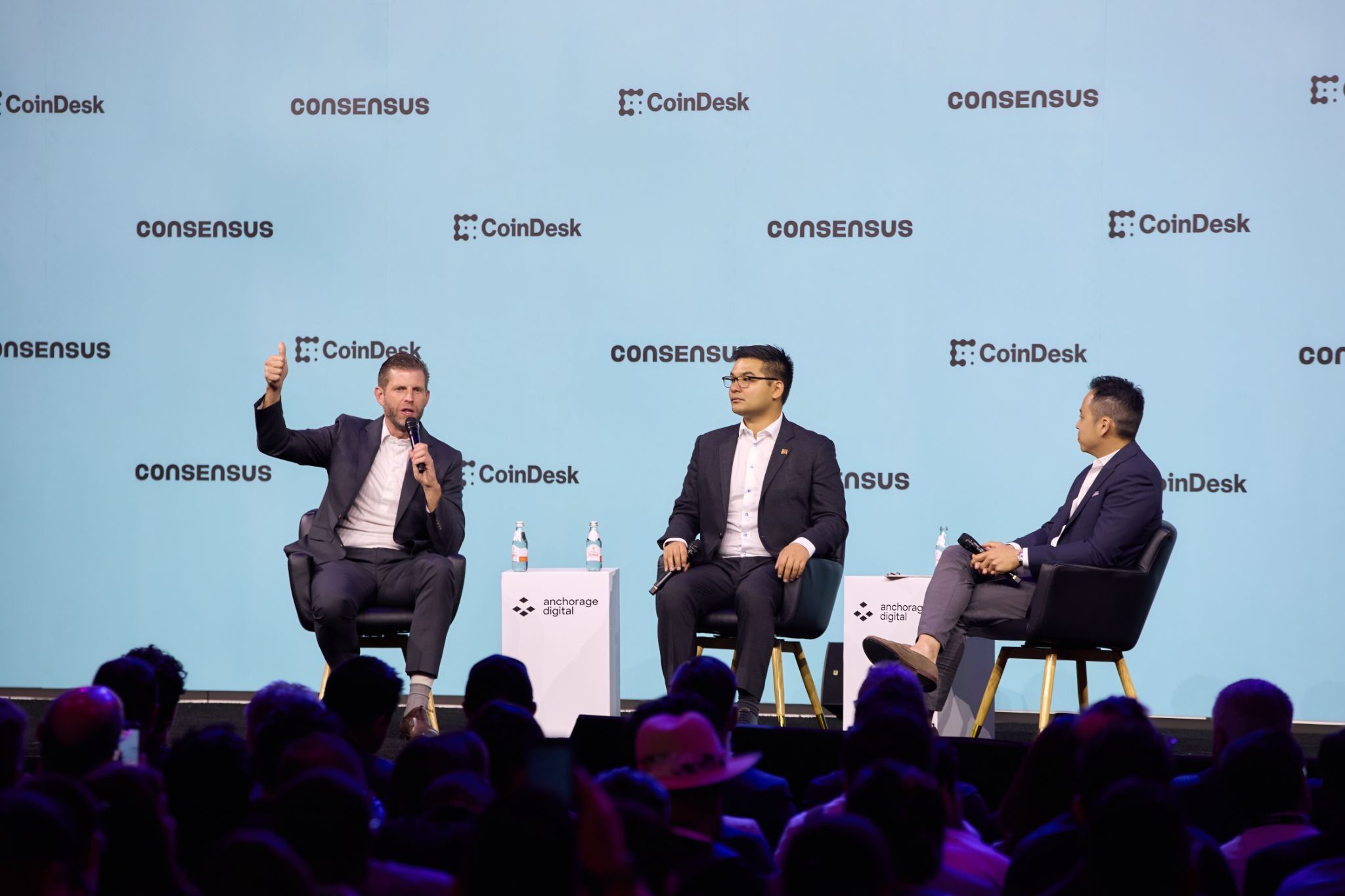
Having worked across blockchain and digital asset ecosystems since 2015, Yaroslav Ivanov, Co-Founder and Chief Visionary Officer of ALTA Blockchain Labs, has witnessed crypto evolve from a niche movement into a sector increasingly intertwined with global finance, a shift that became especially evident at Consensus Miami 2026.
Ivanov is a strategic executive working closely with Web3 founders through ALTA Blockchain Labs, advising on tokenization and liquidity strategy, go-to-market execution, and ecosystem development.
Through his work with both founders and institutional investors, he observes how capital flows and builder sentiment evolve across market cycles. The event brought together senior voices from digital assets, banking, asset management, technology, and policy, with ALTA Blockchain Labs participating as a media and community partner of Consensus 2026.
ALTA sits at the layer where Web3 projects transition into broader liquidity markets.
For Ivanov, the atmosphere showed how much the industry has changed. The early crypto conference image of retail excitement, experimental culture, and chaotic builder energy was still visible, but it no longer defined the room.
The strongest presence came from banks, asset managers, public companies, policy voices, and technology providers speaking about tokenization, regulated settlement, stablecoins, and institutional adoption.
“The scale and institutional presence this year is impressive,” Ivanov said. “It reflects how seriously global finance is beginning to treat digital assets.”

The Rise of Institutional Crypto
Crypto’s new audience is more formal, more corporate, and more connected to existing financial power.
The Wall Street Journal captured this mood in its coverage of Consensus Miami, describing a more corporate atmosphere at the event, with representatives from major banks including JPMorgan Chase and Citigroup.
Its phrase “Lamborghinis Out, Suits In” pointed to a visible cultural change around one of crypto’s biggest annual gatherings.
For Ivanov, this creates a more complicated question than simple “maturity.” Institutional adoption brings capital, legitimacy, liquidity, and a larger market. It also forces the industry to decide which parts of its original culture deserve protection.
Crypto was built around distrust of concentrated financial control. Today, many institutions once skeptical of digital assets are entering the sector with large balance sheets, regulated products, and established client networks.
“Institutional influence over crypto is inevitable,” Ivanov said. “The key is to preserve the authenticity of decentralization and the mission laid out by Satoshi.”
Adoption Brings Pressure
Crypto’s institutional phase can support growth, but adoption alone does not preserve openness, self-custody, or permissionless innovation.
A market can grow while its original purpose becomes less visible.
This tension ran through Consensus 2026, where tokenized securities, stablecoin settlement, bank-grade custody, regulatory alignment, and institutional distribution dominated many discussions.
Meanwhile, at side events, founder meetings, informal gatherings, and community conversations around Miami still focused on networks, applications, user ownership, and mass participation outside traditional finance.
The result was a collision between two versions of the same industry.
Bullish Brings Public Equity Onchain
One of the strongest examples came from Bullish. During Consensus Miami 2026, the company announced plans to let shareholders hold BLSH ordinary shares as tokens on Solana. Bullish described the launch as the first full tokenization of an NYSE-listed company’s equity cap table, administered by Equiniti, its SEC-registered transfer agent.
This gave the institutional conversation a concrete example. Tokenization now reaches public-company ownership records, transfer agents, shareholder visibility, settlement timing, and regulated market operations.
For founders, it validates blockchain as a technology for financial markets. It also shows how quickly crypto language can be absorbed into institutional design.
Solana and the Speed of Open Networks
Solana’s presence at Consensus added another angle to the same discussion. Ivanov met with Anatoly Yakovenko, Co-Founder of Solana Labs, during the event.
Yakovenko’s public comments at Consensus focused on the advantages global blockchain networks may have over companies built around regulated domestic markets. He made the point that crypto-native teams operate globally and can adapt faster than firms tied to legacy market structures.

This idea sits close to the heart of the current debate. Traditional finance is entering crypto because the technology has become too useful to ignore. Crypto-native networks still move faster because they were built with different assumptions from legacy finance.
The next stage of competition may be more about open networks challenging the operating models of traditional markets.
The Builder Spirit Around the Edges
Consensus 2026 showed an industry large enough for major institutions to take seriously, but still young enough for its future to remain unsettled.
Institutional finance wants efficiency, settlement speed, new products, and access to tokenized markets. Crypto-native founders still speak about sovereignty, user ownership, transparency, and global participation.
The risk for crypto is that institutional language becomes the dominant language of success. If the industry measures progress only through ETFs, tokenized cap tables, bank partnerships, and regulated liquidity, the users and builders who carried crypto through earlier years are more easily overlooked.
At the same time, institutional participation brings distribution, compliance experience, and liquidity. These forces can make digital assets easier to use globally. The challenge is accepting institutional growth while preserving crypto’s independent foundation.
Crypto Enters Wall Street’s Room
Consensus Miami 2026 did not resolve the tension between institutional adoption and crypto’s original builder culture, but it did make it harder to ignore.
For Ivanov, the most important lesson came from the contrast between the official program and the surrounding community. Inside the main venue, crypto looked increasingly like a financial market industry.
Around the edges, the original builder spirit remained alive through side events, founder conversations, and communities still focused on open participation.
This contrast may define the next era of digital assets. Crypto has, indeed, entered the room with Wall Street.
The post Yaroslav Ivanov at Consensus 2026: Crypto’s Institutional Era Became Impossible to Ignore appeared first on BeInCrypto.
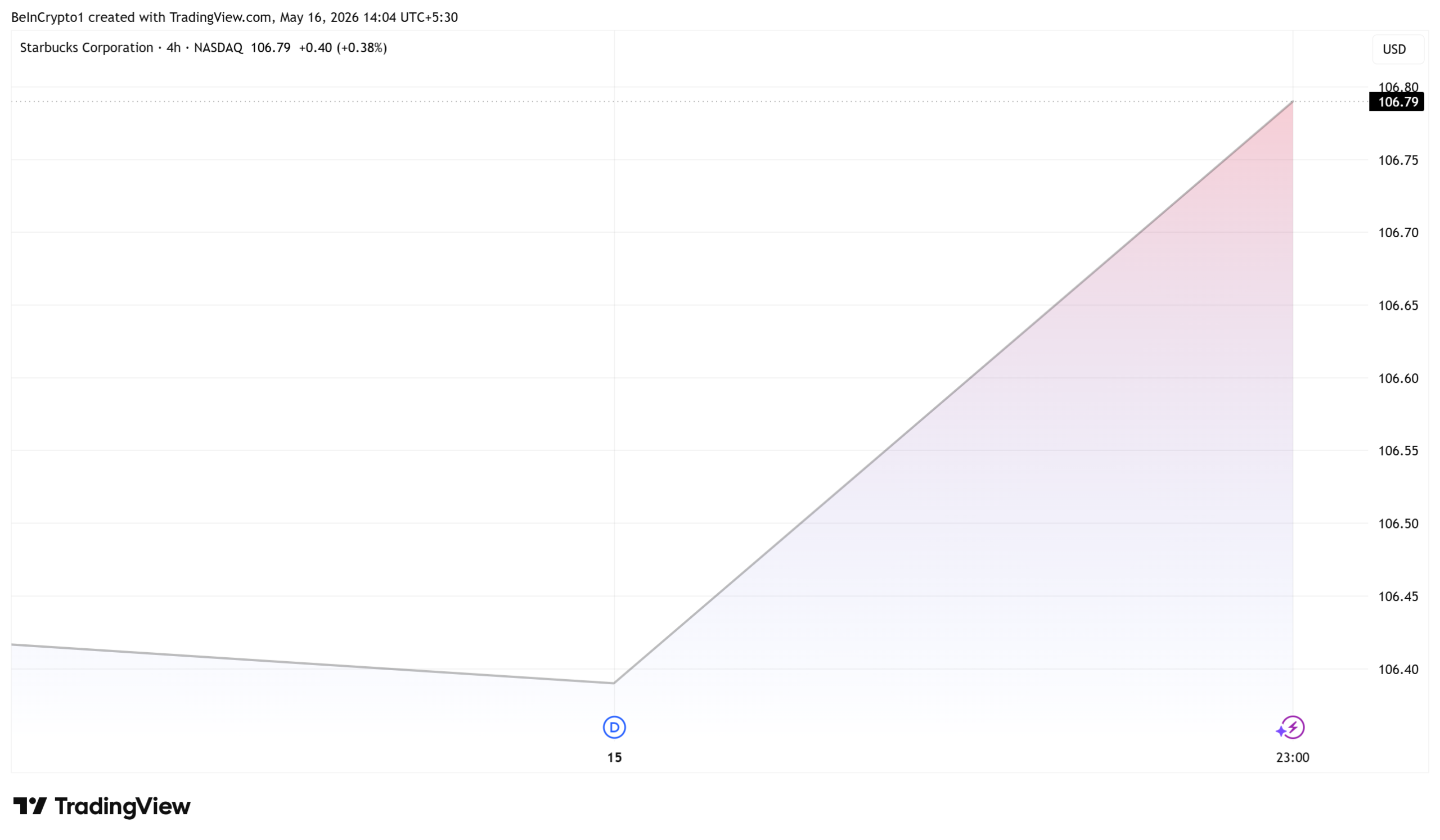
Starbucks (SBUX) has compounded roughly 40,000% since its 1992 IPO, turning a $10,000 ticket into close to $4 million.
On Friday, the company that built that record told 300 more corporate workers they were out, took a $400 million restructuring charge, and watched the stock rise anyway. Wall Street called it the right move.
A 408x Run Built on a $5 Habit
Starbucks went public on June 26, 1992, at $17 per share. After six 2-for-1 stock splits, that adjusts to roughly $0.26. The stock closed Friday near $106.79, pushing its market cap to about $121.7 billion.
Pure price-to-earnings now runs around 408 times the IPO level, before the 2.32% dividend yield is even factored in.

To put that in numbers a crypto trader can feel, Bitcoin would need to roughly 400x from today’s price to match what Starbucks has already done.
The compounding survived the 2008 crash, the pandemic shutdowns and the 2022 inflation shocks. It also survived two CEO transitions and a multi-year same-store sales slump.
SBUX is up 26% year to date in 2026, the latest reminder that boring assets sometimes outrun the flashy ones and that the crypto-versus-stocks debate rarely ends the way Twitter expects.
The Turnaround Behind the New Record
Niccol’s “Back to Starbucks” plan finally showed up in the numbers last month. Q2 FY26 revenue rose 9% to $9.53 billion, beating consensus.
Global same-store sales jumped 6.2%, with North America up 7.1% on a 4.4% lift in transactions. It was the first quarter in more than 2 years when both the top and bottom lines grew.
Management raised full-year guidance to at least 5% same-store sales growth, up from a prior 3% target, and reaffirmed plans for 600 to 650 net new coffeehouses in fiscal 2026.
The global footprint now exceeds 41,000 stores. A China joint-venture sale separately freed up roughly $3.1 billion in cash, the kind of quiet infrastructure play that crypto keeps trying to imitate.
The Layoffs Wall Street Cheered
On May 15, Starbucks said it would cut 300 US corporate roles in marketing, human resources, and supply chain functions and shut some regional support offices. Coffeehouse staff are not affected.
The move will trigger $400 million in restructuring charges, including a $280 million write-down on long-term assets and $120 million in cash severance.
It is Niccol’s third corporate cut since taking the job, and Jim Cramer framed it on CNBC as a setup play.
“He has said over and over again that he’s got to right-size. This is it. He’s getting it done,” CNBC reported, citing Cramer.
The market is still pricing SBUX at roughly 81 times earnings, a multiple that assumes the compounding machine keeps running.
The next leg of public-market consumer stories, which has now matched the last 34 years, hinges on whether Niccol’s margin reset turns into real offense or just another expensive defense of an already bid-up name.
Subscribe to our YouTube channel to watch leaders and journalists provide expert insights
The post A $5 Coffee Habit Compounded 40,000% Yet Wall Street Still Cheers the Layoffs appeared first on BeInCrypto.
Crypto World
Crypto users are choosing juicy yields over protection, putting billions at risk of hacks


DeFi insurance protocols debuted with huge ambitions during the 2020 crypto boom. But as hacks evolved and users chased yields over protection, most of the sector collapsed under the same risks it was built to cover.
Kevin Warsh, nominee for US Federal Reserve Chair, testifies during a Senate Banking Committee hearing on his nomination on Capitol Hill in Washington, DC, on April 21, 2026.
Mandel Ngan | Afp | Getty Images
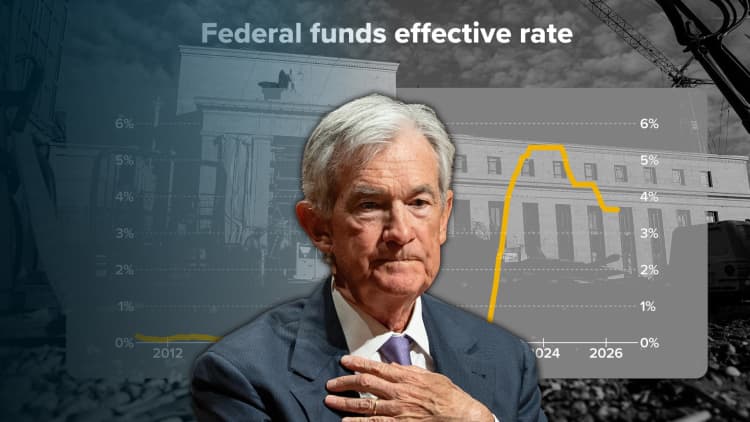
If new Federal Reserve Chair Kevin Warsh is still itching for a “good family fight” over monetary policy, he is likely to get one if he sticks to his guns on interest rate cuts.
With inflation spiking and Treasury yields surging, Warsh is likely to confront a Federal Open Market Committee in no mood to ease. In fact, several officials of late have stressed the need for the Fed to keep its options open for rate hikes ahead.
If it looked like outgoing Governor Stephen Miran was a lone wolf howling for reductions, seeing a Fed chair trying to defy his fellow policymakers and push for cuts will loom even larger.
Those who have watched Warsh over the years, from his prior stint as a Fed governor through his high-profile public disagreements with Fed policy since, expect him to put up strong arguments for cutting. The problem is, he’s likely to lose at least in the short term, a situation that sets up some interesting communication issues for the new central bank leader.
“I saw him in action. He does base his decisions on his view of the economy, and even his arguments for why he would favor rate decreases in general were based on his read of what’s happening structurally in the economy,” said former Cleveland Fed President Loretta Mester, who served with the Philadelphia Fed during the prior period when Warsh was on the board. “I just don’t think right now he can make those arguments in a credible way, because we have an inflation problem.”
Indeed, surging inflation will be Warsh’s first and primary policy challenge.

Officially, Warsh has echoed much of the Trump administration’s position on the current run of price surges — mainly that they are temporary and will fade once the fighting in Iran ceases and various disinflationary forces, such as increased productivity, take over.
However, those arguments face a tougher audience now with inflation levels at multi-year highs.
Warsh made the “family fight” remarks during his Senate confirmation hearing, a remark, along with other caustic comments he’s made about the Fed, that central bank observers privately say could come back to haunt him.
Rampant dissent
At the most recent meeting, in late April, three members of the Federal Open Market Committee, the central bank’s rate-setting arm, voted against the policy statement.
The vote homed in on one sentence in the missive that investors took to imply that the next move would be a cut: “In considering the extent and timing of additional adjustments to the target range for the federal funds rate, the Committee will carefully assess incoming data, the evolving outlook, and the balance of risks.”
However, it is just that disagreement that could allow Warsh to put a quick imprint on the Fed. By convincing the balance of the other 11 FOMC voters to remove it, he would further his oft-stated disdain for such “forward guidance” while also rallying the panel around a common objective, namely to preserve optionality for future moves.
“You get plenty of contrarian thinking in there. Kevin Warsh is a very fortunate man in his experience. Family fights generally lead to constructive outcomes,” said Lou Crandall, chief economist at Wrightson ICAP and a leading voice in internal Fed machinations.
“On the one hand, he can present this as not a tightening signal, just a shift to more agnostic communications framework,” he added. “There is a PR element that would be helpful to him. He doesn’t have to say that the committee forced his hand in his first meeting to go to an effectively more restrictive stance.”
Warsh’s problems would be far from over, though.
Facing the president
President Donald Trump nominated the new chair with clear statements that he expected lower interest rates. Should Warsh fail to deliver, it could set up the same kind of relationship Trump had with outgoing Chair Jerome Powell: a perpetual clash that saw frequent personal attacks and ultimately involved the Justice Department, as well as a historically unprecedented level of discord between the administration and central bank.
So might Warsh be left to present the decision of the committee, then state in his post-meeting news conference that he disagreed and tried but failed to persuade his cohorts to vote for a cut?
Not likely, say those familiar with inner FOMC workings, primarily because it would serve to further undercut Warsh’s credibility.

“That would undermine his power as chair. Part of the job of chair is you get the committee to reach a consensus.” said Mester, the former Cleveland president.
While there’s a perception that Fed officials enter the meeting room and then hash out positions, Mester, who served in various capacities at the Fed from 1985 until 2024, said it doesn’t really work that way.
“Chair Powell and the chairs before him, Ben [Bernanke] and Janet [Yellen], they both made a point of calling each participant right before the meeting so they would know where people are,” she said. “The driving towards consensus is part and parcel of the setup of the FOMC.”
Making the case
Former Governor Miran, who leaves the board with Warsh’s arrival, said in a Bloomberg News interview earlier in the week that “it’s important to understand that people at the Fed are responsive to arguments.” Though he voted against each of the rate decisions at the six meetings he attended, Miran noted that other officials “started to respond” to his contrarian arguments “but it takes time.”
Those who worked with Warsh say he’s up to the job, despite less-than-ideal circumstances surrounding the current Fed climate.
In addition to basic matters of rates, the new chair faces additional communications challenges.
He has spoken out not only against providing guidance, but also the Fed’s vaunted “dot plot” of individual officials’ rate expectations and even has shown misgivings about hosting news conferences after each meeting, a process that Powell began that deviated from the prior practice of quarterly meetings with the press.
Bill English, former head of monetary affairs at the Fed and now a professor at Yale, served with Warsh and deemed him “good at working with people, and I think he’ll try to find a reasonable consensus” among the myriad issues ahead.
“At least from what I saw years ago when he was a governor, he just doesn’t seem like the sort of guy who’s going to want to pick a fight with the committee,” English said. “My guess is he’s going to want to continue to be a chair who’s going to try to find consensus and move the committee over time with arguments and with data.”


FA Cup Final on Sportsnet: Manchester City vs. Chelsea

Noble Debuts FoKus Apollo Pro Wireless Headphones at CanJam Singapore 2026

ITV drops exciting Love Island update as Maya Jama teases ‘it’s all kicking off’

Manchester United reach agreement with Casemiro over contract clause amid transfer speculation

US brings back mandatory military draft registration

Steven Gerrard disagrees with Gary Neville over ‘shock’ Chelsea and Arsenal claim | Football

Have you ever seen 150 Million Kenyan Shillings in cash? | #kenyanshillings

Crypto – The Truth About Altcoins And Whether An Altcoin Season WIll Ever Happen Again!

Pray This One Prayer for Immediate Financial Breakthrough Most People Don’t Know
-

 Crypto World14 hours ago
BloFin War of Whales 2026 Grand Prix opens registration for $5M trading championship
-

 Fashion5 days ago
Coffee Break: Travel Steam Iron
-

 Fashion21 hours ago
Weekend Open Thread: Theory – Corporette.com
-

 Politics5 days ago
What to expect when you’re expecting a budget
-

 Fashion6 days ago
What to Know Before Buying a Curling Wand or Curling Iron
-

 Tech6 days ago
Auto Enthusiast Carves Functional Two-Stroke Engine from Solid Metal
-

 Crypto World20 hours ago
E-Estate Announces 1 Year Live: Washington DC Summit as Real Estate Tokenization Enters Its Next Phase
-

 Tech1 day ago
Tech Moves: Microsoft AI leader jumps to OpenAI; former AI2 exec joins Meta; and more
-

 Tech5 days ago
GM Agrees To Pay $12.75 Million To Settle California Lawsuit Over Misuse Of Customers’ Driving Data
-

 Crypto World6 days ago
CZ says US crypto rivals tried to block Trump pardon
-

 Tech5 days ago
GM agrees to $12.75M California settlement over sale of drivers’ data
-
Crypto World3 days ago
Bitcoin Suisse expands with Digital Asset License and Investment Business Act Registration Approval in Bermuda
-

 Politics4 days ago
Pakistan to enter Chinese capital market as war inflation bites
-

 Crypto World2 days ago
Google’s Gemini AI Predicts Incredible Solana Price by the End of 2026
-

 Crypto World4 days ago
Bitcoin Suisse expands with Digital Asset License and Investment Business Act Registration Approval in Bermuda
-

 Politics6 days ago
Sky News Presenter Says Keir Starmer Is Not Waving But Drowning
-
Crypto World7 days ago
Hacker Drains $5.9M From Ethereum Liquidity Provider TrustedVolumes
-

 Business23 hours ago
H&R Real Estate Investment Trust (HR.UN:CA) Q1 2026 Earnings Call Transcript
-

 Fashion6 days ago
Amazon Sundays: Spring Glassware & Vases
-
 Entertainment6 days ago
Prime Video’s Forgotten but Brilliant 2-Part Horror Anthology Is a Perfect Binge
You must be logged in to post a comment Login