
Crypto World
Why the World Is Still Investing in America

None of this means America’s financial system is perfect. Over the decades, Americans have lived through periods that damaged confidence in banks and markets. America’s financial institutions have made significant changes and built back trust, but those of us who lead them have an obligation to keep earning it.
Perhaps the most distinctive advantage of the American model is not that it avoids failure, but its ability to adapt, reform, and continue creating opportunity. The same country that built the world’s deepest capital markets has repeatedly renewed them through innovation, competition and change. American companies of all sizes have confronted a number of shocks in recent years, yet they continue to adapt, innovate and grow.
That is why it is never a good idea to bet against the American entrepreneur. It is also a major reason why, like so many immigrants before and after me, I chose America, and why the world’s capital continues to choose America too.

Ripple’s native token has not been spared by the broader market’s weakness, and it posted a 21-month low at just under $1.00 a couple of days ago. Moreover, it closed at its lowest level since November 2024, as its recovery above that psychological support hasn’t been all that impressive.
However, on-chain analysis from Santiment Intelligence shows that the actual story could be hiding somewhere else.
Price Down, Activity Up
Despite rebounding to $1.01 as of press time, XRP is still not out of the woods, and many analysts expect at least one more dip below that level, even the most bullish ones. The token remains 70% away from its all-time high registered approximately 13 months ago. However, the selling pressure doesn’t appear to be going away.
As reported earlier, the asset’s Taker Buy/Sell Ratio on Binance dropped to 0.86, its lowest reading since May. Since a figure below 1 indicates more aggressive selling than buying, the metric suggests derivatives traders remain firmly on the defensive.
Nevertheless, Santiment outlined the discrepancy in XRP price moves and network usage. Despite the multi-year low for the token, the daily active addresses have surged, averaging 35,700 a day in August against just 26,400 a month prior. Moreover, August 11, the day that XRP actually dipped below $1.00, was the busiest since early June.
However, one of the issues stems from the flatness of new addresses, which have remained relatively stagnant compared to July – 2,260 now against 2,270 last month. As such, Santiment concluded that the “rising user activity” narrative is only “half right.”
“The existing base is transacting more, and the wallet count is not growing with it. Activity is up. The user base is not.”
Whales Still Present
Another report from earlier this week indicated that large market participants, often referred to as whales, holding at least a million XRP tokens, are still increasing. This suggests that the holder confidence is still solid amid the so-called ‘smart money.’
More specifically, the number of such large wallets has risen by 32 in the past three months, while the asset’s market cap has declined by nearly 30%. Simultaneously, Ripple’s other cryptocurrency, the stablecoin RLUSD, has become a meaningful institutional asset, with its market cap hitting $1.6 billion.
The report added that Ripple’s payments, custody, and tokenization rails continue to see growing interest from users and concluded that only XRP’s price appears to be really struggling now.
The post XRP Closed at a 21-Month Low, but the Bigger Ripple Story Is Elsewhere appeared first on CryptoPotato.
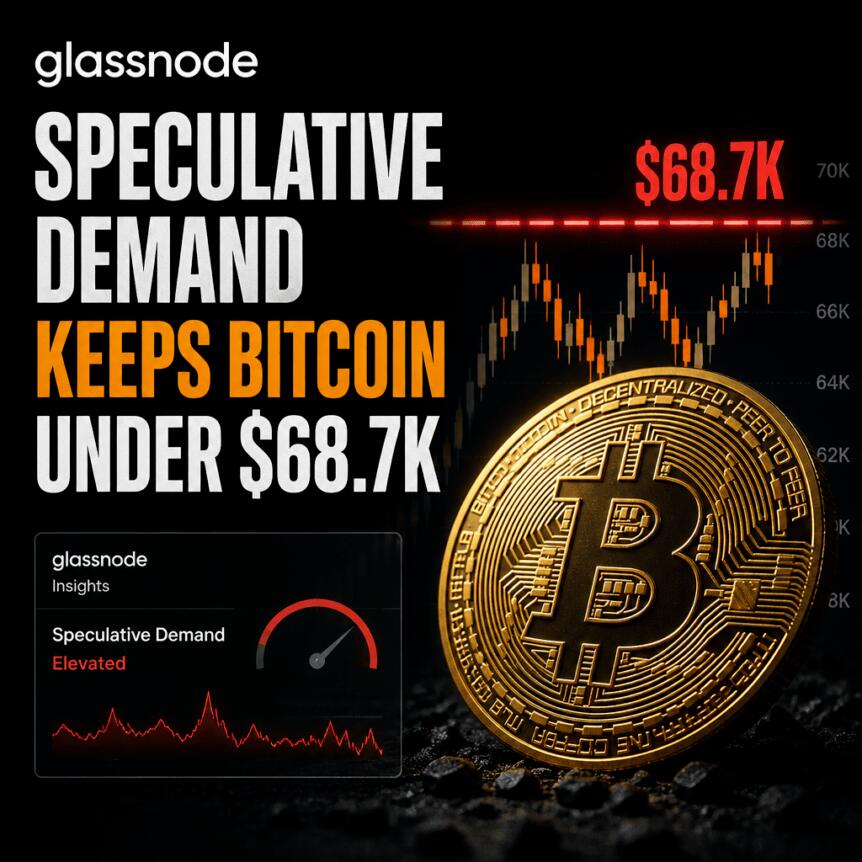
Bitcoin has remained trapped in a tight trading band since early June, and on-chain data suggests the latest pressure is coming from short-term holders trying to exit around levels where they’re closest to breakeven. Glassnode’s latest weekly on-chain analysis points to realized-price “resistance” formed by speculative investors who bought within the past six months, while Bitfinex Alpha highlights how a concentrated supply slice is repeatedly flipping between profit and loss as spot trades inside the range.
With BTC/USD stuck between roughly $58,000 and $68,000, the market appears to be working through a recurring pattern: rebounds are being met by holders looking to reduce exposure, even as long-term participants continue to absorb repeated tests from below. For traders, the key question is whether the speculative selling pressure can finally be exhausted—or whether the range simply persists.
Key takeaways
- Glassnode estimates Bitcoin short-term holders are about 7.2% underwater overall, with an average realized cost basis near $68,700 acting as a notable resistance level.
- Glassnode frames the “cost-basis ladder” as a structural reason price struggles to break out, citing the median realized price near $63,000 as a level that has absorbed repeated upward attempts for weeks.
- Bitfinex Alpha says a large tranche of supply—1,794,308 BTC—currently sits in the $62,000 to $65,000 cost-basis band, reinforcing stubborn range boundaries.
- As BTC trades within the same $3,000 band, the largest concentration of holders keeps moving between profit and loss, increasing turnover and reinforcing the range dynamic.
Why short-term holders are pushing back at range highs
In its latest weekly edition, Glassnode focused on the behavior of short-term holders (STHs)—investors who acquired BTC within the last six months. The firm reports that this cohort remains roughly 7.2% underwater in aggregate, based on its cost-basis measure (realized price). Glassnode places that realized cost basis at $68,700, a level it describes as central to why price is stalling around the upper part of the current range.
Glassnode also points to how realized-price “rungs” map into the market’s ongoing stalemate. The analytics firm notes that spot prices are sitting just above the median realized price (around $63,000), which it characterizes as the midpoint dividing coins’ cost bases into higher and lower halves. That same median level, according to Glassnode, has “absorbed every test from above for more than a month,” even as broader range conditions have persisted.
“The cost-basis ladder frames the stalemate. Spot sits just above the Median Realized Price at $63.0K, the level that splits every coin’s cost basis down the middle, and below the Short-Term Holder Cost Basis at $68.7K, the average entry of the market’s most recent buyers.”
“That cohort is underwater, which historically makes it quick to sell into recoveries, while the median level has absorbed every test from above for more than a month.”
In other words, the market’s upper breakout attempts are meeting sellers who are not yet fully “whole,” but who still have incentives to lighten exposure during recoveries—especially as they approach their average cost basis. This dynamic can slow or prevent sustained upside momentum, particularly when buyers and sellers are evenly matched across a narrow price corridor.
BTC/USD stuck in a June-to-present range
Glassnode’s analysis aligns with the broader price picture. BTC/USD has been boxed in a near three-month range between approximately $58,000 and $68,000 since the start of June. Cointelegraph previously described the ongoing tug-of-war inside this corridor, noting that technical factors have helped keep price contained.
A separate theme in current commentary is the idea that downside resolution may be increasingly likely in bear-market-style conditions. Cointelegraph cited a 50-month trend line near $65,800 as a factor contributing to tighter constraints in the trading range.
More recently, trader and analyst Rekt Capital warned that $63,000 appears to be weakening as local support, with each rebound from that level reportedly gaining less traction. While such technical commentary cannot determine direction on its own, it reinforces what Glassnode’s on-chain framing implies: repeated attempts to move upward may be repeatedly checked, while key levels near the middle of the range are not strengthening decisively.
Supply concentration in the $62,000–$65,000 band reinforces resistance
Beyond holder psychology, Bitfinex Alpha argued that the “stubborn” boundaries of the range are also tied to ownership distribution on-chain. In a Wednesday report, Bitfinex Alpha pointed to a distinct cost-basis concentration using the UTXO Realised Price Distribution (URPD) framework. According to Bitfinex Alpha, the $62,000 to $65,000 band holds 1,794,308 BTC at that cost basis—equivalent to 8.93% of circulating supply.
URPD tracks the price at which coins last moved on-chain, offering a way to visualize where large amounts of BTC are “anchored” by prior transaction activity. Bitfinex Alpha highlights that the largest holdings within this narrow band sit around $63,800.
“With price trading inside this band, the largest concentration of holders across any narrow $3,000 range keeps moving between profit and loss and a large volume of coins changes hands as a result,” Bitfinex added.
The implication for spot action is straightforward: when a large share of BTC is concentrated in a relatively tight realized-cost window, small price moves can shift many holders’ positions from paper gains to paper losses and back again. That can produce a market that repeatedly churns—active enough to avoid a clean bottom, but structured enough to limit breakouts.
What to watch next: the $68,700 and $69,400 thresholds
Glassnode’s analysis places the short-term holder realized cost basis near $68,700 as a key level for any upside attempt to clear. Meanwhile, Bitfinex Alpha notes that immediately above the current STH cost basis is a psychologically significant marker: Bitcoin’s old all-time high of $69,400 from November 2021.
For investors and active traders, the immediate watch is whether price can build momentum through the $68,700 area without quickly being met by STH-led supply. If it fails, the odds favor continued range behavior—particularly given how the $62,000–$65,000 cost-basis concentration encourages frequent position flipping. If BTC does manage to reclaim and hold above those thresholds, the market would need to demonstrate not just a rebound, but an ability to convert the speculative cohort’s behavior from selling pressure into net demand.


Last year, at a party, I bumped into a handsome guy who I had met the month before at a yoga event. After exchanging pleasantries at the bar, he said, “You look very nice today.” I said thanks and turned my back to him to continue speaking to my friend who was next to me, listening in on our conversation.
“What are you doing? He is obviously your type and he was trying to flirt with you!” she said. I was so confused. I didn’t pick up on any signals and assumed it was just polite conversation.
I don’t know how to flirt, and I can rarely tell if someone is flirting with me—and I’m not alone. Recently, I attended an online class on being single and navigating dating in the current climate. The therapy group had people from all over the world, some in their 20s and some in their 30s or 40s.
Two topics stayed consistent regardless of age or geography. The first was that people were fed up with the fact that no one approaches each other or makes the first move. The second was that no one knows how to do so themselves
Today, many daters are fluent in texting but far less comfortable with ambiguity, rejection, and face-to-face social risks. Now, relationship therapists, psychologists, and cultural commentators warn we are at risk of losing the fine art of flirting.
Digital culture can take part of the blame. “We’re living in a culture that is more digitally connected than ever before, and many people are getting less used to having everyday spontaneous face-to-face interactions,” says Victoria Wren, a therapist based in the U.K.
People spend lots of their time communicating through apps, direct messages, or video chats. All of these digital platforms give us control over what we say, how long we take to respond, and how vulnerable or honest we choose to be.
The stakes feel a lot higher in the tangible world. “If we feel like we’ve overshared or said something we did not mean to say, we have the opportunity to just edit or unsend a text now,” Wren says. “Approaching someone in real life requires risking rejection, taking courage, and accepting that things might not work out as hoped.”
But not everyone feels comfortable taking that risk.
Previous generations practiced talking to strangers while waiting in line, making conversation in bars, reading body language, and navigating awkwardness because there was no digital alternative. Today, the reality is much different. Rather than engaging with the people around me, my phone often fills the gap in my day. When a friend is running late for lunch, for example, I scroll aimlessly, answering emails or texts.
Often, existing in the modern physical world can feel like a standoff. Recently, in a restaurant with my friends, I made a point of smiling and looking at a guy on the other side of the room. He felt my eye contact and did the same, but neither of us approached the other. I left frustrated.
Perhaps part of this standoff is that many of us have learned to fear rejection. During my group therapy class, several men in the group told us about their terrible experiences of approaching women and being rejected in humiliating ways. One guy said he asked a woman about the book she was reading and she just loudly screamed, “Go away!” Going forward, many assume the same experience will happen again if they approach someone, so they simply don’t.
Our therapist, Stephanie Beebe, reminded us that our generation didn’t really learn interpersonal skills. She has been married to her husband for more than three decades and said her generation had to rely on exceptional interpersonal skills in everyday life because you couldn’t hide behind a screen. If you wanted to ask someone out, flirt, apologize, resolve conflict, or simply make conversation, you had to do it face-to-face.
Today, many people no longer have the same opportunities to develop the interpersonal skills that flirting requires. And while many people say they want to meet a partner organically instead of through dating apps, many daters also express fears of rejection and an unwillingness to make the first move.
That made me wonder whether the dating crisis we keep talking about is actually an interpersonal skills crisis. “Relying so much on texts and DMs means we may miss out on the subtleties of face-to-face connections and diverse encounters, which may be energizing, or challenging, or a mixture of both,” says Wren.
We often blame dating apps or social media, but perhaps other forms of technology are to blame as well. We’ve spent so much of our lives communicating through texts, voice notes, and algorithms that we’ve lost the confidence to navigate the ambiguity of flirting with a stranger.
No one is born with the ability to make small talk, listen actively, or flirt. Like any skill, it becomes stronger through practice, and in that way we start to develop our own style of interacting with others.
However, while people had more opportunities to interact with strangers in the past, bars, workplaces, events, and public transport remain crucial sites for dating and flirting. But armed with weaker interpersonal skills and the heightened self-awareness of the social media age, many people feel an overwhelming pressure to carefully manage how they are perceived. My theory: all of this makes us more reluctant to meet new people and risk feeling vulnerable, rejected, or embarrassed.
It takes a lot of courage and a healthy mindset to know that rejection isn’t always a reflection of us personally. Gradual exposure is key. For example, start slowly by complimenting and thanking the barista who is serving your coffee. Make eye contact and smile at a stranger. Say “Good morning” or chat to someone in class or at work. Strike up a conversation with a colleague you might not know super well. Approaching someone romantically can begin to feel less intimidating the more we get used to experiencing positive interactions with people in general.
Self-compassion and self-acceptance are also important. Flirting, and dating in general, requires stepping into our vulnerability, knowing we can retreat if we feel we would like to. We have to become comfortable with uncertainty and the possibility of rejection.
As a personal experiment, I have stopped wearing headphones during my commutes and tried making eye contact and smiling at strangers. A few weeks later, while on vacation, I was at the beach and noticed a man who was looking in my direction and smiling.
A previous version of me would have ignored it and buried my head into my phone. But I smiled back and he came over to say hi. It didn’t lead to anything romantic, but I’m proud of myself for being approachable, rather than hiding.
And the experience served as a great reminder for something many of us have forgotten: flirting feels good.


Binance bStocks became the second-largest tokenized stock issuer less than two months after launch, narrowly ahead of Kraken’s xStocks.
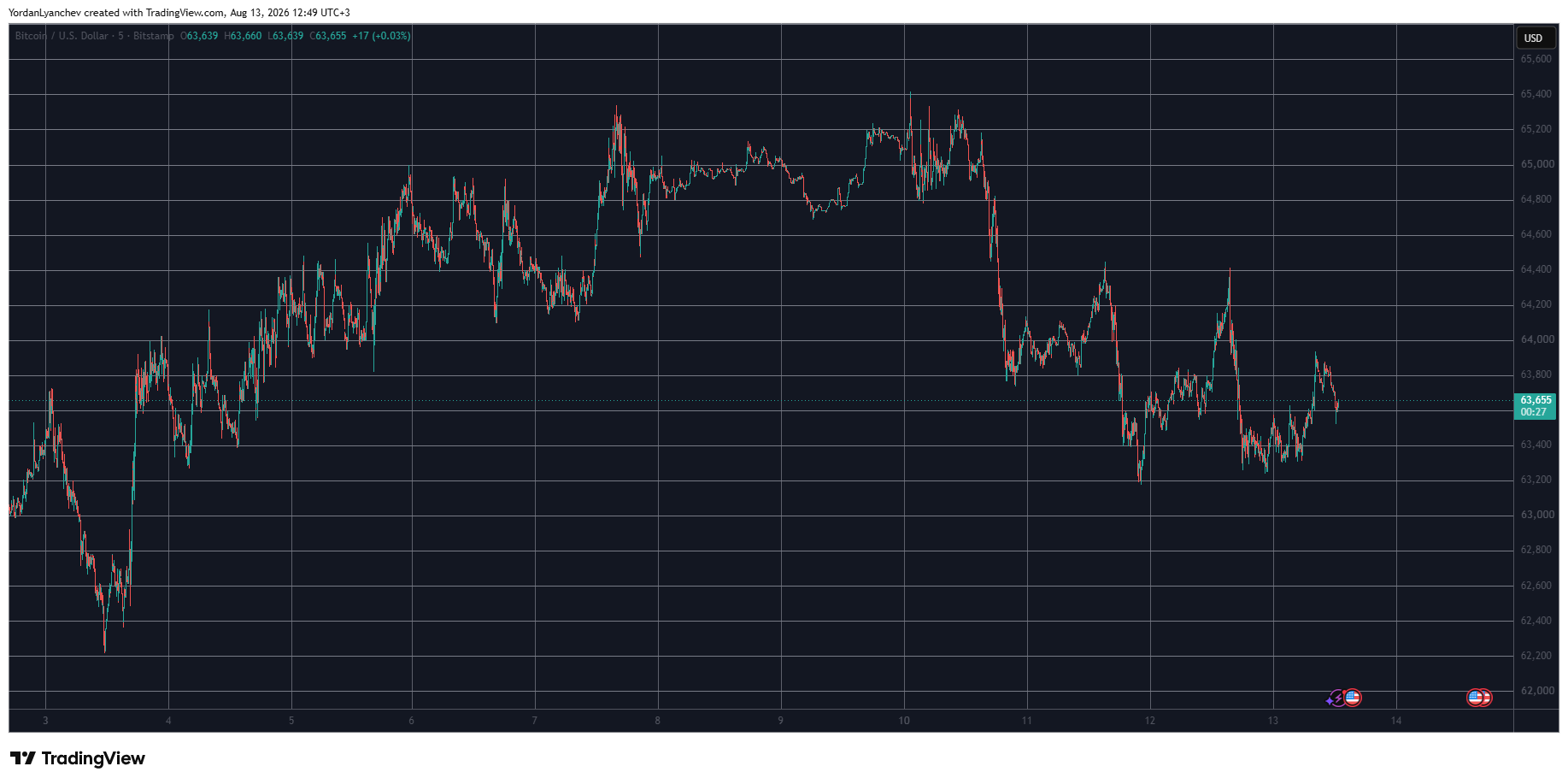
Bitcoin’s price recovery attempt to over $64,000 came to a quick halt, as the asset was pushed south by over a grand before it finally found some support.
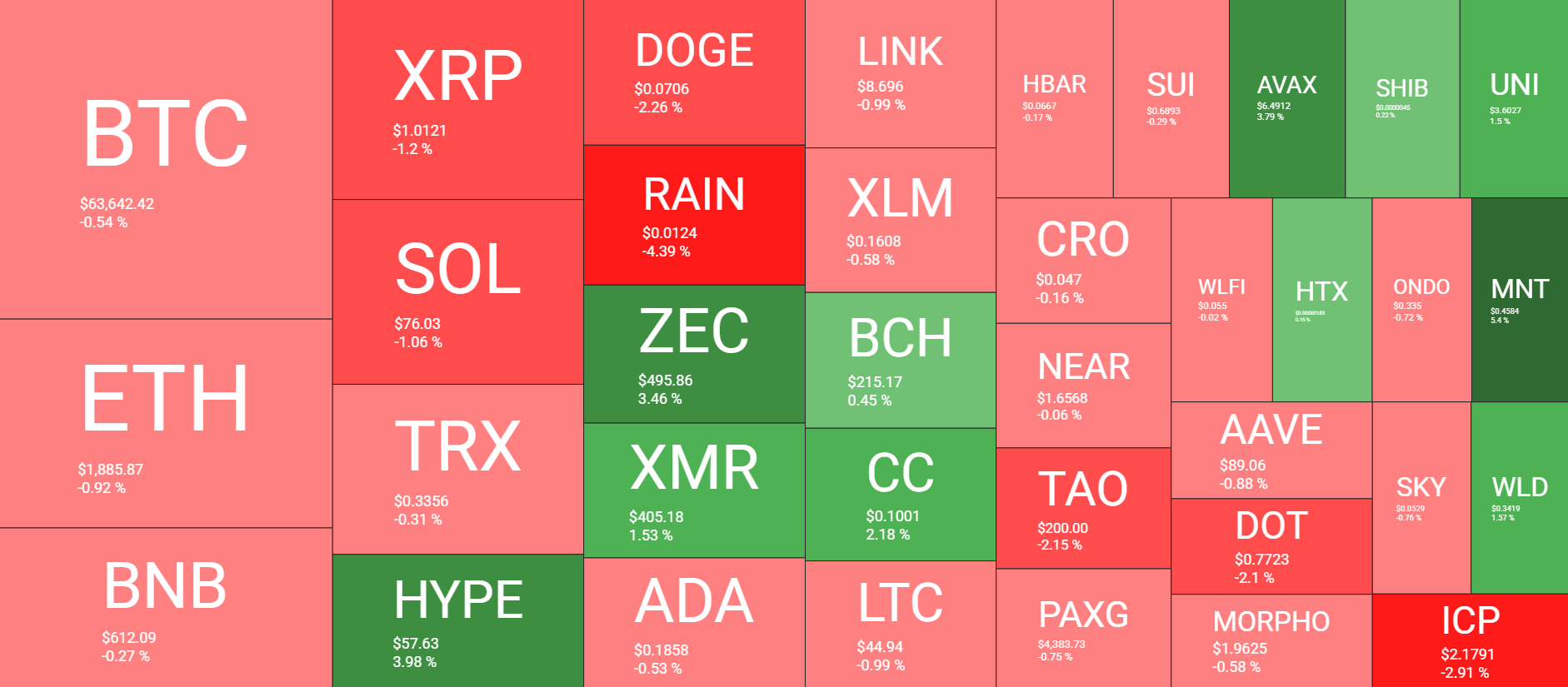
HYPE and ZEC have posted the most substantial gains from the larger-cap alts, while ETH has slid below $1,900 again, and XRP is close to dipping beneath $1.00 for the second time this week.
BTC Calms Below $64K
The primary cryptocurrency went on a minor run that began at the start of the previous business week when it pumped from $62,200 to over $65,000 at the end of it. The local peak came despite the CLARITY Act setback in the US Senate and following the weak US jobs report for July.
Although it couldn’t continue climbing past $65,400, it spent the subsequent weekend trading sideways around $65,000. It tried to break out once again on Monday, but it faced another rejection at $65,400. This time, though, it was more violent as it slumped by $1,500 to $63,800 within hours.
The rebound was stopped at $64,400 a day later, and the drop pushed it to $63,200. Even the US CPI data for July, which matched expectations, did not lead to a more profound recovery. BTC was stopped again at $64,400, and another dip to $63,200 followed.
It has since calmed between the two boundaries, currently trading at $63,600. Its market cap has dropped below $1.280 trillion on CG, while its dominance over the alts is beneath 57%.
HYPE, OKB on the Rise
Bitway’s BTW has solidified its position within the top 100 alts by market cap. Another 11% surge has made it the 83rd-largest crypto by that metric. OKB follows suit. It has surged by more than 7% daily (and 27% monthly) and now sits above $100. MNT, VVV, and STABLE are next from the mid-cap alts.
HYPE and ZEC have posted the most significant gains from the larger-cap alts. Both are up by around 3-4% to $58 and $495, respectively. In contrast, RAIN is down by over 4% to $0.0124. XRP, DOGE, SOL, BNB, TRX, and ADA are also in the red. ETH is below $1,900 after a 1% decline.
The total crypto market cap has shed around $30 billion daily and is down to $2.250 trillion on CG.
The post OKB Rockets 7% Daily, BTC Price Settles Below $64K: Market Watch appeared first on CryptoPotato.


Charles Schwab has added direct Bitcoin and Ether trading to its retail brokerage platform at a 0.75% transaction fee, putting crypto inside a business that reported $13.1 trillion in client assets and 39.8 million active brokerage accounts at the end of the second quarter.
Summary
- Charles Schwab has rolled out direct Bitcoin and Ether trading at a 0.75% transaction fee.
- Schwab reported $13.1 trillion in client assets and 39.8 million active brokerage accounts in the second quarter.
- The brokerage has started testing crypto transfers after launching spot trading without deposits or withdrawals.
- Morgan Stanley’s E*Trade has priced crypto trading at 0.5%, adding pressure on fees charged by crypto exchanges.
- Schwab is also exploring stablecoins and plans to extend crypto trading, transfers and custody to its advisor platform.
According to Schwab’s second-quarter results and comments from CEO Rick Wurster, the phased rollout that started May 13 has progressed as planned, while the company has begun a crypto transfers pilot and taken an equity stake in infrastructure provider Paxos.
The service initially supports Bitcoin and Ether, with Charles Schwab Premier Bank holding client assets and Paxos providing trade execution and sub-custody. Schwab set the transaction fee at 75 basis points and launched without crypto deposits or withdrawals, while clients in New York and Louisiana were excluded from the initial rollout.
Schwab had already confirmed its launch plans in April, when a spokesperson said the company remained on schedule to introduce spot Bitcoin and Ether trading during the first half of 2026. A waitlist was opened ahead of the rollout, which followed an employee pilot.
Schwab crypto trading reaches an existing retail base
When Schwab Crypto began rolling out on May 13, eligible clients gained the ability to trade BTC and ETH alongside stocks, exchange-traded funds and other investments through the same Schwab account.
The distribution network behind the product has continued to expand. Schwab reported record second-quarter revenue of $7.1 billion, up 21% from a year earlier, while daily average trades climbed 57% to 11.9 million.
Core net new assets reached about $120 billion during the quarter, and clients opened another 1.4 million brokerage accounts. Total client assets stood at $13.08 trillion as of June 30, up 22% year over year, while active brokerage accounts reached 39.8 million.
Wurster has attributed part of the increase in trading activity to younger investors and greater use of AI-driven investing tools. The company expects that engagement to continue rather than disappear with the current market cycle.
Crypto entered the platform after Schwab spent months assessing demand from its existing customers. Wurster previously said clients held about $25 billion in crypto exchange-traded products through Schwab and were asking to keep digital assets with their stocks, bonds and cash instead of maintaining accounts on separate platforms.
Interest was also coming from potential customers. In April 2025, Wurster said traffic to Schwab’s crypto website had risen 400%, with roughly 70% of visitors coming from people who were not Schwab clients.
The rollout has continued despite weaker conditions across the crypto market. Bitcoin is trading near $63,000, while industry spot volumes declined during the second quarter. Schwab digital currencies research and strategy director Jim Ferraioli said in June that Bitcoin had lost some of its momentum appeal as investors moved toward AI stocks, commodities and anticipated initial public offerings.
Schwab has nevertheless kept the product on its planned schedule. Wurster had previously described direct crypto access as a response to customers who wanted to consolidate assets they already held elsewhere rather than a product designed around a particular Bitcoin price cycle.
Traditional brokers are competing on crypto fees
Schwab’s arrival has also put its transaction price into direct competition with crypto exchanges and other established financial firms.
At 75 basis points per trade, Schwab charges less than Fidelity’s roughly 1% spread but more than Morgan Stanley’s E*Trade, which introduced a flat 50 basis point charge for its crypto service.
Morgan Stanley launched its E*Trade pilot on May 6 with Bitcoin, Ether and Solana trading through Zerohash. The brokerage plans to make the service available to all 8.6 million E*Trade clients later in 2026 and has also been working on a proprietary digital wallet.
The product gave Morgan Stanley one additional cryptocurrency at launch and priced each transaction one-third below Schwab’s 75 basis points. Zerohash supplies the infrastructure, while Morgan Stanley also participated in the company’s $104 million Series D-2 funding round in 2025.
The fee difference puts both brokerages against crypto-native platforms that have historically earned more from retail transactions.
Coinbase generated about $452 million in consumer transaction revenue on $25.8 billion of consumer trading volume during the second quarter, equivalent to an implied take rate of roughly 1.75% based on the company’s reported figures.
Its overall transaction revenue fell during the quarter as weaker crypto trading activity hit the business. Coinbase reported a $359.5 million net loss and recorded another quarterly revenue miss, while consumer transaction revenue fell about 30% from a year earlier.
Subscriptions and services have become a larger part of Coinbase’s business as the company expands revenue sources outside direct trading. Stablecoin economics, institutional services and other subscription products now account for a substantial portion of its revenue, while its share of global crypto trading has continued to increase.
Traditional brokerages, meanwhile, can offer crypto to customers who already use their platforms for securities, cash management and wealth products. Morgan Stanley executives have described the E*Trade strategy in similar terms, positioning crypto as another product clients can access without leaving the firm’s financial ecosystem.
Morgan Stanley has continued adding digital-asset services around that model. In June, the bank partnered with Galaxy Digital to provide eligible wealth-management clients with a route to use crypto holdings for access to spot investment products, alongside the direct BTC, ETH and SOL trading already being tested through E*Trade.
Bitcoin ETFs and direct crypto now sit under one login
Schwab’s direct trading service also gives clients a choice between holding Bitcoin and Ether themselves through the brokerage or using crypto investment products without moving to another platform.
Before direct trading arrived, Schwab customers could already gain exposure through Bitcoin and Ethereum ETFs, futures and the Schwab Crypto Thematic ETF. The May rollout added direct ownership to the same account structure.
Wurster previously said Schwab clients wanted crypto “alongside their stocks, bonds and cash, not off to the side on a different app.” He also said some customers had asked to bring digital assets held elsewhere back to Schwab because they trusted the brokerage with their other investments.
Transfers therefore form the next part of the product. Although deposits and withdrawals were unavailable at launch, Schwab said during its July earnings update that a crypto transfers pilot was starting.
The company is also preparing to extend direct digital-asset services beyond self-directed retail accounts. In June, Schwab set a mid-2027 target for adding spot crypto trading, transfers and custody to its advisor platform, although the timing could change.
Schwab officials said advisers still rely heavily on exchange-traded products for client crypto exposure, but demand for direct holdings has increased among customers who already own digital assets elsewhere. Adding transfers and custody would allow advisers to manage those holdings within the same platform used for other client assets.
Brokerages are adding more crypto services
Trading remains limited to Bitcoin and Ether at Schwab, with no staking or retail stablecoin currently offered, while some competing financial firms have already started adding more parts of the crypto product stack.
Fidelity introduced its Fidelity Digital Dollar earlier in 2026, adding a dollar-backed stablecoin to a digital-asset business that already includes crypto trading and custody.
Schwab has also discussed stablecoins. Wurster has said the brokerage has been talking with bank consortia while considering its own route, although the company has not announced a stablecoin launch.
Tokenized securities remain under consideration as well. Wurster has questioned what tokenization would solve for assets that already trade at little or no commission, but said during the July earnings call that Schwab would be prepared to serve customers if they eventually wanted securities delivered in another format.
Other large investment platforms have been moving further into digital assets after previously limiting access. Vanguard began allowing third-party crypto ETFs on its brokerage platform in December 2025, including products tied to Bitcoin, Ether, XRP and Solana, while continuing to exclude memecoin products and saying it had no plans at the time to launch its own crypto funds.
By July, Vanguard was recruiting a digital-assets head to develop a multiyear strategy covering tokenization, stablecoins, custody, wallets, settlement infrastructure and potential client products.
The job description calls for the executive to help determine where Vanguard should build its own digital-asset capabilities, work with outside providers, or hold back from particular products, with responsibility spanning both blockchain infrastructure and regulated financial services.


The Bank of Korea has disclosed a $250 million position in a gold exchange-traded fund (ETF). The stake marks its first gold-linked investment in 13 years.
The move gives South Korea’s central bank exposure to gold prices without expanding its physical bullion reserves.
Filing Shows a $250 Million Gold ETF Position
The BOK held 679,765 shares of SPDR Gold Shares at the end of June. The stake was valued at $250.4 million in a filing submitted to the US Securities and Exchange Commission.
That same document lists four holdings worth $3.89 billion in total. Gold accounted for roughly 6.4% of the disclosed portfolio. It reported no such position three months earlier.
Gold ETFs count as securities and are held within South Korea’s foreign-exchange reserves. Physical bullion is treated as a separate long-term reserve asset. This means that the purchase leaves the official stockpile at about 104.4 tons, unchanged since 2013.
However, earlier in August, the central bank said it built a framework for domestic gold purchases, its first such step in almost six decades.
Follow us on X to get the latest news as it happens
Central Bank Gold Demand Hit a Record Second Quarter
Meanwhile, other central banks combined added a net 289 tons in the three months through June. This marked the strongest second quarter ever recorded, the World Gold Council said.
Poland led with 51 tons. The BOK sat out that run. Its last physical purchase came in 2013, when it added 20 tons. China, by contrast, added about 20 tons in July alone.
Investor demand has turned as well. Gold-backed funds pulled in $3 billion in July, ending a two-month outflow streak. Whether the BOK expands from ETF exposure into bullion will surface in its future reserve reports.
Subscribe to our YouTube channel to watch leaders and journalists provide expert insights
The post Bank of Korea Breaks 13-Year Streak With Gold ETF Purchase appeared first on BeInCrypto.


Franklin Templeton’s registered mutual funds and ETFs have received regulatory clearance to invest in the firm’s blockchain-based OnChain U.S. Government Money Fund after the U.S. Securities and Exchange Commission’s investment management division issued a no-action letter covering the custody structure.
Summary
- The SEC has cleared Franklin Templeton’s registered funds to invest in its blockchain based BENJI money market fund.
- The no action letter allows mutual funds and ETFs to hold BENJI shares without meeting certain physical custody requirements.
- BENJI uses blockchain records alongside Franklin’s traditional transfer agent system, with private keys remaining under the firm’s control.
- The fund holds about $726 million in assets and invests primarily in U.S. government securities.
The SEC’s Division of Investment Management said in the letter posted Wednesday that it would not recommend enforcement action under Section 17(f) and Rule 17f-2 of the Investment Company Act of 1940 if Franklin’s registered funds hold shares of the OnChain U.S. Government Money Fund, known by its ticker FOBXX, under the proposed arrangement.
The relief addresses custody rules originally designed around physical securities and vault storage. Franklin’s structure instead combines its existing transfer-agent records with blockchain transaction data, allowing registered funds to use FOBXX for cash management without complying with several requirements tied to physical certificates.
Bloomberg ETF analyst James Seyffart described the decision as a route for Franklin’s conventional investment products to gain direct exposure to the blockchain-based fund.
“Essentially, it opens the door for Franklin’s registered funds (mutual funds, ETFs, etc) to hold its OnChain fund despite not technically satisfying 1940 Act custody rules,” Seyffart said on X.
SEC clears Franklin Templeton funds to hold BENJI shares
Under the proposed setup, Franklin Templeton Investor Services will create blockchain wallets for registered funds investing in FOBXX and retain control of the corresponding private keys.
Franklin’s affiliated transfer agent will also maintain the official shareholder record and retain control over administrative functions. The arrangement gives the transfer agent the ability to correct blockchain-related errors and restore records when required, according to the SEC letter.
FOBXX uses an integrated record-keeping model rather than treating the blockchain as the only record of ownership. Internal book-entry records operate alongside transaction records maintained on Stellar, while the transfer agent remains responsible for the official shareholder file.
The SEC found the structure sufficiently similar to book-entry custody arrangements it had previously considered, allowing Franklin’s funds to operate without meeting certain provisions of Rule 17f-2 that were written around physical securities.
In reaching its position, the agency also cited a 1992 no-action letter involving Franklin. The earlier regulatory treatment provided precedent for applying the custody framework to securities represented through book-entry systems rather than physical certificates.
For Franklin’s registered funds, the decision provides access to FOBXX as a cash-management instrument while retaining the controls maintained by the affiliated transfer agent. The fund’s blockchain infrastructure can process transactions while its traditional record-keeping layer remains part of the ownership system.
Franklin Templeton has expanded BENJI’s institutional uses
Franklin has spent the past several years adding ways for financial institutions to use shares of its tokenized money market fund outside a conventional fund account.
In June, crypto.news previously reported that Franklin Templeton had added BENJI to MoonPay Trade, allowing institutional clients to exchange stablecoins including USDC and USDT for shares of the fund through MoonPay’s onchain trading infrastructure.
Franklin said at the time that the integration could support treasury management, portfolio rebalancing, collateral and liquidity functions. MoonPay Trade, launched in May, provides institutional clients with onchain execution and access to more than 200 blockchain networks through a single API.
A separate integration announced in May brought BENJI into Payward, the parent company of Kraken. Under the Franklin-Payward partnership, the fund was positioned for use as collateral and cash-management infrastructure while the companies also planned work on tokenized stocks and other onchain investment products.
Franklin had already moved BENJI into crypto trading collateral earlier in the year. In February, the asset manager and Binance launched an institutional program allowing eligible clients to pledge tokenized money market fund shares as off-exchange collateral while the underlying assets remain in regulated custody.
Under the off-exchange collateral structure, the value of the pledged assets can be used within Binance’s trading environment without requiring institutions to transfer the underlying fund shares onto the exchange.
The SEC no-action position deals with a different use of FOBXX: registered Franklin funds investing directly in shares of the tokenized money market fund under the Investment Company Act custody framework.
FOBXX uses blockchain records alongside traditional controls
Franklin launched FOBXX on Stellar in 2021, making it one of the earliest U.S.-registered investment funds to use a public blockchain for transaction processing and ownership records.
Shares are represented through BENJI, while the underlying portfolio is primarily invested in U.S. government securities. The money market fund seeks to maintain a stable $1 share price.
Blockchain support has expanded substantially since the Stellar launch. In February 2025, Franklin added FOBXX to Solana, following deployments across networks including Aptos, Ethereum, Avalanche, Arbitrum, Base and Polygon.
At least 99.5% of FOBXX’s assets were invested in U.S. government securities, cash, and repurchase agreements when the Solana deployment was announced. Stellar remained the original network for the fund and continues to account for the largest portion of its blockchain-based assets.
The fund has roughly $726 million in assets under management, according to RWA.xyz data cited in the source report, with most of the assets recorded on Stellar.
Franklin has also progressively added transfer functions to BENJI. In April 2024, the firm enabled peer-to-peer transfers of fund shares on Stellar and Polygon, allowing eligible investors to move BENJI directly between one another without an intermediary handling each transfer.
The fund had about $380 million in assets when the transfer feature was introduced. Each BENJI token represented a share in FOBXX, whose portfolio included government securities, cash and repurchase agreements.
Franklin has continued building its crypto business
Alongside the tokenized fund, Franklin Templeton has expanded its digital asset operations through acquisitions, exchange products and institutional partnerships.
In June, Franklin completed its acquisition of crypto asset manager 250 Digital and formed Franklin Crypto, combining the acquired investment team and strategies with its existing digital asset operations. The firm managed about $1.78 trillion in assets worldwide at the time.
The 250 Digital acquisition followed Franklin’s work on crypto-focused investment products and partnerships involving tokenized assets. RWA.xyz data cited in the June report put Franklin Templeton’s total tokenized assets at more than $2.5 billion, up from roughly $768 million a year earlier.
FOBXX itself dates back to 2021, while Franklin’s use of blockchain networks for the fund has expanded in stages. When the product was extended to Polygon in April 2023, it had more than $270 million under management and was described as the first U.S.-registered fund to use blockchain technology to process transactions and record share ownership.
The SEC’s latest letter preserves the transfer agent’s role within that system. Franklin Templeton Investor Services will maintain control of the Stellar wallets and private keys used by investing funds, while the affiliated transfer agent will continue to maintain the official shareholder records and the administrative ability to correct or restore them when necessary.
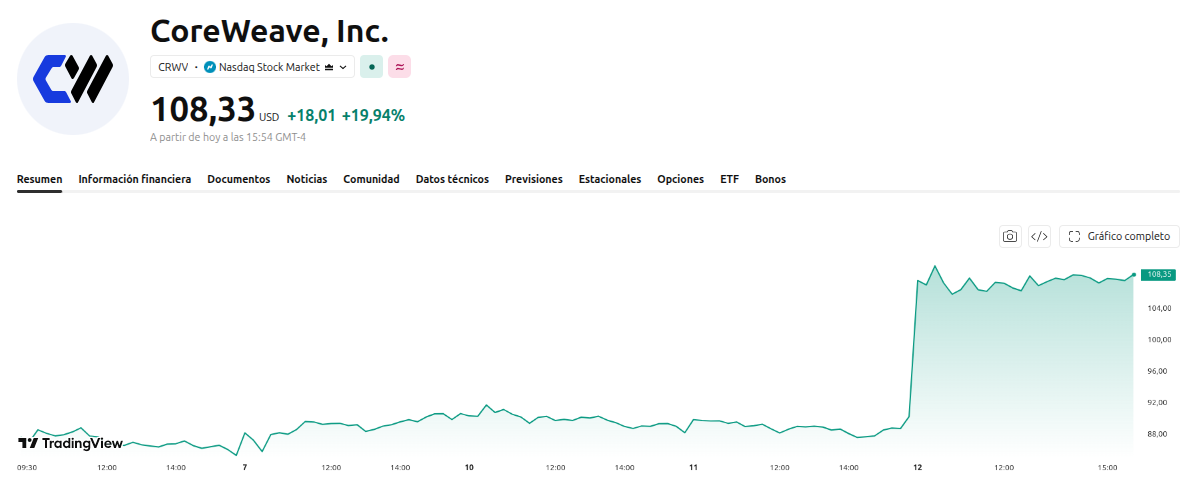
Nebius and CoreWeave led Nasdaq gains on Wednesday, both surging more than 20% after quarterly results beat expectations and softer inflation data lifted risk appetite.
The two AI cloud providers now anchor a sector in which revenue growth and cash burn advance at equal pace.
The Results That Powered Both Rallies
A neocloud is a specialized provider renting artificial intelligence computing capacity, competing against traditional hyperscalers with dedicated GPU infrastructure. Both companies operate that model.
Nebius delivered the sharper acceleration. Revenue reached $582.3 million, a 454% year-over-year increase that comfortably surpassed analyst projections. Contract wins explained much of the enthusiasm. Chief Executive Arkady Volozh highlighted four major agreements closed during the period, each averaging more than $1 billion.
A separate deal added momentum. The company agreed to sell computing power to Reflection AI in an arrangement worth over $1 billion through 2029.
CoreWeave posted comparable strength. Revenue climbed 112% to $2.58 billion, edging past consensus estimates of $2.56 billion.
Follow us on X to get the latest news as it happens.

Its backlog drew particular attention. Contracted revenue not yet recognized reached $104 billion at the end of June, with roughly $25 billion in new commitments added since then.
Guidance moved higher at both firms. CoreWeave projected third-quarter revenue between $3.45 billion and $3.60 billion while raising full-year expectations.
Analysts responded quickly. Baird raised its CoreWeave price target to $130 from $100, maintaining an Outperform rating on stronger deal and power metrics.
The Losses Hidden Behind the Numbers
The macro backdrop reinforced everything. July consumer price data showed moderate increases, with gasoline declining and core inflation staying contained. Rate expectations shifted immediately. Those figures reduced the odds of a Federal Reserve rate hike in September, broadly supporting technology valuations.
Broader indexes participated. The Nasdaq Composite advanced between 0.5% and 0.7% during the session, while the S&P 500 posted more modest gains.

Peer stocks followed the same path. Nebius and Super Micro Computer both climbed sharply as data-center and high-performance computing names attracted buyers.
Losses remain substantial at both companies, however. Nebius reported a GAAP net loss from continuing operations of $190.4 million during the quarter. Capital intensity explains the gap. The company deployed $5.66 billion in quarterly capital expenditure, building AI data centers.
CoreWeave faces similar pressure. Continued net losses and negative free cash flow reflect heavy debt-financed investment in chips and facilities. Not every analyst shares the optimism. DA Davidson cut its Nebius target to $175 from $250 while assigning a neutral rating.
Volatility defines both names regardless. Nebius has swung repeatedly by double digits this year, trading like a high-beta momentum stock rather than a stable infrastructure play.
The sector question remains unanswered. Whether contracted revenue eventually converts into sustainable margins will determine if Wednesday’s rally marks a turning point or another swing.
Subscribe to our YouTube channel to watch leaders and journalists provide expert insights.
The post Two AI Stocks Jumped 20%, But Their Balance Sheets Tell a Different Story appeared first on BeInCrypto.


Digital asset infrastructure provider Copper has established a regulated US presence after Copper Markets (US) Inc. became an SEC-registered broker-dealer and a member of the Financial Industry Regulatory Authority, opening a route for the company to provide institutional custody and trading services in the country.
Summary
- Copper Markets (US) has become an SEC registered broker dealer and FINRA member.
- The US arm will offer qualified custody, staking, financing and OTC services to institutional clients.
- Clients will also gain access to Copper’s ClearLoop Network for managing crypto and tokenized assets as collateral.
- Copper said the approval establishes its US presence as a qualified custodian.
According to Copper’s Wednesday announcement, its US subsidiary has been accepted as a FINRA member, giving the company a regulated entity through which it can bring its custody, collateral and trading infrastructure to institutional clients in the United States.
FINRA records also identify personnel registered with Copper Markets (US), including staff working across finance, compliance, operations and revenue functions. The company said the approval allows its US business to operate as a broker-dealer while building its presence as a qualified custodian for institutional digital assets.
Copper US arm gains regulated broker-dealer status
Copper Markets (US) plans to provide qualified custody alongside staking, financing and over-the-counter services, according to the company. Institutional clients will also gain access to Copper’s ClearLoop Network, its infrastructure for managing collateral while assets remain in custody.
Under the model, institutions can pledge crypto and tokenized assets as collateral between counterparties without relying on the conventional process of moving the assets to a trading venue before each transaction. Copper has built much of its institutional business around that separation of custody from trading activity.
The US entity’s regulatory status gives Copper another route for offering the infrastructure within an established securities framework. Under US securities rules, broker-dealers that maintain customer securities and funds in customer accounts can serve as qualified custodians when the applicable regulatory requirements are met.
Copper described its entry as establishing a US presence as a “Qualified Custodian,” putting custody at the center of the services being introduced through Copper Markets (US).
The registration also arrives while US regulators are reviewing how existing broker-dealer requirements should apply as digital assets become more closely integrated with securities markets. In July, the SEC added crypto-related items covering broker-dealers, crypto assets and market structure to its 2026 rulemaking agenda, as previously covered by crypto.news.
One of the planned SEC proposals concerns potential changes to broker-dealer financial responsibility rules for crypto activity. Another considers exemptions and safe harbors for certain offers and sales of crypto assets, while a separate proposal addresses trading of crypto assets on alternative trading systems and national securities exchanges.
ClearLoop gives Copper an existing institutional settlement network
ClearLoop forms a major part of the infrastructure Copper is bringing to its US operation. Launched in 2020, the system allows institutional traders to delegate assets for trading while keeping them within Copper’s custody framework, with settlement handled separately after trades take place.
The model is designed to limit the amount of capital institutions need to hold directly on exchanges, where assets can be exposed to exchange-specific counterparty risks.
Copper has spent several years connecting ClearLoop with exchanges and other institutional trading providers. In February 2025, BitGo and Copper introduced a trading model that allowed institutional clients to trade spot and derivatives on Deribit while assets remained secured away from the exchange.
Under that arrangement, BitGo Trust provided qualified custody while trades were automatically settled through ClearLoop. The structure allowed clients to use assets held with a custodian for exchange activity without transferring the entire balance to the trading venue.
ClearLoop has also been used for collateral management outside standard spot trading. Copper’s agency lending platform, launched in 2025, used the network to ring-fence loaned assets while offering institutions overcollateralized lending and real-time monitoring of their positions.
Earlier integrations had already put the system in use across individual crypto networks. In August 2024, Copper added custody and staking for Mina Protocol, giving eligible institutional clients access to MINA through its infrastructure. The company said at the time that ClearLoop allowed users to manage collateral and settle transactions across connected exchanges without moving assets out of Copper-controlled wallets.
Copper has built out staking alongside custody
Staking is another part of the service package Copper plans to offer through its US operation, extending a business line that the company has developed through several infrastructure partnerships.
In March 2025, Copper partnered with Figment to provide institutional staking across networks including Ethereum, Solana and Polkadot. The integration combined Figment’s staking infrastructure with Copper’s custody services so institutional clients could stake assets held through the platform.
A month later, Copper expanded its staking infrastructure through a partnership with P2P.org. The companies combined Copper’s custody and prime services with P2P.org’s staking infrastructure and rebalancing technology for institutional users across multiple blockchain networks.
Those arrangements built on Copper’s earlier custody integrations with individual networks, including Hedera and Mina, where staking was offered alongside institutional asset storage.
The US launch now puts those services under a domestic regulated entity, with Copper listing staking alongside custody, financing and OTC services available through Copper Markets (US).
US qualified custody options have continued to expand
Copper’s registration comes as several digital asset companies have pursued regulated custody structures in the United States through broker-dealers, state trust companies and federally supervised trust banks.
In July, Circle received final approval from the Office of the Comptroller of the Currency to establish Circle National Trust, a federally supervised trust bank. Circle said the institution would initially provide digital asset custody to the company and its affiliates, with its approved business plan also allowing for custody services to a limited group of institutional clients.
The approval followed conditional OCC decisions in December 2025 involving several other digital asset firms, including Ripple, Paxos, BitGo and Fidelity Digital Assets.
Kraken parent Payward took another route in May when it applied to the OCC for a national trust charter for Payward National Trust Company. The proposed entity would provide federally regulated digital asset custody to institutional customers without taking deposits or making conventional loans.
At the SEC level, the regulator has also addressed which entities investment advisers can use for crypto custody. In September 2025, the SEC’s Division of Investment Management issued a no-action letter allowing advisers, subject to specified conditions, to use certain state-chartered trust companies as custodians under federal investment laws.
Copper has instead established its latest US foothold through a registered broker-dealer. FINRA records show Copper Markets personnel registered with the firm during 2026, including its head of revenue for the Americas, compliance director and financial and operations personnel.

India said to plan easier rules to boost micro-cap listings

Taylor Swift Wedding Guest Questions Some Big Day Choices
XRP Closed at a 21-Month Low, but the Bigger Ripple Story Is Elsewhere


-

 Fashion6 days ago
Weekend Open Thread: Mattifying Sunscreen
-

 Fashion6 days ago
Frugal Friday’s Workwear Report: Cap-Sleeve Pointelle Crewneck Sweater
-

 News Videos5 days ago
Can Astrology Help Find Gold and Silver Trends? A Financial Astrology Guide
-

 Tech6 days ago
Rinn Pharma & Biopharma to join NordicPharmaTrain network
-

 Business4 days ago
How to Start a Cleaning Business: A Step-by-Step Guide
-

 Business4 days ago
Datadog: Best Of Breed For Multiple Reasons
-

 Business4 days ago
BDC Weekly Review: Private BDC Q2 Numbers Are Strong
-
 NewsBeat1 day ago
Communication cards help banking customers access services or report scams
-

 Business6 days ago
Brightwater secures funding for WA-first dementia projects
-
 Tech6 days ago
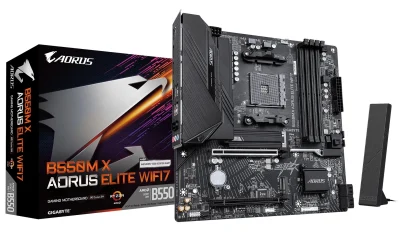
Price Hikes May Be Coming for PC Motherboards Next
-
 Business2 days ago
Oil Price Today (August 11): Crude oil rises to $88 after Trump’s compensation demand dents Hormuz opening. Here’s why
-

 Fashion7 days ago
Thursday’s Workwear Report: The Everyday Linen Shirt
-

 Business6 days ago
Aussie shares lose steam to close record-breaking week
-

 Fashion6 days ago
Weekly News Update, 8.6.26 – Corporette.com
-

 Tech7 days ago
Hackers just broke into America’s tap water. How scared should you be?
-

 Entertainment6 days ago
Coastal House Media Can Disney Redeem Live Action Dragon Ball?
-

 Fashion6 days ago
The Best Stores Like Ann Taylor
-
 Entertainment6 days ago
Brand New Day’ Characters, Ranked
-

 Fashion6 days ago
Burberry Fall 2026 Takes On Commuter Style
-

 Fashion6 days ago
Irina Shayk Wows in REVOLVE Los Angeles’ Summer Styles
You must be logged in to post a comment Login