

Crypto World
XRP beat bitcoin gains as CLARITY Act advanced, but a real bullrun still needs Congress

The token jumped 5% after a Senate committee moved the market-structure bill forward, reviving hopes that legal clarity can pull deeper institutional money into XRP products.

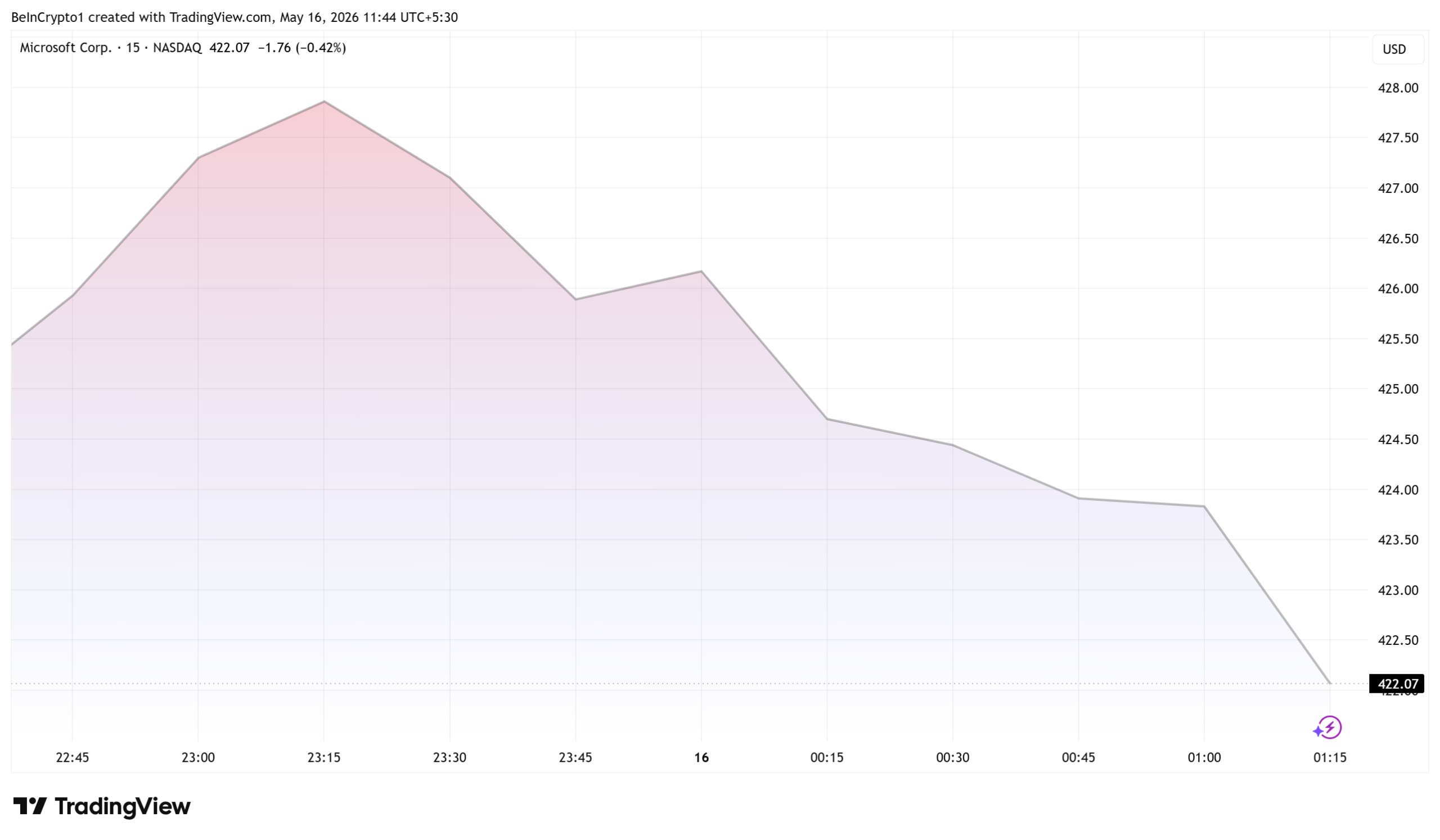
Microsoft (MSFT) stock slipped 0.42% to $422.07 on May 15. The slide followed news that the Bill & Melinda Gates Foundation Trust had sold its entire $3.2 billion MSFT stake.
The headline number masks a planned event. The Trust has held the position for nearly three years. The cash funds grantmaking and prepares the endowment for a 2045 close.
Why the Gates Foundation Sold Microsoft Stock
As of this writing, MSFT stock was trading at 422.07 amid bearish sentiment following the Gates Foundation’s disposal of the last of its Microsoft shares.

However, the sale is liquidity-driven, not a bearish call on Microsoft. The foundation has publicly committed to lifting annual grantmaking to $9 billion by 2026.
Bill Gates announced a plan to wind down the entire endowment by 2045. Selling concentrated MSFT stock is the most direct route to that cash schedule.
Microsoft has anchored the Trust’s portfolio for decades because Gates donated billions in personal shares. The position grew so large that any drawdown plan starts with trimming MSFT first.
“The Bill & Melinda Gates Foundation did not purchase its Microsoft shares on the open market. The entire position was built through direct donations of Microsoft stock from Bill Gates’ personal wealth over many years. As a foundation, they do pay a small tax, but it’s not the standard capital gains tax. The sale of their Microsoft shares is subject to a federal excise tax of 1.39% on the net capital gains,” one user noted.
Ackman Steps In, Sellers Still Win the Tape
Investor Bill Ackman used the same day’s filings to disclose a new 5.65 million share Microsoft stake. Pershing Square Capital Management values the position at nearly $2.3 billion.
“In our 13F which we will file later today, we will disclose a new position in Microsoft, a company we have followed for many years now offered at a highly compelling valuation.” Ackman shared in a post.
Ackman framed his buy as a valuation bet on Microsoft’s AI franchise after February’s OpenAI cloud shift hit shares. He pegged the cost basis at 21 times forward earnings, well below the stock’s recent average.
Pershing Square’s quarter-long accumulation of 5.65 million shares accounted for only part of the foundation’s 7.7 million-share exit. The net supply weighed on intraday trade despite the bullish counter-narrative.
Bigger Picture for Microsoft
MSFT remains a core driver of the broader S&P 500 rally. The separate $9.7 billion IREN deal anchors sentiment around AI data-center demand.
The London Stock Exchange’s partnership with Microsoft adds another revenue lane. Whether the recent dip marks a buying window or a warning shot is the open question for the next earnings cycle.
The post Microsoft Hit by $3.2 Billion Sell-Off From Bill Gates Foundation appeared first on BeInCrypto.

Key Takeaways
- Berkshire Hathaway revealed a fresh investment in Macy’s valued at approximately $55 million, representing 3 million to 4 million shares held as of the end of March.
- Following the disclosure in Berkshire’s quarterly 13F report, Macy’s shares climbed roughly 5–6% during extended trading hours.
- Under new leadership from CEO Greg Abel, Berkshire increased its Delta Air Lines holdings by nearly 40 million shares while dumping positions in Amazon, Visa, Mastercard, and UnitedHealth.
- The department store chain is executing a restructuring plan, shuttering underperforming locations while doubling down on profitable stores, Bloomingdale’s, and Bluemercury.
- Management projects declining net sales for fiscal 2026 and has identified tariffs as a significant short-term challenge, with the most pronounced effects anticipated during the first quarter.
The investment conglomerate Berkshire Hathaway unveiled a fresh position in Macy’s valued at approximately $55 million in its latest 13F regulatory filing, which reflects holdings as of the end of March. The disclosure triggered a 5.9% rally in Macy’s shares during Friday’s after-hours session.
According to the filing, Berkshire accumulated roughly 3 to 4 million shares of the department store operator. While the investment represents a modest slice of Berkshire’s massive equity portfolio, any move by the company once helmed by Warren Buffett typically draws significant market interest.
The Macy’s purchase marks one of the first notable acquisitions under Greg Abel’s leadership, who assumed the CEO role in January following Buffett’s retirement.
Other Notable Portfolio Adjustments
Berkshire substantially increased its Delta Air Lines exposure, purchasing nearly 40 million additional shares, which lifted the airline’s stock approximately 3% in after-hours activity. The conglomerate also expanded its Alphabet stake while preserving substantial positions in flagship holdings including Apple, American Express, Coca-Cola, and Moody’s.
Conversely, Berkshire completely divested from Amazon, Visa, Mastercard, UnitedHealth, Aon, and Domino’s Pizza. UnitedHealth shares fell 2.4% in extended trading following the revelation. Several of these exited positions were likely overseen by Todd Combs, who departed Berkshire for JPMorgan Chase last month.
A crucial caveat: 13F reports are historical snapshots. Since this filing captures holdings from March 31, Berkshire’s present-day portfolio composition may have evolved considerably.
The Department Store Chain’s Transformation Continues
Macy’s is navigating a comprehensive strategic overhaul. Management is shuttering weak-performing locations while channeling resources toward high-volume stores. CEO Tony Spring has emphasized bringing in contemporary brands and enhancing employee investment.
Bloomingdale’s delivered impressive holiday season performance, recording comparable sales growth of 9.9%. Bluemercury similarly posted encouraging numbers. For the fourth quarter overall, Macy’s generated net sales of $7.6 billion, with comparable sales advancing 1.8%.
However, challenges remain visible on the horizon. Management’s forecast calls for fiscal 2026 net sales between $21.4 billion and $21.65 billion, representing a decline from the $21.8 billion anticipated in fiscal 2025. Adjusted earnings per share are projected in the $1.90 to $2.10 range.
Import tariffs represent a significant headwind. Since Macy’s procures the majority of its apparel, home products, and accessories from international suppliers, the company has cautioned that tariff pressures will intensify during the year’s first half, especially in the opening quarter.
The retailer maintained its quarterly dividend at 19.15 cents per share, scheduled for payment on July 1 to shareholders of record by June 15.
Competitor Kohl’s indicated in March that annual sales might remain flat or decline by as much as 2%, with CEO Michael Bender pointing to hesitant spending patterns among lower- and middle-income consumers. Macy’s faces comparable headwinds at its flagship brand, though Bloomingdale’s continues successfully targeting higher-income clientele.
Macy’s concluded the trading week positively, with the Berkshire revelation fueling after-hours momentum. The critical evaluation arrives with upcoming earnings reports, where stakeholders will scrutinize whether store enhancements and strategic emphasis on Bloomingdale’s and Bluemercury are translating into tangible revenue growth.



Disclosure: This article does not represent investment advice. The content and materials featured on this page are for educational purposes only.
UAE oil pipeline plans, inflation risks, and presales Poly Truth and Meme Punch shape 2026 crypto outlook.
Summary
- UAE is fast-tracking an oil pipeline to bypass Hormuz disruptions, reshaping global oil supply and inflation risks.
- Poly Truth (PTRUE) and Meme Punch (MEPU) are presales tied to prediction data analysis and meme-driven play-to-earn gaming.
- Key market drivers include Hormuz status, oil prices, inflation trends, and how risk assets like Dogecoin respond.
The United Arab Emirates is speeding up work on a major oil pipeline. Abu Dhabi has told ADNOC to fast-track the West-East Pipeline, which will double export capacity through Fujairah by 2027 and give the country more room to ship oil without using the Strait of Hormuz.
The move comes after Iran shut down the Strait on February 28 in response to a US-Israeli air and naval campaign, cutting off about a fifth of the world’s oil supply. Oil prices have gone up, some governments are rationing fuel, and inflation is rising. That is the background the next Dogecoin move is happening against, and it makes the current price picture more interesting than usual.
Dogecoin price prediction heading through 2026
Dogecoin is trading near $0.11 right now. Current dogecoin price predictions put DOGE in a range between $0.11 and $0.25 across 2026, with an average price around $0.14. That is roughly 123% upside from current levels at the top end.
The forecast picks up in summer, with July and August peaks near $0.16. September and October cool off. November is the standout month, with a high forecast of $0.25. December settles around $0.16.
The link to the Gulf oil story is indirect but real. Higher oil prices push inflation up. When inflation runs hot, central banks tend to cut rates, which sends money back into risk assets like Doge.
How crypto is changed by geopolitical shocks
Global macro events affect more than just the price of cryptocurrencies like Doge and Bitcoin. They change the parts of the cryptocurrency market that receive attention.
Prediction markets are the first. People are interested in making bets on how a major event in the world will turn out. The pipeline timeline, the reopening of Hormuz, and where oil prices will settle in the coming months are all common questions at the moment. During times of geopolitical stress, trading volume on these platforms tends to increase, which highlights the tools that enable people to place those bets with supporting data.
The other pattern shows up in meme coins. Communities that have already lived through a few crashes tend to stay around for the next ones. Doge is the clearest example. New projects that build on top of these existing communities have a much easier path than projects starting from zero.
Both patterns line up with two presale projects worth a closer look.
Two presales tied to these patterns
Poly Truth (PTRUE)
Poly Truth is built for the kind of questions the Gulf situation is generating right now. Will Hormuz reopen by Q3? Does the ADNOC pipeline hit its 2027 target? These are the questions prediction markets are pricing, and most people are answering them with headlines instead of research. Poly Truth pulls the data together and outputs a written brief on which outcomes have the strongest case.
Token details:
- Built on Ethereum with a total supply of 11.5 billion
- Presale takes 40% of supply, with liquidity at 17%
- Audited by SolidProof and Coinsult, with both reports public
Meme Punch (MEPU)
Meme Punch fits the second pattern. Doge has held its community through every macro storm of the last twelve years, and that staying power is the model most new meme projects try to copy. Meme Punch shortcuts the process by connecting its play-to-earn game to five communities that already exist: Pepe, Doge, Floki, Brett, and Pudgy Penguin. Players fight in a medieval arena, earn MEPU for wins, and spend it on weapons and skins inside the game.
Token details:
- Built on Ethereum with a total supply of 10 billion
- Presale takes 40% of supply, with staking at 14.5% and liquidity at 12%
- Payment options include ETH, BNB, SOL, USDT, USDC, and card
What to watch next
Over the coming months, there are a few specific things of the Gulf situation that should be monitored:
- The ADNOC pipeline timeline. The 2027 target is what the project is currently aiming for. Any updates that pull it forward or push it back will move oil markets and feed into the broader inflation picture.
- Hormuz status. The Strait has been closed since late February. Any sign of reopening, or any escalation that extends the closure further, will be one of the biggest oil price drivers in the near term.
- Oil and inflation data. Higher oil feeds into inflation, which feeds into central bank decisions. The path from one to the other usually takes a few months to show up clearly in the data.
- Doge and the broader risk market. The setup for risk assets in late 2026 depends largely on whether central banks start cutting rates.
Disclosure: This content is provided by a third party. Neither crypto.news nor the author of this article endorses any product mentioned on this page. Users should conduct their own research before taking any action related to the company.

TLDR
- Artificial intelligence infrastructure continues to represent the most compelling long-term expansion opportunity, fueled by semiconductor demand and massive data center investments
- Power generation companies are transitioning from traditional value plays to growth investments as AI facilities drive unprecedented electricity consumption
- The robotics industry stands at the convergence of artificial intelligence, industrial automation, and manufacturing innovation, supported by workforce challenges and demographic shifts
- Military contractors and healthcare providers both enjoy tailwinds from increasing worldwide expenditures and fundamental demographic transformations
- The space industry presents elevated risk alongside substantial reward potential, with expanding governmental and commercial capital flows
The coming half-decade in equity markets won’t likely revolve around a singular investment narrative. Rather, market strategists identify a constellation of industries connected to artificial intelligence, energy infrastructure, automation, aerospace, military contracting, medical innovation, and manufacturing as probable market champions.
The artificial intelligence investment thesis has already demonstrated remarkable strength. Companies like Nvidia, Broadcom, and fellow semiconductor manufacturers have propelled indices to new heights. However, the next phase could extend well beyond microprocessors.
Artificial intelligence ecosystems demand considerably more than processing chips alone. They require electrical power, data facilities, thermal management systems, network infrastructure, security solutions, automated machinery, orbital platforms, and manufacturing capability. This reality creates investment opportunities spanning multiple industries simultaneously.
Power Generation and AI Computing Form the Foundation
The semiconductor sector maintains its position as a fundamental long-term expansion area. Appetite for AI processors, memory components, and sophisticated networking equipment stays robust as leading cloud providers continue allocating billions toward data infrastructure.
Nvidia maintains dominance in AI accelerators. Broadcom has established itself as a critical supplier of specialized processors and network solutions. AMD and Taiwan Semiconductor Manufacturing represent essential elements within the AI ecosystem.
The primary concern centers on pricing. Numerous AI-related equities already command premium valuations, meaning subsequent gains will largely depend on whether profit growth continues exceeding forecasts.
Utility companies might emerge as among the most unexpected beneficiaries of the artificial intelligence revolution. Data facilities consume staggering quantities of electricity, compelling investors to reassess the energy sector through a different lens.
Electric utilities connected to nuclear generation, natural gas production, transmission networks, and grid modernization are capturing investor attention. Companies including Constellation Energy, NextEra Energy, GE Vernova, and Eaton feature prominently. This represents a departure from the traditional low-growth utility narrative. Certain power providers now command valuations resembling growth-oriented businesses.
Automation, Military Spending, and Medical Innovation Provide Enduring Momentum
Robotics is gathering strength as a significant investment category. It merges artificial intelligence, industrial automation, semiconductors, production facilities, supply chain operations, and medical applications into a unified space.
Numerous advanced economies confront aging demographics, workforce constraints, and mounting pressure to enhance efficiency. This generates authentic, sustained demand for manufacturing automation, distribution center robotics, surgical systems, and eventually human-form machines.
Tesla’s Optimus initiative has elevated awareness around humanoid automation. Yet the broader beneficiaries may encompass firms providing processors, detection systems, programming platforms, and motion control technology. Equities within this category include Nvidia, Tesla, Rockwell Automation, ABB, Intuitive Surgical, and Symbotic.
Aerospace remains a more speculative domain, though governmental bodies and commercial enterprises are committing additional resources. Launch expenses are declining, satellite constellations are proliferating, and military focus on orbital monitoring is intensifying. Rocket Lab, AST SpaceMobile, and Lockheed Martin connect to this investment theme, despite many space ventures continuing to consume capital.
Military expenditures are climbing worldwide responding to geopolitical friction, especially across Europe and Asia. This underpins demand for aviation platforms, precision weapons, surveillance systems, unmanned vehicles, and digital security. Lockheed Martin, RTX, Northrop Grumman, and Palantir represent prominent examples.
Healthcare demonstrates consistent long-term demand patterns. Demographic aging, weight management pharmaceuticals, medical equipment, and AI-enhanced pharmaceutical discovery all indicate sustainable expansion. Eli Lilly and Novo Nordisk dominate obesity and metabolic disease treatments. Intuitive Surgical and UnitedHealth receive regular analyst mentions.
Industrial manufacturers complete the landscape, with domestic manufacturing shifts, automation adoption, electrical grid investment, and facility modernization stimulating demand. Eaton, Caterpillar, Siemens, and Rockwell Automation tie into the physical infrastructure necessary to enable AI deployment, electrification, and automation.
Certain segments appear less promising. Consumer discretionary holdings may encounter resistance from elevated financing costs. Real estate performance depends on interest rate reductions. Smaller capitalization stocks could benefit if monetary conditions loosen, but currently face higher borrowing expenses.
The most compelling long-term investment case resides within sectors tied to sustained capital allocation: AI infrastructure, electrical generation, robotics, defense contracting, healthcare services, and industrial automation.
Final Thoughts
The upcoming five-year period probably won’t produce a single dominant sector — instead, it will yield seven. The industries connected to genuine, sustained capital expenditure (power generation, military contracting, medical services, automation) appear better positioned than most market participants currently recognize. The artificial intelligence narrative remains in early stages, but it’s expanding in scope rather than contracting.
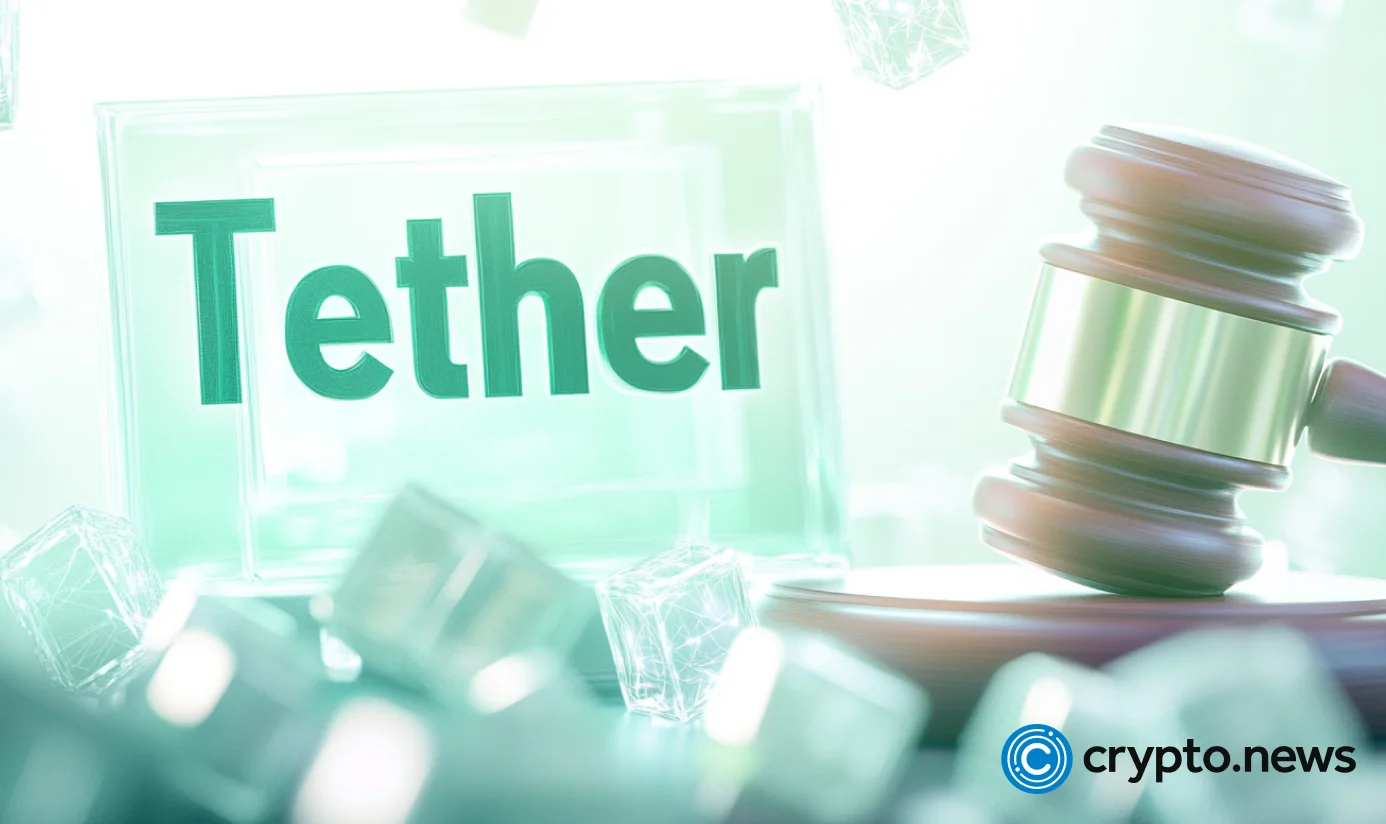
Christopher Harborne entered the Sunday Times Rich List in sixth place, as Parliament opened a probe into Farage.
Summary
- Christopher Harborne debuted sixth on the Sunday Times Rich List 2026 with an estimated £18.2bn fortune, largely tied to his Tether stake.
- The Parliamentary Standards Commissioner opened a formal inquiry into whether Farage should have declared Harborne’s £5m personal gift before the 2024 election.
- Harborne has donated over £22m to Reform UK in total, including a £9m contribution that set a record for British political donations.
The Sunday Times Rich List 2026, published on May 15, placed Christopher Harborne sixth among Britain’s wealthiest individuals. His estimated £18.2bn fortune derives primarily from a 12% stake in stablecoin issuer Tether, which carries an estimated valuation of approximately $200bn.
Harborne, who has lived in Thailand for more than 20 years and holds Thai citizenship under the name Chakrit Sakunkrit, is described as the wealthiest British-born person on the 2026 list. The ranking makes him wealthier than the rest of Yorkshire’s top 10 combined.
The publication of his wealth coincided with the opening of a parliamentary standards investigation. On May 15, the Parliamentary Standards Commissioner formally launched a Rule 5 inquiry into whether Farage breached the Commons Code of Conduct by failing to register a £5m gift received from Harborne in early 2024.
Farage has described the payment as an unconditional personal gift to fund his security and said there is “no case to answer.” He also claimed the money was “a reward for campaigning for Brexit for 27 years.” The property purchase of approximately £1.4m he made shortly after receiving the gift had previously drawn separate scrutiny.
Harborne’s donations and Reform UK’s crypto ties
As crypto.news reported when the inquiry was announced, Harborne has given more than £22m to Reform UK since its founding. His £9m donation in August 2025 was described at the time as the largest single political donation from a living individual in British history. Reform UK was the first Westminster party to publicly accept crypto donations.
The scrutiny around Harborne’s financial ties to Farage extends beyond the parliamentary probe. In April, the Liberal Democrats asked the Financial Conduct Authority to examine Farage’s links to Bitcoin treasury firm Stack BTC, after he appeared in promotional material while holding a 6.31% stake.
Crypto.news tracked the property story as it developed, and earlier crypto.news reported on the FCA referral in full. If the standards commissioner finds a breach, sanctions could range from a formal apology to a Commons suspension and a potential by-election in Clacton.

It was just a couple of days ago when the crypto community was celebrating the progress on the CLARITY Act and the subsequent price revival for BTC and many altcoins. The market leader exploded from under $79,000 to $82,000 in minutes after the bill passed the Senate Banking Committee, but it couldn’t maintain its run and quickly erased all the gains.
Moreover, the bears took it a step further earlier today, pushing the asset to a two-week low of well under $78,000. This comes amid analysts outlining potential reasons for yet another decline, maybe to a new local low of $63,000.
Will BTC Keep Dropping?
The first major warning sign was cited by Ali Martinez, who argued that bitcoin miners have continued to dispose of their assets. According to data he took from CryptoQuant, miners have reduced their holdings by 800 BTC, worth around $64 million, in the past several days alone. Martinez warned that this “increase in selling pressure could soon impact price action.”
Merlijn The Trader weighed in on BTC’s recent performance, especially the surge to $82,000 and slightly above that. While many celebrated the move as the end of the bear market, he believes it’s actually a trap.
Moreover, he warned that the cryptocurrency is “setting up for a brutal dump toward $63,000.” He believes this is the biggest bull trap since the early January rejection at $96,000, which ultimately sent the asset plunging to $60,000 within weeks.
WARNING:
The relief rally everyone is celebrating. Is the trap.
Bitcoin setting up for a brutal dump toward $63,000.
The biggest bull trap since the $96K rejection.Think about it.
You need buyers to sell to.
The relief rally creates them.Sell in May. Death Cross. Head… pic.twitter.com/rHDSjbrSHR
— Merlijn The Trader (@MerlijnTrader) May 16, 2026
Or Maybe It’s Not So Bad?
In contrast to Merlijn’s opinion, Michaël van de Poppe said that just because BTC has seemingly lost the $80,000 support, it doesn’t mean that it necessarily will “crash all the way towards new lows.”
Instead, he mentioned the COVID-19-induced crash and the subsequent recovery, which didn’t see major 10% corrections at all. Back then, BTC “went up in a straight line.”
“Sure, after such a bounce, it’s normal to be expecting some consolidation and profit-taking; however, it’s irrational to be expecting a 20% correction on the $NQ,” he concluded.
The post Bitcoin Price Dips Below $78K as Analyst Expects Another ‘Brutal Dump’ appeared first on CryptoPotato.

Disclosure: This article does not represent investment advice. The content and materials featured on this page are for educational purposes only.
Chainlink struggles near $10 as investors debate recovery potential versus growing interest in crypto presales.
Summary
- Chainlink trades near $10 in 2026, stuck below $14 resistance despite strong partnerships and rising cross-chain activity.
- MEPU is a meme P2E game token using established meme communities, where gameplay drives demand and in-game token utility.
- PTRUE is a prediction market AI tool presale that aggregates data and produces analysis for event-based betting decisions.
Chainlink has been one of the more frustrating charts to watch in 2026. The token trades around $10 in mid-May, down roughly 40% over the past year and still sitting well below the $14 resistance that has capped every recovery attempt for months.
That gap between price and network activity is the whole reason the Chainlink price prediction debate has been so heated. Some see it as a clear setup for a recovery. Others have moved their attention to presales.
Chainlink price prediction through May 2026
For the remainder of May, short-term projections place LINK in a narrow range. Around May 20, the price is predicted to fall to $9.86, then gradually rise through the second half of the month, ending May close to $10. Most days range from $9.97 to $10.17. The month’s high is $10.21, while its low is $9.86.
What is going on beneath the price is the interesting part. In the first quarter of 2026, Chainlink’s cross-chain volume exceeded $18 billion. In addition to an increasing number of organizations in the real-world asset area, the network has partnerships with SWIFT, Visa, Robinhood, and Aave. The news of a larger integration with DTCC, which is scheduled for late 2026, could cause the price to rise.
The key level is currently $14.37. For months, LINK has attempted and failed. The price is likely to remain in this range until that happens. The larger move would have to wait until later in the year because the May forecast does not come close.
Meme Punch: The other side of the question
Most new meme projects spend months trying to build a community from nothing. Most of them fail. Meme Punch takes a different route. The game uses five characters that already have big communities behind them: Pepe, Doge, Floki, Brett, and Pudgy Penguin. Each one comes with an audience that has been around for years.
The game is a medieval fighting arena. Players pick one of the five knights and fight other players. Wins pay out in MEPU. Inside the game, the token is used to buy weapons, skins, and special abilities, so the more people play, the more the token gets used.
MEPU runs on Ethereum. Total supply is 10 billion. Presale takes 40%, staking 14.5%, and liquidity 12%. Buyers can pay with ETH, BNB, SOL, USDT, USDC, or a card. The current presale price and APY are on the official website.

Poly Truth: A different kind of presale
The other notable presale is Poly Truth, which falls into an entirely different category. It is neither a game nor a meme coin. It is a research tool made for prediction market players.
Anyone betting on an election, a sports result, or a price target has the same problem. The information they need is spread across news sites, social platforms, and historical data, and there is rarely enough time to read all of it before placing a bet. Poly Truth does that work in the background. It pulls the data together, runs the analysis, and outputs a written brief on which side of the bet has the strongest case.
$PTRUE runs on Ethereum with a total supply of 11.5 billion. Presale takes 40%, liquidity 17%, and staking 10%. The team allocation has a 3-month cliff and a 12-month vest. The contract has been audited by SolidProof and Coinsult, with both reports public.
Reading all three together
LINK is the known infrastructure play. It already trades on every major exchange, the network is doing record volume, and the price has been pinned to the same range for months while the fundamentals quietly build up. The upside is there if $14.37 breaks, but the wait could be long, and the move depends as much on the broader market as it does on Chainlink itself.
Meme Punch and Poly Truth sit at different points. Both are still in presale. Neither has a public market price yet. The risk is higher, and the upside is harder to estimate. They are also smaller positions, since presale exposure is limited by stage caps rather than open market liquidity.
The honest answer to the question is that the three projects are doing different jobs. A LINK position is a bet on infrastructure adoption playing out over the rest of the year. A presale position is a bet on a specific project hitting its launch and finding a market once it lists.
Disclosure: This content is provided by a third party. Neither crypto.news nor the author of this article endorses any product mentioned on this page. Users should conduct their own research before taking any action related to the company.
Crypto World
Wall Street’s Elite Quietly Accumulated These 5 Stocks in Q1 2026 – Microsoft (MSFT), Alphabet (GOOGL) Top the List

Key Takeaways
- Pershing Square initiated a fresh Microsoft position following the stock’s decline, simultaneously divesting its entire Alphabet holdings.
- Berkshire Hathaway massively expanded its Alphabet ownership, jumping from 18 million shares to 58 million shares—a position valued at approximately $16.6 billion.
- In an unexpected development, Berkshire established a significant Delta Air Lines position valued between $2.65 billion and $3 billion.
- Amazon received capital inflows from both Appaloosa Management and Pershing Square, even as Berkshire reduced its stake.
- Both Appaloosa and Pershing Square expanded their Uber holdings, signaling sustained conviction in platform-based business models.
Recent 13F disclosures reveal where Wall Street’s most influential investors deployed capital during Q1 2026. These regulatory filings arrive with a mandatory delay, capturing portfolio positions as they stood on March 31, 2026.
While these documents don’t disclose current holdings, they provide valuable insight into where institutional capital was flowing just months ago.
This quarter’s investment patterns highlighted several dominant trends: artificial intelligence infrastructure, cloud services, transportation recovery, online commerce, and platform economics. Here’s an in-depth look at the five most notable stock positions.
Microsoft and Alphabet: Strategic AI and Cloud Repositioning
Pershing Square, led by Bill Ackman, established an entirely new Microsoft position throughout Q1. Reuters noted that Ackman capitalized on the stock’s pullback, viewing the corrected valuation as compelling.
This strategic entry coincided with Pershing Square’s complete divestiture of Alphabet shares. The simultaneous moves represent a deliberate reallocation—shifting from one AI and cloud infrastructure leader to another.
Microsoft offers extensive exposure to Azure cloud services, Microsoft 365 Copilot integration, GitHub developer tools, comprehensive enterprise solutions, and its strategic OpenAI collaboration. These elements form the core of the AI narrative that continues to captivate investors throughout 2026.
Conversely, Berkshire Hathaway pursued the opposite strategy. The Omaha-based conglomerate dramatically escalated its Alphabet position, expanding from approximately 18 million shares to 58 million shares. Barron’s valued this holding at around $16.6 billion.
This substantial investment signals strong conviction in Google Search dominance, YouTube’s advertising power, expanding cloud services, and Alphabet’s AI infrastructure. The diverging strategies demonstrate that even sophisticated investors disagree on which AI powerhouse offers superior returns—though both Microsoft and Alphabet remain central to that conversation.
Delta, Amazon, and Uber Complete the Portfolio Additions
Among the quarter’s most unexpected developments, Berkshire Hathaway initiated a substantial Delta Air Lines position. Reuters valued the stake at approximately $2.65 billion, while Barron’s estimated it closer to $3 billion.
This investment carries particular significance given Berkshire’s post-pandemic withdrawal from airline investments. A renewed Delta position represents a contrarian bet within an industry confronting elevated fuel expenses and macroeconomic headwinds.
Amazon and Uber Maintain Institutional Appeal
Amazon drew investment from multiple prominent funds. David Tepper’s Appaloosa Management acquired 2.1 million Amazon shares, elevating it to the fund’s top position at approximately $900 million. Pershing Square simultaneously increased its Amazon stake by 19%.
Meanwhile, Berkshire reduced its Amazon holdings during the identical timeframe. Nevertheless, continued accumulation by Tepper and Ackman establishes Amazon as one of the quarter’s most scrutinized positions.
Uber completed the five-stock roster. Appaloosa purchased roughly 4.5 million Uber shares, expanding its position to approximately $455 million. Pershing Square maintained Uber as a substantial portfolio component.
Uber appeals to institutional investors through its diversified revenue streams spanning ride-sharing, food delivery, advertising services, and strengthening profitability metrics. While not classified as traditional technology, it exemplifies the platform-business architecture that institutional funds increasingly favor.
Collectively, these five equities—Microsoft, Alphabet, Delta, Amazon, and Uber—illustrate what elite investors prioritized entering 2026: established business quality, artificial intelligence exposure, and platform-driven expansion.

Key Highlights
- Nvidia’s Q1 2026 SEC filing revealed a 47.2 million share position in CoreWeave (CRWV), marking a 94.5% expansion from the previous quarter.
- The chipmaker also disclosed ownership of 7.8 million shares in Coherent (COHR), a provider of materials for chips and optical components.
- Both positions reflect holdings recorded as of March 31, 2026, according to regulatory documents.
- Nvidia’s relationship with CoreWeave dates back to 2021, when the cloud provider was still an emerging GPU-focused startup.
- Wall Street analysts maintain a Strong Buy rating on NVDA stock with a consensus price target of $280.31, suggesting approximately 24% potential upside.
A recent SEC disclosure from Nvidia has drawn attention to two companies with strong ties to the artificial intelligence sector. The semiconductor giant revealed expanded stakes in both CoreWeave (CRWV) and Coherent (COHR) based on holdings dated March 31, 2026.
The filing shows Nvidia currently owns 47.2 million Class A shares of CoreWeave. This represents a substantial 94.5% jump from the 24.3 million shares it reported at the conclusion of Q4 2025. The expansion effectively doubles down on Nvidia’s commitment to one of the most rapidly expanding AI cloud infrastructure providers in the market.
CoreWeave, Inc. Class A Common Stock, CRWV
The foundation of CoreWeave’s infrastructure has been built predominantly on Nvidia’s GPU technology. Nvidia’s initial investment came in 2021 when CoreWeave was still operating as a relatively small cloud provider specializing in GPU resources, establishing a partnership that made this recent position increase a logical progression.
Since that early investment, CoreWeave has evolved into a significant player in the AI cloud services space with ambitious growth targets extending through 2026. The company’s platform supports large-scale artificial intelligence operations for corporate customers and has emerged as an important distribution channel for Nvidia’s GPU inventory.
Coherent Investment Highlights Supply Chain Strategy
Beyond the CoreWeave expansion, Nvidia’s filing also documented a 7.8 million share holding in Coherent (COHR). Coherent specializes in manufacturing materials essential for semiconductor production, laser systems, and optical technologies — all crucial elements supporting high-performance computing infrastructure and sophisticated chip assembly processes.
While Coherent may not attract the same media attention as prominent AI companies, it occupies a strategic position within a supply chain segment that offers limited alternatives. As AI systems become increasingly energy-intensive, the need for Coherent’s specialized materials has grown correspondingly.
Together, these two investment positions illustrate Nvidia’s broader approach to securing strategic touchpoints throughout the AI technology ecosystem extending beyond its primary semiconductor operations. Instead of limiting itself to hardware sales, Nvidia is establishing financial interests across cloud computing platforms and the fundamental materials that enable them.
Analyst Outlook on NVDA Remains Positive
Shares of Nvidia declined 4.42% on the trading day following the filing’s release. CoreWeave shares dropped 6.05% while Coherent experienced a 5.55% decline during the same period.
Notwithstanding these single-day declines, the investment community continues to express strong confidence in NVDA. The stock holds a Strong Buy consensus rating supported by 40 Buy recommendations, one Hold rating, and one Sell rating issued within the last three months.
Analysts have established an average price target of $280.31, which indicates potential appreciation of 24.4% from present trading levels.
The regulatory filing captures investment positions as they stood on March 31, 2026, providing a comparison against the holdings reported at year-end 2025. The significantly expanded CoreWeave stake represents the most notable portfolio adjustment during this period.
CoreWeave completed its public market debut earlier in 2026 and has rapidly become one of the most monitored AI infrastructure investments available to market participants. Nvidia’s decision to substantially increase its ownership adds another significant dimension to CoreWeave’s market narrative.

Disclosure: This article does not represent investment advice. The content and materials featured on this page are for educational purposes only.
Memecoins remain dominant as Poly Truth and Meme Punch presales gain traction in 2026 community-driven cycle.
Summary
- Memecoins remain a multi-billion-dollar sector driven by community strength, not technical fundamentals or tokenomics.
- Poly Truth (PTRUE) is a presale tool using data analysis for prediction markets, with staged pricing and audited contracts.
- Meme Punch (MEPU) is a PvP play-to-earn memecoin where demand is tied to gameplay, rewards, and in-game token utility.
Memecoins are not going away. The category is worth tens of billions in market cap, and daily trading volume on these tokens often beats whole sectors of more “serious” crypto.
The value sits in the community, not the tokenomics. A memecoin with an active community will hold through cycles that wipe out projects with better whitepapers.
The best memecoins to buy now share that one thing in common. The list below covers two presales worth knowing about and three memecoins that have shown the strongest momentum this month.
Best crypto presales in the meme and community space
Poly Truth (PTRUE)
Poly Truth is in stage 1 of its presale at $0.001190 per token, with around $184,900 raised against the $194,832 cap for this stage. The next price step is $0.001216, a 2.18% jump that hits when the timer runs out or the stage cap fills, whichever comes first.
Someone using the tool submits a prediction question – an election outcome, a sports result, or oil hitting a price target. The tool pulls data from across the web, runs the analysis, and outputs a written brief on which outcomes the evidence supports.
Token holders get access to the tool once it goes live, with deeper access for larger holders. The contract has been audited by SolidProof and Coinsult, with both reports public.
Meme Punch (MEPU)
Meme Punch is the memecoin presale on this list. Rather than launching a new character and hoping a community forms around it, the project skips that step by tying its play-to-earn game to five communities that already exist: Pepe, Doge, Floki, Brett, and Pudgy Penguin. All five are from meme coin culture and dressed in medieval armor for the game.
The game runs on PvP combat. Players pick one of the five knights, fight other players, and climb a leaderboard. Wins pay out in MEPU. Inside the game, the token is spent on weapons, character skins, and special abilities, which keeps demand tied to how active the player base is.
MEPU runs on Ethereum with a 10 billion total supply, 40% to presale and 14.5% to staking. Current presale price and APY are on the official website.

Top trending memecoins right now
Pepe (PEPE)
Pepe debuted in April 2023 without a central ownership structure, a team tax, or a presale. The project was left to rely entirely on community activity after the contract was renounced and the liquidity pool tokens were burned. Within weeks of its launch, its market capitalization reached $1.6 billion, and it continues to be one of Ethereum’s most actively traded meme coins.
With a market capitalization of $1.61 billion and a 24-hour trading volume of $296.36 million, PEPE is trading at $0.0¢3899 as of mid-May 2026. The number of holders exceeds 553,000 wallets. The price is significantly below previous highs, down 70.34% over the previous year.
Pudgy Penguins (PENGU)
Beginning as an Ethereum NFT collection, Pudgy Penguins grew into one of the most famous cryptocurrency brands outside of trading circles. Since the launch of the PENGU token in December 2024, the project has expanded to include partnerships, merchandise, and community projects based around the original artwork.
PENGU has a market capitalization of $551.86 million, a 24-hour trading volume of $103.62 million, and a price of $0.008779 as of mid-May 2026. Out of a maximum of 88.88 billion, the circulating supply is currently at 62.86 billion. The number of holders is slightly less than 850,000 wallets, which is high for a project this size.
Floki (FLOKI)
Floki, a community-supported project named for Elon Musk’s dog, was introduced in July 2021. It began as a Shiba Inu-style meme coin and has since expanded to include a DeFi platform, an NFT marketplace, an education website, and a play-to-earn game named Valhalla. The token operates on the BNB and Ethereum chains.
With a market capitalization of $314.19 million and a 24-hour trading volume of $36.47 million as of mid-May 2026, FLOKI is trading at $0.00003294. The number of wallets held is close to 559,000. Out of a total of 9.64 trillion, 9.53 trillion are in circulation.
What makes a memecoin worth holding
Even though the five selections listed above are in different stages, they all have one thing in common that is important for this category. Everybody has a community that keeps going over time.
Pepe has focused entirely on culture. The token has a stable base of holders who trade it because the meme is still popular, but it has no utility or roadmap. By using brand reach, Pudgy Penguins was able to attract individuals who would not typically interact with cryptocurrency. Floki achieved this by creating use cases and tools based on the original meme.
At the beginning of that same path are the two presales. By creating a research tool rather than a token to hold, Poly Truth is approaching the trust angle from a different point of view than Meme Punch, which is anchoring to communities that already exist.
Disclosure: This content is provided by a third party. Neither crypto.news nor the author of this article endorses any product mentioned on this page. Users should conduct their own research before taking any action related to the company.

Man Utd reach agreement with Michael Carrick for vacant manager job

Spurs Star at 14% Chance as Conference Finals Loom

Microsoft Hit by $3.2 Billion Sell-Off From Bill Gates Foundation

Manchester United reach agreement with Casemiro over contract clause amid transfer speculation

US brings back mandatory military draft registration

Steven Gerrard disagrees with Gary Neville over ‘shock’ Chelsea and Arsenal claim | Football


-

 Fashion5 days ago
Coffee Break: Travel Steam Iron
-

 Fashion18 hours ago
Weekend Open Thread: Theory – Corporette.com
-
 Crypto World11 hours ago
BloFin War of Whales 2026 Grand Prix opens registration for $5M trading championship
-

 Politics5 days ago
What to expect when you’re expecting a budget
-

 Fashion5 days ago
What to Know Before Buying a Curling Wand or Curling Iron
-

 Tech6 days ago
Auto Enthusiast Carves Functional Two-Stroke Engine from Solid Metal
-
 Business7 days ago
Ignore market noise, India’s long-term story intact, say D-Street bulls Ramesh Damani and Sunil Singhania
-

 Tech5 days ago
GM Agrees To Pay $12.75 Million To Settle California Lawsuit Over Misuse Of Customers’ Driving Data
-

 Tech1 day ago
Tech Moves: Microsoft AI leader jumps to OpenAI; former AI2 exec joins Meta; and more
-

 Crypto World6 days ago
CZ says US crypto rivals tried to block Trump pardon
-

 Crypto World18 hours ago
E-Estate Announces 1 Year Live: Washington DC Summit as Real Estate Tokenization Enters Its Next Phase
-

 Tech5 days ago
GM agrees to $12.75M California settlement over sale of drivers’ data
-
Crypto World3 days ago
Bitcoin Suisse expands with Digital Asset License and Investment Business Act Registration Approval in Bermuda
-

 Politics4 days ago
Pakistan to enter Chinese capital market as war inflation bites
-
 Crypto World2 days ago
Google’s Gemini AI Predicts Incredible Solana Price by the End of 2026
-

 Crypto World3 days ago
Bitcoin Suisse expands with Digital Asset License and Investment Business Act Registration Approval in Bermuda
-

 Politics6 days ago
Sky News Presenter Says Keir Starmer Is Not Waving But Drowning
-
Crypto World7 days ago
Hacker Drains $5.9M From Ethereum Liquidity Provider TrustedVolumes
-

 Fashion6 days ago
Amazon Sundays: Spring Glassware & Vases
-

 Business20 hours ago
H&R Real Estate Investment Trust (HR.UN:CA) Q1 2026 Earnings Call Transcript
You must be logged in to post a comment Login