Connect with us
DAPA Banner
DAPA Coin
DAPA
COIN PAYMENT ASSET
PRIVACY · BLOCKDAG · HOMOMORPHIC ENCRYPTION · RUST
ElGamal Encrypted MINE DAPA
🚫 GENESIS SOLD OUT
DAPAPAY COMING

Tech

Old Oil and Gas Wells Could Find Second Life Producing Clean Energy

Published

on

As states seek out much-needed supplies of clean, reliable energy, some are looking to an unconventional source: abandoned oil and gas wells harnessed for geothermal heat.

Millions of inactive wells are littered across the United States, the relics of earlier eras of fossil fuel production. A large number of the sites have no official owner, and many are still polluting groundwater and leaking heat-trapping methane. The country has barely scratched the surface in dealing with this problem.

Policymakers in both Republican- and Democratic-led states are exploring whether these sites could instead be converted into new wells for producing geothermal energy. The holes are already drilled in the ground, after all. And regions with widespread oil and gas development have rich subsurface data that geothermal firms need in order to determine where and how to build their carbon-free systems.

The concept is relatively new and largely untested, though scientists and startups are working to change that. States are also laying the groundwork for action by lifting regulatory hurdles and launching in-depth studies.

Advertisement

In Oklahoma, the state Senate is considering a bill that would create a process for companies to buy abandoned oil and gas wells and repurpose them for geothermal energy or underground energy storage. Oklahoma has identified over 20,000 such wells, and state regulators estimate that it would take 235 years and hundreds of millions of dollars to plug all of them. Fixing a single old well can cost anywhere from $75,000 to $150,000 or more, by some calculations, depending on where it’s located and how complicated it is to clean up.

The Well Repurposing Act, which passed Oklahoma’s House in March, is modeled after a similar law that New Mexico adopted last year to address its 2,000-plus orphan wells.

The Oklahoma bill ​“recognizes that these wells are a liability, and that there may be a way to turn them into some sort of revenue generation and give them value,” said Dave Tragethon, communications director for the nonprofit Well Done Foundation, which works to find and cap abandoned oil and gas wells nationwide. ​“And if there’s value, that means there’s more of a willingness to address them and more of an opportunity to raise funding.”

In Alabama, legislators passed a law last month that allows the state to approve and regulate the conversion of oil and gas wells to tap alternative energy resources like geothermal. North Dakota adopted a bill last year requiring a legislative council to study the feasibility of using nonproductive wells to generate geothermal power. And in Colorado, state agencies just launched a technical study to evaluate the potential of repurposing old wells for geothermal development and carbon capture and sequestration.

Advertisement

These efforts reflect the growing bipartisan support for geothermal energy, which has largely remained unscathed by the Trump administration’s efforts to block renewable energy projects. The energy resource has the potential to help meet the nation’s soaring energy demand while also slashing planet-warming emissions from electricity and heating.

Converting Wells Is Enticing but Complicated

Geothermal systems work by circulating fluids underground to capture naturally occurring heat, which can then be used to drive turbines for generating electricity or to directly warm the air and water in buildings. The industry is gaining momentum thanks to recent advances in drilling methods and technologies that are making it technically possible or financially viable to access geothermal energy in more places.

Many of those breakthroughs have come from the oil and gas industry, whose skilled workforce of drilling engineers and geoscientists, and deep corporate pockets, have helped launch startups and deploy cutting-edge systems. However, most of that expertise and funding is being poured into building new projects—not figuring out how to retool leaky wells left behind by earlier generations.

Source link

Advertisement
Continue Reading
Click to comment

You must be logged in to post a comment Login

Leave a Reply

Tech

Lost Images From the 1945 Trinity Nuclear Test Restored

Published

on

Editor’s note: If you’d like to pinpoint the instant when the world entered the nuclear age, 5:29:45 a.m. Mountain War Time on 16 July 1945, is an excellent choice. That was the moment when human beings first unleashed the power of the nucleus in an immense, blinding ball of fire above a gloomy stretch of desert in the Jornada del Muerto basin in New Mexico. Emily Seyl’s Trinity: An Illustrated History of the World’s First Atomic Test (The University of Chicago Press) offers hundreds of startlingly vivid photographs of the Manhattan Project that emerged from a 20-year restoration effort. This excerpt and the accompanying photos record the massive effort to capture the awesome detonation of “the Gadget.”

aspect_ratioBook cover \u201cTrinity\u201d showing atomic blast reflected in a camera lens.Reprinted with permission from Trinity: An Illustrated History of the World’s First Atomic Test by Emily Seyl with contributions by Alan B. Carr, published by The University of Chicago Press. © 2026 by The University of Chicago. All rights reserved.

In the North 10,000 photography bunker, Berlyn Brixner was listening to the countdown on a loudspeaker, his head inside a turret loaded with cameras and film. He was one of the only people instructed to look toward the blast—through his welder’s glasses—ready to follow the path of the fireball as it launched into the sky. The two Mitchell movie cameras at his station would deliver the best footage to come of the Trinity test, used by Los Alamos scientists to make some of the first measurements of the effects of a nuclear explosion.

When the detonators fired, the cameras captured what Brixner could not have seen—the very first light of a violent, silent sea of energy unfurling into the basin. As 32 blocks of high explosives erupted all together, their incredible force surged inward toward the sleeping plutonium core, compressing the dense sphere of metal instantaneously from all sides and bringing its atoms impossibly close together. A carefully timed burst of neutrons sowed momentary, uncontrolled chaos, and then, as quickly as it began, the fission chain reaction ended. Footage from a high-speed Fastax camera in Brixner’s bunker, shot through a thick glass porthole, shows a translucent orb bursting through the darkness less than a hundredth of a second after detonation, as a rush of heat, light, and matter blew apart the Gadget.

When the brightness faded enough for witnesses to make out ground zero, they saw a wall of dust rise up around a brilliant, shape-shifting, multicolored ball of flames—forming a fiery cloud that shot into the sky atop a twisting stream of debris. The camera footage tells a story no less dramatic but hundreds of times more intricate, preserving the moment for scientists to return to again and again to measure and describe the behavior of the fireball and other visible effects with exacting detail. On balance, the photography effort was a huge success, despite only 11 of the 52 cameras producing satisfactory images. By arranging those cameras at intentionally staggered distances, complementary angles, and with a broad spectrum of frame rates and focal lengths, the Spectrographic and Photographic Measurements Group was able to piece together a remarkably complete picture of their subject.

Black and white photo of a thin man wearing soiled, baggy trousers and a white t-shirt standing in a doorway grasping the handle of a small but heavy box. On 12 July 1945, Herbert Lehr, a U.S. Army sergeant and electrical engineer assigned to Los Alamos, delivered the plutonium core to the McDonald ranch house, where the bomb was assembled. Los Alamos National Laboratory

According to the group’s leader, Julian Mack, the more than 100,000 frames that were captured still “give no idea of the brightness, or of time and space scales.” Mack attributed fortune, as much as foresight, to the photographic record that was made, especially during the earliest phase of the blast. Indeed, the explosion was several times more powerful than predicted, and the intensity of its effects overwhelmed many of the cameras and diagnostic instruments. The human observers were similarly overcome. “The shot was truly awe-inspiring,” said Norris Bradbury, the physicist who would succeed Robert Oppenheimer as director of Los Alamos. “Most experiences in life can be comprehended by prior experiences, but the atom bomb did not fit into any preconception possessed by anybody. The most startling feature was the intense light.”

Advertisement

A black and white photo of a man standing on a platform next to a cable-covered cylindrical device that is about the same height as he is. Norris Bradbury, the physicist responsible for the final assembly of the Gadget, stands next to the partially assembled bomb at the top of the shot tower. The cables on the outside of the bomb would transmit the signals to trigger the synchronized detonations of conventional explosives, which would then create the inward-directed shock wave that would compress the bomb’s plutonium core. Bradbury would go on to succeed Robert Oppenheimer as director of Los Alamos on 17 October 1945.Los Alamos National Laboratory

It is a common sentiment that words and even pictures pale in comparison to the experience of the explosion. Even so, soldiers, scientists, and many other witnesses have added their firsthand accounts—often absorbing and poetic—to complement the trove of hard data collected during the test shot. They describe an intense and blinding brightness that filled the basin with daytime; an ominous, darkening cloud rearing its head in eerie silence; the wait for the invisible wave rushing out from the heart of the Gadget; and the mighty roar that arrived at last, in a thunder, and seemed never to leave. Physicist Isidor Isaac Rabi, watching from 20 miles away, remembered, “It blasted; it pounced; it bored its way right through you.”

James Chadwick, head of the British contingent of scientists who joined the Manhattan Project, later said, “Although I had lived through this moment in my imagination many times during the past few years and everything happened almost as I had pictured it, the reality was shattering.”

Sequence of black\u2011and\u2011white photos showing a nuclear explosion mushroom cloud forming The blast, captured with an assortment of high-speed and motion-picture cameras, shows the fireball expanding between 25 milliseconds and 60 seconds, by which time the mushroom cloud is over 3 kilometers high.Los Alamos National Laboratory

And physicist George Kistiakowsky found himself certain that “at the end of the world—in the last millisecond of the Earth’s existence—the last human will see what we saw.”

From Your Site Articles

Advertisement

Related Articles Around the Web

Source link

Continue Reading

Tech

Modder creates a fully working 16GB RTX 3070 using VRAM from a dead AMD GPU

Published

on


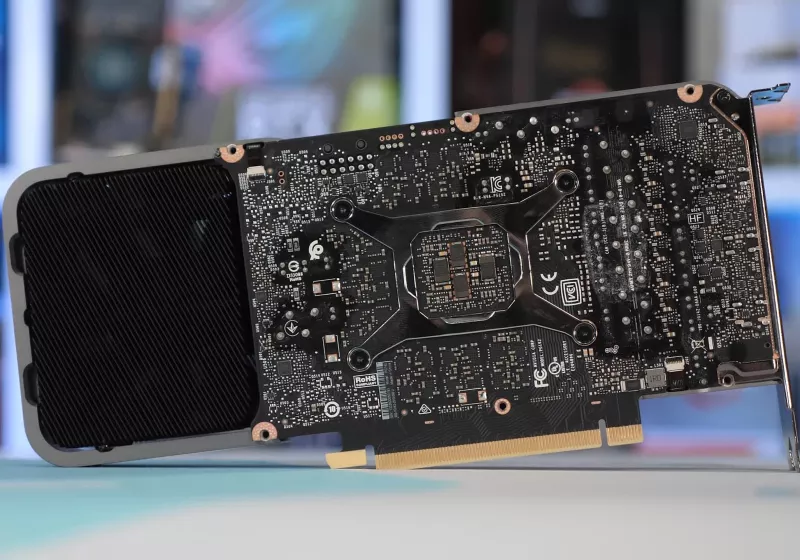
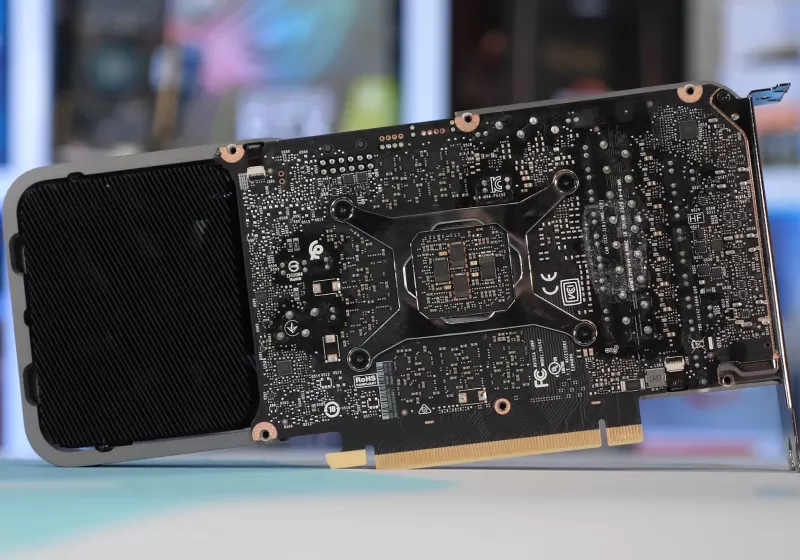
The project comes from ComputerBase forum member AssassinWarlord, who started with a Gigabyte RTX 3070 Gaming OC and an AMD Radeon RX 6900 XT with a dead GPU.
Read Entire Article
Source link

Continue Reading

Tech

New Apple Card promotion could net applicants free AirPods Pro

Published

on

Apple is reportedly preparing a major Apple Card signup push that would effectively give new customers free AirPods Pro 3, a sharp shift in strategy as Chase prepares to take over the troubled program from Goldman Sachs.

Apple has largely avoided the large signup bonuses commonly used across the credit card industry. Early Apple Card marketing focused on privacy features, Daily Cash rewards, Wallet integration, spending transparency, and the titanium physical card.

Bloomberg‘s Mark Gurman claimed on May 15 that Apple plans to launch a promotion in retail stores during the week of May 18. Under the rumored offer, customers who sign up for a new Apple Card and purchase AirPods Pro 3 would receive $249 in cash back, effectively offsetting the full retail price of the earbuds.

Neither Apple nor JPMorgan Chase has publicly confirmed the promotion. Still, the reported offer would represent one of the largest public Apple Card signup incentives since the credit card launched in 2019.

Advertisement

There have been bonuses for referrals that go to the new cardholder, but they’re usually around $75 and max out at $200 with several conditions. The new, more aggressive offer could represent a shift in strategy.

Apple Card is entering a new phase under Chase

Apple confirmed in January 2026 that JPMorgan Chase would take over the Apple Card portfolio over the next 24 months. The move ends a partnership that became increasingly difficult for Goldman Sachs to sustain after years of losses and operational problems tied to the card business.

Reports tied to the transition said Goldman sold roughly $20 billion in Apple Card balances at a significant discount after delinquency rates climbed higher than expected.

Analyst estimates during Apple Card’s early rollout suggested Goldman Sachs spent roughly $350 to acquire each new customer. The AirPods Pro 3 promotion would still represent a substantial acquisition cost, though potentially lower than the figures associated with the original launch period.

Advertisement

Apple wouldn’t necessarily absorb the full $249 retail cost internally. A banking partner such as Chase could also cover part of the promotion cost in exchange for acquiring long-term Apple Card customers.

White Apple credit card labeled Michael Ohara resting on a smartphone displaying the Apple Card app with spending summary, activity graphs, and payment options on a dark screenApple Card

Credit card issuers routinely spend hundreds of dollars upfront to win new customers. Banks can justify that cost when interchange fees, interest charges, subscriptions, and long-term retention produce more revenue over several years.

Apple Stores are becoming customer acquisition channels

The reported promotion would also expand the role of Apple’s retail stores beyond hardware sales and technical support.

Apple Stores already function as onboarding centers for services including AppleCare, iCloud+, Apple One, and device financing. A large-scale Apple Card signup campaign tied to hardware would push the stores further into functioning as customer acquisition channels.

The timing also fits Apple’s larger business strategy. Smartphone growth has slowed globally, and Apple has leaned more heavily on recurring services revenue and ecosystem retention to support long-term growth.

Advertisement

Products including Apple Card, Apple Pay, high-yield savings accounts, and installment financing now play a larger role in Apple’s services growth strategy. The company will likely lean onto more aggressive customer acquisition promotions in the future, at least, if this rumor proves true.

Source link

Advertisement
Continue Reading

Tech

Apple’s treatment of AI coding apps could be shifting with Replit

Published

on

Replit has released its first iPhone app update in four months after resolving an App Store review dispute with Apple over how AI-generated apps can be previewed and developed on iOS.

CEO Amjad Masad said on May 15 that Replit had “worked things out with Apple” and published its first iPhone app update in four months. The update brings Replit Agent 4 to mobile users, along with support for parallel agents, team collaboration through merge flows, and project viewing across workspaces.

The update follows a dispute that began after Apple reportedly pushed back on new versions of the App Store app in March. Reporting around the conflict said Apple objected to how Replit let users preview AI-built apps on iPhone, an area tied to Apple’s long-standing restrictions around downloaded and dynamically executed code.

Replit belongs to a fast-growing category of “vibe coding” tools that let users describe software in plain language and have AI generate the code. Desktop versions of those tools resemble modern cloud development environments where users can build, test, and modify apps through conversational prompts.

Advertisement

Running the same workflow on an iPhone raises a tougher App Store question because the app can create interface layouts, preview software behavior, and deploy projects from a mobile device. Apple has historically restricted apps that change functionality after review to prevent unreviewed software from effectively operating inside another App Store app.

Replit is testing the edge of Apple’s App Store rules

Apple has not explained what changed between the March App Store dispute and Replit’s newly approved update. Replit CEO Amjad Masad said the companies “worked things out” after four months without updates.

Neither company explained whether Replit changed how the app previews AI-generated software on iPhone. Apple isn’t blocking AI coding tools outright, and the company continues adding AI-assisted development features to Xcode.

Developers already use a wide range of AI tools to build software for Apple’s platforms, including iPhone, iPad, and Mac apps. Instead, Apple’s concern appears to center on where AI-assisted development starts resembling its own runtime environment inside iOS.

Advertisement

Chatbots that explain code fit comfortably inside the App Store, though apps that generate, preview, and package software from an iPhone create a much harder review and security problem.

Replit’s update also arrives as the company tries to pull users from other vibe coding platforms. A promotion tied to the release lets users import projects from Lovable, Base44, and V0 into Replit, then use Replit Agent to turn them into mobile apps.

Apple needs AI developers without losing platform control

The Replit dispute highlights the position Apple faces as AI agents move from experimental tools into real software development workflows. Apple wants developers building AI-powered apps for iOS and iPadOS, though the App Store review system was originally designed around static apps approved before reaching users.

AI coding tools disrupt that model by generating software continuously, quickly changing projects, and giving nontechnical users a way to build apps without Xcode or a Mac. Apple’s review process becomes much harder to manage when software behavior can evolve rapidly after an app reaches users.

Advertisement

Apple has strong reasons to be cautious because an iPhone app that behaves like an unreviewed software environment creates obvious security, moderation, and platform control concerns. Overly rigid enforcement of older App Store rules could also make iOS less welcoming to one of the fastest-growing software categories in years.

Replit’s latest update carries more significance than a routine App Store release because it suggests Apple is still willing to allow AI coding apps on iPhone under certain conditions. WWDC begins June 8, and AI agents are expected to become a larger part of Apple’s developer strategy.

Advertisement

Source link

Continue Reading

Tech

What Does 2CT Mean On Michelin’s Motorcycle Tires?

Published

on


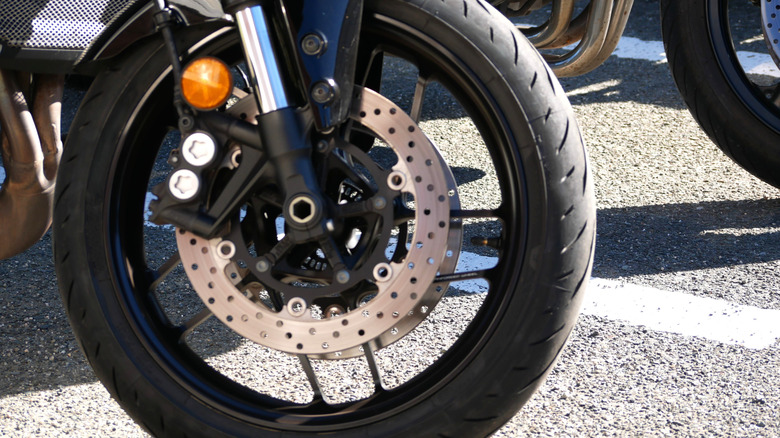
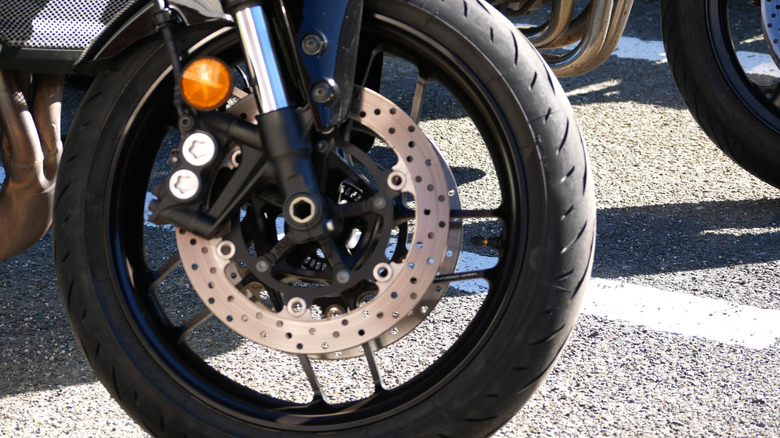
Many Michelin tires built for sports bikes today have 2CT stamped onto the sidewall. And if you’ve ever wondered what that means, it actually does stand for something — it isn’t one of those machine-generated model codes. 2CT stands for Two Compound Technology, and it’s Michelin’s exclusive shorthand that conveys the tire is made up of two different rubber recipes. This is not the only useful feature on a Michelin tire, but it’s one of the more telling ones.

It’s not like these two compounds are ground into paste and distributed equally around the tire, though. One of them is actually limited to just the middle strip, while the other takes up the rest. The middle of a motorcycle tire takes the brunt of regular riding, since bikes obviously spend most of their time rolling in straight lines. But when you lean into a corner, especially at high speeds, that’s when the shoulders come into play. Because of this, both sections end up wearing at very different rates, so it makes sense to build them out of different materials to match the different conditions they are subject to.

That’s exactly what Michelin did. They tossed a harder compound into the middle, one that favors longevity and high wear resistance. Meanwhile, the shoulders got a more supple compound, reportedly 20% softer than the center, with the goal of maximizing mechanical grip around corners. The exact differences in materials between the two hasn’t been officially revealed, though the tire in its entirety uses silica-infused rubber, aramid fibers, and radial construction.

Advertisement

How 2CT came to be

2CT tires get a lot more interesting for racing enthusiasts once you dig into their history. These were initially designed for Michelin’s racing program way back in 1994. At the time, they weren’t officially labeled 2CT yet, and were simply referred to as dual-compound tires. From there, the tire took a good decade to filter down into road-legal designs consumers could buy. The first consumer-oriented model, the Power Race, was launched in 2005, and was the first tire to wear the 2CT badge. But even then, it was strictly track-focused.

Advertisement

Four years later, motorcyclists were finall treated to the first proper road-going tire to use the 2CT badge. This was the Pilot Power 2CT, which dropped in 2009 and is still in production today.

One quirk worth flagging about this line is that while the Pilot Power 2CT was the first to feature the 2CT branding, the meaning of 2CT has since expanded. Today, it’s evolved from a specific model identifier into a universal label for all tires from the company using the same technology. So 2CT now also shows up on scooter rubber and ADV tires, like is the Anakee Adventure 2, an 80/20 adventure-touring tire built for riders who also go off-road occassionally.

There’s another newer and upgraded version worth mentioning called 2CT+, which was first introduced on the Power RS tire back in early 2017. It packs a harder layer of rubber underneath the soft shoulder compound, in order to offer a firmer ride for the everyday street rider. Today, Michelin Pilot Power 2CT tires typically cost between $147 and $195 per tire and can be picked up both individually and in sets. Beyond Michelin, most major motorcycle tire brands offer their own dual-compound options now, although Michelin will forever be recognized for getting there first.

Advertisement


Source link

Advertisement
Continue Reading

Tech

Doom's original soundtrack is now preserved by the Library of Congress

Published

on


The Library of Congress has added Bobby Prince’s 1993 Doom soundtrack to the National Recording Registry, naming it one of 25 recordings selected this year for their cultural, historical, or aesthetic importance.
Read Entire Article
Source link

Continue Reading

Tech

One in seven Brits swapped their GP for ChatGPT, study finds

Published

on

AI + ML

Patients are using chatbots for medical advice, while the NHS is still debating where AI belongs

Brits are now asking chatbots about mysterious lumps and weird rashes instead of calling their GP, which is probably not the digital healthcare revolution anybody meant to build.

A new study from King’s College London found that one in seven people in the UK have used AI instead of contacting a doctor or healthcare service, while one in ten said they had turned to chatbots rather than professional mental health support.

Advertisement

Convenience was the biggest reason, cited by 46 percent of respondents, closely followed by curiosity at 45 percent. Another 39 percent said they used AI because they were unsure whether their symptoms were serious enough to bother a GP in the first place. 

The report, based on a survey of more than 2,000 adults, suggests that AI systems are quietly becoming Britain’s unofficial second-opinion service while regulators are still arguing about what counts as “AI-enabled healthcare” in the first place.

However, some respondents said the chatbot conversations ended up replacing medical care altogether. Around one in five respondents said chatbot advice discouraged them from seeking professional help, and 21 percent said they skipped contacting a healthcare provider because of something the AI told them.

Public confidence in AI healthcare also looks shaky. The survey found Britons are almost perfectly split on whether AI should be involved in clinical decision-making, with 37 percent supporting its use and 38 percent opposing it.

Advertisement

Safety and accuracy worries topped the list of public concerns about NHS AI use. Women, in particular, were less comfortable with the idea than men, and far more likely to say patients should be told when AI is involved in their care.

Oddly, younger adults were among the most skeptical. Nearly half of 18 to 24-year-olds opposed clinical AI use, compared with 36 percent of people over 65.

The public also appears to think AI has already taken over GP surgeries to a much greater extent than is the case. Respondents guessed that around 39 percent of GPs use AI in clinical decision-making, when the actual figure is closer to 8 percent.

Professor Graham Lord, executive director at King’s Health Partners, warned that responsibility for AI mistakes often lands on clinicians even when they have little control over the systems being deployed.

Advertisement

“When something goes wrong with AI, responsibility is often placed on clinicians, even where they have limited control over how AI tools are introduced,” Lord said.

Which sounds suspiciously like someone in healthcare has already seen the incoming paperwork. ®

Source link

Advertisement
Continue Reading

Tech

Chinese parts already power American cars, and that’s exactly why Congress is panicking

Published

on

TL;DR

Bipartisan US lawmakers introduced the Connected Vehicle Security Act to ban Chinese-linked vehicles, software, and hardware from the American market, as Trump meets Xi Jinping in Beijing. But with 60+ Chinese-owned suppliers already embedded in the US auto supply chain and BYD now the world’s top EV seller, the push exposes a tension between national security concerns and economic reality.


Somewhere in the wiring of the car you drove this morning, there is almost certainly a Chinese component. An airbag inflator. A windshield. A steering column bearing. According to global consulting firm AlixPartners, more than 60 US-based auto suppliers are now owned by Chinese companies, making everything from axles to electronic control units for vehicles that roll off assembly lines in Michigan, Ohio, and Tennessee.

It is against this backdrop, Chinese technology already threaded through the American automobile, that lawmakers in both parties are urging President Donald Trump not to trade away the US car market during his state visit to Beijing this week. The message from Capitol Hill has been blunt: do not use automobiles as a bargaining chip with President Xi Jinping.

Advertisement

The 💜 of EU tech

The latest rumblings from the EU tech scene, a story from our wise ol’ founder Boris, and some questionable AI art. It’s free, every week, in your inbox. Sign up now!

The concern is not hypothetical. In January, Trump told the Detroit Economic Club that he would welcome Chinese automakers building factories on American soil, provided they employed US workers. The remark sent a jolt through an industry that had spent years lobbying successive administrations to keep Chinese vehicles out. It was later walked back, but the damage to nerves, and to legislative calendars, was done.

On May 12, Representative John Moolenaar, the Republican chairman of the House Select Committee on China, and Democratic Representative Debbie Dingell introduced the Connected Vehicle Security Act of 2026. The bill would ban the importation, manufacture, and sale of connected vehicles, software, and hardware linked to China, Russia, North Korea, and Iran. Software prohibitions would take effect on January 1, 2027; hardware restrictions would follow by January 1, 2030. Each violation would carry civil penalties of at least $1.5 million, or five times the transaction’s value, whichever is greater.

Advertisement

A companion version was filed in the Senate by Elissa Slotkin, a Democrat from Michigan, and Bernie Moreno, a Republican from Ohio. Senator Slotkin described Chinese-made connected vehicles as “TikTok on wheels”, a reference to the data-harvesting fears that fuelled the push to divest TikTok from its Chinese parent company. The comparison is not entirely rhetorical: as TNW has reported, Chinese EV content is already flooding American social media through platforms owned by the same conglomerate, shaping consumer demand for vehicles that cannot legally be sold in the US.

The legislation codifies and expands restrictions first put in place under President Biden, whose Commerce Department in January 2025 finalised rules prohibiting connected vehicle technology linked to China and Russia. The legal foundation dates back further still: a 2019 executive order signed by Trump during his first term declared a national emergency over foreign threats to America’s information and communications technology supply chain.

The political logic is straightforward. Michigan and Ohio are battleground states heading into the 2026 midterms and the next presidential race. The auto industry directly employs roughly half a million people in Michigan alone, according to Governor Gretchen Whitmer, who released a statement applauding the legislation. For lawmakers in these districts, even the appearance of opening the door to Chinese carmakers is a political liability.

But the economic logic is more tangled. The average new car in the US now lists for more than $49,000, according to Kelley Blue Book, a figure that has become a quiet crisis for American consumers. In China, shoppers can choose from more than 200 battery-powered models priced below the equivalent of $25,000, according to DCar, a Chinese automotive content platform. BYD’s most popular model, the Seagull, starts at roughly $10,300. The cheapest new electric vehicle available in the US, the Chevrolet Bolt, is expected to retail for $28,995.

Advertisement

BYD overtook Tesla in 2025 to become the world’s largest seller of battery electric vehicles, moving 2.26 million units compared to Tesla’s 1.64 million, a 28% year-on-year increase against Tesla’s roughly 9% decline. The company that Elon Musk laughed at in a 2011 Bloomberg interview has become the industry’s most formidable competitor. Tesla briefly reclaimed the quarterly crown in Q1 2026, but the full-year gap of more than 600,000 units tells the structural story.

Outside the US, the playbook is already running. Chinese-made vehicles captured roughly 19% of sales in Mexico in 2025, according to data from the national statistics agency INEGI and industry bodies, up from less than 1% five years earlier. Mexico has since raised tariffs on Chinese vehicles to 50%. Across Europe, Chinese brands have made significant inroads, and BYD is reportedly in talks to take over certain Stellantis plants to expand production capacity on the continent. Europe’s cumulative EV investment has now passed €200 billion, but much of that capacity is being built by Chinese and Korean firms rather than European champions.

This is the pattern that alarms Washington. Industry groups, steelmakers, unions, and automakers have all pressed the same argument: China’s state-subsidised manufacturers will undercut domestic competitors on price, hollow out the supply chain, and then raise prices once the competition has been eliminated. Dingell invoked the solar panel industry as a cautionary example during a press conference on May 12.

China has a pattern of coming in, subsidising the cost to keep the price lower, destroy an industry and then jack up the price,” Dingell said. “This is about America’s future.”

Advertisement

The Information Technology and Innovation Foundation, a Washington-based think tank that has previously criticised some of Trump’s tariff policies, backed the legislation. Stephen Ezell, the foundation’s vice president for global innovation policy, described Chinese automakers as products of decades of state-backed mercantilism, not normal market competitors. The implication: conventional trade rules cannot apply. Even foreign automakers operating inside China are now partnering with Chinese tech firms because they cannot develop competitive software fast enough on their own, a dynamic that underscores just how far the technology gap has shifted.

The White House, for its part, pushed back on the premise. Spokesperson Kush Desai said in an email that the administration was always seeking investment in America’s industrial resurgence, and dismissed any suggestion that it would compromise national security as “baseless and false.

The question that the legislation cannot fully answer is the one embedded in the supply chain itself. More than 60 Chinese-owned suppliers are already manufacturing in the US. Chinese-made components sit inside vehicles built by American, Japanese, Korean, and European automakers on American soil. Banning finished vehicles and connected technology is one thing; disentangling a supply chain that has been quietly integrating for years is quite another.

Most industry experts agree it is only a matter of time before Chinese cars arrive in the US in some form. One scenario gaining traction involves requiring Chinese companies to partner with American automakers domestically, the same model China itself imposed on foreign manufacturers in the 1990s to build its own industry. The broader tariff landscape adds further complexity, with trade restrictions reshaping technology supply chains on both sides of the Atlantic.

Advertisement

For now, the legislative push represents a rare point of bipartisan consensus: more than 120 House lawmakers signed a letter last month urging Trump to keep Chinese automakers out. The bill’s sponsors are betting that the political cost of inaction outweighs the consumer cost of keeping affordable vehicles off the market.

Whether that calculus holds may depend on what Trump brings back from Beijing. The president said China has agreed to buy 200 Boeing jets and American oil, and not to supply military equipment to Iran, though no independent confirmation from Chinese officials has been found at the time of publication. He described Xi as “all business, no games.” On automobiles, there was silence.

The American auto industry will take that silence as a win. For how long remains an open question.

Advertisement

Source link

Continue Reading

Tech

Japan’s Monster Wolf robot is a $4,000 scarecrow with red LED eyes, and it actually works

Published

on

TL;DR

Japan’s record bear crisis has turned a once-mocked animatronic wolf into essential rural tech, with demand outpacing supply.


Somewhere on a golf course in rural Hokkaido, a mechanical wolf with glowing red eyes is turning its head from side to side, howling at nothing in particular. It looks absurd. It is also, by most available evidence, working.

Monster Wolf is the product of Ohta Seiki, a small Hokkaido-based manufacturer that has been building animatronic scarecrows since 2016. The device is essentially a pipe frame draped in artificial fur, topped with a snarling wolf face fitted with red LED eyes and blue LED tail lights, connected to a speaker system that can broadcast more than 50 recorded sounds, from wolf howls to human voices to electronic noise, audible up to one kilometre away. An infrared sensor detects approaching animals and triggers the display. Prices start at around $4,000.

Advertisement

For most of its life, the product was treated as a gimmick. Nobody is laughing now. Ohta Seiki has received roughly 50 orders in 2026 alone, more than the company typically sees in an entire year, and the backlog has stretched to two to three months. Every unit is assembled by hand.

Advertisement

The reason is Japan’s bear crisis, which has escalated from a recurring nuisance into a national emergency. Bears killed 13 people across the country in the fiscal year ending March 2026, more than double the previous record of six set in fiscal 2023, according to preliminary data from Japan’s Environment Ministry. More than 230 people were injured. Bear sightings topped 50,000 nationwide, roughly double the previous record set two years earlier. The number of bears captured and culled hit 14,601, another all-time high.

The animals have been spotted on airport runways, roaming golf courses, breaking into supermarkets, and wandering near schools. Some northern prefectures reported more than four times as many sightings in April 2026 as the same month the previous year, as bears emerged from hibernation into a landscape that has, in many places, emptied of people. Japan’s rural population has been declining for decades. The country recorded its largest-ever annual population drop in 2024, losing more than 900,000 Japanese nationals in a single year, and its total fertility rate fell to 1.15, the lowest on record.

The connection between depopulation and bear encounters is not incidental. As humans retreat from rural areas, bears expand their range into territory that was previously too busy to enter. Biologist Koji Yamazaki of Tokyo University of Agriculture has described the dynamic simply: depopulation has given bears the opportunity to move into spaces humans once occupied. Fewer people also means fewer hunters. Japan’s strict firearms licensing regime, combined with an ageing population, has sharply reduced the number of licensed hunters available to manage wildlife, leaving local governments scrambling for alternatives.

Monster Wolf is one of those alternatives. Orders come mainly from farmers, golf course operators, and people who work outdoors in rural construction. The device was originally designed to deter deer and boar from destroying crops, and its early field results were strong enough to outlast the initial scepticism. Japan is no stranger to deploying robots for problems that other countries solve with human labour, from robotic bartenders in Tokyo station bars to autonomous vehicle pilots planned for the capital’s streets.

Advertisement

Ohta Seiki is now upgrading the device. A wheeled version, capable of patrolling specific paths or chasing approaching animals, is in development. The company is also exploring AI-powered cameras that could identify the species of an approaching animal and tailor its response accordingly, using different sound profiles for bears, deer, and boar. A handheld version for hikers, anglers, and schoolchildren is planned.

The AI camera upgrade is the most interesting development. If it works, it would transform Monster Wolf from a blunt deterrent, one that fires indiscriminately at anything that triggers its sensor, into something closer to a targeted wildlife management tool. The broader robotics industry is rapidly moving toward AI-integrated physical systems, from China’s smartphone factories retooling for humanoid robot production to wall-climbing inspection robots now deployed across the US Navy’s Pacific Fleet. Monster Wolf is a far simpler machine, but it sits on the same trajectory: a physical device made useful by the addition of sensors and software.

Japan’s government has committed 3.4 billion yen, roughly $22 million, to bear countermeasures, including subsidies for hunters, traps, and monitoring drones. In November 2025, Prime Minister Sanae Takaichi’s administration revised its national countermeasure package, and in March 2026, the central government published a roadmap incorporating regional capture targets. The question of whether robots can meaningfully replace human presence in physical environments is being asked across industries, from elder care to warehouse logistics to home assistance. In Japan’s depopulated countryside, the question is more specific: can a mechanical wolf with red eyes and 50 sound effects do the job that an extinct species and a vanishing human population once did?

The answer, for the moment, appears to be yes, at least within a limited radius. But Ohta Seiki’s two-to-three-month backlog tells its own story. The demand for a $4,000 animatronic wolf is not a sign of a problem being solved. It is a measure of how large the problem has become.

Advertisement

Source link

Continue Reading

Tech

Adding Capabilities To Inexpensive Solar Modules

Published

on

Solar power has gotten cheap enough that putting up panels is among the cheapest ways of providing energy. This isn’t just the case for bulk electricity on a power grid, either; even small devices are easier and cheaper to power with solar than ever before. For example, landscape lighting which once relied on 12V or 24V DC wires all over one’s yard with a transformer and power supply hidden somewhere have partially been converted to simpler individual solar-powered lights now. These small devices can also be given additional capabilities as [Mauro] demonstrates.

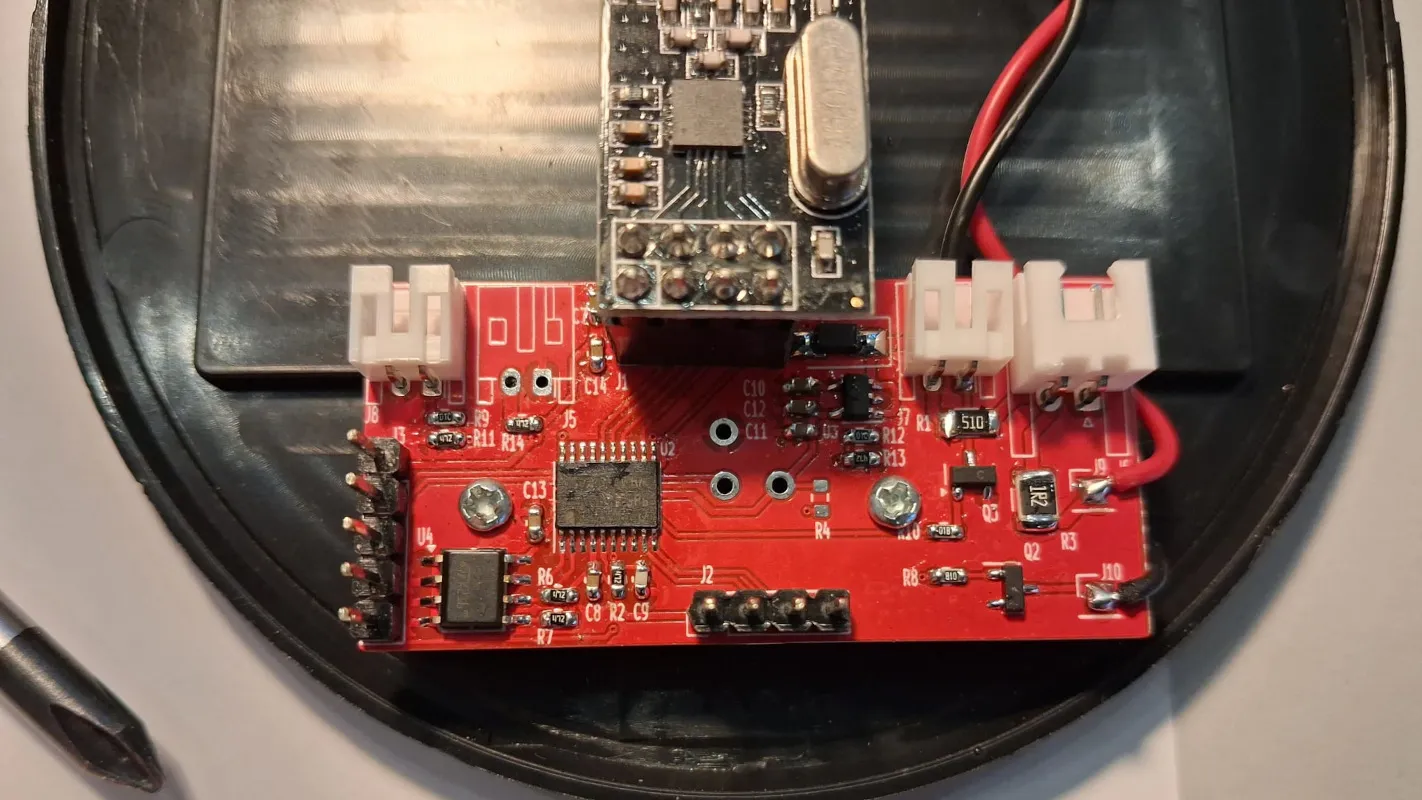
In this case, [Mauro]’s goal was to add on-demand lighting to a solar-powered light which was otherwise motion-activated only. To do this, they added a NRF24L01+ radio inside the light’s housing paired with an STM32 microcontroller. This secondary system is largely separated from the existing control circuitry with the exception of being able to switch the lights and receiving its power from the same solar panel. [Mauro] also created a small library to help with communicating with these new modules, whether that’s using a home automation system like Home Assistant or some other method.

Although adding in a few capabilities to inexpensive solar lighting might seem simple on the surface, a project like this is a gateway to adding in all kinds of interesting features to things with built-in solar panels and lots of free space in their cases. The best example here is the addition of a Meshtastic node to one of these lights, making it convenient and stealthy, but we could also see adding in other remote hardware to a landscape lighting module like a gate sensor or a plant health monitoring system.

Advertisement

Source link

Advertisement
Continue Reading

Trending

Copyright © 2025