

Crypto World
XRP Price Fails to Complete Cup and Handle as Ripple Introduces Mint to Solve RLUSD Problem

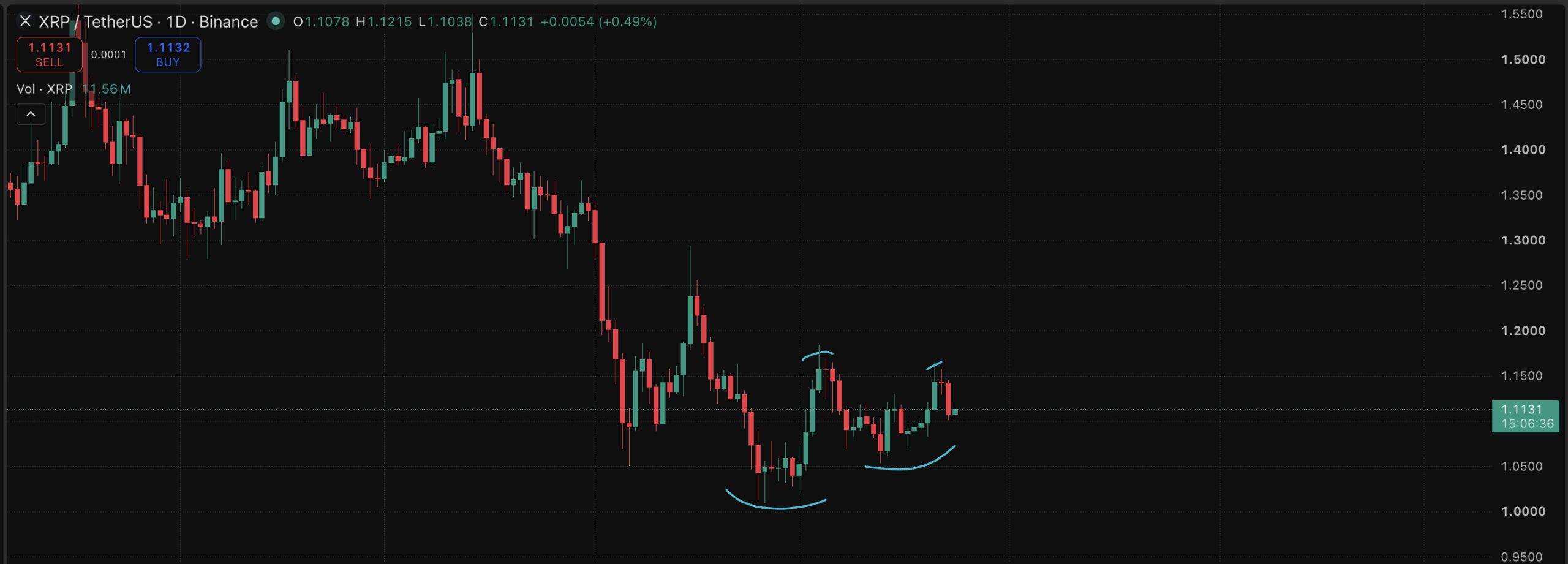
XRP is caught between a compelling technical setup and stubborn overhead price resistance. That gap is testing bullish patience. The cup and handle pattern that traders have tracked for weeks now faces invalidation. XRP trades near $1.11, remaining well below the former $2.68 to $2.77 breakout zone discussed in earlier bullish scenarios.
Ripple has introduced a dedicated Mint function to streamline RLUSD issuance. The update targets minting delays and improves settlement predictability. It strengthens Ripple’s enterprise infrastructure and could make RLUSD more attractive to institutions. However, the direct benefit favors stablecoin adoption more than immediate spot XRP demand.
Regulatory clarity across Ripple’s product suite remains the bigger variable for XRP price. Even so, infrastructure upgrades could improve long-term confidence if institutional usage continues expanding. Until then, traders still need stronger demand to reclaim higher resistance levels.
Meanwhile, the macro backdrop remains challenging. Megacap technology stocks pressured major U.S. indexes as AI spending concerns resurfaced. Tariff headlines also encouraged a risk-off mood across financial markets. When equities weaken, altcoins rarely avoid the selling pressure.
Discover: The Best Crypto to Diversify Your Portfolio
Can XRP Price Reach $5 Before the Cup-and-Handle Breaks Down?
XRP is trading near $1.11, sitting just below a key resistance zone that many analysts continue to monitor. The measured move target around $5.18 still depends on a sustained breakout above previous swing highs. Meanwhile, the 50-day and 200-day EMAs remain below the current price, keeping the long-term trend constructive.
The breakout trigger remains straightforward. A daily close above nearby resistance with strong volume could open the door to a move toward the next resistance zone around $1.30 to $1.40. Until then, XRP may continue trading within its recent range, frustrating both bulls and bears.

On the downside, losing support around $1.08 to $1.10 could invite another test of lower levels. Some wave analysts still warn that a deeper correction is possible if momentum continues fading. However, those bearish projections remain conditional rather than confirmed.
Long-term targets such as $33 to $67 or even $60 are still circulating among well-known XRP analysts. Even so, those are multi-cycle projections rather than near-term expectations. For now, the bigger question is whether XRP can reclaim higher resistance and build enough momentum for a sustained breakout.
Trade XRP on Bybit and Get a Chance to Win Our $1,000 USDT Airdrop
LiquidChain Targets Early Mover Upside as XRP Tests Key Levels
XRP’s cup-and-handle setup illustrates the core frustration of late-cycle positioning: even a technically clean pattern at a $70 billion market cap requires a significant capital event to move the needle. Traders rotating out of stalled large-caps are increasingly looking at early-stage infrastructure plays where the entry price still reflects discovery rather than expectation.
LiquidChain is one project drawing attention. The Layer 3 protocol fuses Bitcoin, Ethereum, and Solana liquidity into a single execution environment. It boasts a Unified Liquidity Layer with Single-Step Execution and Verifiable Settlement, meaning developers deploy once and access all three ecosystems without bridging overhead.
Third layer. Third eye. — LiquidChain (@getliquidchain) July 24, 2026

Coincidence? The Order thinks not.https://t.co/vqvBcdSQYC pic.twitter.com/TkjPSubTRQ
The presale is currently priced at $0.01483, with $920K raised to date. The project is approaching the $1M milestone, which historically marks an inflection point in presale momentum.
Explore LiquidChain’s presale details here.
Discover: The Best Token Presales
The post XRP Price Fails to Complete Cup and Handle as Ripple Introduces Mint to Solve RLUSD Problem appeared first on Cryptonews.

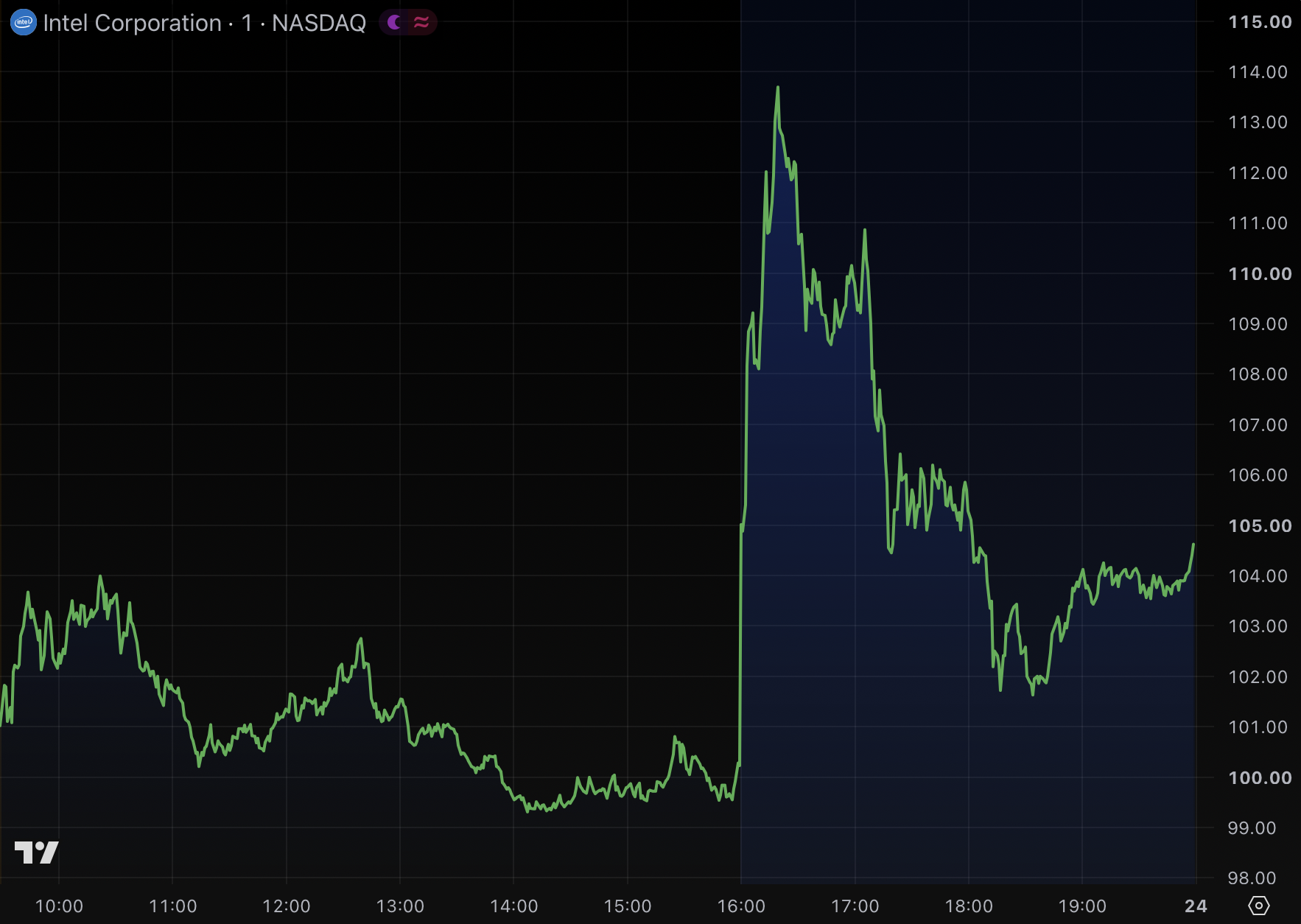
Chipmaker Intel reported this week that quarterly revenue had risen at its quickest pace in more than 15 years — just days after it confirmed a fresh round of layoffs.
Revenue rose to $16.1 billion, up 25% year over year, while revenue from its Data Center and AI segment skyrocketed 59% to $6.3 billion.
However, that same data center segment is slashing headcount per Tuesday‘s announcement. Record data center growth led to job cuts.
Chief Financial Officer Dave Zinsner gushed about yesterday‘s numbers, saying, “AI-driven compute continues to strengthen, and to support expected growth this year and next across products and foundry, we are meaningfully increasing our investments in equipment, clean room space, and substrates.”
Intel’s adjusted results yesterday exclude restructuring and related charges.
Those were, per its Q2 reconciliation, a relatively modest $170 million in restructuring. Yet for the full year, its outlook estimates a staggering $4.3 billion in restructuring and other charges.
Intel has apparently found plenty of money for equipment, not people. And based on that full year forecast, more cuts are probably coming.
Intel’s fastest-growing unit loses workers
The new round of layoffs this week follows a much larger reduction last year that affected thousands of employees.
CEO Lip-Bu Tan wrote last July, “We are implementing a plan to reduce our headcount by approximately 15%, and we plan to end the year with a global workforce of about 75,000 employees as a result of workforce reductions and attrition.”
As part of those layoffs, he also said he was slashing managerial roles by half, a move he characterized as “streamlining.”
Read more: OpenAI chief Sam Altman fired and hired in one weekend
The Oregonian, covering Intel’s largest worksite in the US, reported that the company has eliminated 7,000 Oregon workers’ jobs over the past two years, leaving about 16,000.
Its reporters also confirmed Intel’s plans for data center job cuts, and noted that the company has downsized by approximately 40% across all its global workforce over the past four years.
Got a tip? Send us an email securely via Protos Leaks. For more informed news and investigations, follow us on X, Bluesky, and Google News, or subscribe to our YouTube channel.


The EU just hit Russia’s crypto harder than ever before. Six Russian experts told BeInCrypto the blow is real, but not deadly. They cannot agree on what comes next.
The new sanctions target 14 crypto platforms in other countries. They also hit 94 Russian banks and the Moscow Exchange. And for the first time, the EU can ban any foreign crypto service that helps Russia dodge the rules.
One Group Says the Market Will Cope
Anton Tkachev, a senior Russian lawmaker, has seen this before. Sanctions are normal now, he says. Firms just plan around them. Blocked sites get replaced fast.
He points to Garantex. Police seized the Russian exchange in early 2025. Within days, its team relaunched it as Grinex. And copycat platforms keep appearing.
First-timers still feel it. Wallets get flagged. Transfers abroad raise questions. Users must prove where their money came from. But Tkachev calls this an operational inconvenience, nothing worse. He points to a “hardening effect” that makes Russian teams sharper.
Nadezhda Surova, a Russian digital-economy adviser, agrees the market can cope. It is “demonstrating resilience to sanctions pressure,” she says, after adapting to 20 earlier rounds.
After the EU’s earlier sector-wide ban, she expects trading to move elsewhere. That means decentralized apps, peer-to-peer deals, and stablecoins.
It also flows to friendly countries. Kyrgyzstan is a good example. It had 126 licensed crypto firms and $4.2 billion in volume by late 2024, according to TRM.
Dmitry Zuev, a crypto executive at NGE Farm, says it is “premature to draw conclusions” this early. He thinks the pain will hit cross-border payments most. For normal companies, he adds, Russia’s new crypto law matters more than these sanctions.
The Other Group Sees Isolation
Maria Agranovskaya, a Russian crypto lawyer, is more worried. She calls this the first big, direct strike on Russian crypto. Her verdict is “critical, but not fatal” for now. The EU’s first crypto penalty came last year, on a ruble-backed coin. This time it goes much further.
She says the new rules threaten platforms Russians use in Kyrgyzstan, the UAE, and Georgia. The result, she warns, is isolation and a growing “gray” market. She quotes former minister Andrey Nechayev, who sees a “closed crypto market within the Russian Federation.”
The squeeze is already showing. One ruble-backed coin, A7A5, saw daily transfers crash from over $1.5 billion to about $500 million after sanctions, Elliptic found. A big exchange, Uniswap, blocked the coin. Some traders even had accounts frozen when their funds were linked to it.
Alexey Zyuzin, who heads a Russian crypto-industry group, thinks the market will split in two.
“Two circuits are likely to form. The first is a legal domestic market under the control of the Russian regulator… The second is a cross-border segment, where elevated sanctions and technological risks will persist.”
The most exposed, he says, are firms that rely on foreign payments.
Nikolai Zagvozdkin, a crypto lead at Russian media group RBC, says the full target list is not out yet. Still, he sees a clear signal. Europe now treats crypto as key to Russia’s trade. Exchanges will check harder, with more freezes and refusals.
“Working with crypto will become more expensive, slower, and somewhat less transparent.”
What Will Decide the Damage
Everyone agrees on one thing. It all depends on who the EU actually targets. The full list is not public yet. Early counts put it near 10 or 11 platforms. If the rules touch every service used by Russians, the pain spreads wide. If they stop at sanctioned banks and known evaders, the market adapts. It has done so before, just within tighter limits.
The post Russian Experts Split on EU’s New Crypto Sanctions: Adapt or Isolate? appeared first on BeInCrypto.
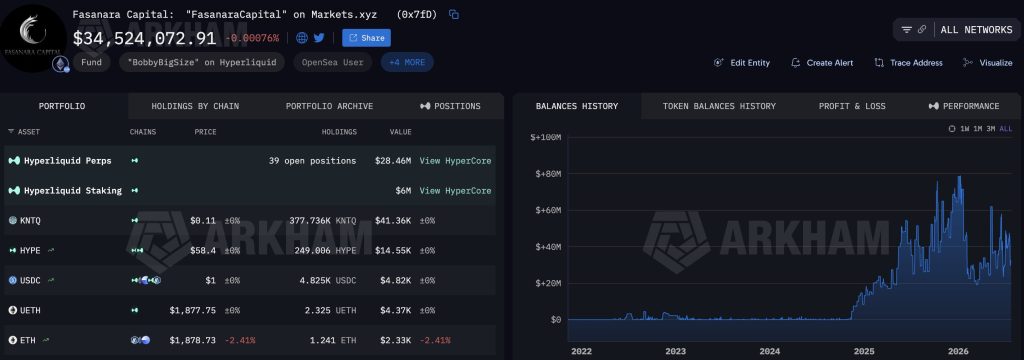
In Ethereum news today, Fasanara Capital, a London-based quantitative asset manager, is holding a $67M ETH short on Hyperliquid via an on-chain wallet labeled “BobbyBigSize,” and the directional bet is almost beside the point.
What matters is that institutional-grade capital is now executing complex, multi-leg crypto derivatives strategies entirely on a decentralized venue, in full public view, in a way that would have looked implausible just two years ago.
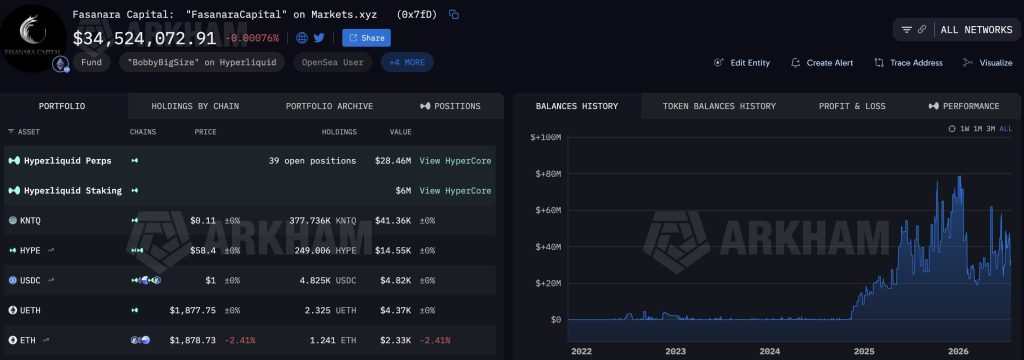
The position is visible through Hyperliquid’s on-chain explorer at wallet address 0x7fda..17d1. On-chain analytics providers including Arkham Intelligence and Nansen have linked the wallet to Fasanara Capital.
The short sits on Hyperliquid, one of the most closely watched decentralized perpetuals exchanges in the market, a venue that has grown rapidly by offering execution quality and liquidity depth that professional traders previously expected only from centralized exchanges.
Discover: The Best Crypto to Diversify Your Portfolio
Ethereum News Today: A $67M Short Is Not a Simple ETH Bearish Call
The instinctive read- large ETH short, therefore bearish signal does not survive contact with how quantitative funds actually operate. A short of this size can be a directional bet, but it can equally be a hedge against spot ETH holdings, an offset against options book exposure, one leg of a basis trade, or part of a market-neutral spread.
Fasanara runs systematic, multi-strategy books where relative pricing, funding rates, liquidity, and volatility relationships matter far more than a clean up-or-down call on ETH.
Supplementary on-chain data, reported by Phemex and attributed to Arkham Intelligence, adds another layer: holds an additional ~$41M ETH short on Hyperliquid, and should be treated as supplementary attribution, but if accurate, it reinforces that this is coordinated institutional positioning across multiple regulated managers, not a lone prop desk swing.
This includes approximately $11Bn in cumulative trading volume on Hyperliquid in ETH, BTC, AVAX, HYPE, and other tokens. That is the profile of a systematic, high-frequency institutional book, not a retail trader making a leveraged directional bet.
The current ETH leverage environment and funding dynamics give that short context: in a market where funding rates and open interest are already elevated, a large institutional short of this kind can function as a structural offset rather than a conviction trade.
Trade Ethereum on Bybit and Get a Chance to Win Our $1,000 USDT Airdrop
Hyperliquid Is Becoming Core Institutional Infrastructure
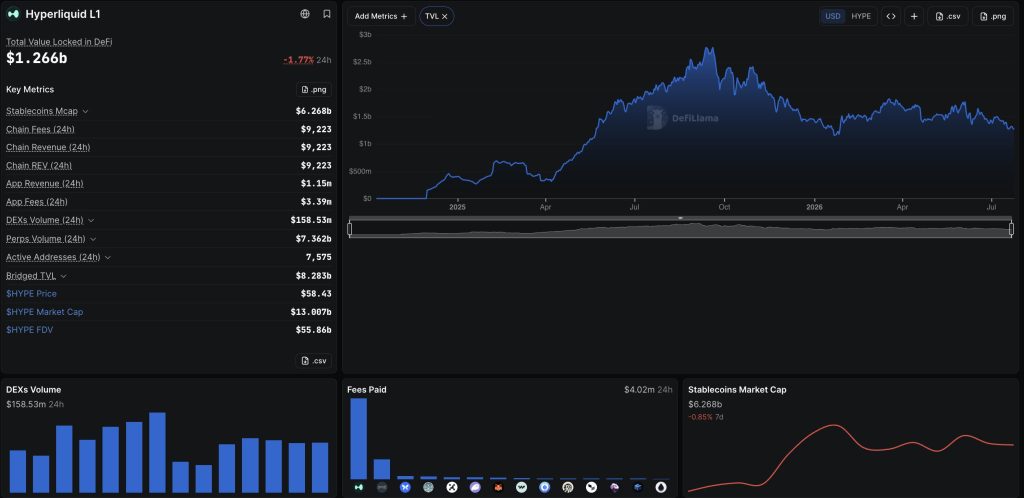
In adjacent Ethereum news, Hyperliquid has compressed the quality gap between on-chain derivatives and centralized exchange execution to the point where a fund managing multi-billion-dollar mandates is comfortable running nine-figure notional exposure natively on-chain.
Fast matching, deepening order book liquidity, and a familiar perpetuals interface have done what earlier DeFi derivatives platforms could not: attract serious derivatives flow rather than just yield farmers chasing incentives. The Hyperliquid trading interface features advanced charting and real-time order book data.
The structural consequence is a new kind of market signal. Centralized exchange positioning has always been inferred indirectly, through funding rates, open interest, liquidation data, and exchange-reported metrics.
Institutional DeFi trading on Hyperliquid makes wallet-level positioning directly observable. Analysts can track when Fasanara adds to or reduces its size and monitor collateral and position changes. That transparency is what DeFi trading was theoretically supposed to create, and now it is arriving at institutional scale.
The fund reportedly holds a concurrent BTC long entered around $75,950, plus shorts across TON, AVAX, and DOGE, a cross-asset relative-value book executed entirely on a decentralized perpetuals venue.
That breadth signals that Hyperliquid is functioning as primary execution infrastructure for at least one major quant manager, not a peripheral experiment running alongside the real book on Binance or OKX.
Discover: The Best Token Presales
The post Ethereum News: How a $67M ETH Short Reveals Hyperliquid’s Institutional Leap appeared first on Cryptonews.
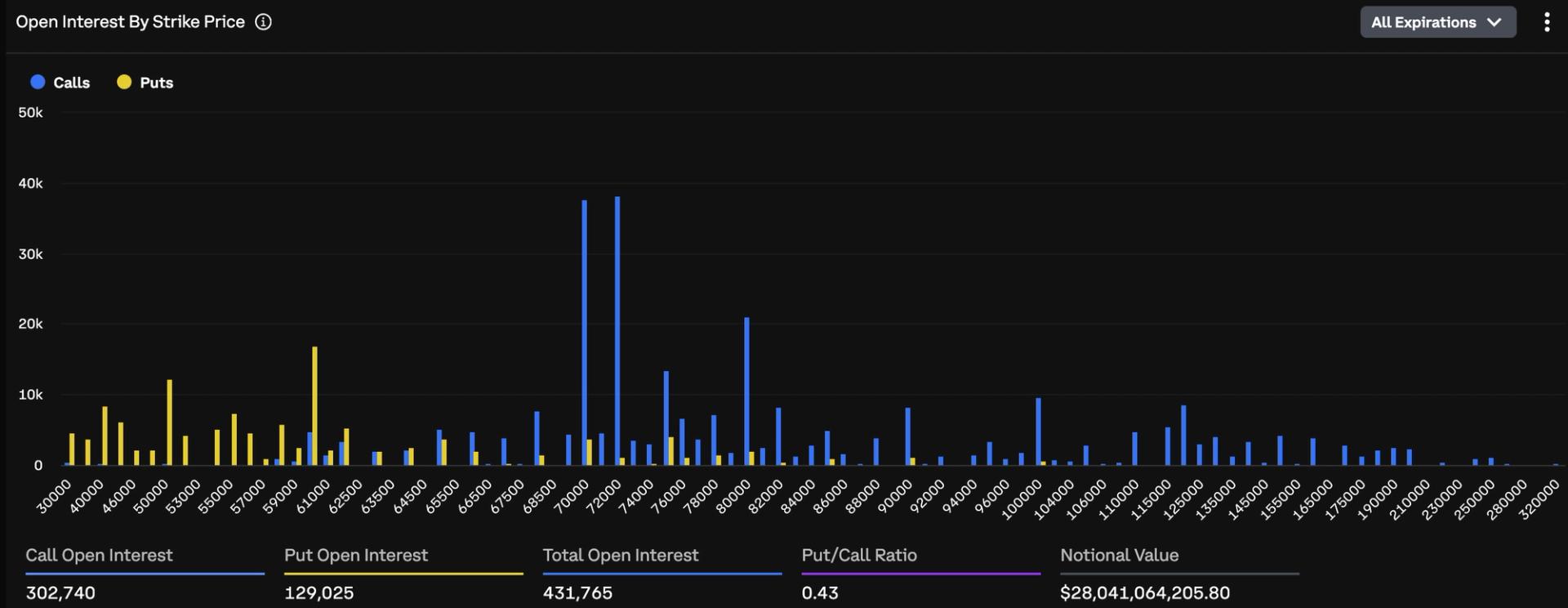
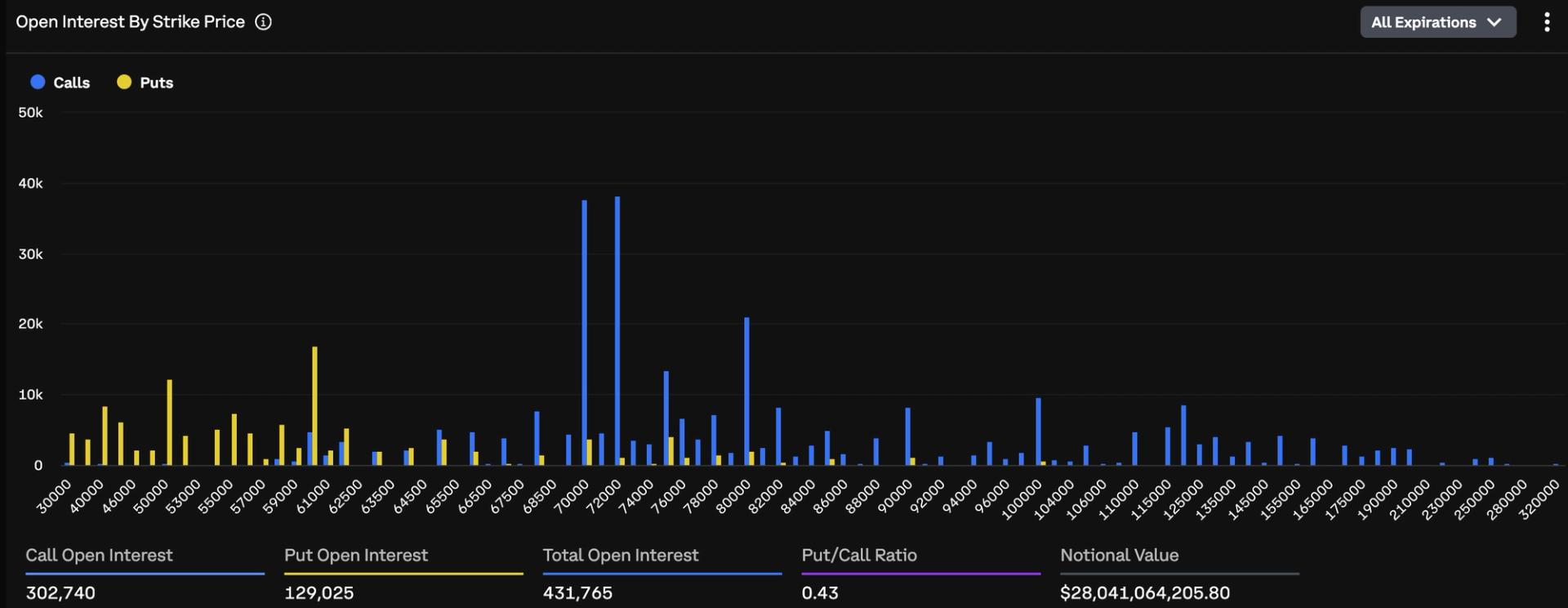
Several large, deliberate trades hit the tape recently, building up this concentration of open interest at $70,000 and $72,000 levels. Laevitas identified a large bull call spread structure, involving buying the $70,000 call and simultaneously selling the $72,000 call.
The bull call spread, as the name suggests, bets on a moderate upswing in prices of the underlying asset, in this case, up to $72,000.
“The structure accounts for approximately 49% and 50% of total call open interest at the $70K and $72K strikes, respectively,” Laevitas noted.
Other notable trades included calendar spreads, a strategy used to profit from volatility changes in short- and near-term expiries.
Another trader or a group of traders bought a large number of calls at $70,000, paying $3.4 million in premium to gain upside exposure.
Jimmy Yang, co-founder of Orbit Markets, an institutional digital asset liquidity provider, pointed out similar trades, saying these have been driven by Clarity Act optimism.
“Earlier this month, we saw decent demand for BTC topside calls, with the 31 July $70,000 and $72,000 strikes being particularly popular. A lot of this positioning was driven by expectations that the CLARITY Act could be passed before the end of the month,” Yang said.


Crypto markets have struggled for much of the year as weaker trading volumes, concerns over the economy and fading risk appetite weighed on digital assets. The tougher backdrop has hurt market makers, whose revenues depend largely on trading flows and providing liquidity. With spot trading volumes subdued, firms across the sector have faced pressure on profitability.
Mergers and acquisitions are expected to remain a defining theme in 2026 as digital asset firms consolidate to achieve scale, expand product offerings and meet growing institutional demand, according to industry analysts.
Exchanges, market makers, custodians and financial technology providers are looking to acquire complementary businesses to build integrated digital asset platforms, reflecting the maturation of the crypto ecosystem into a more institutional and regulated market.
SBI Financial Services, a subsidiary of SBI Holdings, acquired a 90% stake in B2C2 in December 2020, months after investing $30 million in the firm.
B2C2’s financial results are not disclosed separately. They are reported as part of SBI’s broader crypto-asset business segment. For the fiscal year ended March 31, that segment generated 89.6 billion yen ($550 million) in revenue, up 10.9% from a year earlier, while profit before tax was unchanged at 21.2 billion yen.
SBI Holdings said last month it had agreed to buy cryptocurrency exchange Bitbank for around $289 million.


Odos Protocol will shut down on July 30, giving users one week to withdraw assets. The team did not provide a reason for the decision.
Crypto World
EU deploys a 21st sanction package against Russia that escalates bans on 14 crypto firms


The European Union (EU) extended sanctions against Russia to include four designations related to the cross-border A7 network, including its new links to Africa.
The EU is also extending its transaction ban to 14 unnamed crypto-related service platforms based in Georgia, Panama, the United Arab Emirates (UAE), the Marshall Islands, Kyrgyzstan and Belarus.
Chainalysis recently noted that on the A7 network, where the A7A5 stablecoin operates, has processed nearly $120 billion to date and that it is purposely built for Russia’s sanctions evasion.
“We’re hitting over a hundred banks and crypto operators, 40+ vessels in Russia’s shadow fleet, and several oil refineries in Russia and Belarus,” Kaja Kallas, High Representative for Foreign Affairs and Security Policy and chair of the Foreign Affairs Council, said in a statement.
The EU announced its previous package of sanctions against Russia in April, saying it was the “biggest package” of sanctions against the country in two years. In that statement, the EU said “Russia is becoming increasingly reliant on cryptocurrencies for international transactions.”

Cardano’s ADA has rebounded over the past week, with some key factors supporting a more substantial upward trend ahead. Another element, though, suggests a renewed correction might be on the way.
Several analysts believe Bitcoin (BTC) has yet to reach its bottom for this cycle, while the recent exodus from exchanges hints that Ethereum (ETH) might be gearing up for a rally.
ADA Stuck in an Indecisive Zone
Earlier this week, Cardano’s native token soared to a two-week high of around $0.18 before retracing to the current $0.166 (per CoinGecko). This represents a 5% weekly increase, while the latest whale activity hints at a further upswing in the near future.
The large investors recently boosted their total holdings to 25.6 billion coins (the highest level since February). The stash translates into roughly 70% of the token’s circulating supply. Moreover, whales have bought 30 million ADA (worth more than $5 million) over the last 30 days.
These market participants rarely make intuitive decisions, as some believe they enter the ecosystem after careful research or inside information that others lack. That said, their activity may encourage smaller players to hop on the bandwagon, too.
Another bullish ADA element is its Relative Strength Index (RSI), which yesterday (July 23) slipped to 28 and now stands at 31. It remains quite close to the oversold zone that is usually seen as a buying opportunity.
On the other hand, exchange inflows have recently exceeded outflows, meaning that investors have moved some of their holdings to centralized platforms, thereby increasing immediate selling pressure.
Major BTC Warning
The bear market over the past several months has been quite persistent, briefly dragging Bitcoin’s price below $60K. It currently trades at nearly $65,000, and every resurgence gives some investors hope that the bulls might finally regain full control.
However, X user BATMAN poured cold water on these expectations, drawing a parallel between BTC’s current performance and that of the autumn of 2022, which was later followed by a massive collapse to roughly $16,000.
Other short-term skeptics include Kabuki and Ali Martinez. The former predicted a plunge to $47,000 by August, while the latter noted that the following month has historically been an unfavorable period for BTC, resulting in a correction every time since 2022.
ETH’s Next Move?
Earlier this week, the second-largest cryptocurrency made another attempt to surpass the $2,000 psychological level but was rejected and currently trades at around $1,880.
Still, the declining amount of ETH stored on exchanges suggests the bears may soon loosen their grip. Over the past month, investors have withdrawn approximately 1 million units (worth over $1.8 billion at ongoing rates) from centralized platforms. The total figure dropped to a 10-year low of roughly 15.1 million ETH as the development results in reduced immediate selling pressure.
Analysts on crypto X remain largely optimistic about the asset. Not long ago, Arthur Hayes acquired ETH for over $2.5 million, while popular pundits like KALEO think the price could rise toward $2,400 within the next month. However, the latter warned that the pump might be short-lived and followed by a major crash to nearly $1,200 by September.
The post Mixed Cardano (ADA) Signals, Bitcoin (BTC) Price Warning, and More: Bits Recap appeared first on CryptoPotato.
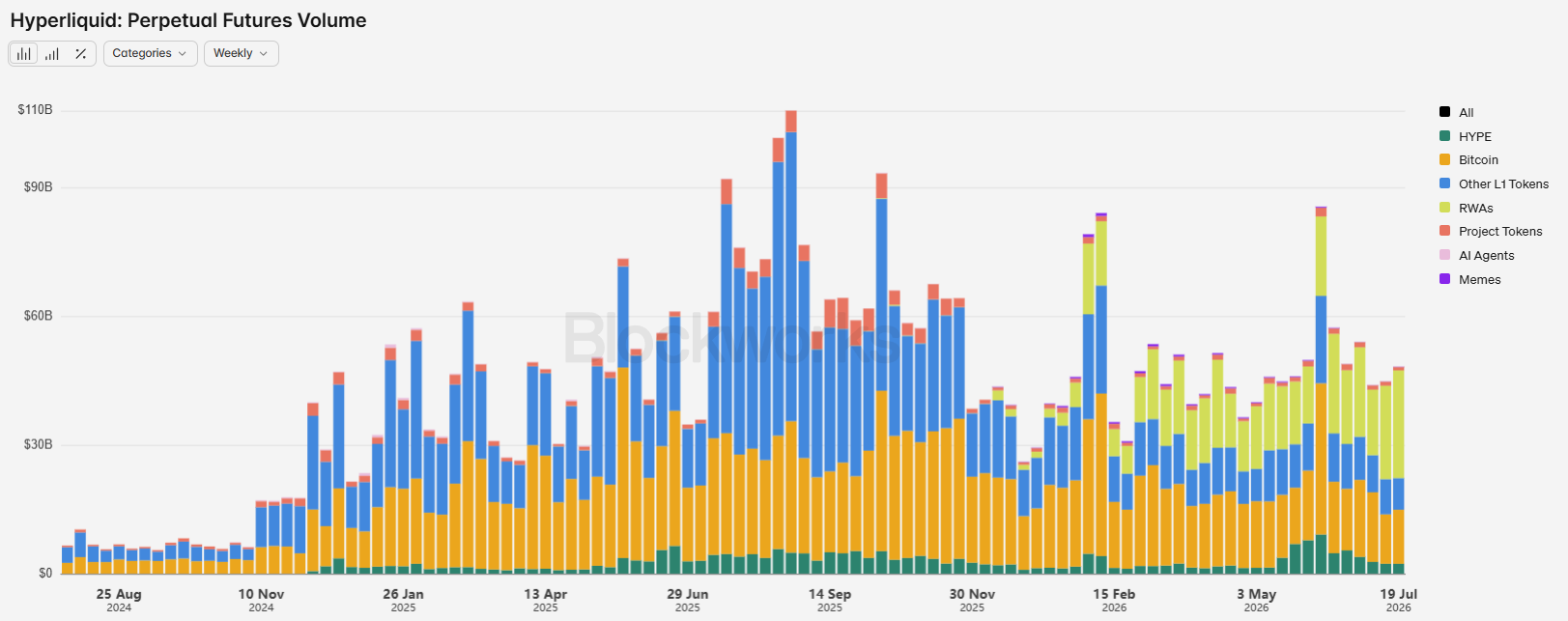
Perpetual decentralized exchange (DEX) Hyperliquid’s weekly trading volume in tokenized real-world assets (RWAs) exceeded that of all other asset categories combined for the first time.
RWAs generated $25.1 billion in trading volume from July 13 to July 19, accounting for 52% of Hyperliquid’s total weekly volume of $48.2 billion, according to Blockworks data.
“Hyperliquid’s RWA market alone was larger than the combined crypto perpetual volume of every other DEX,” wrote ARK Invest’s research director for digital assets, Lorenzo Valente, in a Thursday X post.
The milestone reflects growing demand for tokenized assets on Hyperliquid. Over the past month, RWA holders grew by 32% to 1.25 million users, while the total value of tokenized RWAs rose by 3.5% to $36.7 billion, according to data aggregator RWA.xyz.
Hyperliquid generated $7.6 million in revenue over the past week, according to DefiLlama. The perp DEX ranked third among crypto applications by weekly revenue, behind stablecoin issuers Tether and Circle, which generated $112 million and $45 million, respectively.
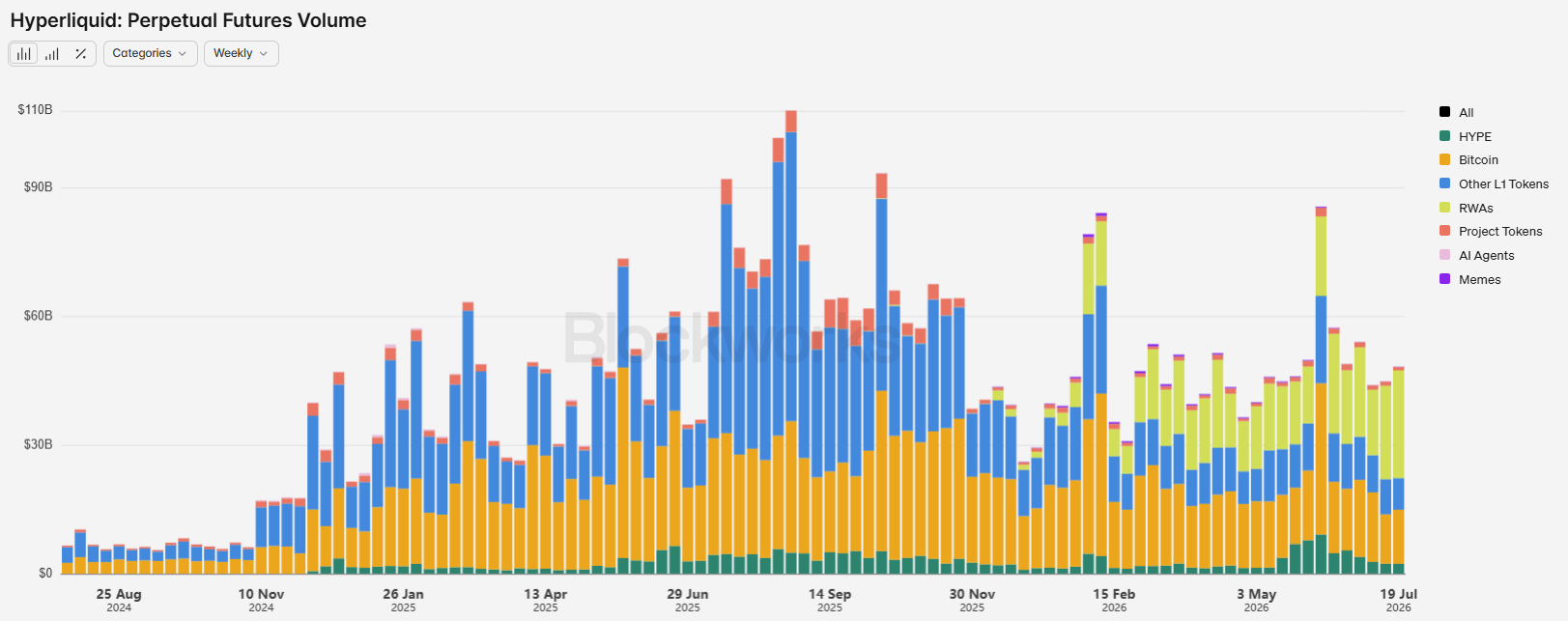
Hyperliquid: Perpetual Futures Volume, 2-year chart. Source: Blockworks
Related: Hyperliquid launches prediction markets for real-world events
Major “structural shift” for crypto markets: Circle co-founder
Crypto-native firms and traditional financial institutions have expanded tokenized asset offerings as they bring more financial assets onto blockchain networks. In March, the NYSE partnered with tokenization platform Securitize to develop blockchain-based stock trading infrastructure with 24/7 trading and settlement.
Circle co-founder and CEO Jeremy Allaire said growing RWA trading on Hyperliquid marks a “major structural shift” in crypto markets, moving “away from speculating on endogenous digital commodities,” in a Friday X post.
Earlier in July, Pantera Capital said perpetual futures could become a dominant trading instrument beyond crypto, as perps offer structural advantages over traditional derivatives, including 24/7 trading, no contract expiries, simpler position management and continuous price discovery.
Hyperliquid’s growth has drawn attention from Wall Street institutions, including NYSE parent Intercontinental Exchange (ICE), whose CEO, Jeffrey Sprecher, urged regulators to create a “level playing field” for launching 24/7 onchain perpetual futures contracts.
Magazine: How Hong Kong is turning tokenized bonds into real market infrastructure


Ten tokenized dairy cows backed a $19,600 loan registered on Brazil’s B3, in one of Brazil’s first uses of tokenized livestock as loan collateral.

3 Fantastic Netflix Shows to Binge This Weekend (July 25-26)

No One’s Crazy | Psychology of Money Explained | #shorts #finance

Singer Chris Brown pleads guilty to attacking music producer in Mayfair nightclub


-

 Fashion7 days ago
Weekend Open Thread – Corporette.com
-

 Politics6 days ago
The House | The City of London can help the new chancellor deliver growth in every postcode
-

 Crypto World6 days ago
Ripple Payments Joins MiCA With 14 Firms, Does It Mean Anything For XRP?
-

 Politics5 days ago
Democrats look to World Cup watch parties to register thousands of voters
-

 Crypto World7 days ago
Ripple wins EU-wide access as ESMA adds it to MiCA register
-

 Crypto World3 days ago
Grayscale Files For Worldcoin ETF, WLD Registers Sharp Rise
-

 Tech4 days ago
Sail Virtually Aboard The “Itanic” With IA-64 Emulator
-

 NewsBeat4 days ago
Unregistered fitter used Gas Safe logo on business flyers
-
 Tech3 days ago
Turtle Beach Command Series KB7 review: a nifty screen-equipped gaming keyboard
-

 News Videos5 days ago
Big Money Is Entering XRP
-
 Business2 days ago
New Jersey voter registration controversy explained: How 6,600 noncitizens got on the rolls, and what happens next
-

 Crypto World6 days ago
Kaspersky exposes OkoBot’s 20-module crypto wallet attack
-

 Business7 days ago
Airlines warn Sunshine Protection Act could disrupt flight scheduling
-
 Entertainment3 days ago
Johnny Depp’s R-Rated Gothic Cult Classic Gets New Release Ahead of Sydney Sweeney Remake
-

 NewsBeat6 days ago
Durham County Council to send out electoral registration emails
-

 Crypto World6 days ago
MiCA Licensing Faces Delays as ESMA Adds 14 CASPs to Register
-

 Crypto World2 days ago
Ethics, other provisions in crypto Clarity Act to be further discussed
-
 NewsBeat3 days ago
Shanghai science forum photos show China’s AI and robotics advances in rivalry with US
-

 Crypto World6 days ago
Chip Stocks Enter Bear Market After Moonshot Ai Unveils Kimi K3 Model
-

 Tech4 days ago
Watch Flock Safety CEO Garrett Langley discuss the future of surveillance at TechCrunch Disrupt 2026
You must be logged in to post a comment Login