

Crypto World
Zcash (ZEC) Soars 27% Weekly: 3 AIs Debate Whether It Can Break Into the Top 10 in 2026


The recent price performance of the leading cryptocurrencies, including Bitcoin (BTC), Ethereum (ETH), Solana (SOL), Ripple (XRP), and many others, reflects the broader weakness in the market, reinforcing the outlook that we are currently in a bear cycle with no clear timeline for the next bull run.
However, some altcoins have managed to defy the overall decline. Zcash (ZEC) is a standout example, with its price exploding by 100% over the past month to over $650. Its market capitalization has surged past $11 billion, placing it as the 13th-biggest cryptocurrency. We asked three of the most widely used AI-powered chatbots whether the rally can continue and whether the asset has a chance to enter the prestigious top 10 club.
Yes, But…
According to ChatGPT, ZEC has a real shot, but such an ascent would require a very specific combination of market conditions, regulation, and narrative momentum.
The chatbot noted that privacy coins have surged in popularity lately and may become even more trending if some governments move with their CBDC plans or other centralized efforts. ChatGPT stated that the 10th position is currently held by Dogecoin (DOGE), whose performance relies heavily on speculation and social media hype.
“This is where Zcash enters the conversation. Unlike many speculative meme coins, Zcash operates within a niche that may become increasingly important over the coming years: financial privacy. Rising concerns around surveillance, wallet tracking, artificial intelligence, CBDCs, and stricter KYC requirements are pushing some investors to reconsider the importance of private transactions and censorship resistance,” it added.
Perplexity agreed that the asset can enter the elite club. According to its analysis, it will need two important things to happen at once: a strong ZEC-specific rally and either stagnant or weak performance from the coins currently above it.
The chatbot claimed that if privacy coins remain trending, the token would continue to attract capital from traders and investors. In conclusion, Perplexity said the outcome has “low-to-moderate probability” rather than the most likely one. The key signal to watch is whether ZEC can keep outperforming while the assets ranked 8-12, such as Tron (TRX), Dogecoin (DOGE), Hyperliquid (HYPE), and WhiteBIT Coin (WBT), stay flat or weaken.
It is important to note that HYPE has also defied the correction, with its price pumping by nearly 50% over the past week. With a market cap approaching $14 billion, the asset now sits noticeably closer to breaking into the top 10 club than ZEC.
The Rebels Rarely Win
While Google’s Gemini also highlighted ZEC’s price ascent, it claimed that becoming one of the 10 biggest cryptocurrencies this year is rather unlikely. It added that such success would depend heavily on the support of prominent industry figures, noting that BitMEX’s Arthur Hayes is among the few publicly backing the asset.
Gemini gave another rather unorthodox reason for ZEC not to enter the elite club. It said the top 10 is almost exclusively populated by massively viral assets with solid fundamentals that have become “institutionally friendly.” In comparison, “Zcash is built to be a rebel – and rebels rarely win popularity contests,” it argued.
The post Zcash (ZEC) Soars 27% Weekly: 3 AIs Debate Whether It Can Break Into the Top 10 in 2026 appeared first on CryptoPotato.



Prediction market Kalshi launched 3 market integrity measures: risk scoring for new listings, employment verification for markets with manipulation risk, and enhanced whistleblower reporting tools across the platform.
The measures take effect immediately and follow the first report from Kalshi’s independent Surveillance Audit Committee.
How Kalshi’s New Measures Work
According to the announcement, every proposed market now receives a risk score before listing. The system weighs six factors. These include corporate KPI risk, outcome concentration, market importance, regulatory fit, non-traditional insider risk, and national security risk.
Markets with high insider or manipulation risk now require traders to provide employment information. This lets Kalshi identify presumptive insiders and screen them out before any trade executes.
Finally, the whistleblower upgrade adds reporting tools to every market on the exchange. Tips route directly to a surveillance team that monitors the feed around the clock.
“By implementing these new integrity measures, we continue to lead the industry on the issue of market integrity amongst federally regulated prediction markets,” Kalshi Head of Enforcement Robert DeNault said.
The prediction market platform also revealed that the enforcement record in Q1 included 150+ investigations, 20+ referrals to law enforcement, and 5 disciplinary actions. Kalshi said that its screening tools blocked more than 100 potential insider trades in the first quarter.
The Surveillance Audit Committee will deliver quarterly reports going forward. Its next review may show whether these measures curb insider trading on Kalshi.
Follow us on X to get the latest news as it happens
Why Prediction Markets Face Insider Trading Pressure
Insider trading has become a key integrity problem for prediction markets as trading volumes grow. Rival platform Polymarket partnered with Chainalysis to monitor trading activity.
Suspicious activity has surfaced, particularly in geopolitical markets. Both major platforms have since tightened their rules, and Kalshi’s update marks the latest effort to win back trader confidence.
Subscribe to our YouTube channel to watch leaders and journalists provide expert insights
The post Kalshi Launches 3 Market Integrity Measures to Block Prediction Market Insiders appeared first on BeInCrypto.

The “crowd has written off Ethereum,” reported Santiment on Tuesday. However, this makes the probability of a rebound “substantially higher,” it added.
The onchain analytics platform said that Ethereum’s social sentiment has fallen into an “extreme fear zone” as traders react to months of underperformance relative to Bitcoin and many other altcoins.
The recent selloff has been amplified by ongoing debate surrounding the Ethereum Foundation, criticism of its leadership and priorities, and controversial comments from Vitalik Buterin that have “fueled further uncertainty.”
Is a Rebound Likely?
Positive-to-negative commentary has dropped to one of its lowest levels of the year, indicating that bearish narratives are now dominating social media, said Santiment.
The same situation unfolded when ETH prices tanked to similar prices in April 2025. The FUD hit record levels, and everyone cried, “Ethereum is dead.”
Four months later, it had tripled in price to an all-time high.
“Historically, Ethereum has tended to rebound when social sentiment reaches extreme FUD levels because prices frequently move opposite to the crowd’s expectations.”
When traders become overwhelmingly convinced that an asset will continue falling, much of the selling pressure has already been exhausted, it added.
TL;DR: Crowd has written off Ethereum, making the probability of a rebound substantially higher
Metrics Used: Positive vs. Negative Commentary Ratio
Link: https://t.co/vCjlfHHuGE
Ethereum’s social sentiment has fallen into an extreme “fear zone” as traders react to… pic.twitter.com/XHAf2KglbR
— Santiment Intelligence (@SantimentData) June 9, 2026
According to Glassnode, the share of ETH supply held at more than 3x profit has dropped to just 11%, its lowest level since 2017. Ether’s profitability profile has “fundamentally compressed” relative to prior cycles, it added.
To add balance, Bitcoin’s supply in loss has hit a new yearly high of 50%, so the bear market is battering all crypto assets.
ETH Price Outlook
Ether price continues to weaken in the short-term, with it tapping an intraday low of $1,620 twice over the past 24 hours.
With no current drivers or momentum, a fall back towards $1,500 is looking highly likely. This level serves as a major support zone, as it did 14 months ago, when Ether was going through the same pain.
The post Retail Writes Off Ethereum, Making Recovery More Likely: Santiment appeared first on CryptoPotato.
SpaceX is listed on Nasdaq on Thursday, June 11, at $135 a share, the largest IPO in history. Elon Musk cannot sell a single share for a year, but the investors his team personally selected to participate in the offering can sell immediately.
SpaceX reserved 5 per cent of the offering for a direct share program (DSP), with participants chosen “at the discretion of executive officers,” who carry no lockup restrictions whatsoever.
Why the Lockup Structure Is Unusual
Standard IPOs impose a 180-day lockup on all insiders. SpaceX’s structure does the opposite for a select group. The Australian Financial Review reported that a specific hedge fund is already preparing to sell its SpaceX stake as soon as it can.
Early investors who did not receive a DSP allocation face a staggered release, starting with 20% after the first earnings report, followed by 7% tranches at 70, 90, 105, 120, and 135 days. DSP participants face none of it.
As BeInCrypto reported in its analysis of the SpaceX-Anthropic IPO race, the concentration of early investor stakes and the unusual deal structure were already among the risks that set this IPO apart from anything Wall Street has seen before.
The SpaceX IPO Selling Pressure Ahead
Chad Anderson, founder of Space Capital and an early SpaceX investor, stated his intentions plainly: “We’ve been invested for almost ten years, it’s our business to return capital to investors.” That also appears to be a direct statement of intent to sell.
The 5 per cent DSP tranche adds a layer of selling that retail buyers on Robinhood, Fidelity, and Schwab will face from the opening bell.
Morningstar’s analysts put SpaceX’s fair value at roughly half its IPO price and advised investors to wait for the hype to pass.
Moreover, the same week that brings the world’s biggest IPO also brings CPI data and a market that has spent the month pricing in a Fed rate hike.
The founder cannot sell. His chosen investors can. Thursday will show which side of that equation sets the price.
The post Elon Musk Can’t Sell SpaceX Shares for a Year But Others Can Dump on Day 1 appeared first on BeInCrypto.


Kalshi has introduced mandatory employer disclosures for certain traders and expanded its market surveillance program after reporting more than 150 investigations, over 100 blocked insider-trading attempts, and 20 law-enforcement referrals during the first quarter of 2026.
Summary
- Kalshi now requires employer disclosures for traders in higher-risk markets and has introduced a new risk scoring system for proposed contracts.
- The platform said it blocked more than 100 potential insider trades, conducted over 150 investigations, and made 20 law enforcement referrals in Q1 2026.
- New compliance measures arrive as prediction markets face growing scrutiny from regulators, lawmakers, and federal investigators.
According to a company blog post published Tuesday, the prediction market platform has put several new compliance measures into effect immediately following recommendations from its independent Surveillance Audit Committee, which was established in February to oversee market integrity and enforcement efforts.
Among the changes, Kalshi said every proposed market will now receive a risk score before launch. The assessment considers factors such as regulatory compliance, insider-trading exposure, market significance, and national security concerns.
Bobby DeNault, Kalshi’s enforcement and legal counsel, said the company has added national security reviews to help identify markets that could create risks for participants or for the platform itself before they are listed.
For markets considered more vulnerable to insider trading or manipulation, Kalshi now requires participants to disclose their employers before they can trade. The company said the process allows it to identify potential insiders and restrict access before transactions take place.
Additional tools introduced under the program include a whistleblower reporting system that lets users flag suspected market abuse directly to the company.
Prediction markets face mounting scrutiny
Recent enforcement actions have placed prediction markets under growing examination from regulators, lawmakers, and law enforcement agencies.
Earlier this month, NPR reported that the Department of Justice and the Commodity Futures Trading Commission were investigating former U.S. Representative George Santos after Kalshi detected suspicious trading linked to a contract on whether he would attend President Donald Trump’s February State of the Union address. According to NPR, the platform froze Santos’ account and referred the matter to authorities after reviewing the trades.
Separate cases have emerged across the sector. Federal prosecutors charged a U.S. Army Special Forces soldier in April for allegedly using classified information to place profitable trades on Polymarket tied to the capture of former Venezuelan President Nicolás Maduro.
A month later, authorities accused Google software engineer Michele Spagnuolo of using confidential company information to trade Google-related contracts on Polymarket. Prosecutors alleged the activity generated roughly $1.2 million in profits.
Congress has also examined insider-trading controls within prediction markets. In May, House Oversight and Government Reform Committee Chairman James Comer requested information from Kalshi and Polymarket regarding their monitoring systems and enforcement procedures.
Compliance push comes as business expands
Recent compliance initiatives arrive during a period of rapid growth for Kalshi.
Just one day before the latest announcement, the Better Business Bureau’s National Advertising Division said it had referred Kalshi to regulatory authorities after the company declined to participate in a review of influencer advertising disclosures.
The organization said it was examining whether financial relationships between the platform and online promoters were clearly disclosed and whether advertising practices aligned with Federal Trade Commission guidance.
At the same time, Kalshi has continued expanding its cryptocurrency offerings. The company recently filed with the CFTC to list perpetual futures tied to Hyperliquid’s HYPE token after launching Ethereum perpetual futures under its American Perpetuals product line.
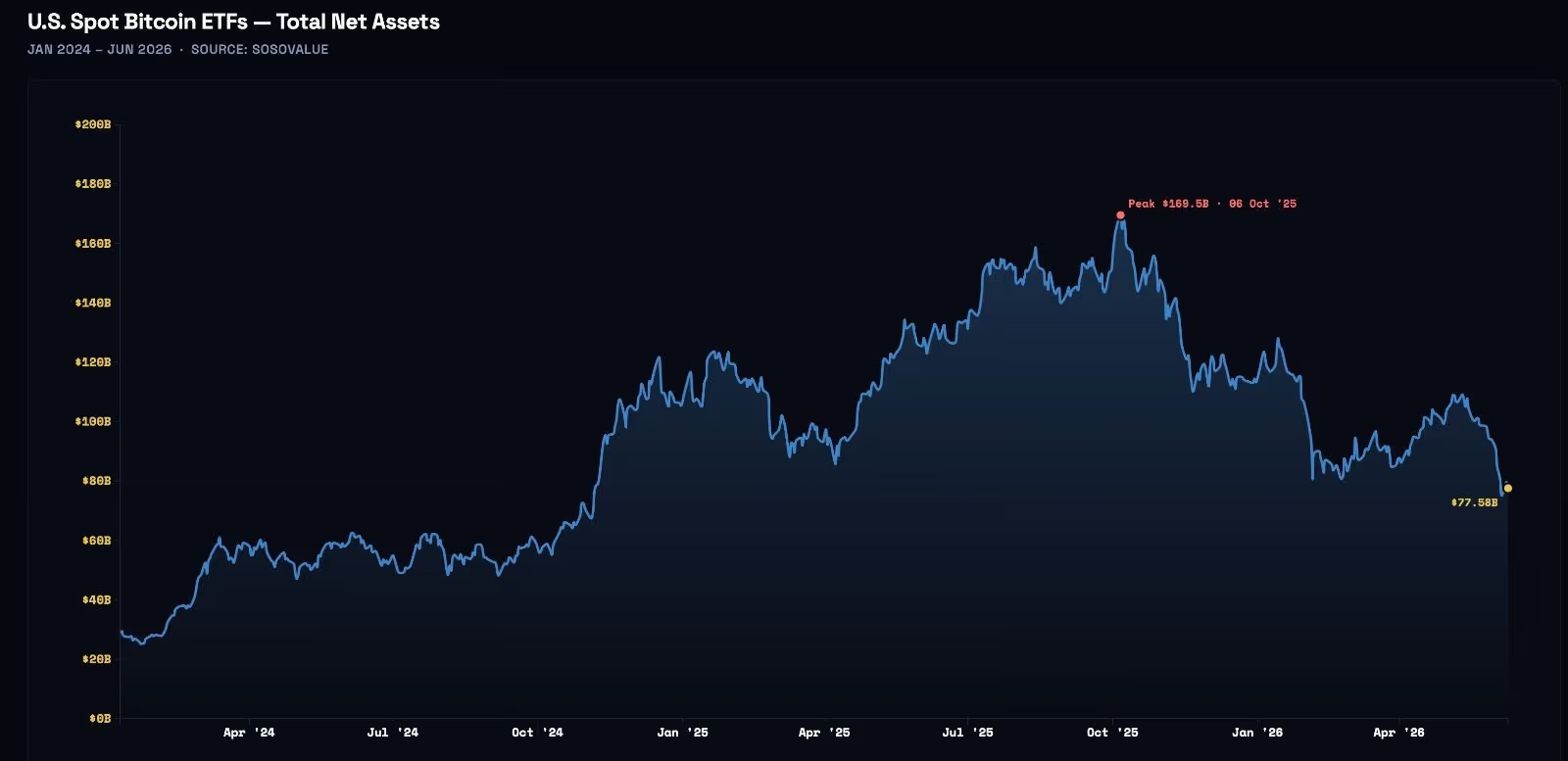
Bitcoin spot exchange-traded funds (ETFs) have fallen out of investor favor and how.
Total dollar value of net assets across the 11 spot ETFs stood at $77.58 billion on June 9. That’s the same level seen just after President Donald Trump won the presidential election in early November 2024.

This is not to say the ETFs didn’t grow in the 19-month period. Hopes that Trump would deliver on his campaign promise of friendlier crypto regulation helped push bitcoin higher, along with ETF assets. Total net assets crossed $90 billion within a week of this election win and went on to hit a record high of $169.54 billion in October 2025.
But since then, these post-election gains have been erased even though the Securities and Exchange Commission (SEC), under the Trump administration, dropped several high-profile enforcement actions. The U.S. has established a strategic bitcoin reserve and, further, the Digital Asset Market Clarity Act, which seeks to establish jurisdictional boundaries between the SEC and CFTC and give the industry the legal heft, is advancing in Washington.
In other words, the regulatory environment has never been more favorable, yet investors’ response has been to leave, pulling the net assets lower.
These ETFs have registered a net outflow of over $5 billion in four weeks. Cumulative net inflows since inception, which peaked at $62.77 billion in October 2025 when bitcoin was at its all-time high, have since declined by nearly $9 billion to $53.77 billion, the lowest since August last year.
Analysts blame macro factors, especially elevated inflation, for recent outflows from the ETFs.
“ETF outflows reflected short-term pressure as inflation drives the Fed hawkish, while on-chain supply tightening remains intact,” Binance Research said in a report shared with CoinDesk.
Market analyst and former co-founder of 21Shares, Ophelia Snyder, said AI and other trending corners of the financial market are draining capital from crypto.
“You have ETF outflows as investors are increasingly distracted by other narratives competing for attention and capital, whether that’s AI, SpaceX, or other high-profile growth stories. You have ongoing market jitters around geopolitics, the Strait of Hormuz, U.S. jobs data, inflation, and broader macroeconomic uncertainty,” she said in an email.
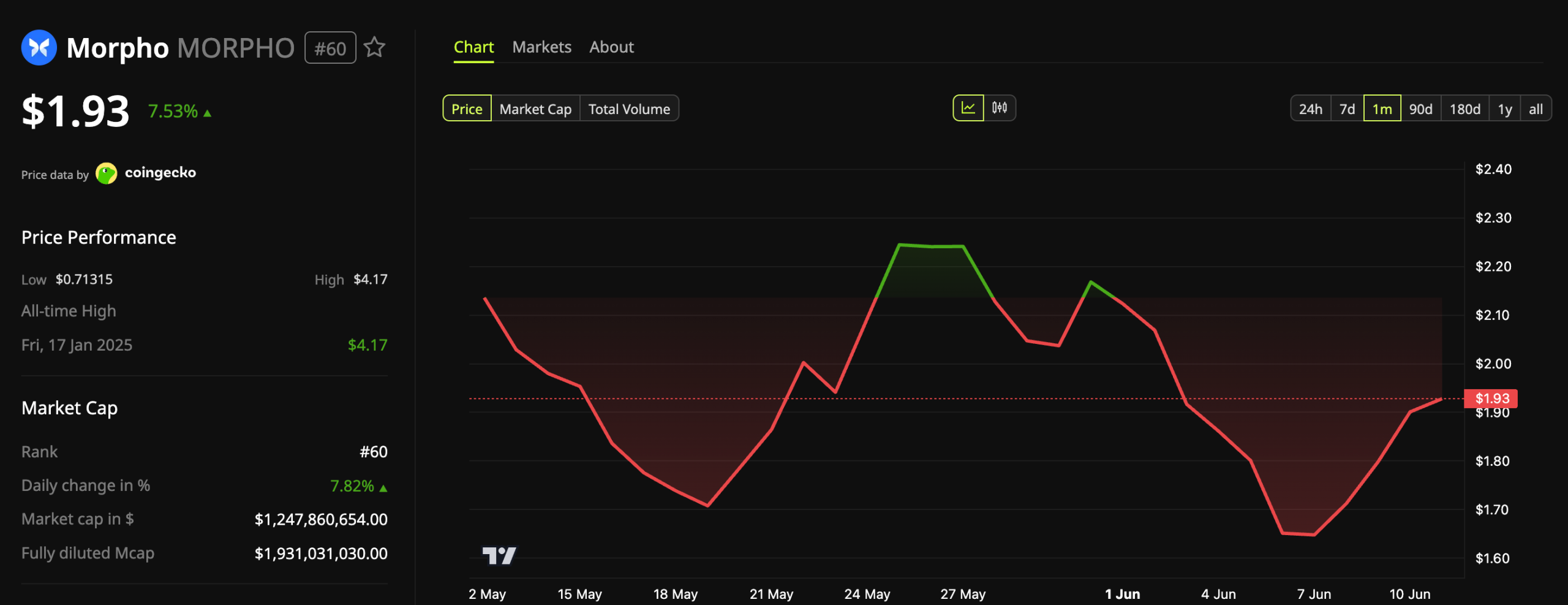
Morpho (MORPHO) gained 7.5% over the past 24 hours, defying a broader market pullback, after Morpho Association announced a $175 million funding round co-led by Paradigm, a16z crypto, and Ribbit.
The raise ranks among the largest in the history of decentralized finance (DeFi). It arrives as institutional demand for onchain lending infrastructure continues to build.
DeFi Lender Morpho Closes $175M Round Led by Paradigm
Morpho Association disclosed the round in a recent blog. Apollo Funds, Circle Ventures, VanEck, Ledger Cathay, Variant, Wintermute Ventures, SBI Group, Bpifrance, and more than 10 other partners also participated.
The protocol holds over $11 billion in deposits. Morpho is already used by leading crypto exchanges, including Coinbase, Kraken, and Binance, as well as by institutional clients Bitwise, Galaxy, and Anchorage Digital.
The financing marks Morpho Association’s fourth institutional raise since 2021. Earlier backers include Coinbase Ventures, Pantera Capital, and Variant. The association said the capital will deepen technical and commercial integrations with partners.
“The true value of finance has always been held back by dated infrastructure, fragmented systems, and extractive intermediaries. We started Morpho to change that. We’re building the open credit network for the world, connecting those with excess capital to those who need financing, globally,” Paul Frambot, Cofounder of Morpho, said.
Follow us on X to get the latest news as it happens
MORPHO Bucks the Broader Downturn
The announcement gave MORPHO’s price a boost. The token’s rally stood out against weak market conditions.
MORPHO traded near $1.93 at press time, up 7.5% over the past 24 hours, while the total crypto market capitalization fell nearly 2%, according to BeInCrypto Markets.

Even so, the token remains down 5.7% over the past week and roughly 12% over the past month. It also sits 54% below its January 2025 all-time high of $4.17.
Whether institutional backing translates into sustained demand for the token may become clearer in the coming weeks.
Subscribe to our YouTube channel to watch leaders and journalists provide expert insights
The post Morpho Token Defies Market Slide After $175M Paradigm-Led Funding Round appeared first on BeInCrypto.
Prediction market regulators should consider a measured approach to insider trading enforcement as opposed to an outright ban, according to research from an academic at the Stevens Institute of Technology.
In a paper released on June 2, assistant professor of finance Balbinder Singh Gill developed a formal economic model to answer the question of how strictly insider trading in prediction markets should be policed.
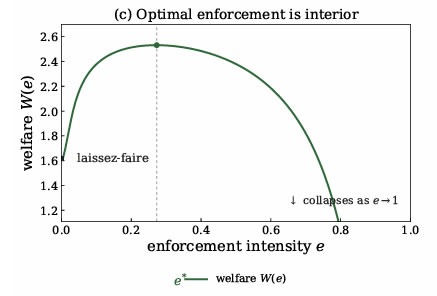
A paradox exists in that “the same insider trade that improves the accuracy of the price today can reduce the participation that makes the price informative tomorrow,” he said.
The model showed that prediction market price accuracy is “hump-shaped” in enforcement intensity, with too little enforcement letting insiders crowd out participants, while too much enforcement removes the insider’s genuine informational contribution.
“Tougher enforcement curbs the insider, raising participation, so accuracy is hump-shaped and optimal enforcement is interior, neither laissez-faire nor a ban,” he said.
Insider trading has been a persistent problem for prediction markets, with regulators pushing for crackdowns or banning platforms outright.
The CFTC’s chief enforcement director warned prediction market insider traders in April that violators would face enforcement action. In May, US House lawmakers launched a probe into Kalshi and Polymarket over insider trading.
Different levels of enforcement needed
Singh Gill argued that the level of enforcement should be determined by where the insider information comes from.
Researched information where a trader has worked hard to learn something should have the least, or no enforcement, adding that any crackdown on this level discourages valuable information production.
Related: US House lawmakers launch probe into Kalshi, Polymarket insider trading
Misappropriated information, such as leaked data or classified information, which would be considered insider information, should have a higher level of enforcement.
Meanwhile, cases where the insider can influence the outcome, such as a political candidate betting on their own campaign, should have the most enforcement.
“Trading on a genuine, independently researched edge is the activity society should be most reluctant to punish […] And trading by those who can move the outcome warrants the stiffest enforcement, because their positions invite manipulation.”
Enforcement in a prediction market should be “calibrated rather than maximal,” he concluded.
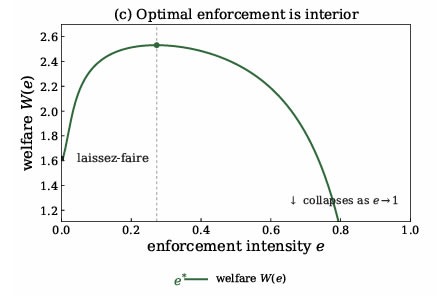
Balanced enforcement provides optimal welfare. Source: Balbinder Singh Gill
Kalshi to check user employment details
The paper came as Kalshi is introducing new measures to combat insider trading by requiring users in some sensitive markets to disclose employment information.
Users betting in sensitive markets, such as company performance or national security, will need to disclose their employer via an online form. It has also developed a “specific risk score” assigned to markets with heightened insider trading or manipulation risk.
The changes follow an audit committee report recommending better data collection and pressure from lawmakers and regulators.
Two recent high-profile insider trading cases involving competitor Polymarket were flagged and also referenced in Singh Gill’s paper.
A Google employee was charged in May with using insider information about the company’s search trends to make $1.2 million on Polymarket, and a US soldier was charged in April with trading on classified knowledge of a military operation.
Magazine: Vietnam preps crypto pilot, HK pushes tokenization: Asia Express
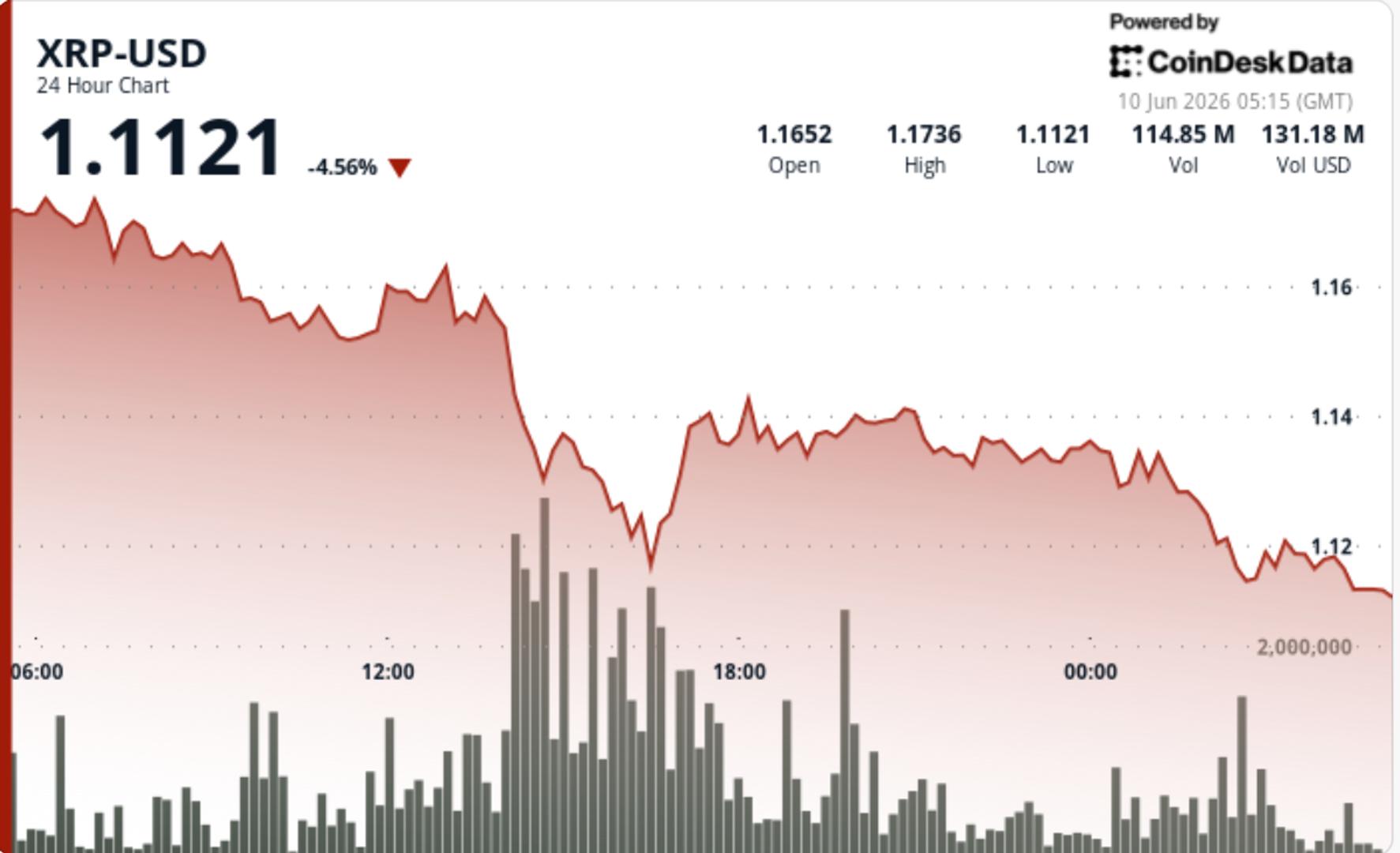
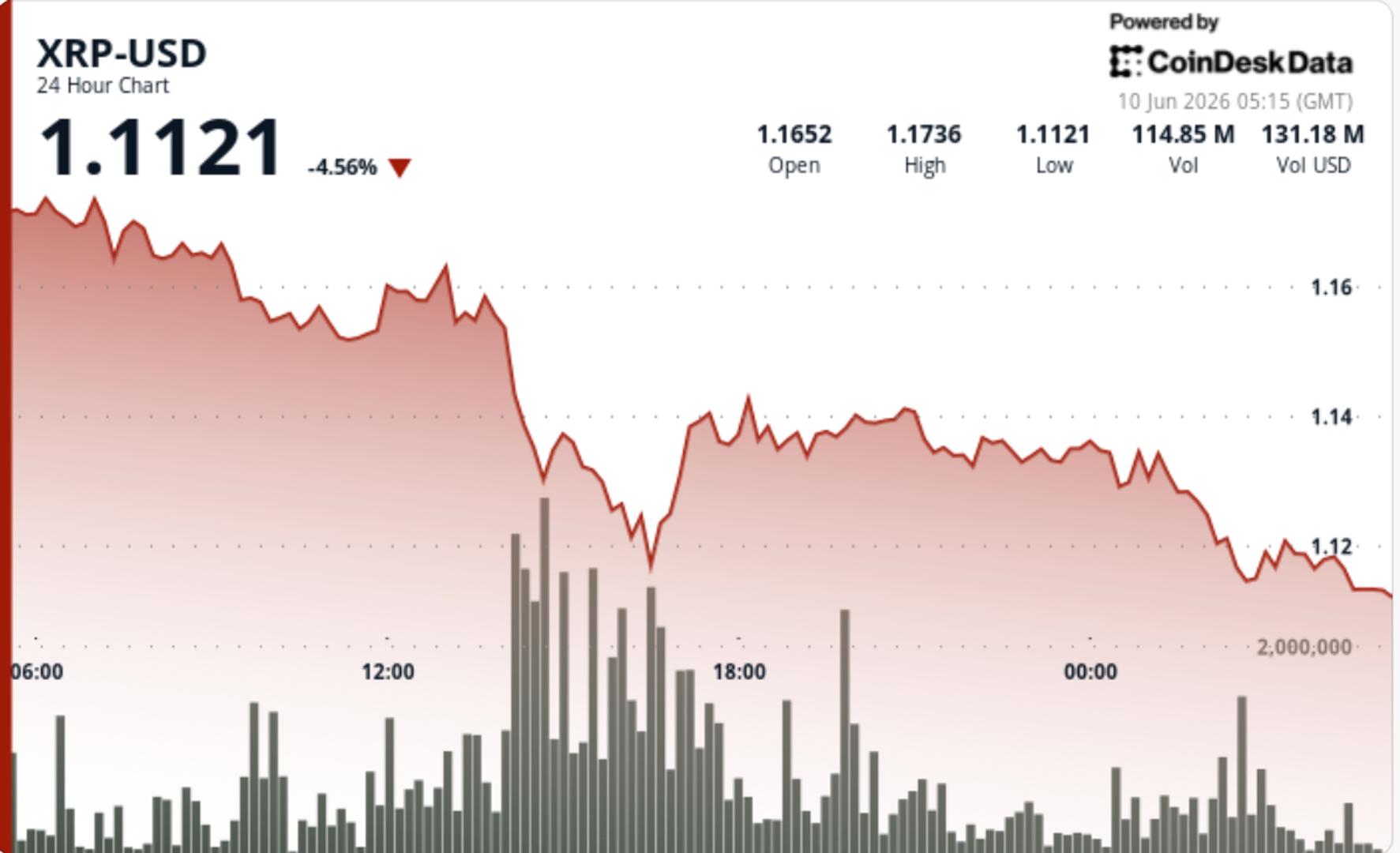
XRP keeps finding buyers near major support, but it keeps losing support anyway. The latest drop pushed the token back toward the same $1.10 area that several analysts had flagged as a key line in the sand, with selling pressure accelerating once $1.13 gave way.
News Background
• Several analysts pointed to the $1.09 area as a major Fibonacci support level that XRP had been approaching for months.
• XRP remains trapped below its 100-day and 200-day moving averages, underscoring the broader bearish trend despite periodic relief rallies.
• Trading activity surged during the selloff before quickly normalizing, suggesting a large repositioning event rather than a steady increase in bearish conviction.
Price Action Summary
• XRP fell from $1.1505 to $1.1248 during the 24-hour session, losing more than 4%.
• The breakdown accelerated after price lost support near $1.13, with volume surging to 109.9 million XRP, more than double the daily average.
• XRP later tested support near $1.1240 before stabilizing into the close as selling momentum began to fade.
Technical Analysis
• The most important development was the loss of $1.13 support, which now becomes the first resistance level on any recovery attempt.
• Volume confirmed the move. The selloff occurred on some of the strongest activity seen in months, suggesting active liquidation and repositioning rather than passive weakness.
• At the same time, momentum indicators are nearing oversold territory. Daily RSI readings have fallen close to levels that historically preceded at least short-term relief rallies.
• The broader structure remains bearish. XRP continues trading inside a descending channel and below every major trend indicator that longer-term traders monitor.
What traders should watch
• $1.10-$1.12 is now the key support zone. A decisive break lower would increase the risk of a move toward $1.00 and potentially the $0.80-$0.90 region.
• $1.13 is the first level bulls need to reclaim to ease immediate downside pressure.
• Beyond that, attention shifts to $1.20 and then the larger $1.35-$1.40 resistance zone where previous recovery attempts failed.
• The setup is becoming increasingly compressed. Either buyers finally defend the current support area with conviction, or XRP risks turning a difficult correction into a much larger breakdown.

TLDR:
- XRP inflows to Binance from wallets holding over 1M tokens have declined sharply since the 2025 peak.
- On-chain data shows no extraordinary inflow spike, ruling out aggressive whale selling or profit-taking now.
- The current XRP price drop is tied to leverage liquidations and broad market weakness, not whale distribution.
- If Binance inflows stay low and demand holds, XRP could realistically revisit the $1.8 to $2.0 price range.
XRP exchange inflows to Binance have declined notably following the 2025 market peak, and on-chain data now points to reduced selling activity among large holders.
Transfers exceeding one million XRP dominated exchange inflow charts between 2021 and 2025, reflecting consistent participation from whale and institutional-scale addresses.
The recent pullback in these flows, despite a price retreat from the $3 region, suggests that major market participants are becoming less inclined to sell.
Whale Activity Shifts as Large-Scale XRP Transfers to Binance Drop
Historically, sharp spikes in the 100K–1M XRP and 1M+ XRP inflow categories have preceded major market downturns.
These surges typically signal that large holders are moving assets to exchanges ahead of selling. However, no such extraordinary spike currently appears at the far right of the inflow chart. This absence is a meaningful contrast to prior bear market conditions.
CryptoQuant analyst PelinayPA noted that the post-ETF approval period coincides with this drop in whale inflows. The reduced exchange activity suggests whales may be holding positions rather than distributing.
That behavioral shift stands out, especially given XRP’s recent price correction. It points to a market structure that differs from previous cycles.
The current price decline appears linked more to leverage liquidations and broader market weakness than to deliberate whale selling. In past severe downturns, exchange inflows rose aggressively as investors rushed to exit positions.
That pattern is not repeating now. The on-chain picture, therefore, does not support the narrative of widespread profit-taking at this stage.
Between 2021 and 2025, large-scale inflows remained consistently elevated, showing that whales actively used Binance as a distribution venue. The recent reversal of that trend is therefore notable.
It reflects a measurable change in behavior among the market’s largest participants. Whether this shift sustains depends on whether inflows stay suppressed in the weeks ahead.
Subdued Binance Inflows Could Reduce Selling Supply and Support XRP Price
PelinayPA stated in the analysis: “If Binance inflows remain subdued, the available selling supply could continue to decrease. Combined with stronger demand, this would make it easier for XRP to revisit the $1.8–$2.0 range.”
That projection rests on the assumption that the current low-inflow environment holds. Any renewed surge in the 1M+ XRP category would challenge that outlook.
XRP’s price stood at $1.11 at the time of writing, with a 24-hour trading volume of $1,754,706,743. The asset recorded a 5.12% decline over the past 24 hours and an 8.28% drop over the prior seven days. Despite these figures, the on-chain data does not yet reflect panic-driven selling from major holders.
Reduced exchange supply, when paired with sustained or growing demand, typically creates favorable conditions for price recovery.
The $1.8–$2.0 range cited in the analysis represents a plausible near-term target if inflows remain low. However, this structure remains sensitive to any sharp reversal in whale behavior. Traders and analysts will likely continue monitoring inflow trends closely.
As long as no renewed surge emerges in the 1M+ XRP inflow category, the current market structure may remain constructive. The broader market environment will also play a role in whether that structure holds.
For now, the declining inflow trend offers a data-backed case for cautious optimism. The next few weeks will clarify whether whales maintain their current stance.



Humanity Protocol has revealed that a compromised employee laptop enabled attackers to obtain control of bridge administration systems across Ethereum and BNB Smart Chain, resulting in the theft and minting of more than $36 million worth of H tokens.
Summary
- Humanity Protocol says a compromised employee laptop enabled attackers to seize bridge controls and steal more than $36 million in H tokens.
- Attackers allegedly compromised multisig keys on Ethereum and BNB Smart Chain, draining 141.2 million H and minting 200 million additional tokens.
- The project has halted bridge activity, is working with exchanges and police, and plans to release a full post-mortem report.
According to a statement shared with crypto.news by Humanity founder and CEO Terence Kwok, the June 8 incident was a coordinated attack that targeted the project’s bridge infrastructure on multiple networks.
“Last night, June 8, 2026, the Humanity was hit by a coordinated attack across Ethereum and BSC,” Kwok said.
Providing the first detailed explanation of how the breach occurred, Kwok said the attacker gained access after compromising an employee device.
“This was a result of a breach that happened after an employee’s laptop was compromised.”
The founder said three of the six Gnosis Safe owner keys controlling the Hyperlane bridge ProxyAdmin on Ethereum were compromised. Humanity Protocol said the attacker transferred ownership of the ProxyAdmin contract to a wallet under their control, upgraded the bridge contract to a malicious implementation, and moved approximately 141.2 million H tokens in a single transaction.
A similar compromise took place on BNB Smart Chain. According to Humanity Protocol, three of five Safe owner keys were compromised, allowing the attacker to seize control of the bridge’s ProxyAdmin contract, deploy a malicious implementation with an unlimited mint function, and mint 200,000,005 H tokens in two separate transactions.
The project currently estimates that more than $36 million has been stolen and sold across both chains.
Compromised multisig keys enabled bridge takeover
Fresh details from Humanity Protocol expand on earlier disclosures from the team, which had initially confirmed only that private keys linked to a Humanity Foundation member were compromised.
Earlier on June 9, on-chain analyst Specter reported that more than 17 wallets associated with Humanity Protocol had been drained. Initial estimates placed losses near $19 million before later blockchain analysis increased the figure to more than $30 million.
Blockchain data cited by Specter indicated that the attacker sold part of the stolen H tokens and converted a substantial portion of the proceeds into Ethereum. According to the analyst’s Telegram update, roughly $23.7 million had been swapped into ETH, while approximately $7.9 million remained in H tokens.
Separate monitoring from blockchain security firm Blockaid had previously suggested that an attacker obtained proxy administrator rights on BNB Smart Chain and minted additional H tokens.
Humanity Protocol’s latest incident report confirms that administrative control of the bridge infrastructure was seized and used to create new tokens on the network.
Questions about the exploit emerged as H experienced unusual trading activity ahead of a scheduled token unlock later this month.
As reported by crypto.news earlier, blockchain investigator ZachXBT had initially considered whether the reported key compromise could have been used to conceal insider selling. However, after reviewing the movement and laundering of stolen funds, he concluded that the available evidence supported Humanity Protocol’s explanation that the exploit stemmed from a genuine private key compromise rather than an insider theft scheme.
Humanity Protocol is scheduled to unlock additional tokens on June 25 under a revised investor vesting plan. Previous reporting by crypto.news showed that some early investors opted for a discounted immediate unlock instead of a longer vesting schedule.
Exchanges and police are assisting recovery efforts
Response efforts remain ongoing as Humanity Protocol works to contain the fallout from the attack and investigate the breach.
“We’ve now halted all deposits and withdrawals to the affected bridges and are working with all related parties, including exchanges, to minimize the impact,” Kwok said.
The project said it is coordinating with exchanges and security partners while conducting an internal investigation into the incident.
“We’re also working closely with the police to investigate this incident and recover some of the stolen funds,” Kwok added.
Market reaction to the exploit was severe. Trading data cited in previous reports showed H falling from its June 2 all-time high near $0.844 to around $0.123 after the attack, erasing most of the token’s earlier rally as trading volume surged above $605 million.
Despite the losses, Kwok said the team remains focused on recovering assets, identifying those responsible, and strengthening the project’s defenses.
“We’re committed to seeing this through by recovering what we can, holding those responsible accountable, and rebuilding our security from the ground up.”
Humanity Protocol said it plans to release a full post-mortem report once its investigation progresses further.
Why is Tencent stock rallying today?

Kalshi Launches 3 Market Integrity Measures to Block Prediction Market Insiders

Sydney Sweeney Talks Euphoria Nude Scenes, OnlyFans Storyline



-

 Fashion5 days ago
Weekend Open Thread: Evereve – Corporette.com
-
 Crypto World5 days ago
Jensen Huang Approves Samsung, SK Hynix, and Micron for NVIDIA (NVDA) HBM4 Memory Supply
-

 Crypto World2 days ago
Anatomy of the June crypto crash: Fed, Iran, Saylor
-
 Entertainment3 days ago
The Best Mystery Series of All Time Is Surging on Streaming 30 Years After It Ended
-

 NewsBeat2 days ago
Alexander Zverev wins the French Open to finally earn a 1st Grand Slam title
-
Crypto World3 days ago
Senator Cynthia Lummis Calls CLARITY Act the Most Consequential Financial Legislation of This Generation
-

 Tech4 days ago
Suspicious Polyfill login prompts pop up on Toshiba, Muji websites
-

 Tech5 days ago
Microsoft launches MXC, an OS-level sandbox for AI agents, with OpenAI and Nvidia already on board
-

 Tech3 days ago
Microsoft unveils seven homegrown AI models in new bid for ‘long term self-sufficiency’
-
 Business3 days ago
The Pain Points Taking a Fragile Tech Rally Down a Notch
-
Crypto World5 days ago
LBank Surpasses 25 Million Users Worldwide as AFA Partnership Continues to Drive Global Growth
-

 Business5 days ago
(VIDEO) Justin Bieber Delivers Surprise Happy Birthday Serenade to Diners at Los Angeles Mexican Restaurant
-

 Crypto World3 days ago
Trump’s AI Ownership Plan Could Benefit Anthropic at OpenAI’s Expense
-
 Sports15 hours ago
Bangladesh beat Australia after 20 years in ODIs, register only their second win over six-time world champions | Cricket News
-

 Tech5 days ago
Meta steals a tactic from Tesla and builds data centers in tents
-

 Tech4 days ago
Von der Leyen’s AI envoy pick draws conflict-of-interest fire
-
 Crypto World2 days ago
Eli Lilly (LLY) Stock Surges 4% Following Breakthrough Sleep Apnea Trial Results
-

 Tech5 days ago
RCS Messages Between iPhone and Android Get End-to-End Encryption With iOS 26.5
-

 Tech4 days ago
Hackers now exploit SolarWinds Serv-U flaw to crash servers
-

 Tech2 days ago
Notion restores access to Anthropic after service disruption
You must be logged in to post a comment Login