

Entertainment
Caleb And Fleur Shomo Split Had Been Building For Years

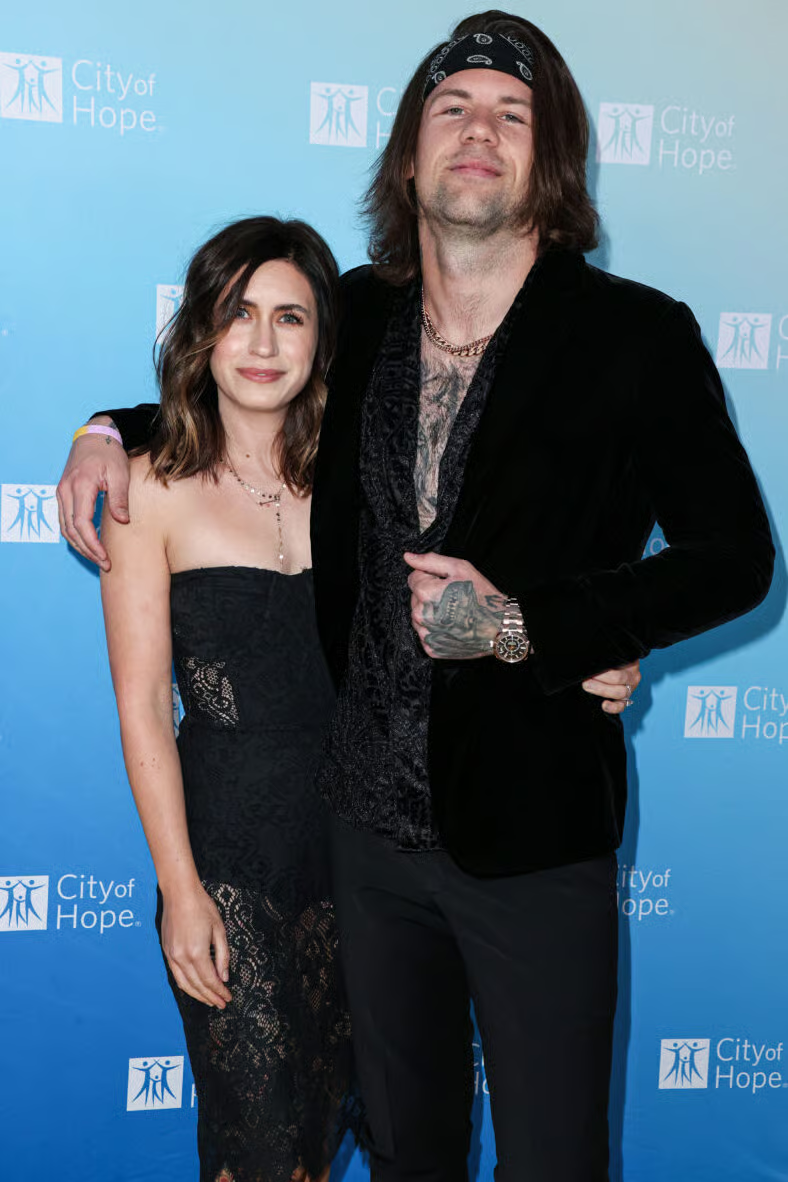
Fleur Shomo spent years making fans believe her marriage to Caleb Shomo would last forever.
From emotional anniversary tributes to backstage tour memories and romantic captions, the actress constantly celebrated her husband online. That is why followers immediately noticed when their latest anniversary quietly passed without acknowledgement.
Weeks later, Caleb publicly came out as gay and confirmed the marriage was ending, while Fleur admitted the split had left her emotionally devastated. Now, insiders say the painful separation had actually been building behind the scenes for a long time.
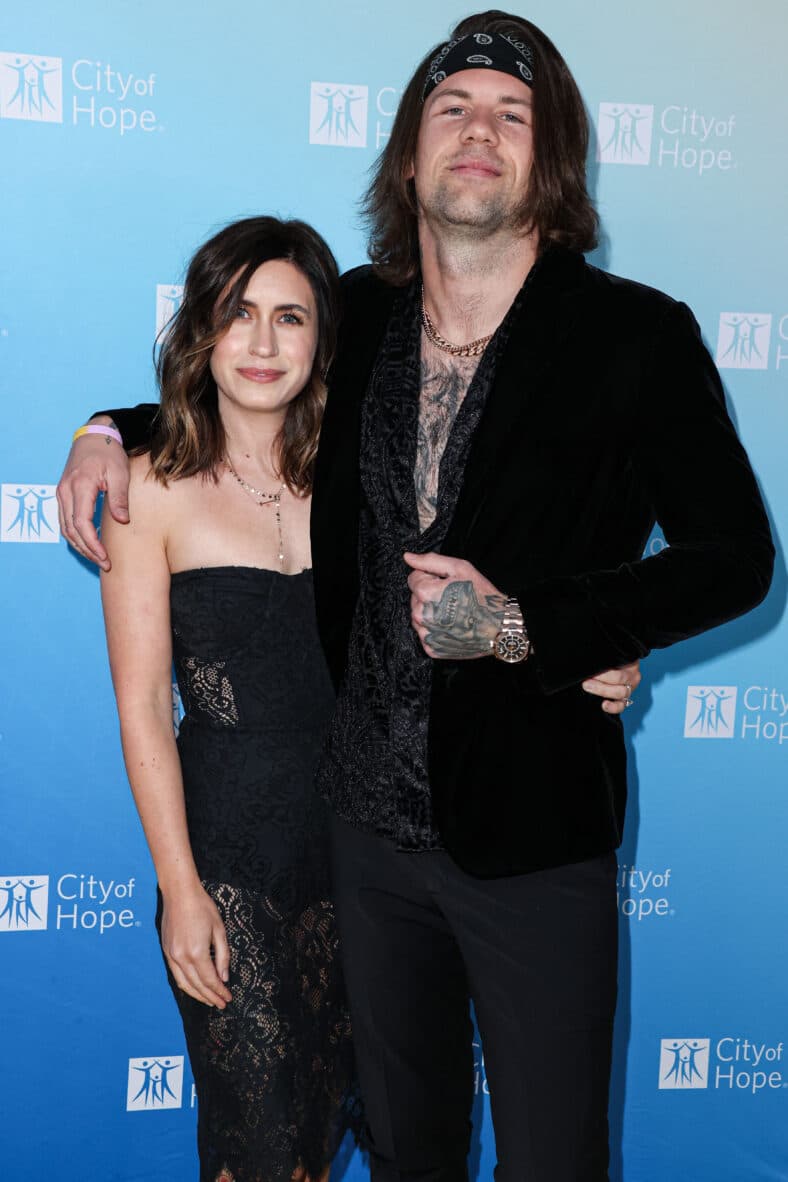
To outsiders, Fleur and Caleb Shomo appeared inseparable. Their social media pages were packed with affectionate photos, concert memories, and emotional captions celebrating their life together.
Every April, Fleur would celebrate their wedding anniversary by sharing memories from their beachfront wedding in Kauai, Hawaii, once calling it “the most perfect of days.” However, this year, fans noticed the tradition suddenly stopped.
According to a source who spoke to the Daily Mail, the collapse of the marriage did not happen overnight. “This had been building for a long time for Caleb, and it’s been incredibly heartbreaking for Fleur, who truly believed she had found her soulmate,” the insider shared.
The source added that although the split has been devastating, Fleur is beginning to process the reality of the situation. “They went through so much together, and while it’s been difficult, she’s slowly coming to terms with everything,” they explained.
While Fleur struggles emotionally, the insider claimed Caleb has experienced a different kind of emotional shift. “Caleb now feels a huge sense of relief finally being able to live as his authentic self,” the insider noted.
Caleb Publicly Comes Out And Addresses His Personal Journey
Caleb Shomo officially addressed speculation surrounding his personal life in a lengthy Instagram statement shared Saturday.
“I am a proudly gay man,” the Beartooth singer wrote. He explained that he felt compelled to set the record straight before it “affects those I love any further.”
Caleb reflected on years spent battling emotional struggles, pointing to his religious upbringing, depression, self-hatred, and hopelessness as themes that had repeatedly surfaced in his music.
“I spent a decade burying feelings with alcohol, and honestly when I decided to put it down and focus on exploring why I felt this way for so long, it’s been a direct path to me reconciling with my sexuality in hopes that it will eventually lead to me experiencing self-love,” he shared.
Now, the insider says Caleb is fully aware of the criticism and online ridicule that may follow his announcement.
“He stands by his decision and is ready to face the likely backlash, including that from trolls and others that are already making cruel jokes at his expense using his last name, and making it derogatory,” the source told the outlet.
Still, Caleb reportedly feels relief after finally speaking openly about his identity following years of internal struggle.
Caleb Shomo’s Revelation Left Fleur Shomo Emotionally Devastated
While Caleb publicly embraced his truth, Fleur used her own social media platform to reveal how deeply the situation has affected her emotionally.
As The Blast reported, the actress shared a video showing the pair dancing and laughing together and admitted the last several months have been “disorienting” and “hurtful.”
“You never want anything more for your person than for them to just be ok,” she wrote. She also confessed that the situation forced her to wrestle with conflicting emotions at the same time.
Fleur explained that she still wanted to support Caleb despite feeling emotionally shattered herself. “You can love and support your person through the hardest time in their life, whilst also be completely demolished & lose yourself at the same time,” she shared.
Fleur continued, “You question everything. But I have learned the one thing I don’t need to question is our history.”
According to her, the love inside their marriage was always genuine, even if the relationship ultimately could not survive.
Caleb And Fleur Once Shared Their Romance Constantly Online
Before their split became public, Fleur frequently celebrated Caleb Shomo online, regularly referring to him as her “forever.”
The pair dated for roughly two years before marrying in 2012, and Caleb quickly became a major presence across Fleur’s Instagram page. One emotional caption read, “I want to be here long enough to gather dust with you.”
In another tribute praising his music career, Fleur wrote, “forever in awe of you, your ridiculous talent & your frikin’ guts for putting another piece of you out there.”
When Caleb toured with Beartooth, Fleur regularly shared how much she missed him while counting down the days until his return home. She also frequently posted photos of herself traveling with the band during life on the road.
Even earlier this year, the 33-year-old appeared in a Valentine’s Day tribute where Fleur described him as her “favourite person.”
Caleb Shomo Wants Future Relationships Kept Out Of The Spotlight
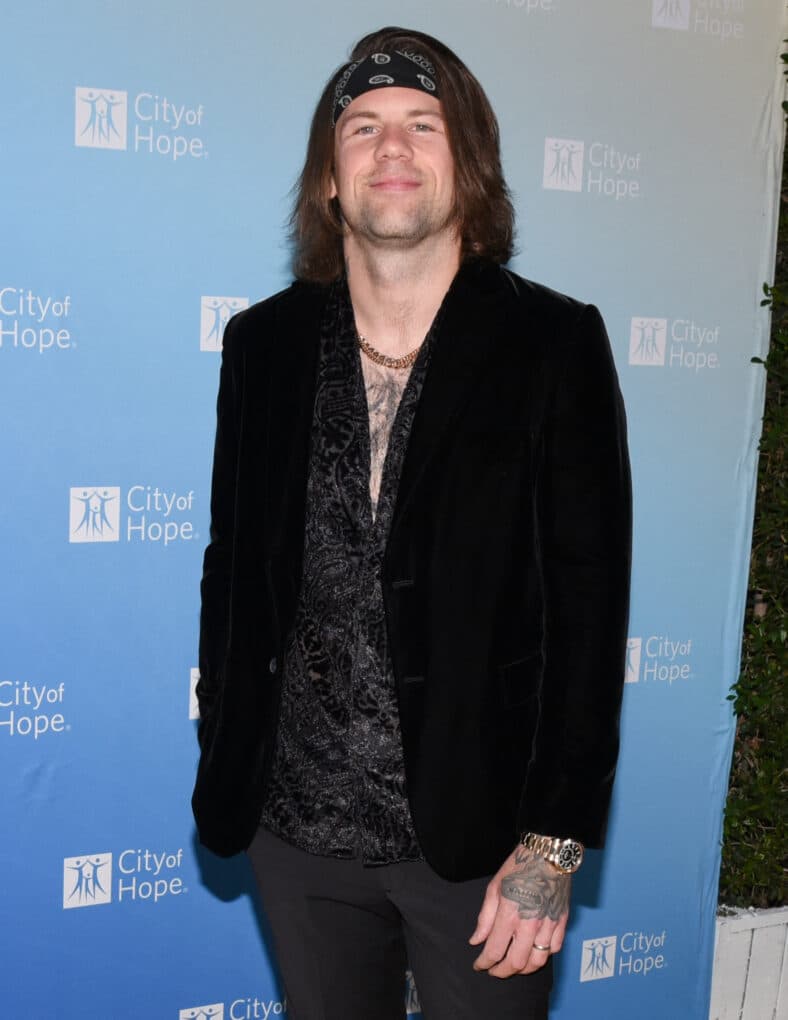
Although the couple’s marriage has ended, sources say Caleb intends to approach future relationships differently. According to the insider, he hopes to keep his dating life private, moving forward out of respect for Fleur and whoever enters his life next.
“He has no interest in turning it into a spectacle or forcing it into the public eye,” the source explained. They also noted that despite being openly gay, Caleb still wanted to carry himself with respect and show the same respect to anyone he would date.
Meanwhile, Fleur admitted that despite the heartbreak, she still values the years they shared together. “Nobody will know anything about our marriage like we do. And no one can ever truly know what depths of love exist between two people unless they are those people,” she wrote.
She also acknowledged how difficult it has been coping with the aftermath privately while struggling emotionally behind the scenes. Her mental health, she revealed, had “suffered” during the breakdown of the marriage.
Still, Fleur made clear that despite everything, the relationship itself had been real. According to her, their romance was wonderful and full of so much fun, adventure and love.

Continue Reading
Entertainment
Jamie-Lynn Sigler reveals the story she regrets telling about James Gandolfini on “The Tonight Show”
:max_bytes(150000):strip_icc():format(jpeg)/jamie-lynn-sigler-james-gandolfini-051326-a8c6d8484cd141f19bb833c628bcb049.jpg)
The actress wrote about her bond with the late “Sopranos” star in her new memoir.
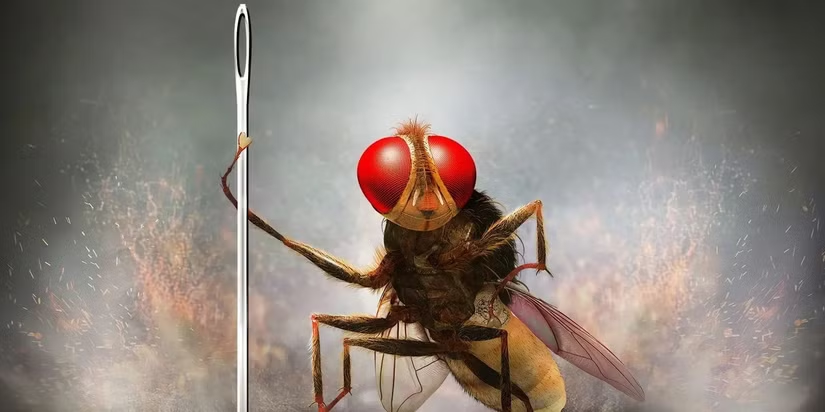
If there’s one genre that has proven to blend perfectly with action over the decades, it’s fantasy. It’s quite easy for these tales of magic, mythical creatures, and grand quests to incorporate some kind of action into the mix. Regardless of whether it’s large-scale combat scenes between rival armies, a swordfight between a hero and a villain, or a literal housefly fighting the man who wronged it, fantasy-action films are some of the most fun of each of those two genres.
But while there have been many great fantasy action movies over the years, only a handful can be considered genuine masterpieces to the full extent of the term. Whether it’s a comedy like Eega, an animated family film like How to Train Your Dragon, or a blockbuster epic like the now-iconic Lord of the Rings trilogy, these movies are definitive proof that fantasy and action are partners in crime like no other duo of genres.
10
‘Eega’ (2012)

The Telugu-language Indian dramedy Eega is probably the wildest fantasy action masterpiece ever made, and that constantly works in its favor. Directed by S. S. Rajamouli, one of the greatest filmmakers currently working in India, the story follows a man who’s murdered by a wealthy magnate over the love of a woman. The protagonist then reincarnates as a housefly who has to take revenge and protect the woman he loves from this obsessive villain.
It’s not that Rajamouli takes the concept of a vengeful fly seriously, since he definitely has tons of ridiculous fun with it, but he does take the premise earnestly.
It may sound like the premise of a so-bad-it’s-good cult classic, but Eega is genuinely one of the best low-budget fantasy movies ever made. It’s not that Rajamouli takes the concept of a vengeful fly seriously, since he definitely has tons of ridiculous fun with it, but he does take the premise earnestly. This distinct approach makes for a surprisingly moving and high-stakes revenge thriller whose 100% rating on Rotten Tomatoes is well-deserved.
9
‘The Crow’ (1994)

Alex Proyas‘ The Crow is today perhaps best known for Brandon Lee‘s tragic on-set death after a prop gun failed during filming. Even so, the greatest show of respect that one can offer Lee’s legacy is to appreciate that The Crow is, in fact, one of the best R-rated fantasy movie masterpieces ever made. Dark, stylish, and energetic, it’s a film that deserves far more recognition for its own merits.
Bolstered by the tremendous power of Lee’s now-mythic performance, the film has a sort of campy charm that never overshadows its bleak atmosphere or the edgy, stylish-to-a-fault tone. The Crow is a cold, urban, Gothic rock revenge story unlike any other, and the way the fantasy and supernatural elements of the plot blend with the intensity of the action sequences is as seamless as it is compelling.
8
‘Kung Fu Hustle’ (2004)

Roger Ebert once described Stephen Chow‘s martial arts comedy Kung Fu Hustle as “Jackie Chan and Buster Keaton meet Quentin Tarantino and Bugs Bunny,” and frankly, there’s no better possible way to describe this action fantasy extravaganza. Full of the same kind of over-the-top humor and physics-defying action that you’d expect to see in a cartoon, it’s easily among the goofiest action movies the world has ever seen.
Chow has full control over that goofiness, however, resulting in a martial arts spectacle that’s absolutely hilarious while also being unexpectedly emotionally compelling. It’s definitely one of those genre movies that favor style over substance, but in the case of movies like Kung Fu Hustle, the style is the substance. After all, nowhere else will fans of action fantasy get combat sequences even remotely similar to what this comedic masterpiece has to offer.
7
‘Pirates of the Caribbean: Dead Man’s Chest’ (2006)
Disney had made other movies based on their iconic theme park rides before they released Pirates of the Caribbean: The Curse of the Black Pearl in 2003, but never with the same level of success. A franchise stemming from this beloved fantasy swashbuckler was inevitable. When Dead Man’s Chest finally hit theaters three years after its predecessor, it was very famously disliked by critics in general, but audiences loved it so much that it became one of Disney’s highest-grossing live-action films in history.
Two decades later, it’s time to officially admit it: critics got this one wrong, as Pirates of the Caribbean: Dead Man’s Chest is easily one of the best adventure movies of the 21st century. It’s the last true swashbuckler epic of its kind produced in Hollywood, a perfectly-paced two-and-a-half-hour parade of showstopping action sequences, emotionally stirring character moments, absurdist humor, and delightful plot twists.
6
‘Vampire Hunter D: Bloodlust’ (2000)

Based on the 1985 novel Vampire Hunter D: Demon Deathcase by Hideyuki Kikuchi, Vampire Hunter D: Bloodlust is one of the best anime movies of the 2000s. This dark fantasy vampire adventure was made with the intention of showing it specifically in American theaters, which is why it was only released theatrically in an English-language version. Even when it came out in Japan, it was in English with Japanese subtitles. This singular approach makes it the highest-grossing Japanese film ever in a language other than Japanese.
Vampire Hunter D: Blodlust is a darkly gorgeous, uniquely surreal action horror film unlike anything else that cinema has seen since. It’s a film as spooky as it is badass, full of stunning visuals and immersive sound design. Indeed, it is a true triumph of the animated medium that should appeal to fans and non-fans of the source material alike, making it a must-see for all those who love vampire action.
5
‘How to Train Your Dragon’ (2010)

Only a handful of 2010s fantasy movies are true masterpieces, and DreamWorks Animation’s How to Train Your Dragon is right up there as one of the best. It’s one of the greatest family fantasy films of modern times, a nearly-perfect adventure which understands that there’s plenty of room in children’s media for dark tones, emotional complexity, and artistic merit.
With its impressive score of 99% on Rotten Tomatoes, How to Train Your Dragon remains the most critically acclaimed film in DreamWorks Animation’s catalog, and for good reason. It’s a rousing father-son story, a celebration of forbidden friendship, and a love letter to Viking fantasy. Its visuals have aged beautifully, John Powell‘s score is one of the best of the 21st century as a whole, and the sense of nostalgia permeating the tale of Hiccup and Toothless remains unbeatable, with very few modern animated films achieving the same level of emotional storytelling.
4
‘Castle in the Sky’ (1986)

For all those who are even the slightest bit familiar with anime, neither Studio Ghibli nor Hayao Miyazaki should need any introduction. The former are arguably the leading studio in anime filmmaking, and the latter is among the greatest Japanese filmmakers in history. You could tell how great he was from very early on in his career: Castle in the Sky was only his third-ever movie, yet it’s still one of the most beloved masterpieces in the history of anime cinema.
Castle in the Sky is one of those underrated fantasy movie masterpieces that everyone should watch at least once. Its blend of fantasy, action, and steampunk aesthetics has aged like fine wine, resulting in a story that’s beautifully imaginative in its worldbuilding yet also refreshingly human in its storytelling. Action fantasy is frequently at its best when it’s within the nearly limitless medium of animation, and Castle in the Sky is proof of why.
3
‘The Lord of the Rings: The Fellowship of the Ring’ (2001)

The concept of The Lord of the Rings originated as a simple sequel to J. R. R. Tolkien‘s legendary 1937 children’s book The Hobbit, but soon evolved into a far larger work. Devised as a single high fantasy epic but published in three volumes, Tolkien’s trilogy remains the most important and groundbreaking work of literary fantasy from the 20th century. Anyone would have assumed that it was impossible to live up to such a huge legacy with a big-screen adaptation—but that was before Peter Jackson and his team came onto the scene.
The Lord of the Rings: The Fellowship of the Ring might be the weakest of the three Lord of the Rings films, but it’s still one of the greatest fantasy films ever made, which only speaks to the unprecedented quality of this entire trilogy. If this went on to become the best blockbuster trilogy in movie history, it’s largely because Fellowship laid the foundations as perfectly as it did. Marvelously written, technically faultless, and full of memorable moments, it’s action fantasy at its most imaginative.
2
‘The Lord of the Rings: The Two Towers’ (2002)

Sandwiched in between two of the greatest fantasy epics in history is another one of the greatest fantasy epics in history, The Lord of the Rings: The Two Towers. It may be best remembered for the Battle of Helm’s Deep, easily one of the best climaxes of any epic movie, but this sequel is defined by far more than just its final act.
The Lord of the Rings: The Two Towers is full of emotionally stirring character arcs, jaw-dropping action sequences, and admirably perfect bits of writing. It’s Hero’s Journey storytelling at its very best, gorgeously expanding the world and the enthralling story of Fellowship while also gorgeously adapting Tolkien’s work. Furthermore, it set the stage for the final chapter of the trilogy and offered plenty of a distinct and now-iconic spice.
1
‘The Lord of the Rings: The Return of the King’ (2003)

There’s really not much question about it. With a whopping 11 Academy Awards under its belt, The Lord of the Rings: The Return of the King is tied with Ben-Hur and Titanic as the biggest Oscar winner in history, and for good reason. We’re talking about not just the most perfect adventure movie of the last 40 years, but perhaps even the greatest fantasy film of modern times.
At the very least (emphasis on very), The Lord of the Rings: Return of the King is the peak of action fantasy filmmaking. Incredibly long ending be damned: this trilogy-capper succeeds at bringing every element of its predecessors to a cathartic close while still standing on its own two feet as an individual film. It’s visually impressive, boosted by Howard Shore‘s score, packed with stunning action sequences, and full of beautiful conclusions to deeply compelling character arcs. Fantasy movies don’t get much better than this.
Entertainment
‘Masters of the Universe’ Is Officially Doing What Modern Fantasy Movies Forgot How To Do
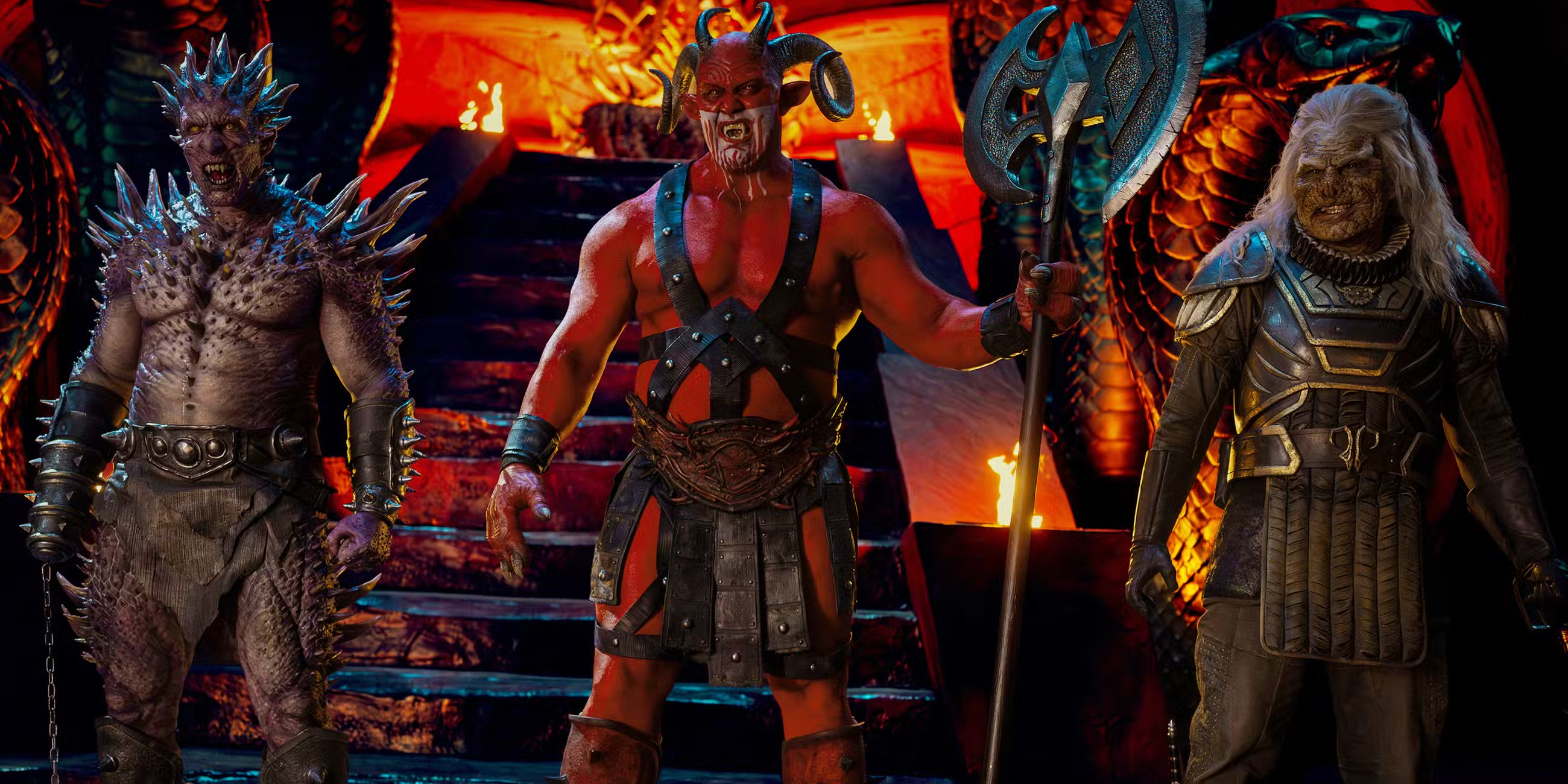
On May 21, 2025, at around 11 AM BST, I discovered that it actually is possible to make a movie that is full of color. In fact, it is quite easy to take the vibrant source material of a cartoon like He-Man and translate that not only into live-action, but onto the silver screen where movies are now far more likely to vacillate between poorly-lit shades of grey and beige. Couple this with the realization that Travis Knight’s Masters of the Universe was using practical sets, awe-inspiring creature work and prosthetics, and highly-detailed costumes, and it became apparent that Amazon MGM Studios and Mattel had chosen the right creative team to steward this project to fruition.
If you have read any of my reviews published throughout the last 5 years on Collider, you will recognize this oft-mentioned and incredibly un-fun factoid: the world as we know it is rapidly losing color. Not only have we been in a downward spiral since the ‘80s, but no one seems to care about bringing back what we have lost. For over a decade, audiences and critics have made their feelings about poorly-lit movies and series well-known. And yet, filmmakers continue to make it impossible to see and truly enjoy their hard-earned work. One pervasive theory is that the dimmer lighting allows filmmakers to better conceal the seams in the final product — particularly in cases where overworked, underpaid visual effects teams are being tasked with creating entire set pieces, costumes, and worlds within the confines of entirely green-screened sets.
I was relieved to learn that this wasn’t the case for Masters of the Universe. That’s not to diminish the film’s stunning visual effects, crafted by the talented teams at companies like Industrial Light & Magic, Rodeo FX, and DNEG under the guidance of visual effects supervisors Tim Burke and David Vickery. But those effects are built upon highly detailed practical sets, designed by the film’s two-time Academy Award-nominated production designer, Guy Hendrix Dyas. Together, the production design and visual effects teams worked in tandem to create a world that feels fully realized — and the results speak for themselves.
How ‘Masters of the Universe’ Remained Faithful to the Animated Series’ Color Scheme
Last spring, Dyas joined the bevy of journalists on the set of Masters of the Universe to discuss how they brought Eternia to life for the film. Before we even set foot on the actual sets, the sketches on the walls around us showcased a colorful, immersive world that was reminiscent of the animated series that many of the film’s creatives grew up with. Dyas readily admitted that he “fanatically” watched He-Man as a child growing up in Devon, England, and that childhood obsession had a clear throughline into the level of detail in each of his designs.
“What I’ve tried to do in every case is make sure that all the vehicles adhere to the original color schemes of the toys in the animation. Which has been really, honestly quite amazing for me as a designer who normally would always do spaceships in the classic sort of steel or gray.” Dyas explained while showing us his red-accented concept art for the Rotons — the intimidating saw-like vehicles used by Skeletor’s lackeys. “We all know spaceships are always gray, right? Not in this world.”
Among the sketches on the walls were the highly-detailed designs Dyas drafted for Eternia’s capital city, Eternos, which revealed a city that looked almost real. The designs factored in day-to-day life, with functional egress and ingress, and a clear understanding of how a civilization develops and evolves throughout its rise and eventual fall.
Dyas credited some of the city’s inspiration to famed concept artist Ralph McQuarrie, who provided uncredited concept art for Gary Goddard’s 1987 live-action adaptation. “I kept in mind [his] gestures of the domes, but I changed them into glass. I felt that if they were stone, it would start to look too much like a Star Wars world.” While McQuarrie’s designs were inspirational, they also lacked something that is integral to the ethos of He-Man. “I obviously ramped up the color because colors are a very, very big deal for Masters of the Universe. It’s not a world that shies away from vivid color, and that’s a very healthy thing.”
McQuarrie is, of course, best-known for his Star Wars concept art, but the connection between He-Man and Star Wars goes deeper than that. In 1976, Mattel passed on George Lucas‘ offer to produce a toy line for his emerging franchise, which led to Kenner’s iconic action figures — and also the inception of He-Man. Mattel’s lead designer, Roger Sweet, created the character as a sort of Conan the Barbarian meets Star Wars, and the end result was a character that remains undeniably recognizable forty years later. What set He-Man apart from the rest of its peers was the franchise’s bright color scheme, as Dyas said:
“When you look at most science fiction films, they do tend to lean into a singular palette. If you go and see Patrice [Vermette]’s work in Dune, it’s beautiful, but it’s all going to be kind of yellow and brown. If you go and look at Star Wars, it’s going to go more into the gray palette, that whole sort of Doug Chiang thing. So, what is the palette for this world? Well, one thing’s for sure, it’s not short on color. Our forests are absolutely vivid and beautiful.”
Later we went to see part of the forest that Dyas and his team were building, where the only color restriction was “no green.” A choice that may seem surprising for a forest, but once you see the film you will understand why the restriction was put into place. “I removed the color green because it just does something very weird to your brain. You’re looking at it, and you’re going, ‘I believe everything here, and yet there’s something amiss.’”
How ‘Masters of the Universe’ Takes Its Costumes and Props to the Next Level

“I’ve never done a job that is so intertwined with prosthetics before,” Masters of the Universe’s costume designer Richard Sale admitted. Sale has an expansive career designing costumes for Marvel and DC films, including Guardians of the Galaxy, Wonder Woman: 1984, Doctor Strange in the Multiverse of Madness, and Aquaman and the Lost Kingdom, but none of those movies have utilized prosthetics quite like this one. “One of the really cool things about this job has been the hopefully seamless work with Barrie [Gower]. It’s a joy to emphasize each other’s work.”
We were shown models and finalized prosthetics for characters like Goat Man, Spikor, and Pig-Head that featured a level of detail and care that made them look more like war trophies than examples of made-for-screen prosthetics. Of course, the most impressive example of the seamless partnership between costumes and prosthetics is Masters of the Universe’s iconic villain Skeletor (Jared Leto).
As Sale told us, “because he’s predominantly a prosthetic, our work couldn’t start until we had a signed-off prosthetic, and we didn’t have that until two weeks before filming. They needed a long time to make the suit to Jared’s size. So at that point, we did all the artwork with all of the detail, and we did the belt design and all the [smaller] bits. All of that can go along, but it’s not until you finally get him in the room, in [the prosthetics], that we can really start work on it.”
He explained how they went through several months of testing different cloaks and shades of purple, before they settled on the final version that looked best in-camera. Skeletor is a make-or-break character for a film like Masters of the Universe, and the end result is perhaps the film’s most impressive feat. The secret, Sale revealed, was not to one-to-one replicate the costumes from the animated series and toy line, but rather build onto the concepts they established.
“One of the choices I made early on when we designed Skeletor was to not have the cross strap, which is from the costume with the bones, because it became too similar in a way that just became a negative of each other. Again, we were trying to move away slightly from the bone idea — just for Skeletor. He lives in Snake Mountain, so he should be more snake-like. But then we used a lot of snake skeletons in the design, so we kept the bone thing alive, but just having it a little bit more referential to his detail.”
The film’s prop master, Steven Morris, made a point to highlight how much time it takes to craft props for a film as large-scale as Masters of the Universe, particularly when the scenes are filled with background performers that all need to be armed with weaponry with the same level of detail as the main cast’s weapons. “I’ve never been involved in a project of this size and scope, and the sheer volume of what has to be built from scratch, which is pretty much everything. You can touch all these things. You’ll see certain things have different weights. That’s purposely for the actors and for what we need out of the scene.” And these prop pieces weren’t outsourced — Masters of the Universe kept everything in-house, and that only strengthened the synergy between departments.
“Keep in mind, our movie takes place 20% on Earth, 80% on Eternia. You cannot walk into a Target or a Best Buy or any store and say, ‘Hey, can you show me the Eternian section? We’ve got to buy a bunch of shit for our movie.’ Every single solitary prop, costume, belt buckle, and gun is bespoke to this movie. Everything. We were not able to and would not take it from somewhere else. We built it from scratch. We have a 40,000 square foot factory across the street that is literally manufacturing these things in-house, so we can design something on set and basically have it by the end of the day in some sort of form, all under one roof.”
In a production filled with He-Man fans, it wasn’t surprising to learn that departments like Morris’ were focused on fan expectations. “We always knew that this is a movie that’s going to get judged — even though it’s huge — by the very [small] details that make up the film. So, we’ve been concerned about details from day one. Our art department has created a language, an Eternia language with a grid, with letters, and we have plastered throughout the sets and on Teela’s ship, different phrases that, if you take the time, and you want to nerd out, and you want to follow the grid [you can].”
Morris continued, “The super nerds out there — who are looking for everything that we’re doing online — all of that stuff, it’s important to them. The first comments we started getting back [when the first look was released] were about this: the patina, the weathering. Because it feels like it’s being used. It doesn’t feel like Star Wars, where everything was so clean and didn’t have that tactile response. They’re zeroing in on the details.”

No one sets out to make a bad film, but if you spend enough time on sets, you can often sense that people know that what they’re making isn’t going to be great. But on Masters of the Universe it was the complete opposite. Everyone knew what they were making was going to be a visual treat for He-Man fans — and even newcomers to the franchise. From department heads to the background performers on their smoke breaks between takes, there was a palpable belief that Masters of the Universe was going to defy the odds of most big-budget fantasy movies. And Morris credited that hopeful attitude to one person on set.
“From the tip of the spear down, I’ll tell you the reason this movie’s going to work, and I believe it, is because Travis [Knight], our director, not only wanted to make this movie, he needed to make this movie. These were more than toys; they were characters that became his friends. He literally came up in this universe, never knowing that now he was in charge of it and in control of it. And thank God he is, because there is not a better steward to be running that brand and all of these things.”
Travis Knight’s Stop-Motion Background Is ‘Masters of the Universe’s Secret to Success
Nearly a year to the date of the set visit, I find myself sitting across from Travis Knight at the junket for Masters of the Universe, a day after the world premiere in LA. After seeing the film fully embrace the vibrant colors we witnessed on set, I ask how he managed to achieve something many of his peers seem to struggle with: creating a film that is not only richly colorful, but also impeccably lit. His answer is far from surprising.
Travis Knight isn’t just a He-Man super-fan, he is the CEO of LAIKA — the world-famous stop-motion animation studio behind Coraline, ParaNorman, Kubo and the Two Strings, and the upcoming Wildwood, two of which Knight also directed. Stop-motion animation, like any form of animation, is incredibly intentional about even the most minute detail, especially where color and lighting is concerned.
“It starts when you have source material like the Filmation cartoon, which was this riot of color,” he explains. “It was polychromatic splendor. It was insane, their use of color in that cartoon. That was essentially my North Star. I kept going back to the art department, and naturally, you go in that direction, and people think, ‘No, this is crazy. This looks insane. We’ve got to throttle back from that.’ And look, you do have to make things look believable, but it is an alien planet, and I wanted it to be a really rich, vibrant experience. So, as you work on a process, things tend towards gray, and you’ve got to always push it back. I’m really, really pleased with where we arrived because the movie is kind of a rich, colorful, kaleidoscopic riot, and it’s just so much fun.” He explained:
“It helps that I come from a background in animation, which is an accommodation of practical stuff and digital stuff, and so it’s the blend of those things. It’s a little bit different in live action, but it’s fundamentally the same thing.”
Knight echoed the same sentiments we heard Dyas and Sale make a year prior. Every department worked together to create cohesive designs that worked in concert with each other. “The thing that I hadn’t really done to this extent was work in prosthetics, and I didn’t have appreciation for how time-consuming and how difficult it was,” Knight explained. “But I lucked out. My prosthetics lead is a guy named Barrie Gower, who is absolutely extraordinary, and he’s a huge He-Man fan, which helped too.”
Knight went on to praise Gower and his team for the passion they brought to the production and the ways they found creative solutions to expand the world of the film. “He and his team, they put so much of themselves into this movie. They went above and beyond. They created things that are like, ‘Well, we can’t afford to put Merman in the movie,’ so they created a little Merman mask and put a guy in the background, so we got Merman in the back somewhere. I mean, they put so much of themselves into the movie.”
He also highlighted how that meeting of minds led to a film that feels set apart from the last decade of sci-fi and fantasy projects. “I think that the physical, the practical stuff, the special effects, the combination of visual effects, when those things blend together in a harmonious way, and it doesn’t happen easily, it creates a magical spell. I’m delighted with the work that went into the movie.”
What became clear over the course of both the set visit and my conversation with Knight nearly a year later is that Masters of the Universe was never approached as just another toy adaptation or effects-heavy franchise film. It was built by artists and craftspeople who understood exactly why this world resonated with audiences in the first place — not just because of He-Man or Skeletor.
In an era where so many blockbusters feel visually interchangeable, Masters of the Universe dares to look distinct. It embraces color, texture, practical artistry, and sincerity without apology. Whether the film ultimately succeeds with audiences remains to be seen, but one thing is undeniable: every frame reflects a creative team that genuinely believed in what they were making, and that passion is impossible to fake.
Masters of the Universe is in theaters on June 5, 2026.

Masters of the Universe
- Release Date
-
June 5, 2026
- Director
-
Travis Knight
- Writers
-
Chris Butler
- Producers
-
Jason Blumenthal, Robbie Brenner, Steve Tisch, Todd Black
:max_bytes(150000):strip_icc():format(jpeg)/STERLING-K.-BROWN-STEVE-MARTIN-QUINTA-BRUNSON-030626-056d2f7c6c4d4aaca38722d2501297b5.jpg)
EW’s guide to the top comedies and dramas on the streamer, for when you’re struck with analysis paralysis.
General Hospital’s Kate Mansi will exit the daytime soap opera.
In an interview with SoapSteph’s Daytime Dish, Mansi, 38, confirmed that her run as Kristina Corinthos-Davis came to an end last month when her last day of filming occurred. “I’ve made the very difficult decision to leave General Hospital,” Mansi told the outlet in an article published on Sunday, May 24.
Mansi, who joined the long-running soap in 2023, added that new projects required her “full attention” as did the need to support her husband, Matt McInnis. “With my husband currently producing a series filming primarily abroad, I needed the flexibility to travel while continuing to develop and work in Los Angeles,” she said.
The interview also included a note of gratitude from Mansi. “I’m incredibly grateful to Frank [Valentini, the show’s executive producer], ABC, and our writers for the care they gave Kristina,” she said. “It’s been such a meaningful and unforgettable ride. I’ve loved being a fiery Corinthos-Davis girl in such a phenomenal family.”

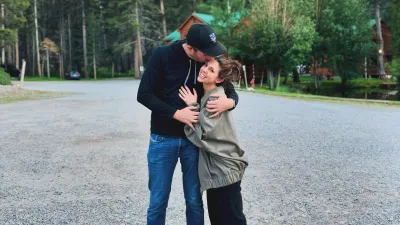
General Hospital star Kate Mansi has a lot to celebrate after her engagement to Matt McInnis. Apparently today is a holiday, but I think July 3rd was even better,” McInnis, 40, announced via Instagram on Thursday, July 4, sharing a photo of the couple hugging. They spent Independence Day with beautiful views of trees and […]
Valentini, 63, responded to Mansi’s departure, telling the outlet that he was happy for her fresh start. “We love Kate and support her decision to leave. The door is always open, and we appreciate all that she added to the show these past three years,” he told the outlet.
Mansi, who rose to fame as Abigail Deveraux in Days of Our Lives from 2011 to 2020, also discussed with the outlet why she was originally drawn to joining the General Hospital cast. “When Frank first approached me about the role, two things deeply resonated with me: the opportunity to show my support for the queer community by playing an LGBTQ+ character, and to help tell an endometriosis storyline,” the actress said. “Together, I truly feel we honored both of those stories in a way that mattered.


She concluded, “Now, it feels like the right time for both Kristina and me to step into new adventures.”

Kirsten Storms set the record straight about her break from General Hospital amid rumors of behind-the-scenes drama at the ABC soap. “I’m still under contract and have every intention of returning when the break (I was fortunate enough to be granted) is over,” Storms, 41, confirmed to fans via Instagram on Wednesday, July 9. Storms […]
Earlier this year, fellow General Hospital star Steve Burton announced that he would take a short break from portraying Jason Morgan on the show as he chose to embrace a new marriage and family time. At the time, Valentini again showed his support. “We love Steve and I am glad the show worked it out so he can get some personal time with his family,” Valentini told Soap Opera Digest in a statement. “We have some great Jason stories leading up to spring and look forward to his return in the summer.”
The General Hospital door has swung both ways in recent times, with Kirsten Storm returning to the role of Maxie Jones in February following a leave of absence after learning she had a brain aneurysm.
Westerns hook you in a different rhythm than most genres. And they have a pretty niche audience I must say. So for instance, unless you’re watching the best ones, it’s hard to sit through a western anyway unless you love the whole cowboy vibe. They do not always sprint. The great ones know how to stalk. You are watching pressure ripen through the slightest quirks of the genre and that’s the beauty of it.
These 10, however, are the kind of westerns that you would sit through and actually enjoy them regardless of whether you like the genre or not. That’s how good they are and how well they hook. And they are not all fast in the same way. Some are tense. Some are grand. Some are brutal. Some are funny in dry, lethal little bursts. But they all understand propulsion.
10
‘Open Range’ (2003)

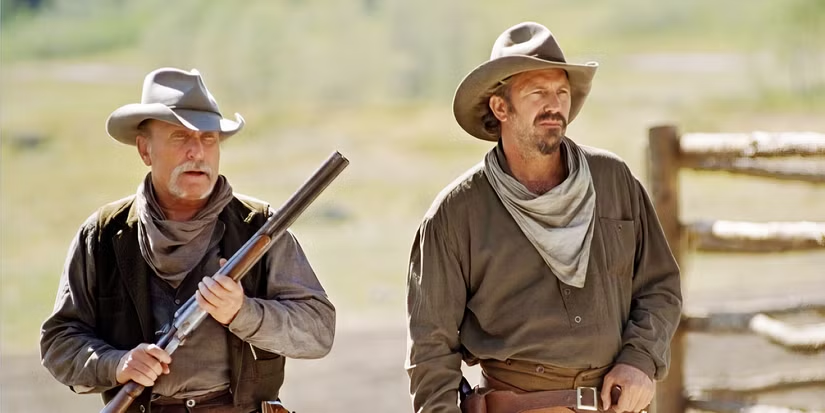
What I love about Open Range is how confidently it lets its pace breathe without ever letting your attention wander. That is a hard balance, and it gets it exactly right. The early sections are full of ordinary frontier routines, men living out on the land, eating, talking, moving cattle, handling small tensions before they curdle into bigger ones. But none of that feels like stalling. It feels like the movie quietly teaching you what kind of life is being threatened. Boss Spearman (Robert Duvall) and Charley Waite (Kevin Costner) are are men who have made a working moral arrangement with the world, and once that arrangement gets violated by Denton Baxter’s (Michael Gambon) cruelty, the film starts humming with contained anger.
And that anger is what keeps the whole movie hooked into you. Duvall gives Boss such lived-in authority, while Costner makes Charley feel like a man who has spent a long time trying not to become the version of himself violence keeps calling back into existence. The romance thread never drags the movie down either, because it is tied to the larger question of whether a man like Charley can ever belong to ordinary life again. Then that final gunfight justifies every bit of the slow-burn structure.
9
‘3:10 to Yuma’ (2007)

This movie is one of the best examples of a western understanding that movement itself can be suspense. Get Ben Wade (Russell Crowe) to the train. That is the engine. Such a simple goal, and it gives the whole film shape immediately. The beauty is that the shape keeps getting more complicated the longer it runs. Dan Evans (Christian Bale) is trying to hold onto his own idea of himself in front of his son, his debt, his humiliation, and his half-broken place in the world. Ben is not just a prisoner either. He is funny, intelligent, observant, dangerous, and weirdly interested in the weaknesses of the men around him. So the film keeps turning the escort plot into an emotional duel.
3:10 to Yuma never lets either man flatten into an easy type. Dan and Ben’s scenes together are the movie’s real action, even before the bullets start flying. Then once the final race to Contention begins, the film becomes almost unbearably tight. The movie is so exciting by then — the moral stakes have become inseparable from the physical ones.
8
‘The Magnificent Seven’ (1960)

The Magnificent Seven hooks you because it understands one of cinema’s oldest pleasures: assembling the right people for the wrong job under the right amount of pressure. The village is under threat. The bandits keep returning. Protection must be bought somehow. Then the film starts bringing in these gunmen, each with a distinct rhythm, ego, sadness, or streak of fatalism, and suddenly you are in a community-building story, a men-in-search-of-purpose story, and a “what does skill mean once the world has stopped paying for it honorably” story. That is rich fuel.
And the film never loses momentum because every phase has its own charge. The recruitment is fun. The training and defense preparation are fun. The uneasy bond between the villagers and the gunmen deepens things without killing pace. Calvera (Eli Wallach) is also a huge reason the movie moves so well, because he gives the threat personality without turning him into a cartoon. You understand exactly why the villagers are terrified of his return. Then the final stand lands because the film has done the essential western work: it has made protection costly and belonging temporary. You stay hooked because the movie keeps asking what these men are actually fighting for once the paycheck becomes the least interesting answer.
7
‘High Noon’ (1952)

This one is all tension design. There is almost no wasted motion in High Noon. The film follows a marshal (Gary Cooper) who learns that a man he once sent away is coming back on the noon train, revenge is clearly the mission, and instead of riding out, he stays and tries to gather help from a town that keeps finding more respectable ways to abandon him. That setup is brilliant because it turns suspense into moral exposure. The danger is not just Frank Miller (Ian MacDonald) arriving. The danger is time revealing who the town really is. Every clock shot is not just countdown mechanics. It is accusation.
Cooper’s Will Kane does not feel invincible or swaggering. He feels tired, uneasy, stubborn, and almost humiliated by how badly he needs support from people who keep retreating into excuses. That emotional exposure is what keeps the film hooked into you so hard. The church debate, the deputies backing off, the new bride caught between principle and love, all of it tightens the noose.
6
‘Tombstone’ (1993)

There is a reason Tombstone remains so insanely rewatchable. It has that rare big-cast western electricity where every entrance feels like it might start another movie you would also happily watch. Wyatt Earp (Kurt Russell) is looking for something like peace or at least profitable semi-retirement, and the film knows how funny and doomed that sounds in a place like Tombstone.
The town is already humming with vice, swagger, gang pressure, and men whose personalities seem too large for civilization to contain comfortably. That means the movie never struggles to generate momentum. It is already overheated before the shooting properly starts. And then Doc Holliday (Val Kilmer) gives the whole film a pulse too alive to ignore. He does not just steal scenes. He changes the rhythm of them. Suddenly wit, death drive, loyalty, sickness, elegance, and self-destruction are all in the room at once. Russell is excellent because he keeps Wyatt grounded enough that the larger-than-life material still has a spine. What keeps the movie hooked from start to finish is how well it knows escalation. It never feels like random cowboy incident. It feels like a town moving toward inevitable combustion, and every joke, romance, betrayal, and gunfight is feeding that combustion.
5
‘The Proposition’ (2005)

The Proposition hooks you like a fever. It is not fun in the same register as some of the others on this list, but it is so tense and so poisoned from the beginning that it becomes impossible to look away. The proposition itself is already a perfect piece of western cruelty: capture or kill your older brother and your younger brother lives. That is savage story architecture. It turns family, law, colonial authority, masculine violence, and moral compromise into one single blade. Then the Australian frontier setting makes everything even harsher.
What makes the film so gripping is that nobody gets to remain clean inside the premise. Captain Stanley (Ray Winstone) is trying to perform civilization through force. Charlie Burns (Guy Pearce) is caught between survival and blood. Arthur Burns (Danny Huston) is less a man than a dreadful magnetic center pulling everyone toward him. The movie is full of heat, flies, dust, and this awful sense that the social order being imposed is already rotten at the root. You stay hooked because the film keeps asking who will finally become monstrous first, and the answer keeps spreading.
4
‘Unforgiven’ (1992)

This film hooks you by making you wait for violence while teaching you, scene by scene, exactly why violence should no longer be trusted. That is one of the hardest tricks in the genre, because western audiences are trained to anticipate the gunfighter’s return, the old killer riding again, the legend proving itself one more time. Unforgiven knows that expectation is sitting there and uses it against you. William Munny (Clint Eastwood) does not come back into the story as some cool dormant monster waking up. He comes back as a tired farmer, a failing widower, a man telling himself he is not that man anymore while money, need, pride, and old reflexes begin pulling at him.
And every character deepens that pull. The Schofield Kid (Jaimz Woolvett) is all fantasy and nerves. Ned Logan (Morgan Freeman) brings memory and decency. Little Bill Daggett (Gene Hackman) is civilization as bullying performance, a man convinced that order justifies any ugliness if he is the one imposing it. The movie keeps widening the emotional cost of violence long before the final eruption arrives. So when the saloon sequence finally happens, it lands with the force of reckoning rather than payoff. That is why the movie is so gripping. It understands that suspense in a western can come not only from what might happen, but from dreading what will happen once a man stops pretending he left his old self behind.
3
‘The Wild Bunch’ (1969)

The Wild Bunch grabs you immediately because it feels like a world already coming apart before the plot has properly started. Pike Bishop (Sam Peckinpah) opens with children watching scorpions consumed by ants, then erupts into one of the most chaotic and violent openings in western history, and the film never lets the sensation of collapse leave your body after that. The Bunch are not just outlaws on one last score. They are men out of time, dragging old codes through a modernizing world that no longer has room for their kind of criminal honor or even their kind of brutality. That gives every movement in the story an undertow of extinction.
And the movie keeps you hooked because it understands contradiction so well. These men are cruel, loyal, funny, exhausted, pathetic, dangerous, and occasionally noble in ways that never cancel out the rest. Pike Bishop (William Holden) is the center of that contradiction, a leader carrying enough self-knowledge to understand the life is doomed and still unable to imagine another one. The train robbery, the border politics, the Angel situation, the final walk, all of it works because the movie keeps turning momentum into destiny. You are not just watching a gang movie but a species of man head toward its own ritual end.
2
‘Django Unchained’ (2012)

Djano Unchained stays entertaining from start to finish because it has one of the most powerful propulsion systems any western has ever built: love plus revenge plus liberation. Django (Jamie Foxx) is not just trying to survive the frontier or outdraw another man or protect a town. He is trying to get his wife back from hell. That gives everything, every conversation, every deception, every bit of comic cruelty, and every gunshot a bigger emotional engine. Quentin Tarantino knew how to exploit that engine. The film can be funny, grotesque, suspenseful, indulgent, outrageous, and still never lose the clean forward movement of Django getting closer to Candieland and closer to the world that stole Broomhilda from him.
And what makes the movie so sticky is how well its different tones feed each other rather than cancel each other out. Dr. King Schultz (Christoph Waltz) gives the film such verbal lightness and moral complexity that he turns every explanatory scene into play. Calvin Candie (Leonardo DiCaprio) is a perfect late-film accelerator because he makes the house itself feel like a theater of violence pretending to be sophistication. Then Foxx keeps Django’s emotional line clean enough that the whole movie never drifts into pure showboating. Yes, it has that modern western swagger. Of course it does. But it also has focus, and that focus is what makes the entertainment feel complete rather than scattered.
1
‘The Good, the Bad and the Ugly’ (1966)

The Good, the Bad, and the Ugly may be the most gloriously sustained piece of western entertainment ever made. Not the saddest. Not the most morally profound. Not the most intimate. The most sustained. It is almost absurd how completely it keeps hold of you for its entire running time. Leone understands that a western can be huge and leisurely and still never feel slack if every scene is charged correctly. Blondie (Clint Eastwood), Tuco (Eli Wallach), and Angel Eyes (Lee Van Cleef) are not just three men in a hunt for buried gold. They are three perfectly calibrated narrative energies. One cool and withholding. One frantic and shameless and weirdly lovable. One deathly patient and professional in the ugliest way. Put them into the same story and the film almost cannot stop generating momentum.
And then there is the scale. Civil War wreckage, prison camps, desert crossings, betrayals, reunions, shifting alliances, the bridge sequence, the cemetery, the score, every part of the movie keeps enlarging the journey without losing the dirty little pleasure of wanting to know who gets the money and how. That is the secret of its greatness as entertainment. It is epic, yes, but it never stops being mischievously invested in character friction and game mechanics. Then the final three-way showdown arrives and somehow pays off not just the plot, but the entire accumulated rhythm of the movie. That is why it sits at the top. It does not merely hold your attention. It owns it.
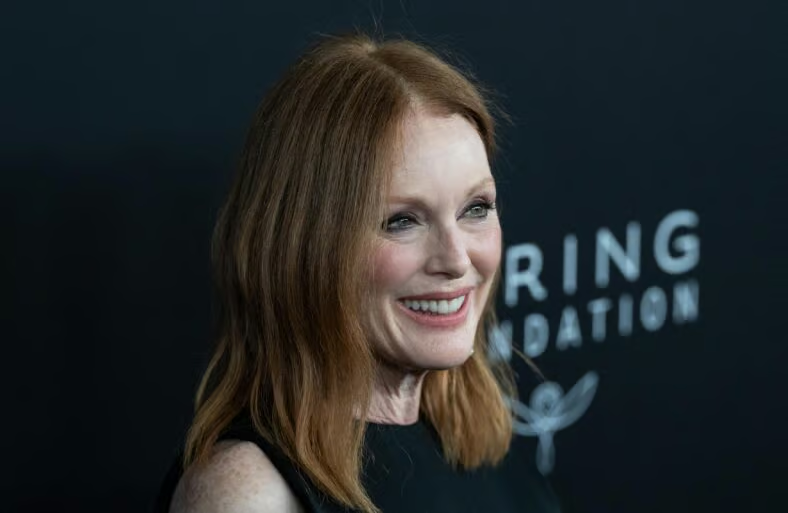
Barack Obama and Michelle Obama’s Higher Ground has enlisted Julianne Moore for a new Netflix comedy drama.
Moore has officially signed on to star in and executive-produce a currently untitled multi-generational comedy film backed by the Obamas’ production company.
The project comes as Higher Ground prepares to go independent after its first-look deal with Netflix ends later this year.
Meanwhile, the former president recently stood in solidarity with late-night host Stephen Colbert while appearing to take a subtle swipe at Donald Trump.
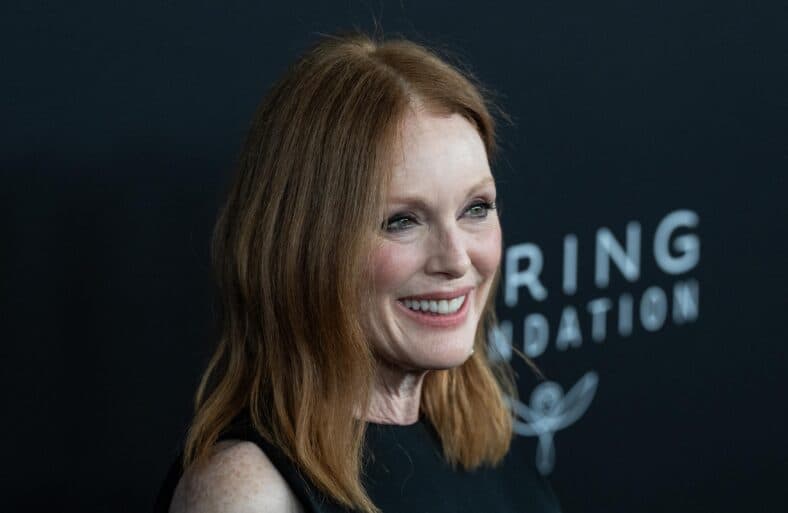
Barack and Michelle Obama’s production company has tapped Julianne Moore to executive-produce and star in a new Netflix comedy movie, according to Variety.
The film, described as an ensemble piece in the spirit of “Crazy, Stupid, Love,” tackles the chaotic lengths a parent will go to in order to avoid an empty nest.
According to the outlet, the plot centers on a mother, played by Moore, who spirals when her daughter lands a major job promotion that would require her to move across the country.
Desperate to keep her child close to home, Moore’s character kicks into overdrive, concocting a frantic scheme to find her daughter the “perfect” local romantic partner and convince her to stay.
Higher Ground’s Netflix Comedy Begins Casting
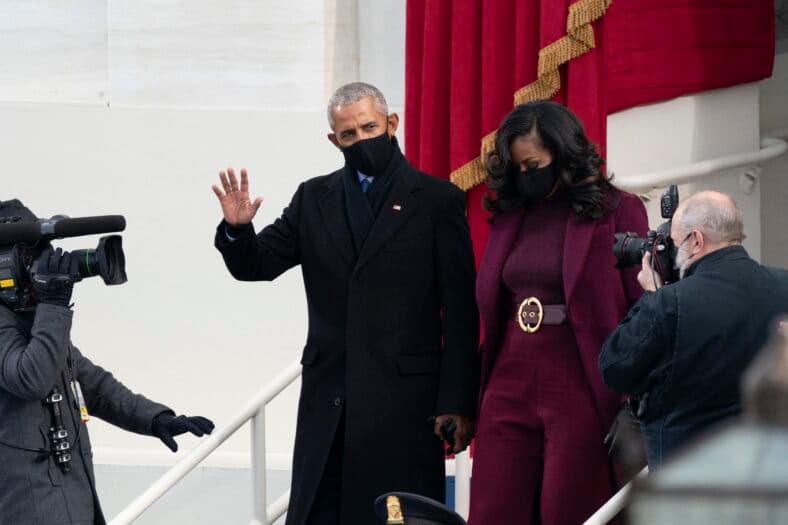
According to sources close to the production, the script features four major leading roles. With Moore firmly locked in as the maternal lead, casting is underway for the daughter, the unsuspecting romantic target, and the rest of the ensemble.
The script comes from Maggie Sheridan, who is known for her work as an executive story editor on Apple and Universal Television’s “Loot,” led by Maya Rudolph.
The film is the latest high-profile project to emerge from Higher Ground’s exclusive, multi-year first-look deal with Netflix.
Anikah McLaren is set to produce the project for Higher Ground, while Moore will serve as executive producer.
Michelle And Barack Obama’s Higher Ground Prepares To Go Independent
Higher Ground Productions will reportedly go independent after its first-look deal with Netflix ends later this year, according to Deadline.
The Obamas’ production company has enjoyed a moderately successful partnership with the streaming giant over the years, releasing acclaimed projects like “American Factory” and the feature “Rustin,” which earned actor Colman Domingo an Oscar nomination.
During a recent appearance on a special edition of “HistoryTalks,” Barack noted that one of the main reasons for going independent was to expand Higher Ground’s reach and work with other studios.
He explained that the move is in line with the company’s mission to tell stories that help the country “look at itself and excavate those better angels of our nature.”
“We’re in a process now of transitioning to a more independent [future] where we can work with a bunch of different studios,” Obama added.
Barack Obama Praises Higher Ground’s Netflix Partnership
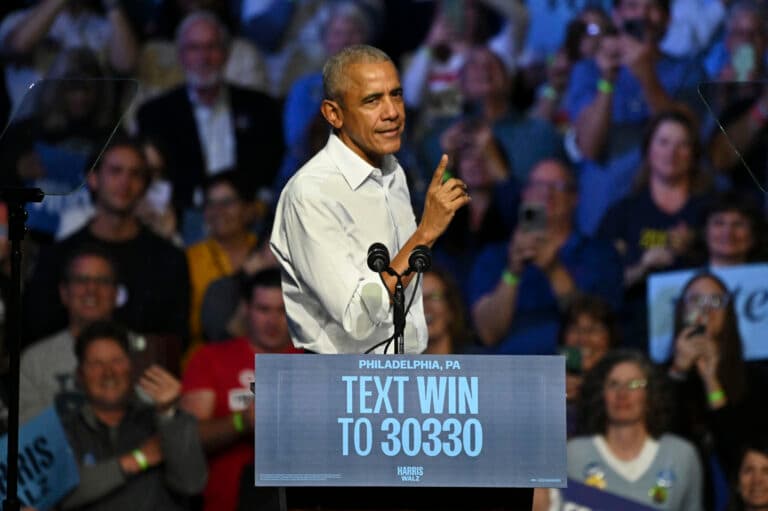
Although Higher Ground is set to go independent, the company will reportedly still work with Netflix to wrap up existing projects.
The Obamas’ production company also appears to have been laying the groundwork for its independent future, as reports suggest it has been testing a “selling-to-everyone” model for some time.
That includes projects at HBO, Apple, Amazon, FX, Disney, 20th Century Studios, and even YouTube, among others, while continuing to develop and produce content for Netflix.
Some of the projects in development elsewhere include a half-hour sketch comedy series titled “Life, Larry and the Pursuit of Unhappiness” for HBO, which is slated for a summer 2026 premiere.
Speaking about the partnership over the last eight years, Obama acknowledged that it has been a wonderful ride, according to Deadline.
Barack Obama Shades Trump While Praising Colbert
Barack recently took to Instagram to celebrate Stephen Colbert’s impact on American television and entertainment amid his controversial firing from CBS.
He thanked the comedian for “making us laugh” and, “even more importantly,” for communicating what true American values are while reminding Americans what the country stands for.
“For more than a decade, Stephen Colbert has been one of the top voices of late night,” the 44th president wrote in the caption, adding with a touch of humor that “Michelle and I enjoyed being Stephen’s guests—even when the games were rigged—and we’re grateful to call him a friend.”
In the run-up to the final taping, Barack appeared on the show earlier this month, where he made a subtle swipe at Donald Trump, saying Colbert would perform better as president than “some folks that we’ve seen.”
Entertainment
‘Stranger Things’ Easter Egg May Have Just Revealed the Future of Netflix’s New Stellar Sci-Fi Series

[Editor’s Note: The following contains spoilers for The Boroughs Season 1]
Summary
After the massive success of Stranger Things put Netflix at the forefront of sci-fi television, the Duffer Brothers return to the streamer with Upside Down Pictures’ The Boroughs, created by Jeffrey Addiss and Will Matthews (The Dark Crystal: Age of Resistance). From the get, the eight-episode series establishes a familiar Steven Spielberg-inspired whimsy, and immediately confronts viewers with a lurking danger, a threat that won’t let its Season 1 finale end on too much of a high. To break down that telling final shot, Collider’s Steve Weintraub sat down with stars Geena Davis, Denis O’Hare, and Clarke Peters for clues to future seasons.
In the show, retiree Sam Cooper (Alfred Molina) reluctantly moves to a quaint retirement facility, The Boroughs, in the solitary desert of New Mexico. From the outside, the community is a picture-perfect escape, but this little patch of heaven, run by Blaine (Seth Numrich) and Anneliese Shaw (Alice Kremelberg), hides a deadly mystery that Sam and his new friends, Renee (Davis), Judy (Alfre Woodard), Art (Peters), and Wally (O’Hare) are determined to get to the bottom of.
Don’t miss the full conversation in the video above or the transcript below, where Davis, O’Hare, and Peters discuss the meaning of that final Stranger Things Easter egg shot, what they know about The Boroughs’ future, and what goes on between takes on set. The trio also reflects on their careers, recommending next watches for new fans, and sharing their preparation process for ambitious emotional scenes.
‘The Boroughs’ Stars on What to Watch Next
Geena Davis also denies that the Thelma & Louise callback hides any sinister secrets…

COLLIDER: So you read the script for Episode 5, and you see that you’re going to be in the front seat of a car overlooking a crevasse. Did you think, “Am I making another Thelma & Louise?”
GEENA DAVIS: Really? Is that what you thought? I’m so surprised. It didn’t occur to me. [Laughs] I don’t go over the cliff! That’s all we know.
When I saw it, though, I was like, “What?” There’s going to be a whole generation of people watching this that are younger, that actually will not have seen your work before. For each of you, after someone who hasn’t seen your work sees this, what’s the first thing you’d like them watching from your resume after this?
DAVIS: That’s an interesting question.
DENIS O’HARE: I definitely have a different fandom because of True Blood and [American] Horror Story. True Blood tends to skew, now, a little older, but Horror Story, some of these fars are, like, 17, 18, 16. The other day in LA, this kid said to me, “I was raised on you,” and I was like, “What?” “Yeah, I started watching you at 13.” And I was like, “Oh my god, how old are you now?” He’s 25. So, I definitely have that. But I would tell them definitely to go back and watch True Blood for me.
CLARKE PETERS: I would say go look at Treme. Yeah, I would say look at Treme because of the mysticism in Treme and the mysticism in this. There is a connection, and if they’re watching them both and they make the connection, then I will have done my job.
DAVIS: The Long Kiss Goodnight, I think, is the most important one to see. I mean, if they haven’t seen Thelma & Louise, I would say that movie. It holds up. It’s 35 years later, but it really does.
When you guys signed on for this, how much were you told about, “If the show’s a hit and we do more than one season, this is what we have planned,” and how much is it sort of like, “We’re just going to tell you nothing?”
PETERS: I got, “They’re going to tell you nothing.”
DAVIS: They tell you nothing. I don’t know anything about next season.
PETERS: Nothing. Notta, notta, notta. The business has changed so much that nowadays you get sides that have nothing. You have no context. Have you experienced this? No one wants to reveal anything, even to the people that they want to hire. So, they’re not going to tell us what’s going to happen in Season 5 — are you?
What Does Episode 8’s Final Shot Really Mean for ‘The Boroughs’?
All we’re saying is this didn’t bode well for Will in Stranger Things…

The ending of Episode 8 has Sam, Alfred [Molina]’s character, glitching with the mirror? When you read that in the script, or if you saw the episode, were you asking, “Okay, so, what does this mean?”
O’HARE: Well, the ending is too nice. It’s too jovial. It’s too normal. You know what I mean? You’re looking at it, and you’re going, “What? Where’s the underbelly here?” So when you see that glitch, you’re like, “Ah, right. Things are not solved. Things are not back to normal. Things are still dangerous,” which I love.
DAVIS: Yes. The characters think it’s all over, “We won,” but yeah.
PETERS: But even Sam doesn’t see it.
O’HARE: Exactly. He has his head down, which is great. I love that.
There’s also a part two to this because I studied the ending of the episode, and the last frame is this collapsing thing that almost goes into, like, a black hole, and I’m like, “What the hell is this?” Did you ask about that, or am I alone wondering what that last shot was?
O’HARE: Well, the visual style of the show, I think, is really another character. The very first shot of the very first episode is that the huge drone shot coming in. You’re coming in, coming in, coming in, and you go into the house to see Dee Wallace. That’s an amazing visual statement of someone. Who is that POV? Who is looking into Dee Wallace’s house? And at the end, who is that? You know what I mean?
100%. The Duffers have joked that this show is Stranger Things but with golf carts instead of bicycles. Did you hear that? What was your reaction?
DAVIS: [Laughs] I did hear that. I thought that was pretty clever.

What’s cool about the show is that it has this ‘80s, Amblin-esque kind of thing. It’s a cool tone. Can you sort of talk about what it’s like to make one of those shows that has that magic realism, if you will?
O’HARE: Well, part of it is that the set was awesome.
DAVIS: Unbelievable.
O’HARE: The houses that we were living in, some of those houses were completely done. They were complete. You walk in, and it’s an actual house. Some were less complete. But all the visuals, the way the TV looks, even the logo of the Boroughs, it’s sort of ‘40s, ‘50s. Blaine and his wife, they definitely feel like June and Ward. We have a June and Ward line at one point. “Hi! Welcome home, Ward!” “Hi, June!” There are so many references to classic TV, like The Golden Girls are on TV, old movies, and it creates that world where you’re like, “Where are we?” We’re in a world of seeming perfection, which is hiding something else.
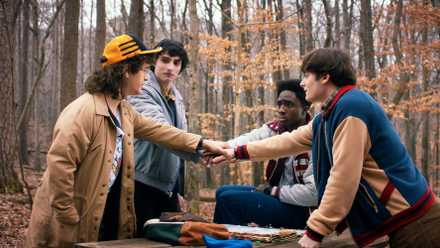
All Your ‘Stranger Things’ Series Finale Questions Answered By the Duffer Brothers [Exclusive]
Creators Matt and Ross Duffer address fan theories, “Byler,” deleted scenes, and answer our biggest questions after Season 5.
‘The Boroughs’ Cast Share Advice for Younger Generations
The trio also discuss how they prep for big emotional scenes.
The showrunners have mentioned that, according to some napkin math, the cast is like 350 years worth of acting experience. It’s a big number.
DAVIS: That’s a big number!
It is. So when the cameras stopped rolling in between takes, who’s the absolute troublemaker, or did you all have a very similar kind of work ethic/play ethic?
DAVIS: We fooled around a lot. Nobody was like, “Don’t bother me, I’m in my character.”
PETERS: No, it wasn’t like that. “Don’t take me out of my zone.” No, it was fun. Something we discovered last night, it was observed last night, is that in between our takes, we’d talk. In between the takes of younger generations, they go to the phone.
[Laughs] Sure.
PETERS: There’s a big difference in that and how that affects the individual and their performance as an ensemble. This is very much like that. So, what happens in between takes can be anything besides a phone.
I’m always curious how actors get ready for a really big emotional scene, so for all three of you, if you have a really big scene on a Monday, do you like to rehearse the full scene and get into all of it before you get to set, or how much do you sort of go halfway and want to save the the emotion, if you will, for when you’re actually on camera?
O’HARE: I think the weird thing for me to know is what is the shot sequence? What shot are you going to use? You know what I mean? Not that I’m saving it for the close-up, but if this is going to live in the close-up, let me know that so I can pace myself so I’m not blowing my wad on the two-shot. You know what I mean? So, you kind of want to know what they’re thinking about the architecture of how they’re going to build the scene. Because, I’ll speak for me, I’ve only got, like, four or five good takes in me for a big emotional thing. After that, I mean, maybe I’ll come back to something, but always, the first one’s not going to be my best, maybe not the second — I aim for three. Number three.

PETERS: That’s something I learned from him because last year, you were having that same conversation about a particular scene. I thought, “I’ve never thought about that.” Because coming from theater, you just do it, you just do it. I’m not worried about pacing. But that is something I learned from you. Thank you. Because recently, I had a big scene, and I was thinking, “I really want to mine that, but I don’t want to blow my wad, so to speak, to begin with,” and that conversation came back, so thank you. What he said. Definitely.
DAVIS: If it’s a big scene, I don’t like to rehearse it too much. I don’t want to just say the words without acting in a rehearsal, but I don’t want to go there, also. So, the less practice, the better for an important scene like that.
The Boroughs is streaming on Netflix now.

- Release Date
-
May 21, 2026
- Network
-
Netflix
- Showrunner
-
Jeffrey Addiss, Will Matthews
- Directors
-
Augustine Frizzell, Kyle Patrick Alvarez, Ben Taylor

A lot of crime movies focus on how the heist is going to go down. The planning of it, deciding what to do with all the riches that will follow, getting a crew together. The glamorous side of things, to be precise. This movie isn’t interested in any of that, but rather it focuses on the irreparable damage committing a crime can cause for the generations that follow yours. It’s got motorbikes, bank robberies, corruption and devastating performances, and chances are, you’ve never even heard of it.
The Place Beyond the Pines follows Luke Glanton, a motorcycle stunt rider who, upon learning he has become a father, decides “hey, I think I’ll start robbing banks.” His exceedingly poor choices mean he soon collides with Avery Cross, an ambitious police officer whose own terrible decisions send ripples through both their families for years, into the next generation. From there, it turns into a generation-spanning crime saga which shows how one wrong choice can change the lives of those who follow, long after they think they’ve moved on.
The Place Beyond the Pines stars Ryan Gosling (Barbie) as Luke Glanton, Bradley Cooper (A Star Is Born) as Avery Cross, Eva Mendes (The Other Guys) as Romina Gutierrez, Dane DeHaan (The Amazing Spider-Man 2) as Jason Kancam, Emory Cohen (Blue Bayou) as AJ Cross, Rose Byrne (Bridesmaids) as Jennifer Cross, Mahershala Ali (Green Book) as Kofi Kancam, Ben Mendelsohn (Rogue One: A Star Wars Story) as Robin Van Der Zee, Ray Liotta (Goodfellas) as Peter Deluca, and Bruce Greenwood (Star Trek) as Bill Killcullen.
Was ‘The Place Beyond the Pines’ a Success?
Yes and no. It wasn’t a massive smash, but it made a good return. It grossed around $47 million worldwide against a reported $15 million budget, which means it made a little over three times its production cost. That’s not blockbuster money, obviously, but for a slow-burn drama, it was a pretty healthy theatrical result. In terms of critical reception, it did well enough too. It’s got a Metacritic score of 68, so it was well received, and it’s certified fresh on Rotten Tomatoes with a score of 79% from 226 reviews. All in all, not a bad day’s work for director Derek Cianfrance.
The Place Beyond the Pines is leaving Prime Video on May 31.

- Release Date
-
April 18, 2013
- Runtime
-
140minutes
- Director
-
Derek Cianfrance

Nicolas Cage, an Elvis Presley fan, has been the subject of a longtime rumor tied to the King of Rock and Roll’s residence, Graceland. The rumor started circulating in the early 2000s, around the same time the actor was married to The King’s only child, Lisa Marie Presley.
Now, Cage is debunking Graceland lore, sharing what did and didn’t happen when he visited Graceland’s highly restricted second floor, where Elvis’ bedroom was located.

Graceland, Elvis Presley’s colonial-style mansion in Memphis, Tennessee, was opened to the public as a museum in 1982, five years after the singer’s death. However, the home’s second floor, where Elvis’ room and the bathroom where he died are located, is entirely closed off. The only people with access are the museum’s curator, Elvis’ immediate family, and vetted staff.
Sometime in the 2000s, a rumor began circulating that Nicolas Cage, who is an avid fan of The King, went to the second floor, tried on Elvis’ clothes, and sat on his toilet.
Elvis died in 1977 at 42 years old. He was found unresponsive on his bathroom floor, and while he was rushed to the hospital, it was believed that he had been deceased for hours before he was discovered.
Nicolas Cage Confirms He Had Visited The Restricted Area

In an interview with The New York Times, Cage was directly asked about the Graceland rumor. “No, that’s not true at all,” the actor said. However, he confirmed that he had been on the second floor and even got the chance to lie down on his idol’s bed.
Elvis’ bedroom is maintained and preserved by the museum’s archivist, and the items and furniture have been left exactly as they were when the singer died.
According to the actor, he visited Graceland with Lisa Marie while they were still married, and they spent a few nights there. Lisa Marie said she wanted to go upstairs, and Cage went with her. “I remember lying in Elvis’ bed, and he had one of those little fiber optics things that spin and change colors,” he shared.
Cage continued, “I remember staring at that and being very relaxed by it and calmed by it, and I enjoyed thinking of him looking at that and how it must have relaxed him.” Despite the truth being less thrilling than the rumor, the actor recalls it being “a beautiful, poignant little moment” in his life.
The Actor Embodied An Elvis Fan In A Movie
Cage has repeatedly expressed his admiration for Elvis, at one point saying that the King of Rock and Roll and David Bowie were his heroes.
In 1990, he portrayed the role of Sailor Ripley in David Lynch’s “Wild at Heart.” Ripley, a parolee-turned-fugitive, is heavily shaped by his love for Elvis, embodying the singer’s rock and roll swagger and adopting his mannerisms. At one point in the movie, Ripley serenades his love interest with the song “Love Me.”
In another movie, “Honeymoon in Vegas,” Cage, in the role of Jack Singer, finds himself skydiving with a group of Elvis impersonators known as the Flying Elvises.
Nicolas Cage And Lisa Marie Presley’s Relationship

Cage and Lisa Marie met in 2000 at a party, and the actor said he was “thunderstruck.” “There’s this beautiful girl standing in the middle of the living room wearing this short leather skirt and this fluffy jacket, and she looks up at me with these big, beautiful, soulful eyes that look like they have a sad story to tell,” he shared.
At that time, they were both in relationships. Lisa Marie later called off her engagement, and Cage divorced Patricia Arquette. They married in 2002. About three months later, however, the actor filed for divorce.
In Priscilla Presley’s memoir, she discussed the couple’s relationship, saying her daughter and Cage broke up and made up a “dizzying number of times.” “When it was good, it was very, very good. And when it was bad, it was horrid.”
The Exes Became Good Friends

During Lisa Marie and Cage’s short marriage, the media speculated about their relationship, saying that the actor only married Lisa Marie because she was Elvis’ daughter. Lisa Marie pushed back, saying that Cage saw her for who she was.
In an interview with Barbara Walters in 2003, Cage shared how they connected, both being part of artistic families. However, they both had intense personalities and often clashed, leading to the demise of their relationship.
The exes later became good friends, saying that while they often fought when they were together, they had mutual respect for one another. After learning of Lisa Marie’s death in 2023, Cage mourned his ex, saying, “Lisa had the greatest laugh of anyone I ever met. She lit up every room, and I am heartbroken.”

Business54 seconds ago
Canada April wholesale trade most likely up 0.1% – Statscan flash estimate

Crypto World2 minutes ago
Tether Plans Georgian Lari Stablecoin in Sovereign Currency Partnership
Entertainment3 minutes ago
Jamie-Lynn Sigler reveals the story she regrets telling about James Gandolfini on “The Tonight Show”


-

 Crypto World4 days ago
Blockchain.com files with SEC for U.S. IPO
-

 Fashion3 days ago
Holiday Weekend Open Thread – Corporette.com
-

 Crypto World3 days ago
Bitcoin Accumulation Weakens as BTC Realized Losses Hit $600M
-

 Business3 days ago
Dell Technologies DELL Stock Surges 15% on AI Server Momentum and Analyst Upgrades in 2026
-

 Crypto World3 days ago
Space X IPO Is ‘Bad News’ for Tech Stocks: But What About Bitcoin?
-

 Politics3 days ago
Makerfield: a tale of two social-media histories
-

 Crypto World2 days ago
Robinhood crypto COO Tanya Denisova exits
-

 Crypto World3 days ago
MicroStrategy’s Saylor Says Miners No Longer Set Bitcoin Price, Another Force Has Taken Over
-

 Business18 hours ago
NYT Strands Answers May 24 2026 Revealed for Puzzle No. 812 Theme Summer Essentials
-
 Tech3 days ago
A 0.12% parameter add-on gives AI agents the working memory RAG can’t
-

 Crypto World3 days ago
AI infrastructure race heats up as IREN pitches full-stack strategy, WhiteFiber lands $160M deal
-

 Tech4 days ago
WhatsApp ads could make Irish debut after discussions with DPC
-

 Tech3 days ago
You Can Now Add ChatGPT To PowerPoint
-

 Business3 days ago
Trump Invests $1M-$5M in Kura Sushi USA Chain With 27 California Locations
-
 Crypto World7 days ago
Revolut Launches Dogecoin Debit Card Across UK and EU
-
 NewsBeat4 days ago
Charity run by Reform leader Malcolm Offord accused of ‘law breaking’ over Scottish registration
-

 Sports3 days ago
2026 CJ Cup Byron Nelson leaderboard: Brooks Koepka finds putting stroke in Round 1
-

 Crypto World3 days ago
Trump Media’s Bitcoin Stash Shrinks Again as 2,650 BTC Lands on Crypto.com
-
Business3 days ago
Goldman Sachs reinstates Ageas stock coverage with neutral rating
-

 Crypto World5 days ago
Exa Labs raises $250 million in funding led by a16z
You must be logged in to post a comment Login