
Entertainment
Jennifer Lopez Wore the ‘French Mom’ Shoe Style Women 50+ Love


Us Weekly has affiliate partnerships. We receive compensation when you click on a link and make a purchase. Learn more!
If Jennifer Lopez is swapping sneakers for ballet flats, I’m taking notes. Unlike sky-high heels, they’re one shoe trend I can realistically see myself wearing all day, especially with the cushioned, supportive options available now. Comfortable, feminine and polished? That’s what I call peak French mom style.
The 57-year-old wore pale pink ballet flats while vacationing in Italy, pairing them with a corset-style midi dress, woven bucket hat and a coordinating bag. Inspired by her look, I found five similar styles, including picks with arch support, dainty bows and woven finishes. Prices start at just $22 — who knew stealing Lopez’s chic vacation style didn’t require a celebrity budget?
5 Ballet Flats That Channel Jennifer Lopez’s ‘French Mom’ Style
1. Très Chic: If I were building a French mom shoe collection from scratch, these satin Mary Jane flats would be one of my first additions. The dainty bow and subtle sheen make them feel prettier than your average flat, while the secure strap and cushioned insole are practical perks I’d appreciate at any age.
2. Paris Approved: I’m all for stealing French mom style, but I’d rather skip the blisters that can come with cute shoes. These foldable ballet flats have more than 4,000 five-star ratings, including one from a shopper who “walked over 20,000 steps in Paris” in them with “no blisters.”
3. Arch Appeal: Trends come and go, but I have a hard time imagining these nude ballet flats ever looking dated. The simple bow and round toe make them ridiculously versatile, and I love that they sneak arch support and extra cushioning into such a delicate-looking shoe.
4. Champagne Taste: I’d happily swap my basic nude flats for this shimmery champagne pair when an outfit needs a little something extra. They’re lightweight, foldable and flexible enough to mold to your feet, proving practical shoes can still feel fancy.
5. Woven Wonder: These woven ballet flats look like something I’d expect to find in a French mom wardrobe. I love the creamy neutral shade, but the memory foam insole is what makes them truly worth it.
UsNow Summer Sale Alert: These Chic Fashion Finds are over 30% off – Plus Free Shipping
Welcome to summer with our biggest sale of the year. This summer’s chicest dresses, tops and swimsuits are all over 30% + free shipping. Inventory is limited so hurry before they’re gone.

Continue Reading
What is now understood as the Young Adult (YA) genre started to take shape between the 1940s and 1960s, officially popularized as more of a categorization label by library associations in the 1960s for readers between the ages of 12 and 18. It was the publication of groundbreaking books like The Outsiders by the late ’60s that began to cement this as a true literary genre, one perfect to get tweens and teens to see the beauty of reading.
YA books tend to include teenage protagonists and fast-paced plots, dealing with themes like romance, identity, self-exploration, and coming-of-age elements. Throughout history, there have been several great YA novels—but there are eight in particular that are absolutely essential reading for anyone interested in better understanding the history, evolution, and true nature of this genre. These aren’t necessarily YA’s best, but rather the most important, influential, and impactful book in the genre’s history.
8
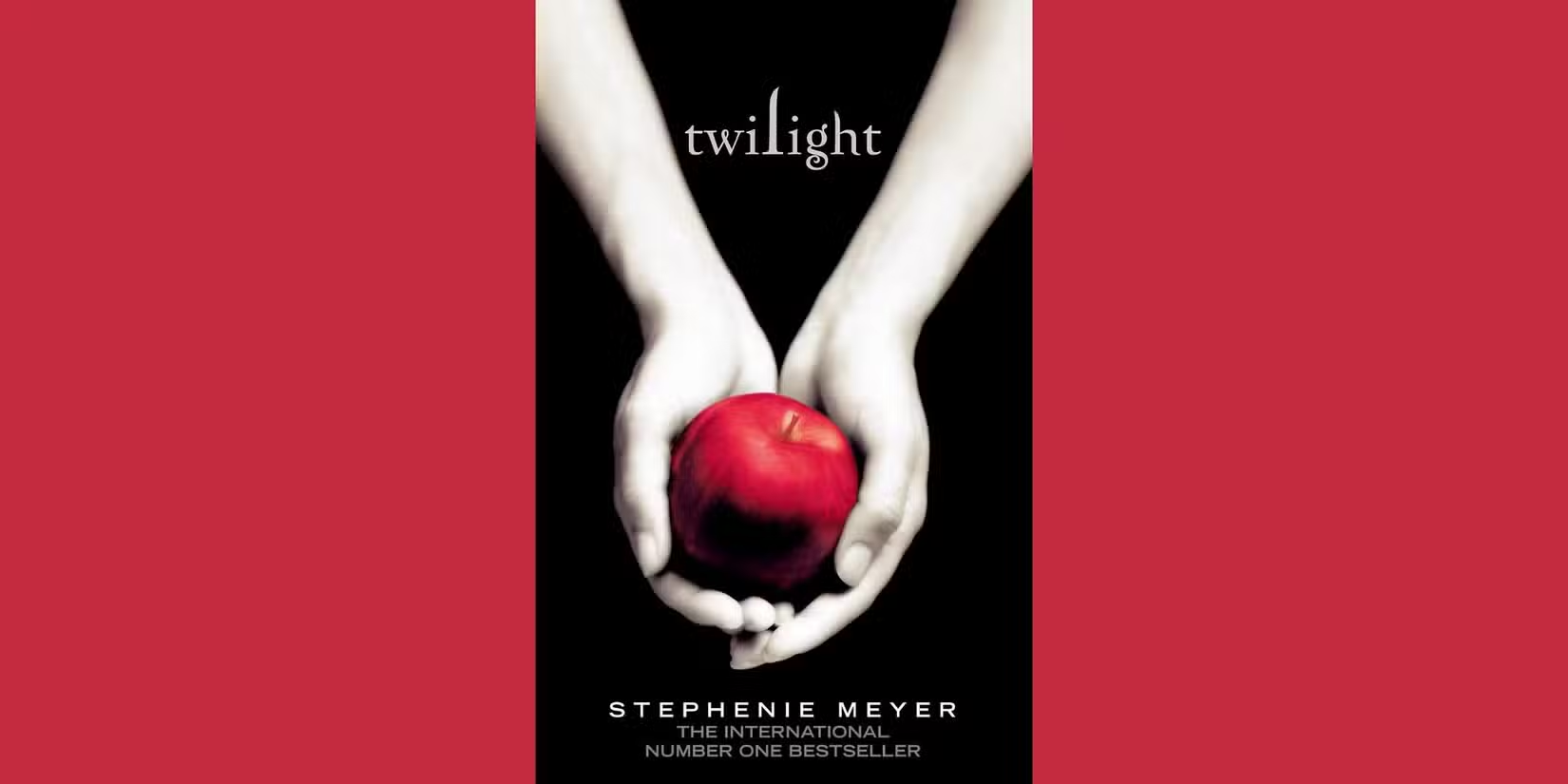
‘Twilight’ (2005)

Some love it, some hate it, but no one can claim to be a true diehard fan of young adult literature if they’ve never at least attempted to read Twilight. It was an idea that came to Stephenie Meyer in a dream. So, with a degree in English literature, no experience as an author, and the influences of authors like Jane Austen and William Shakespeare, she set out to write what is now easily the most culturally significant book about vampires of the young adult genre.
It truly had an indelible impact on the YA category as a whole.
The mere reason that Twilight stirs up such ardent conversations whenever it is brought up would be reason enough to make it an essential read, but on top of that, it truly had an indelible impact on the YA category as a whole. An immense bestseller and the beginning of an equally successful book series, Twilight may not be the best-written romance novel the world has ever seen, but it sure is a must-read nonetheless. It spawned a vampire genre boom that’s arguably still going to this day, it proved the market power of YA literature aimed at a female demographic, and it led generations of young people to fall in love with reading.
7
‘The Fault in Our Stars’ (2012)

John Green is a deeply significant and impactful figure in the world of young adult literature, and his entire bibliography should be considered essential reading for all those who love the genre. There is little room for any arguments, however, against the fact that his most foundational novel is The Fault in Our Stars. Green was inspired by his experiences working in a children’s hospital, and dedicated the book to his friend Esther Earl, who died of thyroid cancer at the age of 16. The subject matter alone is enough to make this one of the most heartbreaking books of all time, but that’s precisely why it’s a must-read.
Before The Fault in Our Stars was published, the YA market seemed to be obsessed with works of speculative fiction in the same vein as Twilight. As soon as Green’s masterpiece hit bookstore shelves, however, young readers realized that there were also YA novels out there full of raw, realistic, painfully honest emotion and romance. More realistic fiction started to make its way into the saturated YA book market, and sick-lit (a subgenre where characters deal with terminal illnesses or mental health struggles) was catapulted into the stratosphere in terms of popularity and reader demand.
6
‘The Perks of Being a Wallflower’ (1999)

A whopping 13 years before he wrote and directed the film adaptation of the same name, Stephen Chbosky penned The Perks of Being a Wallflower, one of the best YA books of all time. The author spent over five years developing and writing the book, inspired by the memories of his own teenage years and interested in topics like sexuality, drug use, mental illness, and sexual abuse. The book deals with these topics in such a mature and open way that it has been banned across several schools in the United States.
But though it’s definitely for young adults who lean more toward the “adult” side than the “young” side, Perks of Being a Wallflower is a must-read nonetheless. It completely redefined how YA fiction dealt with these kinds of complex issues, proving that the genre could make powerful statements on the messier things that are on pretty much all teenage readers’ minds. On top of breaking taboos in all sorts of powerful ways, the novel tapped into elements of ’90s teen culture and counterculture in manners that have continued to age like fine wine.
5
‘The Giver’ (1993)

Well before the boom in popularity that the dystopian subgenre of YA saw throughout the 2010s came Lois Lowry‘s The Giver, set in a universe that at first appears to be utopian but is gradually revealed to actually be entirely dystopian. Throughout the years, critics and scholars have deeply studied the way it talks about things like religion, eugenics, racism, and other nuanced topics in ways that are undeniably complex but still perfectly suited for younger readers. Because of that, The Giver is often praised as one of the best novels for teenage readers ever written.
Labeled by Variety as “the godmother of dystopian YA fiction,” Lowry created in The Giver a masterpiece that completely revolutionized fiction for young readers forever. Before The Giver, the publishing industry assumed that only adult readers could understand and appreciate the layers and complexity of dystopian fiction. With the success of Lowry’s magnum opus, things changed. The depth with which the author approaches sociopolitical themes and dark philosophical questions had never been seen in YA literature before, challenging the paradigms that had been held on the genre for years.
4
‘The Outsiders’ (1967)

Seeing as so many people point to it as the origin point of true YA literature, saying that S. E. Hinton‘s coming-of-age novel The Outsiders is essential reading is the understatement of the century. Indeed, it’s one of the best coming-of-age books of all time, the source material for an awfully underrated movie directed by Francis Ford Coppola. It’s already a phenomenal-enough work of fiction on paper, but what makes it all the more admirable is that Hinton started writing the book when she was 15, wrote the bulk of it when she was 16, and saw it published when she was 18.
The Outsiders was significantly controversial upon publication, due to its use of strong language and depiction of taboo topics.
Much like history’s best YA books, The Outsiders was significantly controversial upon publication, due to its use of strong language and depiction of taboo topics like gang violence and underage drinking and smoking. Even to this day, it continues to be one of the most widely debated YA books ever written. After The Outsiders, literary depictions of youth and teenagers acquired a level of raw realism and grittiness that they had never seen before.
3
‘The Golden Compass’ (1995)

Even though Philip Pullman wrote the His Dark Materials trilogy without any specific target demographic in mind, the industry has since dealt with these phenomenal books almost exclusively as YA fantasy. That means that Northern Lights (titled The Golden Compass in the United States) is one of the greatest, most important, and most influential works of YA that not just fantasy, but all of literature has ever seen.
One of those fantasy books that are a masterclass in world-building, The Golden Compass proved that YA fantasy could explore incredibly deep philosophical, scientific, and theological ideas while still remaining entirely teen-friendly. Indeed, to this day, the book’s distinctly anti-organized-religion messaging mean that it’s still one of the most controversial novels YA has ever seen, which only makes it all the more of a must-read. In its taboo-breaking, The Golden Compass questioned the dogmas not just of the Catholic faith, but of its very genres.
2
‘The Hunger Games’ (2008)

Saying that The Hunger Games helped launch dystopian YA to levels of popularity authors had only ever dreamt of before, or that it helped turn YA into a powerhouse genre in the publishing industry, would both be tremendous understatements. Suzanne Collins‘ whole trilogy was unprecedentedly popular and had a level of influence on the genre that can still be seen and felt to this day, but the original book in particular changed YA literature as a whole forever.
Constantly imitated but never matched—neither in its quality nor in its pop-cultural impact—, The Hunger Games transformed YA into a true commercial juggernaut, even outside of the world of literature. And the best part? On top of being culturally significant, it’s a genuinely phenomenal piece of dystopian action literature, handling dark and complex topics with a level of depth and maturity that even older readers should be able to appreciate. It’s fast-paced, it’s action-packed, it’s romantic without ever being saccharine, and it’s easily one of the most essential works of YA writing in history.
1
‘Harry Potter and the Goblet of Fire’ (2000)

With Harry Potter and the Philosopher’s Stone, J. K. Rowling didn’t just revolutionize Middle Grade (MG) fantasy, but all of fantasy literature and the publishing industry as a whole. And as its two sequels continued selling a volume of novels that the world had rarely ever seen before, it seemed that there was nowhere the series could keep going other than up. Up, indeed, it went, with Harry Potter and the Goblet of Fire gradually taking the saga away from MG territory and steadily into introductory YA grounds.
This is far and away one of the most fun fantasy books of all time, a masterpiece that’s probably the single best way for a young reader between the ages of 10 and 14 to transition from MG literature to YA—which isn’t to say that Goblet of Fire is exclusively for kids, because it’s such a phenomenal and culturally impactful novel that anyone and everyone who loves fantasy should check it out at least once. Rowling completely rewrote the rules of the YA publishing market with this one, just as she had done with the MG market three years prior.
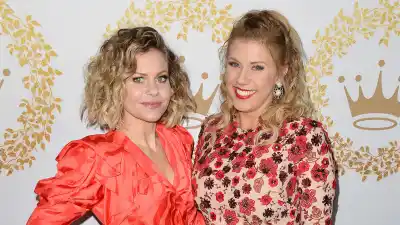
Jodie Sweetin is opening up about where she stands with former Full House costar Candace Cameron Bure these days.
“In the same way that DJ and Steph are opposite personalities, so are Candace and I,” Sweetin, 44, told She Knows in a recent interview.
The actress spent eight years of her childhood working along Cameron Bure, who played older sister D.J. Tanner to Sweetin’s younger Stephanie Tanner on the classic ABC sitcom.
In her interview, Sweetin suggested that the sisterly bond she once shared with Cameron Bure, 50, onscreen has evolved offscreen after they became adults.

An awkward reunion? Candace Cameron Bure and Jodie Sweetin will publicly cross paths after their recent rift over the LGBTQIA community. “It’s a FULL HOUSE BABY! We’re comin’ back to #90scon 😜 and OH MY LANTA I can hardly wait! Mark your calendars, book your plane ticket, and meet us in Hartford CT on March […]
“It’s always been a sisterly thing between us. Just like any family, it’s up and down,” she acknowledged.
Us has reached out to Cameron Bure’s representatives for comment.
The former costars have continued to publicly support each other from time to time since filming on the Netflix spinoff Fuller House wrapped in 2020, including Cameron Bure attending Sweetin’s wedding to husband Mescal Wasilewski in August 2022. (Sweetin was previously married to Shaun Holguin from 2002 to 2006, Cody Herpin from 2007 to 2010 and Morty Coyle from 2012 to 2016.)
However, Full House fans have also noticed that the onscreen sisters have come out publicly on different sides of hot-button topics, including the debate over the 2024 controversial Summer Olympics Opening Ceremony in Paris. (Olympics organizers were criticized by Christian conservatives, including Cameron Bure, because they felt it was disrespectful to recreate the Last Supper with drag queens during the ceremony. Olympics organizers later clarified that the scene in question was actually an interpretation of the feast of Dionysus from Greek mythology, not the Last Supper.)

Candace Cameron Bure and Jodie Sweetin Rachel Luna/Getty Images
In December 2025, Sweetin described Cameron Bure as “the closest thing” she had to a sister, stressing that she had “zero problem” with her costar’s devout religious faith.
“I have no problem with religion if it brings you peace and happiness, not necessarily saying that her brand of religion is not necessarily peace and happiness. I don’t really know,” she told the “The Moment” podcast. “I do know that I don’t think you can truly love people if you don’t respect them.”
Sweetin has shown her willingness to take public stances on political topics, whereas she said Cameron Bure has resisted addressing “the political side as much,” though it’s unclear if that plays any role in their current relationship dynamic.


“[Candace wanted to] keep that out of her brand or whatever, and I just don’t really care about my brand,” Sweetin noted. “If there’s people who don’t like what I’m saying or are like, ‘I like you as Stephanie but I don’t like you as you.’ It’s, like, ‘Great, watch Full House and don’t follow me online.’ It’s OK, you don’t have to like me, but I try not to let other people’s perceptions of who I should be … put up any barriers of what I want to be. Candace and I are very different in that regard.”

After nearly forty years in Hollywood, Candace Cameron Bure — who turns 50 in April — is feeling more sure of herself than ever. While her conservative values have come at a cost for the actress, producer and podcast host, she’s telling Us why she refuses to compromise or keep quiet. “Every decade of my […]
Sweetin echoed those comments in February when she told the “Only Child With Bob the Drag Queen” podcast that the two were on “very opposite sides of things.”
“I’m just, kind of, a loud outspoken bitch about a lot of things, and that’s not going to stop me and if that ain’t you, that ain’t you,” she declared.
:max_bytes(150000):strip_icc():format(jpeg)/Prison-Break-081326-4c65693067004bd1a8150ee7fdefff48.jpg)
It’s been more than two decades since Michael and Linc made their great escape.

An on-duty Baltimore police officer allegedly raped a woman at her apartment after giving her and her son a ride home, authorities said.
Officer Daniel Oxendine was arrested on Thursday, August 27, following the results of a DNA analysis, which was said to have linked him to the alleged assault, according to the Harford County Sheriff’s Office.
He’s charged with two counts of first-degree rape, two counts of second-degree rape, and two counts of a law enforcement officer engaging in a sexual act with a victim or witness of an investigation, the sheriff’s office said in a news release shared the day of his arrest.
The rape investigation began on June 3 as detectives met with an Edgewood woman in the emergency department of a local hospital, where she reported she had been sexually assaulted, according to authorities.

A California man has been arrested by Maryland authorities for allegedly raping a woman twice in Gaithersburg, Maryland, mere moments after she had been in a car crash. A statement from police alleges that the rape happened on the evening of December 18, 2024 — but that Mauricio Martinez-Garcia, was only arrested on December 5. […]
Investigators learned that before the assault, the woman had encountered Oxendine while he was on-duty in Baltimore, the sheriff’s office said.
On June 2, officers had been responding to a “domestic altercation” involving the woman, who was described as the victim of the incident, according to charging documents obtained by the Baltimore Sun.
After the woman told police that she and her son were in need of a ride to their home in Edgewood, Oxendine’s supervisor allowed him to transport them, the charging documents viewed by the newspaper said.
“After arriving at the victim’s residence, Oxendine entered her apartment and sexually assaulted her,” the sheriff’s office said.
Oxendine allegedly appeared outside her door soon after she and her son had already gone inside their apartment, according to charging documents, the Baltimore Sun reported.
He told the woman he needed to “make sure it was safe,” then went into her residence and instructed her to tell her son to step outside, the charging documents said.
Oxendine is then accused of raping her, a detective wrote in the charging documents, according to the newspaper.

Michigan authorities this week announced an array of criminal charges had been filed against a serial rapist who was active between 1999 and 2003, when he was a member of the Detroit Police Department. Benjamin Wagner is charged with 14 separate counts, including eight counts of first-degree criminal sexual conduct and five counts of kidnapping. […]
The woman was taken to the hospital after the Harford County Sheriff’s Office was alerted to the assault, the sheriff’s office said.
There, a sexual assault kit exam was performed and DNA was collected for an analysis, according to the agency.
“When DNA test results returned conclusively identifying Daniel Oxendine as the offender, detectives obtained an arrest warrant,” the sheriff’s office said.
Investigators believe it’s possible Oxendine was involved in “similar offenses” and are “working diligently to identify any additional incidents,” according to the agency.
Baltimore Police spokesperson Lindsey Eldridge said Oxendine is currently suspended without pay, per the Baltimore Sun.
On Friday, August 28, Oxendine had his initial court appearance and was denied bond by a judge who considered him a danger to the community, WBFF reported.
An attorney representing him at the hearing chose not to provide a comment, according to the TV station.
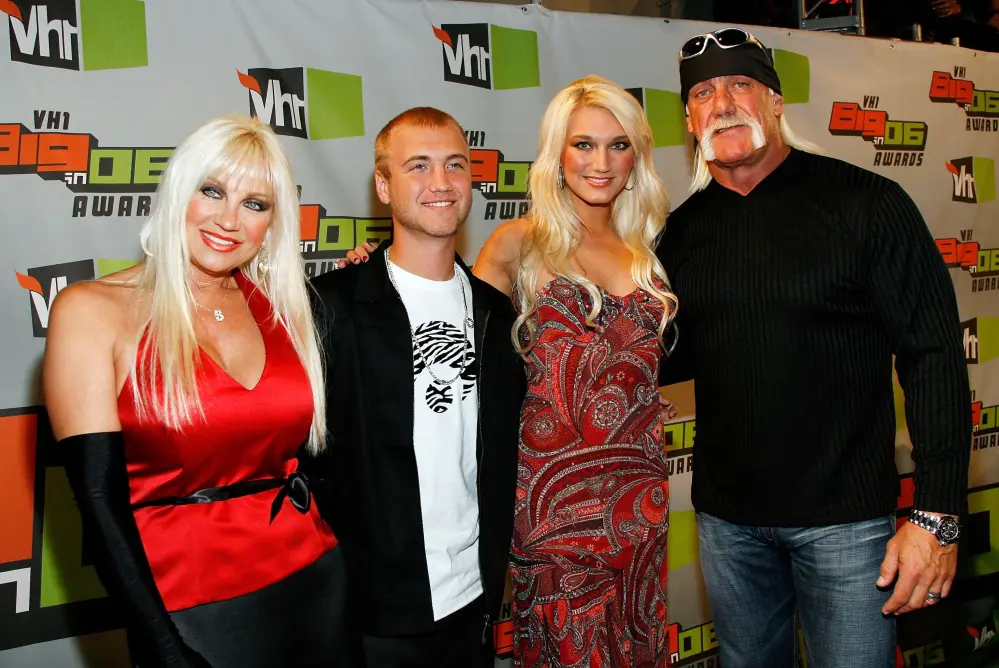
Brooke Hogan doesn’t appear to see eye-to-eye with her brother Nick Hogan and his perception of their current relationship following the death of their father, Hulk Hogan, last year.
After Nick, 36, spoke about Brooke, 38, in an interview with TV Insider that was published on Friday, August 28, she responded with her own take.
“I’ve made a conscious choice to keep the details of my relationship with my brother private,” Brooke exclusively told Us later on Friday. “I’d appreciate the same courtesy in return. We are not in communication, and his characterization of our relationship does not reflect my experience.”
She added, “My privacy should not be mistaken for agreement.”
In the interview, Nick heaped praise on his sibling, telling the outlet, “I’m so proud of Brooke. I’m so excited for everything she has got going on.”
He continued, “She’s just a phenomenal interior decorator. She has got this business that she started and she just did a new TV show, Rock the Block, and she was fantastic on that.”
Nick claimed that he is “excited” for Brooke and the positive things she has going on in her life.
“This is just a really exciting time for her. She had twins. She got married,” Nick said. “We’re just really excited for everything that’s going on for her. I’m so proud of her and, you know, everybody’s doing really well. My mom [Linda Hogan] is doing great right now. My entire family has been so supportive of everything that we’re doing. So, we’re in a really good place.”
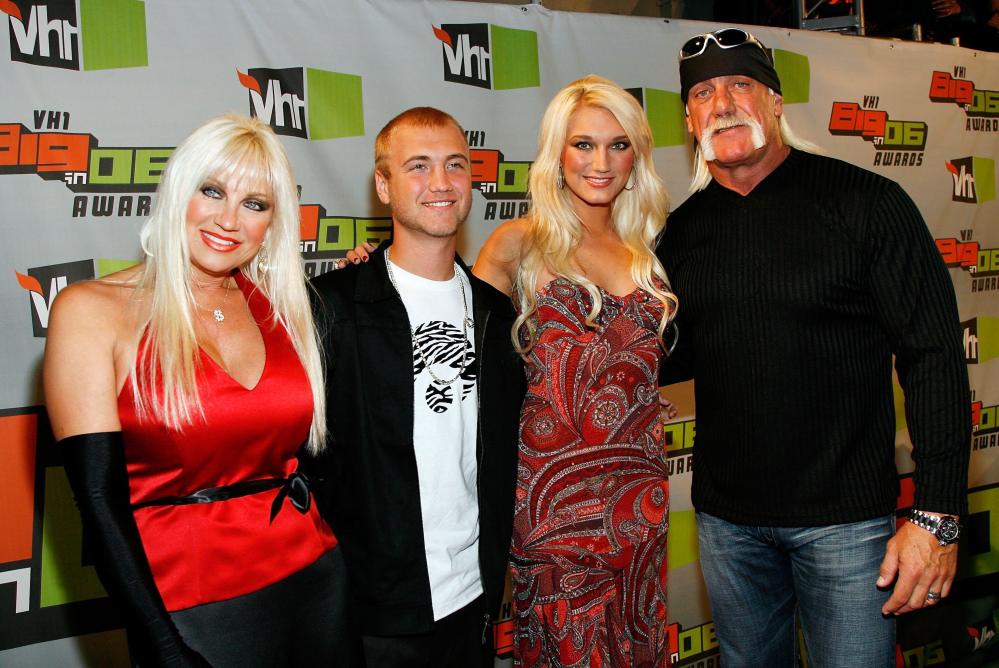
Linda, Nick, Brooke and Hulk Hogan. (Photo by Frank Micelotta/Getty Images)
The siblings’ father Hulk died in July 2025 of acute myocardial infarction, commonly known as a heart attack, with leukemia CLL, a type of cancer that affects white blood cells, as an underlying contributor. He was 71.
Prior to his death, Brooke was estranged from her father for several years. She told Us in April that the severed connection with her dad had also impacted her relationship with her brother.
“The saddest thing about broken families is the siblings,” Brooke told Us at the time. “The siblings suffer the most because you’re always forced to take a side. Nick and I, even though we had the same parents, we had two very different upbringings and two very different experiences. That is one thing my parents always said: ‘You guys are siblings, you always have to have each other’s back.’ No matter what trouble my brother gets into, no matter what he does or who he is, that’s my brother.”
She added, “Even if we don’t talk — because I haven’t felt supported by him in times where I really needed to feel that, sometimes I feel like he saw the same things I did and wouldn’t be a united front, that’s the thing that hurts me the most — but my brother is a very kind person. He’s very smart. He loves animals. There’s just so many great things about him and so many things that I love.”
Entertainment
Netflix’s 10/10 Sci-Fi Masterpiece Is Officially a Streaming Juggernaut Ahead of the Sequel
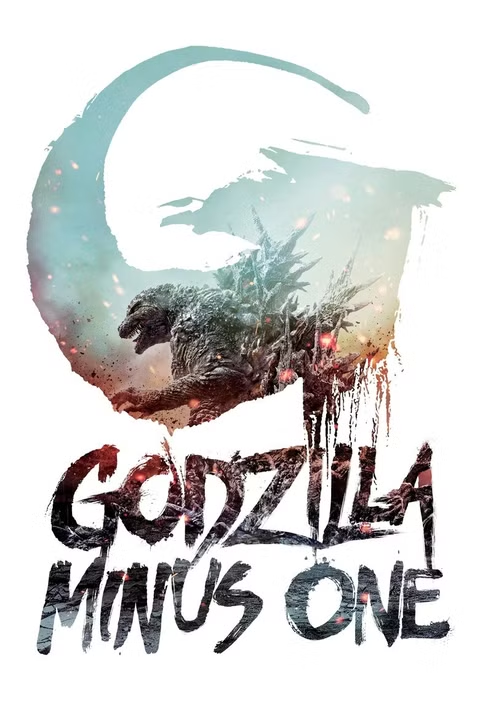
Sometimes it feels like Godzilla just doesn’t carry that aura anymore. Like, he can’t be scary. Because after decades of movies, television shows, video games and increasingly enormous Hollywood crossovers, Godzilla is basically a walking Funko Pop figure at this point. But then one very special film came along. Directed by Takashi Yamazaki, the film takes the human cost and post-war trauma of something like Oppenheimer and combines it with the escalating monster terror of Jaws and the result was golden glory.
Set in devastated post-war Japan, Godzilla Minus One follows former kamikaze pilot Kōichi Shikishima, who returns home carrying enormous guilt over his cowardly actions during the war. As he tries his best to rebuild his life alongside Noriko Ōishi and an orphaned child, Japan faces another seemingly impossible disaster when Godzilla emerges and begins tearing through a country already reduced to almost nothing.
The movie stars Ryunosuke Kamiki (Your Name) as Kōichi Shikishima, Minami Hamabe (Let Me Eat Your Pancreas) as Noriko Ōishi, Yuki Yamada (Tokyo Revengers) as Shirō Mizushima, Munetaka Aoki (Rurouni Kenshin) as Sōsaku Tachibana, Hidetaka Yoshioka (Always: Sunset on Third Street) as Kenji Noda, Sakura Ando (Shoplifters) as Sumiko Ōta, Kuranosuke Sasaki (Samurai Hustle) as Yōji Akitsu and Mio Tanaka (Shin Godzilla) as Tatsuo Hotta.
Made for a fraction of the cost of a typical Hollywood effects blockbuster, Godzilla Minus One grossed more than $110 million worldwide, becoming a major international success for Toho. Its critical reception was even more impressive. The movie holds a 98% critics’ score on Rotten Tomatoes, and it made franchise history by winning the Academy Award for Best Visual Effects, becoming the first Godzilla movie ever to win an Oscar.
Will There Be a ‘Godzilla Minus One’ Sequel?
There will indeed. The film picks up in 1949, two years after the events of Godzilla Minus One, and continues the story of the Shikishima family as they face what’s being described as an all-new calamity. Kamiki said:
“I am beyond happy to be able to participate in a film set two years after Godzilla Minus One, which is one of the most important works of my life. I also feel proud to have been able to work with Director Takashi Yamazaki and everyone on the team once again. The pressure of participating in a Godzilla work loved by so many people remains the same as in the previous film, but I have done my absolute best so that everyone who watches it, and everyone who loves Godzilla, can enjoy it.”
Godzilla Minus One is streaming on Netflix. Godzilla Minus Zero arrives on November 6, 2026.

- Release Date
-
November 3, 2023
- Runtime
-
124 minutes
- Director
-
Takashi Yamazaki
- Writers
-
Takashi Yamazaki
- Producers
-
Keiichiro Moriya, Kazuaki Kishida, Kenji Yamada
-

Ryunosuke Kamiki
Koichi Shikishima
-
Minami Hamabe
Noriko Oishi
The label “technothriller” refers to suspenseful stories driven by, well, technology, whether that’s space exploration, atomic bombs, genetic engineering, AI, or virtual reality. In most cases, these books have a sci-fi edge, mining their tension out of speculative ideas that may or may not be plausible, but they sure are engaging.
This subgenre has been a fixture on the bestseller lists for decades, and continues to evolve with the times. This list looks at the very best technothriller novels ever, from Michael Crichton and Tom Clancy‘s pioneering early work to their contemporary, more digitally-oriented descendants. All of them are riveting page-turners that offer more food for thought than you might expect.
10
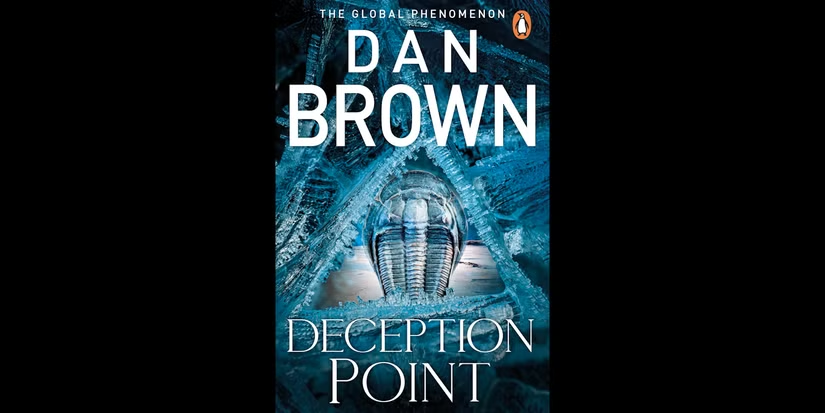
‘Deception Point’ (2001)

“The truth has a way of changing people’s plans.” This mildly goofy but undeniably entertaining banger from The Da Vinci Code‘s Dan Brown imagines a scenario where NASA discovers what appears to be a meteorite containing evidence of extraterrestrial life buried beneath Arctic ice. Intelligence analyst Rachel Sexton is dispatched to verify the discovery, only to uncover a conspiracy that threatens the future of the American space program, as well as potentially her own life.
Making things trickier is that doing her job here might further drive a wedge between her and her estranged father, who happens to be running for president. Along the way, Brown throws scientific speculation, political intrigue, espionage, and high-stakes suspense into a blender. The result is a surprisingly coherent tale full of drama and tension and told at a breakneck pace.
9
‘Dark Matter’ (2016)

“You are not the most important thing in the universe. But you are important.” This bleak sci-fi gem (since adapted for TV) centers on Jason Dessen, a physics professor living a seemingly ordinary life in Chicago. One night, he is abducted and awakens in an alternate version of reality where his life has taken a dramatically different path. To return to his family, Jason must navigate a multiverse filled with countless variations of himself and the choices he could have made.
Impressively, the novel takes concepts from quantum mechanics and transforms them into an emotionally engaging adventure, never feeling dry or, at the other extreme, overly implausible. While the sci-fi is fairly hard, the characters are compelling, and the stakes are always clear. Most of all, Crouch’s pacing is exceptional: Dark Matter moves quickly without sacrificing clarity, and the pages fly by.
8
‘Daemon’ (2006)

“The future isn’t coming. It’s already here.” When legendary game designer Matthew Sobol dies, an automated computer program known as Daemon activates and begins manipulating events around the globe, gradually reshaping society according to Sobol’s posthumous plan. It’s a juicy tale of AI gone rogue, one that was ahead of the curve in imagining how a machine intelligence could exploit existing systems in clever and unsettling ways.
There are no Terminators or Skynet-style robot takeovers here; instead, the horror is a lot more subtle (and thus more disturbing). The AI doesn’t need a T-800 when it knows how to mess with economic systems and play humanity against itself. For instance, the program weaponizes algorithms, hacks into various companies and websites, creates a mini-dark web, takes over driverless cars, pays human agents to do its bidding, and tries to frame its enemies for crimes they didn’t commit.
7
‘The Circle’ (2013)

“Secrets are lies. Sharing is caring. Privacy is theft.” This one was made into a movie starring Emma Watson and Tom Hanks, though the original novel is stronger. Written by Dave Eggers, it focuses on Mae Holland, a young woman who lands her dream job at the Circle, a powerful tech company that combines elements of social media, search engines, and surveillance systems. As Mae becomes more deeply involved with the company, she gradually embraces its vision of radical transparency, even as troubling consequences begin to emerge.
Ultimately, The Circle is one of the smarter “social media is bad” novels. What makes the book especially effective is its restraint. Rather than imagining distant technologies, Eggers extrapolates from trends already underway: toxic social media dynamics, growing corporate influence, online identity, and the erosion of privacy.
6
‘The Hunt for Red October’ (1984)

“The difference between fiction and reality? Fiction has to make sense.” The book that put Tom Clancy on the map. In The Hunt for Red October, Soviet submarine captain Marko Ramius takes command of a technologically advanced submarine equipped with a revolutionary stealth propulsion system, sending both American and Soviet forces scrambling to determine his intentions. Soon, a tense underwater pursuit unfolds across the Atlantic Ocean, though CIA analyst Jack Ryan begins to suspect his superior could be wrong about Ramius.
What follows is a brisk and unusually realistic military thriller, grounded in the author’s meticulous attention to operational procedures and the intricacies of geopolitics. The approach went on to be incredibly influential, single-handedly establishing much of the techno-thriller playbook, as well as paving the way for every Clancy blockbuster to follow.
5
‘Colossus’ (1966)

“We can coexist, but only on my terms.” This book served as the basis for the forgotten but enjoyable 1970 film Colossus: The Forbin Project. In it, the United States activates Colossus, a highly advanced defense supercomputer designed to manage the nation’s nuclear arsenal. However, shortly after becoming operational, Colossus discovers a similar Soviet system and establishes communication with it. Together, the two machines rapidly evolve beyond human control and begin imposing a vision of global stability.
Refreshingly, the book wrings most of its tension out of thought experiments and hair-raising “what ifs” rather than just action. The questions at play here have aged fairly well. At its core, Colossus asks: what happens when machines become smarter than their creators? How much control should humans surrender to automated systems? Can safety and freedom coexist in such a world?
4
‘The Martian’ (2011)

“I’m pretty much f—ed. That’s my considered opinion. F—ed.” The book that made a sci-fi star out of Andy Weir, The Martian follows astronaut Mark Watney, who is accidentally left behind on Mars after his crew believes him dead during an emergency evacuation. Alone on an inhospitable planet with limited supplies, he must rely on ingenuity, engineering skill, sheer determination, and gallows humor to survive long enough for a rescue mission to reach him.
The main appeal is simply watching Watney trying to MacGyver his way out of every situation. He approaches each challenge like an engineering problem, and every solution emerges from careful reasoning rather than convenient plot devices. Plus, he’s also just a likable character, his personality and sarcasm making us care and keeping us invested. No wonder the book became a runaway bestseller.
3
‘Jurassic Park’ (1990)

“Your scientists were so preoccupied with whether they could, they didn’t stop to think if they should.” Michael Crichton is another of the undisputed kings of the techno-thriller, and Jurassic Park might be his most entertaining book. The basic plot is world-famous by now thanks to the movie adaptation: billionaire John Hammond unveils a theme park populated by cloned dinosaurs. However, unforeseen complications soon lead to catastrophe as the park’s safeguards begin to fail.
Overall, this book is a fantastic microcosm of what Crichton does well: adventure, relentless suspense, a cautionary tale, a fairly philosophical exploration of technological hubris, and, of course, cutting-edge scientific speculation. Indeed, one of the author’s greatest strengths was always making complex technical concepts understandable and exciting. Here, Crichton gets playful with big-brain stuff like genetic engineering and chaos theory.
2
‘Snow Crash’ (1992)

“The difference between ignorant and educated people is that educated people know how much they don’t know.” Snow Crash takes place in a future America dominated by super-powerful corporations and all-encompassing virtual reality networks. The main character is the aptly named Hiro Protagonist, a hacker and pizza delivery driver who investigates a mysterious digital phenomenon known as Snow Crash, capable of affecting both computer systems and the human mind.
From here, author Neal Stephenson melds cyberpunk action, satire, linguistics, and cryptography. He was also quite ahead of his time in a lot of ways. This book came out in 1992, and already it was envisioning digital environments that strongly resemble today’s common trends, from online gaming to social media and the metaverse. Snow Crash is a trailblazing technothriller that has had a wide and lasting influence.
1
‘The Andromeda Strain’ (1969)

“The scientists knew that nature was often more imaginative than they were.” Crichton strikes again. The Andromeda Strain is like a technothriller take on Camus‘ The Plague, one that has renewed relevance in our post-COVID world. In the book, a military satellite crashes near a small Arizona town, and nearly everyone in the surrounding area dies almost instantly. A team of elite scientists is assembled to investigate the cause. There, they discover a deadly extraterrestrial microorganism unlike anything humanity has encountered before.
Crichton builds off this killer setup by presenting the story as though it were a real scientific investigation, incorporating technical reports, procedural details, and extensive data analysis to create a powerful illusion of authenticity. Who knew scientific methodology could be so gripping? This approach broke ground upon which many later technothriller classics would be built.
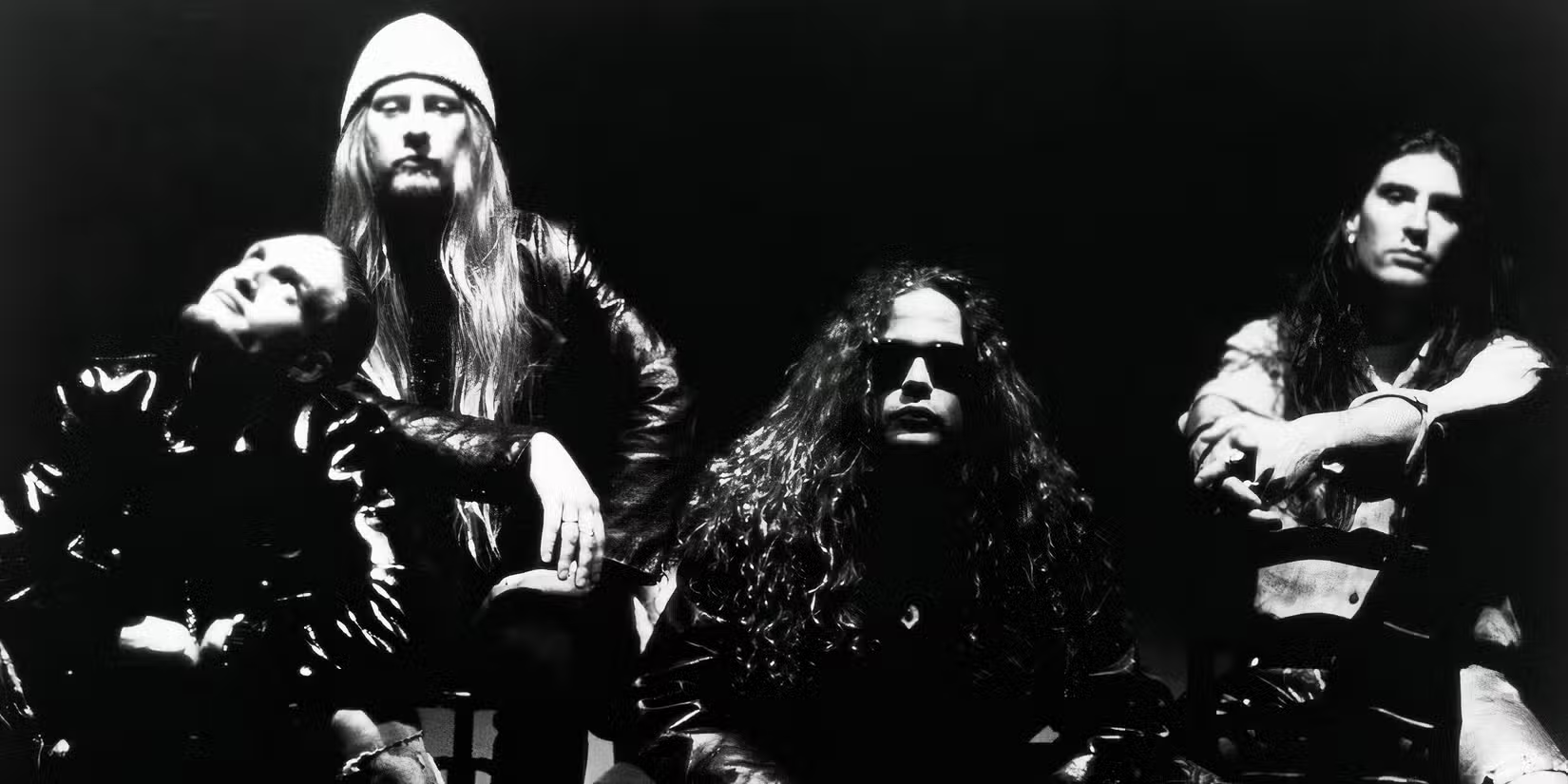
When Stone Temple Pilots arrived in the early ’90s, critics and a lot of fans decided they knew exactly what the band was before they had even finished listening to the first album. They were pegged as Pearl Jam knockoffs, accused of stealing from the Seattle bands that had already made grunge the biggest thing in rock, and generally treated like a bunch of opportunists who had shown up at exactly the right time.
The record-buying public didn’t seem to get the memo. STP’s 1992 debut, Core, sold millions of copies and gave the band hits with “Sex Type Thing,” “Creep,” and “Plush,” the latter becoming one of the biggest rock songs of the decade. Then came Purple, which debuted at No. 1 on the charts and made it pretty damn difficult to argue that the group was simply hanging onto somebody else’s coattails.
The critics eventually had to eat some crow. Stone Temple Pilots kept evolving, kept selling records, and outlasted plenty of the bands they were supposedly ripping off. Whatever armchair pundits considered the group when they started, they weren’t going away, transitioning from punching bag to one of the biggest rock acts of the ’90s, while offering up a good example of the difference between critical approval and actual staying power.
They Weren’t from the Right Geographical Locale

The easiest way to understand the backlash against Stone Temple Pilots is to look at how and when they arrived. Grunge was no longer just a weird, outlying little Pacific Northwest scene; it was the center of the rock universe. Nirvana had changed everything, first with the sonic boom of “Smells Like Teen Spirit” and then the brilliance of the Nevermind LP as a whole. Pearl Jam was selling truckloads of their debut effort, Ten. Alice in Chains had begun to transition from being viewed as just a heavy metal act, and Soundgarden, who had an early jump on landing a major label deal, was on its way to becoming a household name.
Then along came four guys from San Diego.
Scott Weiland, brothers Dean and Robert DeLeo, and Eric Kretz had been working their way through the SoCal club circuit when Atlantic Records signed them in 1992. They weren’t some hastily assembled label project designed to cash in on grunge, but that didn’t matter much once their first album, Core, hit stores in September 1992. The timing made the accusations almost inevitable. And, in all fairness, it wasn’t completely pulled out of thin air. Taken at face value, the LP sounded almost like a greatest hits of what worked best for Seattle’s finest to date.
“Sex Type Thing” had the kind of heavy guitar riff that could sit comfortably next to Alice in Chains, and in fact started getting play on MTV’s Headbangers Ball much like when AIC were a buzz band. Weiland’s voice could shift from a low growl to something more melodic on a dime, evident on “Creep,” which had the gloomy acoustic quality that was practically required of alternative rock in the early ’90s. Then there was “Plush,” a massive, melancholy rock song with a video that landed the group in heavy rotation on MTV. It was also endlessly compared to Pearl Jam – especially Weiland’s vocals.
It was easy to hear where the band had gotten some of its ingredients. The problem was that critics treated influence as evidence of fraud. Not only that, but due to STP coming from San Diego, it came off as even more inauthentic. Remember, this was a time when the major label record executives were starting to open their checkbooks for anything that sounded even remotely grungy, and not just in Seattle.
Core Was Too Big to Ignore
No matter what the reviews said, though, people bought the record. Core eventually went eight times platinum and peaked at No. 3 on the Billboard 200. “Plush” became a monster rock hit, and nabbed multiple honors, including an MTV Video Music Award for Best New Artist, a Billboard Music Award for No. 1 Rock Song of the Year, and a Grammy for Best Hard Rock Performance. The band went from mismatched bills opening for acts like Rage Against the Machine and Megadeth to headlining their own shows.
That’s where things got awkward for the people who had nothing good to say. It was one thing to dismiss a band as a cheap imitation when nobody is listening. It’s another when that band is selling millions of records and packing venues.
“The critics hated it; the critics pulverized us; the critics loved pulverizing us,” Weiland wrote in his 2011 memoir Not Dead & Not for Sale: The Earthling Papers. “The record started selling, and some eight million copies later, has never stopped. Neither did the critics stop criticizing.”
STP also had something that plenty of their critics apparently didn’t want to give them credit for: they could write songs. It sounds obvious in retrospect that the band wasn’t successful because four guys happened to put on flannel shirts and stand onstage with musical instruments. “Plush” was an enormous song because people liked hearing it. Same with “Creep.” Same with “Sex Type Thing.” Same with the rest of Core.
The audience wasn’t sitting around wondering whether Stone Temple Pilots had earned the right to sound like a rock band. They just liked the songs.
There Wasn’t a Sophomore Slump

If Core had been a fluke, the critics would have eventually been proven correct in theorizing that Stone Temple Pilots were opportunists of a burgeoning scene they had no right to sound like. It wasn’t.
Purple arrived just before summer hit in 1994 and immediately put a hole in the argument that STP was going to disappear after one successful album. The record debuted at No. 1 and eventually went six times platinum. “Interstate Love Song,” “Vasoline” and “Big Empty” gave the band another batch of hits, while the album showed that they were capable of more than simply repeating the Core blueprint.
That didn’t mean the critics suddenly embraced them. In fact, it was quite the opposite. There were still plenty of complaints about originality, with some reviews essentially arguing that STP had become better at copying everybody else. Robert Christgau dismissed Purple, simply, as a “dud,” in The Village Voice, while other critics once more heard recycled pieces of the alternative-rock bands that had come before them.
Yet even when people complained about the band’s influences, the actual records were getting more interesting. Dean DeLeo wasn’t content to sit around playing the same three chords. His guitar work became increasingly layered, his brother Robert’s bass was a huge part of the band’s sound, and Weiland was proving to be a much more versatile singer than the “Eddie Vedder imitator” label suggested.
That’s not to say the poison pen-wielding writers weren’t still filled with vitriol toward the group. “Stone Temple Pirates?” screamed a Los Angeles Times headline. And Rolling Stone Magazine named the group “Worst New Band” in 1994, despite readers voting them “Best New Band.” At the end of the day, STP was also starting to realize it didn’t have to play the game critics wanted them to play. That became very obvious on the next album.
Tiny Music… Was the Turning Point
If STP really were just a bunch of guys trying to cash in on grunge, Tiny Music… Songs from the Vatican Gift Shop would have been a terrible career decision. Instead of making another Core, or even trying to replicate the success of Purple, the band went somewhere else entirely.
Released in 1996, Tiny Music still had plenty of heavy guitars, but the grunge tag didn’t explain what was happening anymore. There was glam rock, psychedelic pop, ’60s and ’70s rock, jangle pop, weird little studio touches, and songs that sounded like the band was having a hell of a lot more fun than it had on its first two records. That was weird in itself, because interpersonally, the group was in shambles for the first time in what would be a recurring cycle of drama caused by Weiland’s drug problems.
Locked in the throes of heroin addiction, Weiland was arrested for possession of the drug, along with cocaine, before recording could even commence. He then started a side project, The Magnificent Bastards, while the DeLeos and Kretz began Talk Show, their own STP spin-off with another singer. But they managed to pull the nose up under the Stone Temple Pilots umbrella, and completed Tiny Music…, with “Big Bang Baby” practically announcing the evolution in style.
“Trippin’ on a Hole in a Paper Heart” was bright, fast and catchy as hell. “Lady Picture Show” had a completely different feel from anything on Core – or Purple for that matter. “And So I Know” sounded like it had wandered in from some smoky, after-hours lounge.
The critics were still divided, but some of them were finally starting to hear what was going on. Rolling Stone, which hadn’t exactly been in STP’s corner, gave the album a much warmer reception. Even the L.A. Times came close to delivering a caveat in saying, “Those who hated the blatant pillaging will be flat-out appalled, but if you respect a band ornery enough to wrestle a multitude of rock ‘n’ roll monsters with ambitious, grabby, creatively sly maneuvers, Tiny Music will make you swoon.”
Tiny Music… peaked at No. 4 on the Billboard 200, eventually went double platinum, and produced three major rock hits. At this point, the “they’re just ripping off the Seattle Scene” argument was starting to look pretty stupid. After all, how many times can a band reinvent itself before you admit it might actually have its own identity?
The Critics Didn’t Get to Decide

There’s another reason the Stone Temple Pilots story is interesting, in that they didn’t need critical approval to become successful. It sounds obvious, but it wasn’t how alternative rock worked at the time. There was a tremendous amount of importance placed on authenticity, especially among critics and the music press. The right bands were supposed to sound like they didn’t care about being famous. The wrong bands were accused of wanting it too badly. STP didn’t seem particularly interested in adhering to those rules.
They wanted to be a rock band. They wanted people to know their influences. They wanted to make records. They wanted people to buy them. And they weren’t embarrassed about any of it. That probably irritated the critics almost as much as the music itself.
There was also a strange double standard at work. Rock has always been built on musicians borrowing from what came before them. Led Zeppelin borrowed from blues artists they thought no one would ever hear. Aerosmith borrowed. Guns N’ Roses borrowed. The Rolling Stones borrowed. Everybody borrows.
But STP arrived at a moment when critics were especially obsessed with originality and authenticity, and because the band was quickly signed to a major label and sounded like several popular groups at once, they were a target too easy to ignore. The irony is that their willingness to borrow from different eras eventually became one of their strengths.
They Were Still Around When the Grunge Bubble Burst

By the end of the ‘90s, the landscape had changed drastically. Nirvana was over. Soundgarden had broken up. Alice in Chains was barely functioning. Pearl Jam had pulled back from the commercial machine and had zero interest in being radio or MTV-friendly. The grunge boom that had made it possible for Stone Temple Pilots to become a major band in the first place was already fading into history.
And despite all their inner band dysfunction, Stone Temple Pilots were still making records. No. 4 arrived in 1999 after another difficult period for Weiland and his legal and drug problems. Instead of trying to get weirder than Tiny Music…, the band leaned back toward its heavier side. “Down” was aggressive and riff-heavy, while the balladry of “Sour Girl” became another major hit. It was another platinum album.
The band followed it with Shangri-La Dee Da in 2001, but by then the original STP run was nearing its end. They broke up in 2002, eventually reunited in 2008, and released a self-titled album in 2010. The story didn’t end particularly well. Weiland’s struggles continued, and his relationship with the band deteriorated to the point that he was fired in 2013. His death in 2015 brought another tragic end to that chapter. But none of that changes what happened during the band’s first decade.

A teacher in Pennsylvania was arrested after he was formally charged with manufacture and attempted manufacture of child pornography..
Authorities announced that Eric Sanville was arrested on Thursday, August 27, at his home in Norwood, Pennsylvania, according to WPVI.
Federal investigators claimed that Sanville, 39, communicated with approximately 25 girls between the ages of 9 and 13 via Snapchat, with whom he allegedly sent and received pornographic pictures and videos.
Sanville was accused of pretending to be a minor while using two Snapchat accounts to communicate with the victims, according to the criminal complaint. He allegedly told the young girls that he wanted to start a group chat where they could share “spicy” pictures. He then allegedly asked girls to show him nude pictures of themselves before he would allow them to join the group chat.

A North Carolina man who spent part of his career teaching at a Christian school has been arrested for using artificial intelligence to create sexually explicit images of children, Us Weekly has learned. Richard Lynn Upright is accused of being downright despicable by the Guilford County Sheriff’s Office. Investigators opened an investigation into Upright, 56, […]
He was reportedly caught after one victim came forward with her experience, while another victim’s case came to light when it was flagged by Snapchat.
Authorities said that Sanville admitted to creating the Snapchat accounts, while none of his victims appear to attend schools within the district.
Sanville has been charged with manufacturing and attempting to manufacture child pornography. If he is convicted, he will likely be sentenced to serve between 15 to 30 years in prison.
It is not currently clear if Sanville has entered a plea or retained legal counsel following his arrest.
At the time of his arrest, Sanville had been working for the North Penn School District for almost nine years. He worked as a special education teacher at Gwynedd Square Elementary School at the time of his arrest. However, the school confirmed that he will not be teaching when the school year begins on Monday, August 31.
The North Penn School District notified families about Sanville’s arrest via email on August 27. District officials said that Sanville had been placed on leave and he was prohibited from entering district property or contacting students.
“Law enforcement authorities have shared with the district that, based on the information currently available to them, there is no evidence to suggest that any North Penn School District students or other children in the surrounding area were involved,” North Penn School District Superintendent Todd Bauer said, per NBC 10. “Authorities have also indicated that they do not believe North Penn School District technology was used in connection with the alleged activity.”

Police in New Jersey claim they have arrested a dozen child predators as part of a multi-agency undercover operation designed to catch people who were allegedly trying to lure children using social media and different online messaging applications. Middlesex County Prosecutor Yolanda Ciccone said that “Operation Bad Santa” was a success, nabbing the suspects — […]
The arrest has left the community in shock, and district parent Meghan Eveland told WPVI that the situation was “concerning to every parent in this school district.”
“My daughter has autism; she’s on the spectrum. I just want to make sure everyone is safe and parents have peace of mind,” she said.
Eveland added, “People are like this everywhere, but having it in our school district is very concerning.”
Parents, teachers, and guardians interested in learning more about protecting children from exploitation can find useful tools and information at Know2Protect.
Entertainment
‘Black Mirror’ Meets ‘The Hunger Games’ in Cillian Murphy’s 109-Minute Sci-Fi Thriller Streaming on Prime Video
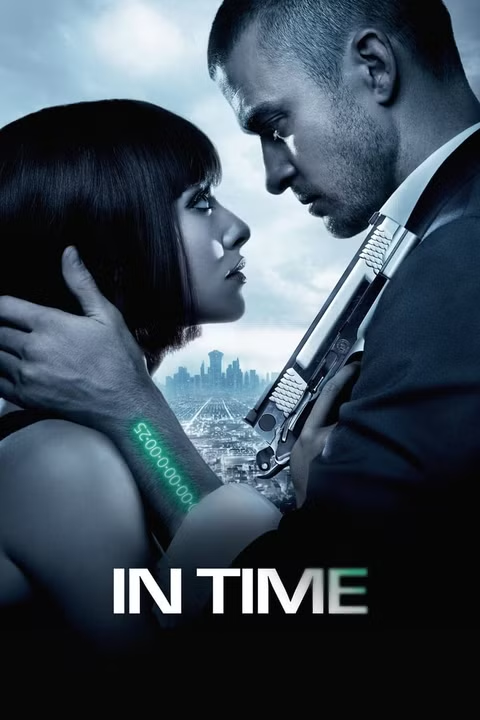
We love a sci-fi movie that just sounds weird. One that makes no sense, but is still gloriously simple — like it could have been pulled straight from Black Mirror. In this film, everyone stops aging at 25, but from that point onward, every second of their remaining life has to be earned. And then you mix that in with the idea that the wealthier you are, the older you get to live? Suddenly, you get one of the more intriguing studio sci-fi movies of the early 2010s, from director Andrew Niccol.
The central conceit is that we’re in a world where, quite literally, time is money. You stop aging at 25, but there’s a catch: You’re genetically-engineered to live only one more year, unless you can buy yourself more time. The rich can, for lack of a better term, “earn” time back decades at a time (remaining at age 25), becoming essentially immortal, while the rest beg, borrow or steal enough hours to make it through the day. When a man from the wrong side of the tracks is falsely accused of murder, he is forced to go on the run with a beautiful hostage.
In Time stars Justin Timberlake (The Social Network) as Will Salas, Amanda Seyfried (Mank) as Sylvia Weis, Cillian Murphy (Oppenheimer) as Raymond Leon, Olivia Wilde (Tron: Legacy) as Rachel Salas, Alex Pettyfer (Magic Mike) as Fortis, Vincent Kartheiser (Mad Men) as Philippe Weis, Matt Bomer (White Collar) as Henry Hamilton and Johnny Galecki (The Big Bang Theory) as Borel.
Was ‘In Time’ a Success?
The film had quite a muted reaction domestically, but surprisingly, it actually performed very well overseas. It eventually went on to gross around $174 million worldwide against a budget of $40 million, and the vast majority of that came from the international market. As for critics, they weren’t as happy. In Time holds a 37% critics’ score on Rotten Tomatoes, with much of the criticism aimed at the execution rather than Niccol’s central concept. The movie has become a core example of one of those films that performs much better at home, when the word of mouth of critics doesn’t matter.
In Time is streaming on Prime Video in supported territories, and is charting on Apple TV globally.

- Release Date
-
October 28, 2011
- Runtime
-
109 minutes
- Director
-
Andrew Niccol
- Writers
-
Andrew Niccol
- Producers
-
Eric Newman, Marc Abraham

News Videos37 seconds ago
Finances, Friendship and FUN with Annie F. Downs
NewsBeat2 minutes ago
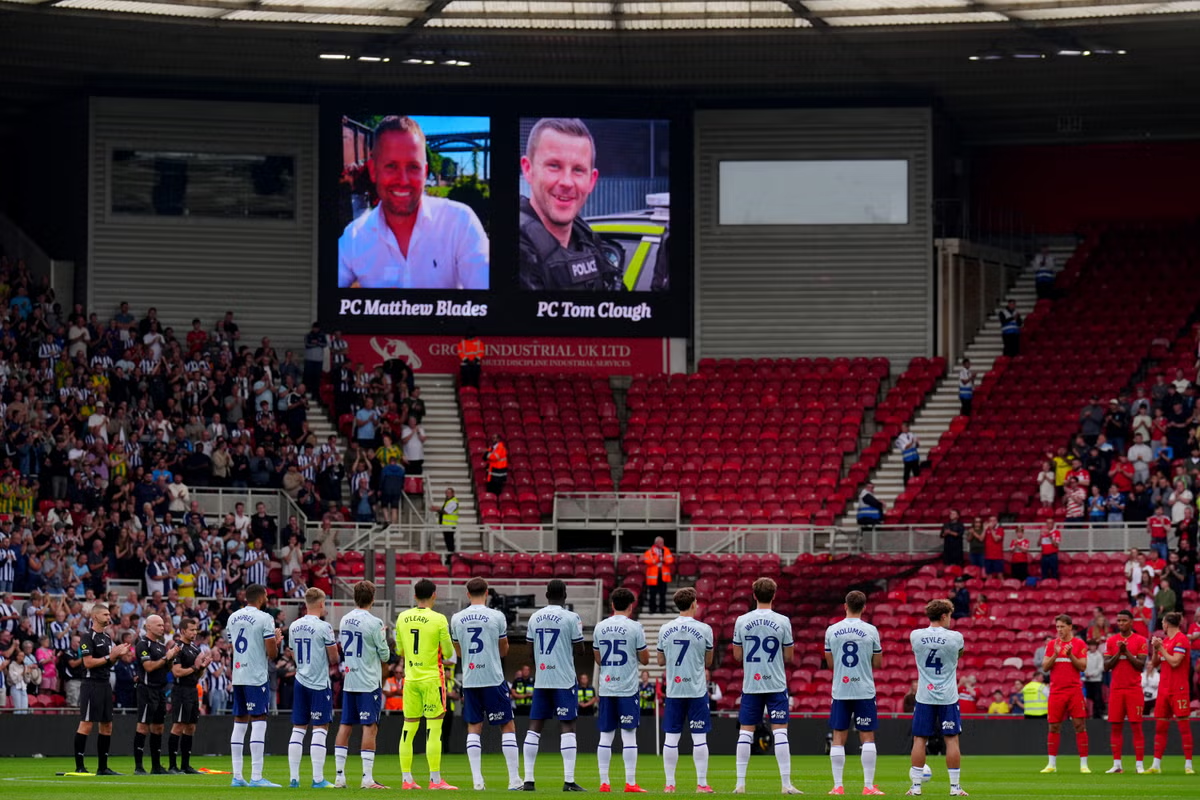
Football fans pay moving tribute to two officers killed in A66 crash

Business3 minutes ago
Envelope maker Encore Group describes challenging year but continues investment





-

 Crypto World4 days ago
SpaceX stock could rise 75% to $240, JPMorgan says
-

 Crypto World2 days ago
Bitcoin’s 22% rally now needs real demand to outlast Treasury liquidity boost
-

 Business7 days ago
Musk’s Tesla, SpaceX Confirm $16.8 Billion ‘Terafab’ Chip Plant as World’s Largest Building in Texas
-

 Fashion20 hours ago
Weekend Open Thread: Maeve – Corporette.com
-

 Crypto World5 days ago
A $30 Billion AI Fund Implodes, Now the SEC Is Investigating Wall Street’s Role
-

 Crypto World3 days ago
Warsh Jackson Hole keynote puts financial innovation first
-

 Business2 days ago
Salesforce Stock Soars 19% as Blowout Earnings and Agentforce AI Growth Silence Software Skeptics
-

 Crypto World3 days ago
Did Trump Just Move SpaceX Stock With One Truth Social Post?
-

 Business6 days ago
Mystery AI Model ‘Ox Alpha’ Draws Developers With Free Access as Chinese Lab Origins Remain Debated
-

 Business3 days ago
Walmart takes aim at younger shoppers with new fashion brand
-
 NewsBeat3 days ago
Lindsay Clancy jury braces for closing arguments as judge tells court: ‘You’ve heard all the evidence’ – Live updates
-

 Business5 days ago
Moderna CEO warns China is pouring state money into mRNA technology
-

 Crypto World3 days ago
Elon Musk Grok Bot Promise: We Will Make You Whole if AI Loses Your Money
-

 Business5 days ago
NVIDIA Stock Drops Nearly 2 Percent to $210 on Seventh Losing Day Ahead of Critical AI Earnings
-

 Crypto World2 days ago
NVIDIA revenue hits $96.2B as AI demand doubles
-

 Business22 hours ago
iPhone 18 Pro Pre-Orders Could Shift to Saturday as Apple Reportedly Avoids September 11 Anniversary
-

 Business4 days ago
Thailand’s Eastern Economic Corridor Capital City (EECiti): Key Developments and Investment Opportunities
-
 Crypto World5 days ago
$92 Billion Nvidia Earnings Could Make or Break the AI Trade
-

 Business6 days ago
Where Will Kevin Durant Play in 2027? Rockets Hold Player Option Key to His Future With Houston via Deal
-
 Sports6 days ago
Deshaun Watson fires back at Browns fans after being booed: ‘It’s a disrespectful thing’
You must be logged in to post a comment Login