

Connect with us

NewsBeat

Flash floods have devastated Nepal. Climate change could make them routine

Published

on

Flash floods have devastated Nepal. Climate change could make them routine

Hundreds of millions of people could be exposed to natural disasters and a water security crisis due to melting glaciers in Asia, academics have warned as Nepal and Tibet reel from devastating floods that have killed more than 600 people.

A glacier collapse in the Himalayas on Wednesday is believed to have caused the floods that tore through mountain villages and valleys on Wednesday, destroying infrastructure and leaving nearly 2,000 people missing.

David Simon, professor of development geography at Royal Holloway, University of London, warned that natural disasters of this scale are likely to continue as climate change brings more intense summers to the continent.

As glaciers retreat and more “catastrophic breakoffs” occur, water reservoirs held in the ice will diminish, with “stark” longer-term consequences for the rivers that nourish South Asia and parts of Central Asia and Tibet – if current trends continue in line with the higher climate change scenarios.

Advertisement

“Crucially, what we might have called natural summer ice and snow melt is what has always fueled the key rivers of South Asia, the Ganges, the Brahmaputra, the Indus, and so on.”

Analysts warn that the rate of ice melt in the Himalayas threatens water security for up to 1.65 billion people in the wider region as shrinking glaciers stop sustaining rivers vital to life and agriculture downstream.

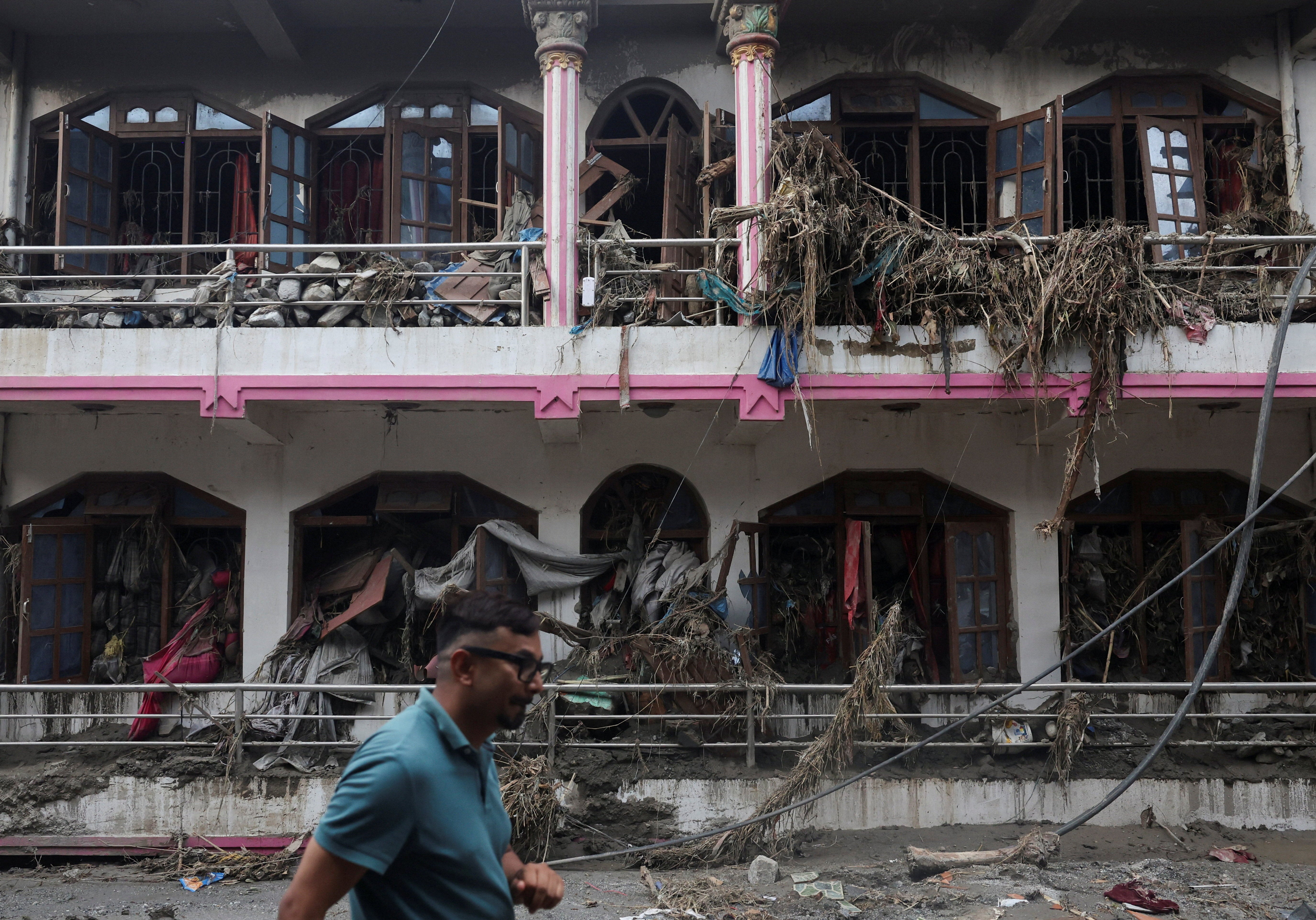
A man walks past a damaged house after flash floods and mudslide, at Devighat, Nuwakot district, Nepal
A man walks past a damaged house after flash floods and mudslide, at Devighat, Nuwakot district, Nepal (Reuters)

Dr Narelle van der Wel, head of Cryosphere Monitoring at the World Meteorological Organization (WMO), agreed that glacial retreat could have dire consequences for water security down the line.

“Initially, accelerated melting can increase runoff and flood risk. As glaciers continue to shrink, however, their capacity to store water and sustain river flows during dry periods declines,” she explained.

The impact may vary, but the implications are “enormous”, with the snow and ice of the Hindu Kush Himalaya supporting around 240 million people in the mountains and a further 1.65 billion downstream.

Advertisement

She stressed that the precise cause of this week’s disaster is still begin investigated, and that it is too early to attribute the events in Nepal to glacial retreat or climate change. But rising temperatures are changing glaciers, snow, permafrost and the stability of slopes across the Himalayas, she acknowledged.

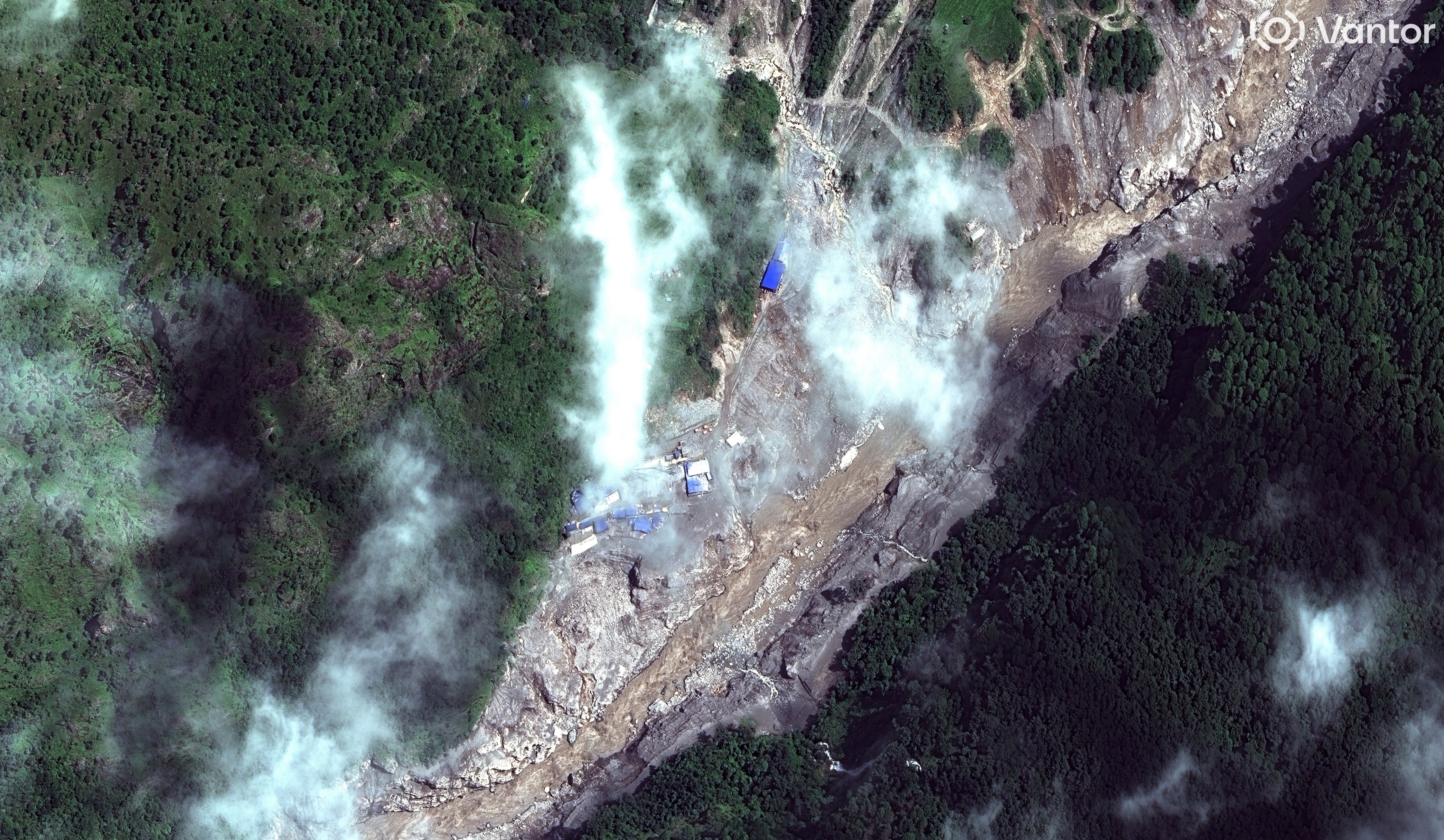
This satellite image provided by Vantor shows the remains of a cement site in Nepal
This satellite image provided by Vantor shows the remains of a cement site in Nepal (Vantour)

Prof Simon told The Independent that glacial retreat in the Andes was already having a “major impact” on the supply of water to cities in South America. Peru has lost around 56 per cent of its glacier mass over the last 60 years, threatening the water and food security of 90 million people.

Bethan Davies, professor of glaciology at Newcastle University, said that researchers are seeing rivers becoming more prone to drought as the Andean glaciers start to shrink.

“That’s certainly what we’re seeing: this decline in water flow, increasing drought, increased variability and water flow, which makes it difficult for the local communities to manage … As the glaciers shrink and they become smaller, there’s less melt water … so there’s less water that goes into the river.”

These trends most immediately hurt the rural mountain communities who depend on the glacial water for livestock they need to live on and trade.

Advertisement

But they will also affect major population centres in Peru, Chile and Argentina, draining water supply and impacting water-dependent industries like winemaking.

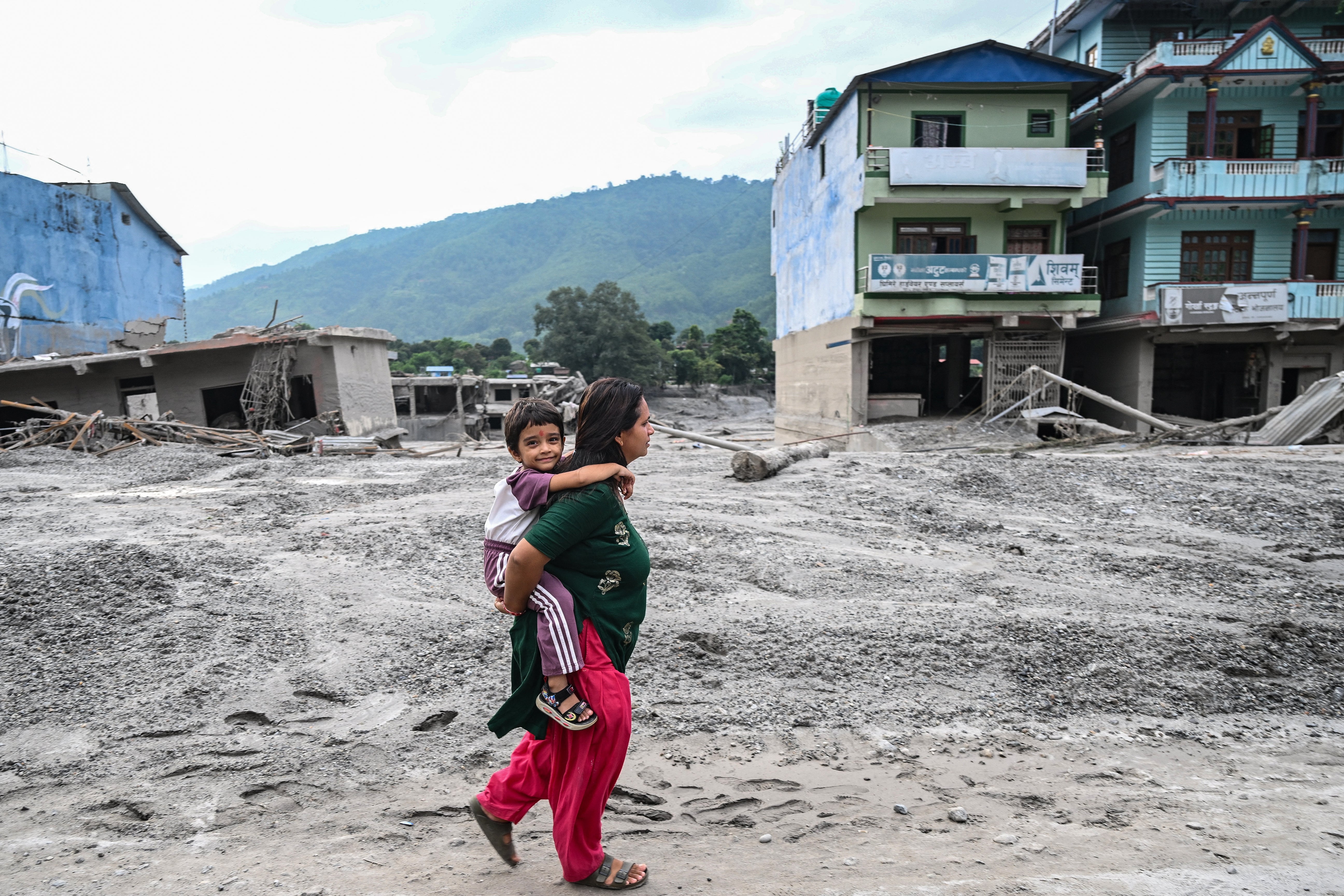
A woman carrying her child walks along a road deluged in sludge after flash floods at Devighat in Nepal's Nuwakot district
A woman carrying her child walks along a road deluged in sludge after flash floods at Devighat in Nepal’s Nuwakot district (AFP/Getty)

Prof Davies said hazard risks are becoming more likely in the high mountains of Asia, too, with temperatures rising 0.3C per decade. The Himalayan region is warning nearly twice as fast as the global average, according to the World Meteorological Organization.

“Ice is really sensitive to temperature, so as soon as it starts to warm above zero, it starts to melt. When you’re getting the melting permafrost, the melting snow, the melting ice, it becomes very fragile and things are starting to fall off,” she said.

“Melting permafrost is contributing to rockfall and contributes to these landslides, it contributes to avalanches. I think we’re likely to see an increased hazard risk in these areas.”

Prof Davies said she did not believe floods on the scale seen this week in Nepal were something the local communities, nestled into the foothills of the Himalayas, could be expected to adapt to.

Advertisement

“I think what the communities there need is a really decent early warning system. And I think that is something that we should be supporting as a country that has historically contributed a lot to climate change.

“The Nepali people have contributed very little and yet they are the ones bearing the brunt of that.”

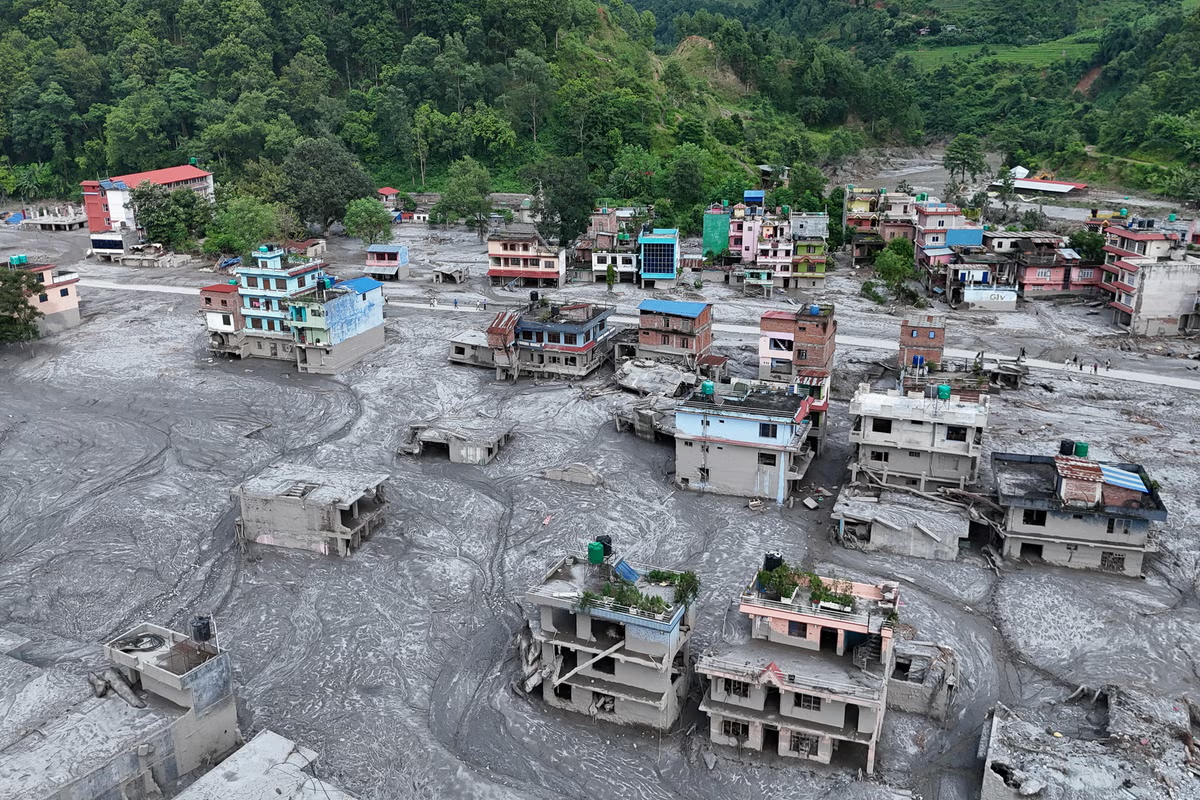
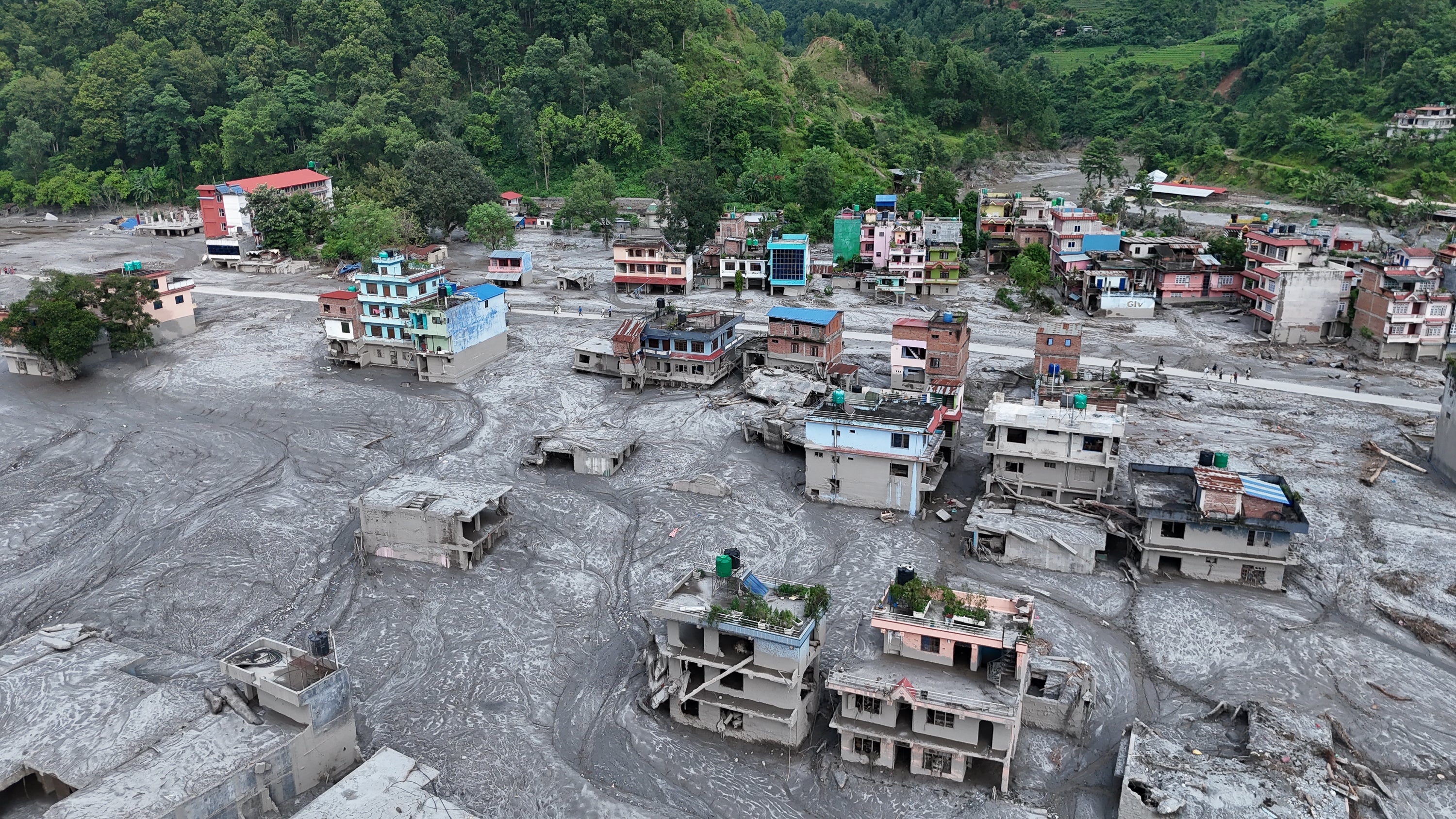
Debris and mud covering settlements following flash floods on August 28, 2026 in DevGhat village, Nepal
Debris and mud covering settlements following flash floods on August 28, 2026 in DevGhat village, Nepal (Getty)

British prime minister Andy Burnham announced £5 million in support for Nepal on Thursday to help with the “very distressing and devastating situation” on the ground. But Nepal suffers from a lack of monitoring equipment to detect and warn against impending natural disasters.

Back in April, Nepalese officials admitted to the BBC that an early flood warning system in the Everest region had fallen into a state of disrepair, ten years after sensors and automated sirens were installed.

The latest flood “demonstrates how little time communities may have to respond,” added Dr van der Wel. “Water levels reportedly rose by up to nine metres within 30 minutes at one monitoring station.”

Advertisement

“Effective early warning therefore requires much more than issuing a forecast. It depends on sustained monitoring of glaciers, glacial lakes and unstable slopes; functioning meteorological and hydrological observing networks; satellite information; rapid exchange of data across borders; and clear arrangements to ensure that warnings reach communities and prompt immediate action. These are all things we are working on here in WMO.”

A woman carrying her child walks along a road deluged in sludge after flash floods at Devighat in Nepal's Nuwakot district on August 28
A woman carrying her child walks along a road deluged in sludge after flash floods at Devighat in Nepal’s Nuwakot district on August 28 (AFP/Getty)

Prof Davies said the events this week showed how places like Nepal are suffering under the impact of climate change.

“I find it very difficult when some of our politicians downplay the risks of climate change, when they tell us to enjoy the warm weather, for example , and then you see this tragic event occurring,” she said.

“So I think my strong advice to people would be to be aware that this is the world that we’re living in, and this is the impact of climate change.

“It is severe and it is dangerous, and it does require solving, and it does require the commitment of countries like the UK, which have historically been leaders in climate change progress towards net zero.”

Advertisement

Source link

Continue Reading
Click to comment

You must be logged in to post a comment Login

Leave a Reply

NewsBeat

Ukraine-Russia war latest: Russia unleashes deadly strike on Kyiv weapons depot, killing 37

Published

on

Ukraine-Russia war latest: Russia unleashes deadly strike on Kyiv weapons depot, killing 37

Navy tracks Russian warships in English Channel during ‘intense’ operation

Harriette Boucher29 August 2026 15:24

Kremlin says it sees EU as hostile, no prospect of improved relations

The Kremlin has lashed out at EU nations for allegedly making statements suggesting that it regards Russia as an “adversary and even an enemy”.

Advertisement

Spokesman Dmitry Peskov said on Saturday he saw no prospect of improved relations between Russia and the European Union.

He said that the ⁠EU’s current politicians are confrontational towards Russia, “not only in words but also in deeds”.

It is not clear ‌which statements he ‌was referring to.

“They are mobilising Europe’s military capabilities and directing them against our country, whilst taking a direct part in hostilities against us,” he added.

Advertisement

Harriette Boucher29 August 2026 14:40

Two killed and dozens injured in more Russian strikes

Russian strikes have killed two people and wounded 27 more in the southern Kherson region on Saturday.

Oleksandr Prokudin, the region’s head of administration, said that attacks had damaged homes and apartment blocks, and that one child was among the injured.

Advertisement

Russia has bombarded Ukraine with near constant air raids for the past three days, with Prokudin saying earlier in the week that Vladimir Putin had intensified attacks on critical infrastructure in his region.

He also urged tens of thousands of residents to move to safer regions because of the possibility of prolonged power and heating outages this winter.

Harriette Boucher29 August 2026 14:09

Advertisement

In full: Dozens killed after Russian drone blows up Ukraine warehouse

At least 37 people have been killed following a Russian strike close to the Ukrainian capital of Kyiv in one of the deadliest attacks to hit Ukraine this year, officials have said.

The attack sparked a fire in the Bucha district, west of Kyiv, that swept through homes and damaged at least 50 residential buildings, Tymur Tkachenko, head of the local regional military administration, said.

In a statement on the attack, Ukrainian president Volodymyr Zelensky said a warehouse had been struck in the village of Myla “followed by a detonation.”

He did not give details on the site, but wrote in the same message that Ukrainian law forbade the storage of ammunition close to civilian homes and that criminal proceedings had been opened.

Advertisement

“Those who allowed this to happen must be held accountable for their decisions,” Zelensky said.

Harriette Boucher29 August 2026 13:43

In pictures: Aftermath of Russian drone strike on a Kyiv-area warehouse

Firefighters work at a site of a Russian drone strike, amid Russia’s attack on Ukraine, in Kyiv, Ukraine August 29, 2026 (Reuters)
A firefighter works at a site of a Russian drone strike, amid Russia's attack on Ukraine, in Kyiv, Ukraine August 29, 2026
A firefighter works at a site of a Russian drone strike, amid Russia’s attack on Ukraine, in Kyiv, Ukraine August 29, 2026 (Reuters)
(Reuters)

Harriette Boucher29 August 2026 13:20

Advertisement

Ukraine downs 233 Russian drones overnight

Ukraine shot down 233 Russian drones overnight as Moscow continued its wave of attacks,

Its defence force said the drones were struck down across the country.

“Enemy aerial weapons struck 15 locations, while debris from downed drones fell at 4 other sites. Additionally, some enemy munitions failed to reach their targets; information regarding these is currently being verified.

“The attack is ongoing, with several enemy UAVs still in the airspace.”

Advertisement

Harriette Boucher29 August 2026 12:45

Death toll in Russian attack on Kyiv rises to 37

At least 37 people have been killed following a Russian attack on the Bucha district, close to the Ukrainian capital of Kyiv, officials said Saturday.

Tymur Tkachenko, head of the local regional military administration, said that at least 50 residential buildings had been damaged in the attack, which also sparked a large-scale fire that spread to homes and a restaurant.

Advertisement

Dozens of people have also been injured, officials said.

Volodymyr Zelensky said that a warehouse had been struck in the village of Myla “followed by a detonation.”

He did not give details on the site, but wrote in the same message that criminal proceedings had been opened on charges of official negligence.

“There are regulations in place – ammunition cannot be stored near homes or other residential areas.”

Advertisement

Harriette Boucher29 August 2026 12:26

The woman making Ukraine safe from landmines amid a brutal war

The woman making Ukraine safe from landmines amid a brutal war

Harriette Boucher29 August 2026 12:00

Advertisement

Zelensky vows to punish those responsible for deadly overnight attack

Volodymyr Zelensky has vowed to punish those responsible for the deadly overnight attack on the Kyiv region, which killed at least 27 people.

He said criminal cases had already been opened on charges of official negligence.

The Ukrainian president wrote on X: “Those who allowed this to happen must be held accountable for their decisions.

“There are regulations in place – ammunition cannot be stored near homes or ‌other residential areas. Appropriate conclusions will certainly ​be drawn.”

Advertisement

Harriette Boucher29 August 2026 11:15

Dmytrivka community head killed in deadly strike on Kyiv

The head of the Dmytrivka community, which was attacked by Russia overnight, died rescuing people, Volodymyr Zelensky has said.

Taras Didych is one of the 27 people that have been reported killed.

Advertisement

The Ukrainian president said residential buildings, along with a care home for elderly people and people with disabilities, were damaged.

Harriette Boucher29 August 2026 10:32

Source link

Advertisement
Continue Reading

NewsBeat

Want to imagine a better future? Write a poem

Published

on

Want to imagine a better future? Write a poem

This roundup of The Conversation’s environment coverage was first published in our award-winning weekly climate action newsletter, Imagine.

At school, I was told by my teachers I wasn’t allowed to take art A-level alongside biology and chemistry. I’ve always regretted listening to them. The crossover between the arts and sciences fascinates me. The space where creative thinking mixes with rational logic to problem solve in fresh and innovative ways. Many researchers agree that this is where the magic lies.

Here at The Conversation, I love finding new ways to communicate the climate story on a daily basis with expert insight from academics at the forefront of scientific discovery. So I was delighted to discover that others agree and spend their time researching these interdisciplinary connections – finding unusual ways to convey facts or interactive ways to engage communities and inspire action beyond the traditional, often dry, approaches.

In 2025, I started working closely with my colleague, Anna Walker, the brilliant senior arts editor at the UK edition of The Conversation. We have developed our climate storytelling strand of content and together we launched The Conversation’s Climate Poetry Award 2026, open to all academics based in the UK and Ireland. Entries close on September 1 2026 (11.59pm BST).

Advertisement

Don’t have time to read about climate change as much as you’d like?

Get a weekly roundup in your inbox instead. Every Wednesday, The Conversation’s environment editor writes Imagine, a short email that goes a little deeper into just one climate issue. Join the 50,000+ readers who’ve subscribed so far.


So what makes a climate poem?

As poet Sam Illingworth, a professor at Edinburgh Napier University, explains, “poetry has a profound ability to help reframe global issues, taking obscure concepts and couching them in language that is both intimate and familiar”. Poetry can help personalise the problem and reimagine solutions.

And that is possible in just 17 syllables if you write a haiku, a form of poetry that originated in Japan in the 17th century. As Illingworth explains, every haiku, by definition, is about nature and carries a kigo, a single seasonal reference: a flower, a fruit, an animal, a festival that fixes the poem in one season.

Advertisement

The best haikus have a kireji, a cutting word or punctuation that pivots the poem. “That final ingredient, the turn, is the reason the haiku is so well suited to climate,” writes Illingworth. “A haiku builds a scene and then breaks it. Things are one way, and then they are another. Climate change has exactly that shape, which means the form itself can carry the science.”

A shift can happen in a moment – without degrees or decades. And just as the turn can focus on climate collapse, so too can it highlight recovery.

The essence of seasons

Jasmin Kirkbride at the University of East Anglia and Paul Chambers at the University of Bristol have been analysing how English-language haiku reflect the changing climate over the past 30 years.

“Haiku are about intense moments of perception,” they describe. While flying insect populations have crashed and habitats have been lost, the frequency of heatwaves, floods and other extreme weather have all increased.

Advertisement

“Yet, these changes emerge in a strange fashion,” write Kirkbride and Chambers. “It’s hard to write about nature’s losses, and writers tend to do so unconsciously. Rather than tracking population declines in concrete terms, then, the language used around certain species has altered, becoming soaked in grief.”

They also noticed fewer mentions of curlews or butterflies in haiku, and out-of-place seasonal signs such as snowdrops in December rather than February.

flatlay of notebook, flower, laptop

Academics in the UK and Ireland can enter The Conversation UK’s Climate Poetry Award.
Floral Deco/Shutterstock

Climate is a communication challenge

In poetry, speculation might help us make sense of what it means to live with an uncertain climate future, according to Heena Dave, a research fellow at the University of Stirling.

“Scientific knowledge might give us the foundations for understanding what futures are possible, but speculation provides a means to explore possible futures,” writes Dave, who argues that poetry gives us a language to express what living through those futures might mean. “The power of poetry lies in making us pay attention to a sound, a place, an object or something changing around us.”

Advertisement

Dave works closely with school leaders as they explore their hopes, worries and uncertainties about climate change through the process of writing speculative poems. She has found that writing poems helps them process their complex emotions, memories and fears. “School leaders can then consider what might be demanded of their leadership as climate change increasingly affects their schools, communities, children and young people.”

So try jumping a decade ahead. Imagine how something everyday and ordinary might fare in a climate-changed world, start with what you notice and tune into your senses. Your words might surprise you.

A poem with atmospheric powers

One poem has had a particularly direct effect on greenhouse gas emissions.

For three years, In Praise of Air by Simon Armitage hung on an exterior wall above the busy A57 in Sheffield, UK, as part of a collaborative project with physical chemistry professor Tony Ryan. This poem was printed on a 20m-tall banner coated in titanium dioxide.

Advertisement

“When light shines on this photocatalyst, the electrons in the material are rearranged and become more reactive. They break the oxygen in the air apart to make two oxygen free radicals,” explains Joanna Gavins, a professor in English language and literature at the University of Sheffield. “In turn, these react with water to make peroxide, which oxidises pollutants in the atmosphere, making harmless molecules that can be washed away.” In those three years, the poem removed around two tonnes of nitrogen oxide – the toxic gas emitted in exhaust fumes which causes lung disease – from the surrounding environment.

In need of more inspiration? Check out some of our favourite climate poems and watch Sam Illingworth’s climate poetry masterclass.

You can enter your climate poem online here. Shortlisted entries will be published in an ebook by The Conversation UK in the autumn. The winner will be hosted for five days at the Little Goat Barn Writing Retreat, in the peaceful and beautiful countryside of the Vale of Conwy in North Wales courtesy of The Ruppin Agency.
Advertisement

Source link

Continue Reading

NewsBeat

Aviation to motor racing: the story of Croft Airport

Published

on

Aviation to motor racing: the story of Croft Airport

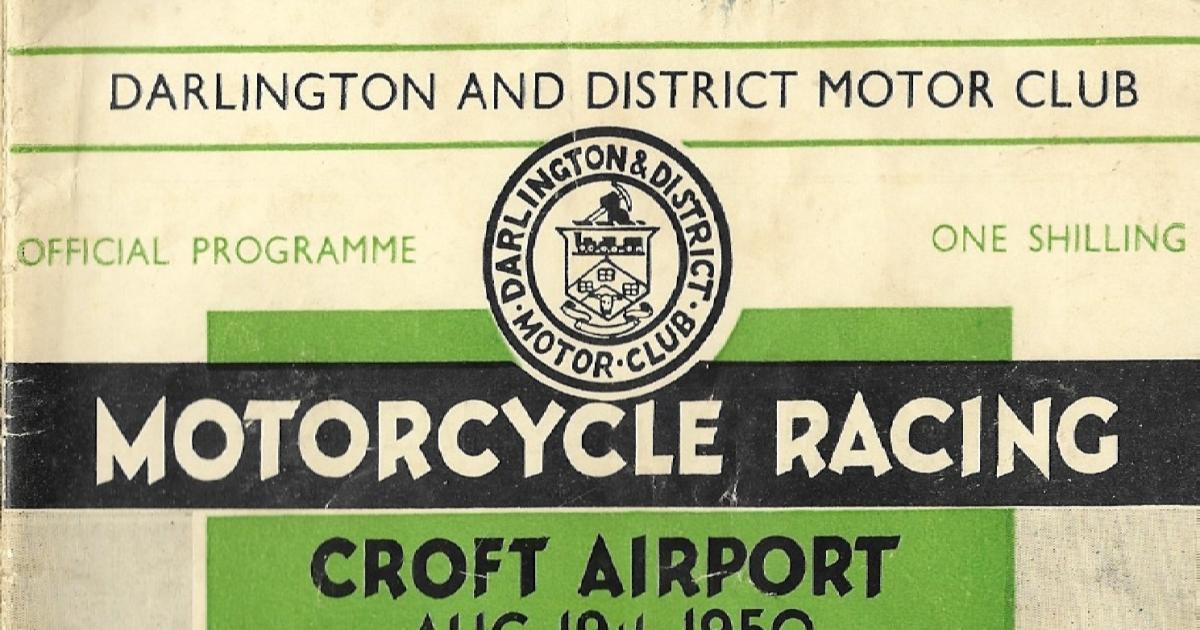
David Stephenson, in Wiltshire, is researching motorcycle racing history and was rather surprised to discover a programme from a 1950 meeting which was held at “Croft Airport”.

Come motor cycle racing at Croft Airport in 1950. Picture courtesy of David and Tim Stephenson

“Was this the imagination of the owner after the Canadian Air Force had moved out or did anyone actually fly from there?” wonders his brother, Tim, in Darlington.

After the Second World War airmen left the aerodrome, it was briefly abandoned before John Neasham – car dealer, mayor and football club chairman – took over the lease and formed the Darlington & District Aero Club.

John Neasham, Mayor of Darlington, 1955-56.

Mr Neasham had bought two small planes before the war, which he had kept at his workshop behind the Hippodrome theatre but he now moved them to the aerodrome. He developed a sideline converting ex-military planes for private civilian use, and he started offering flying lessons.

Advertisement

Baron Gabriel H Calcagni de Tande, known as Baron Gabriel H Calcagni de Tande, known as “Gabby”, who taught flying at Croft Airport

He discovered that one of his new employees – stories vary as to whether this chap was employed to sweep the floor in the Blackwellgate garage or as general sales manager – was in fact the wonderfully-named Baron Gabriel H Calcagni de Tande. Known as Gabby, he was an Algerian from Italy who had come to Britain from Italy in 1941 to fly Spitfires with the Free French Airforce.

He had married a Darlington girl, Blanche Oliver, a Waaf stationed at Middleton St George, and they squatted in a Nissen hut at the entrance to the aerodrome – there were scores of people squatting in the disused buildings and for many years the authorities turned a blind eye as there was such a shortage of homes.

Gabby turned out to be an expert flying instructor.

Mr Neasham had big dreams for the aerodrome. He saw that RAF Middleton St George was being converted to a military training airfield so he imagined that Croft could be developed as a civilian airport, and he started calling it “Croft Airport”.

Advertisement

Adverts from the 1950 programme for motor racing at Croft Airport

On August 31, 1948, he put on the first public flying display at the airport, an event which was not marred by a small fire breaking out in the control tower, and on September 11, 1948, he put on one of the first scheduled services from the airport: a £4 5s return ticket to Chester for Darlington FC supporters to see the match (Quakers won 2-1).

Go by air from Croft Airport to see the mighty Quakers’ away match at Chester

In 1951, the RAF officially designated Croft as the relief landing ground for the trainee fliers at Middleton St George, and for several months it was known as “RAF Neasham”, making it unique in being named after a person not a place (although Neasham is just down the road).

However, civilian flying at the airport never took off, and in 1952 came to an end.

Adverts from the 1950 programme for motor racing at Croft Airport

Mr Neasham, a real petrolhead, had plenty of motor racing acquaintances who had been speeding around the runways and aprons since 1948 (they called the long main stretch the “Neasham Straight”). The Darlington Motor Club continued racing at the aerodrome until 1962 when the Air Ministry put 160 acres of land up for auction.

Advertisement

Adverts from the 1950 programme for motor racing at Croft Airport

Adverts from the 1950 programme for motor racing at Croft Airport

Adverts from the 1950 programme for motor racing at Croft Airport

The successful bid came from the “Croft Consortium”, led by Sir Robert Ropner of the Teesside shipping dynasty. He was a serious motor racer, and his fellow investors included bobsleigh champions and Bill Shand Kydd, whose elder brother married Princess Diana’s mother and who had the last known correspondence with his brother-in-law before he disappeared in 1974. That brother-in-law was Lord Lucan.

The programme from the first race meeting, attended by 50,000 people, in August 1964 at Croft Autodrome

On August Bank Holiday Monday 1964, the consortium put on its first meeting: the Daily Mirror Trophy. A crowd of 50,000 crammed into to see cars and motorcycles whizz past at what the programme now called “Croft Aerodrome”.

Sixty-two years later, although a little light aviation still occurs at Croft – in March 2025, two people were hurt when their bright yellow plane crashed – it is cars that are the main attraction, and next Saturday, September 6, thousands of spectators are expected for the latest leg of the British Touring Car Championship.

Richmond market place on an Edwardian postcard

RICHMOND CIVIC SOCIETY has arranged an amazing programme of more than 20 walks and talks for the Heritage Open Days in September and, by coincidence, Croft-on-Tees.

Advertisement

Many of them feature really rare and privileged access to historic places, like the cells in Richmond castle where the imprisoned First World War conscientious objectors scrawled their political graffiti, or tours of Aske Hall led by Robin, Marquess of Zetland.

But places on most of them are limited and need to be booked.

There are rare opportunities to see inside Holy Trinity chapel or up St Mary’s Church belltower, and to get behind the scenes – quite literally – at the Georgian theatre.

This year’s theme of the open days is everyday lives, and so Kiplin Hall is telling about the lives of servants whose work kept the grand house running, while the Station is talking about workers who kept the railway running.

Advertisement

There are guided walks around Easby Abbey and the grounds of Aske Hall, while a Victorian policeman will take a tour of law and order hotspots, a former headteacher will wander round the town’s schools, and a ghost walk will bring stories from the other side back to life.

Richmondshire Museum and the Green Howards Museum are putting on special events, while at the Station, there’s a talk about a female Swaledale hill farmer in the early 20th Century.

The free events start on Friday, September 11 and conclude on Sunday, September 20, with a walk from Hurgill Road car park up on to the racecourse and around the world’s oldest grandstand, the story of which we told here last week.

The walk, starting at 2pm and led by Colin Grant, is one of the few events that does not need to be booked.

Advertisement

To find full details of the events, including booking details, it is probably best to go to richmond.org, press the What’s On button, and then find the Filter by Month button which will bring up all of September’s events.

We humbly suggest you do not overlook one on Saturday, September 12, when Chris Lloyd, who compiles this column, is leading a walk around Croft-on-Tees. It will look at spas, bridges, mansions and mills, plus Lewis Carroll and Alf Common, the world’s first £1,000 footballer.

It will start at 10.30am in Croft church, which is itself open for the Heritage Open Days, serving light refreshments, and limited places can be booked by emailing richmondcivicsociety@gmail.com

St Cuthbert's church restoration, Darlington. Photograph: Stuart Boulton/The Northern EchoSt Cuthbert’s church restoration, Darlington. Photograph: Stuart Boulton/The Northern Echo

ST CUTHBERT’S CHURCH in Darlington may be closed at the moment as part of its extensive £2.5m refurbishment but it is opening its gallery and belfry for the Heritage Open Days so that people can have guided tours above the church floor and see the work that is unfolding.

Advertisement

That means they will be able to look down on where the foundations of a Saxon church, probably from 1083, were discovered recently, rewriting Darlington’s history and making St Cuthbert’s the town’s oldest church.

The tours are being held on Saturday, September 19, from 10am to 4pm, and will run alongside a day of activities which includes a Photography Heritage Display, a History of the Pews exhibition and live music, from, among others, Cockerton Silver Band.

There will also be a live stained glass conservation studio by the experts who are working on the church, including one who appears on television’s Repair Shop.

The open day will also be the public’s first encounter with the new Voices of St Cuthbert project in which people are being encouraged to leave audio messages about what the church means to them.

Advertisement

“Almost everyone in Darlington seems to have a St Cuthbert’s story,” says project manager Kaitlyn Beattie. “Sometimes it’s about a wedding or a christening. Sometimes it’s because their grandparents worshipped here, or they visited with school. When you put all those memories together, you’re not just telling the story of one building – you’re telling the story of the people who have lived in Darlington.”

People are being asked to record a voice note of up to five minutes on their phones and email or WhatsApp it across, although on the Heritage Open Day, there will be volunteers available to take people’s memories.

“Sometimes it’s the small stories that tell us the most,” says Kaitlyn. “The memory of a particular person, the smell of polish on the pews, walking through the church with your grandparents or singing your first hymn. Those are the memories that bring history to life.”

To take part, or for further information, email kaitlyn.beattie@stcuthbertsdarlington.org.uk or WhatsApp 07704 823610.

Advertisement

Source link

Continue Reading

NewsBeat

All the Casualty spoilers for BBC drama’s 40th anniversary episodes | Soaps

Published

on

All the Casualty spoilers for BBC drama's 40th anniversary episodes | Soaps
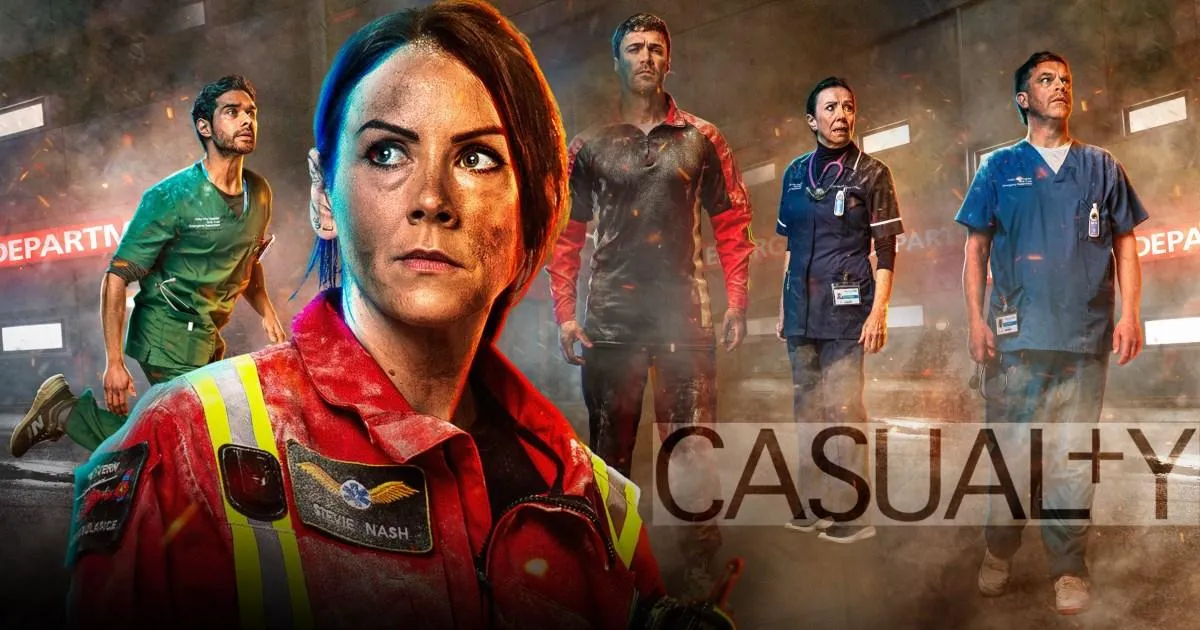
Here’s everything we know so far (Picture: BBC/Metro)

We are just days away from the Casualty 40th anniversary.

As the world’s longest-running medical drama, BBC One’s Casualty has delivered powerful storytelling, unforgettable characters and ambitious television moments that have resonated with viewers for decades.

The emotionally charged storyline that will unfold during the anniversary promises drama on an unprecedented scale, and it’s unlike anything Casualty has tackled before.

Following the release of a new trailer, we now have a few more clues as to what to expect when this milestone event takes place.

Advertisement

So, what exactly do we know about the Casualty anniversary episodes so far?

Let’s take a look.

To view this video please enable JavaScript, and consider upgrading to a web
browser that
supports HTML5
video

Advertisement
A Casualty anniversary promo featuring Jodie, Jan, Rida, Barney, Faith, Jacob, Teddy, Flynn, Stevie, Dylan, Matty, Siobhan, Iain, Indie, Nicole and Rash.
The anniversary episodes will also mark the beginning of a new era for the show (Picture: BBC)

When do Casualty’s 40th anniversary episodes air?

On September 5, a special double-bill will air on BBC One to celebrate Casualty’s 40th anniversary. The first episode will be broadcasted at 8pm, followed by the concluding part of the story at 8:50pm.

What will happen during Casualty’s anniversary episodes?

The explosion

The biggest development from the trailer that dropped this week was the confirmation that neighbouring hospital St James is going to be the site of a massive explosion.

As Holby is thrown into complete chaos, paramedics head over and are forced to search through the rubble for bodies at the devastated hospital.

Holby City Hospital is overwhelmed

Ask Metro


Advertisement

Use AI to go deeper into the stories you care about – powered by Metro and trusted publications.

As a result of being the only hospital in the city, Holby City Hospital will be forced to deal with an influx of casualties from St James. On top of this, they have their own patients to deal with anyway. If anyone can lead a team through chaos it’s Dylan Keogh (William Beck), but how quickly will things descend into chaos when he faces a personal tragedy?

Dylan’s ordeal

Dylan, Cam and Rash outside the ED in Casualty
Dylan faces a tragedy (Picture: BBC)

Dylan can be seen looking absolutely heartbroken in the trailer as he faces a very personal situation. We don’t know exactly what it is at the moment, but we know that Dylan only reacts in such an intense way when something has deeply, deeply impacted him.

Whatever it is, it will happen right when he’s trying to lead the staff of Holby ED through their darkest hour.

Advertisement

We also know at one point he is surrounded by what appears to be police officers.

Can Dylan cope with everything?

Teasing the drama Dylan is involved in, star Will Beck told Metro: ‘I think he finds himself in an impossible position in the sense that there’s an internal explosion that occurs, a controlled explosion that cannot be contained.

‘He’s in a workplace and he’s in a position of authority and, more importantly, he’s in a position where this cannot be happening. He knows that. He doesn’t know who to tell, it’s all happening too quickly. If there was a mental health A&E, Dylan would be airlifted.

Advertisement

‘Those characters like Siobhan and Rash, the story is the support network. That’s what the show is and always has been about. But, this is hopefully visually arresting.’

Stevie and Flynn’s lives are in danger

Flynn standing on a road in the middle of the night in Casualty
Flynn and Stevie are caught in a race against time (Picture: BBC)

The trailer confirms that Flynn Byron (Olly Rix) isn’t at Holby City Hospital when the explosion takes place, he’s actually near St James.

Whatever happens to Flynn, we know that he will end up with Stevie Nash (Elinor Lawless) at some point, as they are caught in a situation that forces them both to fight to survive.

An ambulance is underwater

During the first teaser trailer that was released back a couple of weeks ago, there was a brief shot at the end of what appears to be an ambulance underwater.

It increases the chance that paramedic favourites Jan Jennings (Di Botcher), Iain Dean (Michael Stevenson), Jacob Masters (Charles Venn), Teddy Gowan (Milo Clarke) and Indie Jankowski (Naomi Wakszlak) are going to get caught up in some life-threatening danger – but will anyone else from the hospital be in that ambulance?

Advertisement

The start of a new era

These anniversary episodes will demonstrate the ambition, storytelling and emotional impact at the heart of the series, while signalling an exciting new chapter for the show…

Advertisement
Advertisement

Source link

Continue Reading

NewsBeat

Two ‘brilliant writers’ claim top gongs at Edinburgh Comedy Awards

Published

on

Two ‘brilliant writers’ claim top gongs at Edinburgh Comedy Awards

The winners were chosen by a panel of judges, chaired by Liz Lewin, director of comedy series at Netflix UK, who said: “It was wonderful to be part of a judging panel and process that gave such careful, thorough and enjoyable consideration to such a range of outstanding comedians, any one of whom would have been a winner to be proud of.

Source link

Continue Reading

NewsBeat

Football fans pay moving tribute to two officers killed in A66 crash

Published

on

Football fans pay moving tribute to two officers killed in A66 crash

Tributes have been paid by football supporters to two Cleveland Police constables killed in a head-on collision on the A66, as officers maintain their investigation into a spate of local incidents.

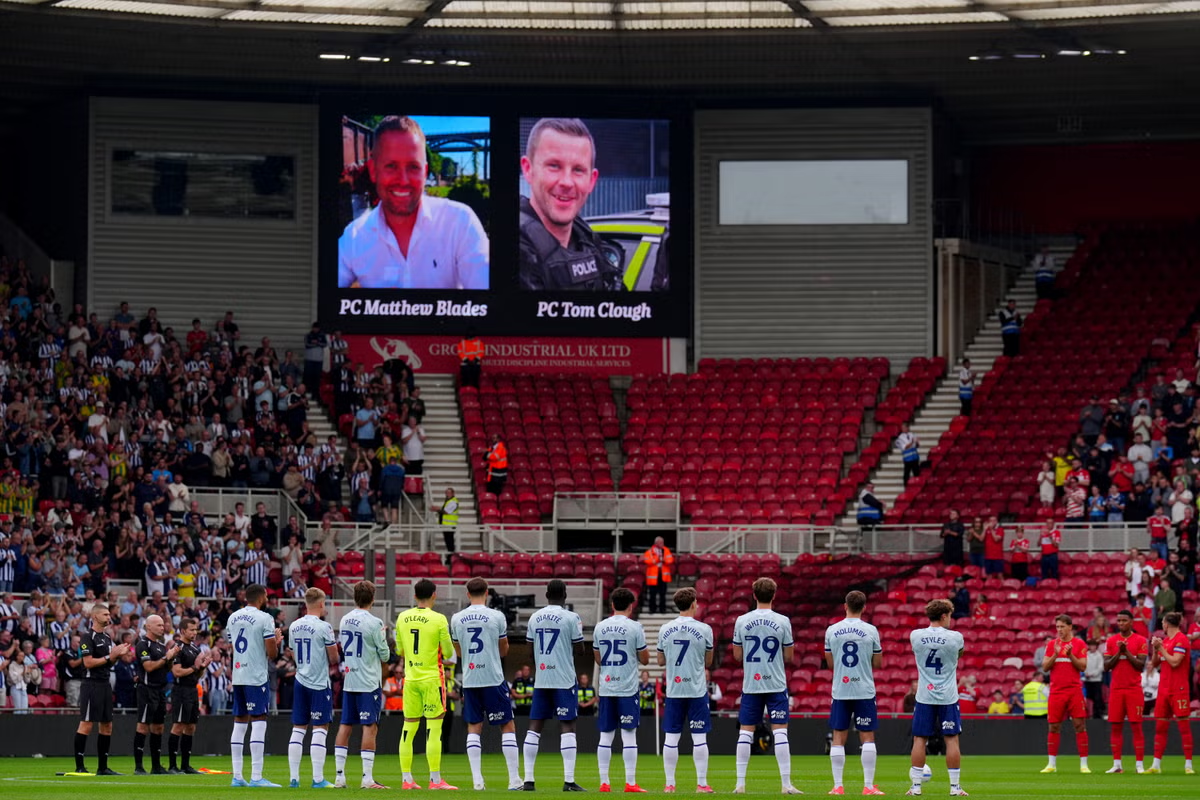
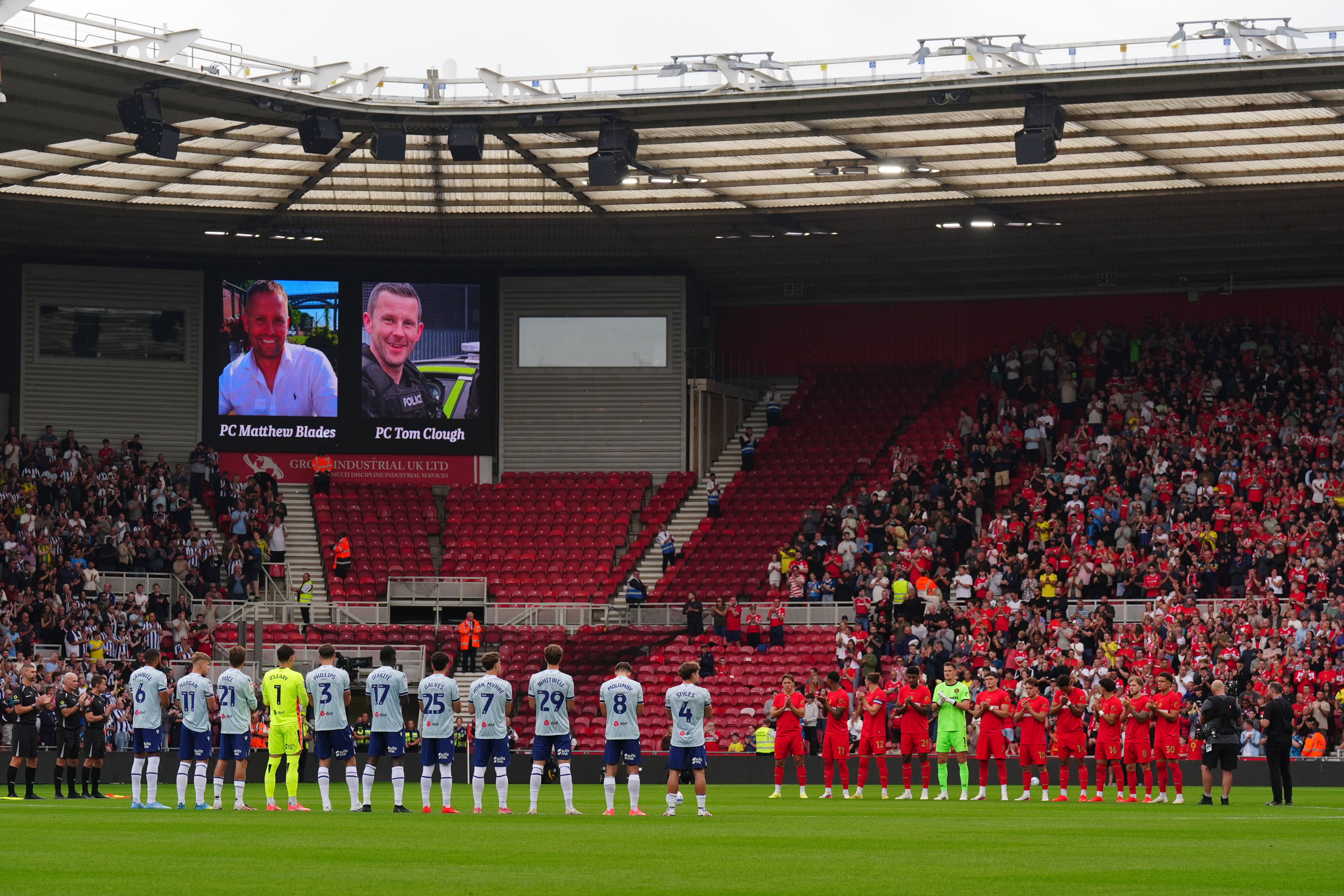
Ahead of Middlesbrough FC’s 12.30pm home fixture against West Bromwich Albion on Saturday, fans joined in applause for Pc Matthew Blades, 37, and Pc Tom Clough, 38.

Both constables lost their lives last weekend when a Volkswagen Passat travelling the wrong way crashed into them on the A66 at South Bank.

Images of the officers were displayed across screens at the Riverside Stadium while players and spectators united in applause.

Advertisement

The King has also sent letters to their families to express his condolences, according to a report by the Mirror.

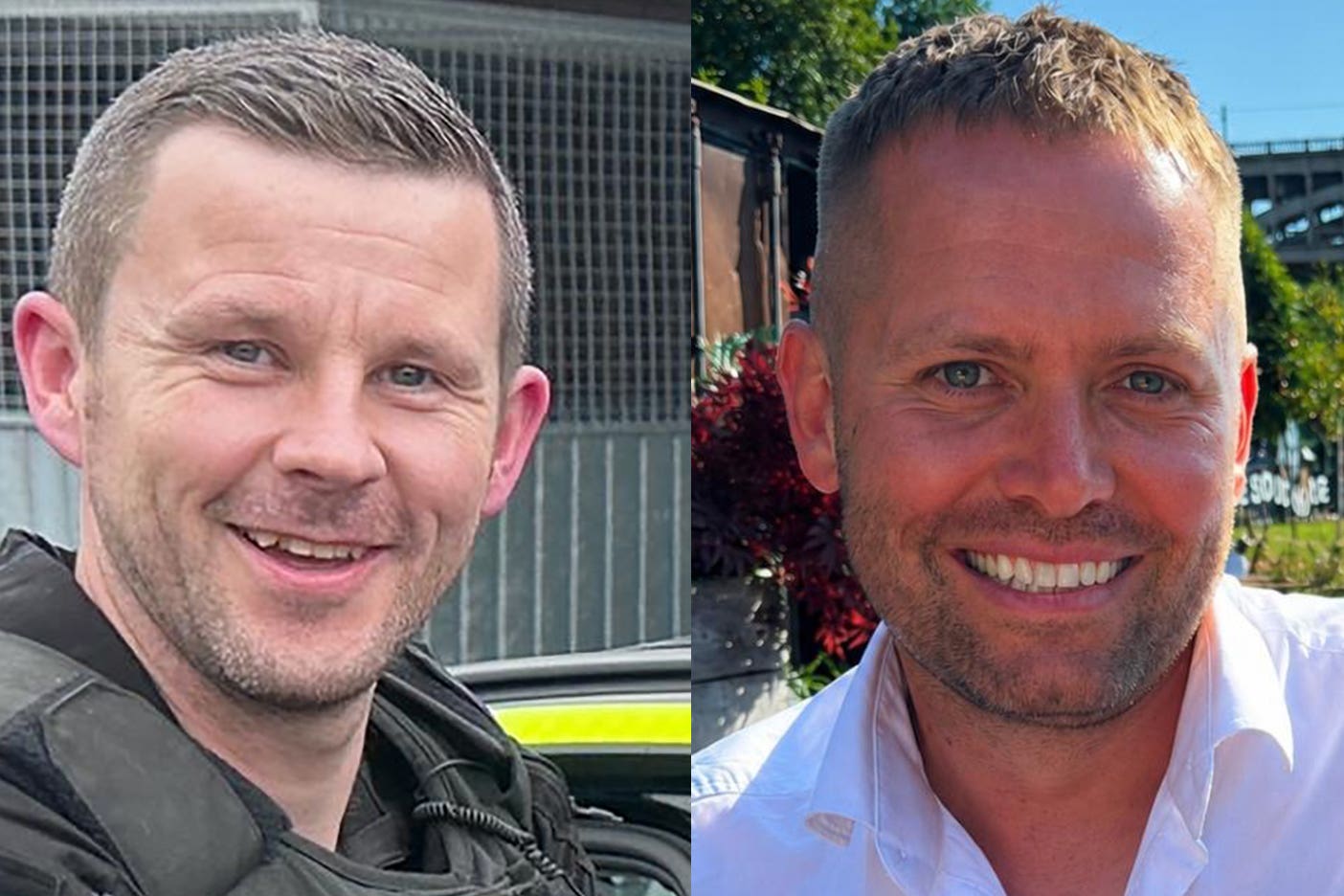
Pc Tom Clough, left, and Pc Matthew Blades, who died in the head-on A66 crash
Pc Tom Clough, left, and Pc Matthew Blades, who died in the head-on A66 crash (PA Media)

Middlesbrough FC said in a statement: ““The commitment shown by officers and staff, often in challenging and demanding circumstances, plays a vital role in keeping residents safe and helping people feel secure in their homes, neighbourhoods and local areas.”

Cole Worthy, 17; Theo Rae, 17; Makai Saddington, 18; and 23-year-olds Michael Cahill and Jakub Matusiak were also killed in the crash.

Cleveland Police said its officers have been tackling alleged organised crime in the wake of the crash and, on Friday night, said some 24 people had been arrested in the crackdown.

Officers said four men, aged 35, 25, 40 and 21, were being held on suspicion of criminal damage with intent to endanger life after a vehicle crashed into a house in Steele Crescent, Middlesbrough, on Thursday morning.

Advertisement

They were also being questioned over alleged arson after a caravan was set alight in Atlee Road on Wednesday morning, and a drugs offence.

The tribute too place at the Riverside Stadium, Middlesbrough
The tribute too place at the Riverside Stadium, Middlesbrough (PA)

The force said the men were in a vehicle when they were stopped by police on Kingsley Road in Grangetown on Thursday night.

Earlier on Friday, detectives confirmed they were not linking a house fire which killed a seven-year-old girl and her aunt to the A66 crash.

Natalie McDonald, 34, and her niece, Valentina Foster, died while four other people were injured in the blaze on Wednesday morning – with two men, aged 23 and 31, still in custody on suspicion of murder.

Hundreds of extra police officers have been drafted in to support officers after the series of recent incidents in the Middlesbrough and County Durham area.

Advertisement

Source link

Continue Reading

NewsBeat

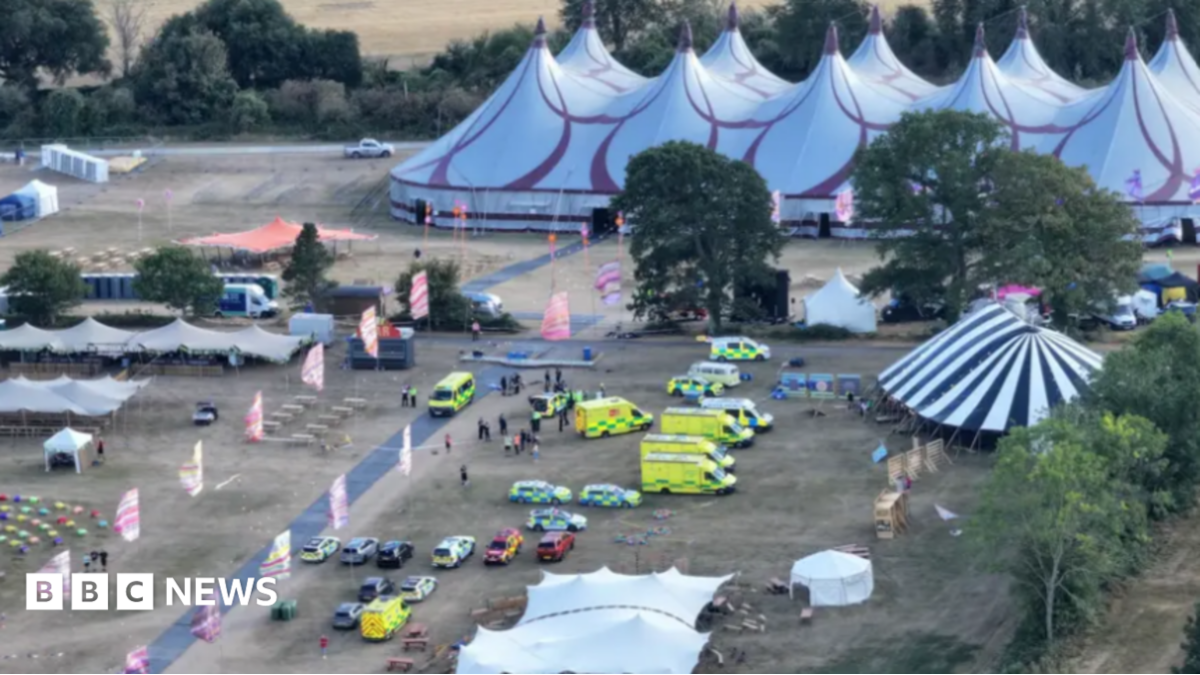
Big Church Festival ‘devastated’ as man dies after sign falls

Published

on

An electric green sign telling people at the festival the show has been cancelled.

Organisers of a Christian festival say they are “devastated” after a sign fell at their event and injured seven people, with one man dying at the scene.

Sussex Police said it had been called to the Big Church Festival at Wiston Park, near Steyning in West Sussex, at about 15:38 BST on Friday.

It was later confirmed a 41-year-old man from Eastbourne in East Sussex had died.

The Archbishop of Canterbury said she was “sad and shocked” to hear about the fatal incident.

Advertisement

Dame Sarah Mullally said: “I pray for his family, friends and loved ones as they grieve. I pray for those receiving treatment, and the healthcare workers looking after them.

“And I pray too for the other festival goers, staff and event organisers as they come to terms with these tragic events.

“May the god of comfort and healing be with them all.”

South East Coast Ambulance service said four of the six people injured were taken to local hospitals for further treatment, with two people having serious injuries.

Advertisement

The Big Church Festival, which describes itself as the UK’s biggest Christian festival, was founded in 2009.

The festival began on Friday and was due to continue until Sunday, but a decision was made by organisers to cancel the remainder of the event after the incident.

“We are working with the emergency services, police and the Health and Safety Executive as they establish the circumstances surrounding today’s incident,” the organisers said.

“We are incredibly grateful to everyone who responded, and to our teams and community for the care they have shown one another.”

Advertisement

Source link

Continue Reading

NewsBeat

here’s what is missing from Andy Burnham’s plan to tackle waste dumpers

Published

on

here’s what is missing from Andy Burnham’s plan to tackle waste dumpers

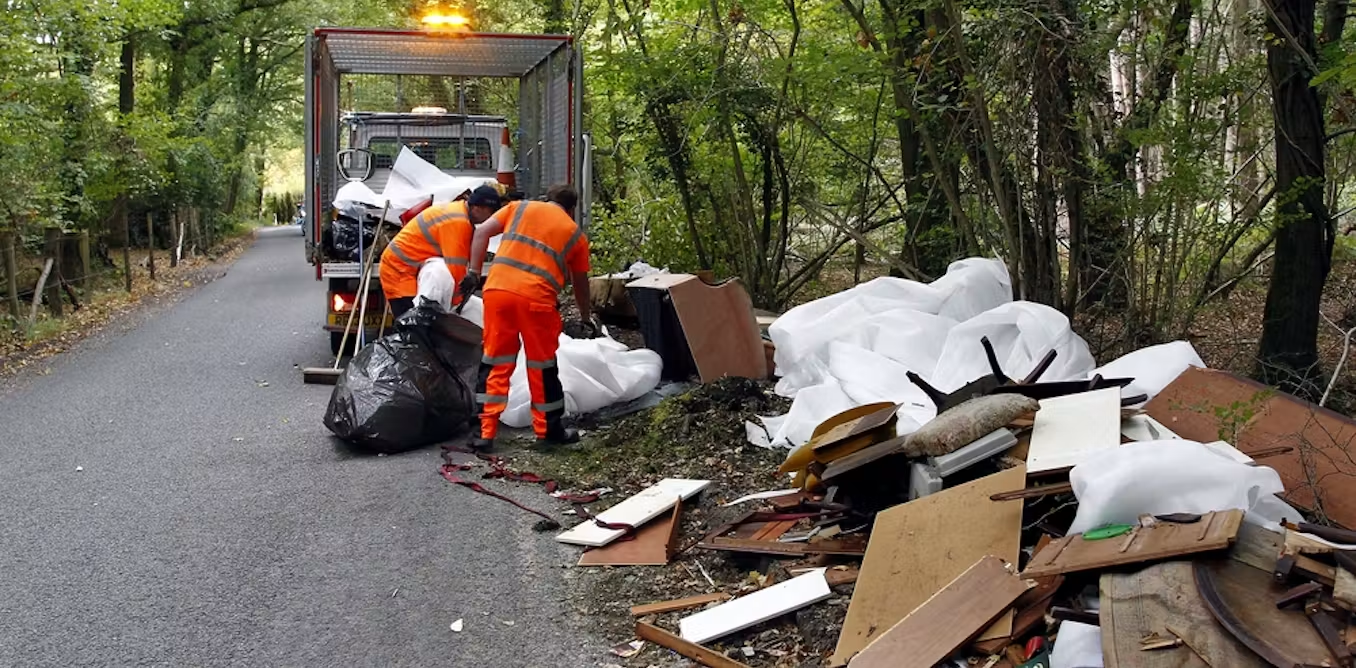
UK prime minister Andy Burnham has promised to clean up three of the worst illegal waste dumps in England and sign off new measures to tackle the problem more widely.

The pledge is bold, but it is also unlikely to solve the problem on its own.

Illegal waste sites and fly‑tipping is now widespread in the UK, and globally.

They are not just local eyesores. They are public health hazards, environmental damage, and a symbol of organised criminal activity. They cost councils millions. They poison soils and waterways. They also erode trust in government. Any plan that ignores the full picture will fail.

Advertisement

What Burnham has proposed

Burnham’s announcement commits resources to clear three of the worst sites and to work with councils and police to tackle the problem. The aim is immediate clean‑ups and stronger local coordination. This is welcome. Quick action on visible sites helps communities and restores confidence. But the plan as described lacks the scale and tools needed to stop the flow of illegal waste in the long term.

Fly‑tipping is the illegal dumping of waste on land without a licence. Illegal waste sites are larger, often semi‑permanent locations where waste is stored, processed or burned outside regulatory control. These activities range from small household dumping to organised operations run by criminal networks. The latter are the most damaging and the hardest to stop.

English local authorities dealt with 1.26 million fly-tipping incidents in 2024-25, a 9% increase from the previous year.

For decades, local authorities have borne the cost of clearing dumped waste. Budget cuts since 2010 reduced council capacity for enforcement and waste services.

Advertisement

At the same time, regulatory gaps and weak sentencing created an environment where organised waste crime could flourish. Criminal groups exploit low enforcement, transport networks and demand for cheap disposal. The result is more illegal sites and higher clean‑up bills for councils.

Fly-tipping is often organised by criminals gangs.

What Burnham needs to add

Burnham’s current approach treats symptoms, not causes. Cleaning up three sites is necessary but not sufficient. Without cutting off the supply chain – illegal collection, transport and disposal – new sites will appear.

But the current plan lacks sustained funding. Effective action needs long‑term investment in enforcement teams, surveillance, legal support and prosecution. Short‑term funding can clear sites but cannot sustain the multi‑year operations needed to dismantle organised waste crime. Councils already report rising costs and limited budgets for pursuing fly-tippers.

Advertisement

Enforcement is currently fragmented. Responsibility is split across councils, the Environment Agency as well as the police and private sector actors. Burnham has said the National Crime Agency will work more closely with the Environment Agency in England, but this could still create gaps that criminals exploit.

Successful disruption requires a single, well‑resourced taskforce with investigative powers and rapid legal follow through. Past local initiatives without national backing have struggled to keep pace.

Sentences for serious waste crime are often too light to deter organised groups. To help tackle this Burnham has said fines will rise from £300 to a maximum of £5,000. But prosecutions are complex and slow. Without tougher, faster legal consequences, the economics could still favour illegal operators.

Tougher sentencing and fast‑track courts should be put in place. Pushing for tougher sentencing guidelines for serious waste crime and specialist courts to speed cases is needed. Swift, certain punishment deters more than occasional heavy fines.

Advertisement


À lire aussi :
Criminal fly-tipping gangs are costing governments millions – AI and drones can help track waste dumpers


What would work?

A national waste‑crime taskforce with investigative powers, forensic capability and a legal team to secure rapid prosecutions could reduce offending. This could be modelled on successful multi‑agency units used against other organised crimes.

The government should target the money being made by these gangs. This could include freezing or seizing profits from illegal operations. These recovered funds could be used for clean‑ups and community prevention. Greater financial consequences for the criminals are likely to deter organised fly tipping.

Investment is also needed in understanding behaviour, prevention and legal disposal. Subsidising safe, low‑cost waste disposal options for households and small businesses would also help as well as licensing and tracking of waste carriers. When legal disposal is affordable and traceable, illegal options are likely to shrink.

Advertisement

Funding local rapid‑response teams and anonymous reporting lines would be another means of attacking the problem. Community intelligence often leads to the best leads. This should be combined with AI, drones, CCTV and vehicle tracking to catch offenders in the act.

There are some pilot schemes that show success. The Keep Britain Tidy group worked with Newham council in London to add stickers to illegally dumped waste and bring it to public attention. This resulted in an average 64% reduction in fly-tipping incidents, with over half of residents reporting they had noticed the intervention.

Burnham’s pledge to clear three sites is a good start. It will help communities and draw attention to a national crisis. But it will not halt the problem.

The question now is whether political plans will match the scale of the crime. If it does, a successful national model could emerge. If it does not, the clean‑ups will be temporary – and the next illegal site will already be being planned.

Advertisement

Source link

Continue Reading

NewsBeat

Bolton Food and Drink Festival 2026 drink and pint prices

Published

on

Bolton Food and Drink Festival 2026 drink and pint prices

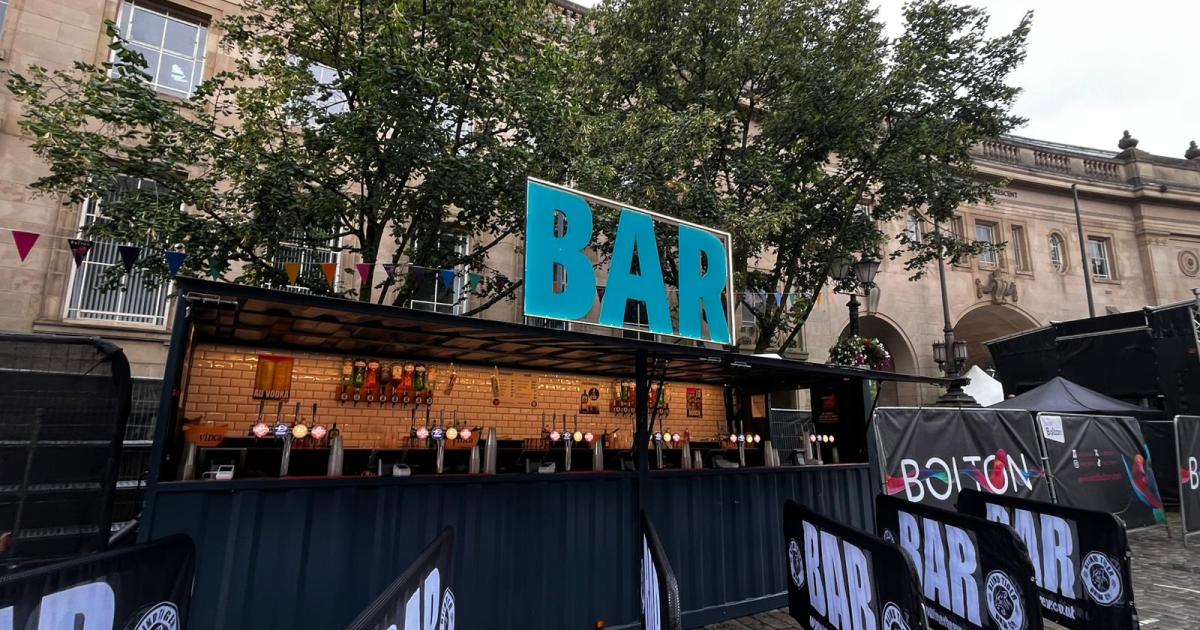
And alongside the huge selection of food on offer, there are plenty of places to stop for a drink.

From pints of Guinness and Cruzcampo to cocktails, wine and Jägerbombs, we took a look around the festival to see how much visitors can expect to pay.

At one of the bars, Blind Tiger Brew Co, draught beers were generally priced between £6 and £6.50.

(Image: NQ)

A pint of Cruzcampo was £6.50, as were Guinness, Strongbow and Strongbow Dark Fruit, while Doom Bar was £6.

Advertisement

Guinness 0.0 was also available for £6.

For those after something different, Hooch was £6.50, while cans of Vinca white, rosé and red wine were £7 each, with bottles priced at £28.

Fizz and AU Vodka both cost £7.

There were also deals on some drinks, with two Jägerbombs costing £10 and two Hooch drinks available for the same price.

Advertisement

Elsewhere, P&L Mobile Bars was selling a range of draught beers, wines, spirits and soft drinks.

(Image: NQ)

According to its price list, Cruzcampo was £5.50 for a pint or £3 for a half, while Peroni was also £5.50 a pint and £3 a half.

Carlsberg was slightly cheaper at £4.50 a pint or £2.50 for a half.

Guinness, Neck Oil and Inch’s cider were each £6 a pint, while Frothy was £6 a pint and £3 for a half.

Advertisement

Alcohol-free options included Inch’s Zero at £4, Frothy Zero at £4.50, Peroni Zero at £4 and Guinness Zero at £5.

(Image: NQ)

Wine and Prosecco were both priced at £6, while water cost £1, J20 £3, Slush £2.50, fruit shoots £1.50 and cans £2.

Cocktail fans also have plenty of choice at the festival.

The Mixologist Cocktail Co was advertising Woo Woo, Sex on the Beach and Purple Rain cocktails for £5.

Advertisement

Its Long Island, Mojito, Pornstar Martini, Aperol Spritz, Bellini, Cherry Bomb, Cherry Fizz and Strawberry Daiquiri were priced at £7 each or two for £12.

Prices may vary between individual bars and traders across the festival.

Bolton Food and Drink Festival continues throughout the bank holiday weekend, running until Monday, August 31.

Advertisement

Source link

Continue Reading

NewsBeat

Putin strikes kills 37 in hit on Ukraine warehouse as Zelensky orders criminal probe into why ammunition was illegally stored so close to civilian homes

Published

on

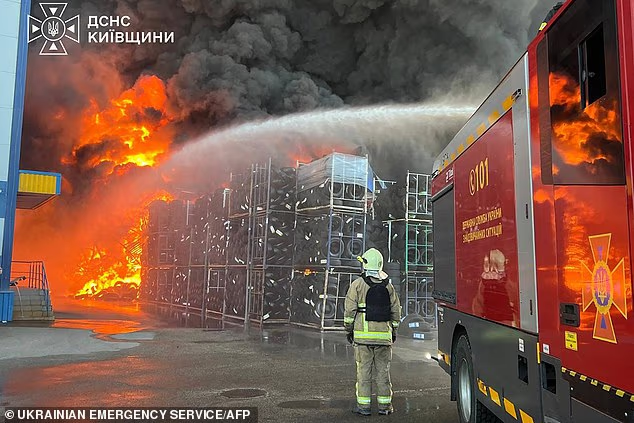
At least 37 people have been killed after Russia attacked a Ukrainian ammunition depot with a drone as strikes on Kyiv continued for a third day (Pictured: A firefighter tackles the blaze)

At least 37 people have been killed after Russia attacked a Ukrainian ammunition depot with a drone as strikes on Kyiv continued for a third day.

Fire erupted at the depot, in the village of Myla in Kyiv’s Bucha district, as more than 200 people evacuated their homes and 50 residential buildings were destroyed.

Ukraine‘s President, Volodymyr Zelensky, said the warehouse had been struck ‘followed by a detonation’. 

He also announced a probe had been launched into the matter. It is forbidden to store ammunition close to civilian homes in Ukraine. 

Advertisement

Air raid sirens sounded 11 times in 24 hours as further drone and missile attacks were expected.

One home in Bucha was destroyed and seven others damaged as the depot fire spread to residential areas.

‘Those who allowed this to happen must be held accountable for their decisions,’ Zelenskyy said.

A care home for elderly people and people with disabilities had been damaged, and an evacuation is ongoing, he added. 

Advertisement

Prime Minister Serhii Korteskyi did not share information about the incident and instead referenced a previous attack on another ammunition depot in July. 

The warehouse, located in the Kyiv suburb of Vyshneve, was targeted in an attack that killed 22, triggering large detonations and fires that tore through homes. 

‘Unfortunately, we can already see that the terrible tragedy in Vyshneve did not become a lesson,’ Koretskyi said. 

Advertisement

At least 37 people have been killed after Russia attacked a Ukrainian ammunition depot with a drone as strikes on Kyiv continued for a third day (Pictured: A firefighter tackles the blaze)

Fire erupted at the depot, in the village of Myla in Kyiv's Bucha district, as more than 200 people evacuated their homes and 50 residential buildings were destroyed

Fire erupted at the depot, in the village of Myla in Kyiv’s Bucha district, as more than 200 people evacuated their homes and 50 residential buildings were destroyed

‘In the fifth year of a full-scale invasion, making the same mistakes is criminal negligence. 

‘And all those guilty, without exception, must be severely punished so that such situations do not happen again.’

Advertisement

Meanwhile, the Kremlin confirmed it had struck the warehouse in Myia, claiming it stored launch boosters and long-range drones. 

It also said it had attacked Mykolaiv, Izmail, and a logistics centre and warehouse facilities storing parts for Ukraine’s Flamingo cruise missiles in the Kyiv region

Zelenskyy later announced that two officials from state-owned companies, including Ukraine’s largest arms producer, Ukroboronprom, had illegally allowed the storage of weapons on the site in Vyshneve and would be held accountable.

Kyiv’s regional military administration chief Timur Tkachenko expressed his ‘sincere condolences to the families and loved ones of those killed’ in the latest attack on Myla

Advertisement

The attack on the Ukrainian village comes as Russia enters its third successive day of trying to paralyse Kyiv.

Explosions rocked Kyiv during a three-day barrage as Russia struck an ammunition store in the Bucha district

Explosions rocked Kyiv during a three-day barrage as Russia struck an ammunition store in the Bucha district

Russian strikes on the southern Kherson region Saturday killed two people and wounded 27 more, Oleksandr Prokudin, head of the region administration, said.

Homes and apartment blocks were damaged in the strike, and one child was among the injured, he added. 

Advertisement

Earlier in the week, Prokudin said that Russia has intensified attacks on critical infrastructure in the region, which is about 70 per cent under Russian control. 

He also urged tens of thousands of residents to move to safer regions because of the possibility of prolonged power and heating outages this winter.

Russia has significantly increased its use of jet-powered drones, and their numbers will keep growing as Moscow sees their effectiveness, said Pavlo Palisa, the deputy head of Ukraine’s presidential office.

‘Means of attack always outpace means of defense. We will certainly need to adapt. It will take time,’ Palisa said. 

Advertisement

He said interceptor drones currently available to Ukraine, which could theoretically intercept jet-powered drones, are not yet to demonstrate the expected effectiveness, though Ukraine is working on solutions.

Meanwhile, Ukraine has stepped up its long-range attacks on Russian military industries and energy facilities in recent months, using locally made drones, aiming to cut Moscow’s revenue for its invasion and make Russians feel the consequences.

In his evening statement to the nation Friday, Zelenskyy said Kyiv hoped to increase its long-range strikes on Russia to reach 1000 drone launches every day.

‘Right now, we average over 300 of our long-range sanctions,’ Zelenskyy said, his preferred term for Kyiv’s long-range attacks that have also lately targeted Russian large-scale online retailers. 

Advertisement

‘There must be more. We have a very specific goal, and we will achieve it.’

Moscow’s forces destroyed 313 Ukrainian drones overnight, Russia’s Ministry of Defence said on Saturday.

Ukrainian drone attacks wounded 11 people in Russia’s Rostov region, Governor Yuri Slyusar said.

Writing on social media, he said that nine people were hospitalised, including four children.

Advertisement

Putin’s latest attacks came the week after CIA director John Ratcliffe made a secret trip to Moscow, which prompted speculation the Russian leader may have threatened the Baltic states.

Dark smoke rose into the sky above Kyiv on Saturday morning after a third day of Russian strikes

Dark smoke rose into the sky above Kyiv on Saturday morning after a third day of Russian strikes

Residents passed the site of a Russian drone strike as Putin's barrage against Kyiv passed the 50-hour mark

Residents passed the site of a Russian drone strike as Putin’s barrage against Kyiv passed the 50-hour mark

Fire crews closed a highway and battled blazes across Kyiv after the latest attacks from Moscow

Fire crews closed a highway and battled blazes across Kyiv after the latest attacks from Moscow

Advertisement

US media reported Mr Ratcliffe warned Russia against attacking Nato members – particularly Estonia, Latvia and Lithuania – amid warnings Moscow could try to test the alliance.

But experts said there was no sign of the large-scale military build-up that preceded the invasion of Ukraine in February 2022.

Overnight Ukraine targeted Russia’s Rostov region, hitting a warehouse owned by retail chain DNS and Amazon-style online marketplace Ozon with drones.

Residents said there were dozens of explosions as the DNS depot was engulfed in flames while a shipbuilding plant was also hit.

Advertisement

Ukrainian strikes have crippled the region’s ports and prevented agricultural exports, prompting a state of emergency as farmers complained of an unprecedented collapse in wheat prices.

Drones intercepted by Russia damaged tower blocks in Aksay, Rostov-on-Don, where seven people were injured.

And in the occupied Kherson region, Ukrainian strikes on power plants caused widespread blackouts.

Source link

Advertisement
Continue Reading

Trending

Copyright © 2025