A new trade pact between Indonesia and the United States has recast their economic ties, binding Jakarta’s resource wealth and energy future more closely to Washington’s strategic needs.
Indonesia agreed to widen access for U.S. investors in critical minerals, boost its purchases of U.S. crude and liquefied petroleum gas, back the development of an American coal export corridor and cooperate on small modular nuclear reactors.
In turn, the U.S. trimmed a threatened 32% tariff on Indonesian goods to 19% and granted broader access to the American market, including a zero-tariff entry policy for major products such as palm oil, coffee, cocoa, spices and rubber.
Though the U.S. Supreme Court’s ruling against President Donald Trump‘s tariffs may impact how it is implemented. The deal fits with longer term U.S. efforts to secure critical mineral supply chains, beef up its oil and gas exports and reduce dependence on China.
Advertisement
Meanwhile other export-reliant Southeast Asian economies negotiating with the United States, including Vietnam, are closely watching the Indonesia–U. S. trade deal for clues about the tariff levels and concessions Washington may demand across the region.
Indonesia, the world’s largest nickel producer, has vast mineral reserves needed for electric vehicles and clean energy systems. It’s caught between the conflicting aims of the U.S. and China, a key source of foreign investment and market for Indonesian coal and nickel, analysts say.
China is concentrating on electrification, renewables and dominance of battery supply chains, while the U.S. is pairing its push for mineral access with more fossil fuel exports.
Haryo Limanseto of Indonesia’s Coordinating Ministry for Economic Affairs, said the deal’s energy provisions “balance foreign trade and meet domestic energy needs.”
Advertisement
“The leadership of Indonesia is trying to tread a fine line between the West and China,” said Putra Adhiguna of the Jakarta-based Energy Shift Institute, adding that Chinese influence is “inescapable” since it is Indonesia’s largest trading partner.
US gains a new foothold to Indonesia’s minerals
Indonesia has pledged to promote U.S. investment across its mineral industry, from exploration and mining to refining, transport and export. In some cases, American investors will receive treatment “no less favorable” than domestic firms.
Restrictions on exports of critical minerals to the U.S. will be relaxed to expedite development of Indonesia’s rare earths and critical minerals sector with U.S. partners, promising “greater certainty” for companies involved in extraction to help boost production, the agreement says.
Advertisement
Major policy shifts have altered Indonesia’s mining sector in the past six months and the trade deal’s new restrictions on existing foreign-owned entities in Indonesia will curb excess output from processing plants. Foreign businesses must follow the same tax, environmental, labor and quota rules as other companies.
Indonesia’s critical mineral processing sector is currently dominated by China, which has firms operating or financing multiple nickel smelters and industrial parks.
“Indonesia is absolutely central to this competition because it combines resource endowment with political ambition,” said Kevin Zongzhe Li, with the Center for China Analysis within the Asia Society Policy Institute, a New York-based think tank.
Competition over critical minerals is heating up and the agreement “opens the door for U.S. firms to have a real shot” at “modestly leveling a sector where Chinese industries established first mover advantage,” he said.
Advertisement
Indonesia to purchase more US energy
Indonesia has agreed to cut red tape so that its companies can more easily purchase U.S. energy products.
It plans to buy $15 billion worth of American energy commodities over an unspecified period, mainly fossil fuels such as liquefied petroleum gas, crude oil and gasoline.
Trump’s efforts to persuade Asian countries to buy more American LNG has gained momentum during trade talks, with energy purchases emerging as a way to narrow trade gaps. It’s unclear if the turmoil in oil trading due to the war with Iran might impact that effort.
Advertisement
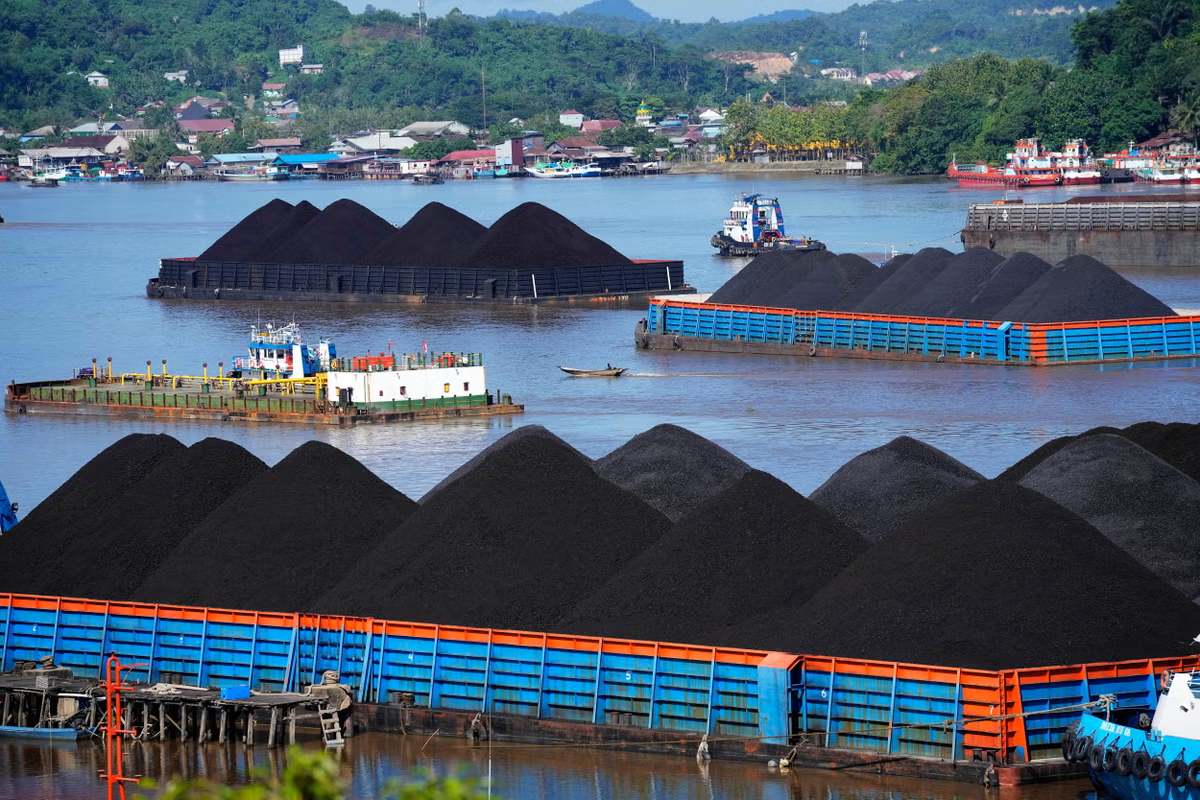
Indonesia, one of the world’s top coal exporters, will also invest in developing an export corridor from the U.S. West Coast to help make American coal more competitive in global markets, the agreement says.
Indonesia also pledged to work with the U.S. and Japan to deploy small modular nuclear reactors, starting with a potential project in West Kalimantan.
Shift in energy transition policies
The deal reflects changed U.S. energy priorities under the Trump administration, away from cooperation on reducing Indonesia’s climate change -causing emissions.
Advertisement
In 2022, Indonesia joined the Just Energy Transition Partnership, a multi-billion deal where the U.S. and other wealthy nations pledged support for reducing coal use and expanding clean energy. The program was faltering even before Trump withdrew from it last year.
Despite the U.S. withdrawal, Indonesian officials said the $21.4 billion partnership will continue. As of January, at least $3.4 billion, around 15%, of the funds had been received, according to Airlangga Hartarto, Indonesia’s minister for economic affairs.
Adhiguna said the deal’s biggest impact may be political, with Jakarta emulating the U.S. emphasis on fossil fuel use.
“There is the risk that the political leadership of Indonesia is going to fall back into that hole,” Adhiguna said.
Advertisement
That will mean still slower progress in areas like solar energy.
Over the past five years, tropical, sunny Indonesia has installed less than 1 gigawatt of solar energy — compared with roughly 2 GW in Vietnam and nearly 60 GW in India. The International Energy Agency found that fossil fuels, like coal, oil and natural gas, made up nearly 78% of Indonesia’s energy mix in 2023.
Indonesia should prioritize building 100 GW of solar and storage capacity and expand interconnection grids to enable renewable energy sharing, said Dinita Setyawati, with the United Kingdom-registered energy think tank Ember.
Tariff strike down creates confusion
Advertisement
The deal’s future has been clouded by the U.S. Supreme Court’s recent ruling against Trump’s sweeping global tariffs, just after the agreement was reached — casting doubt on the durability of his trade strategy. The agreement requires ratification by Indonesia’s parliament before it can take effect.
That adds another “layer of uncertainty,” said Meha Sitepu, with the Washington-based strategic advisory firm The Asia Group.
Some provisions of the agreement are drawing criticism, including those that are seen as diluting Indonesia’s halal certification requirements in the mostly Muslim country of nearly 288 million, Southeast Asia’s most populous nation.
“Parliamentary approval could be an uphill battle and added uncertainty from the U.S. side may complicate things further,” Sitepu said.
Advertisement
___
Delgado reported from Bangkok, Thailand. Associated Press writer Edna Tarigan in Jakarta contributed to this report.
___
The Associated Press’ climate and environmental coverage receives financial support from multiple private foundations. The AP is solely responsible for all content. Find AP’s standards for working with philanthropies, a list of supporters and funded coverage areas at AP.org.
Donald Trump gave several very strange updates about everything from Iran to Joe Biden throughout Easter Monday in typically rambling fashion.
Across one truly surreal day, the US president talked about bombing the Middle East while surrounding by jovial Easter decorations, shared a lot of detail about a secret mission and threatened to send a reporter to prison.
But here’s a look at some of his more obscure moments which may have slipped under the radar…
Advertisement
1. Stood Next To A Giant Rabbit While Talking About War
While hosting a nonpartisan Easter event in the White House, Trump stood at a microphone and told gathered children about… the war he started on a different continent.
He said: “I don’t think it gets much more hostile than Iran. They’re capable fighters, they’re very tough people. There are others like that.
“You don’t mind when the enemy is weak but they enemy is strong.
Advertisement
“Not so strong as they were about a month ago, I can tell you, in fact I can tell you they’re not too strong at all, in my opinion, but we’re soon going to find out aren’t we?”
He was stood next to someone dressed in a large rabbit costume throughout this particular rant.
2. Used The Easter Egg Hunt To Attack Harris And Biden
Despite beating the Democrats in the presidential election more than a year ago, Trump still used his White House event to bash his rivals.
Advertisement
He told the crowds gathered for the Easter Egg hunt: “Did anyone in the egg industry vote for Kamala? She’s a low IQ person.
“Who is a lower IQ person, Biden or Kamala?”
He later sat with children telling them about his repeated theory that Biden used an autopen to sign official documents.
3. Gave A Ridiculous Amount Of Information About A ‘Covert’ Operation
Advertisement
During a later press conference where he was expected to give an update on Iran, Trump spent more than 15 minutes talking about how the US military rescued an American crew member from Iran after his aircraft was shot down.
He said the airman “scaled cliff faces, bleeding rather profusely, treated his own wounds, and contacted American forces to transmit his location”.
Trump also interrupted his own press conference to ask top officials “how many” rescuers were sent on the mission.
The chairman of the Joint Chiefs of Staff, Gen Caine, said: “Uhh, I’d love to keep that a secret.”
Advertisement
Trump said he would, then proceeded to divulge the information anyway: “It was hundreds… hundreds could have been killed.”
He added that the rescue mission involved 155 aircraft, four bombers, 64 fighters, 48 refuelling tankers, 13 rescue aircraft and others, amid additional efforts to deceive the Iranians about where they were searching.
Then CIA director John Ratcliffe stood at the podium and said the US used unique capabilities which only the president can deploy – but refused to share further details.
“As an agency, the CIA possesses unique capabilities that only the president can deploy. Some of these capabilities fall under covert action authorities. And because covert means exactly that, I’m not going to be able to tell you everything that you want to know,” Ratcliffe said, moments after Trump’s oversharing.
Advertisement
4. Threatened To Send A Reporter To Jail
The president also said his government was pursuing the “leaker” who told the media about the missing airman – and the press company who published the information.
“They basically said that ‘we have one and there’s somebody missing.’ Well, they didn’t know there was somebody missing until this leaker gave the information,” Trump said.
“So whoever it was, we think we’ll be able to find it out because we’re going to go to the media company that released it, and we’re going to say, ‘national security, give it up or go to jail.’
Advertisement
“And we know who – and you know who – we’re talking about. Because some things you can’t do, because when they did that all of a sudden the entire country of Iran knew that there was a pilot that was somewhere on their land that was fighting for his life.”
5. Said He Was ‘Not At All’ Concerned About War Crimes
In a social media post over the weekend, the president threatened to bomb Iranian civilian infrastructure if the regime did not reopen the Strait of Hormuz by his set deadline (1am on Wednesday, UK time).
Doing so would widely be considered a war crime under international law.
Advertisement
But speaking at the White House, Trump said: “I’m not worried about it. You know what’s a war crime? Having a nuclear weapon.”
6. Laid Into Nato (Again)
Trump said the defence alliance’s refusal to help him attack Iran is a “mark on Nato that will never disappear”.
He said he was “very disappointed” by the lack of support, after several countries refused to let him access their military bases or airspace – even though the UK has allowed the US to use their sites for defensive strikes.
Advertisement
European governments also refused to send their own warships to the Strait of Hormuz.
Trump alluded to his upcoming meeting with Nato chief Mark Rutte, saying: “They’re going to say, ’oh, we’ll do this. We’ll do that. Now they all of a sudden want to send things.”
He also revived his spat with European allies from the beginning of the year, saying: “It all began with, if you want to know the truth, Greenland. We want Greenland. They don’t want to give it to us. And I said, ‘bye bye’.”
7. Claimed Kim Jong Un Used A Slur To Talk About Biden
Advertisement
Trump somehow ended up alleging that the North Korean dictator had attacked the former US president.
Trump said: “We’ve got 45,000 soldiers in South Korea to protect us from Kim Jong Un, who I get along with very well. He said very nice things about me. He used to call Joe Biden a mentally r******* person.”
He added: “He was so nasty about Joe Biden he was terrible. But to me, he likes Trump.”
Subscribe to Commons People, the podcast that makes politics easy. Every week, Kevin Schofield and Kate Nicholson unpack the week’s biggest stories to keep you informed. Join us for straightforward analysis of what’s going on at Westminster.
Huddersfield Town struck in the 106th minute to beat Leyton Orient in a dramatic League One encounter on Monday – but Ryan Ledson’s goal was completely missed by ITV’s highlights show
Furious fans have let rip on social media after ITV’s EFL highlights show failed to air Huddersfield Town‘s last-gasp winner at Leyton Orient, instead saying the game finished 1-1.
Advertisement
The League One clash at Brisbane Road looked to be ending all-square after Bojan Radulovic cancelled out Radinio Balker’s own goal just before the break. But Ryan Ledson popped up in the 16TH MINUTE of second half stoppage time to ensure Huddersfield remain in with a chance of making the play-offs.
While Huddersfield’s fans were left celebrating Ledson’s dramatic winner, Monday night’s highlight show inexplicably missed it, with the final score graphic saying the match ended 1-1.
Eagle-eyed fans quickly flocked to social media to tear into the programme, which has been criticised frequently since ITV acquired the rights to show highlights from Quest.
“The EFL need to find better guardians for TV highlights than this awful ITV programme,” one social media user fumed. “Today, they completely missed Huddersfield’s winner at Orient, announcing that the game had finished 1-1 instead. Absolutely pathetic.”
Another wrote: “That is absolutely outrageous from ITV. Give it to someone who’s cares, the BBC did a great job but was on at midnight. Quest had a superb host and actually gave some decent analysis. Something needs to change because the ITV coverage is worse than amateur.”
Content cannot be displayed without consent
Huddersfield’s win means they are three points off Stevenage in sixth, though Alex Revell’s men have a game-in-hand on the Terriers.
Defeat for Orient means their six-game unbeaten run is over with the O’s now just four points above the relegation places.
Advertisement
Join our new WhatsApp community and receive your daily dose of MirrorFootball content. We also treat our community members to special offers, promotions, and adverts from us and our partners. If you don’t like our community, you can check out any time you like. If you’re curious, you can read our Privacy Notice.
Sky Sports discounted Premier League and EFL package
This article contains affiliate links, we will receive a commission on any sales we generate from it. Learn more
Sky has slashed the price of its Essential TV and Sky Sports bundle for the 2025/26 season, saving £336 and offering more than 1,400 live matches across the Premier League, EFL and more.
Sky shows at least 215 live Premier League games each season, an increase of up to 100, plus Formula 1, darts, golf and more.
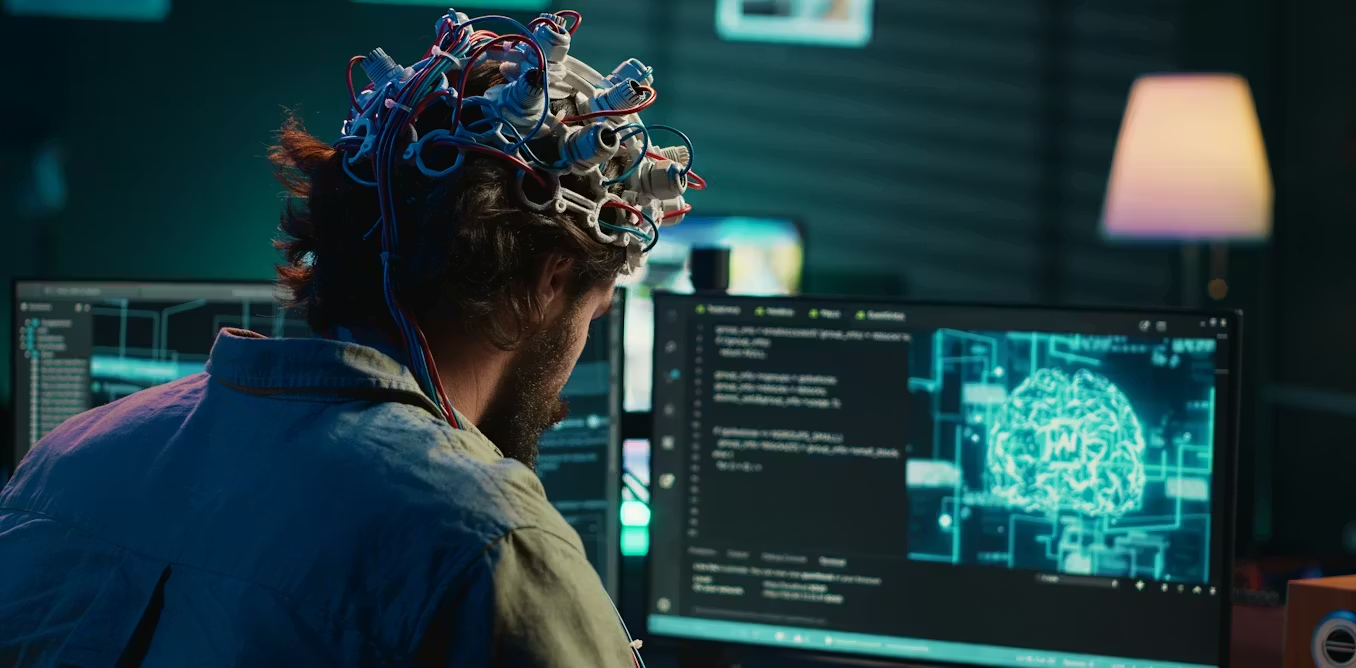
Your browsing history, your location, your political preferences. For years, tech companies have found ways to turn personal data into profit. Now, a new and far more intimate frontier is opening: the electrical signals produced by your brain.
This is not science fiction. Nor is it about brain implants for paralysed patients or experimental medical procedures. A fast-growing consumer market of non-invasive neurotechnology – wearable headsets, brain activity-reading headbands, focus-enhancing devices – is already here, already being sold and already collecting neural data from ordinary users. But the legal and ethical frameworks to govern it are struggling to keep up.
A landmark case from Chile shows why this matters.
In August 2023, Chile’s Supreme Court issued the world’s first ruling on commercial neurodata. The case involved Senator Guido Girardi and Emotiv Inc, a San Francisco company selling the Insight wireless headset – a consumer device marketed for focus, meditation and cognitive performance.
Advertisement
When Girardi began using it, he discovered that accepting the terms of service meant granting Emotiv a worldwide, irrevocable and perpetual licence over his brain data. Unless he paid for a premium account, that data would be stored in Emotiv’s cloud with no way for him to access or export his own neural records.
The Chilean Supreme Court ruled that Emotiv had violated Girardi’s constitutional right to mental integrity, concluding: “The data obtained from Insight users … overlooks the preliminary requirement to have express consent for its use for scientific research purposes. Information collected for various purposes cannot be used differently without its owner’s knowledge and approval.”
The Supreme Court ordered the company to delete Girardi’s data immediately and prohibited sale of the Insight device in Chile until its privacy policies were revised. The headsets remain on sale in other countries around the world.
Advertisement
Promotional video by Emotiv for its electroencephalography (EEG) brain headsets.
The ruling was a first. But the problem it exposed is global – and the legal pressure is building. In the US, Colorado and California enacted the first state-level privacy laws specifically governing neural data in 2024, and at least six other states are now moving in the same direction.
At the federal level, US senators Chuck Schumer, Maria Cantwell and Ed Markey announced plans in September 2025 to introduce the Mind Act – Congress’s first serious attempt to bring the neurotechnology industry under a dedicated regulatory framework.
A market growing faster than its rules
Emotiv is far from alone. Companies such as Muse (marketed for meditation and sleep) and Neurosity (aimed at software developers seeking focus) have built a consumer neurotechnology sector that is projected to double in value to more than US$55 billion (£42 billion) within a decade. It is attracting investment from some of the world’s wealthiest technology figures.
These devices read electroencephalography (EEG) signals – the brain’s electrical activity – through sensors worn on the head. Some go further, using photoplethysmography (PPG) sensors to measure heart rate and physiological responses. Think of this like a fitness tracker – but instead of counting steps, it is reading signals from your nervous system and, in some cases, inferring your cognitive or emotional states from them.
When fitness trackers first appeared, few people thought carefully about where their heart rate data was going, who could access it, or what it could be used to infer. Neural data raises those same questions – at considerably higher stakes. Unlike step counts, brain signals can potentially reveal attention patterns, stress responses and emotional reactions that users themselves may not be aware of.
Where the law has not yet caught up
We research these issues as part of the interdisciplinary group at Lund University, which brings together law, neuroscience, medicine, ethics and economics.
The Emotiv case turned on Chile’s constitutional protection of mental integrity – a provision the country had specifically enshrined in 2021. Most jurisdictions have no equivalent. The question of how neural data fits into existing legal frameworks remains open.
Advertisement
Under the EU’s General Data Protection Regulation, brain signals could potentially qualify as biometric or health data, both of which attract stronger protections. But consumer neurotechnology, when sold as wellness products rather than medical devices, often falls into a regulatory grey area, sitting awkwardly between health law, consumer protection and data privacy rules.
What remains unresolved across most of the world are the basic questions. What are users consenting to when they accept terms of service for a neural headset? How long can that data be retained? Can it be sold to third parties, used to train AI models, or shared with advertisers and insurers?
The Emotiv case showed that, in one instance at least, a company had retained a user’s neural data for research purposes under anonymisation provisions, without that user having any meaningful awareness of what was being collected or why.
The stakes here are higher than with most forms of personal data. Neural signals are not like a credit card number that can be changed if compromised. Generated by your brain in real time, they can increasingly be used to infer things about you that you have not chosen to disclose – such as emotional responses, cognitive patterns, and other reactions you may not consciously be aware of.
Advertisement
Chile has showed that courts can act. Legislators in several jurisdictions are beginning to follow. The harder question is whether the frameworks being built are moving fast enough to match a market that, in the quest for competitive advantage, does not want to hang about waiting for them.
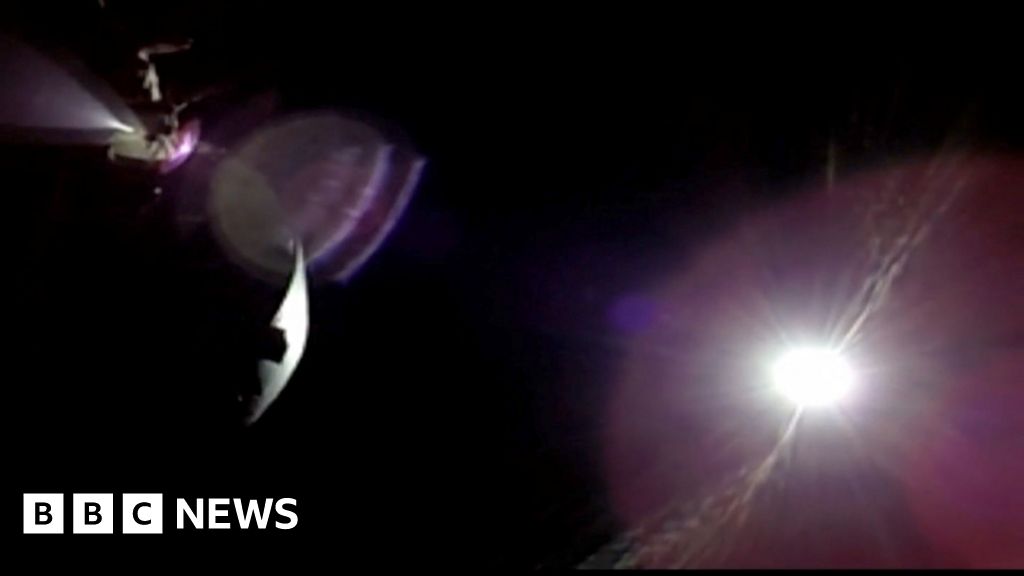
The four astronauts on Nasa’s Artemis II mission have travelled further from Earth than anyone in human history, in a dramatic lunar flyby that brought spectacular images of the planet from rarely seen angles.
The Orion spacecraft’s crew lost contact with mission control for 40 minutes as they circled behind the Moon, as was expected. With communications re-established, astronaut Christina Koch said: “It’s so great to hear from Earth again.”
The team also witnessed a total eclipse of the Sun as the Moon blocked out its light, before beginning their journey back home.
After the flyby, President Trump spoke to the team and congratulated them: “Today, you’ve made history and made all America really proud, incredibly proud.”
Five ways to turn eco-anxiety into something positive – Positive News
Advertisement
Advertisement
Feeling stuck in climate anxiety? These five small actions can help you feel more grounded, connected, and purposeful
Advertisement
Words by
Enora Thépaut
April 7, 2026
Advertisement
Feeling stuck in climate anxiety? These five small actions can help you feel more grounded, connected, and purposeful
Advertisement
1) Design your attention
It’s hard not to feel anxious when all you see is news about the catastrophe ahead, while everyone outside your algorithmic bubble seems oblivious. Remember: what you see has been carefully curated to keep you scrolling. You probably spend more time than you’d like doomscrolling, while the people around you are receiving entirely different information. Audit what you consume and notice what creates anxiety versus what empowers you. Then intentionally curate your feed: keep what sets you up for action and hope, let go of what paralyses you.
Image: Jonas Leupe
Advertisement
2) Make something
Anxiety is a marketer’s best friend. Someone is always ready to sell you a miracle solution, and, desperate for a fix, we fall for it. But quick patches never satisfy our underlying needs. Instead of buying your way out of anxiety, try making something. Moving from passive consumption to active creation reduces waste while increasing joy, skill-building, and community exchange. Whether you bake bread, mend clothes, or grow vegetables, manual labour and craftsmanship restore agency, pride, and connection — things no retail therapy session can deliver.
Image: Lee Vue
Advertisement
Solutions every Saturday Uplift your inbox with our weekly newsletter. Positive News editors select the week’s top stories of progress, bringing you the essential briefing about what’s going right. Sign up
3) Find your climate superpower
Advertisement
We need everyone to do the basics — recycle, vote, reduce their footprint — but we also need everyone to contribute their unique talents. Addressing the climate crisis touches every industry and every community. You don’t need to be an engineer or policymaker. We need graphic designers, teachers, storytellers, event planners, bus drivers — everybody. Draw yourself a Venn diagram: what are you good at? What work needs doing? What brings you joy? The sweet spot where those three circles overlap: that’s your climate superpower. Stay there as often as you can.
Image: Adam Winger
Advertisement
4) Find your people
Isolation fuels anxiety; connection fuels action. Join a climate group, a community garden, or a local initiative. If big groups feel daunting, form a small circle of 3–5 friends to share skills, support each other’s actions, and co-create solutions. Last year I joined neighbours to transform a fly-tipping spot into a community garden. What I thought would be a half-day chore became a source of real connection: neighbours stopped to chat, new friendships formed, and we’re now planning more tree planting together. Small communities create real change, and real joy.
Image: Brooke Cagle
Advertisement
5) Plant a seed for the future
Most of us believe that acting for the planet requires doing something grand, and that belief stops us from doing anything at all. But change works like nature: small, interconnected actions grow into something much bigger. Ask yourself: “What is the smallest thing I can do today that feels like a seed for the future?” Write a letter. Learn a skill. Start a conversation. Action breeds action. You don’t need to see the whole forest, you just need to plant the first seed.”
Enora Thépaut is the Creative Director of OF POSSIBLE FUTURES, a creative organisation working with mobility, health, and environmental brands on regenerative futures.
Advertisement
Image: Sippakorn Yamkasikorn Main image: Aleksandar Nakic
Advertisement
Be part of the solution
At Positive News, we’re not chasing clicks or profits for media moguls – we’re here to serve you and have a positive social impact. We can’t do this unless enough people like you choose to support our journalism.
Give once from just £1, or join 1,800+ others who contribute an average of £3 or more per month. Together, we can build a healthier form of media – one that focuses on solutions, progress and possibilities, and empowers people to create positive change.
Emergency services including the air ambulance were called on Monday evening (April 6), at 11.02pm.
The patient was taken to hospital for further treatment.
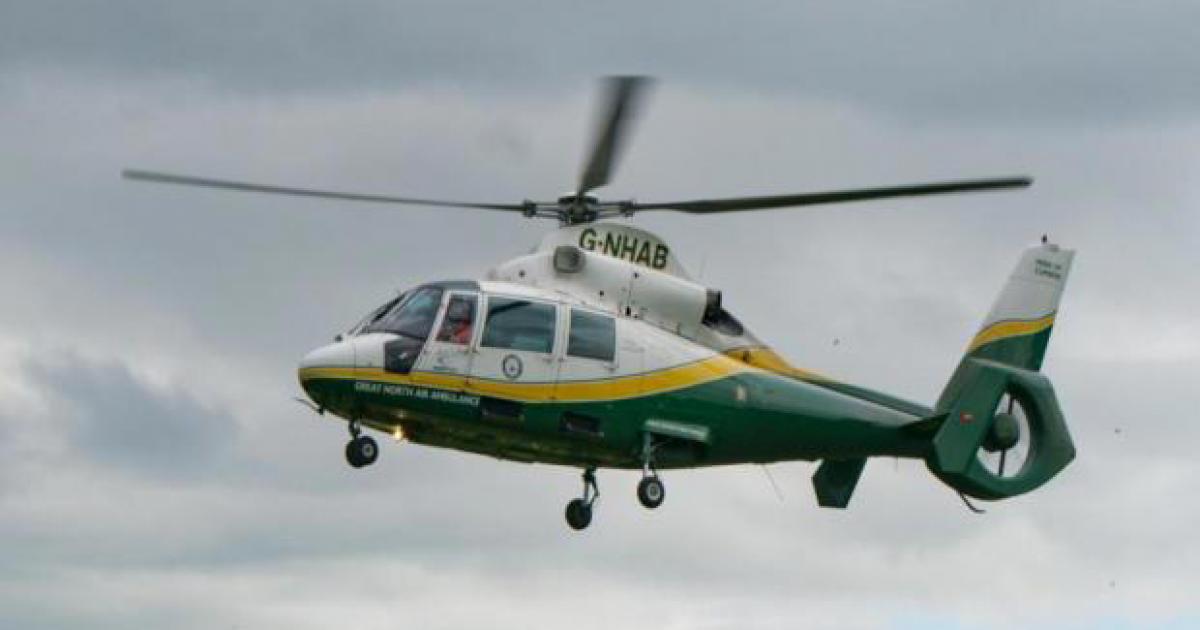
A spokesperson from the Great North Air Ambulance Service said: “On Monday (April 6), our critical care team was activated at 11.02pm to reports of an assault in Darlington.
Advertisement
“We had a paramedic and doctor on a rapid response vehicle, and they arrived on scene at 11.12pm.
“Our team worked alongside the North East Ambulance Service (NEAS) to assess and treat a patient.
“The patient was taken to hospital by a NEAS road crew, accompanied by our team.”
A spokesperson from The North East Ambulance Service said: “We received a call at 10.58pm on Monday, April 6, to reports of an incident at a private address in Darlington.
Advertisement
“We dispatched an ambulance crew to the scene and requested support from our colleagues at the Great North Air Ambulance Service (GNAAS) who attended by road.
“One patient was taken to hospital for further treatment.”
Durham Police have been contacted for more information.
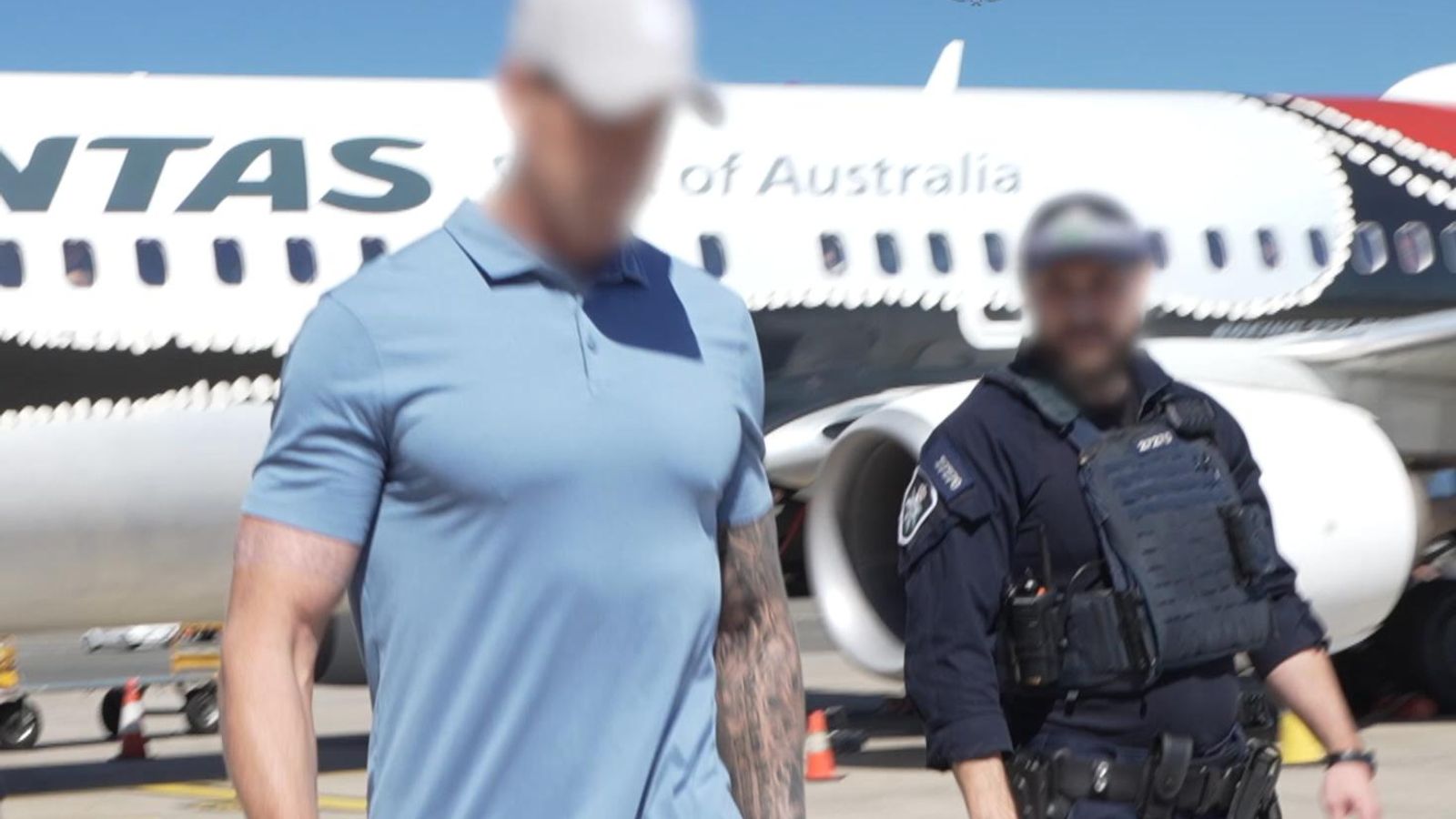
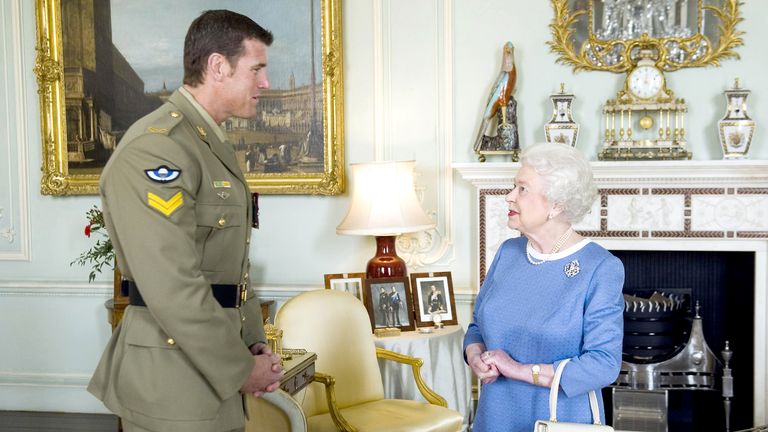
Australia’s most decorated living veteran has been charged with allegedly killing five unarmed Afghans between 2009 and 2012.
Police have not named him but it’s widely reported to be Ben Roberts-Smith, a 47-year-old former SAS corporal.
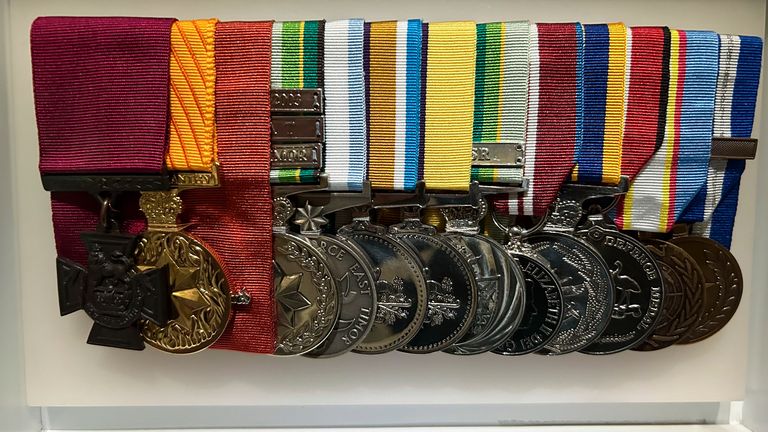
He was awarded the Victoria Cross and the Medal of Gallantry for his service in Afghanistan – but now faces five counts of war crime murder.
Roberts-Smith was arrested when he landed at Sydney airport on Tuesday.
Advertisement
Police said he had been denied bail and would appear in court for a bail hearing on Wednesday.
“It will be alleged the victims were detained, unarmed and were under the control of ADF [Australian Defence Force] members when they were killed,” said police commissioner Krissy Barrett
Image: Roberts-Smith at a court hearing in Sydney in June 2021. Pic: AP
Roberts-Smith is the second veteran to be charged after a 2020 report found evidence Australian SAS and commando troops had unlawfully killed 39 prisoners, farmers and other non-combatants.
Oliver Schulz, 44, is the other former Australian SAS veteran who’s been charged.
Advertisement
He is alleged to have shot an Afghan man in the head three times in a field in Uruzgan province in May 2012. Schulz has pleaded not guilty.
War crime murder in Australian law is defined as the intentional killing of someone not taking an active part in hostilities, such as civilians, prisoners of war or wounded soldiers. It carries a potential sentence of life in prison.
Image: Victoria Cross recipient Ben Roberts-Smith with Queen Elizabeth II.
Pic: AP
Roberts-Smith sued several newspapers over articles in 2018 that accused him of various war crimes. He has consistently denied allegations of wrongdoing during his service.
But in 2023, a civil court found he had likely killed non-combatants unlawfully, and in September, Australia’s highest court refused to hear his appeal.
The criminal charges will need to meet a higher bar; proving the allegations beyond reasonable doubt rather than on a balance of probabilities.
Commissioner Barrett said the charges were “not reflective of the majority of members who serve under our Australian flag with honour, with distinction and with the values of a democratic nation”.
Image: The Victoria Cross and other medals awarded to Ben Roberts-Smith. Pic: AP
Julie-Ann Bowden was speaking after an event she helped organise in which more than a dozen fellow riders took to routes around the borough in an attempt to raise awareness of what the Highway Code says about how to overtake horses.
She told the Local Democracy Reporting Service (LDRS) that while “the majority” of drivers show the beasts the respect they deserve, there are others who refuse to be held up for the short time it takes to pass a horse safely – and then fly into a rage when challenged.
Julie-Ann says such incidents are an increasingly regular occurrence, having recently experienced two in the space of a week, close to the livery stables she uses in Whittle-le-Woods.
Advertisement
Confronted in the first with the sight of a BMW heading towards her horse at high speed, she gave a hand signal to request the driver slow down – but got a very different gesture in response.
“He was coming really fast down Cophurst Lane, [which is] a small country road with parked vehicles, and I shouted and [indicated] for him to slow – but he just did his own hand signals and actually stopped, reversed and hurled a load of abuse at us.
“[Another day], on Town Lane, myself and a friend had gone into a bit of a gap between parked cars to allow a van to come through – and, as he was approaching, my friend on the horse behind me asked that I try to slow him down.
“But he just carried on and as he went past, something in the back of the van made a really loud noise, because of the road surface, and my friend’s horse turned and wanted to run away. That made my horse want to go as well – and it was [only because] we were so experienced that we weren’t unseated.
Advertisement
“We shouted after them [and asked them] to stop and have a conversation. The passenger got out and we got the usual – ‘You shouldn’t be riding your horses on the road if they’re not safe, you should be in a field,’” Julie recalled.
The latter incident – which was reported to the police, complete with camera footage – was a dispiritingly fitting precursor to last weekend’s awareness-raising ride. The procession boasted 18 riders at any one time along the route and was arranged as part of the ‘Pass Wide and Slow’ campaign.
The initiative aims to promote caution and consideration around horses on the road – and, in particular, knowledge of rule 215 of the Highway Code, which advises motorists how to negotiate the animals when they encounter them.
It says that they should “slow down to a maximum of 10 mph” and “when safe to do so, pass wide and slow, allowing at least two metres of space”.
Advertisement
Motorists are further warned: “Be patient [and] do not sound your horn or rev your engine” – and they are also reminded that children are often amongst groups of horse riders on the road.
Julie-Ann says that patience is in short supply amongst the motorists most irritated by the sight of horses on the highway – but appeals to them to think about the many potential consequences of their actions.
“The real danger is that the horse spooks and the rider is thrown…[maybe] into the oncoming traffic or it could be onto the [overtaking] vehicle itself. [That vehicle] may end up with the horse on [its] bonnet, which I’m sure the drivers really don’t want.
“And a loose horse on the highway could obviously cause even more issues if it tried to run off and head for home.
Advertisement
“I just don’t understand why [people] will put themselves and other road users in danger,” Julie added.
HORSE RIDING HORRORS
According to the British Horse Society (BHS), in 2024:
● 3,118 road incidents involving horses were reported;
Advertisement
● 58 horses died;
● 97 horses were injured;
● 80 people were injured.
However, figures from the Pass Wide and Slow survey suggest that these sobering stats are significantly underreported, with only 29 per cent of incidents being logged on the BHS app.
A cyclist was taken to hospital with serious injuries
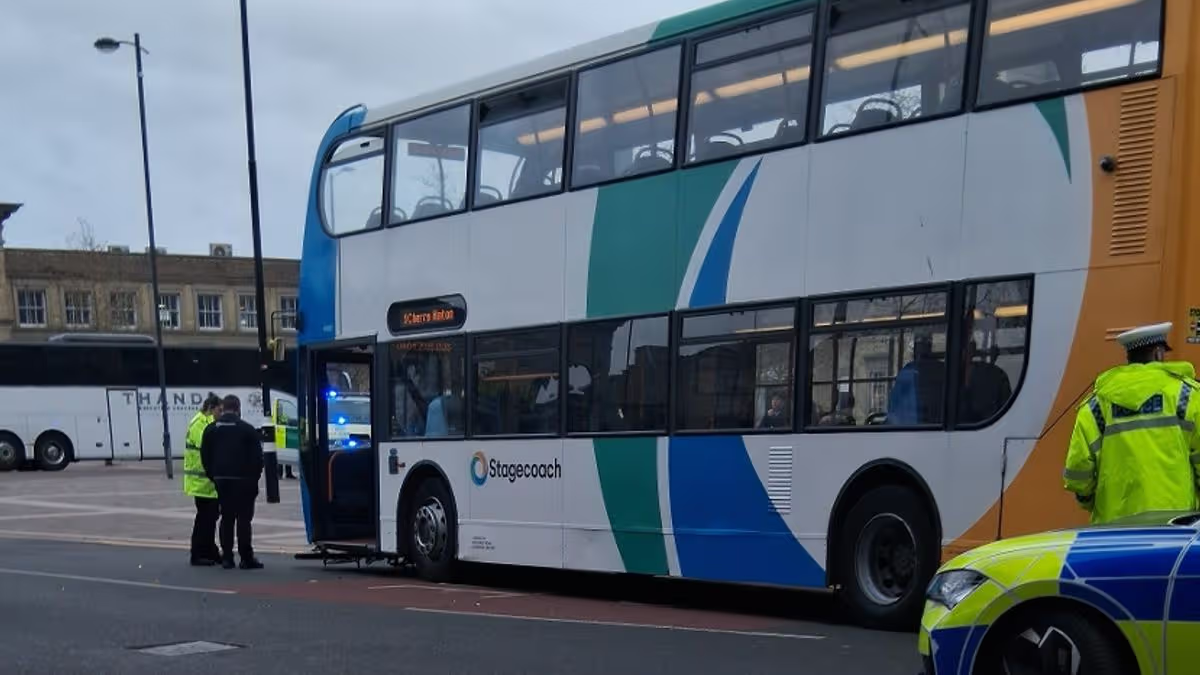
A bus company has released a statement after one of its vehicles was involved in a crash. A Stagecoach bus was involved in a crash with a bike at around 6pm on Saturday (April 4) on Station Road in Cambridge.
Advertisement
The cyclist was taken to Addenbrooke’s Hospital with serious injuries. No arrests were made and the bus driver remained at the scene.
Darren Roe, managing director of Stagecoach East, confirmed it was a Stagecoach bus involved in the crash. He said: “Our first thoughts are for the welfare of those affected – safety is our absolute priority and we will carry out a full investigation into the circumstances.”
Cambridgeshire Police attended the scene and continued its investigation into the crash. A police spokesperson said: “We were called at about 6pm on Saturday with reports of a collision between a bus and a cyclist on Station Road in Cambridge.
“Officers attended and the cyclist was taken to Addenbrooke’s Hospital with serious injuries. The bus driver remained at the scene. No arrests and investigations are ongoing.”
Advertisement
The East of England Ambulance Service also attended. An ambulance spokesperson said: “One ambulance, a paramedic car and East Anglian Air Ambulance were called to Station Road Cambridge on Saturday, following reports of a cyclist injured in a road traffic collision.
“One patient was transported by road ambulance to Addenbrooke’s Hospital for further assessment and care.”
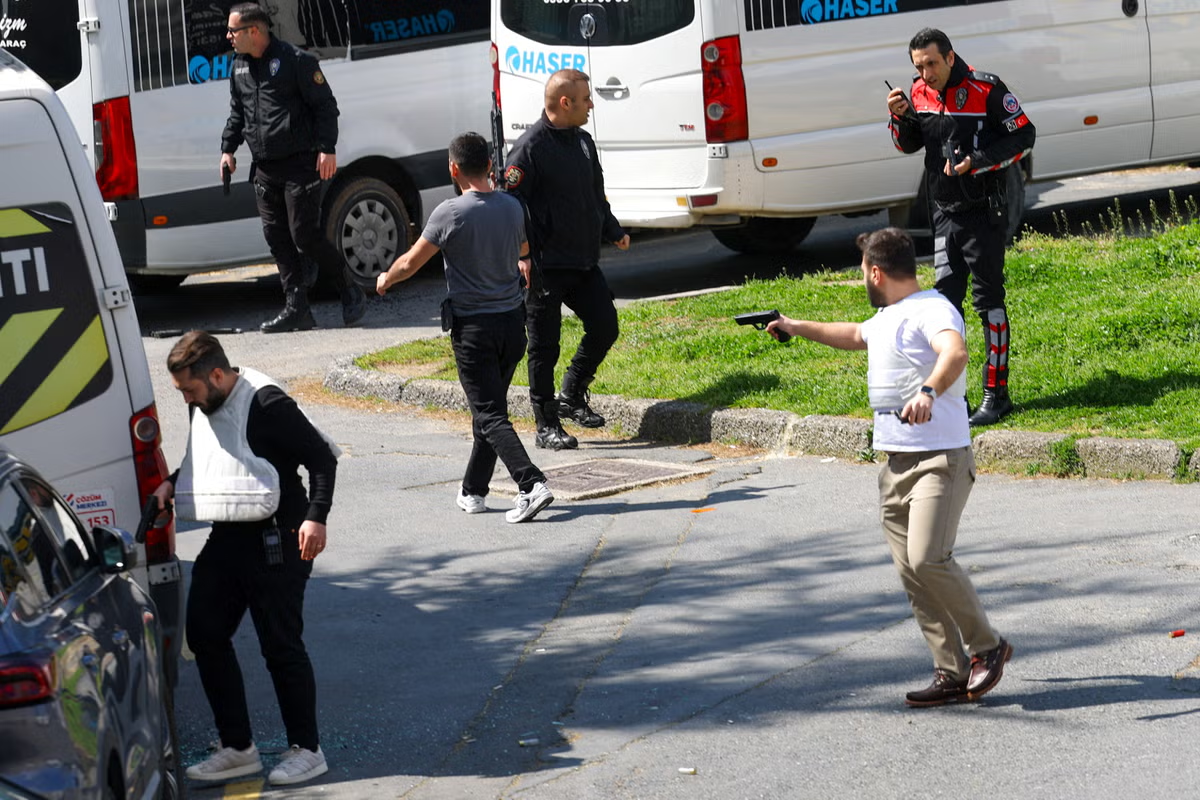
One person was killed and four were injured in a shooting incident near the Israeli consulate in Istanbul on Tuesday, authorities have said.
A gunfight erupted outside a building housing the Israeli Consulate in Istanbul on Tuesday, according to Turkey’s Haberturk broadcaster. Reuters video showed a police officer pulling out a gun and taking cover as gunshots resounded. One person was seen covered in blood.
One attacker was killed, while two were injured at the scene, and two policemen were lightly wounded, Istanbul governor Davut Gul said. Initial reports said three were killed in the shooting incident.
The report said attackers were carrying long-barreled weapons. The area surrounding the building was quickly sealed off.
Advertisement
There was no immediate information on the identity of the attackers or what their motives may have been.
Istanbul’s chief public prosecutor’s office immediately opened an investigation into the incident, Turkey’s justice minister Akın Gürlek said in a statement shortly after the incident.
“Upon the reports of gunfire sounds in the vicinity of the Israeli Consulate located in the Beşiktaş district of Istanbul, the Istanbul Chief Public Prosecutor’s Office has immediately initiated an investigation,” the statement read on X.
Three prosecutors have been assigned to investigate the incident, he added.
Advertisement
“Within the scope of the investigation, one deputy chief public prosecutor and two public prosecutors have been assigned; our public prosecutors have promptly arrived at the scene and begun examinations.
He continued: “Under the coordination of our Chief Public Prosecutor’s Office, in collaboration with relevant law enforcement units, the work is ongoing for the purpose of fully elucidating the incident, and the investigation is being conducted meticulously and in a multifaceted manner.”
No Israeli diplomats were believed to be stationed in Turkey at that time, either at the consulate in Istanbul or the embassy in Ankara. The consulate occupies one or two floors inside the high-rise building, according to Haberturk.











































You must be logged in to post a comment Login