Connect with us
DAPA Banner
DAPA Coin
DAPA
COIN PAYMENT ASSET
PRIVACY · BLOCKDAG · HOMOMORPHIC ENCRYPTION · RUST
ElGamal Encrypted MINE DAPA
🚫 GENESIS SOLD OUT
DAPAPAY COMING

NewsBeat

A summer discount on family days out sounds good, but it won’t fix UK tourism

Published

on

A summer discount on family days out sounds good, but it won’t fix UK tourism

The long summer holidays can be an expensive time for families. The cost of day trips to theme parks or zoos or soft play centres quickly adds up.

Discounts sound like a good idea. So this summer, the UK government has slashed the VAT rate from 20% to 5% on admission to a wide range of family activities.

They’ve even given the policy a catchy name: Great British Summer Savings, and in theory, a family could save a decent amount.

If a business passes on the full reduction (they are not legally obliged to), the Treasury says a family of four could save around £20 on theme park tickets for example. The temporary discount, which lasts until September 1, also applies to children’s meals in restaurants.

Advertisement

According to other estimates though, the cut, which will cost the Treasury around £300 million, could be worth just £10 per household. So critics could easily dismiss the whole idea as a not very impressive gesture with an expensive price tag.

But the ten-week VAT drop is also designed to help struggling hospitality businesses, thousands of which were forced to close last year.

Wage rises and changes to national insurance and business rates introduced in April 2025 added an estimated £3.4 billion a year to sector costs. And against that background, a temporary VAT cut can make a difference.

It lowers prices and can improve cash flow by giving attractions a simple message to advertise: this summer’s day out should be cheaper.

Advertisement

But the policy also demonstrates a weakness in the UK’s “visitor economy” – the money generated by people visiting a place for business or pleasure.

Spending on things like accommodation, transport, and food and drink can be a key driver of local economic growth. But when it comes to encouraging visitors to enjoy British hospitality, the UK is not strong. It ranks 113th out of 119 countries for price competitiveness.

So Britain’s problem is bigger than being an expensive place to entertain children in the school holidays. And perhaps the whole hospitality sector needs either a permanent VAT reduction, or a better-targeted seasonal cut, to provide it with a long-term boost.

My research used economic modelling to compare year-round VAT reductions to shorter periods. It asked a straightforward question: does the extra business activity created by a tax cut justify the reduction in tax revenue?

Advertisement

Using an economic model to predict effects in the English county of Dorset, a popular tourist destination, the year-round options did increase tourism activity and employment. But the benefits did not outweigh the cost.

Targeting the relief from November to March performed better. It came much closer to breaking even and significantly reduced the government’s losses.

The central lesson was simple. Timing mattered.

Tourism and timing

The current scheme being run by the government is in place when demand for family leisure is usually strong. Some of the households now planning a trip to a theme park this August may well have done so without a tax cut.

Advertisement

In those cases, the policy makes an existing day trip cheaper, but it does not create a new visit. A lower price is more likely to change behaviour when attractions have spare capacity and families are deciding whether a trip is worth making at all.

Dorset in winter.
Chris Button/Shutterstock

Attracting people to a popular attraction in the summer holidays is not the same as persuading them to visit in the middle of winter.

During quieter months, hotels, attractions and restaurants have unused rooms, tables and space. Extra visitors at those quieter times can make a big difference. In peak season, the same discount may simply reduce the price paid by people who were planning to come anyway.

A ten-week summer cut will not fix Britain’s visitor economy. But it creates a quiet precedent: the government has accepted that the VAT rate can change when there is a reason to change it.

Advertisement

The next step should be a more strategic approach, one that supports competitiveness but concentrates relief where spare capacity and price-sensitive demand give it the best chance of creating genuinely additional visits.

The government should not limit itself to saving some families a few pounds on a summer day out. A more ambitious approach would be to use a well-timed VAT cut to persuade those same families to make a trip they were not already planning, to a half-empty attraction in February.

Source link

Advertisement
Continue Reading
Click to comment

You must be logged in to post a comment Login

Leave a Reply

NewsBeat

Teen told his mum he had a headache, five days later he tragically died

Published

on

Manchester Evening News

Student Aaron Mills was described by his family as a ‘shining light’

A ‘kind and generous’ teenager told his mum that he had a headache then tragically died just five days later.

Advertisement

Aaron Mills, described by his family as a ‘shining light’, had moved to Liverpool to study last September. He had successfully finished his first term on a football science degree at Liverpool John Moores University, with ambitions to work for his beloved Liverpool FC in the future.

But when he travelled back to Kidderminster in December to visit his family, Aaron became poorly. The 18-year-old began feeling unwell shortly after he celebrated his dad’s 50th birthday though the signs didn’t appear concerning initially.

Click here to get the biggest stories straight to your inbox in our Daily Newsletter

His dad Anthony said: “We partied, we sang together, danced together, it was brilliant. Then on December 29, he was feeling a bit groggy, that’s all.”

Advertisement

He continued: “He spent some time in bed and then he came down at night and watched a film with us. Then the following morning, he went down to his mum at 6am and said he had a headache.

“He had some paracetamol and went back to bed. And then half an hour after that, he woke me up because he was moaning. I went into his room and he was having a seizure.”

Aaron was taken to hospital on December 30, where doctors identified that he had contracted meningitis, particularly a form of Meningococcal group B (MenB) bacteria, reports the Liverpool Echo. Aaron’s health rapidly worsened and he sadly passed away on January 3.

The UK Health Security Agency states that MenB bacteria can trigger severe, potentially fatal conditions including meningitis. Living amongst numerous new individuals in communal accommodation such as university halls heightens the likelihood of the bacteria responsible for meningococcal disease transmission.

Advertisement

Anthony continued: “I knew what it was, so I didn’t hesitate. We rang the ambulance. Him having the seizure, that was within half an hour of speaking to his mum.”

He explained the sudden severity: “There were no warning signs that something was serious. We didn’t stand a chance. It went from a headache to a seizure, and he never recovered from that seizure.”

When speaking about his son’s character, Anthony said: “He had this soft, gentle way about him and he made everybody feel warm and welcome. He was just a kind and generous person.

Advertisement

“He was my best friend. My dancing buddy, my singing buddy, my football buddy. Liverpool Football Club, he was just crazy about it. It was his religion.

“He was off to Liverpool, the city he loved, and he was doing football science, hoping to become part of the coaching staff. His ultimate dream was to be working at Liverpool Football Club.

“We dropped him off at university, it was a special time for us. I was just so proud because he was going to live his life and have adventures.

“After being in university, he really came out of himself and you could see the kind of man that he was going to become. I just really enjoyed his company.”

Advertisement

Aaron’s passing left the family heartbroken, though they sought ways to honour his legacy. They agreed to organ donation and approximately 300 mourners attended his funeral, each wearing a Liverpool top in memory of him.

The young man also held a season ticket at his local club, Kidderminster Harriers. The club honoured him following his death with a standing applause in the 18th minute and presented Aaron’s friends with a signed shirt bearing “AARON 18” on the back.

His mum and dad then questioned why Aaron hadn’t received full vaccination protection. While the Meningococcal ACWY (MenACWY) jab is routinely administered in schools – which Aaron had received – he hadn’t been given the MenB vaccine, as this isn’t standard practice for young people.

Following the meningitis cases in Kent earlier this year, Anthony began corresponding with MPs regarding this gap in provision and managed to arrange a meeting with Sharon Hodgson, Parliamentary Under-Secretary of State in the Department for Health and Social Care. The government subsequently agreed to make the MenB vaccine available this summer to Year 13 pupils and those under 25 who will be commencing university as undergraduates or moving into residential further education settings for the first time this autumn.

Friends and family are now organising a 100-mile charity run, taking place over five days in September, setting off from Aggborough Stadium in Kidderminster on Wednesday, 16 September at 9am and finishing at Anfield on Sunday, 20 September.

Close family friend Shaun McEntee has committed to completing the entire route himself, while many of Aaron’s friends and family will be running and/or cycling various sections alongside him.

Some participants will join for the final stretch to Anfield, with staff and students from LJMU linking up at Byrom Point to run through the city centre to the ground, where more friends and family will be waiting at the Shankly Gates.

Advertisement

Anthony said: “Shaun is the son-in-law to Aaron’s godfather. He was up there in hospital to support us. It affected Shaun because he knows what Aaron was.

“He’s got two young kids and he told me that he wants his kids to be just like Aaron. He approached me with this challenge. There isn’t a more fitting challenge. He had a season ticket at Kidderminster Harriers, he used to go there with his mates.

“And of course, Liverpool was his religion. He was living in Liverpool for the last part of his life and that’s where all his hopes and dreams were. So it is a poignant journey, doing it from Aggborough to Anfield.”

Anthony is hoping to get official support for the challenge from both LJMU and Anfield. He said: “The local mayor (in Kidderminster) is going to be there, our MP’s going to be there. There’s going to be a big send-off for him from this end.

Advertisement

“We’re just trying to put the feelers out to Liverpool Football Club to try and give him a big welcome.”

To contribute to the memorial fund for Aaron, you can donate here.

Source link

Advertisement
Continue Reading

NewsBeat

Eccentric test Prince William and Kate Middleton’s staff must pass at interviews

Published

on

Cambridgeshire Live

Royal household recruiter Tracey Waterman has shared the quirky test used to identify the best candidates for jobs working for Prince William and Princess Catherine

Anyone hoping to secure a position working for Prince William and Catherine, Princess of Wales, must pass a surprising test before they stand a chance of landing the role.

Job interviews are nerve-racking at the best of times, and standards within royal residences are, naturally, exacting. From the very precise manner in which King Charles takes his tea, to the appropriate attire expected of staff, there are numerous rules and strict protocols to adhere to when working for the royal household.

Advertisement

One peculiar test, however, helps identify the truly “special” candidates. According to the royal family’s head of staff recruitment, Tracey Waterman, an exceptional eye for detail is essential.

Speaking in Channel 5’s documentary Sandringham: The Royals at Christmas, Tracey revealed her rather unorthodox method for identifying the finest prospective employees.

She said: “One of the tests I like to do to see if a candidate has a potential eye for detail is to place a dead fly either in the fireplace or on the carpet.

“Once the dead fly is placed, I then bring the candidate into the room.”

Tracey then watches whether the candidate notices the dead insect and, crucially, how they react upon spotting it, which can significantly influence their prospects of securing the position.

She explained: “It’s a great test.” Yet only “one out of 10 [candidates] will actually bend down and pick [the fly] up.”

Those who do, however, truly make their mark. Tracey added: “That’s the special housekeeper.”

Advertisement

Of course, once employed, there are numerous other regulations to abide by.

For William and Kate, many of their guidelines are designed to “ensure informality and a good work atmosphere rather than adhering to rigid royal traditions.”

One policy the Waleses firmly uphold is a “zero tolerance” stance on gossip. They are also reported to favour a more relaxed dress code, particularly when staff are in the company of their children, Prince George, Princess Charlotte, and Prince Louis.

Advertisement

Valentine Low wrote in his book Courtiers: The Hidden Power Behind the Crown: “The kids run around the office, and [William] does not want it to be stuffy.”

That said, more formal attire is expected during important meetings or when staff make visits to Buckingham Palace.

Princess Catherine married Prince William on April 29, 2011 at Westminster Abbey in London, having been in a relationship since 2003.

Following their marriage, Catherine was given the title Her Royal Highness The Duchess of Cambridge, while William was created Duke of Cambridge, Earl of Strathearn, and Baron Carrickfergus.

Advertisement

On September 9 2022, Catherine was bestowed the title of Princess of Wales after William was appointed Prince of Wales by his father, King Charles III.

Prince William’s mother, Diana, held the previous title of Princess of Wales. She tragically died in a car crash in August 1997, at the age of 36.

Source link

Advertisement
Continue Reading

NewsBeat

Oil prices jump and shares are mixed in Asia

Published

on

Oil prices jump and shares are mixed in Asia

BANGKOK (AP) — Asian shares were mixed on Wednesday and oil prices surged more than 3% after the U.S. launched strikes on Iran following attacks on three ships in the Strait of Hormuz.

U.S. futures were little changed.

Brent crude, the international standard, jumped 3.2% to $76.54 a barrel early Wednesday, while U.S. benchmark crude added 3.2% to $72.72 a barrel. Both had declined recently to the levels they were at before the war with Iran began in late February.

The flareups despite a commitment to seek a peaceful resolution to the conflict have added to uncertainty over oil prices after they fell from their peak well above $100 during the war. They also have coincided with waves of worries that the craze for artificial intelligence-related shares has pushed prices beyond the productivity gains and profits likely to result from massive investments in computer chip production capacity and data centers.

Advertisement

“As such, geopolitical headlines will likely determine market sentiment over the coming hours. A further deterioration in the situation could weigh further on equity valuations along with rising stress in technology,” Ipek Ozkardeskaya of Swissquote said in a commentary.

In share trading, Tokyo’s Nikkei 225 lost 1.2% to 67,426.47, while the Kospi in South Korea shed 5.6%, to 7,226,48.

The South Korean index has soared and then fallen back, briefly surpassing the 9,000 level last month and then succumbing to bouts of heavy selling of big AI-related tech shares like Samsung Electronics and SK Hynix. Samsung fell 6.7% early Wednesday after dropping about 7% the day before. SK Hynix shed early gains to drop 3.6%.

Taiwan’s Taiex rose 0.6%.

Advertisement

In Hong Kong, the Hang Seng rose 2.9% to 24,178.30.

Hong Kong traded shares of Chinese AI model startup Zhipu, known also as Z.ai and traded as Knowledge Atlas Technology, rose 14% on Wednesday.

A six-month lock up period for “cornerstone” investors after its $558 million trading debut in Hong Kong in early January expires this week. State-owned China National Radio reported late Tuesday that nearly 70% of Zhipu’s cornerstone investors are committed to stay on, despite previous worries that the lock up period expiration could trigger a sell-off of shares. Zhipu’s share price has risen more than 1,300% since its January trading debut in Hong Kong.

The Shanghai Composite index declined 0.3% to 3,978.80.

Advertisement

Elsewhere in Asia, Australia’s S&P/ASX 200 shed 0.5% to 8,764.70, while India’s Sensex lost 0.5%.

On Tuesday, the roller-coaster ride for AI stocks whipped back down, dragging Wall Street lower.

Advertisement

The S&P 500 fell 0.4% to 7,503.85, though the majority of stocks within the index rose.

The drops for stocks in the artificial-intelligence industry dragged the Nasdaq composite 1.2% lower to 25,818.69, while the Dow Jones Industrial Average dropped 0.2%, from its record to close at 52,925.15.

Advanced Micro Devices sank 6.5% and Intel shed 9.7%. Micron Technology lost 4.7%.

SpaceX, which owns the xAI business, fell 6.8% in its first day of trading after it was included in the Nasdaq 100 index.

Advertisement

Rivian Automotive dropped 18.1% after the electric vehicle company said it’s selling 75 million shares of its stock, a move that dilutes the ownership stakes of earlier shareholders.

In other trading early Wednesday, the U.S. dollar rose to 162.27 Japanese yen from 162.11 yen. The euro climbed to $1.1421 from $1.1414.

___

AP Business Writer Chan Ho-him in Hong Kong contributed to this report.

Advertisement

Source link

Advertisement
Continue Reading

NewsBeat

Duke Wellington’s brings in the community with World Cup

Published

on

Duke Wellington's brings in the community with World Cup

And the next England match at the pub is set to be just as fun.

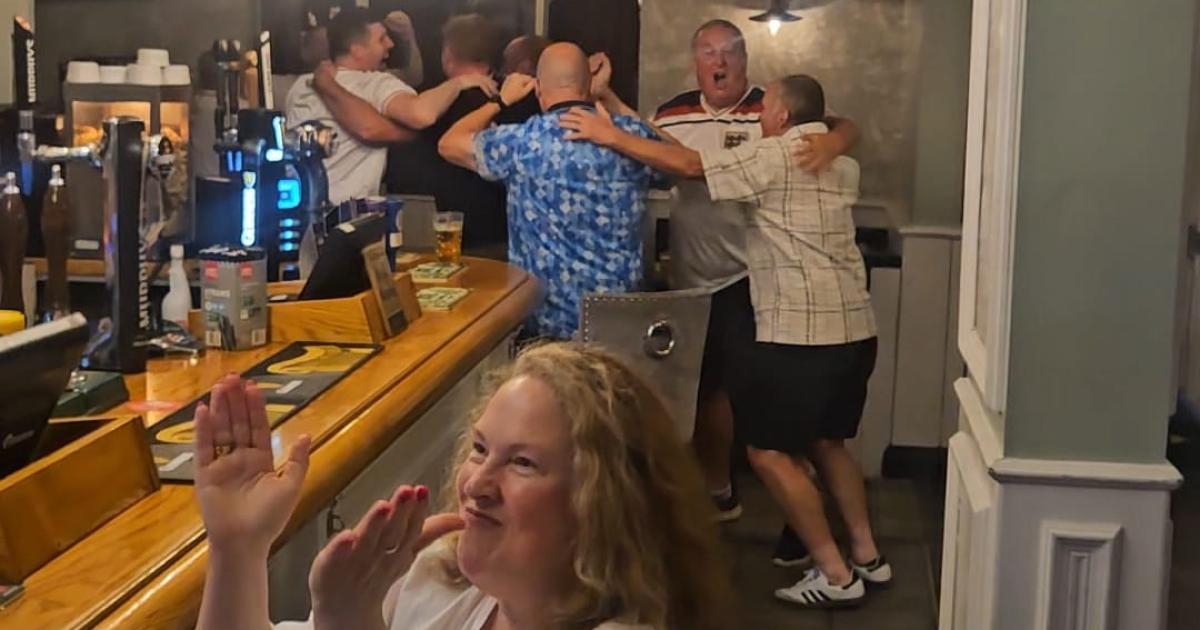
Around 30 people gathered at The Duke of Wellington in Chew Moor to watch England beat Mexico 3 to 2 in the World Cup last 16 during the early hours of Monday morning.

The pub stayed open specially so people who did not want to watch the match alone could enjoy it together as England booked their place in the quarter-finals.

(Image: Duke of Wellington)

Manager Sophie McGrath said: “It was just buzzing. It was absolutely buzzing.

Advertisement

“So I did a free shot every time England scored. Them two goals that they did in about 90 seconds, I couldn’t get around quick enough.”

The pub is also to host a country night on England’s next game against Norway on Saturday.

In the evening until 10pm, when it is kick-off, people are encouraged to come in fancy dress while the barbecue van provides the traditional smoked foods, such as burgers.

The van goes by the name of Mr Barbecue.

Advertisement

England raced into a two-goal lead thanks to Jude Bellingham’s quickfire double before holding on for victory despite playing much of the second half with 10 men after Jarell Quansah was sent off.

(Image: Duke of Wellington)

The win means England are through to the World Cup quarter-finals after overcoming a hostile atmosphere in front of more than 80,000 fans in Mexico City.

She added: “It’s pretty important because you’re with your friends, you’re with the community.

“And I’ve said to you before, we’re like a proper community pub, and that’s why we decided to open, because we wanted people who didn’t have anyone to watch the football with to come in here and watch it with us.

Advertisement

(Image: Duke of Wellington)

“Especially while the pubs are struggling as well.

“It obviously helps us.”

As well as serving customers, Ms McGrath and her staff even had a kickabout with a football in the pub car park while waiting for the match to begin.

Around 30 people attended the screening, with one supporter turning up in her pyjamas to cheer England on.

Advertisement

Source link

Continue Reading

NewsBeat

Dog locked in a hot car? Here’s what the RSPCA says you should do

Published

on

Dog locked in a hot car? Here's what the RSPCA says you should do

The animal charity says dogs should never be left inside a car during warm weather, as the inside of a vehicle can rapidly heat up and any dog left inside can very quickly suffer the effects of heat stroke.

That’s the warning from the RSPCA, who are urging dog owners to never leave their pets in cars, caravans, vans, sheds, outbuildings, or conservatories during the heatwave.

And the charity is issuing advice to the public about three simple steps they should follow if they come across a dog in a hot car:

Check the dog—if the dog seems okay, then try to find their owner and monitor them closely. But if the dog is distressed or showing any worrying signs (such as heavy panting, excessive drooling, or confusion), then you need to act quickly.

Advertisement

Contact police—call police on 999 to give them all of the information so they can send officers out. Police have the legal power to break into a vehicle to save a dog’s life. If you feel the urgency is immediate and you intend to break the dog out of the vehicle yourself, then you should make police aware and ask others around you to document it by taking photos or filming.

Cool the dog down—move the dog to the shade as quickly as possible and cool them off with cold water, and contact a local vet for advice.

Poster (Image: RSPCA)

RSPCA dog welfare expert Eloise Dicks said: “Breaking the window or forcing entry to a car can be someone’s instant reaction—but could be classed as criminal damage.

“However, legally, you can commit damage if you believe the owner would consent to it if they knew the dog was in danger.

Advertisement

“We’d advise anyone in this position to tell the police what they’re planning to do and ask other witnesses to provide names and numbers in case they’re needed to back up what has happened.

“Emotions can run high in these sorts of difficult situations but the most important thing is keeping everyone safe and getting help for the dog as soon as possible.”

How to help a dog suffering heat stroke

The best thing to do if a dog is overheating is to cool first and transport second.

Advertisement

Act fast to prevent the dog from further heating and remove them from the source of the heat.

Get them out of the sun and into shade.

Cool the dog by pouring water over their body (not their head) or create a breeze by fanning them.

Contact a vet for advice and, once their temperature has cooled, transport them to the nearest vet; put the air-con on or open the windows to keep them cool.

Advertisement

Source link

Continue Reading

NewsBeat

The Royal Arms in Tockholes reopens under new management

Published

on

The Royal Arms in Tockholes reopens under new management

The Royal Arms in Tockholes reopened under new management on Tuesday, July 7, following a closure in June.

The kitchen is set to open on July 11, which is when customers will be able to tuck into food.

Former landlords Peter Ainsworth and Emma Ball, who had been at the helm for three years, thanked the community for its support over the past three years and wished their successors well.

Advertisement

New licensees Maggie and Paul said: “The Royal Arms is now under new management.

“Thanks for bearing with us—we can’t wait to welcome you all through the doors, have a drink together and make The Royal Arms a great local pub again.

“We will be opening at 3pm on Tuesday, July 7, and we aim to open the kitchen for food on Saturday, July 11.”

Customers have shared their excitement on social media, with one writing: “We can’t wait to see you succeed in your new venture.”

Advertisement

Another said: “All the very best in your new venture at The Royal.”

“Good luck, looking forward to calling in for a drink,” said another.

Another said: “Wishing you all the best.”

Advertisement

Source link

Continue Reading

NewsBeat

How Shakespeare’s The Tempest can help readers understand the hidden costs of AI

Published

on

How Shakespeare’s The Tempest can help readers understand the hidden costs of AI

In the 400 years since his death, William Shakespeare’s work has been used as a lens through which to interpret countless developments he could never have anticipated – from modern psychology and political theory to colonialism and climate change. His writing possesses an uncanny ability to illuminate nearly every facet of the human condition.

Yet, as a decolonial scholar and an AI researcher, we believe that Shakespeare’s plays are now beginning to illuminate something beyond that as well – the emergent forms of artificial intelligence that increasingly shape and challenge our understanding of what it means to think, act and be.

AI tools have rapidly become part of many people’s everyday lives. Yet relatively few probably consider the physical infrastructure that makes these systems possible. Each prompt we send is processed in distant data centres: vast facilities that generate responses by predicting the most likely sequence of words based on patterns learned from enormous datasets.

This dynamic of distant, unseen control recalls Shakespeare’s The Tempest, a play that offers a useful means of understanding how power operates through hidden infrastructures.

Advertisement

This article is part of Rethinking the Classics. The stories in this series offer insightful new ways to think about and interpret classic books and artworks. This is the canon – with a twist.


AI data centres are energy and resource intensive, often located far from the users they serve. In some cases, they are built in rural or marginalised regions where land and resources are more easily secured. For example, in the United States, a proposed bill, NCA 25-077, would establish the Mvskoke Technology and Innovation Park in eastern Oklahoma. This proposal sparked debate within the Mvskoke Nation, particularly around water usage and long-term trade-offs, which ultimately led to it being voted down.

Mvskoke Nation citizen Jordan Harmon and her friend Mackenzie Roberts, two prominent voices in the debate, pointed to these data centres’ “ravenous consumption of data and physical resources” and AI being used to “surveil and police people”. They consider this as “part of the legacy of colonialism and imperialism”. AI data centres are extractive endeavours, they argued, impinging on other aspects of a community’s life, such as water supply and land sovereignty.

Advertisement

The Tempest offers a stark warning of what happens if such endeavours are not reined in.

Prospero’s island and the politics of AI infrastructure

The play tells the story of Prospero, the exiled duke of Milan. He seizes control of a remote island and its inhabitants, including a creature named Caliban and the spirit Ariel. While the play ends with reconciliation and Prospero’s return to Milan, it has long been read by postcolonial scholars as an allegory of colonisation. Caliban’s prior claim to the island, “which thou tak’st from me”, resonates with contemporary struggles over land and resources.

Yet the parallels go further when considering how Prospero exercises power. His authority depends not only on physical domination but on his command of sorcery and manipulation. Both Ariel and Caliban are compelled to serve him – Ariel through enchantment, Caliban through coercion and emotional abuse.

Advertisement
Hervé Goffings performs Caliban’s monologue.

In this sense, Prospero’s magic mirrors the logic of modern AI systems, which extracts labour to transform human knowledge and creativity into outputs that appear detached from the people and environments that make them possible.

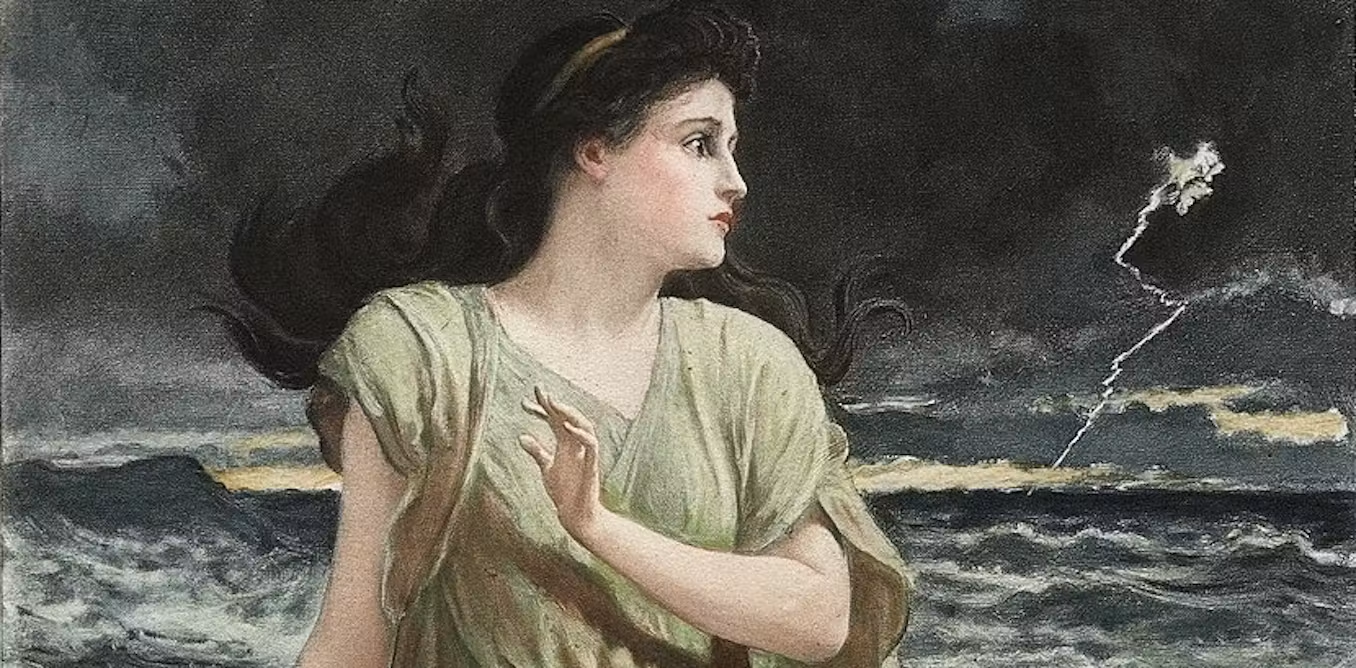
Prospero’s conjuring of a storm at the start of the play is equally revealing. The tempest is a spectacle of control, designed to disorient and reorder the world to Prospero’s advantage. Today’s AI expansion produces its own kind of storm: not only in the environmental strain of data centres, but also in the disruption of labour markets, as automation threatens certain forms of work while concentrating power in the hands of a few corporations. Like Prospero’s magic, these transformations obscure the decisions and interests that drive them.

In the final act of The Tempest, Prospero relinquishes his magical power only after it has enabled him to recover his dukedom, orchestrate reconciliation, and secure dynastic stability, implying that his renunciation is prompted less by ethical transformation than by the completion of his political objectives.

The play largely centres on Prospero’s authority, in which power was his to give, instead of offering recognition of the native inhabitants as agents capable of self-governance. A similar dynamic is echoed in the discourse surrounding AI, where corporations are unlikely to surrender control unless it becomes advantageous to do so.

Advertisement

The Mvskoke Nation has demonstrated that it is not futile for Indigenous citizens to assert their sovereignty and maintain stewardship of their lands by exerting pressure that makes the continued development of data centres more costly. This comparison highlights that, unlike the idealised resolution of the play, real-world change is rarely driven by the goodwill of those in power. Instead, it often depends on the efforts of communities to make continued control less advantageous and to demand accountability

From Caliban to contemporary struggles

Postcolonial scholars have often compared the relationship between Caliban and Prospero to that between colonised and coloniser. This can be seen in novelist Viet Thanh Nguyen’s writing, where the colonised are called the “descendants of Caliban”. Jamaican-born poet Safiya Sinclair’s literary manifesto articulates similar sentiments where she compares herself to Caliban.

Nguyen and Sinclair are among the thinkers and authors concerned with the impact of colonisation and the role of language in shaping colonial power. Colonisation can take many forms – the rise of data centres on lands that do not belong to multinational corporations is just one of them.

Rather than treating AI infrastructure as inevitable, the debate within the Mvskoke Nation is a reminder that its development is a matter of choice. If data centres are to exist on Indigenous lands, they must not replicate extractive models that prioritise corporate gain over community wellbeing.

Advertisement

Caliban’s experience of loss and coercion under Prospero’s control need not be the template of the historical or future trajectories of Indigenous nations such as the Mvskoke Nation. As communities assert control over their digital futures, they challenge us to rethink who AI is for and who it benefits.

Beyond the canon

As part of the Rethinking the Classics series, we’re asking our experts to recommend a book or artwork that tackles similar themes to the canonical work in question, but isn’t (yet) considered a classic itself. Here is Xin Ying Lim and Xin Chen Cai’s suggestion:

A highly engaging contemporary play that explores themes of power, justice, identity and resistance is Off the Rails by Randy Reinholz. Set in 1880s Nebraska, the play follows Indigenous American characters navigating a world shaped by colonial control and cultural suppression.

Trailer for a production of Off the Rails.

Reinholz examines how institutions and authority figures can restrict individual freedom while also highlighting the resilience of communities facing oppression. The play combines humour, romance, music and social commentary to create an accessible yet thought-provoking exploration of cultural survival and self-determination.

Rather than presenting history as a distant subject, Off the Rails brings the experiences of Indigenous people to life through vivid characters and dramatic storytelling. Its focus on challenging injustice and preserving identity makes it a powerful and relevant work for modern audiences, offering fresh perspectives on social inequality and the lasting effects of colonialism.

Advertisement

This article features references to books that have been included for editorial reasons, and may contain links to bookshop.org. If you click on one of the links and go on to buy something, The Conversation UK may earn a commission.

Source link

Advertisement
Continue Reading

NewsBeat

Horoscope today: Your daily guide for Wednesday, July 8, 2026

Published

on

Horoscope today: Your daily guide for Sunday, April 5, 2026

Aries 0904 470 1141 (65p per minute)*

Taurus 0904 470 1142 (65p per minute)*

Gemini 0904 470 1143 (65p per minute)*

Advertisement

Cancer 0904 470 1144 (65p per minute)*

Leo 0904 470 1145 (65p per minute)*

Virgo 0904 470 1146 (65p per minute)*

Libra 0904 470 1147 (65p per minute)*

Advertisement

Scorpio 0904 470 1148 (65p per minute)*

Sagittarius 0904 470 1149 (65p per minute)*

Capricorn 0904 470 1150 (65p per minute)*

Aquarius 0904 470 1151 (65p per minute)*

Advertisement

Pisces 0904 470 1152 (65p per minute)*

*Astro line horoscopes are updated every Thursday. Calls cost 65p per minute plus your telephone company’s network access charge and will last approximately five minutes. You must be over 18 and have the bill payer’s permission. Service provided by Spoke. Customer service: 0333 202 3390

Source link

Advertisement
Continue Reading

NewsBeat

Hot couture! Cool Chanel is the star in sizzling Paris, says LAURA CRAIK

Published

on

Sarah Pidgeon, the 30-year-old US star of TV hit Love Story, looked Carolyn Bessette-Kennedy levels of chic in a drop-waisted dress

Even if it hadn’t been a broiling 33C in Paris, Chanel‘s haute couture show would still have been the hottest ticket in the fashion world.

So it was no surprise to see the coolest names in showbusiness taking their front row seats – in the latest Chanel, of course.

Sarah Pidgeon, the 29-year-old US star of TV hit Love Story, looked Carolyn Bessette-Kennedy levels of chic in a drop-waisted dress.

And fittingly, Chanel’s newly inked brand ambassador, Gladiator II actor Pedro Pascal, 51, did his best JFK Junior impression in chinos and a striped matelot top draped over a white T-shirt.

Advertisement

Meanwhile, Lupita Nyong’o, 43, who plays Helen of Troy in Christopher Nolan‘s new epic The Odyssey, braved the heat in a floor-length gown thickly embellished with black and yellow sequins – as did Wicked star Michelle Yeoh, 63, in a silver brocade jacket and matching pencil skirt.

Also in attendance was British sprinter Dina Asher-Smith, 30, who made her debut on the front row alongside long-time Chanel muses Vanessa Paradis, 53, and Tilda Swinton, 65. 

They were joined by Elizabeth Debicki, 35, who played Diana, Princess of Wales in The Crown, and American star Teyana Taylor, also 35.

Although the most surprising guest of the day was Catherine Deneuve, 82, the iconic French actress who for years has been a loyal patron of Yves Saint Laurent. 

Advertisement

Sarah Pidgeon, the 30-year-old US star of TV hit Love Story, looked Carolyn Bessette-Kennedy levels of chic in a drop-waisted dress

Elizabeth Debicki , 35, who played Diana, Princess of Wales in The Crown, attended the show

Elizabeth Debicki , 35, who played Diana, Princess of Wales in The Crown, attended the show

Chanel's newly inked brand ambassador, Gladiator II actor Pedro Pascal , 51, did his best JFK Junior impression in chinos and a striped matelot top draped over a white T-shirt

Chanel’s newly inked brand ambassador, Gladiator II actor Pedro Pascal , 51, did his best JFK Junior impression in chinos and a striped matelot top draped over a white T-shirt

Advertisement
Lupita Nyong'o , 43, who plays Helen of Troy in Christopher Nolan's new epic The Odyssey, braved the heat in a floor-length gown thickly embellished with black and yellow sequins

Lupita Nyong’o , 43, who plays Helen of Troy in Christopher Nolan’s new epic The Odyssey, braved the heat in a floor-length gown thickly embellished with black and yellow sequins

Tilda Swinton, 65, was one of the coolest names in showbusiness taking their front row seats

Tilda Swinton, 65, was one of the coolest names in showbusiness taking their front row seats

Also in attendance was British sprinter Dina Asher-Smith , 30, who made her debut on the front row

Also in attendance was British sprinter Dina Asher-Smith , 30, who made her debut on the front row

But that’s the Chanel effect: even a lifelong friend of a rival couldn’t resist experiencing her first Chanel show.

Advertisement

Since taking over as artistic director last year, designer Matthieu Blazy, 42, has captured his clients’ imaginations and set the tills on fire, modernising the esteemed French house and churning out must-haves in a way that makes it seem easy.

It’s not easy, of course. Other luxury brands are struggling, which makes Chanel’s recent 2 per cent profit rise – in 2025 overall revenue climbed to $19.3billion (around £14.4billion) – all the more extraordinary. 

For autumn/winter 2026, his sophomore couture collection, Blazy created a fairytale landscape that referenced Jack and the Beanstalk, with vine embroidery creeping up silk skirts, boucle jackets and the heels of shoes. 

Flowers, feathers and fauna adorned almost every surface, showcasing the skills of Chanel’s artisans and ateliers.

Advertisement

Lest the message be lost that couture is art, Chanel emphasised the point by inviting artist Joel Blanc, famous for painting live sporting events, to capture the show as it unfolded.

Which certainly made a change from recording it on a smartphone.

Source link

Advertisement
Continue Reading

NewsBeat

Mass death of marine animals in Australia caused by ‘world’s most toxic algae’

Published

on

Mass death of marine animals in Australia caused by ‘world’s most toxic algae’

The algae responsible for the catastrophic die-off of hundreds of thousands of marine animals in southern Australia last year is the most toxic species of its kind, a new study reveals.

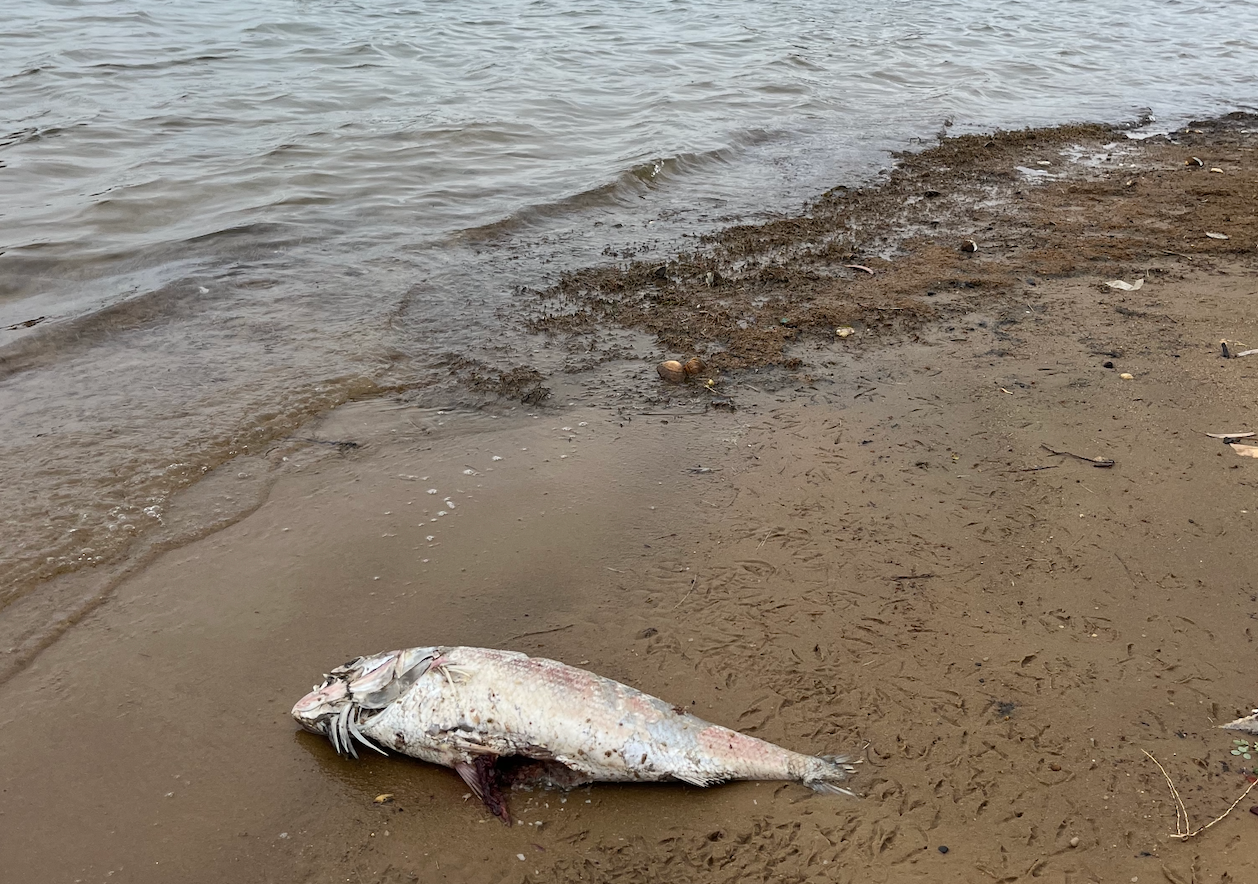
A strange foam washed up on South Australia’s beaches in March last year, coinciding with thousands of fish dying and surfers getting ill, with many developing symptoms like coughing, sore throat and blurred vision.

The foam covered vast stretches of the Waitpinga Beach, about 15km southwest of Victor Harbour, killing scores of seahorses, fish and octopuses.

The algal bloom, which lasted several months, took an immense environmental, economic and public health toll on South Australia.

Advertisement
Fish die off due to algal bloom
Fish die off due to algal bloom (Shauna Murray)

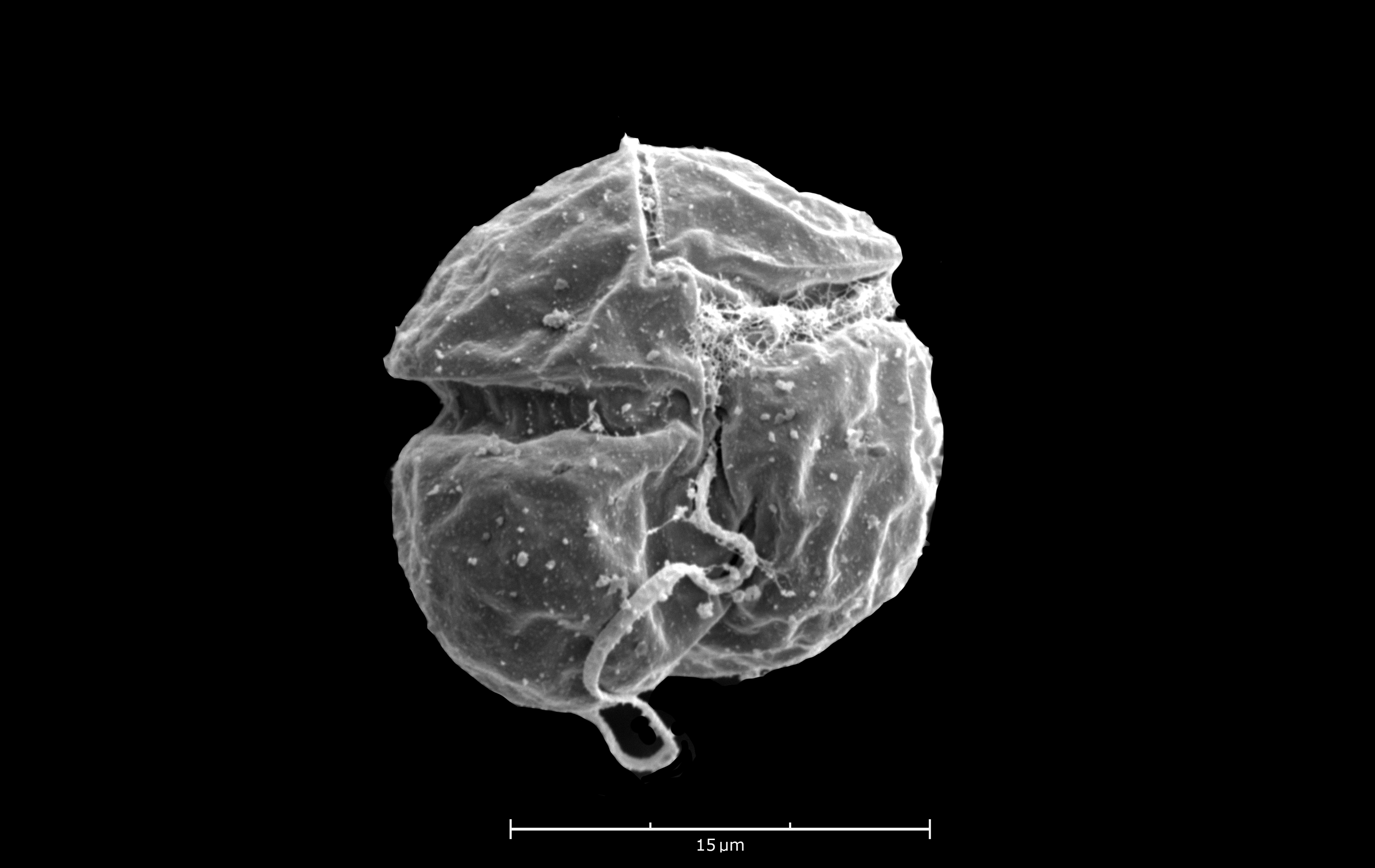
Researchers later found the die-off was caused by neurotoxins from the microalgae Karenia cristata.

The new study revealed that the algae had stronger toxic effects than any other harmful algal bloom studied thus far.

The findings help explain the scale of last year’s mass mortality of invertebrates, fish, mammals, and birds, according to the study published in the journal Nature Ecology & Evolution.

Researchers conducted experiments on laboratory-grown strains of Karenia cristata to more thoroughly assess its toxicity.

They also compared the results with the toxin analysis of water samples from the algal bloom.

Advertisement
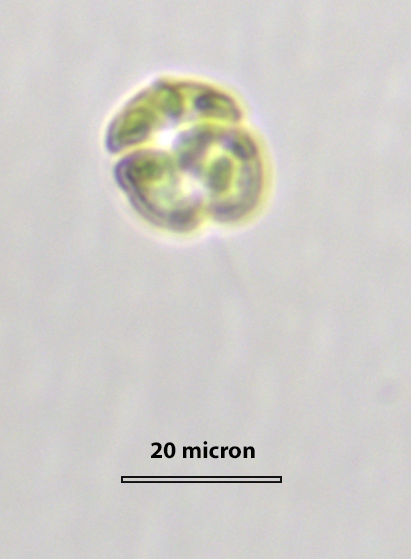
K cristata microalgae species
K cristata microalgae species (Shauna Murray)

Karenia cristata in the laboratory was highly toxic in very low cell concentrations,” said Shauna Murray, lead author of the study from the University of Technology Sydney.

“Our results are in line with periods of mass marine animal mortalities in 2025 and 2026 and the actual environmental concentrations of Karenia cristata there at the time. We found that Karenia cristata is an order of magnitude more toxic than the next most toxic microalgae that has been studied to date.”

Researchers warned that the findings carried “international consequences”.

Microalgae under microscope
Microalgae under microscope (Shauna Murray)

They said that other cold water brevetoxin-producing Karenia could potentially bloom anywhere with similar coastal water conditions. “Before now, the warm water Karenia brevis, which only occurs in the southeastern US and also produces brevetoxins, had been considered the most devastating marine harmful algal bloom species in terms of its environmental, economic and social impacts,” Dr Murray said.

“The South Australian harmful algal bloom still hasn’t completely disappeared about 15 months after it started,” Dr Murray added.

“We now need to fully investigate the factors that cause Karenia to grow and understand its mechanisms of toxicity.”

Advertisement

Source link

Continue Reading

Trending

Copyright © 2025