Connect with us

NewsBeat

Andy Burnham vows ‘relentless’ action tackling small boats crossing the Channel

Published

on

Manchester Evening News

New surge teams are being deployed on the beaches of France, according to the government

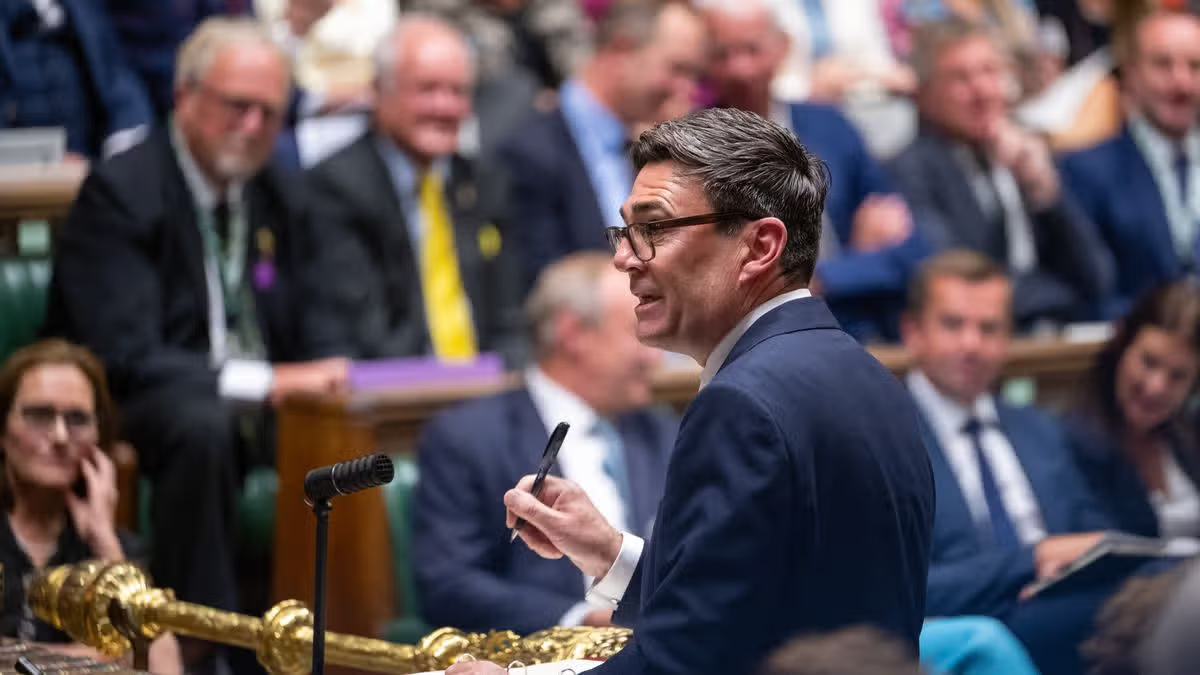
Andy Burnham has trumpeted a seven-year low in small boats bringing illegal migrants across the English Channel and promised ‘relentless’ action to tackle the problem as he hosts President Macron of France.

The prime minister spoke as his government said new French ‘surge teams’ were being deployed to tackle launches from the beaches of France and prevent ‘mega dinghies’ from coming across the Channel as part of up to £662m Britain is paying to tackle the problem.

In the coming weeks a team of 45 officers is being deployed to western beaches in France to tackle launches from further along the coast, nearly tripling French resource in the area, according to the government.

Advertisement

Click here to get the biggest stories straight to your inbox in our Daily Newsletter

Some 102 small boats brought migrants over the English Channel between June and August this year, a lower number than any year since 2019, when 57 vessels made the journey.

The summer months are usually a popular time for making the Channel crossing, as weather is usually calmer than the rest of the year.

At his first Prime Minister’s Questions, Mr Burnham said: “The loaning of the (Bayeux) tapestry is a great example of French-British co-operation, the same co-operation that has helped us reduce summer small boat crossings to a seven-year low.”

Advertisement

He said earlier in a statement: “The progress we have seen this summer shows what can be achieved when the UK and France work together.

“But I am clear that we cannot be complacent. Smuggling gangs are constantly adapting their tactics, and the UK and France need to respond quickly and stay one step ahead of the criminals facilitating the dangerous crossings.

“The small boats crisis is a shared European challenge, and no country can solve it alone. Working with France and our international partners, we will restore order and control to our borders and prevent smugglers exploiting vulnerable migrants.”

Home Secretary Shabana Mahmood said: “We are boosting officer numbers to record highs to crack down on small boat launches and the gangs behind them. This work is bearing fruit. Over 48,000 crossing attempts have been prevented, small boat crossing numbers are down and removals of those here illegally are at record levels.

“But we are not complacent and we must be relentless. We will continue efforts on all fronts to tackle these illegal and dangerous crossings.”

Source link

Advertisement
Continue Reading
Click to comment

You must be logged in to post a comment Login

Leave a Reply

NewsBeat

Cambridgeshire bus services to get timetable shake-up

Published

on

Cambridgeshire Live

The changes should make the bus network ‘simpler to operate and explain’

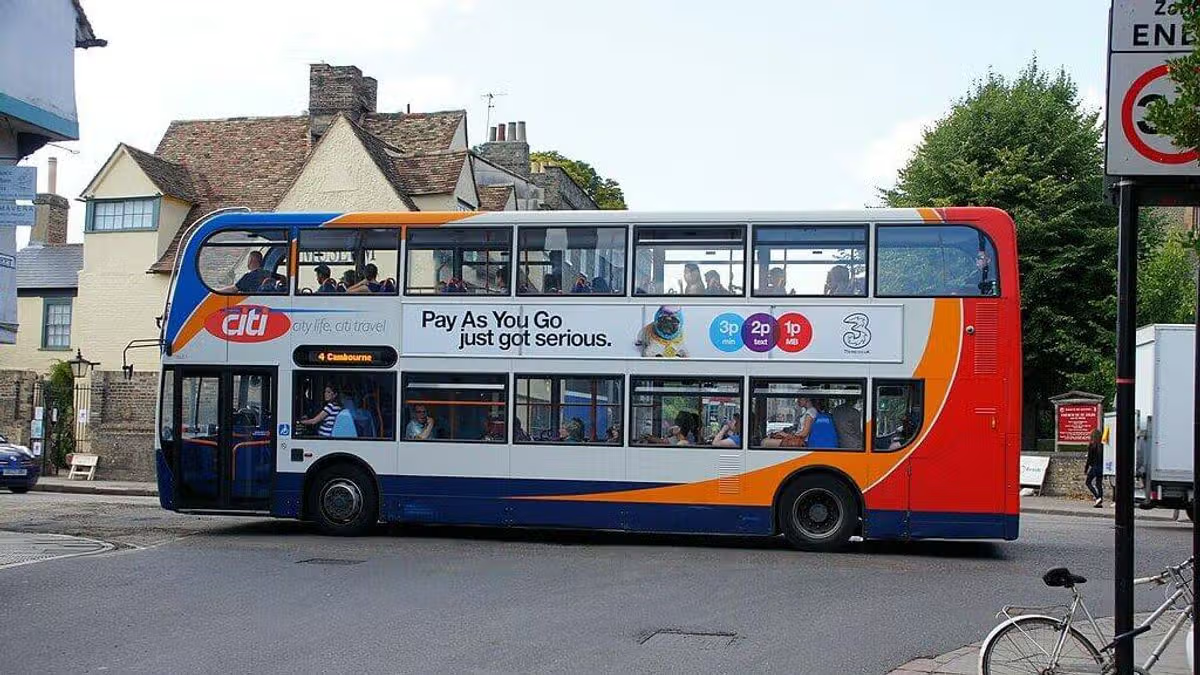
A number of bus services in Peterborough are due to change following a review. Cambridgeshire and Peterborough Combined Authority (CPCA) carried out a review of bus services across the county to ensure the bus network was affordable, sustainable, evidence-led and better aligned to passenger need.

Advertisement

In Peterborough, the proposed changes include merging services 60 and 61, and introducing different timetables for services 60, 61, 62 and 63. They also include retaining the current loop around Werrington as part of the 62 service, helping residents to continue accessing Werrington centre.

Service 60 runs between Peterborough Queensgate Bus Station and Orton Northgate, while 61 runs between Queensgate and Newark Sainsbury’s, 62 runs between Queensgate and Maxey, and 63 runs between Queensgate and Parnwell.

A report to go before the CPCA transport committee on September 9 stated: “There would be no significant change to overall service levels [in Peterborough], but the network should be simpler to operate and explain.”

The revised proposals were developed in response to a six-week public consultation that received 1,182 responses.

Advertisement

Residents emphasised the need for reliability, punctuality, frequency, operating hours, access to rail and healthcare, the need for clear information, affordability and integrated ticketing, and the importance of services that were usable for work, education, healthcare, shopping and leisure.

If approved at next week’s meeting, the changes could be introduced from February 2027, with further changes planned for August 2027.

CPCA Mayor Paul Bristow said: “Thank you to everyone who took the time to share their views as part of our Bus Network Review. Listening to residents is incredibly important, because you are the people who use these services and understand what works well and where improvements are needed.”

Service changes elsewhere

Fenland – Services 46, 50, 56 and Tiger 7 would be redesigned to create a clearer local network, including improved MarchWisbech links, better weekend provision and revised connections through Chatteris.

Advertisement

St Ives, Earith, Somersham and Ramsey – The 301 would be improved to provide a simpler, more frequent core service, with Tiger 12 withdrawn alongside replacement links and implementation planning.

St Neots, Godmanchester, the Hemingfords and St Ives – Service 65 would be revised to serve St Neots Rail Station and extend from the Offords to Godmanchester, the Hemingfords and St Ives.

Cambridge and South Cambridgeshire – Services including 8, 26, 27, 27A, 27H, 75, T2, T4 and T5 would be revised to improve reliability, provide more regular Cambridge links and support evening, weekend and peak-time travel.

East Cambridgeshire and Suffolk links – Several existing low-frequency services around Haverhill and Newmarket would be replaced by simpler services, including new 119, 120 and 121 routes.

Advertisement

Source link

Continue Reading

NewsBeat

Kemi vows to slash benefits bill to boost defence as she piles pressure on Burnham

Published

on

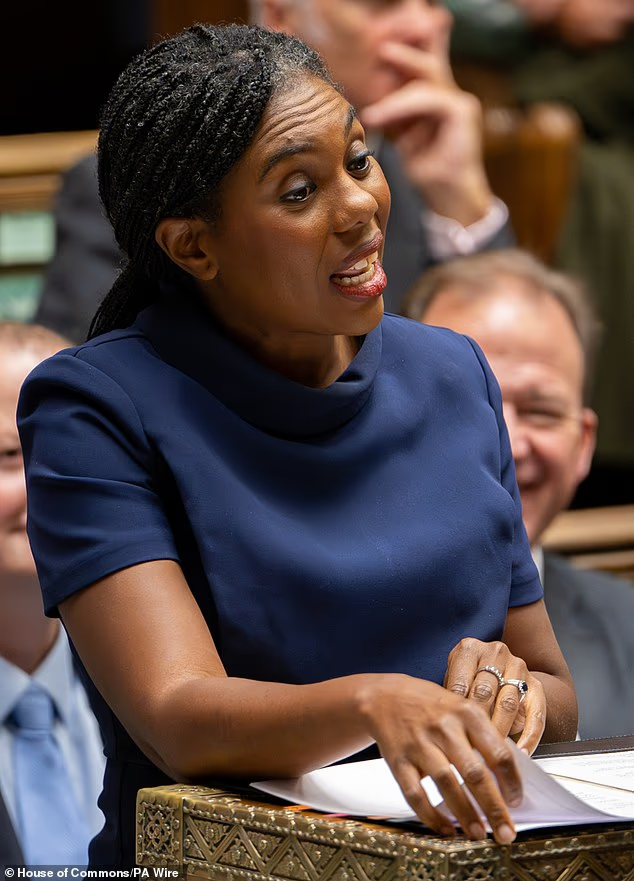
Kemi Badenoch outlined a £10billion package of savings to fund the investment, which is seen as vital to keeping Britain safe

Kemi Badenoch piled pressure on Andy Burnham over defence last night as she pledged to slash welfare to fund military spending.

In a major intervention, the Conservative leader set out plans to raise defence spending to 3 per cent of GDP by the end of the decade – a commitment the Prime Minister has failed to match.

The Conservative leader outlined a £10billion package of savings to fund the investment, which is seen as vital to keeping Britain safe.

Chancellor John Healey resigned from his previous job as defence secretary in June over Sir Keir Starmer‘s refusal to commit to the 3 per cent target, saying it was the minimum needed to keep Britain safe. 

Advertisement

But neither he nor Mr Burnham are now willing to say whether they will find the money to boost Britain’s cash-strapped Armed Forces.

The Prime Minister ducked the issue again yesterday, despite fresh threats from Russia and pressure from his own MPs.

Mrs Badenoch said: ‘The first duty of every Government is defence and the Conservatives will always put our defence first. 

‘That’s why we are setting out our plans to reach three per cent on defence spending by the end of this Parliament through further cuts to welfare and restoring the two-child benefit cap.

Advertisement

Kemi Badenoch outlined a £10billion package of savings to fund the investment, which is seen as vital to keeping Britain safe

The Prime Minister ducked the question on Britain's cash-strapped Armed Forces again yesterday, despite fresh threats from Russia and pressure from his own MPs

The Prime Minister ducked the question on Britain’s cash-strapped Armed Forces again yesterday, despite fresh threats from Russia and pressure from his own MPs

‘John Healey resigned from Keir Starmer’s government saying Labour were not keeping our country safe. Now he is the Chancellor he should adopt our plans and make sure our Armed Forces have the funding they need.’

Advertisement

Mrs Badenoch’s move heaps pressure on the PM and Mr Healey to find the funds to accelerate defence spending at a time of rising international threat.

Mr Burnham was savaged over the issue by a senior MP on his own side yesterday.

Tan Dhesi, Labour chairman of the cross-party Commons defence committee, accused him of ‘kicking the can down the road’ by deferring a decision on the issue until next year’s comprehensive spending review.

Advertisement

In a bruising intervention, Mr Dhesi also warned that Mr Burnham’s trademark optimistic bluster would not be enough to keep Britain safe. He told the PM it was ‘imperative that we invest in our Armed Forces in the here and now’.

He added: ‘Defence is definitely one area where vibes alone just will not be enough. Rather than kicking the can down the road… will the Prime Minister urgently commit to charting a pathway to reaching three per cent of GDP being spent on defence by 2030?’

Mr Burnham appeared thrown by the hostility of the question and he told Mr Dhesi: ‘I have made that commitment, I have made it very clearly.’ 

But Downing Street later confirmed that he is only committed to a much looser target of 3.5 per cent by 2035. Vladimir Putin has lashed out at the West as his forces struggle in Ukraine.

Advertisement
Vladimir Putin has lashed out at the West as his forces struggle in Ukraine (file image)

Vladimir Putin has lashed out at the West as his forces struggle in Ukraine (file image)

In recent days, Russia has threatened the UK with ‘catastrophic consequences’ over its support for Ukraine. Germany revealed this week that Russia was responsible for a failed drone attack on Leipzig airport. 

CIA chief John Ratcliffe is reported to have travelled to Moscow last week to warn Mr Putin against attacking a Nato country.

In his June resignation letter, Mr Healey revealed UK spy agencies believe Russia could attack a Nato country by 2030.

Advertisement

But Britain has slid down the Nato spending league table in recent years, despite the growing threats. 

Under Labour’s plans, spending will nudge up from 2.6 per cent next year to 2.7 per cent by the end of the decade. In contrast, Germany expects to spend 3.5 per cent by 2030 while Poland is already spending 4.7 per cent.

Mrs Badenoch’s plans would involve slashing billions of pounds from the bloated benefits budget. 

This will include at least £4billion a year through reforms to housing benefit. Restoring the two-child benefit cap, which Labour axed this year, would raise £3.1billion. £1billion would be saved by ending VAT exemptions for Motability vehicles.

Advertisement

The rest of the £10billion would be funded by scrapping Labour’s Chagos Islands giveaway and by diverting money from new windfarms and civil research and development.

Defence now looks set to be one of the biggest early tests of Mr Burnham’s administration. 

Mr Healey quit in June after the then chancellor Rachel Reeves refused to agree a timetable for hitting the 3 per cent spending target. But since being appointed her successor in July he has refused to commit to finding the cash.

Mr Burnham yesterday told MPs: ‘The very reason I appointed this Chancellor to his position is because of his strong commitment to the defence of our country. We will fully fund the defence investment plan.’ 

Advertisement

But Mrs Badenoch urged him to move faster and ‘get serious about defending our nation’.

Source link

Continue Reading

NewsBeat

Dad slams school for turning daughters away over skirts ‘inches’ too short

Published

on

Wales Online

Denton Community Academy says its uniform policy is intended to “set an appropriate tone for education”

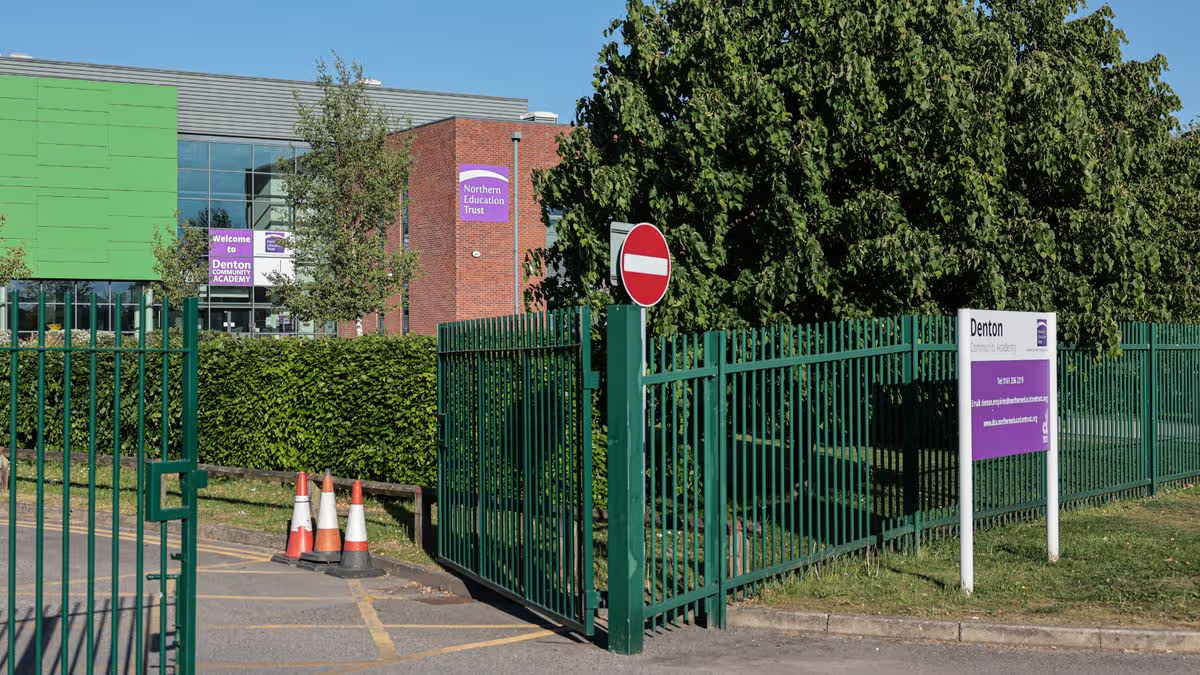
A dad said ‘this isn’t the army’ after his daughters were turned away from school for wearing skirts ‘inches’ too short. The girls, who attend Denton Community Academy, were refused entry on Wednesday despite their skirts being bought through an official uniform provider.

The father, who did not wish to be named, told Manchester Evening News he had spent a “fortune” on new uniforms for his children. He said: “They were ringing us saying they weren’t allowed to enter the school.

Advertisement

“The skirts they had on were not rolled at all and fell a couple of inches above the knee, if that.

“It was throwing it down with rain and there were 40 or 50 kids standing outside, not allowed in. They were soaking wet and some were crying.”

The Mirror reports the father said other parents also went to collect their children, while his two daughters spent the rest of the day at home and missed their first day back.

Northern Education Trust, which operates Denton Community Academy, said its uniform expectations had been shared with families several times before the start of the new academic year and insisted its policies were applied “consistently” and “fairly”.

Advertisement

The trust said: “Denton Community Academy is committed to maintaining the high standards that have driven significant improvements in our students’ educational outcomes.

“The academy is the most improved secondary school in Tameside and is now the highest-performing non-selective secondary school in the borough.

“We are incredibly proud of our students and the high expectations that have driven this improvement.”

It said families had been told about the uniform expectations on May 6, May 18, July 16 and August 20. The trust added: “We cannot comment on individual cases, but we strongly encourage parents with any concerns to speak directly to the academy.

Advertisement

“We will always work with families to resolve issues, and believe that direct conversation with the school, rather than through the media, is the most constructive way to do that.”

The father said he had since returned to TopMarks Schoolwear in Ashton, where he claimed the longest skirts available were around 20 inches.

He said his daughters were of average height for their age and claimed even the longest skirts available would not fall below their knees.

The father also pointed to a photograph in the uniform section of the academy’s website which he said showed a female pupil wearing a skirt several inches above the knee.

Advertisement

He said: “This is not an army camp. They’re treating them like soldiers, but they are children, they need an education. It feels like punishment.”

Denton Community Academy’s website says its uniform policy is intended to “set an appropriate tone for education”. It says the uniform provides “a sense of belonging and identity for all students”, while also being “comfortable” and allowing pupils to be themselves.

The policy also prohibits make-up, hoodies and jewellery, as well as “writing on hands or arms for any reason”.

It states: “We do not exclude students for wearing jewellery, having mobile phones or any other breaches of this policy.

Advertisement

“We will however, always ask students to rectify the issue that we have raised. These are reasonable requests.”

Ensure our latest news and sport headlines always appear at the top of your Google Search by making us a Preferred Source. Click here to activate or add us as Preferred Source.

Source link

Advertisement
Continue Reading

NewsBeat

‘We had to put our life hold waiting 13 years for my husband’s dementia diagnosis’

Published

on

Belfast Live

The couple visited their GP many times and were offered several different diagnoses, including anxiety and depression.

It took 13 long years for Emily Wilson’s late husband Jim to receive his final, and correct, diagnosis of dementia with Lewy body.

Advertisement

The family first noticed Jim having difficulty walking back in 2001, then other changes started, such as Jim getting lost on holidays and a difference in his mood. The Newtownabbey couple visited their GP many times and were offered several different diagnoses, including anxiety and depression.

But Emily says all that time she knew something was terribly wrong: “Jim became unusually tactile and when I held his hand I could feel a tremor. He was eventually diagnosed with dementia – but the wrong type. We were told he had Alzheimer’s disease and then eventually we found out it was actually a rarer form of dementia – with Lewy body.”

Emily explains the devastating impact of such a long wait for diagnosis on the family: “Well the first thing to say is that no diagnosis equals no benefits. The financial impact on the family was huge. Jim had just turned 60 so at least he was able to leave work with a small occupational pension, but it wasn’t very much.

“I was still working even though I’d been treated for cancer – and eventually I had to leave work too, before the state pension age – so I could care for Jim. Then he went into care and that has an impact on your finances too as Jim’s pension was used as part of the calculation for his care.”

Advertisement

She added: “Worst of all is the feeling of not knowing what’s going on. It was so stressful. The children are affected too. My youngest daughter can’t remember her Dad before he had dementia. One daughter wanted to drop out of university.

“I wish I could say things have got better since our experience but they haven’t. Families are still being terribly let down – waiting for a diagnosis and then receiving next to no support when they do get one.”

Emily is sharing her story as new research published today by Alzheimer’s Society reveals that families affected by dementia are being forced to put their lives on hold by prolonged waits for a diagnosis.

A survey of over 1,000 carers reveals nearly half of people (45%) waited more than six months for a dementia diagnosis after first seeking help, with devastating consequences for their work, finances and mental wellbeing.

Advertisement

The survey lays bare the toll diagnosis delays can take on families. Nearly half of carers (46%) said the wait had affected their work, while more than a third (35%) said it had made it harder to plan for the future. Three in ten reported sleepless nights or feeling as though life was on hold. Among working-age adults aged 35-44, over half (56%) reported an impact on work.

Alzheimer’s Society’s latest survey found that even after receiving a diagnosis, many carers felt they needed more support. When asked what would have helped most after diagnosis, respondents most commonly identified more follow-up from healthcare professionals, better information about treatment options, help accessing local services and clearer guidance on next steps.

The findings come as Alzheimer’s Society supporters and campaigners deliver an open letter to 10 Downing Street calling on Government to set a bold and ambitious plan for dementia, including faster access to diagnosis, treatment and support.

Advertisement

The charity is calling for a new nationally-recognised standard that would mean within 18 weeks of a GP referral, someone with dementia would receive an accurate diagnosis, together with a care plan and access to treatment (where appropriate). This ambition, or better, has already been met for all other major health conditions.

Ruth Barry, National Influencing Manager for Alzheimer’s Society said: “A dementia diagnosis can bring answers, understanding and access to the support, treatment and care that can make a real difference to people’s lives. However, in Northern Ireland, as in other parts of the UK, too many families spend months, and sometimes years, waiting for answers while their dementia progresses.

“It is like trying to plan a journey without knowing where you are going or when you will arrive. Behind every delayed diagnosis is a family living with uncertainty and trying to prepare for the future without the support they need. People living with dementia should receive an accurate diagnosis and, crucially, a care plan and access to appropriate treatment, within 18 weeks of referral.

“There is no time to waste in addressing this issue. In Northern Ireland we face the highest projected increase in dementia prevalence in the UK. Around 25,000 people live with dementia here, a figure projected to jump to over 37,000 by 2040.

Advertisement

“We know that dementia already costs Northern Ireland £1 billion per year, a figure that is predicted to increase to £2 billion by 2040 without strategic intervention. We know that there are already around 15,000 A&E visits annually from undiagnosed dementia patients in our hospitals.

“These pressures are building and yet Northern Ireland does not have an up-to-date dementia strategy. We urgently need to invest in systems to improve early diagnosis, diagnostic accuracy and waiting times.”

For all the latest news, visit the Belfast Live homepage here and sign up to our daily newsletter.

Source link

Advertisement
Continue Reading

NewsBeat

Chaos in Kyiv as two Ukrainian intelligence agencies ‘shoot at each other’ with three injured

Published

on

Daily Mirror

The President has slammed the leaders of both agencies, but has not clarified what triggered the incident that left three people hurt and several ‘detained’

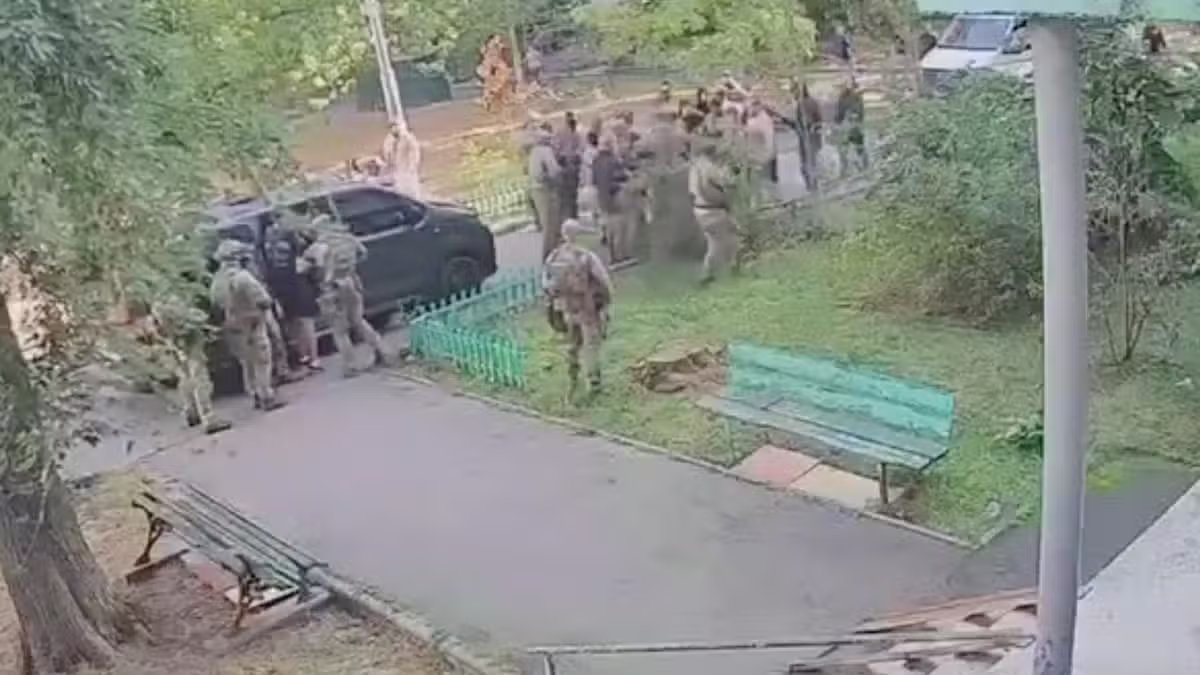
Three people have been injured after two top Ukrainian intelligence agencies shot at each other on the streets of Kyiv, officials have confirmed.

Advertisement

Ukrainian President Volodymyr Zelensky has hit out at the leaders of Ukraine ’s security service (SBU) and its military intelligence unit (HUR) after the incident, according to the president’s chief communication adviser Dmytro Lytvyn, per the FT. Three people were wounded in the Wednesday (September 2) morning melee.

The President’s office has not clarified what caused the clashes, but the SBU has issued a statement claiming its personnel were attacked when trying to search a property for a ‘pre-trial investigation into the terrorist act organised by the FSB of the Russian Federation’.

An SBU spokesperson said: “During a search at one of the addresses, a group of individuals carried out an armed attack on the SBU operational-investigative group. They tried to hinder the investigation and blocked the passage of law enforcement officers with their cars.

Advertisement

“To stop the attack and ensure the safety of the participants in the procedural actions, a special unit of the Special Operations Center “Alpha” of the SBU was involved. During the cessation of armed resistance, law enforcement officers used weapons.”

They then claimed the SBU ‘detained’ members of the Ukrainian defence forces. The spokesperson added: “As a result of the incident, there are injured people among the people who resisted. The attackers have been detained.

During the initial investigative actions, it was established that the detainees belong to one of the units of the Defense Forces of Ukraine. Weapons and documents were seized from them.”

Content cannot be displayed without consent

The HUR has not commented on the incident.

Advertisement

Footage from the incident circulated on social media early on Thursday morning (September 3). It shows a large group of men in military uniform shouting at one another, before several shots are fired.

The incident took place as Russian drones targeted Kyiv for the sixth day in a row. Russia has expanded its use of drone warfare in recent months in an effort to cripple Ukraine’s economy.

Source link

Advertisement
Continue Reading

NewsBeat

Greggs offers insurance policy for Steak and Stilton Bake

Published

on

Greggs offers insurance policy for Steak and Stilton Bake

The high street bakery chain is promoting its Steak and Stilton Bake, which has returned to menus today (Thursday, September 3) after a seven-year absence, with a ‘Stilton Insurance’ offer.

If customers don’t enjoy the blue cheese filling, they can swap it for a classic steak bake at no extra cost.

Zoe Harris, customer director at Greggs, said: “It’s been seven long years, and while we know Steak & Stilton has a fiercely loyal fanbase, we get that there are still some Stilton sceptics out there.

The Steak and Stilton Bake features diced beef, grilled onions, and Stilton cheese in gravy, wrapped in flaky pastry and topped with a black pepper crumb (Image: Greggs)

“Blue cheese can be a bold sell, but we’re so confident this bake will win people over that we’re literally guaranteeing it.

Advertisement

“Consider this the ultimate taste test with zero risk, if you really can’t stand the Stilton, our classic Steak Bake is on us, no questions asked.”

How will the Greggs Steak and Stilton Bake insurance policy work?

The Steak and Stilton Bake features diced beef, grilled onions, and Stilton cheese in gravy, wrapped in flaky pastry and topped with a black pepper crumb.

Customers who don’t enjoy the Steak and Stilton Bake can return it to the counter, even if it’s half-eaten, and exchange it for a regular Steak Bake.

The offer is available in all Greggs shops nationwide.

Advertisement

According to a survey commissioned by Greggs of 2,000 people, more than a quarter (28%) of Brits shy away from Stilton, and a further 11% have never even tried it.

Despite this, research reveals that 55% of Brits believe too many people write Stilton off before they’ve even given it a fair try.


Recommended reading:


Further research from Greggs found that 54% are put off spending money on a new food in case they don’t enjoy it, while 57% said that free ‘insurance’ on food would give them the confidence to try more new products and flavours.

The study also found that one in five (20%) Brits only try new food or flavours once every six months or less and more than a quarter (28%) say they can tell from just one bite whether they like it or not.

Advertisement

Will you be trying the Greggs Steak and Stilton Bake? Let us know in the comments.

Source link

Advertisement
Continue Reading

NewsBeat

Buckingham Palace planning ‘major security upgrades’ amid growing Russia threat

Published

on

Daily Mirror

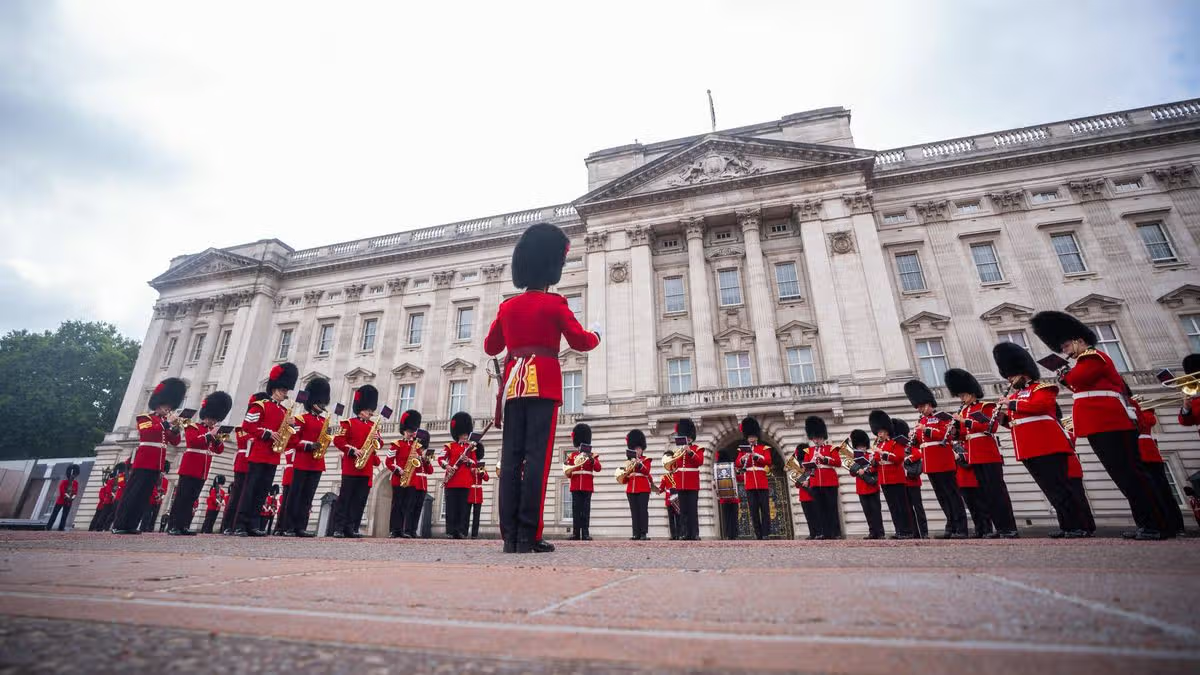
Buckingham Palace officials have confirmed a major cybersecurity upgrade will go ahead as the threat from Russia operating in the ‘grey zone’ grows, three years after the Royal Family website was targeted

Russian hackers have forced Buckingham Palace into making major upgrades amid a growing threat from Moscow, reports suggest.

Advertisement

The Palace’s cybersecurity systems will be upgraded after officials from the King’s household admitted its ‘ageing’ IT needs a revamp, reports The i .

The move comes amid rising tensions between the UK and Russia, with the US warning on Wednesday (September 2) a ‘limited’ attack from Russia on NATO countries was more likely to happen sooner than the previous estimate of 10 to 15 years.

In the meantime, Russia appears to be operating in the ‘grey zone’ of war, launching a drone attack on a Ukrainian plane stationed at Leipzig Airport in Germany. Russia has also previously targeted the Royal Family website, managing to take it offline for around an hour and a half in October 2023.

It’s against this backdrop that Palace officials have decided to spend a portion of the annual Sovereign Grant on upgrading cybersecurity at Buckingham Palace.

Advertisement

“The new level of the grant will ensure that the Royal Household can continue to deal with property maintenance backlogs following some years of constrained funding during the pandemic,” Treasury minister Dan Tomlinson said.

“It will also allow the Royal Household to replace ageing systems to strengthen cybersecurity and to install energy-efficient heating systems.”

The £99.9 million annual Sovereign Grant is the settlement given to the Royals by the government, funded by the taxpayer. Last year, it was worth £137m.

Advertisement

The ‘core element’ of the grant will rise from £72m in 2026 to £99m in 2027 as King Charles and Queen Camilla conduct hundreds of engagements every year, and 100 more than the late Queen Elizabeth II carried out in the final years of her reign.

Mr Tomlinson added: “That reflects this bottom-up assessment that has taken place, looking across the needs of the Royal Household and making sure that it is being funded adequately for the work, for the public duties that His Royal Highness the King and the royal family carry out.

“And it is worth pointing out, of course, that those activities have increased significantly in recent years.

“Towards the end of her reign, the late Queen was not carrying out a large number of foreign engagements, and also was hosting a smaller number of state visits.

“The King has increased the engagements that he is carrying out on our behalf as part of his public duties, and that has involved more expenditure in terms of staff costs and making sure that those engagements and the benefits that in terms of the representation of our country and supporting good causes here in the UK can get the funding and the support that they need.”

However, the overall grant will reduce from 2027, as funding for the renovation of Buckingham Palace is removed as work is completed.

Buckingham Palace was contacted for comment on this story.

Advertisement

Source link

Continue Reading

NewsBeat

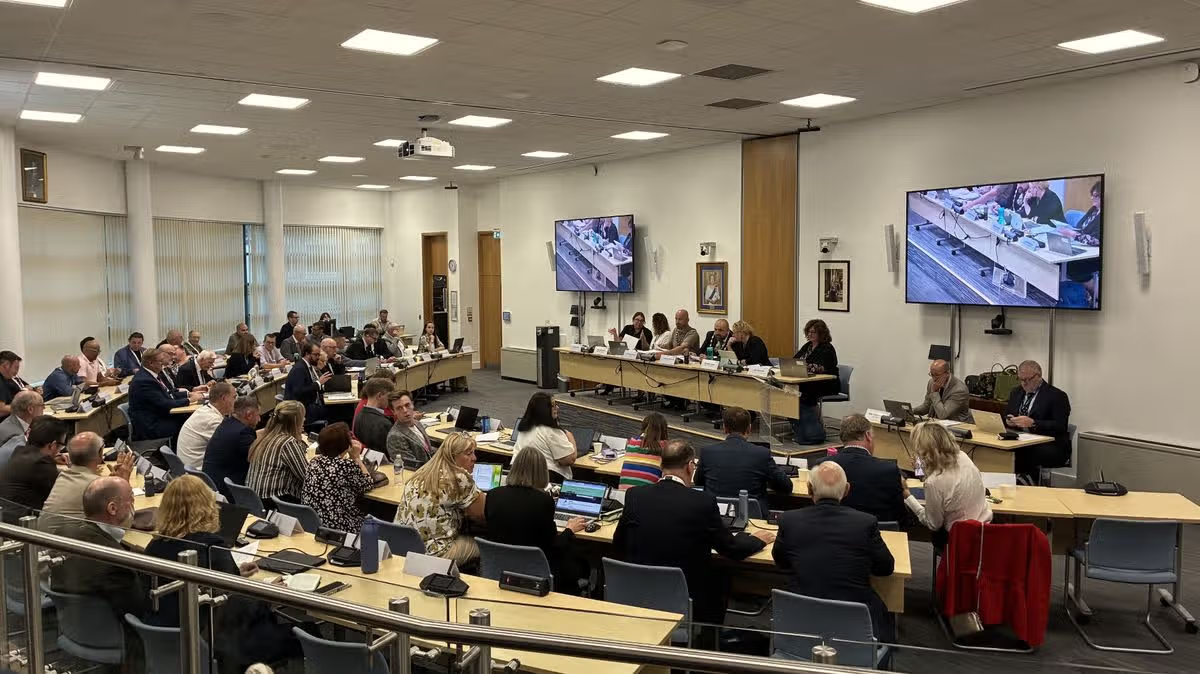
Backlash over plans to build flats on car parks sparks no confidence vote

Published

on

Cambridgeshire Live

Huntingdonshire District Council’s Liberal Democrat-led joint-administration collapsed over backlash to plans to build on car parks

The leader of a district council has survived a vote of no confidence sparked by backlash over plans to build flats on car parks. Cllr Sarah Conboy will continue to lead Huntingdonshire District Council after Tuesday evening’s vote failed.

Advertisement

The Liberal Democrat-led administration collapsed last month after two Green councillors left, leaving them without a majority. Councillors Stephen Ferguson and Lara Davenport-Ray said they had lost faith in the council’s leadership over their handling of the plans.

The council joined a partnership with developers Capital and Centric in July 2025 to come up with ideas to regenerate parts of St Ives, St Neots and Huntingdon. The developer unveiled plans to build homes earlier this year which included building on a number of council-owned car parks, though no formal application has been submitted.

Cllr Ross Martin, leader of the Conservative group, said that calling a special meeting for the vote of no confidence was not something they had taken lightly.

He said: “We have seen, quite sadly from my point of view, a series of events which has significantly damaged the reputation of this council. When we look back in history, we see empires being destroyed by barbaric invasions, we see governments brought down from scandals or financial issues.

Advertisement

“It’s not very often that you see a council administration fall down because of a consultation – a questionnaire essentially.”

He said that nobody has taken ownership of the decisions that have been made but it is up to elected officials to bear the responsibility. Cllr Tom Sanderson said the administration had invested in leisure centres – reopening Sawtry swimming pool and putting £30 million towards improving One Leisure in Huntingdon.

The Lib Dem councillor said: “There are plenty of good things happening in this district and I think we need to remember those as well.”

Cllr Julie Kerr, leader of the independent group, said that Cllr Conboy still had their support and they should wait for the facts to be investigated first.

Advertisement

She said: “Tonight we are being asked to overturn a democratic decision – so I think we have to ask a very simple question, what’s changed? What has happened since May that is so fundamental that it justifies removing a leader that this council elected?

“The decision at cabinet was to explore the regeneration opportunities and work with Capital and Centric – it was not a final approval of a particular development.”

Cllr Alex Bulat, the council’s only Labour member, accused the Lib Dems of trying to shift blame and hide from responsibility. She said: “It’s the same playbook every single time – it’s always someone else’s fault, never the right time to say, ‘we got this wrong’.”

Cllr Geoff Seef said: “There is not a councillor in this chamber, nay a resident of Huntingdonshire, that is not concerned and does not have questions to ask about Capital and Centric’s appointment and instructions.”

Advertisement

The Lib Dem councillor said voting to oust the leader would disrupt the investigation into how the contract was awarded and what the developer was told.

He added: “It does not allow attention to our residents’ needs and frankly they’ve done this for naked, and I would say naive, attempt to gain political advantage”

Cllr Ricky Ioannides said: “You have been elected to lead this council yet all we have got is blunders, excuses, blaming of others and the same old waste – not only of time, but of our taxpayers’ money. But equally blind and deaf, I’m afraid to say, are the Tories.”

The Reform councillor said they had failed to scrutinise the Capital and Centric partnership and would not be able to win a vote of leadership – which could lead to a hung council or a different Lib Dem-led administration.

Advertisement

He said: “I am therefore minded to abstain from this vote because you are all as bad as each other. You all brought this disaster upon yourselves today and to be honest I’m sick of this nonsense.”

Cllr Sarah Conboy said she had “listened carefully” to the debate which had been “excruciatingly uncomfortable”.

She said: “I have said publicly, and I will say again tonight – we got this wrong. I deeply regret the cause for concern to our communities and the damage this has done to the confidence in this council.

“I didn’t wait for a vote of no confidence to act – immediately after the final engagement event, I commissioned the information needed to understand what had happened. I haven’t hidden from the response – I have spent hours reading residents’ emails and watching the conversations on social media. If I say I’m going to listen, I have to be prepared to listen.”

Advertisement

The motion of no confidence failed with 24 votes against, 18 for and eight abstaining. Following the vote, a spokesperson for the Liberal Democrats branded it a “failed political stunt”.

They said: “We’re glad that we can get back on with the job we were elected to do, which is making Huntingdonshire a fairer, greener, and better place to live. We are listening to residents and will make sure their views are being fed into the work this council does. Compare that to the Conservatives who have wasted everyone’s time with their failed political stunt this evening.”

Source link

Advertisement
Continue Reading

NewsBeat

Chris Mason: Reform face headwinds as they gather for conference

Published

on

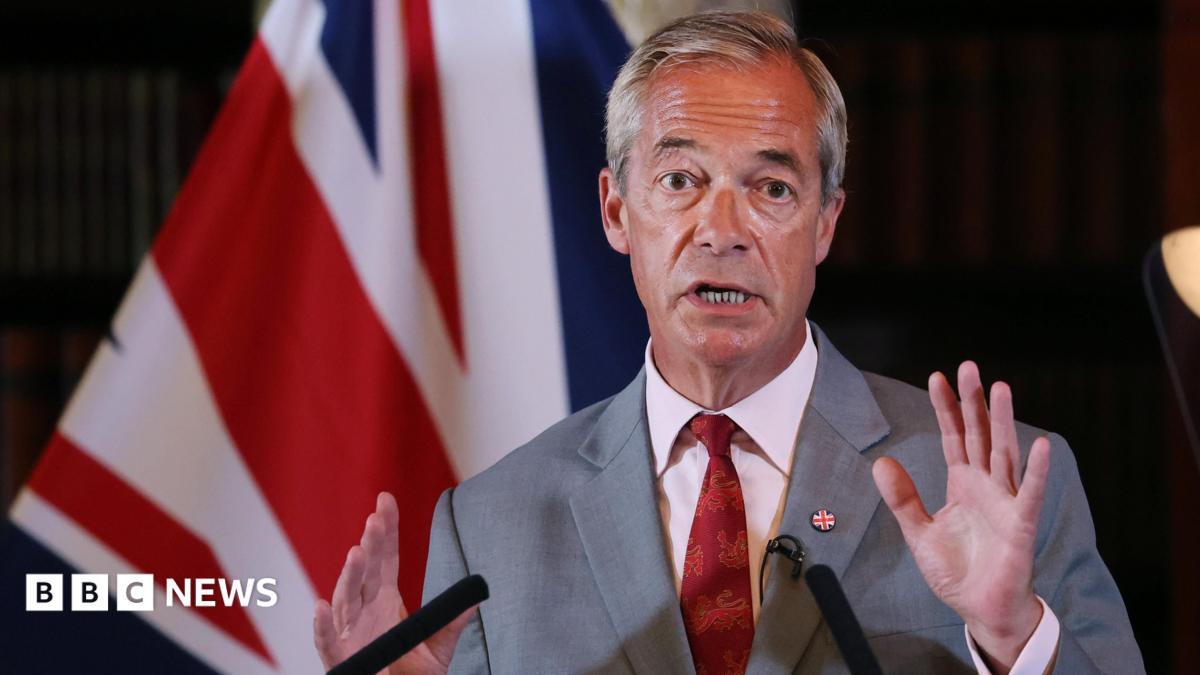
Reform UK leader Nigel Farage speaks during a press conference in London.

Reform UK begin their annual conference in Birmingham a bigger party than they were a year ago, their numbers swelled at Westminster, at Holyrood, in the Senedd and in local authorities.

But they also gather amid significant political headwinds, much of which revolve around money.

There was that whopping £5m gift to Nigel Farage from Christopher Harborne, the Thailand based British billionaire, and the long running row about whether the money should have been declared by Farage once he became an MP.

Then there is, among other things, the Metropolitan Police investigation into donations to the party during the last general election campaign.

Advertisement

Reform insists that it “takes pride in its stringent vetting of donations.”

When the party got together in the same West Midlands venue a year ago, they were an insurgency provoking intrigue and attention and demonstrating plenty of momentum.

Indeed that momentum was so significant that it was a major factor, perhaps the major factor, in accelerating the demise of Sir Keir Starmer as prime minister, because the potential prospect of a Reform government frightened the Labour Party to its core.

Would Starmer, its then desperately unpopular leader, help or hinder their attempts to take on Farage? Hinder was the eventually overwhelming view within Labour, and so Starmer was a goner.

Advertisement

But politics can change, and change quickly. With Starmer out and Burnham in, there is early evidence of some support for Labour picking up. No longer are Reform comfortably leading in all the opinion polls – in some they’re not leading at all. Add to this a more confident and prominent Kemi Badenoch leading the Conservatives and the recent rise too of Restore Britain, the outfit set up by the former Reform MP Rupert Lowe. And the Scottish National Party and Plaid Cymru won and so beat them in the devolved elections in Scotland and Wales respectively. In other words, collectively Reform’s opponents appear more energised and popular.

Make no mistake, no party at a UK wide level is popular at the moment, but the scrap appears more evenly matched than it did.

Source link

Advertisement
Continue Reading

NewsBeat

‘Unsettling… then incredibly cool’: Self-driving taxis can now be booked in the UK, and we’ve had a first ride – this is what it was like (and why it’s not completely driverless)

Published

on

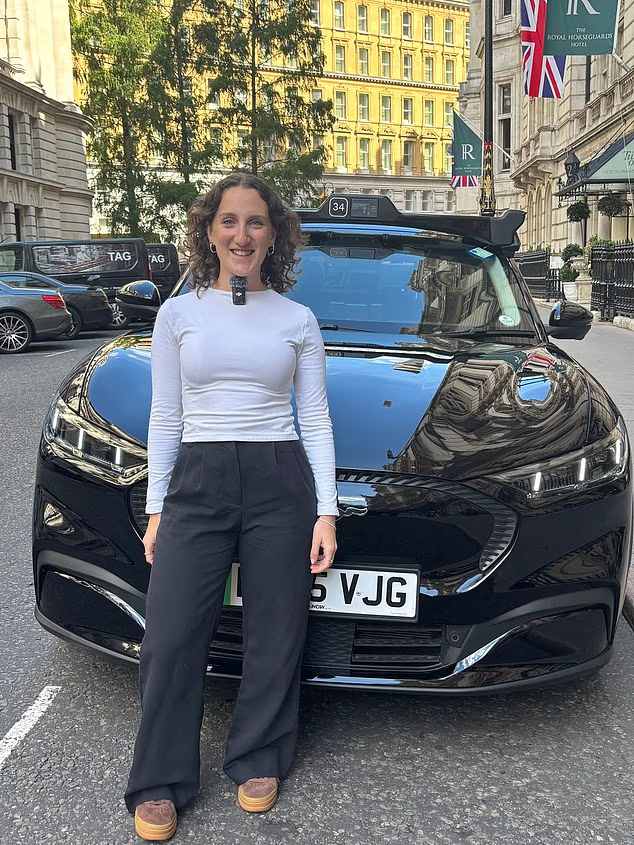
Is an autonomous vehicle the transport of the future? Erin takes a look inside

Autonomous cars – vehicles that drive themselves – can sound like either the future of transport or an utterly terrifying prospect. 

For me, they’ve always felt more ‘science fiction’ than ‘London taxi’. But now that future has arrived on the capital’s streets – and I’m about to find out what it’s really like.

Uber and intelligence firm Wayve have today launched ‘driverless’ rides in London, marking the first time the service has been available in the UK.

I say ‘driverless’ because, for now, a supervisor remains behind the wheel for safety reasons, with their hands hovering close by.

Advertisement

I climb into one of the much-talked-about cars – already used for testing and private trips around the city – and set off through central London.

And initially, it feels remarkably… normal.

Booking one is simple. You request an UberX, Uber Electric or Uber Comfort and can opt to be matched with a Wayve car at no extra cost, with the fare shown upfront in the app.

So far, so Uber. Except this time, there’s a robot in .

Advertisement

Is an autonomous vehicle the transport of the future? Erin takes a look inside

Once seated in the car, you can adjust the temperature and seat

Once seated in the car, you can adjust the temperature and seat

Riders – like myself – matched with a Wayve ride will travel in an all-electric Ford Mustang Mach-E vehicle equipped with the Wayve AI Driver, as well as surround sensors. 

Advertisement

The in-vehicle experience, designed by Uber, features interactive screens available in 64 languages where riders can start their trip and view the vehicle’s planned path. 

My car pulls up to collect me and, aside from a couple of add-ons (notably the camera bar on top of the car and Wayve markers on the side), looks like any ordinary car.

But the robo-taxi element kicks in once it comes to a halt.

To unlock the doors, you need to press a button in the app.

Advertisement

It’s the driving itself that is most bizarre.

Knowing that the steering wheel will move on its own is not enough to prepare you for seeing it in the flesh.

It’s totally unsettling at first – and then inexplicably cool. I felt like I was in a sci-fi movie.

While drivers are currently still in the vehicle for safety reasons, they do very little, other than a quick safety briefing, and I can envisage the joys of hopping into a taxi with no pressure to make conversation.

Advertisement

A few minutes into our drive, which has thus far been an exercise in child-like wonder given the spinning steering wheel, I’m struck by how few passers-by are looking at the car. 

Don’t they realise how groundbreaking this is?

The vehicles are identifiable by the overhead camera panel

The vehicles are identifiable by the overhead camera panel

The steering wheel moves by itself - and for now, a supervising driver is in place to monitor the journey

The steering wheel moves by itself – and for now, a supervising driver is in place to monitor the journey

Advertisement

The truth is, part of the success of the vehicles is exactly this – they function just like an ordinary car, down to the braking and accelerating, speed and general smoothness of drive.

In all honesty, it’s one of the smoother rides I’ve had through the nation’s capital, known for its stop-start traffic and often jerky taxi rides. 

It’s even better than being driven around by some of my friends and family – you’re not relying on someone’s skill with navigating tough routes and gear changes (sorry, mum!).

You can also adjust the temperature inside the car – I favour cooler rides, so I turn it down a couple of degrees – as well as the music.

Advertisement

I’m told that soon you’ll be able to do so directly from the app or by voice, without even having to fiddle with buttons inside the car. 

When our drive comes to an end, it pulls over seamlessly into a parking spot – and nestles in perfectly without any of the manoeuvring and faff I associate with parking when forced to do so myself.

A real feat for what I consider to be robo-engineering mixed with a spot of witchcraft and wizardry.

It’s not the end of the road for developments in the field, either. 

Advertisement
Uber and intelligence firm Wayve have launched the cars today

Uber and intelligence firm Wayve have launched the cars today

The question on my lips is, of course, when will the cars be totally driverless?

Kaity Fischer, Wayve’s vice president of commercial and operations in London, tells me it’s not yet confirmed – the safety trial phase currently in operation needs to undergo rigorous development and testing first.

Headquartered and founded in London, Wayve has built and specifically trained its AI technology on the capital’s roads since 2018.

Advertisement

Wayve’s approach uses an AI model that learns from experience, much like a human, allowing it to scale and adapt to complex environments without relying on traditional HD maps or hand-coded rules.

This launch is part of Uber and Wayve’s partnership, which included an investment to put Wayve-powered vehicles on the Uber network in 12 markets around the world, beginning with London.

As part of the future service in London and other global markets, Wayve and Uber will also introduce riders to the Nissan LEAF vehicle, powered by the Wayve AI Driver using NVIDIA DRIVE Hyperion, starting in Tokyo later this year.

‘We’re proud to introduce the Wayve AI Driver to the public for the first time right here in London, our home city and one of the most complex driving environments in the world,’ said Alex Kendall, CEO and Co-founder of Wayve. 

Advertisement
For now, the car model used is an all-electric Ford Mustang Mach-E vehicle

For now, the car model used is an all-electric Ford Mustang Mach-E vehicle

‘Autonomous driving technology will complement the city’s rich transport network, and we’re excited for Londoners to experience it first as we begin our global rollout with Uber.’

Sarfraz Maredia, global head of autonomous mobility at Uber, added: ‘London is a world-class hub for transportation innovation and this launch is a major milestone in scaling safe, accessible AV technology in a city with some of the world’s most complex roads.’

London being first is important and my ride, I reflect, is a success.

Advertisement

It’s unsettling at first. But after a moment getting used to the steering wheel moving of its own accord, it becomes just as ordinary as any other taxi ride. 

Source link

Continue Reading

Trending

Copyright © 2025