



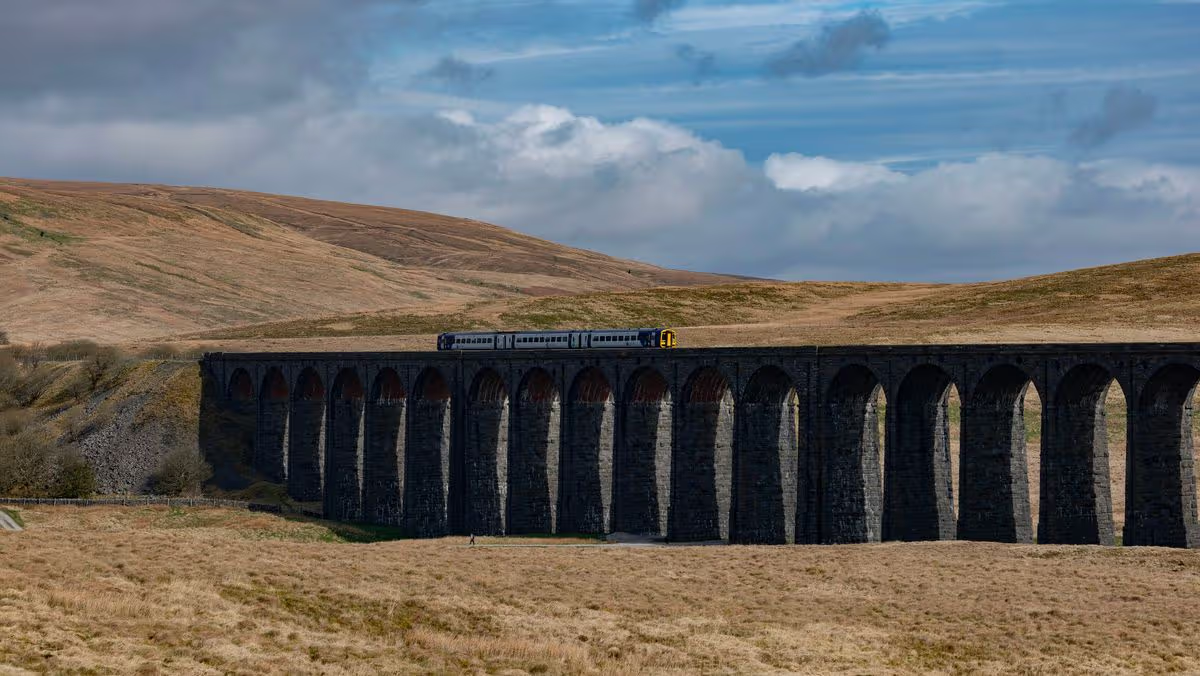
As the world famous Settle to Carlisle line celebrates 150 years of service, the Mirror joined the 1 m passengers expected this year.
It is widely lauded as one of the best train journeys in the world, and is just about to celebrate its 150th anniversary.
A huge public outcry and an appeal that raised £3m saved it from closure in the 1980s.
The Settle to Carlisle line survived and remains one of the most scenic in the country, crossing the Pennine Hills, the Yorkshire Dales and Cumbria’s Eden Valley.
It celebrates 150 years since its first rail passenger journey with a series of events including a steam train service.
The Mirror joined some of the 1 million passengers expected to travel on the route this year.
READ MORE: Jeremy Clarkson shows off birthday cake given to him by David BeckhamREAD MORE: Omeprazole patients with acid reflux told ‘red flag issue’ by NHS GP and BBC star
It was wet, wild and stormy as we ventured south from Carlisle to the Ribblehead Viaduct.
Its magnificent 400m arches are 400 meters (1,300 ft) long. A huge workforce of 6,000 men – 2,300 specifically on the Viaduct – built it between 1870 and 1875.
You can imagine the conditions they faced during winter on the wide open moorland surrounding the giant structure.
The navvies who died are buried in the cemetery at Chapel-le-Dale. Even in the pouring rain, the path passing under its 24 arches remains busy with hikers and cyclists.
You must take a short break during your train journey to see the viaduct in all its glory.
From your train seat, you have a breathtaking backdrop of rolling countryside.
Wind bent the trees on the distant hills. The stations are straight out of a 1930s black-and-white film.
“I say that is my office window,” said Yvonne Harland, 52, a Carlisle-based conductor on the route.
“It is absolutely stunning. Many passengers are hikers and dog lovers heading outdoors.
“It does not matter if you are in the valleys around Dent or the Ribblehead Viaduct.
“It is a tonic. You have to get off the train to see the viaduct; otherwise, you only catch a glimpse.
“The Three Peaks are just beautiful too. No disrespect to people who work in an office, but it takes some beating.
“I was in education for 20 years, and I fancied a change.”
Regular passenger Robin Gilder, 83, a retired ITV newsman, remembers the campaign to save the line in the 1980s.
Now he enjoys bringing along his grandson Finley Doran, 12, for days out. “I use it regularly now,” he said. “Especially since I retired.
“They had a dog sign the petition to save the railway and there is a statue to him at Garsdale station.
“There was huge public outcry when they announced they were closing this line.
“They raised millions of pounds to keep it open. So I think we should use it as much as we can.”
Finley, tucking into some sweets and pop, added: “I have been on about twenty times now. We use it all the time.”
For Scottish pharmacist Amy Robertson, it is her maiden journey. The 28-year-old is heading to Leeds to see a former friend with the misty hills rolling by her window.
“It does remind me of Scotland,” she said. “This is really lovely and you get some really nice views when you go up to the north of Scotland around Fort William.
“The weather may not be very good, but the countryside is beautiful.”
Northern recorded 995,000 passenger journeys on the line in 2025, the highest number since the Covid-19 pandemic.
But demand is expected to rise this year. Commercial and customer director Alex Hornby said he was confident passenger numbers would hit 1m.
“Customers can enjoy miles of breathtaking scenery, which changes throughout the year, and there are plenty of opportunities to get off and explore,” he said.
The Settle to Carlisle section of the line was completed in 1875; freight trains ran for a year before passenger trains were introduced on May 1, 1876.
The Settle Carlisle Railway Development Company will run a chartered steam train between Carlisle and York on May 23.
Karen Morley-Chesworth, their community rail officer, told the Mirror: “The Lonely Planet said it was in the Top 10 most scenic railway journeys in Europe.
“So it brings in many tourists and serves local people all year round. It runs down the backbone of Britain through Cumbria, Yorkshire and the Pennines.
“But it is the beauty of it that stays with you; every station takes you back in time, and the history of the line still fascinates people. It remains important to communities all along the route.”
Northern is set to offer £1.50 tickets to customers travelling on the route to mark the milestone.
Thousands of workers contributed to its complex construction, which includes 14 tunnels and more than 20 viaducts along its 72 miles (116km) of track.
In 1983, British Rail announced plans to close the line to passengers amid concerns about the cost of repairing the Ribblehead Viaduct. But £3m was spent between 1988 and 1991 to bring it back into use.
The Settle Carlisle Railway Development Company’s chairman, Pete Myers, said the company was working with communities along the line to mark the “special anniversary year.”
He said: “The Settle to Carlisle line is unique, connecting communities from Yorkshire through to Cumbria, and also providing a sustainable and beautiful way for visitors to explore the Yorkshire Dales, Westmorland Dales and Lake District.”





















































You must be logged in to post a comment Login