Losing to the team 13th in English football’s third tier represents a new low in Burnley‘s season just as renewed optimism was starting to creep in.
Burnley‘s remarkable 3-2 come-from-behind win at Crystal Palace on Wednesday was their first victory in 16 Premier League games. The gloom started to lift slightly.
Parker’s side showed real fight and spirit at Selhurst Park, which made his decision to make nine changes to his team for the visit of Mansfield all the more baffling.
“When you don’t go through to the next round there will always be questions asked about that [team selection] but I don’t think that was the main factor today,” Parker told BBC Sport.
Advertisement
“We lacked a little something in those final moments. That was where we have fallen way short today.”
Burnley are not the first, nor will they be the last, Premier League side to ring the changes for a cup game against lower opposition.
But having been dumped out of the League Cup by Cardiff City back in September, the FA Cup was the supporters’ only chance to distract themselves from looming relegation.
“It is embarrassing, the changes he made. Play your strongest team. He made nine changes, and the second half was embarrassing,” former Burnley defender David Unsworth said on BBC Radio East Lancashire.
Advertisement
“It is an embarrassing afternoon for Burnley. It gives the owner a decision to make now. He has to listen to the fans, they are not happy.
“For the first time I have witnessed all home ends of the stadium booing and disgruntlement. The owner has a decision to make.”
Chairman Alan Pace, the leader of the club’s owners ALK Capital, isn’t the most popular at Turf Moor either at the moment.
This week he angered fans when, during an interview with BBC Football Focus, he dismissed fan concerns as coming from those who “just play this game on a computer somewhere”.
Advertisement
He went on to liken those same fans to three-year-old toddlers having a tantrum.
Pace used Saturday’s programme notes to clarify his words, writing: “I did not intend for my words to upset, but I did mean what I was trying to say which was that, just because some are upset, does not mean that things are dire and without hope.”
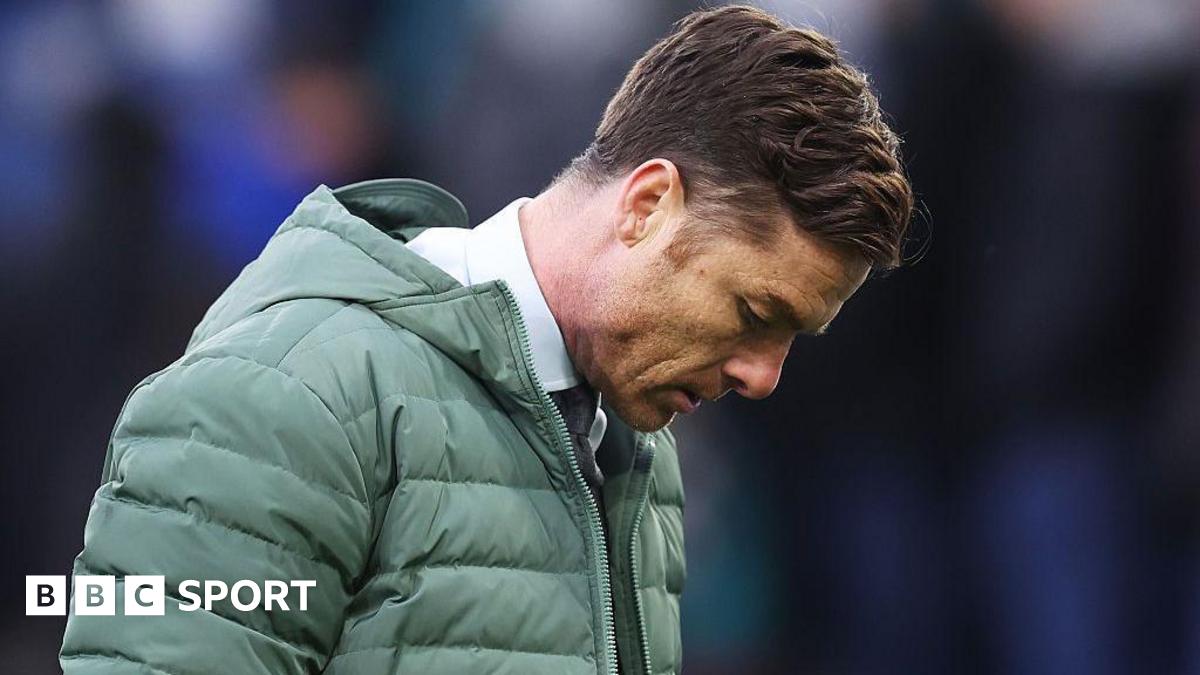
Many Burnley fans will be hoping Pace calls time on Parker’s spell in charge, though the former Premier League midfielder said he is confident is his own position at the club.
“I am very comfortable in my position at this present moment in time. We have lost a game of football today against a team we should be beating,” Parker told BBC Sport.
Advertisement
“We had numerous chances. Of course you are always going to judge a result and today is a bad one, we take the flak for that, the team and myself.”
Alistair Brownlee was the first athlete ever to defend the Olympic triathlete title.
Over an 18-year career, he claimed gold at both the London 2012 and Rio 2016 Games, as well as 22 World Series events, two World Championships, a Commonwealth title and four European Championships, to name only a few.
Two years into retirement, Brownlee shows little sign of slowing down. When he’s not working with his brother Jonny on the Brownlee Foundation – their charity encouraging young people into sport – he’s focused on his own business, Truefuels, which sells energy gels and electrolytes.
Advertisement
It’s hard to reconcile all this with the unassuming man who strolls into our office alone on a Thursday in March. It’s not the first time the point has been made. In 2021, he told The Telegraph that he was once told that he’s“an inspiration because he looks so normal it makes everyone think that if he can do it, they could too”.
I caught up with him for our Readers Ask series, where industry specialists answer questions from our Telegraph Recommended Reader Panel.
How old were you when you started to compete professionally? Mary-Grace, East of England
I did my first triathlon when I was eight, but didn’t compete professionally until I was 18.
Advertisement
I won the World Junior Championships, and I did some serious races the year after I was 19. I went to the Beijing Olympics as a 20-year-old the year after.
What advice do you wish you would have received when you considered a career in sports? Ekaterina, London
My parents, my dad in particular, recommended that I studied alongside sport when I was young.
I also had some brilliant advice from my coach Malcolm, who told me to believe that I could win the Olympic games – but only by one stride, which was a great way of saying have faith but not too much, and train really hard.
Advertisement
Endurance sport, although it sounds a bit cliché, is a long game. Don’t rush things, look after your body, focus on the small things: nutrition, sleep, recovery, all of that, and that will pay dividends over a long period of time.
What was it like competing so hard against your brother and could you put the result to one side after the race was over? Caroline, East of England
I didn’t know any different. I’ve competed against my brother since I was really young – six-years-old or probably even younger in the garden at home so it’s very natural to me.
Even at the top level of the sport I think we took it for granted. We would be training side by side at home in Yorkshire one day and competing in the top races in the world the day after.
Advertisement
We basically knew that we were each other’s best training asset and we also knew that we could help each other in racing as well as the training.
We pretty much always put it aside straight after the race, and that was partly about our relationship and partly because we both had that kind of mentality, we were always thinking about the next thing.
Who was your biggest competitor and why? Nicolle, South East
Obviously my brother Jonny was a big competitor throughout the main part of my career.
Advertisement
I also had a very talented, ferocious Spanish competitor called Javier Gómez. I raced him probably 100 times during the same period. He came second at the London Olympics and beat me to the world title quite a few times.
We were very close in physical ability, and well matched in terms of where we were in the race. Quite a few of our races came down to sprint finishes.
Thanks to the fast-acting officers, the man survived and was discharged from hospital a few days later
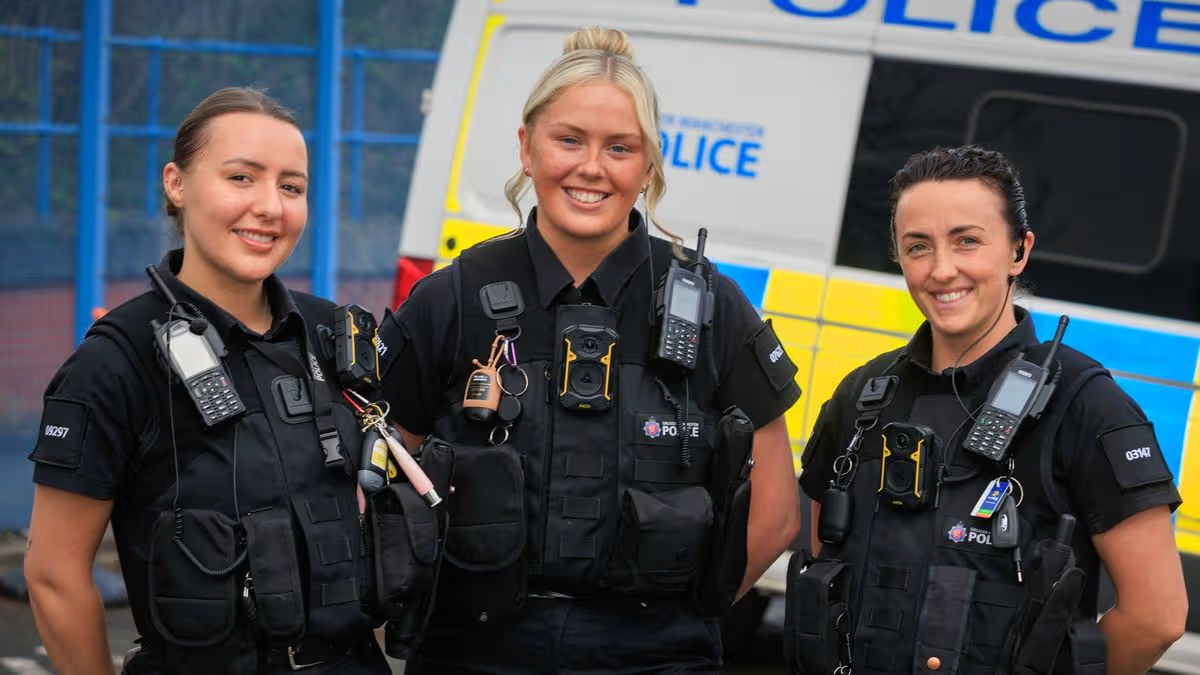
Three police officers have been praised after their fast actions helped to save the life of a man who had a sudden heart attack in Salford. Response officers, PC Abbie Ellison and PC Sophie North, were flagged down by a member of the public while they were on patrol on February 26.
Advertisement
At around 8.30am, PC Ellison and PC North, who work on Response in the Salford district, were on their usual mobile patrol in the area when they were flagged down by a member of the public who was in distress.
A man riding a mobility scooter appeared to have had a medical episode and collided with a parked vehicle on Hankinson Way, Salford Precinct.
Get MEN Premium now for just £1 HERE – or get involved in our WhatsApp group by clicking HERE. And don’t miss out on our brilliant selection of newsletters HERE.
PC Ellison and PC North immediately stopped their vehicle and rushed to the scene where the man, in his 50s, was unconscious and in cardiac arrest. The officers immediately began conducting CPR on the man and set-up the defibrillator ready to assist with resuscitation.
Advertisement
PC North shouted over the radio to alert other patrols and make North West Ambulance Service (NWAS) aware they were attending a medical emergency.
PC Ellison said: “You go to all different types of jobs being on response, however, this incident was an incident where the treatment we gave could potentially save someone’s life. And thankfully this happened in this circumstance.
“To know this male is still alive and able to continue with his day-to-day life due to the lifesaving support he was given is exactly the reason I became a police officer; to be able to make a difference and help people in critical times.”
A third officer, PC Siergiejew, was responding to an alternate job but stopped at the location to help her two colleagues until paramedics arrived.
Advertisement
PC Siergiejew said: “When I heard my colleagues shout for assistance I could hear from their voice that the incident was serious. I was already attending an alternate immediate response incident; however, I was passing them to go to the job.
“I stopped immediately to help my colleagues. Asking members of the public to stand back to give us some space to give lifesaving first aid. I noticed that the officer conducting CPR had been doing this for some time, so I swapped with her and continued to conduct CPR.
“I felt so much relief when the paramedic advised us that there was a pulse again for this male. Within the four years of being a police officer I have never given CPR to someone that has recovered, and that made me proud of my colleagues and myself.”
The three officers provided lifesaving medical assistance to the man while trying to contain a clear area and get members of the public to stand back. Once the first rapid response vehicle had arrived, they were advised that the patient had regained a pulse, and he was taken to hospital for further treatment.
Advertisement
PC North said: “I have been a response officer for three years, and this incident marked the first time I had ever been flagged down to assist someone requiring CPR. Despite a crowd quickly gathering around PC Ellison and me, we remained entirely focused on delivering life-saving care.
“A few weeks later, the man attended Pendleton Police Station with his carer to collect his mobility scooter. During that visit, he shook my hand and thanked me for saving his life. It was a truly full-circle moment. That sense of gratitude is exactly why I chose to become a police officer – to make a difference and help people in their most critical moments.”
LONDON (AP) — Almost three dozen countries will meet Thursday in an effort to exert diplomatic and political pressure to reopen the Strait of Hormuz, a vital shipping route that has been choked off by the U.S.-Israeli war against Iran.
British Prime Minister Keir Starmer said the virtual meeting chaired by Foreign Secretary Yvette Cooper “will assess all viable diplomatic and political measures we can take to restore freedom of navigation, guarantee the safety of trapped ships and seafarers and to resume the movement of vital commodities.”
Iranian attacks on commercial ships, and the threat of more, have halted nearly all traffic in the waterway that connects the Persian Gulf to the rest of the globe’s oceans, shutting a critical path for the world’s flow of oil and sending petroleum prices soaring.
The U.S. is not among the countries attending Thursday’s meeting. Trump has said securing the waterway is not America’s job, and told U.S. allies to “go get your own oil.”
Advertisement
No country appears willing to try and open the strait by force while fighting rages and Iran can target vessels with anti-ship missiles, drones, attack craft and mines. But Starmer said Wednesday that military planners from an unspecified number of countries will meet soon to work on how to ensure security for shipping “after the fighting has stopped.”
In the meantime, 35 countries including the U.K., France, Germany, Italy, Canada, Japan and the United Arab Emirates have signed a statement demanding Iran stop its attempts to block the strait and pledging to “contribute to appropriate efforts to ensure safe passage” through the waterway.
Thursday’s meeting is considered a first step, to be followed by “working-level meetings” of officials to hammer out details.
Starmer said resuming shipping “will not be easy,” and will require “a united front of military strength and diplomatic activity” alongside partnership with the maritime industry.
Advertisement
The international effort idea has echoes of the international “coalition of the willing” that has been assembled, led by the U.K. and France, to underpin Ukraine’s security after a future ceasefire in that war. The coalition is, in part, an attempt to demonstrate to the Trump administration that Europe is stepping up to do more for its own security.
The urgency of stronger continental defenses has been reinforced by Trump’s renewed suggestion that the U.S. could pull out of NATO.
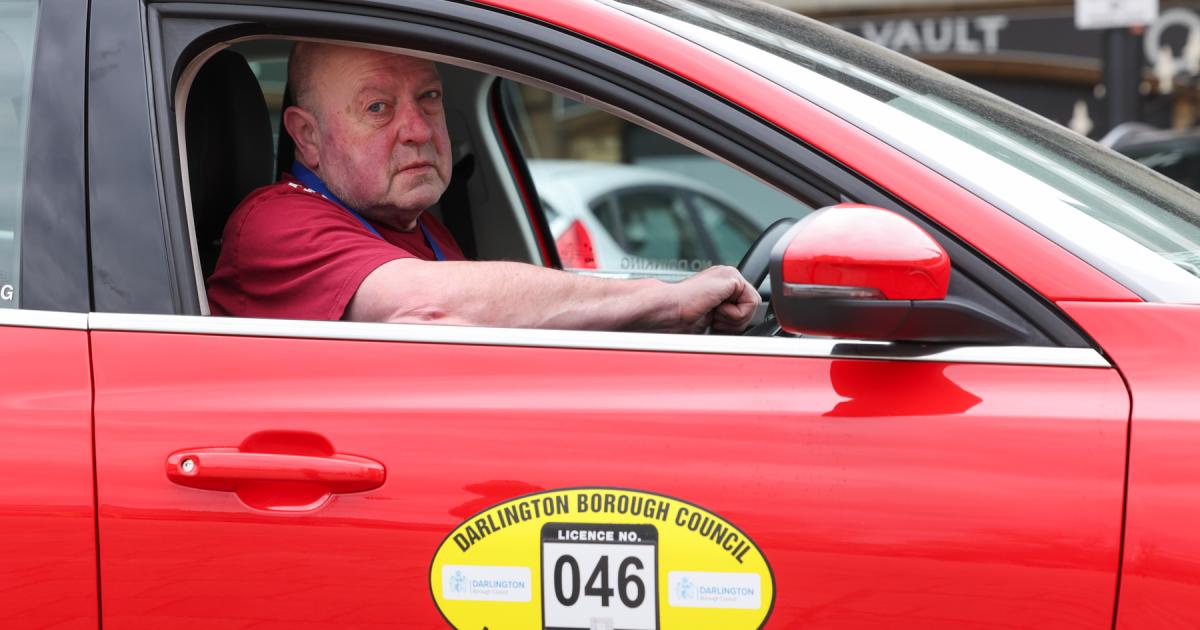
Gavin Ellis praised the impact of the scheme on Darlington’s Grange Road, which was introduced in 2021 to manage queues, support vulnerable people and help keep town centre customers safe.
Yet Mr Ellis fears incidents among passengers and drivers will now rise, and said the marshals proved their worth on their final night.
Taxi driver Gavin Ellis in Darlington market place. (Image: Chris BOOTH)
He said: “Ironically, on their last night, they split at least three potential fights up.
Advertisement
“I also had a customer who told me he had been a victim of violence on that rank, ending up in A&E because someone decided to headbutt him because he didn’t realise he was standing in the wrong place.
“Last year, one of them actually saved a man’s life, and this is how they’re rewarded.
“I sincerely hope somebody’s son or daughter does not become a victim of this short-sighted decision.
“Those marshals have been a godsend to the taxi trade, helping us with unscrupulous customers, stopping queue jumping and breaking up fights.”
Advertisement
The scheme was originally established in response to a post-Covid shortage of taxis and drivers, and an increase in demand as residents returned to pubs, bars, and restaurants following the easing of restrictions.
This imbalance led to long queues at taxi ranks, increasing the risk of disorder, queue jumping, and some taking the risk of seeking lifts from unlicensed drivers or strangers.
The 65–year-old said he tried to organise a petition to keep the marshals but didn’t receive the required amount of signatures for it to be considered by council leaders.
Speaking in February ahead of the scheme ending, Councillor Jim Garner, cabinet member for stronger communities, said: “We are grateful for their efforts, but with the change in habits, less demand at taxi ranks, alongside reduced funding, we felt now was the time to bring the initiative to a close.”
Advertisement
Durham Police said it will continue to patrol the town centre to ensure people can return home safely.
A council spokesperson added: “Darlington continues to be recognised as a safe and welcoming place for a night out and we recently retained the prestigious Purple Flag accreditation.
“Safety measures remain in place, including qualified door staff, police patrols and the help button at the junction of Skinnergate and Houndgate, which links to our CCTV control room.
“We urge people to plan ahead of a night out to ensure they can get home safely and there are tips on the Enjoy Darlington website.”
The government’s new social cohesion action plan, Protecting What Matters, is frank about its urgency: “Social cohesion is … not just a good in and of itself. It is also a vital front in the resilience of our national security.”
The 2024 Southport attacks and subsequent disorder, rising religious hate crime, unrest over migration policy and domestic extremism have all forced the issue of community division. Yet the government’s answer, built around integration, interfaith dialogue and civic ceremonies, mistakes the symptom for the disease.
“Cohesion” is vague, unmeasurable and elastic enough to mean whatever the government of the day needs it to mean. People describe the places they love as close-knit and safe, not “cohesive”.
A better framework would be community resilience: the measurable capacity of neighbourhoods to absorb shocks, resist divisive narratives and recover from crises. You cannot integrate people who are isolated, impoverished and without the infrastructure to bring them together. COVID laid bare what the evidence already showed: communities with stronger social infrastructure and higher levels of social capital demonstrated greater resilience to the pandemic’s social and economic shocks.
Advertisement
The government strategy does contain a chapter on “resilient communities”. However, it frames resilience narrowly, as emergency management of religious and political extremism, rather than as the everyday and routine fabric that makes any form of solidarity possible at all.
The missing piece
There is an extraordinary gap in Protecting What Matters. While there is acknowledgement of the effects of “visible deterioration of public services”, the word “poverty” does not appear once. The plan frames division through religion, identity and Islamophobia, which are outcomes and proxies, not root causes.
A study of over 15,000 residents across 839 English and Welsh neighbourhoods, validated by a 2024 analysis of the Understanding Society dataset, shows that deprivation, not diversity, erodes trust, participation and neighbourliness. Once you control for poverty, diversity is associated with higher volunteering and charitable giving. The crisis of solidarity is a crisis of resources, not cultural difference.
There is an undertone of nostalgia in the government’s plea for communities to “integrate”, a wistfulness for tight-knit mining towns where everyone knew their neighbour. But those communities were built on something material: secure jobs, union membership, working men’s clubs and shared economic fate.
Advertisement
More in Common’s 2025 polling finds that 44% of Britons sometimes feel like strangers in their own country – a figure that could be read as evidence of cultural division. But More in Common’s own analysis shows this alienation is concentrated in economically left-behind areas, not diverse ones. People do not feel like strangers because their neighbours look different. They feel like strangers because the institutions that once made them feel they belonged – clubs, pubs, unions and jobs – have gone.
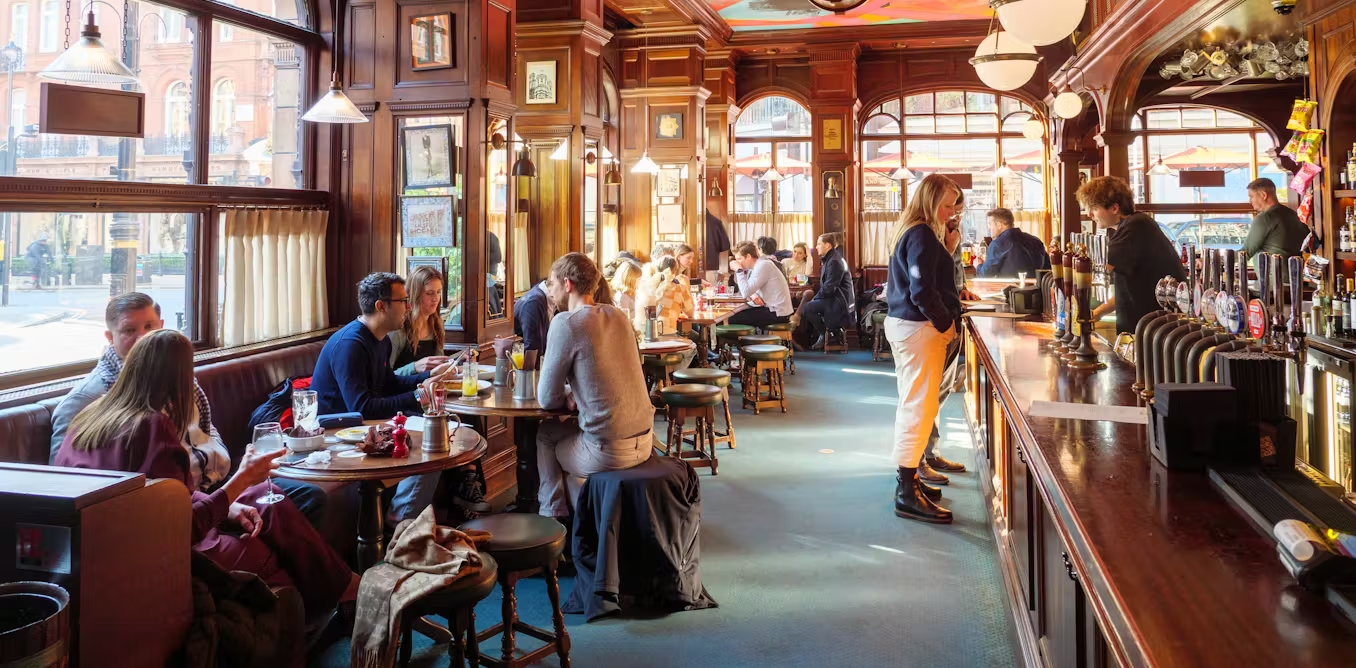
The loss of social infrastructure has been devastating to communities across Britain. chrisdorney/Shutterstock
The argument that more homogenous communities are more cohesive is seductive, but weak. Britain’s most ethnically diverse neighbourhoods are not its least cohesive – they are, as Manchester researchers found, its healthiest. Mining towns were cohesive despite being male-dominated, often racially exclusive and economically coercive. The lesson is to replicate not their demographics, but the material conditions: jobs, institutions and shared infrastructure that give people a reason to show up.
A recent randomised controlled trial by the Department for Work and Pensions found that structured group job-search workshops improved both mental health and employment outcomes among benefit claimants, precisely because they restored the social support, routine and shared purpose that work normally provides. Community resilience cannot be separated from economic development. Departments such as DWP and Jobcentre Plus have a direct stake in the social capital agenda.
New housing developments need parks and primary schools from day one: accessible spaces that create early encounters and establish trust between newcomers. Established but deprived communities need to restore what has been stripped away, whether the pub, the library or the community centre. Sports facilities build bridging connections across difference, faith buildings deepen bonds within communities and civic spaces create the linking ties between residents and institutions. The task is to match the infrastructure to the social capital gap, not apply a single template everywhere.
The real test, which my colleagues and I call the “Wet Wednesday Night Test”, is whether your investment in social infrastructure gets 14 people to turn up for football (or cub scouts, or a book group) on a wet Wednesday in February. Nobody comes to “build social capital”. They come because the pitch is free, the lights work and there are hot showers. The pint afterwards does more for integration and social capital than any strategy document ever will.
ICON’s research, drawing on over 100 peer-reviewed studies, shows that social infrastructure generates £3.50 for every £1 invested. Every £10,000 invested prevents an estimated £105,000 in riot damages.
During the 2011 riots, 71% of incidents occurred in areas ranked among the most deprived 10% of England – the same year in which 287 community centres had closed. The government described this as a “social cohesion” problem; it was a social infrastructure problem.
Advertisement
The government’s £5 billion Pride in Place programme makes a start at investing in communities. But more investment is needed to address the challenges in our most deprived neighbourhoods, where people face life expectancy four years below the national average.
A serious approach would use existing schools, job centres and childcare settings as social hubs, and make public transport free for under-18s so that young people can move around their own towns. And, it would tackle the poverty, insecure work and collapse of institutions that once gave people a reason and the means to show up for each other.
Build those foundations and what politicians call “cohesion” will follow. Nobody will use that word to describe what they feel when they step outside of their front door. They will just say it is a good place to live. That is enough.
“It hits you, and it doesn’t really hit you until days after I was told that I thought, God almighty.”
06:30, 02 Apr 2026
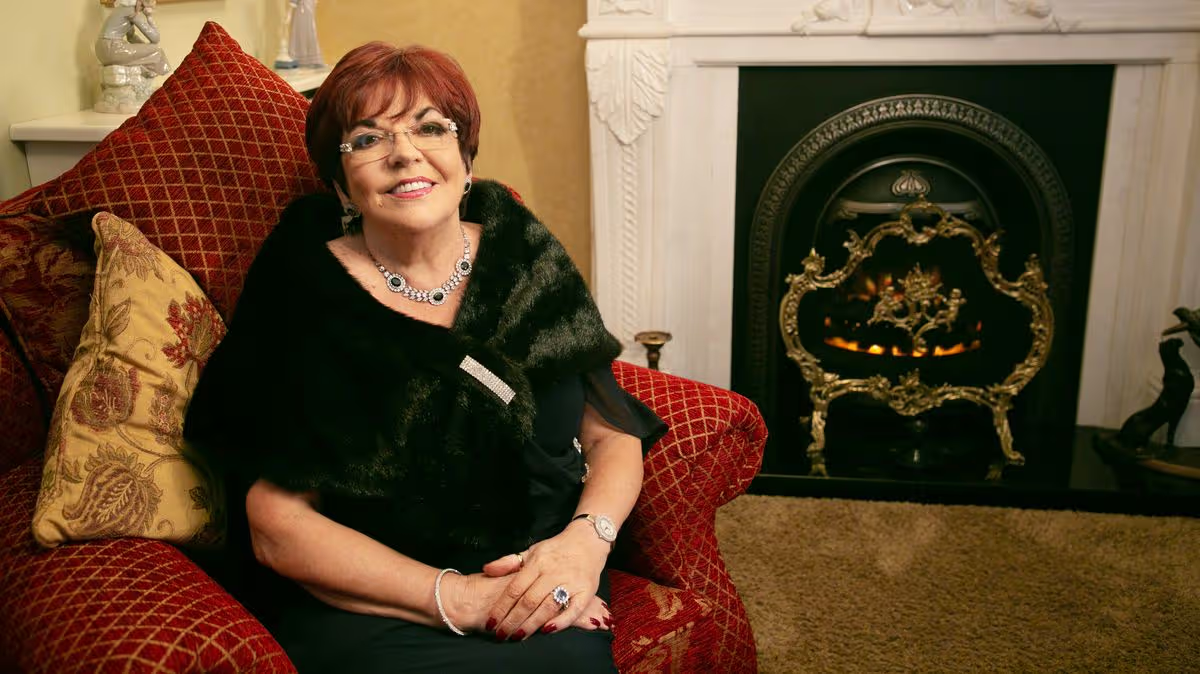
Susan McCann chats to Belfast Live
For all the bright lights and packed venues that have defined Susan McCann’s career, the foundations of her life remain firmly rooted in something much quieter. Long before the tours, television appearances, and international stages, there was a small, isolated home on the border where music was shared rather than performed.
It was there, in a two-room house without electricity, that Susan’s understanding of life and of people first took shape. Her upbringing was modest, even by the standards of the time, but what their family home lacked in comfort it made up for in warmth and a constant sense of togetherness.
Advertisement
Those early years continue to inform how she sees the world, even now. The values formed in that environment would go on to underpin not just her career, but how she navigated its pressures.
“Well, see, we got you said, we grew up in a townland called Carrickasticken, which is midway between Dundalk and Forkhill, and when I was growing up, we didn’t have any electricity.
“We had gas light and tilly light. In fact, I was married, and my son was two and a half before Mum and Dad got electricity in where we lived. It was very isolated, but there was always loads of craic.
“The neighbours all came in, I don’t even hardly know my neighbours now, but then everybody knew one another and, they used to gather on a Saturday night in our house. Mum and Dad would have a bit of a sing song and all they would have sang.”
Advertisement
That sense of community extended beyond the immediate family, but it was within the household itself that Susan McCann first found her voice and her confidence.
“I was the only one that had a hard neck to go out and do it for a living but Mummy and Daddy, were good singers. In fact, they used to argue who I took the singing after, you know, it used to be a standing joke in there.
“And we had great fun. My brothers Joe, Arthur, Vincent and John all went over to England for work because there was none here for them. John was two and a half years older than me, and he would come home on holidays, and he’d teach me how to jive because he used to go dancing at all the Irish clubs in England. So we used to be dancing and singing, that’s the way our house was.
Advertisement
“And then the boys would bring home people with them. There were many a night there were boys lying on the sofa, you wouldn’t know who they were. That’s the truth.”
If her upbringing provided the foundation, her marriage provided the stability that allowed her career to flourish. For more than 50 years, Susan and her husband Dennis have navigated an industry not known for preserving relationships and have done so by staying firmly side by side.
“The honest-to-God answer is I don’t know. We have a lot in common; he loves the music. He was the bandleader all my life,” she said when I asked how their relationship stood the test of time.
“And Dennis is a very easy man to get on with. He’s very quiet, and we’re two opposites really. My father used to say to me that I had a tongue for 10 rows of teeth because I was that gobby, but that’s the way we are.”
Advertisement
“But was there ever a point where it came between us? No, sure, he was always with me. We were always together when we’d be away, which, in fairness, we probably never would have lasted if it hadn’t been that way.”
That partnership would prove essential not only during the busiest periods of her career but also in more difficult times. In recent years, Susan McCann has faced a serious health challenge, one that reshaped her perspective in a way that decades on the road never did.
“You know, the fans are great. I just love singing. I just went through a very hard two years there, and I’m just so glad to be able to sing again.
“And I mean this, you hear people say, thank God. If you haven’t your health, you have nothing, and you know what, a truer a word was never spoken.
“Because, when I was told I had cancer, people talk about a shock, and it hits you, and it doesn’t really hit you until days after I was told that I thought, God almighty. You know, the word cancer is so frightening.
“But it’s amazing what they can do now. I’m totally free of cancer at the minute, but they’re keeping a very close eye on me. They can say what they like about the NHS, but the NHS really looked after me.”
If that experience reinforced anything, it was the central role her family continues to play in her life. Even as she marks 50 years in music, the next chapter is already being shaped by those closest to her.
Advertisement
“I was out for dinner in my daughter Linda’s house one Sunday and my son-in-law Brian said to me, Susan, I’ve written a song for you. I never knew he would even be thinking about writing a song.
“And he had it written for like 6 months before he even let me see it and then he gave it to me, and of course I got really emotional. He wrote it from his heart. It’s just lovely. The song is lovely.”
The song was one of the last on her setlist at her celebratory show in Belfast’s Grand Opera House, where she was joined on stage by her daughter Linda on piano, and her grandchildren.
That sense of continuity is already visible in the next generation, with her granddaughters beginning to find their own paths in music.
Advertisement
“Sinead wants to make a career of singing. She went to university and dropped out to sing. She is a very good singer, but I don’t know if it is as easy as it was when I started. There is a whole lot of young girls coming up, and now we have the likes of Cliona Hagan, Claudia Buckley and Lisa McHugh and I love to see them.
“But Sinead is a good hard worker and she would do two gigs in the one night if she got the.”
“Laura, she’s a really beautiful singer. She is a different type of singer and she sings songs from the shows. She’s a classy, classy singer, but she’s going to London to do art.”
When asked what advice she would give them, she said: “I made a good living and I made a nice career for myself and I met lots of nice people, lots of not so nice people too. You have to work hard. If you don’t work at what you want to do, well then your chances of making it wouldn’t be great.
Advertisement
“So as long as they have respect for themselves and respect for their parents, that’s very important too, and respect for the people that come out to see them or the people that they work for. I think it’s important that young people learn that because if you don’t have a bit of manners and a bit of respect for older people, well then you’re no friend of mine.
For all the milestones in her career, it is a quieter moment, far from any major stage, that remains one of her most treasured memories. It came not from an award or a headline performance, but from her father, watching from the sidelines at her first show after winning the European Gold Star Award.
“I took Mummy and Daddy and my sister Marie to the show in Ardee, which wasn’t far from Forkhill. Marie and Mummy went down to get seats at the front beside the stage, and I was getting changed upstairs. The hall held about 300 people, and there were that many people turned up, they had to put speakers outside so they could hear.
Advertisement
“Daddy was a very humble man. He was a country man and never took his cap off. He was sitting looking out the window, and I can see him to this day. He looked out, and he said Susan, look at that crowd out there. I went to the window and right enough there was a crowd. He looked at me and he said, and they are all here to see you. I could cry thinking about it.”
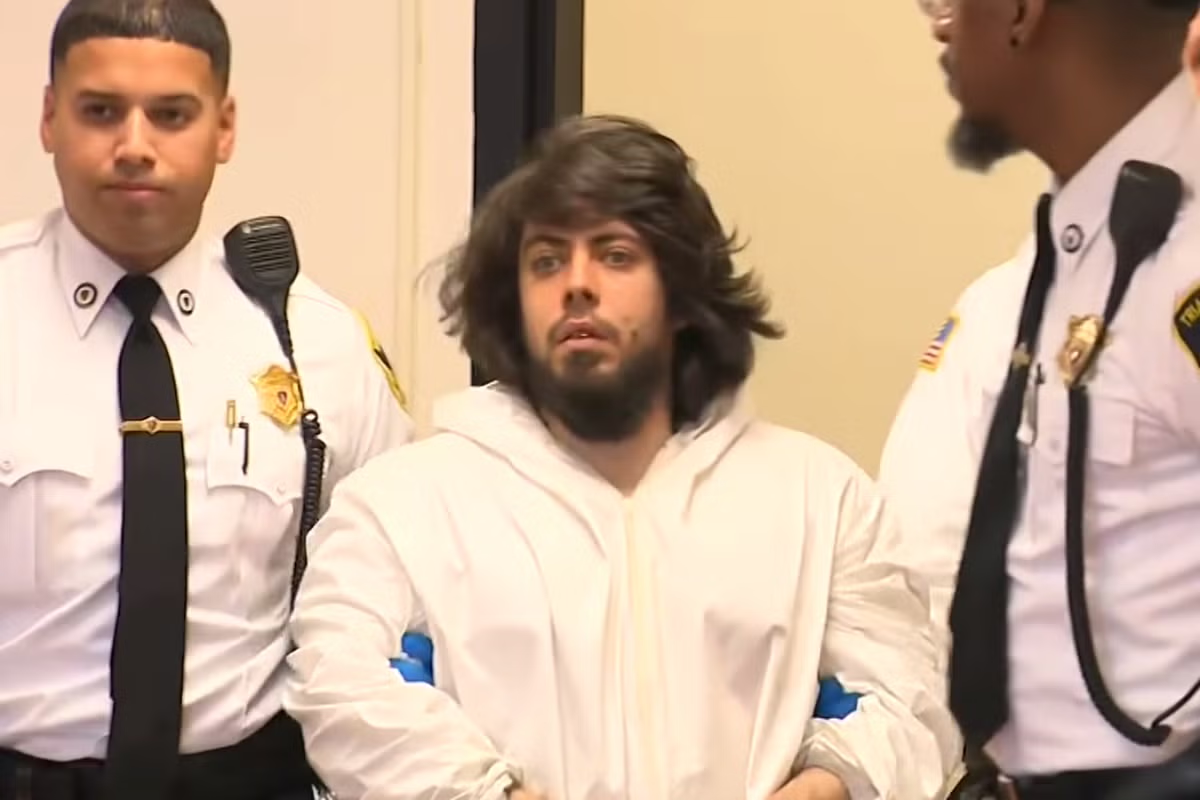
A 29-year-old Massachusetts man has been charged with murder and assault after being accused of killing his 90-year-old grandmother using a skateboard and attacking other family members.
Hudson police arrested Devin Dube, 29, Tuesday afternoon after getting multiple calls he was being violent in a residence he shared with family members, including his grandmother Elaine Dube, the Middlesex County District Attorney’s Office said.
“This is a senseless tragedy, and our thoughts are with everyone impacted during this incredibly difficult time,” Hudson Police Chief Richard DiPersio said during a press conference on Wednesday. “I want to reassure our community that there is no ongoing threat to the public.”
The Independent has contacted Dube’s attorney for comment.
Advertisement
The 29-year-old was arraigned Wednesday in Marlborough District Court, where a judge entered a not guilty plea on his behalf.
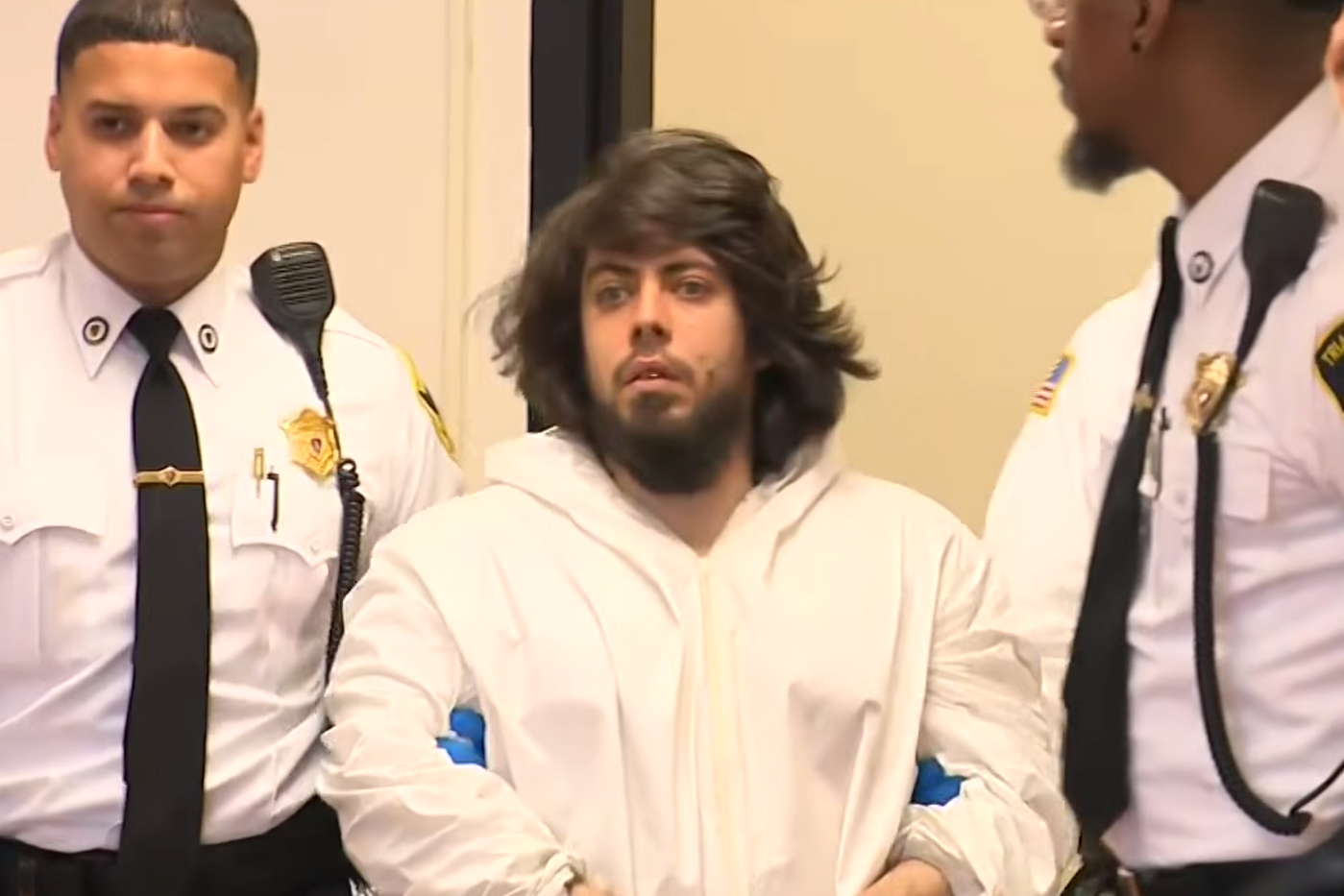
Devin Dube, 29, of Hudson, Massachusetts, is accused of murdering his grandmother using a skateboard (WBZ News)
Forensic psychologist Hillary Novak performed an initial examination of the suspect.
She reportedly told the court she had previously evaluated Dube in 2023, and that the 29-year-old had a history of schizophrenia and not taking his medications. The suspect told her he was having auditory hallucinations on the day of the alleged murder, she said.
“With everything I’ve seen, it leaves me to question his competency to stand trial,” Novak reportedly told the court.
Dube, who is being held without bail, has been sent to Bridgewater State Hospital for a mental health evaluation.
Advertisement
He is due back in court for a probable cause hearing on April 17.
Police were called to Dube’s home on Munson Street around 3:10 p.m. on Tuesday. A woman called 911 to say she was being attacked with a skateboard, the local DA’s office said in a statement.
Officers located Devin Dube allegedly hiding in a van at a nearby property after the attacks, according to Hudson Police Chief Richard DiPersio (Middlesex County District Attorney’s Office)
A male resident then called the police to report the continuing altercation inside the home, including the alleged attack on Elaine Dube, who lived in a basement apartment on the property.
When police arrived, Devin Dube had allegedly fled the scene.
About 45 minutes later, police got a third call, from an address on nearby Tower Street, about an individual running around on the property, officials said.
Advertisement
Police found Devin Dube hiding in a van and arrested him without incident, the DA’s Office said.
Elaine Dube, along with Devin Dube’s brother and sister, were treated for injuries at UMass Memorial Medical Center in Worcester.
Elaine Dube later died, while Devin Dube’s siblings were released from hospital Tuesday night, after getting care for non-life-threatening facial and upper body injuries.
Middlesex District Attorney Marian Ryan said at the Wednesday press conference that police had prior contacts with Devin Dube, but “never behavior of this level.”
If there’s one thing parents are looking for in the school holidays it’s a good day out and Manchester has plenty of them.
Advertisement
But some are better than others and there’s one place in the city centre which has made it onto The Times’ list of 32 of the best family days out in the UK.
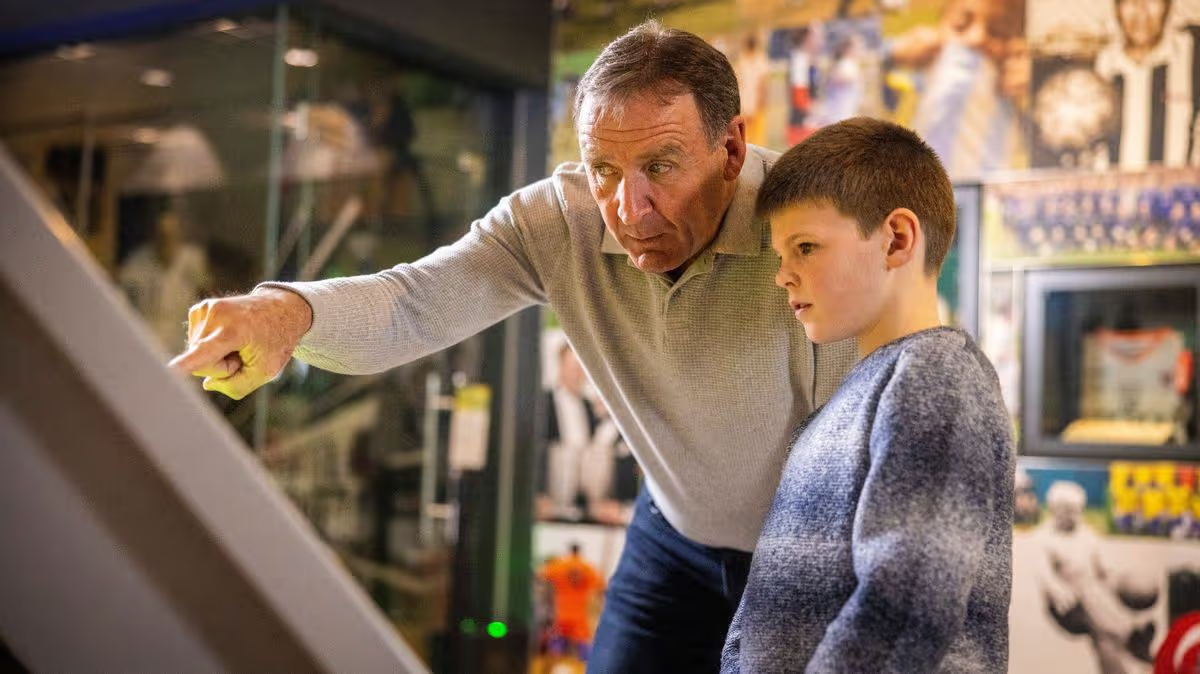
The National Football Museum is the only north west venue to feature in the list, which includes the likes of Alton Towers in Staffordshire, Jorvik Viking Centre in York and Clip ‘n Climb in Ilkley, west Yorkshire.
Get MEN Premium now for just £1 HERE – or get involved in our WhatsApp group by clicking HERE. And don’t miss out on all the latest news and events for families with our Manchester Family newsletter HERE
Although it does give a brief mention to Manchester’s Treehouse Hotel, Hotel Football and the Old Trafford stadium tour.
The Times states: “If it’s your child’s dream to pose alongside a Premier League or Women’s Super League trophy, then this is the place to fulfil it (well, official replicas). Home to the world’s largest public collection of football objects, this museum is where the whole family can spend hours brushing up on their knowledge while exploring interactive exhibits.
“Study the 1863 laws of the game, see Mary Earps’s goalkeeper gloves, and dive into a penalty shootout. Under-fives will enjoy the Discovery Zone play area.”
It adds: “Carry on the fun with a stay at the Treehouse Hotel Manchester, less than a ten-minute walk away; or go for the hat-trick of footballing brownie points by staying at Hotel Football, followed by a tour of the Old Trafford stadium it overlooks.”
Advertisement
The museum is well known as being a firm favourite with families.
While it used to be free for everyone, it’s now free for those who pay their council tax to Manchester City Council and for others it’s £9 for children and £15 for adults. That does give access for 12 months though, so it’s not a huge expense if you plan on making a few visits.
There’s a new exhibition which has launched in time for the Easter holidays too.
Advertisement
Head, Shoulders, Knees and Goals is an exploration of football through the body – movement, representation, science, and what it feels like to play.
It lets visitors explore the science behind movement, the stories that shape identity and the joy of football fandom through hands on play, sensory moments and incredible objects.
Highlights of the exhibition include a largescale replica of David Beckham’s foot cast when he broke his metatarsal in 2002, a framed facemask worn by Harry Kane when playing for England in 2016 and a hijab and eye mask for Ayman Hafiz, the first Hijab wearing player on England Women’s blind team.
Advertisement
The giant cast of Beckham’s left foot was created as a publicity stunt, touring around the country and getting signed by fans wishing Becks a speedy recovery from his injury in the Champions League tie against Deportivo La Coruña.
The Score Gallery exhibition reveals the impact that sports science, exercise, nutrition and even clothing can have on performance. It also goes beyond the pitch, taking in the sights, sounds and smells that form an integral part of the matchday experience for supporters on the terraces.
The exhibition has been made possible with the support of The Players Foundation – an independent charity that offers support and advice to current and former professional footballers and scholars who find themselves in charitable need.
Advertisement
It features among a wide range of Easter gallery activities including trails, puzzles, crafts and football challenges, each highlighting the importance of movement and coordination.
The full programme kicks off from Thursday, April 2. Visitors can ‘take in a full sensory matchday experience, show off their trademark celebrations, and meet a time-travelling football physio, journeying through different eras of sports science on the galleries’.
Keeping with the theme of movement, the museum will also be playing host to a uniquely urban football experience. Yard Ball is heading to the ground floor, transforming the Pitch Gallery into an all-action arena that will put your skills to the ultimate test.
Packed with ‘street football vibes and nostalgic fun’, Yard Ball invites players of all abilities to take on challenges that will improve players’ balance, hone their accuracy and finesse their footwork.
Finally, the right clothing can help boost performance, but it’s not just about the kinetic: it’s about the aesthetic. For one weekend, visitors can sport cutting edge sportswear technology – and look good whilst doing so – with the return of PitchFest, the museum’s retro shirt festival.
On Saturday, April 11 and Sunday, April 12, the Pitch Gallery will be awash with jerseys, courtesy of The Shirt Collectors. Yard Ball will remain in the line-up, while Grassroots XL will be on hand to snap trading card-style portraits of the museum’s younger stars.
The museum opens Monday to Sunday, 10am to 5pm. Last admission 4pm. Visit the website for more details.
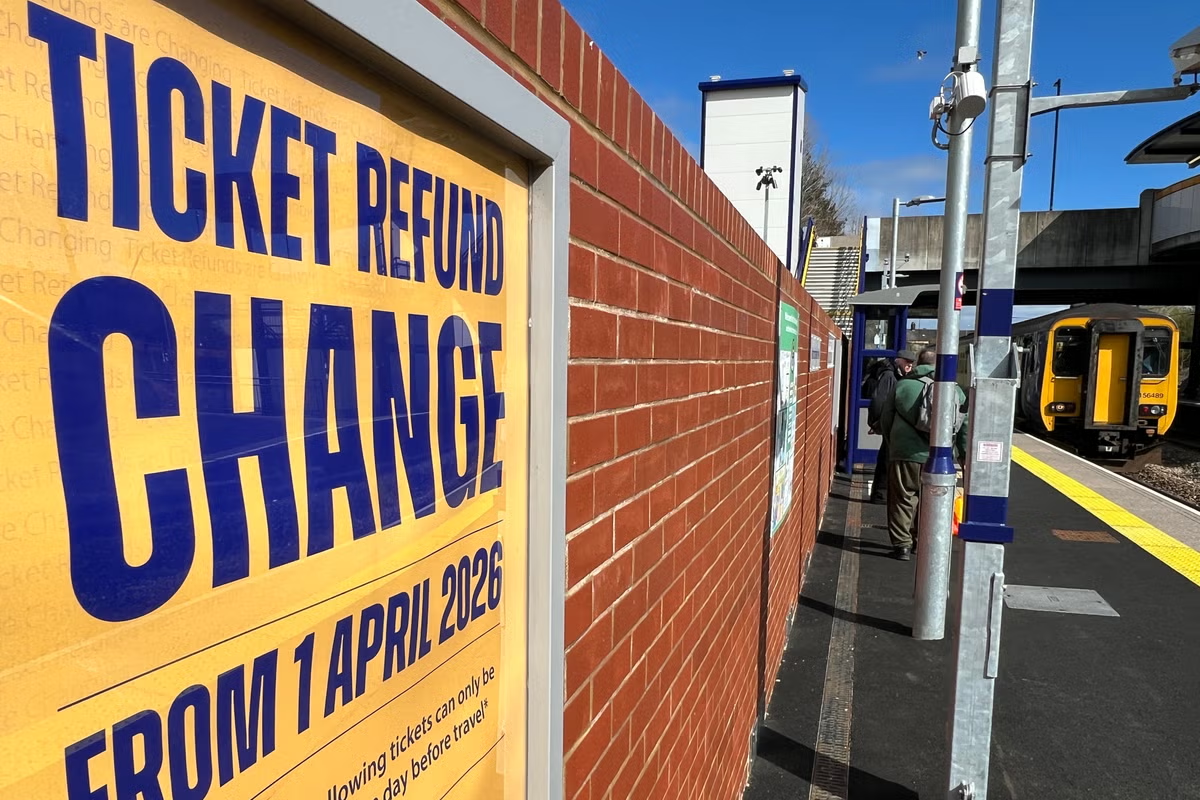
Regular rail travellers will have seen a big poster campaign at stations across the country over the last few weeks. They warn of a change in ticket refund rules, which took effect on April Fool’s Day.
Starting on 1 April 2026, if you buy an “anytime” or off-peak ticket, allowing you to travel on a range of trains, you can only get a refund if you apply before the ticket becomes valid.
Consider someone spending an ambitious £193 on a one-way ticket for the 7am Avanti West Coast express from Manchester to London. If they decide by 11.59pm the night before not to travel, they can claim a refund (minus a £5 admin fee). That’s in sharp contrast to the previous rule, which allowed them to get their money back on the intended day of travel, or during the following four weeks.
The rail industry says the change is essential to crack down on fraud that is costing train operators (and, by extension, the taxpayer) £40m a year.
Advertisement
It was an absurdly easy way to defraud the railway at little or no risk. Someone would buy a ticket and set about trying to make the journey without having their ticket clipped or scanned. This was a trivial prospect at open stations (those without barriers, ranging from unstaffed halts to the huge junction at York). Or they might “tailgate” passengers through the automatic gates.
If the miscreant succeeded in making the journey without their ticket being checked en route, then they would put their ticket in for a refund, which reduced the cost of pretty much any journey to just £5 – the admin fee.
Some regular commuters saw it as a risk-free variant of fare-dodging. Sometimes their ticket would be registered as used, either by clipping or scanning. On that particular day, they therefore paid the appropriate fare – but often, they did not.
The system certainly had some honest beneficiaries: passengers who had bought tickets but then their plans had changed, for personal or professional reasons. They will lose out.
Advertisement
Now, there is no price advantage to buying ahead of time, so you might simply decide to buy on the day, shortly before travel. The ticket will cost the same, and you will eliminate the risk of needing to cancel. The catch is on intercity routes, where one benefit of booking ahead is to get a seat reservation. For some – but not all – journeys, you can get a reservation before you buy a ticket.
Neil McG wrote: “Says the bloke who travels for free all over the world.”
Others condemned the move because it would penalise passengers who are ill on the day of travel. But the rail industry insists it will look generously at exceptional circumstances such as sickness. In the event of disruption, you will still be able to claim a refund if you can’t make the journey due to cancellations or excessive delays.
The rail commentator Philip Haigh said: “Perhaps a better answer is for rail companies to check tickets?” Gareth Dennis rejected the assertion that the old rules were open to fraud. “Not remotely a loophole,” he wrote. “The result of the de-staffing of the railway. Instead, an extremely lazy policy change that will result in less overall revenue as stung passengers never again choose rail.”
He may be proved right. In contrast, I have spoken to a number of regular rail travellers who had no idea – until they saw the station posters – that refunds were so easy to obtain.
Advertisement
Perhaps we could settle on one of the continental systems to eliminate fraud. Paper tickets often need to be stamped in a machine on the departure platform to indicate you are starting your journey; presenting an unmarked ticket to an inspector is regarded as fare-dodging. And in Italy, tickets purchases online are for specific trains – and are refundable up to the moment the service departs.
As always, your views are welcome: you can email me at s@hols.tv or tweet @SimonCalder.
Opening hours for contact centres and phone lines will be shifting around the bank holidays
The DVLA and DWP have confirmed exactly when their contact centres and phone lines will be open during the bank holiday weekend. Although, people needing to contact them during the bank holiday may have to plan ahead to get in touch.
Advertisement
The Easter weekend encompasses two bank holidays on Good Friday, April 3rd, and Easter Monday, April 6th. Bank holidays are generally not considered working days even within governmental departments, so the long weekend has potential to cause havoc for people needing to contact the departments or waiting for updates, payments and deliveries.
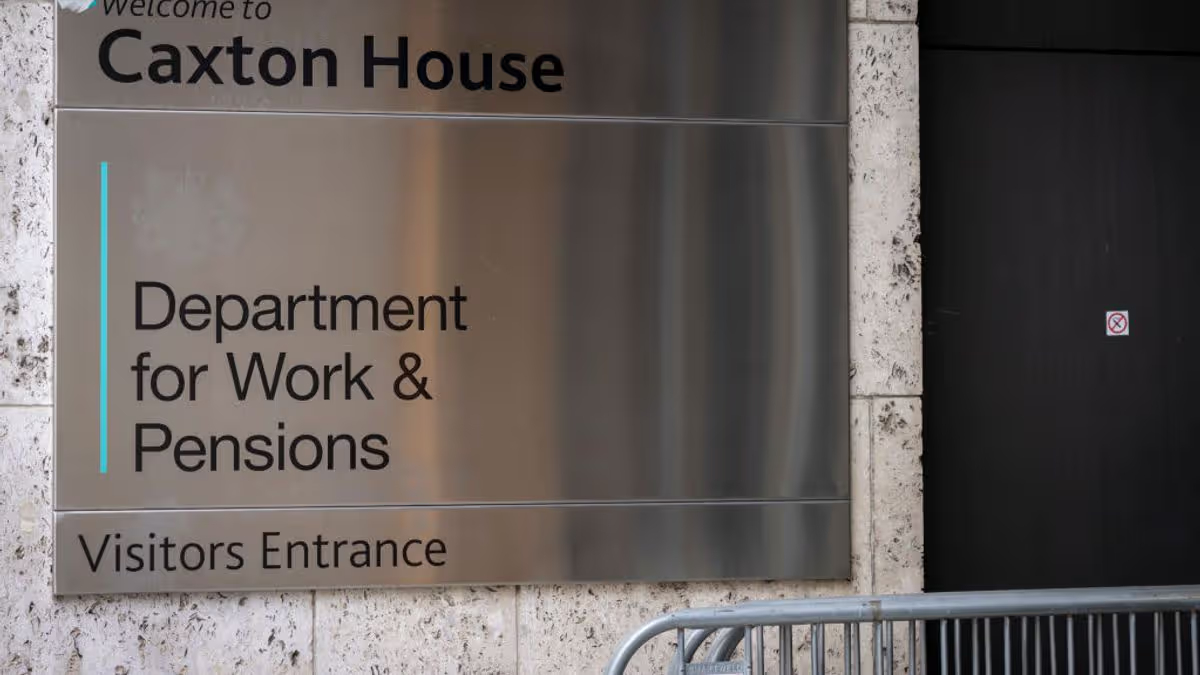
Department for Work and Pensions
The DWP took to X warning claimants: “Jobcentre Plus offices and phone lines will be closed on Fri 3 and Mon 6 Apr over the Easter period.”
The phone lines will also not be open during the Saturday or Easter Sunday as it is typically only open from Monday to Friday between 8am and 5pm. Even people using their online Universal Credit account will also only typically get responses during weekdays.
Advertisement
Content cannot be displayed without consent
The DWP contact number you must use will depend on why you’re contacting the department in the first place. Some of the most commonly sought after numbers can be found here on the Gov.uk website.
The offices and phone lines should be operating normally from Tuesday, April 7. However, it’s not just DWP contact centres being affected by the bank holidays.
Payments from the DWP due on either Good Friday or Easter Monday will not be paid on these days as most banks aren’t processing transactions. Instead, they will mostly be paid on the first working day before, which will be Thursday April 2nd.
DVLA
Customers will be able to use DVLA’s online services throughout the Easter period. However, the department’s contact centres will be entirely closed on Good Friday, Easter Sunday and Easter Monday.
On Saturday, April 4th, the DVLA contact centre will have normal Saturday operating hours from 8am to 2pm. Normal operating hours will also continued from Tuesday, April 7th.
If you are waiting for deliveries from the DVLA, the department usually makes allowances for bank holidays and non-working days.
The Gov.uk website has a tool that can pinpoint people to the correct DVLA contact they need to solve their problem.












































You must be logged in to post a comment Login