


Andy Burnham will inherit a ‘fragile’ economy gripped by stagflation fears, experts warned on Thursday after the latest dismal growth figures.
Days before Mr Burnham enters Downing Street, the Office for National Statistics (ONS) said gross domestic product (GDP) grew by just 0.1 per cent in May, after shrinking by 0.1 per cent in April.
It came as the International Monetary Fund (IMF) delivered a stark warning to the incoming Prime Minister not to put up public spending and instead get the public finances under control.
Official figures suggest the economy enjoyed a strong start to the year but has stuttered after Donald Trump’s Iran war disrupted supply chains and pushed up costs.
Some businesses also point to the ongoing impact of Labour’s tax hikes, minimum wage increases and workers’ rights policies in holding back growth.
And experts point to the risk that Britain suffers a bout of ‘stagflation’ – the toxic combination of stagnating growth and rising inflation.
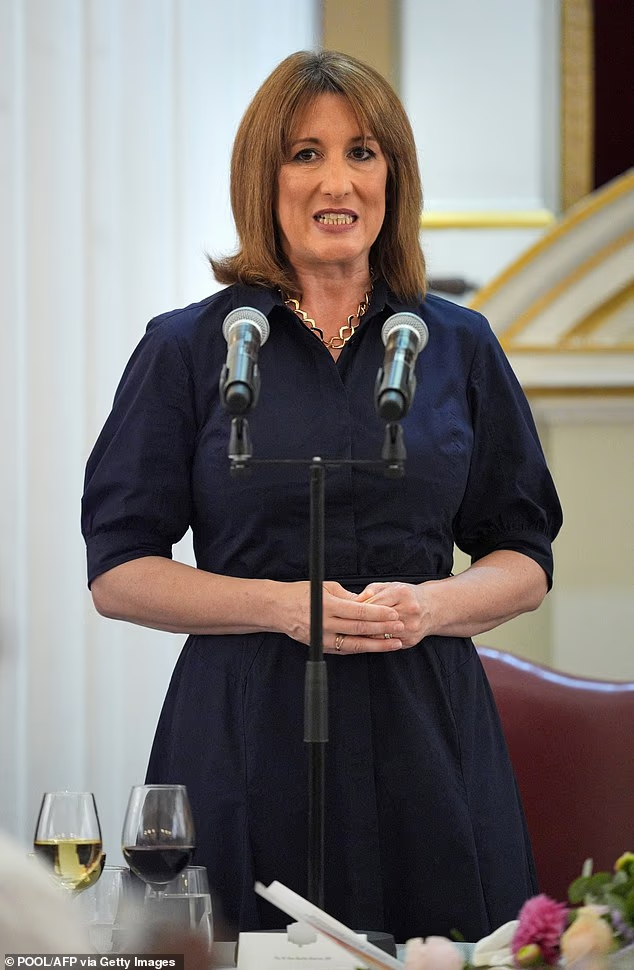
Latest sluggish growth figures come days before Andy Burnham takes office – and don’t match what Rachel Reeves (pictured on Tuesday) has been claiming…
It comes in stark contrast to Chancellor Rachel Reeves’s claim in a speech to the City this week to have ‘beaten the odds’ to deliver a ‘strong’ economy.
Thursday’s GDP figures showed that while the huge services sector – ranging from bars and hotels to accountancy and law firms – grew by 0.3 per cent in May, other parts of the economy struggled. Manufacturing grew by just 0.1 per cent and the construction sector shrank by 0.8 per cent.
Stuart Morrison, research manager at the British Chambers of Commerce said: ‘The latest ONS data shows a fragile economy weighed down by geopolitical tensions and domestic cost pressures.’
And Suren Thiru, chief economist at the Institute of Chartered Accountants in England and Wales, said: ‘This dishearteningly weak rebound is unlikely to ease anxiety over the UK’s economic health.’
Mr Thiru said the ‘underwhelming’ figure highlighted that the UK remained vulnerable given the resumption of hostilities in the Middle East, pushing oil prices higher again.
Such an outcome ‘would further damage an already frail economy, strengthening stagflation risks’. he added – eroding the new PM’s ‘headroom’ for changing tax or spending plans.
‘The imminent change in Prime Minister risks casting a shadow over the UK economy, with heightened uncertainty over future tax policy likely to make consumers and businesses more reluctant to spend and invest,’ Mr Thiru said.
It came as the IMF’s latest report on the UK also stressed that the parlous state of the public finances could tie the new PM’s hands.
The IMF said that, amid ballooning debt and pressure from bond investors, Mr Burnham’s priority must be to stick to plans to bring down borrowing.
And in advice unlikely to find favour with Left-wing Labour MPs, it said the government must be ‘very selective’ when responding to new demands for spending.
The IMF acknowledged the pressures posed by the UK’s ageing population and rising defence spending commitments but warned against raising taxes even further to meet them.
‘With the tax-to-GDP ratio already set to reach historic levels by UK standards, meeting these pressures through tax measures alone would risk amplifying distortions and undermining growth prospects,’ it said.
The advice from the IMF came a day after Mr Burnham refused to rule out imposing a wealth tax when he comes to power, saying he ‘might be having to ask for a little more’.
















































You must be logged in to post a comment Login