

Business
Is Andy Burnham promising a new dawn for North Sea oil and gas?


Other options for Burnham include scrapping the Energy Profits Levy (EPL), or windfall tax. This was introduced when prices spiked at the start of Russia’s invasion of Ukraine.
It has a headline rate of 78%, which is taken whether oil and gas prices are high or low.
The industry says it makes the North Sea one of the least favourable in the world for investors and there is strong evidence that investment has certainly dried up in those years.
It’s due to be replaced in 2030 by another windfall tax, which operators like more because it’s only triggered when prices are high and falls back when they are low.
While politicians have been arguing furiously over Jackdaw, Rosebank, and new exploration licences, it’s the EPL which the industry would most like the new prime minister to focus on.
It’s also the one which is likely to face the least opposition from environmentalists.
It does fit in with one of Andy Burnham’s missions of reindustrialisation by encouraging the kind of investment that brings and secures jobs.
But it’s the least politically sexy option to take.
So what he does there may help define whether the new PM is about grabbing headlines or making genuine moves to stimulate the economy.


BNY Mellon Appreciation Fund Q2 2026 Commentary
Business
How Much Will $1,000 Invested in XRP Be Worth in 5 Years? What Wall Street Analysts Actually Predict
XRP is trading around $1.09 as of mid-July 2026, a level that puts the cryptocurrency down roughly 68% from its 52-week high near $3.66 and down sharply from the $3.65 it commanded just a year earlier. For anyone weighing a $1,000 investment in the token today, that price would buy approximately 917 XRP, a figure whose future value depends entirely on which of several widely divergent analyst forecasts, if any, ultimately proves closest to reality.
XRP’s recent price action has been notably weak even as the underlying news for Ripple, the company behind the token, has largely been positive. The token’s long-running legal battle with the U.S. Securities and Exchange Commission concluded, spot XRP exchange-traded funds launched in the U.S., and regulators classified the token as a digital commodity alongside Bitcoin, according to reporting from 24/7 Wall St. Despite clearing those hurdles, XRP fell from around $1.30 at the start of June to roughly $1.04 by the end of the month, caught in a broader crypto market selloff that pulled most digital assets lower regardless of individual project fundamentals.
One development analysts are watching closely is the CLARITY Act, proposed federal legislation that would permanently classify XRP as a commodity under U.S. law rather than leaving that determination to regulators on a case-by-case basis. The bill missed an early-July target date the White House had floated for signing it into law, with the Senate’s return from recess and other legislative priorities pushing a potential floor vote to late July or early August at the earliest, according to 24/7 Wall St. Even if the bill passes, analysts caution it would likely produce a short-term relief rally rather than a fundamental shift in XRP’s longer-term trajectory, particularly while the broader crypto market remains under pressure.
Looking further out, five-year price forecasts for XRP, extending roughly to 2030 or 2031, vary dramatically depending on the source and methodology. According to Yahoo Finance, analyst predictions for where XRP could trade by 2030 range from $5 to $28, with consensus estimates clustering between $5 and $15. At $5, a $1,000 investment made at today’s roughly $1.09 price would grow to approximately $4,200, while a price of $15 would turn that same $1,000 into roughly $12,600. Standard Chartered has offered one of the highest credible institutional forecasts at $28 for 2030, a level that would value a $1,000 initial investment at approximately $23,500, though the bank has also cut its own shorter-term 2026 target for XRP from $8 to $2.80 during the current market downturn, illustrating how quickly even institutional forecasts can shift.
Other analysts have offered more measured outlooks. Ryan Lee, chief analyst at Bitget Research, put his 2030 price target for XRP between $4.20 and $10 or higher, according to 24/7 Wall St, with the wide range depending on factors including how quickly Ripple’s RLUSD stablecoin gains adoption, whether bank partnerships convert into actual XRP-denominated settlement volume, and whether Ripple eventually pursues an initial public offering. Lee noted that banks currently using Ripple’s network largely rely on it for messaging and tracking rather than settling transactions directly in XRP, often preferring RLUSD or fiat currency instead because stablecoins avoid the price volatility associated with XRP itself. At the lower end of Lee’s range, a $1,000 investment would grow to roughly $3,850 by 2030, while the higher end would produce a return closer to $9,170.
At the far extreme, one former Goldman Sachs analyst, Dom Kwok, has floated a 2030 target of $1,000 per token, a figure that Yahoo Finance noted would require XRP’s market capitalization to exceed the gross domestic product of every country on Earth, making it widely regarded across the industry as an outlier scenario rather than a realistic base case.
Central to nearly every bullish forecast is the question of how much of the global cross-border payments market, estimated at roughly $150 trillion, Ripple can realistically capture through its network. Ripple’s own leadership has targeted roughly 14% of that market, according to Yahoo Finance, but the company’s On-Demand Liquidity network processed only around $15 billion in transactions in 2024, far short of the approximately $21 trillion in annual volume that target would imply. That gap between Ripple’s stated ambitions and its current transaction volume represents one of the central uncertainties analysts point to when explaining why price forecasts for the token diverge so widely.
Some more conservative, algorithm-based forecasting models paint a far less dramatic picture. Price prediction tools from platforms including MEXC, which apply modest annual growth assumptions to XRP’s current trading price, project the token could reach somewhere between roughly $1.66 and $1.80 by 2030 under a steady, low-growth scenario, a trajectory that would turn a $1,000 investment today into roughly $1,520 to $1,650 over five years, a far more modest outcome than the institutional analyst targets cited above.
Given the scale of disagreement among forecasters, ranging from modest single-digit percentage gains to returns exceeding 20 times an initial investment, and the acknowledgment even from bullish analysts that XRP’s price depends heavily on unresolved variables like regulatory outcomes, bank adoption patterns and the broader crypto market cycle, financial advisors generally caution that cryptocurrency price predictions of any kind carry significant uncertainty. This article is intended to provide factual context on published forecasts rather than investment advice, and readers considering an XRP investment should be aware that cryptocurrency prices are highly volatile and that past performance, including XRP’s roughly 68% decline over the past year, offers no guarantee of future results in either direction.
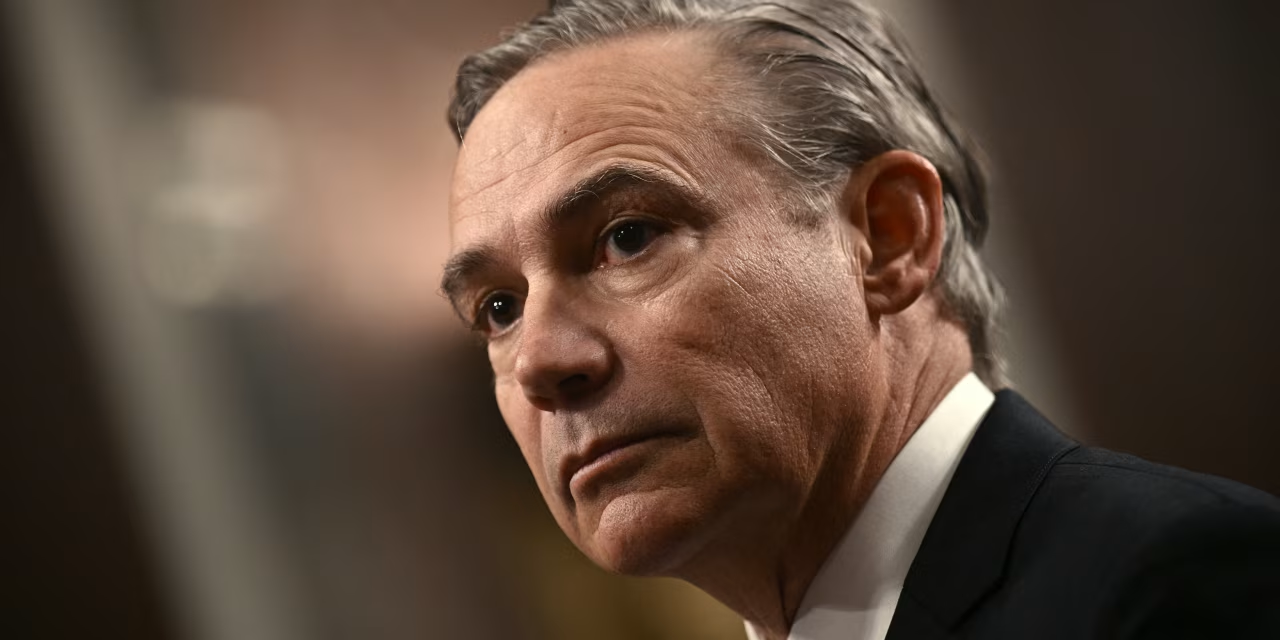
Boeing BA Chief Executive Kelly Ortberg said the company has started work on a new airplane design, but it is focused on playing catch-up to deliver products that are years behind schedule.
Ortberg said airlines weren’t clamoring for a new design just yet, and Boeing wants to have the technology and its finances in place first. “Certainly, getting our financial house in order is a part of our being ready,” Ortberg said. “That’s going to take another couple years.”
Copyright ©2026 Dow Jones & Company, Inc. All Rights Reserved. 87990cbe856818d5eddac44c7b1cdeb8
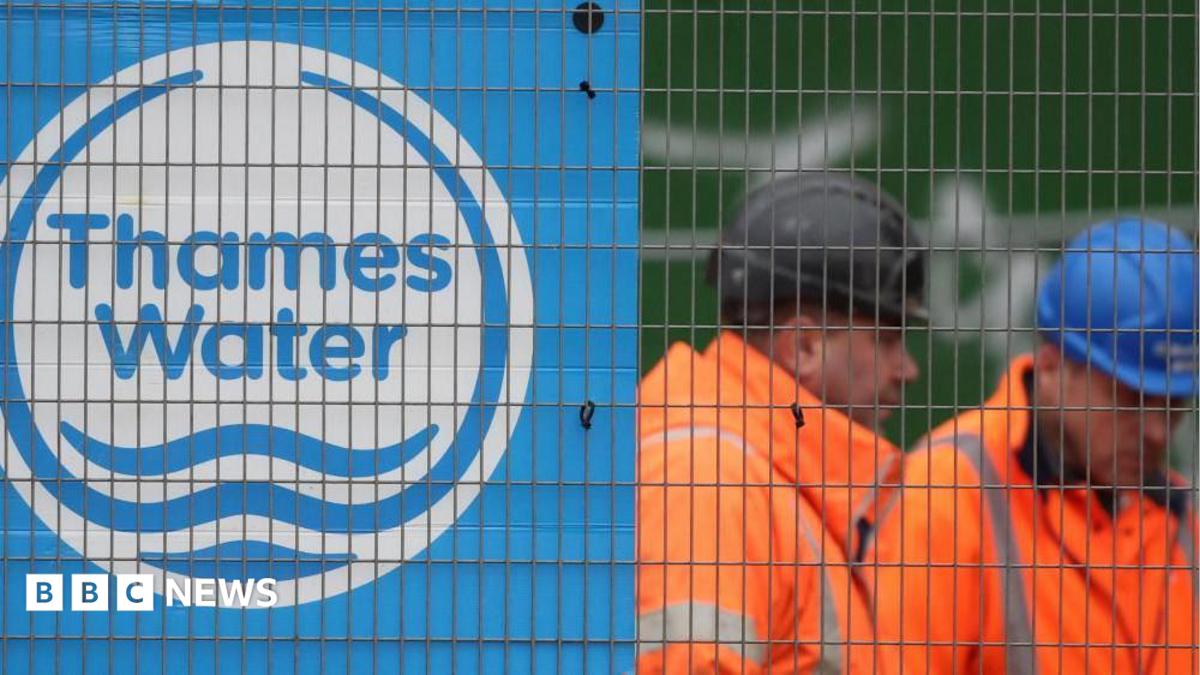
The lenders to Thames Water are preparing a legal challenge in case a Burnham-led government attempts to nationalise the UK’s biggest water company.
Burnham – who takes over as PM on Monday – has previously said he wants to see “greater public control” of the water and energy sectors and has called for Thames Water to be nationalised.
Thames Water is about £20bn in debt.
Its lenders had proposed a deal to write off nearly half of that and inject new cash in return for some leniency from future pollution fines, but this deal has previously been rejected by the government as being “weak” and bad for consumers and the environment.
Sources close to the creditors have told the BBC that in the event of full nationalisation, they would pursue payment in full of the outstanding debts as has happened in previous cases, which could leave the government with a multi-billion-pound bill.
Fears first emerged three years ago that Thames Water could collapse and on Thursday, the firm warned it has enough cash to last until the end of this year.
Creditors insisted on Sunday that they were still working with officials and regulators to reach an agreement to rescue the company.
A spokesperson for the Department for Environment, Food and Rural Affairs said the government was “prepared for any eventuality”.
“Thames Water customers have been let down for far too long, with 15 years of under-performance, increasing serious pollution, and customers left to pick up the bill,” the spokesperson said.
“The secretary of state has written to Ofwat to outline her early views that she is not convinced London and Valley Water’s proposal is good enough for consumers or the environment.”
The lenders have offered to write off £9.4bn of Thames Water’s near £20bn debt pile and put £3.35bn of cash into the company, but in return they want leniency from future pollution fines in order to turn the firm’s fortune’s around.
Objecting to the proposal, Emma Reynolds said in June that she did not want a scenario where Thames Water customers had to “pick up the bill for the company’s failures”.
At the time, she told reporters that the government “stands ready for all eventualities”, including temporary nationalisation.
When asked in a Sky News interview on Sunday whether a Burnham government would nationalise Thames Water, Labour’s deputy leader Lucy Powell said: “Let’s see”.
“This has been an ongoing issue and concern in government,” she said.
“The government has powers to to bring a distressed water company under special measures, and let’s see if the government needs to, wants to use those powers.”
Powell added that “the privatisation of water hasn’t worked”.
“It’s not created competition. What you’ve seen is bills going up and up and up over years and years and years. Investment not being being made … and then now these companies are in are in real distress,” she said.
There is a halfway house, in which Thames would be placed into a so called “special administration regime”, or SAR, which is usually a temporary situation until another private sector buyer can be found.
The existing lenders have made it clear that they would be prepared to join the bidders for Thames in that scenario.
However, comments from the incoming prime minister Andy Burnham that key utilities should be under increased “public control” make it hard to imagine that the government will have much political appetite to find a new set of private sector owners for a company that serves 16 million people which means that a temporary nationalisation might become permanent.
But under either a SAR or full nationalisation, Thames ongoing problems could then leave taxpayers footing the bill for Thames cash shortfalls – a figure that Thames Water management puts at £2bn by the end of next year.
Whatever happens, its customers’ taps and loos will still function, but the future of Thames Water is a key policy test for the new administration.

Jobs, GM, Tesla, Alphabet, Intel, Verizon, and More to Watch This Week
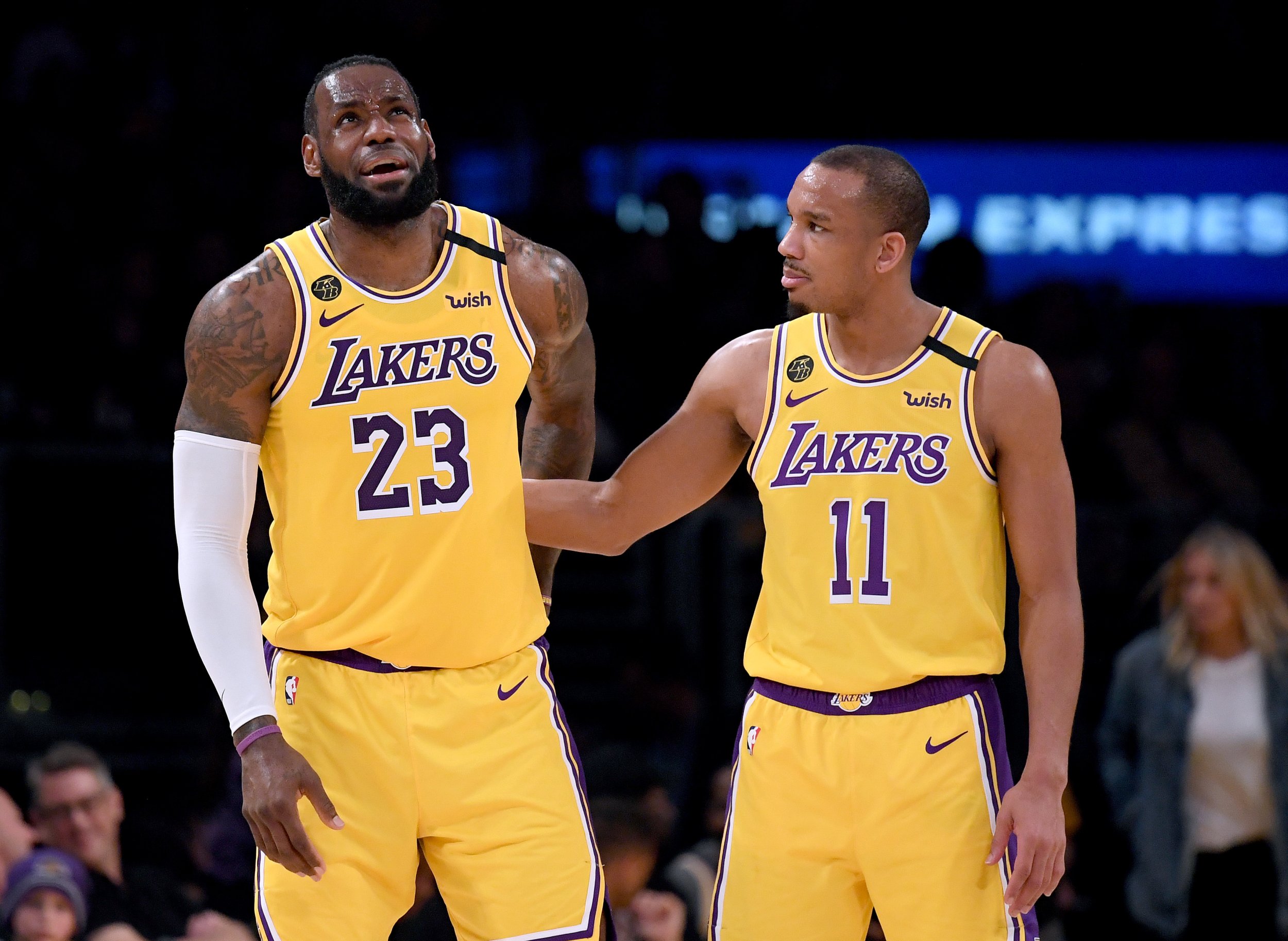
LeBron James continued to keep the NBA guessing over the weekend about his next destination, with reporting suggesting his choice has narrowed to three teams even as the Golden State Warriors continue drawing renewed attention as a potential dark-horse landing spot.
James informed the Los Angeles Lakers earlier this month that he intends to leave the franchise as a free agent, setting off weeks of speculation across the league involving the Cleveland Cavaliers, Golden State Warriors, Miami Heat, Philadelphia 76ers, Denver Nuggets and Minnesota Timberwolves. According to USA Today Sports’ Lorenzo Reyes, James now has all the information he needs from interested teams and is simply weighing his final decision, which could come at any point.
ESPN’s Brian Windhorst said James has shown little regard for the pressure NBA Commissioner Adam Silver has publicly applied in urging a decision so the league can finalize its 2026-27 schedule. “LeBron does not care about holding the league up with its schedule,” Windhorst said. “He will make them wait.”
Despite reports suggesting Cleveland, Miami and Philadelphia have emerged as the clearest frontrunners, chatter around Golden State has intensified rather than faded. ESPN’s Dave McMenamin said conversations over the prior 24 hours suggested the Warriors may have better odds than previously believed. “From the folks I’ve talked to within the last 24 hours or so, it seems like Golden State is more of a remote possibility, than maybe we would have said a week ago, or two weeks ago,” McMenamin said, pointing to the relatively easier path through the Eastern Conference that a move west could offer James.
ESPN’s Marc J. Spears offered a more tempered view, reporting that people within the Warriors organization consider landing James a longer shot, even as the team’s location works in its favor given James has said proximity to his family will factor into his decision. Spears noted San Francisco sits less than two hours by flight from Los Angeles, with some direct routes taking as little as 50 minutes. “They have told me they think it’s a longer shot, but it’s also a shorter flight,” Spears said. “He could be back there in 50 minutes to be back to his daughter’s volleyball game.”
The prolonged wait has visibly frustrated fans and media in cities on James’ list. Aaron Goldhammer, a radio host with ESPN Cleveland, voiced pointed irritation with how long the saga has dragged on. “I think I speak on behalf of Cleveland fans when I say this has gotten annoying,” Goldhammer said. “This isn’t fun. You’re not dreaming anymore about him coming back and winning a championship and the amount that he loves Cleveland. I don’t know what the heck this guy is gonna do.” He added a broader assessment of James’ impact on the sports conversation: “He is the greatest of all-time, at a bunch of things. But what he’s really the best of all-time at is this. Sucking up every last bit of oxygen in the sports universe and making it all about him.”
James’ situation also became a recurring topic at Fanatics Fest in New York this month. New York Knicks guard Jalen Brunson, fresh off a championship and Finals MVP run, was asked whether he planned to personally recruit James to New York and deflected the question. “My job is to put the ball in the hoop. Try and play a little defense,” Brunson said. “There’s people who are above me who determine who’s on the team and who’s not. I’ll leave the pitching to them.” Timberwolves star Anthony Edwards offered a lighthearted pitch of his own while browsing trading cards at the event, joking to a James card, “Bron Bron, come to Minnesota. We got your card,” before acknowledging separately that Minnesota isn’t realistically in contention. “I have nothing to say about it because I’ve seen his top 3 teams, we’re not in it,” Edwards said. James’ former teammate Anthony Davis, now with the Washington Wizards, offered a playful but pointed response when a fan asked about James potentially joining him in D.C. “Uhh. Maybe,” Davis said with a wide smile. “We had some conversations.”
Beyond the free agency speculation, James delivered an emotional moment away from the basketball conversation entirely on Thursday, when he was honored as “Athlete of the Century” at the inaugural Time 100 Sports gala in New York. Speaking without a prepared speech, James used the moment to thank the University of Southern California’s medical staff for saving the life of his eldest son, Bronny, who suffered sudden cardiac arrest during a summer workout with the USC basketball team in July 2023, just before the three-year anniversary of that event. “Our son went through something like that a few years ago at USC,” James said. “And obviously, if it wasn’t for the coaching staff and the medical team and everybody at USC being there in a timely fashion, we’d possibly be sitting here without our oldest son. So thank you to everybody and all the efforts when it comes to cardiac arrest.”
James used the moment to urge parents to ensure automated external defibrillators are available and accessible for young athletes at every level. “Guys, take that serious,” James said. “If you got kids in elementary, you got kids in middle school, kids in high school, colleges. Make sure they have these devices available where you can get them, practice them.” He closed by acknowledging his younger son as well, saying, “I also got a shout-out to my younger son, my twin, who’s at the University of Arizona. I love you as well.”
Bronny James made a full recovery after being diagnosed with a congenital heart defect, went on to play his freshman season at USC, and was later selected by the Lakers in the 2024 NBA Draft, making him and his father the first parent-child duo to share an NBA court together. Bronny’s contract with the Lakers became fully guaranteed earlier this month, and he is set to enter his third professional season regardless of where his father ultimately signs.
With James’ free agency decision still pending and no firm timeline announced, the five reported finalist franchises remain in a holding pattern, having completed their formal pitches and left the final call in James’ hands as the NBA world continues waiting for the 41-year-old to reveal where he will spend what could be one of the final seasons of his 23-year career.
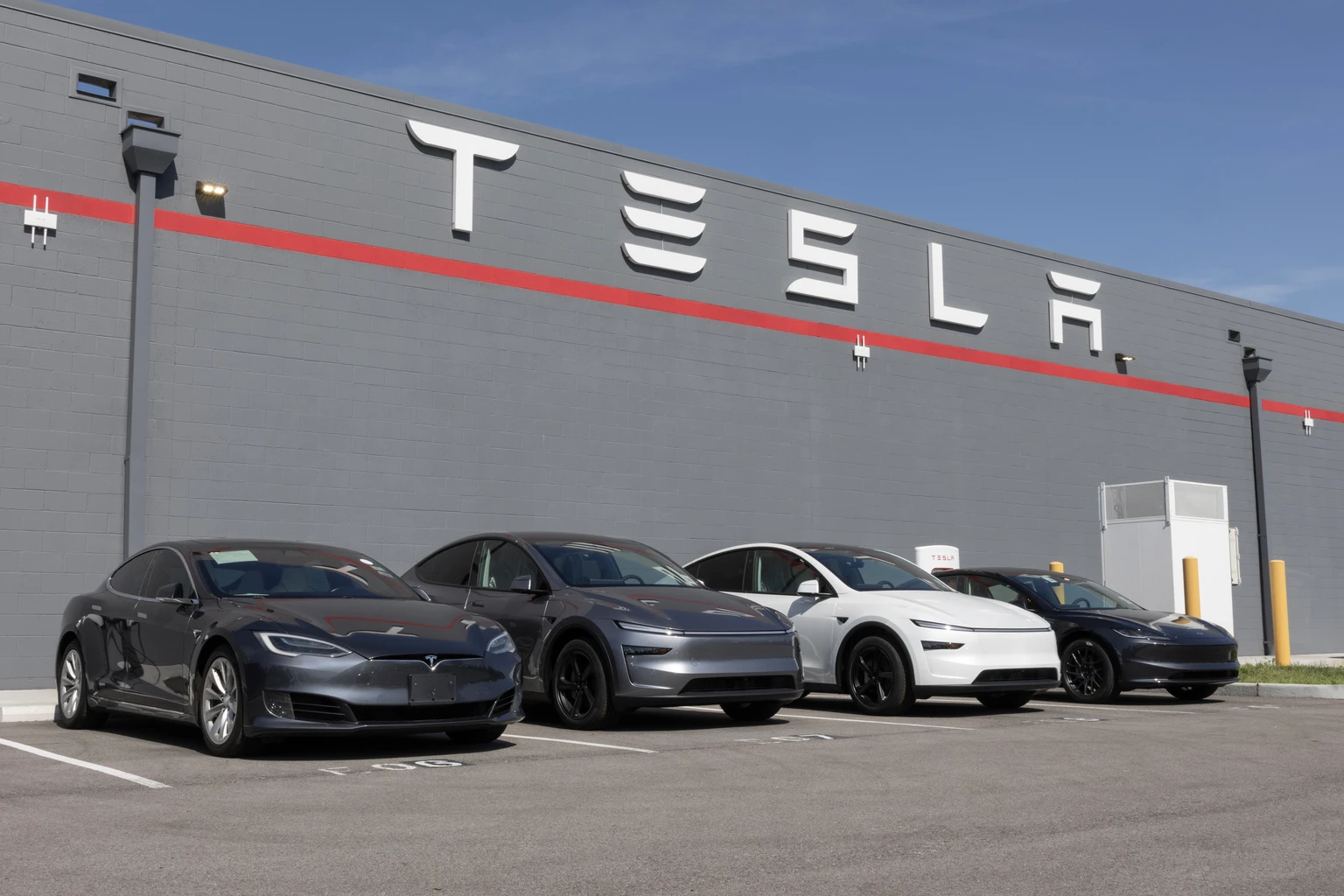
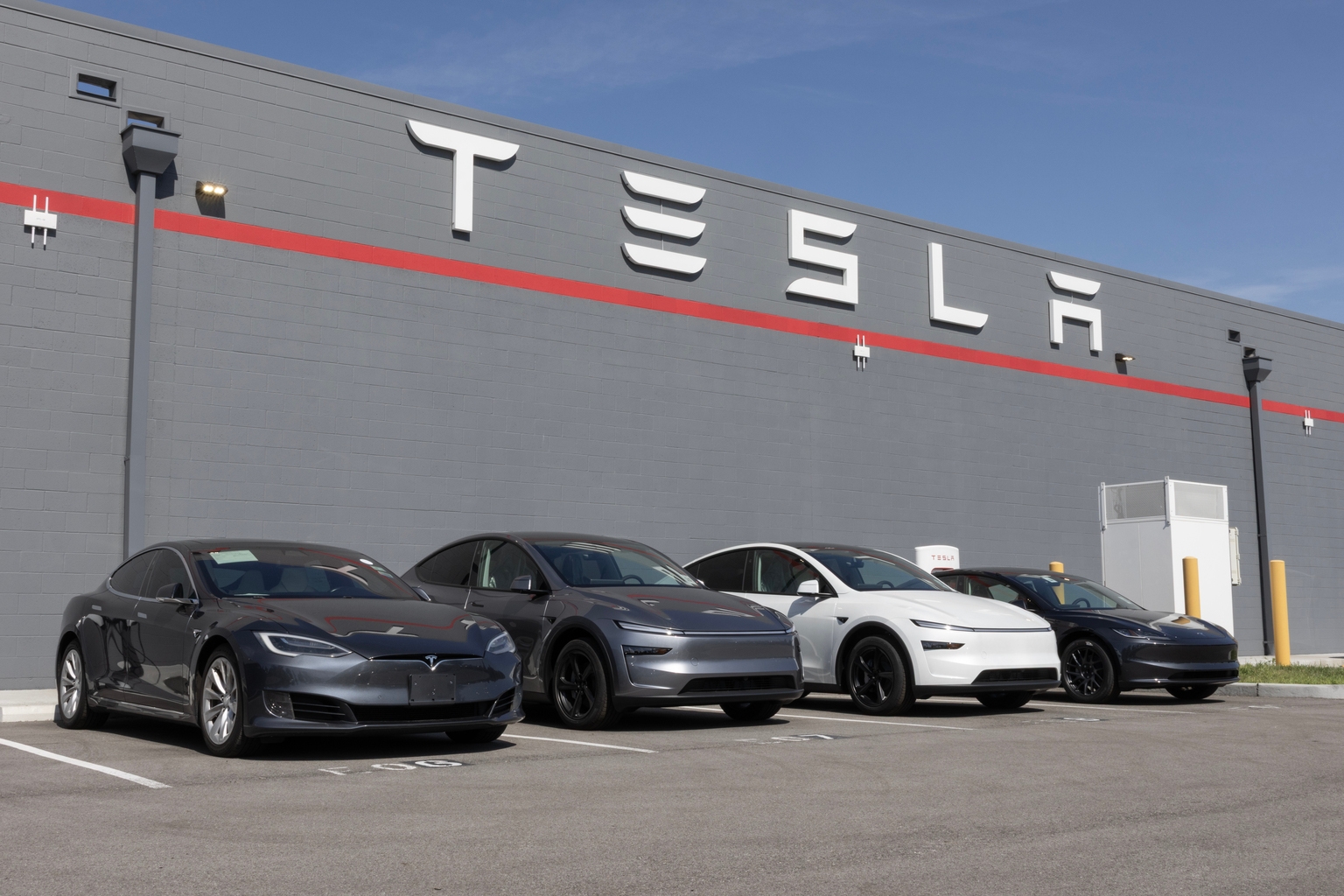
jetcityimage/iStock Editorial via Getty Images
Listen below or on the go on Apple Podcasts and Spotify

Focus will move beyond autos to AI. (0:17) Comi-Con starts Thursday. (1:52) U.S. strikes Iran’s Revolutionary Guard. (2:24)
The following is an abridged transcript:
With earnings season in full swing and Tesla (TSLA) is lined up to report Wednesday.
Analysts expect Tesla to report revenue of $26.4B, EPS of $0.54 and automotive gross margin excluding credits slightly above 18%.
Tesla already disclosed that it delivered 480,126 vehicles in Q2 and produced 451,758. Beyond the core numbers, investor attention will once again center on the updates on autonomy, software, the robotaxi rollout, and AI4-AI5 chips, as well as the capex needed for the company to be a leader in physical AI.
SA Analyst Yiannis Zourmpanos says Tesla enters earnings with momentum on its side.
“The improvement in demand, rising analyst expectations, and strong execution show that the market could be undervaluing the stock’s potential earnings performance,” he added.
But Agar Capital warns a great company does not necessarily mean a great stock.
They argue its market cap of $1.5T is overvalued by $1T for “businesses that still lack commercial scale, complete authorizations, verifiable unit economics, and significant FCF.”
Here’s how the rest of the earnings calendar shapes up:
Domino’s Pizza (DPZ) and AMC Entertainment (AMC) report Monday.
Novartis (NVSEF), 3M (MMM), GM (GM) and Halliburton (HAL) are due Tuesday.
Alphabet (GOOG) (GOOGL), Texas Instruments (TXN), IBM (IBM), AT&T (T), ServiceNow (NOW), Philip Morris (PM) and Kinder Morgan (KMI) join Tesla on Wednesday.
Thursday brings reports from Intel (INTC), T-Mobile (TMUS), Lockheed Martin (LMT), Union Pacific (UNP) and Comcast (CMCSA).
American Express (AXP), Verizon (VZ) and Charter Communications (CHTR) close out the week on Friday.
The economic calendar is very light, but this week also brings, AMD’s (AMD) Advancing AI event in San Francisco on Wednesday, where CEO Lisa Su is expected to outline the chipmaker’s latest AI strategy.
The biennial Farnborough International Airshow begins Monday, with Boeing (BA), Airbus (EADSF), Embraer (EMBJ) and other industry leaders expected to announce aircraft orders and showcase new technologies.
And San Diego Comic-Con kicks off Thursday, with Disney (DIS), Warner Bros. Discovery (WBD), and Apple (AAPL) among the media companies expected to showcase upcoming films and streaming content.
In the news this weekend, the U.S. military launched airstrikes targeting Iran’s Islamic Revolutionary Guard Corps on Sunday in retaliation for an attack in Jordan that killed two American service members and wounded four others, further escalating the conflict between Washington and Tehran.
Walmart (WMT) announced that it has removed four bagged iceberg lettuce salad products after receiving a notice from its supplier, Taylor Farms, as recalls tied to a cyclosporiasis outbreak that causes explosive diarrhea widen.
Taylor Farms is one of the largest suppliers of fresh vegetables and packaged salads in North America, serving retailers including not just Walmart (WMT), but Costco (COST) and Whole Foods Market (AMZN) as well as McDonald’s (MCD) and Taco Bell (YUM).
And for income investors, Caterpillar (CAT) and Colgate-Palmolive (CL) go ex-dividend on Monday.
Caterpillar pays on August 19 and Colgate-Palmolive on August 14.
Dell (DELL) goes ex-dividend Tuesday, with a July 31 payout date.
Pfizer (PFE) goes ex-dividend on Friday, paying out Sept. 1.

The NBA’s trade rumor mill continued running hot over the weekend, with the league largely stuck in a holding pattern while LeBron James finalizes his free agency decision, freeing up front offices to explore other moves in the meantime. Here are five of the latest storylines circulating around the league.
Nikola Jovic and the Miami Heat. After completing their blockbuster trade for Giannis Antetokounmpo, the Heat now face the challenge of filling out a roster that currently sits at 12 players and needs at least two more additions before training camp. While Miami’s top priority remains a potential LeBron James signing, the team is separately seeking rotation-caliber veterans capable of contributing immediately, and has hoped to find a trade market for forward Nikola Jovic, the 2022 first-round pick whose development has fallen short of the team’s original expectations. At 23 years old and 6-foot-10, Jovic still carries enough physical tools that rival teams have shown interest, even as his time in Miami’s rotation has yet to fully take off.
Bronny James and the Lakers. With his father’s free agency decision still pending, speculation has continued swirling around whether the Los Angeles Lakers might eventually trade Bronny James to reunite him with LeBron wherever he signs. According to reporting from Dan Woike of The Athletic, the Lakers would be open to moving Bronny out of respect for LeBron if that was specifically what the four-time MVP wanted, but the organization has no independent plans to trade Bronny simply for the sake of doing so. That reporting reinforces earlier indications from league sources that Bronny’s path forward is not automatically tied to his father’s eventual destination, particularly after the Lakers chose to fully guarantee his contract for the 2026-27 season earlier this month.
Domantas Sabonis. The Sacramento Kings center has continued to surface in trade speculation as one of the veteran All-Stars who could be on the move this offseason, according to ESPN’s tracking of the league’s most significant potential deals. Sabonis joins a growing list of established stars, including Giannis Antetokounmpo, Kawhi Leonard, LaMelo Ball and Ja Morant, who have already changed teams this summer, with league insiders continuing to monitor whether Sacramento ultimately decides to pivot its franchise direction by exploring a trade market for its two-time All-Star.
Zach LaVine’s opt-in and its ripple effect for Golden State. Sacramento Kings guard Zach LaVine announced he is opting into his $49 million player option for the 2026-27 season, according to his agent, Klutch Sports CEO Rich Paul, in a report from ESPN’s Shams Charania. While the move directly affects LaVine’s own situation in Sacramento, Charania noted that it carries broader implications for the Golden State Warriors, giving the team additional financial flexibility to simultaneously pursue LeBron James in free agency while also exploring a potential trade for Anthony Davis, James’ former Lakers teammate now with the Washington Wizards.
Kawhi Leonard’s stalled trade to Toronto. Leonard’s trade from the LA Clippers to the Toronto Raptors, agreed to on June 30 in exchange for Brandon Ingram, Gradey Dick, multiple first-round picks and a pick swap, remains unfinalized as the NBA continues investigating whether Leonard’s endorsement agreement with the startup Aspiration constituted a circumvention of the salary cap. NBA Commissioner Adam Silver has signaled a desire to resolve the matter soon, saying before the NBA Finals that both franchises need clarity on their roster situations regardless of how the investigation concludes. Until the league issues a final ruling, the trade remains in limbo, leaving both Toronto and the Clippers unable to fully finalize their offseason plans around Leonard’s situation.
Beyond these five storylines, the broader NBA offseason has already produced a wave of significant moves that continue reshaping the league’s competitive landscape heading into training camp. The Milwaukee Bucks completed their long-rumored trade sending Antetokounmpo to Miami in exchange for four players, four first-round picks and a pick swap. The Boston Celtics stunned the league by trading 2024 Finals MVP Jaylen Brown to the Philadelphia 76ers in exchange for Paul George and four draft picks. The Minnesota Timberwolves acquired LaMelo Ball from the Charlotte Hornets, while separately sending Julius Randle to the Brooklyn Nets in a deal that also routed center Nic Claxton to the Chicago Bulls. The Memphis Grizzlies, meanwhile, completed the dismantling of what had briefly looked like one of the league’s most promising young cores, trading Ja Morant to the Portland Trail Blazers after having already moved Desmond Bane and Jaren Jackson Jr. over the preceding 12 months.
Elsewhere, the New York Knicks lost center Mitchell Robinson to the rival Boston Celtics in free agency, a departure that will sting for New York given how directly Robinson now fills Boston’s need at the position following the earlier departures of Kristaps Porziņģis and Al Horford. According to Charania, Robinson’s new deal includes a player option for its third year, giving him an eventual opportunity to test free agency again depending on how his fit in Boston develops.
With training camps now on the horizon, the NBA’s offseason remains defined largely by the unresolved question of where LeBron James will ultimately sign, a decision that continues to hold up related moves across multiple franchises still waiting to see how their own roster plans might shift depending on his final choice. James himself has given little indication his timeline will accelerate to accommodate the league’s preferences, telling reporters and fans alike that he intends to make the decision on his own terms, leaving teams including Miami, Sacramento and others to continue exploring secondary roster moves in the meantime rather than waiting entirely on James’ announcement before finalizing their own offseason plans.

BTAL: Market Neutral Vs Recent Market Shocks
Business
Top 10 Countries With the Best AI Technology in 2026, From the U.S. to South Korea in the New Rankings

A wave of new global rankings released this year has attempted to answer one of the technology industry’s most closely watched questions: which countries currently lead the world in artificial intelligence. While methodologies vary across different research organizations, several consistent names continue topping the lists in 2026, spanning countries recognized for foundational model development, enterprise adoption rates and national AI governance strategies alike.
According to a synthesis of rankings drawing on the Stanford AI Index, the Tortoise Global AI Index and IMD’s Digital Competitiveness Rankings, the United States, China and Singapore currently lead global AI adoption in 2026, followed by the United Kingdom, Germany, Israel, South Korea, Canada, the United Arab Emirates and Japan.
United States. The U.S. remains the world’s dominant force in foundational AI research and development, home to leading labs including OpenAI, Anthropic and Google DeepMind, and continues attracting the largest share of global private AI investment. In the AI Readiness Index compiled by Oxford Insights, the United States posted the highest overall score of any country globally, at 87.03 out of 100, leading specifically in Innovation Capacity and Technology-Sector Maturity. Despite that dominance in building AI systems, the U.S. notably ranks outside the global top 20 in one key adoption metric, according to Visual Capitalist’s analysis of Microsoft usage data, with a smaller share of its working-age population using AI tools regularly compared with several smaller economies.
China. China continues to rank as the second-strongest AI power globally, distinguished by massive scale in AI education and research output. According to the Global AI Brain Race Report 2026, China maintains 107 universities recognized among the world’s top institutions for AI-related subjects, more than four times the 26 held by the United States, giving the country an unmatched academic talent pipeline even as its scores on measures of responsible AI governance and policy transparency trail significantly behind Western counterparts.
Singapore. Singapore has consistently ranked among the top three nations globally for both AI readiness and adoption, posting an AI Readiness Index score of 84.25, the second-highest in the world behind the United States. Singapore’s strength lies in its combination of strong government AI strategy, robust data infrastructure and high real-world usage, with Visual Capitalist’s adoption data showing 63% of the country’s working-age population actively using AI tools, the second-highest adoption rate of any nation after the United Arab Emirates.
United Kingdom. The U.K. rounds out the traditional top tier of AI leadership, posting an AI Readiness Index score of 78.88, driven by strong government policy frameworks and a mature technology sector. Alongside Canada, the U.K. has positioned itself at the forefront of international discussions on AI governance, contributing significantly to national and global frameworks aimed at guiding safe and responsible AI development.
Germany. Germany has emerged as one of Europe’s leading AI economies, benefiting from a strong industrial and manufacturing base that has accelerated enterprise adoption of AI tools across sectors including automotive and advanced manufacturing, helping anchor the country’s position among the world’s top 10 AI nations in 2026.
Israel. Despite its comparatively small population, Israel continues punching well above its weight in global AI rankings, driven by a dense concentration of AI startups, strong government-backed research funding and a technology sector deeply integrated with both defense and commercial AI applications.
South Korea. South Korea posted an AI Readiness Index score of 79.98, placing it among the world’s top five nations on that measure, supported by strong technology-sector maturity and substantial government investment in AI infrastructure and semiconductor manufacturing capacity that underpins much of the global AI hardware supply chain.
Canada. Canada ranks among North America’s top AI performers alongside the United States, posting particularly strong scores in Governance and Ethics, at 94.14, and Data Availability, at 93.15, according to the Oxford Insights index. Canada’s open-source AI research contributions, anchored by institutions including the University of Toronto, have proven especially influential globally, and the country has positioned itself as a leading voice in responsible AI deployment and governance discussions.
United Arab Emirates. The UAE has emerged as the world’s clear leader in practical AI adoption, with more than 70% of its working-age population using AI tools regularly, according to Microsoft usage data analyzed by Visual Capitalist, a rate significantly higher than any other country tracked. That real-world usage reflects the UAE’s aggressive national AI strategy and substantial government investment aimed at positioning the country as a global AI hub despite its comparatively small population and research base relative to countries like the U.S. or China.
Japan. Japan rounds out the top 10, drawing on a combination of advanced robotics expertise, strong corporate AI investment and government-backed initiatives aimed at integrating AI more deeply into the country’s manufacturing and aging-population healthcare sectors.
Beyond this top tier, several smaller European economies have posted standout enterprise AI adoption rates in 2026 despite not always ranking among the broader top 10 in overall AI capability. According to Eurostat data cited by Alice Labs, Denmark leads the European Union with a 42% enterprise AI adoption rate, followed by Finland at 37.8%, Sweden at 35%, Belgium at 34.5% and the Netherlands at 33.2%, all comfortably ahead of the broader EU27 average of 20%.
Researchers caution that no single ranking fully captures a country’s AI standing, since different indices weigh factors including research output, government policy, private investment, infrastructure readiness and real-world adoption differently. As one analysis from Core AI Dominance 2026 put it, AI leadership today is “multi-dimensional,” extending well beyond which country builds the most powerful foundational model to include which nations can most effectively translate AI research into responsible, widely adopted commercial and public-sector applications. With global AI investment continuing to accelerate and adoption rates climbing across both advanced and emerging economies, analysts expect the composition of these rankings to keep shifting in the years ahead as more countries roll out national AI strategies aimed at closing the gap with the current leaders.

BNY Mellon Appreciation Fund Q2 2026 Commentary

NSC Chairman Explains N6.44bn World Cup Budget After Atiku’s Questions

How To Use Claude’s Reflect Dashboard And Learn When It’s Time To Touch Grass

Renter of Home in Anne Heche Crash Denies Settlement With Son

No Jackpot Winner as $257 Million Prize Rolls Over to $269 Million Monday Draw

Weekend Open Thread: Staud – Corporette.com

“I Begged for a Job Due to My Financial Struggles” | Bhagyashri Borse Emotional Interview

XRP Price About to Explode | The Petrodollar Play Exposed

JIO Financial Services latest news,kab badhega ?BUY or sell/Results Analysis,jio finance target 2030
-
 NewsBeat3 days ago
London Mayor Sadiq Khan handed a peerage by Keir Starmer alongside 15 other Labour figures… just days before the PM leaves No10
-

 Fashion2 days ago
Weekend Open Thread – Corporette.com
-

 Politics1 day ago
The House | The City of London can help the new chancellor deliver growth in every postcode
-

 Politics4 days ago
Young campaigners urge incoming PM to act on outdoor junk food ads
-

 Crypto World4 days ago
CFTC blocks Kalshi from unwinding Michigan trades after court order
-

 Business4 days ago
Nvidia Stock Slips After Big Tuesday Rally as Huang Confirms Vera Rubin Chip Is Now in Production Today
-

 Crypto World1 day ago
Ripple Payments Joins MiCA With 14 Firms, Does It Mean Anything For XRP?
-

 Politics6 hours ago
Democrats look to World Cup watch parties to register thousands of voters
-

 Crypto World2 days ago
Ripple wins EU-wide access as ESMA adds it to MiCA register
-
 Entertainment4 days ago
Disney’s Most Ambitious Failed Star Wars Attraction Is Coming to SDCC
-
 Crypto World2 days ago
Two July Windows Left: The CLARITY Act’s Senate Fight and What Failure Means
-

 Business4 days ago
Palantir Shares Rise After Expanded Nvidia Partnership and Fresh Analyst Upgrades Ahead of Earnings Day
-

 Crypto World3 days ago
Injective Submits SEC Transfer-Agent Registration to Onchain Ownership Records
-

 Tech6 days ago
Get Your ESP32 Sunny Side Up With This Solar Dev Board
-

 News Videos5 days ago
XRP BOMBSHELL… XRP OMBOARDED FOR TRANSACTIONS!!!
-

 NewsBeat2 days ago
Registration is now open for March for Men with Kev 2026
-

 Tech5 days ago
Dark Secrets Emerge When Jailbreaking LLMs
-
 Sports4 days ago
New Cornerback Enters Vikings Trade Rumor Mill
-

 News Videos3 days ago
Money | Class 12 Economics | CBSE Board Exam 2026-27
-

 Business3 days ago
Banco Bilbao Vizcaya Argentaria, S.A. (BBVA) Discusses Global Macro Environment and Economic Outlook for Core Markets Transcript
You must be logged in to post a comment Login