

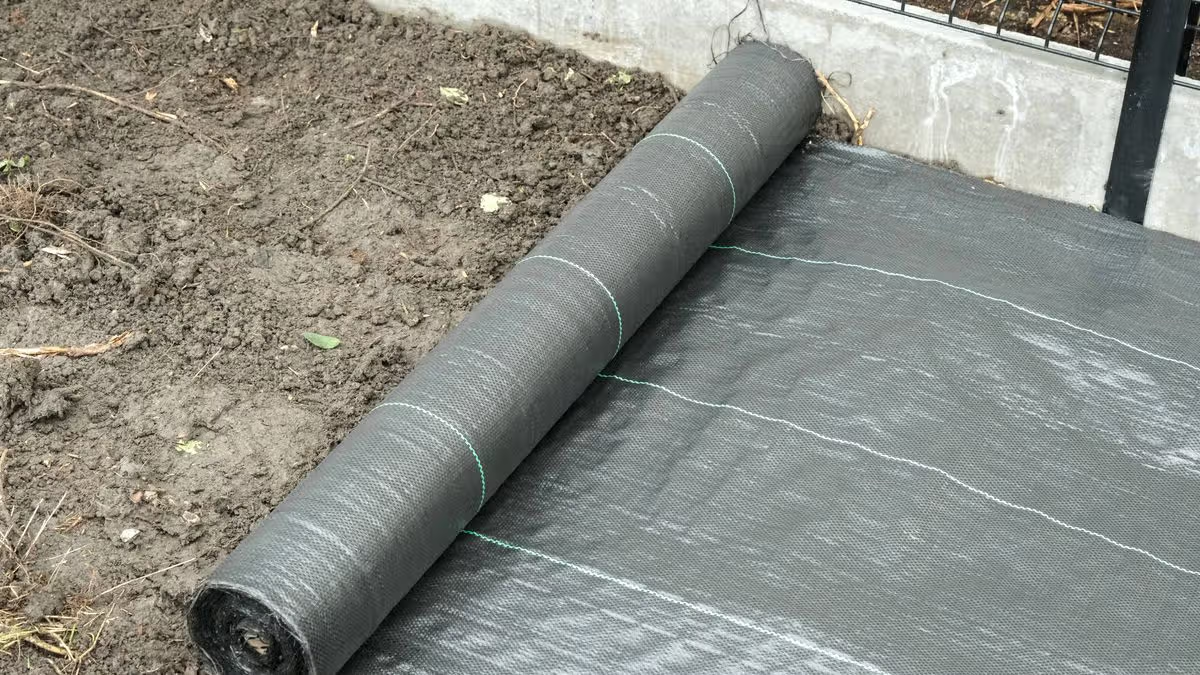
A gardener has issued advice to homeowners over a common landscape fabric weed control mistake that some experts say may cause more harm than good
There is a cheaper and more effective way to keep weeds out of your garden – and it does not involve expensive landscape fabric that can do more harm than good.
Many gardeners spend significant sums on synthetic or organic sheeting laid over soil to inhibit weed growth by cutting off sunlight and stopping seeds from germinating. While it is marketed as a low-maintenance solution, experts and experienced gardening enthusiasts warn it frequently ends up costing homeowners considerably more money in the long run and may prove largely ineffective.
A far simpler and cheaper alternative involves layering newspaper or cardboard directly on the soil and topping it with mulch. Not only does this method cost next to nothing, but it also breaks down naturally over time, enriching the soil rather than damaging it – and can suppress weeds for up to two years.
Gardener Gabriella the Garden Sage brought the issue to wider attention after sharing a Facebook post featuring photographs of kniphofia plants with compressed, stunted roots that were unable to push through a layer of landscape fabric buried beneath several inches of mulch. She explains that while mulch ordinarily breaks down and enriches the soil with nutrients, the fabric serves as a barrier, preventing those benefits from penetrating the clay soil underneath.
In the caption accompanying her post she wrote: “Builders and landscape companies convinced homeowners to roll out acres of the stuff, extolling it as a key tool to make landscaping low maintenance and weed free. Not to mention that weeds grow quite happily on top of the fabric! For the sake of your plants, your soil, the planet, and your friendly local garden sage, just say no to landscape fabric!”
Several gardening enthusiasts left encouraging remarks on Gabriella’s post, with one writing: “Yup. Our backyard is full of the stuff, it’s so frustrating!”
Another contributed: “I have had decent luck with either layers of newspaper or cardboard, then mulch on top.” They added: “Weed suppression lasts about two years with this method.”
A third sided with Gabriella, commenting: “Exactly!” while another Facebook user noted: “Wow! That’s good to know! How about laying newspapers down?”
Although landscape fabric may appear to offer a simple solution to garden weeds, numerous experts warn that it frequently creates more difficulties than it resolves. It can obstruct root growth, deprive soil of air and moisture, and ultimately become a nuisance once weeds begin establishing themselves on top.
Removing it is far from straightforward and can require hours of gruelling work. Instead, householders may wish to explore more sustainable and soil-friendly alternatives, such as transforming their lawns with native plants, clover, buffalo grass, or considering xeriscaping — which involves replacing lawn areas with soil, rocks, mulch, or native plant species.
These alternatives not only cut down on maintenance and reduce water consumption, but also provide vital support for pollinators — insects that are fundamental to our food supply. Even transforming just a section of your garden can save both time and money, while improving soil health and encouraging a more balanced ecosystem.



































































You must be logged in to post a comment Login