Connect with us

NewsBeat

DR MAX PEMBERTON: I was diagnosed with ADHD even though I know I don’t have it. I swallowed the same drug thousands of children take every day… and this is the terrifying effect it had on me. We’re getting everything so wrong

Published

on

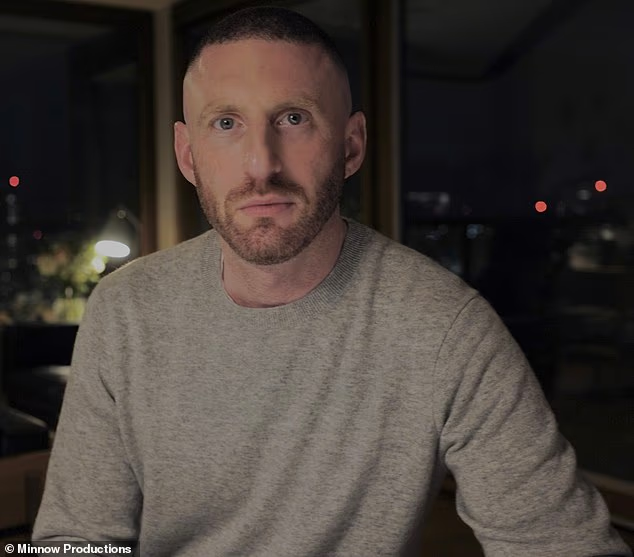
Dr Max Pemberton was diagnosed with ADHD, combined type ¿ characterised by inattention, hyperactivity and impulsivity

I’m sitting alone in my flat with my laptop open, being assessed online for a condition I’m fairly sure I haven’t got.

The assessment cost £1,200, paid for by a TV production company for a documentary on the rise in ADHD – and I want to be fair about the subject.

I’d deliberately selected a consultant psychiatrist as I knew they would do the job properly, since the point was never to go hunting for some rogue clinic dishing out diagnoses.

So over the next hour-and-a-half I answered everything the psychiatrist asked me honestly.

Advertisement

Yes, I keep going more or less every night until half two in the morning and then fall asleep on the spot. Yes, my phone lives in my pocket and nowhere else, because otherwise I lose it multiple times a day. And yes, I’ve a dreadful sense of time, which is why every clock in my flat is deliberately set to a different time, to keep me on my toes.

At the end, I was diagnosed with ADHD, combined type – characterised by inattention, hyperactivity and impulsivity.

Even though it’s the judgment of a highly qualified professional, I don’t accept it, and I’ll explain why later.

But something else happened in that assessment I’ve thought about far more than the diagnosis itself.

Advertisement

Dr Max Pemberton was diagnosed with ADHD, combined type – characterised by inattention, hyperactivity and impulsivity

For the documentary, ten-year-old Mason came off his ADHD medication for a carefully monitored experiment with an independent doctor ¿ with the agreement of his mother Shauna

For the documentary, ten-year-old Mason came off his ADHD medication for a carefully monitored experiment with an independent doctor – with the agreement of his mother Shauna

Towards the end the consultant started talking about my ‘disability’.

Advertisement

This discussion was being filmed, and watching on was a member of the production crew who has a progressive neurological condition. We’d built the filming schedule around what he could manage – he becomes easily tired, and there’ll be more of those things as the years go on as his condition inevitably gets worse.

He was listening as I was told, on the basis of losing my phone often and staying up too late, that I was ‘disabled’ because I had ADHD.

I’ve rarely felt so uncomfortable. If ‘disability’ can be stretched to cover the two of us, then it’s stopped meaning much of anything.

I’ve been a psychiatrist for more than 20 years, and in that time I’ve watched ADHD go from a diagnosis made occasionally, after careful assessment, to one that is demanded and all too readily dispensed by healthcare professionals, driven by self-diagnosis based on social media.

Advertisement

A decade ago it was uncommon in children and hardly ever seen in adults: In 2015-16 some 107,000 people in England were prescribed medication for ADHD – by last year that had risen to more than 326,000.

Today around 2.5million people in England are thought to have ADHD, 741,000 of them children and young people aged five to 24 – in March alone there were more than 800,000 ‘open’ NHS referrals that may be for an ADHD assessment.

I should say something that tends to get lost the moment anyone raises any of this, which is that the people seeking these diagnoses are struggling, their suffering isn’t in doubt. What my new Channel 4 documentary asks is whether ADHD is the best explanation for it.

To answer that, I interviewed the doctors and academics who don’t accept ADHD is simply a neurodevelopmental condition needing medical treatment – they point instead to social and environmental factors fuelling the rise.

Advertisement

But their voices never get heard. Rather, the stock response is that this surge in diagnoses is a sign we’re ‘catching up’ after decades of underdiagnosis.

I’ve heard this from colleagues I like and respect, but it doesn’t survive five minutes’ examination of what has happened to the criteria used to diagnose ADHD.

When I interviewed Dr Iona Heath, a GP for 35 years and a former President of the Royal College of General Practitioners, she sat with the Diagnostic and Statistical Manual of Mental Disorders (DSM) – the ‘bible’ that sets out the criteria for diagnosis – and read out the list of ADHD symptoms to me.

These include: Often fails to give close attention to details; often talks excessively; often unable to play or engage in leisure activities quietly.

Advertisement

But as Dr Heath points out: ‘Who knows a child who will always play quietly? If you had a child who always played quietly, you would be worried about them, or you should be. I think my entire family, for several generations, could be diagnosed on the basis of this, and it makes it so clear that if you want the diagnosis of ADHD, you’ll be able to get it.’

Dr Sami Timimi, a consultant child and adolescent psychiatrist with years of experience, fastened on one criterion in particular.

‘One of the symptoms is “often squirms in their seat”. How often is “often”? What’s a unit of squirm?’ he asked.

None of this is just nit-picking about wording: When the DSM was revised in 2013, the age by which symptoms had to have appeared for an ADHD diagnosis was raised from seven to 12, and one US study of 12 to 15-year-olds found this single alteration took the prevalence rate from 7.38 per cent to 10.84 per cent.

Advertisement

These were the same children, behaving in exactly the same way as they always had – but they were outside the diagnosis one day, then inside it the next, purely because a DSM committee had moved a line on a page.

Dr Max interviewed the doctors and academics who don¿t accept that ADHD is simply a neurodevelopmental condition needing medical treatment

Dr Max interviewed the doctors and academics who don’t accept that ADHD is simply a neurodevelopmental condition needing medical treatment

Dr Sami Timimi, a consultant child and adolescent psychiatrist, questioned how 'often squirms in their seat' can be an ADHD symptom

Dr Sami Timimi, a consultant child and adolescent psychiatrist, questioned how ‘often squirms in their seat’ can be an ADHD symptom

Known as ‘diagnosis creep’, this is why I raise an eyebrow when told we’re only ‘catching up’.

Advertisement

The reply to such scepticism is usually that ADHD brains ‘are wired differently’ and the scans prove it.

To find out more, I went to see Professor Katya Rubia at King’s College London, a neuroscientist who has spent 30 years scanning the brains of people with ADHD and is considered a world authority in the field.

She explained that when you compare groups of people, the connections between brain regions do look less strong in those with ADHD, but that the latest studies show these differences to be very tiny – and that when you look at individual children instead of averaging across a whole group, many with the diagnosis turn out to have entirely normal brains. No scan will tell you who has the condition.

‘Because it’s not a medical condition, we don’t have a brain scan where you can say you have abnormality here, now are you ADHD,’ Professor Rubia tells me. ‘It’s a concept which is based on behaviour.’

Advertisement

Then she said something I’ve held onto ever since, which is that the brain is highly plastic, and behaviour and the brain are two sides of the same coin, so if you change your behaviour your brain changes with it.

This is very important, because it means the small differences we see on a scan may be a consequence of how a child has been living – rather than the cause of how they behave. And it means that when a child’s circumstances change, their brain can change, too. A tablet is not the only thing capable of altering it.

Nor, while we’re at it, is there an ADHD gene. Successive studies have identified genes associated with it but the great majority also turn up in depression, autism and schizophrenia.

Neither is there a blood test. Of course, the same is true of a lot of diagnoses – including psychiatric ones such as depression and anxiety – and I’d never argue those aren’t worth making.

Advertisement

But with depression and anxiety we have mostly held on to the understanding they grow out of people’s circumstances, out of bereavement and debt and loneliness and jobs that grind them down, and that treating the person means paying attention to the life they’re actually living.

Somewhere along the way we seem to have mislaid that thought where ADHD is concerned, settling instead on the idea it’s a fixed, lifelong thing a child is simply born with.

The other trouble with this vague ADHD criteria is that almost anything can be poured into them.

Anxiety leaves people restless and unable to concentrate, and so do sleep problems, grief, bullying, a chaotic home, a hearing difficulty nobody has picked up, or just being the youngest child in the school year – and every one of those can look like ADHD when you’re working down a checklist.

Advertisement

It’s become a catch-all, and the trouble is that once there’s a label, everybody stops looking for what’s really going on.

Having been handed the ADHD diagnosis I was eligible for medication, so for the purposes of this experiment I took it.

It was lisdexamfetamine – the same drug thousands of children swallow every morning.

Before my first dose I read the side-effects: Agitation, anxiety, low mood, irritability, tics, uneven heartbeat, raised blood pressure, weight loss, teeth grinding, blurred vision, nosebleeds, aggression, and the list goes on.

Advertisement

ADHD drugs are amphetamines, Class B controlled drugs in the same schedule as morphine, and there are sound reasons we warn everybody else off them.

The experience was horrible. I’d heard people say the tablets turned them into zombies and assumed they meant dopey, but it’s subtler and stranger, because what I felt was dulled, mute, compliant and withdrawn, as if somebody had turned the colour down on the television.

My thoughts came more slowly, I wasn’t interested in anything.

An hour after taking the first tablet I wandered down to the shops: As you’ll see in my documentary, a man who normally can’t stop talking stands mutely at the counter, while the poor shopkeeper tries to make conversation. I stare blankly at him. (I went back the next day to apologise for my strange behaviour.)

Advertisement

If I exist at about a ten, this had me down at 7.5, and those missing couple of points are what make me who I am – with just one pill.

I could see exactly how a child on this would sit still in class, get on with his work, and then tell his mum he didn’t feel like himself.

We also know far less about the long-term effects than we like to pretend.

But a 2024 study published in the journal JAMA Psychiatry found that every additional year on the medication was associated with a 4 per cent rise in the risk of cardiovascular disease, and three to five years of use came with a 72 per cent higher risk of high blood pressure.

Advertisement

These drugs work by revving up the same system that governs fight or flight, nudging up heart rate and blood pressure with every dose, and years of that steady pressure take their toll on the arteries.

Professor Dinesh Bhugra, past President of the Royal College of Psychiatrists, said the ¿industry around ADHD is about making money, at the cost of misery of others¿

Professor Dinesh Bhugra, past President of the Royal College of Psychiatrists, said the ‘industry around ADHD is about making money, at the cost of misery of others’

Mason was diagnosed with ADHD two years ago and put on lisdexamfetamine, and the dose has climbed from 20mg to now 40mg

Mason was diagnosed with ADHD two years ago and put on lisdexamfetamine, and the dose has climbed from 20mg to now 40mg

Meanwhile, the assessments themselves have turned into an industry. According to the Centre for Health and the Public Interest, there is no mandatory regulation for providers of ADHD assessments and no certified national qualification or training for those carrying them out – yet NHS spending with private ADHD companies has climbed from £36million to £128million in three years, with one private equity owned provider running a 33 per cent profit margin.

Advertisement

Professor Dinesh Bhugra, past President of the Royal College of Psychiatrists, was blunt about where this leads: ‘The industry around ADHD is about making money, at the cost of misery of others.’

I’d add this to the worries: When somebody has handed over a substantial sum for assessment, everybody in that room knows what they’ve come for, and it takes a strong-minded clinician to send them away without an ADHD diagnosis and a prescription.

And then there’s the world we’ve built for children to grow up in.

Professor Sam Wass of the University of East London, who studies children’s attention, told me if you sit a child in front of a screen, when they come off it they’ll behave in a way entirely consistent with an ADHD diagnosis – but ten minutes in woodland measurably reduces those symptoms, partly as our brains evolved to process the shapes and patterns in nature, which they find far less tiring than a screen.

Advertisement

Dr Sanah Ahsan, a clinical psychologist, described our phones as attention-degrading machines stealing our focus. We’ve built an environment in which it’s hard for anybody to concentrate and feel calm, and then diagnose the children who struggle in it.

What troubles me most, though, is what we’re telling those children, because a diagnosis says the problem sits inside them, that nobody need trouble themselves about the world around them.

Dr Timimi believes we’ve replaced corporal punishment with a new way of disciplining children, which is giving them a pill, and that in some respects it’s worse, ‘because it comes with the idea that there is something lifelong inside you going on’.

Had I been assessed 30 years ago I’d have had the ADHD diagnosis without question, and I would have ended up taking the tablets, rather than developing the coping strategies I rely on every day.

Advertisement

Which brings me to Mason, who is ten, and in the group most likely to be medicated – boys aged ten to 14 are the largest single group of patients in England taking ADHD drugs.

Mason was diagnosed two years ago and put on lisdexamfetamine, and the dose has climbed steadily, from 20mg to now 40mg.

By the middle of the afternoon it wears off, and his mum Shauna described the change in him as a switch being flicked, at which point he becomes angry, or upset – or both.

Mason is a lovely boy, funny and bright with it, and he told me that off the tablets his brain doesn’t switch off – something he described when younger as feeling ‘all squiggly’. He also told me he doesn’t always want to take the drugs, ‘because it takes my fun-ness away’.

Advertisement

Shauna put the dilemma to me better than any clinician: His thoughts going at 1,000 miles an hour, but Mason still being himself – or to have him focusing better but not feeling like himself.

‘It’s horrible that a child has to pick which side to be,’ she says.

For the documentary, the family agreed to a carefully monitored experiment with an independent doctor, and for six weeks Mason came off his medication.

If the argument is that modern life is driving these symptoms, screens and games consoles had to go away into a box – sweets and ultra-processed food with them, because of the evidence linking heavily processed diets and blood sugar swings to poor concentration and irritability. In came yoga, sport and time outdoors.

Advertisement

Myles, his younger brother, was asked how he felt about all this and said: ‘Cross.’ Mason said: ‘I want a lawyer.’

The first week was hard going, and Shauna’s video diaries show a boy bouncing off the walls.

But then something shifted – and by week three he was calmer and much happier. ‘I finally get to be myself,’ he said.

Lewis, Shauna’s partner, had only ever known the medicated Mason, and said it was like meeting a different person, funnier and more of a character.

Advertisement
Dr Iona Heath, a GP for 35 years and a former President of the Royal College of General Practitioners, said she would ban the ADHD label and stop medicating these children

Dr Iona Heath, a GP for 35 years and a former President of the Royal College of General Practitioners, said she would ban the ADHD label and stop medicating these children

Then the school reports started coming home. More disruptive, more talkative, more fidgety, disengaged. Mason was also now sitting in front of work he’d managed easily and getting upset because he couldn’t do it, with SATs coming up.

I asked Mason’s teacher whether he was easier to teach on the medication, and she said he was, working silently and independently – but that off it his friendships had grown stronger, because his classmates were seeing a sillier side of him.

Then she said something I keep returning to: ‘If I’m seeing a side to him that is his true and honest and vulnerable self, does that not make it better than it being easier?’

Advertisement

That, for me, is the question. If a ten-year-old boy can’t manage school unless he’s on amphetamines, I’m not convinced the problem lies in his brain.

Dr Heath would go further – she’d ban the label altogether, stop medicating these children and overhaul an education system she believes is drugging an untapped reservoir of talent out of existence.

At the end of the six weeks Shauna had an agonising decision to make: Whether Mason should go back on to the drugs (you’ll have to watch to find out what she chose).

At this point I want to stress that there are people whose difficulties with attention and impulsivity are so profound they can’t function day to day, and if we want to call that ADHD, and they find the medication helps, I’d never dream of taking that away from them.

Advertisement

And parents like Shauna are doing their level best, forced to choose between a child who is himself and a child who can pass his exams, which is a monstrous choice to hand anybody.

For the majority, though, we’ve reached for the prescription pad because it’s quicker and easier than asking the harder questions about schools, screens, food and the sheer pace of modern life.

My hope is that anyone watching this documentary comes away not with an answer, but with permission to start asking better questions.

  • The Great ADHD Myth? will air on Channel 4 on Tuesday, August 18 at 8pm

Source link

Advertisement
Continue Reading
Click to comment

You must be logged in to post a comment Login

Leave a Reply

NewsBeat

What time is the solar eclipse and when is the next?

Published

on

What time is the solar eclipse and when is the next?

On Wednesday (August 12), up to 96% of the Sun will be obscured by the Moon.

It will offer the best eclipse in the UK since 1999, when an eclipse was visible in parts of Devon and Cornwall.

A solar eclipse happens when the Moon passes between the Earth and the Sun, blocking some or all of the Sun’s light.

What time will the solar eclipse be in the UK?

What time the solar eclipse will peak will depend on where you are in the UK, but it will be somewhere between 7.02pm and 7.16pm.

Advertisement

Here are the estimated eclipse times for areas across the UK, according to the RMG:

  • Edinburgh and Glasgow – begin at 6.08pm, peak at 7.05pm, end at 8pm
  • Manchester and Liverpool – begin at 6.13pm, peak at 7.10pm,  end at 8.03-04pm
  • Norwich and Birmingham – begin at 6.15pm, peak at 7.11pm, end at 8.04pm 

  • London, Bristol and Cardiff – begin at 6.17pm, peak at 7.12pm, end at 8.06pm
  • Truro, Cornwall – begin at 6.18pm, peak at 7.16pm, end at 8.10pm

At its peak, enough of the Sun will be covered to make a noticeable difference in the temperature and light levels.

However, unlike with a total eclipse, the sky will not become dark – it will feel more like a cloudy day or close to dusk or dawn.

When is the next solar eclipse in the UK?

Many will be watching the rare event this week, as another total solar eclipse will not be visible from the UK again until 2090.

The closest approach before then will be on September 3, 2081, when up to 99% of the Sun will be covered, with southern areas once again expected to have the best view.

There will be other notable partial eclipses in the coming decades:

Advertisement
  • 2030 – 50% coverage
  • 2053 – 40% coverage
  • 2066 – 60% coverage
  • 2075 – 70% coverage
  • 2082 – 70% coverage
  • 2088 – 40% coverage

Despite this, people in the UK can enjoy a lunar eclipse in the coming weeks.

Solar eclipses are always paired with lunar eclipses, occurring two weeks before or after each other as part of a regular celestial cycle, the Royal Museums Greenwich explains.

On Friday, August 28, a deep partial lunar eclipse will be visible from the UK, though under less convenient timing.

A family enjoying the 2018 lunar eclipseA lunar eclipse will follow in the coming weeks (Image: Getty Images/iStockphoto)

The eclipse will start at 3.33am, reaching its peak at 5.12am.

Around 90% of the Moon will fall within the Earth’s umbra, or darkest shadow.

Advertisement

At maximum eclipse, the Moon will appear red as it is illuminated by sunlight filtered and scattered through the Earth’s atmosphere—a phenomenon often called a “blood moon.”

How to safely watch the solar eclipse

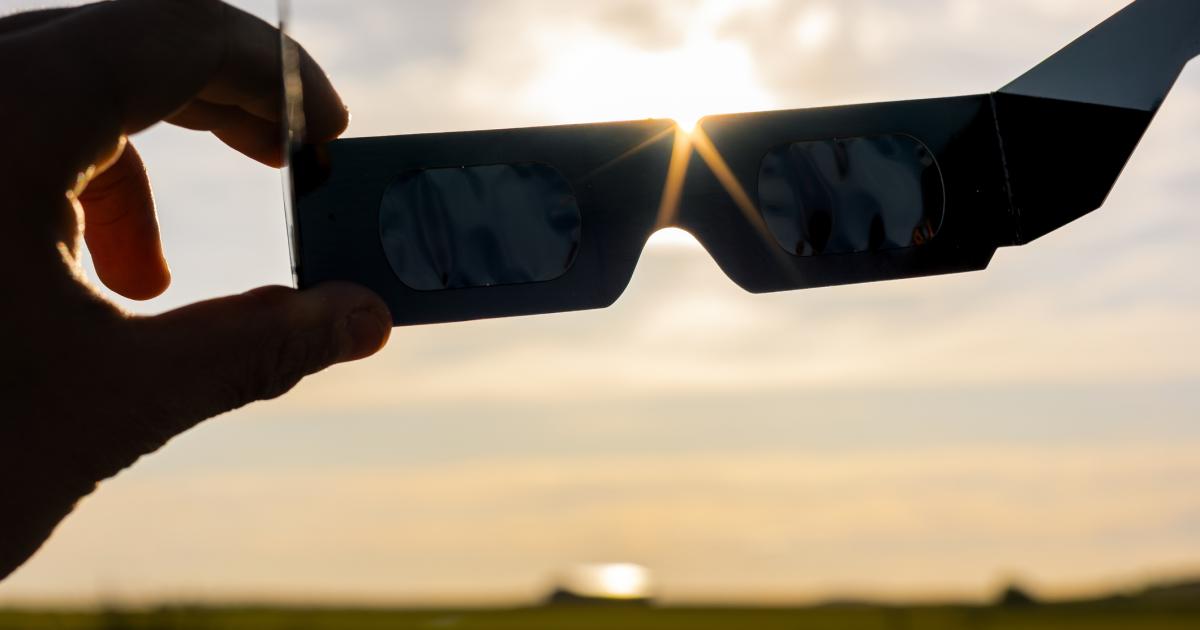
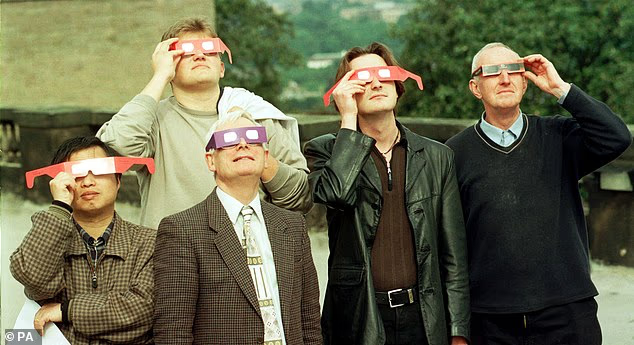
To watch the solar eclipse, you can use certified solar eclipse glasses, through a solar telescope, or by watching an official live stream.

You can also make a pinhole projector, which can be done at home.

You can buy certified solar eclipse glasses in the UK from reputable astronomy retailers, specialised online distributors, or general online marketplaces such as Amazon UK.

Advertisement

However, many retailers are seeing shortages in stock as people across the country rush to secure them ahead of the event on Wednesday evening.


Recommended reading:


People have been warned not to look at the eclipse without glasses, as they block out the Sun’s harmful rays.

Regular sunglasses are not safe to use, as they don’t have adequate UV protection to protect your eyesight.

Advertisement

Adequate glasses should have safety certification ‘ISO 12312-2′ or ‘ISO 12312-2:2015’ printed somewhere on them.

How will you be watching the solar eclipse this week? Let us know in the comments.

Source link

Advertisement
Continue Reading

NewsBeat

Miracle beneath the rubble: Moment six-month-old baby is rescued along with her mother following Colombian earthquake

Published

on

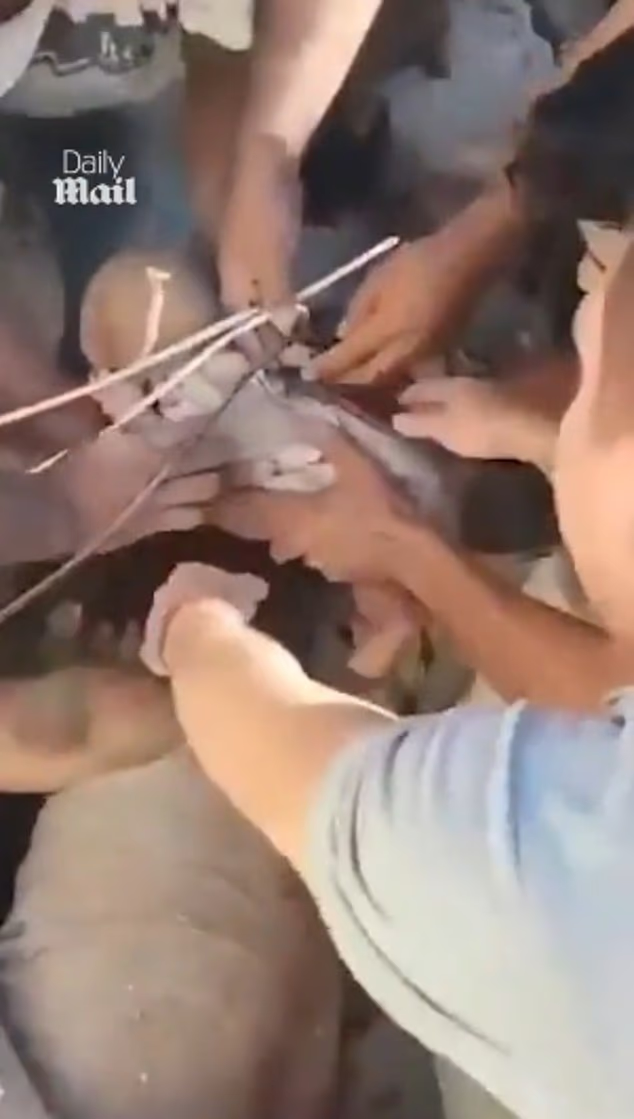
This is the moment a six-month-old baby was rescued alongside her mother from the rubble of a collapsed building following a Colombian earthquake

This is the moment a six-month-old baby was rescued alongside her mother from the rubble of a collapsed building following a Colombian earthquake

The 7.4-magnitude earthquake tore through Colombia’s coffee-growing heartland early on Monday, killing at least 164 people. 

The quake reduced multi-story buildings to rubble in cities such as Pereira and Cali, and cracked apart one of the towers of a historic cathedral in the city of Manizales.

Extraordinary footage shows the baby being pulled from the wreckage of a building by a crowd of people. They promptly helped to extract the mother from the debris, who emerged covered in blood.

Advertisement

Around 1,600 buildings have so far been reported as damaged or collapsed. Soldiers, rescue personnel and families picked through the rubble, removing and passing large pieces of concrete by hand down lines of volunteers. 

In one clip taken in an airport, petrified people were seen in the terminal trying to get to cover as the ceiling collapses around them. 

The whole building rattled around them, shaking off bits of the ceiling with every tremor. 

Another clip showed people screaming in fear as they ran away from a disintegrating building. 

Advertisement

The façade of the round building quickly began splitting after a deep crack developed. Whole parts of the building fell down, narrowly avoiding fleeing people.  

This is the moment a six-month-old baby was rescued alongside her mother from the rubble of a collapsed building following a Colombian earthquake

Extraordinary footage shows the baby being pulled from the wreckage of a building by a crowd of people. They promptly helped to extract the mother from the debris, who emerged covered in blood

Extraordinary footage shows the baby being pulled from the wreckage of a building by a crowd of people. They promptly helped to extract the mother from the debris, who emerged covered in blood

Advertisement
The 7.4-magnitude earthquake tore through Colombia's coffee-growing heartland early on Monday, killing at least 164 people

The 7.4-magnitude earthquake tore through Colombia’s coffee-growing heartland early on Monday, killing at least 164 people

And in one particularly shocking video, a church’s spire was seen falling off and crumbling into rubble in front of a terrified crowd of onlookers.

Families were held back from the scene by local police as a cloud of dust filled the air.

Rescue efforts are currently underway across Colombia as emergency workers dug through collapsed buildings and flattened homes, amid expectations that the death toll from the country’s most powerful earthquake in decades could rise.

Advertisement

Emergency teams aided by police, soldiers and volunteers worked through the night with excavators and, at times, their bare hands, hunting for survivors beneath debris. 

In Cali, home to about 2.2 million people, at least 85 people were killed. Dozens of buildings were left leaning precariously or destroyed outright, forcing residents into the streets.

Several of the top floors of one of the city’s hospitals – some dedicated to paediatric care – collapsed upon themselves, leaving some patients trapped and forcing some 600 others to be tended to on a street strewn with rubble. 

Carmen Yasmin Garcia, 43, a Cali resident volunteering with rescue teams, said on Monday afternoon that her group had freed seven people from a collapsed building, but four others and a dog remained trapped.

Advertisement

‘A moment ago there was scratching but now we can’t hear anything, we still have faith that the dog is alive and we can get these people out,’ Garcia said. 

The quake reduced multi-story buildings to rubble in cities across the country

The quake reduced multi-story buildings to rubble in cities across the country 

Rescue efforts are currently underway across Colombia

Rescue efforts are currently underway across Colombia

Residents and rescue workers carry out search, rescue and evacuation operations after a powerful earthquake struck Colombia

Residents and rescue workers carry out search, rescue and evacuation operations after a powerful earthquake struck Colombia

Advertisement
Sculptures are surrounded by debris at a partially collapsed church at Palermo neighborhood after a magnitude 7.4 earthquake struck Colombia on August 10, 2026 in Tamesis, Colombia

Sculptures are surrounded by debris at a partially collapsed church at Palermo neighborhood after a magnitude 7.4 earthquake struck Colombia on August 10, 2026 in Tamesis, Colombia

In Pereira, capital of the hard-hit state of Risaralda, authorities reported 66 dead

In Pereira, capital of the hard-hit state of Risaralda, authorities reported 66 dead

‘We need people with sticks and spades, the more people lending a hand the better.

Dana Carolina Zamora posted an image of her missing 60-year-old uncle, Miguel Ángel Zamora, cradling his dog. The farmer was living in a rural area of El Cairo, not far from the epicenter of the quake in San Jose Del Palmar.

Advertisement

Local authorities said 80% of El Cairo, a town of about 7,000 people, was damaged. Zamora said she worried because her uncle lived in a traditional but fragile house made of sticks and mud.

‘We are afraid. We hope that is not the case, that he is all right and that it is only a communication failure. But we haven’t heard anything from him,’ Zamora said.

In Pereira, capital of the hard-hit state of Risaralda, authorities reported 66 dead.

The city also bore some of the most visible destruction, with entire residential blocks reduced to piles of concrete and twisted steel. 

Advertisement

Another 13 people died in Choco, the rural province closest to the quake’s epicentre. 

Choco is one of the poorest and most neglected regions of Colombia, often beset by warring armed groups. 

Volunteers help with debris removal at a collapsed building in downtown Pereira after a magnitude 7.4 earthquake struck Colombia on August 10, 2026

Volunteers help with debris removal at a collapsed building in downtown Pereira after a magnitude 7.4 earthquake struck Colombia on August 10, 2026

People wearing face masks walk through dust and debris following a powerful magnitude 7.4 earthquake in Pereira, Colombia, on August 10, 2026

People wearing face masks walk through dust and debris following a powerful magnitude 7.4 earthquake in Pereira, Colombia, on August 10, 2026

Advertisement
People remove a refrigerator from a damaged home in Pereira on August 10, 2026

People remove a refrigerator from a damaged home in Pereira on August 10, 2026 

Much of Choco is accessible only by boat, through the jungle or by airplane. Little was known about the extent of the damage there.

De la Espriella travelled to Choco’s capital, Quibdo, on Monday night to assess the damage and announced he had mobilized ‘the entire military and police apparatus’ to respond, deploying engineers, rescue workers and search dogs. He announced rental subsidies for those whose homes were damaged while they undergo repairs.

‘Choco will never again be the ‘land of the forgotten,” he said. 

Advertisement

President Abelardo De La Espriella, who assumed power just days ago, said 35 people died in Cali alone, while 188 were missing. 

He said 1,000 members of the security forces would be deployed to the city by dawn, following reports of looting. Cali, as well as Pereira, implemented curfews on Monday night.

‘Our intention is to cooperate in any way necessary. Here, there are no distinctions or ideological divisions when it comes to defending our people or showing solidarity,’ De La Espriella told journalists on Monday evening.  

The earthquake presents the first major test for de la Espriella, who was sworn in as Colombia’s leader on Friday. De la Espriella is a divisive figure because of his pledge of an all-out crackdown on criminal groups.

Advertisement

The disaster has drawn comparisons to a deadly 1999 earthquake that devastated the same coffee-growing region, killing more than 1,000 people, as well as to catastrophic quakes that killed more than 6,300 in neighbouring Venezuela in June.

Residents and rescue workers carry out search, rescue and evacuation operations after a powerful earthquake struck Colombia on August 10, 2026

Residents and rescue workers carry out search, rescue and evacuation operations after a powerful earthquake struck Colombia on August 10, 2026

A man rests near the site of earthquake damage following a powerful magnitude 7.4 earthquake in Pereira, Colombia, on August 10, 2026

A man rests near the site of earthquake damage following a powerful magnitude 7.4 earthquake in Pereira, Colombia, on August 10, 2026

People gather in the streets after a powerful earthquake struck Colombia on August 10, 2026

People gather in the streets after a powerful earthquake struck Colombia on August 10, 2026

Advertisement

The EU said this morning that it would provide funding and help to support rescue operations in Colombia. 

EU foreign policy chief Kaja Kallas said on X: ‘The EU has mobilised Copernicus, our satellite service, to support rescue and relief operations. We are providing funding to support the response, including through the Red Cross.

‘We have also activated the EU’s crisis consular assistance mechanism to support EU citizens caught in the disaster.’

The US State Department, meanwhile, announced it would provide $15.5million (£11.5million) for emergency shelter, food and other aid. Governments across Latin America also lined up to help. 

Advertisement

Source link

Continue Reading

NewsBeat

Woman, 20, whose ‘crippling’ pain was dismissed by doctors after holiday is left fighting for life

Published

on

Manchester Evening News

Lottie Perks went on a family holiday to Brazil – but within days she was struck down with what seemed like a stomach bug

A mum says medical professionals ‘dismissed’ her concerns as ‘overly anxious’ behaviour before her daughter’s supposed holiday tummy bug proved to be a ruptured appendix – and life-threatening sepsis.

Advertisement

Now 20-year-old Lottie Perks had recently started university and had been looking forward to a much-needed family getaway. However, just days into the trip, she started suffering ‘crippling’ stomach pain and vomiting.

Yet 24 hours afterwards, she had recovered and the family resumed enjoying their holiday in Brazil. After returning home, though, it became obvious Lottie, from London, still wasn’t right.

Click here to get the biggest stories straight to your inbox in our Daily Newsletter

“She began shaking uncontrollably and I noticed her lips, hands and feet were freezing cold,” her mum, Laura, said.

Advertisement

“Her feet were white and her lips were blue. And her temperature was weirdly very low. Her face and limbs were swollen and flushed. I had been trying to trust the doctors before this and convince myself they were right.

“But, at this point, it was clear something was very wrong. I was terrified. And then, she collapsed in my arms as her eyes rolled back in her head. Her blood pressure plummeted and her heart rate raced dangerously high. I thought this was the end.”

‘They said they’d done all they could’

Laura had experienced a bout of sickness after returning from the trip in April 2025, too. And so, the family simply assumed Lottie had contracted the same bug.

But just hours after coming home, the stomach pain and vomiting started up again, coupled with bleeding and diarrhoea. They went to A&E, concerned, but nothing was found to be wrong.

Advertisement

Laura said: “She was very pale, weak and physically could not stop vomiting even though there was nothing left in her.

“Lottie was placed on an IV drip for three hours while being observed, but was ultimately discharged with a gastro bug, as her blood tests showed normal levels of inflammation. That night, and the next day, she didn’t improve and became much weaker.

“I called the hospital and asked if it could be appendicitis, but they said everything was fine.”

Advertisement

Still worried, Laura rushed her daughter back to hospital and begged for her to be seen again. Doctors allegedly claimed she was simply dehydrated and that they needed to leave the hospital – until an unusual rash was spotted.

After further checks, Lottie’s legs had started to turn a mottled purple and her body was severely swollen. A CT scan was ordered and it was found that her appendix had burst, causing sepsis.

Laura said: “I knew something was clearly wrong and before they took me seriously, I felt powerless. She had emergency surgery, but it was too late, the sepsis had spread. When she collapsed in my arms, that was her going into septic shock.

Advertisement

“And the start of her organs ceasing to work. I thought she’d be OK after the operation But the look on the surgeon’s face afterwards told me otherwise. When they explained about the sepsis and septic shock, and said they’d done all they could do, I felt powerless.”

Doctors rushed to give Lottie antibiotics, as there was a one hour window before her organs would start to fail completely. As nothing else could be done, it was a waiting game for a week. Luckily, the teen recovered and was slowly taken off medication, as well as machines, keeping her alive.

And, despite her life being on the line, she managed to return to university and pass her first year with flying colours. Now, she still suffers with bouts of sickness, stomach pain, dizziness, fatigue and difficulty keeping warm.

Advertisement

‘Sepsis can become fatal so quickly’

The emotional toll is felt by not just Lottie, but her mum, too. To help raise awareness, the pair are working with Sepsis Trust to warn others of the signs to look out for.

And, to never dismiss whether worrying symptoms could be sepsis.

Laura added: “Sepsis doesn’t need a cut, injury or an appendix bursting. It can be from something as simple as a virus. The symptoms are so subtle and confusing; but can become fatal so quickly.

“Having that one question in your mind when advocating for a loved one could save their life. We both suffer from nightmares following the experience. It’s difficult to look at photos from that time.

Advertisement

“And it’s hard not to associate the trip with what happened. We’ve always enjoyed relatively adventurous holidays and discovering further away places. But this has definitely put on the radar the possibility of a medical emergency while we’re away.

“And so, as a family, we haven’t been away too far since. We’re trying not to let the worry and her vulnerability take over too much from enjoying life.

“It’s forever changed us, but we’re so incredibly lucky to have caught it just about in time. I was treated like an overly anxious mother – but that’s what saved my daughter’s life.”

Lottie added: “Initially, I was very scared. I tried to stay calm and thought it was probably a gastro bug or food poisoning.

“It quickly turned into frustration because I was in so much pain and it was clearly where my appendix was. There was a lot of fear; I was terrified. Genuinely feeling like you’re dying and can’t explain or get anyone to understand was [infuriating].

“I still don’t think I really understood what was happening while I was in the ICU. I remember being frustrated that I couldn’t go up to the normal ward. But this was obviously because my organs weren’t fully functioning on their own still.

“Another part of the recovery that was quite frustrating was the loss of all my muscle. I remember just doing one lap of the ICU when I was well enough and being completely exhausted and my legs feeling so tired.

Advertisement

“Going from being someone quite active, and having to come to terms with this new situation, was quite a shock. Looking back on it now, I just feel incredibly lucky and almost proud of my body for managing to push me through it.

“But that gratitude and appreciation also comes with a huge frustration that it could’ve been avoided or acted upon sooner. And I wouldn’t have had to have been in that position in the first place.

“But it taught me a lot and I’m obviously very grateful for all the doctors and nurses that helped me. I have learned to advocate for myself better and to speak out when something isn’t right.

“I also felt frustrated as just being young and female meant that so many things masked it – from doctors thinking I could be pregnant, toxic shock syndrome, period cramps. I wanted to explain that as women, we know what’s normal for us, and this clearly wasn’t normal.

Advertisement

“I understand that various possibilities needed to be ruled out; but I wish someone had considered rapidly progressing sepsis as one of those a little sooner.

“That said, I am well aware that I am one of the very lucky ones. I’ve been shocked to read all of the ways it could have ended differently.”

Source link

Advertisement
Continue Reading

NewsBeat

Octopus Energy tells customers to avoid using electricity during the eclipse as solar power generation plummets

Published

on

Spectators at Edinburgh's Royal Observatory view the last total solar eclipse in August 1999

The UK’s biggest energy supplier is encouraging Brits to use less electricity during the solar eclipse tomorrow, because solar power generation will plummet.

Octopus Energy urged its eight million customers to delay using their washing machines, ovens, dishwashers and other plug-in devices between 6pm and 8pm.

Tomorrow’s hotly-anticipated eclipse will see solar generation plunge at a crucial time of day when electricity demand rises as millions of people come home from work.

Octopus told customers that the eclipse will ‘briefly knock out a chunk of Britain’s solar power’ and possibly require more fossil fuel power generation.

Advertisement

Spain, a country which gets more than half of its electricity from wind and solar, was plunged into blackouts in April 2025. Critics initially blamed a sudden plunge in solar power generation, but experts later put it down to so-called ‘voltage control issues’.

The National Energy System Operator, which runs the UK grid, said the eclipse could cut supply by up to 1.3 gigawatts tomorrow – enough to power about 500,000 homes.

Extra gas power stations may therefore have to be fired up, but Octopus said this need will be reduced if enough households delay using electricity for a short time.

The London-based company is therefore asking people to use less energy to avoid putting extra pressure on the grid at that point and increasing carbon emissions.

Advertisement

As an incentive, Octopus said those who use less electricity than usual during the two-hour window would get one hour of free daytime electricity this Sunday.

Bosses said solar power generated a record 14.4 per cent of Britain’s electricity last month, meaning two hours without sunshine will ‘leave a gap that has to be filled’.

The moon will obscure more than 90 per cent of the sun between 6.17pm and 8.06pm tomorrow, the most it has been blocked above the UK since the 1999 total eclipse. 

Advertisement

Spectators at Edinburgh’s Royal Observatory view the last total solar eclipse in August 1999

Advertisement

Octopus said it will monitor usage during the ‘Eclipse Session’ from customers’ smart meters tomorrow, and will then email successful participants on Saturday with the exact time – which will be at some point ‘in the late-morning, early-afternoon’.

Its chief customer officer Rebecca Dibb-Simkin said: ‘Many of us will be looking up at the sky on Wednesday evening to experience this once-in-a-generation event. But as the sun disappears, so will some of Britain’s solar generation, just as demand peaks.

‘By shifting everyday tasks like the washing machine or dishwasher until later, households can help reduce the need for gas power stations – and earn rewards for doing their bit.’

The company added that solar power generated a record 14.4 per cent of Britain’s electricity last month, meaning a ‘couple of hours without sunshine can leave a gap that has to be filled’.

Advertisement

Customers can also enter an Octopus photo competition showing what they did during the eclipse instead of being inside at home, with the chance to win free solar panels and installation or £12,000 in cash instead.

Neso said it has been planning for the solar eclipse for more than a year, ‘helping keep the electricity system balanced while the nation looks to the skies’.

Meanwhile the Met Office revealed Devon, Cornwall and the westernmost parts of Pembrokeshire in Wales are set to see the eclipse at its fullest, with a range of 94 per cent to 96 per cent of the sun obscured by the moon.

Plymouth in particular is forecast to see the moon cover 94.66 per cent of the sun at 7.16pm.

Advertisement

The rest of Wales, Northern Ireland, parts of the West Midlands and the South West, and the westernmost parts of Scotland can expect to see 92 per cent to 94 per cent solar coverage.

The Daily Mail's front page on August 12, 1999 following the last total solar eclipse

The Daily Mail’s front page on August 12, 1999 following the last total solar eclipse 

Another total solar eclipse visible from the UK in 1927 – pictured in Stoneyhurst, Lancashire

In Cardiff, the moon is forecast to obscure 93.24 per cent of the sun at 7.13pm while in Belfast it will cover 93.09 per cent of the sun at 7.08pm.

Advertisement

Skygazers in the rest of the UK will likely see the moon obscure 90 per cent to 92 per cent of the sun – with 91.79 per cent expected in Birmingham at 7.12pm, 91.41 per cent in London at 7.13pm, 90.74 per cent in Inverness at 7.03pm, 90.71 per cent in Edinburgh at 7.06pm and 90.22 per cent in Newcastle at 7.07pm.

Those most keen to catch a sight of the fullest possible solar eclipse should avoid the easternmost parts of the UK, where only 88 per cent to 90 per cent of solar coverage is expected.

These include the coasts of Norfolk, Yorkshire and Aberdeenshire, as well as the Orkney and Shetland Islands.

When will the eclipse be visible in the UK?

When to see the solar eclipse  
Location Eclipse starts  Maximum eclipse  Eclipse ends  
Edinburgh 18:08 19:05 20:00 
Glasgow 18:08 19:05  20:06 
Dublin  18:12  19:10  20:04 
Manchester  18:13  19:10 20:04 
Liverpool  18:13 19:10  20:04 
Birmingham  18:15 19:11  20:04 
Bristol  18:17 19:12  20:06 
London   18:17 19:12  20:06 
Cardiff  18:17 19:12  20:06 
Truro  18:18 19:16  20:10 


Advertisement

<!- – ad: https://mads.dailymail.co.uk/v8/de/news/none/article/other/mpu_factbox.html?id=mpu_factbox_1 – ->

Eye doctors urged people to avoid looking directly at the sun, with even brief exposure causing lasting vision damage.

Experts have warned that only special solar eclipse glasses that are ISO 12312-2 certified for the safest eye protection should be used to view the eclipse. But they have all but sold out online, or carry hefty delivery fees to arrive in time.

Advertisement

The Royal Greenwich Observatory told the public that regular sunglasses are not a safe enough method to view the cosmic phenomenon.

So-called eclipse glasses that do not carry the safety standards, or ordinary sunglasses, no matter how dark, should never be worn to view an eclipse, as they reduce glare, making it feel more comfortable to look at the sun for longer, but still allow harmful solar radiation to reach the retina.

Following the 1999 eclipse, the Royal College of Ophthalmologists reported around 70 cases of people experiencing vision problems after watching the eclipse. Around 40 per cent had looked at it for less than a minute.

The next time the moon obscures as much of the sun will be in 2081 and the next total solar eclipse in the UK will be in 2090.

Advertisement

Reykjavik in Iceland and Spanish cities A Coruna, Oviedo, Zaragoza, Bilbao and Valencia will see a total eclipse tomorrow, in which the moon fully obscures the sun.

In an added bonus for stargazers, the annual Perseid meteor shower reaches its peak tomorrow night. The shower is produced as Earth ploughs through a stream of dust left behind by Comet Swift–Tuttle.

Each tiny grain strikes Earth’s atmosphere at about 60km per second (37 miles per second), burning up in a brief flash that takes the appearance of a shooting star.

Source link

Advertisement
Continue Reading

NewsBeat

Molly-Mae Hague vows ‘this will be my last child’ and says she’s in ‘absolute survival mode’ as she details son Midas’ heartbreaking feeding issues

Published

on

Molly-Mae Hague has vowed her son Midas, 10 weeks, will 'be her last'

Molly-Mae Hague has vowed her son Midas, 10 weeks, will ‘be her last’. 

The influencer, 27, is already mother to daughter Bambi, three, with partner Tommy Fury – however, in her latest YouTube vlog, she insisted she will stop at two children due to the fact she is ‘in survival mode’ with a toddler and newborn. 

In the video, which was released on Monday, she revealed that Midas is struggling with feeding issues, leaving him ‘screaming’ in intense pain. 

Speaking on camera to her 2.09 million YouTube subscribers, she said: ‘I just, to be honest, I just feel so bad for mine just because this reflux thing is actually becoming like a massive issue for me – I’ve never, ever heard a baby scream like that.’

Advertisement

Reflux occurs when stomach contents flow back up into the food pipe, causing a baby to spit up milk during or shortly after a feed. 

Molly-Mae Hague has vowed her son Midas, 10 weeks, will ‘be her last’

In the video, which was released on Monday, she revealed that Midas is struggling with feeding issues, leaving him 'screaming' in intense pain

In the video, which was released on Monday, she revealed that Midas is struggling with feeding issues, leaving him ‘screaming’ in intense pain

Advertisement

Molly-Mae has been candid about her struggles with motherhood, frequently shedding light on Bambi’s behaviour. 

Since welcoming Midas in early June, she admits her baby days will be over as she is juggling her relationship while parenting a toddler and newborn. 

She said: ‘Like, peace and love and prosperity and all of that, but it’s just a lot, like, obviously, and I’m, like, I feel like I’m showing a lot of, like, oh, you know, I’m coping, I’m good, but also…

‘I’m having moments where I’m thinking 100 per cent, like, I’m so blessed and so lucky, but this will be my last child.’

Advertisement

Molly-Mae went on: ‘One for the books is to remember like that having a 10-week-old and a three-and-a-half-year-old, like is something that a lot of mums are doing and they have more children. I am so aware of that, but it is a little bit savage…

‘Obviously, it would be so not realistic of me to not talk about the highs and the lows, and yeah, I need you guys to understand that.’

On her battles to feed Midas, she lamented his struggles with reflux. 

She said: ‘I’ve never, ever heard a baby scream like that. And it like literally makes me want to cry. Like he’s crying, I want to cry…

Advertisement
The influencer, 27, is already mother to daughter Bambi, three, with partner Tommy Fury – however, in her latest YouTube vlog, she insisted she will stop at two children due to the fact she is 'in survival mode' with a toddler and newborn

The influencer, 27, is already mother to daughter Bambi, three, with partner Tommy Fury – however, in her latest YouTube vlog, she insisted she will stop at two children due to the fact she is ‘in survival mode’ with a toddler and newborn

She discussed the situation in the video

She discussed the situation in the video 

‘And it’s so just a lot like having a baby when it’s hard enough as it is, and then add like feeding digestive issues on top of that. And it’s just, it is a lot, but anyway.’

She admitted that the attempts at balancing the two kids meant she and Tommy are forced to spend their time apart until bed time.

Advertisement

She said: ‘I’m trying to get him in a routine, I’m trying to do the best thing for him, but equally, like, that’s not the best thing for Bambi…

‘[But] that means that we’re all tied to the house, unless we literally just do separate things with the kids, which is what we’re doing…

‘This is what I mean about just like, separate, being separate all the time, doing separate things with the kids, because it’s just, it’s not fair, I’m trying to get him in a routine, and this is where I’m like so torn.’ 

Source link

Advertisement
Continue Reading

NewsBeat

Three sports groups using movement to tackle isolation

Published

on

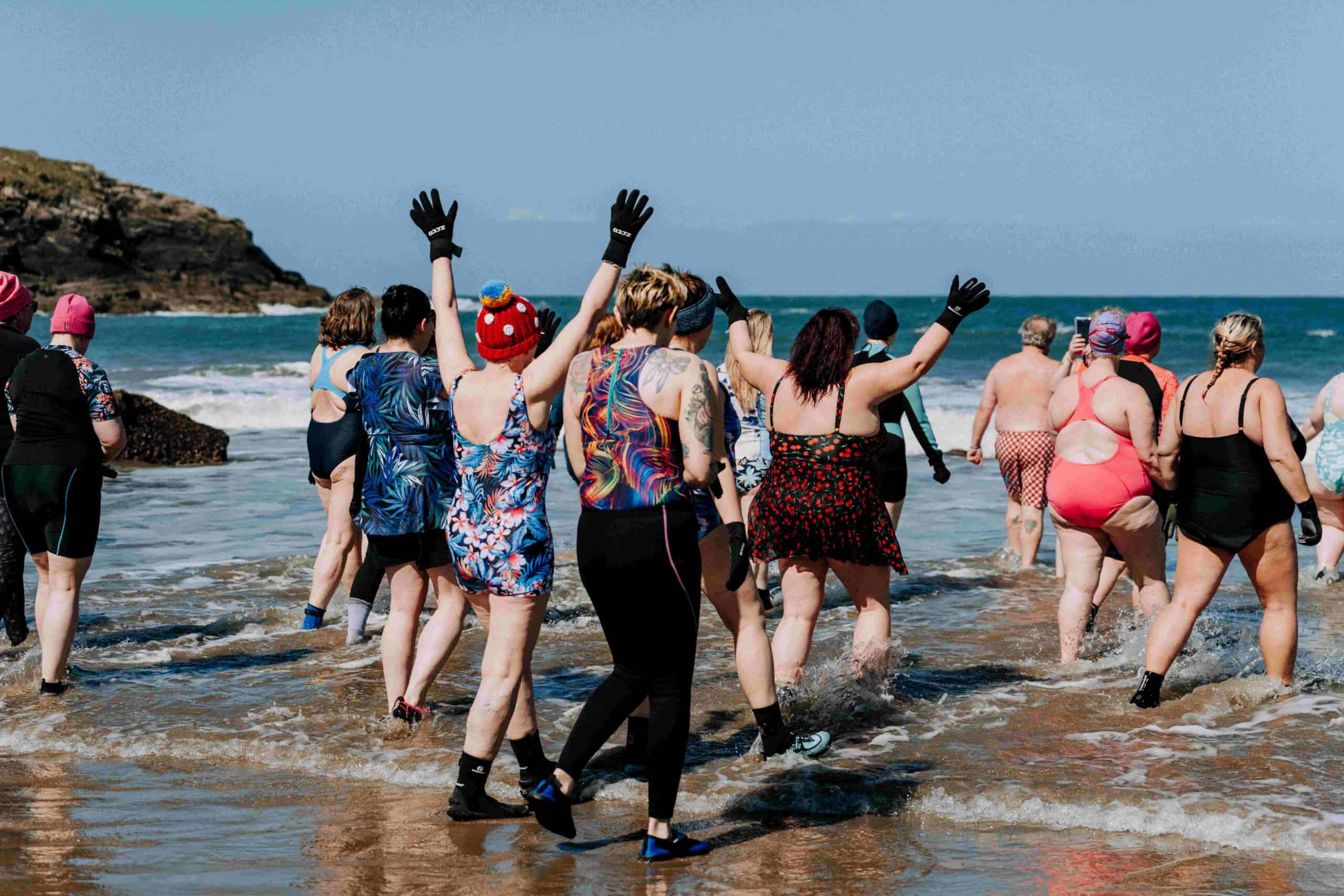
Three sports groups using movement to tackle isolation
3. GoodGym

GoodGym turns exercise into practical community action. Its members run, walk or cycle to help local projects and isolated older people, whether that means clearing a garden, sorting donations at a food bank or helping someone with a task they can no longer manage alone.

“GoodGym was founded on a simple idea that we could use being active to help people and strengthen communities, Ed Field, head of operations, said. “What we’ve seen is that the benefits go both ways and that the people participating feel healthier, more connected and more purposeful through helping others.”

Each session combines movement with usefulness, giving people a reason to get active and to keep showing up, while turning exercise into something that reaches beyond the person doing it.

Advertisement

Image: Laura Lewis
Main image: Ella Richardson

Source link

Advertisement
Continue Reading

NewsBeat

Firefighters to remain on scene of nature reserve fire for ‘days to come’

Published

on

Cambridgeshire Live

This is the second fire at the nature reserve within two weeks

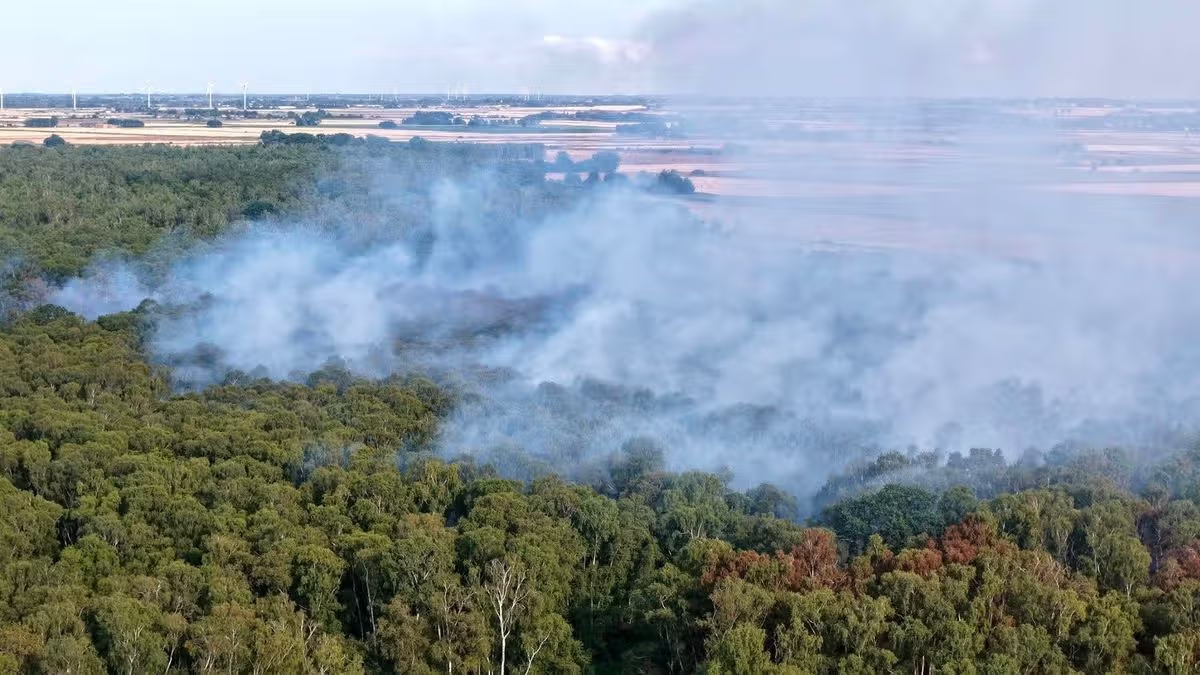
Firefighters are expected to remain at the scene of a nature reserve fire for “days to come”. Cambridgeshire Fire and Rescue were called to a fire at the Holme Fen Nature Reserve on Saturday (August 8) at around 10.24am.

Advertisement

Firefighters have been continuing to tackle the fire over the last few days. Crews remain at the scene today (Tuesday, August 11).

A fire spokesperson said: “Firefighters have been at the scene overnight continuing to tackle the fire. Crews will remain on the scene throughout the day, and for days to come.”

This is the second fire within two weeks that firefighters have dealt with at Holme Fen. The cause of the first fire was deliberate.

Advertisement

The cause of the second fire hasn’t yet been determined.

Do you want more of the latest Cambridgeshire news as it comes in from across the county? Sign up to our dedicated newsletter to make sure you never miss a big story from Cambridge or anywhere else in the county. You can also sign up to our dedicated Traffic and Crime newsletters for the latest updates on the topics you are most interested in.

Source link

Advertisement
Continue Reading

NewsBeat

Trump hidden in catering truck in secret plane swap over Iran threat, reports say

Published

on

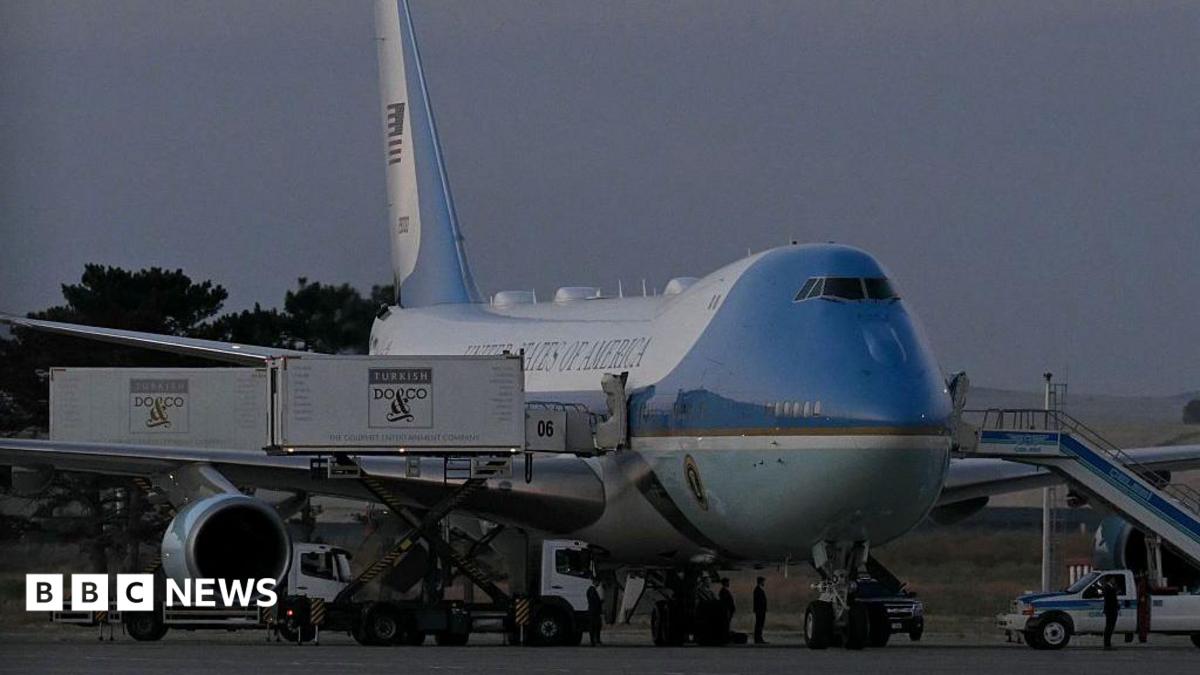
A catering truck parked alongside the old Air Force One jet prior to departure from Ankara

Donald Trump secretly swapped planes as he left a Nato summit in Turkey last month in response to a possible Iranian threat, US media report.

The US president boarded Air Force One in view of television cameras before being smuggled onto an elevated airport catering truck and transported to a military aircraft, without journalists and some White House staff on board knowing, the Washington Post said.

Officials told the BBC’s US partner CBS News that the US had detected a credible Iranian threat to fire a missile at the plane. The White House has not confirmed the secret switch.

Trump had earlier said he was Iran’s “number one target” during the summit in Ankara.

Advertisement

The clandestine manoeuvre came a day after the US renewed military strikes on Iran following a breakdown of negotiations between Washington and Tehran to end the war.

Trump had arrived in Turkey aboard a newer Boeing 747-8 donated by Qatar, but announced that he would leave on the old Air Force One “for old time’s sake”.

On 8 July, footage showed him boarding the presidential jet at Ankara airport. But according to the Washington Post, he was then secretly taken to a smaller C-32A military aircraft – a modified Boeing 757 often used by the vice president – via a catering truck which had been elevated to plane level on the opposite side to where he had boarded.

Defense Secretary Pete Hegseth boarded the C-32A separately using external stairs in an effort to make the flight appear normal, according to the newspaper.

Advertisement

Journalists and some White House staff boarded Air Force One and were reportedly told to close their window shades. They were unaware the president was no longer on board.

Trump then flew to the UK en route to the US, where he reboarded the old Air Force One and was seen descending from the aircraft after it landed at RAF Mildenhall. It is unclear how he moved from the C-32A back to the legacy jet.

Source link

Advertisement
Continue Reading

NewsBeat

Young man and woman killed in Gorton crash named for first time as suspect to appear in court

Published

on

Manchester Evening News

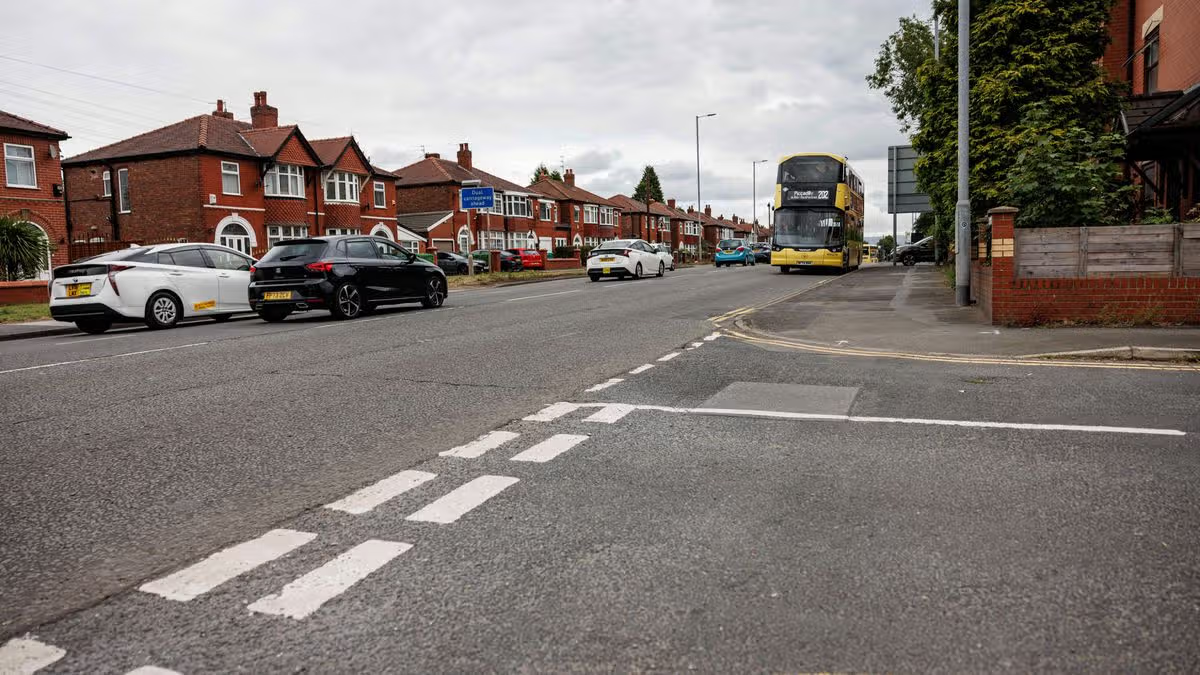
The man and woman were killed in the smash on Hyde Road

A young man and woman who died in a crash on a main road in Gorton have been named for the first time as Jack Cartwright and Natasha Denman.

Advertisement

The pair lost their lives in the crash on the A57 Hyde Road on August 5. Emergency services were called to the road, near the junction with Clumber Road, after a car hit a stationary digger at around 9.35pm.

Four people were inside the car at the time, a Greater Manchester Police spokesperson said previously. A young man and a woman, aged 23 and 24, sadly died at the scene.

Click here to get the biggest stories straight to your inbox in our Daily Newsletter

The man has now been named on official court documents as Mr Cartwright, while the woman has been named as Ms Denshaw. The car involved the crash has been identified in the court documents as being a Skoda Fabia.

Advertisement

Apollo Simms, 26, of Tealby Road, Manchester, has been charged with two counts of death by dangerous driving and failing to provide a sample for analysis. He is due to appear at Manchester Magistrates’ Court today (August 11).

Another man who was arrested has been released on bail, police confirmed.

Source link

Advertisement
Continue Reading

NewsBeat

Andy Burnham government hit with major backlash after announcing student loan changes

Published

on

Manchester Evening News

The Government has announced major changes for those paying off student loans

The Prime Minister should consider scrapping student debt or making interest payments interest free to encourage more people into higher education, M.E.N readers have said.

Advertisement

Yesterday, the Government announced major changes to interest rates and repayment thresholds for anyone with a student loan.

The Department of Education published its new interest rates for undergraduate and postgraduate loans; the new repayment thresholds for Plan 1 loans; and the interest rates and deferment threshold for Mortgage Style Student Loans.

Click here to get the biggest stories straight to your inbox in our Daily Newsletter

The new interest rates are set to affect the RPI rates for student loans – the base inflation measure. The government uses the RPI figure from March each year to set the baseline for student loan interest rates starting in September.

Advertisement

Depending on which plan you are on, you will be charged RPI plus up to an extra 3%. In the update issued yesterday, it has been confirmed that RPI rates are 4.1% for anyone paying back their loan from September 1. The repayment threshold for Plan 1 loans has also been affected.

You can see a full breakdown of changes to the student loan repayment plans here.

‘This is so wrong’

Following the announcement, M.E.N. readers expressed their views on the current student loan system on our Facebook page.

Ellen Vdk said: “Make it 0% and then the government has more chance of getting the full amount back.”

Advertisement

Su Bo expressed a similar view, adding: “Make it interest free or very very low interest. Those are the only sensible options. We want to encourage people to continue to go into higher education not put them off.”

Michelle Lindsay commented: “This is so wrong… why are we not trying to help students and our young people, on one hand we talk about NEET getting out of control and then on the other hand we’re putting up the interest rates for student loans, honestly the mind baffles!

“No wonder we have a shortage of teachers / nurses / doctors etc. because people can’t afford to pay the fees, living expenses etc etc.”

Tasha Hodrien shared her own story of the student loan system, saying: “When I left uni in 2018 my student loans totalled about £40k, I am a low earner so my repayments are low or £0 each month. With the interest adding in the last 8yrs mean my student loan is now almost £75k. I’m 50 and will probably never clear this debt.”

Advertisement

Natasha Burr also shared her personal story on experiencing student debt, saying: “I started paying my SL [student loan] back in 2016, it sat at 25K. I had only a small amount of time where I wasn’t paying anything back, I’m now down to 22K. Nearly 10 years paying it back, most months I pay back £200 something but interest is £100.”

Fiona Stewart compared the lower rates of student debt in Scotland compared to England. Eligible Scottish students receive free tuition funded by the government, while English students face tuition fees up to £9,790 per year.

Fiona said: “If Scotland can offer tuition fees for free why can’t the rest of the UK? Our domestic students are our next generation of innovators, health care professionals, SME’s, scientists.”

Irene Counsell expressed frustration at the different changes to the repayments on the various student loan plans.

Advertisement

Irene said: “Why is it so complicated? Just set a low fixed rate from the outset, or better still interest free.”

While Hannah Sofia Hulme said simply: “He [Andy Burnham] should be scrapping student debt.”

Source link

Advertisement
Continue Reading

Trending

Copyright © 2025