However, the Love Is Blind host has admitted that she previously came close to being part of the Strictly family years before she was appointed as its new host.
“Every year, I go, ‘I really want to do it’. And it’s never worked out,” Emma said.
The former Big Brother presenter then recalled: “A few years ago, I actually went and had a ‘dance day’, where you kind of go and feel it, and see if you want to give it a go. Is that what they call it? A dance trial.”
Advertisement
“So, about three or four years ago, I was like, ‘oh, I’ll do a dance trial’. And I walked into the room and he was my partner,” she said, gesturing to her new co-host Johannes Radebe.
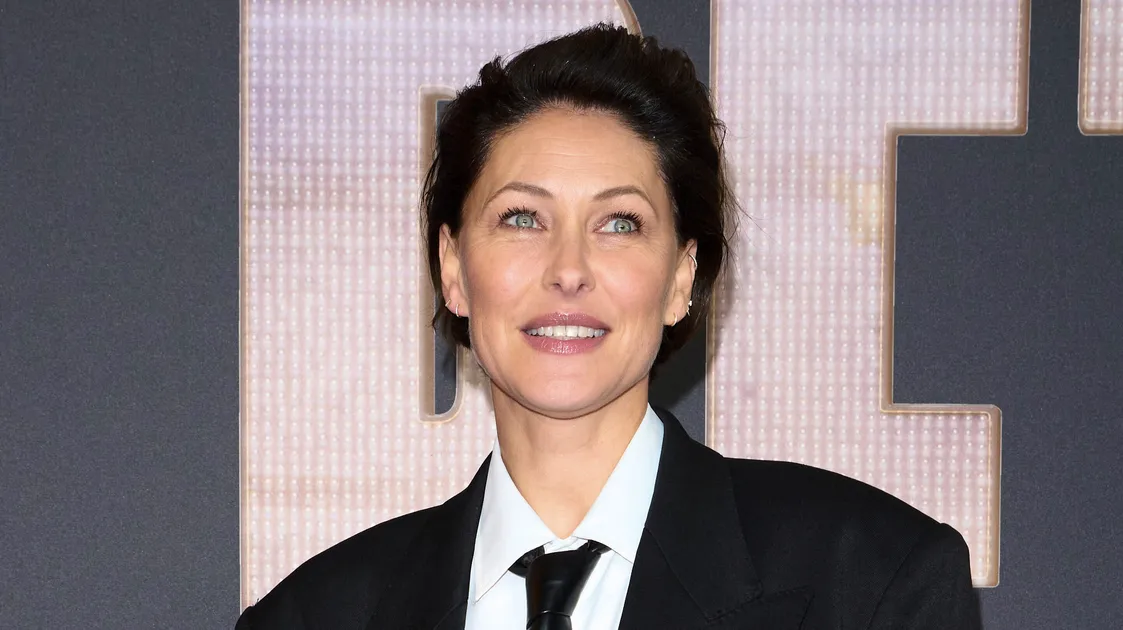
Emma Willis striking a pose with her new co-hosts Johannes Radebe and Josh Widdicombe
Oliver Dixon/Shutterstock
As the pair’s co-presenter Josh Widdicombe ribbed them about which one of them led to the partnership never making it onto the screen, Emma insisted: “ It just didn’t work out diary-wise. I was absolutely gutted, because I always said if ever I danced, I’d really want it to be with Jojo. But now, I get to dance with him in a different way.”
This year, Emma will have an opportunity to strut her stuff on the Strictly dance floor as part of this year’s launch show.
Advertisement
Elsewhere in the interview, Johannes teased that there’ll “definitely be more dancing in this launch show than there ever was in Strictly Come Dancing”, with Emma conceding that she was “terrified” to be a “tiny part” of the opening routine involving “everybody that’s taking part”.
“Me and Josh have got to go and dance,” she shared. “We’ve got to go and learn it next week, haven’t we? Oh god…”
Strictly Come Dancing returns to our screens on Saturday 19 September.
The mum-of-three was tragically killed after a trench that was being dug for the preparation of a septic tank collapsed in on top of her on Friday
19:04, 20 Sep 2026Updated 19:11, 20 Sep 2026
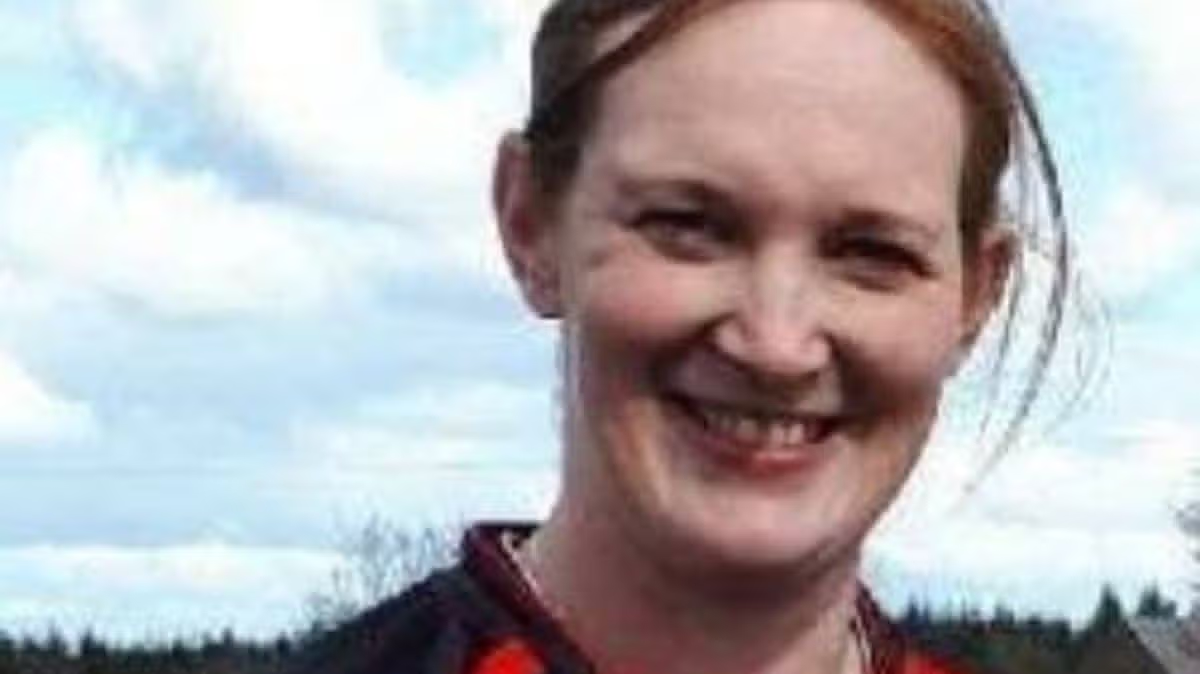
Heartbreaking tributes have been paid to a mum-of-three from who died after a septic tank trench collapsed in on top of her.
Elizabeth “Liz” Lynch, aged in her 40s, was pronounced dead at the scene in Kilmeedy, near Newcastle West on Friday. It is understood Ms Lynch was assisting with the construction of a house at the time.
The incident has been referred to the Republic’s Health and Safety Authority, which will lead the workplace accident investigation.
Advertisement
A Garda spokesperson said: “Gardaí attended the scene of a fatal workplace incident at a premises in Kilmeedy, Co Limerick on Friday, 18th September 2026.
“A woman aged in her 40s was pronounced deceased at the scene. This matter has been referred to the HSA for further investigation.”
The HSA has confirmed than an investigation has been launched into the incident.
Advertisement
An HSA spokesperson said: “The Health and Safety Authority is aware of the fatal incident and has launched an investigation. As such, no further information is available.”
This is the second tragedy the Lynch family has suffered in recent months as Ms Lynch’s brother Timothy was tragically killed in November while working to build his forever home for himself and his partner, Catriona.
Ms Lynch’s death has sent shockwaves through the local community, with friends and neighbours paying tribute to the popular figure.
The mum-of-three was involved in coaching young girls with local football club Newcastle West Town FC, who said her “presence and dedication within the Club will be sorely missed by everyone who knew her”.
Advertisement
“We are shocked and saddened on the sudden passing of our Coach Liz Lynch,” the club said in a statement.
“Liz started coaching with us back in 2020, coached numerous age groups and was influential in developing our female age groups in particular.
“Upto last season, Liz coached the U16’s and U19 girl’s teams.
Advertisement
“Liz’s beautiful, kind and vibrant personality always shone through where ever she was based in the Club, be it training, a match or volunteering.
“Our deepest heartfelt sympathy goes out to her 3 beloved sons, Kauan, Jaycob, Victor, Parents Tim and Betty, sister Mary, Brother Michael Senior and all her family and friends at this immensely sad time.
“Liz’s presence and dedication within the Club will be sorely missed by everyone who knew her.
Advertisement
“Rest in heavenly peace Liz.”
Newcastle West Town FC postponed a number of games due to take place on Saturday following the tragic incident.
Ms Lynch was also a gifted athlete who played soccer for Feenagh AFC, who paid a touching tribute to the Limerick native.
“All in Feenagh AFC were shocked and saddened when news of the tragic death of Liz Lynch emerged on Friday,” the club said in a shared shared on their social media pages.
Advertisement
“Liz was a popular and friendly member of our women’s squad, having many close friends on the panel.
“When Feenagh entered the newly formed Limerick Desmond Ladies League in 2004 Liz was involved and she returned to the club a couple of seasons ago after a few years playing with Newcastle West Town.
“She was also involved in coaching underage sides in Newcastle and was set to don the number 1 jersey again for Feenagh this season until tragedy struck.
“As a club we send our heartfelt thoughts, prayers and sympathies to Liz’s children Kauan, Jaycob and Victor, her entire family, friends and teammates at this most difficult time.
Advertisement
“RIP Liz.”
A keen gaelic football fan, Ms Lynch also lined out for Feohanagh Castlemahon LGFC alongside her sister Mary, with the two family members helping the club’s Intermediate team win their first Intermediate County Final title in 2015.
Paying tribute to their beloved friend and teammate, the club said: “Our club is devastated to hear of our former player, Liz Lynch’s sudden passing.
“Liz and her sister Mary, played for our Intermediate team that won our first Intermediate County Final title in 2015, progressing onto a Munster quarter and semi final. Liz’s extensive experience as a goalie was instrumental to the team’s success.
Advertisement
“They also took part in the LIDL TV ad filmed in Wicklow in 2016, a great bonding weekend for the team and coaches, lots of fun and cherished memories made together.
“Liz was a cool and calm anchor in goals, a genuine, good, kind, friendly person with a great sense of humour. Our club is extremely proud of her contribution and lucky to have had her play over those years.
“Our thoughts and prayers are with all Liz’s family. Her sister Mary and her sons Kauan, Jaycob and Victor, who were at every training and match, always by her side. To her dear friends and team mates in several clubs she played with and helped coach, we are with you all in grief.
“Rest easy Liz our friend, you left such a positive, beautiful impression on us all, thank you.”
Advertisement
A hospital fundraiser due to take place this Sunday has been cancelled as a mark of respect to Ms Lynch.
The organisers continued: “This decision wasn’t taken lightly, but at a time like this, we feel it is only right to stand with our neighbours. Our thoughts, prayers and love are with all of the families affected, and we want to give them the space, love and privacy they need as they face the most difficult of circumstances.
“Our little parish has endured more heartbreak than any community should ever have to face over the past 12–18 months. Tonight, once again, there are families facing unimaginable pain, and our hearts are with every single one of them.”
Bernd Leno: On his toes to make an early save from Lisandro Martinez and scrambling when Matheus Cunha’s effort looped on to a post. Denied Bryan Mbeumo with full-length save. 7
Timothy Castagne: Booked for bringing Marcus Rashford down as Manchester United broke in the second half. 6
David Affengruber: Excellent defence-splitting pass to release Josh King, but he couldn’t finish. Exceptionally fortunate to escape after being outwitted by Cunha close to the goalline but stepped in to take the ball off Mbeumo as he looked to counter. 7
Calvin Bassey: Not the easiest game positionally as Manchester United played without an orthodox centre-forward. Got forward to create Fulham‘s goal. 7
Advertisement
Antonee Robinson: Pushed into advanced areas in the inside forward position, which caused the visitors a defensive issue. 7
Sander Berge (Off, Larsson 76): Shot from the edge of the area turned away by Senne Lammens. 7
Shea Charles: Midfield partnership with Berge was key in protecting the Fulham defence when the visitors had extended spells of possession around the home area. Passing let him down on occasion. 6
Oscar Bobb (off Kevin, 70): Rolled an effort just wide of the post and probably should have done better. 6
Advertisement
Josh King (off Andersen, 79): Always looking to get on the ball and threaten. Took a good save from Lammens to deny him at the far post and his shot across goal was going in without the visitors’ keeper kicking it away. Blotted his copybook by getting booked for diving. 8
Alex Iwobi (off Palacios, 70): Also tried to exploit the inside left channel when Fulham went forward. Low cross almost created a chance for Gonzalo Garcia and another deep one did for King. 7
Gonzalo Garcia (off Muniz, 79): Half a stride away from having a tap-in from an Iwobi cross from the left. 6
Subs:
Advertisement
Palacios (on 70, Iwobi): Kept Fulham ticking over. 6
Kevin (on 70, Bobb): Settled in well. 6
Larsson (on 76, Berge): 6
Muniz (on 79, Garcia): 6
Advertisement
Andersen (on 79, King): 6
Subs not used: Lecomte, Manuel Angel, Sessegnon, Smith Rowe.
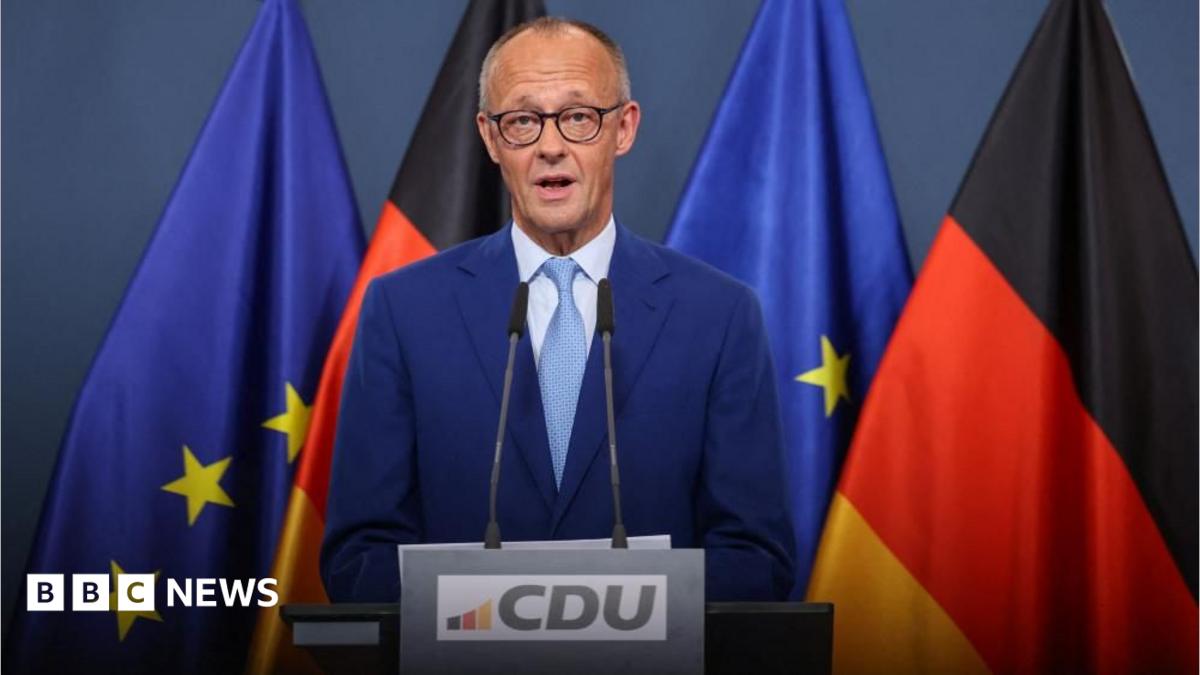
Embattled German Chancellor Friedrich Merz has vowed to stay on despite exit polls in two local elections suggesting damaging defeats for his centre-right Christian Democratic Union (CDU) party.
In the north-eastern state of Mecklenburg-Vorpommern, the party was projected to only just scrape into parliament, while the AfD was on track to win the most votes. Merz called the result “a disaster” for his party.
In Berlin, the ruling CDU was also expected to be beaten by Die Linke (The Left).
Merz is under mounting pressure, with poor approval ratings and rumours he could even be replaced mid-term in a so-called chancellor swap.
Echoing comments he made after that defeat, Merz told reporters on Sunday that he would forge ahead with his coalition government’s plans to push through a package of economic, tax and welfare reforms.
“The reforms have to come,” he insisted. “I am taking on this responsibility, because I want to move our country forward”.
“I would even go so far as to say that these reforms are the antidote to the authoritarian poison that, with the fascination of authoritarianism, is penetrating ever deeper into our society,” Merz added.
Advertisement
As the projected results came up on the screen at the CDU’s election night gathering in Berlin, there were no cheers or celebration.
This is a party that knows it’s in trouble.
Friedrich Merz is going on the offensive, quickly declaring he is going nowhere.
He has long coveted the top job in German politics and likely won’t give it up easily.
Advertisement
Polls for both states closed at 18:00 local time (17:00 BST), with a final result expected in the coming hours.
According to public broadcaster ZDF, the AfD was projected to take 38% of the vote share in Mecklenburg-Vorpommern. It was followed in second place by the centre-left SPD, on 36%.
However, the AfD is unlikely to govern in the state as other parties refuse to work with it.
For Berlin, the broadcaster put the CDU on 20% of the vote share when polls closed, behind Die Linke on nearly 26%.
Advertisement
Prior to Sunday’s elections, there had been intense speculation in Germany that Merz could be replaced unless his party’s political fortunes improved.
Earlier this week, the leaders of eight German states backed Merz, who has only held the post for 16 months.
While his backers have argued that many of the problems the nation faces are inherited, Merz himself is deeply unpopular.
The former corporate lawyer’s tack to the right on issues like immigration has failed to erode AfD support while also alienating people further to the left.
It was while she was in hiding after recovering from the sixth attempt on her life, that the activist Juma Xipaia got a call asking if she would agree to be the subject of a documentary. The first female chief of the Middle Xingu region of the Brazilian Amazon, Xipaia was well known in Brazil for her passionate attempts to protect her indigenous community from the effects of deforestation, illegal gold-mining and – in particular – the catastrophic environmental consequences of the $11 billion Belo Monte hydroelectric dam project, a wildly ambitious and destructive endeavour that has affected livelihoods, fish stocks, ecosystems and biodiversity, with legal challenges still ongoing today.
Thirty-four-year-old Xipaia’s outspoken resistance and exposure of corruption relating to the dam’s construction led to the threats on her life. The last attempt was by poisoning, via a food delivery company, which resulted in her being on a ventilator with 70 per cent organ failure. She was on the verge of death, when, she says, she had a dream that she was given a choice – to take the easy path of dying, or the difficult path of coming back, and because she’s a fighter, that’s the one she chose. And a week later she walked out of the hospital.
Leonardo DiCaprio described the activist as one of the most incredible people he’d ever met
Advertisement
Credit: Lalo de Almeida/Folhapress, FSP
Like many activists representing indigenous communities she walked a tightrope between protecting the interests and traditions of her people, and not being perceived as standing in the way of progress in terms of the economic development that benefits Brazil as a whole, a paradox that was defined when President Lula da Silva regained power in 2023, and brought Xipaia into government.
Richard Ladkani, a film director who has made vibrant environmental documentaries such as The Ivory Game (about poaching) and Sea of Shadows (marine activists), was the man who called her. It was 2019, when Brazil was still under the brutal rule of Jair Bolsonaro and destruction of the Amazon was at its peak – an area of rainforest the size of Belgium was burned during his presidency, and thousands of illegal goldmines flourished, contaminating the forest, polluting the river with mercury (mercury is used to bind gold) and bringing crime and disruption to previously pristine areas.
Advertisement
Film-maker Richard Ladkani in the Brazilian Amazon
Credit: Courtesy of Malaika Pictures
“All summer long we had seen these dramatic apocalyptic images,” says Ladkani. “And I was posing for photos at the premiere of Sea of Shadows, with [executive producers] Leo DiCaprio and Jane Goodall, when Leo leaned over and whispered, ‘So Richard, what’s next?’
Advertisement
“And I said, ‘We’ve got to do something about the Amazon.’”
DiCaprio came onboard as producer, and Goodall as an ambassador. Ladkani knew he had to find a powerful central figure to provide human and emotional context, someone who would be the voice of the Amazon. He drew up a list of possible candidates, until the Brazilian journalist Eliane Brum told him “do not make a decision until you have spoken to Juma Xipaia – when she speaks, the world listens. She can silence a whole room with her energy.”
‘For a long time I had been seen as a soldier, an army of one’
Advertisement
Right now, in a small restaurant in New York, Xipaia is not really in the mood to talk. It is February, and it’s snowing, and Ladkani, Xipaia and her husband, Hugo Loss, are here to publicise the resulting documentary, Yanuni – which took six years to make – at a screening attended by UN representatives and Brazilian diplomats. The recent news about Trump’s exploits in Venezuela has shaken them all and, more specifically, Juma has had a bad experience with American food which doesn’t really agree with her. She is a little reticent at first, but soon opens up with the help of an interpreter, and explains to me what it meant to be a cacique (chief), and how she was selected.
Indigenous leader Juma Xipaia and her husband Hugo Loss in the city of Aracaju, Brazil
Credit: Lalo de Almeida/Folhapress, FSP
Advertisement
“I never chose to be a cacique,” she says, “but I couldn’t stay quiet in the face of exploitation of my people – there was violence, and women being harassed and raped.” She is referring to the collateral damage that importing thousands of workers to build a dam inevitably brings. “Usually the role of cacique is given to the oldest male in the community – my dad and my uncles and my brother were all caciques, but the elders knew that they could trust me never to negotiate our rights with corporations or politicians, never to compromise. For a long time I had been seen as a soldier, an army of one. I accepted the position for two years, with the goal of strengthening on our territories and bringing sovereignty to our people.”
Xipaia was born in 1991 and had an idyllic childhood, she says, growing up in Tucumã, a small indigenous community along the Iriri River, about 250 miles west of the city of Altamira. They lived in wooden houses and ate fruit and nuts from the forest and fish from the river, and in 2006 she moved to Altamira for her education. But threats were encroaching her community, with land opened up for mining and farming, and in 2011, a licence was granted to construct the Belo Monte Dam, to stop up parts of the Xingu River, one of the most species-rich areas of the Amazon.
Aged just 21, Xipaia spoke out against the dam at a public hearing, but despite lawsuits, protest from indigenous people and large sections of society, construction went ahead. Xipaia attended law school in Altamira and studied plans put forward by Norte Energia, the company that built Belo Monte, helping to expose corruption that was going on within. In 2015, at the age of 24, she became a cacique, the first female leader of her people. Other communities had been bought off by Norte Energia with gifts of stoves, fridges, TVs.
In November 2019, she led a protest of angry Brazilian landowners and farmers to disrupt the Amazon: Center of the World international conference in Altamira. But by now she had become a target, and by the time Ladkani called her she had survived six attempts on her life, including her car being rammed with children in the back, and a threat to kidnap her son. She went into hiding for a year and she didn’t want to talk to anyone.
Advertisement
“She thought, the only way I’m going to survive is if I stop talking, because when I talk, people want to kill me,” Ladkani says. But she was finally convinced to take a call from him, and from the first moment, he says, he knew he had found the voice for his film. “Her poetry is the thing that stands out – the way she can describe emotions and feelings and put things into context, I felt it was unique. And when she told me the story of how she almost died because of the poisoning, I was in tears.
“I told her I wanted her to be the voice in the film and also offered her the role of producer. Because I knew nothing of indigenous life and I needed her to lead the way.”
An aerial view of the Belo Monte hydroelectric dam in Altamira
Advertisement
Credit: CARLOS FABAL
It was a struggle from the word go. Xipaia was not happy about a translator being involved because of security reasons; she couldn’t trust anyone. So Ladkani, who is Austrian, took intensive lessons in Portuguese and within six months was fluent. “It was a key thing to show that I meant business and took her concerns very seriously,” he tells me.
Advertisement
The security budget for the film was huge, they needed the best, most experienced people: safe houses, secure drivers. And the arrangements had to extend for a year after filming was completed – a total of seven years. “Leo was extremely important here because he raised the first third of the budget, and this encouraged other philanthropists to be part of it.”
Filming began in 2020. There was no script and Ladkani didn’t know what he was going to get from it, just that he needed to tell the story of the pillaging of the Amazon via Xipaia’s voice.
And in the end it was a wild ride: it started with Xipaia leading protests against Bolsonaro, but after Lula was elected in 2023, he established a Ministry for Indigenous Rights, of which Xipaia was made state secretary, implementing a series of bills for the protection of the forest and employing lawyers, biologists and engineers to combat the destruction of the Amazon.
Juma Xipata and Leonardo DiCaprio at the Yanuni Premiere during the 2025 Tribeca Festival in New York City.
Advertisement
Credit: John Nacion/Getty Images for Tribeca Festival
The film documents her move from her village to set up home in Brasilia with her son; getting together with her husband Hugo Loss, head of special operations for Ibama (the Brazilian Institute of Renewable and Natural Resources), an elite outfit conducting raids on illegal mines; and the birth of their first child, who was called Yanuni.
It was a lengthy, exciting journey, an improvisation which resulted in thousands of hours of film. “I just had to go with the unpredictable. The strength of any documentary is when unforeseen things happen, because a twist in direction is the greatest thing of any film structure.
Advertisement
“And we had that multiple times. I had chosen a woman to be the voice of the Amazon and two years later she became the second most powerful woman in the Indigenous Ministry – I get goosebumps now at the sheer luck. That was the first twist, and then Hugo enters her life, who happens to be this charismatic soldier of an elite force who would take me to the frontline of the Amazon resistance, and then Juma becomes pregnant and gives birth to Yanuni. Holy s**t. If I had written that as a script, everyone would have thrown it out as complete fiction.”
‘I said, how dangerous is it? And he said, “Well, the risk of you dying is 50 per cent”’
Leo DiCaprio was a producer on the film (rather than his usual role of executive producer), which meant he was far more involved. “He not only provided the money, but he gave me meaningful support throughout the production,” says Ladkani. In November 2021 DiCaprio attended Cop 26 in Glasgow, where he met Xipaia for the first time. “That meeting was spectacular – Leo posted a picture of the two of them together and said that she was one of the most incredible people he’d ever met.” The resulting attention helped to protect Xipaia, because a public profile is to some extent a safeguard. “There she is next to DiCaprio, so she’s not just a voiceless indigenous person from somewhere in the Amazon.”
Advertisement
There were many technical challenges. Because of security, Ladkani couldn’t film in the normal way, with lighting and a crew. “I had a second cinematographer, a brilliant guy from Brazil, called Fábio Nascimento, and I took him with me when I could – but that was only 30 per cent of the time. The rest I shot alone. I downsized my gear and basically shot the film with a DSLR, like a photo camera, so I looked like a tourist. To an outsider, I was just a white gringo taking pictures.” Xipaia had a hidden microphone beneath her shirt. If Ladkani was ever confronted, he claimed to be a YouTuber.
“Security demanded that we shot the film incognito, and that became its strength, because I was embedded within the family to the extent that they stopped noticing me,” says Ladkani.
An illegal gold-mining ship destroyed by Ibama in the Brazilian Amazon – it is dangerous work, with agents risking serious injury and even their lives
Advertisement
Credit: Courtesy of Malaika Pictures
Hugo Loss’s job involved protecting indigenous communities and flying over the forest and rivers of the Amazon routing out illegal goldmines, dredgers and excavators. His small team lands, arrests the miners and sets fire to all the expensive equipment, which is too bulky to confiscate. In the film we see massive plumes of thick black smoke rising above the forest. Penalties for environmental crime are insubstantial, but, says Loss, “It’s not for President Lula to change those things, it’s Congress, and it’s hard to change the law. But destroying the equipment is a real deterrent, because the machines are expensive, so it’s a risky investment.”
Advertisement
An illegal gold mine in the Brazilian Amazon
Credit: Courtesy of Malaika Pictures
Loss and Xipaia met when her village was attacked in 2020 by illegal goldminers; she was in Altamira, a two-day boat ride away. She put out a cry for help on social media and Loss, who was also in Altamira, saw it and responded right away. He picked Xipaia up in a helicopter and asked her to take him to the exact location of the miners’ dredger. The attackers spotted them and ran, but Ibama were able to seize their boat and secure the area. “He saved her village and her people and her parents from an immediate attack and they fell in love and have been together ever since,” says Ladkani.
Advertisement
“I’m usually very shy about these things but from the first time I saw her in the helicopter I couldn’t stop thinking about her,” admits Loss. “Three months later I was doing an Ibama operation on land to remove some illegal loggers and I saw a hawk’s nest and I took a picture of it and sent it to her,” says Loss.
“It’s the bird whose feather I wear in my headdress,” interrupts Xipaia, shyly. She admits that she had first met Loss before the helicopter ride, at a meeting, but he was leaving as she arrived. “He shook my hand and I made eye contact with him and something told me – I can’t really explain what – that he was going to be my husband.”
Loss holds a Master’s degree in social anthropology from the University of Brasília and is one of Ibama’s most experienced field agents, yet he spent a good part of his career sidelined by Bolsonaro, who had no interest in protecting the environment. In February 2023, under Lula, he was appointed Ibama’s coordinator of enforcement.
Loss has taken part in hundreds of operations. His job is a dangerous one. We watch him flying helicopters over swathes of forest to spot mines, or patrolling the rivers looking for dredgers. Recently one of his team was killed in an ambush, another got burns over 60 per cent of his body.
Advertisement
Hugo Loss, Xipaia’s husband, on a mission to destroy illegal mining equipment for Ibama, Brazil’s government enforcement agency
Ladkani asked to accompany Loss on a raid. “Hugo told me, it’s too dangerous, the risk of you dying is too high. It’s a small team, and you would be taking the place of a soldier on the helicopter so we would be down one security man, which means our job is much harder, and by the way, if we get into a gun fight, we are not your bodyguards, we are there to finish a job. You would have to save yourself.
“I said, how dangerous is it? And he said, ‘Well, the risk of you dying is 50 per cent.’ I laughed – and then I realised he wasn’t joking.
Advertisement
Film-maker Richard Ladkani in the Brazilian Amazon
Credit: Courtesy of Malaika Pictures
“Of course I had to think about that – I have a wife and two daughters. My wife and I discussed it. She grew up in a war zone in Beirut, so she understands threats, and how you can mitigate risks as well. She is also the producer of this film. We have had a long journey together – making conflict zone films like Sea of Shadows and The Ivory Game was no joke. But this one felt like a different level because of the 50 per cent quote.” He smiles.”‘I did hostile-environment training and we augmented the security to a degree where I felt it wasn’t 50 per cent any more.”
Advertisement
An illegal airbase in the Brazilian Amazon being destroyed
Credit: Courtesy of Malaika Pictures
So Ladkani joined the team, and the resulting episode is terrifying: they are patrolling the river when they find a huge illegal dredger, used for gold mining. They board the dredger, its crew of illegal miners are put in a small boat and dispatched, and Loss’s team set fire to it. Attempting to get away, they realise their boat is still attached to the dredger by a chain, and they have only moments before an oxygen tank below the deck of the dredger explodes. Loss has to shoot the chain, but he has to hit it while it is taut, or the bullet would glance off. “The oxygen tank is steel and if it had exploded we would have been killed by the fragments if we were within 100 metres of that boat – and we were six metres away. It was Hugo who shot the chain – it took 50 shots at least. When Juma saw that footage she broke down and sobbed,” says Ladkani.
Advertisement
Do you like your job? I ask Loss.
He smiles. “Yes I do.”
Back in the 1970s, when two major roads were originally carved into the Amazon rainforest, of which 60 per cent is in Brazil, it opened it up for settlers to devastating effects – the population of the Brazilian Amazon quadrupled and millions of acres of trees were cut down for timber or land clearance and farming, and the rivers became polluted. Thousands of garimpeiros (prospectors) arrived, bringing disease, destruction and violence.
Indigenous people from the Mura tribe in a deforested area inside the Amazon rainforest near Humaita, Amazonas State, Brazil
Advertisement
Credit: Ueslei Marcelino/REUTERS
Despite the protected reserves created by Lula during his first tenure (2003 to 2011), when Bolsonaro took over, he vowed that he would not demarcate a single millimetre of Indigenous land.
There was reason to be hopeful when Lula was re-elected in 2023, especially when he created the Ministry for Indigenous People. But it was an uphill struggle, and Xipaia left the post of State Secretary after about two years, and retired to her territory, where she still is. “She realised that it would be years, if not decades, before change could happen and she felt that her power was with activism from the front lines rather than being in an office in the city,” says Ladkani. “And what really hurt was her children having to grow up in the city and not having the connection to nature that she had.”
Advertisement
Smoke from illegal fires lit by farmers rises in Manaquiri, Amazonas state
Credit: MICHAEL DANTAS
Advertisement
There has been a lot of progress, Juma says, compared to the Bolsonaro years “when it was genocide”. “It is hard to quantify all the changes because even though there was a change in the administration, it is important to understand that the government structure is very colonialist, no matter who is in power, and everything takes time. I entered the ministry when it was just being born.
“It was hard working in an office every day and not spending time with my children, and my son Tuppak [eight] told me that he wanted to go back to the forest, he was having a hard time at school in the city. I did not want to rob my son of that kind of childhood – being in the territory and getting his knowledge from the forest.”
I ask Loss and Xipaia if, with the way things are now, they are more inclined to hope or despair. “Most of the time I don’t think about the future,” says Loss. “I just focus on doing my work, one operation at a time.”
Advertisement
A wildfire consumes land deforested by cattle farmers near Novo Progresso, Para state, Brazil
Credit: MICHAEL DANTAS/AFP via Getty Images
Xipaia thinks. “It depends where I am. When I’m in the forest with my family, there is immense fulfilment which is hard to explain; it gives me the hope and energy to keep wanting to protect it, and I want the whole world to get to know it.
Advertisement
“When I walk through the forest and harvest food there with my family and my people, it reminds me of what my ancestors were doing. The innocence of children, the idea of clean water, food without toxins – this gives me hope.”
“I don’t feel despair,” says Ladkani. “I feel like we’re in a war. There are plenty of good people fighting back, and that gives me hope. And there are lives on the line that we need to care about, which is the indigenous people, who are the frontline of our defence. They are defending nature for us so we need to make sure that they are heard and seen and respected. And we hope that the film puts a human face to that.
“We can’t pretend that destroying the biggest ecosystem on the planet is OK. If we lose the Amazon, we all lose.”
The governing party has remained consistently above Nigel Farage’s party for approval since Mr Burnham’s coronation in July, when Labour overtook Reform for the first time since March 2025.
The new leadership has also hit the ratings of Zack Polanski’s Green Party, which has seen a drop in support over the past few months.
The government has said that it does not intend to call an early election. However, Labour sources told The Independent last week that the by-election to replace Sir Keir Starmer in Holborn and St Pancras is being seen as a test run for the possibility.
Advertisement
Sir Keir announced that he would be leaving parliament earlier this month after resigning as prime minister and Labour leader to make way for Mr Burnham.
Mr Polanski has confirmed that he will stand as the Green candidate for the seat next month.
Opposition parties also appear to be preparing for the country to go to the polls early, with Liberal Democrat leader Ed Davey having revealed a manifesto working group has already been formed.
Advertisement
“We don’t normally do it this early,” he told The Guardian.
Meanwhile, Reform sources have also suggested Mr Burnham could be convinced to call an early election depending on the outcome of the London by-election.
They told The i that if Labour’s candidate beats Mr Polanski “convincingly”, he could be dismissed a “dud” and convince Labour that the progressive vote was uniting behind them once again.
A Tory source also told the paper: “[Burnham’s] whole thing is to consolidate the left. If he continues to constrict the Green vote then it will tempt him into an early election whilst the right remains split.”
Advertisement
Under Sir Keir’s leadership, polling showed that Labour began to lose support from left-leaning voters over issues such as Gaza and welfare spending.
This coincided with a boost to the Greens, who recorded a high of around 14 per cent approval in April this year, based on an average of top pollsters, compared to a Labour low of 19 per cent in the same month.
Pollsters have broadly forecast that Labour will win the by-election, having taken nearly 50 per cent of the vote in the seat in 2024.
However, the picture has changed since then. The Greens took three London councils from Labour at the local elections earlier this year, and increased its share of seats in Camden – home to Holborn and St Pancras – from one to 11 at the contest, while Labour held overall control.
Advertisement
Will Labour call an early election?
There are clear upsides for Mr Burnham in calling an early election, particularly if Labour holds the seat of Holborn and St Pancras.
The new prime minister has pledged to make sweeping changes. However, after he secured the role with just 24,000 votes from the people of Makerfield – and ran uncontested to be Labour leader – his opponents have argued that he does not hold a mandate from the nation to pursue his agenda.
A general election victory would inarguably grant this, plus an extra two years to deliver the policies he has begun to set out.
Advertisement
Under present rules, the latest the next general election can take place is in 2029.
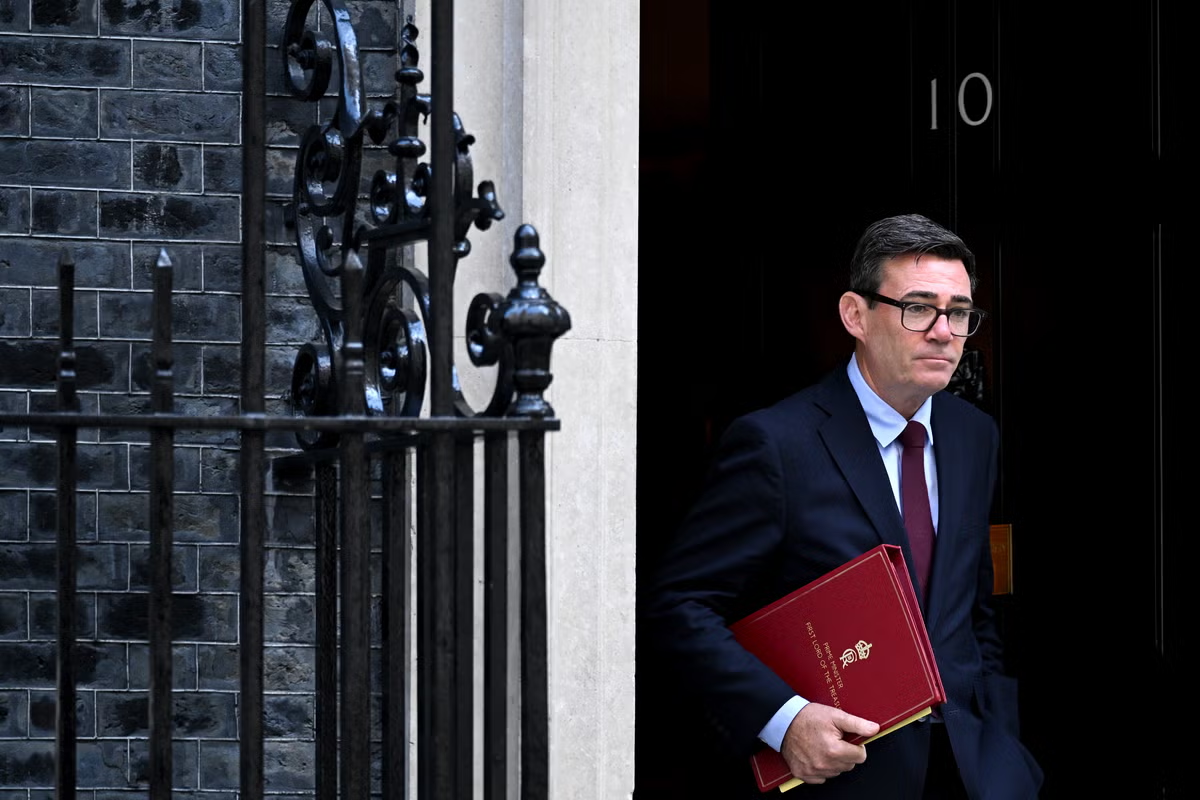
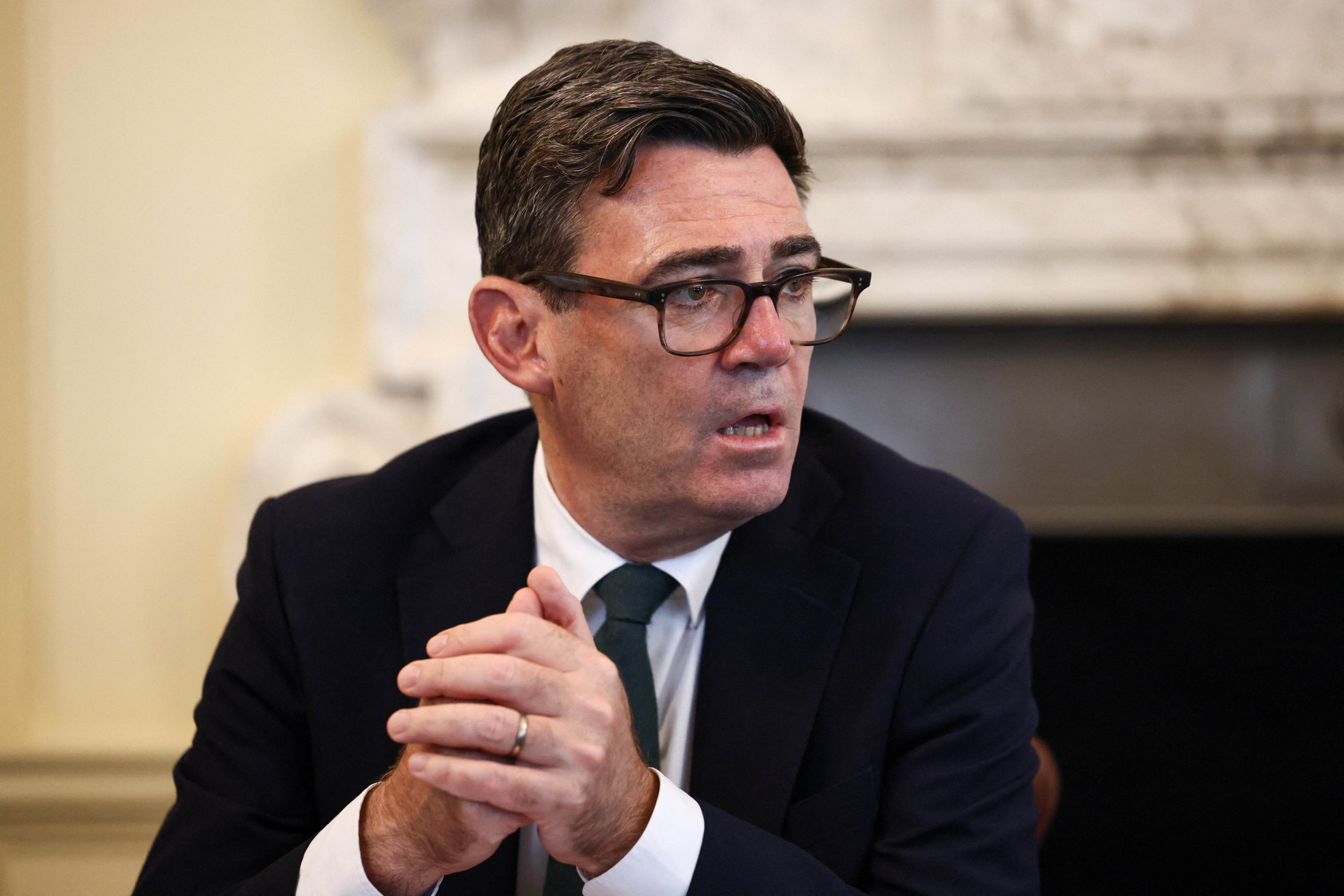
A sustained polling boost for the new government is fuelling speculation that Andy Burnham is considering an early general election (PA Wire)
Polling suggests that it would also be an inopportune time for two of Labour’s key political opponents – Reform and the Greens – given falling support for both parties.
Reform’s approval now sits at its lowest in 20 months, at an average 24 points, and the Greens’ at 10 points, down from 14 in April.
The Conservatives, meanwhile, have begun to plateau at around 20 points, and the Lib Dems at around 11.
However, polling expert Sir John Curtice has poured doubt on Labour optimism in the face of these trends, telling The Independent last week that there is still a chance for Reform UK to become the biggest party at a nationwide contest.
Advertisement
“The numbers are just not there,” he said.
Labour disastrous local election results – where it lost 38 councils – saw it drop support in places where it was previously the strongest party, Sir John explained. This pattern means Reform could “still do perfectly well in terms of seats”.
Mr Burnham has also been “dying [to become PM] for years”, Sir John added.
“Holding an election now means risking three years to gain two. It’s a bad deal.”
New school year, new Kate! Princess of Wales shows she means business this autumn with array of surprise appearances, first film premiere in four years and an unfazed display at Eton
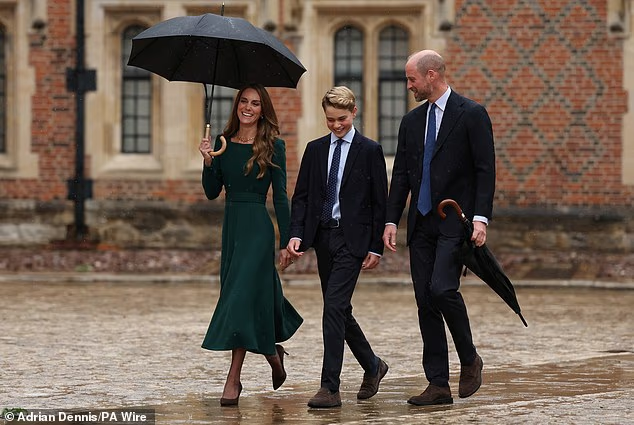
As she walked through the gates of Eton last week, elegant and poised in a forest green Emilia Wickstead dress, the Princess of Wales gave off an intriguing air, more significant than just a proud mother escorting her eldest child to school for his first day.
On first impressions it was just an ordinary family moment – Kate chatting, laughing and exuding her easygoing charm as she placed a maternal hand on George’s back, ushering him into the institution that educated his father, Uncle Prince Harry and also his great Uncle Charles, the Earl Spencer, but look closer and you’ll see the snapshot is loaded with royal symbolism.
For Prince George this image marked the start of his education at one of Britain’s most prestigious schools and for the Prince of Wales a poignant return to the place that helped prepare him for his role as future king. But there was another story brimming from the photographs: the Princess of Wales is firmly back, more so than ever before.
Indeed, Kate appears to be entering the autumn with an airiness that belies a deep well of confidence. It seems she is becoming increasingly comfortable with the incredible scrutiny that comes from being the most prominent female member of the so-called ‘Firm’.
Advertisement
Recently the princess has re-cemented her star power with a couple of surprise appearances that have delighted members of the public. Last week she appeared at the Royal Marsden Hospital in London, where she received cancer treatment, employing her warm bedside manner with the patients and chatting in earnest with the medical staff.
She also left a woman in tears when she and Prince William were the unexpected guests of honour in Liverpool as they unveiled the suicide prevention toolkit to mark World Suicide Prevention Day. She wore earrings from a brand called Issy Star, created by Sophie McGown in honour of her cousin Issy who died by suicide in 2023. Ms McGown told Hello! Magazine: ‘It was completely overwhelming and special.’
And there is little time still to relax, for within a few days her and William will be stepping on to the most glamorous of world stages – the red carpet. The couple are due to attend the world premiere of Tom Cruise’s much anticipated new film Digger in London’s Leicester Square on September 22.
The event marks a reunion with the world’s biggest movie star after the couple walked the red carpet with Cruise at the Top Gun Maverick premiere in 2022.
Advertisement
The Princess of Wales looked at ease as she carried herself in the heat of the media moment of Prince George’s heavily photographed first day at Eton
The Princess of Wales was having fun when she visited Bute Shinty Club in Rothesay during a tour of the Scottish Island this week
The Princess of Wales visits Ettrick Bay during a royal visit to the Isle of Bute
Advertisement
Four years ago Kate was ravishing in a black-and-white, off-the-shoulder gown by Roland Mouret, and Cruise was visibly dazzled by the princess. Her presence at next week’s premiere promises to be one of the most glittering royal appearances of the season.
For Kate, this is the calibre of occasion in which she excels. Because if there’s one thing the princess understands, it’s the power of a red-carpet moment – the pièce de résistance being the gold Jenny Packham gown she wore to the James Bond: No Time to Die premiere in 2021. Kate has become the expert in effortlessly making the transformation from dressed-down royal in country tweeds to global celebrity in a tiara.
Fashion expert Caroline Baxter says: ‘WKate steps on to a red carpet, all eyes follow because she knows what works for her and rarely gets it wrong.
‘Alexander McQueen is her go-to for major royal moments, often turning to Gucci as well, while Jenny Packham brings the sparkle when the occasion calls for something even more glamorous.
Advertisement
‘She has emerged from the summer looking quite spectacular: golden, radiant and noticeably more youthful. Her skin has that enviable honeyed, sun-kissed quality that seems to radiate from within.
‘Kate has always known how to command a room. But as she prepares to take centre stage once again, this may just be her most dazzling chapter yet – as she knows the world is watching.’
After an intense period where her health has been the main talking point, there is likely to be considerable interest in what she wears when she steps out in Leicester Square next week and the timing could hardly be more intriguing.
For no sooner are Kate and William immersing themselves back into the epicentre of royal life, there is another story competing for oxygen.
Advertisement
Harry and Meghan have returned to the UK with their children, and Meghan has already shared some content of their new life on social media – country walks, crackling fires and family time spent with their children, Archie, seven, and Lilibet, five.
It’s been four years since Kate’s last royal film premiere where she walked the carpet in a Roland Mouret dress and completely dazzled Hollywood legend, Tom Cruise
The unforgettable moment when the actor took Catherine’s hand to help her up the stairs
But Kate is not competing with the Duchess of Sussex, for she is too busy preparing for her role as future queen. But before that, a new season ushers in an array of royal engagements where the princess will be centre of attention.
Advertisement
Earlier this week, the Prince and Princess travelled to Isle of Bute for their first official appearance on the island. While in Scotland the couple – who while there go by their Scottish titles, the Duke and Duchess of Rothsay – also paid a visit to their namesake town.
Then in November the Princess will reportedly accompany her husband Prince William to Mumbai in India for the Earthshot prize ceremony, which would be their first joint appearance overseas in four years.
Quietly Kate has become the most high-profile member of the firm through these carefully curated appearances. Instead of dramatic announcements or clumsy, loud attempts to dominate the news cycle, the princess executes simple but impactful engagements.
At Eton she is the adoring mother. On the red carpet the glamorous royal. And somewhere between the two sits the woman the world has watched transcend from shy girlfriend to queen-in-waiting.
Advertisement
Quietly Kate, pictured at the Royal Marsden on September 11, has become the most high-profile member of the firm through these carefully curated appearances
Amid endless debates around George’s education and the public fascination with the Sussexes, Kate has become adept at shutting out the noise and focusing on the work at hand.
Perhaps this is a real glow-up, which is not defined by her shiny, highlighted hair, immaculate make up and beautiful wardrobe. But rather the radiance of a woman who is walking boldly into her future.
With their eldest beginning his Eton years and Charlotte and Louis back to primary school as well, the Waleses are back in the spotlight. William seems ever more visible as the king’s heir and appearing alongside Cruise will only cement this. Where King Charles is the official patron of The Film And TV Charity, the prince has served as the president of Bafta since 2010.
Advertisement
And the Princess of Wales is emerging from a challenging chapter with her trademark grace and, judging by her unruffled air at Eton and her beaming smile in Bute, she seems ready for the next one.
If her appearance alongside Cruise next week is anything like her last red-carpet outing where he touchingly took her hand, the glamour promises to be high voltage.
This simple tweak to your drinking can transform your face and health in days. It made me look five years younger in a week – I was so delighted with the results I will do it again, writes SUSANNAH JOWITT
We’ve probably all given up alcohol at some point, eager to give our bodies some respite following a period of boozing. Dry January is the big one, squirrelling ourselves away during those long winter nights, swearing off all fun in the name of ‘New Year, New Me’.
In winter, the key to success is social isolation and a Faustian pact with the devil that if we cocoon ourselves away from all temptations and any need to look beautiful, enveloping ourselves in hoodies and sweatpants, we get to emerge from a hoolie-free hibernation like glossy butterflies, with not just a recovered liver but a sleek new look and transformed energy levels.
But imagine deciding, as I have, that what I need is to give my system a short, sharp shock, going teetotal for seven days to see if it makes me look better in advance of a big-number birthday party of a friend, and to do it at this busy time of the year, that post-summer, back-to-the-coalface season, when I am going out every night and still need to look good throughout. The twin-horned dilemma is how to not drink and still have fun, and what to drink instead?
My favoured tipple is rosé or prosecco, with champagne if offered. Throw in long, lazy lunches at weekends and I can easily tot up a weekly total of 56 units – four times the recommended intake for women.
Advertisement
In cutting down to none, a GP friend assures me that I will almost instantly see the results of abstinence – not just invisibly, in my liver, but for all to witness: in the reduction of puffiness in the bags above and below my eyes, in the smoothing out of my skin, the reduction of fine lines and redness and in the increasing brightness of my eyes.
Call me cynical, but I don’t believe that this is possible so, just to set the bar of the challenge even higher, I vow to take a selfie at 7am every day that week, make-up-free and in the full harshness of morning light, for a fierce and forensic comparison, day by day, of said skin and eyes.
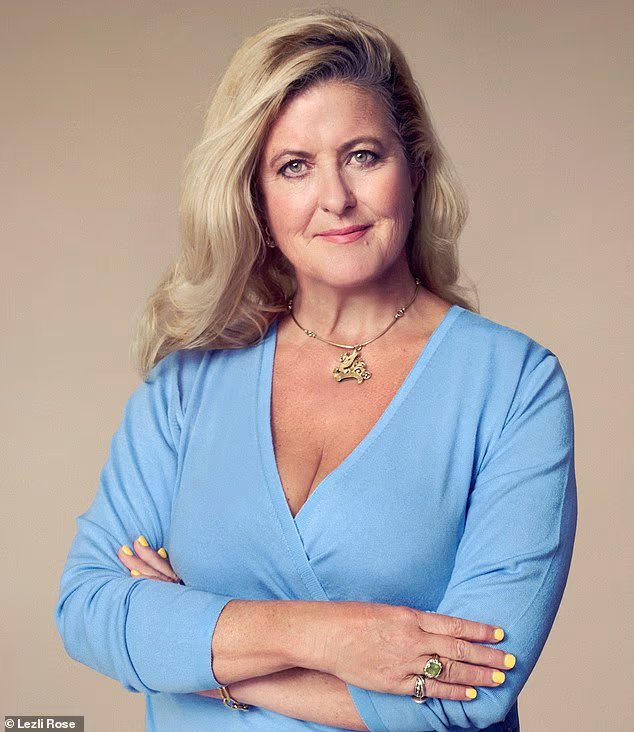
Susannah Jowitt decided to give up alcohol for a week after a chat with a GP friend
Advertisement
Putting myself under the microscope of morning light like this is even braver for me than it would be for most others – because my 57-year-old face is quite the sight at 7am; still creased and puffy from sleep, eyes bloodshot from the carousing and lateness of the night before. So much so that it is a joke among my family and friends, that my smartphone’s Face ID doesn’t work for me until 8.30am at the earliest. I am so troll-like first thing that even my own phone doesn’t recognise me and let me in.
So how likely is it that stopping drinking could show on that face in such a short time?
Really quite likely, I am told by Dr David Neilson, the aforementioned GP friend. ‘Put simply, the face and eyes act like an early warning system for the body,’ he says. ‘A puffy face – facial oedema – and rheumy eyes are both immediate signs of excessive drinking.
‘It’s one of alcohol’s odd contradictions: while it dehydrates you overall, it has an inflammatory effect that can also make parts of your body retain fluid and around the eyes, both in the bags underneath and in the eye socket above, that soft tissue is a swift indicator of how hydrated you are. At the same time, the vasodilatory effect of alcohol can be seen both in the bloodshot eyes – as the blood vessels on the surface of the eye expand visibly – and in the swelling of the mucosal lining of the nose, which is why drinkers snore.
Advertisement
‘The good news is that what goes quickly up, comes quickly down. Even a couple of days off the booze improves sleep and lowers the vasodilatory effects of alcohol: so, less swelling all round. Equally quick is the effect of decent hydration: drinking more water literally dilutes the effects of the alcohol it is replacing, leading to less inflammation and less disruption of the tear layers which keep your eye lubricated.
‘Which should translate, for you, into reduced eyelid swelling, less under-eye puffiness, diminished facial bloating and redness, even brighter, whiter eyes because you’ll be rubbing them less.
‘I never want to sound preachy but I think you’ll be impressed.’
Day One
At the start of my alcohol-free challenge, my skin was bloated and reddened after a lengthy drinking session the previous day, says Susannah
Advertisement
I’m going to need every millimetre of the promised improvement because, on Day One, I nearly crack the camera lens on my phone. I went to bed late, from a friend’s all-day (and into the night) lunch party, and I look like I’ve done a few rounds with Tyson Fury, then been chased away from the boxing ring by a swarm of angry bees.
I am reddened of skin, bloated of face, and every one of the 12 glasses of champagne I had over the 12 hours of the party is tallied up in the lines on my face, like marks scored on the wall of a prison cell by a lifer. My eyes look like hard-boiled eggs wearing puffa jackets – and the bags underneath them could be the full set of luggage given away on the Generation Game.
‘Hmmm,’ says my husband tactfully. ‘It’s not great.’
By 6pm, mindful of those words, I’m wearing makeup and dressed to the nines for a party organised by my choir. To forestall any social anxiety, of being seen as the boring non-drinking one at an event that is famously well-oiled, I have brought my own bottle of Nozeco Rosé alcohol-free prosecco (£3.50, available in most supermarkets). It looks like the real deal and, while it doesn’t quite taste like prosecco, it’s less sweet than the soft canned drinks that I have always hated.
Advertisement
Day Two
On Day Two I’m not noticing much change in my appearance… but then I’m too busy popping headache pills
I would gasp with horror at the sight of me on Day Two, but I’m too busy popping headache pills.
This seems unfair – it’s not as if I can be hungover but I know that this is the price of withdrawal: the blood vessels in my brain are hurtling back to their usual diameter and my circulation is readjusting, with a headache being the body’s way of helping me through.
Water is the best medicine so I glug away, feeling better by 10am, just in time to set off for a lunch party being thrown by a magazine I write for. Normally I’d keenly avail myself of the free booze but today I hear myself asking weakly what they have in the way of soft drinks. Diet Coke and elderflower soda is the response. After an hour or so, I’m holding back the burps and feeling both bored and bilious as, around me, my pals start ordering cocktails…
Advertisement
Giving up drinking always feels harder when you don’t like fizzy pop, get bored of the herby gaseousness of all the Botivo and Seedlip alternatives and can find nothing that tastes better than wine to have with food.
These days, luckily, it’s a more forgiving world than when I was having children and unable to drink during pregnancy. Now, you can find very tolerable alcohol-free wines: rosé or rosé prosecco (like the Noughty range online or at Majestic) often being the best, if you drink it a little colder than you do normal rosé.
Zero white wine is usually only drinkable if chilled to Antarctic temperatures and they’ve got a way to go with red wine, though the Torres Natureo Red is better than most. For beer drinkers, tasty Guinness Zero and the Brewdog range of Hazy AF, Punk AF and Wingman AF are all good alternatives.
Day Three
On Day Three my eyes remain puffy, with bloodshot eyes… I can’t get away from The Face
Advertisement
I’m no longer surprised by how bad I look in the 7am selfie. I’ve had a dreadful night. Maybe it’s the sugar in the Nozeco, but I wake at 2am and 4am with the racing heart, thudding head and dry mouth of a sugar come-down. The non-hangover only seems to be getting worse.
Taking these selfies means I can’t get away from The Face: remaining puffy, with bloodshot eyes, and, though I think the gin nose is less red, it’s still not an edifying spectacle.
As I sit in a hot Tube carriage that night, coming home from a sober trip to the theatre, I realise the unpalatable truth that, after a few, all zero-alcohol alternatives pall for me (in a way that wine just doesn’t), especially with food – and then I am stuck with water.
Day Four
On Day Four my jawline seems more defined and my nose and cheeks are less red
Advertisement
Progress! Halfway through the week, my jawline already seems more defined, my eyelids less puffy, while my nose and cheeks are even less red.
Tonight is our Book Club and, while I’m touched by the support I get for my short sharp sobriety drive from my girlfriends, there’s nothing so dull as peri-, post- or just plain-in-it menopausal women comparing symptoms and convincing themselves that drinking wine is the root of all their evils. ‘Oh, red wine is the worst,’ they say, ‘it wakes me in the night, bed sweats, heart racing, acid reflux, the works but, really, I’ve just decided to give wine a miss altogether – my menopause specialist tells me that’s the sensible approach and I’m such a lightweight these days that I get a hangover after two glasses anyway.’
My innate stubbornness about not following the herd makes me want to point out that I’m a really good drinker, that I don’t get drunk, that I never had a hangover before this week, that I don’t have any more hot flushes when I drink so, since I don’t feel any ill-effects from drinking, why give up on it?
Except that wouldn’t be quite true. Even after just three days I have noticed that my sleep has improved in quality – I’m back to dreaming and there’s not so much floating in and out of awareness, or needing to slake a thirst in the night.
Advertisement
I have also noted that my consumption of Rennies – usually one a night at least – has simply stopped as that heartburn before I go to sleep has disappeared.
Day Five
On Day Five I am flagging, even though I cannot deny that I look better
Despite the end being nearly in sight, I am flagging.
I stare at myself ever more critically each morning and cannot deny that I look better. But the problem with pegging the effects of sobriety so completely to how I look, is that this then becomes another example of medicalising vanity: that what’s happening on the outside has become more important than on the inside.
Advertisement
To the selfie-examining eye, the outer signs are good; but inside, I’m bored.
And, yes, I do feel perkier in the morning but that could be because I’m getting to bed earlier than if I were drinking, despite being out every night. Each party starts well: banter bats back banter on an equal playing field but the drinkers are forging ahead on a different track, fuelled by alcohol, and I begin to lag behind.
Tonight, I’m at a party of friends from my CrossFit days; like many gym-going types, they tend to carouse infrequently, so when they do, they go for it. It would be reductive to say that drunk people are tedious – maybe I’m the dull one – but the difference soon becomes boring so I duck out early and head to bed.
Day Six
On Day Six, my skin feels smoother and softer and my eyes less red-rimmed and hooded
Advertisement
Today, I’ve flip-flopped back in favour of being booze-free. The evidence is right there in front of me: I’m even smiling in the selfie.
After one short week, my skin is smoother and softer, the blotches evened out, my eyes far less red-rimmed and hooded, undeniably clearer and whiter.
I’m moving more lightly too – the fluid that has left my face looking almost chiselled has also drained from my ankle and knee joints, which is, er, sobering. All told, I look at least five years younger.
It’s Saturday night and it’s the big one: we are celebrating my husband’s best friend’s 60th with a diverse range of friends.
Advertisement
Some drink, some don’t; for the first time, I can’t tell who is doing what. Everyone seems to be paying me compliments about how well I look, so I’m happy any which way. We swing onto the dance floor. I can’t quite believe I am dancing without the crutch of alcohol.
Day Seven
After my booze-free week I notice that I have smoother skin and clearer eyes
Mission complete. I couldn’t be happier, both with the success of the project – my clear-eyed smiling face beams back at me in the mirror – and with its conclusion: it’s over and tonight, I can have a glass of wine to celebrate.
I can see a sustainable way ahead: a quick reset ahead of a big event or holiday will make me both healthier and more beautiful. In between, I can either drink in the way I always have or do maintenance periods where I cut down, but for visible improvements, total sobriety, even for this short a period, is the answer.
Sir Tom Jones thanks fans for their ‘heartfelt messages’ as The Voice loses half a million viewers and petition to ITV to reinstate sacked star reaches 57,000 signatures
Sir Tom Jones has thanked fans for their support as filming for the new series of his show The Voice continues without him.
The ITV show has been marred in controversy, after it emerged that Tom would not be returning as a coach.
The broadcaster is currently airing Sir Tom’s last series whilst filming began ten days ago for the 2027 season, this time with new judges Cheryl, 43, and Aitch, 25, taking over the red chairs.
Sir Tom, 86, has remained quiet on social media since he hit out at ITV in a furious statement two weeks ago, confirming that he had ‘did not want to leave The Voice’.
Advertisement
As the latest episode of The Voice aired on Saturday, Sir Tom returned to Instagram to share a clip of himself singing his hit It’s Not Unusual on the show whilst cheered on by his fellow judges will.i.am, Kelly Rowland, Tom Fletcher and Danny Jones.
As Sir Tom finished the rendition, Kelly walked over to give him a hug as will.i.am also left his seat to embrace his friend.
Sir Tom Jones has thanked fans for their support as filming for the new series of his show The Voice continues without him
Advertisement
‘It’s Not Unusual…So many heartfelt messages, comments and even petitions of support,’ Sir Tom captioned the emotional clip. ‘It doesn’t go unnoticed and it’s been really lovely to receive these! Thank you!’
Change.org announced in the comments that ‘the petition to reinstate Sir Tom Jones on The Voice now has over 57,000 signatures and thousands of messages of support’.
The singer’s fans and celeb pals flooded the post with support as Kelly ‘liked’ the post alongside Spice Girl Mel C.
The Voice did not fare well in the Saturday night ratings as it’s been revealed that the show lost half a million viewers on last week, with just 1.6 million tuning in.
Advertisement
The latest episode of the show moved to an earlier timeslot to avoid a clash with Strictly Come Dancing’s launch show on the BBC.
Sir Tom has insisted it wasn’t his decision to leave and said ITV ‘fired’ him ‘because of a financial difficulty with insurance’.
In a statement confirming the lineup, ITV bosses thanked Tom for his work on the show, saying: ‘ITV would like to thank the irreplaceable Sir Tom Jones for all his years on The Voice UK, and the countless incredible and unforgettable moments he gave the show.
‘He has brought joy to audiences, and to every singer who performed for him and with him.’
Advertisement
As the latest episode of The Voice aired on Saturday, Sir Tom returned to Instagram to share a clip of himself singing his hit It’s Not Unusual on the show whilst cheered on by the judges
‘It’s Not Unusual…So many heartfelt messages, comments and even petitions of support,’ sir Tom captioned the emotional clip
Fellow coach will.i.am, who will remain on the show alongside Kelly Rowland, has vented his fury over Tom’s being dropped from the show, with sources claiming he’s made his feelings known backstage.
Sources have revealed that despite Cheryl and Aitch being welcomed as new additions to the lineup, any excitement on set has been replaced by awkwardness over the row.
Advertisement
A source said that while they normally kick filming off with welcome drinks in a swanky five-star hotel, this year things are different.
‘It’s seriously awkward as will.i.am is furious with how producers have handled things and is making his feelings known behind the scenes.’
They told The Sun: ‘It’s pretty uncomfortable for Cheryl, who is close with Will and has looked up to Kelly all her career.
‘This is her big TV comeback and right now ITV are letting her be the fall guy for taking Sir Tom’s seat. None of this is her fault, it’s been handled atrociously by the bosses.’
Advertisement
The Daily Mail has contacted will.i.am and ITV representatives for comment.
Taking to Instagram on September 8, just three days before the new lineup was unveiled, Sir Tom wrote in his statement: ‘To be clear, I did not want to leave The Voice as I love the show and really appreciate the audience. ITV made this decision – obviously a while ago, and I was told just recently.
‘The reason given is because of a financial difficulty with insurance. They now say in the press they wanted to “refresh” the show, and with a new coaching line-up there wouldn’t be a chair for me.’
He added that ITV had offered him ‘a much-reduced role where I would make an appearance but without being actually involved from the start, and I’m not thrilled about that.
Advertisement
‘So the only thing I know right now, is that there’s never a good time to fire an 86-year-old who’s still pretty good at his job.’
When contacted by the Daily Mail, an ITV spokesman said: ‘We have loved working with Sir Tom Jones over the past nine years on The Voice UK.
‘While he will no longer be a full-time coach on series 15, we continue to talk to Sir Tom and his team about his involvement in the next series.’
A quintessential English village earmarked to host 1,250 asylum seekers at a nearby military base is sending a delegation to Piddington this week for a council of war to discuss holding their own independence referendum.
Barnham in Suffolk is considering copying the defiant Oxfordshire village’s high-profile in/out vote amid fury at the scheme, which would more than double the local population.
Last week’s vote in Piddington over Home Office plans for MoD Bicester saw 90 per cent of locals opt to secede from the UK.
Now the residents of Barnham are eyeing up a similar stunt that, while symbolic and not legally binding, will focus public scrutiny of the controversial scheme which is designed to reduce the number of migrants in hotels.
Advertisement
Parish council chairman John Bauer, 66, told the Daily Mail he was among a group of villagers heading to Piddington on Tuesday, having already been in contact with his counterpart in there.
The government’s lack of interest in locals’ concerns meant the ‘oxygen of publicity’ could provide a vital part of the defence of the community’s way of life, he explained.
‘They don’t care about the people of Barnham. They don’t care that it will increase by two-and-a-half times the population of a village, with single men mostly of fighting age not contained within the site,’ Mr Bauer said.
Advertisement
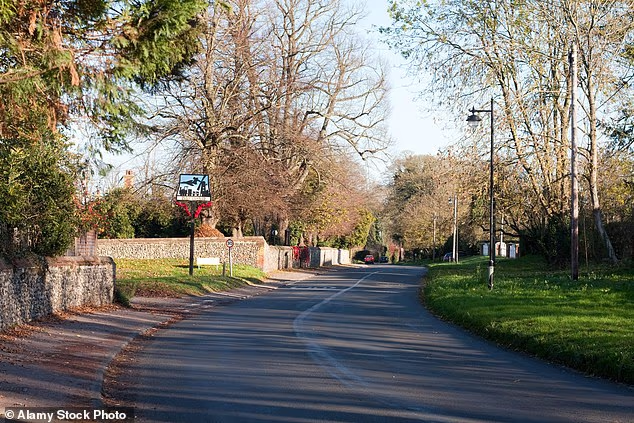
Barnham in Suffolk is sending a delegation of residents to Piddington in Oxfordshire on Tuesday to look at the possibility of its own independence referendum
Residents have been told the nearby military base, RAF Barnham, has been earmarked to take at least 1,250 asylum seekers
The 580 villagers fear their community could be swamped by the migrants from the nearby base
‘Barnham is a small village with about 580 people. There’s a number of children of varying ages. People are worried about that and the womenfolk as well.
Advertisement
‘Piddington have been incredibly successful in raising their profile. They’ve gained national attention and that of ministers and the Prime Minister. It’s gained international attention.’
He added: ‘I can’t say honestly I’ve spoken with anyone – and I’ve spoken to a lot of people – who’s said “I’m happy for them to come here”.
‘To send a message to the government, I wouldn’t be surprised if 90 per cent voted [to secede from the UK].’
The village has a hall, church and primary school but no other amenities such as a shop or pub where migrants – who will be able to come and go from the base as they please – will be able to kill time.
Advertisement
Protests have taken place outside RAF Barnham since the controversial plans for the base, as well as the one in Bicester and a third site in Linton-on-Ouse, North Yorkshire, were announced in June.
Tensions increased after details of a private meeting between Home Office officials and councillors in Norfolk, which borders RAF Barnham, were leaked in which the government department admitted ‘a lot more’ migrants could be housed at the facilities than had been admitted.
Violent disorder also broke out over several nights two miles away from Barnham in Thetford, Norfolk, last month, after it emerged the Home Office was looking to quadruple the number of asylum seekers placed in private accommodation.
Piddington, in Oxfordshire, held a referendum on Tuesday last week over concerns about plans to house migrants in MoD Bicester
Advertisement
Around 90 per cent of those who voted in the referendum chose to secede from the UK – although the poll has no legal standing
An aerial view of part of the base at MoD Bicester
Barnham residents turned out en masse at the village hall on Wednesday last week – the day after Piddington held its referendum – to discuss their resistance movement.
Until now, it has focused on an ‘evidential’ approach involving planning issues such as environmental concerns.
Advertisement
The base was once used to store nuclear and chemical weapons and there are concerns the land could be contaminated.
The site is also a nesting ground for stone curlews, a species of bird so endangered that any development within 1,500m is forbidden.
But there is an increasing feeling that time is running out and a more emphatic, headline-grabbing approach may be needed, as the Home Office is expected to announce its decision this autumn – with asylum seekers moving in before Christmas.
Mother-of-two Collette Skelly, 58, who has lived in the village for 15 years and was at the meeting, said: ‘It’s a good way of raising publicity.
Advertisement
‘At the moment, there is nothing on the news about Barnham. So Piddington had to do it as a publicity stunt to raise attention.’
A man in his 60s added: ‘It’s on the news, they’re questioning the prime minister about Piddington today, so it’s working, isn’t it. I’d absolutely support it.’
Adrian Whittle, the leader of Reform UK at West Suffolk Council, declared he would support the village’s right to hold a referendum.
‘It raises the profile that people haven’t just given up, they want their country back, they want their lives back.’
Advertisement
Some locals were less certain, however, fearing it would act as a distraction from the formal planning approach.
James Hollins said: ‘The referendum is rubbish, it can’t go anywhere, it’s got no legal standing.
‘We can demonstrate but they’re not going to listen.’
Announcing the referendum result on Wednesday last week, Piddington Parish Council chairman Mr McNally said: ‘We have given a message to the world.’
Advertisement
Vice-chair Susannah Parden added: ‘We are Piddington, the village that roars.’
Shadow Home Secretary Chris Philp said the vote should be a ‘wake-up call’ for the government.
Barnham was last year unveiled as the site where evidence of the earliest known human-made fire had been uncovered.
Researchers found baked earth together with the earliest known Stone Age ‘lighter’ – a flint that was hit against pyrite, a rock also known as fool’s gold, to create a spark – that dated back 400,000 years.
Advertisement
The village also appeared in the Domesday Book of 1086, which recorded that it housed 35 families – a large village by the standards of the time.
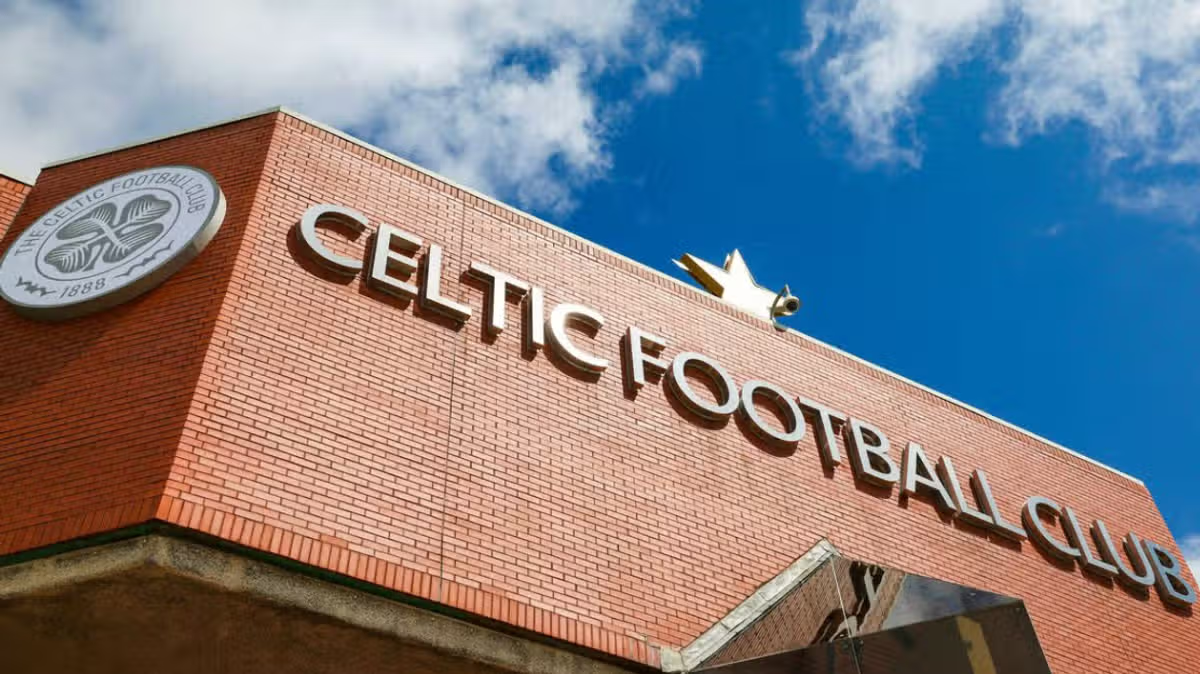
The incident took place at Parkhead stadium in Glasgow on Sunday, September 20.
17:49, 20 Sep 2026Updated 17:50, 20 Sep 2026
A man has been arrested and charged after an alleged attack on medical staff and police at the Old Firm.
The incident took place at Parkhead in Glasgow during the fixture between Rangers and Celtic on Sunday, September 20. Cops confirmed the man, aged 39, will appear in court on Monday, September 21.
A Police Scotland spokesperson said: “One arrest made. 39-year-old man arrested for assault of medical staff and police assault.
Advertisement
“Due to appear at Glasgow Sheriff Court on Monday, 21 September, 2026.”
In other Old Firm drama, a bus caught fire near Celtic Park moments after the game finished. Firefighters raced to the inferno on Clyde Gateway outside the Emirates Arena in the east end of the city at 2.25pm.
Emergency services scrambled to the incident after receiving reports of a blaze on a single passenger coach. There were no reports of any injuries.
Advertisement
Dramatic footage shared on social media shows the bus engulfed in flames as football fans stood by. Fire could be seen ravaging the roof of the vehicle while fire crews worked to extinguish the blaze.
Thick and dark plumes of smoke could be seen shooting into the sky as shocked revellers watched on.
A Police Scotland spokesperson said: “We received a call at 2:25pm to a single decker passenger coach well alight on Clyde Gateway outside the Emirates Arena in the east end of Glasgow today, September 20. Fire crews remain in attendance. There are no reports of any casualties.”
Get more Daily Record exclusives by signing up for free to Google’s preferred sources. Click HERE.



















































You must be logged in to post a comment Login