Connect with us

NewsBeat

Fresh boost for Nissan’s Sunderland factory: New Kicks model to be built at UK plant and secure thousands of jobs

Published

on

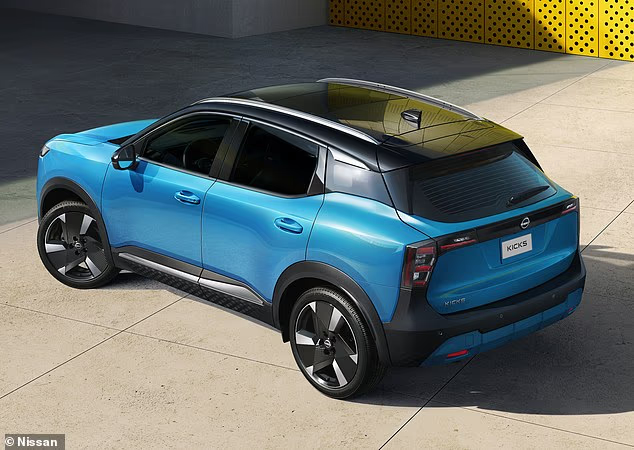
Nissan kicks life into Sunderland plant: This is the new Kicks crossover, which is going into production at the brand's UK factory. The compact SUV will also be sold in the UK

Nissan will secure the future of its Sunderland factory and thousands of British jobs by building a fourth car at its UK car plant.

The Nissan Kicks Hybrid is a new model for Europe that brings £170million of investment to the Japanese carmaker’s production home in the North East.

The compact crossover, which is already on sale overseas, is the tenth Nissan model to be built at Sunderland in its history, and will be manufactured alongside the Qashqai, Juke, new Leaf EV – and the new electric Juke from next summer.

Kicks is the second model Nissan Europe has confirmed this month, following the announcement of a new small EV reviving the Pixo nameplate from the late noughties. That car is due to be unveiled next week.

Advertisement

While the announcement will be dubbed a major vote in confidence for the UK’s automotive industry, Nissan bosses have caveated that the decision will only be rubberstamped if minsters agree to slash electric car sales targets between now and 2030. 

The announcement comes as Nissan marks 40 years of car manufacturing in the UK as it looks to turn the tide after a difficult period for the company. 

In May, thousands of jobs were put at risk when Nissan combined two production lines at Sunderland following its projected 650billion yen (£4.2billion) net loss for the fiscal year ending March 2026.

It later confirmed it had signed a Memorandum of Understanding (MoU) agreement with Chery Group to allow the Chinese car giant to utilise unused capacity at the UK plant and assemble its own cars on site.

Advertisement

Nissan kicks life into Sunderland plant: This is the new Kicks crossover, which is going into production at the brand’s UK factory. The compact SUV will also be sold in the UK

Massimiliano Messina, chairman for Nissan’s AMIEO (Africa, Middle East, India, Europe and Oceania) region, said: ‘This is fantastic news for our European region and demonstrates the agility and speed with which we can bring new models to new markets.

‘Kicks is a compact crossover with the unique e-Power hybrid drivetrain, exciting design and innovative technology.

Advertisement

‘Electrification with choice is what European customers want, and the introduction of Kicks will further demonstrate that Nissan has options for all.’

However, he warned that the move might only go ahead if ministers heeds the motor industry’s calls to water down electric car sales targets via its Zero Emission Vehicle (ZEV) mandate.

The Government is currently consulting on relaxing the 80 per cent requirement for all new cars sales to be EVs in 2030. It could be dropped as low as 50 per cent. 

According to The Guardian, Messina said after the statement was released: ‘Of course we’re going to keep discussing with the UK government because large part of this is subject to the ZEV mandate amendment.’

Advertisement

When asked if the decision to build the Kicks in Sunderland and the £170million investment will go ahead if the EV sales targets were not adjusted, Messina said: ‘We try to assess always if this is more likely than unlikely.’

When probed about how likely the electric car targets would be reduced to a 50 per cent share of sales, he added: ‘For me, yes, it’s going to happen.’

Join the discussion

Should the UK keep investing in car manufacturing or focus on greener industries for the future?

Advertisement

On Wednesday morning, Business Secretary Jonathan Reynolds welcomed the announcement from one of the UK’s biggest car producers.

‘Nissan has been at the heart of British manufacturing for four decades, with Sunderland producing millions of vehicles, supporting thousands of skilled jobs and helping establish the North East as a global automotive powerhouse,’ he said.

Mike Hawes, chief executive of the Society of Motor Manufacturers and Traders, described the announcement as a ‘major boost for Nissan Sunderland, the thousands of highly skilled jobs it supports and the wider local supply chain’. 

He also dubbed it ‘another vote of confidence in UK automotive manufacturing with its world-class workforce, innovation and engineering excellence’.

Advertisement

Hawes said: ‘The UK sector has the fundamental strengths to secure growth. But to unlock that potential, we must continue to strengthen our competitiveness – supporting a healthy market, tackling the high cost of business, especially energy and additional employment costs – and ensuring trade works for manufacturers. 

‘Do this and yet more companies will choose to build the next generation of vehicles here in Britain.’

At 4.3m long, 1.8m wide and 1.6m tall, the Kicks is almost identical in dimensions to the current Juke and the electric version arriving next year

At 4.3m long, 1.8m wide and 1.6m tall, the Kicks is almost identical in dimensions to the current Juke and the electric version arriving next year

The second-generation car was unveiled in Japan in June. It will produced in Sunderland alongside the Qashqai, Leaf EV, Juke and - from summer 2027 - Juke EV

The second-generation car was unveiled in Japan in June. It will produced in Sunderland alongside the Qashqai, Leaf EV, Juke and – from summer 2027 – Juke EV

Advertisement

Sunderland could get a real kick from this new car

The Kicks was originally launched as a concept car at the Sao Paulo Motor Show in 2014.

It went into production two years later for Latin American markets and, in 2018, was drafted in to replace the Juke in US and Canadian showrooms.

Kicks has also been sold in Nissan’s native Japan since 2020. However, it has not been offered to customers in Europe or the UK until now.

In America, it currently starts from $22,790 (£16,900). 

Advertisement

While Nissan is yet to confirm a starting price in the UK, it will likely be around the same as the current Juke Hybrid, ringing in somewhere around £25,000. 

Since going on sale in 2016, it has become one of Nissan’s most popular global products, recording more than 1.8 million sales across 70 countries in a decade.

The Kicks first went on sale in Latin America in 2016, followed by the US and Canada in 2018. In 2020, it was introduced to its native Japanese market. Nissan has sold more than 1.8m in total

The Kicks first went on sale in Latin America in 2016, followed by the US and Canada in 2018. In 2020, it was introduced to its native Japanese market. Nissan has sold more than 1.8m in total

The five-door shrunken-down SUV has five seats and around 450 litres of boot space, making it an ideal option for small families

The five-door shrunken-down SUV has five seats and around 450 litres of boot space, making it an ideal option for small families

Advertisement
The car features a dual digital screen and lots of physical buttons to control the cabin temperature and other main settings. This is likely to be attractive to UK customers

The car features a dual digital screen and lots of physical buttons to control the cabin temperature and other main settings. This is likely to be attractive to UK customers

The second-generation car being manufactured in Sunderland will be sold in the UK with the brand’s latest e-Power hybrid drivetrain.

Other markets will be able to get the Kicks with 1.0-litre and 2.0-litre petrol engines. These versions will also be built in Sunderland.

The five-door shrunken-down SUV has five seats and around 450 litres of boot space, making it an ideal option for small families. 

Advertisement

The crossover will be assembled alongside the new Juke EV from summer 2027 and is likely to be offered as its combustion-engined alternative within the same segment.

At 4.3m long, 1.8m wide and 1.6m tall, the Kicks is almost identical in dimensions to the current Juke and the electric version arriving next year.

The announcement is a fresh boost to Nissan Sunderland and should secure the plant's future despite the Japanese brands' ongoing financial difficulties

The announcement is a fresh boost to Nissan Sunderland and should secure the plant’s future despite the Japanese brands’ ongoing financial difficulties

The new model announcement comes as Nissan confirmed it has now surpassed 12 million vehicles produced at the Sunderland factory since it first opened in 1986.

Advertisement

On average, the plant has rolled out a new car every one minute and 45 seconds.

The first model produced at the factory was the Bluebird. The Primera, Micra, Almera, Note, Juke, Qashqai and Leaf have followed over the last four decades, along with production of sister brand Infiniti’s Q30 between 2015 and 2019.

Adam Pennick, vice president of manufacturing at the plant, said: ‘I’m proud to welcome this new model allocation for Sunderland.

‘It’s the perfect way to celebrate our 40th year as a world-class manufacturing site. We look forward to seeing the Kicks e-Power Hybrid roll down the production line alongside our electrified line-up of Qashqai, Juke and Leaf.’ 

Advertisement

The deal was seen as a lifeline for Nissan Sunderland, which is Britain’s biggest car factory, employing 6,000 people and producing 273,322 vehicles last year.

Last year, Nissan announced it would cull seven of its factories worldwide as part of a major cost-saving effort that also slashed 20,000 jobs globally.

Source link

Advertisement
Continue Reading
Click to comment

You must be logged in to post a comment Login

Leave a Reply

NewsBeat

Man in his 30s dies following crash on A171 near Fylingdales

Published

on

Man in his 30s dies following crash on A171 near Fylingdales

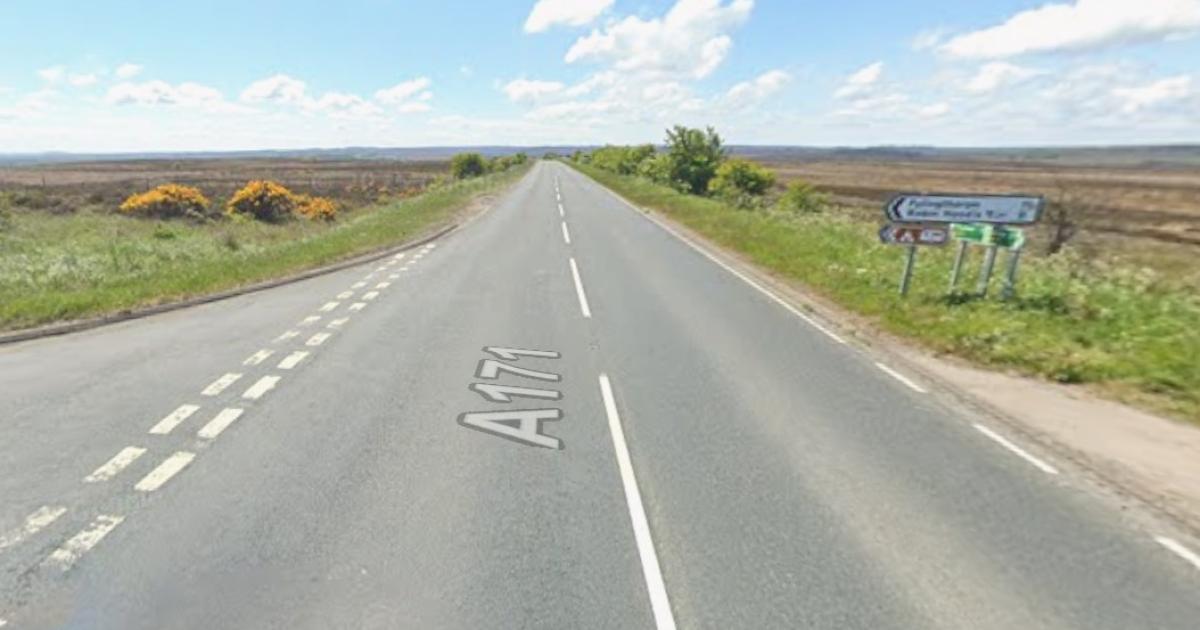
The crash happened at around 6.05pm on Tuesday, September 15, and involved a black Volvo XC40 and a black and white Triumph Daytona motorcycle.

Both vehicles were travelling towards Scarborough when the collision occurred near Helwath Beck.

The motorcyclist, who was from the Whitby area, was pronounced dead at the scene.

Advertisement

North Yorkshire Police are appealing for witnesses and dashcam footage.

An officer said: “We are appealing to witnesses who have not yet spoken to the police who saw either of the vehicles travelling along the A171 prior to the collision, or who witnessed the collision to come forward along with anyone who may have caught either vehicle on their dashcam before or during the collision.”

The driver of the Volvo, a woman in her 40s, sustained slight injuries but did not need hospital treatment.

She has been interviewed under caution in connection with the incident.

Advertisement

The road was closed to allow emergency services to respond and for collision investigators to examine the scene and recover the vehicles.

It reopened at 2am on Wednesday, September 16.

Officers have thanked members of the public who stopped to help at the scene.

Anyone with information is asked to email the Serious Collision Investigation Unit at SCIU@norhtyorkshire.police.uk.

Advertisement

Alternatively, information can be submitted via the North Yorkshire Police website by selecting ‘Tell us about’ and then ‘An existing case or report.’

The live chat service is also available on the website from Monday to Friday, 9am to 5pm.

Those unable to use these options can call 101.

Please quote reference number 12260181610.

Advertisement

Source link

Continue Reading

NewsBeat

Brussels hit with furious backlash after top Eurocrat Ursula von der Leyen unveils unprecedented plan for Canada to become ‘associate member’ of the bloc without asking EU capitals first, with diplomats branding her ‘bombastic’

Published

on

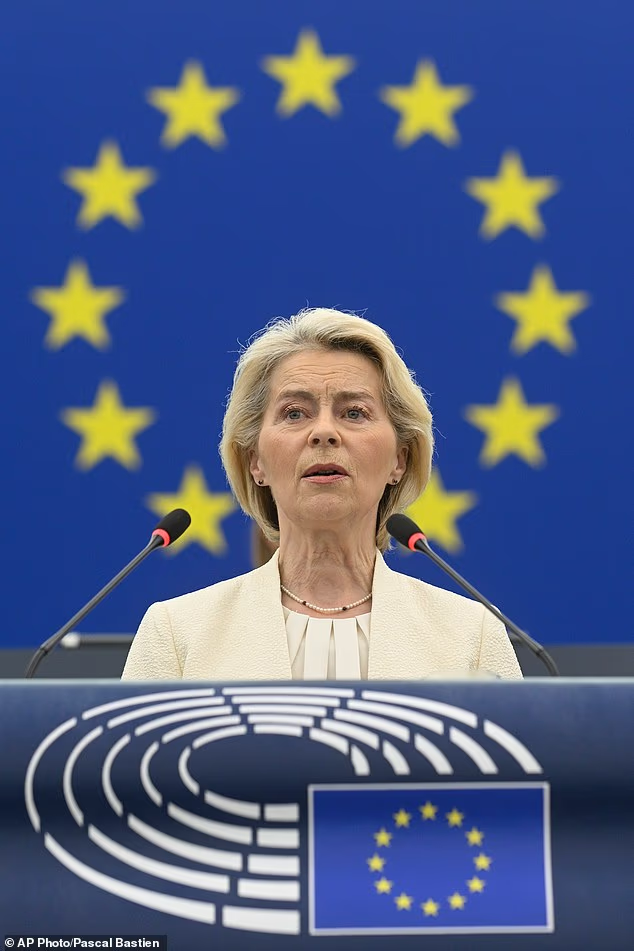
EU diplomats told the Mail they were kept in the dark and first learnt of the proposal when Ursula von der Leyen, the EU Commission boss, unveiled it during a keynote speech today

Brussels was hit with a furious backlash today after announcing unprecedented plans for Canada to become an ‘associate member’ of the bloc – without asking EU capitals to sign off on the proposal.

EU diplomats told the Mail they were kept in the dark and first learnt of the proposal when Ursula von der Leyen, the EU Commission boss, unveiled it during a keynote speech.

During the top Eurocrat’s annual State of the Union speech to the European Parliament, she repeatedly love-bombed Canadian premier Mark Carney – who was in the chamber – saying Brussels wanted ‘to bring the relationship with Canada to the highest level possible.’

But to the surprise of diplomats from the EU’s 27 member nations, who would have to sign off the move, she gushed: ‘Dear Mark, I said we must urgently reimagine our partnerships. So, I would like to work with you on opening the door for Canada to be the first associate member of the EU.

Advertisement

‘We share one ocean, one set of values, one way of seeing the world. And we will now build our shared future as well – thank you for being here.’

But the attempt to flatter the former Governor of the Bank of England backfired, with diplomats saying they were never briefed about the proposal and that, in effect, ‘associate membership’ doesn’t even exist.

EU diplomats accused Brussels of ‘over-reach’, an accusation often levelled against Eurocrats by UK Brexiteers before Britain left the bloc. 

One EU diplomat told the Mail: ‘This bombastic announcement is just not right.

Advertisement

EU diplomats told the Mail they were kept in the dark and first learnt of the proposal when Ursula von der Leyen, the EU Commission boss, unveiled it during a keynote speech today

Mark Carney looked on as Ursula von der Leyen, the EU Commission boss, love-bombed him and his nation

Mark Carney looked on as Ursula von der Leyen, the EU Commission boss, love-bombed him and his nation 

Ursula von der Leyen, the EU Commission boss, said she wanted Canada to become an 'associate member' - but EU diplomats pointed out the category in effect doesn't exist

Ursula von der Leyen, the EU Commission boss, said she wanted Canada to become an ‘associate member’ – but EU diplomats pointed out the category in effect doesn’t exist 

Advertisement

‘There will be a summit at the end of October, so logically they will talk about deepening the relations.

‘But no one has ever seen an associate membership and no idea what it means in practice. Canada is a valuable partner for the EU, one of the few currently in the world where we share the values, so it is nothing against Canada.

‘But first and foremost the member states should be the ones to express what kind of relationship the EU wants to have with any third country.’

Another added: ‘She kept this bit of associate membership out of the text until the last moment. She also did not mention it up front to EU member states.

Advertisement

‘It seems like she is a bit too far out in floating this. Everyone is positive about Canada, and wants to strengthen the relationship.

‘But there is a lot of uncertainty about what von der Leyen envisages by coining this label.’

They added that, in reality, the most that can likely be hoped for is a deeper trading relationship rather than ‘associate membership’, which implies Canada taking part in EU programmes that it would be forced to pay into, becoming more politically integrated and potentially even having a say over the bloc’s rules.

But there would be huge barriers to overcome to establish closer ties, as swathes of Canada’s regulations are at present incompatible with EU single market rules, with high taxes on the bloc’s alcohol exports another thorny issue. 

Advertisement

Under EU law, any granting of membership would have to be approved by the 27 member states, which is another reason they were wrong-footed.

By contrast, Brussels has always rebuffed Britain for past attempts to ‘cherry pick’ the areas where it wants to align with the bloc while also diverging in other ways after Brexit.

In her speech, Ms von der Leyen added: ‘Mark, your presence here is a symbol of the enduring friendship between our people.

‘Our cultural, historical and personal links run deep within the fabric of our societies.

Advertisement

‘And thanks to CETA (a trade pact), our trade in goods has grown by 75 per cent in less than a decade…But above all, dear Mark, Europe and Canada believe in democracy.’

She said the areas in which both sides could work together more closely included ‘a tech alliance’, adding: ‘We will integrate defence industrial bases.

‘We will make the Arctic a flagship joint project. We will work on energy, critical minerals and batteries. On AI, quantum, cyber and economic security.

‘This is a partnership not against anyone else, but for our common strength.’

Advertisement

But the move threatens to further sour relations between Brussels and Washington, with US President Donald Trump’s administration locked in an escalating trade war with Canada.

The speech may even ruffle feathers in Downing Street, as the UK by contrast has faced resistance to greater co-operation in areas such as defence procurement despite repeated attempts by former premier Sir Keir Starmer to cosy up to Brussels.

An EU Commission spokesman said: ‘Working in close coordination with our member states and the European Parliament, we will aim to create a new form of partnership that has not existed until now – building the closest imaginable form of association with a partner outside Europe.’

They added that this would ‘span a wide range of areas’, but did not list any beyond what was in Ms von der Leyen’s speech.

Advertisement

Source link

Continue Reading

NewsBeat

Oasis 2027 tour: The three best venue options for Londoners

Published

on

Oasis 2027 tour: The three best venue options for Londoners

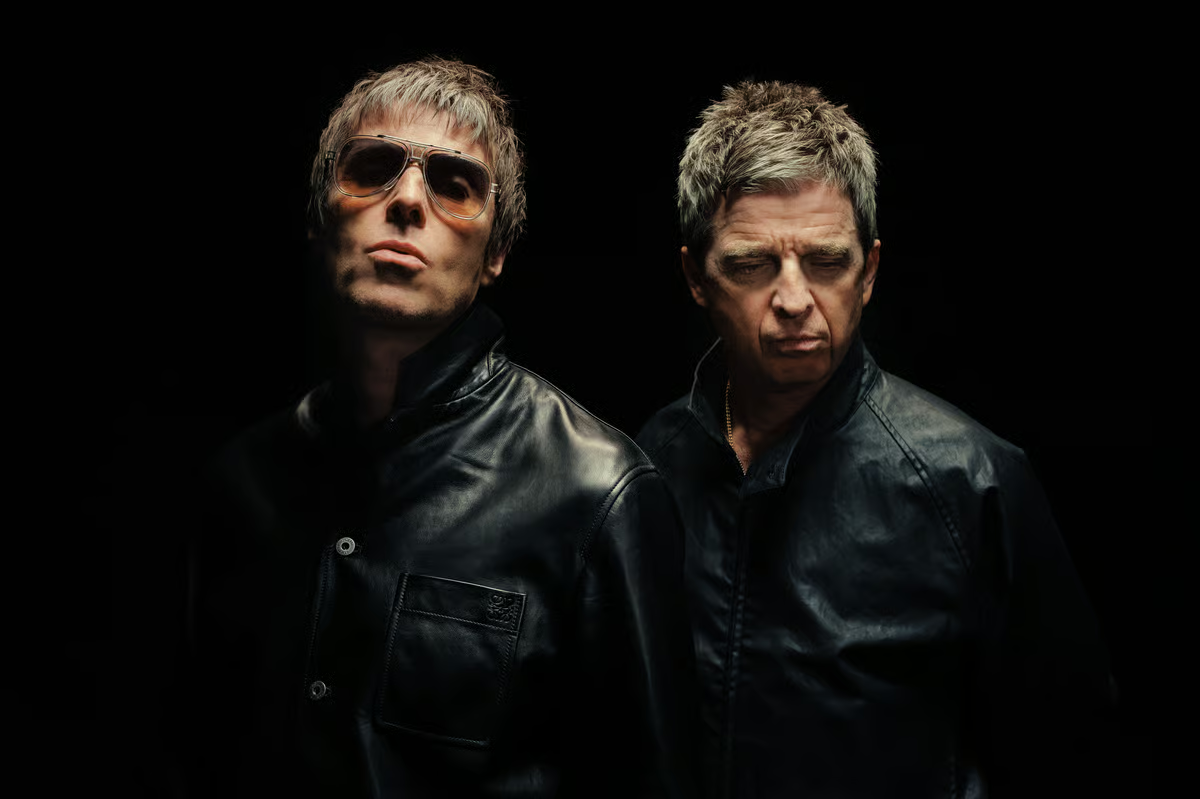
Oasis have just announced their upcoming 2027 tour dates, with locations confirmed in the UK, Europe and America; however, London did not get a look-in.

The 38-date live tour running from May to September will see the iconic Britpop group perform at iconic venues in Scotland and Manchester, all the way to Las Vegas.

Source link

Advertisement
Continue Reading

NewsBeat

Kevin McCloud admits Grand Designs episodes are ‘painful to watch’ 27 years on

Published

on

Wales Online

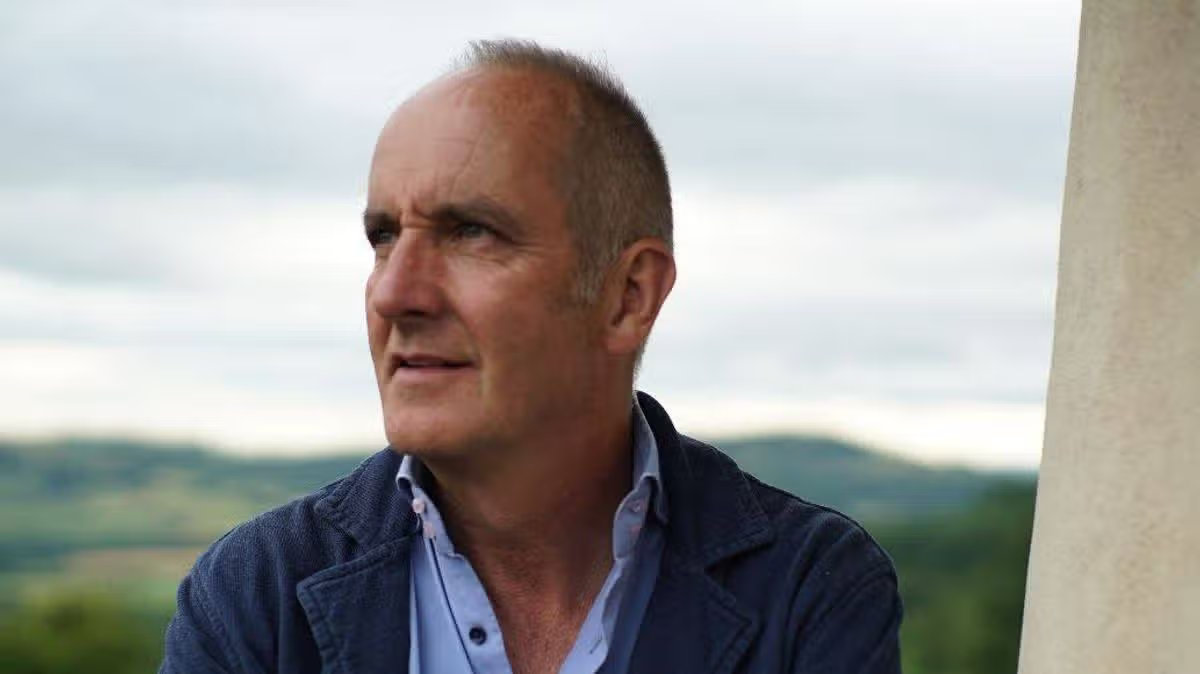
Grand Designs presenter Kevin McCloud has been at the helm of the Channel 4 show since it began 27 years ago in 1999 and admits watching back early episodes is ‘painful to watch’

Grand Designs host Kevin McCloud has admitted there are segments from the Channel 4 programme that make him want to fast-forward.

Advertisement

The 67-year-old designer and broadcaster returns to screens on Wednesday (September 16) fronting a fresh series of the popular renovation show.

He has presented Grand Designs since its debut 27 years ago in 1999 and appeared on BBC’s The One Show this evening to speak with Alex Jones and JB Gill about the upcoming episodes, which will see him return to a project from the inaugural series.

Discussing watching back old clips, Kevin joked: “Yeah that’s painful to watch for me! I have to skip through the fast forward button a lot through these early episodes but the house has not changed, everything is as it was, and when you make the stuff and you record a moment in time, you don’t know whether that idea, that style and approach, whether it will last and have value, and remarkably that house has remained the same and is almost a fantastic example of a mid-1990s building so sometimes it comes back to surprise you.”

Channel 4 revealed earlier this month that Grand Designs and Grand Designs: House of the Year will return this autumn. The celebrated house construction and design programme comes back with four remarkable new projects and two long-awaited follow-ups, spanning locations across the United Kingdom, reports the Mirror.

Programme bosses say the new series champions innovative thinking and creativity, highlighting groundbreaking building techniques and visionary design while maintaining focus on the individuals at their heart.

Kevin previously commented: “It is always a joy to get a series of Grand Designs complete and ready for broadcast – especially when it can run alongside its sister series, House of the Year.

“Together they celebrate the very best in British architecture and remind me of the extraordinary imaginative and resilient potential of human beings. This year is no exception: there are some astonishing stories and homes to discover.”

Advertisement

When questioned about Grand Designs’ enduring appeal, Kevin said: “I think it is the unpredictability of it all. If we were restoring people’s homes for them, then we might have slipped into a predictable format but we haven’t.

“Some of the projects on this series are fascinatingly unpredictable. For example, we see Seb in North-West London, building a house which was completed in 13 months and I was so shocked because O am used to things taking forever.

“We also have a project in Edinburgh, which has been going for over 10 years, and when you look at the date stamps as we go through the programme, you sort of appreciate how some people dedicate a lot of their lives to a building.”

Advertisement

He added: “I thought in series one we might run out of projects. We thought that we had done an eco-project, a modern white block, a glass house, we did the eccentric thing. We thought, will people still tune in if we do another glass box? But the answer is yes, because from the beginning we set ourselves the challenge that in every episode there has to be something new – there has to be some story, some angles, something, a hook.

“Luckily, since architecture is so much about place and response to a place and so much about people and response to people and because places are so infinitely diverse, people are infinitely diverse, this is what makes every project and what keeps me on my toes every time.

“If you look at this coming series, every single project has something unique about it and i find that so fascinating, all of the individual narratives are so different. The houses are all so unique architecturally and in the way they are built.”

Advertisement

The One Show airs weekdays on BBC One and BBC iPlayer at 7pm and Grand Designs returns to Channel 4 at 9pm on Wednesday, September 16

Source link

Continue Reading

NewsBeat

REVEALED: How disgraced Huw Edwards’ is plotting a ‘major comeback’ as ex-friends break ranks to expose ‘self-pitying’ presenter’s talks with some VERY big daytime TV shows

Published

on

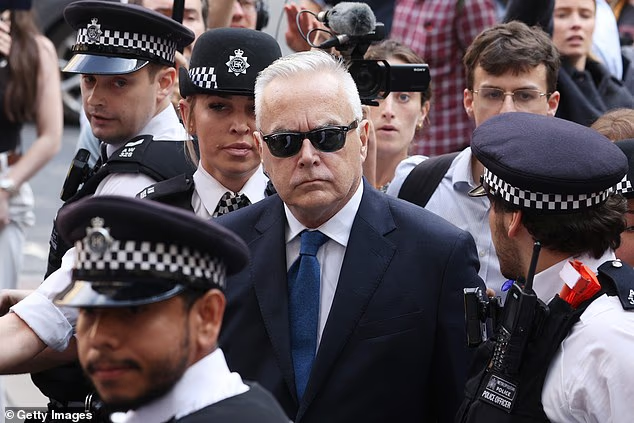
At Westminster Magistrates' Court in July 2024, Huw Edwards pleaded guilty to child pornography charges

Source link

Advertisement
Continue Reading

NewsBeat

Transfer news LIVE: Alvarez to Arsenal FC, Ngumoha interest; Man Utd in Gabriel fight; Chelsea, Liverpool latest

Published

on

Transfer news LIVE: Alvarez to Arsenal FC, Ngumoha interest; Man Utd in Gabriel fight; Chelsea, Liverpool latest

The summer window has been and gone, but Premier League clubs remain active in the transfer market with Arsenal, Chelsea, Manchester United, Liverpool and Tottenham still exploring potential deals ahead of January. Arsenal have announced an agreement to sign Andria Bartishvili – who has been dubbed as the next Khvicha Kvaratskhelia – and remain interested in Kenan Yildiz and Eli Junior Kroupi, amid links with Liverpool’s Rio Ngumoha.

Source link

Continue Reading

NewsBeat

Three people killed in Swiss plane crash near popular skiing site

Published

on

Daily Record

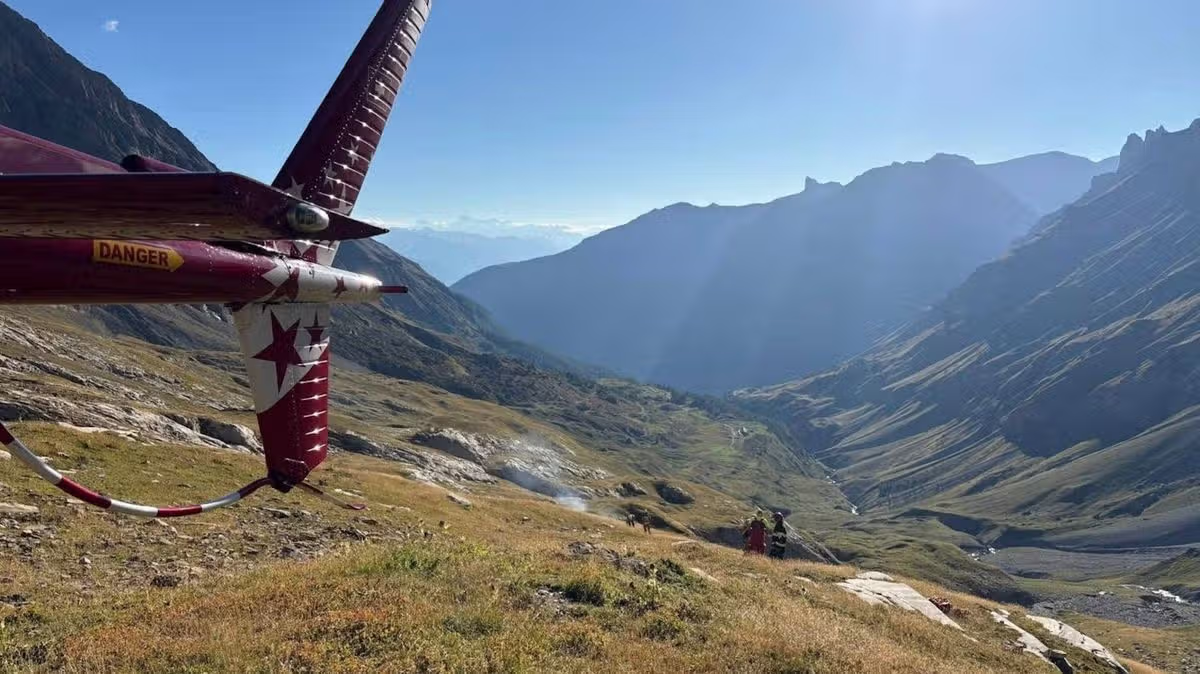
Three rescue helicopters were dispatched to the scene, where three passengers were confirmed dead

Three people have died after a plane crashed close to a renowned Swiss spa and skiing destination.

Shortly after 4pm on Tuesday (September 15) a Cirrus SR22T aircraft plummeted in the Fluhalp region of Leukerbad, Valais, after leaving Lugano via Sion, according to Valais Cantonal Police.

Advertisement

The single-engine aircraft was en route to Buochs, a picturesque Swiss village, when it struck a north-facing mountainside in the Fluhalp vicinity at approximately 4pm. Onlookers reported witnessing substantial smoke clouds rising from the area.

Emergency responders rushed to the location and verified that all three passengers had perished, reports the Express.

Three rescue helicopters were dispatched to the crash scene, while police and fire brigades from Leukerbad and Sion Airport also responded.

Advertisement

Efforts continue to officially identify the casualties. The Swiss Safety Investigation Authority (SUST) has initiated an inquiry to establish what caused the incident.

Meanwhile, the Office of the Attorney General of Switzerland (OAG) is pursuing a criminal probe alongside Valais cantonal police.

This Alpine disaster follows just days after a Dutch tour coach capsized in eastern Switzerland, claiming multiple lives.

READ MORE: Body found by Noah Woods search team in pond after tot disappeared from park

Advertisement

READ MORE: Woman found with ‘face hanging off’ after alleged murder in Springburn flat

The coach that overturned between Susch and Zernez in Graubünden was transporting approximately 48 Dutch travellers, including the driver, confirmed a spokesperson for the General Dutch Association of Travel Companies, representing tour operator OAD. Pictures from the location reveal the bus overturned on its side in an expansive grassy field, with ambulances encircling the adjacent road.

Helicopters were also spotted touching down close to the scene.

Oad, the travel firm organising the journey, declared in a Dutch statement that it was “deeply shocked and devastated by the tragic bus accident”, adding that its thoughts were with those affected and their families.

Advertisement

Ensure our latest stories always appear at the top of your Google Search by making us a Preferred Source. Click here to activate or add us as your Preferred Source in your Google search settings.

Source link

Continue Reading

NewsBeat

Manchester United vs Brighton live score updates with Shea Lacey and Mason Mount early goals

Published

on

Manchester Evening News

Manchester United take on Brighton in the Carabao Cup third round tonight.

Here are the starting teams for tonight’s game:

United: Darlow, Dalot, Yoro, Heaven, Mazraoui, Santos, Tielemans, Mount, Lacey, Sesko, Rashford.

Advertisement

Brighton: Steele, Hadjam, Vuskovic, Struijk, Gross, Chema, Kostoulas, Costinha, Boscagli, O’Riley, Yalcouye

Follow the blog below for live updates from Old Trafford.

Source link

Advertisement
Continue Reading

NewsBeat

Mum of stabbing victim Kory McCrimmon insists he may have lived if bleed kits were available

Published

on

Daily Record

Kory McCrimmon was killed in a stabbing two years ago in Glasgow’s east end.

The mother of Kory McCrimmon who was stabbed to death has spoken says her son might still be alive if bleed kits were available.

Advertisement

The 16-year-old was stabbed through the heart in Glasgow’s east end on May 31, 2024, following a row with another teen over a £50 debt. His killer, who was 13 at the time, later admitted the fatal attack and was jailed for five years at the High Court in Glasgow in May last year.

Kory’s mum, Elizabeth, has now spoken out about the need for bleed kits to be rolled out across the country. Bleed kits contain heavy-duty trauma supplies which are designed to control life-threatening blood loss before professional medical help arrives.

Elizabeth is fundraising for the medical packs with the ‘Parents Against Knives’ initiative. Campaigners have already secured eight in Glasgow with one installed at the Barrowfield community centre near Kory’s home.

She told STV News: “There’s been more and more out there about children getting caught with knives in school, from 12 years of age.

“I want to make sure there’s a bleed kit in every high school in Glasgow and to raise money for bleed boxes in parks and community centres because there’s practically none in Glasgow.

“I’ll always think what if one of those kits were nearby when that happened to Kory? Maybe my boy would still be sitting here today.

“That is what is pushing me. I don’t want any mother to be sitting the way I have for the last two and a bit years because you’re never the same.”

Advertisement

Kory is one of four young males who lost their lives due to senseless knife violence on Scotland’s streets in the last two years.

Amen Teklay, 15, died from a stab wound after he was found injured in Glasgow’s Maryhill in March, 2025. Two teenage boys, aged 16 and 17, were cleared of his murder following a trial at the High Court in Glasgow.

Weeks later, 16-year-old Kayden Moy was stabbed to death at Irvine Beach in Ayrshire in May. His three teen killers were jailed for life.

John McNab, 22, was chased down and stabbed with a ‘Rambo knife’ by a teenager in Leith on September 2, 2025. The 17-year-old, who cannot be named for legal reasons, was on bail for a separate knife attack on Portobello Beach months earlier.

Advertisement

Lisa Petrie, John McNab’s mum has campaigned tirelessly for the roll out of life-saving bleed kits across Scotland and tighter security around the sale of knives in shops since her son’s death.

She met with John Swinney and Justice Secretary Neil Gray earlier this month over her campaign to tackle rising deadly youth knife crime in memory of her son.

The 45-year-old spoke to the Record about how the Scottish Government were “dragging its heels” on plans to tackle a “knife crime emergency”.

It came after Swinney had backed the rollout of bleed kits in community settings across Scotland during his Programme for Government announcement, which promised to continue working with organisations tackling youth violence.

Advertisement

Lisa, who visited the 27-foot-tall ‘Knife Angel’ sculpture in Leith made from 100,000 surrendered and seized blades, told the Record: “Victims of violent crime are being failed.

“There was no real commitment or timeframe for the roll out of bleed kits or tighter security measures around the sale of knives.

“The Scottish Government is dragging its heels. More young people will die while we wait for decisions on potentially life-saving measures to be implemented.

Advertisement

“We are frustrated and we need action. I am determined John’s not going to be a statistic.”

Get more Daily Record exclusives by signing up for free to Google’s preferred sources. Click HERE.

Source link

Continue Reading

NewsBeat

How firelight may have shaped the origins of spoken language

Published

on

How firelight may have shaped the origins of spoken language

When asked about the greatest innovation of humans, people will often say language or fire. A new paper suggests that these innovations may be more interlinked than we previously assumed.

Understanding how human language evolved is one of the hardest problems in science to unpick, since writing is a relatively recent innovation. Also, the vocal tracts and brains of our ancestors did not fossilise as they were made of soft tissue. We are left, then, with indirect evidence about how humans and other apes communicate today.

One of the most prominent theories about the origins of human language is that our ancestors started to communicate using gestural language. This theory is based on our understanding of the abilities of apes, as evidence suggest both chimpanzees and gorillas have gestural communication systems.

We also know that one of the best strategies for communicating when you don’t have a shared language is gesture. We often do this when communicating on holiday with someone who doesn’t speak our language; we point, mime and emote to get our message across.

Advertisement

Some of my previous research has shown that we do this because gestures or sign languages are often more iconic than words in spoken languages. This means their meaning is easier to guess for someone without any previous knowledge of the gesture or language being spoken; perfect for creating a new language from scratch.

Did fireside storytelling aid the evolution of human language?

If human language started with gestures, then why are the vast majority of languages today spoken? One reason for this shift might lie in the limits of gestural language. You need a light source to see a gesture, and communication would have been necessary for our ancestors after dark.

An article by researchers at the University of St Andrews argues that by the dim light of a campfire, we might find an explanation for why we moved from gesture to spoken language. While a light source, firelight is potentially too dim for us to rely on it for the meaningful bits of early gestural language. For fully expressive stories in the dark, we would need spoken language but still keep gestural elements to emphasise and emote our speech.

The study highlights how storytelling links to some of the features of human language that make it unique. Stories have complex structures and are often displaced in time and space, meaning they talk about things not immediately present, in the past, or sometimes not even real.

Advertisement
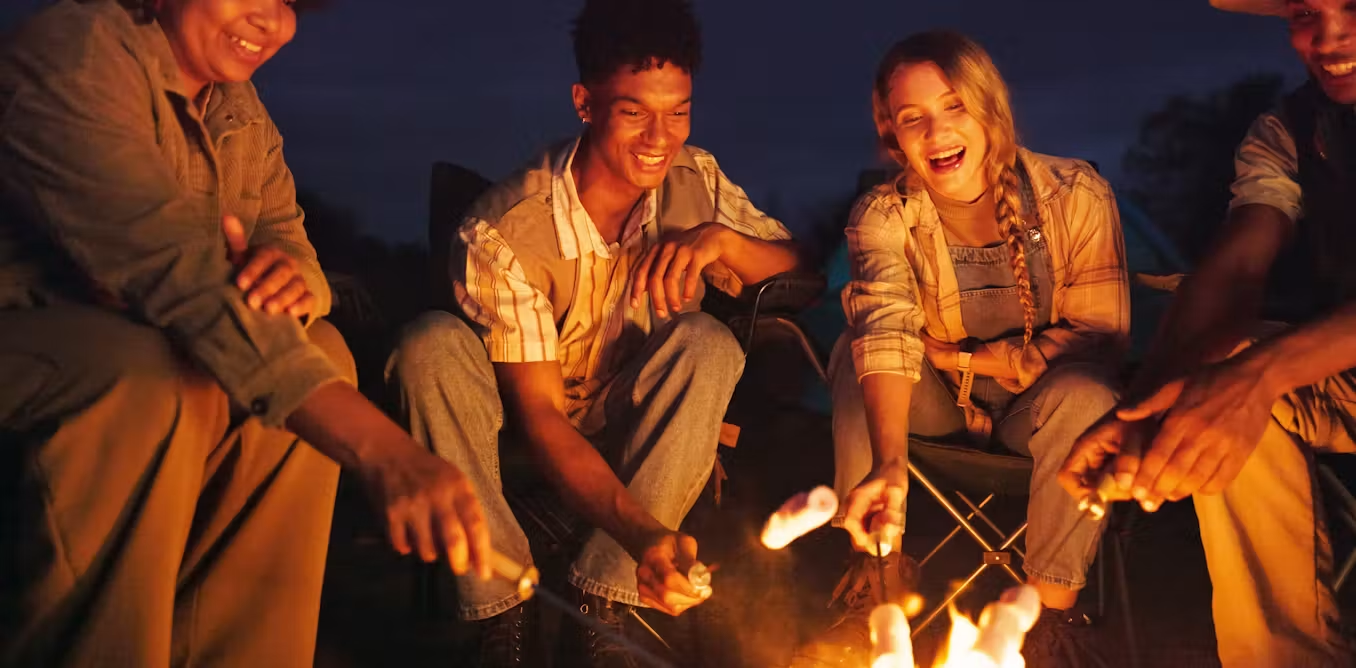
Going back to where the story of human language started.
Gorgev/Shutterstock

The article suggests that social storytelling is what enabled us to surpass the communicative abilities of other living apes, into the rich, expressive tapestry of human language. Storytelling aids our social bonds and helps us understand the world and how to behave. It can help us develop our imagination, identities and cultural belief systems.

The idea that language emerged for social bonding is not new; however, the authors of the new article highlight that fireside context might have been crucial. They argue that the colour spectrum of fire is well suited for human vision without suppressing the melatonin that helps us sleep, like modern screen light can.

The study also highlights that human neurons synchronise to the frequency of flickering firelight, which the authors argue can improve shared social experience and bonding through connected rhythmic activities that can promote empathy.

How about storytelling today?

Other research, reviewed in my own work, has shown that stories from our early oral traditions share similar traits to one another. This is thought to happen because the social transmission of stories acts like evolution. Instead of survival of the fittest, we get survival of the most memorable aspects of stories as they are shared. Stories survive when they have more social, human-oriented content, counterintuitive elements, create negative emotions and have elements of survival.

Advertisement
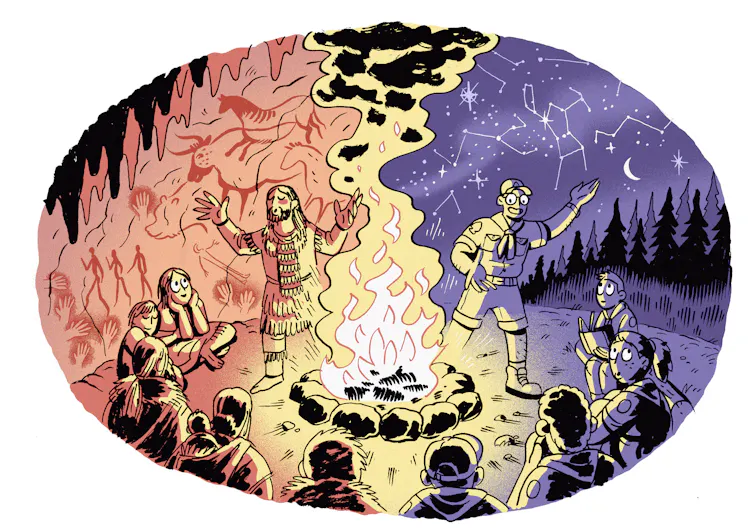
Illustration showing ancient storyteller on left half and scouts round a campfire on right half
Could we benefit from a return to the fireside?
Jordan Collver, Author provided (no reuse)

Researchers think this happens because swapping stories about social bonds, unexpected dangers and survival are advantageous for our evolution.

Storytelling is still one of the primary ways we understand the world even now, through the news and social media. This content is full of human interest, negative emotions and surprise.

Storytelling in the modern world is now often about getting the most clicks and attention. It is often about keeping people up past their bedtime looking at the melatonin suppressing blue light of our screens.

I’m left wondering, after reading about the potential fireside origins of our language, that we might feel more connection and trust by going back to sharing stories around a fire.

Advertisement

Source link

Continue Reading

Trending

Copyright © 2025