



Connect with us

NewsBeat

How schools are winning children over to healthier lunches

Published

on

How schools are winning children over to healthier lunches

The government is overhauling school food standards in England for the first time in more than a decade. The challenge is encouraging pupils to embrace the new menu

It’s midday on a Friday and children are pouring into the lunch hall at Greenside primary school, an inner-city state school in west London.

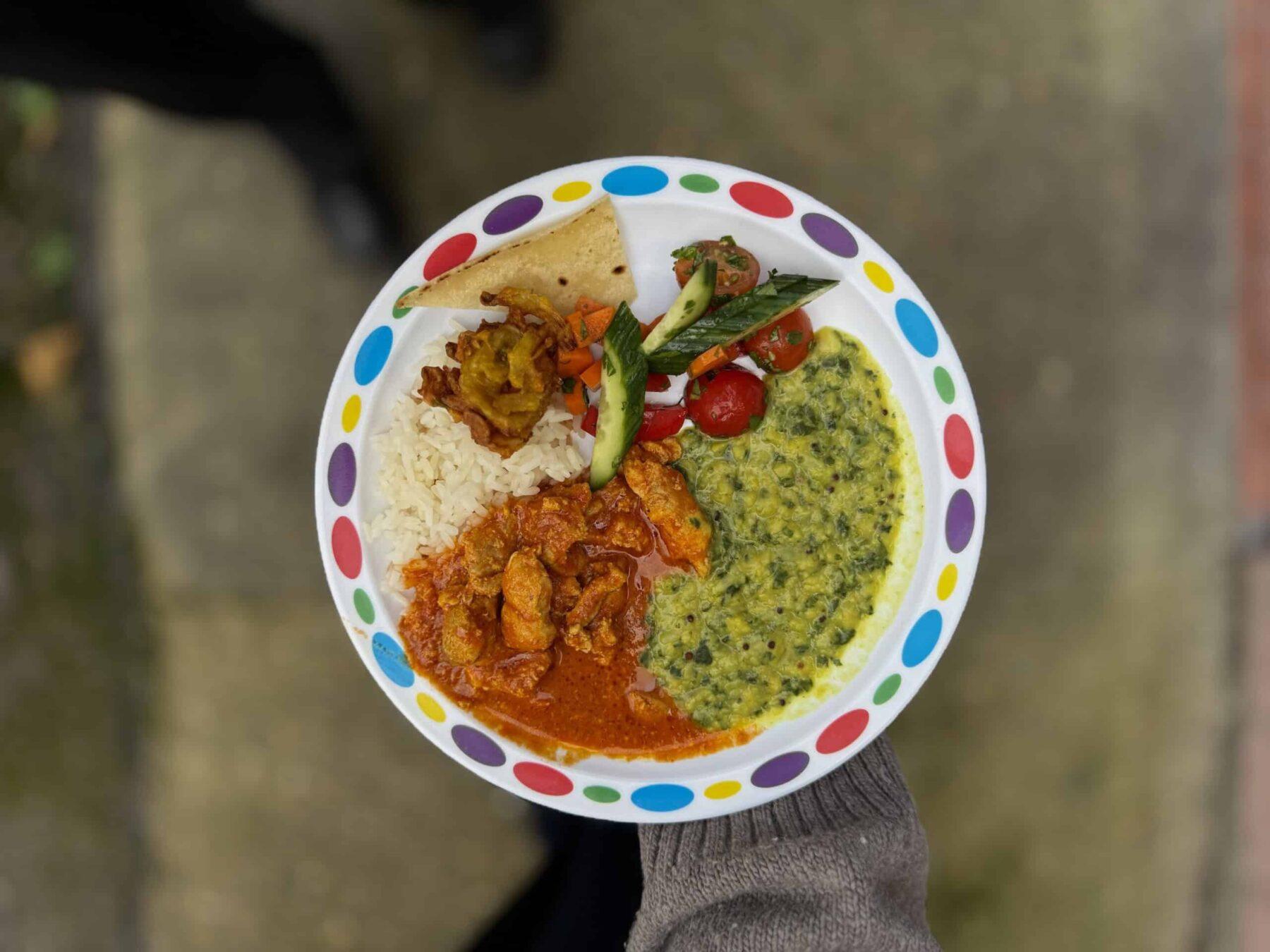
Rather than fish and chips or pizza, often served on the last day of the week, enormous trays of chickpeas and spicy rice are emerging from the kitchen, alongside roasted sweet potatoes, green beans and spinach braised with garlic. According to the excited four- and five-year-olds queuing up, the best thing is that all this can be crammed into a burrito with a choice of toppings served at the table. “I like the olives and cheese best,” says five-year-old Sumaya.

Advertisement

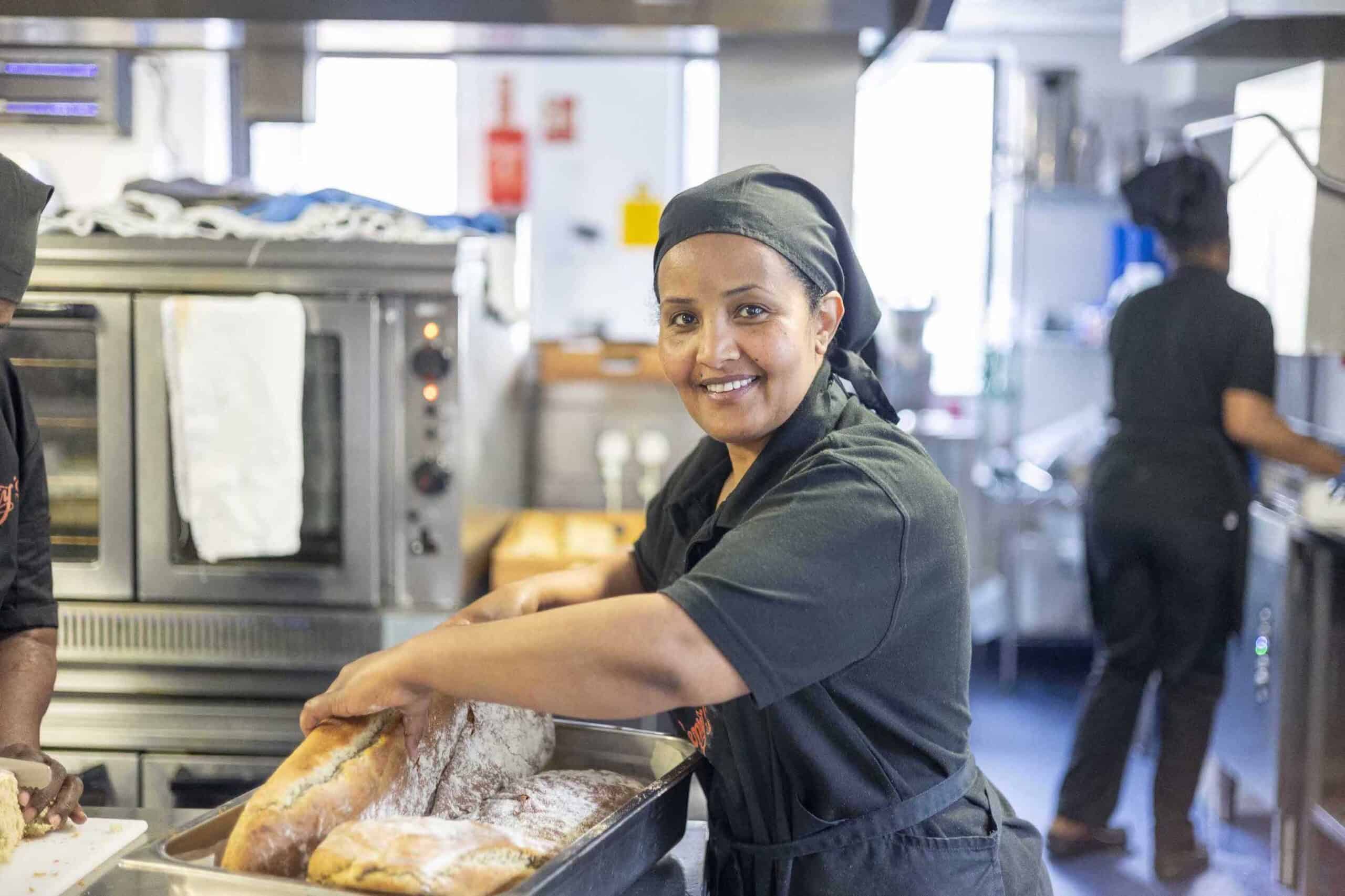
For anyone still hungry, homemade loaves of focaccia are lined up by the ovens, filling the hall with a sweet, malty aroma. “Every Friday, it’s ‘breaducation’, which means all the pupils get involved in making some kind of bread, and we link it back to whatever they are learning in the curriculum,” explains chef Jo Ilbury, who heads up the school’s catering team. “Anything left over is sold to parents at the end of the day.”

Advertisement

This is a school that takes food seriously, from the herb planters in the garden, which children can pick from, to the compost bin they help manage. Here, sustainability and an understanding of where food comes from are built into the day.

Two decades on from TV chef Jamie Oliver’s war on turkey twizzlers, Greenside primary is one of a growing number of schools that have made lasting changes to their kitchens, reflecting a national improvement in valuing what children eat. But progress remains patchy. For every school with pupils baking their own sourdough, there’s another serving up bland, highly processed fare, low in vegetables and favour.

A recent poll by the government revealed that three-quarters of parents in the UK are concerned by the food their children eat at school. What’s more, the health figures remain worrying, with one in three children leaving primary school overweight or obese.

Advertisement

Schools are now producing homemade loaves of focaccia as part of their ‘breaducation’ classes. Illustration by Sam Peet

To level the playing field, the government has announced plans to overhaul school food standards for the first time in more than a decade, while also extending free school meals to every child in a family on universal credit, reaching an extra 500,000 in England. The final version of these changes will be published later this year, following a public consultation, before coming into force in September 2027.

As well as an outright ban on deep-fried food, such as chicken nuggets and chips, the new standards will restrict high-sugar desserts to once a week. For most of the week, fruit-based options will replace puddings such as doughnuts, cakes and ice cream.

Advertisement

It’s not just about taking away treats. The shake-up also focuses on adding more grains, pulses and vegetables to children’s plates. Sample menus include Mexican bean burritos, cottage pie with root-veg mash and roasted chickpea, vegetable and mozzarella wrap.

“This is a genuinely pivotal moment for school food,” says Stephanie Slater, chief executive of School Food Matters, a charity that campaigns to ensure children have access to nutritious and sustainable food at school. “But the success of these reforms will depend on how they are implemented. Along with clear and robust standards, they will require adequate funding and effective monitoring and compliance in schools.”

Advertisement

Healthier meals could cost more, but the Department for Education argues that the changes could actually save schools money, for example, by swapping out meat for protein from pulses.

As well as ensuring that schools follow the rules – the government suggests that a school governor should take the lead on adherence – children also have to be up for it.

As well as an outright ban on deep-fried food, such as chicken nuggets and chips, the new standards will restrict high-sugar desserts to once a week

Advertisement

“It doesn’t matter how healthy a lunch is if most of it goes in the bin,” points out Bee Wilson, food writer and campaigner. Wilson launched TastEd in 2019, a charity offering schools free resources on food education with the aim of encouraging children to enjoy more fruit and vegetables. For the changes to have a significant impact, she believes they must be accompanied with better food education.

“What we’ve seen time and again is schools telling us that when they introduce new dishes, a lot of the food will be wasted,” she says.

In secondary schools, with older children, this can lead to ditching the school canteen altogether in favour of a stop at the corner shop or fried chicken joint on the way home.

Advertisement

This is a genuinely pivotal moment for school food

To prevent this, Chefs in Schools launched a campaign earlier this year called Try Something New Day – a weekly challenge to add new ingredients into meals – to build young people’s confdence with new flavours. The charity, which recruits trained chefs to run school kitchens, is encouraging all schools to put aside a small part of their catering budget to offer tastings of healthy ingredients.

The concept was devised by Amber Francis head chef and food educator at Christ’s College, a secondary school in Finchley, north London. Every Tuesday, at breaktime, she wheels out her trolley, laying out small pieces of something in bowls for pupils to try. This could be different types of tomato or lesser-known flavours such as kohlrabi, kale, blood orange and pomelo.

‘We’re working with other schools in the borough to help them find ways to put food education at the heart of their curriculum by learning from practices that have worked for us,’ says Ciara Finney, headteacher at Greenside primary school

Advertisement

“It’s about getting young people to step out of their comfort zone and have conversations about what they do and don’t like,” says Francis, who was crowned Champion of Champions on BBC’s Great British Menu in 2025.

For many schools, taking steps like this will be crucial to the success of the government’s latest plans, helping children become familiar with healthier foods, while making sure the quality of school dinners around the country becomes more consistent. For those ahead of the game, it’s about sharing experiences.

“We’re working with other schools in the borough to help them find ways to put food education at the heart of their curriculum by learning from practices that have worked for us,” says Ciara Finney, headteacher at Greenside primary school. “As for our menu, it won’t need to change. We’re there already.”

Advertisement

Photography: Henry Cavendish and Chefs in Schools

Be part of the solution

At Positive News, we’re not chasing clicks or profits for media moguls – we’re here to serve you and have a positive social impact. We can’t do this unless enough people like you choose to support our journalism.

Give once from just £1, or join 1,800+ others who contribute an average of £3 or more per month. Together, we can build a healthier form of media – one that focuses on solutions, progress and possibilities, and empowers people to create positive change.

Advertisement

Support Positive News

Source link

Advertisement
Continue Reading
Click to comment

You must be logged in to post a comment Login

Leave a Reply

NewsBeat

Billions are spent on child mental health services without knowing if they work in the long term

Published

on

Billions are spent on child mental health services without knowing if they work in the long term

Modern medicine increasingly judges itself by long-term outcomes. In cancer care, we routinely compare treatments according to whether patients survive longer. In cardiology, we ask whether interventions prevent future heart attacks and extend life. This long-term data allows healthcare to continually improve.

Child and adolescent mental health services are different. Long-term outcomes have received little attention. Success, instead, is largely judged using measures such as waiting times, access targets and short-term symptom improvements.

These are important indicators of service performance. But they cannot tell us whether children’s lives have actually improved beyond the very short term.

Child and Adolescent Mental Health Services (Camhs) were founded on the idea that helping children early could change the course of their lives. Yet we rarely measure whether that actually happens.

Advertisement

A new study my colleagues and I conducted provides one of the most detailed long-term pictures to date of the clinical outcomes for young people who attended Camhs in the UK. By linking NHS records across Scotland, we followed every child born between 1991 and 1998 – almost half a million people – from birth until age 32. We identified everyone who attended Scottish Camhs before age 18 and tracked their subsequent use of inpatient and outpatient adult mental health services into adulthood.

Forty per cent of children who attended Camhs went on to use specialist adult mental health services. That figure rose to nearly half (49%) among those who first attended Camhs as teenagers, between the ages of 13 and 17.

When it came to inpatient psychiatric admissions, the most intensive – and costly – form of mental health services, nearly half of all hospital bed days for people between the ages of 18 and 32 were for people who had, earlier in life, attended child mental health services. Similarly, in outpatient adult mental health clinics, more than 40% of appointments were for former Camhs patients.

These findings do not mean that attending Camhs causes adult psychiatric illnesses. Rather, they illustrate something mental health experts have long recognised: the roots of serious mental illness often begin in childhood. But despite this, we know very little about whether Camhs interventions actually reduce the risk of later mental illness or improve long-term outcomes.

Advertisement

This is not because Camhs treatments are necessarily ineffective. It could be the case that outcomes would have been worse for these young people had they not attended Camhs. The problem is we simply don’t know. And if we hope child mental health services can improve lifelong outcomes, we need to measure whether they actually do.

We don’t know what the outcomes are.
Followtheflow/Shutterstock.com

A way forward

Scotland, as it happens, is well placed to answer these questions. Its world-leading health data infrastructure already makes it possible to securely link child and adult health records over decades. The foundation is there. What is needed now is to build on it: to make routine long-term follow up a standard part of how we evaluate child mental health interventions.

Instead of evaluating interventions only at the end of treatment, we could routinely examine outcomes one year, five years and even ten years later, after patients have left Camhs. Just as cancer care has transformed itself by learning from long-term outcomes, child mental health could use routinely linked health data to identify what interventions genuinely improve lives in the long term.

This would not require new technology – Scotland already has the systems in place. It simply requires a commitment to use them. And the potential payoff is enormous: a child mental health system that can genuinely learn from its own outcomes, continuously improving care for future generations.

Advertisement

Waiting times matter, access matters and short-term improvements matter. But these tell us about how well services are functioning today. They do not tell us whether they are changing tomorrow.

If nearly half of adult psychiatric hospital care is being delivered to people who attended child mental health services, we should be asking a much bigger question: are we changing the course of people’s lives, as Camhs was always intended to do? Until we routinely measure long-term outcomes, we simply will not know.

Source link

Advertisement
Continue Reading

NewsBeat

World’s first orchestra with dedicated mobile phone section

Published

on

Wales Online

It’s claimed to be the first of its kind

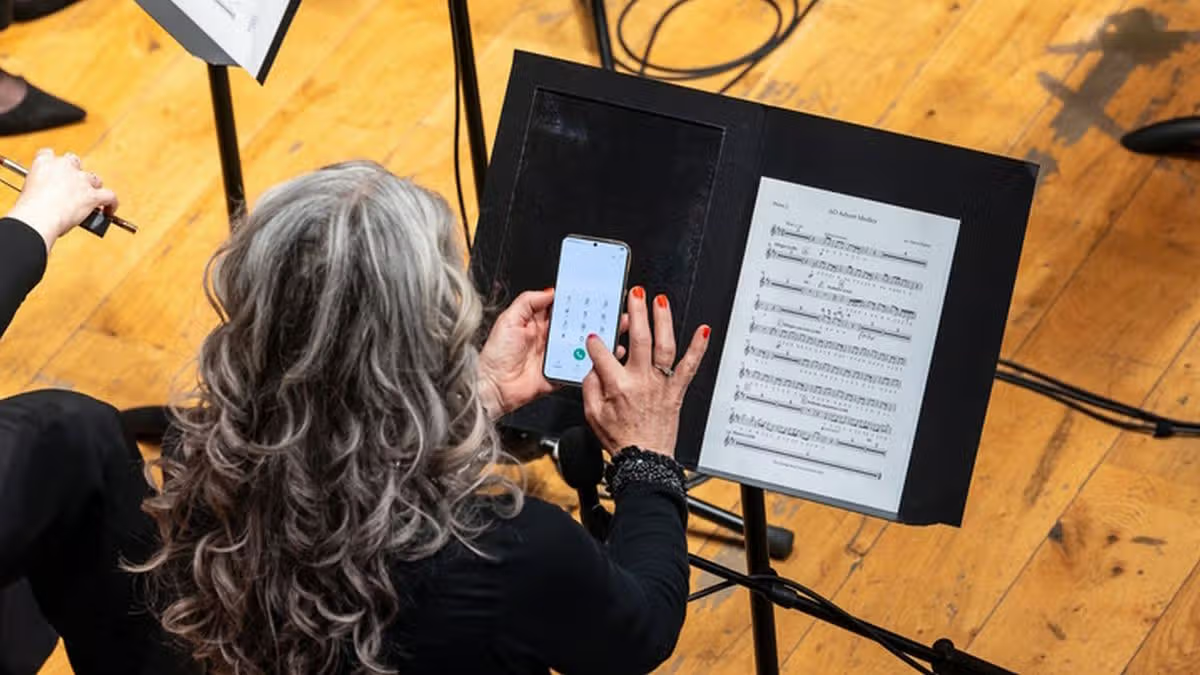
Online electricals retailer AO.com has teamed up with musical maestros to create what they claim is the world’s first dedicated mobile phone section in an orchestra. The online seller partnered with the renowned Manchester Camerata to put a modern twist on some of the world’s most recognisable classical compositions.

From Vivaldi’s The Four Seasons and Beethoven’s Ode to Joy to Tchaikovsky’s Swan Lake and Auld Lang Syne, the specially arranged medley sees a four-piece phone section performing alongside a live orchestra. The ‘SIMphony’ demonstrates how even everyday technology can be used in unexpected ways.

Advertisement

Filmed live at Manchester’s renowned Stoller Hall and created to celebrate the versatility of mobile phones, the retailer challenged the orchestra to transform beloved classical pieces into performances played using nothing more than the keypads.

Conductor Tim Crooks said: “This is unlike anything we’ve ever performed. People use their mobile phones for almost every aspect of daily life, but creating orchestral music with them probably isn’t the first thing that comes to mind.

Advertisement

“That’s what made this project so enjoyable. It challenged the musicians in completely new ways and demonstrates how versatile modern technology can be when creativity is involved. We hope audiences are as entertained and surprised by the result as we were.”

The medley is now available to stream on Spotify, with the full performance available to watch at https://ao.com/mobile-phones/simphony

Source link

Advertisement
Continue Reading

NewsBeat

Megan McKenna reveals horrifying details of violent break-in | Lifestyle

Published

on

Video Player Placeholder

Megan McKenna has recalled the night that machete-wielding intruders broke into her home, leaving her scared to live in England by herself while her husband Oliver Burke is based in Germany.

The former The Only Way Is Essex star, 33, told the Great Company With Jamie Laing podcast on an episode released on Wednesday (4 August) that the incident happened shortly after the couple’s honeymoon in Montenegro, after she returned home to the UK by herself when Burke, who is a football player signed with Union Berlin, travelled back to Germany.

McKenna said the intruders, who had “hacked her wall down,” left after robbing her jewellery, leaving her believing the break-in was “obviously targeted”.

Advertisement

The TV personality added: “The police were amazing at the time, but I was then going through IVF to have [her son] Landon, and they wanted me to go on trial.

“And I just said to them, like, I actually can’t physically do that. Go through it. They got caught, and then they went on trial, and then a year later, they just got let out. They’re just roaming the roads.”

Source link

Advertisement
Continue Reading

NewsBeat

How to watch Arsenal FC vs Real Betis: TV channel and live stream for pre-season friendly today

Published

on

How to watch Arsenal FC vs Real Betis: TV channel and live stream for pre-season friendly today

Source link

Continue Reading

NewsBeat

Arsenal FC vs Real Betis: Prediction, kick-off time, team news, TV, live stream, h2h results, odds today

Published

on

Arsenal FC vs Real Betis: Prediction, kick-off time, team news, TV, live stream, h2h results, odds today

After a week-long training camp in Catalonia, Mikel Arteta’s side will now head to Dublin, Ireland for the second leg of their mini-summer tour of Europe to face Spanish opposition once again.

Source link

Advertisement
Continue Reading

NewsBeat

Myspace owners looking to bring social media platform back

Published

on

Myspace owners looking to bring social media platform back

Myspace, the early 2000s site synonymous with custom profile pages and emerging music artists, is being revived by its current owners, brothers Tim and Chris Vanderhook.

The duo say they are “just waiting for the right time to do it” to bring the brand back.

Myspace owners looking to bring social media platform back

The plans were revealed in the documentary Myspace, where the Vanderhooks discussed their intention to relaunch the platform with a “new vision.”

Advertisement

Although no launch date has been confirmed, the brothers said the reboot will steer away from algorithm-based entertainment.

They want the “modernised” Myspace to “feel different” from platforms like Facebook and Instagram.

It remains unclear whether the relaunch will focus on music as the original site once did.

Myspace was founded in 2003 and quickly became the world’s most popular social network.

Advertisement

It peaked in April 2008 with around 115 million monthly visitors and more than 320,000 daily sign-ups.

Tom Anderson, co-founder of Myspace—and the first “friend” of users by default—is not expected to be involved in the relaunch.

The Vanderhooks acquired Myspace in 2011 through their company Viant, then known as Specific Media.

From 2005 to 2009, Myspace was the largest social networking site globally and had a significant influence on technology, pop culture and music.

Advertisement

It also helped launch businesses such as YouTube, Zynga, and Photobucket.

Despite remaining online, the platform has faded from public use over the past 15 years and changed hands several times.

In June 2011, the site was purchased by Specific Media Group and Justin Timberlake for approximately $35 million (£26.6 million).

Time Inc. acquired it in 2016 for $87 million (£64.4 million), and it later became part of Meredith Corporation in 2018.

Advertisement

On November 4, 2019, Meredith spun off Myspace and its original holding company (Viant Technology Holding Inc.) and sold it to Viant Technology LL.

Fans divided on potential return on Myspace

Following the news, fans took to Reddit to discuss the return of the once iconic social media space.

One said: “I loved MySpace in the mid 00s.

“I have no place for it in my life in the mid 20s.”

Advertisement

YouTube Homepage Close-up on LCD Screen, Chrome Web BrowserMyspace helped launch other platforms like YouTube (Image: Getty Images)

Another added: “No thanks.

“What I would like is to visit my old page so I can archive it, at least since it sucks they had an overhaul a couple of years ago, deleting most of the personal profiles of everyone.”

A third wrote: “It wouldn’t be the same if they did.

“Myspace wasn’t just a site, it was an experience, a thing of its time.

Advertisement

“I’m glad I got to experience it and I’m also glad it’s gone.”


Recommended reading:


Some, however, were open to the idea, and even optimistic about its comeback.

One said: “I liked MySpace more than Facebook, so I’ll give it a try.”

Advertisement

Another agreed, saying: “I would definitely go back.

“Most of social media has become absolute trash and I miss the simplicity of MySpace.”

What do you think about Myspace looking to return? Let us know in the comments.

Advertisement

Source link

Continue Reading

NewsBeat

Beverley – A1079 traffic light problem means 30 min delays

Published

on

Beverley - A1079 traffic light problem means 30 min delays

The AA Traffic News is reporting that the A1079 is blocked in the East Yorkshire village of Bishop Burton, outside Beverley, between Finchcroft Lane and Finkle Street.

East Yorkshire Motor Service said the delays are due to faulty traffic lights.

Traffic is running very slowly from the A1079 roundabout to the east of the village at the junction for Beverley Racecourse and the B1248 for Malton

Advertisement

The Press will provide more information on this story as we receive it.

Source link

Advertisement
Continue Reading

NewsBeat

Arrest after two men allegedly fight in North Yorkshire pub

Published

on

Arrest after two men allegedly fight in North Yorkshire pub

The county’s police force said the alleged assault happened in The Moors Inn in Headlands Road, Appleton-le-Moors, on Saturday, August 1.


Recommended reading:


Advertisement

A force spokesperson said an arrest has been made in connection with the incident, and the person has been released on bail.

The North Yorkshire Police spokesperson said: “During the assault, the victim sustained several facial injuries.

“Our enquiries are continuing and we are particularly interested in speaking to anyone who may have witnessed the incident or anyone who has information that could assist our investigation.

“Please email Andrew Govier on drew.govier2@northyorkshire.police.uk, or visit the North Yorkshire Police website.

Advertisement

“If you are unable to use these options, please call North Yorkshire Police on 101.

“Please quote reference number 12260148116 when providing information.”

Source link

Advertisement
Continue Reading

NewsBeat

Man dressed as ‘Grim Reaper’ climbed onto hospital roof and stared at patients

Published

on

Man dressed as 'Grim Reaper' climbed onto hospital roof and stared at patients
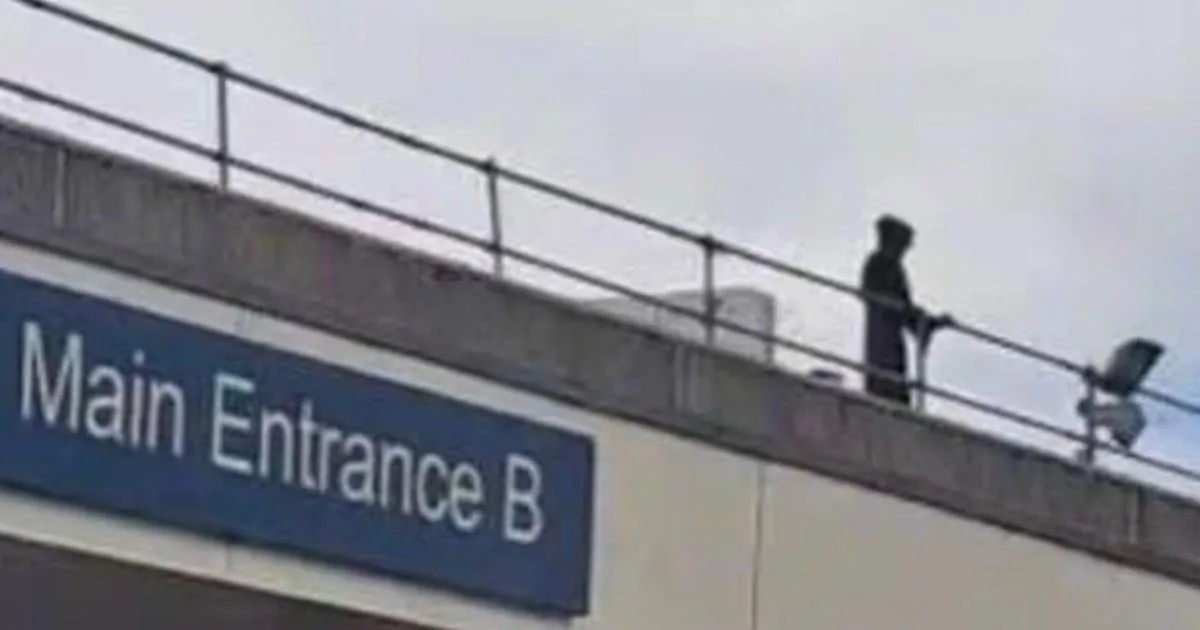
Leon Gillespie donned an all-black hooded outfit and stood overlooking the entrance to Ysbyty Glan Clwyd hospital in Denbighshire (Picture: Wales News Service)

A hospital intruder dressed up as the ‘Grim Reaper’ and glared at patients, a court heard.

Leon Gillespie, 26, donned an all-black hooded outfit and stood overlooking the entrance to Ysbyty Glan Clwyd hospital in Denbighshire, North Wales.

Four police cars and a fire crew were sent to apprehend Gillespie after he stayed on the roof for nearly an hour on Saturday.

Hospital visitors were shocked at the sight of him standing motionless and brandishing what appeared to be a long blade.

Advertisement

No explanation was given for the stunt when Gillespie appeared in front of magistrates in Llandudno.

His outfit was also described in court as being a ‘crow’.

Gillespie was fined £200 after pleading guilty to causing a nuisance at a hospital.

A spokesman for Betsi Cadwaladr University Health Board said: ‘The health board has previously stated it has a zero-tolerance approach to abuse, aggression or nuisance within its hospital sites.’

Advertisement

Gillespie also admitted separate offences of stealing £30 to 40 of cat food and cat litter from Pets at Home on March 26, and food and drink from Sainsbury’s on May 28.

Both were committed in Llandudno.

He was ordered to pay £50 in compensation, £100 in fines, and £100 in costs to the Crown Prosecution Service.

Get in touch with our news team by emailing us at webnews@metro.co.uk.

Advertisement

For more stories like this, check our news page.

Advertisement
Advertisement

Source link

Continue Reading

NewsBeat

Russian ballistic missile strike on Kyiv kills at least 17

Published

on

Firefighters work at a site of a Russian missile strike, their silhouettes contrasted against the glowing yellow and orange of smoke plumes illuminated by large fires.

Russia has attacked Ukraine with ballistic missiles and drones, killing at least 17 people and leaving at least 44 injured, Ukraine’s President Volodymyr Zelensky said.

In one of the deadliest strikes across Kyiv this year, which started after midnight on Wednesday, the head of the city’s military administration, Timur Tkachenko, said the “enemy is once again massively attacking”.

Air raid alerts were in place for more than an hour as the capital’s military administration said the barrage damaged residential buildings and warehouses.

Ukraine has urged allies for more US-made Patriot missile interceptors to defend against Russian ballistic attacks.

Advertisement

The Russia defence ministry said it had struck logistics hubs and supply centres in Kyiv and the surrounding region.

“These centres were involved in the storage, delivery of various weapons and military supplies, as well as in the production and distribution of unmanned aerial vehicles,” it said.

It also said it had also hit three cargo vessels “which were transporting weapons and military equipment” near the Black Sea port of Odesa.

Kyiv Mayor Vitali Klitschko said there were fears people could be trapped under rubble after strikes on the centre of the city.

Advertisement

He noted on Telegram that four of the injured people were in serious condition.

“The enemy is once again deliberately striking civilians and civilian infrastructure,” Kyiv’s military administration said.

Ukraine’s air force did not report intercepting any missiles during the attack, saying in a post on Telegram that Russia had launched 24 ballistic missiles and four anti-ship missiles.

It added that 115 drones had been launched by Russia during the attack and air defence systems intercepted 98 of them.

Advertisement

Russia has intensified attacks on Kyiv in recent weeks, while Ukraine has also increased its attacks on Russian civilian infrastructure, including power facilities.

Dmitry Milyaev, the governor of Russia’s Tula region, said on Wednesday that a drone had crashed into a warehouse of e-commerce giant Wildberries in the region overnight and caused a fire.

He said on Telegram that one person had been injured and there had been no deaths reported, with the retailer saying firefighting teams were working at the site and the facility had been evacuated pre-emptively.

Ukraine has repeatedly targeted warehouses, including those operated by Wildberries. Five people were killed and 10 wounded in the Moscow region on Tuesday morning in the most recent strikes on warehouses.

Advertisement

The day before, Russian officials said seven people were killed and 58 injured after a drone hit a busy beach in the southern Krasnodar region.

Ukraine, meanwhile, expressed outrage over a video showing a man chased by a drone in Kherson, calling it a deliberate “hunt” and “safari” targeting civilians.

Both sides have denied deliberately targeting civilians.

Source link

Advertisement
Continue Reading

Trending

Copyright © 2025