Connect with us

NewsBeat

I fear this Budget will gun for our pensions, savings and homes: JEFF PRESTRIDGE reveals exactly what YOU can do about it

Published

on

It's coming: In just over a month we will brace ourselves for yet another assault on our wealth and financial independence

Tick tock, tick tock, the clock is counting down. In just over a month we will brace ourselves for yet another assault on our wealth and financial independence.

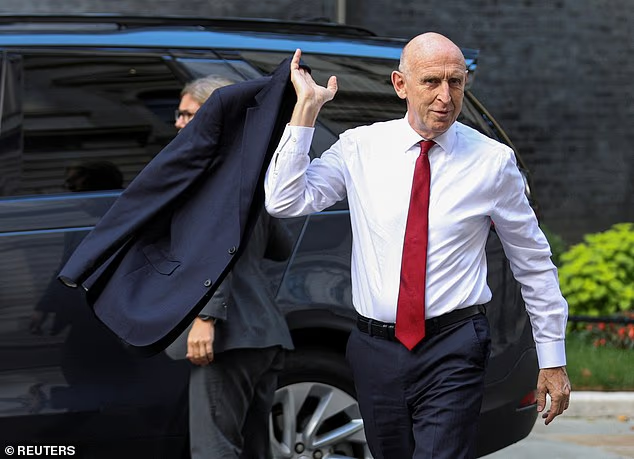
This time around it won’t be Rachel Reeves who will be bashing up our finances and ruining our retirement – or retirement dreams. Instead, it will be John Healey who as Chancellor of the Exchequer will deliver Labour’s third horrible Budget in as many years.

Frankly, it doesn’t matter who the Chancellor is (it could be Ken Dodd if he was still alive) because Labour, socialist Labour, is gunning for our investments, wealth and homes.

If only time could stand still, or, even better, go back to when Labour was no more than a weak party in Opposition.

Advertisement

Healey has already indicated his guns are trained firmly on our wealth by stating that next month’s Budget will be a ‘tough’ one.

And he will come up with the usual Labour excuses as to why tough measures are needed.

It’s coming: In just over a month we will brace ourselves for yet another assault on our wealth and financial independence

Advertisement

He will blame continued hostilities in the Middle East for the country’s parlous state rather than the Government’s awful anti-business stance which has heaped costs on employers and caused the economy to limp along like someone who has just strained their Achilles heel.

Of course, there will be no mention of Labour’s reluctance to tackle a soaring welfare bill, even if it leaves our defences in a sorry state and Government borrowing costs reaching for the skies.

For Prime Minister Andy Burnham to suggest that spending on social security is a greater priority than the nation’s security is as naïve as it is dangerous.

God help us.

Advertisement

So we’re heading for yet more tax increases to shore up the Government’s finances and sadly (unfairly, I’d say) it will be taxpayers – Middle Englanders – who yet again will be asked to shoulder them.

That means the young and old, the aspiring and aspired, and everyone in between. It means those who work for a living, own their own home and put money aside for the future – as well as those of us who have been prudent all our lives and are now enjoying retirement or semi-retirement.

Although Healey has so far been tight-lipped about what tax hikes he has up his sleeve, I imagine his phalanx of Treasury advisers will be leaking a few details ahead of the Budget on Wednesday, October 28 (aka doomsday). 

They can’t help themselves, based on the tittle tattle they have come up with over the past two years.

Advertisement

No doubt, rumours about a restriction in the right for people to take a chunk of tax-free cash from their pension fund will surface again, as they did in the previous two Budgets.

In the run up to the 2024 Budget, some £10billion of ‘excess’ tax-free cash was taken by investors fearful of an imminent crackdown.

No clampdown came, leaving tens of thousands of savers with money that would have been better left invested in their pension fund – and not suddenly exposed to tax. The same happened last year.

Maybe Healey will hear investing giant AJ Bell’s passionate call for him to make a ‘pre-Budget’ commitment not to turn the screw on the right to tax-free cash. But maybe not.

Advertisement
Don’t wait until Budget day. You need to start protecting yourself now


Hi, I’m Simon Lambert, publisher of This Is Money. I want to warn you that your pension, savings and property could soon be under attack. 

Advertisement

On October 28, Andy Burnham’s government will set out the Budget. We don’t know what they will do, but we do know about tax raids already on the way. The best thing you can do is get prepared. So I’ve called on some of Britain’s leading financial experts to create my new six-week plan. I’ll cut through the noise and take you step-by-step through everything you need to do to protect your money. 

Don’t wait. Click here and sign up to Protect Your Money now.

<!- – ad: https://mads.dailymail.co.uk/v8/de/money/moneypensions/article/other/mpu_factbox.html?id=mpu_factbox_1 – ->

Advertisement

And if I was a betting man, I’d put my garden shed on him pushing up rates of capital gains tax on profits from second homes, buy-to-lets and investments so they are aligned with income tax rates.

It’s a move that most Left-leaning think tanks have been calling for since I wore shorts to school. 

I am sure its announcement in the Budget would result in many Labour MPs partying late into the night. Negronis all round (nice and red). 

Advertisement

For diehard socialists, utopia. For us, yet another spiteful attack on thrift.

What we do know for certain, because Healey has already said it, is that there will be no breaking of Labour’s 2024 manifesto which pledged not to increase ‘National Insurance, the basic, higher or additional rates of income tax, or VAT.’ Thank you for small mercies.

But there’s far more we know about what lies ahead taxation-wise as we march towards the end of Labour’s term in office in 2029 (of course Burnham could call a snap election before then).

There are a myriad of tax rises coming that are set in stone, but which we can plan for and, in most cases, take action to mitigate – with the aid, of course, of our brilliant Money team at the Daily Mail and This is Money.

Advertisement

These tax rises were of Reeves’ creation and come in the form of a series of tax bombs with in-built detonators designed to go off at specific times.

The tax raids coming from April 2027

The first batch of these detonators goes off in April, when the new tax year kicks off.

So, from April 6, tax on savings interest will jump by two percentage points, resulting in new tax rates for basic, higher and additional rate taxpayers of 22, 42 and 47 per cent.

Savage? Yes, but basic and higher rate taxpayers should still be able to shield, respectively, £1,000 and £500 of annual savings interest from these new tax rates through use of their personal savings allowance. 

Advertisement

I say this in the expectation (no, hope) that these allowances won’t be chipped away at or removed altogether by Healey (don’t rule it out).

These same higher tax rates will also apply to rental income earned by landlords (Labour truly hates landlords).

Saving into a cash Isa will be restricted at the same time – with only those aged 65 or over still being able to squirrel away up to £20,000 in any one tax year.

For all other adults, they will be allowed to put only a maximum £12,000 a tax year into a cash Isa. If they want to maximise their £20,000 allowance, they will have to run a stocks & shares Isa alongside their cash Isa. 

Advertisement

While stocks & shares Isas and Junior Isas will keep their respective maximum annual allowances of £20,000 and £9,000, managing the former will become far more challenging for investors.

This is because Labour has decided to introduce a flat 22 per cent tax charge on all interest earned from cash held inside a stocks and shares Isa

Both a bewildering move and a dent in the tax-free label that makes Isas so attractive.

Yet probably the most damaging tax ‘bomb’ that will ignite in the next tax year will be that affecting on any unused pensions when people die. For the first time, they will fall into the inheritance tax (IHT) fishing net.

Advertisement

As I’ve said before, the taxation of such pension pots will be nothing short of egregious.

For some beneficiaries, it will result in the proceeds from an inherited pension fund (where the plan holder was aged 75 or more) being subject to both 40 per cent IHT and income tax.

In the most extreme of cases, 91 per cent of an inherited pension fund could be lost to tax.

Whatever happens in John Healey and Andy Burnham's first Budget, there is already a painful series of tax raids coming that were orchestrated by Rachel Reeves

Whatever happens in John Healey and Andy Burnham’s first Budget, there is already a painful series of tax raids coming that were orchestrated by Rachel Reeves 

Advertisement

Join the discussion

How should hardworking families protect themselves from rising taxes on pensions, savings, and homes?

Finally, we now learn that staycations in England will become more expensive towards the end of this tax year as a result of mayors being free to impose an uncapped tax on visitors staying in their regions. 

Where mayors don’t exist, new ‘foundation strategic authorities’ will be able to levy the tax.

Advertisement

Labour says the levy will not exceed 5 per cent, but the tax will still make holidays more expensive for hard-working families. Accommodation providers, especially independent B&Bs, could also be hit if holidaymakers are deterred from staying in the UK.

Similar tourist levies are already charged in Edinburgh and are set to be introduced in Wales just ahead of England.

In Reeves’s defence, this new tax will not be of her doing: the finger points at Burnham, Healey and Local Government Secretary Angela Rayner.

And a year later… more tax raids

Reeves’s detonators are far from spent when the tax year to April 2028 comes to an end. 

Advertisement

A new mansion tax will then kick in, landing those with homes worth £2million or more with annual bills up to £7,500.

Then, a year later, a new stealth tax will be imposed on salary sacrifice pension plans offered by many employers. The upshot is that many employees and employers will end up paying more in NI. Yes, more bloody tax!

So what can you do?

All rather scary? Absolutely – I’ve got into a right old flap just writing this article.

And I’ve not even mentioned the tax consequences of Burnham’s wish to ‘fix’ the social care crisis through the creation of a ‘national care service’. 

Advertisement

Reform of social care, the Prime Minister has already said, will require ‘difficult decisions’ – which is code for some form of tax rise. When it will all be decided is anyone’s guess. 

But in the meantime, between 30,000 and 40,000 people a year will be forced to sell their home to fund their long-term care costs.

To the good news, dear readers. There is a lot you can do to protect your wealth from what is coming down the road in the weeks, months and years ahead.

Most of it is centred around good, old-fashioned financial planning. For example:

Advertisement

– Ensuring your family assets (everything from pensions, investments and savings) are set up in the most tax advantageous way possible and are best in class in terms of the deal (investment growth, interest rate) they give;

– Taking full advantage of saving and investment tax-breaks (for example, Isas and pensions). Not just for you and your spouse or partner, but for your children via Junior Isas and pensions (yes, pensions);

– Making sure your existing Isas are fit for purpose ahead of the rule changes in April;

– Having up-to-date wills and being aware of a multitude of gift allowances that can help mitigate IHT bills further down the line (especially given the inclusion of unused pension funds in IHT calculations from April);

Advertisement

– Maybe downsizing your home to mitigate the mansion tax – or releasing equity to support your retirement finances;

– And finding out how to plan for the possibility – not probability – of care costs in later life.

Our brilliant six-part newsletter series, written by my colleague Simon Lambert, in the weeks leading up to the Budget and in its immediate aftermath will cover all these areas: IHT, pensions, savings and investments, property, care costs and later-life planning, and what the Budget means for you.

It will be essential reading, drawing upon a mix of the country’s best Money team’s extensive personal finance knowledge and that of leading financial experts. It’s unmissable.

Advertisement

More importantly, it will put you in a better place to mitigate the impact of the tax detonators coming all our way.

Protect Your Money – sign-up to our six-week plan 

The Budget is coming – but are you prepared? Sign up to our six-week plan and Simon Lambert and his team of financial experts will reveal how to Protect Your Money. If you’re a subscriber, it’s completely FREE 

> Sign-up to Protect Your Money 

Source link

Advertisement
Continue Reading
Click to comment

You must be logged in to post a comment Login

Leave a Reply

NewsBeat

UK wine retailer enters liquidation after more than 10 years

Published

on

UK wine retailer enters liquidation after more than 10 years

Novel Wines described itself as “the UK’s leading independent retailer of undiscovered wines”.

The company sourced bottles from craft winemakers in countries including Hungary, Croatia, and India, shipping to customers across the UK.

Novel Wines operated a physical store in Bath from 2019 until 2024, when it closed to focus on wholesale expansion and online sales, according to Harpers.

Novel Wines enters liquidation after 10 years

Despite these changes, Novel Wines has entered liquidation.

Advertisement

Richard Cole and Stephen Kenny of KBL Advisory Limited were appointed as joint administrators on September 18, according to The Gazette.


The company’s website is no longer operational, displaying only a holding message that reads: “Opening soon.

“Thanks for stopping by!

“We’re just making a few quick changes to the website so it’s much easier for you to shop for great wines.

Advertisement

“In the meantime please email us on hello@novelwines.co.uk and our team will be happy to help.”

When Newsquest contacted the listed email address, both respondents confirmed they had left the company.

Other UK companies that have closed or entered administration/liquidation in 2026

It has been a tough year for the UK high street, with several other retailers entering administration or liquidation and others announcing widespread store closures.

Major high street brands LK Bennett, Claire’s, and Quiz have been forced to close all their remaining stores after falling into administration.

Advertisement

UK fashion retailer Leading Labels is also set to close its remaining 15 stores after falling into liquidation in May.

Whitbread closed all its standalone UK restaurants earlier this month:


TG Jones and the British Heart Foundation will also be closing around 150 stores each across the UK.

Advertisement

Wynsors World of Shoes is shutting 17 stores across the UK, with closing down sales already underway at several affected branches.

Other retailers have been forced to close stores this year, including:

Several UK travel companies have ceased trading or entered administration in 2026:

Wayfairer Travel Limited has also suspended all services “until further notice” as it looks to appoint an administrator.

Advertisement

Meanwhile, four UK airlines have fallen into administration or liquidation:


UK delivery company Yodel is set to be phased out after being acquired by InPost.

It’s also been reported that Morrisons is looking to sell some of its in-store pharmacies as it continues to cut costs.

Advertisement

Meanwhile, iconic fashion brand Nasty Gal has shut down its website after being sold by Debenhams in a deal worth around £12 million (US$16 million).

It hasn’t all been bad news for the UK high street, with several major brands announcing new store openings for 2026, including Joules, Aldi, M&S, and Superdrug.

Meanwhile, brands including Evans and Bodycare have returned to the UK high street this year after previously closing all their stores.

Have you used Novel Wines before? Let us know in the poll above or in the comments below.

Advertisement

Source link

Continue Reading

NewsBeat

Why Andy Burnham has been talking about Russia this week | News Politics

Published

on

Why Andy Burnham has been talking about Russia this week | News Politics
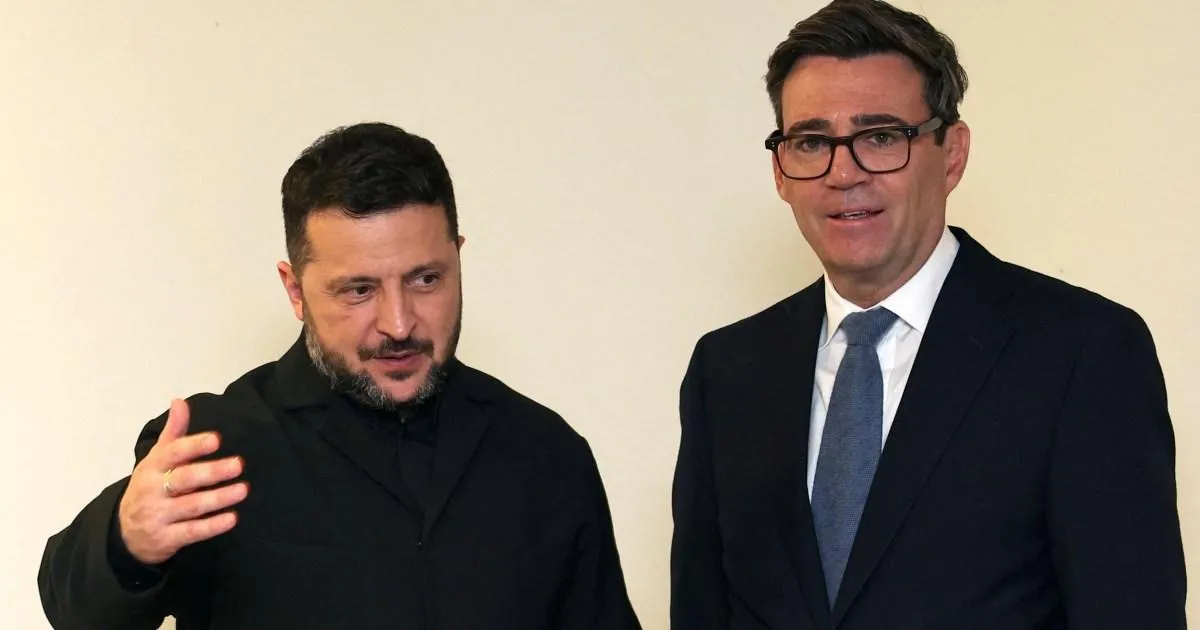
Prime Minister Andy Burnham meets with Ukrainian President Volodymyr Zelensky during his visit to the US to attend the United Nations General Assembly in New York (Picture: Toby Melville/PA Wire)

Remember Rishi Sunak’s first meeting with Joe Biden, at the White House in June 2023?  

Of course you don’t. I wouldn’t be surprised if even Rishi Sunak doesn’t remember his first meeting with Joe Biden.

If he does, it might be because he was mistakenly addressed by Biden as Mr President, a few months after the president told a roomful of people celebrating Diwali that ‘Rashee Sanook’ had just become the British PM.   But the meeting itself? Dust in the wind.  

After all, it wasn’t always the case that such a weight of anticipation and fear hung over occasions like this. There wasn’t always a risk the president might launch into a rambling, caustic rant that derails the whole thing.

Advertisement

But in hindsight, I’m not sure the concerns ahead of Andy Burnham’s first in-person meeting with Donald Trump yesterday were justified.

With two high-profile exceptions – Ukraine’s President Volodymyr Zelensky in February 2025 and South African President Cyril Ramaphosa three months later – Donald Trump rarely flips out at a fellow world leader while they’re in the room.

Prime Minister Andy Burnham (left) meets with US President Donald Trump during his visit to the US to attend the United Nations General Assembly in New York. Picture date: Tuesday September 22, 2026. PA Photo. Photo credit should read: Toby Melville/PA Wire
The PM’ shakes President Trump’s hand (Picture: Toby Melville/PA Wire)

Want to make sense of the mad world of politics?

Hi, I’m Craig Munro, Metro‘s Senior Politics Reporter.

Each week I break down the latest political stories in my newsletter, Alright, Gov?

From high-profile by-elections to Andy Burnham’s latest policy decisions, I try to turn the complex world of politics into easy-to-read explanations of how the headlines will actually affect you. Sign up here for more.

Advertisement
Headshot of Metro's senior politics reporter Craig Munro
Craig Munro

Even people like Prime Minister Mark Carney of Canada and Mayor Zohran Mamdani of New York, who ended up in their jobs partly because of their anti-Trump rhetoric, were treated with varying levels of respect.

So, it’s not a shock that the press conference with Burnham and Trump ended up being pretty civil – even if a few remarks generated their own news stories.

Acknowledging that means we can focus on the stuff beyond the superficial. Stuff like the speech Burnham gave at the UN shortly after the meeting, which provides some interesting insights into how Burnham tackles leading the country.

Advertisement

To show why, I’m going to compare him to another former PM, the last one to address the UN General Assembly: Sir Keir Starmer.

Two years ago, Starmer told the gathered dignitaries that he feared a ‘sense of fatalism has taken hold’ with chat about ‘an age of polarisation, impunity, instability’.

He said: ‘Our task is to say no. We won’t accept this slide into greater and greater conflict, instability and injustice. Instead, we will do all we can to change it.’

You could fairly describe the speech as ‘very Starmer’. It was a call for global cooperation for peace, centred on the application of international law.

Advertisement

One word he didn’t use was ‘Russia’. Burnham mentioned it ten times.

To view this video please enable JavaScript, and consider upgrading to a web
browser that
supports HTML5
video

Advertisement

In contrast to Starmer, the new PM took a far more pugilistic tone, especially with the Kremlin. He told the diplomats that the UK ‘will be relentless in building up our hard power and deterrence’, adding: ‘True resilience depends on this military strength.’

It was a speech that seemed to demonstrate how the ‘slide into greater and greater conflict, instability and injustice’ that Starmer refused to accept is happening regardless.

Polish Prime Minister Donald Tusk has warned Russia is preparing ‘hybrid strikes’ against Nato countries that support Ukraine, while the Lithuanian PM Mindaugas Sinkevičius spoke about his country’s evacuation plans yesterday.

It’s at times like this that you feel like lying back, closing your eyes, and remembering that time Joe Biden called Rishi Sunak ‘Mr President’.

Advertisement

Get in touch with our news team by emailing us at webnews@metro.co.uk.

For more stories like this, check our news page.

Advertisement

Source link

Continue Reading

NewsBeat

Can nutrients in our foods mimic calorie restriction and increase our healthspan?

Published

on

Can nutrients in our foods mimic calorie restriction and increase our healthspan?

Scroll through social media and you will soon encounter advice about living longer, from fasting plans and supplements to elaborate daily routines. Yet reaching an advanced age tells us little about how healthy or independent those later years will be.

Researchers often use the term healthspan for the years spent in good health, free from disability or chronic disease. In 2021, global life expectancy was 71.4 years, while healthy life expectancy was 61.9 years, according to the World Health Organization (WHO). That represents a gap of nine and a half years. A separate analysis estimated that this gap widened in 203 of 204 countries and territories between 1990 and 2023.

The WHO takes a broader view of healthy ageing, focusing on the abilities that allow people to do what they value, such as undertaking daily tasks, maintaining relationships and contributing to society. This recognises that people can live well while managing a health condition. “Functional healthspan” describes how long someone maintains the capacities needed for independent living.

As we age, declining muscle strength and mass, reduced aerobic fitness and even “inflammaging” (or low-grade inflammation) become more prevalent. These changes vary considerably between people. Diet, physical activity and sleep can influence how well we age, although income, housing, healthcare and the wider environment also play important roles.

Advertisement

Why researchers study calorie restriction

One intensively studied approach to ageing is calorie restriction: reducing energy intake by about 20–40% while still obtaining enough essential nutrients.

Calorie restriction can extend lifespan in organisms ranging from yeast to rodents, although its effects vary with species, genetics, sex, age and diet. Evidence in humans is less certain.

The largest long-term human trial of calorie restriction, the Comprehensive Assessment of Long-term Effects of Reducing Intake of Energy (CALERIE), followed 218 healthy adults without obesity for two years. Participants assigned to calorie restriction reduced their intake by 12% on average. They experienced improvements in measures linked with cardiovascular and metabolic health, including blood pressure, insulin sensitivity and blood markers of inflammation. They also lost about 5.4kg of body fat and 2kg of lean mass, while bone mineral density fell slightly at the spine and hip.

Although the trial examined age-related biomarkers, it did not establish whether calorie restriction improves functional healthspan or extends human life. Sustaining even this degree of restriction can be difficult.

Advertisement

Researchers are also studying compounds that affect similar cellular processes that impact ageing without requiring people to eat substantially less. These are known as calorie-restriction mimetics (CRMs), and many are found in our foods.

CRMs may reduce signals associated with cell growth, encourage autophagy, through which cells recycle damaged components, or influence how cells sense energy, function metabolically and support mitochondria to produce energy. Much of this evidence comes from cells and animals, however, and influencing one cellular mechanism does not necessarily improve health or lifespan.

What have human studies found?

One CRM, spermidine, is a compound found in wheat germ, mushrooms, legumes and nuts. In an observational study of 23,894 US adults, higher estimated spermidine intake was associated with a lower risk of death during follow-up, both overall and from cardiovascular disease. However, this does not establish cause and effect. People who eat more spermidine-rich foods may have healthier diets overall, or differ in other ways that could help explain the findings.

A small three-month pilot trial involving 30 older adults initially suggested that spermidine might improve memory. However, a larger 12-month randomised trial involving 100 older adults with subjective cognitive decline found that a spermidine-rich supplement did not improve the trial’s main measure of memory compared with a placebo.

Advertisement

Other compounds proposed as calorie-restriction mimetics because they may produce some of the same cellular effects include resveratrol, found in grapes and berries; catechins, found in green tea and cocoa; and quercetin, found in onions and apples. In a study of 30 adults aged 65–80, resveratrol supplementation combined with exercise improved measures of muscle strength, power and resistance to fatigue. Older adults taking quercetin during six weeks of resistance training produced more force with their knee muscles, but did not improve physical tasks such as rising from a chair.

Although these studies highlight some healthspan benefits, both tested supplements (not wholefoods), and neither assessed whether proposed calorie-restriction mechanisms caused the changes.

Another possible CRM, urolithin A, is produced by our gut bacteria when they break down substances called ellagitannins found in foods including pomegranates and walnuts. In a trial of 66 adults aged 65–90, urolithin A supplementation improved muscle endurance and measures of mitochondrial health, but did not significantly improve the study’s main outcomes: six-minute walking distance and the muscles’ capacity to produce energy.

A separate industry-sponsored trial in middle-aged adults reported urolithin A improved muscle strength, aerobic fitness and walking speed, but not peak muscle power. These results highlight functional benefits, but do not show that eating pomegranates or walnuts will produce the same effects, or that urolithin A can directly extend healthspan.

Advertisement

What should people do now?

Research into these compounds may help scientists understand how cells respond to nutrients and ageing. Current findings do not justify trying to obtain large doses of individual compounds, particularly from supplements.

More reliable evidence concerns overall habits. A 2025 study that followed more than 105,000 adults for up to 30 years found that several healthy dietary patterns were associated with reaching older age free from major chronic disease and with good cognitive, physical and mental health. These diets generally included plenty of fruit, vegetables, whole grains, nuts, legumes and unsaturated fats (such as omega-3s). Sufficient high-quality protein is also important for maintaining muscle, particularly in combination with resistance exercise.

Physical activity remains central to preserving function. UK guidance recommends that older adults undertake activities that improve strength, balance and flexibility on at least two days each week, alongside regular aerobic activity.

Foods containing proposed calorie-restriction mimetics can form part of a varied, nourishing diet. Mediterranean diets typically emphasise vegetables, fruit, legumes, whole grains, nuts and olive oil. Traditional Okinawan diets have centred on sweet potatoes and other vegetables, alongside soy foods and small amounts of fish. Both have been associated with healthy ageing, although these associations do not show that individual CRM compounds are responsible for their benefits.

Advertisement

Research in humans has yet to show that these compounds reproduce the effects of calorie restriction or extend healthspan. For now, the strongest evidence for ageing well supports a varied, nutritious diet and purposeful physical activity, while the benefits of CRM nutrients continues to gather scientific interest.

Source link

Advertisement
Continue Reading

NewsBeat

Gabriel Martinelli’s agent reveals Premier League offer before Arsenal exit

Published

on

Rio and Kate Ferdinand ‘scared’ after being stuck in Dubai during missile blitz
Martinelli joined Al-Hilal for £60m in the summer (Picture: Getty Images)

Gabriel Martinelli rejected an offer from another Premier League club in the summer before joining AL-Hilal from Arsenal.

The Brazil international ended his seven-year spell in north London in early September after being told by Mikel Arteta he was no longer part of his plans this season.

The deal earned the Gunners a guaranteed £60million with the forward earning significantly more than the reported £180,000-a-week he earned in England.

Gunners legend Ian Wright was among those critical of the decision to let Martinelli go, believing the club should have treated the 25-year-old with more ‘respect’.

Advertisement

His agent Marcos Casseb now says it was ‘the right time’ for his client to move on.

Martinelli had offers from clubs in Italy and Germany with unnamed Premier League clubs also interested in keeping him in England.

Casseb told Brazilian news outlet Itatiaia Esporte: ‘His time at Arsenal has come to an end. It was seven years; he arrived there at 18 years old.

LONDON, ENGLAND - AUGUST 12: Gabriel Martinelli of Arsenal during the pre-season friendly match between Arsenal FC and Como 1907 at Emirates Stadium on August 12, 2026 in London, United Kingdom. (Photo by Marc Atkins/Getty Images)
Martinelli left Arsenal in the summer (Picture: Getty Images)

‘Arsenal underwent a massive restructuring and, last year, they won the Premier League. We felt it was time for him to move on, and the club had also seen it that way. It was a very good departure for him and for Arsenal.

‘Besides everything else, he also became Arsenal’s biggest-ever sale and he still helped Arsenal make a lot of money from his departure.

Advertisement

Ask Metro


Use AI to go deeper into the stories you care about – powered by Metro and trusted publications.

‘Did he get offers? He did yeah. We had offers from Italian clubs, we had offers from German clubs and we had offers from other Premier League clubs but it was a moment when I think he needed and he also wanted to clear his head a bit, to change scenery.

Advertisement
File photo dated 14/01/26 of Gabriel Martinelli with Mikel Arteta. Gabriel Martinelli could be set to leave Arsenal for Al Hilal with the two clubs in talks over a transfer. Issue date: Monday August 24, 2026. PA Photo. Photo credit should read: Nick Potts/PA Wire
Arsenal’s handling of Arsenal’s exit was criticised (Picture: Nick Potts/PA Wire)

‘He went to the biggest club in Asia to be part of a very ambitious project. You can see it in the players that they have brought in, three players who were at the World Cup, each with their respective national teams and three players that are under 27.

‘That’s a trend in Arab football right now, they’re changing the way they want to sign players.

‘They’ve been trying to do that – lower the average age of the league – and their project has attracted a lot of attention I think it was really important now for a change of scenery.’

Source link

Advertisement
Continue Reading

NewsBeat

Middlesbrough appeal launched to help surfing dog Hattie

Published

on

Middlesbrough appeal launched to help surfing dog Hattie

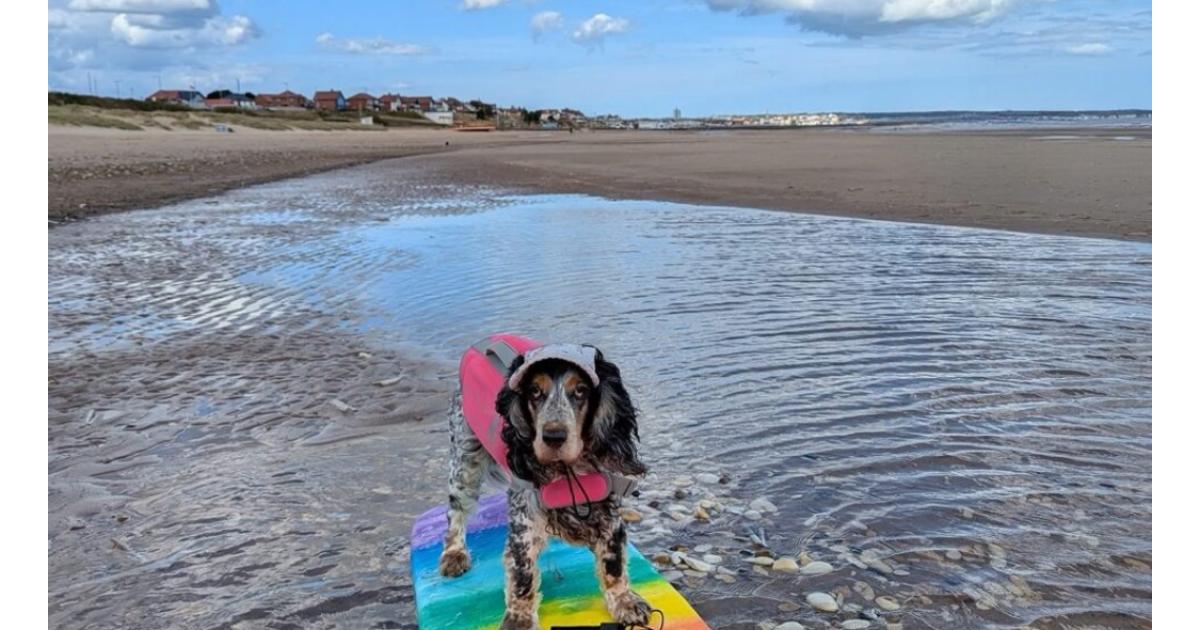
Hattie, a 12-year-old cocker spaniel, is facing worsening cataracts after being diagnosed with diabetes, leaving the much-loved pet at risk of losing her sight.

Family friend Lisa Davis, from Middlesbrough, has now set up a GoFundMe campaign which has already raised more than £3,500 towards specialist treatment.

Hattie captured the hearts of people across the region after becoming a regular sight in Bridlington, on the Yorkshire coast, surfing on the sea, where she and owner Andrew Bacon holiday twice a year.

The much-loved pet was diagnosed with diabetes, a condition that has now triggered severe eye problems and worsening cataracts.

Advertisement

Hattie, the 12-year-old famous surfing poochHattie, the 12-year-old famous surfing pooch (Image: PROVIDED)

A GoFundMe campaign has been set up to cover specialist treatment costs, with donations already reaching £3,570.

Lisa is urging people to donate or share the appeal.

Hattie with Lisa, who set up the fundraiser that has already raised thousands (Image: PROVIDED)

Hattie has already been examined by a specialist veterinary eye consultant and is now on a strict regime of four different eye drops administered throughout the day.

She is due back with the consultant, with further treatment expected to run into thousands of pounds.

Advertisement

Surgery for one eye would cost £5,100, while treating both would total £6,100, with additional aftercare and medication costs on top.

Hattie and her owner Andrew (Image: PROVIDED)

Andrew took early retirement to care for Hattie full-time after her diabetes diagnosis, refusing to leave her alone in case she suffered a dangerous hypoglycaemic episode.

He has also bought her a pram to ensure she can still enjoy daily walks and sunshine despite her failing vision.

Now settled into retirement at “Hattie Hall”, the famous dog has become a fixture around Bridlington, with regular walks along the harbour, Limekiln Lane, Sewerby Cliffs and Pheasant Flush.

Advertisement

Hattie the famous pooch that brought smiles to lots across lockdown from her social media page (Image: PROVIDED)

She is best known for hitting the waves on her surfboard at Wilsthorpe Beach.

Lisa said Hattie was an “amazing helper” during lockdown, supporting Andrew at work when he needed her most.

She said: “She was an amazing helper during lockdown, helping her daddy at work, so now it is our turn to pay back for all her hard work and dedication.”

Hattie, the 12-year-old famous surfing pooch (Image: PROVIDED)

She was named Greater Manchester’s top hero dog of lockdown for helping her dad at work and bringing smiles to people on social media.

Advertisement

A fundraiser update said Hattie’s cataracts have steadily worsened since appearing after her diabetes diagnosis.

Hattie at her dad’s work (Image: PROVIDED)

Andrew and Lisa said they were “totally overwhelmed and humbled” by the generosity shown so far.

The update added: “The specialist treatment is very expensive and we have been totally overwhelmed and humbled by the kindness and generosity of everyone that has donated to the fund which will be an enormous financial help.”

Hattie, the 12-year-old cocker spaniel (Image: PROVIDED)

Hattie with her eye medication (Image: PROVIDED)

Lisa visits Hattie whenever she travels to Bridlington and hopes the appeal will help the dog recognise her friends when Lisa returns next summer.

Advertisement

She said: “It would be amazing if she was able to see and recognise all her friends in Bridlington again during my summer holibobs next year.”

Donations can be made through Hattie’s GoFundMe page.

Source link

Advertisement
Continue Reading

NewsBeat

Prince Harry shows ‘true colours’ as King Charles battles brutal period

Published

on

Cambridgeshire Live

Prince Harry is claimed to have shown his “true colours” as King Charles continues to battle through a brutal period. It comes as Harry was seen out and about this week

Prince Harry is alleged to have shown his “true colours” in a moment people are deeming to be very telling. The Duke of Sussex attended the WellChild Awards ceremony in London this week, where a particular moment caught people’s attention.

It has since gone viral, as people seem to think it helps to tell them a lot about Prince Harry‘s “true character”, with dozens commenting on how he appeared to come across. People couldn’t help but remark on the clip as it’s so engaging, and they had a lot of thoughts to share too.

Advertisement

The appearance comes as King Charles navigates a challenging period following Earl Spencer’s bombshell claims about him in his new book. Following the announcement of the book, Kirstie Allsopp has since called out Earl Spencer.

Commenting on recent footage of Harry, one social media user wrote: “This video has brought tears to my eyes! The little girl came on stage to show Prince Harry her sparkly dress, but when she hugged him she just couldn’t let go!

“Harry is such a girl dad! And what a gorgeous video this is. It’s the way she races into Harry’s arms.”

The clip reveals how the moment unfolded. When the young girl embraced Harry, it became clear she was reluctant to release him, and he simply allowed her to maintain the embrace.

Advertisement

He held her tenderly, creating a genuinely moving moment on stage that left numerous viewers utterly captivated.

Content cannot be displayed without consent

One person wrote: “It brought me to tears, and it brought him to tears too.”

Another added: “Love this guy. He’s his mother’s son through and through.”

A third remarked: “It touches your heart seeing such a lovely hug from that little girl to Harry. Seeing that gives one a wonderful feeling.”

Advertisement

Meanwhile, a fourth commented: “Children instinctively recognise goodness in people. So much like his mom.”

Another user wrote: “Prince Charming Harry is like Diana. They have the charisma and connection with people.”

One further commenter added: “Babies, even when they get a bit older, are so funny when they do this! I also think it speaks volumes. Kids and dogs have good radar and I think they react just as strongly to the good as they do the bad.”

It was evident that many felt the moment was deeply revealing of Harry’s warm and generous nature, particularly in the time he devoted to the children at the event.

Advertisement

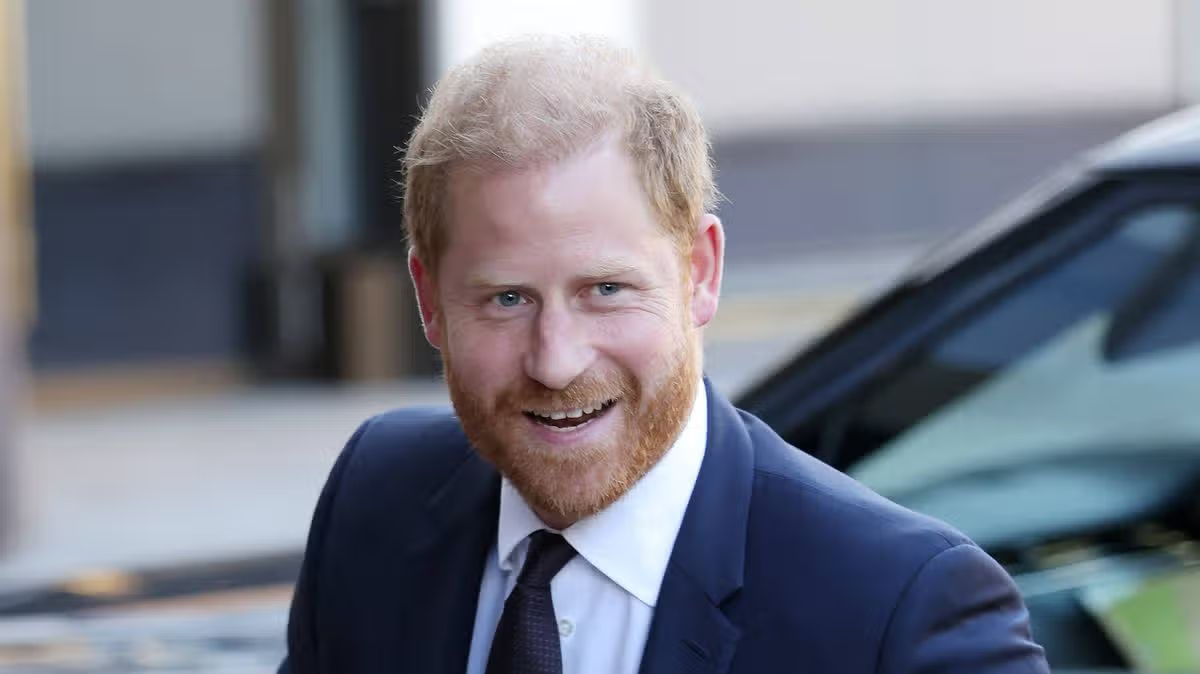
Prince Harry attended the WellChild Awards in London on Monday, September 21. The Duke of Sussex, 42, arrived at the Royal Lancaster Hotel, where he was greeted by WellChild leaders and posed for photos.

Reports indicate that he presented the award for Inspirational Child (aged 4-6) and delivered a speech at the ceremony, which “celebrates the inspirational achievements of seriously ill children and those who care for them.” His wife, Meghan Markle, did not attend.

Source link

Advertisement
Continue Reading

NewsBeat

Age UK York in phone scam warning after elderly targeted

Published

on

Age UK York in phone scam warning after elderly targeted

Age UK York said the residents received phone calls from scammers acting as staff members of the charity who tried to persuade them to hand over sensitive information.

The charity said it never cold calls and “will never expect you to disclose sensitive information simply because someone contacts you unexpectedly by telephone”.

An Age UK York spokesperson said sharing sensitive information with the scammers “could potentially place people in a vulnerable position or put them at risk of fraud or exploitation”.

Advertisement

They urged people to “never do anything you don’t want to do” if they believe they have received one of the calls, adding: “Do not feel pressured to answer questions or remain on the call. If you believe you have received a suspicious call, inform someone you know or report it to the relevant authorities.”

The charity spokesperson said: “We never cold-call. If you are unsure who is calling, end the call and contact Age UK York via 01904 634061 using a trusted telephone number or contact method.”


Read next:


They added: “If you’re unsure, then do not provide personal, financial or sensitive information over the phone.”

Advertisement

The Age UK spokesperson also said people can ask its team for a second opinion if they think the call may be a scam.

“We are here to help so please don’t hesitate to contact a member of our York team.”

Source link

Advertisement
Continue Reading

NewsBeat

EasyJet flight declares emergency after UK airport take-off and makes U-turn

Published

on

Daily Record

The flight declared an in-flight emergency and made a sharp U-turn over the North Sea

An EasyJet aircraft bound for Germany executed an abrupt mid-air reversal and headed back to Manchester after declaring an emergency while flying over the North Sea.

The service, EZY32GY, travelling from Manchester to Hamburg raised alarm on Wednesday evening (September 23) when it declared an emergency mid-flight and changed course near Amsterdam.

Advertisement

Flight Radar data shows the plane departed at 7.15pm – an hour and 15 minutes behind its scheduled take-off time. Roughly 30 minutes into the journey, the aircraft squawked 7700 and reversed direction.

Squawk 7700 is the standard aviation transponder code employed by pilots to indicate a general in-flight emergency, reports the Manchester Evening News.

Real-time aviation monitoring service Squawk posted on X shortly after 8pm: “An AIRBUS A-320 (EZY32GY) is squawking 7700 – declaring an emergency at 34,000 ft near Amsterdam, Netherlands.”

EasyJet confirmed the aircraft returned to Manchester Airport owing to “a technical issue with the aircraft”.

The carrier stated the plane was greeted by emergency services on touchdown “as a precaution only”. It has issued an apology to passengers for the disruption to their journey.

An EasyJet spokesperson commented: “”Flight EZY2195 from Manchester to Hamburg this evening returned to Manchester due to a technical issue with the aircraft. The aircraft was met by emergency services as a precaution only and customers disembarked normally.

“Due to Hamburg Airport’s curfew restriction the flight was delayed overnight and will continue the journey on 24 September.

Advertisement

“We are very sorry for the inconvenience caused and did everything possible to minimise the impact of the delay. While we always look to secure hotel accommodation, as there was very limited availability, we advised customers they would be reimbursed for booking their own.

“The safety of its passengers and crew is easyJet’s highest priority and easyJet operates its fleet of aircraft in strict compliance with all manufacturers’ guidelines.”

Greater Manchester Police have been approached for further comment.

Ensure our latest stories always appear at the top of your Google Search by making us a Preferred Source. Click here to activate or add us as your Preferred Source in your Google search settings.

Advertisement

Source link

Continue Reading

NewsBeat

As Ukraine rebuilds amid constant Russian attacks, small towns and villages are being sidelined

Published

on

As Ukraine rebuilds amid constant Russian attack, small towns and villages are being sidelined

In the early days of the full-scale invasion of Ukraine, Russian armoured columns pushed east along the Zhytomyr highway towards Kyiv. Makariv, a small settlement of about 10,000 people 36 miles west of Kyiv, sat on their route. The town was wrecked in the month of fighting that ensued.

Roughly 40% of the settlement’s infrastructure was destroyed and the bodies of 132 executed civilians were recovered by April 2022. A 2026 account puts the total death toll as high as 238. Yet Makariv was never taken. It held, with Russian forces only taking control of about 10% of its land, and Kyiv held behind it.

“For some reason, Makariv was bypassed in the press,” said local museum curator Vitaly Gedz in a 2026 interview. “They wrote about Makariv twice, ‘it was occupied and then liberated’ … It was only 10% occupied, but it was very badly destroyed.”

On a visit to Makariv the previous year, we visited Gedz’s museum. Among the objects on display there were military maps recovered after Russian forces withdrew. Russian units were found to be carrying Soviet-era sheets, some of which dated back to 1969, with the modern border between Russia and Ukraine often added in pen.

Advertisement

In the early days of the invasion, Ukraine’s national road agency also asked communities to take down road signs to disorientate the advancing Russian columns. For a few weeks in 2022, being hard to read was a defence for Makariv. It is not any longer.

Makariv residents clean debris in April 2022 after the withdrawal of Russian forces.
Sergey Dolzhenko / EPA

What the record cannot see

Ukraine’s recovery needs currently stand at nearly US$588 billion (£435 billion) – almost three times its GDP for 2025. This total is still moving. Damaged energy assets alone rose by roughly 21% between February 2025 and February 2026, when the fourth and fifth assessments of Ukraine’s reconstruction needs were released.

According to a recent BBC analysis, Kyiv is also now suffering more daily air raid alerts than at any time in the war so far. This bombardment comes weeks after the deputy speaker of the Russian parliament, Pyotr Tolstoy, urged strikes on Ukrainian cities “to demoralise the public”.

Funds for reconstruction across Ukraine must therefore be rationed, and this rationing runs on records with a particular shape. Ukraine’s national recovery and reconstruction is managed using two main online databases. The first of these is the Register of Damaged and Destroyed Property.

Advertisement

This register records which buildings have been harmed, who owns them and what they are worth. An entry is what allows households and businesses to claim compensation, and it will form the basis of any future reparation claim against Russia.

Getting a building on to this list is the responsibility of each individual council. The fourth assessment of Ukraine’s reconstruction needs found that, in December 2024, the register held information about “90+ percent” of damaged apartment blocks in Ukraine but only “nearly 60 percent” of damaged single-family houses.

One survey of a block registers hundreds of dwellings, while a street of houses must be walked gate by gate by staff small councils generally do not have. Like many other small settlements across Ukraine, Makariv is built mainly of houses, the category the register is worst at recording.

A shell crater on a damaged bridge in Makariv.
A shell crater on a damaged bridge in Makariv, Ukraine, pictured in 2022.
Oleg Petrasyuk/EPA

The second database is the Digital Reconstruction Ecosystem for Accountable Management. More commonly known as Dream, this is the official platform for the Ukrainian government’s public investment plan. Councils enter their own projects and funders choose from what is there.

The project data local authorities need to provide include descriptions, building designs, budget breakdowns, contracting and payment records and even photos, all of which take time and require money to record. This matters in towns and villages where public servants may not have the resources or experience.

Advertisement

We looked up what Makariv has put into Dream. Its council has registered 70 projects on the portal. Nearly 50% carry no costed amount at all, compared with 24% nationally. An uncosted project cannot be funded, bundled or compared.

This absence has consequences. In July 2025, we held a workshop in Makariv with around 30 residents, including teachers, clerical staff, museum workers and veterans. Interrupted by air alerts, they marked a plan of the settlement spread across two tables.

One woman traced her journey to work, which has grown from 5 miles to 20 miles since the overpass where the Makariv road crosses the Zhytomyr highway was wrecked in 2022. Others pointed out that when a fire breaks out in Makariv or the outlying villages, the fire engine now comes from Byshiv nearly 14 miles away as Makariv’s own station has been destroyed.

None of this argues against digital reconstruction. Ukraine’s systems are among the most transparent anywhere. It is an argument about who does the work of being counted, because a system that asks local authorities to enter themselves will always favour those with staff to spare.

Advertisement

Source link

Continue Reading

NewsBeat

Corrie Mckeague’s mum: ‘I’ve given myself closure; my son’s dead’

Published

on

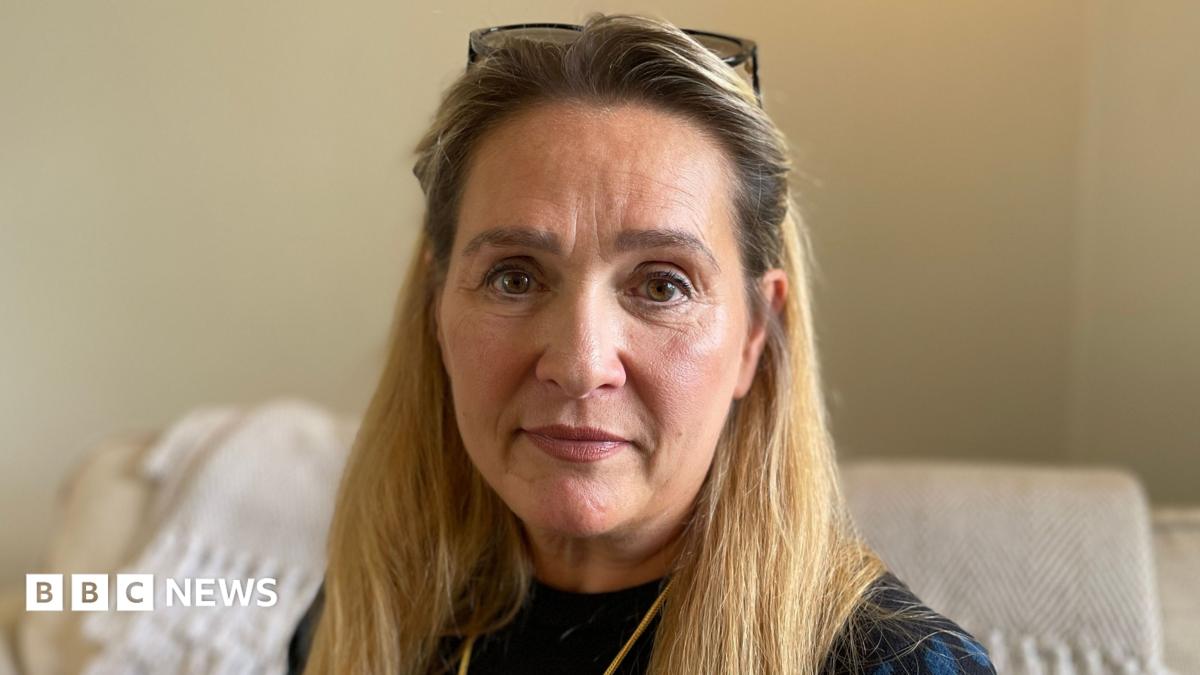
A head and shoulders image of a woman who is looking directly into the camera. She has glasses resting on the top of her head.

“We definitely did all we could and I can honestly sleep at night knowing there was nothing I physically could have done any different.”

It is 10 years since Nicola Urquhart’s son, Corrie Mckeague, disappeared on 24 September 2016 after a night out in Bury St Edmunds, Suffolk. For the months and years that followed, she embodied a mother’s love and determination to find the truth: to never give up.

The RAF gunner’s body has never been found but he was officially declared dead in 2022, when an inquest ruled he had died after climbing into a commercial waste bin before it was tipped into a waste lorry.

Nicola is composed and reflective as she recalls when her son went missing. He had just turned 23 and within months would become a dad.

Advertisement

She says her son would be forever in her thoughts, but adds: “I’ve given myself closure; my son is dead.”

She spoke to the BBC after what would have been Corrie’s 33rd birthday and ahead of the 10th anniversary of his disappearance.

She says she last saw her son when she went for a birthday meal with him at Cheers in Bury St Edmunds, adding he was a “social hand grenade” who “really did live every moment at a hundred miles an hour”.

A decade on, she says there is “never an end” to losing somebody but it is about “managing each day”.

Advertisement

Source link

Continue Reading

Trending

Copyright © 2025