Connect with us
DAPA Banner
DAPA Coin
DAPA
COIN PAYMENT ASSET
PRIVACY · BLOCKDAG · HOMOMORPHIC ENCRYPTION · RUST
ElGamal Encrypted MINE DAPA
🚫 GENESIS SOLD OUT
DAPAPAY COMING

NewsBeat

‘I tried Scotland’s biggest all you can eat buffet to see if it’s good’

Published

on

Daily Record

Scotland’s ‘biggest’ all-you-can-eat buffet boasts more than 300 dishes across Chinese, Indian, Italian, and Japanese cuisines, alongside a large grill and a dessert station nicknamed “Candyland”

Many of us enjoy treating ourselves to an all-you-can-eat buffet from time to time, and if that’s you, then you may want to head to what’s been dubbed Scotland’s ‘biggest’. Hot World Cusine boasts more than 300 dishes covering Chinese, Indian, Italian, and Japanese cuisines, plus a sizeable grill and a dessert area dubbed “Candyland”.

Advertisement

Food content creator Akhi – who goes by @munchingakhi on Instagram – has now taken to the platform to share his visit to the establishment, which has locations in Glasgow and Edinburgh. Akhi, hailing from Manchester, informed followers: “You can indulge in unlimited Tomahawk steak, unlimited carvery, more than 100 desserts and three chocolate fountains.

“There’s also unlimited lamp chops and more than 350 dishes from around the world.

“This place was truly spectacular.”

Content cannot be displayed without consent

The food enthusiast revealed Italian, Indian and Chinese were among the cuisines he tried at the venue and mentioned he enjoyed an “endless amount of starters”.

Advertisement

He also noted there was wood-fired pizza, unlimited doner kebabs and unlimited salmon available.

Akhi informed followers: “It has everything you could ever desire.

“I don’t think you’ll have ever seen an all-you-can-eat buffet like this.”

People were lapping up the post as it went viral – clocking up over 3,000 likes.

Advertisement

One commenter quipped: “Give me the meat,” while another joked they were ‘now moving’ to be closer to it.

Key details about the restaurant

Locations: Glasgow: 251 Paisley Road, G5 8RA, Edinburgh: 118-126 Dalry Road, EH11 2EZ

Opening Times: Open seven days weekly, generally between 12pm and 10pm

House Rules: The establishment doesn’t stock alcohol but welcomes patrons to bring their own beverages without charging corkage.

Advertisement

Bookings: Advised for larger parties; reservations can be made via their official website or by ringing 0131 201 2226.

Cost

Pricing differs slightly based on which day you visit:

Monday – Thursday: £23.99 per adult

Friday – Sunday: £25.99 per adult

Advertisement

Young diners (under 145cm): £10.99

Tots under 3: Complimentary

Theme Days Throughout the Week

While the complete buffet remains on offer daily, they showcase additional treats:

Monday: Mexican (e.g., tacos and enchiladas

Advertisement

Tuesday: Italian focus (extra pizzas and pastas)

Wednesday: Wings Fest (unlimited wings)

Thursday: Meat Feast (including halal Tomahawk steaks)

Friday: Chip Shop Favourites (e.g., deep-fried Mars bars)

Advertisement

Sunday: Unlimited Sunday Roast

Source link

Continue Reading
Click to comment

You must be logged in to post a comment Login

Leave a Reply

NewsBeat

who owns the countryside? New documentary explores the access divide in England and Wales

Published

on

who owns the countryside? New documentary explores the access divide in England and Wales

Directed by Orban Wallace, Our Land explores the countryside access debate in England and Wales through interviews, pastoral shots, lavish illustrations and a walk in the country where the sun always seems to shine.

One percent of landowners own 50% of English and Welsh land. But the right of open access to land by the public, or the “right to roam”, extends to only 8% of this land.

Our Land follows the path of earlier activists such as Marion Shoard and Tom Stevenson who once advanced the access campaign through their experiences and storytelling. Here, the documentary’s star is naturalist and conservationist Nadia Shaikh.

Shaikh explores the teaching power of the English countryside by leading a group of trespassers on a nature walk. She describes her own complex and deep-felt attachment to the countryside as a place of education and personal identity.

Advertisement

Our Land is a title with two meanings – private land ownership for the landowners v the campaign for shared rights in land. The film explores different attitudes to ownership as well as the physical borders between landowners and, in the words of access campaigner and contributor Guy Shrubsole, “the peasants”.

Francis Fulford fills the role of aristocratic landowner and pantomime villain in Our Land.
MetFilm

The documentary was filmed during the Darwall v Dartmoor (2023) legal dispute. Landowner Alexander Darwall successfully challenged and outlawed the longstanding right to wild camp on Dartmoor National Park in the High Court. Later overturned by the Court of Appeal and Supreme Court, the High Court ruling in favour of the landowner caused ripples of protest among walkers and campers. They temporarily lost the right to wild camp in Dartmoor – the only place in England where this was allowed by law.

Hedge fund manager Darwall is the most controversial landowner to feature in Our Land, but he is not interviewed in person. Instead, veteran documentary star Francis Fulford (he’s appeared in nine shows, including one about his estate and family) fills the role of aristocratic landowner and pantomime villain.

Fulford provides an insight into the landowner outlook: proud of his family’s place in English and colonial history as well as its roots on the Great Fulford estate. Fulford describes his family as having owned the estate since “time immemorial” and his love of the English countryside is unquestionable.

Advertisement

Indeed, many of the landowners interviewed have a paternal view of the countryside in which they view themselves as temporary guardians. Where opinions differ is how the countryside is best preserved and the extent to which the public should be allowed access to it.

Access and trespass

Trespass itself is a civil matter rather than a criminal offence, which is just as well because the documentary features trespass aplenty.

For instance, campaigning author Nick Hayes crosses the fences of the Drax estate in Dorset to deliver a copy of his Book of Trespass. He discusses the colonial history of the great estates and the role of wider access as a response to the decolonisation movement.

Campaigning author Nick Hayes.
MetFilm

The documentary explains how the English and Welsh culture of access differs from that of close neighbours like Scotland. The Land Reform (Scotland) Act (2003) is celebrated, and contrasted with the exclusionary laws of England and Wales. Shrubsole stands over the border with one foot trespassing in England, the other “lawfully” in Scotland.

The Land Reform Act provides a much wider right to roam the Scottish countryside than the Countryside and Rights of Way Act in England (2000). It has a presumption in favour of public access and only minor exclusions such as private gardens and some industrial land. By contrast, the English “right to roam” supplements our existing network of footpaths, but extends only to mountain, moor, heath, down and common land. Great swathes of land are left inaccessible to the public.

Advertisement
A line of campaigners snaking up a green hill
Campaigners walking in Kendal, in the Lake District.
MetFilm

The law is a central character in the access debate but exists only in the background of this documentary. We learn about the Norman conquest and enclosure of the commons in the 12th to 19th century. It was a process of consolidating, privatising and fencing off shared agricultural land (common land) in Britain, transforming it into individually owned, fenced fields. This change abolished traditional communal rights for grazing and farming.

However, there is less about the mixed success of earlier attempts to open countryside such as the Access to Mountains Act (1939), post-war National Parks Act (1949) or the Countryside and Rights of Way Act. English legislative failures might be able to teach us as much as Scotland’s successes.

Disagreement and concession

As the documentary draws to its conclusions there are some limitations to the format of landowners and campaigners being interviewed separately. We hear from both sides of the access debate but there are few opportunities to see the two sides in conversation.

Fulford is goaded from behind the camera on his views about sharing his land with visitors, but no representatives from either side have the opportunity to join one another in debate.

An estate house with a neat lawn
Fulford’s estate.
MetFlim

This leaves some assertions unchallenged, such as those of the affable Hugh Inge-Innes-Lillingston, owner of the Thorpe estate in Staffordshire. On the topic of rewilding, he contends that land cannot be truly rewilded if public access is allowed. But this reductive position ignores the nuanced ways that visitors and wilderness can coexist.

Throughout, many of the featured landowners and access campaigners agree on the artificial nature of landownership, their individual powerlessness to effect change and on the social and legal constructs that trap us all in an uncomfortable standoff.

Advertisement

As the documentary closes with trespassers talking and singing around a fire, I was left wishing that the cast of landowners could have joined them in their conversation.


The climate crisis has a communications problem. How do we tell stories that move people – not just to fear the future, but to imagine and build a better one? This article is part of Climate Storytelling, a series exploring how arts and science can join forces to spark understanding, hope and action.


Source link

Advertisement
Continue Reading

NewsBeat

How to watch Burnley vs Aston Villa on TV today – Channel, live stream and kick-off info

Published

on

Wales Online

Sky has upgraded its Ultimate TV and Sky Sports bundle to now include HBO Max, Netflix, Disney+, discovery+ and Hayu, as well as 135 channels and full Sky coverage of the Premier League and EFL.

Sky broadcasts more than 1,400 live matches across the Premier League, EFL and more with at least 215 live from the top flight alongside Formula 1, darts and golf.

Source link

Advertisement
Continue Reading

NewsBeat

Dentist names common bad habit that can ‘make us look older’

Published

on

Dentist names common bad habit that can 'make us look older'

Millions of Britons occasionally or habitually bite their nails, a practice often linked to stress, anxiety and even boredom. 

And while some may see it as a relatively harmless habit, it can create dental issues that can make you appear older than you actually are. 

Dr Tony Taunk of dental solutions experts Implant Perfection said: “Lots of people bite their nails and it’s an incredibly common habit, but many of them won’t realise the long-term damage it can do.  

Advertisement

“The pressure of biting down on the nail can damage the front teeth, wearing down its enamel and leading to misalignment and gaps over time.  

“It is also linked to teeth-grinding, which wears down teeth and can contribute to headaches and jaw problems. 

“Older people tend to have more worn-down teeth thanks to decades of chewing and biting while younger people don’t tend to have the same level of natural wear and tear. 

“Another natural effect of getting older is our teeth tend to get more discoloured thanks to years of enamel thinning and more exposure of dentin, the yellowish tissue that’s at the core of teeth. 

Advertisement

“Nail biting can certainly accelerate enamel damage, leading to a smile that looks older than it is.” 

Nail biting, otherwise known as onychophagia, is often referred to as an impulse control problem, a behavioural condition which makes it difficult to resist an urge or temptation. 

Many people do it without thinking, and stress is considered one of the most significant causes. 

It can also be a frustrating habit to have, given the health problems it is linked to, as well as a potentially negative perception of a person’s appearance. 

Advertisement

Dr Taunk added: “Our smiles are one of the key features people notice about us, and even the smallest issue can make a difference to our appearance. 

“As we get older, our gums naturally recede and this can cause the tooth’s root to be more visible when we smile.  

“Nail biting can accelerate enamel damage, natural wear and tear and receding gums, so it’s certainly an everyday habit that can make us look older.” 

“Aside from the appearance aspect, biting our nails can also lead to serious illnesses and, of course, long-term damage to the nail.  

Advertisement

“Bacteria gets transferred from the fingertips and nails to the mouth, and this heightens the risk of issues such as stomach bugs, colds and salmonella.” 

Implant Perfection is one of the UK’s leading specialists in dental implant solutions, combining precision, innovation and experience to achieve a healthier smile. 

Source link

Advertisement
Continue Reading

NewsBeat

Iran war disruptions spark higher costs and lost income in Bangladesh

Published

on

Iran war disruptions spark higher costs and lost income in Bangladesh

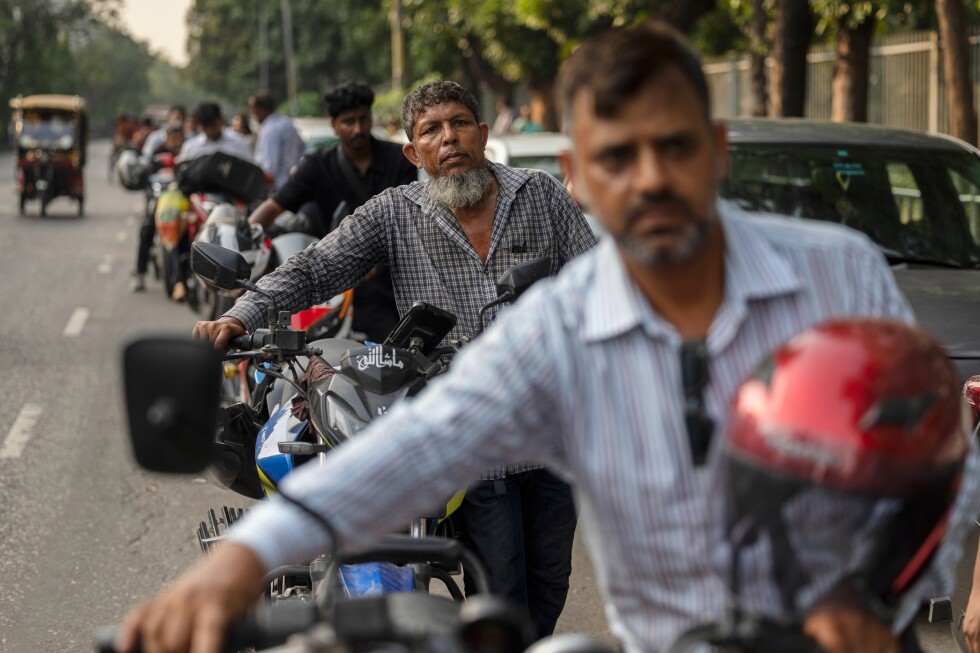
DHAKA, Bangladesh (AP) — Tariqul Islam lost his savings after setbacks in his clothing business about a year and a half ago and turned to ride-sharing on his motorbike to make ends meet. Until recently, he spent hours in fuel lines as supply disruptions linked to the war in Iran ripple into Bangladesh.

The 53-year-old father of four fears the strain will worsen if the war drags on, saying long hours waiting for fuel have sharply cut his income and made it increasingly difficult to support his family in Dhaka, the nation’s capital, including a daughter at university and a son in college.

“My family was managing fairly well through ride-sharing,” he said. “But after the fuel shortage began, I would buy fuel one day and run the bike for two days. As a result, I had to sit idle for one day, which reduced my income.”

The strain in Islam’s household reflects a broader squeeze in Bangladesh, heavily dependent on imported fuel, where energy shortages have disrupted daily life, slowed industrial output and raised concerns about economic growth as global tensions push up costs and strain supplies.

Advertisement

Conditions have eased slightly in recent days, with shorter queues at fuel stations after the government increased supplies, but concerns persist across sectors.

Across Asia, governments are facing similar strains as the war-driven surge in energy prices rattles economies dependent on imported oil and gas.

The continent is exposed because it relies on imported fuel, much of it passing through the Strait of Hormuz — a chokepoint for about a fifth of global oil and natural gas trade.

Higher fuel costs are leading to inflation and squeezing household budgets, while industries from manufacturing to transport are facing rising operating costs and supply disruptions.

Advertisement

The Asian Development Bank in late April cut growth forecasts for developing Asia and the Pacific, warning that war-driven energy disruptions would slow economies and fuel inflation. It now expects growth of 4.7% in 2026, with inflation rising to 5.2% as oil prices climb and financial conditions tighten.

Many are hoping for a quick end to the conflict and a return to normal.

“If this situation continues, we will have to move back to our village and find some other way to earn a living,” Islam, the struggling father said. It is not possible to survive in Dhaka by doing ride-sharing under these conditions.”

Energy crunch weighs on Bangladesh’s economy

Rising energy prices are also expected to strain Bangladesh’s finances, with the government likely to spend an additional $1.07 billion on LNG subsidies in the April-June quarter alone if global prices remain high.

Advertisement

Bangladesh has sought supplies from its big neighbor India, which has responded positively as it has diversified sources, including Russia, of fuel.

Already, authorities have imposed austerity measures to manage the crisis as global lenders warn of slower growth in the nation of more than 170 million people. Gas and diesel shortages have triggered more frequent power cuts in industrial zones.

The government has also shut fertilizer factories to divert gas to power plants, restricted evening hours for shopping malls and introduced fuel rationing.

The World Bank said in April it expects growth in Bangladesh to slow to 3.9% in the fiscal year ending in June 2026, warning that a prolonged Middle East conflict could fuel inflation, widen the current account deficit and strain public finances through higher energy subsidies.

Advertisement

Jean Pesme, the World Bank’s division director for Bangladesh and Bhutan, said the economy already faced “pre-existing vulnerabilities and challenges, in particular on the economic and employment front.”

The rising costs now are “obviously making the fiscal situation more difficult.”

He also warned that authorities should be cautious in raising fuel prices, saying higher costs could hurt farmers and agriculture.

Bangladesh garment industry is hit as exports slow

The energy crunch is also driving up costs and threatening Bangladesh’s garment exports, the backbone of its economy, business leaders say.

Advertisement

Anwar-Ul Alam Chowdhury, president of the Bangladesh Chamber of Industries, said exports to Europe and the U.S. could face a significant setback. Shipments have fallen between 5% and 13% in recent months, he said. He worries that customers could lose confidence in Bangladesh’s ability to deliver and that competitor nations such as India, Vietnam and Cambodia could gain market share if the crisis persists.

Chowdhury said factory output has dropped by 30% to 40% for various reasons and that the situation has worsened since the U.S. and Israel launched their war against Iran, while business costs have risen by about 35% to 40%.

Bangladesh, the world’s second-largest garment exporter after China, earns about $39 billion annually from the sector, which employs around 4 million workers, mostly women from rural areas.

Alvi Islam, director of Arrival Fashion Limited, said manufacturers are facing higher costs for petroleum-based materials such as sewing threads, poly bags — plastic bags used in packaging — and cartons, while spending more on diesel generators to cope with frequent power cuts.

Advertisement

His company, which exports products worth about $40 million annually, now runs generators at least four hours a day during production.

“For that reason, the cost of doing business for exporting garments has increased quite significantly in past one month,” he said.

Workers worry about livelihoods

Garment worker Mosammet Runa, 35, said she fears for her family’s future if the war continues.

“Millions of people like us depend on this industry. It is how we survive,” said Runa, who, along with her husband, earns about $400 a month to support their family of six.

Advertisement

She said a prolonged conflict could wipe out jobs and called for an end to the fighting.

“We are innocent people. The world should not make us victims,” she said.

___

AP journalist Al Emrun Garjon contributed to this report.

Advertisement

Source link

Advertisement
Continue Reading

NewsBeat

Hantavirus cruise ship evacuation begins as MV Hondius arrives in Tenerife

Published

on

Wales Online

British passengers are now preparing to be flown home to isolate at Arrowe Park Hospital on the Wirral

Passengers are being removed from a cruise ship struck by a hantavirus outbreak this morning, as the MV Hondius has docked in Tenerife.

British nationals aboard are now making preparations to be transported home for isolation at the UK’s original Covid quarantine location. The MV Hondius reached Tenerife on Sunday morning, with Spain commencing evacuations of the vessel organised by nationality.

The UK Health Security Agency (UKHSA) confirmed British passengers will be relocated to an isolation facility at Arrowe Park Hospital on the Wirral, Merseyside, following their repatriation to the UK via a chartered flight. Representatives from the UKHSA and Foreign Office were scheduled to meet the MV Hondius upon its arrival in Tenerife, one of Spain’s Canary Islands, with British nationals aboard undergoing hantavirus testing prior to disembarkation.

Advertisement

Should individuals test negative and show no symptoms, they will be transported directly to a chartered repatriation flight staffed by medical professionals and equipped with personal protective equipment including face masks.

In a social media statement on Sunday morning, World Health Organisation (WHO) director-general Dr Tedros Adhanom Ghebreyesus stated: “The disembarkment of the first group of MV Hondius passengers has started. WHO experts on the ground are working with the Spanish Health Ministry on the epidemiological assessment of the passengers and coordinating charter flights with the Interior Ministry.” Upon their arrival back in the UK, passengers will be accommodated in a dedicated facility at the Arrowe Park site, separated from the hospital’s main public zones, where they will undergo medical evaluations and screening as a safety precaution. The site previously served as the UK’s initial Covid quarantine site, with blue tarped fences surrounding accommodation blocks being installed on Sunday morning, reports the Irish Mirror.

Emergency authorities across the North West region indicated passengers would remain in the “managed setting” for as long as 72 hours. They confirmed the NHS Trust and hospital continues “operating as normal” with no danger posed to patients, visitors or staff, emphasising that “people should continue to come forward for care as usual”.

Advertisement

After completing their isolation period, public health experts will determine whether individuals can self-isolate at their own residences or at alternative appropriate venues depending on their domestic circumstances. British nationals returning home will remain in self-isolation for 45 days and will be prohibited from using public transport to reach their destinations.

The WHO confirmed on Saturday that no passengers aboard the MV Hondius were displaying symptoms, while the UKHSA maintained the threat to the public “remains very low”. The UN health body reported six confirmed hantavirus infections associated with the MV Hondius, with four patients presently receiving hospital treatment.

The health body confirmed that a total of eight cases, including three fatalities, had been documented – with one previously suspected case being reclassified following a negative hantavirus test. The UKHSA stated that three British citizens are amongst the eight cases – two involving confirmed hantavirus and a third suspected case.

Advertisement

The two confirmed British cases are receiving hospital treatment in South Africa and the Netherlands, while the third British citizen with a suspected case is receiving support on the British overseas territory of Tristan da Cunha, where they reside.

Six paratroopers, alongside an RAF consultant and Army nurse from 16 Air Assault Brigade, were parachuted onto the South Atlantic island, with oxygen supplies and medical aid also dropped on Tristan da Cunha, which is typically accessible only by sea.

The Ministry of Defence (MoD) confirmed this marked the first occasion that medical personnel had been parachuted in to provide humanitarian support.

Ensure our latest news and sport headlines always appear at the top of your Google Search by making us a Preferred Source. Click here to activate or add us as Preferred Source.

Advertisement

Source link

Continue Reading

NewsBeat

Britons on hantavirus-hit cruise ship to be repatriated to UK from Tenerife

Published

on

Britons on hantavirus-hit cruise ship to be repatriated to UK from Tenerife

He added: “Spain’s authorities have prepared a careful, step-by-step plan: passengers will be ferried ashore at the industrial port of Granadilla, far from residential areas, in sealed, guarded vehicles, through a completely cordoned-off corridor, and repatriated directly to their home countries.”

Source link

Continue Reading

NewsBeat

Lucius Books moves to historic building in Micklegate, York

Published

on

Lucius Books moves to historic building in Micklegate, York

Lucius Books has moved into its new store at 70 Micklegate.

The specialist traders have been a staple of York since 2004 and began a restoration project to transform the shop – once home to Ken Spelman Booksellers – three years ago.


Recommended reading:


The company, which started trading in rare works in 1993, has steadily grown over the years and opened a larger premises at 144 Micklegate in January 2019.

Advertisement

Lucius BooksThe book company has settled into the historic four-storey building dating back to the 1500s (Image: Newsquest)

The man behind it, James Hallgate, told The Press in January 2026 that the store’s Grade II* listed building, originally built around 1500, had needed extensive work.

He said: “The roof and guttering needed replacing. There was little in the way of modern conveniences such as heating, and the building needed completely rewiring.

“We were able to return several aspects of the building to the original layout, for example uncovering the original cellar stairs.

“Then it was a case of bringing the building up to modern standards of efficiency, in an environmentally conscious manner that respects its history.”

Advertisement

Lucius BooksThe store features books and art spread across two floors. The historic building, once home to Ken Spelman Booksellers, took three years (Image: Newsquest)

The original stairs down to the building’s cellar are a prominent feature in the bookshop, with visitors able to look at the piece of history below their feet through a viewing glass set in the floor.

The shop’s bespoke shelving is filled with hundreds of one-of-a-kind, antiquarian books, which have been individually selected and catalogued by a member of James’s team.

Speaking about this, James said: “Building a large stock book by book is a labour of love, and some books are in our hands only for a matter of hours before they are off to a new home.”

Lucius BooksHundreds of years old, the stairs to the buildings cellar are a feature in the store, visible by a floor viewing glass (Image: Newsquest)

James first started dealing in rare books aged 16 after attending book fairs with his father.

Advertisement

After more than three decades building his collection, James has grown Lucius Books into one of the most prominent dealers of rare books and manuscripts in the north.

He is an elected member of council for the Antiquarian Booksellers Association and chair of its standards committee.

He also runs two of the largest book fairs in the UK and is a faculty member of the York Antiquarian Book Seminar.

For more on James and Lucius Books, please visit here.

Advertisement

Source link

Continue Reading

NewsBeat

Richard Tice Avoids Condemning Racist Comments

Published

on

Richard Tice Avoids Condemning Racist Comments

Reform UK deputy leader Richard Tice has refused to condemn one of his party’s new councillors who said Nigerians should be melted down to fill potholes.

Glenn Gibbins, who was elected in the Hylton Castle ward in Sunderland on Thursday, made the remarks on social media in 2024.

He was one of 1,500 new Reform councillors elected as Labour’s vote collapsed in its traditional heartlands.

On the BBC’s Sunday with Laura Kuenssberg programme, Tice repeatedly refused to condemn the remarks, and accused Reform’s critics of “smearing and sneering”.

Advertisement

Attempting to deflect from the row, he added: “I’m going later to a campaign against the scourge of anti-semitism, which is the greatest threat facing us, particularly in London but elsewhere across the UK. That’s what people are really concerned about. If people have said daft things, of course it’ll be looked at.”

Kuenssberg told him: “One of your new Sunderland councillors, so a man who was elected to represent Reform, suggested melting Nigerians to fill potholes. Is that person who has expressed those views someone you are happy to see represent Reform?”

Tice replied: “Laura, this weekend we are celebrating our incredible successes. Like any party, you have internal processes to look at where people have said or done the wrong thing.”

Asked if he condemned the remarks, Tice said: “I condemn anything that is wrong or inappropriate.”

Advertisement

But asked if he condemned the councillor’s specific comments, he dodged the question and said: “The key thing is voters have heard all of this smearing and this sneering against all of us and they voted for more Reform because they want action, they want delivery. They’re sick of the failures of the Tories and Labour.”

Wath Richard Tice(Reform MP) refuse to condemn outright a newly elected Reform Sunderland councillor for suggesting “melting Nigerians to fill potholes.” #bbclaurak pic.twitter.com/4HboXUfxpn

— Haggis_UK 🇬🇧 🇪🇺 (@Haggis_UK) May 10, 2026

Subscribe to Commons People, the podcast that makes politics easy. Every week, Kevin Schofield and Kate Nicholson unpack the week’s biggest stories to keep you informed. Join us for straightforward analysis of what’s going on at Westminster.

Advertisement

Source link

Continue Reading

NewsBeat

Andoni Iraola makes next job admission amid Man United links

Published

on

Manchester Evening News

Bournemouth head coach Andoni Iraola is one of the leading candidates to replace Ruben Amorim permanently if Michael Carrick does not get the job

Andoni Iraola insisted he is in no rush to take his next job after Bournemouth beat Fulham to keep their hopes of European football alive. Iraola has been heavily linked to the Manchester United position, and it is understood he is one of the frontrunners should Michael Carrick not take the job.

Advertisement

Carrick was appointed interim boss in January after Ruben Amorim’s explosive press conference following the draw at Leeds. His return was initially seen as temporary so as to steady the ship and allow Ineos time to conduct a ‘thorough’ managerial search. However, his tenure has been superb.

United have only lost twice since, and confirmed Champions League football last weekend with a win over Liverpool. On Thursday, Carrick insisted he was calm about the uncertainty surrounding his long-term future. Instead, he has focussed on the here and now as he looks to push United to a top three finish.

Click here to find out the latest Manchester United news in our daily newsletter

Big name candidates such as Julian Nagelsmann, Thomas Tuchel and Luis Enrique are seen as unattainable this summer. Iraola, who has confirmed he is leaving Bournemouth at the end of the season, is seen as the best option aside from keeping Carrick. Following Saturday’s game, the 43-year-old refused to comment on other jobs.

Advertisement

“I’m in no rush,” Iraola responded. “I will not talk about my future. I’m fully focused on trying to finish this season with a reward, something tangible for the [Bournemouth] players and supporters.” He added: “It was not an easy decision [to leave] but once it is made you feel relief.

“I feel we have used it in a positive way. Since that day, we’ve had great results but also the mood.

“Everyone is clear, the relationship is so clean and honest. Okay, this is going to happen, next season Marco Rose will be our manager.

Advertisement

“Everyone knows what’s happening. We are in good place and can use this in a positive way.”

United drew both matches against Bournemouth this season. The first was a classic 4-4 draw at Old Trafford before recently holding on to take a point off the Cherries with ten men.

Source link

Advertisement
Continue Reading

NewsBeat

How the winner-takes-all voting system has turned on Labour and the Tories

Published

on

How the winner-takes-all voting system has turned on Labour and the Tories

Moreover, those who voted for Reform and the Greens have now seen that a vote for their parties can in fact result in them winning seats. With just a handful of results yet to be declared, the joint tally of council seats won by Reform and the Greens stands at 2,063, almost 200 more than the total of 1,864 won jointly by the Conservatives and Labour. Meanwhile, Britain’s traditional third party, the Liberal Democrats, have won 842 local council seats too.

Source link

Continue Reading

Trending

Copyright © 2025