There have been no changes in Huntley’s condition since he was attacked five days ago
14:38, 03 Mar 2026Updated 14:47, 03 Mar 2026
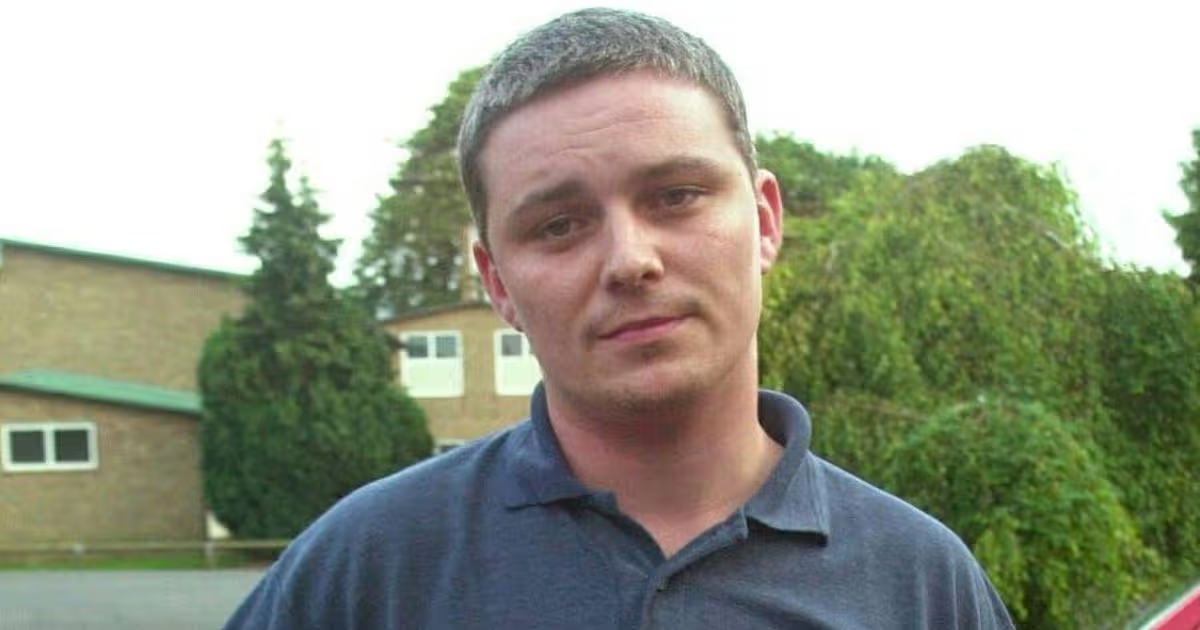
The Soham murderer Ian Huntley is still “seriously ill” in hospital after being attacked in a maximum security prison five days ago. Huntley was attacked by an inmate with a metal bar in the workshop at HMP Frankland, near Durham on Thursday, February 26.
Durham Constabulary confirmed today (Tuesday, March 3) that there had been no changes in the 52-year-old’s condition. The force said: “There has been no change in the 52-year-old man’s condition overnight – he remains in hospital in a serious condition.”
After the attack, Huntley’s daughter Samantha Bryan, 27, told The Sun that “there’s a special place in hell waiting for him”. The former caretaker was given a life sentence which recommended he serve at least 40 years in prison for the murder of 10-year-olds Holly Wells and Jessica Chapman on August 4 2002, PA reports.
Advertisement
It has been reported that triple killer Anthony Russell had shouted “I’ve done it, I’ve done it” after Huntley was attacked. The force has not confirmed the identity of the suspect but has said a man in his mid-40s was detained.
Russell was given a whole-life sentence after murdering Julie Williams, 58, her son David Williams, 32, and pregnant 31-year-old Nicole McGregor. Russell had also raped Ms McGregor.
This marks the second attack on Huntley, after his neck was slashed by Damien Fowkes using a home-made weapon, which left him needing 21 stitches. After the attack, Fowkes asked a prison officer: “Is he dead? I hope so.”
He had described Huntley as a “notorious child killer, both inside prison and in society in general”.
ISLAMABAD (AP) — Hopes rose for renewed talks between the United States and Iran on Wednesday, as the U.S. military said its blockade of Iranian ports was in full effect and Tehran threatened to retaliate by strike targets across the war-weary region.
U.S. President Donald Trump said Tuesday that a second round of talks could happen “over the next two days,” telling the New York Post the negotiations could be held again in Islamabad as diplomats worked through back channels to arrange them.
U.N. Secretary-General António Guterres concurred, saying it’s “highly probable” that talks will restart. He cited a meeting he had with Pakistan’s Foreign Minister Ishaq Dar.
Israeli Ambassador Yechiel Leiter said the two countries are “on the same side of the equation” in “liberating Lebanon” from the militant Hezbollah group. Lebanese Ambassador Nada Hamadeh Moawad called the meeting “constructive” but urged an end to the ongoing conflict between Israel and Iran-backed Hezbollah militants. Since March, that war has displaced more than 1 million people in Lebanon.
Israel and Lebanon have technically been at war since Israel was established in 1948, and Lebanon remains deeply divided over diplomatic engagement with Israel.
First round of talks with Iran failed to end conflict
Last weekend in Pakistan, an initial round of talks aimed at permanently ending the U.S.-Iran conflict failed to produce an agreement. The White House said Iran’s nuclear ambitions were a central sticking point.
Advertisement
“I think they want to make a deal very badly,” Trump said in an excerpt from an interview with Fox Business Network’s “Mornings with Maria” scheduled to air Wednesday morning. He added: “I view it as very close to over.”
A U.S. official said Tuesday that fresh talks with Iran were still under discussion and that nothing has been scheduled. The official spoke on condition of anonymity because they were not authorized to discuss sensitive negotiations.
Muhammad Aurangzeb, Pakistan’s finance minister, told The Associated Press that “our leadership is not giving up” on efforts to help the U.S. and Iran end the conflict.
The fighting has killed at least 3,000 people in Iran, more than 2,100 in Lebanon, 23 in Israel and more than a dozen in Gulf Arab states. Thirteen U.S. service members have also been killed.
Advertisement
Sign up for Morning Wire:
Our flagship newsletter breaks down the biggest headlines of the day.
Tankers turned around after blockade took effect
U.S. Central Command said Tuesday no ships made it past the blockade in the first 24 hours, while six merchant vessels complied with direction from U.S. forces to turn around and reenter Iranian waters.
Advertisement
The blockade is intended to pressure Iran, which has exported millions of barrels of oil, mostly to Asia, since the war began Feb. 28. Much of it has likely been carried by so-called dark transits that evade sanctions and oversight, providing cash that’s been vital to keeping Iran running.
Tankers approaching the strait Monday turned around shortly after the blockade took effect, though one reversed course again and transited the waterway.
Since the war began, Iran has curtailed maritime traffic, with most commercial vessels avoiding the waterway. Tehran’s effective closure of the strait, through which a fifth of global oil transits in peacetime, has sent oil prices skyrocketing, pushing up the cost of gasoline, food and other basic goods far beyond the Middle East.
___
Advertisement
Metz reported from Ramallah, West Bank. Associated Press writers Aamer Madhani, Matthew Lee, Fatima Hussein, Collin Binkley, Chris Rugaber, Will Weissert and Konstantin Toporin in Washington; Sylvie Corbet in Paris; Toqa Ezzidin in Cairo; Natalie Melzer in Jerusalem; Edith Lederer and Farnoush Amiri at the United Nations, and Russ Bynum in Savannah, Georgia, contributed to this report.
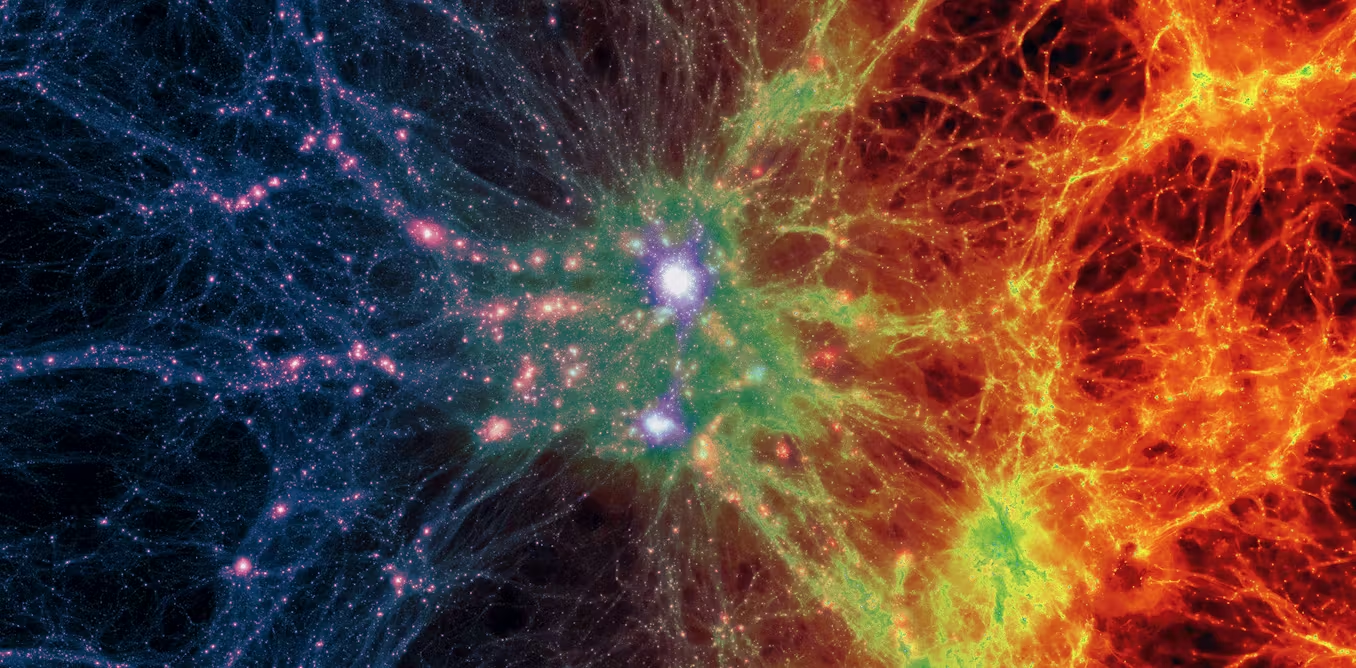
New research suggests that relic black holes from before the big bang may still shape galaxies today. These black holes could explain dark matter, one of the biggest unsolved questions in cosmology.
Generally speaking, black holes are regions of spacetime where matter is compressed into a tiny space. Dark matter, meanwhile, is matter that does not reflect or absorb light. We know it exists because of its gravitational influence on galaxies and other cosmic structures.
It can be viewed as the “glue” that holds galaxies together, but we do not know what it is made of at a fundamental level. Most physicists think dark matter is composed of an as-yet-undiscovered sub-atomic particle.
But ancient black holes from before the big bang also fit the bill. They are dark, but also carry mass – exactly the properties required.
Advertisement
I have explored this idea in a new paper. Of course, the idea of relic black holes also requires a re-think of the big bang itself.
For nearly a century, cosmologists traced the history of the universe back to this single, dramatic moment. But maybe this wasn’t the absolute beginning of time. Perhaps there was a universe before the big bang.
Under this scenario, the universe collapsed before undergoing an expansion. The big bang represents the transition between the two phases.
A conventional view of how the universe came to be. Here, the Big Bang is immediately followed by a period of rapid expansion known as inflation. Bicep2 Collaboration
The big bang model has been remarkably successful. It explains the cosmic microwave background – the afterglow of the early universe – and predicts the large scale distribution of galaxies with astonishing accuracy.
But in Einstein’s theory of general relativity, it is also a singularity – a point where density becomes infinite and the known laws of physics break down.
Many physicists interpret this not as a physical reality, but as a sign that something is missing. Singularities are less like physical objects and more like mathematical warnings: they tell us that our current theories cannot describe the earliest moments of the universe.
A bounce, not a bang
One alternative is a bouncing cosmology. In this picture, the universe undergoes a phase of contraction before the big bang, reaching an extremely high – but finite – density. Instead of collapsing into a singularity, it rebounds, beginning a new expanding phase.
Advertisement
Bouncing models have been explored for decades, often requiring modifications to gravity or exotic new ingredients. But our work shows that a bounce can arise as a regular solution within standard physics, when gravity and the effects of quantum mechanics – the laws governing nature at the tiniest scales – are consistently taken into account.
In standard cosmology, the big bang is quickly followed by a period where the early universe undergoes a period of rapid and exponential expansion. This stage, known as inflation, effectively erases all traces of earlier structures.
Illustration of a large black hole. Could relic black holes explain the mystery of dark matter? NASA/Caltech-IPAC/Robert Hurt
The situation is different for a bouncing universe. In our work, we found that things larger than 90 metres could have survived the transition from collapse to expansion. This leaves behind “relics” that carry information from a previous cosmic epoch. These relics can include black holes, gravitational waves and density fluctuations.
Quantum physics contains a powerful clue to how this is possible. According to the Pauli exclusion principle – a cornerstone of quantum theory – matter becomes “degenerate” at extremely high densities. The matter generates a pressure that resists further compression even in the absence of heat.
In our model, a similar effect operates on cosmological scales. It may explain why the universe doesn’t collapse completely – and why structures formed before or during the bounce can survive into the expanding phase.
Advertisement
Surviving the apocalypse
We identify two main routes through which relic black holes can arise.
The first one is direct survival. Compact objects and perturbations (fluctuations in density or gravity) generated during the collapse phase of the universe can persist through the bounce.
The second route is even more intriguing. During contraction, matter naturally clumps under gravity, forming structures similar to the halos that host galaxies today. After the bounce, they are able to collapse efficiently into black holes.
Galaxies and stars from the contraction phase effectively collapse into black holes, erasing most of their detailed structure but preserving their mass.
Advertisement
Could these black holes be dark matter? For decades, the leading candidate has been a fundamental particle — but none has been detected despite extensive searches.
Relic black holes offer a compelling alternative. If the bounce produces enough of them, they could make up a significant — perhaps dominant — fraction of dark matter.
This idea may also connect to one of the most intriguing observational puzzles of recent years.
The James Webb Space Telescope (JWST) has revealed a population of compact, extremely red objects in the early universe, sometimes called “little red dots”. These astronomical sources appear to be unexpectedly massive and luminous only a few hundred million years after the big bang.
Many astronomers suspect they are associated with rapidly growing black holes – perhaps the seeds of the supermassive black holes found at the centres of galaxies today. But their existence is difficult to explain within standard cosmology. How could such massive objects form so quickly?
Advertisement
Relic black holes provide a natural explanation. If massive seeds already existed immediately after the bounce, the early universe would not need to start from scratch. Supermassive black holes could grow from ancient survivors rather than newly formed objects.
In this sense, JWST may already be glimpsing the descendants of pre-bounce relics.
A new cosmological framework
Taken together, the bounce scenario offers a unified way to address several long-standing problems in cosmology.
The big bang singularity is replaced by a quantum transition. This transition could be related to the concept of the “Einstein–Rosen bridge”: a mathematical link between two disparate regions of spacetime.
Inflation emerges naturally from the dynamics near the bounce.
Dark energy can be related to the global structure of a finite universe.
Dark matter may be composed of relic black holes —perhaps our own universe started as one.
Gravitational waves could carry signals from a previous cosmic phase.
Supermassive black holes may have ancient origins consistent with recent JWST observations.
Much work remains to be done. These ideas must be tested against data – from gravitational-wave backgrounds to galaxy surveys and precision measurements of the cosmic microwave background.
But the possibility is profound: the universe may not have begun once, but may have rebounded. And the dark structures shaping galaxies today could be relics from a time before the big bang.
Saturday Night Live UK has announced its next hosts ahead of the sketch show’s return from a mid-season hiatus.
Bridgerton star Nicola Coughlan will present the series on 25 April, with musical guests Foo Fighters, while Aimee Lou Wood, best known for her roles in Sex Education and The White Lotus, will host on 2 May. She’ll be joined by the singer Meek.
Since the launch ofSNL UK on Sky last month, Tina Fey, Jamie Dornan, Riz Ahmed and Jack Whitehall have fronted the comedy series.
The show is taking a break this weekend, and Coughlan will present on its return, after she made a brief appearance in the show’s debut episode.
Advertisement
Nicola Coughlan and Aimee Lou Wood will host ‘SNL UK’ on its return (Getty Images)
Musical guests so far have included Wet Leg, Wolf Alice, Kasabian and Jorja Smith.
The sketch show has been received warmly by viewers. However, ratings have dropped from 226,000 for the launch to 130,100 in recent episodes, which exceeds the average viewership for Sky One in the time slot.
The SNL skit based on Wood’s The White Lotus character saw SNL cast member Sarah Sherman wearing exaggerated prosthetic teeth in an attempt to parody Wood’s appearance. She called the skit “unfunny and mean” on Instagram, saying she “hated the concept”.
“I actually love being taken the p*** out of when it’s clever and in good spirits,” Wood wrote. “But the joke was about fluoride. I have big gap teeth not bad teeth. I don’t mind caricature – I understand that’s what SNL is. But the rest of the skit was punching up and I/Chelsea was the only one punched down on.”
Advertisement
Watch Apple TV+ free for 7 day
New subscribers only. £9.99/mo. after free trial. Plan auto-renews until cancelled.
ADVERTISEMENT. If you sign up to this service we will earn commission. This revenue helps to fund journalism across The Independent.
Last week, comedian and actor Nick Mohammed said the show was “the best thing that’s happened to British comedy since” Ricky Gervais’s sitcom The Office premiered in 2001.
He told The Independent: “I honestly believe that. To be cynical about it, it’s a shame that it’s taken Americans to come in with a format and say, ‘Just do it like that.’ When I was starting out, there were so many production companies and channels wanting to emulate Saturday Night Live, and not having the guts to do it. But I think they’ve nailed it.
Advertisement
“I watched the first episode, and was literally emotional at the end when they all came out. If it was maybe 10 years ago, I would have killed for it.”
The cast of ‘SNL UK’ (Sky UK)
Reviewing the first episode, The Independent’s Nick Hilton wrote: “While SNL represents the quintessence of the American comedic establishment, it is not a title that has much Clapham omnibus cut-through here in Britain. It’s a bit of a shame, then, that the show plays it so safe with the formula, importing a commodity that has evolved from an anti-establishment brawl to a slick launchpad for franchise comedians.
“[Lorne] Michaels (producing from afar), director Liz Clare and head writer Jonno Johnson have done a good job putting together an intriguing panoply of talents, and they deserve credit for resisting the lure of bigger names who might’ve been tempted by a short run.”
He continued: “But they don’t invest in much of a shake-up to the formula – host’s monologue, timely skits, fake adverts, musical guests, and all that jazz – which means SNL UK lacks its own spark of irreverence. At best it shows what it’s learnt from a half-century of its New York cousin; at worst it seems like tepid cosplay.”
People in Stockport have spoken about ‘chaos’ on their road after the council brought in new charges at a free car park. Bramley Close car park, next to Bramhall railway station, used to be free but since January 8 Stockport council has enforced new charges for drivers to park there.
Advertisement
The fees were brought in as part of the council’s budget in the face of having to make major cuts each year to balance the books.
Charges at Bramley Close start from 50p for an hour up to £2.40 for 10 hours, with charges applied between Monday to Saturday from 8am to 6pm.
Click here to get the biggest stories straight to your inbox in our Daily Newsletter
But people living on nearby Bramley Road said more commuters have started parking on their street since the car parking charges came in, adding to congestion.
Advertisement
The road has double yellow lines along one side leaving cars parked together on the other side, and has a large bend in the road, limiting visibility.
It also acts as a cut-through to get across the village, and residents said there are regular problems with speeding. The extra cars parking on the road have added to the issues, locals said, effectively turning the road into a single lane and forcing cars to mount pavements to get past each other.
People living on Bramley Road said cars are being left in the morning from as early as ‘7.30am’ and not moved until 6pm in the evening. Christine Proctor, 85, said: “It’s terrible and very dangerous here. When I’m reversing out of my driveway people come really fast around the bend, you’ve got to be watching.
Advertisement
“I think there are probably more cars now because of the new parking charges at Bramley Close. There’s someone who parks here from seven in the morning until six at night, it makes it hard for people to get a place to park.”
Christine said cars are regularly driving down the road in search of a spot to park, with some drivers speeding. She added: “Someone’s going to get hurt here because of this, and then they’ll do something about it.”
Another resident, 58-year-old Cheryl, is also a long-term resident on the road and said it can be ‘chaos’ at busy times when several cars are trying to pass and all the parking spots are taken.
Cheryl also explained that the extra cars parked on the road has made it harder for visitors to park nearby. She added: “If they suspended the parking charges at Bramley Close I think it would definitely help.
“This has added stress to our lives, we’re worrying about it, I open the blinds every day and just think ‘oh God’.” Conservative councillor Peter Crossen has urged Lib Dem-led Stockport council to suspend the charges at Bramley Close car park.
He said: “Residents have been warning for years that parking and speeding along Bramley Road is dangerous.
“Introducing charges at the railway station car park has simply displaced even more vehicles into surrounding streets such as Bramley Road and made an already unsafe situation worse.
Advertisement
Get MEN Premium now for just £1 HERE – or get involved in our WhatsApp group by clicking HERE
“The car park is now underused, while residents are facing increased congestion, blocked driveways and real fears about road safety.
“I back residents’ calls for urgent and immediate action and call on the council to urgently suspend these charges and put proper traffic and parking controls in place before someone is seriously hurt.”
Lib Dem councillor Grace Baynham, Stockport council’s cabinet member with responsibilities including parking, said: “All our council car parks cost money to run, and after successive years of underfunding of local authorities across the country by the Conservative government, it is now harder to subsidise these services using council tax.
Advertisement
“Many councils across the country have had no choice but to introduce extra parking charges to set a balanced budget, which they are required to do every year, and Stockport is no exception.
“With projected savings of £75m needing to be made in the next few years, the situation isn’t going to get any easier.
“The fees have been kept relatively low (50p for the first hour) but this is not a decision we have taken lightly.
“It is a decision that has been through consultation, scrutiny and was approved at full council. The offer is there, for local councillors to work with council officers, to mitigate the impacts of any increases to on-street parking.”
The comedian made the surprise admission during an appearance on The One Show alongside Tyler West and Roman Kemp, former Celebrity Race Across The World stars.
Paul Merton disclosed the moment he was unwittingly caught up in the filming of Race Across The World during an appearance on The One Show today.
Advertisement
The comedian joined Strictly Come Dancing star Tyler West and EastEnders’ Vicki Fowler actress Alice Haig on the sofa, alongside presenters Alex Jones and Roman Kemp.
Tyler, who has taken over from Scott Mills on a new Race Across The World podcast, had been discussing this year’s series after taking part in the celebrity version alongside his partner Molly Rainsford, while Roman participated with his sister Harleymoon.
The much-loved BBC competition is now in its sixth season, with five daring teams setting off on the adventure of a lifetime.
They’re covering more than 12,000km across Italy, Greece, Turkiye, Georgia, Kazakhstan, Uzbekistan, Kyrgyzstan and Mongolia, trekking from Palermo on the island of Sicily all the way to the remote village of Hatgal on the shores of lake Hövsgöl, in northern Mongolia, reports the Mirror.
With no smartphones, internet access, bank cards and only £26 per person a day, they’ll be tested to their absolute limits in pursuit of the £20,000 prize.
Race Across The World first launched back in 2019, when comedian Paul unknowingly played a part.
Advertisement
Tyler had been speaking about the locals accommodating the contestants on Race Across The World this year, strangers who are offering assistance and free lifts.
Roman then chimed in: “It’s funny you say that, because actually, Paul you know all about the good deeds that people can do and the moments that happen in Race Across The World.”
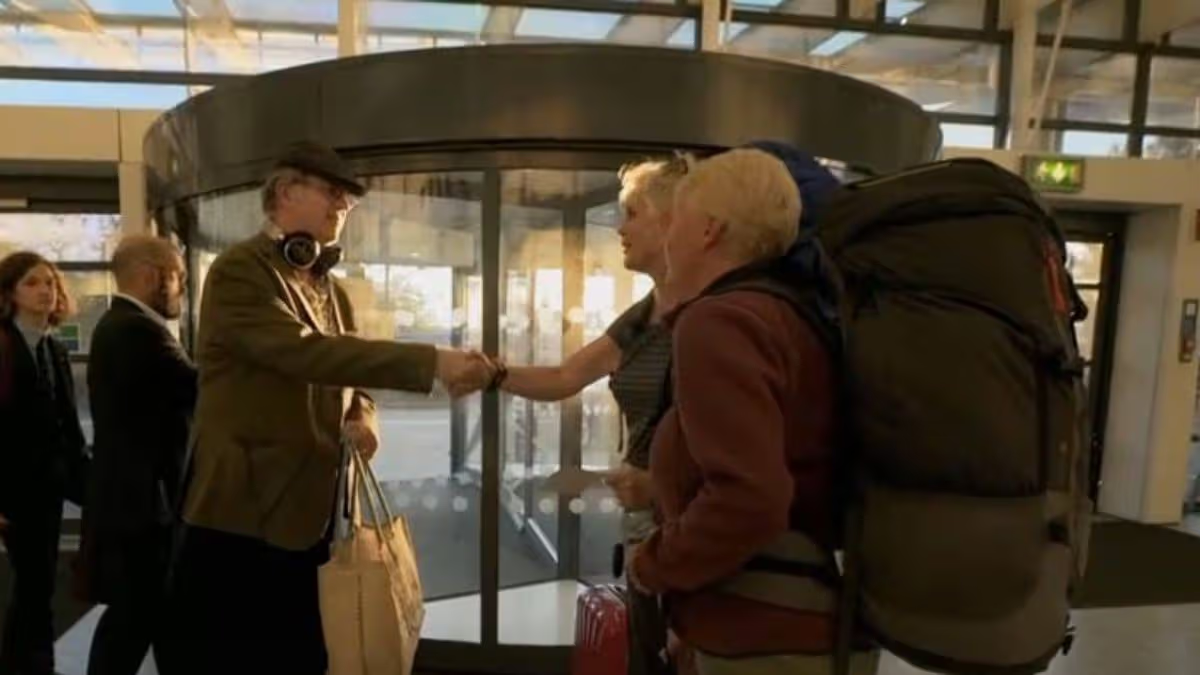
The BBC programme subsequently broadcast a clip of Paul’s involvement in Race Across The World during the filming of the first series, when two contestants were in Ashford.
Advertisement
He recalled: “This is before the programme went out, two people came running up to me very excitedly and said, ‘We’ve got to get to Paris’.”
He had questioned what they were doing, having spotted the camera crew, but was left puzzled by their response of ‘Racing Across The World’.
Paul admitted: “I had no idea! The programme hadn’t gone out at that point. If I’d known, my cab driver was there, we could have taken them to Dover, and I could’ve been in the whole show! I could’ve ended up in Cairo.”
Advertisement
When Alex jokingly suggested he could’ve taken part in the celebrity version, Paul hinted: “Exactly.”
Elsewhere, reflecting on their experience on the star-studded edition of Race Across The World, Roman disclosed that it took “a lot longer than people think”.
After Tyler quipped that Roman was “the tightest man he’d ever met”, recalling how the former Capital Breakfast radio presenter had been reluctant to dip into their budgeted allowance while filming, Roman added: “You’re constantly worrying about where you’re going to spend money, Tyler and Molly they were in the nightclubs!”
Tyler replied: “We ate the most amount of food on Race Across The World history!”
Discussing this year’s cast, he continued: “Jo and Kush have captured the nation’s hearts, these Scouse lads, their banter that they have on this journey is so funny, and so relatable, and so many young people can look up to them as well.
“You’ve got Mark and Margo who have come together, this incredible story of in-laws who have come together, you’ve also got Puja and Roshni who are so switched on, and if I could have been that switched on I might have beaten you!
“All the pairs and all the dynamics coming together, it’s what makes the show what it is, it’s an incredible race, you can relate to so many characters as you learn their stories and as the journey unfolds.”
Advertisement
The One Show airs weekdays from 7pm on BBC One and iPlayer.
Race Across The World airs Thursdays at 8pm on BBC One and iPlayer.
From prestige period drama stalwarts to BAFTA-winning leads and family-film favourites, these five have all swapped the banks of the Tees and the terraces of the old coalfield for some of the biggest film and TV roles around.
Jeremy Swift
Jeremy Swift was born in Stockton-on-Tees on 27 June 1960, the son of two music teachers, and grew up far from the usual London drama schools and casting circuits.
He eventually trained at the Guildford School of Acting and spent much of the 1980s in experimental and fringe theatre before breaking into screen work.
Swift’s film roles include Robert Altman’s Gosford Park and Roman Polanski’s Oliver Twist, but television made him a familiar face.
Alun Armstrong was born Alan Armstrong in Annfield Plain, County Durham, in July 1946, the son of a coal miner, and grew up in a Methodist household where both parents were lay preachers.
A teacher at Consett Grammar School encouraged his early love of Shakespeare, and he later studied fine art at Newcastle University before pursuing acting.
Armstrong became one of Britain’s most respected character actors, moving between stage and screen with ease and building a reputation at the Royal Shakespeare Company and in the West End, where he originated the role of Thernadier in Les Miserables.
Advertisement
On screen, he has appeared in Ken Loach’s Days of Hope, coalfield drama The Stars Look Down, Hollywood hit The Mummy Returns and BBC favourite New Tricks.
Alun Armstrong.
Jamie Bell
Jamie Bell was born Andrew James Matfin Bell in 1986 in Billingham, Stockton-on-Tees, into a family of dancers that included his mother, grandmother, aunt and sister.
That performance earned him the BAFTA for Best Actor, making him one of the award’s youngest winners and instantly propelling him from Teesside to international attention.
Advertisement
Bell has since built a varied film career, with roles in King Kong, The Adventures of Tintin, Snowpiercer, Fantastic Four and Elton John biopic Rocketman.
JAMIE BELL: Arriving for the UK Charity Premiere of Nicholas Nickleby at the Odeon West End,
Simon Farnaby
Simon Farnaby was born on 2 April 1973 in Darlington, County Durham, and grew up in the North East before attending Richmond School in nearby North Yorkshire.
An actor, comedian and writer, he first made his name as part of the Them There collective on CBBC’s Horrible Histories, later co-creating fantasy sitcom Yonderland.
He is now best known to BBC viewers as shameless, trouserless Tory MP Julian Fawcett in hit ghost comedy Ghosts, which he also co-writes.
Advertisement
Simon Farnaby as Julian Fawcett in Ghosts (Image: NQ)
Behind the camera, Farnaby has become a sought-after screenwriter, co-writing beloved family sequel Paddington 2 and penning the screenplay for musical origin story Wonka.
Daniel Casey
Daniel Casey was born on 1 June 1972 in Stockton-on-Tees, County Durham, and is the son of Yorkshire television journalist and presenter Luke Casey.
Daniel Casey. (Image: Supplied)
Raised in the North East, he joined a youth theatre as a teenager and later studied English literature at Grey College, Durham University, before turning to acting.
After early work on stage and in TV, he became a primetime fixture as DS Gavin Troy, the original sidekick to DCI Tom Barnaby, in ITV’s long-running crime drama Midsomer Murders.
Advertisement
Casey has since popped up in a string of familiar series, including Our Friends in the North, Steel River Blues, Casualty, Coronation Street and EastEnders
The Elton John Experience will arrive at STACK Seaburn in Sunderland on April 30, offering fans a night of high-energy entertainment and a celebration of the musician’s greatest hits.
Fronted by singer Lee Quinney and his band, the tribute show features songs such as Rocket Man, Your Song and I’m Still Standing will all feature.
The Elton John Experience tribute show will be held at STACK Seaburn in Sunderland, delivering a night of live music celebrating Elton John’s greatest hits (Image: Supplied)
Mr Quinney will also don a selection of the star’s famously flamboyant costumes to complete the experience.
The event begins at 7.45pm, with tickets costing £12.
Advertisement
The event is for adults aged 18 and over.
Visitors can make a night of it by sampling food from STACK Seaburn’s range of street food vendors.
Options include Greek specialities at Acropolis, Asian-inspired bites from Bao Down, burgers and loaded fries from Brack Burger, and traditional fish and chips from Downey’s.
Other choices include Nashville-style fried chicken from Get Strip’d, American barbecue from Texas Smoker, Korean street food from Soju and Gogi, and pizza from Zza Pizzeria.
Advertisement
More information about upcoming events at the venue can be found at www.stackleisure.com.
WASHINGTON (AP) — The Kennedy Center’s new leadership wants to prove to critics that the building is damaged beyond simple repair. It’s starting with Congress.
Matt Floca, the performing arts institution’s new executive director and chief operating officer, is leading a series of tours this month that show water damage and intrusion to expansion joints, marble slabs and exterior pavers. Participants are guided through the building’s water and HVAC systems, as well as the parking garages and loading docks that are said to need repairs.
The sessions began earlier this month while Congress was in recess and included staff for a bipartisan group of lawmakers, including Senate Minority Leader Chuck Schumer and House Democratic Leader Hakeem Jeffries, the top Democrats on Capitol Hill. A representative for Washington Mayor Muriel Bowser was also included on the tour.
Similar access has been provided for several corporate and individual donors and in the coming weeks, Floca is expected to provide tours for the lawmakers themselves and members of the media.
Advertisement
President Donald Trump and first lady Melania Trump arrive to attend the opening nights of the musical “Chicago” at the John F. Kennedy Center for the Performing Arts in Washington, Tuesday, March 31, 2026. (AP Photo/Rod Lamkey, Jr.)
Advertisement
President Donald Trump and first lady Melania Trump arrive to attend the opening nights of the musical “Chicago” at the John F. Kennedy Center for the Performing Arts in Washington, Tuesday, March 31, 2026. (AP Photo/Rod Lamkey, Jr.)
Advertisement
Advertisement
Advertisement
Advertisement
Assessing a suddenly controversial operation
Once one of Washington’s relatively few apolitical spaces, the Kennedy Center has become a source of controversy during President Donald Trump’s second term. Shortly after returning to office, Trump ousted the institution’s previous leadership and replaced it with a handpicked board of directors.
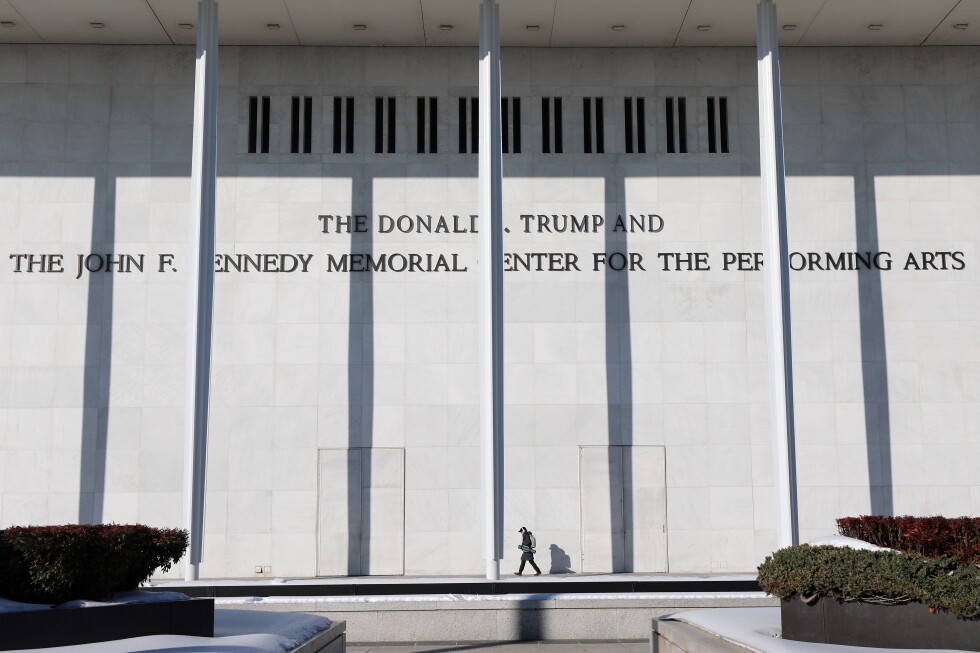
The president’s name was added to the building’s facade and its programming took a Trump-friendly turn, serving as a venue for events such as the premiere of first lady Melania Trump’s documentary, “Melania.”
Trump’s move to shutter the building for two years starting in July, which was approved by the board last month, has spurred lawsuits and an outcry that the closure is merely a response to plunging sales as artists canceled Kennedy Center performances in droves.
The tours are intended to cut through that and show that the Kennedy Center, which began construction in 1965, is in genuine need of a fundamental update.
Advertisement
“As the July closure approaches, the Trump Kennedy Center is leading with transparency and making sure Congress and the public understand what’s at stake and why the work can’t wait,” Floca said in a statement.
In addition to staff for Schumer, Jeffries, and Bowser, the recent tour included representatives for Senate Majority Leader John Thune, R-S.D., Sens. Shelley Moore Capito, R-W.Va., Mark Warner, D-Va., Susan Collins, R-Maine, and Sheldon Whitehouse, D-R.I., along with Reps. Sam Graves, R-Mo., and Rick Larsen, D-Wash.
By virtue of their positions, these lawmakers are ex officio members of the Kennedy Center’s board. Kennedy Center spokesperson Roma Daravi said working with both parties was a “top priority” as the institution implements Trump’s vision for the renovation.
None of the participants discussed the tour on the record.
Advertisement
Sign up for Morning Wire:
Our flagship newsletter breaks down the biggest headlines of the day.
Advertisement
Need for repairs is not disputed
Trump secured nearly $257 million from Congress to repair the Kennedy Center. Those who are arguing against its closure haven’t disputed the need for routine maintenance and repairs. They say the more substantial changes Trump has hinted at are in the works and should go through the typical review process that governs many major projects in the nation’s capital.
Trump has suggested changes at the Kennedy Center could be so dramatic that the steel supporting the structure could be “ fully exposed.”
Advertisement
According to a lawsuit filed last month against Trump, the Kennedy Center and others in the administration, “Demolition, new construction, major reconstruction, major renovation, or major aesthetic transformation of the Kennedy Center would permanently destroy historic fabric, degrade the monumental core’s vistas and public grounds, and compromise the Kennedy Center’s memorial purpose and architectural integrity, causing permanent, irreversible harm that no subsequent remedy can fully undo.”
The Kennedy Center is entering a critical period before its anticipated July closure, which will produce staff reductions.
In the meantime, the Kennedy Center is still hosting shows, including the musical “Chicago,” which Trump attended this month. Performances of “Moulin Rouge! The Musical” are on the calendar from June 18 through July 5. Comedian Bill Maher will be presented the prestigious Mark Twain Prize for American Humor on June 28, just before the closure begins.
The Kennedy Center is part of Trump’s broader effort to leave a lasting imprint on the Washington cityscape. He demolished the East Wing of the White House last year and wants to replace it with a ballroom, an effort that is also tangled in litigation.
Advertisement
The president also unveiled plans on Friday for an arch that would stand between the Lincoln Memorial in the east and Arlington National Cemetery toward the west and within a traffic circle connecting Washington with northern Virginia.
Manchester United’s defeat to Leeds on Monday night should spark a rethink for Michael Carrick ahead of the trip to Chelsea.
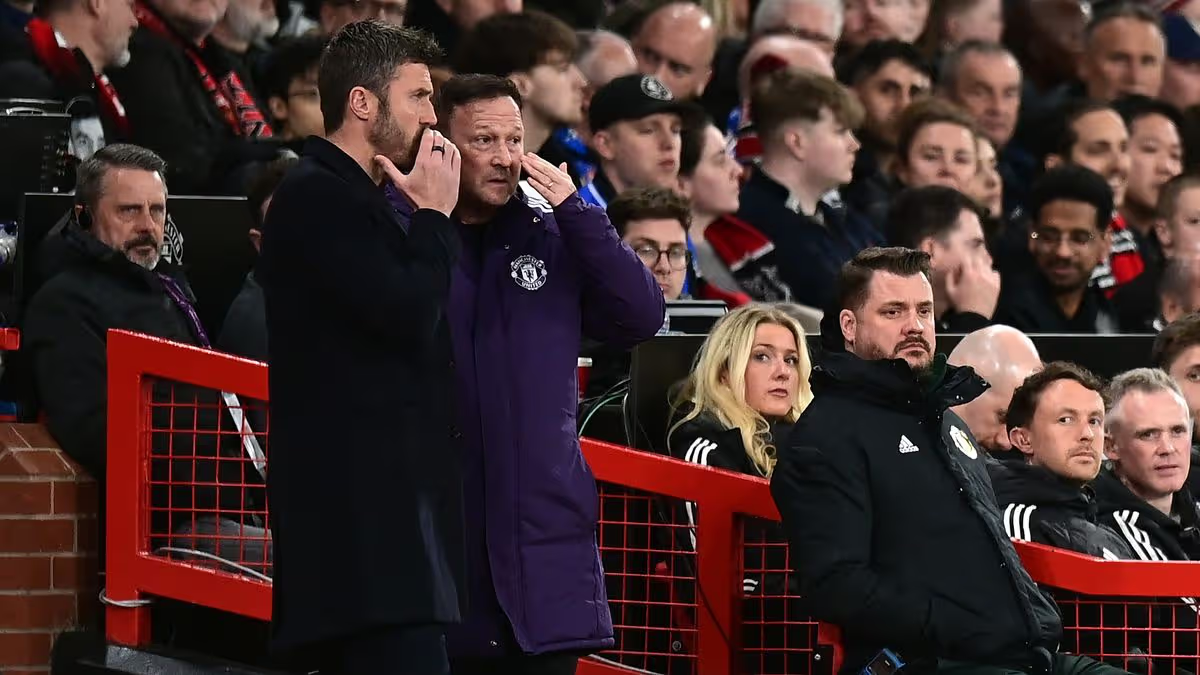
After a weekend that saw plenty of Manchester United’s rivals slip up, the expectation was that Michael Carrick’s Reds would push home their healthy advantage in the race for the Champions League. Had they beaten Leeds, United would have been sitting ten points clear of Saturday’s opponents.
Advertisement
Instead, the worst half of football since Ruben Amorim left ensured the gap remains at seven points. There is little to miss about the Amorim era, and it is clear United would not have been comfortably in the top five had he kept his job after the previous clash with Leeds.
However, Carrick may wish to take a leaf out of the Amorim playbook following the defeat to Leeds. Kobbie Mainoo’s absence from the matchday squad was a huge problem for United as soon as the team news came out. Since being revitalised post-Amorim, Mainoo has been undroppable alongside Casemiro.
Get MEN Premium now for just £1 HERE – or get involved in our United WhatsApp group by clicking HERE. You can also join our United Facebook page by clicking HERE and don’t miss out on our brilliant selection of newsletters HERE.
The duo know each other so well and have strengthened the core of this team with their superb performances. In his absence, the decision was made to start Manuel Ugarte. Monday was the Uruguayan’s first start under Carrick and eyebrows were raised as to why he was given the nod.
Advertisement
When Ugarte has played, he has been the defensive midfielder, given the task of protecting the back four. With Mainoo absent, United needed Ugarte to be a ball-playing midfielder and that is not his game. The 25-year-old may have been afforded more grace had it not been for a series of poor performances since joining from Paris Saint-Germain in 2024.
Ugarte really struggled throughout the game. His passing was off and he could not cope with the Leeds press.
He hesitated on the ball inside ten minutes leading to jeers from the home fans and from then onwards, Ugarte struggled. Remarkably, the midfielder played the full 90 minutes and Carrick was quick to defend him post-match.
Sky Sports, HBO Max, Netflix and Disney+ with Ultimate TV package
Advertisement
This article contains affiliate links, we will receive a commission on any sales we generate from it. Learn more
Sky has upgraded its Ultimate TV and Sky Sports bundle to now include HBO Max, Netflix, Disney+, discovery+ and Hayu, as well as 135 channels and full Sky coverage of the Premier League and EFL.
Sky broadcasts more than 1,400 live matches across the Premier League, EFL and more with at least 215 live from the top flight alongside Formula 1, darts and golf.
“Since I’ve come in, and he’s played and come on, he’s been fine,” the interim boss said. “I think tonight was a tough game, not just for Manu.
“It was one of those games when it was a tough night. I actually thought, especially when we went down to 10 men, that he did a lot of covering for other players to be able to attack.”
You would expect nothing more than a staunch defence of Ugarte from Carrick but should Mainoo be out for Chelsea on Saturday night, the Reds must revert to a plan used by Amorim.
Advertisement
Bruno Fernandes played deeper for United earlier this season. The captain may be better suited to an attacking midfield role, but considering the current options, he would look more comfortable alongside Casemiro. The experienced duo could then possibly support a returning Mason Mount to the starting line-up.
United need to be careful with Mount as he returns from injury, but he offers the Reds a stronger option than Ugarte in midfield. Plus, against his old club, the 27-year-old would be eager to make a good impression.
Mount was a favourite of Amorim’s when fit, but he is still waiting to forge a connection with Carrick due to injuries. The Chelsea game is the perfect chance to do just that and re-establish him as an option for United.
Content cannot be displayed without consent
A charity shop worker who has volunteered for different organisations shared what it’s really like behind the scenes and how one nightmare situation could impact stores
However, above all else, those working in charity shops are benefiting the environment, with some volunteering while others likely earn wages. Now one individual who has both worked and volunteered across several charity shops revealed what it’s genuinely like. In the social media post, they stated: “Some charity shops treat their volunteers like volunteers – they can come and go as they please and do whatever job they want (obviously within reason), and can say no a lot easier.”
Advertisement
In the Reddit post, they went on: “However, some charity shops have policies that state volunteers should be treated like staff – they have a set time expected to work, they have one job they do, and in some cases, where there is only one staff member, volunteers could have key-holder responsibilities.
“Obviously it depends on the specific charity, and in some cases the manager of the shop, but I would curious to know what other people think especially those that have worked/volunteered in charity shops.”
Numerous people responded to the post sharing their experiences within the charity sector. One acknowledged: “Many organisations wouldn’t survive if they didn’t treat volunteers as staff members.”
Meanwhile, another disclosed: “I ran a charity shop. I had a mix of both. When I took over the shop it was a free for all, turn up when you like and you’ll get given a job but it was a nightmare.
Advertisement
“People had their favourite jobs and would get really annoyed if they turned up and someone else was already doing it. I talked to everyone, worked out what they were happy with and came up with a rota for the till so it was always covered.
“But then the behind the scenes stuff was more relaxed, we had a guy who only wanted to deal with the books so he came in twice a week to sort the deliveries, I didn’t mind when because he was happy to leave us a pile to restock with.
“Same with the clothes deliveries, we had deliveries every day so people who wanted to sort, tag and rotate the rails could come and go as they please but they all knew if they wanted the good stuff when it would be in. I asked them for general availability but it was never strict.”
What’s it like working in charity?
Working in a charity shop can provide a sense of fulfilment and satisfaction. It does, however, present its own difficulties.
Advertisement
It can prove challenging for those earning lower salaries compared to the private sector. Staff members often benefit from flexible working arrangements, strong team spirit, and a collective dedication to a meaningful cause.

























































You must be logged in to post a comment Login