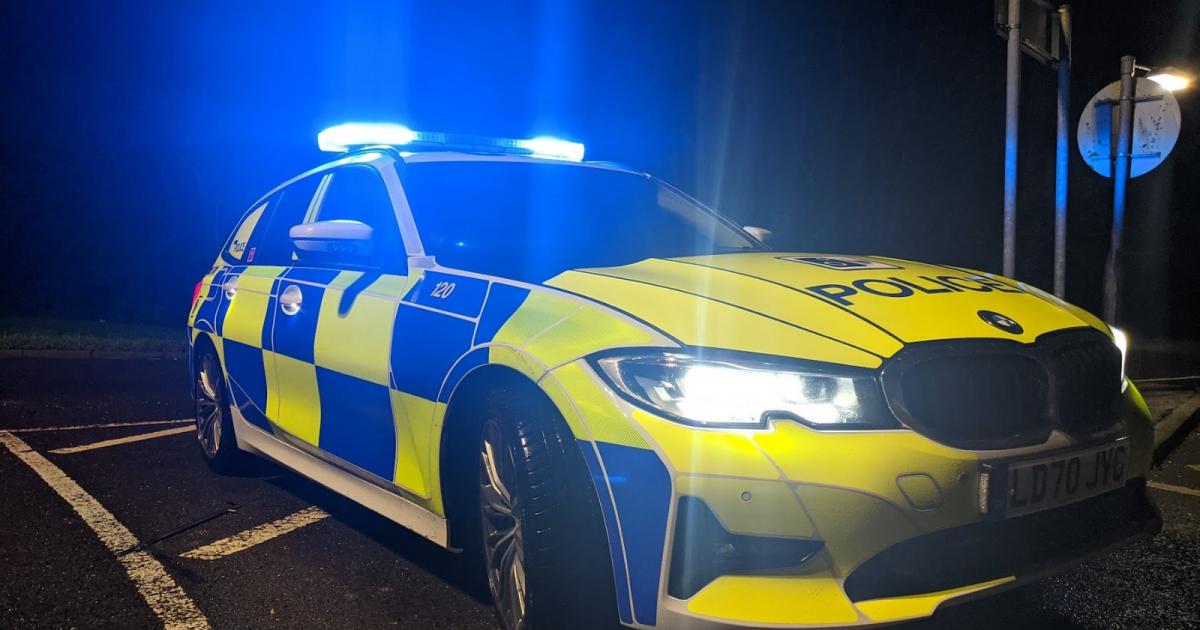
Police were called to a property in the town on Thursday (May 28) to reports that a woman had been sexually assaulted.
North Yorkshire Police launched a “high profile” search of the area on Thursday evening and arrested a white, British 26-year-old from County Durham. He remains in custody.
A man in his 40s and a man in his 20s were also arrested in connection yesterday morning, but have been released with no further action and eliminated from the investigation.
Advertisement
The force said the victim is being offered specialist support following the incident.
Inspector Rory Sadler, of Hambleton Neighbourhood Policing Team, said: “This has been a hugely distressing incident for the victim and has caused alarm in the wider community.
“It’s been a fast-moving investigation and there will continue to be a visible police presence in the area to reassure concerned residents.
“I’d like to provide some clarity about rumours circulating in the community.
Advertisement
“A white British man from the Durham area has been arrested in connection with this incident.
“I’m aware there is some speculation about links to a separate burglary in the Hambleton area. However, I can confirm police are treating these incidents as unrelated.
“I’d also stress that the incident in Northallerton is isolated and we are not looking for anyone else as part of our investigation.”
It doesn’t actually rain every weekend. That would be insane.
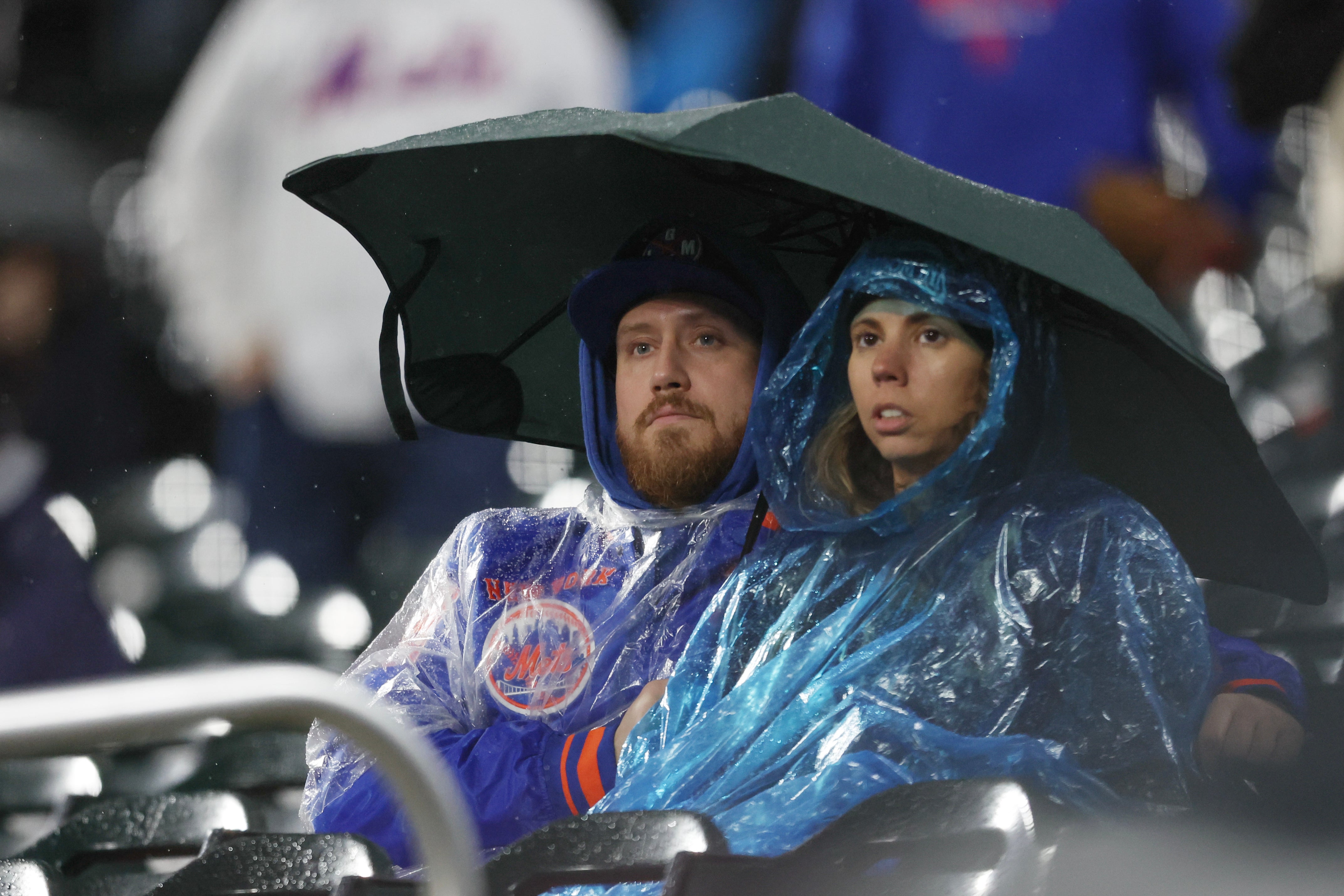
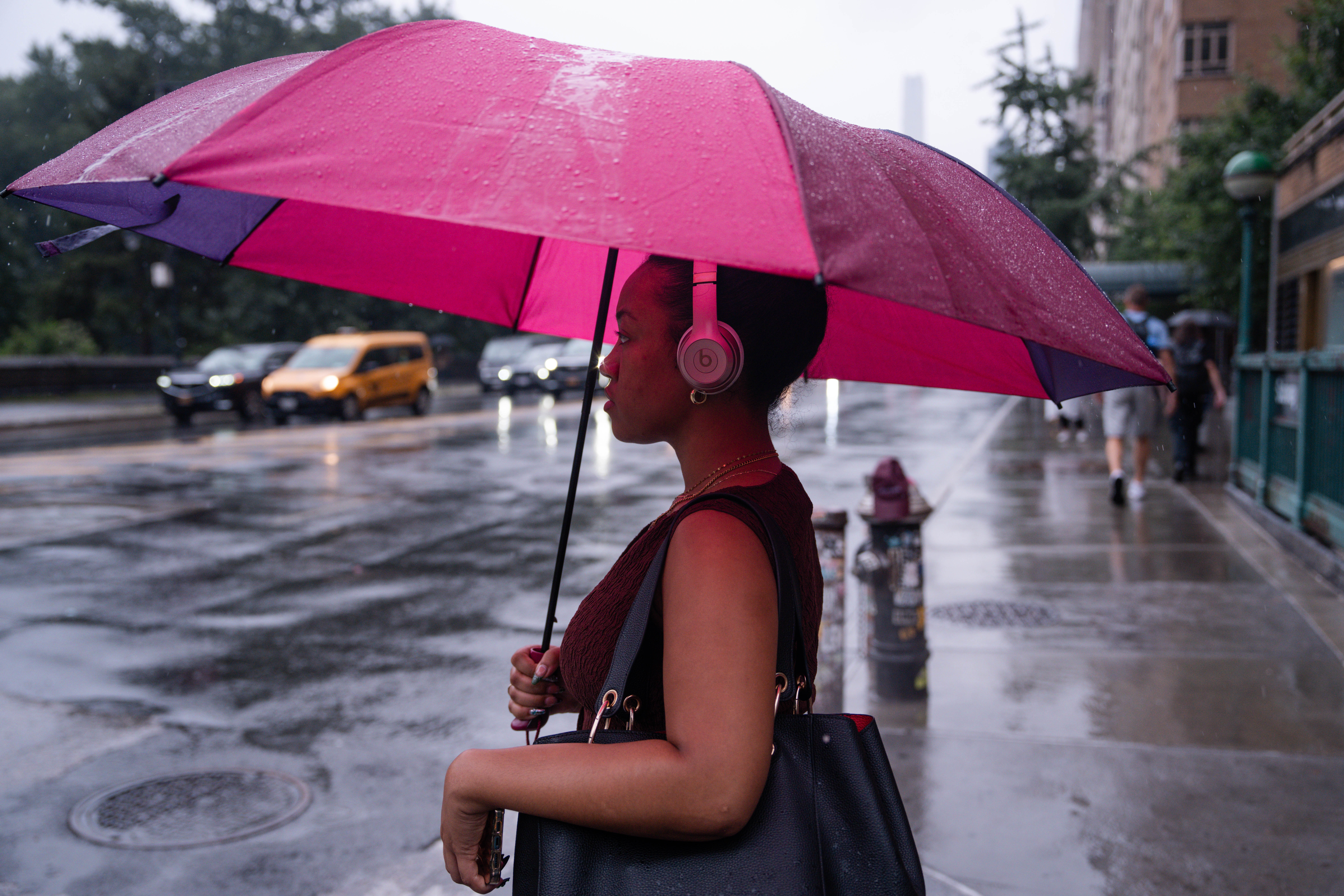
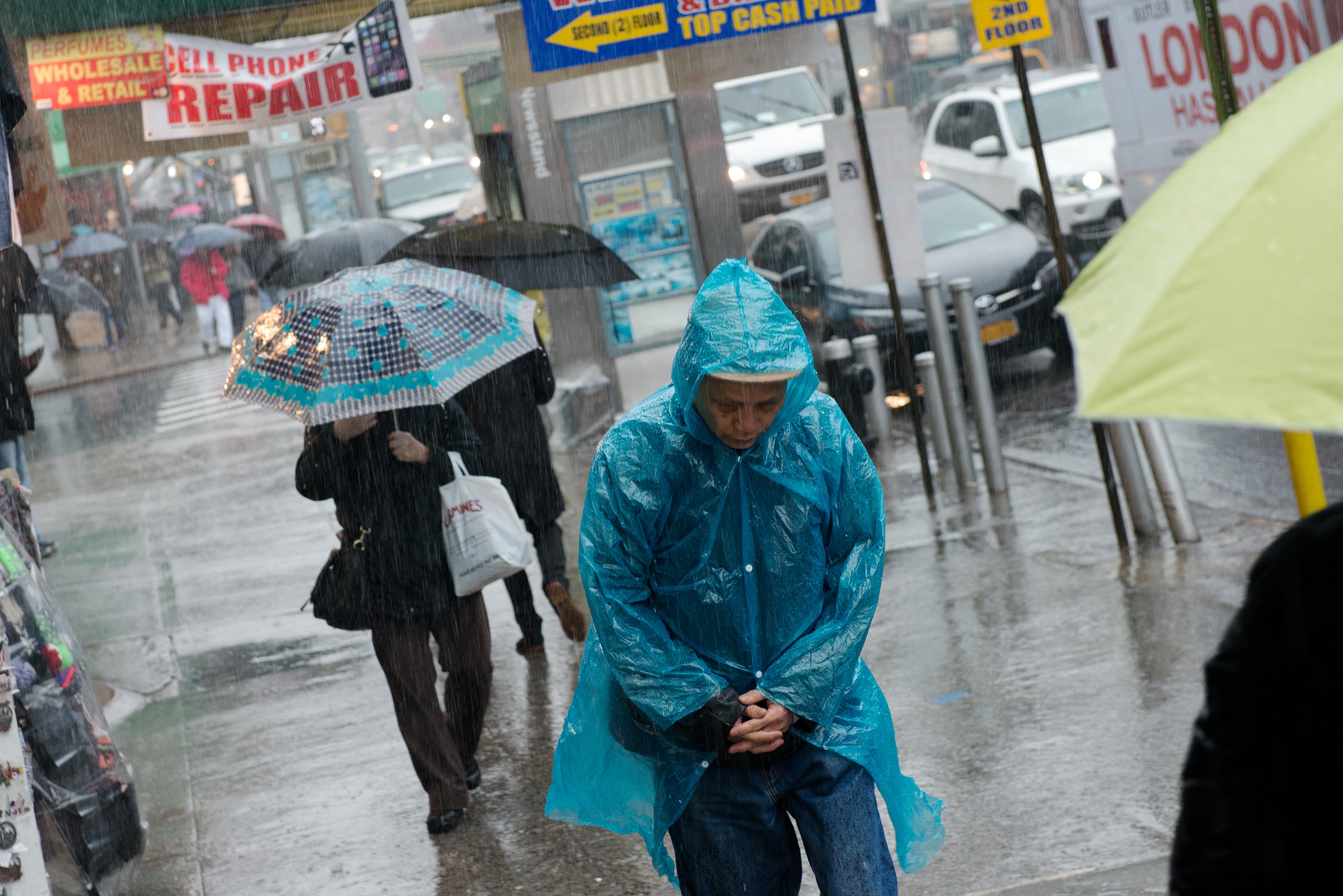
But many parts of the southern and eastern U.S. have seen their beach trips and picnics upended this spring due to a spate of weekend storms, making it seem as though each weekend is a washout lately.
The Memorial Day holiday weekend was the wettest Burlington, Vermont, had seen in over a century, according to WCAX. And in Beeville, Texas, flooding rain forced water rescues. Many social media users posted desperate messages of woe, lamenting their spoiled fun. “Death. Taxes. Austin Memorial Day Rain,” Texas user @EvilMopacATX wrote on the platform X.
Experts don’t believe weekends actually attract more rain, it’s simply that there is an increased chance of rainstorms this hot and humid time of year — and we may notice the downpour more when it’s on a day off.
Advertisement
So what is actually driving these Saturday and Sunday storms?
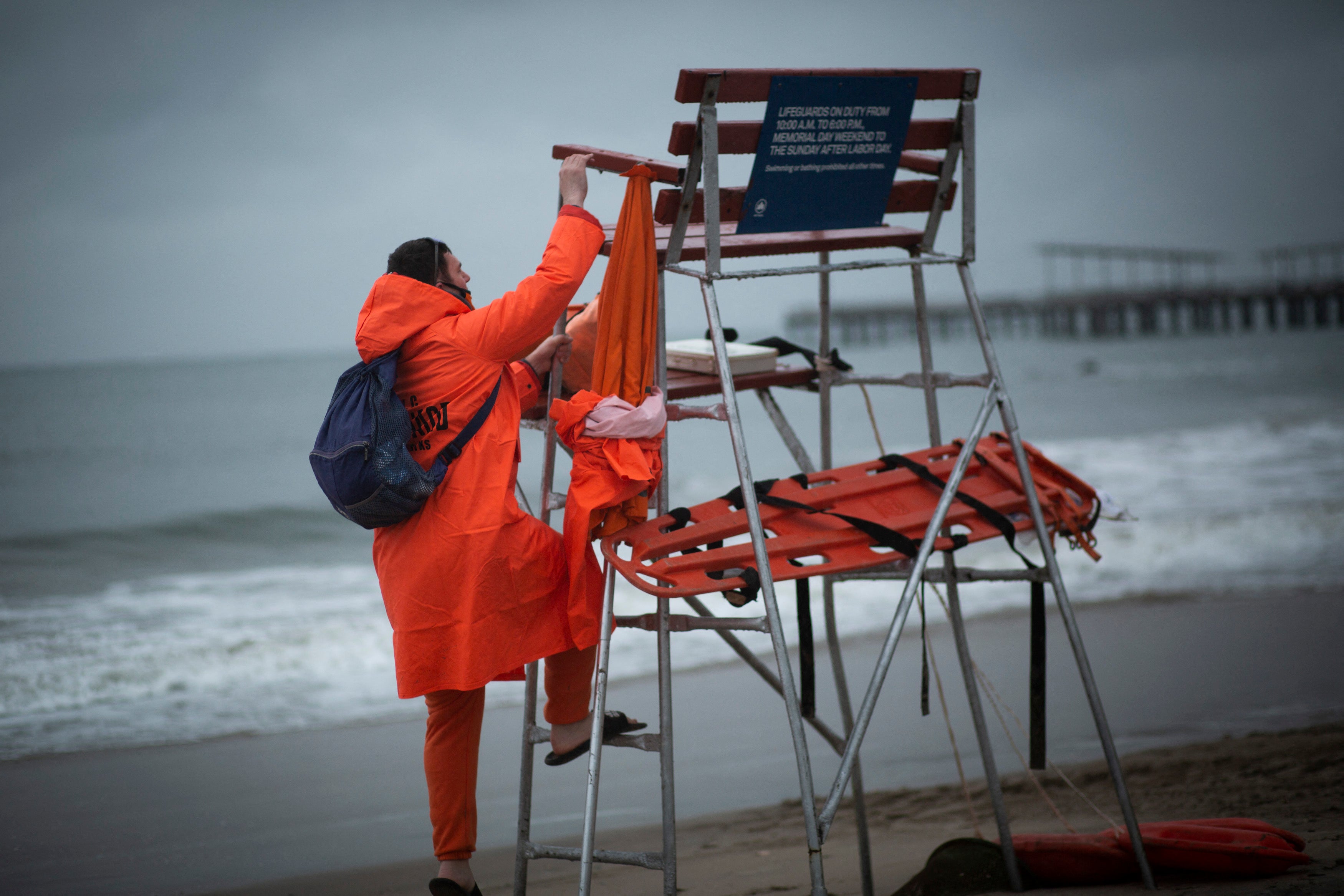
“I believe the issue with rain on holiday weekends is simply luck of the draw,” Steve Decker, an associate professor at Rutgers University said, explaining the increasingly frequent sight of beach lifeguards in rain gear. (AFP/Getty)
Some have posited on social media that city air pollution, human-caused climate change and even cloud seeding are responsible for the frequent soggy weekends. But the reasons for weekend rain in the U.S. have been different from month to month, AccuWeather senior meteorologist Paul Pastelok told The Independent.
Over Memorial Day weekend, it was an upper-level area of high pressure that produced a lot of moisture.
“And so, everything was going from Texas through Missouri, Illinois, Ohio and then getting into the east and even parts of the Southeast ended up getting into a little bit of a rainfall as well,” Pastelok said.
In previous weeks, there was a different explanation.
Advertisement
The polar jet stream — narrow bands of wind that blow around the planet from west to east — was pushing storm systems from the northeastern Pacific region through the Northwest and into the Ohio Valley.
Areas with recent rainy weekends, like the Northeast, were in a “sweet spot,” he explained.
Experts say weekend storms – even those that seem to hit every weekend – really just come down to luck (Getty Images)
“Timing wise, I can’t explain that. It just seems like we got into a funk that everything wanted to come on weekends and spoil things,” said Pastelok.
He didn’t think climate change or air pollution played into the timing or formation of these weekend storms, either.
Other experts agreed.
Advertisement
“I believe the issue with rain on holiday weekends is simply luck of the draw,” Steve Decker, an associate professor at Rutgers University said. “Climate change can make rain events heavier when they happen, but that doesn’t affect the timing of the rain.”
Past studies had connected vehicle emission pollution to precipitation levels on week days and weekends, he noted, but the air has gotten cleaner since then.
That said, 44 percent of Americans are living in places with unhealthy levels of ozone or particle pollution, according to the American Lung Association latest “State of the Air” report.
It dumped on much of the U.S. this Memorial Day weekend and many places have seen weekend trips foiled by recent rainstorms. Experts say the answer for what’s driving these storms is multi-pronged (Getty Images)
And, air pollution can influence the behavior of precipitation, including how much rain falls, John Nielsen-Gammon, the Texas State Climatologist, said.
But, “any weekend effect ought to be minor,” he told The Independent.
Advertisement
There’s also “no connection” between recent rainy weekends and the impending shift to an El Niño climate pattern, James Booth, a professor at The City College of New York, said.
El Niño patterns, which are natural parts of the climate, typically bring wetter and colder weather to the southern U.S..
While there’s a consensus among these experts that air pollution and climate change aren’t influencing the timing of weekend storms, that doesn’t mean they’re not factors in the storms at all.
Advertisement
Scientists know that polluting greenhouse gases from fossil fuels – like carbon dioxide and methane – are responsible for warming the Earth’s atmosphere.
A warmer atmosphere can hold more moisture. That leads to an increased chance of storms and heavy rain (Getty Images)
A warmer atmosphere can hold more moisture. That means an increased storm formation and heavier rainfall.
“Climate change is certainly increasing the upper limit on moisture in storms but that influence is most clear in intense storms and in increasing variability,” Matthew Barlow, a professor of climate science, at the University of Massachusetts Lowell, told The Independent.
Where these storms dump may vary, says Nielsen-Gammon. But there’s another factor that can make them especially dangerous.
They may be more likely to stay in one place for a while.
Advertisement
“Add to that changes in the jet stream tend to slow storms down which means they can dump more rain in one place,” noted Tom Rickenbach, a professor of atmospheric science at East Carolina University.
Brad Pitt has reportedly become increasingly estranged from several of his children (Picture: AFP via Getty Images)
Brad Pitt once had six children all carrying his rather famous surname. These days, it’s becoming increasingly difficult to find one who still uses it.
Maddox Jolie-Pitt has reportedly become the latest of the actor’s children to distance himself from the family moniker, filing to change his name to Maddox Chivan Jolie.
The 24 year-old is said to have listed the reason for the request simply as ‘personal’.
Angelina Jolie shares six children with her former husband (Picture: R.J. Johnston/Toronto Star via Getty Images)
While the legal filing is new, the switch itself may not come as much of a surprise to the Fight Club actor. Earlier this year, Maddox appeared in the credits of his mother Angelina Jolie’s film Couture as ‘Maddox Jolie’, dropping the Pitt surname altogether.
More significantly, he’s far from the first sibling to do so. Last year, Shiloh legally changed her name from Shiloh Nouvel Jolie-Pitt to Shiloh Jolie shortly after turning 18. Her lawyer later described it as an ‘independent and significant decision’ and said she was merely following the legal process required to make the change.
Advertisement
Maddox (far right) is reported to have applied to change his surname to just ‘Jolie’ (Picture: Dimitrios Kambouris/Getty Images for FLC)
Zahara has also publicly moved away from the double-barrelled surname. During a sorority ceremony and later at her graduation from Spelman College, she was introduced as Zahara Marley Jolie rather than Zahara Jolie-Pitt.
Then there’s Vivienne, who appeared as ‘Vivienne Jolie’ in the playbill for the Broadway musical The Outsiders. So that’s now four siblings and four variations on the same message.
The former couple’s split continues to cast a long shadow over the family (Picture: Omer Cetres/Anadolu via Getty Images)
The growing distance between Pitt and several of his children has become one of the most visible legacies of his split from Jolie. Hollywood break-ups rarely stay private. Few, however, have continued to generate headlines quite as consistently as this one.
The roots of the family divide stretch back to a private jet flight in 2016. Days later, Jolie filed for divorce and later alleged that Pitt had physically and verbally assaulted members of the family – including the Tomb Raider and Salt star – during the journey.
In legal filings connected to an FBI investigation, Jolie claimed that Pitt argued with Maddox during the flight and put his hands on the then-15 year-old. Pitt has repeatedly denied the allegations and the FBI ultimately cleared him of wrongdoing.
Several of the couple’s children have publicly moved away from the Pitt surname (Picture: GONZALO/Bauer-Griffin/GC Images)
Nearly a decade later, reports continue to suggest that relationships within the family remain pretty strained. Maddox and his brother Pax are frequently cited as being the most distant from their father.
Pax previously made headlines after sharing a blistering social media post aimed at Pitt.
Advertisement
People close to Pitt have consistently rejected suggestions that he has given up on his children. Sources have maintained that he wants a relationship with all six and hopes that some of the divisions can eventually heal.
Although this latest news seems unlikely to indicate that any mending of relationships is on the horizon.
The 24 year-old previously appeared in credits as Maddox Jolie rather than Maddox Jolie-Pitt (Picture: John Berry/GC Images)
Those close to Jolie have offered a very different interpretation, arguing that the fractured relationships are a consequence of Pitt’s own actions.
Maddox was adopted by Jolie from Cambodia in 2002 before Pitt later adopted him after joining the family. More than two decades later, his decision to reportedly drop the Pitt surname appears to be the latest sign that the family divide is now deeper than ever.
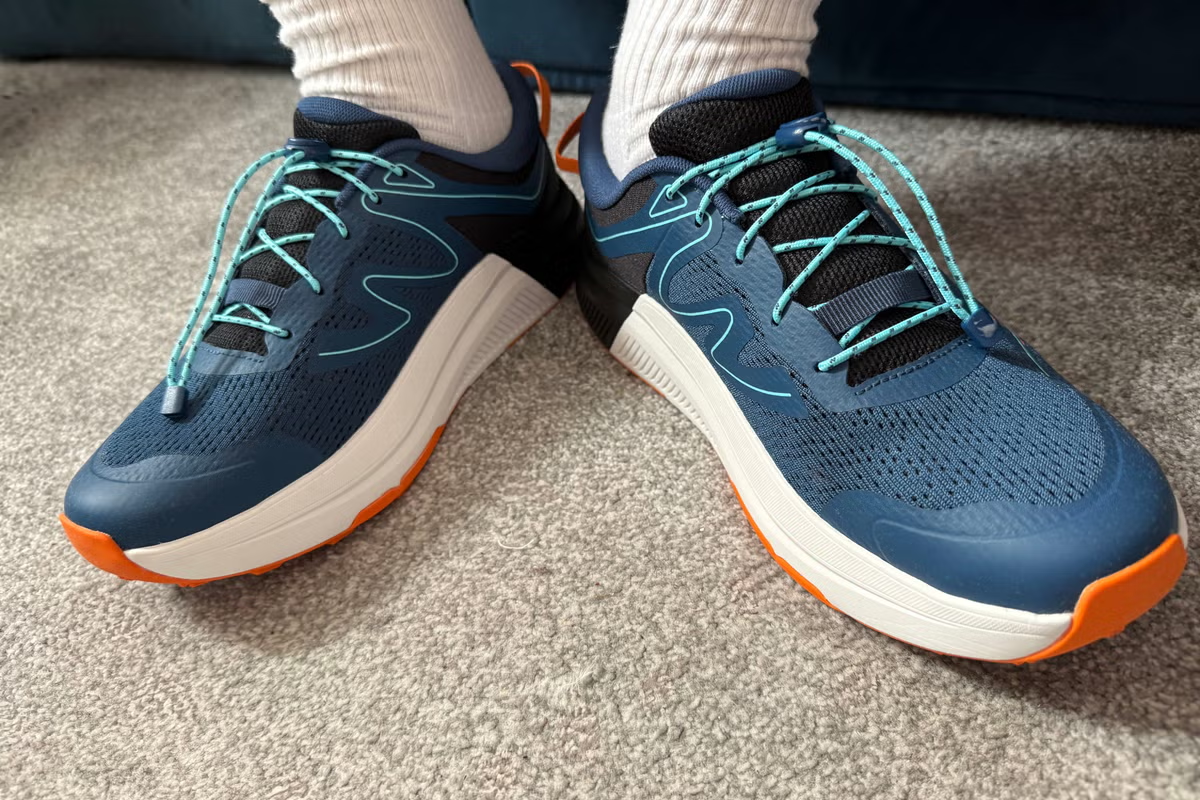
Kitted out with our Teva hurricane trailsetters in the respective men’s and women’s varieties, my partner and I set off on a loop walk through the South Downs.
Immediately we were both impressed with how spongy the shoes felt, having upgraded from the Craghoppers adflex low 2s. In my experience, the adflex shoes provided the brunt of their support via a firm fit, which secured the foot solidly in position. By contrast, I’d argue the trailsetters went one step further in planting my feet and ankles, combining an anchored feel with the brand’s ‘hyper-comf’ sponge to absorb reverberation and counteract the impact of hard, unpredictable ground.
The shoes were tested on sharp inclines and different types of terrain (Lucy Smith/The Independent)
As any well-versed hiker and tamper knows, loose scree and dry, dusty paths can leave you slipping and sliding all over the place, so a reliable tread and grip is essential. Along with your grip, you want to feel as though your ankles aren’t at risk of rolling as you traverse boulders, ditches and the like. While a hiking boot provides the utmost ankle support, a low hiking shoe like the trailsetter can be enough – so long as it’s been well designed.
The trailsetters are equipped with directional lugs (3D traction pads) on their soles, which ensure you’re able to brake from the heel and pick up speed from the toe. On top of the stop-start improvements these bring – specifically, I was able to come to firm halt after quickly descending a steep track – the lugs give your feet more purchase to bear your weight over tricky terrain, without rolling any ankles or, worse, taking a tumble.
Advertisement
The drawstring tie takes a matter of seconds to secure (Lucy Smith/The Independent)
Circling back to the appeal of a low hiking shoe (instead of a boot), you can’t overlook the ease putting them on and off. On my year spent travelling New Zealand, including hiking a number of its great walks, my accommodation spanned scant tents and a low-roofed van. This meant that the task of donning my cumbersome hiking boots with their 16 lace-eyelets wasn’t the most appealing when I simply needed to run to the campsite loo in the early hours.
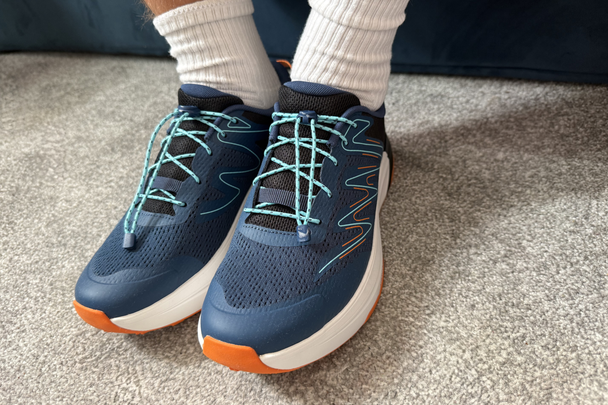
If you’re someone who frequently plans multi-day hikes, I’d urge you to consider the trailsetter’s low profile. You simply have to slide your foot into the shoe and pull the handy bungee drawstring. No water-logged laces, no impenetrable knots and a significantly lighter weight in your rucksack.
Admittedly, the trailsetters aren’t a perfect pick for marshland and extreme rain given they’re not waterproof. That said, with a rubber reinforcement across the toe, they’re definitely up to the task of April showers and muddy paths. In fact, they kept my feet entirely dry through a long, grassy field that was covered in morning dew.
Ultimately, at £115, Teva’s trailsetters – for both men and women – are a great mid-range pick. They’re not quite base camp material, but they won’t let you down on easy to moderate hikes such as Snowdon or the Seven Sisters. Providing, that is, that it’s not raining cats and dogs outside for the entirety of your excursion. Happy adventuring!
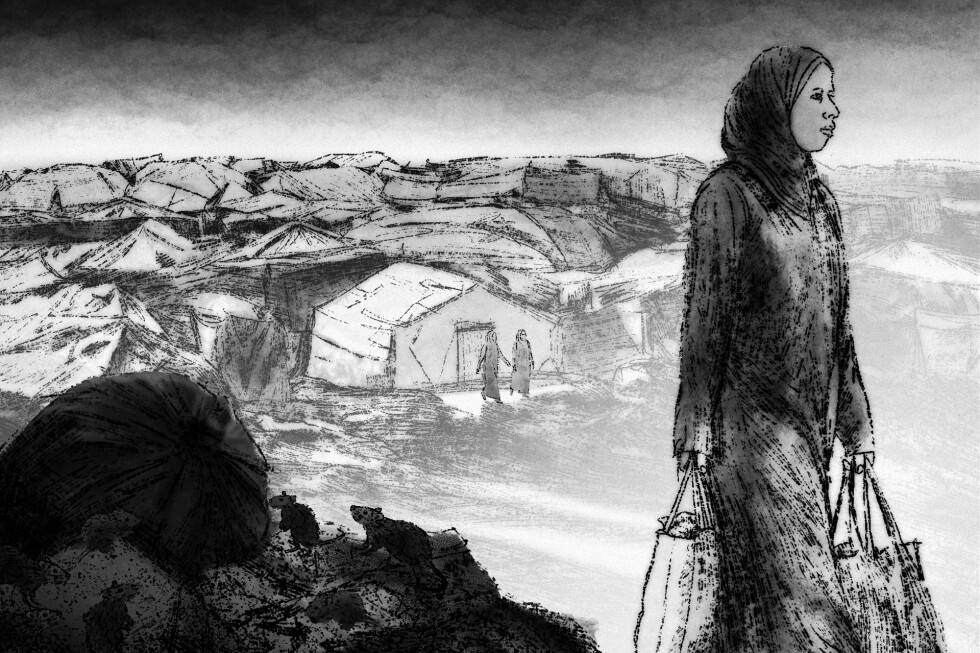
DEIR AL-BALAH, Gaza Strip (AP) — Majda was destitute. Her husband and eldest son had been killed by Israeli airstrikes. Living in a ragged tent in Gaza with rats and the stench of sewage, she couldn’t support her children and feared her daughters would be harassed going to the communal latrine in a camp with hundreds of strangers.
So she made a decision she now deeply regrets. She married off her 13- and 14-year-old daughters to men who promised safety and support.
“I thought I was protecting them,” she said. “Fear was slaughtering me.”
The devastation that Israel’s campaign has wreaked in Gaza has helped fuel an increase in marriages of young girls, according to experts and official data. With almost the entire population driven from their homes, most living in squalid camps and dependent on aid, some parents have sought some financial stability for their teen daughters by giving them away in marriage.
Advertisement
For the girls, it meant a loss of their childhood and future — and, often, dangerous pregnancies.
For Majda’s daughters, it meant horrific physical abuse.
Advertisement
Child marriage was declining before the war
Before the war, child marriage had been slowly declining in Gaza, according to the Palestinian Central Bureau of Statistics. In 2022, the last tally released by the bureau, 17.8% of marriages involved a girl under the age of 18, down from more than 22% in 2015.
Advertisement
The minimum legal age for marriage in Gaza is 17, with some exceptions allowed; the U.N. and most humanitarian groups categorize marriages of girls under 18 as early marriage.
(AP Illustration / Peter Hamlin)
Advertisement
(AP Illustration / Peter Hamlin)
Advertisement
Advertisement
Advertisement
Advertisement
That trend appears to have reversed.
After an Associated Press request, the Supreme Shariah Court in Gaza, where marriages are registered, gathered data from court employees. According to its figures, 20.6% of the 35,474 marriages recorded in 2024 and 2025 involved a girl under 18, including 627 marriages of girls under 15.
The real rate could be much higher because many marriages went unregistered during the chaos of the war, said Amal Siyam, director of the Women’s Affairs Center in Gaza. The number of marriage contracts recorded by the court dropped 35% in 2024, the first full year after Hamas’ Oct. 7, 2023, attack triggered the war.
The AP spoke to six girls in Gaza who got married between 13 and 16 and their parents, all on condition they not be identified by their full names because of the deep sensitivity of the issue. The AP does not identify rape victims. Majda agreed to be identified by only her first name.
Advertisement
All of the parents said that if not for the war, they would have never resorted to marrying off their daughters so young.
One mother is paralyzed by grief
After her husband and son were killed in separate strikes in April 2024, Majda descended into severe depression.
She begged the doctors for sedatives, which kept her asleep for days at a time. She couldn’t care for her girls in their patched-up tent by the sea, battered by wind, cold and rain in the winter. Charity kitchens, on which they depended for food, were scarce and irregular.
“I was entirely shaken from the inside,” Majda said.
Advertisement
Two brothers in their 20s, from a family that had been their neighbors in Gaza City before they were all forced to flee, asked to marry her daughters.
(AP Illustration / Peter Hamlin)
Advertisement
(AP Illustration / Peter Hamlin)
Advertisement
Advertisement
Advertisement
Advertisement
Majda, who got married at 14, didn’t want a similar fate for her girls. But her father joined the brothers’ family in insisting it was the only way. They promised, Majda said, that they could sign the marriage contracts but wait until after the war to bring the girls to live with their husbands.
“I was not in my right mind. I am still not in my right mind,” Majda said. “I don’t know how I agreed to this.”
Majda’s eldest daughter, who was 14 at the time, didn’t want to accept. “I felt lost,” the daughter said. “I thought if I got married, someone would be financially responsible for me … I truly regretted it.”
Marriage is seen as a way to ease the family burden
Most of the girls who spoke to the AP said they were not coerced by their parents to marry. But they felt a duty to ease the burden on their families.
Advertisement
By marrying, they were counted with their husbands as a separate family to receive aid from relief groups, rather than being under their parents’ allotment. Several girls also said that since schools largely shut down during the war, they saw no hope of continuing their education.
One girl said she and her parents and seven brothers and sisters were displaced more than 25 times during the war. Her father had been totally against early marriage and wanted her to enroll in university. But the family was so desperate that he agreed to a suitor.
Advertisement
(AP Illustration / Peter Hamlin)
(AP Illustration / Peter Hamlin)
Advertisement
Advertisement
Advertisement
She said she agreed as well. She was 16.
“I couldn’t forgive myself for taking a share of the little food my family had,” she said. She also worried that she and her siblings would be left without support if her parents were killed in an airstrike. Now 17, she was five months pregnant when she spoke to the AP.
Another girl also cited her family’s multiple displacements, each draining the little money they had. When they were sheltering at a hospital in Khan Younis, a 25-year-old man staying there asked to marry her. Then 17, she said she agreed.
Advertisement
“Marriage felt like the only sense of normalcy I could restore to my life,” she said.
The law in Gaza allows exceptions to the minimum age of 17 with parental consent and authorization by a judge. The Supreme Shariah Court has rules for court officials not to approve exceptions below the age of 14 years and seven months.
But parents sometimes enter informal agreements without officially registering the marriage. Two mothers who spoke to the AP did so, one of them after an official refused because her daughter was 14.
In the Israeli-occupied West Bank, the Palestinian Authority in 2019 set the minimum age at 18, and early marriages have plunged since to around 5%, according to official statistics.
Advertisement
Siyam said that at times of widespread displacement in conflicts with Israel, some Palestinians have seen marriage as a way to bring stability for their daughters. “Wars and conflicts lead to a return to more conservative traditions,” she said.
Younger girls who marry are more vulnerable to rape and violence, including abuse from in-laws as they load household chores on them, Siyam said. Because divorce rates in early marriages are high, “the girl ends up returning home with one or two children.”
Some girls were abused and fled
Majda said the in-laws broke their promise and soon demanded her elder daughter be brought to her 23-year-old husband, who was living in his family’s tents in Deir al-Balah.
For the first 10 days, the girl screamed whenever her husband approached her. “I kept screaming and he hit me,” the elder daughter said.
Advertisement
Eventually, his mother “tied up my hands above my head,” the daughter said. The husband then raped her.
After that, he repeatedly threatened to bring his mother to tie her up if she screamed, she said. She recounted repeated instances of rape and said on one occasion, she had to be taken to the hospital with bleeding.
A few months later, the family came to take her 13-year-old sister to join her 21-year-old husband. She “kept screaming that she did not want to get married,” Majda recalled.
The younger sister told the AP that she too was tied up by her mother-in-law and raped by her husband. She said she had two miscarriages, both after her husband kicked her while she was pregnant.
Advertisement
Majda’s elder daughter gave birth to a son. Months later, in November, she fled, carrying her son for 15 kilometers (9 miles) to her mother’s tent.
Not long after that, the younger sister also fled back to Majda. They then discovered that she was pregnant.
Girls experienced high-risk pregnancies
The maternity ward of Awda Hospital in central Gaza saw an increase in the rate of teenage pregnancies during the war, said the ward’s head, Yasser Shaaban. Many suffered severe health complications from getting pregnant so young, he said.
On top of that, the vast majority were malnourished, as Israeli restrictions on aid drove Gaza’s population to the brink of famine at times.
Advertisement
Four of the girls who spoke to the AP had given birth, and all described dangerous pregnancies or births. Three had at least one miscarriage.
One of them almost died during childbirth from severe bleeding, her mother said. She was 16 and severely malnourished at the time.
“I was unconscious for many days (after birth), and I couldn’t hold my daughter for a while,” the girl said.
The family faced another painful choice
Back with their mother, Majda’s daughters were terrified at any talk of going back to their husbands. Speaking to the AP in April, her youngest said returning would be akin to “death.”
Advertisement
Majda said her younger daughter had always been a talkative, playful girl. But since her marriage, “she does not talk to anyone, not to her husband and not to me,” she said.
The girls had returned to school, but the elder said she felt excluded and ashamed because she was the only student who was married with a baby. She described herself as a child mothering a child.
“I am tired,” she said. “I want to die.”
Majda was coming under heavy pressure from her father and her in-laws, who said she couldn’t afford to care for her daughters, the grandson and the baby on the way.
Advertisement
Women can divorce their husbands in Gaza, but the process is expensive and complicated. Divorce also carries stigma, mainly for women, and would make it difficult for the girls to ever remarry.
The in-laws assured Majda that her daughters would be treated well.
Feeling she had no choice, she relented. The girls returned to their husbands, now in Gaza City, in early May. Majda hasn’t been able to contact her daughters since then.
“They did not want to return,” she said. “They were crying.”
The ‘Thursday Murder Club’ writer will take centre stage at the popular event in September.
Acclaimed author and broadcaster Richard Osman will share centre stage at a prestigious literary festival in Stirling in September.
Advertisement
Bloody Scotland International Crime Writing Festival today reveals that the star of pointless and author of the best-selling Thursday Murder Club novels is the final early release headliner for the 2026 event.
He first visited the Stirling festival when as an unpublished author and his crime novels are now a regular fixture on bestseller lists around the world.
He said: “Can’t wait to come back to Stirling and the incredible ‘Bloody Scotland’ festival. I can 100 per cent guarantee this event will contain mirth, merriment, murder and mayhem, though not necessarily in that order. See you there!’
Other big names released so far include Lee Child (who sold out within 24 hours), S A Cosby, Tana French and Lucy Foley all of whom will be interviewed on stage by guest programmer, Denise Mina.
Advertisement
Richard Osman will be interviewed by long time friend and fellow crime writer, Mark Billingham. Tickets are on sale at www.bloodyscotland.com
The rest of the Bloody Scotland 2026 programme will be revealed at The Golden Lion in Stirling at noon on Thursday, June 4, followed by an event at 1.30pm with J D Kirk.
Bloody Scotland is Scotland’s International Crime Writing Festival, providing a showcase for the best crime writing from Scotland and the world, unique in that it was set up by a group of Scottish crime writers in 2012. Full information at bloodyscotland.com
All of the authors shortlisted for the Bloody Scotland Debut Prize have been invited to attend the programme launch. The long-list for the McIlvanney Prize will be revealed later in the month.
Advertisement
The 2026 festival begins on Friday, September 18 and concludes on Sunday, September 20.
The festival takes place in various venues (including The Albert Halls, Made in Stirling and the social hub of the festival, The Golden Lion Hotel) in the historic city of Stirling.
The Bloody Scotland board is made up of crime writers Lin Anderson, Craig Robertson, Gordon Brown, Abir Mukherjee plus Muriel Robertson and Catriona Reynolds.
Bloody Scotland receives vital funding from the National Lottery through Creative Scotland and Stirling Council. They are also grateful to their many sponsors and supporters including The Glencairn Glass, H W Fisher, Waterstones, The Open University in Scotland, the Faculty of Advocates, Lumo, Arnold Clark and Go Forth Stirling along with a wide range of publishers.
Advertisement
Creative Scotland is the public body that supports culture and creativity across all parts of Scotland, distributing funding provided by the Scottish Government and The National Lottery. Further information at creativescotland.com.
A man sustained severe facial injuries following an attack by what’s believed to be an “XL Bully” dog. The incident has sparked a police investigation to locate the dog and its suspected owner.
Luke Sanderson, 25, was set upon by the animal while speaking with another man. He was left with significant facial wounds in and around his mouth. A graphic image below, which some readers may find upsetting, shows the severity of Mr Sanderson’s injuries.
Mr Sanderson’s mother, Jo, revealed her son required up to 50 stitches for his wounds following the attack in Towyn Way West, Towyn earlier this week
She explained how it happened on Bank Holiday Monday when Luke was talking to a man and was then bitten on the mouth. Always keep on top of the latest Welsh news with our newsletter
“I was inside the house and Luke came in and his mouth was covered in blood. The police are involved and are now searching for him and the dog,” said Jo.
“Luke seems okay, it has traumatised him though and he doesn’t want the dog attacking anybody else. He is also worried it may attack a child. He was told he was lucky.”
Advertisement
“He went into hospital Monday night, got home about four in the morning. He went back Tuesday for day surgery where he had about 40-50 stitches. He’s on antibiotics and eye ointment. He’s got to go back on the 4th (of June) for another appointment.”
She added: “I am trying to keep calm about it because my son doesn’t want to make a fuss. He says, ‘I am still walking, still talking and I can leave the house – I’m fine’. That’s how he sees it.”
North Wales Police have launched an appeal to trace Darren Sheridan, aged 45, in connection with the incident.
A North Wales Police Denbighshire Coastal and Abergele appeal said: “Wanted. We are actively looking for Darren Sheridan (45) of Kinmel Bay. He is wanted on suspicion of failing to control a dangerous dog, and breach of a Domestic Abuse Protection Order (DAPO).
“If you have seen Darren, or have any information as to his whereabouts, please contact us via our live webchat or on 101 quoting ref 26000418267.”
Get daily breaking news updates on your phone by joining our WhatsApp community here. We occasionally treat members to special offers, promotions and ads from us and our partners. See our Privacy Notice
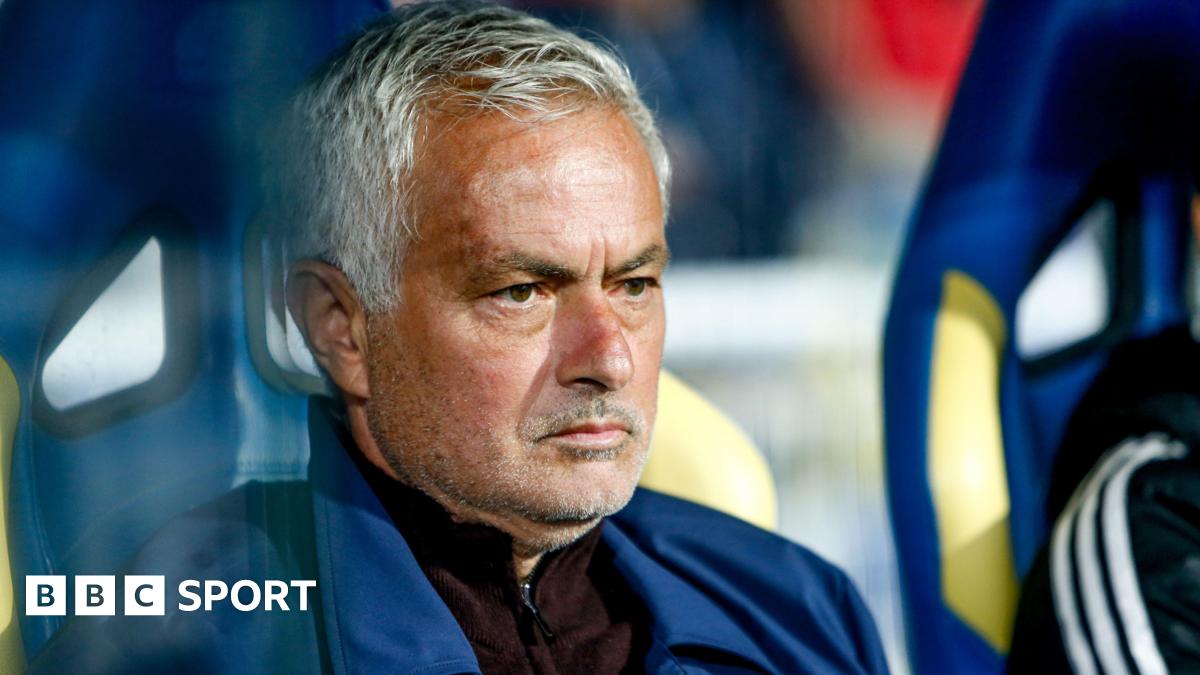
Real ended their 2025-26 campaign trophyless, with rivals Barcelona sealing the La Liga title with a 2-0 El Clasico victory.
Los Blancos’ Champions League run also ended with a 6-4 aggregate defeat by German champions Bayern Munich in the quarter-finals.
After leaving Real in 2013, Mourinho returned to England for a second stint at Chelsea, winning the third of his three Premier League titles, plus the EFL Cup, in the 2014-15 season.
Following his departure from the Blues by mutual consent in 2015, Mourinho joined Manchester United on a three-year deal in 2016.
Advertisement
He won the Europa League, EFL Cup and Community Shield during his first season at Old Trafford, but was sacked in December 2018 after a poor run of results.
Mourinho also had spells at Tottenham, Serie A side Roma, where he won the Europa Conference League in 2022, and Turkish club Fenerbahce, before taking over at Benfica.
The BBC’s topical debate programme Question Time began in an usual way this week, featuring a panel of iconic people who all passed away decades ago.
Winston Churchill, Frida Khalo, Mahatma Gandhi and Emmeline Pankhurst briefly featured to introduce the programme’s topic – artificial intelligence (AI).
The programme went on to discuss the consequential issues of AI for the present day and beyond.
The real life panel consisted of Darren Jones, chief secretary to the prime minister; Julia Lopez, shadow secretary of state for science, innovation and technology; Mo Gawdat, author, entrepreneur and former chief business officer at Google X; Laura Gilbert, senior director of AI at the Tony Blair Institute for Global Change; and Victor Riparbelli, founder and CEO of London-based AI company Synthesia.
Six years ago, the government rejected a House of Lords select committee proposal to add the Champions League final to the list of “crown jewels” events, which would have ensured it would always be free-to-air.
Highlights of the Champions League final will be available on the BBC Sport website and across social media channels 15 minutes after the trophy lift, and on BBC iPlayer and television later in the evening.
Live commentary will also be on BBC Radio 5 Live.
The Champions League final had been free on ITV each year from 1993 – with the exception of the 1994 final, which the BBC showed live – until BT Sport won the rights, starting from 2015-16.
Advertisement
BT Sport continued to make it available without a subscription through to 2023, simultaneously broadcasting the game on its YouTube channel.
This changed after BT Sport was bought by Warner Bros Discovery and rebranded as TNT Sports.
While the finals remained available without cost, fans needed to sign up for a discovery+ account to get access.
Discovery+ has been replaced by Warner Bros Discovery’s new streaming service, HBO Max, which has no free option.
Advertisement
Fans will not need a full TNT Sports subscription, and can instead sign up for HBO Max for one month.
The cheapest subscription starts at £4.99, which would include all three matches, though most Sky customers already get HBO Max at no extra cost.
From 2027-28, TNT Sports will lose its European rights.
These sweaty sleeping conditions, which mean “the temperature does not fall below 20°C” per The Met Office, can be extremely damaging to our slumber. One paper found that while all hot weather is bad for our kip, heatwaves can snatch away more minutes of shut-eye than other warm conditions.
But what about the best sleep position for toasty temps?
Advertisement
The best sleep position for hot weather
Speaking to The Times, sleep consultant Alison Jones said side-sleeping is probably your best bet.
“Sleeping on your side exposes more of your body to the air, allowing heat to dissipate more effectively and helping to prevent temperature-related disturbance,” she explained.
The expert isn’t alone in making the recommendation.
Advertisement
Speaking to Tom’s Guide, sleep posture expert James Leinhardt said: “The part of your body that gives off the most heat includes your forehead, closely followed by the area at the bottom of your spine”.
He added that when you sleep on your back, there’s no room for this heat to escape: lying on your side means you’ll have the “least amount of contact with the bed, so the heat will naturally rise much quicker than if you’re lying on your back”.
Which is the best side to sleep on?
It turns out that the side you choose might matter, too.
Advertisement
Dr Abhinav Singh, a sleep medicine physician, told The Sleep Foundation that sleeping on your left side can help you to stay asleep if you experience stomach issues like heartburn or indigestion at night.
That’s because the stomach is curved; a lot of the acid-containing bulk lies on your left side, meaning it’s harder for the material to escape into your oesophagus when you adapt the position.











































You must be logged in to post a comment Login