Guys like father-of-two, Jay, and 35-year-old Jaskaran, stood in solidarity with women, acknowledging that there’s a lot to be concerned by.
So, we cast the net even wider, posting the statistic on social media.
Keen to weigh in, many commenters understood why women might feel this way. On the other side of the coin though, there were accusations of misandry, as well as some pretty clear contempt for women.
Advertisement
Here’s what Metro readers had to say about it all — and if you’ve got more thoughts to share, leave a comment below.
‘Our hearts bleed’
Sadly, many commenters were unwilling to understand the female perspective.
‘Our hearts bleed,’ said Jamie Gibson, sarcastically. ‘They can keep that view, just stay over there with it and us men will be fine.’
Reader Marcos Ferreira has been with his partner for nearly 20 years, but claimed that, with women viewing men the way they do, if he broke up with his partner he’d rather be alone.
Advertisement
‘I’d rather stay single than to even bother with another woman in today’s world,’ he said. ‘They can keep the bear, I keep my sanity and the money.’
Some men weren’t willing to understand women’s views (Picture: Getty Images)
Marcos is referencing the viral TikTok debate of 2024, where some women felt it would be safer to be trapped alone in a forest with a bear, rather than a man.
Another reader, Craig Barnes, suspects a similar amount of men view women negatively too, commenting: ‘There aren’t many decent women around now, especially ones with morals. The decent ones are usually taken… younger ones are worse. So many are utterly toxic.’
However, there were many who took time to advocate for women.
‘Plenty of men on [this comment section] crying about “toxic feminism“‘, Jack Whiting said. ‘But if it’s evidence backed, it’s just factual. I don’t feel my wife is safe walking home but I don’t think it’s because of women at all.’
Advertisement
Reader Thimas Chung felt similarly, saying: ‘Some men feel threatened by calling out their toxic masculine trait, simply because toxic masculinity forms part of their identity, and that ought to come to an end.’
Another, Jack Andrew, was astounded by the many accusations of men-hating in the comments.
‘It’s staggering how many men have shown up in this comments section essentially just to say “No, it’s just misandry“‘, he wrote. ‘Guys, did you even read the article? Do you honestly not see how these comments can only make the problem worse?’
Tim Inn added: ‘Her views, her body, her choice! Not that hard to understand. Do better and be an ally, not be so toxic!’
Advertisement
‘Accept the facts’
Understandably, many women felt discouraged by the abundance of negative views under Metro‘s story, to which Shane Williams wrote: ‘Judging by the comments already, women are right to mistrust and hate men.’
Eider Gomez took a more balanced approach, saying: ‘From experience of being surrounded by a few good men, none of them get offended by such statistics cause they understand the circumstances around it. Only the other type of men do.’
Reader Serena pleaded with men to ‘accept the facts mentioned in the article’ because ‘everyone’s lives will be better’.
Women wanted men to understand their worries and frustrations (Picture: Getty Images)
‘I’m sick and tired of men moaning about any piece of information that might slightly threaten their manliness,’ she added.
Some women could understand how reading something like this as a man could be upsetting.
Advertisement
‘I completely understand why some decent men are frustrated by this poll and want to say “not all men”,’ Lesley Christie said. ‘Unfortunately there is no way for women to know which men and if we make a mistake, we may not be alive to learn from it.
‘When the consequences of a decision may be sexual assault or death, you tend to be over cautious. That’s a completely normal response to a situation women don’t want and didn’t choose. Any human would do the same.’
Ultimately, reader Hannah offered a simple solution: ‘If men want to be viewed positively, they need to work to distance themselves from the herd and actively work to end violence against women. Otherwise their silence makes them just as bad.’
The sitcom, set in an all‑inclusive resort in Spain, follows a group of mainly British holidaymakers who return to the same complex year after year.
In the original script, Noreen was supposed to be killed off in her first episode, but the chemistry between Kelly and Vegas proved so strong that the character was kept on as key member.
Benidorm creator Derren Litten honoured Kelly’s legacy, describing her as a “comedic genius”.
Advertisement
“So sad to pass on the news of the passing of Elsie Kelly aka Noreen in Benidorm,” he wrote. “One of the best-loved characters in the show and certainly one of the most beloved cast members. Elsie’s acting abilities and comic genius were so natural they were almost taken for granted.
“Thanks for your talent but most of all your friendship Elsie. I am very sad today but also happy to think of such a wonderful life well lived.”
Kelly’s fellow Benidorm star Crissy Rock joined in the tributes, saying that she was “so sad” to hear of the actor’s death.
“We shared so many wonderful memories filming Benidorm, moments I’ll always treasure. She was an absolute joy to work with and brought so much warmth and laughter wherever she went,” Rock wrote.
Advertisement
She appeared on nine of the show’s 10 seasons between 2006 and 2018, and in the show’s final season, also played Noreen’s twin sister Doreen.
The series, set in a Spanish resort, first aired in 2007 and ran for ten series with 74 episodes before ITV bosses cancelled the show.
Benidorm was a big hit for ITV, gaining more than eight million viewers and a big fan base, even inspiring many to visit the Spanish region for their own holiday.
Advertisement
Creator of the show, Derren Litten, has previously taken to X, formerly Twitter, to share that he has more stories he would love to explore.
During its time on ITV, Benidorm became a hit, earning numerous National Television Awards and TV Choice Awards, and it was BAFTA-nominated.
Did you enjoy Benidorm? Let us know in the comments
Tottenham are looking to appoint a lead psychologist for their men’s first team after boss Roberto de Zerbi said they need to “change the mentality”.
Spurs have slipped into the Premier League’s bottom three, having gone 15 league games without a win.
De Zerbi was appointed as Tottenham‘s third head coach of the season at the end of March but has picked up just one point from two games.
The Italian said his job is to give the players the “right mentality” and it appears the club is taking steps to help him achieve that goal.
Advertisement
In an advert posted by Spurs on social media platform LinkedIn, external, the club said they are seeking an “outstanding performance psychologist” to deliver “evidence-based psychological support to elite players”.
“The role encompasses individual player support, systemic work across the coaching and performance staff, and the ongoing development of a psychologically informed performance culture throughout the team,” the advert added.
“This role demands a practitioner who is credible, discreet, and highly effective in a Premier League environment, capable of building trust with players and coaches while operating with the professional rigor expected at the highest level of the game.”
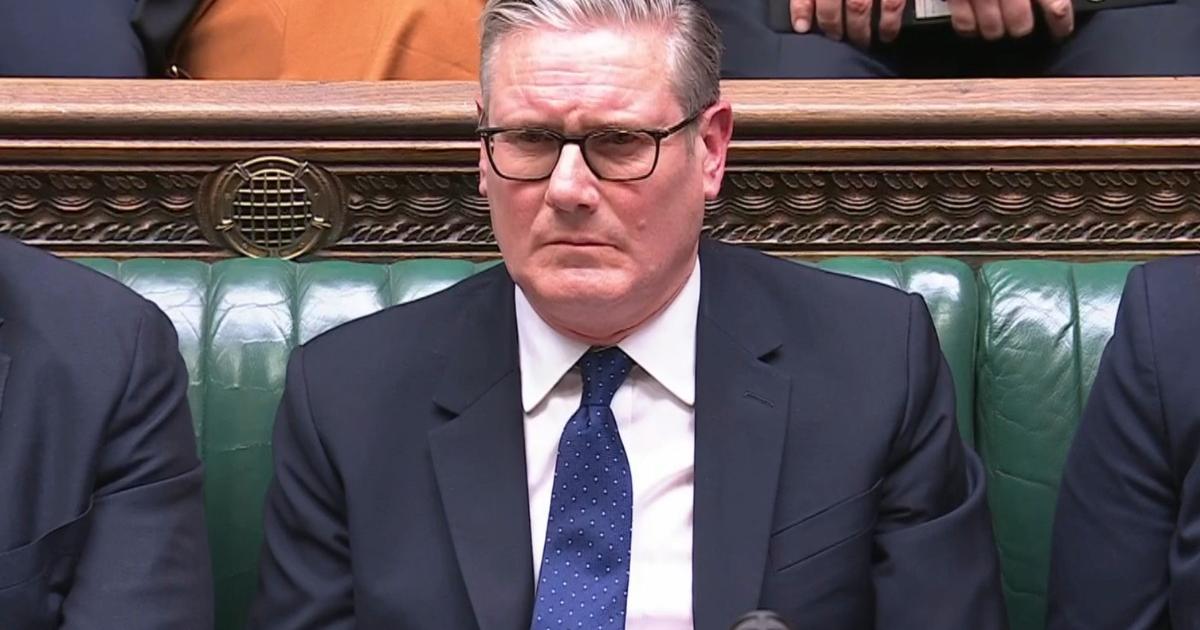
I VOTED Labour in the last election. After the disgraceful behaviour of the last Government, I honestly thought that Keir Starmer would, at the very least, bring truth, transparency and honesty.
Watching Olly Robbins today, and the way he presented himself and the evidence he gave, it’s blown apart the explanations given by the PM. The PM has mislead the us all. I feel so sorry for Olly Robbins who didn’t deserve to be sacked.
Starmer tried to bully Mandelson into the US Ambassador’s role despite his relationship with Epstein and business links to China and Russia as well as his obsession with the rich and powerful.
Advertisement
The defence of “no one told me” is insulting.
Starmer had the opportunity to tell the truth, take responsibility and he didn’t take it. We need a leader, not someone who sacrifices all those around him.
John Jones,
Russet House,
Advertisement
Birch Close
York
What do you think?
Advertisement
Feel strongly about an issue? Write us a letter. Please write no more than 250 words and you must provide your full name, address and mobile number. Send your views by email to: letters@thepress.co.uk
Write a comment
Join the debate and leave a comment in our comments section below this article – we may use your comments for a follow up article.
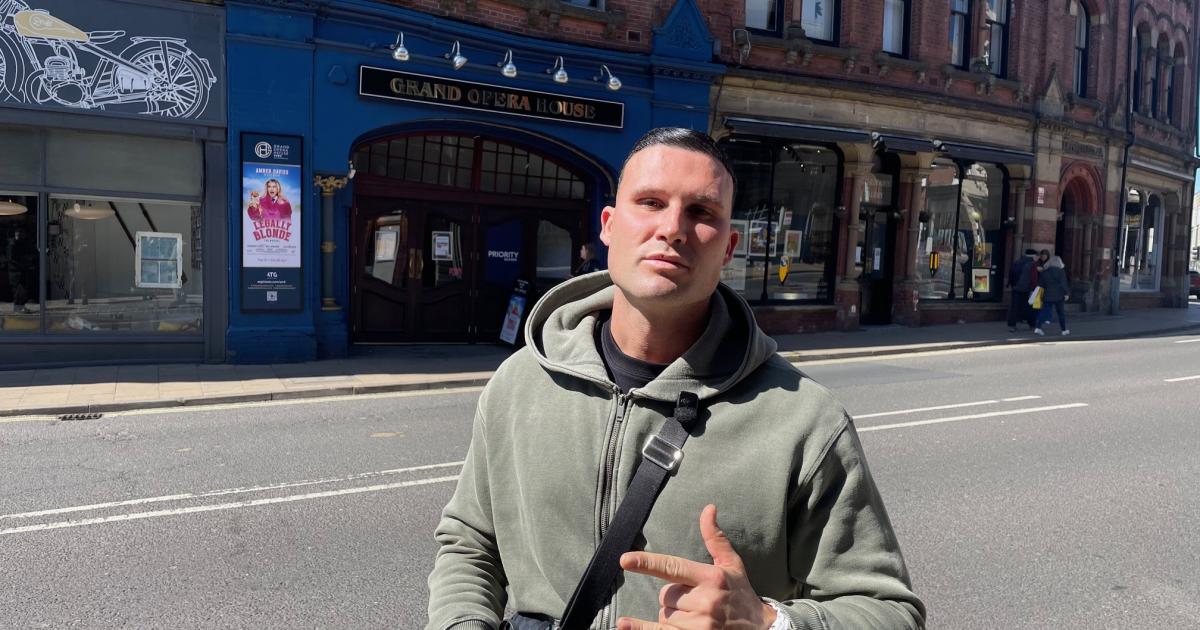
The influencer, who has more than one million followers on TikTok and Instagram, was seen walking through streets in the city centre on Wednesday afternoon (April 22).
Speaking in Clifford Street, Gymskin told The Press he was filming live content on the streaming platform Kick but declined to speak further as we was going for lunch.
More than 1,800 viewers were tuned into the live broadcast on Kick at 1.45pm, in which Gymskin could be seen posing for photographs with fans.
Advertisement
Gymskin was joined by a camera operator and another man as the group walked around York city centre.
The video, which also featured clips in Leeds city centre, said the influencer was taking part in a UK tour.
“I’m so gassed, this is mint,” Gymskin said in the video after arriving in York.
I’m standing in a deconsecrated church in Lambeth, London, now home to the Garden Museum. It has a warm and pleasant atmosphere, undeniably a church, yet far removed from its original purpose. On this quiet Friday morning, I met with Emma House, the lead curator of the exhibition Seeds of Exchange. We wandered around the exhibit, which is deceptively small for the scale of its story, crossing continents, cultures, languages and time.
Seeds of Exchange: Canton and London in the 1700s tells a story that is both local and global. It centres on a short-lived but remarkable collaboration between an English botanist and his Chinese counterparts. Together, they documented the plant life of Canton (modern-day Guangzhou) at a time when global trade, science and empires were becoming deeply entangled.
As a botanist I love plants – but this story is not only about them. It is about how knowledge moves, and who gets to shape it.
A meeting point of worlds
The late 18th century was a period of carefully controlled contact between China and Europe. Trade with the outside world in China was tightly regulated through licensed Chinese merchant guilds. Foreign traders could only operate during part of the year.
Advertisement
Into this system stepped John Bradby Blake, an employee of the British East India Company in the early 18th century.
A Florist by John Dadley (18th century). Victoria and Albert Museum, London
Like many of his contemporaries, he was not simply a passive participant in imperial trade. The East India Company allowed its agents a degree of personal enterprise, and Blake – having suffered substantial financial losses in tea speculation – turned to botany as both scientific pursuit and potential commercial opportunity.
His project was ambitious: to catalogue Chinese plants in what he envisioned as a Compleat Chinensis (Complete Chinese). Between 1766 and his death in 1773, he commissioned over 150 botanical paintings, documenting many now familiar plant species, ranging from citrus fruits and camellias to turmeric and jackfruit.
Momordica charantia by Mauk-Sow-U (1771). Oak Spring Garden Foundation, Upperville, VA
What makes this project particularly striking is that it was not a solitary European endeavour. Blake relied heavily on local expertise, as he did not know the flora and did not speak Mandarin.
Mak Sau, a Chinese artist about whom we know very little, produced detailed botanical paintings that form the heart of this exhibition. These works are scientific documents, capturing colour and structure with fantastic precision. But they are also superb works of art and form a historically important collection of early botanically accurate watercolour paintings in China.
Local knowledge also helped identify species that Blake himself struggled to classify. Whang At Tong, Blake’s Chinese counterpart, was a merchant operating within the Canton system. He facilitated the exchange of materials, knowledge and, eventually, the transport of Blake’s collection back to Britain. The endeavour was, in many ways, a shared intellectual enterprise. Yet it unfolded within an unequal system shaped by imperial trade and economic ambition.
Plants, profit and empire
Many of the plants depicted in Seeds of Exchange hint at the economic motivations behind Blake’s work. Tea, citrus species, indigo and medicinal plants all had clear commercial value. Others carried horticultural interest that would later shape European gardens.
Citrus maxima by Mauk-Sow-U (1771). Oak Spring Garden Foundation Upperville VA
Blake cultivated plants in his own Canton garden, experimenting with germination and growth and sending seeds back to Britain. These botanical exchanges contributed, in small but significant ways, to breaking China’s monopoly on certain crops – particularly tea.
Yet the paintings also reveal a more complex botanical landscape. Some species, such as chilli peppers and watermelon, were themselves recent arrivals to China (from South America and Africa respectively).
Even in the 18th century, plant distributions were already shaped by centuries of movement across continents. Today, the movement of plants across the world is on a monumental scale, driven by crops and horticulture. The exhibition quietly reminds us that “native” and “foreign” are often more fluid categories than we assume.
Blake’s death in 1773 brought the project to an abrupt halt. He never completed his Compleat Chinensis, and his work might easily have faded into obscurity. Instead, Whang At Tong transported the collection to London, where it entered elite scientific circles. He is one of the earliest recorded Chinese people to have come to the UK. He met figures such as Joseph Banks, a central figure in British botany, and even sat for a portrait by Joshua Reynolds – a rare moment of cultural visibility for a Chinese visitor in 18th-century Britain. The Reynolds painting is in the exhibit, and exquisitely done.
Painting of a river boat carrying brightly coloured plant pots with flowers and foliage (1880s). Victoria and Albert Museum, London
Despite this, the botanical paintings themselves were never fully integrated into British science. Seeds were sent to Kew, but the visual and documentary archive remained largely unused. Over time, the collection became physically divided. One portion, consisting of manuscripts and herbals (historical books describing the properties of plants), ended up, remarkably, in Canterbury Cathedral. Another, including many of the paintings, passed through the art market before being acquired by the Oak Spring Garden Foundation in Virginia in the 20th century.
Reuniting the past
Seeds of Exchange marks the first time these materials have been brought back together in over two centuries. Seen together, the paintings, herbals, notebooks and maps reveal a network of knowledge production that was collaborative, cross-cultural and contingent. Recent research indicates that Blake mainly used texts by European authors for identification, however the exhibition shows Chinese floras which were used in the work, highlighting the depth of local contribution.
Advertisement
The paintings and documents on display at the Garden Museum. BJ Deakin Photography
The exhibition also sits within a broader historical context. The Garden Museum itself stands on land once associated with early botanical collectors such as the Tradescant family, whose 17th-century “cabinet of curiosities” helped lay the foundations of modern museums. From these early collections to Blake’s Canton project, the gathering and classification of plants has long been tied to exploration, trade and power.
What, then, does this exhibition tell us today? At one level, it is a fascinating story of early globalisation. But it also prompts deeper questions about authorship and recognition. Projects like Blake’s were often framed as European achievements, even when they depended heavily on local knowledge and labour.
Seeds of Exchange highlights that scientific knowledge has almost always been co-produced, even if the historical record has not always acknowledged this. In an era when museums and collections are increasingly reexamining their collections and histories, this matters.
Like the plants it documents, the knowledge this exhibition represents has travelled, adapted and taken root in new contexts – and we are still tracing its origins more than two centuries on.
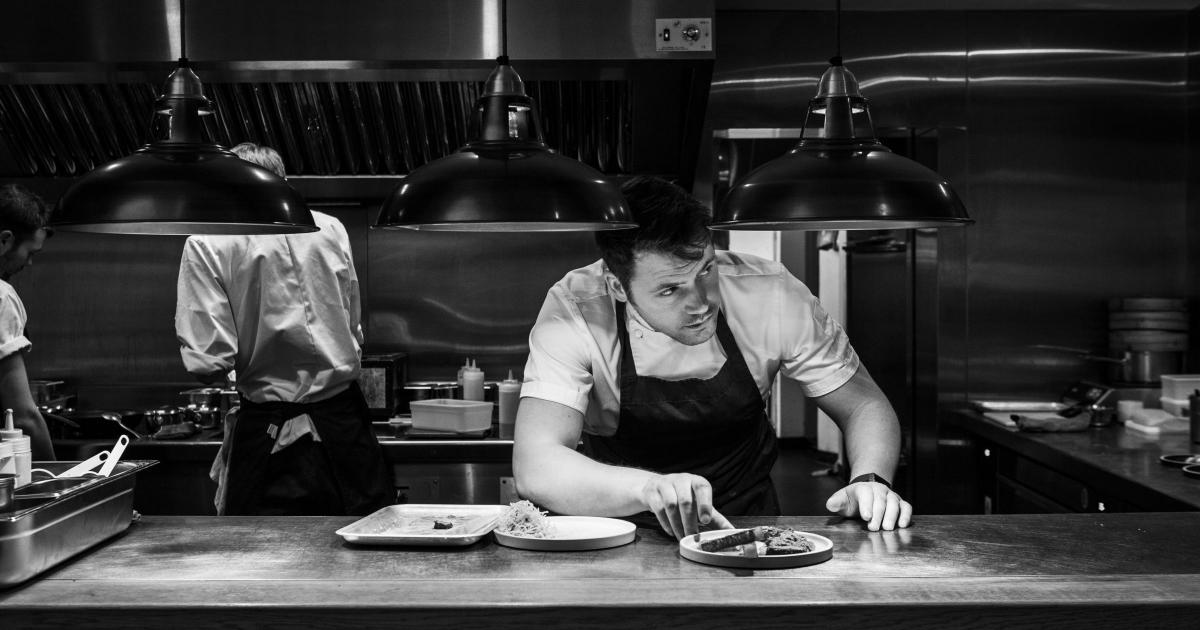
Michelin star chef Tommy Banks will be making a special appearance on stage at York Theatre Royal for one night only on Friday, July 17.
In his show, Tommy Banks Spinning Plates: LIVE!, the award-winning chef and TV star chef will be sharing his story – one of a lifetime of ambition, vulnerability, risk and pressure revealing the highs and lows of a life in hospitality.
Tommy Banks, who owns Roots in York, opens up on pressures at York Theatre (Image: Newsquest)
It will be told across three intersecting timelines – the last 25 years, the defining 12 months, and the one day of opening night for his latest pub – with each moment teetering on a knife-edge.
Tommy will expose the harsh reality of operating in a turbulent industry where soaring business rates and crushing VAT force three pubs to close every week.
Advertisement
Tommy will also be talking about the incredible community of talent he has built in the once-sleepy village of Oldstead that is rooted in camaraderie, resilience, and true Yorkshire grit.
The show will use live storytelling and immersive cinema as the chef lifts the lid on hospitality service at its most intense, revealing the pressures of leadership and what it really takes to pursue excellence.
The 37-year-old who grew up in Oldstead owns Michelin-starred The Black Swan at Oldstead, Roots in Marygate, York, and The Abbey Inn at Byland as well as The General Tarleton at Ferrensby in a joint venture called Jeopardy Hospitality (JH), with business partner Matthew Lockwood, brother James Banks and businessman, Neil Armstrong.
Chris Wakelin, the 13th seed, made it 12 out of 12 seeded players to advance, sealing a 10-6 victory over 20-year-old English qualifer Liam Pullen.
Wakelin had led 5-4 overnight but Pullen, the world number 86 who battled through four qualifying rounds to qualify, made it 5-5 – only for Wakelin to win five frames in a row.
“I’m gutted for Liam as he is a really good friend of mine – we practice a lot and he is an incredible player,” said 34-year-old Wakelin.
“A few years ago we first practiced together and he stuffed me and I thought ‘what a talent’. It’s a shame he didn’t fully show what he is capable of but he did really well and made a good account of himself.
Advertisement
“I’m really proud that he has been here for the first time and every single person in that arena wanted him to win, me included. But I’m here to win and sometimes you have to be ruthless.
“I watched the draw and I didn’t want to draw Stan [Moody] or Liam as they are my friends and I want them to win.”
Pullen, who lost his World Snooker Tour place last May, then regained it a few weeks later at Q School, said he loved his first Crucible match.
“I really enjoyed every moment,” said Pullen. “I felt at times I held my own and I thought it was a very tight 10-6. I loved it. You have got to have fun and I felt close to doing something but it didn’t quite click.”
Advertisement
In the afternoon session, O’Sullivan will be looking for a quick finish as he leads 7-2 against another debutant, China’s He Guoqiang, while Si Jiahui begins his match with Iran’s Hossein Vafaei.
The trio were arrested on suspicion of affray on Sunday (April 19), with one of the women found hiding in woodland behind the police station.
Advertisement
All three have been released under investigation.
A spokesperson from Durham Police said: “Following extensive enquiries, officers from the Spennymoor Neighbourhood Team identified and arrested a man and two women in connection with the incident.
“All have since been released under investigation, but enquiries remain ongoing.”
Anyone with information is asked to call 101 quoting crime reference number CRI00674512 or contact hayley.outterson@durham.police.uk.
The head of the International Energy Agency warned last week that European countries could run low on jet fuel within weeks, forcing the continent’s airlines and carriers that fly to Europe to significantly reduce flights.
Many airlines have already raised checked bag fees or added fuel surcharges as the global price of jet fuel increased from about $99 per barrel at the end of February to as high as $209 a barrel at the beginning of April.
Other airlines, ranging from U.S. carriers like United and Delta to Air France-KLM, SAS, Philippine Airlines and and Cathay Pacific in Europe and Asia, have reduced routes and either increased ticket prices or said they would hike them if the war keeps oil from passing through the Strait of Hormuz.
“It’s very hard for the airlines to make predictions in this environment, so they’re going to be conservative, and that’s why it’s likely that their prices will remain elevated for some time until things really stabilize,” said Shye Gilad, a former airline captain who now teaches at Georgetown University’s business school.
One of the easiest ways to save money is to pack light (Getty Images)
With airfares and fees on the rise, consumers still can make choices that determine how much of their travel budgets will get taken up by paying to get to and from their destinations.
Act quickly
While consumers may be tempted to see if the war ends before buying airline tickets, the “wait-and-see” approach to booking flights is riskier this year, travel experts say, especially the longer the war goes on and the closer to summer and other peak travel periods it gets.
Advertisement
“Presuming there is a lasting ceasefire — or better yet, peace agreement — it will take a few months for normal levels of jet fuel production and delivery to resume,” airline industry analyst Henry Harteveldt, president of Atmosphere Research Group, said.
The conflict in the Strait of Hormuz and President Donald Trump’s insistence on maintaining a U.S. blockade of Iranian ports illustrated the shakiness of prospects for oil flowing reliably again from the Persian Gulf and with it, an easing of the price pressure on airlines and their customers.
“My advice to travelers is this: If you find a flight whose schedule fits yours, with a fare you can afford, and on an airline you can at least tolerate, book it,” Harteveldt said. “But — and I cannot emphasize this enough —do not book a Basic Economy fare,” the cheapest but also the most restrictive airline ticket class.
Along with charging for checked bags and seat selection, most North American airlines do not give refunds or travel credits to passengers with Basic Economy tickets if they don’t cancel their trips within 24 hours of purchase. Policies may vary, but spending more for a Standard Economy ticket provides more flexibility, according to Harteveldt.
Advertisement
Airlines have announced flight cuts in the US in response to a jet fuel crisis brought on by the Iran war (Getty)
Paying more up-front for a refundable ticket also proves advantageous because “if the prices start to dramatically change, you can cancel and rebook for the better price,” Gilad said.
Travel experts say that for now, longstanding booking guidance offers a baseline for how early to reserve a flight to get the lowest airfare: international flights are typically the cheapest about two to five months in advance, and domestic trips about three to six weeks out.
Last-minute bookings and other situations that typically command higher prices are likely to keep climbing, Gilad said.
“Remember, especially if you’re traveling on the major airlines, they’re going to have more ability to adjust fares. If you book too close to your travel date, you’re going to pay more,” he said. “The farther out you can book, the better.”
Keep an open mind
Advertisement
Travelers who don’t want or need to reach a specific place at a specific time can find it easier to save on airfare. Shifting departure or return dates by a day or two — especially from peak weekends and holidays to midweek — often yields big price differences.
Choosing a different destination also may pay off. A flight from the U.S. may be significantly cheaper to one European city than another. Since budget airlines and trains connect much of Europe, and trains, an airport it cost less to get to can still provide easy access to a lot of other places.
Consumers not set on a certain arrival destination can try tools like Skyscanner’s “Explore Everywhere” feature to look for less-expensive options.
Looking beyond the closest airport for departures also can make a meaningful difference. Major hubs tend to offer more flights and lower fares than smaller regional airports.
Advertisement
In some cases, booking a separate short flight or train to a hub will unlock a cheaper long-haul airfare — think Milwaukee versus Chicago’s O’Hare International Airport.
Travel light
Sticking to a carry-on bag, when possible, can help avoid the higher fees for checking luggage that many major U.S. airlines introduced recently, including Delta, American, United, Southwest and JetBlue.
If packing light is not an option, plan ahead because airlines typically charge more to add bags closer to departure, especially within 24 hours of a flight.
Advertisement
Redeem your points
While fares are going up, the number of airline points needed for many flights has not increased at the same pace, said Adam Morvitz, CEO of points.me, a loyalty rewards redemption search platform.
Airlines still need to fill seats, Morvitz said, and offering more of them for fewer points is one way to do it.
Customers without enough frequent-flyer miles or credit card points for a round-trip ticket still can redeem their travel rewards for one leg of a journey and free up cash for other travel expenses.
Advertisement
Many travelers redeem points directly through their credit card’s booking portal, where they’re typically worth about 1 cent each, Morvitz said. Transferring points to airline loyalty programs often unlocks significantly better value because most major credit card issuers partner with a range of airlines.
Take American Express, whose points can be transferred to Air France’s Flying Blue program. Travelers who don’t want to book with Air France still can use those points with the airline’s partner carriers, such as Delta, Morvitz said.
“Points are a form of wealth, and consumers should recognize that those points increase spending power,” he said.
Explore travel credit cards
Advertisement
For those new to travel credit cards, sign-up bonuses may yield benefits that can be put to use as soon as this summer. Some bonuses are large enough to cover a flight after meeting a minimum spending requirement.
“Even if you were to travel the entire year, taking one trip per month, you would still earn more points simply by signing up for the card than actually sitting on a seat and flying,” Morvitz said.
Points and rewards can add up through everyday spending on groceries, dining and gas. Some cards include perks like free or discounted checked bags.
Officials have suggested airlines have just weeks of fuel left (Picture: Getty Images)
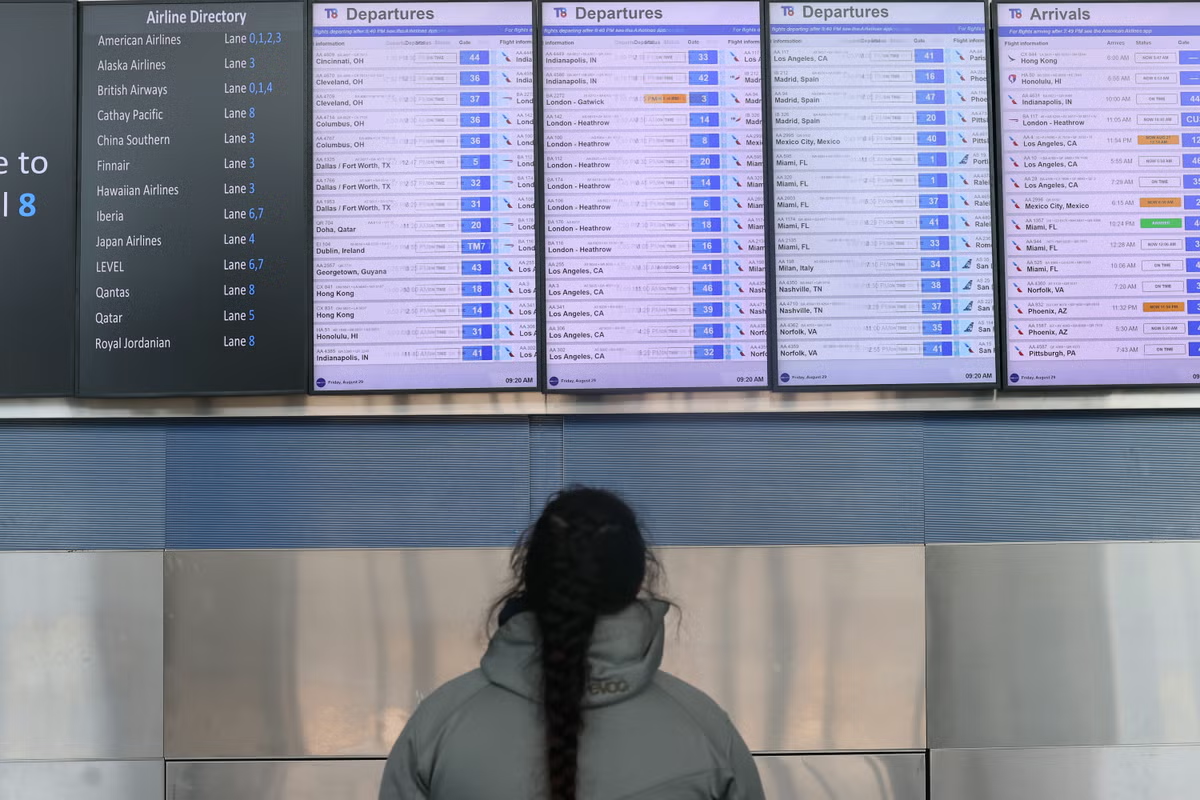
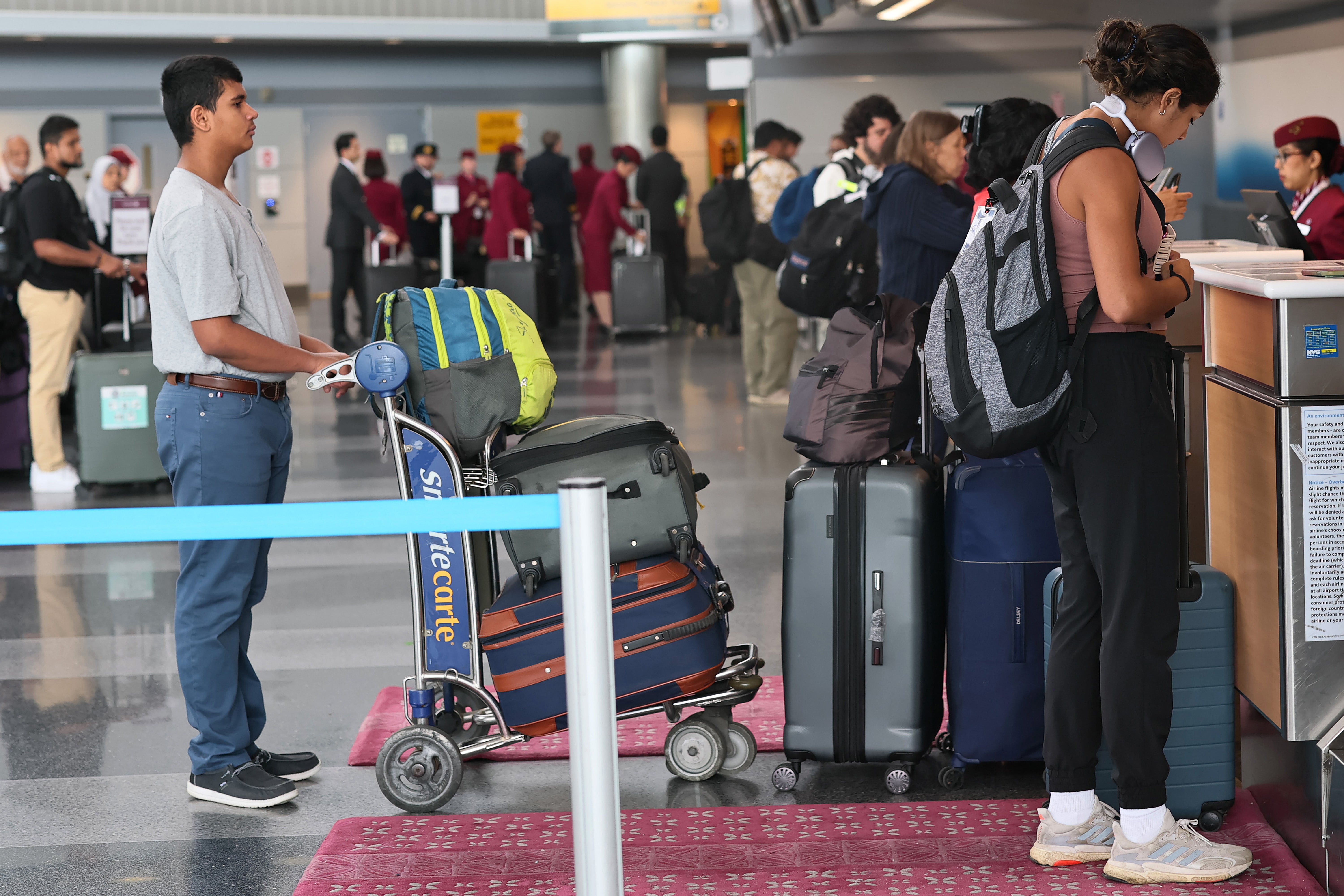
As airlines grapple with an ongoing jet fuel crisis, passengers are being hit from both sides: more cancelled flights and higher travel costs.
Carriers around the world are cutting routes and introducing extra charges in an effort to manage soaring fuel prices driven by ongoing conflict in the Middle East.
The Strait of Hormuz, which has effectively been blocked by Iran since February, carries up to 75% of plane fuel exports from the Gulf to Europe.
However, with this route disrupted and supplies running low, costs have skyrocketed from around $85 to $90 (£63 to £67) to as much as $200 (£148) per barrel over the past few weeks.
Advertisement
What is the Strait of Hormuz?
The Strait of Hormuz is 60-mile-wide section of waterway that connects the Gulf with the Arabian Sea, making it one of the most important shipping lanes in the world. With Iran to the north and Oman to the south, during peace time, around 20% of the world’s oil and gas passes through it.
The UN allows countries to exercise control of their territorial seas up to 13.8 miles from their coastlines, and since some portions of the Strait lie entirely in Iran and Oman’s territorial waters, they are allowed to ‘defend’ their countries if needed.
Along with the geography allowing Iran to exert control on the waterway, at its narrowest point, the Strait is just 24 miles across, making it easy for Iran to target vessels passing by.
Advertisement
Last week, head of the International Energy Agency (IEA), Fatih Birol, said Europe has ‘maybe six weeks or so [of] jet fuel left,’ warning passengers to expect cancellations into the summer months.
Best of Metro Deals
Get exclusive discounts with Metro Deals – save on getaways and spa days. Powered by Wowcher
Bannatyne Spa: Spa day for two with treatments, lunch & prosecco — save up to 57% off.
Some airlines have already reduced schedules due to the shortage, while others are increasing fares or hiking baggage fees.
Advertisement
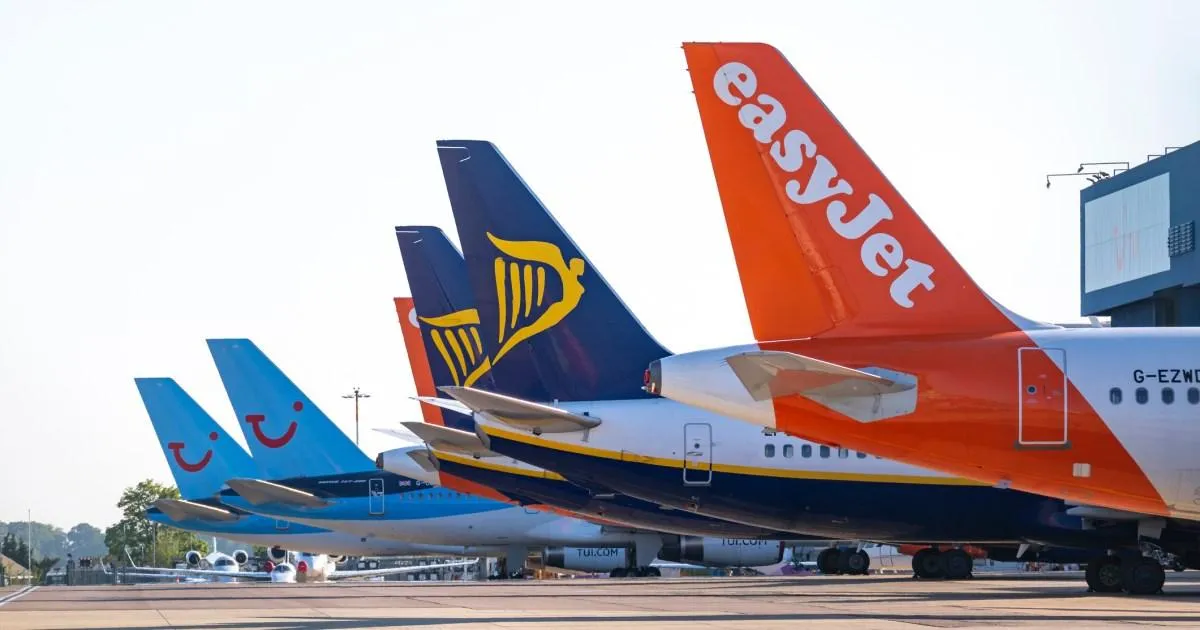
How major airlines operating in the UK have responded
Aegean Airlines
The Greek airline said this week it would raise ticket prices as a result of the spike, although hikes would be limited to around 7% to 8%.
The change will impact new bookings, but the 3.6 million passengers already scheduled to fly over the coming months, and those who hold an Aegean Pass and have bought early-bird packages, will be unaffected.
Like many other carriers, the company has also suspended flights to affected regions until the end of April, including Iraq, Israel, Lebanon, Saudi Arabia, and the UAE.
Aer Lingus
Over 500 flights have been dropped from Aer Lingus’s schedule, although it claims this is due to ‘mandatory maintenance’ on aircraft rather than the fuel crisis.
Advertisement
Air France-KLM
The airline group said it has made ‘price adjustments’ to long-haul ticket prices to address surging costs, with return fares rising by €50 euros (£44) per round trip, while short and medium-haul round trips in economy increasing by €10 (£9).
Last week, the group’s Dutch arm KLM also said it would cancel 160 flights in Europe over the coming month as a result of the fuel shortages.
Customers may face disruption (Picture: Getty Images)
Air India
In March, the Indian carrier began a phased expansion of a fuel surcharge on its domestic and international routes ‘necessitated by the steep rise in jet fuel prices arising from the geopolitical situation in the Gulf.’
All new bookings for flights to and from Europe now incur a $125 (£92) fee, up from $100 (£74) before the conflict began. However, the company noted it will be reviewing surcharges periodically, and may ‘make appropriate adjustments’ as required.
Alaska Airlines
The US airline, which is due to launch its first UK service between Heathrow and Seattle in May, increased checked bag fees for most customers earlier this month.
Advertisement
As of April 11, charges went up by $5 (£3.70) for the first bag and by $10 (£7.40) for the second, while a third piece of luggage will now cost $200 (£148), up from the previous $50 (£37).
American Airlines
Although checked baggage fees have been hiked up to $150 (£111) per bag — meaning the first costs $50 (£37), the second $60 (£44), and the third $200 (£148) — these increased charges only apply to domestic and short-haul international flights, so won’t impact travellers to or from the UK.
British Airways
British Airways owner IAG said in March it did not plan to increase ticket prices in the short to medium-term, as it was well hedged for upcoming shortages, but warned it was still ‘not immune’ to the fuel crisis.
British Airways specifically, however, has made changes to its schedule due to the ‘continuing uncertainty’, and is ‘directly in touch with affected customers to offer them a range of options’.
Advertisement
BA has made changes to its schedule (Picture: Getty Images)
Cathay Pacific
The Hong Kong airline plans to cut about 2% of its scheduled passenger flights from mid-May to late June, while its budget subsidiary HK Express is dropping around 6% of flights.
However, more flights were actually added to London, Paris, and Zurich in March, as airspace closures led to an ‘upsurge’ in demand as passengers ‘prioritised alternative routings’.
In terms of pricing, the carrier said it would hike fuel surcharge by 34% across routes from April 1 and review them every two weeks.
China Eastern Airlines
While the Chinese airline, which offers multiple daily flights between London and Shanghai, has raised fuel surcharges, these currently only apply for domestic trips.
Passengers travelling within China currently face a 60 yuan fee (£6.50) for journeys under 800km, or 120 yuan (£13) for those over 800km.
Advertisement
Delta Air Lines
Delta said at the start of April it would cut capacity by around 3.5% from its original plan, although this would be targeted on red-eye and mid-week flights to ‘reduce unprofitable flying’.
Fees for checked luggage also increased by $10 (£7.40) for first and second bags and a $50 (£37) for the third, with bosses reported to be looking at increasing airfares in the months ahead.
EasyJet
In a recent statement, EasyJet boss Kenton Jarvis said the airline had ‘no concerns’, as it has ‘visibility to the middle of May’ in terms of fuel supply.
But with £25 million in extra fuel costs in March, the CEO added that European consumers should expect higher ticket prices around summer, when existing fuel hedges come to an end.
Advertisement
EasyJet’s fuel costs were up £25 million for March (Picture: Getty Images)
Emirates
Capacity was slashed by Emirates in late February, following widespread regional airspace restrictions impacting its Dubai hub.
The world’s largest long-haul airline and the largest in the Middle East, normally operates more than 3,600 flights per week, but is currently operating to ‘more than 100 destinations’ on a skeleton timetable — roughly 70% of its normal capacity.
Bosses have said it will only ramp up operations when over-flight corridors over Iraq and Iran are reliably reopened, and will ‘develop [its] operational schedule accordingly’.
Fare prices have reportedly gone up too, with a $226 (£167) economy class surcharge added to European trips from April 1, and $623 (£461)for premium cabins
IndiGo
India’s biggest airline — which flies from London and Manchester to destinations across India — introduced new fuel charges on domestic and international flights from March 14.
Advertisement
These fees initially ranged from 425 rupees (£3.35) for domestic flights to 2,300 rupees (£18) for flights to Europe, but have since been pushed up to as much as 10,000 rupees (£79).
IndiGo bosses claimed these surcharges would be monitored and adjusted where necessary, but it aimed to limit the impact on passengers where possible.
Jet2
Following the IEA announcement about impending fuel shortage disruption, a number of Jet2 passengers reached out to the airline for clarity ahead of their bookings.
In response, representatives confirmed ‘all flights are planned to go ahead as normal’, and customers would be contacted directly should this change. To be on the safe side, passengers are advised to check their flight status via the Jet2 website at least 12 hours before departure for the latest updates.
Advertisement
What aspect of the jet fuel crisis affecting airlines concerns you the most?
Increased ticket prices
Flight cancellations
Added fees for baggage and services
Environmental impact of fuel shortages
Advertisement
Sign up to The Getaway Expert, your exclusive seven-day guide to travelling with confidence from Metro’s travel editor, Alice Murphy.
JetBlue Airways
Citing ‘rising operating costs’, the US-based carrier recently hiked baggage prices by between $4 (£3) and $59 (£44) depending on the type of flight and number of checked items.
Advertisement
While JetBlue hasn’t made a statement regarding fare increases, analysis by Deutsche Bank revealed its ticket prices jumped 16% in one week at the start of the month, potentially due to ‘panic buying’ for summer ahead of a predicted surge.
Lufthansa
Earlier this week, Lufthansa released a statement saying 20,000 short-haul flights were being cut from its schedule this summer, blaming the move on the jet fuel crisis and ongoing labour disputes.
The majority of this would be from the airline group’s loss-making short-haul CityLine subsidiary fleet, which was already due to be grounded later in the year.
Lufthansa will also withdraw four older Airbus A340-600 long-haul aircraft at the end of the summer, and reduce short and medium-haul offerings by five aircraft this coming winter, with the cuts representing 1% of the German carrier’s ‘available seat kilometres’ yet saving 40,000 tonnes of fuel between now and October.
Advertisement
Norse Atlantic UK
Low-cost Norwegian airline Norse Atlantic axes its flight route between London Gatwick and Los Angeles this week, citing the ‘global fuel crisis’.
‘We are truly sorry for the inconvenience, and apologise to passengers who have [had] their travel plans changed,’ a spokesperson commented. ‘We will assist disrupted passengers as best we can.’
Qantas
Despite cutting domestic flights, strong interest in Europe-bound travel led the Australian airline to redeploy capacity to hotspots like Paris and Rome.
Ticket prices have also increased in recent weeks, and it warned it may need to take ‘further action’ as the situation unfolds.
Advertisement
Ryanair
At the start of April, a spokesperson for the budget carrier told Metro it could ‘guarantee supply to mid-end May’, although if the conflict continues beyond this date, disruption due to fuel shortages couldn’t be ruled out.
This bolsters previous claims from Ryanair boss Michael O’Leary, who stated the company would likely be forced to cancel between 5% to 10% of its scheduled flights through May, June, and July.
With the airline operateing over 3,600 flights per day, this means approximately 360 daily trips could be impacted if the fuel crisis doesn’t resolve itself.
Ryanair expects fuel supplies to last until mid-May (Picture: Getty Images)
Scandinavian Airlines (SAS)
At least 1,000 flights are expected to have been cancelled by SAS in April, up from a ‘few hundred’ in March.
The majority of journeys affected are domestic routes within Norway however, with CEO Anko van der Werff highlighting that given the airline runs over 800 flights per day, cuts are limited in scale.
Advertisement
SAS, which had already increased flight prices, said that even if it tried to absorb the rising fuel costs, the surge was still ‘a shock that directly hits the airline industry’.
TAP Portugal
Last week, the CEO of the Portuguese Airlines Association (RENA), António Moura Portugal, said the country’s flag carrier, TAP, may ‘need to reduce operations and, eventually, raise prices’.
While analysis claims TAP only has 40% fuel coverage for 2026 (compared to between 62% and 84% for other major airlines) Portugal stressed that it was continuing to monitor the conflict, and is yet to make any ‘definitive statements’.
TUI
TUI Airways — the world’s largest charter airline, flies to over 100 destinations from 17 bases across the UK and Ireland — said it is ‘monitoring’ jet fuel shortages, but is ‘not anticipating any immediate disruption to flight schedules or holiday programmes’ at present.
Advertisement
Turkish Airlines-SunExpress
SunExpress, a joint venture between Turkish Airlines and Lufthansa, is set to impose a temporary fuel surcharge of €10 (£8.69) per passenger.
This will apply to booking for flights between Turkey and Europe, made on or after April 1. for departures on or after May 1
United Airlines
In March, United Airlines’ CEO Scott Kirby said the firm would begin ‘tactically pruning flying that’s temporarily unprofitable in the face of high oil prices’.
The 5% capacity reduction will be focused on less-popular timings like overnight, Tuesdays, Wednesdays and Saturdays, and is expected to extend through at least the second and third quarters of 2026.
Advertisement
United also increased first and second checked bag fees by $10 (£7.40) for customers travelling in the US, Mexico and Canada and Latin America, but international flights are believed to be unaffected.
Virgin Atlantic
The airline is adding fuel surcharges to fares but will still struggle to return to profitability this year, its CEO Corneel Koster told the Financial Times.
Sir Richard Branson’s airline added a fuel surcharge of £50 to economy class tickets, with premium economy increasing by £180 and business class by £360.
Advertisement
‘If the fuel price goes much higher, I think the surcharges may go higher,’ commented CEO Corneel Koster. ‘If they go up in a week and you book in two weeks’ time, you’ll be paying higher.’
The company also recently scrapped flights from London to Riyadh, just a year after the route was launched, citing ‘the latest intelligence, regulatory guidance, demand and operating costs’.
Fuel shortages have led to surcharges for Virgin Atlantic passengers (Picture: Getty Images)
WestJet
In a series of ‘near-team measures’, the Canadian airline this week added a C$60 ($32.50) fuel surcharge to some bookings, and will be consolidating flights on lower-demand routes as well as ‘adjusting the travel period for seasonal offerings’.
A statement on Westjet’s website said capacity was expected to reduce by 1% April, 3% in May and 5.5%t in June, and impacted customers would be provided with reaccommodation options, most within the same day as their original departure.
Wizz Air
Hungarian carrier Wizz Air reported issues due to shortages in three airports in Italy last week, but chief Jozsef Varadi claimed these were ‘all resolved within a day and in some cases within hours.’
Advertisement
A spokesperson for the company, the third-largest European budget airline (after Ryanair and easyJet), stated it was ‘actively monitoring fuel supply,’ and ‘will work with its suppliers to secure the jet fuel available in line with its needs’, keeping customers informed and providing updates as needed.
What to do if your flights are cancelled or disrupted
Chris Harrington, managing director of travel firm hoppa, says the first port of call if your flight is cancelled is to contact the airline.
‘If you are already at the airport, head for the airline’s customer service desk to speak to a member of staff,’ he tells Metro.
‘Acting quickly is essential, as available seats on alternative flights may be limited and only available for a short time. However, other people will be in the same position as you, so if you’re met with long queues, try using the airline’s app or ring the customer service team to find out next steps.’
Advertisement
In most cases, the airline will have to make an alternative plan for you, so ask them to rebook you on a later flight, and let them know if there’s an alternative route (or flight using another airline) that works.
Chris also highlights the importance of buying travel insurance as soon as you book, to ‘protect yourself from circumstances such as cancelled flights’.
Some policies will cover the cost of hotels, airport transfers, alternative flights, and food, which is essential since cancellations due to external factors, such as fuel shortages, are typically classed as ‘extraordinary circumstances’, meaning airlines don’t necessarily have to reimburse directly.
‘If the flight cancellation is due to the actions of the airline, then it’s likely you’ll be entitled to compensation as per ABTA guidelines,’ Chris continues, noting that this amounts to £220 for journeys of 1,500;m or less, and up to £520 for anything over this distance.
Advertisement
‘However, in this case, because the cancellation is caused by extraordinary circumstances outside of the airline’s control, compensation is unlikely to apply.’























































You must be logged in to post a comment Login