




The new season of the English Premier League is almost ready to kick off, and with it another annual cycle of the national game. Each August brings hope and expectation for supporters with an opportunity to start anew. But, rather than excited anticipation, frustration, anger and anxiety are the overriding emotions of many fans currently.
This summer some of the English clubs with the richest history – including Arsenal, Manchester United and Liverpool – have caused controversy for revoking the season tickets and issuing lifetime bans to thousands of supporters.
Our latest research has examined how the increasing commercialism of English football, which has accelerated since the return to play following the COVID lockdowns, threatens the future existence of football stadiums as an inter-generational space.
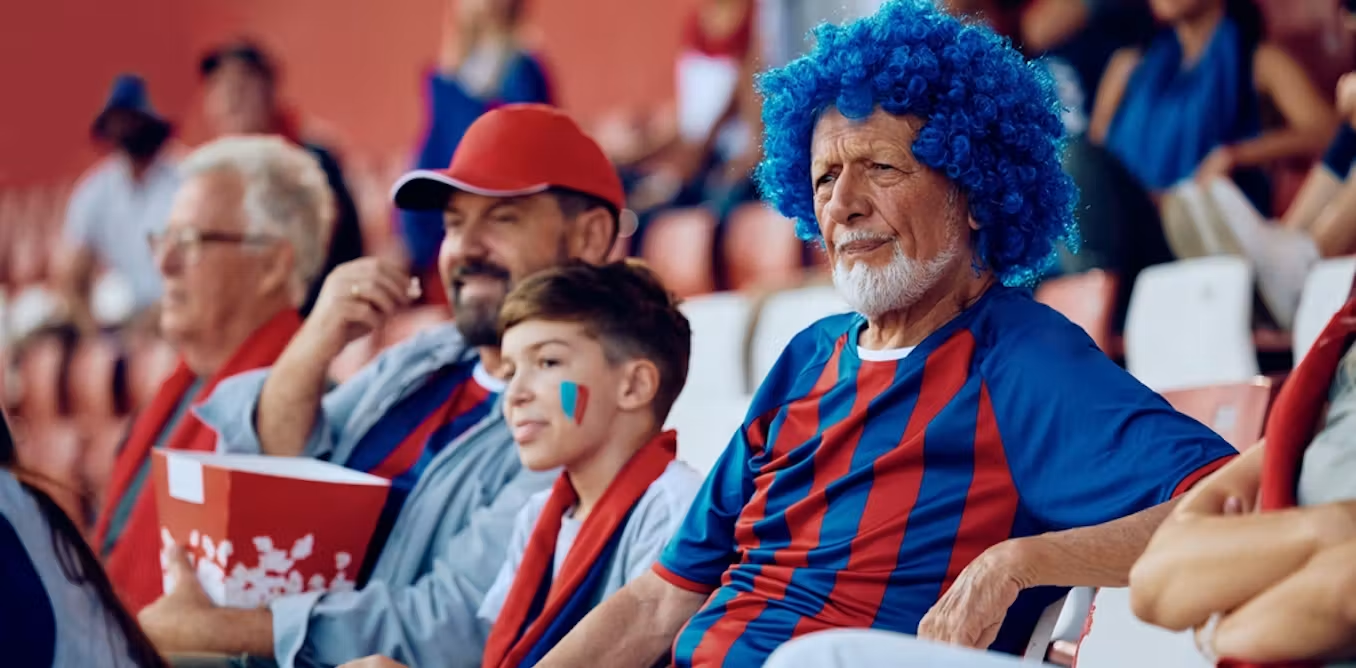
Despite significant changes in the finances, infrastructure and scale of the national sport over the past four decades, English football stadiums remain a key focal point for fan communities and distinct spaces of connection and bonding between the generations.
The intergenerational nature of football fandom is largely taken for granted, despite the growing realisation of the importance such shared spaces for the transmission of cultural values across generations. These latest initiatives may exacerbate the risk to this communal experience by digitally excluding fans.
Crackdown on ticket touts
Ostensibly the action taken by the clubs is part of an anti-touting crackdown, as ever-rising demand has created a lucrative secondary market for touts to resell tickets at hugely inflated prices. Ticket touting – the act of buying tickets for live events and reselling them at highly-inflated prices – has been illegal in English football since the introduction of the Criminal Justice and Public Order Act 1994. While frowned upon in other sports and entertainment sectors – such as live music – it is only criminalised in football.
A serious attempt by clubs to clampdown on such activity is long overdue. The advent of digital tickets has witnessed the rise of online touting on an industrial scale, with bots used to harvest hundreds of tickets to be resold to supporters across the globe. There are also signs that such actions are proving effective – it has been reported that the actions taken by Liverpool FC, in conjunction with Merseyside Police, have led to the seizure of £1.2 million in assets related to organised ticket touts.
Luthfi Syahwal
However, there is also evidence that ordinary fans are being caught up in this crackdown. There has been outrage among Manchester United supporters, as thousands of season ticket accounts were restricted or threatened with closure after been flagged due to vague claims of “sustained activity”.
In many instances this appears to be caused by supporters helping friends or family members, less familiar with online ticketing systems, manage their accounts. Several fans have voiced their concerns about the blunt use of automated software and AI to identify their accounts and the lack of proper redress, highlighting the club’s disregard for its most loyal supporters.
Some fans are more conspiratorial. They view this as the latest attempt to exclude longstanding season ticket holders. As one Manchester United fan said: “I feel angry about it – they just want us gone”. Such a view is not without credence.
All three clubs have defended their actions and point to successes in combating the illegal re-selling of tickets. Manchester United admitted some mistakes and promised to refine its processes.
Price hikes
In the last couple of years there seems to have been a step-change in the approach of Premier League clubs to maximise revenue at the expense of maintaining a core group of local, inter-generational support. Whether through price increases or the reduction in concessions for young and older fans, clubs have already taken active steps to curtail the proportion of season ticket holders.
At the start of the 2024–25 season, amid a wider cost of living crisis, 19 out of the 20 Premier League clubs raised ticket prices. At some clubs, the increases jumped as high as 28% and included one reported case of a 111% price increase for a child’s season ticket. These price hikes represent an acceleration of a long-term trend, with the cost of tickets rocketing by 800% between 1990 and 2025.
There was a feeling that clubs were actively seeking to undermine the season ticket model through prohibitive pricing to free up seats for more lucrative overseas “tourist fans” more willing to pay higher prices and spend more money on merchandise. Fans across rival teams united in protest, calling on clubs to “Stop Exploiting Loyalty” and reverse ticketing policies that undermine long-standing community ties and make football less accessible to future generations.
In our research interviews, fan activists expressed general suspicion that clubs were colluding to adopt similar ticketing policies to minimise reputational damage. This suspicion was reinforced by the decision by some clubs to diminish the established concessionary prices for younger (such as under-18s and students) and senior (over-65) supporters.
Along with hyper-inflated ticket prices, these new measures may irrevocably alter the composition of the matchday crowd by pricing older and younger fans out.
The irony here is that these clubs seem to be motivated by the same rationale as the touts – displace the season ticket holders and maximise revenue by reselling to overseas fans.
In the wake of the most expensive World Cup ever held and Fifa President Gianni Infantino’s ill-fated plan to sell a 20% stake in the competition, a growing proportion of English football fans feel alienated and actively excluded by the increasing commercial interests in the game.
Voicing his opposition to Infantino’s World Cup sell-off, new Prime Minister Andy Burham (a lifelong Everton fan), said that: “Football does not belong to investors … Football belongs to the fans. It always has, and it always will”.
Football’s strength has always come from the commitment of generations of supporters who pass their club loyalties from parent to child. If rising prices and digital barriers continue to push local fans to the margins, the game risks losing the very communities, traditions and atmosphere that made it the world’s most popular sport.


















































You must be logged in to post a comment Login