Connect with us

NewsBeat

Most people would sacrifice some life satisfaction in exchange for a more equal society

Published

on

Most people would sacrifice some life satisfaction in exchange for a more equal society

What kind of society would you rather live in: an equal one where everyone is just about getting by? Or an unequal one where most people are doing substantially better, but a small group consistently falls behind? Now imagine having to choose that society before you were even born, but with no idea of where you’ll end up in it.

Seen this way, inequality becomes a question of risk. Would people gamble on the unequal world, knowing they might be among the unlucky few? Or would they stick with a basic but adequate life for all?

Back in the 18th century, philosopher and social reformer Jeremy Bentham would probably have taken the gamble. Two hundred years later, egalitarian philosopher John Rawls, who was behind this thought experiment (which he called the “veil of ignorance”), argued against it.

Economists call this an efficiency-equity trade-off; balancing fairness with the sometimes competing priority of making the most of society’s finite resources. Political scientists point to such attitudes on inequality as a fundamental difference between left and right. Yet it turns out most people want more details before answering the gamble. How big are the gains, how severe are the losses, and how likely are they?

Advertisement


À lire aussi :
Where should governments spend your money? The impossible maths of political and moral decisions


To quantify this, our work (together with our colleague Tommaso Reggiani) measured wellbeing through subjective life satisfaction. Such measures have been used extensively in public policy over the last 20 years, reflecting a broader shift away from purely economic measures towards a fuller picture of how people actually experience their lives.

The Office for National Statistics asks citizens about life satisfaction on a scale from zero to ten: in the UK, 94% of people rate their life satisfaction at five or above, with the average around 7.5.

We asked people to rate various hypothetical situations to help us understand how each individual uses the zero-to-ten scale. We could then put numbers on the gambles Rawls asked us to imagine. Suppose you had a debilitating medical condition. Would you accept a risky treatment that improves your life satisfaction by one point nine times out of ten, but decreases it by one point the other time in ten?

Advertisement

We also scaled up such questions. What if you were a policymaker, deciding on behalf of the whole population? Would you end a pandemic lockdown, improving the wellbeing of most but causing the death of one person in 10,000?

The mathematics of empathy

As expected, we found that people’s decisions were naturally spread over a wide spectrum, from the risk-taking to the risk-averse. It is heartening, however, that most people were more cautious with the lives of others than with their own. What’s more, 87% were willing to trade away some of their own life satisfaction in exchange for greater equality.

With a computer-simulated model of people’s choices, we can assess both existing and new situations. We compared the UK’s unequal distribution of life satisfaction with the hypothetical case of a society where everyone has the same life satisfaction. The results imply the average person would be willing to accept roughly a one-point reduction in average life satisfaction to get there.

Although such an extreme situation would be impossible in practice (perhaps even dystopian), this one-point figure still gives us a useful measure of how much people value greater equality in wellbeing.

Advertisement

These findings suggest that policy based on wellbeing alone is not enough – it should also reflect fairness. UK government policy already does this to some extent, with gains for the worst-off being given greater weight.

But our research offers a more precise way to quantify fairness. These values should be embedded in decisions on everything from transport to the NHS, and should inform the AI systems increasingly being used to assist decision-makers (the AI community already recognises the relevance of the veil of ignorance). Governments could then quantify how well their wellbeing-equity trade-offs align with the values of the public.

Most people are somewhat risk averse, and more so inequality-averse, regardless of their personal politics.
Author provided (no reuse)

This research is far from over. In particular, we would like to explore how we might reach a better consensus between the risk-takers and the risk-averse.

Advertisement

The promising part is that these differences do not appear to be political. In our sample of the UK population, the gambles people accepted on behalf of both themselves and others had surprisingly little to do with how they voted, or with their broader political views. In this sense, the model captures something we might describe as a common empathy.

This challenges a familiar narrative. Inequality is often framed as a political divide, with the left emphasising redistribution and fairness and the right focusing on incentives and individual reward.

But when we look at outcomes – how well people’s lives actually go – there is far more agreement than you might expect. The disagreement may lie less in what people want, and more in how they think it can be achieved.


Advertisement

Source link

Continue Reading
Click to comment

You must be logged in to post a comment Login

Leave a Reply

NewsBeat

Football fans pay moving tribute to two officers killed in A66 crash

Published

on

Football fans pay moving tribute to two officers killed in A66 crash

Tributes have been paid by football supporters to two Cleveland Police constables killed in a head-on collision on the A66, as officers maintain their investigation into a spate of local incidents.

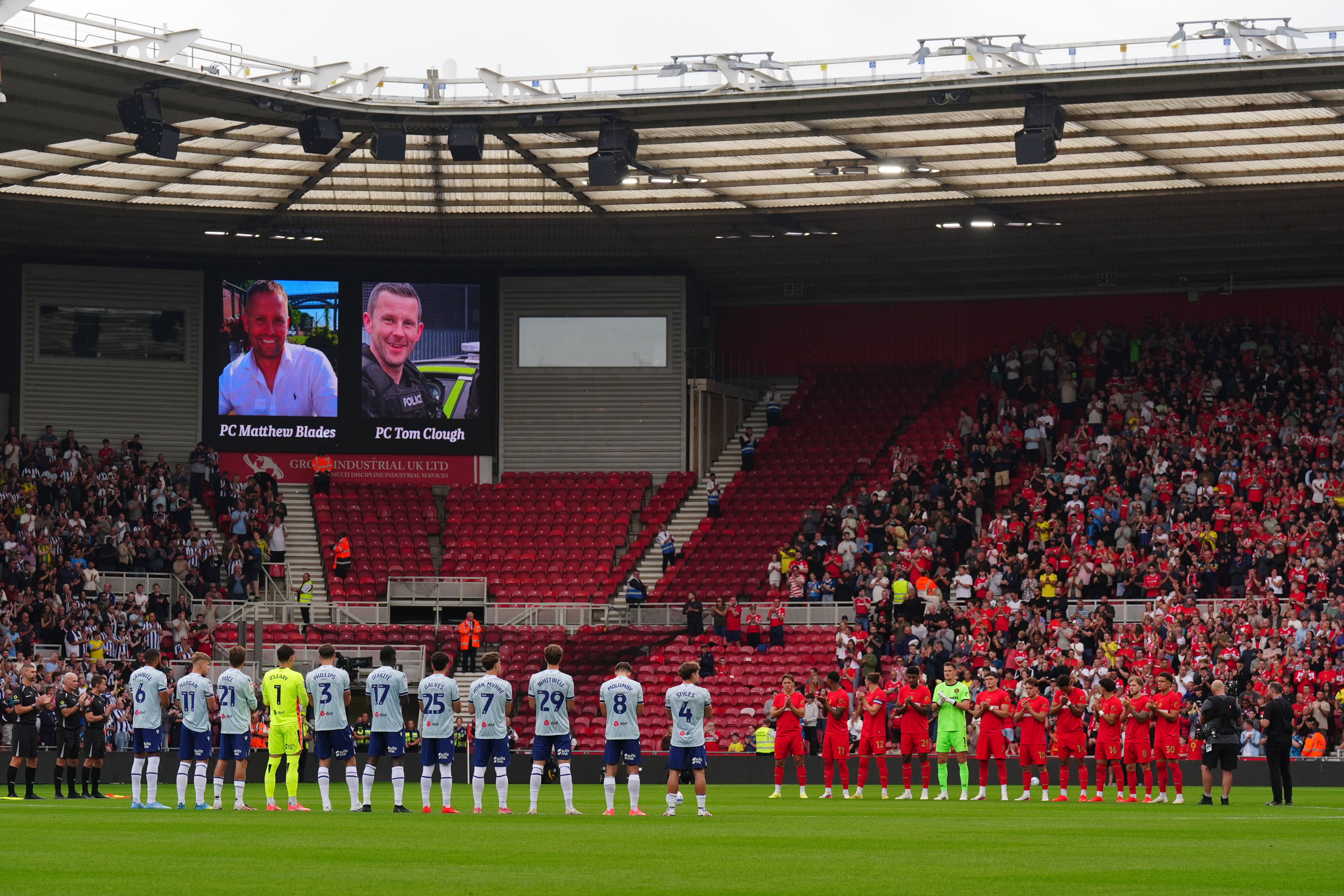
Ahead of Middlesbrough FC’s 12.30pm home fixture against West Bromwich Albion on Saturday, fans joined in applause for Pc Matthew Blades, 37, and Pc Tom Clough, 38.

Both constables lost their lives last weekend when a Volkswagen Passat travelling the wrong way crashed into them on the A66 at South Bank.

Images of the officers were displayed across screens at the Riverside Stadium while players and spectators united in applause.

Advertisement

The King has also sent letters to their families to express his condolences, according to a report by the Mirror.

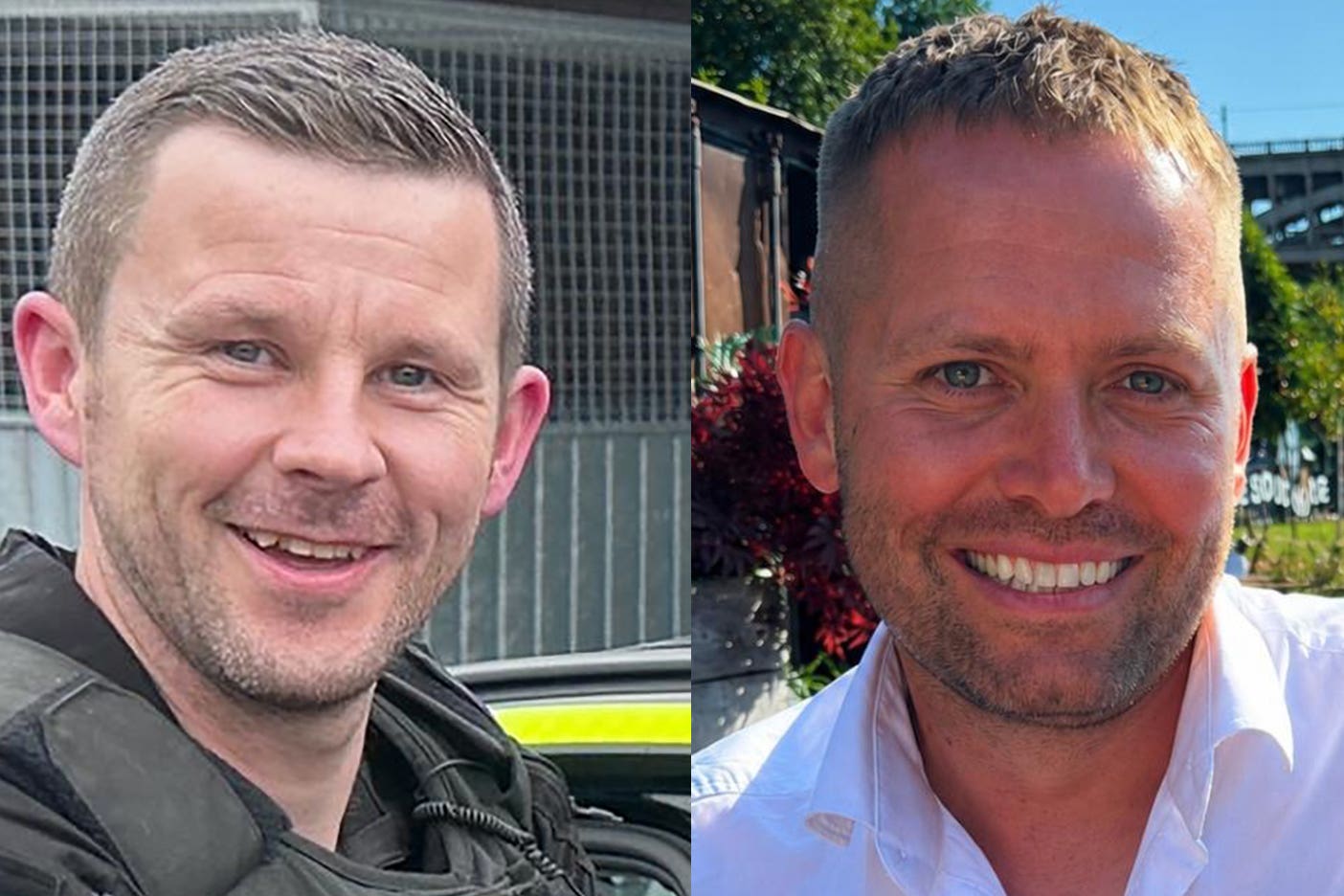
Pc Tom Clough, left, and Pc Matthew Blades, who died in the head-on A66 crash
Pc Tom Clough, left, and Pc Matthew Blades, who died in the head-on A66 crash (PA Media)

Middlesbrough FC said in a statement: ““The commitment shown by officers and staff, often in challenging and demanding circumstances, plays a vital role in keeping residents safe and helping people feel secure in their homes, neighbourhoods and local areas.”

Cole Worthy, 17; Theo Rae, 17; Makai Saddington, 18; and 23-year-olds Michael Cahill and Jakub Matusiak were also killed in the crash.

Cleveland Police said its officers have been tackling alleged organised crime in the wake of the crash and, on Friday night, said some 24 people had been arrested in the crackdown.

Officers said four men, aged 35, 25, 40 and 21, were being held on suspicion of criminal damage with intent to endanger life after a vehicle crashed into a house in Steele Crescent, Middlesbrough, on Thursday morning.

Advertisement

They were also being questioned over alleged arson after a caravan was set alight in Atlee Road on Wednesday morning, and a drugs offence.

The tribute too place at the Riverside Stadium, Middlesbrough
The tribute too place at the Riverside Stadium, Middlesbrough (PA)

The force said the men were in a vehicle when they were stopped by police on Kingsley Road in Grangetown on Thursday night.

Earlier on Friday, detectives confirmed they were not linking a house fire which killed a seven-year-old girl and her aunt to the A66 crash.

Natalie McDonald, 34, and her niece, Valentina Foster, died while four other people were injured in the blaze on Wednesday morning – with two men, aged 23 and 31, still in custody on suspicion of murder.

Hundreds of extra police officers have been drafted in to support officers after the series of recent incidents in the Middlesbrough and County Durham area.

Advertisement

Source link

Continue Reading

NewsBeat

Flash floods have devastated Nepal. Climate change could make them routine

Published

on

Flash floods have devastated Nepal. Climate change could make them routine

Hundreds of millions of people could be exposed to natural disasters and a water security crisis due to melting glaciers in Asia, academics have warned as Nepal and Tibet reel from devastating floods that have killed more than 600 people.

A glacier collapse in the Himalayas on Wednesday is believed to have caused the floods that tore through mountain villages and valleys on Wednesday, destroying infrastructure and leaving nearly 2,000 people missing.

David Simon, professor of development geography at Royal Holloway, University of London, warned that natural disasters of this scale are likely to continue as climate change brings more intense summers to the continent.

As glaciers retreat and more “catastrophic breakoffs” occur, water reservoirs held in the ice will diminish, with “stark” longer-term consequences for the rivers that nourish South Asia and parts of Central Asia and Tibet – if current trends continue in line with the higher climate change scenarios.

Advertisement

“Crucially, what we might have called natural summer ice and snow melt is what has always fueled the key rivers of South Asia, the Ganges, the Brahmaputra, the Indus, and so on.”

Analysts warn that the rate of ice melt in the Himalayas threatens water security for up to 1.65 billion people in the wider region as shrinking glaciers stop sustaining rivers vital to life and agriculture downstream.

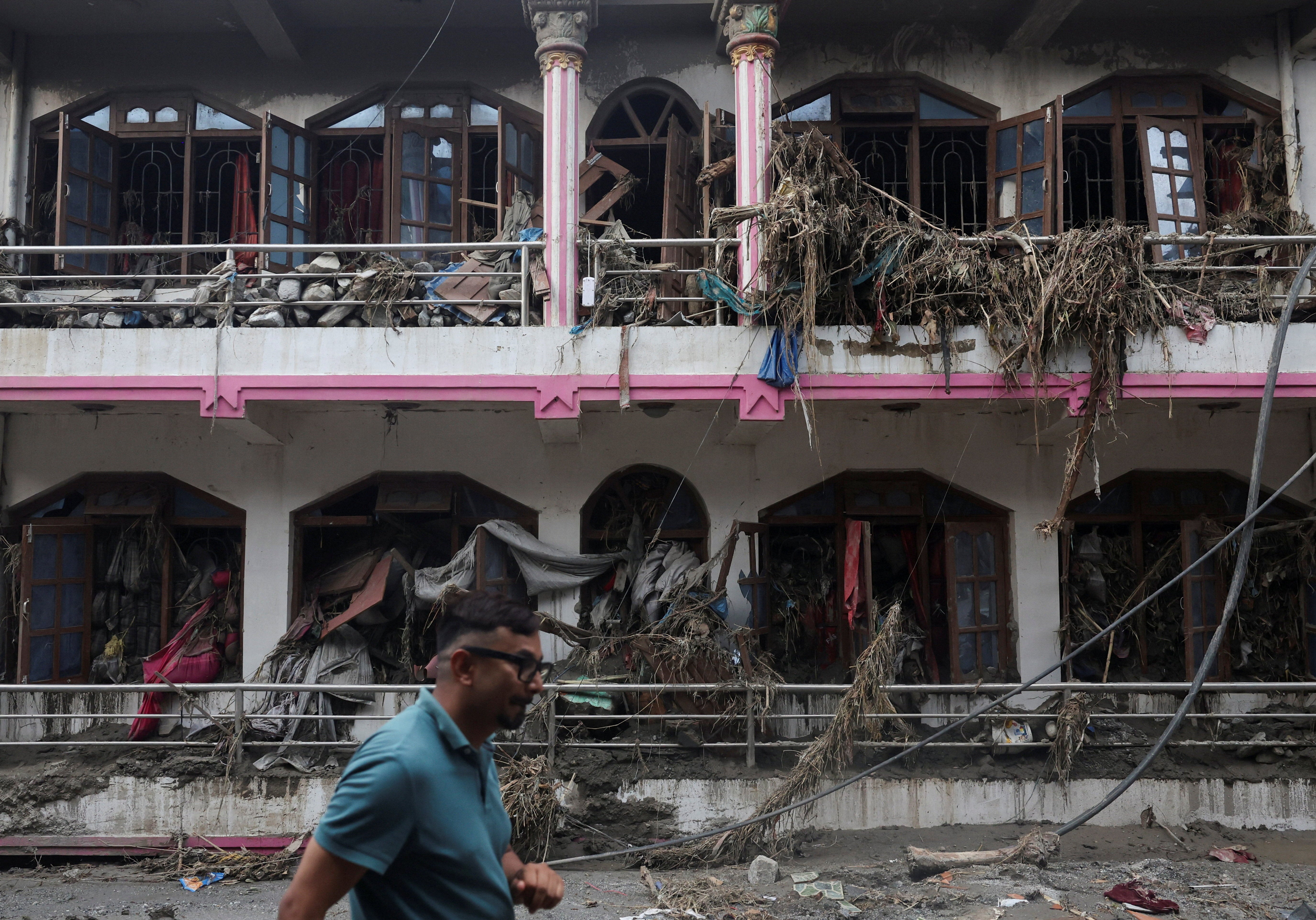
A man walks past a damaged house after flash floods and mudslide, at Devighat, Nuwakot district, Nepal
A man walks past a damaged house after flash floods and mudslide, at Devighat, Nuwakot district, Nepal (Reuters)

Dr Narelle van der Wel, head of Cryosphere Monitoring at the World Meteorological Organization (WMO), agreed that glacial retreat could have dire consequences for water security down the line.

“Initially, accelerated melting can increase runoff and flood risk. As glaciers continue to shrink, however, their capacity to store water and sustain river flows during dry periods declines,” she explained.

The impact may vary, but the implications are “enormous”, with the snow and ice of the Hindu Kush Himalaya supporting around 240 million people in the mountains and a further 1.65 billion downstream.

Advertisement

She stressed that the precise cause of this week’s disaster is still begin investigated, and that it is too early to attribute the events in Nepal to glacial retreat or climate change. But rising temperatures are changing glaciers, snow, permafrost and the stability of slopes across the Himalayas, she acknowledged.

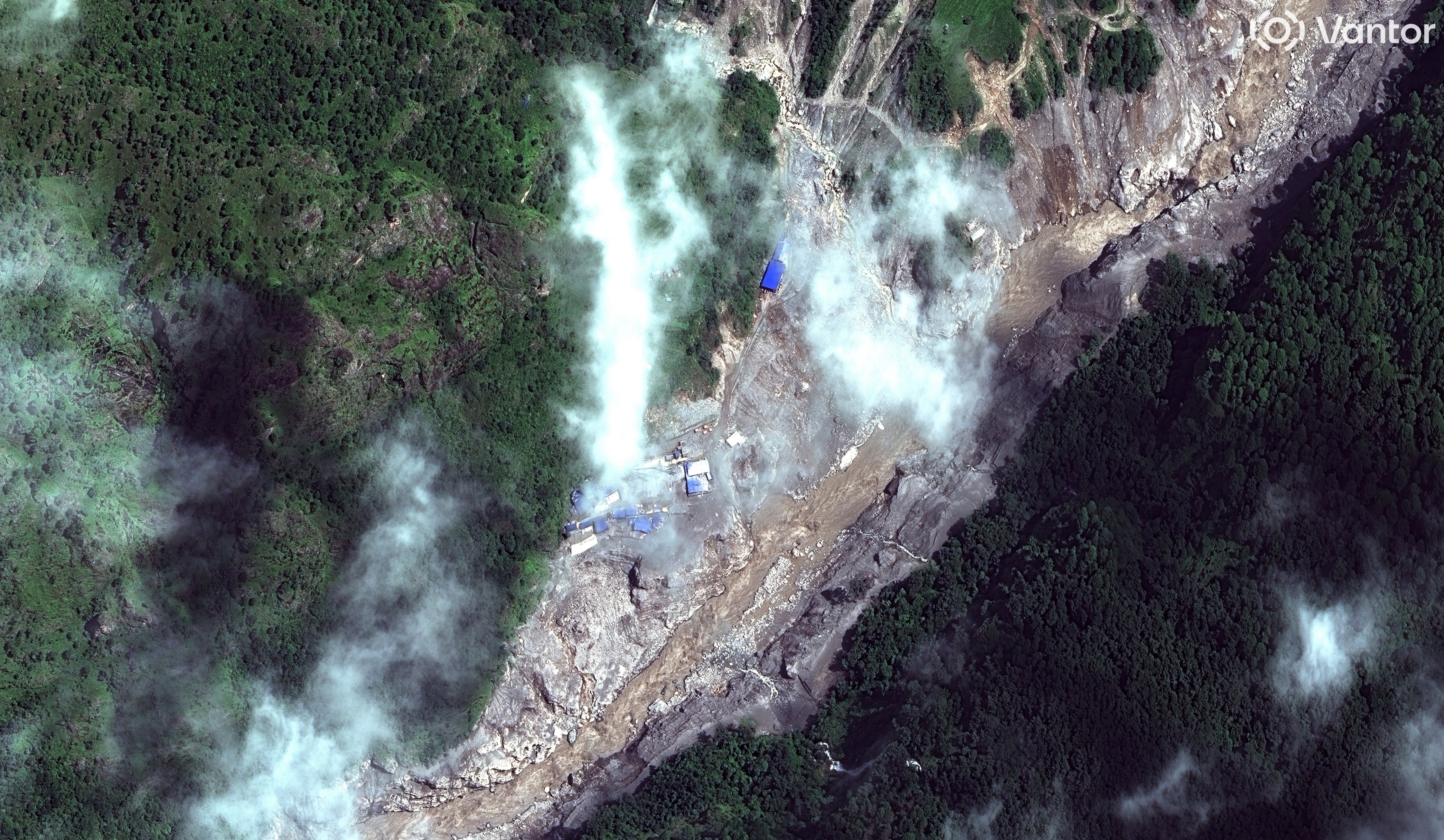
This satellite image provided by Vantor shows the remains of a cement site in Nepal
This satellite image provided by Vantor shows the remains of a cement site in Nepal (Vantour)

Prof Simon told The Independent that glacial retreat in the Andes was already having a “major impact” on the supply of water to cities in South America. Peru has lost around 56 per cent of its glacier mass over the last 60 years, threatening the water and food security of 90 million people.

Bethan Davies, professor of glaciology at Newcastle University, said that researchers are seeing rivers becoming more prone to drought as the Andean glaciers start to shrink.

“That’s certainly what we’re seeing: this decline in water flow, increasing drought, increased variability and water flow, which makes it difficult for the local communities to manage … As the glaciers shrink and they become smaller, there’s less melt water … so there’s less water that goes into the river.”

These trends most immediately hurt the rural mountain communities who depend on the glacial water for livestock they need to live on and trade.

Advertisement

But they will also affect major population centres in Peru, Chile and Argentina, draining water supply and impacting water-dependent industries like winemaking.

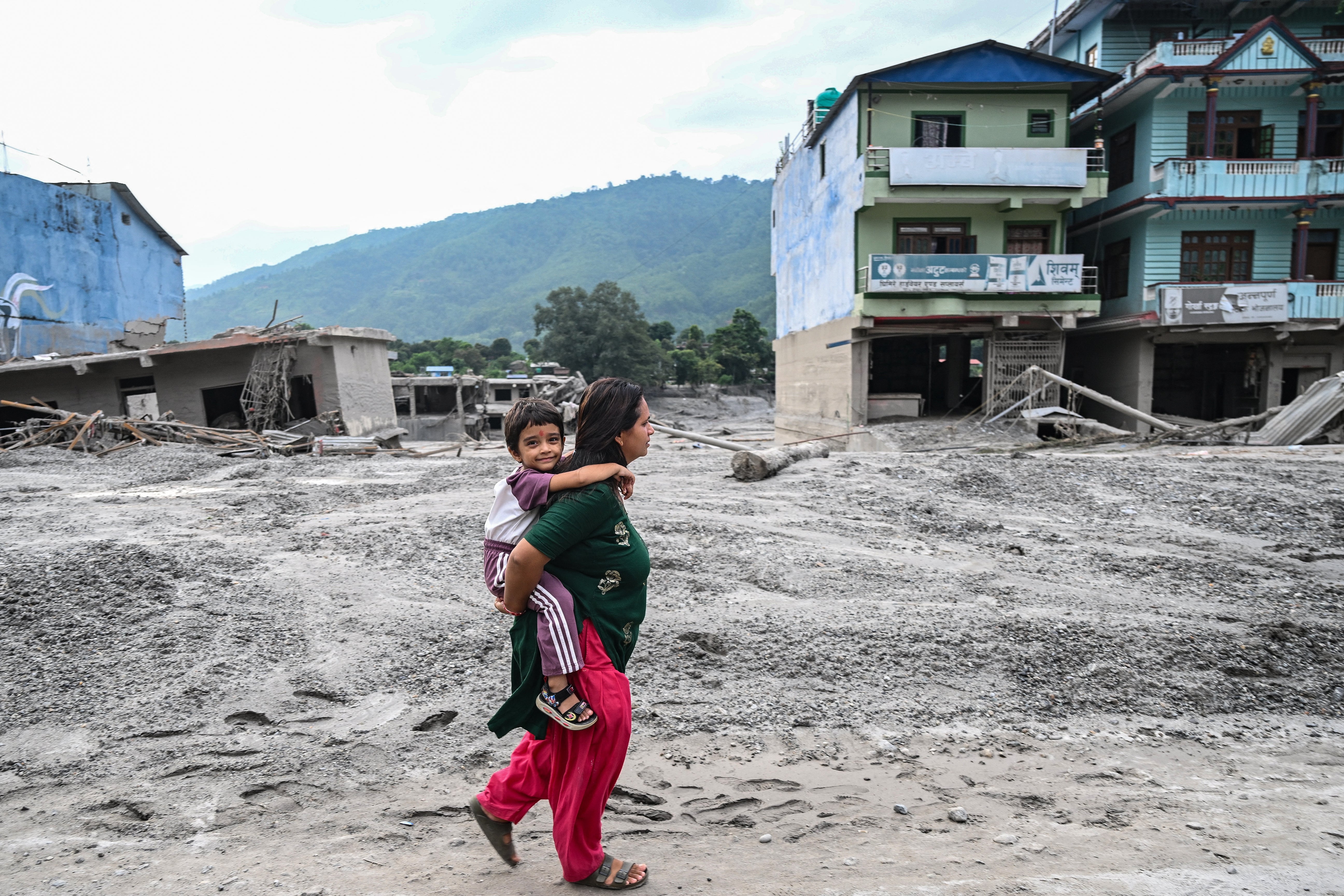
A woman carrying her child walks along a road deluged in sludge after flash floods at Devighat in Nepal's Nuwakot district
A woman carrying her child walks along a road deluged in sludge after flash floods at Devighat in Nepal’s Nuwakot district (AFP/Getty)

Prof Davies said hazard risks are becoming more likely in the high mountains of Asia, too, with temperatures rising 0.3C per decade. The Himalayan region is warning nearly twice as fast as the global average, according to the World Meteorological Organization.

“Ice is really sensitive to temperature, so as soon as it starts to warm above zero, it starts to melt. When you’re getting the melting permafrost, the melting snow, the melting ice, it becomes very fragile and things are starting to fall off,” she said.

“Melting permafrost is contributing to rockfall and contributes to these landslides, it contributes to avalanches. I think we’re likely to see an increased hazard risk in these areas.”

Prof Davies said she did not believe floods on the scale seen this week in Nepal were something the local communities, nestled into the foothills of the Himalayas, could be expected to adapt to.

Advertisement

“I think what the communities there need is a really decent early warning system. And I think that is something that we should be supporting as a country that has historically contributed a lot to climate change.

“The Nepali people have contributed very little and yet they are the ones bearing the brunt of that.”

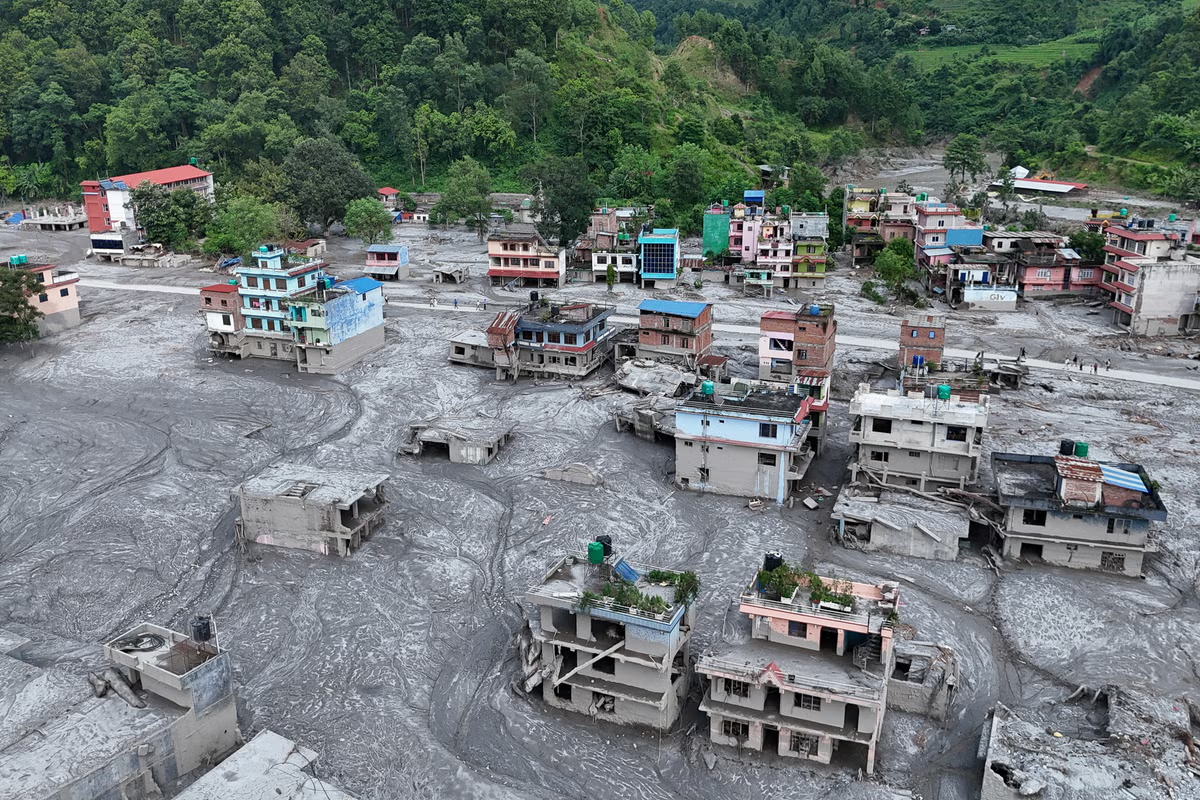
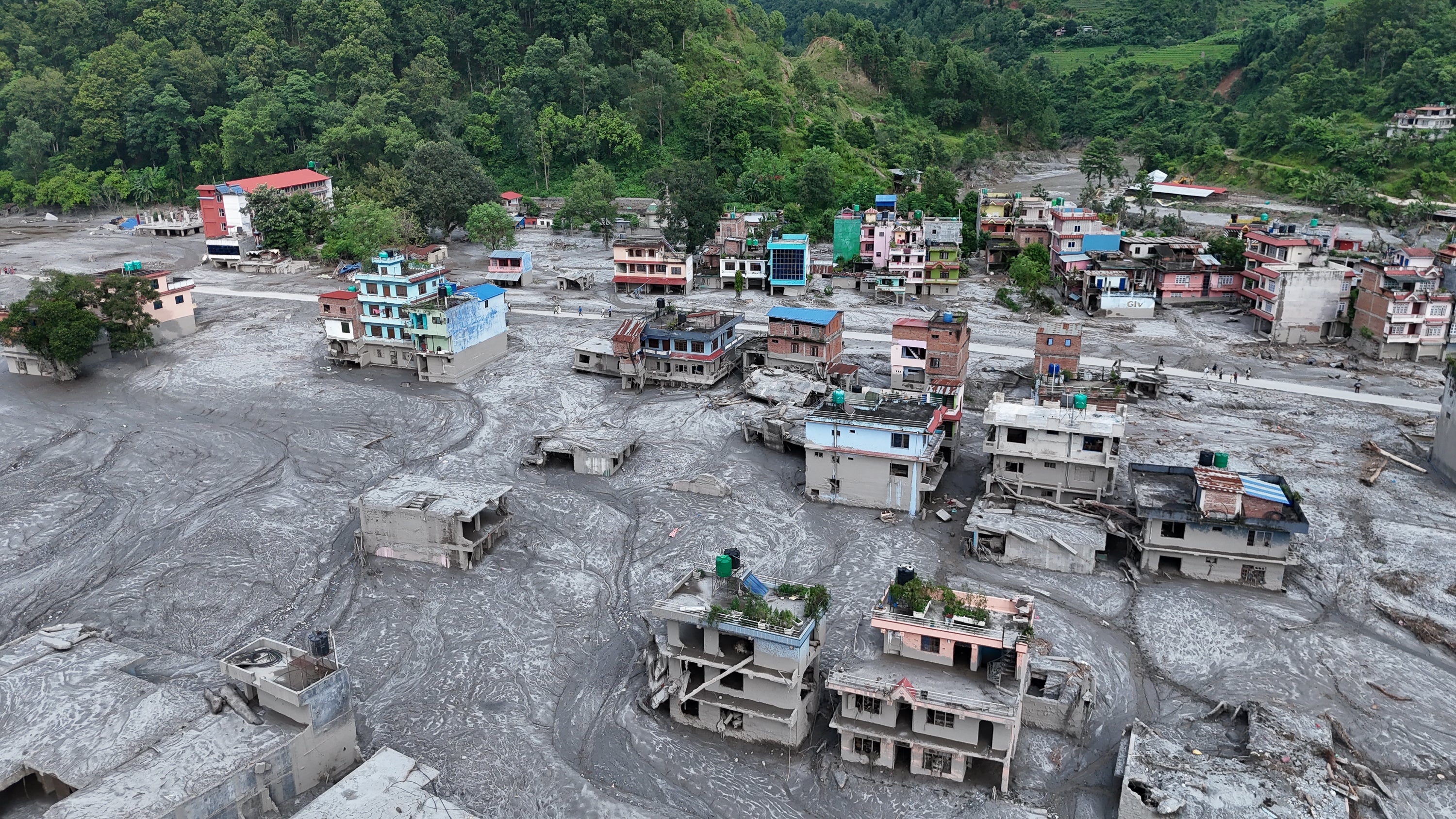
Debris and mud covering settlements following flash floods on August 28, 2026 in DevGhat village, Nepal
Debris and mud covering settlements following flash floods on August 28, 2026 in DevGhat village, Nepal (Getty)

British prime minister Andy Burnham announced £5 million in support for Nepal on Thursday to help with the “very distressing and devastating situation” on the ground. But Nepal suffers from a lack of monitoring equipment to detect and warn against impending natural disasters.

Back in April, Nepalese officials admitted to the BBC that an early flood warning system in the Everest region had fallen into a state of disrepair, ten years after sensors and automated sirens were installed.

The latest flood “demonstrates how little time communities may have to respond,” added Dr van der Wel. “Water levels reportedly rose by up to nine metres within 30 minutes at one monitoring station.”

Advertisement

“Effective early warning therefore requires much more than issuing a forecast. It depends on sustained monitoring of glaciers, glacial lakes and unstable slopes; functioning meteorological and hydrological observing networks; satellite information; rapid exchange of data across borders; and clear arrangements to ensure that warnings reach communities and prompt immediate action. These are all things we are working on here in WMO.”

A woman carrying her child walks along a road deluged in sludge after flash floods at Devighat in Nepal's Nuwakot district on August 28
A woman carrying her child walks along a road deluged in sludge after flash floods at Devighat in Nepal’s Nuwakot district on August 28 (AFP/Getty)

Prof Davies said the events this week showed how places like Nepal are suffering under the impact of climate change.

“I find it very difficult when some of our politicians downplay the risks of climate change, when they tell us to enjoy the warm weather, for example , and then you see this tragic event occurring,” she said.

“So I think my strong advice to people would be to be aware that this is the world that we’re living in, and this is the impact of climate change.

“It is severe and it is dangerous, and it does require solving, and it does require the commitment of countries like the UK, which have historically been leaders in climate change progress towards net zero.”

Advertisement

Source link

Continue Reading

NewsBeat

Big Church Festival ‘devastated’ as man dies after sign falls

Published

on

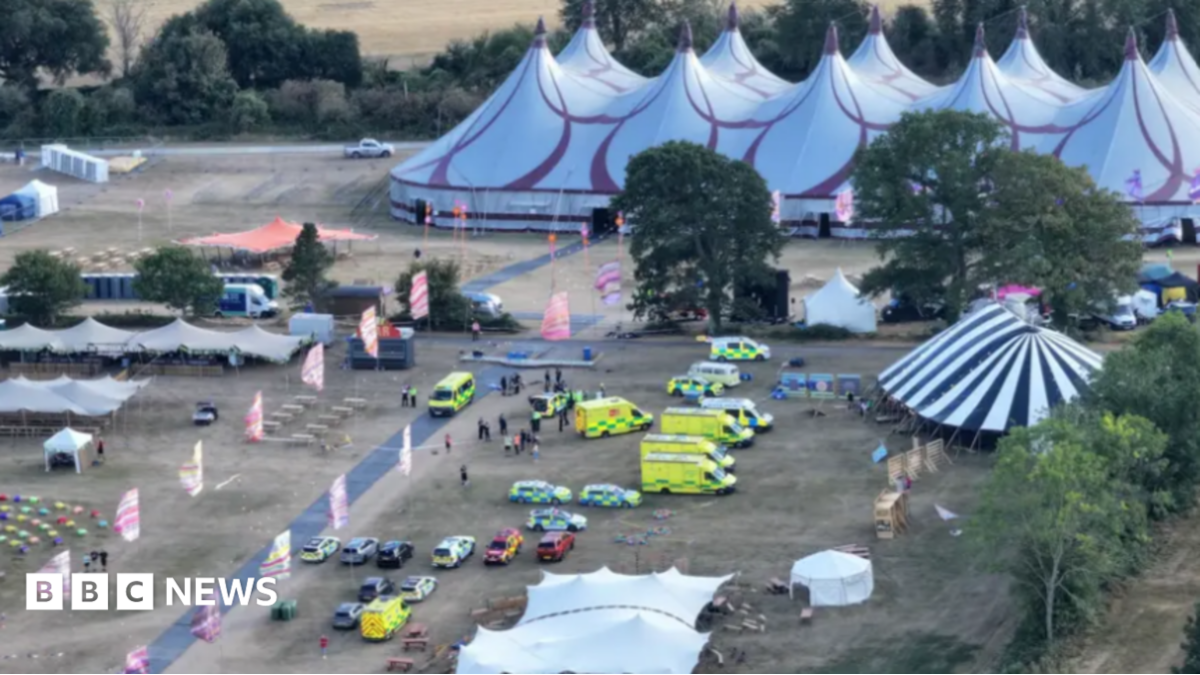
An electric green sign telling people at the festival the show has been cancelled.

Organisers of a Christian festival say they are “devastated” after a sign fell at their event and injured seven people, with one man dying at the scene.

Sussex Police said it had been called to the Big Church Festival at Wiston Park, near Steyning in West Sussex, at about 15:38 BST on Friday.

It was later confirmed a 41-year-old man from Eastbourne in East Sussex had died.

The Archbishop of Canterbury said she was “sad and shocked” to hear about the fatal incident.

Advertisement

Dame Sarah Mullally said: “I pray for his family, friends and loved ones as they grieve. I pray for those receiving treatment, and the healthcare workers looking after them.

“And I pray too for the other festival goers, staff and event organisers as they come to terms with these tragic events.

“May the god of comfort and healing be with them all.”

South East Coast Ambulance service said four of the six people injured were taken to local hospitals for further treatment, with two people having serious injuries.

Advertisement

The Big Church Festival, which describes itself as the UK’s biggest Christian festival, was founded in 2009.

The festival began on Friday and was due to continue until Sunday, but a decision was made by organisers to cancel the remainder of the event after the incident.

“We are working with the emergency services, police and the Health and Safety Executive as they establish the circumstances surrounding today’s incident,” the organisers said.

“We are incredibly grateful to everyone who responded, and to our teams and community for the care they have shown one another.”

Advertisement

Source link

Continue Reading

NewsBeat

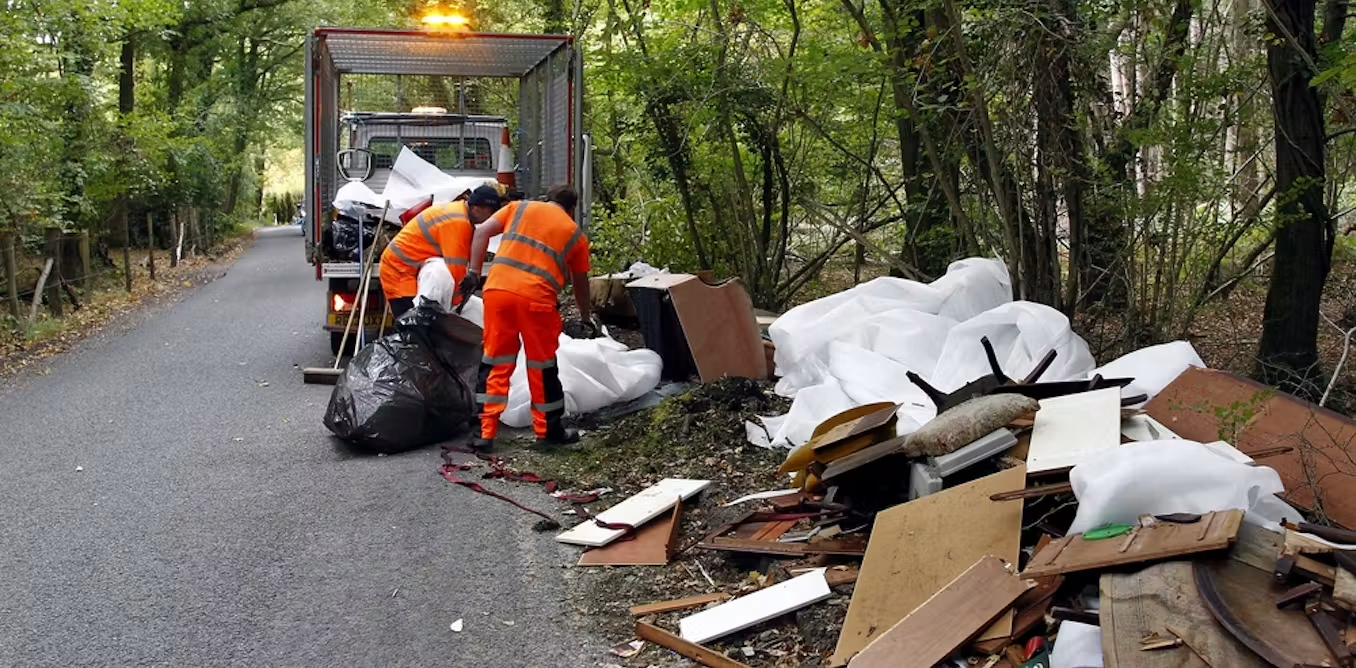
here’s what is missing from Andy Burnham’s plan to tackle waste dumpers

Published

on

here’s what is missing from Andy Burnham’s plan to tackle waste dumpers

UK prime minister Andy Burnham has promised to clean up three of the worst illegal waste dumps in England and sign off new measures to tackle the problem more widely.

The pledge is bold, but it is also unlikely to solve the problem on its own.

Illegal waste sites and fly‑tipping is now widespread in the UK, and globally.

They are not just local eyesores. They are public health hazards, environmental damage, and a symbol of organised criminal activity. They cost councils millions. They poison soils and waterways. They also erode trust in government. Any plan that ignores the full picture will fail.

Advertisement

What Burnham has proposed

Burnham’s announcement commits resources to clear three of the worst sites and to work with councils and police to tackle the problem. The aim is immediate clean‑ups and stronger local coordination. This is welcome. Quick action on visible sites helps communities and restores confidence. But the plan as described lacks the scale and tools needed to stop the flow of illegal waste in the long term.

Fly‑tipping is the illegal dumping of waste on land without a licence. Illegal waste sites are larger, often semi‑permanent locations where waste is stored, processed or burned outside regulatory control. These activities range from small household dumping to organised operations run by criminal networks. The latter are the most damaging and the hardest to stop.

English local authorities dealt with 1.26 million fly-tipping incidents in 2024-25, a 9% increase from the previous year.

For decades, local authorities have borne the cost of clearing dumped waste. Budget cuts since 2010 reduced council capacity for enforcement and waste services.

Advertisement

At the same time, regulatory gaps and weak sentencing created an environment where organised waste crime could flourish. Criminal groups exploit low enforcement, transport networks and demand for cheap disposal. The result is more illegal sites and higher clean‑up bills for councils.

Fly-tipping is often organised by criminals gangs.

What Burnham needs to add

Burnham’s current approach treats symptoms, not causes. Cleaning up three sites is necessary but not sufficient. Without cutting off the supply chain – illegal collection, transport and disposal – new sites will appear.

But the current plan lacks sustained funding. Effective action needs long‑term investment in enforcement teams, surveillance, legal support and prosecution. Short‑term funding can clear sites but cannot sustain the multi‑year operations needed to dismantle organised waste crime. Councils already report rising costs and limited budgets for pursuing fly-tippers.

Advertisement

Enforcement is currently fragmented. Responsibility is split across councils, the Environment Agency as well as the police and private sector actors. Burnham has said the National Crime Agency will work more closely with the Environment Agency in England, but this could still create gaps that criminals exploit.

Successful disruption requires a single, well‑resourced taskforce with investigative powers and rapid legal follow through. Past local initiatives without national backing have struggled to keep pace.

Sentences for serious waste crime are often too light to deter organised groups. To help tackle this Burnham has said fines will rise from £300 to a maximum of £5,000. But prosecutions are complex and slow. Without tougher, faster legal consequences, the economics could still favour illegal operators.

Tougher sentencing and fast‑track courts should be put in place. Pushing for tougher sentencing guidelines for serious waste crime and specialist courts to speed cases is needed. Swift, certain punishment deters more than occasional heavy fines.

Advertisement


À lire aussi :
Criminal fly-tipping gangs are costing governments millions – AI and drones can help track waste dumpers


What would work?

A national waste‑crime taskforce with investigative powers, forensic capability and a legal team to secure rapid prosecutions could reduce offending. This could be modelled on successful multi‑agency units used against other organised crimes.

The government should target the money being made by these gangs. This could include freezing or seizing profits from illegal operations. These recovered funds could be used for clean‑ups and community prevention. Greater financial consequences for the criminals are likely to deter organised fly tipping.

Investment is also needed in understanding behaviour, prevention and legal disposal. Subsidising safe, low‑cost waste disposal options for households and small businesses would also help as well as licensing and tracking of waste carriers. When legal disposal is affordable and traceable, illegal options are likely to shrink.

Advertisement

Funding local rapid‑response teams and anonymous reporting lines would be another means of attacking the problem. Community intelligence often leads to the best leads. This should be combined with AI, drones, CCTV and vehicle tracking to catch offenders in the act.

There are some pilot schemes that show success. The Keep Britain Tidy group worked with Newham council in London to add stickers to illegally dumped waste and bring it to public attention. This resulted in an average 64% reduction in fly-tipping incidents, with over half of residents reporting they had noticed the intervention.

Burnham’s pledge to clear three sites is a good start. It will help communities and draw attention to a national crisis. But it will not halt the problem.

The question now is whether political plans will match the scale of the crime. If it does, a successful national model could emerge. If it does not, the clean‑ups will be temporary – and the next illegal site will already be being planned.

Advertisement

Source link

Continue Reading

NewsBeat

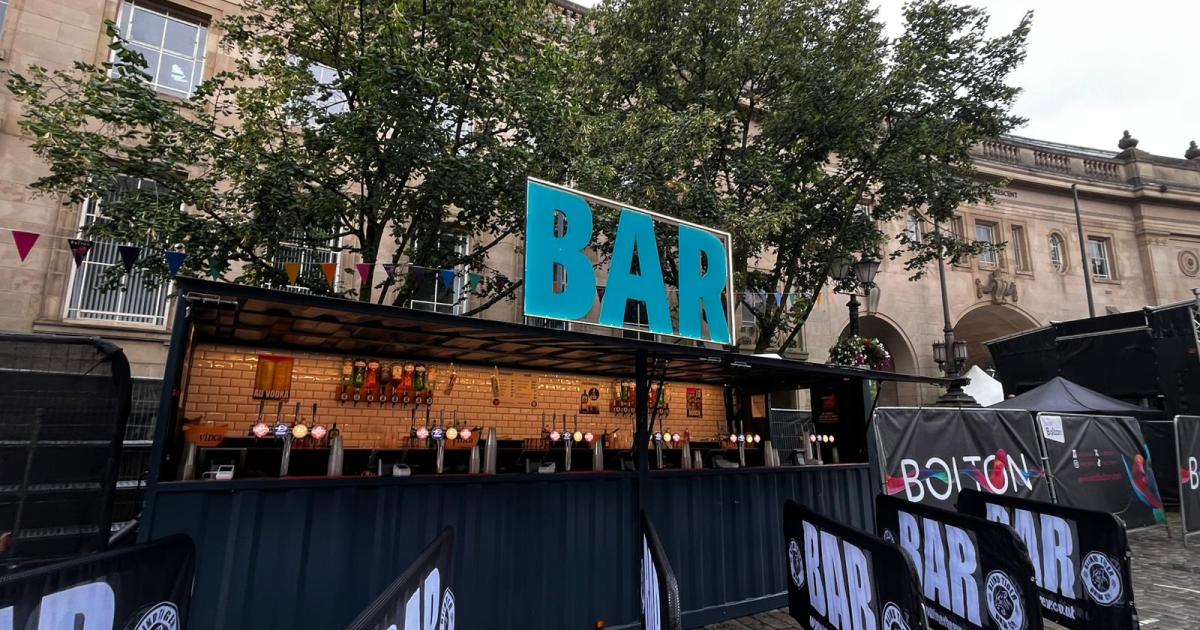
Bolton Food and Drink Festival 2026 drink and pint prices

Published

on

Bolton Food and Drink Festival 2026 drink and pint prices

And alongside the huge selection of food on offer, there are plenty of places to stop for a drink.

From pints of Guinness and Cruzcampo to cocktails, wine and Jägerbombs, we took a look around the festival to see how much visitors can expect to pay.

At one of the bars, Blind Tiger Brew Co, draught beers were generally priced between £6 and £6.50.

(Image: NQ)

A pint of Cruzcampo was £6.50, as were Guinness, Strongbow and Strongbow Dark Fruit, while Doom Bar was £6.

Advertisement

Guinness 0.0 was also available for £6.

For those after something different, Hooch was £6.50, while cans of Vinca white, rosé and red wine were £7 each, with bottles priced at £28.

Fizz and AU Vodka both cost £7.

There were also deals on some drinks, with two Jägerbombs costing £10 and two Hooch drinks available for the same price.

Advertisement

Elsewhere, P&L Mobile Bars was selling a range of draught beers, wines, spirits and soft drinks.

(Image: NQ)

According to its price list, Cruzcampo was £5.50 for a pint or £3 for a half, while Peroni was also £5.50 a pint and £3 a half.

Carlsberg was slightly cheaper at £4.50 a pint or £2.50 for a half.

Guinness, Neck Oil and Inch’s cider were each £6 a pint, while Frothy was £6 a pint and £3 for a half.

Advertisement

Alcohol-free options included Inch’s Zero at £4, Frothy Zero at £4.50, Peroni Zero at £4 and Guinness Zero at £5.

(Image: NQ)

Wine and Prosecco were both priced at £6, while water cost £1, J20 £3, Slush £2.50, fruit shoots £1.50 and cans £2.

Cocktail fans also have plenty of choice at the festival.

The Mixologist Cocktail Co was advertising Woo Woo, Sex on the Beach and Purple Rain cocktails for £5.

Advertisement

Its Long Island, Mojito, Pornstar Martini, Aperol Spritz, Bellini, Cherry Bomb, Cherry Fizz and Strawberry Daiquiri were priced at £7 each or two for £12.

Prices may vary between individual bars and traders across the festival.

Bolton Food and Drink Festival continues throughout the bank holiday weekend, running until Monday, August 31.

Advertisement

Source link

Continue Reading

NewsBeat

Putin strikes kills 37 in hit on Ukraine warehouse as Zelensky orders criminal probe into why ammunition was illegally stored so close to civilian homes

Published

on

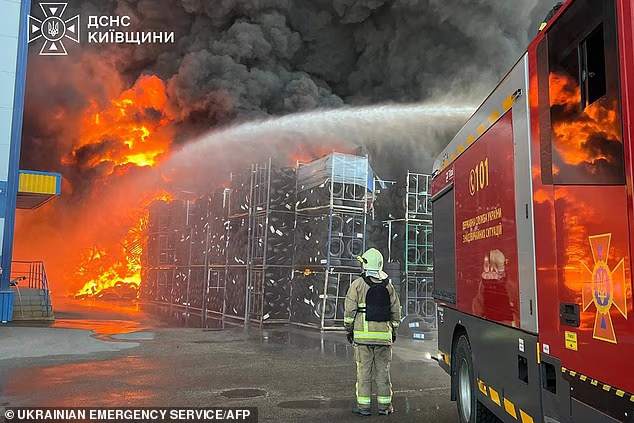
At least 37 people have been killed after Russia attacked a Ukrainian ammunition depot with a drone as strikes on Kyiv continued for a third day (Pictured: A firefighter tackles the blaze)

At least 37 people have been killed after Russia attacked a Ukrainian ammunition depot with a drone as strikes on Kyiv continued for a third day.

Fire erupted at the depot, in the village of Myla in Kyiv’s Bucha district, as more than 200 people evacuated their homes and 50 residential buildings were destroyed.

Ukraine‘s President, Volodymyr Zelensky, said the warehouse had been struck ‘followed by a detonation’. 

He also announced a probe had been launched into the matter. It is forbidden to store ammunition close to civilian homes in Ukraine. 

Advertisement

Air raid sirens sounded 11 times in 24 hours as further drone and missile attacks were expected.

One home in Bucha was destroyed and seven others damaged as the depot fire spread to residential areas.

‘Those who allowed this to happen must be held accountable for their decisions,’ Zelenskyy said.

A care home for elderly people and people with disabilities had been damaged, and an evacuation is ongoing, he added. 

Advertisement

Prime Minister Serhii Korteskyi did not share information about the incident and instead referenced a previous attack on another ammunition depot in July. 

The warehouse, located in the Kyiv suburb of Vyshneve, was targeted in an attack that killed 22, triggering large detonations and fires that tore through homes. 

‘Unfortunately, we can already see that the terrible tragedy in Vyshneve did not become a lesson,’ Koretskyi said. 

Advertisement

At least 37 people have been killed after Russia attacked a Ukrainian ammunition depot with a drone as strikes on Kyiv continued for a third day (Pictured: A firefighter tackles the blaze)

Fire erupted at the depot, in the village of Myla in Kyiv's Bucha district, as more than 200 people evacuated their homes and 50 residential buildings were destroyed

Fire erupted at the depot, in the village of Myla in Kyiv’s Bucha district, as more than 200 people evacuated their homes and 50 residential buildings were destroyed

‘In the fifth year of a full-scale invasion, making the same mistakes is criminal negligence. 

‘And all those guilty, without exception, must be severely punished so that such situations do not happen again.’

Advertisement

Meanwhile, the Kremlin confirmed it had struck the warehouse in Myia, claiming it stored launch boosters and long-range drones. 

It also said it had attacked Mykolaiv, Izmail, and a logistics centre and warehouse facilities storing parts for Ukraine’s Flamingo cruise missiles in the Kyiv region

Zelenskyy later announced that two officials from state-owned companies, including Ukraine’s largest arms producer, Ukroboronprom, had illegally allowed the storage of weapons on the site in Vyshneve and would be held accountable.

Kyiv’s regional military administration chief Timur Tkachenko expressed his ‘sincere condolences to the families and loved ones of those killed’ in the latest attack on Myla

Advertisement

The attack on the Ukrainian village comes as Russia enters its third successive day of trying to paralyse Kyiv.

Explosions rocked Kyiv during a three-day barrage as Russia struck an ammunition store in the Bucha district

Explosions rocked Kyiv during a three-day barrage as Russia struck an ammunition store in the Bucha district

Russian strikes on the southern Kherson region Saturday killed two people and wounded 27 more, Oleksandr Prokudin, head of the region administration, said.

Homes and apartment blocks were damaged in the strike, and one child was among the injured, he added. 

Advertisement

Earlier in the week, Prokudin said that Russia has intensified attacks on critical infrastructure in the region, which is about 70 per cent under Russian control. 

He also urged tens of thousands of residents to move to safer regions because of the possibility of prolonged power and heating outages this winter.

Russia has significantly increased its use of jet-powered drones, and their numbers will keep growing as Moscow sees their effectiveness, said Pavlo Palisa, the deputy head of Ukraine’s presidential office.

‘Means of attack always outpace means of defense. We will certainly need to adapt. It will take time,’ Palisa said. 

Advertisement

He said interceptor drones currently available to Ukraine, which could theoretically intercept jet-powered drones, are not yet to demonstrate the expected effectiveness, though Ukraine is working on solutions.

Meanwhile, Ukraine has stepped up its long-range attacks on Russian military industries and energy facilities in recent months, using locally made drones, aiming to cut Moscow’s revenue for its invasion and make Russians feel the consequences.

In his evening statement to the nation Friday, Zelenskyy said Kyiv hoped to increase its long-range strikes on Russia to reach 1000 drone launches every day.

‘Right now, we average over 300 of our long-range sanctions,’ Zelenskyy said, his preferred term for Kyiv’s long-range attacks that have also lately targeted Russian large-scale online retailers. 

Advertisement

‘There must be more. We have a very specific goal, and we will achieve it.’

Moscow’s forces destroyed 313 Ukrainian drones overnight, Russia’s Ministry of Defence said on Saturday.

Ukrainian drone attacks wounded 11 people in Russia’s Rostov region, Governor Yuri Slyusar said.

Writing on social media, he said that nine people were hospitalised, including four children.

Advertisement

Putin’s latest attacks came the week after CIA director John Ratcliffe made a secret trip to Moscow, which prompted speculation the Russian leader may have threatened the Baltic states.

Dark smoke rose into the sky above Kyiv on Saturday morning after a third day of Russian strikes

Dark smoke rose into the sky above Kyiv on Saturday morning after a third day of Russian strikes

Residents passed the site of a Russian drone strike as Putin's barrage against Kyiv passed the 50-hour mark

Residents passed the site of a Russian drone strike as Putin’s barrage against Kyiv passed the 50-hour mark

Fire crews closed a highway and battled blazes across Kyiv after the latest attacks from Moscow

Fire crews closed a highway and battled blazes across Kyiv after the latest attacks from Moscow

Advertisement

US media reported Mr Ratcliffe warned Russia against attacking Nato members – particularly Estonia, Latvia and Lithuania – amid warnings Moscow could try to test the alliance.

But experts said there was no sign of the large-scale military build-up that preceded the invasion of Ukraine in February 2022.

Overnight Ukraine targeted Russia’s Rostov region, hitting a warehouse owned by retail chain DNS and Amazon-style online marketplace Ozon with drones.

Residents said there were dozens of explosions as the DNS depot was engulfed in flames while a shipbuilding plant was also hit.

Advertisement

Ukrainian strikes have crippled the region’s ports and prevented agricultural exports, prompting a state of emergency as farmers complained of an unprecedented collapse in wheat prices.

Drones intercepted by Russia damaged tower blocks in Aksay, Rostov-on-Don, where seven people were injured.

And in the occupied Kherson region, Ukrainian strikes on power plants caused widespread blackouts.

Source link

Advertisement
Continue Reading

NewsBeat

Malton Open Day offers tour of top horse training yards

Published

on

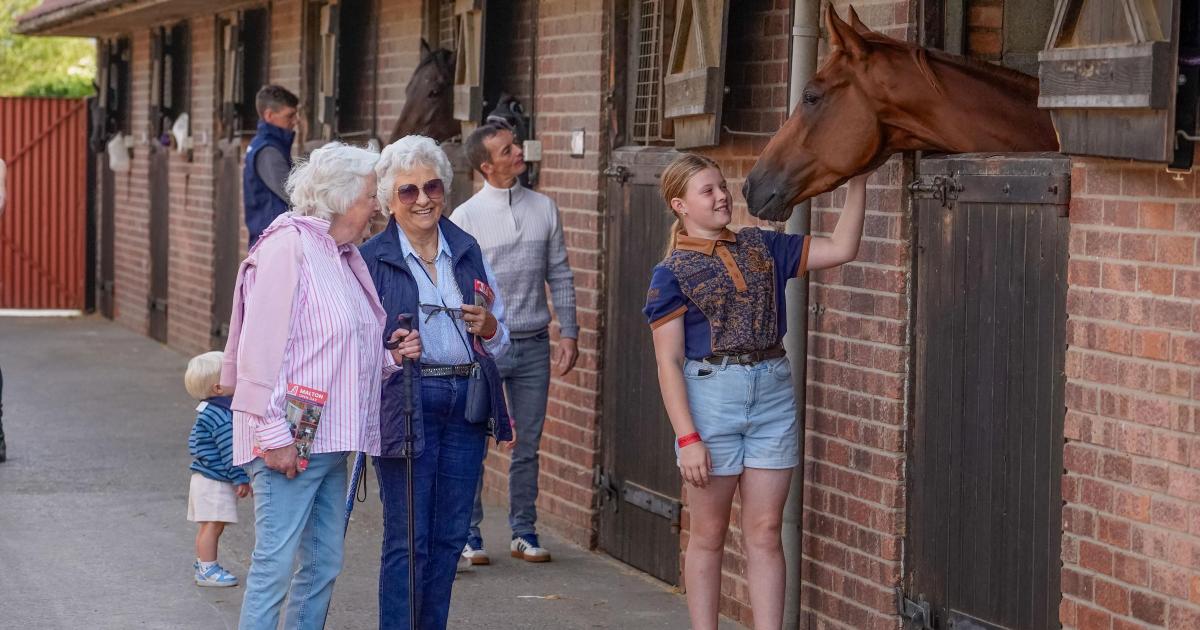
Malton Open Day 2026 planned for Sunday, September 6

The Malton Open Day, organised by Racing Welfare and sponsored by Arena Racing Company (ARC), will take place on Sunday, September 6, giving the public a rare glimpse into the daily workings of some of the region’s leading racing yards.

Visitors will be able to tour the yards from 8.45am until noon, meeting the horses and the people who care for them, while supporting a charity that helps those working in the racing industry.

Trainer Craig Lidster said: “Malton Open Day is a fantastic experience for people who don’t normally get to see the day-in and day-out of how a racehorse is prepared.

Advertisement

“It provides the opportunity to get up close and personal with our kind-natured racehorses and pose questions to the experienced and passionate racing staff, all whilst having a great family day out.”

This year’s participating yards include those of Adrian Keatley, John Wainwright, Mick and David Easterby, Richard and Peter Fahey, Ollie Pears, Suzzanne France, Sara Ender, and Mike Sowersby.

Jack Berry House, the Injured Jockeys Fund’s rehabilitation and fitness centre, will also be open to visitors from 11am to 2pm.

Racing Welfare has once again teamed up with York Racecourse to offer a joint ticket, allowing visitors to attend both the Malton Open Day and the YorkMix Family Raceday.

Advertisement

Beck Edmunds, Racing Welfare’s community engagement manager, said: “The ARC Malton Open Day is always a real highlight in the calendar, giving visitors a rare chance to step inside some of the area’s leading training yards and see first-hand the people, horses and dedication that make racing so special.

“It’s a brilliant day out for racing fans and families alike, and every ticket sold helps Racing Welfare continue its vital work supporting racing’s workforce.

“We’re hugely grateful to the yards taking part, to ARC for their generous sponsorship and to York Racecourse for helping us offer a fantastic, combined ticket.

“From seeing horses at the stables in the morning to enjoying the YorkMix Family Raceday in the afternoon, it’s a wonderful way to experience the journey from training yard to racecourse.”

Advertisement

The YorkMix Family Raceday will include top-class racing and family entertainment, with combined ticket holders granted entry to the Grandstand and Paddock Enclosure.

Gates at York Racecourse open at 11.15am.

Tickets are now on sale, priced at £10 for the Malton Open Day and £20 for the combined ticket.

Under-18s can attend both events free of charge when accompanied by an adult.

Advertisement

More details and ticket information are available at www.maltonopenday.co.uk.

Source link

Advertisement
Continue Reading

NewsBeat

Creamfields dubbed ‘Mudfields’ after heavy rain hits festival

Published

on

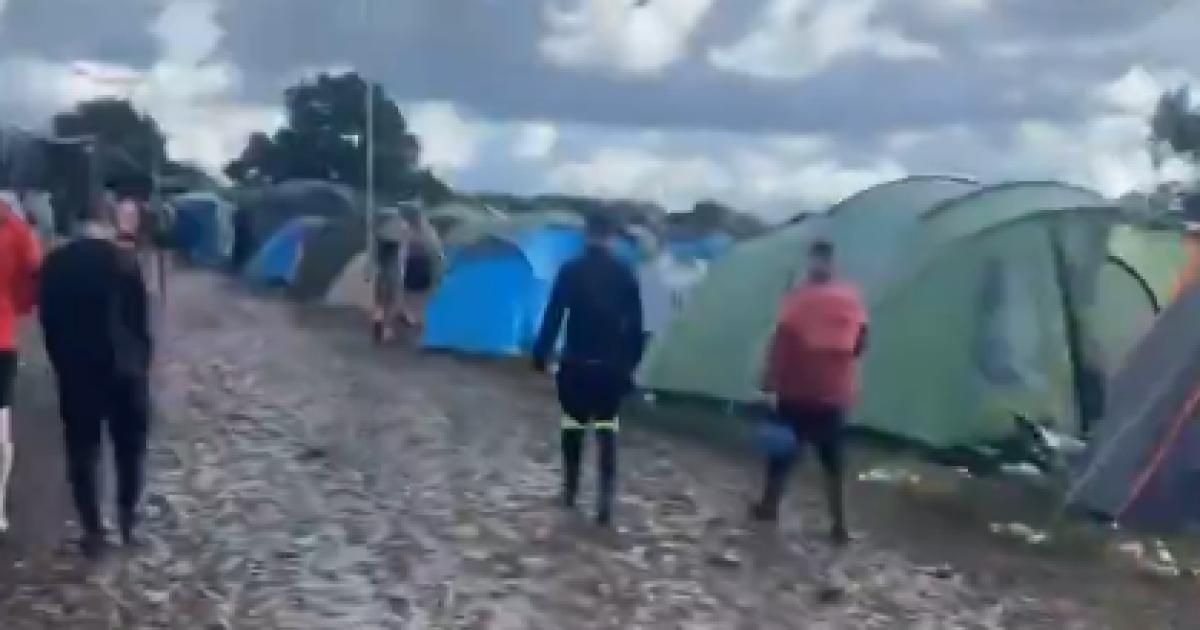
Creamfields dubbed 'Mudfields' after heavy rain hits festival

Pictures and videos shared on social media show revellers trudging through churned-up fields and waterlogged walkways at the Daresbury festival.

Campers in ponchos and wellies have been navigating the muddy conditions as wet weather continues to affect parts of the site.

Headliners include Calvin Harris, Sonny Fodera, Armin van Buuren and Underworld.

(Image: TheRealChosen7/X)

Some DJ sets were also cancelled due to the extreme weather which resulted in power cuts.

Advertisement

Those attending Creamfields, which finishes Sunday night, are being urged to prepare for wet conditions, including wearing suitable footwear and bringing waterproof clothing, as further unsettled weather is possible across the weekend.

Source link

Advertisement
Continue Reading

NewsBeat

Jamie Foxx reveals how daughter saved his life after 2023 stroke

Published

on

Jamie Foxx reveals how daughter saved his life after 2023 stroke

To view this video please enable JavaScript, and consider upgrading to a web
browser that
supports HTML5
video

Jamie Foxx grew emotional as he recalled how his daughter ‘saved his life’ following his stroke in 2023.

Advertisement

The Hollywood star, 58, has very few memories of suffering the near-fatal medical emergency or the immediate aftermath of his surgery in an Atlanta hospital.

The actor has seldom spoken about the extreme health scare, which required extensive rehabilitation, only sharing scant details of his sister’s concerns for his health and his gratitude to the healthcare professionals who delivered life-saving care.

Now, in a new interview alongside his daughter Corinne, 32, the father-daughter duo grew emotional as they spoke about that difficult time, with Jamie offering nothing but praise for his daughter’s resilience and tenacity.

Speaking on the podcast Baby, This Is Keke Palmer, Jamie visibly teared up as he reminisced about Corinne’s response to the crisis, in which she kept a cool, calm head while fending off the public.

Advertisement

Explaining that he had a word with his doctor once he had started to recover, Foxx shared: ‘He says: “Man, your daughter saved your life”. He talked about Corinne. “She saved you,” he said, “She’s the reason that you’re here.”‘

Jamie had glowing words for his daughter Corinne while discussing his stroke (Picture: AFP)
Close up of Jamie Foxx
During the segment discussing his stroke, Jamie started tearing up (Picture: Baby, This Is Keke Palmer)

He continued: ‘She had to deal with a lot of stuff. She had to deal with the internet.’

Corinne, who also works as a producer for his various projects, agreed that the internet ‘was a part [she] was not prepared for’, with the trio all laughing over the ‘clone’ conspiracy theories after Jamie disappeared from the public eye to recuperate.

She explained: ‘As soon as he went dark, it was scary the places the internet went with the cloning and the conspiracy.

‘I just wanted to be like: “It’s not that interesting. Actually, it’s a human thing, but it also was not my place to ever release his medical information.’

Advertisement

She concluded that that was ‘the toughest part’ of the experience.

Previously, the Django Unchained star has credited his sister Deidra with saving his life by pushing him to go to the hospital after he started feeling strange.

Jamie Foxx
The star has consistently shared his gratitude for his family during this ordeal (Picture: Getty)

He wrote in a social media message: ‘Without you I would not be here… had you not made the decisions that you made, I would’ve lost my life…. I love you forever and ever happy birthday sis.’

The screen star has also previously described his recovery experience as ‘going to hell and back’.

‘I went through something I never thought I would go through. I know a lot of people [were] waiting or wanting to hear an update, but to be honest with you, I didn’t want you to see me like that man,’ he tearfully told followers.

Advertisement

Source link

Continue Reading

NewsBeat

Nepal flash flood death toll rises to 669 as Kathmandu rejects international search and rescue offers

Published

on

Nepal flash flood death toll rises to 669 as Kathmandu rejects international search and rescue offers

The death toll from this week’s Himalayan flash floods has risen to 669 in Nepal and Tibet combined, authorities said, as Kathmandu appealed for foreign technical assistance while insisting it did not need help with general search and rescue.

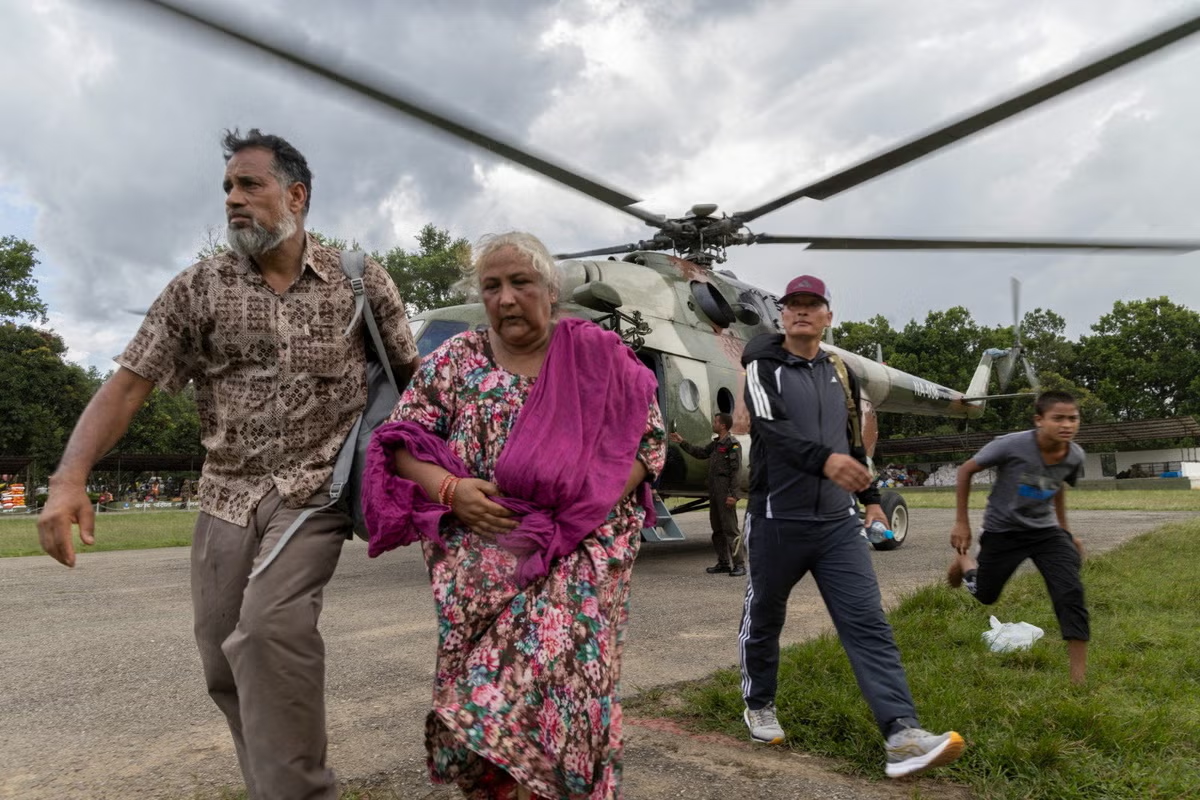
Nearly 3,000 people remain unaccounted for across the two countries, authorities said on Saturday. Nepal’s disaster agency put the missing in the country at 2,426, while more than 550 remain missing in Tibet, according to Chinese state media. More than 3,700 people have been rescued in Nepal so far, and hundreds of those missing are foreign nationals who had been working, trekking or travelling on pilgrimage in the region when the flood struck.

Nepal’s foreign minister, Shisir Khanal, told Reuters the government needed foreign expertise in specialised areas where it lacks the necessary skills, including rescuing people trapped in flooded tunnels, DNA testing, and storing bodies for longer periods as hospitals struggle to cope with the number of dead.

“We have already made requests for such specialised services and technical assistance in areas where we don’t have enough expertise and technical knowhow,” he said.

Advertisement

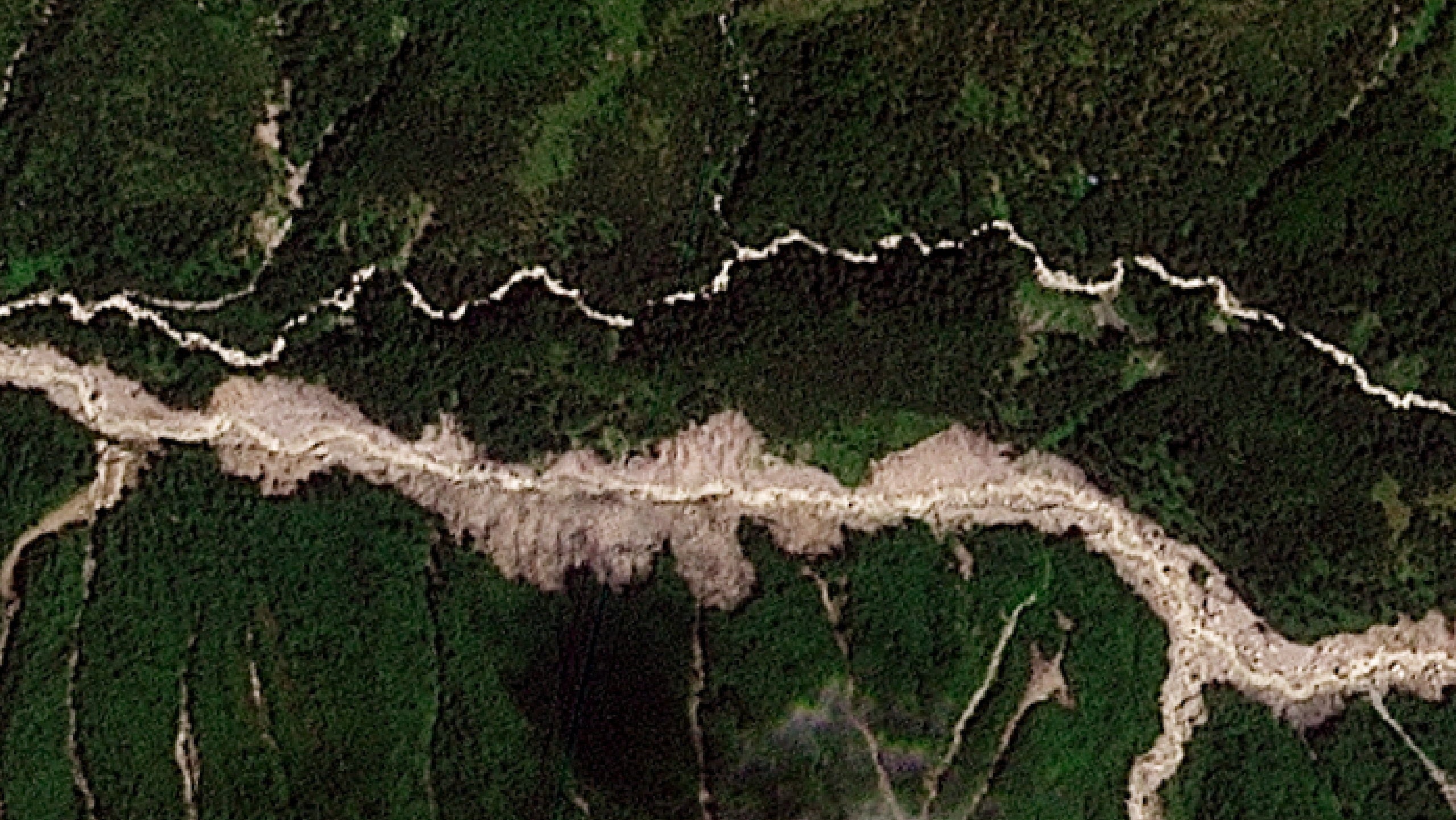
The risk of a second, catastrophic flood has begun to ease, Chinese authorities said on Saturday. When the glacier collapsed on Wednesday, debris blocked a river near the border crossing at Gyirong, forming a natural dam and a lake behind it. Officials warned that if that dam gives way, it could send another wall of water downstream.

Satellite imagery now shows the lake’s surface area has shrunk to about 99,000 square metres, roughly the size of 14 football pitches, as water has gradually drained through the blockage, China’s water resources ministry said.

Satellite imagery shows a lake that formed at site of glacier collapse
Satellite imagery shows a lake that formed at site of glacier collapse (Reuters)

A separate, larger body of water has also formed at the base of where the glacier collapsed, covering more than 120,000 square metres, according to Chen Hongqi, a senior engineer at the ministry of natural resources’ Geological Disaster Technical Guidance Centre, though its depth is not yet known. Nepal’s disaster management authority said the risk of further flooding would persist until both lakes have fully drained.

Britain, India, China, the United States, Britain, Japan, South Korea, Sri Lanka and Bangladesh have all asked to send their own search-and-rescue teams, according to the Kathmandu Post, but Mr Khanal said Nepali rescuers were already handling that work.

“We think there is no need for repetition in this,” he said.

Advertisement
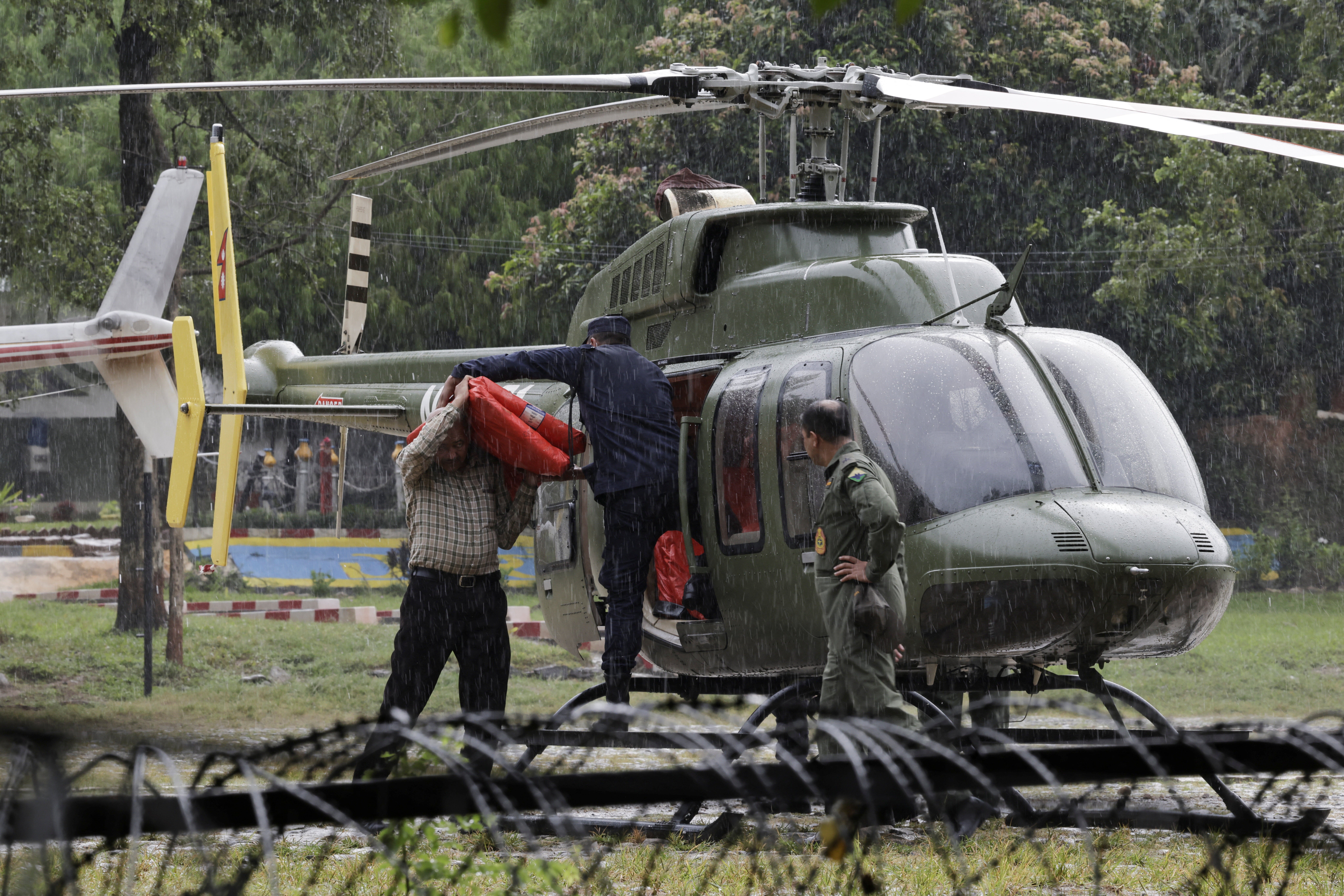
Rescuer load relief material in a helicopter to be transported to the areas affected by flash floods and a mudslide as it drizzles at the Maithali Barrack, an army training center, in Trishuli, Nuwakot district, Nepal
Rescuer load relief material in a helicopter to be transported to the areas affected by flash floods and a mudslide as it drizzles at the Maithali Barrack, an army training center, in Trishuli, Nuwakot district, Nepal (Reuters)

A British rapid response team was due to arrive in Kathmandu on Saturday, tasked with assisting relatives of the more than 30 British nationals missing in the disaster. Forming part of the UK’s wider response to the flooding, which includes £5 million of humanitarian support for relief and recovery efforts, the team will also work with families in the UK concerned about loved ones in the affected area.

Nepal has also asked India and China, the two larger neighbours between which it sits, to supply bailey bridges – portable, fast-assembly truss bridges that don’t need heavy machinery to install – to restore transport links after roughly two dozen bridges were destroyed in the flooding.

China on Saturday sent tunnel experts to Nepal on government’s request, Xinhua news agency reported.

Mr Khanal said many bodies had been recovered as far away as Chitwan and Nawalparasi, on the plains around 100 kilometres from the disaster zone, and that hospitals there had run out of refrigeration space to store them. He said the flood had caused extensive damage to schools, hospitals, hydropower plants, roads and bridges, and that Nepal would need further foreign support during reconstruction.

Rescue operations entered a fourth day on Saturday, hampered by poor weather that grounded helicopters. Brig Gen Raja Ram Basnet, an army spokesperson, told the AP that rescue teams remained focused on the Upper Trishuli-1 hydropower project in Rasuwa district, where more than 100 people are believed trapped in a tunnel filled with thick mud.

Advertisement
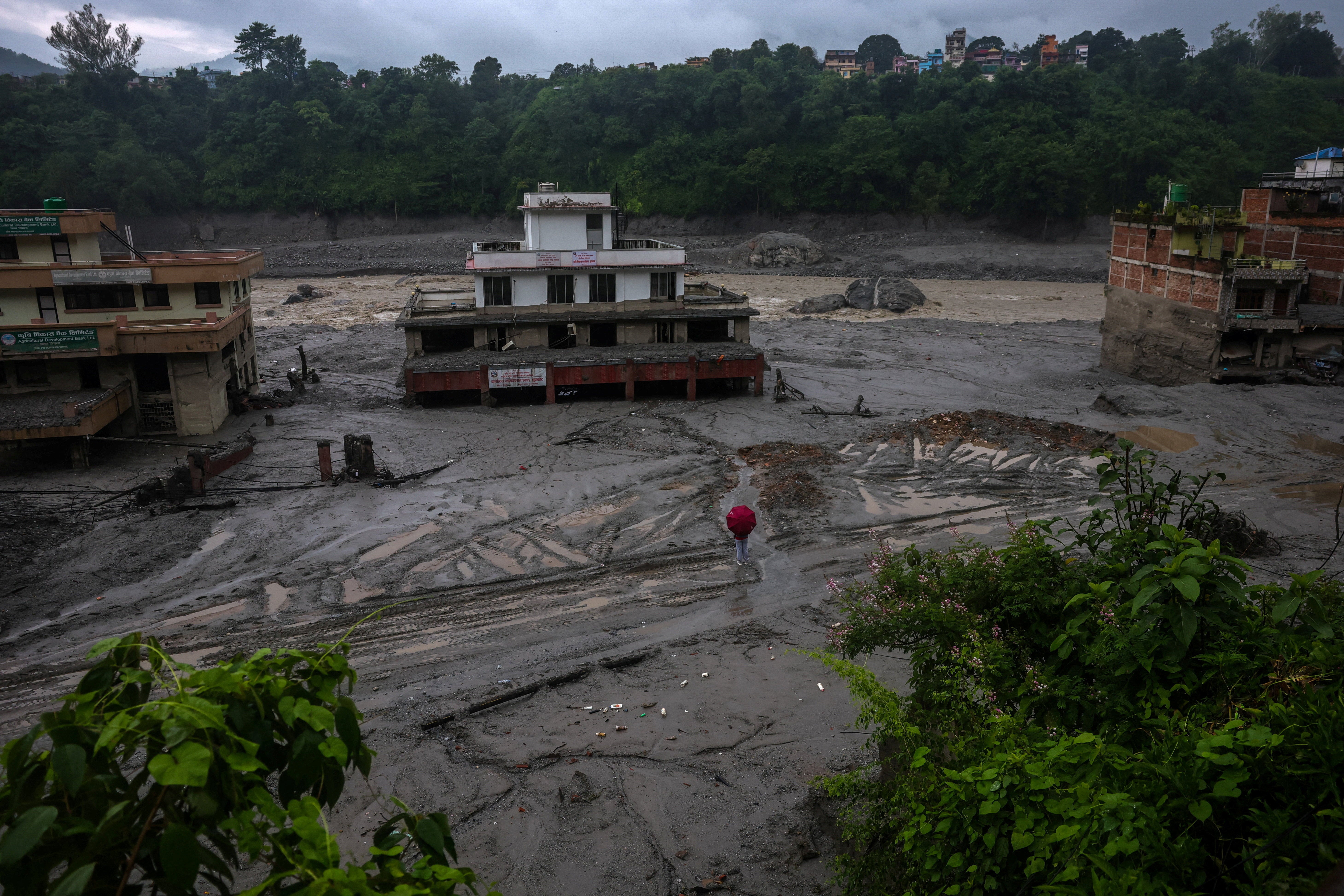
A person holds an umbrella as he stands in front of damaged buildings after flash floods and a mudslide, in Trishuli, Nuwakot district, Nepal
A person holds an umbrella as he stands in front of damaged buildings after flash floods and a mudslide, in Trishuli, Nuwakot district, Nepal (Reuters)

Rescuers have used ropes and baskets to reach some of those trapped, he said, though the operation has been slowed by up to five feet of mud and a shortage of locations where helicopters can land. Teams have also had to relocate temporarily on at least one occasion after further flood warnings were issued.

There is no sign of survivors at the Chinese border crossing which was engulfed by a ferocious flood wave earlier this week, rescue officials told state media, according to CNN.

Chinese rescuers arrived on Friday afternoon at the land port, an area over 3,800 meters above sea level.

“The buildings within the mudslide’s impact zone have largely been flattened, with no discernible outline of any structures,” Liu Maolin, a rescue team leader, told state broadcaster CCTV.

“The ground is covered by thick layers of mud and rubble, with extensive and deep deposits, while the port’s infrastructure has been particularly severely damaged.”

Advertisement

So far, no survivors have been found, but the team “will never give up as long as there is even the slightest hope,” Liu said.

The altitude is also making the search dangerous, with crews carrying dozens of kilograms of equipment while working through conditions that can trigger “severe chest tightness, shortness of breath, dizziness and headaches,” according to China Emergency Management News.

At Kathmandu’s main government hospital, families gathered from early Saturday morning searching for news of missing relatives, moving between the help desk and a noticeboard displaying photographs of both patients and unidentified bodies.

“I came here with the hope that I might find him,” said Dil Maya Lama, who travelled from Ramechhap district in search of her 26-year-old brother, a hydropower company driver in Rasuwa. “There is no information about him,” she told the Associated Press.

Advertisement

Gajendra Rawat, a security official at the hospital, said families had registered around 1,600 missing-person reports there alone. “People are coming from all parts of Nepal,” he said.

Search teams also reached Gyirong Port, the border crossing on the Chinese side that was severely damaged in the flooding, with some rescuers reaching the area on foot, by raft, or via equipment lowered from drones.

The floods are expected to deal a heavy blow to an economy already reliant on remittances, tourism and hydropower. Nepal’s finance minister, Swarnim Wagle, told Reuters the country may need $4 billion to $5 billion to rebuild, equivalent to nearly a tenth of its economy.

“The initial estimate is between $4-5 billion. Just an estimate,” he said.

Advertisement

“We will require much less than what we needed for the 2015 earthquake. Loss and damage is being assessed.”

That earlier disaster, Nepal’s worst on record, cost around $9 billion to recover from and wiped out roughly a third of the country’s economy. Wednesday’s floods have already damaged hydropower stations that account for more than 12 per cent of Nepal’s electricity generating capacity.

Source link

Advertisement
Continue Reading

Trending

Copyright © 2025