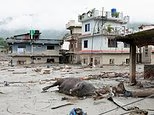
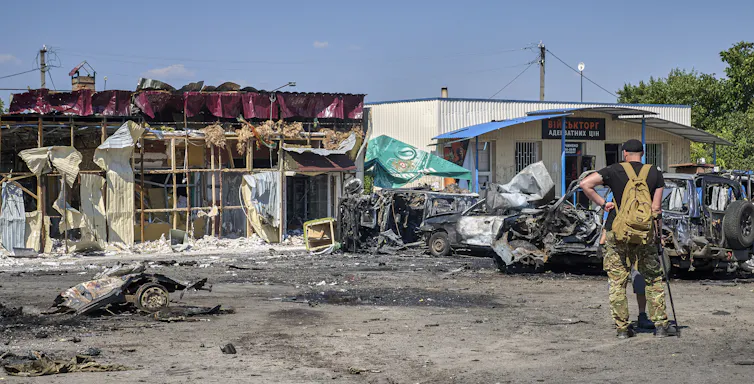
More than 30 British nationals are among hundreds of people missing and feared dead as rescue efforts continue after flooding in the Rasuwa district, which borders China’s autonomous region of Tibet.
The team, consisting of specially trained crisis response staff, will work alongside the British embassy and local authorities.
They will help co-ordinate assistance for British nationals arriving at and departing from the airport, support those seeking information about missing relatives, liaise with local authorities and emergency responders, and reinforce existing consular operations on the ground.
Advertisement
Forming part of the UK’s wider response to the flooding, which includes £5 million of humanitarian support for relief and recovery efforts, the team will also work with families in the UK concerned about loved ones in the affected area.
Mr Basnet said rescue efforts were continuing at a hydropower construction plant, where more than 100 people are believed to be trapped in a mud-filled tunnel.
Rescue efforts had been hampered by fears of more flooding from a lake formed by the glacier collapse which sparked the flooding on Wednesday.
The Chinese Ministry of Water Resources said water levels had dropped by 10 metres from Thursday morning to Friday, according to state broadcaster CCTV.
Advertisement
Foreign Secretary Ed Miliband said: ‘The scenes from Nepal are devastating, and our thoughts remain with everyone affected.
‘The safety and welfare of British nationals is our top priority. That is why we are deploying a Rapid Deployment Team to Nepal to provide additional support on the ground for British nationals and their families at what is an incredibly difficult time.
‘Our staff are working closely with the Nepali authorities, emergency responders and our embassy in Kathmandu to ensure those affected can access the assistance and information they need.
‘We will continue to do everything we can to support British nationals impacted by this tragedy.’
Advertisement
The UK’s £5 million support package will support Nepal’s response efforts, including a combination of UN, Red Cross and NGO interventions.
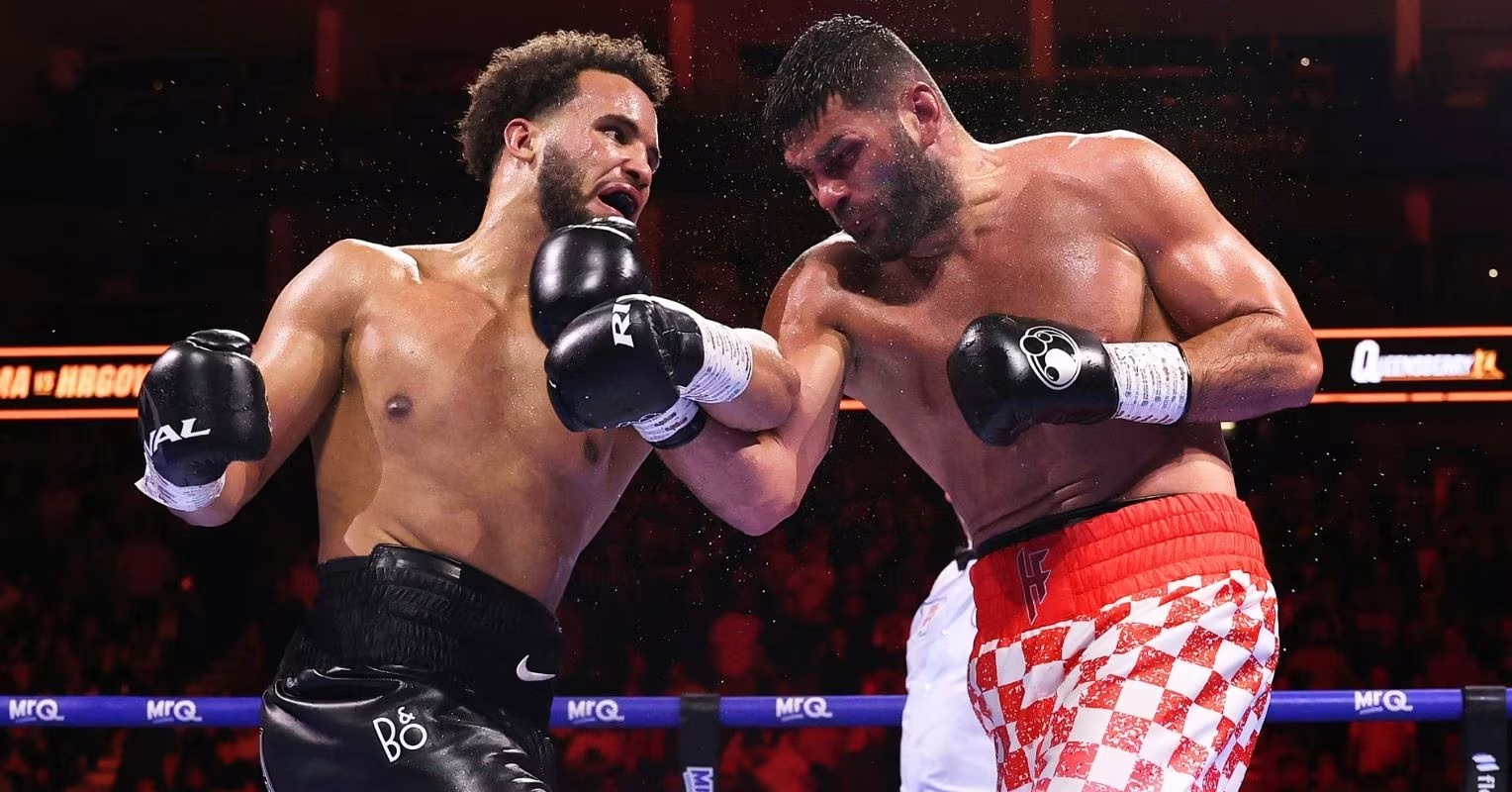
Itauma blasted Hrgovic with brutal shots throughout the first half of the fight, winning every round in a dominant display.
Hrgovic’s iron chin absorbed the biggest and baddest shots Itauma threw, however.
The Chatham fighter had won all 14 of his previous bouts, 12 of those via knockout, but there were questions how he might cope when taken into deep waters against an experienced and durable operator like his opponent.
Only the ropes held Itauma up in a brutal ninth round (Picture: Action Images via Reuters)
The youngster had never fought beyond the sixth round before tonight with his tank quickly emptying in the eighth round where Hrgovic smelt blood.
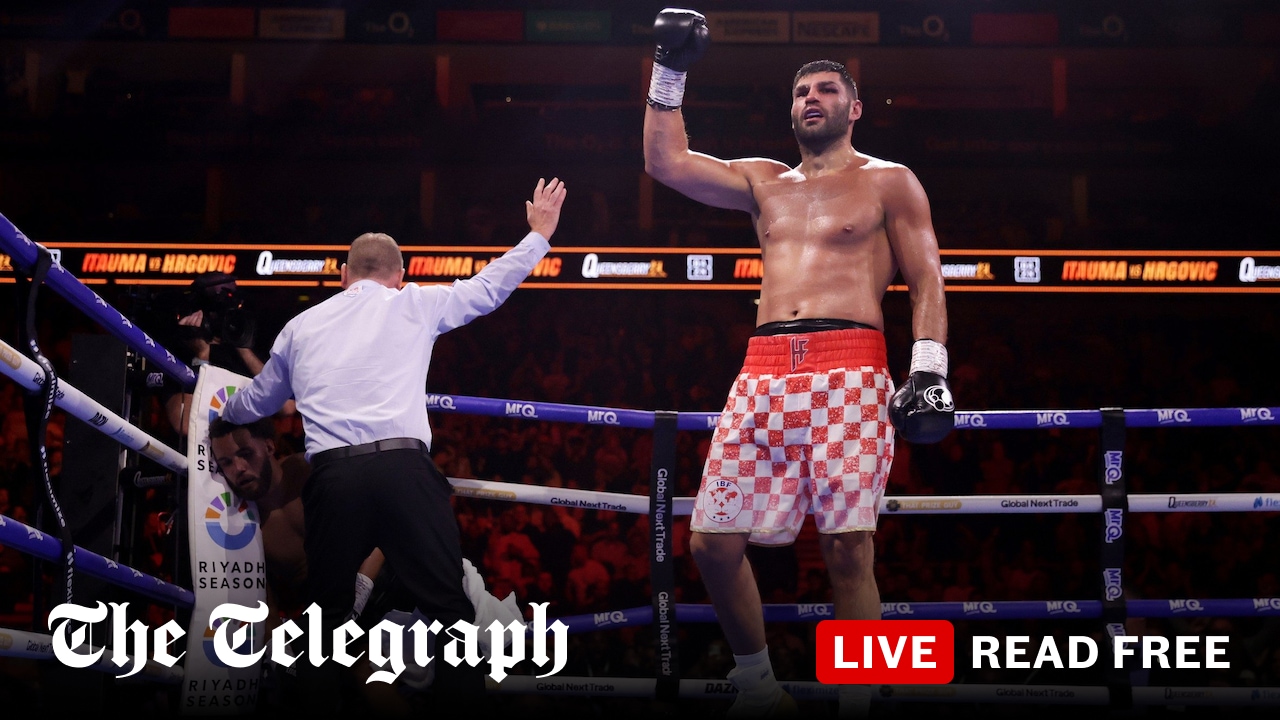
Itauma was suddenly spent in the ninth, barely able to stand up with the fight swinging dramatically in Hrgovic’s favour. Itauma continued to swing, but was no longer finding the target as he staggered wildly around the ring.
Advertisement
Hrgovic took some brutal shots before momentum swung (Picture: Action Images via Reuters)
Ask Metro
Use AI to go deeper into the stories you care about – powered by Metro and trusted publications.
Hrgovic saw his opportunity with only the ropes holding Itauma upright as heavy blows came in.
With nothing left in his utterly exhausted fighter, Itauma’s trainer Ben Davison mercifully threw in the towel just as referee Howard Foster stepped in to stop the fight.
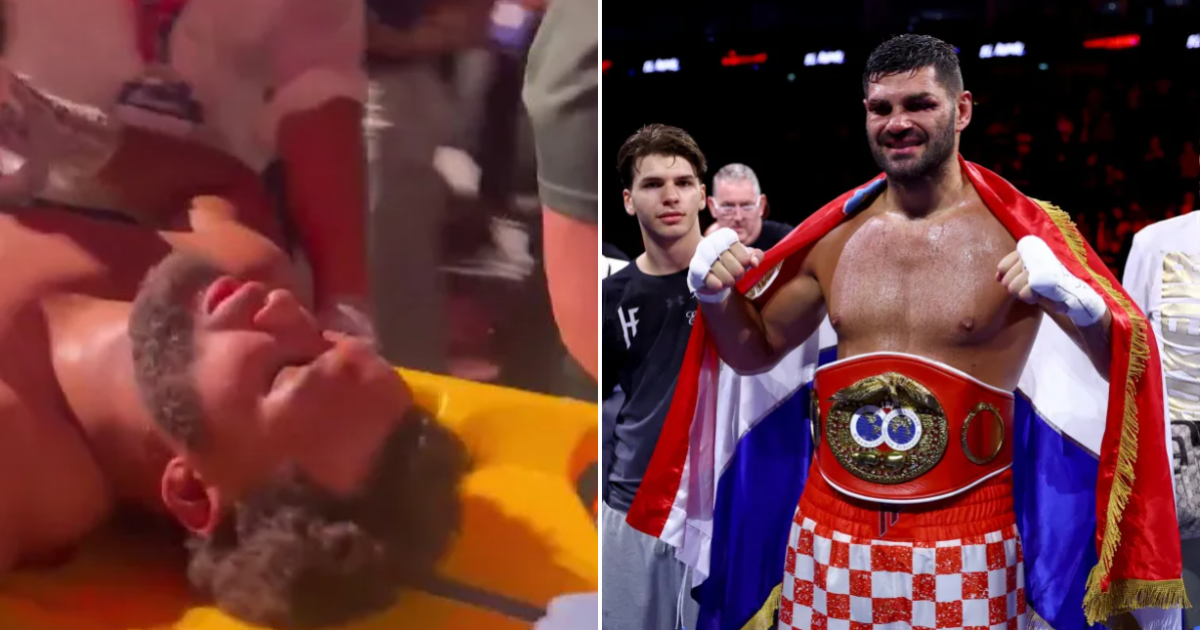
Itauma was immediately attended to by the ringside doctor and paramedics and was carried backstage on a stretcher to be taken to hospital.
Itauma ran out of gas after the midway point (Picture: PA Wire)
Itauma’s promoter Frank Warren later revealed his fighter was struggling with a leg injury during the contest.
‘This was an unbelievable fight tonight. The champ prevailed and did what he had to do. Moses [Itauma] gave everything, he has a leg injury. He has to go back to the drawing board and he can come again,’ Warren said.
‘Towards the end, Moses wasn’t trying to hold or anything he was throwing punches and he got clipped. He started off well and what happened, happened. That’s boxing. It was a great fight.’
Warren added in the post-fight press conference: ‘Moses has gone to hospital. He has done something to his leg.
Advertisement
‘Obviously he has to be checked over, it was a brutal fight.
‘He did something to his leg and he was knackered as well. It was a very fast-paced fight.’
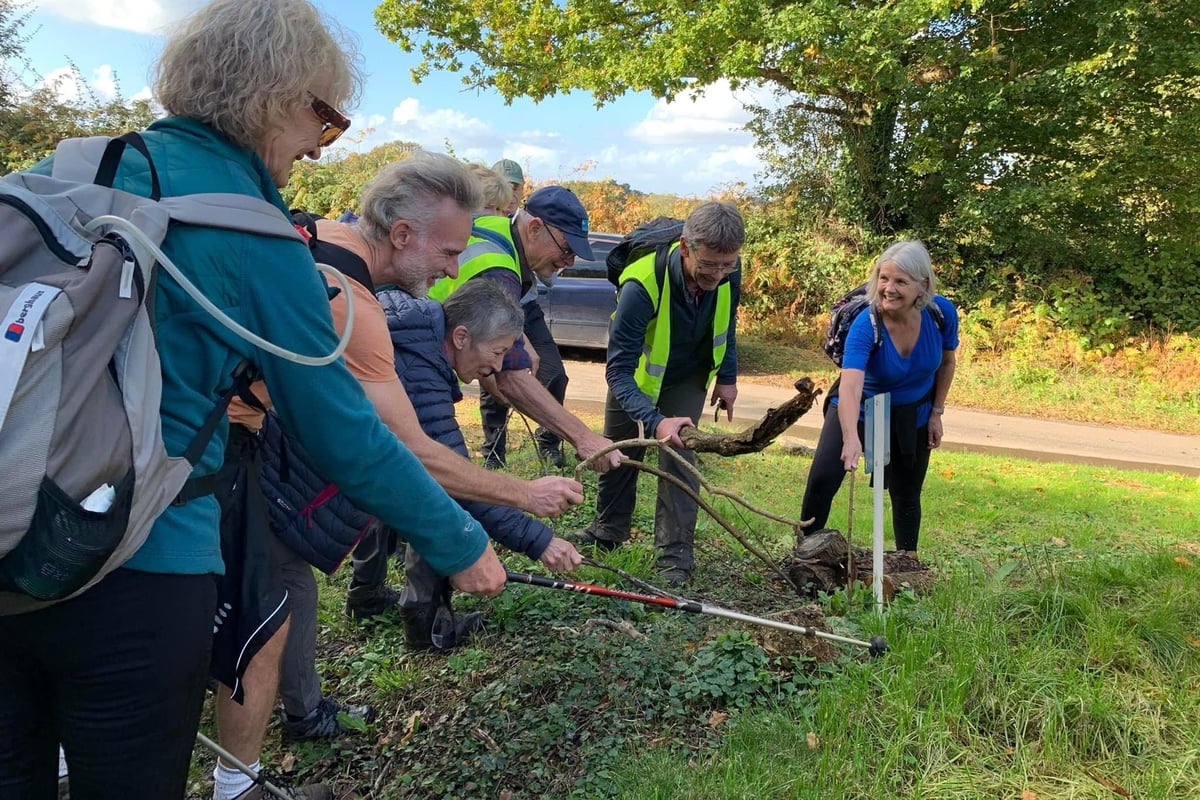
Long before printed maps – and well before Google Maps – local communities kept track of their boundaries by walking them. The centuries old tradition of Beating the Bounds involved villagers, especially youngsters, walking the perimeter of their parish or manor, marking key points by striking them with sticks to help remember the route.
Itauma was born in Slovakia to a Slovak mother and a Nigerian father, but was brought up from an early age in England, after moving to Kent.
Originally, his parents had hoped that he might become a doctor or lawyer, but instead he followed his older brother, Karol, into boxing. While some parents might have been sceptical about that career choice, Itauma’s family became supportive when they realised his talent.
Advertisement
“There’s a lot of expectations on my shoulders to carry the flag of British boxing. I just have to live up to it,” Itauma told the BBC.
Itauma was spotted by Frank Warren’s son, Francis, as a teenager, with the Queensberry man noting his talent as he sparred with professional fighters, where he was able to get the better of far more experienced, and much older, opponents.
Boxing journalist, the excellent Gareth A. Davies, notes that while we can also see his exceptional talent, there is still a feeling that he has to show us more. All his wins have come so quickly, and with so much more to spare, that we may yet have seen him truly tested.
Davies wrote in The Telegraph earlier this month: “Moses Itauma was spectacular in demolishing old warrior Dillian Whyte here in just 119 seconds of utter dominance, but there is still one thing missing for the 20-year-old: rounds in the bank.
Advertisement
“In thirteen career fights, Itauma has fought just 26 rounds, stopping eleven of those victims.”
Will Hrgovic last any longer than previous opponents?
Here’s what the stars have in store for your day (Picture: Metro.co.uk)
The Moon-Neptune alliance allows strong visions for the future to take centre stage. Trust your instinct.
Sagittarius, Aquarius and Pisces, own your uniqueness today. Creative solutions will be plentiful if you embrace your originality.
Keep an open outlook and let your mind wander to new possibilities. Then, the world is your oyster.
Ahead, you’ll find all star signs’ horoscopes for today: Sunday August 30, 2026.
Advertisement
Like checking your horoscope every morning? You can now sign up to our free daily newsletter to get a personalised reading for your star sign delivered straight to your inbox.
To order your unique personal horoscope based on your time, date and place of birth, visit patrickarundell.com.
Aries
March 21 to April 20
Your imagination is working at full power as today’s Moon-Neptune blend enhances your ability to be a true visionary. It’s good to trust any intuitive nudges, but also to keep your feet on the ground. Use this aspect to dream big but also make use of Saturn in your sign to flesh out the details. You might hope that everything will be okay, but don’t leave things to chance.
Use AI to go deeper into the stories you care about – powered by Metro and trusted publications.
April 21 to May 21
Advertisement
You’ll have an opportunity to slow the pace and listen to the quiet wisdom that is hiding out beneath your usual mindset. This may be one of those days when it’s good to slow down and allow ideas, thoughts and deeper messages to come to you. It’s not wise to impulsively set plans in motion. Instead listen to your deeper instincts as they’ll tell you the best way ahead.
You may connect with people who really do share your dreams, and this can bring you close. Discussions can also give you more belief in yourself as others might support your vision and even want to help. But don’t believe everything you hear, as some offers may be better than others. You can have a great day socialising but check out the facts before taking action.
You’ll be inspired to think beyond your usual career plans, instead spending time with ideas that are much more exotic. It’s time to trust those imaginative flights of fancy and see where they take you. Don’t lose your connection with the earth though, as it’s essential to keep your feet on the ground. Dreams can come true but be realistic about how you might achieve them.
It’s time to extend your usual horizons as adventure calls and a wistful line-up can find you yearning for something different. A vacation with a difference might spring to mind and one that to satisfies all your desires at once. Before you book that flight or hotel it’s wise to read the reviews and make sure that you won’t be disappointed by the food or perhaps the view.
The Moon’s merger with Neptune in an intense zone can assist you in finding treasure due to the power of an insightful nudge. You’ll sense there is more to an encounter or offer than meets the eye and you’d be right. There’s potential for a truly creative collaboration that can make good money. Before you start, though, everyone needs to know where they stand.
Cosmic messages for Cosmic messages for Virgo today
Libra
September 24 to October 23
Someone may be able to read you like a book and it’s this level of understanding and sensitivity that could help you feel seen and heard. If key others have seemed more interested in themselves than in you, a lunar link could change this, encouraging close ones to tune in and take note of how you’re feeling and to ask how they can help and support you right now.
It may be time to finesse your work and wellness routines and to consider how much they are contributing to your life. You may have recently become haphazard about big goals and plans that are really quite important to you. Today’s lunar link can be a call to tighten up your daily strategy, instead of going with the flow and hoping for the best. You certainly won’t regret it.
You’ll be a hive of creativity as an imaginative blend of energies enables you to dream up fun ideas regarding places to go and things to do. You may also be in a dreamy mood and prone to fantasies, so before you spend money on a hobby that’s unlikely to last, or a romance that might not be at all suitable for you, pause for thought. It could be a game changer, Archer.
The Moon-Neptune merger in your home zone might inspire a vison that leads to a wonderful makeover for your place. You’ll be drawn to magazines, videos and other sources of creativity to fashion a blueprint that echoes your brightest dream. Even so, it’s a good idea to get a second or third opinion and confer with the family first, then adjust plans accordingly.
Conversations can motivate, encourage and open new doors, and a simple chat or unexpected encounter could lead to fresh opportunities. Your imagination can be on fire, and this can lead to sizzling ideas that might wake others up and make them take notice. Check out the details too, for as you contemplate your plans, that you may miss something really obvious.
You’ll feel so much valuable when you believe in your abilities and worth. Today’s misty line-up encourages you to dream up fresh and imaginative ways you can put your talents to use. You’ll also be ready to increase your income. Just make sure your plans are grounded in reality and that they don’t involve splashing out more than you earn. Do your research.
Your daily Metro.co.uk horoscope is here every morning, seven days a week (yes, including weekends!). To check your forecast, head to our dedicated horoscopes page.
As a loyal Metro reader, we want to make sure you never miss our stories when searching for your news. Whether it is the latest politics news explained, live football coverage or a showbiz scoop.
Advertisement
Click the button below and tick Metro.co.uk to ensure you see stories from us first in Google Search.
A large emergency services presence arrived on the scene near Martin Lane and images showed the stationary train close to the wreckage of the van.
Click here to get the biggest stories straight to your inbox in our Daily Newsletter
The ECHO has now spoken to an eyewitness who was on the train and witnessed the horror up close. Young mum Sophie Cassidy was at the front of the train as it crashed into the van at the level crossing.
Advertisement
Sophie, 26, who had been attending the Southport Airshow with her one-year-old son and four-year-old daughter, was making her way back to her home in Burscough.
She said the man was driving a supermarket delivery van and she saw him approaching the level crossing from the window of the train as she was sat right at the front behind the driver’s cab with her children.
Sophie explained: “As the train was heading towards the level crossing, I was talking to my little boy and then out of the window I saw the driver of the delivery van heading towards the crossing. I couldn’t believe what I was seeing, I was thinking oh my god we are about to hit him. Surely he can see us?”
Describing the shocking moment the train ploughed into the van, she added: “When the train hit the van, it took out the whole front window of the train, if the driver hadn’t ducked out of the way he would have been killed. He was very lucky.
Advertisement
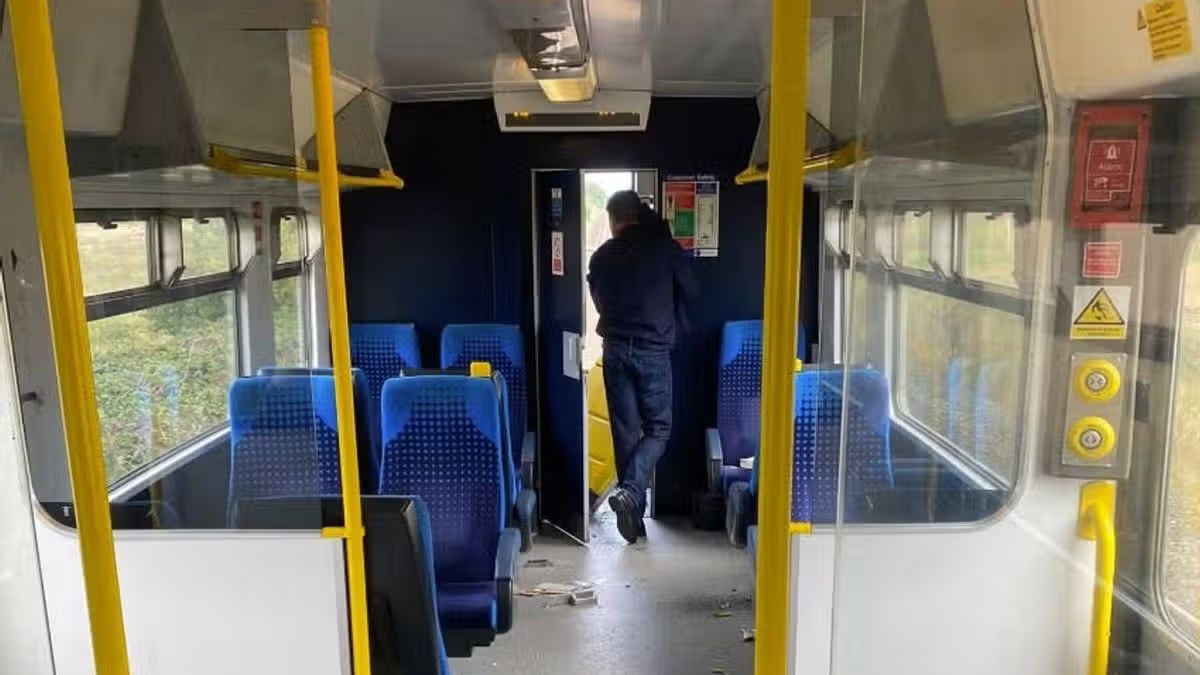
“The door that separates the driver from the carriage flew off as well. I was really worried we might derail with my kids. Everyone was screaming and crying. It was the most horrible thing I have ever experienced.”
The young mum shared images with the ECHO which showed the huge damage done to the front of the train, with the front window smashed in and the door hanging off. Debris can be seen all over the floor.
Sophie is adamant the driver of the train was not at fault in any way and said he “did everything in his power” to avoid hitting the van as it crossed the level crossing.
Advertisement
She said: “The train driver was actually amazing. After what he went through in the crash he came out to make sure the passengers were ok and offered us water and things. I hope he gets the recognition he deserves.”
She also praised the efforts of emergency workers who helped to treat some passengers for minor injuries and eventually were able to help people off the train after around two hours of waiting. She also said Northern train staff were “spot on.”
Speaking about the driver of the van, Sophie said tragically from her vantage point at the front of the train she was aware he could not have survived the crash. She said: “I was sat at the front when it happened, I knew he was going to die.”
A spokesperson for the British Transport Police said: “We were called to a level crossing in Burscough, West Lancashire following reports at 3:18pm today (29 August) that a train had struck a van. Paramedics and the fire service also attended.
Advertisement
“One person was in the van and sadly a man was pronounced dead at the scene. Two people who were passengers on the train received treatment for minor injuries. The incident is not being treated as suspicious.
“Enquiries are ongoing to establish the full circumstances of what happened, any witnesses who haven’t already spoken to police are asked to text BTP on 61016 quoting the reference 373 of 29 August.”
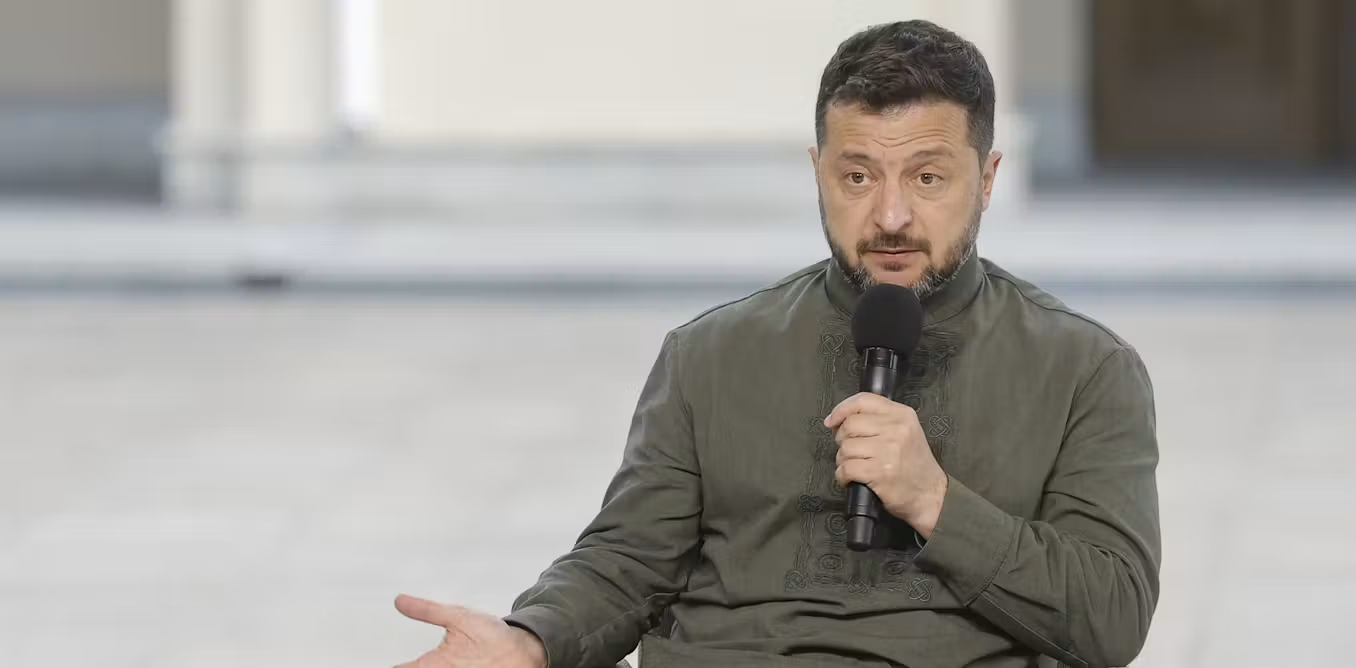
A recent call by Ukraine’s former defence minister, Mykhailo Fedorov, for new national elections in Ukraine – which would be the first to take place in the country since 2019 – has sparked a renewed debate about whether it is possible to hold a legitimate vote in wartime.
Under normal circumstances, Ukraine’s parliamentary elections would have been held in October 2023. Presidential elections would have followed in March 2024. But the circumstances are, of course, far from normal.
Almost a fifth of Ukraine is occupied by Russian troops, millions of people are displaced and citizens across the country are subject to daily missile and drone attacks.
Fedorov’s argument is that Ukraine is a free European state fighting to defend democracy. It should not be the Russian president, Vladimir Putin, who decides when Ukrainians get to choose their leaders, he argues.
Advertisement
On the face of it, it seems a simple argument. What sets a democracy aside from an autocracy is that its leaders are genuinely accountable to the electorate and periodically face the voters in open, free and fair elections. But is it as simple as that?
Fedorov’s dismissal in July sparked protests in Kyiv and other Ukrainian cities. Olivier Matthys / EPA
Fedorov’s argument has reignited a debate that has echoes of talking points routinely aired by Putin, who has questioned Ukrainian president Volodymyr Zelensky’s continued legitimacy. The US president, Donald Trump, has also claimed that Ukraine is “using war not to hold an election”.
But in international terms, it is in fact not unusual for elections to be postponed when a country is under attack. Postponing elections in emergency situations until it is possible to hold them with full integrity can sometimes be justified on democratic grounds. During the second world war, for example, Britain postponed its 1940 election until 1945, focusing instead on defeating the threat to democracy itself from Nazi Germany.
The Ukrainian constitution declares that the state’s most important task is to defend the country’s sovereignty and territorial indivisibility. According to Zelensky, this is precisely what would be endangered by holding elections now.
Advertisement
Should Ukraine hold elections?
The arguments against holding elections while the war is still ongoing are threefold.
First, elections would rest on shaky legal ground. Article 83 of Ukraine’s constitution automatically extends parliament’s term under martial law. Article 19(1) of the Law on the Legal Regime of Martial Law also prohibits presidential, parliamentary and local elections during wartime.
Any election held against these provisions would almost certainly be challenged as illegal by the losing side. Despite Putin and Trump’s insinuations, the mandates of Zelensky and the current parliament remain fully legal.
Second, as the Council of Europe noted in 2022, it is doubtful that Ukraine could currently hold elections that meet domestic and international democratic standards. This is not due to any lack of desire to do so, but due to the war itself.
Advertisement
Elections require functioning infrastructure, accurate voter rolls, clearly defined electorates and territorial boundaries, fair competition and genuine opportunities to vote and stand for election. These are hard to guarantee while under full-scale attack.
With millions internally displaced or abroad, and Ukrainians in the Russian-occupied regions unable to vote and in many cases stripped involuntarily of their Ukrainian citizenship by Russia, accurate voting lists would be hard to compile. Voting itself would also be challenging, as around a quarter of polling stations and nearby public buildings have been damaged.
Ukrainians living abroad may also struggle both to vote and to stand for election. Many military personnel would find this similarly difficult as they would not be able to leave the front line. These issues would need time to resolve fairly and proportionately.
Ukraine remains under Russian bombardment, posing a major logistical challenge to holding an election. Sergey Kozlov / EPA
Third, holding an election would require Ukrainians to redirect political energy and economic and military resources away from the struggle for state survival to ensuring the security of the electoral process.
One of Russia’s war aims is the removal of the Ukrainian government from power. And it is unlikely to watch passively while an election unfolds. Russia continues to fire hundreds of missiles at Ukraine each day that could target polling places or campaign events. This makes it impossible to hold a genuinely open election campaign and ensure the safety of candidates and voters.
Advertisement
It is also highly likely that Russia would attempt to influence the process through disinformation, propaganda and tacit support of certain candidates – as it has done in other neighbouring countries.
Ahead of elections in 2025, Moldovan president Maia Sandu warned of a Russian-backed operation to interfere with the vote. This included recruiting orthodox priests to sway voters towards supporting Russia-aligned political parties, as well as extensive algorithm manipulation on TikTok. Moldova’s ruling pro-European Party of Action and Solidarity ultimately won the election.
It perhaps seems paradoxical, but Ukrainian democracy may be stronger in the meantime without elections. There has been a wide political agreement from all parts of the Ukrainian political spectrum since Fedorov made his remarks that the legitimacy of the government would not be strengthened if it was elected through elections deemed illegal under national law, incomplete in terms of the people enfranchised and potentially manipulated by outside forces.
Securing state sovereignty remains Ukraine’s first priority for the preservation of a democratic European future.
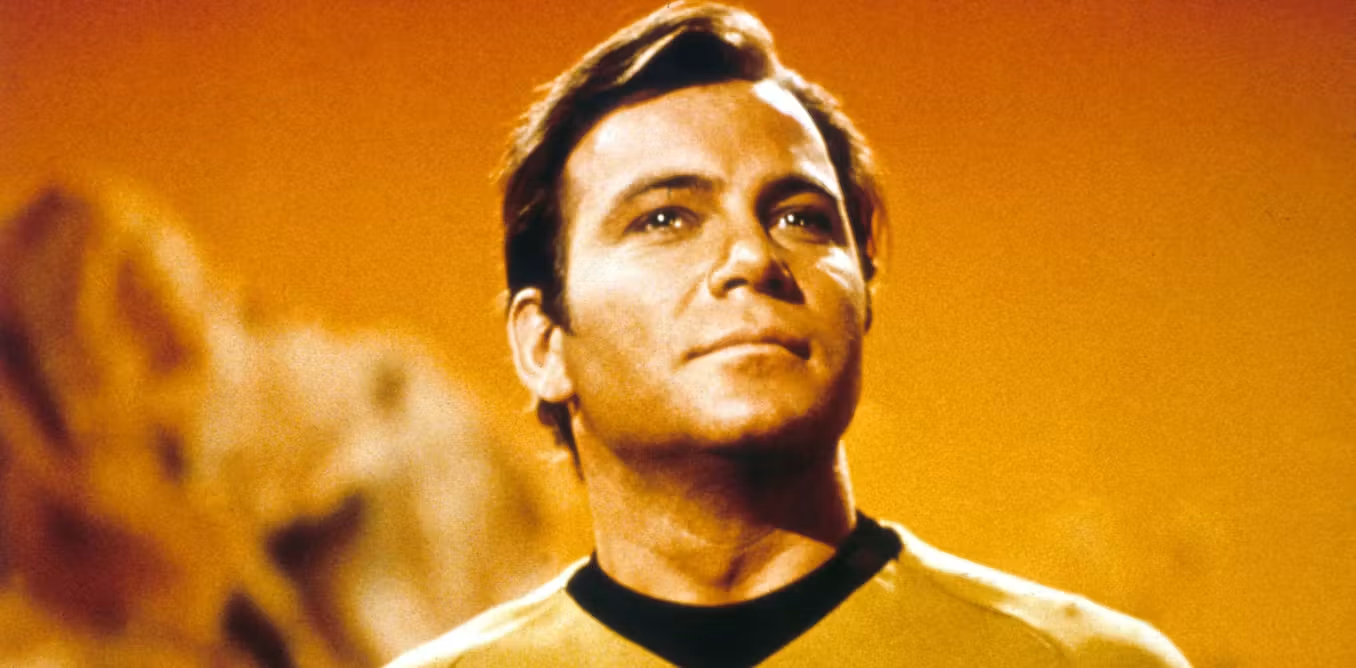
When Star Trek first appeared on television screens 60 years ago, audiences expected science fiction to offer aliens, monsters and futuristic technology. What they encountered was something far more ambitious.
From its very first broadcast episode on September 8 1966, Star Trek established that its true subject was the exploration of humanity itself. For all its reputation as an action-packed space adventure, the franchise has endured because it repeatedly returned to a universal question: what does it mean to be human?
In that first episode, entitled The Man Trap, the alien antagonist survives by appearing to each observer as the person they most wish to see. Dr Leonard “Bones” McCoy meets a lost love from his past; others see figures shaped by memory, expectation, desire and longing.
The creature, soon dubbed the “salt vampire” by fans of the series, is not simply a shape-shifter. Its power lies in exploiting human perception. Rather than asking viewers to fear an alien with superior strength or advanced weaponry, the episode asks a more profound question: can we trust our experience of reality?
Advertisement
Preview of The Man Trap, the first Star Trek episode to air in September 1966. Video: RetroAlexander.
Sixty years on, this question looks remarkably prescient. Modern neuroscience increasingly suggests that perception is not a passive recording of the external world. According to theories of predictive processing, the brain continually generates expectations and compares them with incoming sensory information.
The philosopher Andy Clark has described the brain as a “prediction machine”. Neuroscientist Anil Seth argues that our experience of reality can be understood as a form of “controlled hallucination”, generated by the brain but constrained by evidence from the senses.
Long before such ideas were articulated, The Man Trap imagined a world in which people confront the same reality, but perceive it in profoundly different ways – based not only on what they see, but what they want to see.
Advertisement
This insight links the episode to a much older intellectual tradition. The ancient Greek philosopher Plato’s allegory of the cave imagined people mistaking shadows for reality, confusing appearance with truth.
The USS Enterprise crew’s first alien encounter offers a 20th-century variation on the same theme. They actively participate in their own deception because the creature reflects their hopes, memories and desires.
This helps explain why The Man Trap feels strikingly contemporary. In today’s world, shaped by algorithmically curated information, political polarisation and increasingly personalised media environments, disagreement is often less about opinions than competing versions of reality itself.
The nature of humanity
Star Trek’s memorable debut was not an isolated exploration of a philosophical problem. It was the beginning of a broader inquiry into the nature of humanity.
Advertisement
The Devil in the Dark (first aired March 1967) explores empathy and the challenge of understanding the unfamiliar. The apparently monstrous Horta is revealed to be an intelligent life-form protecting its offspring, forcing viewers to reconsider assumptions about difference and otherness.
The Enemy Within (October 1966) shifts the inquiry inward, splitting Captain James T. Kirk into opposing aspects of his personality and challenging the assumption that human beings can divide their virtues from their vices.
The episode argues that the qualities that make Kirk an effective leader – courage, decisiveness and resolve – are inseparable from darker instincts such as aggression and desire. Rather than presenting humanity as a triumph over these impulses, the episode suggests that human identity itself depends upon their integration.
The City on the Edge of Forever (April 1967), regarded by many as the series’ masterpiece, shifts the focus to ethics. Kirk discovers that saving the woman he loves would alter history catastrophically, forcing him to choose between personal happiness and moral responsibility.
Advertisement
Together, these and many more of the 79 original Star Trek episodes form a remarkable investigation into human nature. The progression reveals a series less interested in strange new worlds than the human beings who encounter them.
The City On the Edge of Forever is regarded as one of the series’ finest episodes. Video: Robin Sellex.
Philosophical inquiry
While many science-fiction programmes have aged with their technologies, Star Trek has endured because its deepest questions remain unresolved. We still debate perception, identity, empathy, consciousness and moral responsibility, because they are permanent features of human existence.
At its best, Star Trek engaged science fiction as a form of philosophical inquiry. Alien civilisations became thought experiments about prejudice and empathy. Time travel became a vehicle for exploring ethics. Artificial intelligence became a means of questioning consciousness and identity. The future it imagined served as a laboratory for understanding ourselves.
Advertisement
The closing moments of The Man Trap illustrate this perfectly. Reflecting on the death of the salt vampire, Kirk recalls his conversation with the archaologist Robert Crater, who has long been working on the planet, about the fate of the American bison – driven to the brink of extinction by humans.
This comparison transforms what might have been a conventional monster story into something morally complex. The creature is dangerous yet is also the last of its kind. Is it merely a predator, or the victim of a larger tragedy?
The episode, like many others, offers no simple answer. Crater views the creature from a perspective of compassion and preservation. Kirk simply sees an immediate threat to his crew. Both are responding to the same reality, yet they arrive at different conclusions.
The original Star Trek’s lasting legacy is not technological prophecy, but a sustained exploration of what it means to be human. Its enduring achievement lies not in predicting mobile phones, iPads or video calls, but in recognising that the most fascinating and vexing mystery remains humanity itself.
Advertisement
The final frontier, it suggests, lies not among the stars but within ourselves.
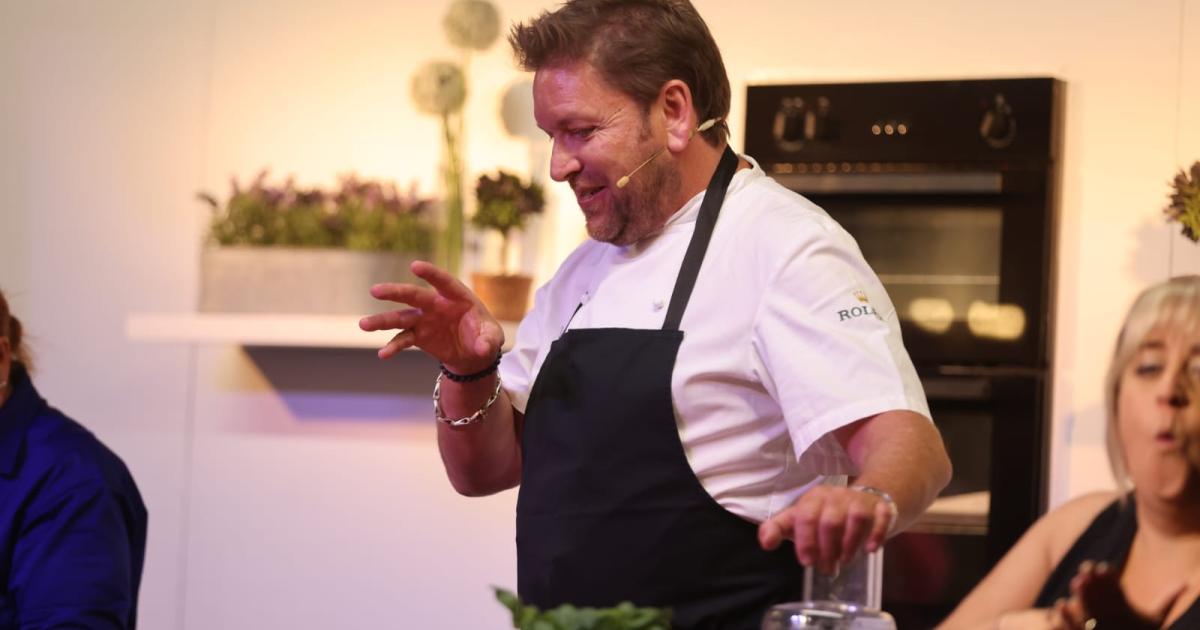
The celebrity chef took to the stage three times today (August 29), demonstrating his culinary skills while keeping audiences entertained with plenty of jokes along the way.
One of the dishes saw James recreate the fast-food favourite using his own unusual addition – cornflakes.
James spoke about KFC’s famously guarded blend of herbs and spices, telling the audience he had found a version of the recipe online after it was reportedly revealed by a relative of the chain’s founder, Colonel Harland Sanders.
He used the seasoning to create his own version of the chicken but swapped a conventional breadcrumb coating for crushed cornflakes to give it a crispy finish.
Advertisement
James also made homemade mayonnaise to serve alongside the chicken, demonstrating how to make it from scratch for the audience.
Another dish he managed to demonstrate in just under 35 minutes was a French onion tart, made using puff pastry and chopped onions cooked in butter before being finished with crème fraîche.
The fast-paced cooking was mixed with stories, tips and jokes from James, who has become one of the festival’s most familiar celebrity faces.
Reflecting on his long association with the event, he told the crowd: “We’re back here, 16 years I have been doing this.”
Advertisement
“It’s great to be here.”
This year’s appearance also marked a change from his usual festival routine.
James has traditionally appeared on bank holiday Monday but was instead on stage on Saturday this year – something he was more than happy to joke about.
He said: “It’s so nice to have the bank holiday off, it will be the first one in ages.
Advertisement
“They got me in today instead – and after last night, now I know why, because I was cooking hundreds of starters for last night’s gala dinner!”
His appearances followed a busy Friday evening at the festival, when he was among the chefs cooking for the gala dinner.
The Yorkshire-born chef, who now lives in Hampshire, also found himself back in more familiar northern weather.
He joked that he had not seen rain for four months at home, only to arrive in Bolton as the rain poured down outside.
Advertisement
Speaking to The Bolton News ahead of his demonstrations, James praised the event and explained why he has continued returning to Bolton over the years.
Bolton Food and Drink Festival continues until Monday, August 31, with food and drink stalls, live entertainment and demonstrations taking place across the town centre.
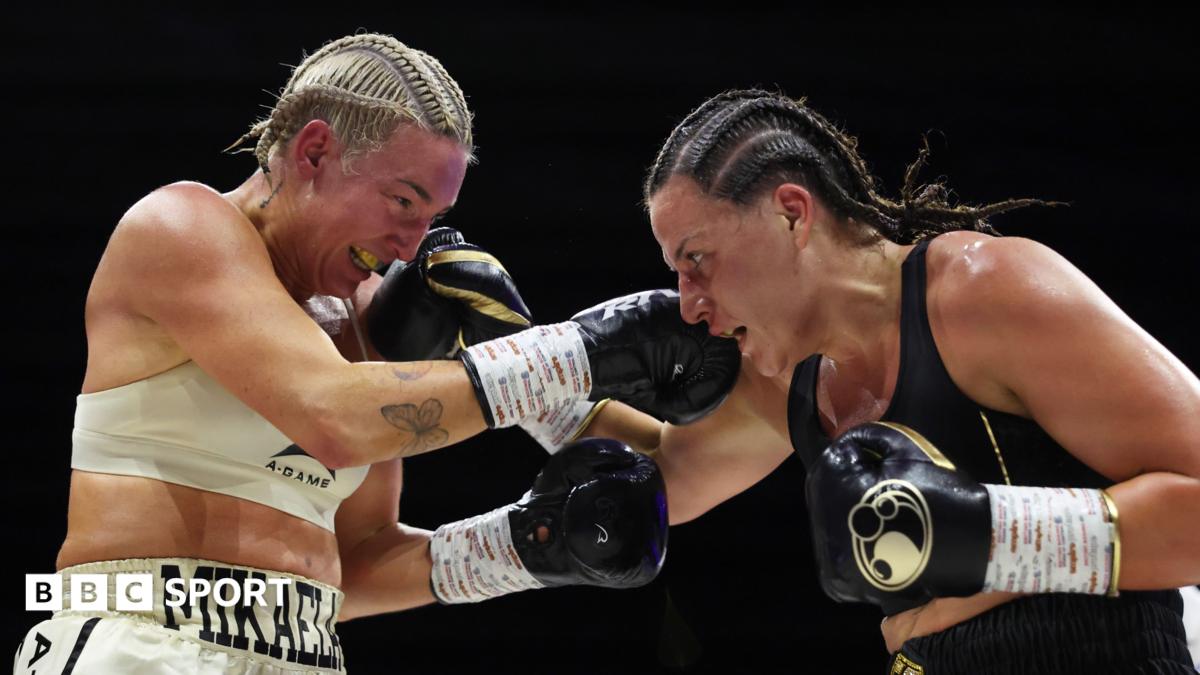
Chantelle Cameron produced one of the finest displays of her career to beat Mikaela Mayer and add the WBA and WBC light middleweight titles to her WBO belt.
An engrossing encounter was narrowly won by the British fighter by unanimous decision – 97-93 on two scorecards and 96-94 on the other.
American Mayer disagreed with the decision, claiming she “outboxed” Cameron – leading to an angry exchange of words in the ring.
The possibility of a rematch was also floated, with Mayer also suggesting Cameron had benefited from home advantage – to the champion’s chagrin, as she said “talk is cheap”.
Advertisement
It means Cameron remains unbeaten since her second fight with Katie Taylor in 2023, and with 23 victories in 24 professional encounters.
And this was one of her best displays. These fighters were evenly matched in every metric – from punch rate to height and weight, even hairstyle.
But Cameron won out thanks to her unrelenting pressure, which never allowed the usually adaptable Mayer to figure out a winning gameplan.
Mayer was the more imposing figure early on, but Cameron played counterpuncher until she could get onto the front foot.
Advertisement
Cameron forced Mayer against the ropes in round four, and again at the start of the fifth. Increasingly confident to take the initiative, she was roared on by a partisan but disappointingly small home crowd.
Mayer was unable to get in behind her jab for long periods and was bleeding and breathing heavily by round six.
The home favourite was cut in the final rounds but pushed through and was lifted shoulder high by her team before her biggest win since beating Taylor in Dublin three years ago was announced.
For three-weight world champion Mayer, this is the third defeat of her 25-fight career and costs her the WBA and WBC belts, which Cameron now puts with her WBO title.
















































You must be logged in to post a comment Login