

Connect with us
DAPA Banner
DAPA Coin
DAPA
COIN PAYMENT ASSET
PRIVACY · BLOCKDAG · HOMOMORPHIC ENCRYPTION · RUST
ElGamal Encrypted MINE DAPA
🚫 GENESIS SOLD OUT
DAPAPAY COMING

NewsBeat

Newcastle Airport Net Zero figures ‘ignore flight’ pollution

Published

on

Newcastle Airport Net Zero figures 'ignore flight' pollution

The airport recently announced that it had achieved a 46 per cent reduction in carbon emissions since 2019, which its chief corporate affairs officer, Alice Andreasen, labelled a “major milestone”, adding that it “clearly shows” that the transport hub is “well ahead of schedule” on its journey to Net Zero by 2035.

Newcastle International said it had done so through several initiatives, including the switch to Hydrotreated Vegetable Oil (HVO) to power all non-electric vehicles across its site, the installation of rapid-rise doors in the baggage handling area, AirDoors at the terminal entrance and the decommissioning of the gas‑powered hot water system at outlets in the departure lounge.

The airport’s announcements focused on the 46 per cent cut and its Net Zero 2035 goal, without spelling out that the target applies only to its own operations.

That detail appears in its Masterplan and Net Zero strategy, where aircraft emissions are listed separately under Scope 3, with the airport saying it will “work with airlines to reduce” them.

Advertisement

While local climate campaign groups, Aircraft Noise Action Group (ANAG) and Climate Action Newcastle (CAN), have praised the airport’s steps towards reducing its environmental impact on site, ANAG have stated that the promotion of its Net Zero credentials leaves out flight emissions, which they say “are by far and away the main contributor to climate change”.

“This fact is buried in the Masterplan, and most people will almost certainly assume ‘Net Zero’ covers aircraft as well as buildings and vehicles,” they added.

Both ANAG and CAN also stated that the airport’s Masterplan growth plan – moving from around five million annual passengers currently to nine million in 2040 – will “wipe out” and “outstrip” the emission reductions in its operations hub.

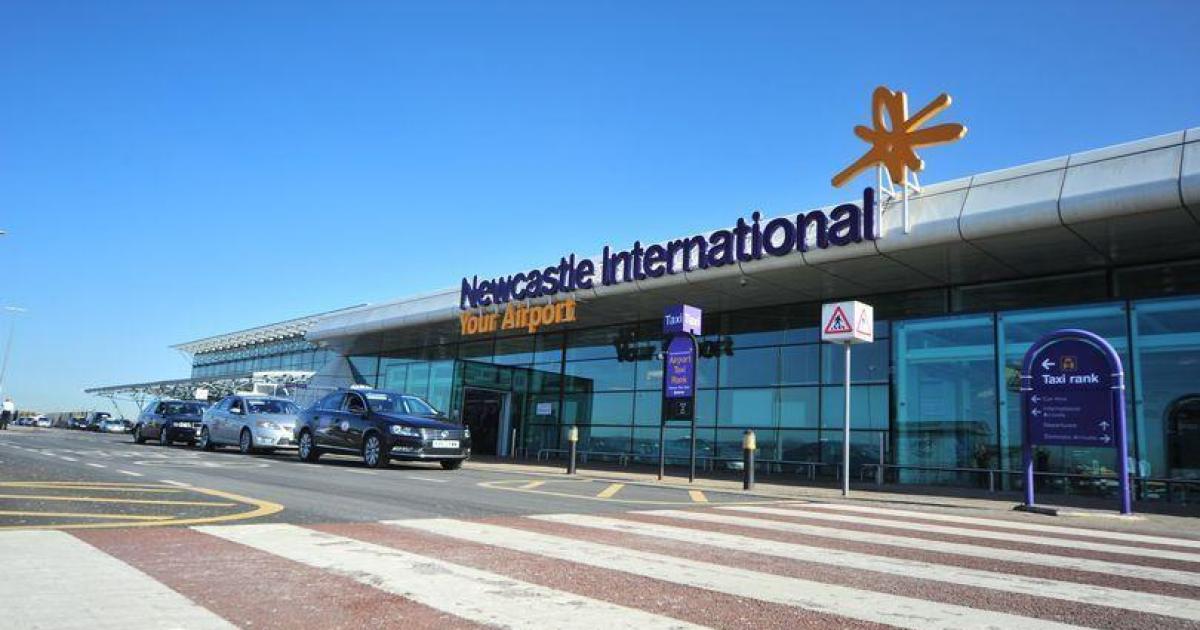
As part of its 2040 Masterplan, the airport is aiming to increase its annual passenger numbers by four million (Image: Newcastle Airport)

CAN has also asked that the airport’s carbon emission reduction information appear alongside projections of emission increases from the “huge number” of extra flights proposed.

Advertisement

Newcastle Airport said that the 46 per cent reduction relates to Scope 1 and Scope 2 emissions from its “direct operations” with “emissions from flights reported separately by the airlines themselves”.

It added: “Crucially, our ambition to reach Net Zero by 2035 has been developed in line with the growth projections outlined in the Masterplan and reflects the areas where the Airport has direct control.”

A spokesperson for ANAG said: “Provided the airport makes it absolutely clear that its Net Zero target excludes flights, and that flights are by far the main contributor to climate change, we would have no objection to it describing itself as ‘on track’, for its own operations only. The airport needs to be honest with the public so that people can make up their minds based on complete information.

“The Masterplan’s growth plans, moving from around five million passengers now to around nine million in 2040, cannot be achieved without more flights. That increase in flight numbers will bring increased climate‑changing emissions; there is an unbreakable link between the two. In our view, those extra emissions will wipe out the gains made on the ground.

Advertisement

“We think Newcastle Airport is big enough already and would like to see it abandon its expansion plans and drop any ambition to host long‑distance flights, which have the greatest climate impact.”

A spokesperson for Climate Action Newcastle said: “Based on the emissions total arising from current flight numbers, it is clear that the Masterplan’s extra emissions from nearly doubling passenger numbers will totally outstrip emission reductions in its hub operations.

“By positioning both sets of information together, it will help to avoid any confusion about the overall consequences of the airport’s plans.

“The simple fact is that the airport’s plans will generate extra greenhouse gas emissions, which will accelerate harmful global heating.”

Advertisement

A Newcastle Airport spokesperson said: “Our 2040 Masterplan sets out a clear vision for the Airport’s future and was shaped by our largest ever public consultation, with more than 600 responses from residents, businesses and stakeholders.

“This included input from community groups such as the Aircraft Noise Action Group, with whom we continue to meet regularly.

“Through initiatives such as our on-site solar farm, the creation of new woodland areas and the transition to a fully electric vehicle fleet, we have been recognised as an industry leader and are already delivering real, measurable results, putting us significantly ahead of our Net Zero target.”

Advertisement

Source link

Continue Reading
Click to comment

You must be logged in to post a comment Login

Leave a Reply

NewsBeat

How methane policy will make or break the climate crisis

Published

on

How methane policy will make or break the climate crisis

There’s no sign that methane emissions are declining globally.

That’s according to the International Energy Agency’s latest report on methane, which revealed a worrying implementation gap in current policies. The UN has warned repeatedly that getting methane emissions under control is critical to address the climate crisis. Methane emissions have a powerful greenhouse effect, with 1 tonne of methane causing 80 times more warming than 1 tonne of carbon dioxide over 20 years. That is why reducing methane emissions has been described as an emergency brake for addressing climate change.

With scientists warning of dangerous feedback loops, where global warming triggers large stores of methane to be released from underneath melting ice sheets, stabilising emissions is becoming increasingly urgent.

Our team’s analysis at Oxford University’s Climate Policy Monitor aligns with the International Energy Agency’s finding about an implementation gap in this area. The Climate Policy Monitor is an online database powered by a pro bono network of more than 60 law firms which assesses how policies and regulations are aligned – or not – with global climate goals. The analysis spans 37 jurisdictions, including 36 countries and one large sub-national economy (California).

Advertisement

We recently identified over 100 methane policies across 32 jurisdictions. However, fewer than one-third of these policies are mandatory. Four countries – India, Indonesia, Thailand and Tanzania – had no identifiable methane policies at all. This is concerning as India and Indonesia together account for more than 12% of global methane emissions.

The recent analysis indicates continued interest in methane regulation – with around 20% of policies issued in 2024 and 2025. Yet implementation and enforcement remains weak. Over two-thirds of methane policies showed little sign of implementation, such as evidence of sanctions for non-compliance.

Signs of progress

On methane policies related to fossil fuels, most policies targeted oil and gas: methane is burned off (or flared) during oil extraction, and as the main component of natural gas it can leak from faulty pipes. However, even in this comparatively well-regulated sector, few policies required public disclosure, third-party verification or standardised methods for measuring emissions.

Japan stands out as a leader on robust policymaking on fossil methane. Japan’s Act on Promotion of Global Warming Countermeasures (1998) mandates public disclosure of facility-level emissions and third-party verification of emission inventories. Japan successfully reduced methane emissions by roughly 40% between 1990 and 2022.

Advertisement

In the current context of high energy prices, cutting methane emissions can also help improve energy security and reduce wastage of natural resources.

Coal methane – the methane that either escapes during coal mining or builds up in disused mines – remains a global policy gap. Less than half of the jurisdictions analysed (15 out of 37) had policies covering coal methane. Coal methane remains a problem in countries like Poland which are phasing out coal, since methane venting can continue long after mines are closed. This highlights the urgent need for action in this area.


À lire aussi :
MethaneSat: the climate spy satellite that went quiet


A global blindspot

Agriculture makes up largest human source of methane emissions, accounting for around 40% of methane emissions, mainly from cow burps (with the remainder coming from fossil methane and food waste). Yet the management of agricultural methane remains a global blindspot.

Advertisement

Comparison of methane policies in G7 countries (UK methane policies were not analysed in 2025 but will be added in 2026).
Oxford Climate Policy Monitor

Fewer than half of the 100 methane policies we identified targeted agriculture specifically. Thirteen jurisdictions – including the EU, France and Poland – did not have any agricultural methane policies. Together, these jurisdictions account for more than 20% of global methane emissions.

Agricultural policies were also less likely to be mandatory – only 20% (13 out of 66) policies were found to be mandatory compared to 44% for the electricity sector. This imbalance suggests governments continue to prioritise tackling energy-sector methane while overlooking agricultural emissions.

The lack of ambition in methane regulation extends to the agri-food sector. The campaign organisation Changing Markets Foundation recently found that only three of the largest dairy and coffee companies have a target to reduce methane emissions by 2030.

Advertisement

As the monitor’s annual review noted, the focus on energy neglects other mitigation pathways, such as dietary changes in developed countries, primarily through cutting beef and dairy consumption. This could be transformative in putting an emergency brake on climate change. Shifts toward more sustainable diets would also have additional co-benefits for the environment and public health.

Backsliding amid global growth

The Climate Policy Monitor report found a trend of backsliding by one country in particular – the US. In 2025, amid other announcements, the US Environmental Protection Agency delayed methane regulations for oil and gas facilities that were issued in 2024. More recently, the EU has been lobbied by the US to delay penalties for oil and gas importers on methane, although investors urged the EU to resist pressure from US politicians to water down the regulation.

However, there are signs of hope at the global level. More than half of recent methane policies emerged in African and Latin American jurisdictions. This highlights how developing and emerging economies are prioritising climate action through rule-making based on their distinct contexts.

Despite backsliding in some jurisdictions, the overall global trend is moving towards stronger climate policies. With strong policy and enforcement, there is still a chance for the world to get to grips with methane emissions.

Advertisement

Source link

Continue Reading

NewsBeat

Lloyds Bank and Halifax app outage hits thousands of customers across the UK

Published

on

Cambridgeshire Live

Lloyds Bank and Halifax customers are unable to access mobile banking or make payments due to an app outage

Lloyds Bank and Halifax customers have been left unable to make payments this afternoon (Wednesday) following a widespread outage affecting both banks’ apps.

Scores of customers have taken to social media to complain they are unable to use their online payment services, with the majority of reports centring on the Lloyds and Halifax banking apps, as some users struggle to log in.

Further reports relate to online banking more broadly, according to outage-tracking website Downdetector, which recorded a significant spike in complaints from Lloyds customers at around 11am.

Advertisement

The bulk of complaints have come from London, Belfast and Cardiff, while customers in Liverpool, Newcastle, Birmingham and Manchester are also experiencing considerable disruption.

“Can’t use cards, online banking and app, what’s is going on, need to pay for something and I can’t,” one frustrated user wrote, reports Belfast Live.

Another added: “Can’t buy any lunch on my only break in work today.”

A third fumed: “Trying to sell a car, can’t access my account to accept bank transfer, what a useless bank!!”

Advertisement

Lloyds acknowledged the problems on X, formerly Twitter, stating: “We’re aware some customers are having issues with our app and online banking. We’re really sorry about this. We’re working hard to fix it and will let you know as soon as we’re back to normal.”

Halifax echoed the same message to its customers: “We’re aware some customers are having issues with our app and online banking. We’re really sorry about this. We’re working hard to fix it and will let you know as soon as we’re back to normal.”

Halifax and Lloyds are experiencing simultaneous outages due to both being part of Lloyds Banking Group. As a result, they share the same digital infrastructure and servers, meaning customers of both Halifax and Lloyds are reporting difficulties with their online banking services.

Customers are not automatically entitled to compensation in such circumstances, according to The Mirror.

Advertisement

Whether compensation is warranted depends on the severity of the impact on the individual. For instance, if the disruption caused a missed bill payment or had a detrimental effect on your credit score.

The duration of the service disruption and how swiftly the bank acted to resolve it are also key factors. Should you be considering lodging a complaint, it is advisable to collate evidence detailing how the outage affected you and for how long.

Ensure your complaint is submitted in writing, so that you retain a clear paper trail.

Source link

Advertisement
Continue Reading

NewsBeat

Taking medication on holiday could see you fined

Published

on

Wales Online

Different countries have different rules that travellers may not be aware of

Medications could be at risk in hot weather

Holidaymakers planning to take their medications abroad could face an unwelcome shock if they fail to prepare before departure. One health expert has cautioned that few travellers understand how to pack their medications correctly or what they need to know before flying, potentially risking security hold-ups, confiscated pills and even criminal charges in certain countries.

Rhysa Phommachanh, Health Specialist at Landys Chemist, warned: “Travelling with medication can require more preparation than many people realise. Every year, travellers encounter issues ranging from confiscated medicines and airport delays to difficulties replacing essential treatments abroad.

“In some cases, travellers may face problems entering a country if they are carrying restricted medications without the correct documentation, potentially resulting in confiscation, legal issues, or even criminal charges. Others have been unable to access medication because the drug is sold under a different name, requires a local prescription, or isn’t available at all.”

The health expert has shared some straightforward packing tips that could stop these problems from disrupting your health or your holiday.

Advertisement

Hand luggage

Rhysa advised travellers to keep their medication in their hand luggage. This ensures you won’t go without if your checked baggage is delayed or goes missing, and the temperature in the aircraft hold can fluctuate significantly, which may affect temperature-sensitive medication such as insulin and certain inhalers. Keeping your medication in your hand luggage also ensures it remains within easy reach throughout your trip, while being stored in a more stable environment.

Original packaging

Rhysa advised: “All medicines should remain in their original, clearly labelled pharmacy packaging. This helps avoid confusion at security and border control and ensures dosing instructions are easily verified if questioned.”

Advertisement

Documentation

If you’re on a regular prescription, carrying a copy along with a doctor’s letter outlining your diagnosis, dosage and treatment plan can prove invaluable when navigating security checks or travelling to destinations with stricter regulations surrounding your type of medication.

Controlled restrictions

Certain medications may be more heavily regulated or even banned in some countries, so it’s worth researching the restrictions at your destination before you travel. In some instances, this may simply mean you need to carry specific quantities or particular documentation.

Rhysa warned: “Countries including the UAE, Japan, and Singapore have particularly strict regulations, and in some cases, medicines commonly available in the UK may be restricted or prohibited. Travellers who arrive without the correct documentation or approvals could face medication confiscation, fines, or even criminal charges.”

ADHD medications, codeine, tramadol and sleeping tablets may be subject to stricter regulations as they can be classified as controlled substances. Likewise, pseudoephedrine, a common ingredient found in over-the-counter cold and flu remedies here in the UK, is restricted in certain countries.

Advertisement

Time zones

Those taking time-sensitive medication such as insulin or contraceptives will also need to factor in any time difference while travelling. Failing to correctly adjust their dosage schedule could lead to missed doses or overdoses.

Source link

Continue Reading

NewsBeat

French Open 2026 results: Maja Chwalinska stuns Anna Kalinskaya to reach semi-finals and continue dream run

Published

on

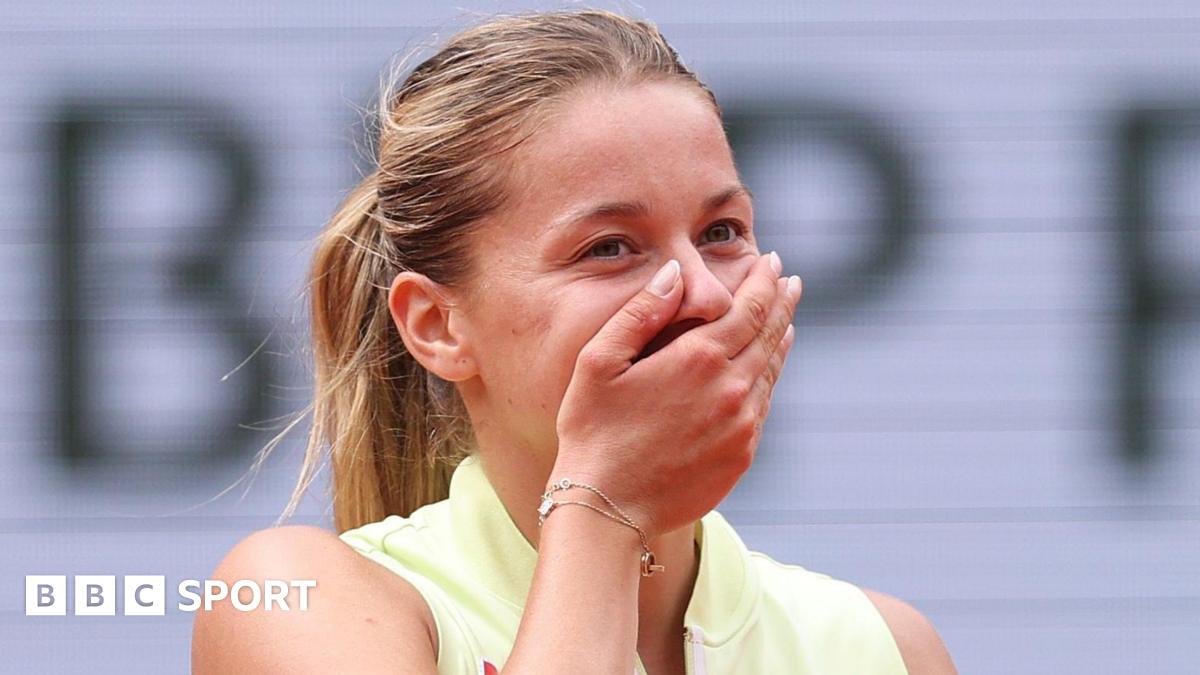
Polish qualifier Maja Chwalinska covers her mouth with her hand after completing victory over Anna Kalinskaya

In Paris, Chwalinska has played with infectious freedom and joyful creativity, beating two seeded players and Olympic champion Zheng Qinwen along the way.

She kept her composure well against Kalinskaya, first having to reset after letting a 5-1 lead slip in the opener, before reeling off five straight points from 3-2 down in the resulting tie-break to take the lead.

She then held her nerve in the second, recovering from being broken as she tried to serve out victory before clinching her first match point on Kalinskaya’s serve.

“I was definitely nervous. I am stressed, of course, but I try to focus on my job and my games,” Chwalinska said.

Advertisement

“I am not focusing on confidence. I am playing against the best players in the world, so I will not compare myself to them.”

Whatever happens in the semi-finals, Chwalinska is now projected to leap up the rankings and into the world’s top 30.

By reaching the semi-finals, she has also secured prize money amounting to £647,700 – more than doubling her career total earnings of £642,400 in the space of 10 days.

Source link

Advertisement
Continue Reading

NewsBeat

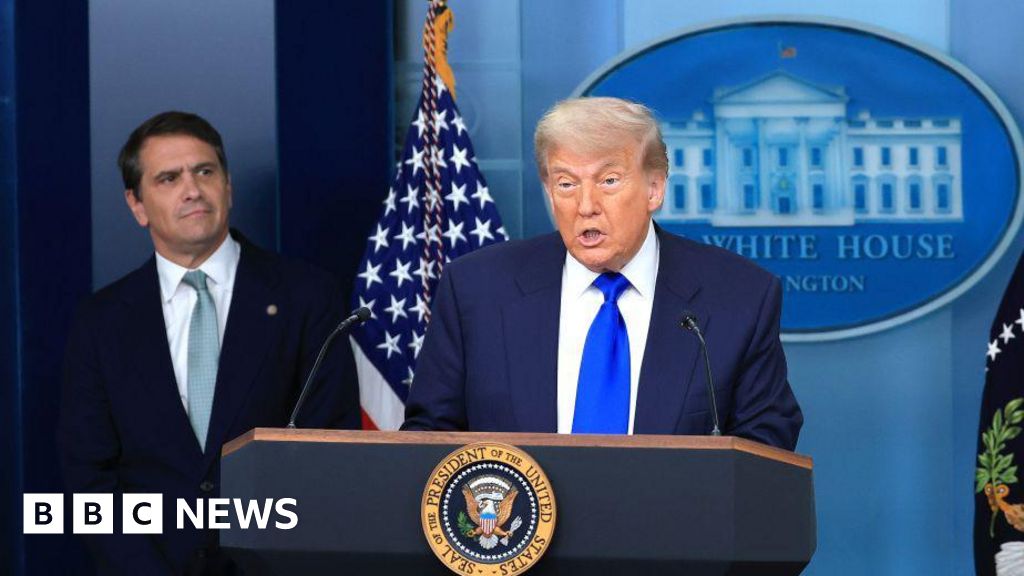
The end of Trump’s ‘weaponization’ fund is another sign Republicans are fighting back

Published

on

The end of Trump’s 'weaponization' fund is another sign Republicans are fighting back

The justice department on Monday said it was temporarily suspending the compensation scheme, citing the court decision. But critics, including some Republicans, demanded the administration go further and make clear it was giving up on the idea altogether. Blanche finally pulled the plug on Tuesday, telling House lawmakers: “We’re not moving forward with the fund.”

Source link

Continue Reading

NewsBeat

Gosport charity named one of the Sunday Times’ Best Places to Work for the second year running

Published

on

Gosport charity named one of the Sunday Times’ Best Places to Work for the second year running

For the second year running, Gosport housing and care home charity Thorngate Churcher Trust has been recognised in the prestigious Sunday Times’ Best Places to Work list. These awards, powered by WorkL, recognise organisations which have consistently high levels of employee experience and wellbeing in the UK. 

Source link

Continue Reading

NewsBeat

Lloyds Bank and Halifax down as app outage means thousands ‘can’t pay bills’

Published

on

Belfast Live

Many are complaining they’re unable to make any payments this afternoon using their online banking apps

Lloyds Bank and Halifax customers are unable to make payments this afternoon (Wednesday) as the apps associated with their banks are experiencing an outage.

Issues with online banking apps have seen many complaining they’re unable to use their online payment option. The majority of reports are relating to the Lloyds and Halifax banking apps, with some users struggling to log in.

Other reports are relating to online banking, according to Downdetector. A Downdetector graph showed a huge spike in complaints from Lloyds customers at around 11am.

Advertisement

The majority of complains coming from London, Belfast and Cardiff, while customers in Liverpool, Newcastle, Birmingham and Manchester are also facing significant disruption.

“Can’t use cards, online banking and app, what’s is going on, need to pay for something and I can’t,” one user said.

Another added: “Can’t buy any lunch on my only break in work today.”

Another fumed: “Trying to sell a car, can’t access my account to accept bank transfer, what a useless bank!!”

Advertisement

Lloyds say on X, formerly Twitter: “We’re aware some customers are having issues with our app and online banking. We’re really sorry about this. We’re working hard to fix it and will let you know as soon as we’re back to normal.”

Halifax told its customers: “We’re aware some customers are having issues with our app and online banking. We’re really sorry about this. We’re working hard to fix it and will let you know as soon as we’re back to normal.”

Halifax and Lloyds are experiencing simultaneous outages because they’re both owned by Lloyds Banking Group. This means they share the same digital infrastructure and servers, so both Halifax and Lloyds customers will be reporting issues with their online banking services.

Consumers are not automatically entitled to compensation in these circumstances, reports The Mirror.

Advertisement

It depends on how badly the outage has affected you. For example, if it made you miss a bill or it affected your credit score.

It also depends on how long the service disruption lasts for and how quickly the bank worked to resolve it. If you’re considering making a complaint, you should gather evidence about how the service issues affected you and for how long.

Make sure you get your complaint in writing, so you have a paper trail.

Want to see more of the stories you love from Belfast Live? Making us your preferred source on Google means you’ll get more of our exclusives… To add Belfast Live as a preferred source, simply click here.

Advertisement

Source link

Continue Reading

NewsBeat

Former boxer suffocated girlfriend and joked about kicking her in the head

Published

on

Wales Online

Ethan Knight, 24, carried out multiple assaults against his partner, who said the abuse led her to take an overdose

Advertisement

A former boxer viciously attacked his girlfriend on multiple occasions and suffocated her, a court has heard. After punching and kicking his then partner, Ethan Knight made a joke about assaulting her saying: “I kicked your head like a football, you were snoring for ages”.

Knight, 24, had been in a relationship with his partner for 12 months, during which he subjected her to physical abuse which led to her suffering multiple injuries and feeling emotionally exhausted.

A sentencing hearing at Newport Crown Court on Friday heard the first assault took place on May 18, 2024, in a caravan park in Weymouth, Dorset, when the defendant punched the victim to her face and kicked her on the floor until she was unconscious. Always keep on top of the latest Welsh news with our newsletter

The second assault took place on July 19, 2024, while the couple had gone on holiday to a B&B in Burnham-on-Sea, Somerset, when they began arguing about Knight speaking to a girl on Snapchat.

Advertisement

When the victim attempted to call the girl in the defendant’s presence, he responded by attacking her. He repeatedly punched and kicked her, took the phone off her and ended the call before running off.

As a result of the assault, the victim suffered a black eye.

The couple split up but got back together, with the final incident taking place on May 29 last year.

They attended the Bush Inn, in Llantwit Fardre, where they both drunk alcohol and returned to the victim’s home in Church Village.

Advertisement

Prosecutor Nuhu Gobir said the couple argued about previous partners and the defendant became annoyed and angered.

The victim had a shower and went to bed but Knight went into a “rage” after she refused to unlock her phone.

He used his right hand to try and suffocate the victim and held it over her nose and mouth while squeezing tightly.

She was wriggling in an attempt to get air, but every time she did this the defendant would close the gap.

Advertisement

He then dragged her by her hair to the toilet but she managed to grab her phone and called the police.

Knight took the phone from her and ended the call. He appeared to “snap out of his rage” and asked “What have you done?” before leaving in his car.

The victim had reddening to her nose and mouth where the defendant attempted to suffocate her.

He was later arrested but gave a “no comment” interview.

Advertisement

Knight, of Lewis Street, Riverside, Cardiff, later pleaded guilty to intentional suffocation and two counts of assault occasioning actual bodily harm.

The court heard that Knight, who has a significant following on TikTok and is known by thousands for his posts, has one previous conviction for driving offences.

Reading out her own victim personal statement to the court, the victim said: “I stayed in that relationship because he showed me small acts of kindness, just enough to make me think things could be better. He tried to downplay the attacks and said ‘I kicked your head like a football, you were snoring for ages’. I developed anxiety and suicidal thoughts.

“I was hospitalised from an overdose and self harming, my mental health was not good. I lived in fight or flight mode and experienced disassociation. Every part of my life has been affected, my family life, education, home, and expenses. I lost all sense of self worth…. My family have witnessed things they should never had to see, bruises and cuts caused by the man I loved.

Advertisement

“I had to change locks of the doors in my home multiple times. I made a Clare’s Law request as I was frightened of what he would do to me. I suffer from daily flashbacks of him using household objects to hurt me. I have vivid nightmares where I struggle to breathe and worry about being safe.”

Advertisement

The victim said Knight blamed her for him not being able to live a lavish lifestyle, which she said he became obsessed with, which led to him racking up debts.

She added: “I shared a bed for two years with someone who would have killed me. I’ll never forget how helpless I felt, being unable to breathe and exhausted by his actions towards me. When I didn’t meet his expectations or challenged him the abuse would get worse. As my partner he should have protected me but now I need protection from him.”

In mitigation, Alice Sykes said her client had found it difficult to come to terms with his actions, but is now doing so and has expressed remorse for his actions.
The barrister said the defendant had served 296 days in custody on remand.

Advertisement

Sentencing, Judge Eugene Egan said: “You somewhat appallingly believed you were playing the hard man as you beat someone who was physically smaller than you. Decent men don’t treat female partners in the way you treat them.”

Knight was sentenced to 108 weeks imprisonment, suspended for two years.

The defendant was made subject to a mental health requirement of eight to 12 sessions, the Building Better Choices programme for 26 sessions, a rehabilitation activity requirement for 20 days, and a restraining order for five years.

Get daily breaking news updates on your phone by joining our WhatsApp community here. We occasionally treat members to special offers, promotions and ads from us and our partners. See our Privacy Notice.

Source link

Advertisement
Continue Reading

NewsBeat

Iranian drone attack hits Kuwait airport, killing 1

Published

on

Iranian drone attack hits Kuwait airport, killing 1

DUBAI, United Arab Emirates (AP) — Kuwait briefly shut its main airport Wednesday after Iranian drones heavily damaged a terminal building, killing one person and wounding dozens — the latest in back-and-forth attacks by Tehran and Washington that have tested a fragile ceasefire.

Semiofficial Iranian news agencies have said the country had stopped communicating with mediators about extending the ceasefire in the war with the U.S. and Israel. A regional official said Tehran wanted a separate fragile in Lebanon enforced before returning to talks. U.S. President Donald Trump said negotiations continued.

The talks have dragged on for weeks, and exchanges of strikes in the Gulf region and Israel’s broadening war with the Iranian-backed Hezbollah in Lebanon are further strains.

Iran maintains its stranglehold on the Strait of Hormuz — a crucial waterway for the world’s oil and natural gas — and the U.S. continues its blockade of Iranian ports. Global fuel prices remain high and the effects of the conflict are felt well beyond the region.

Advertisement

An Indian national is killed at Kuwait’s main airport

Defense Ministry spokesperson Brig. Gen. Saud Abdulaziz Al-Otaibi said “a number of hostile drones” targeted a passenger building at Kuwait International Airport.

Authorities said one person was killed and 63 wounded, including passengers and workers. Health Ministry spokesman Abdullah Al Sanad said some suffered serious injuries. India’s embassy said the person killed was an Indian national.

Kuwait’s Foreign Ministry said the country reserves the right to respond to Iran and it will “neither accept nor tolerate” the attacks.

The airport partially reopened later, according to civil aviation authorities. Kuwait Airways flights resumed from a different terminal. No other flights would be operating, they said. The airport only reopened Monday after closing early in the war that began Feb. 28 with U.S. and Israeli strikes on Iran.

Advertisement

Meanwhile, the U.S. military said Iran fired two missiles at Kuwait that fell apart en route, and it “downed multiple drones” targeting American forces in the country.

The military also said U.S. and Bahraini forces intercepted missiles aimed at the Gulf kingdom, which is home to the U.S. Navy’s 5th fleet. Bahrain’s Defense Ministry said its military intercepted and destroyed three missiles and a number of drones fired by Iran.

Iran’s paramilitary Revolutionary Guard acknowledged that it targeted the headquarters of the 5th Fleet and U.S. military facilities in another country, but did not name Kuwait.

Both the U.S. and Iran said they were retaliating for earlier attacks or attempted attacks.

Advertisement

The U.S. military also said it launched strikes on an Iranian military ground control station on Qeshm Island in the Strait of Hormuz.

Iran’s Foreign Ministry condemned the U.S. strikes on Qeshm Island, where it said a telecommunications tower was struck, and other previous strikes. It called them “acts of aggression” that it said violated the ceasefire.

A senior Emirati diplomat called for “a firm, unified, and cohesive Gulf position” against Iran following the attacks.

“This aggression does not target a specific state, but rather all of us,” Anwar Gargash wrote on the X platform.

Advertisement

Trump calls reports of cessation in talks ‘false’

Iran’s Fars and Tasnim news agencies, both believed to be close to the Guard, have reported that Iran’s negotiators have stopped communicating with ceasefire mediators as tensions flare in Israel’s separate but related fight against Hezbollah in Lebanon.

A regional official involved in the mediation, speaking on condition of anonymity to discuss the talks, told The Associated Press that Iran had not communicated on Tuesday after saying that a ceasefire needed to be enforced in Lebanon for negotiations to continue.

Trump called reports of a cessation in talks “false and erroneous.”

“The conversations between us have been going on continuously, including four days ago, three days ago, two days ago, one day ago and today,” Trump said in a social media post. “Where they lead, one never knows, but as I told Iran, ’It’s time, one way or another, for you to make a Deal.’”

Advertisement

The war is increasingly tied to Israel’s war in Lebanon

Israeli forces have moved deeper into Lebanon than at any time in over a quarter of a century while Hezbollah has launched rocket and drone attacks. The declared ceasefire in Lebanon is officially in place. No side has formally withdrawn or declared the ceasefire over, but attacks continue.

Lebanon has emerged as a key sticking point in Trump’s efforts to sign a ceasefire deal with Iran. Tehran insists that any larger potential truce must also quell the fighting in Lebanon. Israeli Prime Minister Benjamin Netanyahu wants to keep the issues separate and is under heavy domestic pressure to strike Hezbollah as he prepares for new elections this fall.

The fighting has exposed a rift between close allies Israel and the U.S., with the U.S. pushing for restraint and Israel seeking to step up military pressure on Hezbollah.

A person familiar with the situation said Netanyahu and Trump had a “tense” conversation earlier this week. The person spoke on condition of anonymity because they weren’t authorized to speak to the media. The person didn’t elaborate on the details of the call.

Advertisement

___

Magdy reported from Cairo. Associated Press writers Elena Becatoros in Athens, Greece, Sheikh Saaliq in New Delhi, Sam Mednick in Jerusalem, and Aamer Madhani and Konstantin Toropin in Washington contributed to this report.

Advertisement

Source link

Continue Reading

NewsBeat

Major UK company enters administration putting jobs at risk

Published

on

Major UK company enters administration putting jobs at risk

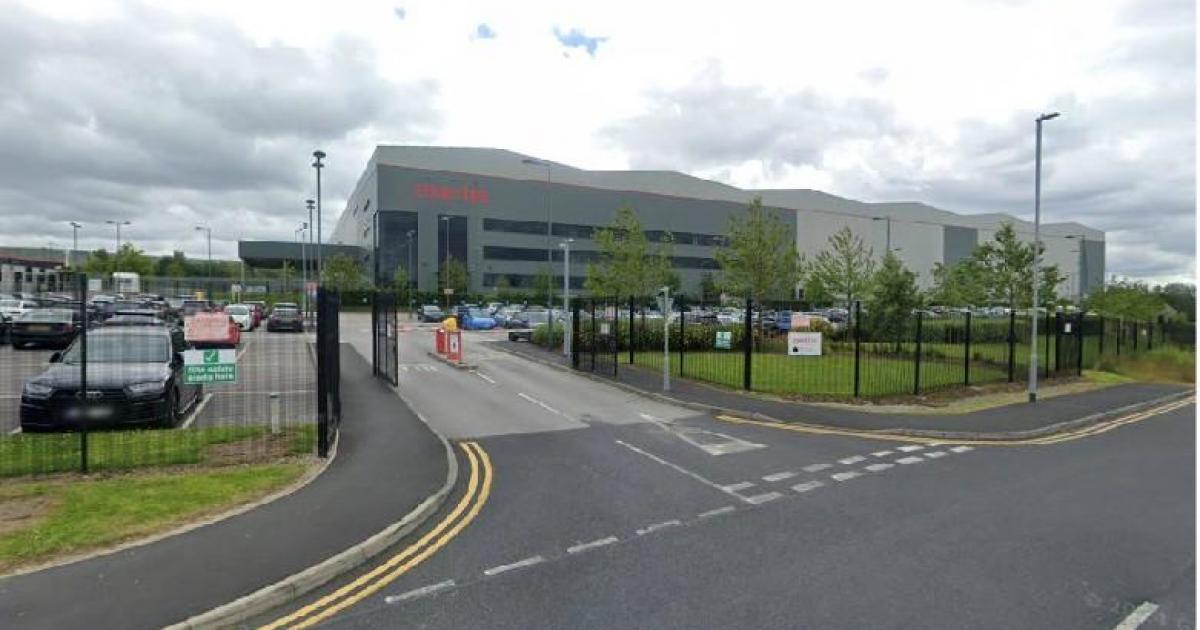
Exertis UK formally appointed joint administrators on May 29 and has described the move as “deeply disappointing news.”

Around 70 staff remain on the payroll.

Administrators Martin Armstrong and Andrew Bailey of Turpin Barker Armstrong, along with James Hopkirk of Kreston Reeves, have begun overseeing the company’s affairs and business, according to IT Channel Oxygen.

Advertisement


A note on the company’s website said: “Please note that Martin Armstrong and Andrew Bailey of Turpin Barker Armstrong, together with James Hopkirk of Kreston Reeves, were appointed as joint administrators of Exertis (UK) Ltd on May 29, 2026.

“The affairs, business and property of Exertis (UK) Ltd are being managed by the joint administrators, who act as agents of the company and contract without personal liability.”

The company had announced plans in December to cut more than 90 per cent of its workforce, following its acquisition by private equity firm AURELIUS just weeks earlier.

Advertisement


Despite emerging from a 45-day consultation period in January with plans to reposition itself as a “specialist, independent distributor” focused on the retail sector, a second consultation was launched less than two months later for all remaining staff.

Back in December last year, staff in Basingstoke, Burnley, Elland and Harlow were reportedly told that 1,200 roles would be reduced to 130, subject to consultation.

Dr Paul Harvey, leader of Basingstoke and Deane Borough Council, said the “shock” news raised questions about private equity firm Aurelius.


Advertisement

The Independent councillor told the BBC at the time: “It is deeply concerning, especially right on top of Christmas for all the employees affected.

‘There are so many losers in this story’


Recommended reading:

Iceland set to make major changes in stores across the UK

UK brewery enters administration as survival crisis mounts

Advertisement

High Street chain could enter administration in weeks


“It’s a shock that this has happened and people deserve a full and transparent disclosure from the private equity owners and also those who sold the company in the first place.”

Now, Alex Tatham, a veteran of the IT distribution sector, said: “As is so often the case, there are so many losers in this story.

“I feel particularly sorry for the employees who worked hard to make Exertis a great place to work.”

Advertisement

Do you feel safe in your current job role? Let us know in the comments

Source link

Advertisement
Continue Reading

Trending

Copyright © 2025